Article

Optimum Tilt Angle and Orientation of Photovoltaic Thermal System for Application in Greater Toronto Area, Canada


1
Department of Mechanical Engineering, University of Alaska Anchorage, 3211 Providence Dr., Anchorage, AK 99508, USA
2
Mechanical and Industrial Engineering Department, Ryerson University, Toronto, ON M5B 2K3, Canada
*
Author to whom correspondence should be addressed.
Sustainability 2019, 11(22), 6443; https://doi.org/10.3390/su11226443
Submission received: 17 October 2019 / Revised: 12 November 2019 / Accepted: 13 November 2019 / Published: 15 November 2019
(This article belongs to the Special Issue Photovoltaic Power)

Abstract

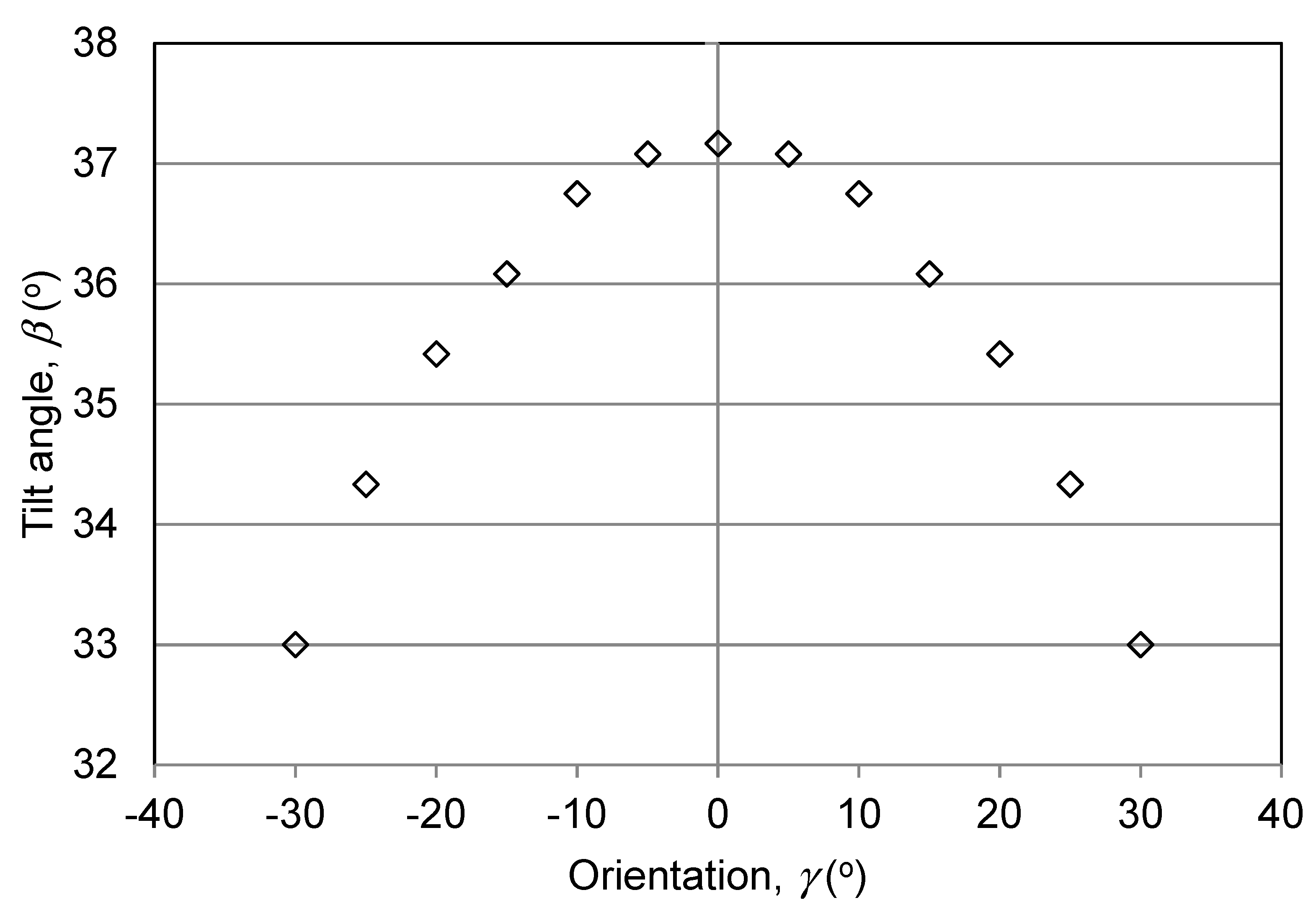
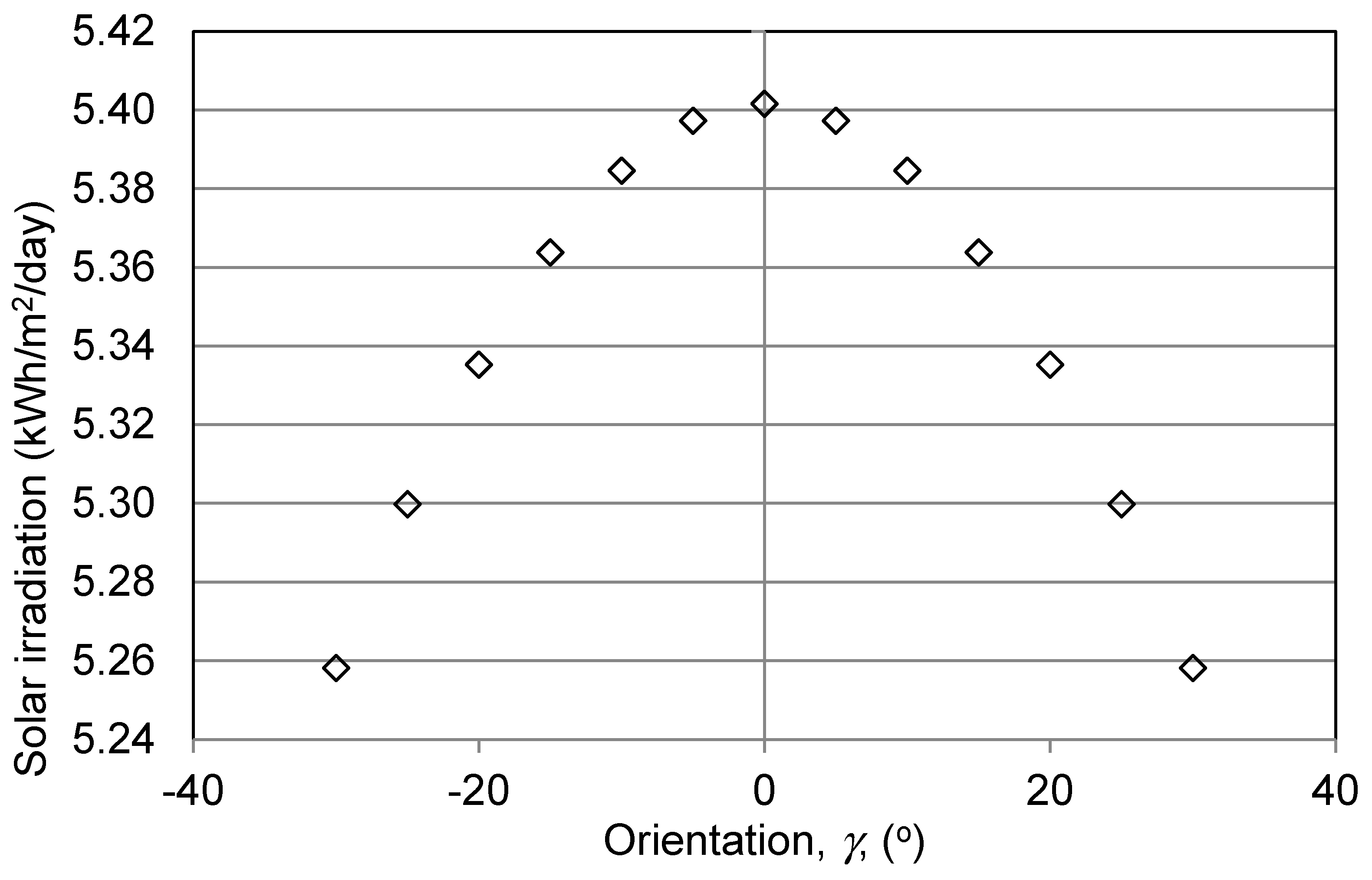
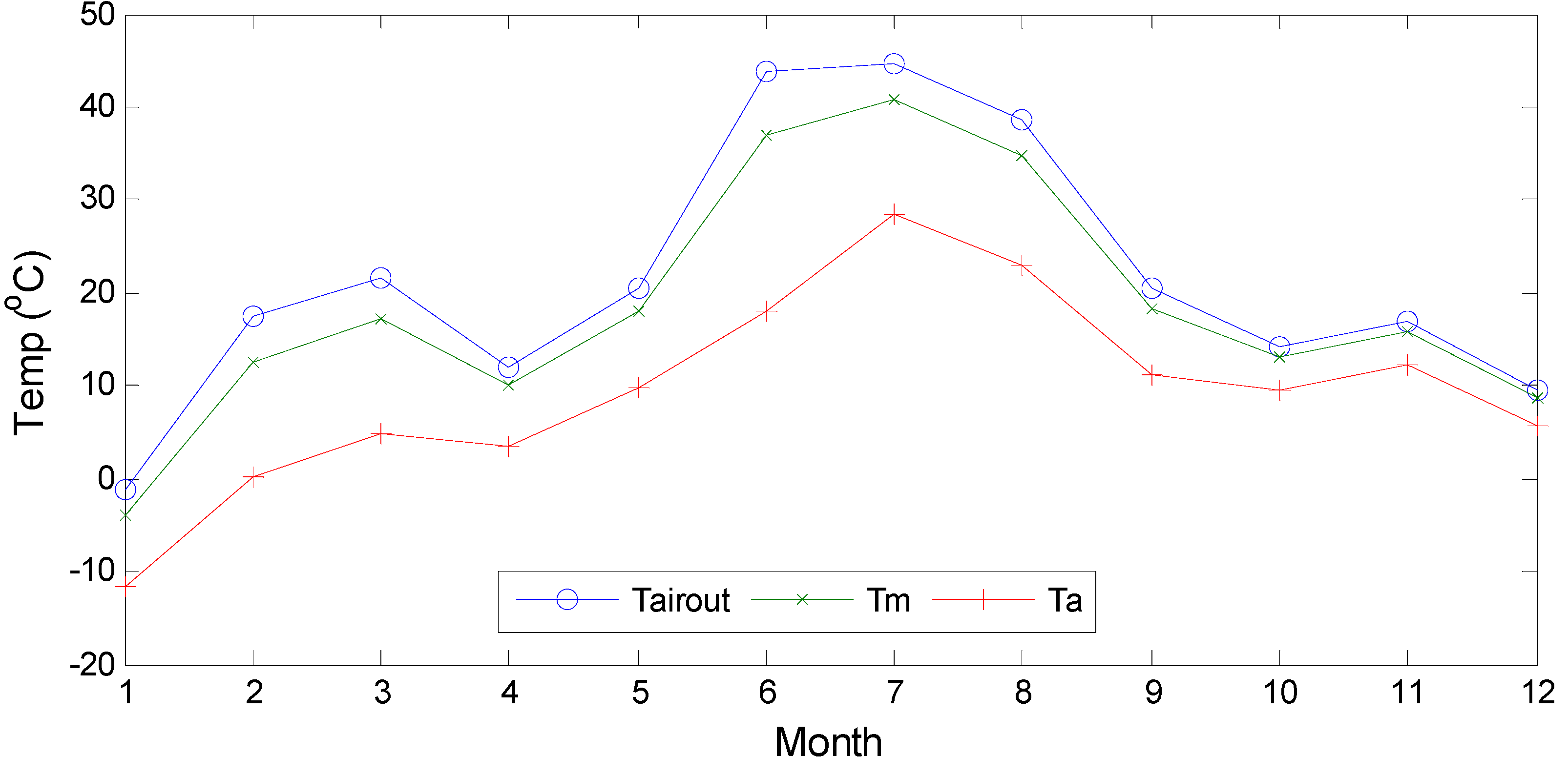
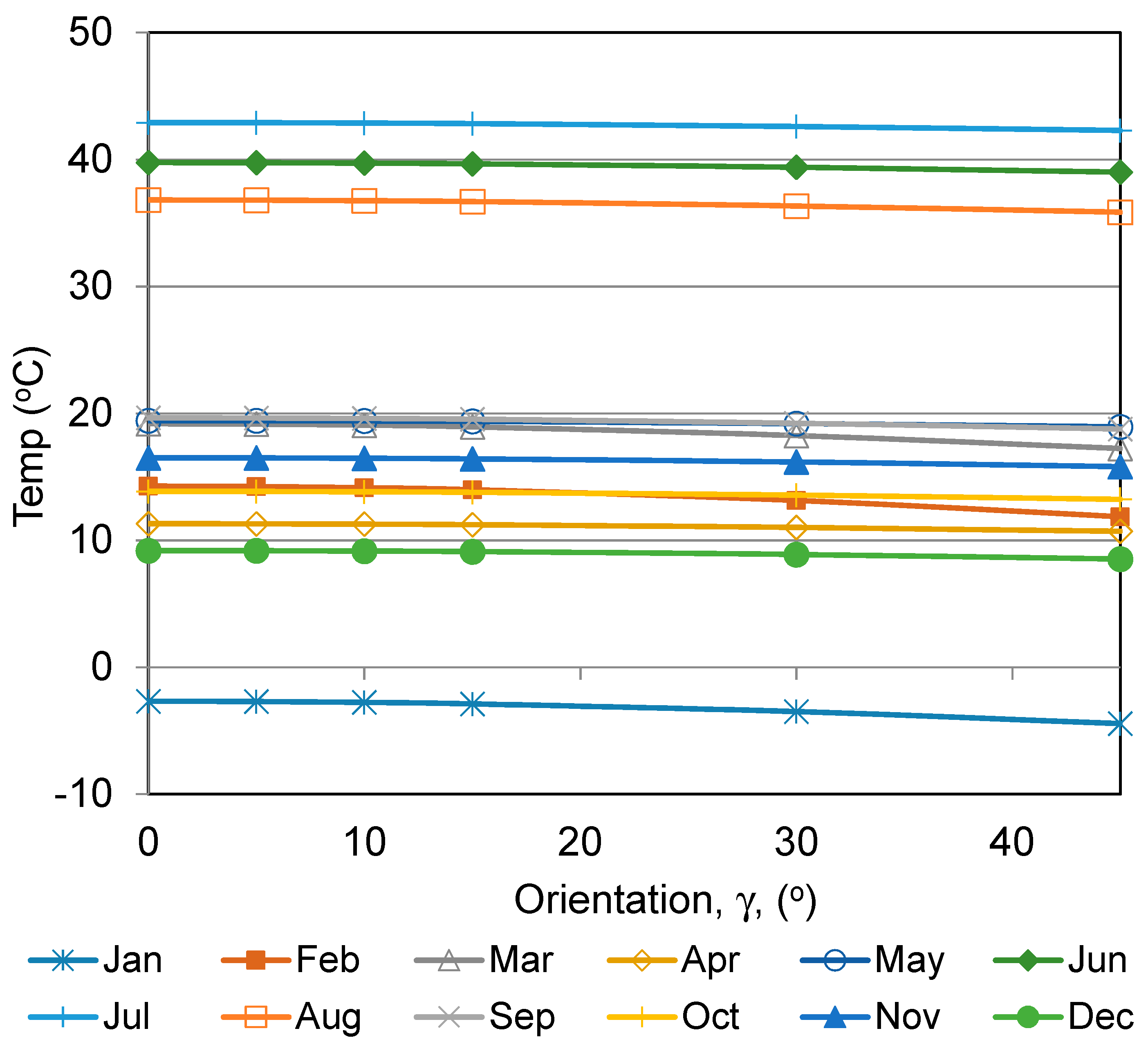
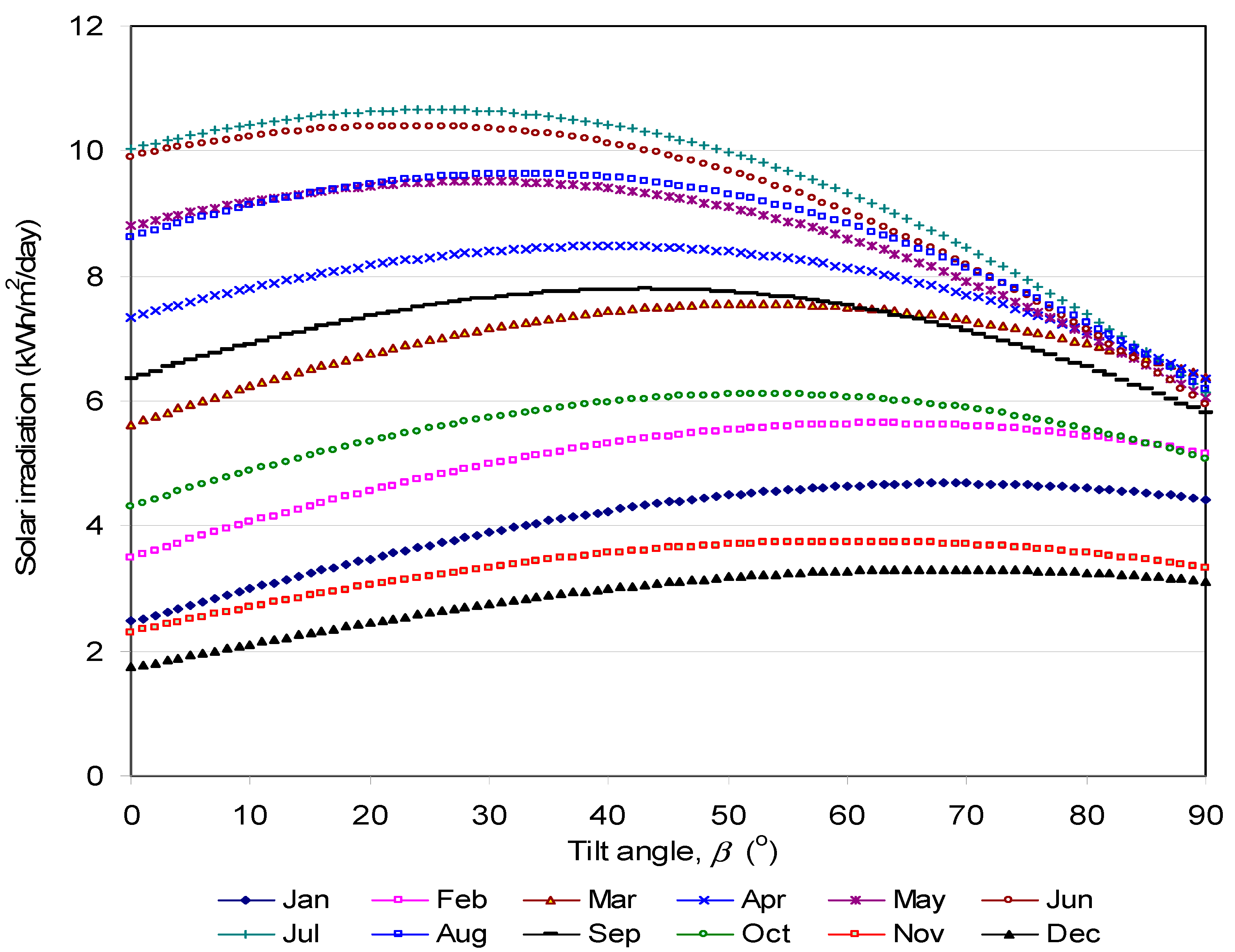
We present a study conducted to obtain optimum tilt angle and orientation of a solar panel for the collection of maximum solar irradiation. The optimum tilt angle and orientation were determined using isotropic and anisotropic diffuse sky radiation models (isotropic and anisotropic models). The four isotropic models giving varying optimum tilt angles in the range of 37 to 44°. On the other hand, results of the four anisotropic models were more consistent, with optimum tilt angles ranging between 46–47°. Both types of models indicated that the collector tilt should be changed four times a year to receive more solar radiation. The results also indicate that the solar panel should be installed with orientation west or east of due south with a flatter tilt angle. A 15° change in orientation west or east of due south results in less than 1% reduction of the total solar radiation received. For a given optimum tilt angle, the effect of photovoltaic/thermal (PV/T) orientation west or east of due south on the outlet temperature was determined using a one-dimensional steady state heat transfer model. It was found that there is less than 1.5% decrease in outlet temperature for a PV/T panel oriented up to 15° east or west of due south from March to December. This result indicates that existing roofs with orientations angles up to 15° east or west of due south can be retrofitted with a PV/T system without changing the roof shape.
Keywords: optimum tilt angle; solar PV orientation; solar radiation; isotropic models; anisotropic models; PV/T system optimum tilt angle; solar PV orientation; solar radiation; isotropic models; anisotropic models; PV/T system