Article

Modeling the Spatial Formation Mechanism of Poverty-Stricken Counties in China by Using Geographical Detector

1
School of Geographic and Biologic Information, Nanjing University of Posts and Telecommunications, Nanjing 210023, China
2
School of Architecture and Urban Planning, Nanjing University, Nanjing 210093, China
3
School of Geography, Nanjing Normal University, Nanjing 210023, China
4
Key Laboratory of Virtual Geographic Environment, Nanjing Normal University, Ministry of Education, Nanjing 210023, China
5
Jiangsu Center for Collaborative Innovation in Geographical Information Resource Development and Application, Nanjing 210023, China
*
Author to whom correspondence should be addressed.
Sustainability 2019, 11(17), 4752; https://doi.org/10.3390/su11174752
Submission received: 12 July 2019 / Revised: 21 August 2019 / Accepted: 28 August 2019 / Published: 30 August 2019
(This article belongs to the Special Issue Environment-Poverty Nexus and Sustainable Development)

Abstract

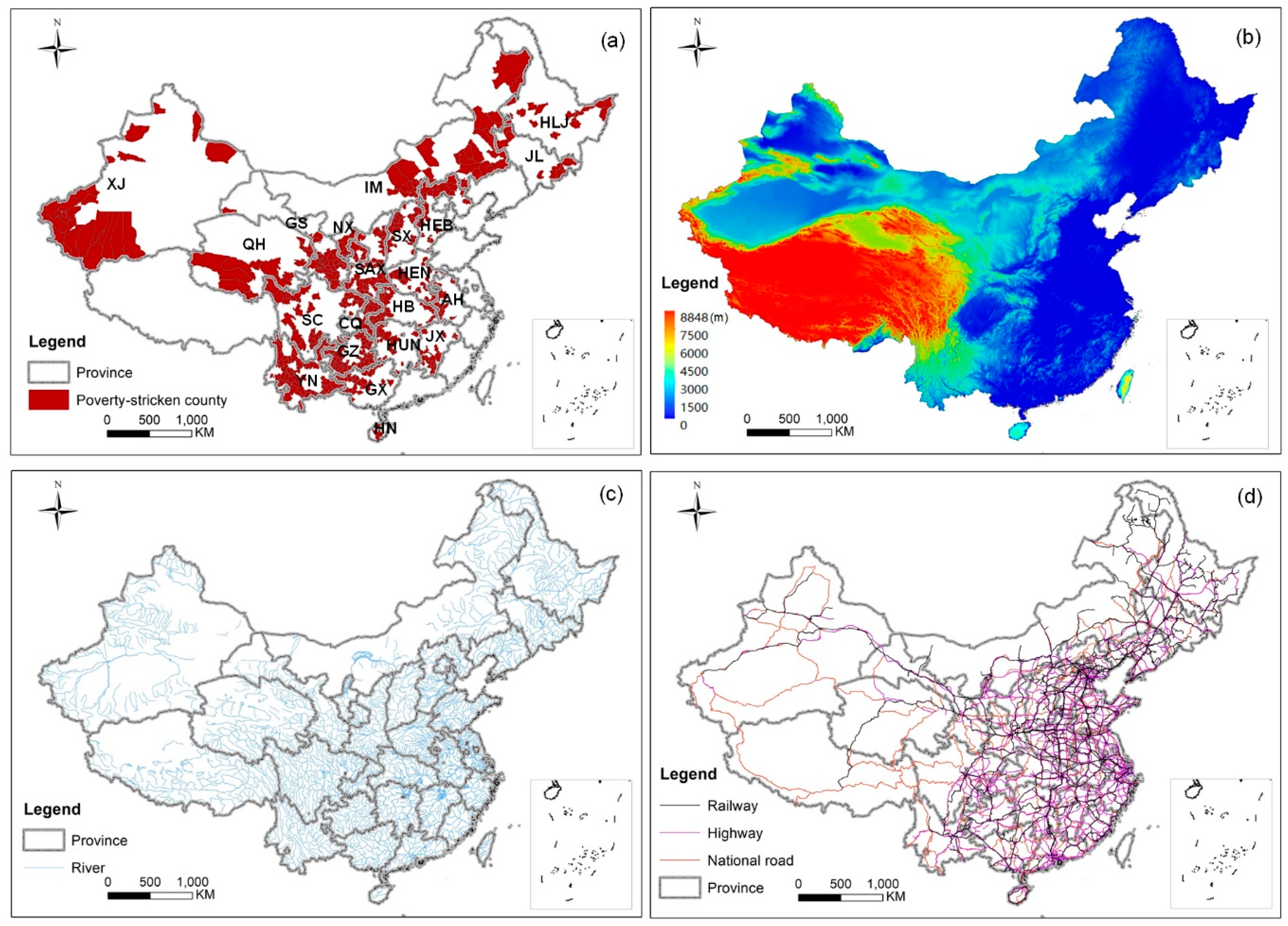
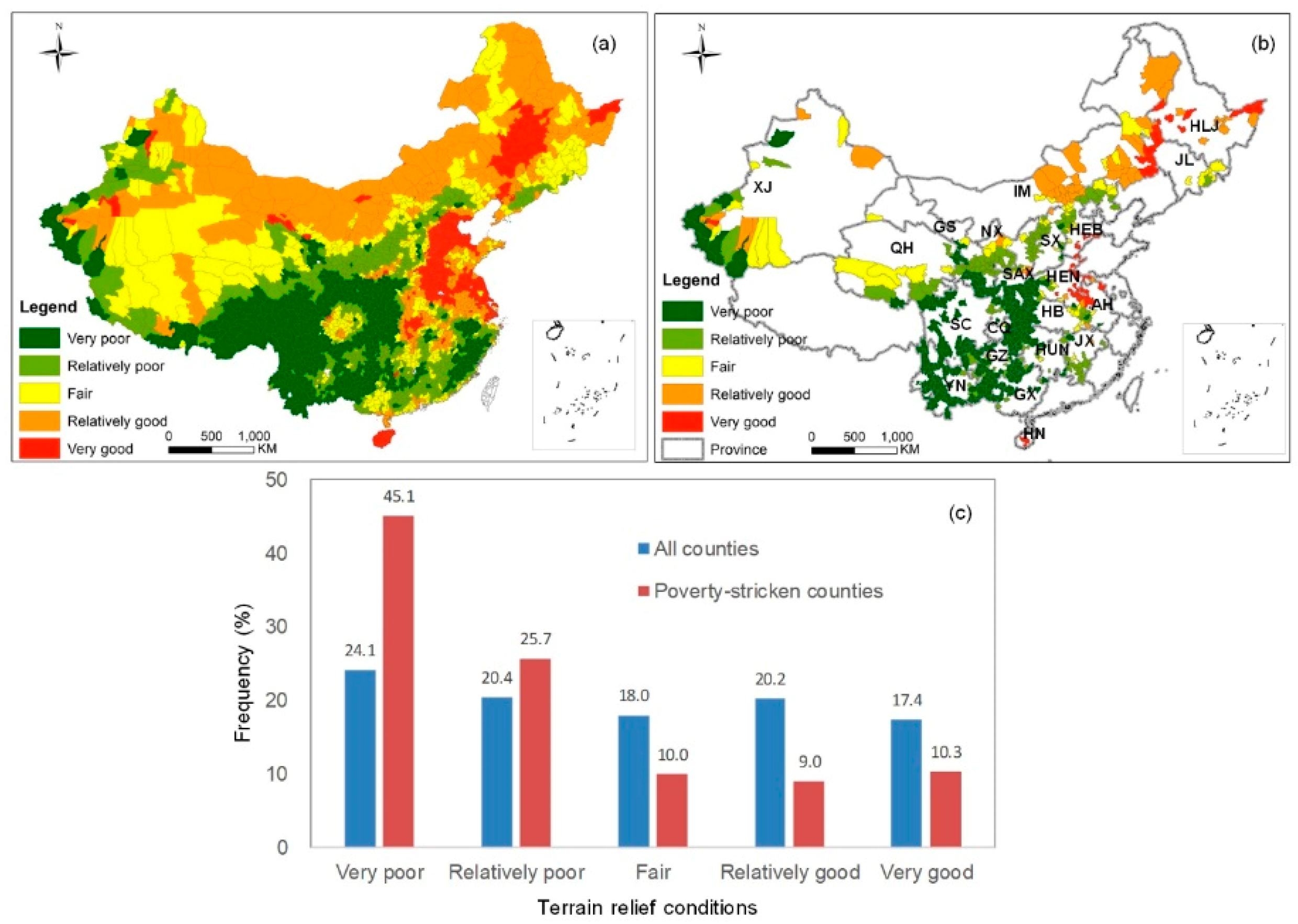
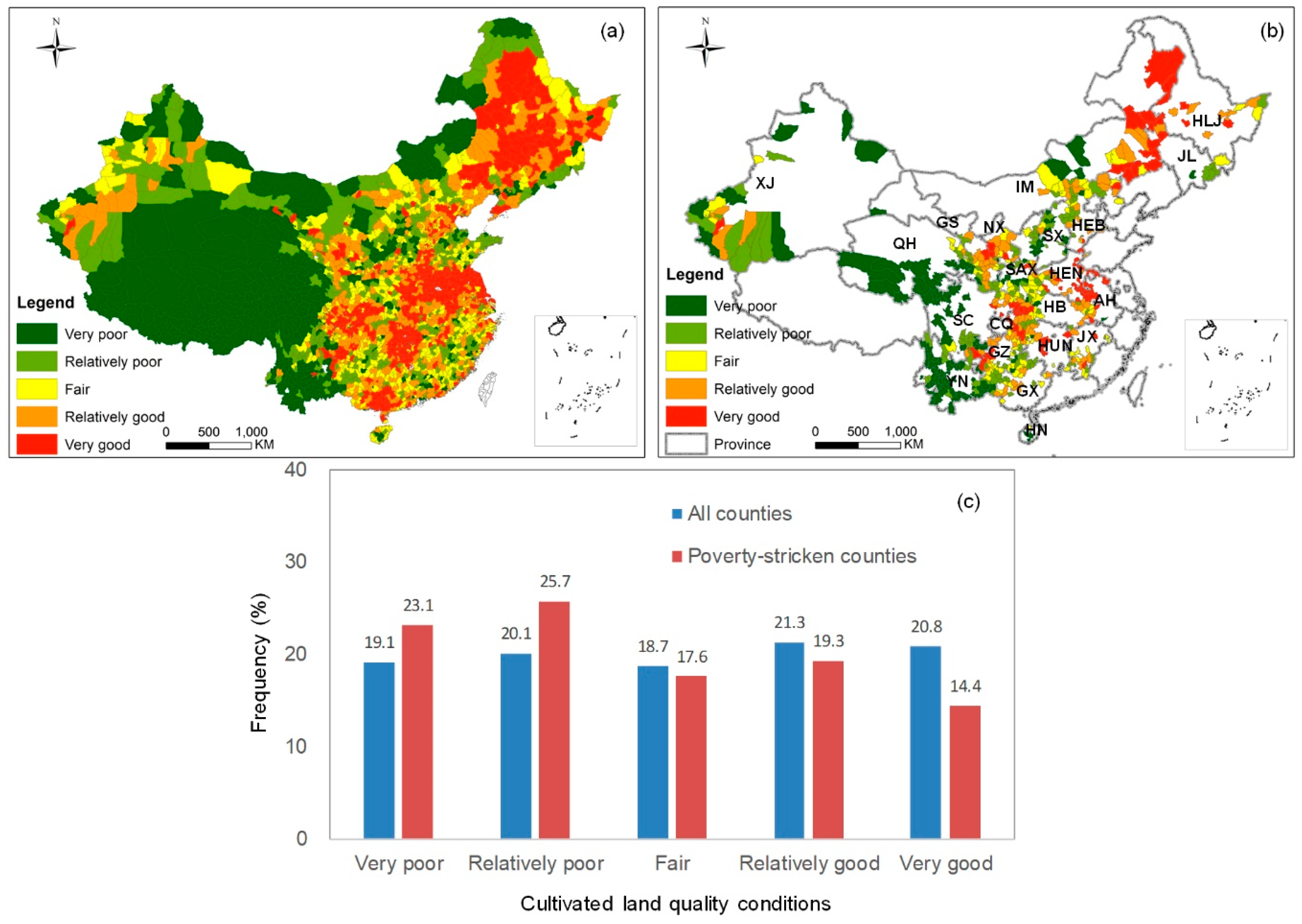
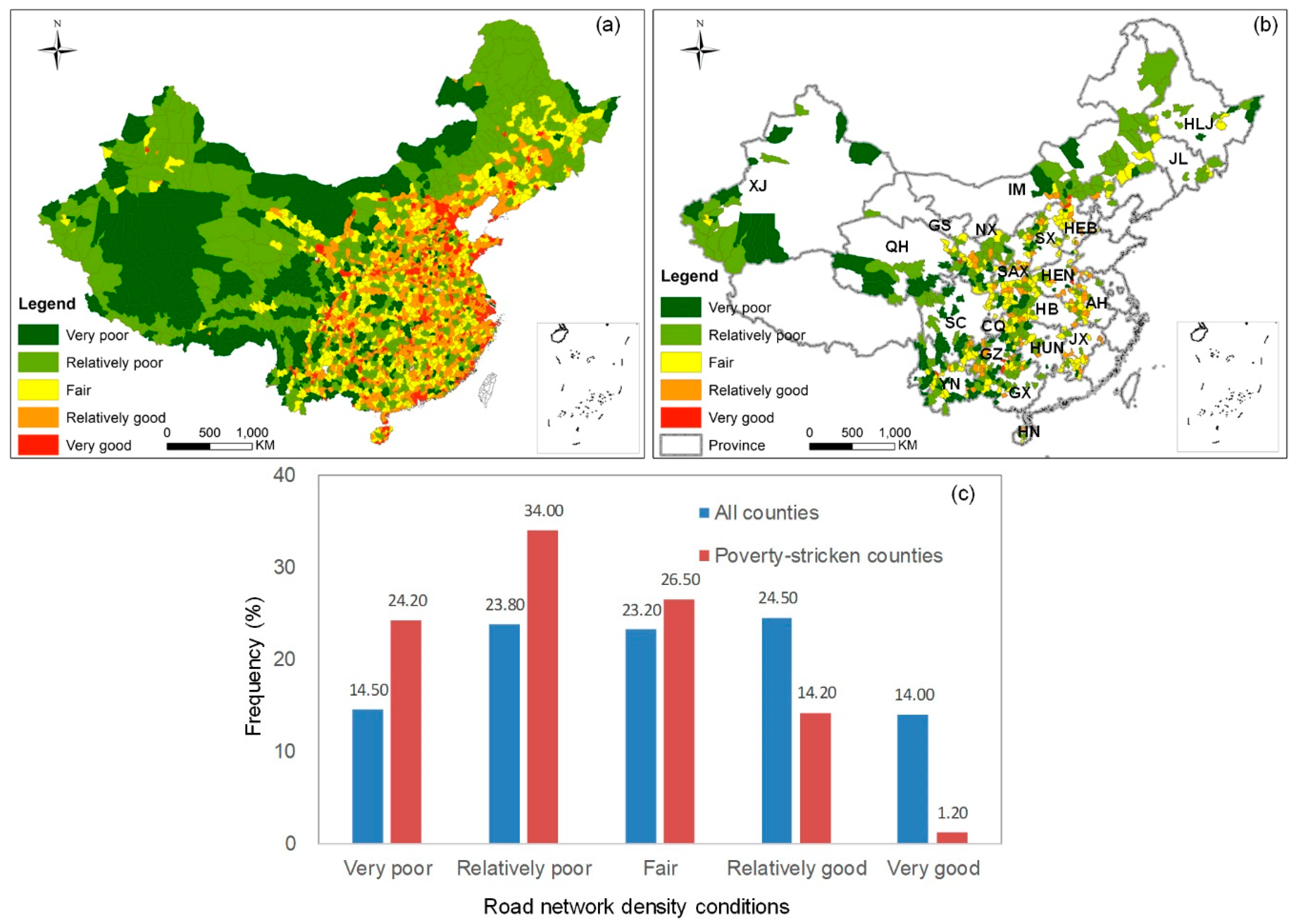
The poverty-stricken counties in China follow a spatial pattern of regional poverty. Examining the influential factors of this spatial pattern can provide an important reference that can guide China in its implementation of a poverty alleviation policy. By applying a geographical detector and using a sample of poverty-stricken counties in China, this study explores the spatial relationship of county distribution with spatial influential factors, including terrain relief, cultivated land quality, water resource abundance, road network density, and the locational index. These poverty-stricken counties are then classified, and the main factors that restrict their economic development are determined. The results highlight that the selected poverty-stricken counties suffer a severe condition in each of the spatial factors mentioned above. Most of these counties are classified under the location index, terrain relief, and road network density constraint types. Each of the aforementioned spatial influential factors has unique controlling mechanisms on the distribution of these poverty-stricken counties. Most of these counties are constrained by two or multiple spatial influential factors, except for some counties located in South and Central China, which are mainly constrained by a single spatial influential factor. Therefore, these single factor-constrained poverty-stricken counties warrant more attention when a developmental policy for poverty alleviation is to be implemented. The various aspects of poverty-stricken counties constrained by multiple factors must be comprehensively considered with a special focus on their development. The differentiated policies must be designed for these poverty-stricken counties on the basis of their spatial influential factors.
Keywords: poverty-stricken counties; spatial distribution; influential factors; geographical detector poverty-stricken counties; spatial distribution; influential factors; geographical detector