Review

Regulatory Mechanisms of Zinc on Bacterial Antibiotic Resistance and Virulence in a One Health Context


1
College of Animal Science and Technology, Henan University of Science and Technology, Luoyang 471000, China
2
Henan Provincial Engineering Research Center for Detection and Prevention and Control of Emerging Infectious Diseases in Livestock and Poultry, Luoyang 471003, China
*
Authors to whom correspondence should be addressed.
These authors contributed equally to this work.
Microbiol. Res. 2026, 17(1), 22; https://doi.org/10.3390/microbiolres17010022
Submission received: 15 December 2025 / Revised: 8 January 2026 / Accepted: 14 January 2026 / Published: 15 January 2026
(This article belongs to the Special Issue Zoonotic Bacteria: Infection, Pathogenesis and Drugs—Second Edition)

Abstract

Zinc (Zn), a ubiquitous environmental transition metal primarily existing as Zinc ions (Zn2+), plays a critical role in various biological processes. Its extensive application in agriculture, industry, and healthcare has led to significant environmental contamination. However, the mechanistic contribution of Zn2+ to bacterial antibiotic resistance and virulence remains insufficiently understood. This review explores the sources, cycling, and environmental accumulation of Zn2+ in a One Health context, emphasizing their impact on bacterial antibiotic resistance and virulence. Zn2+ promote bacterial antibiotic resistance by regulating efflux pumps, biofilm formation, expression and transfer of antibiotic resistance genes, as well as synergistic effects with other heavy metals and antibiotics. Meanwhile, Zn2+ promote bacterial virulence by regulating quorum sensing, secretion and metal homeostasis systems, as well as oxidative stress response and virulence factor expression. Additionally, it highlights the potential of targeting Zn homeostasis as a strategy to combat environmental antibiotic resistance. Collectively, these findings provide key insights into the mechanisms by which Zn2+ regulate bacterial antibiotic resistance and pathogenicity, offering valuable guidance for developing strategies to mitigate the global threat of antibiotic resistance.

1. Introduction

Zinc (Zn), a transition metal, is ubiquitous in the environment and plays a crucial role in diverse biological processes, predominantly in its divalent cationic form Zinc ions (Zn2+) [1]. As an essential trace element, this metal is fundamental to the physiological and metabolic functions of humans, animals, plants, and microorganisms. However, the widespread application of Zn2+ in agricultural, industrial, and medical fields has led to considerable accumulation and environmental pollution. Recent studies have shown that Zn2+ exert a profound impact on bacteria in soil, water, and atmospheric systems, particularly in terms of their regulatory role in modulating the antibiotic resistance and virulence of these pathogens [2]. Zn2+ can activate metal-responsive regulatory systems in bacteria, thereby upregulating the expression of antibiotic resistance genes and enhancing the antibiotic resistance of bacteria. Specifically, metal-responsive regulatory systems pivotal to bacterial antibiotic resistance such as CpxRA, RpoE, and ZntR, are directly activated by Zn2+. These systems govern bacterial adaptive responses to environmental stresses, metal ion homeostasis, and notably antimicrobial agents, thereby forming a key link between Zn exposure and enhanced bacterial antibiotic resistance [3,4,5,6]. Beyond its role in antibiotic resistance, Zn2+ also plays a pivotal role in modulating bacterial virulence [7]. The synthesis of critical virulence factors, including exotoxins, adhesins, and degradative enzymes, is regulated by Zn2+. By activating bacterial stress responses and modulating metal transport systems, Zn2+ enhances the expression of virulence factors, thereby increasing the ability of pathogens to invade host tissues and establish infection [8]. Given the accumulation of Zn2+ in the environment, agricultural, industrial, and clinical applications, the impact of Zn2+ on bacterial antibiotic resistance and virulence mechanisms has garnered increasing concern. This review aims to highlight the sources, cycling, and environmental accumulation of Zn2+ in a One Health context, summarize the mechanisms by which Zn2+ regulate bacterial antibiotic resistance and virulence, and propose strategies targeting Zn2+ to combat environmentally induced antibiotic resistance and pathogenicity.

2. Zn2+ Cycling and Accumulation in a One-Health Context

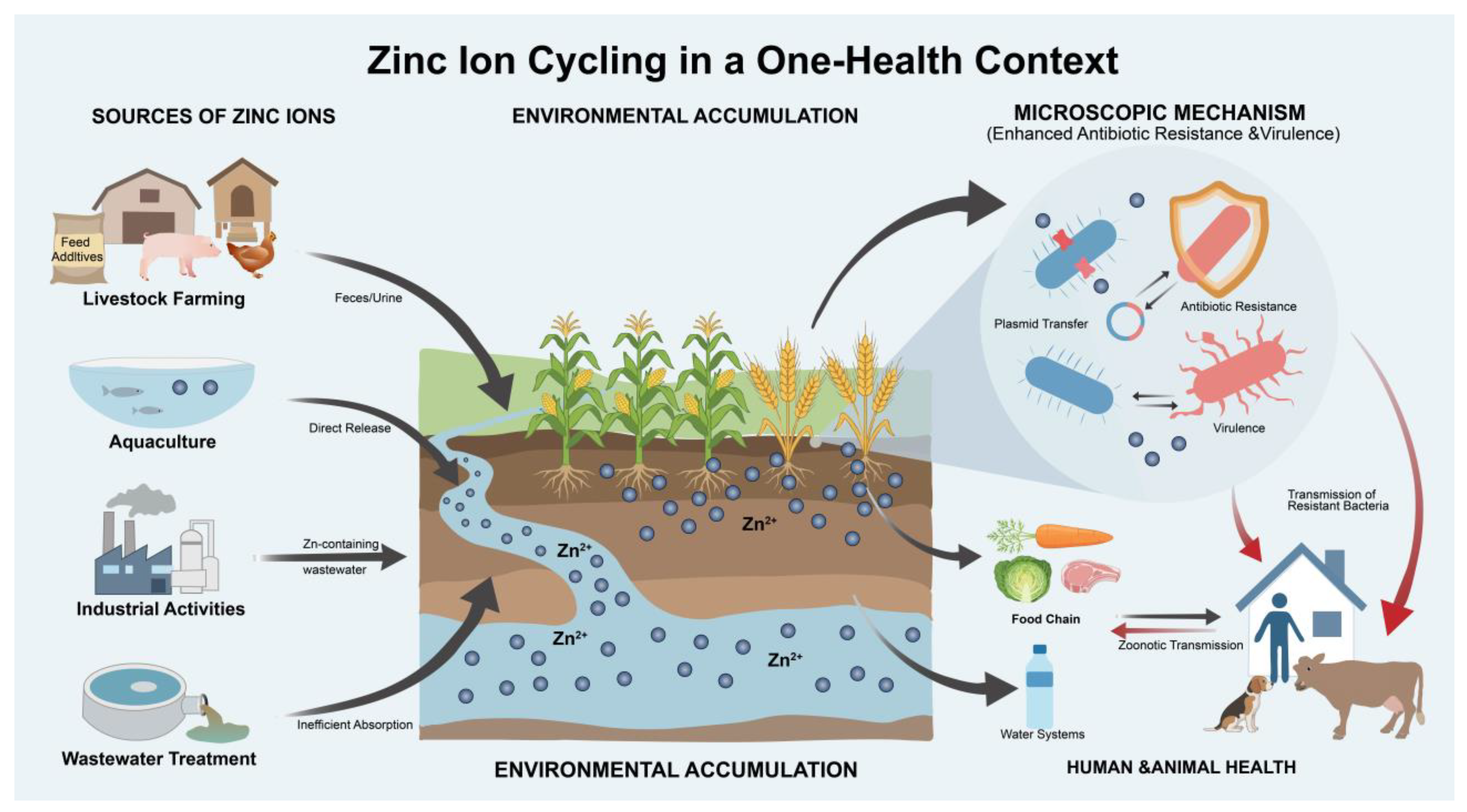
In a One Health context, Zn2+ undergo intricate cycling processes through interconnected interactions between the environment, animals, and humans (Figure 1), with significant implications for the resistance and virulence of bacteria in ecological niches [9]. Environmental sources of Zn2+ primarily include agricultural practices, industrial emissions, and inadequate wastewater treatment [10]. In livestock farming, Zn2+ originating from feed additives, which are often inefficiently absorbed by animals, are excreted in feces and urine and subsequently enter soil and water systems [11,12,13]. This process leads to localized accumulation of Zn2+ in the environment [14]. Some plants can take up these accumulated Zn2+, allowing them to enter the food chain and potentially affect animals and humans [15]. In aquaculture, Zn2+ is widely employed as an antimicrobial agent and feed additive to prevent and control diseases, leading to increased concentrations of Zn2+ in aquatic ecosystems [16]. Additionally, industrial activities such as metallurgy, galvanization, and battery manufacturing significantly contribute to Zn2+ pollution through the discharge of Zn-laden wastewater [17]. The improper use and overapplication of Zn2+ compounds facilitate their infiltration into soil and aquatic environments. Compounding these issues, wastewater treatment plants frequently struggle to efficiently remove Zn2+, resulting in their direct release into surface and groundwater systems [18]. These cumulative factors drive the accumulation of Zn2+ in the environment, resulting in prolonged exposure of bacteria and other microorganisms. Such exposure profoundly influences microbial ecological adaptability and pathogenic potential. Under these conditions, bacteria are more likely to develop enhanced antibiotic resistance and virulence. Furthermore, through transmission pathways including the food chain, direct contact, and waterborne routes, these resistant and virulent bacteria can disseminate between humans and animals, heightening risks to public health and destabilizing ecosystems [19].

3. Regulatory Mechanisms of Zn2+ in Bacterial Antibiotic Resistance

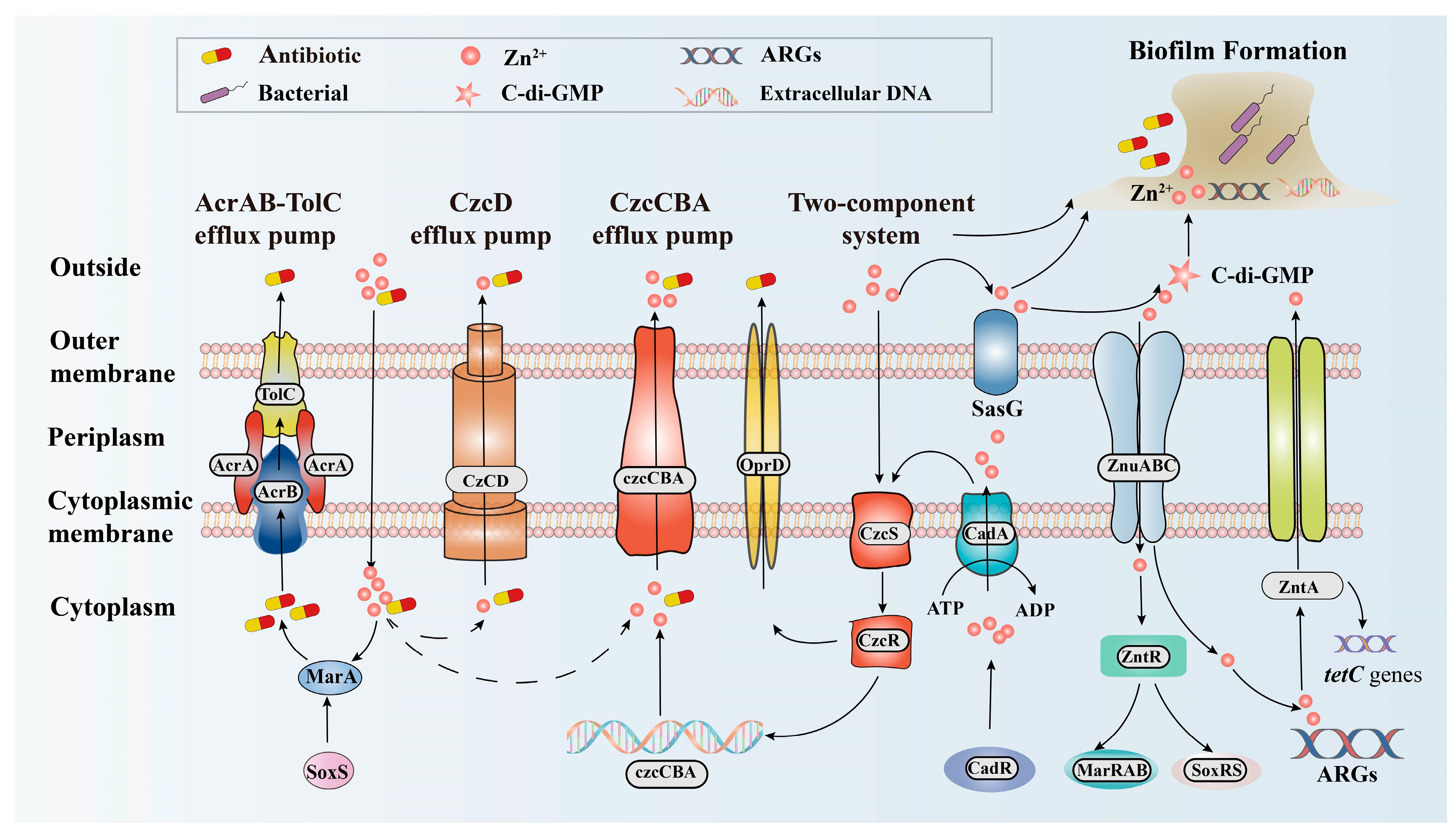
Zn2+ disrupt bacterial physiological processes and play a critical role in the modulation of bacterial antibiotic resistance. Zn2+ contribute to bacterial antibiotic resistance through several mechanisms, including the activation of efflux pump systems, enhancement of biofilm formation, regulation of resistance gene expression, facilitation of horizontal gene transfer, and synergistic interactions with other heavy metals and antibiotics (Figure 2). These processes underscore the role of Zn2+ exposure, both in environmental and host-associated contexts, as a significant driver of the development and persistence of bacterial antibiotic resistance.

3.1. Activation of Bacterial Efflux Pump Systems

The widespread presence of chromosome-encoded efflux mechanisms in bacteria represents a significant factor in the development of antibiotic resistance, posing considerable challenges to the efficacy of antibiotics [20]. Zn2+ exposure has been demonstrated to activate various efflux pump systems associated with antibiotic resistance, including the CzcD, CzcCBA, and AcrAB-TolC systems [21,22]. CzcD, a Zn2+-sensitive RND-type efflux pump, plays a crucial role in maintaining intracellular metal ion homeostasis by exporting excess Zn to the periplasm [23], a process that ensures proper Zn2+-dependent signaling essential for outer membrane stability and enhanced antibiotic tolerance [24]. Consistent with this role, both the RND-type heavy metal efflux system CzcCBA and the cation diffusion facilitator CzcD have been identified as key contributors to Zn resistance [23]. In Pseudomonas aeruginosa, this system promotes the expression of carbapenem-resistant OprD porin proteins, which serve as entry pathways for carbapenem antibiotics, thereby conferring resistance to these critical drugs [25]. Similarly, the AcrAB-TolC system, a ubiquitous RND-type efflux pump in Gram-negative bacteria, expels a wide range of structurally diverse antibiotics [26]. Zn2+ exposure has been shown to induce the expression of the AcrAB-TolC system by activating oxidative stress-related regulatory pathways, such as SoxS and MarA, thereby enhancing bacterial antibiotic resistance to fluoroquinolone antibiotics [27]. Overall, Zn2+ exposure broadly enhances bacterial antibiotic resistance by activating multiple chromosome-encoded efflux pump systems—such as CzcD, CzcCBA, and AcrAB-TolC—through metal-responsive and stress-induced regulatory pathways.

3.2. Regulation of Bacterial Biofilm Formation

Bacterial biofilms, structured communities of microorganisms embedded in a self-produced extracellular matrix, are a major contributor to antibiotic resistance. Zn2+ exposure promotes the secretion of extracellular polymeric substances (EPS), including polysaccharides, proteins, and extracellular DNA, which reinforce biofilm structure and integrity [28,29,30]. This physical barrier limits antibiotic penetration, enabling bacterial survival under adverse conditions [31,32]. Similarly, Zn2+ induces biofilm formation in Pseudomonas aeruginosa, conferring increased resistance to carbapenem antibiotics [33]. Zn2+ also influences bacterial surface proteins and metabolic pathways to promote biofilm development. In Streptococcus pneumoniae, Zn2+ negatively regulates LytA-dependent autolysis, stabilizing biofilms [34]. In S. aureus, Zn2+ activates the surface protein SasG, enhancing intercellular adhesion and strengthening biofilm integrity [35]. Additionally, in P. aeruginosa, Zn2+ stimulates biofilm formation through a mechanism independent of the CzcRS two-component system, further augmenting resistance to antibiotics [36]. Biofilm-associated bacteria often adopt a low-metabolic state, reducing their susceptibility to antibiotics. In Escherichia coli, Zn2+ regulate guanylate cyclase DgcZ (YdeH), driving biofilm formation and enhancing resistance [37]. Zn2+ also plays a role in modulating bacterial metabolism, promoting the retention of antibiotic resistance genes (ARGs) within biofilms. This facilitates the horizontal transfer of ARGs, further spreading resistance among bacterial populations [38]. Zn2+ are pivotal in biofilm formation and antibiotic resistance, and a deeper understanding of these mechanisms is critical for addressing the escalating challenge of antibiotic resistance.

3.3. Regulation of Antibiotic Resistance Gene Expression

Zn2+ function as critical signaling molecules in bacteria, modulating the activity of transcription factors that regulate antibiotic resistance gene expression. In Escherichia coli, Zn2+ activate transcription factors ZntR, which indirectly enhances the expression of resistance-associated regulatory systems including the MarRAB and SoxRS operons that play a crucial role in augmenting the bacterium’s tolerance to oxidative stress and antibiotics. These transcription factors also coordinate the expression of metal efflux systems and antioxidant genes, thereby promoting bacterial survival and enhancing antibiotic resistance. For instance, Glibota et al. demonstrated a significant association between the zntA gene, encoding a Zn2+ translocating P-type ATPase, and the tetracycline resistance tetC gene [39]. Prolonged exposure of E. coli and S. aureus to sublethal levels of Zn2+ for seven days resulted in markedly elevated minimum inhibitory concentrations for antibiotics such as norfloxacin and tetracyclines. This was accompanied by the upregulation of resistance genes including tetB, tolC, and arcAB. Notably, the emergence of quinolone-resistant mutants was associated with a point mutation in the gyrB gene, where serine was substituted with phenylalanine at residue. This mutation is hypothesized to play a critical role in the observed increase in quinolone resistance at lethal Zn2+ concentrations. Collectively, these findings underscore the role of heavy metals like Zn2+ in facilitating the modulation of resistance gene expression, thereby enhancing bacterial antibiotic resistance [40,41,42]. Zn2+ play a pivotal role in modulating bacterial antibiotic resistance by serving as signaling molecules that regulate transcription factors, ultimately enhancing bacterial survival under antibiotic stress.

3.4. Impact of Zn2+ on Horizontal Gene Transfer

Zn2+ play a critical role in accelerating the dissemination of antibiotic resistance genes by facilitating horizontal gene transfer among bacteria, which has significant implications the evolution of bacterial antibiotic resistance genomes. Zn2+ induce oxidative stress in Escherichia coli, triggering the SOS response and increasing plasmid coupling frequency of IncL, IncA/C, and IncX3 plasmids, which are known carriers of ARGs [43]. At elevated Zn2+ concentrations, particularly in the presence of antibiotics, gene exchange is further enhanced as bacterial stress responses increase susceptibility to HGT. Environmental sources of Zn2+, such as Zn oxide nanoparticles (ZnO-NPs) present in landfill sites, exert selective pressure, enriching ARGs within biofilms on microplastic surfaces and enhancing their transfer potential [38]. In aquaculture settings, Zn2+ based feed additives significantly alter the gut microbiome of livestock, increasing the diversity and abundance of ARGs and mobile genetic elements (MGEs). Higher concentrations of these additives exacerbate the enrichment of resistance determinants, further amplifying the risk of ARG dissemination. Collectively, these findings highlight the pivotal role of Zn2+ exposure in shaping the bacterial antibiotic resistance and emphasize the urgent need for strategies to mitigate Zn2+ pollution. Addressing Zn2+ contamination is critical to curbing the spread of antibiotic resistance and preserving environmental and public health.

4. Regulatory Mechanisms of Zn2+ in Bacterial Virulence

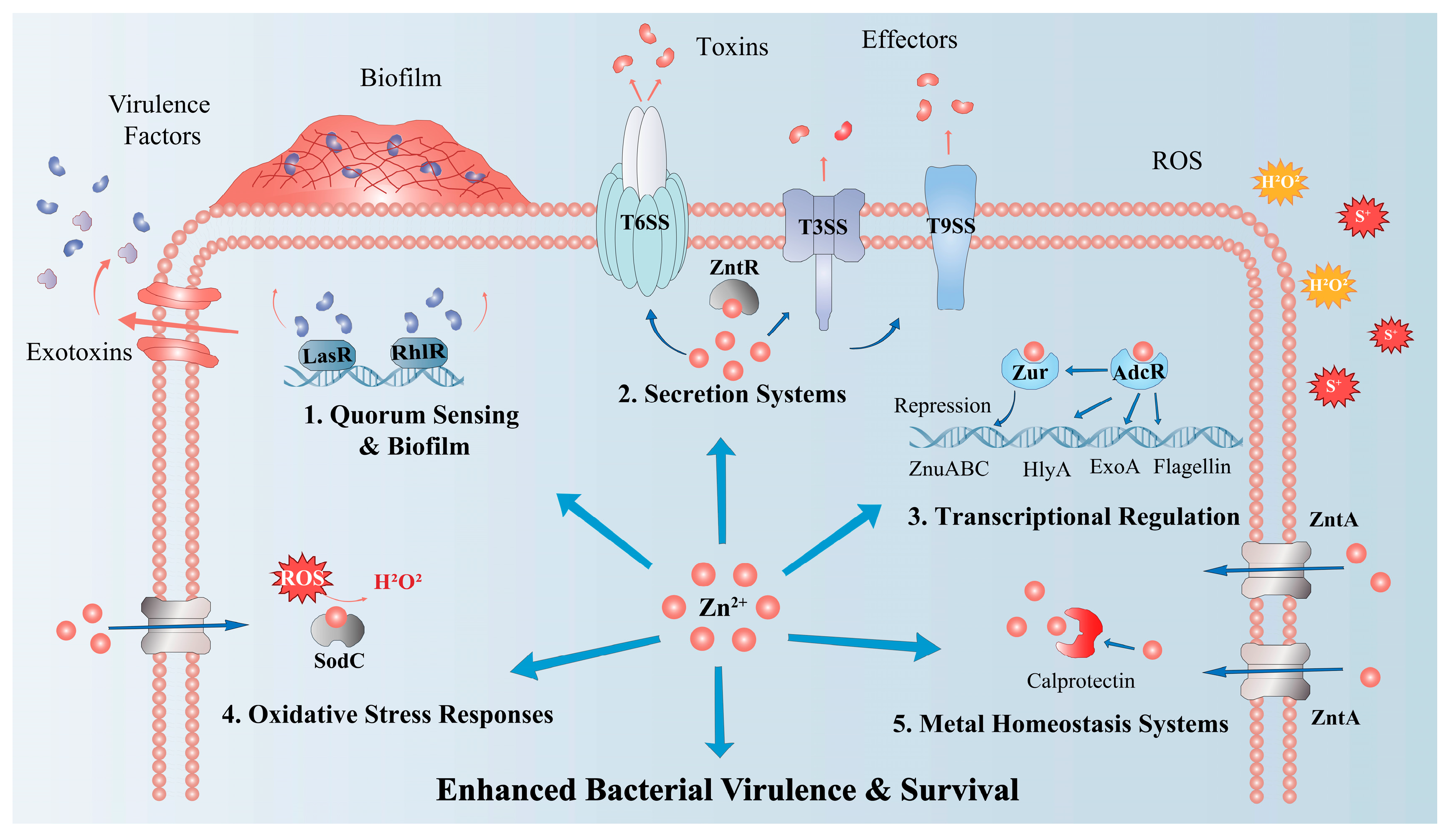
Zn2+, an essential trace metal, influencing not only antibiotic resistance but also the expression of virulence factors that drive pathogenicity. Through a network of interconnected mechanisms, particularly the regulation of Zn homeostasis and the modulation of virulence gene expression, Zn2+ enhance bacterial survival and pathogenicity. (Figure 3). These processes enable pathogens to withstand host nutritional immunity and evade immune defenses, thereby increasing their capacity to establish infections and cause disease. By maintaining intracellular Zn homeostasis, Zn2+ facilitates bacterial adaptation to fluctuating environmental conditions, ultimately augmenting their infectious potential.

4.1. Regulation of Virulence Factor Expression via Transcriptional Regulators

Zn2+ function as critical metalloregulators, orchestrating the expression of virulence-associated genes in pathogenic bacteria via specific transcriptional regulators such as Zur and AdcR. These regulatory pathways facilitate bacterial adaptation to host environments by enhancing metabolic, motility, biofilm formation, and resistance to host-induced stress, thereby amplifying bacterial pathogenic potential. For instance, enterotoxigenic Escherichia coli (ETEC) employs the high-affinity Zn transporter ZnuACB to compete with the host for Zn, effectively circumventing host-imposed Zn limitation mechanisms and promoting pathogenicity. Zur, a Zn-sensitive regulator, binds Zn2+ under Zn-replete conditions to suppress the expression of Zn uptake systems such as ZnuABC [44]. However, Zur also modulates virulence factor expression, including α-hemolysin (HlyA) in E. coli and exotoxin A (ExoA) in Pseudomonas aeruginosa. Elevated environmental Zn2+ concentrations enhance Zur activity, downregulating Zn uptake systems and certain virulence genes, thereby reducing bacterial virulence. In P. aeruginosa and Vibrio cholerae, Zur collaborates with the iron-responsive regulator Fur to modulate virulence-related gene networks. Zn2+ exposure promotes Zur competition with Fur for DNA-binding sites, influencing the expression of flagellin, adhesion factors, and secretion systems essential for bacterial infectivity. Similarly, AdcR, another Zn-responsive regulator, exerts broad regulatory control over Zn transport and virulence. In Streptococcus suis, AdcR regulates the Zn transporter AdcACB and the virulence factor Lmb, enabling adaptation to Zn depletion mediated by host calprotectin. This regulation enhances biofilm formation, adhesion, and antibiotic resistance, further amplifying bacterial virulence.

4.2. Regulation of Virulence Through Quorum Sensing Systems

Zn2+, as essential trace elements, critically modulate bacterial quorum sensing (QS) systems, thereby significantly enhancing the virulence of pathogenic bacteria [45]. Zn2+ influences the synthesis of QS signaling molecules, altering systemic signaling pathways and downstream virulence-associated genes, thereby amplifying bacterial pathogenicity [46]. In Pseudomonas aeruginosa, Zn2+ modulates the Las and Rhl QS systems, promoting the production of signaling molecules that facilitate biofilm formation, exotoxin secretion, and bacterial motility. Zn2+ activates the LasR transcription factor, driving adhesion, invasion, and bacterial dissemination within host tissues. Similarly, in Staphylococcus aureus, Zn2+ influences the Agr QS system to increase the expression of virulence factors such as α-hemolysin (Hla) and proteases, enhancing biofilm formation and bolstering resistance to host immune defenses [47,48]. In Klebsiella pneumoniae, Zn2+ regulates biofilm-related genes such as bap and fim through QS, augmenting bacterial attachment, immune evasion, and pathogenicity. Beyond biofilm formation, Zn plays a pivotal role in modulating bacterial antibiotic resistance to environmental stressors. In P. aeruginosa, Zn2+ promote the overproduction of rhamnolipids and polysaccharides, key biofilm components, by modulating the Rhl QS system. This not only facilitates colonization but also enhances infection persistence and environmental adaptation, including increased antibiotic resistance. Zn2+ also influences bacterial-host interactions to promote immune evasion and invasion. In Shiga toxin-producing Escherichia coli, Zn disrupts the intestinal epithelial barrier, inhibiting the host SOS response, downregulating defense mechanisms, and upregulating bacterial virulence via QS pathways [49]. In P. aeruginosa infections, Zn modulates exotoxin A and flagellin secretion, exacerbating tissue damage, inflammation, and bacterial spread. In Streptococcus suis, Zn2+ interacts with QS via the AdcR system, increasing bacterial tolerance to environmental stresses such as oxidative damage and nutrient starvation. By stabilizing biofilm formation, Zn enhances bacterial survival and facilitates dissemination. These findings highlight the critical role of Zn in modulating QS systems, significantly enhancing the virulence of pathogenic bacteria and their ability to survive and proliferate within host environments.

4.3. Regulation of Virulence via Secretion Systems

Zn2+ act as essential regulators of bacterial secretion systems, playing a critical role in the secretion of virulence factors, host cell invasion, immune evasion, and bacterial colonization. As a key secretion system widely distributed among Gram-negative bacteria, the Type VI secretion system (T6SS) plays a pivotal role in transporting effector molecules and virulence factors, thereby driving bacterial pathogenicity. Importantly, Zn2+ precisely modulate key components of the T6SS, a regulatory effect that in turn enhances bacterial virulence through multiple mechanisms [50]. For example, in Yersinia pseudotuberculosis, Zn2+ regulates the expression of T6SS via the transcription factor ZntR, promoting adaptation to oxidative stress and improving bacterial survival under hostile conditions [51]. Similarly, in Burkholderia cepacia, Zn2+ enhances the secretion of the effector protein TseZ, which aids in adaptation to oxidative stress and contributes to increased pathogenicity [52]. Zn2+ plays a critical role in the assembly and regulation of T3SS, influencing the secretion of virulence factors that disrupt host cytoskeletal structures and interfere with intracellular signaling pathways. In Salmonella, Zn2+ modulates T3SS-related gene expression, enhancing the efficiency of host cell invasion. Similarly, in Yersinia pestis, the secretion of virulence factors via T3SS is crucial for immune evasion, with Zn availability serving as a key regulatory factor in this process [53]. The recently identified Type IX secretion system (T9SS), primarily found in Porphyromonas gingivalis, is involved in the targeted transport of virulence factors critical for host cell invasion and immune evasion [54]. Zn2+ acts as a cofactor for T9SS activity, enhancing the bacterium’s ability to invade host cells, degrade extracellular matrix components, and evade immune detection [55]. These findings underscore the pivotal role of Zn in modulating diverse bacterial secretion systems. By regulating the secretion of virulence factors, Zn2+ enhances bacterial virulence, facilitates immune evasion, and promotes successful infection and colonization, highlighting its critical impact on bacterial pathogenicity.

4.4. Regulation of Virulence Through Oxidative Stress Responses

Zn2+ are essential for bacterial growth and metabolism and play a pivotal role in bacterial responses to environmental stress, particularly oxidative stress [56]. As a cofactor for antioxidant enzymes such as Zn superoxide dismutase (SodC), Zn2+ actively scavenges intracellular free radicals, mitigating cellular damage caused by oxidative stress [57]. In Enterococcus faecalis, Zn2+ enhances the activity of antioxidant enzymes, enabling the bacteria to resist host-generated oxidative stress [58]. This adaptation facilitates tissue colonization and increases bacterial invasiveness. A key regulator of the oxidative stress response is Zur, a Zn-dependent transcriptional regulator that senses intracellular Zn levels and modulates the expression of stress-responsive genes. In Acinetobacter baumannii, Zur promotes adaptation to oxidative stress by enhancing bacterial survival and increasing resistance to host immune responses, thereby contributing to infection persistence [57]. By regulating oxidative stress-responsive genes, Zur enables bacteria to tolerate reactive oxygen species (ROS), such as hydrogen peroxide and superoxide, ensuring survival under oxidative conditions and enhancing host interactions. Oxidative stress not only impacts bacterial viability but also influences the secretion of virulence factors. Zn2+ facilitates immune evasion by regulating the expression of factors such as IgA proteases and hemolysins during infection [47]. In Streptococcus suis, Zn uptake systems, including AdcA and Lmb, counteract host-imposed Zn sequestration by calreticulin, thereby enhancing bacterial survival and host colonization [59]. Similarly, in Yersinia pseudotuberculosis, the T6SS/YezP/HmuR/ZnuABC pathway mediates Zn uptake under oxidative stress, promoting bacterial pathogenicity [51]. In summary, Zn2+ orchestrate bacterial responses to oxidative stress and regulate the secretion of virulence factors through diverse mechanisms. These processes not only enhance bacterial survival and environmental adaptation but also significantly contribute to the pathogenic potential of bacterial pathogens.

4.5. Regulation of Virulence Through Metal Homeostasis Systems

Bacteria have evolved sophisticated mechanisms to dynamically regulate Zn uptake, storage, and efflux in response to fluctuating environmental Zn levels, which are critical for their survival and virulence. These metal homeostasis systems enable pathogenic bacteria to evade host nutritional immunity while also influencing the expression and functionality of key virulence factors. Pathogenic bacteria counteract host-imposed Zn limitation using high-affinity uptake systems such as ZnuABC and AdcACB, which are closely associated with bacterial virulence [60,61]. For instance, in Clostridium violetum, the ZnuABC system supports colonization and tissue invasiveness by ensuring adequate Zn availability within the host [44]. Similarly, in Streptococcus suis, the AdcACB system promotes biofilm formation, enhances immune resistance, and significantly increases virulence. Pathogenic bacteria use metallophores, such as staphylopine in Staphylococcus aureus and pseudopaline in Pseudomonas aeruginosa, to acquire Zn2+, supporting bacterial survival and virulence in chelating environments [62,63]. Beyond maintaining cellular Zn balance, the Zn homeostasis system facilitates the activity of metalloenzymes, including superoxide dismutase and protein hydrolases, by providing essential cofactors. In Klebsiella pneumoniae, Zn availability directly influences exotoxin activity, enhancing the pathogen’s ability to inflict damage on host cells [64]. Additionally, Zn2+ homeostasis regulates bacterial membrane permeability and the expression of surface proteins that are crucial for adhesion and motility. For example, in Legionella pneumophila, the Zn2+ uptake system is linked to flagellin production, which boosts motility and infection efficiency [65]. In response to host-imposed nutritional immunity, bacteria employ Zn homeostasis systems to effectively compete for Zn resources sequestered by host chelators, such as calreticulin. High-affinity transporters like ZnuABC and AdcACB provide a competitive advantage by acquiring Zn under conditions of scarcity [60]. At the same time, efflux systems such as ZntA and ZntR expel excess Zn to prevent toxicity while maintaining intracellular Zn homeostasis. This dynamic regulation, observed in pathogens such as Salmonella, is essential for bacterial survival and the expression of virulence factors. These strategies allow pathogenic bacteria to overcome host nutritional immune defenses, enhancing their invasiveness, adaptability, and persistence. The availability of Zn in the host environment also influences Helicobacter pylori’s ability to colonize the host and regulate its virulence factors, The presence of Zn influences the coordination and regulation of urease, which helps bacteria neutralize the host’s stomach acid, promoting their colonization and survival in the stomach, and even having an indirect impact on the intestinal microbiota [66,67,68]. A comprehensive understanding of the Zn homeostasis system and its role in regulating bacterial virulence will provide valuable insights into potential therapeutic targets, offering promising avenues for antimicrobial intervention.

5. Targeting Zn2+: Strategies to Combat Environmentally Induced Antibiotic Resistance and Pathogenicity

Zn2+ significantly enhance the antibiotic resistance of bacteria. Consequently, targeting Zn2+ has emerged as a promising strategy to mitigate the development of antibiotic resistance. One approach involves developing molecular inhibitors or metal chelators that target transcriptional regulatory factors such as Zur and CzcR to reduce Zn2+ availability. For example, chelating agents can bind free Zn2+, thereby inhibiting the hydrolysis of β-lactamases, a critical mechanism driving the rapid spread of multidrug-resistant (MDR) bacteria that produce β-lactamases [69]. On the other hand, attempts to combat antibiotic resistance by interfering with metal based signaling pathways have shown significant potential in dealing with multidrug-resistant pathogens [70]. Recent advances, such as the development of PBT2, have demonstrated significant potential. PBT2 stabilizes metal ions in Acinetobacter baumannii, increasing intracellular Zn2+ and copper levels while reducing magnesium accumulation, and has proven effective against MDR [71]. Additionally, Zn2+ has been shown to inhibit the emergence of antibiotic resistance mediated by the SOS response in vivo [72]. Targeting the SOS pathway offers a viable strategy for controlling drug-resistant pathogens and discovering novel antibiotics [49]. Another approach to combat antimicrobial resistance is targeting bacterial metallophores, which are responsible for the synthesis, transport, and import of essential metals like Zn. Inhibiting metallophore functions reduces Zn uptake and bacterial virulence [73]. To address the environmental drivers of antibiotic resistance, optimizing the metal content in feed additives and improving wastewater treatment technologies are critical steps. Reducing Zn2+ exposure in the environment at the source can effectively curb the production and dissemination of drug-resistant bacteria.

6. Conclusions

Zn plays a critical role in various biological processes, and its extensive application in agriculture, industry, and healthcare has resulted in significant environmental contamination. Targeting Zn2+ is an effective strategy to weaken bacterial antibiotic resistance, inhibit the production of virulence factors, and enhance the efficacy of antimicrobial control under environmental conditions. Despite some progress made, key challenges remain unresolved: how to ensure the specificity of Zn-targeted formulations, address the complexity of Zn homeostasis in microbial communities across different environments, and resolve differences in the enforcement of feed/wastewater management regulations among various regions. The future prospects lie in improving existing strategies and integrating them into the “One Health” framework to achieve synergy across agricultural, industrial, and clinical fields. At the global level, coordinated initiatives (including unifying Zn discharge standards, promoting cross-border sharing of wastewater treatment technologies, and conducting collaborative research on Zn-dependent resistance mechanisms) will be critical to translating these strategies into practical outcomes. Ultimately, this is expected to effectively reduce the levels of antibiotic resistance and pathogenicity in the environment, and enhance antimicrobial control efficacy across ecosystems.

Author Contributions

Conceptualization, B.L. and Y.W. (Yang Wang); Methodology, J.W. and M.S.; Software, B.L. and Y.L.; Validation, M.S. and J.W.; Formal analysis, M.S. and A.Z.; Investigation, Y.L., J.W., M.S. and A.Z.; Resources, Y.W. (Yuxin Wang), Y.W. (Yang Wang) and B.L.; Data curation, Y.L., J.W., M.S. and A.Z.; Writing—original draft preparation, Y.L. and J.W.; Writing—review and editing, Y.W. (Yang Wang) and B.L.; Visualization, B.L.; Supervision, Y.W. (Yang Wang); Project administration, Y.W. (Yang Wang) and B.L.; Funding acquisition, Y.W. (Yang Wang) All authors have read and agreed to the published version of the manuscript.

Funding

This research was financially supported by the National Natural Science Foundation of China (32573360), Scientific and Technological Innovation Leaders in Central Plains (254200510022) and Program for Innovative Research Team (in Science and Technology) in University of Henan Province (24IRTSTHN033).

Institutional Review Board Statement

Not applicable.

Informed Consent Statement

Not applicable.

Data Availability Statement

No data was used for the research described in the article.

Conflicts of Interest

The authors declare that they have no known competing financial interests or personal relationships that could have appeared to influence the work reported in this paper.

References

  1. Cloquet, C.; Carignan, J.; Lehmann, M.F.; Vanhaecke, F. Variation in the Isotopic Composition of Zinc in the Natural Environment and the Use of Zinc Isotopes in Biogeosciences: A Review. Anal. Bioanal. Chem. 2008, 390, 451–463. [Google Scholar] [CrossRef] [PubMed]
  2. Chukwu, K.B.; Abafe, O.A.; Amoako, D.G.; Ismail, A.; Essack, S.Y.; Abia, A.L.K. Impact of Environmental Sub-Inhibitory Concentrations of Antibiotics, Heavy Metals, and Biocides on the Emergence of Tolerance and Effects on the Mutant Selection Window in E. coli. Microorganisms 2023, 11, 2265. [Google Scholar] [CrossRef]
  3. Chukwu, K.B.; Abafe, O.A.; Amoako, D.G.; Essack, S.Y.; Abia, A.L.K. Environmental Concentrations of Antibiotics, Biocides, and Heavy Metals Fail to Induce Phenotypic Antimicrobial Resistance in Escherichia coli. Sci. Total Environ. 2023, 899, 165721. [Google Scholar] [CrossRef]
  4. Chen, S.; Li, X.; Sun, G.; Zhang, Y.; Su, J.; Ye, J. Heavy Metal Induced Antibiotic Resistance in Bacterium LSJC7. Int. J. Mol. Sci. 2015, 16, 23390–23404. [Google Scholar] [CrossRef]
  5. Fei, K.; Chao, H.-J.; Hu, Y.; Francis, M.S.; Chen, S. CpxR Regulates the Rcs Phosphorelay System in Controlling the Ysc-Yop Type III Secretion System in Yersinia pseudotuberculosis. Microbiology 2021, 167, 000998. [Google Scholar] [CrossRef] [PubMed]
  6. Liu, Q.; Chen, J.; Xu, R.; Huang, C.; Ren, N.; Gao, S.; Li, W.; Xin, X.; Lv, S.; Yang, S.; et al. Bacterial, Viral and Environmental Interactions Shape Antibiotic Resistance Genes in China’s Anaerobic-Anoxic-Oxic Wastewater Treatment Systems. Water Res. 2025, 289, 124911. [Google Scholar] [CrossRef]
  7. Sreekanth, K.; Nechikkadan, S.; Theresa, M.; Krishnankutty, R.E. ZnO Nanoparticles Induced Biofilm Formation in Klebsiella Pneumoniae and Staphylococcus aureus at Sub-Inhibitory Concentrations. Folia Microbiol. 2024, 69, 1175–1183. [Google Scholar] [CrossRef]
  8. Maunders, E.A.; Giles, M.W.; Ganio, K.; Cunningham, B.A.; Bennett-Wood, V.; Cole, G.B.; Ng, D.; Lai, C.C.; Neville, S.L.; Moraes, T.F.; et al. Zinc Acquisition and Its Contribution to Klebsiella pneumoniae Virulence. Front. Cell. Infect. Microbiol. 2024, 13, 1322973. [Google Scholar] [CrossRef] [PubMed]
  9. Yuan, W.; Zeng, X.; Cao, Y.; Yang, Q.; Riaz, L.; Wang, Q. Distribution of Antibiotic Resistance Genes from Human and Animal Origins to Their Receiving Environments: A Regional Scale Survey of Urban Settings. Environ. Pollut. 2022, 293, 118512. [Google Scholar] [CrossRef]
  10. Li, N.; Chen, J.; Liu, C.; Yang, J.; Zhu, C.; Li, H. Cu and Zn Exert a Greater Influence on Antibiotic Resistance and Its Transfer than Doxycycline in Agricultural Soils. J. Hazard. Mater. 2022, 423, 127042. [Google Scholar] [CrossRef]
  11. Li, L.; Guan, W.; Fan, Y.; He, Q.; Guo, D.; Yuan, A.; Xing, Q.; Wang, Y.; Ma, Z.; Ni, J.; et al. Zinc/Carbon Nanomaterials Inhibit Antibiotic Resistance Genes by Affecting Quorum Sensing and Microbial Community in Cattle Manure Production. Bioresour. Technol. 2023, 387, 129648. [Google Scholar] [CrossRef]
  12. Shen, C.; He, M.; Zhang, J.; Liu, J.; Su, J.; Dai, J. Effects of the Coexistence of Antibiotics and Heavy Metals on the Fate of Antibiotic Resistance Genes in Chicken Manure and Surrounding Soils. Ecotoxicol. Environ. Saf. 2023, 263, 115367. [Google Scholar] [CrossRef]
  13. Liu, C.; Feng, C.; Duan, Y.; Wang, P.; Peng, C.; Li, Z.; Yu, L.; Liu, M.; Wang, F. Ecological Risk under the Dual Threat of Heavy Metals and Antibiotic Resistant Escherichia coli in Swine-Farming Wastewater in Shandong Province, China. Environ. Pollut. 2023, 319, 120998. [Google Scholar] [CrossRef]
  14. Touahir, N.; Alouache, S.; Dehane, D. Assessment and Characterization of Heavy Metals Resistance Bacteria Isolated in Southwestern Mediterranean Coastal Waters (Bou-Ismail Bay): Impacts of Anthropogenic Activities. Mar. Pollut. Bull. 2023, 192, 115085. [Google Scholar] [CrossRef] [PubMed]
  15. Natasha, N.; Shahid, M.; Bibi, I.; Iqbal, J.; Khalid, S.; Murtaza, B.; Bakhat, H.F.; Farooq, A.B.U.; Amjad, M.; Hammad, H.M.; et al. Zinc in Soil-Plant-Human System: A Data-Analysis Review. Sci. Total Environ. 2022, 808, 152024. [Google Scholar] [CrossRef] [PubMed]
  16. Sarkar, M.M.; Rohani, M.F.; Hossain, M.A.R.; Shahjahan, M. Evaluation of Heavy Metal Contamination in Some Selected Commercial Fish Feeds Used in Bangladesh. Biol. Trace Elem. Res. 2022, 200, 844–854. [Google Scholar] [CrossRef]
  17. Søndergaard, J.; Mosbech, A. Mining Pollution in Greenland—The Lesson Learned: A Review of 50 Years of Environmental Studies and Monitoring. Sci. Total Environ. 2022, 812, 152373. [Google Scholar] [CrossRef]
  18. Huang, C.-W.; Chai, Z.Y.; Yen, P.-L.; How, C.M.; Yu, C.-W.; Chang, C.-H.; Liao, V.H.-C. The Bioavailability and Potential Ecological Risk of Copper and Zinc in River Sediment Are Affected by Seasonal Variation and Spatial Distribution. Aquat. Toxicol. 2020, 227, 105604. [Google Scholar] [CrossRef] [PubMed]
  19. Buta, M.; Korzeniewska, E.; Harnisz, M.; Hubeny, J.; Zieliński, W.; Rolbiecki, D.; Bajkacz, S.; Felis, E.; Kokoszka, K. Microbial and Chemical Pollutants on the Manure-Crops Pathway in the Perspective of “One Health” Holistic Approach. Sci. Total Environ. 2021, 785, 147411. [Google Scholar] [CrossRef]
  20. Bhatt, K.; Timsit, E.; Rawlyk, N.; Potter, A.; Liljebjelke, K. Integrative Conjugative Element ICEHs1 Encodes for Antimicrobial Resistance and Metal Tolerance in Histophilus Somni. Front. Vet. Sci. 2018, 5, 153. [Google Scholar] [CrossRef]
  21. Ducret, V.; Gonzalez, M.R.; Leoni, S.; Valentini, M.; Perron, K. The CzcCBA Efflux System Requires the CadA P-Type ATPase for Timely Expression Upon Zinc Excess in Pseudomonas aeruginosa. Front. Microbiol. 2020, 11, 911. [Google Scholar] [CrossRef]
  22. Bae, E.; Kim, D.; Kim, M.; Kang, A.; Shin, J.; Kim, Y.; Shin, M. Master Transcriptional Regulator SaeS in Staphylococcus aureus Contributes to Staphyloxanthin Biosynthesis to Promote Survival during Invasive Infection. Virulence 2025, 16, 2580159. [Google Scholar] [CrossRef]
  23. Alquethamy, S.F.; Adams, F.G.; Naidu, V.; Khorvash, M.; Pederick, V.G.; Zang, M.; Paton, J.C.; Paulsen, I.T.; Hassan, K.A.; Cain, A.K.; et al. The Role of Zinc Efflux during Acinetobacter baumannii Infection. ACS Infect. Dis. 2020, 6, 150–158. [Google Scholar] [CrossRef]
  24. Salusso, A.; Raimunda, D. Defining the Roles of the Cation Diffusion Facilitators in Fe2+/Zn2+ Homeostasis and Establishment of Their Participation in Virulence in Pseudomonas aeruginosa. Front. Cell. Infect. Microbiol. 2017, 7, 84. [Google Scholar] [CrossRef]
  25. Perron, K.; Caille, O.; Rossier, C.; Van Delden, C.; Dumas, J.-L.; Köhler, T. CzcR-CzcS, a Two-Component System Involved in Heavy Metal and Carbapenem Resistance in Pseudomonas aeruginosa. J. Biol. Chem. 2004, 279, 8761–8768. [Google Scholar] [CrossRef] [PubMed]
  26. Baucheron, S.; Tyler, S.; Boyd, D.; Mulvey, M.R.; Chaslus-Dancla, E.; Cloeckaert, A. AcrAB-TolC Directs Efflux-Mediated Multidrug Resistance in Salmonella enterica Serovar Typhimurium DT104. Antimicrob. Agents Chemother. 2004, 48, 3729–3735. [Google Scholar] [CrossRef] [PubMed]
  27. Ferrari, R.G.; Galiana, A.; Cremades, R.; Rodríguez, J.C.; Magnani, M.; Tognim, M.C.B.; Oliveira, T.C.R.M.; Royo, G. Expression of the marA, soxS, acrB and ramA Genes Related to the AcrAB/TolC Efflux Pump in Salmonella enterica Strains with and without Quinolone Resistance-Determining Regions gyrA Gene Mutations. Braz. J. Infect. Dis. 2013, 17, 125–130. [Google Scholar] [CrossRef] [PubMed]
  28. Conrady, D.G.; Wilson, J.J.; Herr, A.B. Structural Basis for Zn2+ -Dependent Intercellular Adhesion in Staphylococcal Biofilms. Proc. Natl. Acad. Sci. USA 2013, 110, E202–E211. [Google Scholar] [CrossRef]
  29. Gao, H.; Ye, J.; Zhao, R.; Zhan, M.; Yang, G.; Yu, R. Pluripotency of Endogenous AHL-Mediated Quorum Sensing in Adaptation and Recovery of Biological Nitrogen Removal System under ZnO Nanoparticle Long-Term Exposure. Sci. Total Environ. 2022, 842, 156911. [Google Scholar] [CrossRef]
  30. Kopycińska, M.; Lipa, P.; Cieśla, J.; Kozieł, M.; Janczarek, M. Extracellular Polysaccharide Protects Rhizobium leguminosarum Cells against Zinc Stress in Vitro and during Symbiosis with Clover. Environ. Microbiol. Rep. 2018, 10, 355–368. [Google Scholar] [CrossRef]
  31. Li, Y.; Xiao, P.; Wang, Y.; Hao, Y. Mechanisms and Control Measures of Mature Biofilm Resistance to Antimicrobial Agents in the Clinical Context. ACS Omega 2020, 5, 22684–22690. [Google Scholar] [CrossRef]
  32. Mah, T.-F.C.; O’Toole, G.A. Mechanisms of Biofilm Resistance to Antimicrobial Agents. Trends Microbiol. 2001, 9, 34–39. [Google Scholar] [CrossRef]
  33. Al-Momani, H.; Aolymat, I.; Ibrahim, L.; Albalawi, H.; Al Balawi, D.; Albiss, B.A.; Almasri, M.; Alghweiri, S. Low-Dose Zn Oxide Nanoparticles Trigger the Growth and Biofilm Formation of Pseudomonas aeruginosa: A Hormetic Response. BMC Microbiol. 2024, 24, 290. [Google Scholar] [CrossRef]
  34. Brown, L.R.; Caulkins, R.C.; Schartel, T.E.; Rosch, J.W.; Honsa, E.S.; Schultz-Cherry, S.; Meliopoulos, V.A.; Cherry, S.; Thornton, J.A. Increased Zinc Availability Enhances Initial Aggregation and Biofilm Formation of Streptococcus Pneumoniae. Front. Cell. Infect. Microbiol. 2017, 7, 233. [Google Scholar] [CrossRef]
  35. Formosa-Dague, C.; Speziale, P.; Foster, T.J.; Geoghegan, J.A.; Dufrêne, Y.F. Zinc-Dependent Mechanical Properties of Staphylococcus aureus Biofilm-Forming Surface Protein SasG. Proc. Natl. Acad. Sci. USA 2016, 113, 410–415. [Google Scholar] [CrossRef] [PubMed]
  36. Marguerettaz, M.; Dieppois, G.; Que, Y.A.; Ducret, V.; Zuchuat, S.; Perron, K. Sputum Containing Zinc Enhances Carbapenem Resistance, Biofilm Formation and Virulence of Pseudomonas aeruginosa. Microb. Pathog. 2014, 77, 36–41. [Google Scholar] [CrossRef] [PubMed]
  37. Zähringer, F.; Lacanna, E.; Jenal, U.; Schirmer, T.; Boehm, A. Structure and Signaling Mechanism of a Zinc-Sensory Diguanylate Cyclase. Structure 2013, 21, 1149–1157. [Google Scholar] [CrossRef]
  38. Shi, J.; Lv, B.; Wang, B.; Xie, B. Insight into the Responses of Antibiotic Resistance Genes in Microplastic Biofilms to Zinc Oxide Nanoparticles and Zinc Ions Pressures in Landfill Leachate. J. Hazard. Mater. 2023, 459, 132096. [Google Scholar] [CrossRef]
  39. Glibota, N.; Grande, M.J.; Galvez, A.; Ortega, E. Genetic Determinants for Metal Tolerance and Antimicrobial Resistance Detected in Bacteria Isolated from Soils of Olive Tree Farms. Antibiotics 2020, 9, 476. [Google Scholar] [CrossRef]
  40. Li, X.; Gu, A.Z.; Zhang, Y.; Xie, B.; Li, D.; Chen, J. Sub-Lethal Concentrations of Heavy Metals Induce Antibiotic Resistance via Mutagenesis. J. Hazard. Mater. 2019, 369, 9–16. [Google Scholar] [CrossRef] [PubMed]
  41. Zhang, Y.; Gu, A.Z.; Xie, S.; Li, X.; Cen, T.; Li, D.; Chen, J. Nano-Metal Oxides Induce Antimicrobial Resistance via Radical-Mediated Mutagenesis. Environ. Int. 2018, 121, 1162–1171. [Google Scholar] [CrossRef]
  42. Seiler, C.; Berendonk, T.U. Heavy Metal Driven Co-Selection of Antibiotic Resistance in Soil and Water Bodies Impacted by Agriculture and Aquaculture. Front. Microbiol. 2012, 3, 399. [Google Scholar] [CrossRef]
  43. Brinck, J.E.; Lassen, S.B.; Forouzandeh, A.; Pan, T.; Wang, Y.-Z.; Monteiro, A.; Blavi, L.; Solà-Oriol, D.; Stein, H.H.; Su, J.-Q.; et al. Impacts of Dietary Copper on the Swine Gut Microbiome and Antibiotic Resistome. Sci. Total Environ. 2023, 857, 159609. [Google Scholar] [CrossRef]
  44. Santos, R.E.R.S.; Da Silva Júnior, W.P.; Harrison, S.; Skaar, E.P.; Chazin, W.J.; Da Silva Neto, J.F. The Zinc Transporter ZnuABC Is Critical for the Virulence of Chromobacterium violaceum and Contributes to Diverse Zinc-Dependent Physiological Processes. Infect. Immun. 2021, 89, e00311-21. [Google Scholar] [CrossRef] [PubMed]
  45. Ducret, V.; Abdou, M.; Goncalves Milho, C.; Leoni, S.; Martin-Pelaud, O.; Sandoz, A.; Segovia Campos, I.; Tercier-Waeber, M.-L.; Valentini, M.; Perron, K. Global Analysis of the Zinc Homeostasis Network in Pseudomonas aeruginosa and Its Gene Expression Dynamics. Front. Microbiol. 2021, 12, 739988. [Google Scholar] [CrossRef]
  46. Jayasree, A.; Rajeshkumar, S. Quorum Quenching Nanoparticles against Wound Pathogens—A Scoping Review. Med. J. Malays. 2025, 80, 69–76. [Google Scholar]
  47. Elhakim, Y.A.; Ali, A.E.; Hosny, A.E.-D.M.S.; Abdeltawab, N.F. Zinc Deprivation as a Promising Approach for Combating Methicillin-Resistant Staphylococcus aureus: A Pilot Study. Pathogens 2021, 10, 1228. [Google Scholar] [CrossRef]
  48. Grim, K.P.; Radin, J.N.; Solórzano, P.K.P.; Morey, J.R.; Frye, K.A.; Ganio, K.; Neville, S.L.; McDevitt, C.A.; Kehl-Fie, T.E. Intracellular Accumulation of Staphylopine Can Sensitize Staphylococcus aureus to Host-Imposed Zinc Starvation by Chelation-Independent Toxicity. J. Bacteriol. 2020, 202, e00014-20. [Google Scholar] [CrossRef]
  49. Memar, M.Y.; Yekani, M.; Celenza, G.; Poortahmasebi, V.; Naghili, B.; Bellio, P.; Baghi, H.B. The Central Role of the SOS DNA Repair System in Antibiotics Resistance: A New Target for a New Infectious Treatment Strategy. Life Sci. 2020, 262, 118562. [Google Scholar] [CrossRef] [PubMed]
  50. Cai, R.; Gao, F.; Pan, J.; Hao, X.; Yu, Z.; Qu, Y.; Li, J.; Wang, D.; Wang, Y.; Shen, X.; et al. The Transcriptional Regulator Zur Regulates the Expression of ZnuABC and T6SS4 in Response to Stresses in Yersinia pseudotuberculosis. Microbiol. Res. 2021, 249, 126787. [Google Scholar] [CrossRef] [PubMed]
  51. Liu, H.; Wei, Z.; Li, J.; Liu, X.; Zhu, L.; Wang, Y.; Wang, T.; Li, C.; Shen, X. A Yersinia T6SS Effector YezP Engages the Hemin Uptake Receptor HmuR and ZnuABC for Zn2+ Acquisition. Appl. Environ. Microbiol. 2023, 89, e00240-23. [Google Scholar] [CrossRef] [PubMed]
  52. DeShazer, D. A Novel Contact-Independent T6SS That Maintains Redox Homeostasis via Zn2+ and Mn2+ Acquisition Is Conserved in the Burkholderia pseudomallei Complex. Microbiol. Res. 2019, 226, 48–54. [Google Scholar] [CrossRef] [PubMed]
  53. Gu, Y.; Liu, Y.; Mao, W.; Peng, Y.; Han, X.; Jin, H.; Xu, J.; Chang, L.; Hou, Y.; Shen, X.; et al. Functional Versatility of Zur in Metal Homeostasis, Motility, Biofilm Formation, and Stress Resistance in Yersinia pseudotuberculosis. Microbiol. Spectr. 2024, 12, e03756-23. [Google Scholar] [CrossRef] [PubMed]
  54. Saran, A.; Kim, H.-M.; Manning, I.; Hancock, M.A.; Schmitz, C.; Madej, M.; Potempa, J.; Sola, M.; Trempe, J.-F.; Zhu, Y.; et al. Unveiling the Molecular Mechanisms of the Type IX Secretion System’s Response Regulator: Structural and Functional Insights. PNAS Nexus 2024, 3, pgae316. [Google Scholar] [CrossRef]
  55. Shen, R.; Yu, Y.; Chen, Z.; Zhu, M.; Feng, Y.; Niu, P.; Yu, S. Riemerella Anatipestifer Endonuclease I Displays Enzymatic Activity and Is Associated with Bacterial Virulence. Vet. Microbiol. 2023, 280, 109700. [Google Scholar] [CrossRef]
  56. Ortiz Sanjuán, J.M.; Argüello, H.; Cabrera-Rubio, R.; Crispie, F.; Cotter, P.D.; Garrido, J.J.; Ekhlas, D.; Burgess, C.M.; Manzanilla, E.G. Effects of Removing In-Feed Antibiotics and Zinc Oxide on the Taxonomy and Functionality of the Microbiota in Post Weaning Pigs. Anim. Microbiome 2024, 6, 18. [Google Scholar] [CrossRef]
  57. Ajiboye, T.O.; Skiebe, E.; Wilharm, G. Impact of Zinc Uptake Regulator Zur on the Susceptibility and Oxidative Stress Response of Acinetobacter baumannii to Antibiotics. Int. J. Antimicrob. Agents 2019, 53, 467–473. [Google Scholar] [CrossRef]
  58. Ali, I.A.A.; Cheung, G.S.P.; Neelakantan, P. Transition Metals and Enterococcus faecalis: Homeostasis, Virulence and Perspectives. Mol. Oral Microbiol. 2022, 37, 276–291. [Google Scholar] [CrossRef]
  59. Peng, M.; Xu, Y.; Dou, B.; Yang, F.; He, Q.; Liu, Z.; Gao, T.; Liu, W.; Yang, K.; Guo, R.; et al. The adcA and Lmb Genes Play an Important Role in Drug Resistance and Full Virulence of Streptococcus suis. Microbiol. Spectr. 2023, 11, e04337-22. [Google Scholar] [CrossRef]
  60. Lam, L.N.; Brunson, D.N.; Molina, J.J.; Flores-Mireles, A.L.; Lemos, J.A. The AdcACB/AdcAII System Is Essential for Zinc Homeostasis and an Important Contributor of Enterococcus faecalis Virulence. Virulence 2022, 13, 592–608. [Google Scholar] [CrossRef]
  61. Wang, J.; Xiu, L.; Qiao, Y.; Zhang, Y. Virulence Regulation of Zn2+ Uptake System znuABC on Mesophilic Aeromonas salmonicida SRW-OG1. Front. Vet. Sci. 2023, 10, 1172123. [Google Scholar] [CrossRef]
  62. Ghssein, G.; Brutesco, C.; Ouerdane, L.; Fojcik, C.; Izaute, A.; Wang, S.; Hajjar, C.; Lobinski, R.; Lemaire, D.; Richaud, P.; et al. Biosynthesis of a Broad-Spectrum Nicotianamine-like Metallophore in Staphylococcus aureus. Science 2016, 352, 1105–1109. [Google Scholar] [CrossRef]
  63. Lhospice, S.; Gomez, N.O.; Ouerdane, L.; Brutesco, C.; Ghssein, G.; Hajjar, C.; Liratni, A.; Wang, S.; Richaud, P.; Bleves, S.; et al. Pseudomonas aeruginosa Zinc Uptake in Chelating Environment Is Primarily Mediated by the Metallophore pseudopaline. Sci. Rep. 2017, 7, 17132. [Google Scholar] [CrossRef] [PubMed]
  64. Sukumaran, A.; Pladwig, S.; Geddes-McAlister, J. Zinc Limitation in Klebsiella Pneumoniae Profiled by Quantitative Proteomics Influences Transcriptional Regulation and Cation Transporter-Associated Capsule Production. BMC Microbiol. 2021, 21, 43. [Google Scholar] [CrossRef] [PubMed]
  65. Scheithauer, L.; Thiem, S.; Ünal, C.M.; Dellmann, A.; Steinert, M. Zinc Metalloprotease ProA from Legionella pneumophila Inhibits the Pro-Inflammatory Host Response by Degradation of Bacterial Flagellin. Biomolecules 2022, 12, 624. [Google Scholar] [CrossRef] [PubMed]
  66. Sydor, A.M.; Lebrette, H.; Ariyakumaran, R.; Cavazza, C.; Zamble, D.B. Relationship between Ni(II) and Zn(II) Coordination and Nucleotide Binding by the Helicobacter Pylori [NiFe]-Hydrogenase and Urease Maturation Factor HypB. J. Biol. Chem. 2014, 289, 3828–3841. [Google Scholar] [CrossRef]
  67. Haley, K.P.; Gaddy, J.A. Metalloregulation of Helicobacter pylori Physiology and Pathogenesis. Front. Microbiol. 2015, 6, 911. [Google Scholar] [CrossRef]
  68. Wang, Y.; He, F.; Liu, B.; Wu, X.; Han, Z.; Wang, X.; Liao, Y.; Duan, J.; Ren, W. Interaction between Intestinal Mycobiota and Microbiota Shapes Lung Inflammation. Imeta 2024, 3, e241. [Google Scholar] [CrossRef]
  69. Ortega-Balleza, J.L.; Vázquez-Jiménez, L.K.; Ortiz-Pérez, E.; Avalos-Navarro, G.; Paz-González, A.D.; Lara-Ramírez, E.E.; Rivera, G. Current Strategy for Targeting Metallo-β-Lactamase with Metal-Ion-Binding Inhibitors. Molecules 2024, 29, 3944. [Google Scholar] [CrossRef]
  70. Xu, Z.; Lin, X. Metal-regulated Antibiotic Resistance and Its Implications for Antibiotic Therapy. Microb. Biotechnol. 2024, 17, e14537. [Google Scholar] [CrossRef]
  71. De Oliveira, D.M.P.; Forde, B.M.; Phan, M.-D.; Steiner, B.; Zhang, B.; Zuegg, J.; El-deeb, I.M.; Li, G.; Keller, N.; Brouwer, S.; et al. Rescuing Tetracycline Class Antibiotics for the Treatment of Multidrug-Resistant Acinetobacter baumannii Pulmonary Infection. mBio 2022, 13, e03517-21. [Google Scholar] [CrossRef] [PubMed]
  72. Crane, J.K.; Alvarado, C.L.; Sutton, M.D. Role of the SOS Response in the Generation of Antibiotic Resistance In Vivo. Antimicrob. Agents Chemother. 2021, 65, e00013-21. [Google Scholar] [CrossRef] [PubMed]
  73. Tillotson, G.S. Trojan Horse Antibiotics-A Novel Way to Circumvent Gram-Negative Bacterial Resistance? Infect. Dis. 2016, 9, 45–52. [Google Scholar] [CrossRef] [PubMed]
Figure 1. The Zn2+ undergo intricate cycling processes through interconnected interactions between the environment, animals, and humans in the One Health context.
Microbiolres 17 00022 g001
Figure 2. Regulatory Mechanisms of Zn2+ in Bacterial Antibiotic Resistance.
Microbiolres 17 00022 g002
Figure 3. Regulatory Mechanisms of Zn2+ in Bacterial Virulence.
Microbiolres 17 00022 g003
Disclaimer/Publisher’s Note: The statements, opinions and data contained in all publications are solely those of the individual author(s) and contributor(s) and not of MDPI and/or the editor(s). MDPI and/or the editor(s) disclaim responsibility for any injury to people or property resulting from any ideas, methods, instructions or products referred to in the content.