
Article

Rare Variants of Immune-Related Genes Increase Susceptibility to Autoimmune Encephalitis: An Association Study

1
Department of Neurology, Kaohsiung Chang Gung Memorial Hospital, Chang Gung University College of Medicine, Kaohsiung 833401, Taiwan
2
School of Medicine, College of Medicine, Chang Gung University, Taoyuan 333323, Taiwan
3
Department of Neurology, Kaohsiung Municipal Feng-Shan Hospital (Under Management of Chang Gung Medical Foundation), Chang Gung University College of Medicine, Kaohsiung 833401, Taiwan
4
Department of Medical Research, Kaohsiung Chang Gung Memorial Hospital, Kaohsiung 833401, Taiwan
5
Doctoral Program of Clinical and Experimental Medicine, College of Medicine, National Sun-Yet Sen University, Kaohsiung 833401, Taiwan
*
Author to whom correspondence should be addressed.
Neurol. Int. 2025, 17(12), 199; https://doi.org/10.3390/neurolint17120199
Submission received: 24 October 2025 / Revised: 24 November 2025 / Accepted: 5 December 2025 / Published: 8 December 2025

Abstract

Introduction: Autoimmune encephalitis (AE) is a neurological disorder caused by immune responses targeting neuron-surface or synaptic proteins. While its immunological mechanisms have been studied, the genetic underpinnings remain unclear. This study investigates whether rare deleterious variants (RDVs) in immunological genes contribute to AE susceptibility. Method: We enrolled 36 patients with AE and 407 healthy controls without autoimmune diseases. Whole-exome sequencing was performed to identify RDVs, including start-loss, stop-gain, frameshift, splice-site variants, and deleterious missense mutations. We analyzed the distribution of RDVs in an immunological gene set and its subsets. A burden test was used to identify genes significantly associated with AE. Results: Overall, RDVs in the full immunological gene set did not differ between AE patients and controls. However, the T cell receptor signaling pathway subset showed a significantly higher RDV burden in AE patients. Within this pathway, PDK1 was significantly associated with AE. Two additional genes, CAT and MIA, also showed strong associations, although their broader gene subset, cytokines, did not display differential RDV distribution. Discussion: Our findings suggest that RDVs in specific immunological pathways, particularly the T cell receptor signaling pathway, may play a role in AE pathogenesis. The significant associations of PDK1, CAT, and MIA with AE highlight potential genetic contributors to the disease. Further functional studies are necessary to validate these associations and explore their biological relevance, potentially paving the way for improved understanding and future therapeutic targets in AE.

1. Introduction

Autoimmune encephalitis (AE) is caused by the production of autoantibodies against the neuron-surface or synaptic proteins [1] that results in a wide spectrum of neuropsychiatric manifestations, including acute psychosis, cognitive impairment, seizures, and/or involuntary movement [2]. If not treated immediately, permanent neurological damage may lead to disability or death. However, the diagnosis of AE is not straightforward and depends heavily on the clinical presentation based on experts’ opinions [3]. Clinical examinations, including cerebrospinal fluid (CSF) analysis, magnetic resonance imaging (MRI), genetic testing, and electroencephalography (EEG) are used to differentiate between other diseases with similar presentations. These conditions may include central nervous system (CNS) infections, CNS inflammatory diseases like CNS vasculitis, Susac syndrome, or Behcet’s disease, non-inflammatory CNS diseases such as Creutzfeldt-Jakob disease, cryptogenic new-onset refractory status epilepticus (NORSE), mitochondrial disease, psychosis due to psychiatric disorders, primary brain tumors like primary CNS lymphoma, and other metabolic encephalopathies [4,5,6]. A lack of understanding of the underlying pathogenesis hinders the discovery of biomarkers for diagnosing AE and developing effective treatments to halt the aberrant immune responses.
The precise mechanism underlying the production of neuronal autoantibodies remains elusive. One theory suggests that CNS antigens may activate naïve B lymphocytes, leading to the production of autoantibodies [7]. Alternatively, it is proposed that external antigens resembling CNS antigens, such as viruses, bacteria, or tumors, may trigger immune system activation [8,9]. Clinical observations have found that following herpes simplex virus (HSV) infection, anti-N-methyl-d-aspartate receptor (NMDAR) encephalitis may develop in susceptible individuals [10]. Tumors have been implicated in producing autoantibodies by expressing neuronal antigens, leading to various forms of AE, including anti-NMDAR encephalitis [11] or leucine-rich glioma-inactivated 1 (LGI1) antibody encephalitis [12]. These observations suggest that patients susceptible to AE may have compromised immune homeostasis, making them more prone to unwanted immunological reactions upon exposure to various antigens.
Numerous association studies have implicated genetic polymorphisms in contributing to susceptibility to AE, mainly limited to the human leukocyte antigen [13,14] and interleukin genes [15]. To assess the risk of developing AE, we utilized whole-exome sequencing (WES) technology, which can sequence all coding genes simultaneously. We hypothesize that genetic variants in immune-related genes may increase susceptibility to AE, highlighting the importance of identifying such genetic markers to improve risk assessment and deepen our understanding of AE pathogenesis.

2. Material and Methods

2.1. Ascertainment of Subjects

The patient group was selected from our previous AE studies [16,17,18], while the control group, comprising healthy individuals without autoimmune diseases, was drawn from our earlier genetics studies and sequenced using the same WES platform. All subjects included in the study are Taiwanese adults aged over 20 years, all of whom underwent WES. The studies were approved by the Chang Gung Medical Foundation Institutional Review Board. Written informed consents of all study participants were obtained.
Patients included in the study should meet the diagnostic algorithm as per the experts’ consensus [3]. Firstly, they must satisfy the diagnostic criteria for possible AE (Supplementary Table S1). Following this, only those who met the diagnostic criteria for either definite autoimmune limbic encephalitis (Supplementary Table S2) or anti-NMDA receptor encephalitis (Supplementary Table S3) were included in the study. Patients with acute disseminated encephalomyelitis, Bickerstaff’s brainstem encephalitis, and Hashimoto’s encephalopathy were excluded. All patients included in the study were tested for the presence of antibodies against neuronal surface antigens in the serum and CSF, including anti-NMDA, anti-AMPA, anti-LGI1, anti-CASPR2, anti-DPPX, and anti-GABAB receptors, using a commercial kit (Autoimmune Encephalitis Mosaic 6 Assay, EUROIMMUN, Lübeck, Germany). Patients who tested negative for the commercial kit were included only if they fulfilled the diagnostic criteria of probable antibody-negative AE (Supplementary Table S4) [6] and were responsive to immunotherapy.
All patients received routine clinical surveys, including blood biochemistry, CSF study, EEG, and brain MRI to rule out diseases that might mimic AE, such as CNS infection, other inflammatory or non-inflammatory diseases of the CNS, brain tumor, or metabolic encephalopathies. Markers of systemic autoimmune disease, such as anti-nuclear antibodies, anti-dsDNA, anti-extranuclear antigens, or antiphospholipid antibodies, were tested to rule out rheumatologic disorders that may involve the CNS [19]. Computed tomography of the chest and/or abdomen was performed to discover underlying tumors.

2.2. Whole-Exome Sequencing and Bioinformatics Analysis

Genomic DNA was extracted from peripheral blood mononuclear cells for germline sequencing. All AE patients and controls underwent WES using the MGI DNBSEQ-G400 platform. To minimize false-positive variant calls, we applied the following filtering criteria: QUAL < 10, MQ < 30, FS > 60, RPRS < −8, MQRS < −12.5, DP < 10, GQ < 20, AD/DP < 0.25 (for heterozygous variants). Genetic variants were annotated using the Ensembl Variant Effect Predictor (VEP) [20]. We further filtered the variants to include only those with a minor allele frequency (MAF) < 0.01 in the Genome Aggregation Database (gnomAD) [21] and restricted them to variants with an MAF < 0.01 within our case–control cohort.
We aimed to find the rare deleterious variants (RDVs) associated with AE. RDV denotes a subset of variations within the sequence data that meet criteria designed to enrich for pathogenic variants based on population allele frequency and predicted functional effect [22]. We specifically focused on missense, start-loss, stop-gain, frameshift, and splice variants, categorizing them into three groups. The first group, loss-of-function (LoF) variants, includes start-loss, stop-gain, frameshift, and splice variants. Splice variants were further filtered using SpliceAI [23], with a predicted score threshold of >0.8 for inclusion in the analysis. The second group, deleterious missense (dMis) variants, comprises missense variants predicted to be deleterious by all three in silico tools: REVEL [24] with a score > 0.9, AlphaMissense [25] with a score > 0.6, and CADD [26] with a score > 15. The third group, total RDVs (tRDV), includes all variants meeting the criteria for either dMis or LoF variants.
The Mann–Whitney U test was used to compare the rank distributions of RDVs between AE patients and controls, with the results interpreted based on the median number of RDVs across the immunological gene set and its subsets. The immunological gene set and subsets are obtained from the Immunology Database and Analysis Portal (ImmPort) system (https://www.immport.org/shared/genelists, accessed on 7 August 2022) [27], which comprises 1793 known immunological genes categorized into 17 subsets. A burden test was performed using RVtest software (version 2.1.0) to investigate the association between RDVs and AE [28]. The test employed the combined multivariate and collapsing (CMC) method for analysis [29]. In summary, RDVs within a gene were aggregated into a single binary variable, coded as 1 if RDVs were present and 0 if absent. We then tested the difference in the proportion of individuals with RDVs between the case and control groups. The selection of the CMC method was based on its direct correspondence to our biological hypothesis. We specifically targeted variants with a high predicted functional impact (LoF and dMis) and assumed these rare variants would increase the risk for AE. The CMC method, as a collapsing approach, is optimally powered to detect a burden of rare deleterious variants when they act in the same direction, which aligns perfectly with our hypothesis. While Kernel methods (like SKAT) are more robust to mixed risk/protective effects, their power is attenuated when the risk is predominantly unidirectional and restricted to highly damaging variants, as is the case in our study. Therefore, CMC provided the most appropriate and statistically powerful test for our specific rare variant hypothesis.

2.3. Structural Analysis

To predict the impact of the genetic variant caused by the RDV, we performed computer simulations to evaluate how structural changes might alter the interaction between the protein and its ligand or interacting partners. The protein structure of the gene harboring the RDV was obtained from the AlphaFold Protein Structure database (https://alphafold.ebi.ac.uk/, accessed on 10 August 2024) [30] and modified to incorporate the genetic variant using Swiss-PdbViewer (version 4.1.0) (https://spdbv.unil.ch/, accessed on 10 August 2024) [31]. MolModa (version 1.0.1) [32], a browser-based platform for molecular docking (https://durrantlab.pitt.edu/molmoda/, accessed on 10 August 2024), was used to predict differences in docking poses and binding free energies (kcal/mol) between proteins and their ligands, with and without the genetic variant. This tool supports standard molecular docking workflows and enables docking simulations between proteins and small-molecule compounds of interest. For proteins involved in interactions with other proteins, we used ClusPro (version 2.0) (https://cluspro.bu.edu/publications.php, accessed on 10 August 2024) [33] to simulate the impact of mutations on these interactions. ClusPro is a web-based platform that employs rigid-body docking to model protein–protein binding. We compared the interaction patterns of wild-type and mutant proteins to evaluate whether the mutation induced any structural or binding alterations.

3. Results

A total of 36 patients with AE and 407 controls were collected. Our cohort consisted of 252 females and 191 males with a median age of 32.0 (IQR = 23.0–41.0). There was no statistically significant difference in the distribution of sex or age between the two groups. Among the case group, 12 patients had anti-NMDAR encephalitis, one had anti-GABAB receptor encephalitis, one had anti-LGI1 antibody encephalitis, and 22 had probable antibody-negative AE. The demographic characteristics of our case group are shown in Table 1.

3.1. Distribution of Rare Deleterious Variants (RDVs) Between Patients and Controls

Among the immunological gene set, patients with AE exhibited 20 LoF variants, 2 dMis variants, and 22 tRDVs, compared to 173 LoF variants, 21 dMis variants, and 194 tRDVs in the control group (Supplementary Table S5). The average number of RDVs per person was numerically higher in AE patients than in controls across all three RDV types: 0.56 versus 0.43 for LoF, 0.06 versus 0.05 for dMis, and 0.61 versus 0.48 for tRDV. However, since the distribution was not normally distributed, the Mann–Whitney U test was applied to compare the rank distribution of RDVs, which revealed no statistically significant differences in the median number of RDVs (location parameter) between AE patients and controls for any of the three RDV types. Among the 17 immunological gene subsets, only the T cell receptor signaling pathway showed a significantly higher distribution of RDVs in patients with AE compared to controls for both LoF variants and tRDVs (p = 1.62 × 10⁻⁴ and 2.04 × 10⁻⁵, respectively), but not for dMis variants (p = 0.772).

3.2. Burden Analysis of Immunological Genes

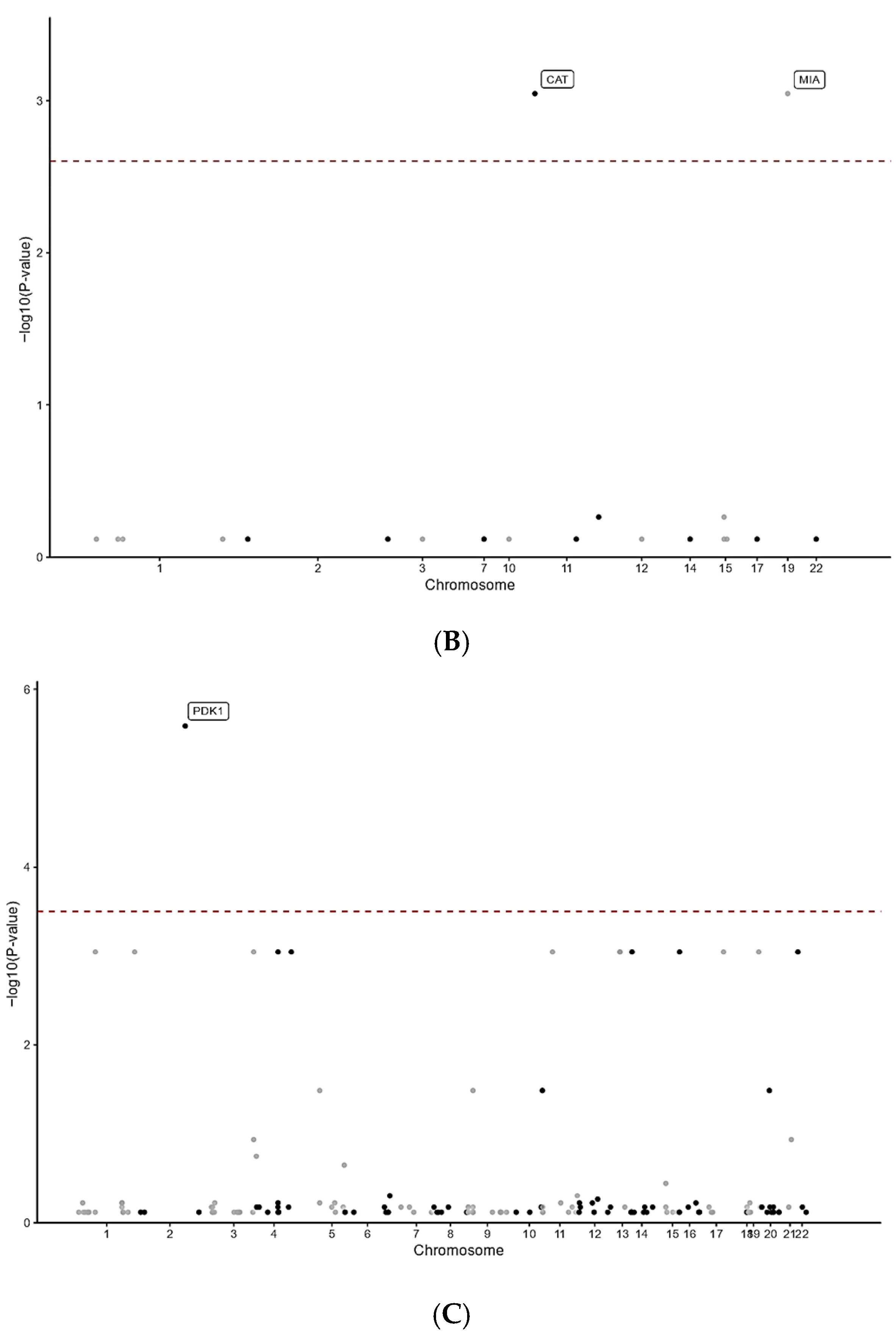
The burden of immunological gene RDVs in AE patients was compared to that in controls using CMC analysis. For LoF variants, 150 genes were tested, and a p-value less than 3.33 × 10⁻⁴ after Bonferroni correction was required to achieve statistical significance. Variants in PDK1 (p = 1.88 × 10⁻⁶) were significantly associated with AE patients (Figure 1A). For dMis variants, among the 20 genes tested, variants in CAT (p = 7.62 × 10⁻⁴) and MIA (p = 7.62 × 10⁻⁴) surpassed the significance threshold (p-value < 2.5 × 10⁻³ after Bonferroni correction), showing an association with AE patients (Figure 1B). For tRDVs, among the 165 genes tested, those with p-values less than 3.03 × 10⁻⁴ after Bonferroni correction identified variants in PDK1 (p = 1.88 × 10⁻⁶) as significantly associated with AE patients (Figure 1C).

3.3. Structure Analysis of the Affected Protein

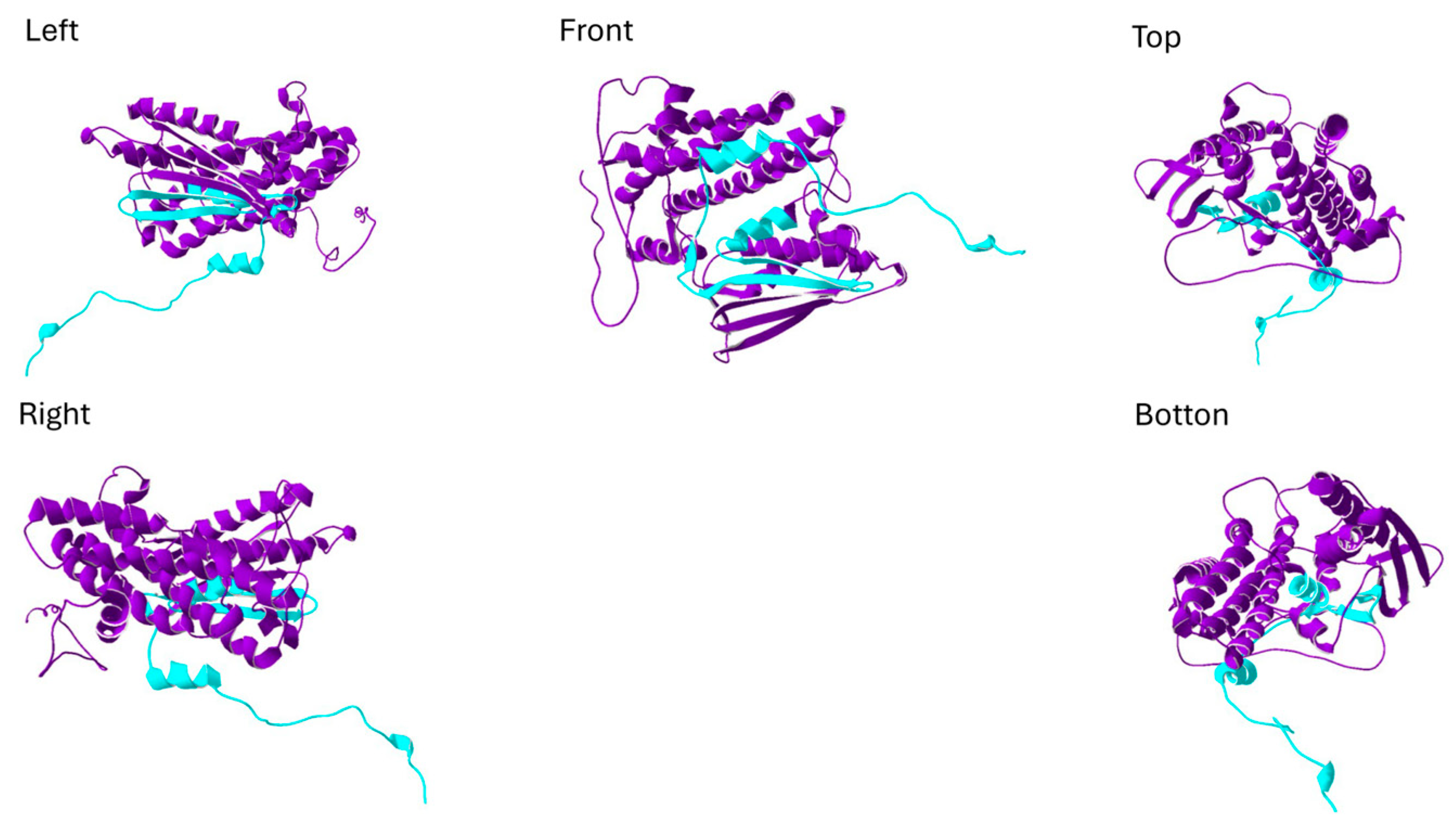
The identified RDV in PDK1 was PDK1:c.1072G>T, p.Gly358*, which is a stop-gained mutation. It was presented in two patients with probable antibody-negative AE but not in the control group. The PDK1 gene belongs to the T cell receptor signaling pathway, consistent with our finding that AE patients harbor more RDVs in this immunological subset. Phosphoinositide-dependent kinase-1 (PDK1), encoded by PDK1, contains an N-terminal serine-threonine kinase domain and a C-terminal pleckstrin homology (PH) domain [34]. PDK1:c.1072G>T leads to a truncated protein (Figure 2) that results in the loss of the C-terminal PH domain, while the kinase domain, located between positions 80 to 342, may not be interrupted. The C-terminal PH domain of the PDK1 is critical for cellular signaling, as it binds specific phosphoinositides to facilitate the proper localization and activation of PDK1 substrates, such as AKT. These interactions are essential for regulating downstream processes, including cell growth, proliferation, and survival [35].
The RDVs in CAT and MIA were CAT:c.1060C>T, p.Arg354Cys and MIA:c.302G>A, p.Gly101Asp, respectively, both resulting in missense mutations. Each RDV was identified in a different patient with probable antibody-negative AE, and they were not the same patients harboring RDVs in PDK1. CAT and MIA belong to the cytokine gene subset; however, the prevalence of RDVs in this subset was not statistically different between the patient and control groups.
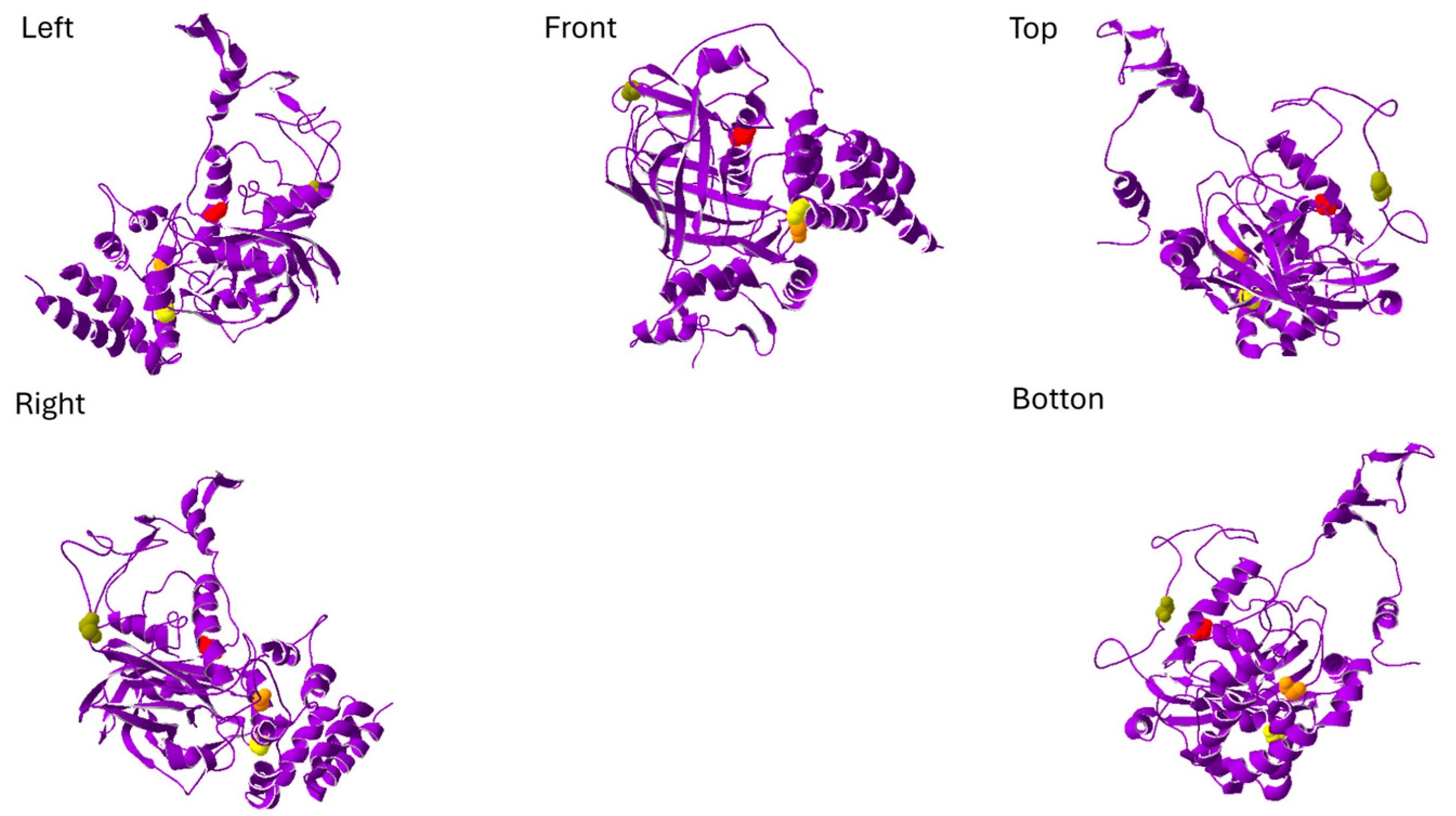
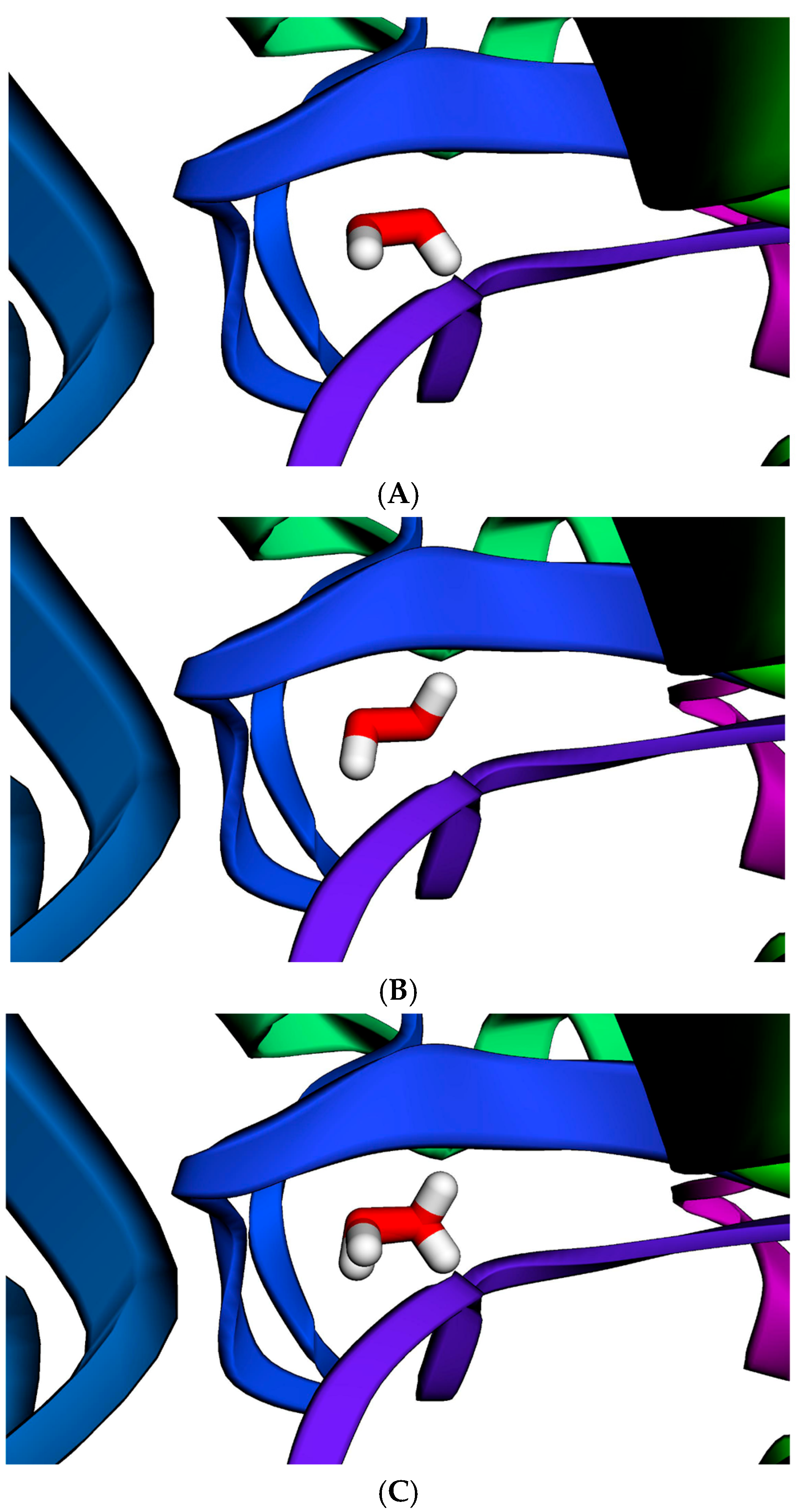
The CAT:c.1060C>T variant results in the substitution of arginine with cysteine at position 354 (p.Arg354Cys) (Figure 3). CAT encodes catalase (CAT), an antioxidant enzyme that converts hydrogen peroxide into water and oxygen to protect cells from oxidative damage [36]. This variant is located within the β-barrel domain of catalase, which stabilizes the heme group essential for its catalytic function [37]. The catalytic site of catalase is formed by histidine 128, asparagine 201, and tyrosine 415, surrounding the heme pocket [37]. To evaluate the functional impact of the p.Arg354Cys mutation, molecular docking simulations were performed using MolModa [32] to model hydrogen peroxide binding. The docking scores were comparable between the wild-type and mutant catalase proteins (−2.94 kcal/mol and −2.96 kcal/mol, respectively). Although hydrogen peroxide docked to a similar region in both protein structures (Figure 4), a noticeable shift in its binding orientation was observed, suggesting that the p.Arg354Cys substitution may subtly influence substrate positioning and potentially affect enzymatic activity.
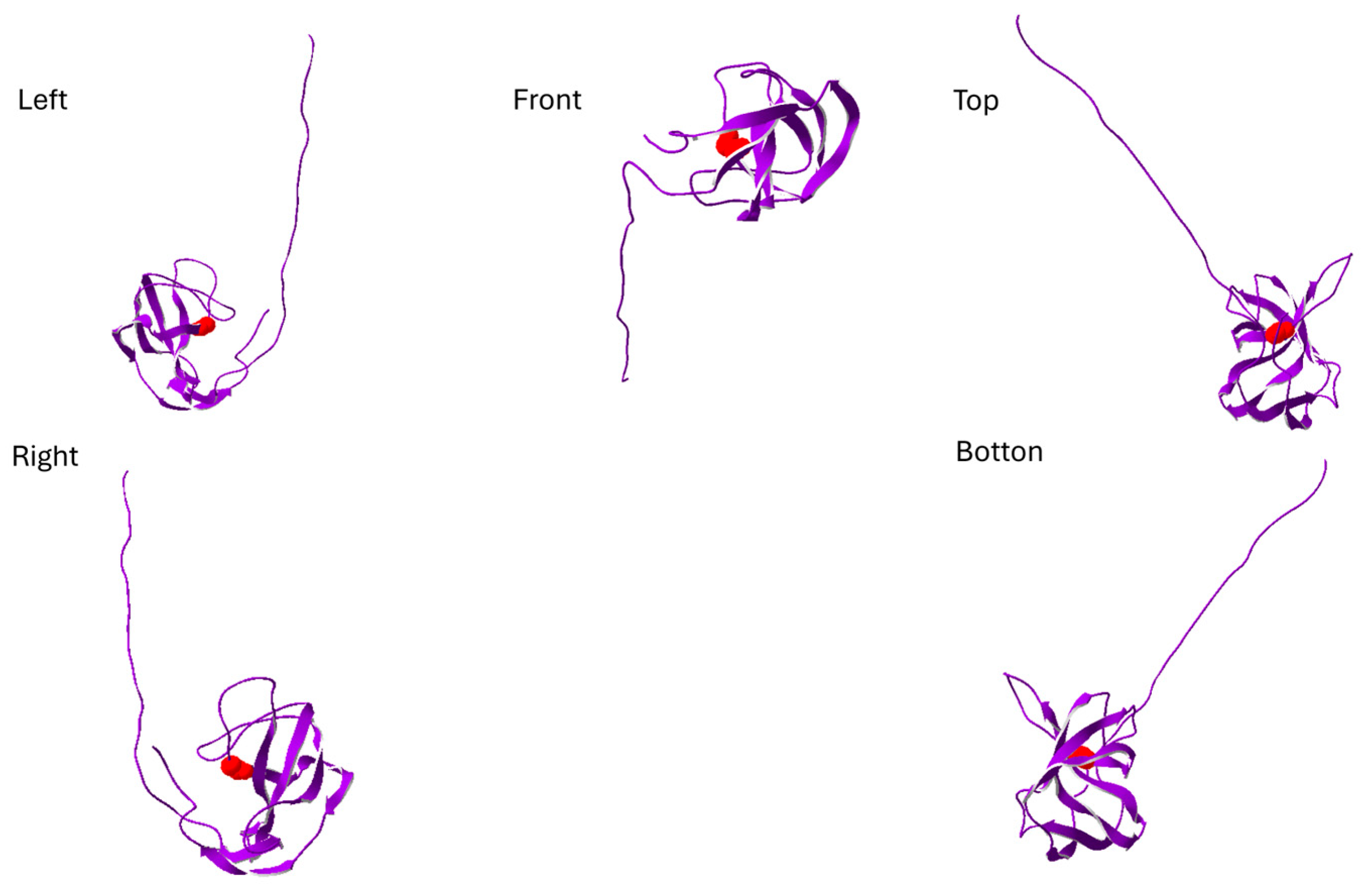
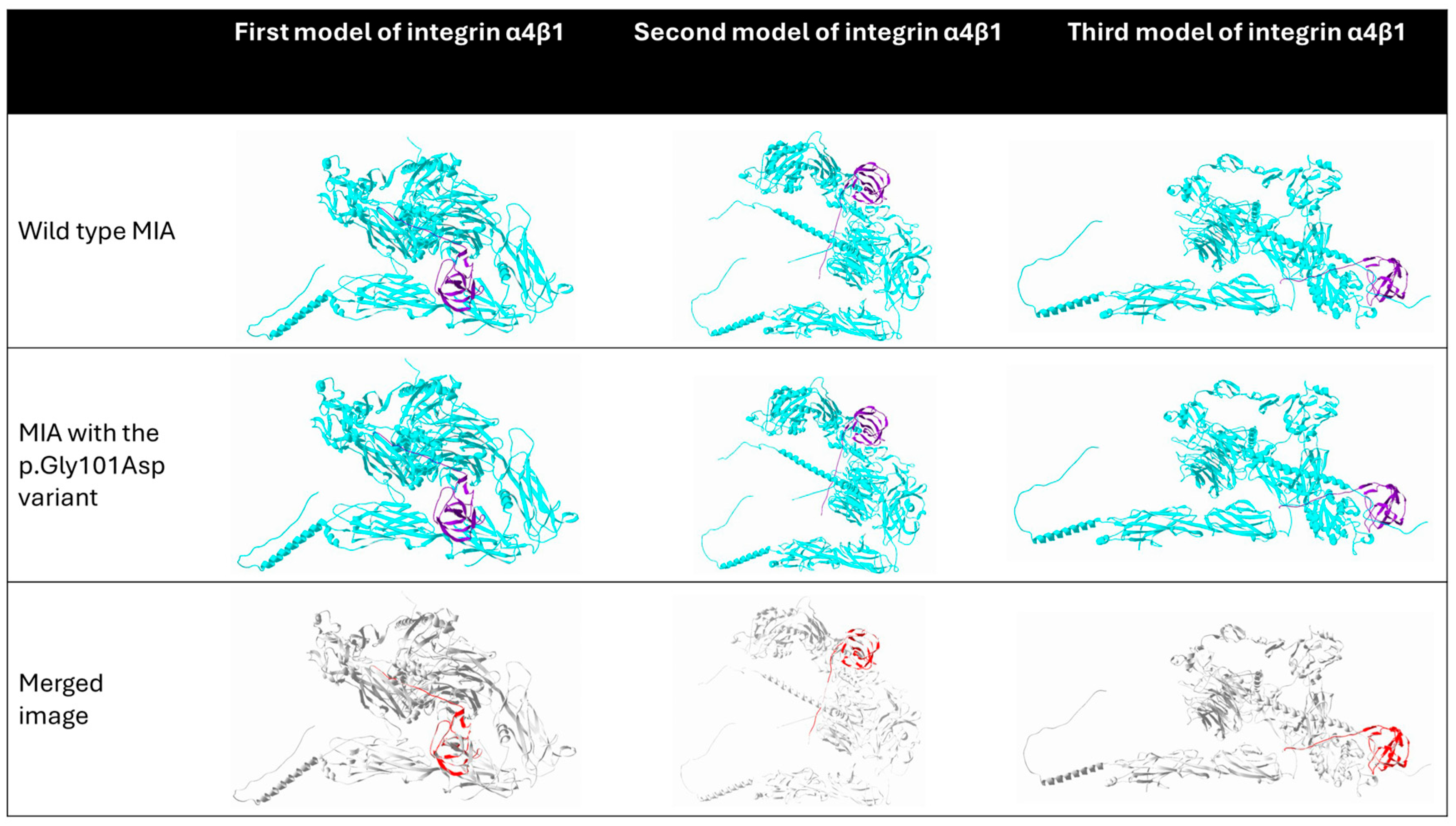
The MIA:c.302G>A variant results in the substitution of glycine with aspartic acid at position 101 (p.Gly101Asp) (Figure 5). MIA encodes the melanoma-inhibitory activity (MIA) protein, which binds to the integrin α4β1 [38], and we used ClusPro [33] to investigate how the identified variant might alter the binding interface or affinity between MIA and integrin α4β1. Currently, there is no publicly available structure specifically for the integrin α4β1 heterodimer. Therefore, we used ClusPro to predict the structure of the integrin α4β1 complex and selected the three best-fitting models. These integrin models were then used to evaluate the interaction between integrin α4β1 and the MIA protein in both its wild-type and variant (p.Gly101Asp) forms (Figure 6). The predicted models suggest that the variant induces only minimal changes in the interaction between integrin α4β1 and the MIA protein, with a slight positional shift in the MIA protein observed due to the genetic variant.

4. Discussion

In our cohort, the distribution of RDVs in the immunological gene set did not differ significantly between patients with AE and the control group. However, the T cell receptor signaling pathway, a subset of immunological genes, exhibited a significantly higher enrichment of RDVs in patients with AE compared to controls. Additionally, the burden test of immunological genes revealed a statistically significantly higher prevalence of RDVs in PDK1, CAT, and MIA in the case group compared to the control group. Notably, PDK1—a key component of the T cell receptor signaling pathway—demonstrated consistent significance across our analyses. It was not only highlighted in the burden test but also belonged to the immunological subset, which showed an increased prevalence of RDVs in patients with AE.
PDK1 is a key downstream effector of the phosphatidylinositol-3 kinase (PI3K)-Akt signaling pathway [39], which regulates immune responses in T and B cells through multiple signaling cascades [39,40]. The activation of P13K induces phosphorylation of phosphatidylinositol-(4,5)-bisphosphate (PIP2) into phosphatidylinositol-(3,4,5)-trisphosphate (PIP3) [41]. The PH domain of PDK1 and Akt then interacts with PIP3, leading to their recruitment to the plasma membrane, where PDK1 phosphorylates Akt to continue phosphorylation of downstream targets [42]. The PI3K-Akt signaling pathway plays a crucial role in adaptive immunity by allowing T cells to exit quiescence for a rapid recall immune response [39]. Deletion of PDK1 blocks T cell differentiation [43], while its deficiency impairs B cell differentiation, prevents IgM+ cell generation, and increases susceptibility to cell death [44]. Currently, no functional studies have investigated the effects of the PDK1 p.Gly358* variant. However, we hypothesize that this mutation may result in the loss of the PH domain, thereby impairing the protein’s recruitment to the plasma membrane while preserving its kinase activity. Supporting this hypothesis, a mouse study of the PDK1 Lys465Glu mutation, which disrupts the PH domain’s interaction with PIP3 and prevents membrane localization, demonstrated a significant reduction in Akt activation and downstream signaling, despite retaining partial PDK1 activity [45]. Consequently, the PDK1 p.Gly358* variant may impair immune signaling and disrupt homeostasis. Given PDK1’s critical role in adaptive immunity and the reduced PI3K-Akt pathway activity associated with this variant, it may contribute to abnormal T cell differentiation and a skewed immune response, potentially promoting autoimmune mechanisms involved in the pathogenesis of AE.
In addition to lymphocytes, monocytes/macrophages are also influenced by PDK1 [46]. The PI3K-Akt signal pathway inactivates the glycogen synthase kinase 3 (GSK3). GSK3 mediates the balance of inflammatory responses by controlling pro- and anti-inflammatory cytokine production [47]. With the inactivation of GSK3 in monocytes, the release of proinflammatory cytokines—IL-6, TNF-α, IL-12, and IFN-γ—is reduced, while the anti-inflammatory cytokine IL-10 is increased [48]. Reduced PI3K-Akt activity, due to the PDK1 p.Gly358* mutation, may impair the inactivation of GSK3, which could shift the immune response toward a proinflammatory phenotype. This disruption in immune homeostasis could contribute to autoimmunity and the development of AE.
CAT converts hydrogen peroxide into water and oxygen, protecting cells from oxidative damage [36]. Although hydrogen peroxide is a reactive molecule that must be tightly regulated to prevent cellular damage, it also functions as a key signaling molecule in the innate immune response [49]. At high concentrations, hydrogen peroxide promotes macrophage polarization toward a proinflammatory phenotype [50] and enhances neutrophil activation [51]. Our simulation showed that the binding pose of hydrogen peroxide at the catalytic site was altered by the p.Arg354Cys substitution. Although functional studies on this specific variant are not yet available, the mutation may affect hydrogen peroxide levels and, consequently, alter immune responses.
MIA is highly expressed in malignant melanoma and plays a key role in promoting tumor invasion and metastasis [52]. MIA can bind with integrin α4β1 [38], which governs the infiltration of T cells into tumor tissue [53]. An in vitro study suggested that MIA is capable of masking the expression of integrin α4β1 and suppressing the anti-tumor immune response [54]. Although MIA is classified as an immunological cytokine due to its ability to interact with integrins, there is currently no evidence linking MIA to autoimmune diseases. Given that MIA is predominantly expressed in malignant melanoma, its relationship with AE remains unclear. Our simulation further suggests that the identified variant induces only a subtle alteration in the interaction between MIA and integrin α4β1. Therefore, the observed association between MIA and AE should be interpreted with caution and may represent an incidental finding.
Our study has several limitations. First, the sample size of AE patients was small, and the types of AE were heterogeneous. Our findings suggest a potential association with the development of AE, but they may not differentiate the genetic backgrounds of the various forms of AE. Collaboration among multiple centers is warranted to include a sufficient number of patients and clarify the different genetic backgrounds among various AEs. Second, we only examined deleterious variants in the exon using WES, which could miss non-coding intron regions. The non-coding intron regions can disrupt normal splicing patterns, leading to changes in protein expression levels or receptor functionality [55]. Third, we used a commercial kit with a cell-based assay to test for six known antibodies associated with AE, as tissue immunohistochemistry assays were unavailable at our facility. Consequently, some cases in our study group classified as antibody-negative may not have been genuinely antibody-negative. To avoid including non-AE patients among the probable antibody-negative AE cases, we adhered to the experts’ consensus diagnostic algorithm [3,6] and required a positive response to immunotherapy for inclusion in this study. Fourth, our analysis was restricted to germline DNA variants in the peripheral blood. We did not look for somatic mutations that may be induced by environmental factors or infectious agents and could play a direct role in the pathogenesis and onset of AE. Lastly, there is no functional analysis of how the genetic variants observed in this study participate in the pathogenesis of AE. Further functional studies of the genetic variants are required to understand their role in AE.

5. Conclusions

Our findings indicate that rare deleterious genetic variants in immunological genes are associated with an increased risk of developing AE. The identified RDV in our study may have a potential role in the pathogenesis of AE. As research in this field advances, we anticipate a deeper understanding of AE’s pathophysiology, driven by abnormal immunological responses.

Supplementary Materials

The following supporting information can be downloaded at: https://www.mdpi.com/article/10.3390/neurolint17120199/s1, Table S1: The diagnostic criteria for possible autoimmune encephalitis; Table S2: The diagnostic criteria for definite autoimmune limbic encephalitis; Table S3: The diagnostic criteria for anti-N-methyl-d-aspartate receptor encephalitis; Table S4: The diagnostic criteria for probable antibody-negative autoimmune encephalitis; Table S5: table for genetic variants.

Author Contributions

Conceptualization, M.-H.T.; Methodology, C.-H.L. and M.-H.T.; Formal analysis, C.-H.L., S.-C.C. and M.-H.T.; Investigation, C.-H.L., C.-J.H., C.-W.H., Y.-T.L. and S.-Y.C.; Writing—Original Draft Preparation, C.-H.L.; Writing—Review and Editing, M.-H.T.; Supervision, M.-H.T. All authors have read and agreed to the published version of the manuscript.

Funding

The publication of this article has been funded by grants from Kaohsiung Chang Gung Memorial Hospital (CMRPG8M0081) to C.H.L., the National Health Research Institute (NHRI-EX111-11022NI) to M.H.T., and the National Science and Technology Council (113-2314-B-182-060-MY3) to M.H.T.

Institutional Review Board Statement

The study was conducted following the Declaration of Helsinki, and the protocol was approved by the Institutional Review Board of Kaohsiung Chang Gung Memorial Hospital.

Informed Consent Statement

Informed consent was obtained from all subjects involved in the study.

Data Availability Statement

The datasets generated and analyzed during the current study cannot be made openly due to ethical concerns but are available from the corresponding author upon request.

Conflicts of Interest

The authors declare no conflicts of interest.

References

  1. Dalmau, J.; Geis, C.; Graus, F. Autoantibodies to Synaptic Receptors and Neuronal Cell Surface Proteins in Autoimmune Diseases of the Central Nervous System. Physiol. Rev. 2017, 97, 839–887. [Google Scholar] [CrossRef] [PubMed]
  2. Dutra, L.A.; Abrantes, F.; Toso, F.F.; Pedroso, J.L.; Barsottini, O.G.P.; Hoftberger, R. Autoimmune encephalitis: A review of diagnosis and treatment. Arq. Neuro-Psiquiatr. 2018, 76, 41–49. [Google Scholar] [CrossRef] [PubMed]
  3. Graus, F.; Titulaer, M.J.; Balu, R.; Benseler, S.; Bien, C.G.; Cellucci, T.; Cortese, I.; Dale, R.C.; Gelfand, J.M.; Geschwind, M.; et al. A clinical approach to diagnosis of autoimmune encephalitis. Lancet Neurol. 2016, 15, 391–404. [Google Scholar] [CrossRef]
  4. Gable, M.S.; Gavali, S.; Radner, A.; Tilley, D.H.; Lee, B.; Dyner, L.; Collins, A.; Dengel, A.; Dalmau, J.; Glaser, C.A. Anti-NMDA receptor encephalitis: Report of ten cases and comparison with viral encephalitis. Eur. J. Clin. Microbiol. Infect. Dis. 2009, 28, 1421–1429. [Google Scholar] [CrossRef]
  5. Spatola, M.; Novy, J.; Du Pasquier, R.; Dalmau, J.; Rossetti, A.O. Status epilepticus of inflammatory etiology: A cohort study. Neurology 2015, 85, 464–470. [Google Scholar] [CrossRef]
  6. Dalmau, J.; Graus, F. Diagnostic criteria for autoimmune encephalitis: Utility and pitfalls for antibody-negative disease. Lancet Neurol. 2023, 22, 529–540. [Google Scholar] [CrossRef] [PubMed]
  7. Bauer, J.; Bien, C.G. Neuropathology of autoimmune encephalitides. Handb. Clin. Neurol. 2016, 133, 107–120. [Google Scholar] [CrossRef]
  8. Joubert, B.; Dalmau, J. The role of infections in autoimmune encephalitides. Rev. Neurol. 2019, 175, 420–426. [Google Scholar] [CrossRef]
  9. Jeffery, O.J.; Lennon, V.A.; Pittock, S.J.; Gregory, J.K.; Britton, J.W.; McKeon, A. GABAB receptor autoantibody frequency in service serologic evaluation. Neurology 2013, 81, 882–887. [Google Scholar] [CrossRef]
  10. Venkatesan, A.; Benavides, D.R. Autoimmune encephalitis and its relation to infection. Curr. Neurol. Neurosci. Rep. 2015, 15, 3. [Google Scholar] [CrossRef]
  11. Graus, F.; Dalmau, J. Paraneoplastic neurological syndromes: Diagnosis and treatment. Curr. Opin. Neurol. 2007, 20, 732–737. [Google Scholar] [CrossRef] [PubMed]
  12. Virupakshaiah, A.; Dalakas, M.C.; Desai, N.; Mintzer, S.; Ratliff, J. LGI1 encephalitis with squamous lung-cell carcinoma: Resolution after tumor resection. Neurol. Neuroimmunol. Neuroinflamm. 2021, 8, e905. [Google Scholar] [CrossRef]
  13. Kim, T.J.; Lee, S.T.; Moon, J.; Sunwoo, J.S.; Byun, J.I.; Lim, J.A.; Shin, Y.W.; Jun, J.S.; Lee, H.S.; Lee, W.J.; et al. Anti-LGI1 encephalitis is associated with unique HLA subtypes. Ann. Neurol. 2017, 81, 183–192. [Google Scholar] [CrossRef]
  14. van Sonderen, A.; Roelen, D.L.; Stoop, J.A.; Verdijk, R.M.; Haasnoot, G.W.; Thijs, R.D.; Wirtz, P.W.; Schreurs, M.W.; Claas, F.H.; Sillevis Smitt, P.A.; et al. Anti-LGI1 encephalitis is strongly associated with HLA-DR7 and HLA-DRB4. Ann. Neurol. 2017, 81, 193–198. [Google Scholar] [CrossRef]
  15. Li, X.; Zhu, J.; Peng, Y.; Guan, H.; Chen, J.; Wang, Z.; Zheng, D.; Cheng, N.; Wang, H. Association of Polymorphisms in Inflammatory Cytokines Encoding Genes With Anti-N-methyl-D-Aspartate Receptor Encephalitis in the Southern Han Chinese. Front. Neurol. 2020, 11, 553355. [Google Scholar] [CrossRef]
  16. Tsai, M.H.; Lin, C.H.; Tsai, K.W.; Lin, M.H.; Ho, C.J.; Lu, Y.T.; Weng, K.P.; Lin, Y.; Lin, P.H.; Li, S.C. S100A6 Promotes B Lymphocyte Penetration Through the Blood-Brain Barrier in Autoimmune Encephalitis. Front. Genet. 2019, 10, 1188. [Google Scholar] [CrossRef]
  17. Lin, C.H.; Li, S.C.; Lin, M.H.; Ho, C.J.; Lu, Y.T.; Lin, Y.; Lin, P.H.; Tsai, K.W.; Tsai, M.H. S100A6 participates in initiation of autoimmune encephalitis and is under epigenetic control. Brain Behav. 2023, 13, e2897. [Google Scholar] [CrossRef] [PubMed]
  18. Lu, Y.T.; Lin, C.H.; Ho, C.J.; Chen, S.Y.; Tsai, M.H. Validating Prediction Tools for Autoimmune Encephalitis in Adult Taiwanese Patients: A Retrospective Study. Biomedicines 2023, 11, 1906. [Google Scholar] [CrossRef]
  19. Pavlakis, P.P. Rheumatologic Disorders and the Nervous System. Continuum 2020, 26, 591–610. [Google Scholar] [CrossRef]
  20. McLaren, W.; Gil, L.; Hunt, S.E.; Riat, H.S.; Ritchie, G.R.; Thormann, A.; Flicek, P.; Cunningham, F. The Ensembl Variant Effect Predictor. Genome. Biol. 2016, 17, 122. [Google Scholar] [CrossRef] [PubMed]
  21. Karczewski, K.J.; Francioli, L.C.; Tiao, G.; Cummings, B.B.; Alfoldi, J.; Wang, Q.; Collins, R.L.; Laricchia, K.M.; Ganna, A.; Birnbaum, D.P.; et al. The mutational constraint spectrum quantified from variation in 141,456 humans. Nature 2020, 581, 434–443. [Google Scholar] [CrossRef]
  22. Petrovski, S.; Wang, Q.; Heinzen, E.L.; Allen, A.S.; Goldstein, D.B. Genic intolerance to functional variation and the interpretation of personal genomes. PLoS Genet. 2013, 9, e1003709. [Google Scholar] [CrossRef]
  23. Jaganathan, K.; Kyriazopoulou Panagiotopoulou, S.; McRae, J.F.; Darbandi, S.F.; Knowles, D.; Li, Y.I.; Kosmicki, J.A.; Arbelaez, J.; Cui, W.; Schwartz, G.B.; et al. Predicting Splicing from Primary Sequence with Deep Learning. Cell 2019, 176, 535–548.e24. [Google Scholar] [CrossRef]
  24. Ioannidis, N.M.; Rothstein, J.H.; Pejaver, V.; Middha, S.; McDonnell, S.K.; Baheti, S.; Musolf, A.; Li, Q.; Holzinger, E.; Karyadi, D.; et al. REVEL: An Ensemble Method for Predicting the Pathogenicity of Rare Missense Variants. Am. J. Hum. Genet. 2016, 99, 877–885. [Google Scholar] [CrossRef]
  25. Cheng, J.; Novati, G.; Pan, J.; Bycroft, C.; Zemgulyte, A.; Applebaum, T.; Pritzel, A.; Wong, L.H.; Zielinski, M.; Sargeant, T.; et al. Accurate proteome-wide missense variant effect prediction with AlphaMissense. Science 2023, 381, eadg7492. [Google Scholar] [CrossRef] [PubMed]
  26. Kircher, M.; Witten, D.M.; Jain, P.; O’Roak, B.J.; Cooper, G.M.; Shendure, J. A general framework for estimating the relative pathogenicity of human genetic variants. Nat. Genet. 2014, 46, 310–315. [Google Scholar] [CrossRef] [PubMed]
  27. Bhattacharya, S.; Andorf, S.; Gomes, L.; Dunn, P.; Schaefer, H.; Pontius, J.; Berger, P.; Desborough, V.; Smith, T.; Campbell, J.; et al. ImmPort: Disseminating data to the public for the future of immunology. Immunol. Res. 2014, 58, 234–239. [Google Scholar] [CrossRef] [PubMed]
  28. Zhan, X.; Hu, Y.; Li, B.; Abecasis, G.R.; Liu, D.J. RVTESTS: An efficient and comprehensive tool for rare variant association analysis using sequence data. Bioinformatics 2016, 32, 1423–1426. [Google Scholar] [CrossRef]
  29. Li, B.; Leal, S.M. Methods for detecting associations with rare variants for common diseases: Application to analysis of sequence data. Am. J. Hum. Genet. 2008, 83, 311–321. [Google Scholar] [CrossRef]
  30. Varadi, M.; Bertoni, D.; Magana, P.; Paramval, U.; Pidruchna, I.; Radhakrishnan, M.; Tsenkov, M.; Nair, S.; Mirdita, M.; Yeo, J.; et al. AlphaFold Protein Structure Database in 2024: Providing structure coverage for over 214 million protein sequences. Nucleic Acids Res. 2024, 52, D368–D375. [Google Scholar] [CrossRef]
  31. Guex, N.; Peitsch, M.C. SWISS-MODEL and the Swiss-PdbViewer: An environment for comparative protein modeling. Electrophoresis 1997, 18, 2714–2723. [Google Scholar] [CrossRef]
  32. Kochnev, Y.; Ahmed, M.; Maldonado, A.M.; Durrant, J.D. MolModa: Accessible and secure molecular docking in a web browser. Nucleic Acids Res. 2024, 52, W498–W506. [Google Scholar] [CrossRef]
  33. Jones, G.; Jindal, A.; Ghani, U.; Kotelnikov, S.; Egbert, M.; Hashemi, N.; Vajda, S.; Padhorny, D.; Kozakov, D. Elucidation of protein function using computational docking and hotspot analysis by ClusPro and FTMap. Acta Crystallogr. D Struct. Biol. 2022, 78, 690–697. [Google Scholar] [CrossRef] [PubMed]
  34. Di Blasio, L.; Gagliardi, P.A.; Puliafito, A.; Primo, L. Serine/Threonine Kinase 3-Phosphoinositide-Dependent Protein Kinase-1 (PDK1) as a Key Regulator of Cell Migration and Cancer Dissemination. Cancers 2017, 9, 25. [Google Scholar] [CrossRef] [PubMed]
  35. Bayascas, J.R. PDK1: The major transducer of PI 3-kinase actions. Curr. Top Microbiol. Immunol. 2010, 346, 9–29. [Google Scholar] [CrossRef] [PubMed]
  36. Chelikani, P.; Fita, I.; Loewen, P.C. Diversity of structures and properties among catalases. Cell. Mol. Life Sci. 2004, 61, 192–208. [Google Scholar] [CrossRef]
  37. Yuzugullu Karakus, Y. Typical Catalases: Function and Structure. In Glutathione System and Oxidative Stress in Health and Disease; Bagatini, M.D., Ed.; IntechOpen: Rijeka, Croatia, 2020. [Google Scholar] [CrossRef]
  38. Bauer, R.; Humphries, M.; Fassler, R.; Winklmeier, A.; Craig, S.E.; Bosserhoff, A.K. Regulation of integrin activity by MIA. J. Biol. Chem. 2006, 281, 11669–11677. [Google Scholar] [CrossRef]
  39. Saravia, J.; Raynor, J.L.; Chapman, N.M.; Lim, S.A.; Chi, H. Signaling networks in immunometabolism. Cell Res. 2020, 30, 328–342. [Google Scholar] [CrossRef]
  40. Okkenhaug, K.; Bilancio, A.; Farjot, G.; Priddle, H.; Sancho, S.; Peskett, E.; Pearce, W.; Meek, S.E.; Salpekar, A.; Waterfield, M.D.; et al. Impaired B and T cell antigen receptor signaling in p110delta PI 3-kinase mutant mice. Science 2002, 297, 1031–1034. [Google Scholar] [CrossRef]
  41. Denley, A.; Gymnopoulos, M.; Kang, S.; Mitchell, C.; Vogt, P.K. Requirement of phosphatidylinositol(3,4,5)trisphosphate in phosphatidylinositol 3-kinase-induced oncogenic transformation. Mol. Cancer Res. 2009, 7, 1132–1138. [Google Scholar] [CrossRef]
  42. Calleja, V.; Alcor, D.; Laguerre, M.; Park, J.; Vojnovic, B.; Hemmings, B.A.; Downward, J.; Parker, P.J.; Larijani, B. Intramolecular and intermolecular interactions of protein kinase B define its activation in vivo. PLoS Biol. 2007, 5, e95. [Google Scholar] [CrossRef]
  43. Hinton, H.J.; Alessi, D.R.; Cantrell, D.A. The serine kinase phosphoinositide-dependent kinase 1 (PDK1) regulates T cell development. Nat. Immunol. 2004, 5, 539–545. [Google Scholar] [CrossRef]
  44. Baracho, G.V.; Cato, M.H.; Zhu, Z.; Jaren, O.R.; Hobeika, E.; Reth, M.; Rickert, R.C. PDK1 regulates B cell differentiation and homeostasis. Proc. Natl. Acad. Sci. USA 2014, 111, 9573–9578. [Google Scholar] [CrossRef]
  45. Bayascas, J.R.; Wullschleger, S.; Sakamoto, K.; Garcia-Martinez, J.M.; Clacher, C.; Komander, D.; van Aalten, D.M.; Boini, K.M.; Lang, F.; Lipina, C.; et al. Mutation of the PDK1 PH domain inhibits protein kinase B/Akt, leading to small size and insulin resistance. Mol. Cell. Biol. 2008, 28, 3258–3272. [Google Scholar] [CrossRef]
  46. Yang, Y.; Kong, W.; Xia, Z.; Xiao, L.; Wang, S. Regulation mechanism of PDK1 on macrophage metabolism and function. Cell Biochem. Funct. 2016, 34, 546–553. [Google Scholar] [CrossRef] [PubMed]
  47. Hoffmeister, L.; Diekmann, M.; Brand, K.; Huber, R. GSK3: A Kinase Balancing Promotion and Resolution of Inflammation. Cells 2020, 9, 820. [Google Scholar] [CrossRef]
  48. Martin, M.; Rehani, K.; Jope, R.S.; Michalek, S.M. Toll-like receptor-mediated cytokine production is differentially regulated by glycogen synthase kinase 3. Nat. Immunol. 2005, 6, 777–784. [Google Scholar] [CrossRef] [PubMed]
  49. Sies, H.; Jones, D.P. Reactive oxygen species (ROS) as pleiotropic physiological signalling agents. Nat. Rev. Mol. Cell Biol. 2020, 21, 363–383. [Google Scholar] [CrossRef]
  50. Tang, D.; Shi, Y.; Kang, R.; Li, T.; Xiao, W.; Wang, H.; Xiao, X. Hydrogen peroxide stimulates macrophages and monocytes to actively release HMGB1. J. Leukoc Biol. 2007, 81, 741–747. [Google Scholar] [CrossRef] [PubMed]
  51. Morad, H.; Luqman, S.; Tan, C.H.; Swann, V.; McNaughton, P.A. TRPM2 ion channels steer neutrophils towards a source of hydrogen peroxide. Sci. Rep. 2021, 11, 9339. [Google Scholar] [CrossRef]
  52. Schmidt, J.; Bosserhoff, A.K. Processing of MIA protein during melanoma cell migration. Int. J. Cancer 2009, 125, 1587–1594. [Google Scholar] [CrossRef] [PubMed]
  53. Bosserhoff, A.K.; Hauschild, A.; Hein, R.; Schadendorf, D.; Stockfleth, E.; Bogenrieder, T.; Landthaler, M.; Buettner, R.; Stolz, W. Elevated MIA serum levels are of relevance for management of metastasized malignant melanomas: Results of a German multicenter study. J. Investig. Dermatol. 2000, 114, 395–396. [Google Scholar] [CrossRef]
  54. Jachimczak, P.; Apfel, R.; Bosserhoff, A.K.; Fabel, K.; Hau, P.; Tschertner, I.; Wise, P.; Schlingensiepen, K.H.; Schuler-Thurner, B.; Bogdahn, U. Inhibition of immunosuppressive effects of melanoma-inhibiting activity (MIA) by antisense techniques. Int. J. Cancer 2005, 113, 88–92. [Google Scholar] [CrossRef] [PubMed]
  55. Haddad-Mashadrizeh, A.; Mirahmadi, M.; Taghavizadeh Yazdi, M.E.; Gholampour-Faroji, N.; Bahrami, A.; Zomorodipour, A.; Moghadam Matin, M.; Qayoomian, M.; Saebnia, N. Introns and Their Therapeutic Applications in Biomedical Researches. Iran J. Biotechnol. 2023, 21, e3316. [Google Scholar] [CrossRef]
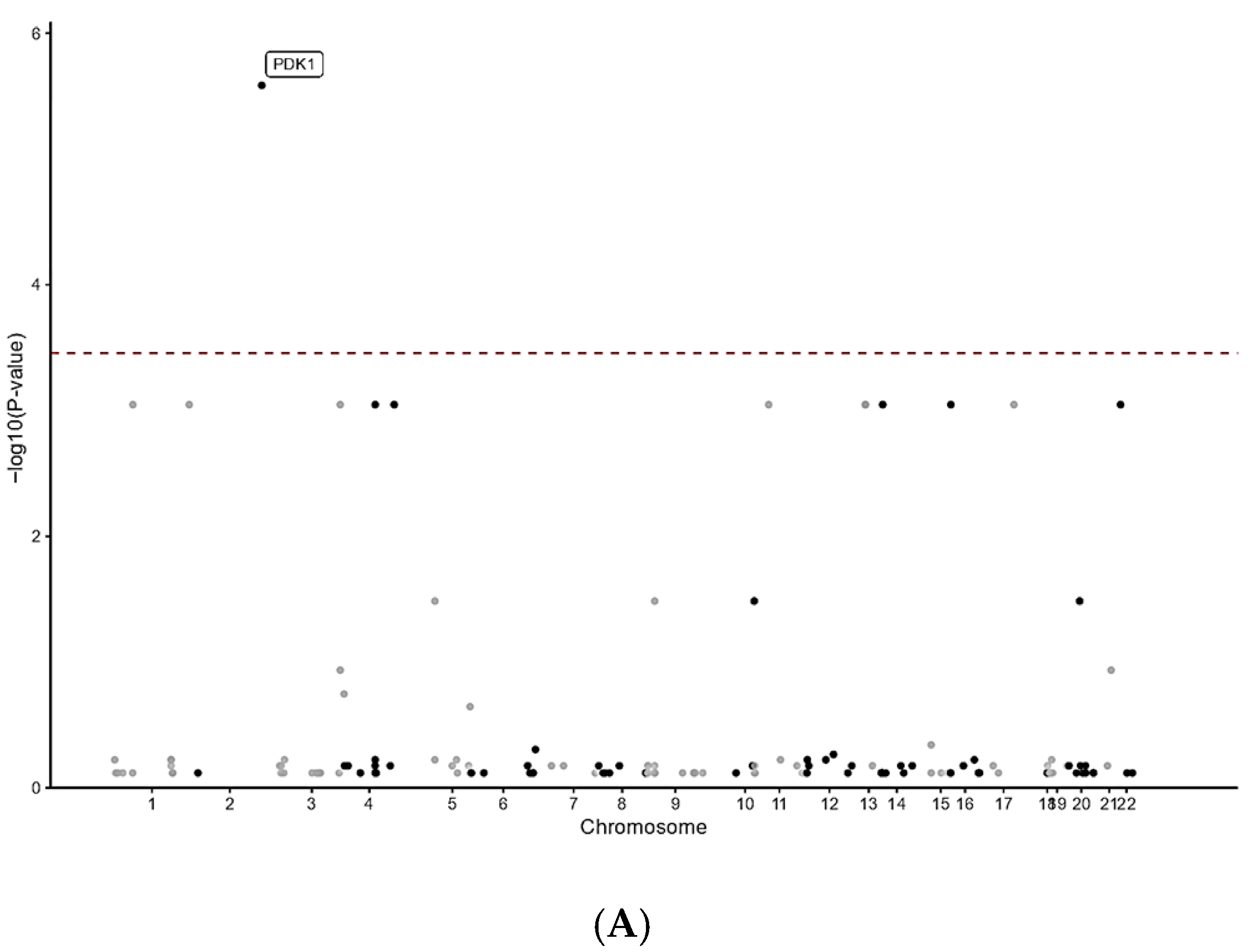
Figure 1. Manhattan plots for different types of rare deleterious variants, with a red line indicating the significance threshold. (A): Manhattan plots for loss of function variants. (B): Manhattan plots for deleterious missense variants. (C): Manhattan plots for total rare deleterious variants.
Neurolint 17 00199 g001aNeurolint 17 00199 g001b
Figure 2. The structure of phosphoinositide-dependent kinase-1 (PDK1) is shown from five different perspectives: left, right, front, top, and bottom. The purple region represents the truncated protein fragment resulting from the PDK1:c.1072G>T, p.Gly358* mutation, while the cyan region highlights the structural loss associated with this mutation. The figure is created by SwissPdb Viewer [31].
Neurolint 17 00199 g002
Figure 3. The structure of catalase is shown from five different perspectives: left, right, front, top, and bottom. The key residues involved in catalytic activity are highlighted—histidine 128 as an orange sphere, asparagine 201 as a yellow sphere, and tyrosine 415 as a green sphere. The red sphere marks the site of the amino acid substitution caused by the CAT:c.1060C>T mutation. The figure is created by SwissPdb Viewer [31].
Neurolint 17 00199 g003
Figure 4. Predicted interaction of hydrogen peroxide (shown as red and white sticks) with catalase, modeled using MolModa [32]. (A). Hydrogen peroxide interacts with wild-type catalase between His128, Asn201, and Tyr415. (B). Hydrogen peroxide interacts with catalase carrying the CAT:c.1060C>T (p.Arg354Cys) mutation within the same region. (C). Superimposition of panels A and B demonstrates a shifted binding pose of hydrogen peroxide in the mutant structure.
Neurolint 17 00199 g004
Figure 5. The structure of melanoma-inhibitory activity (MIA) protein is shown from five different perspectives: left, right, front, top, and bottom. The red sphere highlights the amino acid change resulting from the MIA:c.302G>A mutation. The figure is created by SwissPdb Viewer [31].
Neurolint 17 00199 g005
Figure 6. The predicted interaction between the integrin α4β1 heterodimer and the melanoma-inhibitory activity (MIA) protein, in both wild-type and p.Gly101Asp variant forms, is illustrated across three structural models of integrin α4β1. In each model, the integrin α4β1 heterodimer is shown in cyan, while the MIA protein—either wild-type or variant—is shown in purple. The bottom row presents merged images of the wild-type and variant MIA structures aligned with the same integrin model; red regions indicate areas of structural misalignment between the two forms of MIA, highlighting subtle positional shifts caused by the p.Gly101Asp variant. The figure is created by SwissPdb Viewer [31].
Neurolint 17 00199 g006
Table 1. The demographic characteristics of patients with autoimmune encephalitis.
Type of AENumber of PatientsGender (Female/Male)Age (IQR)
Anti-NMDAR encephalitis1210/225.5 (21.0–32.25)
Anti-GABABR encephalitis10/153.0
Anti-LGI1 encephalitis11/025.0
Probable antibody-negative AE2213/935.0 (26.0–45.5)
Aberrative: AE = autoimmune encephalitis; GABABR = gamma-aminobutyric acid-B receptor; IQR = interquartile range; LGI1 = leucine-rich glioma-inactivated 1; NMDAR = N-methyl-d-aspartate receptor.
Disclaimer/Publisher’s Note: The statements, opinions and data contained in all publications are solely those of the individual author(s) and contributor(s) and not of MDPI and/or the editor(s). MDPI and/or the editor(s) disclaim responsibility for any injury to people or property resulting from any ideas, methods, instructions or products referred to in the content.