1. Introduction
The transition toward sustainable transportation has encouraged researchers to focus on hybrid propulsion systems combining multiple energy sources, primarily lithium-ion batteries (LiBs), supercapacitors (SCs), and fuel cells (FCs) [
1]. These systems take advantage of the high energy density of LiBs, the high power density of SCs, and the continuous energy supply of FCs. Then one can create a synergistic architecture for battery (BEVs), hybrid (HEVs), fuel cell (FCEVs), and fuel cell hybrid electric vehicles (FCHEVs) [
2]. However, the integration of such heterogeneous sources constitutes a challenge for energy management strategies (EMSs), as well as an additional complexity for propulsion system simulation, both critical for achieving optimal performance under diverse driving conditions [
3].
Hybrid energy storage systems (HESSs) may combine Internal Combustion Engines (ICEs) with LiBs for sustained energy supply and SCs for rapid power delivery during acceleration and regenerative braking [
4,
5]. FCs, typically proton exchange membrane fuel cells (PEMFCs), can serve as primary energy sources in FCHEVs, offering zero emissions and high efficiency [
6], substituting for ICEs. Regarding the interconnection and control of the different storage devices, three main topologies are commonly employed: passive without power converters, semi-active, where some devices are connected through power converters, and active, where all devices are interfaced via power converters [
7]. Active topologies dominate recent designs due to their flexibility in managing power distributions and maintaining system stability under dynamic loads [
8].
The objective of integrating SCs is to mitigate the LiB stress by absorbing peak power demands, reducing the average depth of discharge and extending the life of the LiB [
5]. Nevertheless, FCs’ main function is to provide continuous energy, reducing the need for large LiB packs and improving the vehicle range [
9]. Recent researches confirm that hybridization enhances the efficiency of regenerative braking, the dynamic response of the vehicle, and the overall energy economy. For instance, the application of advanced EMS algorithms has been shown to reduce hydrogen consumption by up to 8% to 10% [
10]. The strategies are essential to establish the most suited power flows among elements, LiBs, SCs, and FCs. Currently EMSs fall into five categories: rule-based approaches [
11], optimization-based approaches [
12], predictive control [
13], intelligent control [
14], and stochastic/multi-objective strategies [
15].
However, manufacturers and fleet operators need a design tool that allows them to properly size their propulsion and energy storage systems. Optimizing the size of FCs, LiBs, and SCs is intertwined with EMS design. Oversizing the components increases both vehicle cost and weight, while undersized systems compromise meeting the user demands. State of Charge (SoC)-based sizing methods are preferred for real-time EMSs, ensuring minimal degradation and extended lifespan [
2], while component aging, particularly in batteries and FCs, is influenced by current profiles, temperature, and depth of discharge [
5]. While the hybridization solution reduces stress on LiBs, predictive EMSs contribute towards minimizing degradation [
8].
Aging of LiBs and FCs significantly impacts the performance and reliability of hybrid propulsion systems [
5]. LiB aging manifests as capacity fade and increased internal resistance, which affects SoC estimation and power delivery [
12]. EMSs must account for aging by incorporating degradation models into optimization algorithms. Predictive EMS approaches, such as Model Predictive Control (MPC), can integrate aging models to minimize stress on components and extend lifespan [
13]. Intelligent control methods, including Reinforcement Learning (RL), have shown promise in adapting power split decisions based on aging indicators [
16].
Hybrid propulsion systems combining LiBs, SCs, and FCs represent a promising pathway toward sustainable mobility. Advances in EMSs—from rule-based to AI-driven strategies—alongside robust simulation frameworks are enabling significant improvements in fuel economy, component longevity, and dynamic performance. Continued research in predictive and intelligent control, coupled with optimal sizing and degradation modeling, will be key to mainstream adoption of these technologies.
On the other hand, simulation plays a critical role in assessing the above-mentioned EMSs, as well as in optimizing the size of the vehicle propulsion systems. Tools such as AVL Cruise, MATLAB/Simulink, Simscape, and Stateflow enable detailed modeling of the subsystems of the powertrain—electrical, mechanical, and thermal. Advanced developments incorporate Hardware-in-the-Loop (HIL) testing to validate the EMS functionalities under realistic conditions [
17]. For instance, in [
12] the authors modeled FCHEVs using PEMFCs and lithium–titanium–oxide batteries, achieving optimized configurations for the World-wide harmonized Light-duty Test Cycle (WLTC) and real driving cycles, with fuel consumption as low as 0.56 kg/(100 km·t). Simulation of HESSs (LiBs + SCs) is expected to provide significant reductions in battery current load and energy throughput, reducing hardware degradation.
Regarding the total weight of the HESS, several works include it as a design criterion, such as [
18,
19,
20]. However, obtaining a fair comparison becomes difficult if the same total weight is not used when evaluating different sizing solutions between LiBs and SCs. The literature review shows that many studies address HESS applications for EVs or FCHEVs by proposing different EMSs that provide various benefits depending on the research focus. Nevertheless, there is no clear proposal aimed at supporting HESS sizing under a fixed weight constraint while optimizing system efficiency and battery aging and including an economic cost analysis.
In this paper, a techno-economic methodology to select the optimal hybridization percentage for the HESS of a heavy-duty FCHEV based on an AVL Cruise simulation model is proposed. The approach aims to maximize system efficiency while mitigating battery aging, introducing a constant total weight constraint to ensure a fair comparison between configurations. In addition, this study completes the technical analysis with an economic evaluation, assessing the feasibility of the proposed solutions.
This paper is organized as follows: After presenting the dimensioning methodology employed based on the concept of hybridization grade in
Section 2, the FCHEV model simulation for the powertrain used in this study is detailed in
Section 3. The proposed dimensioning methodology proposed in
Section 2 is applied to a case study in
Section 4, obtaining simulation results that yield conclusions that are detailed in
Section 5.
2. Dimensioning Methodology
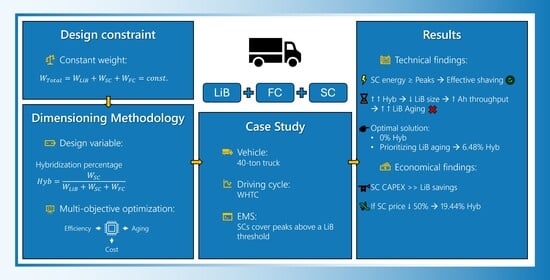
The techno-economic dimensioning methodology presented in this paper aims to determine the optimal combination of LiBs and SCs for a heavy-duty FCHEV under a specific driving cycle and EMS. The methodology relies on a brute-force analysis, where the different study cases are defined through the concept of ‘hybridization grade’ (Hyb). This parameter represents the ratio of the on-board SC weight to the combined weight of the SCs, LiBs, and FC. This metric quantifies the deviation of the FCHEV configuration from a standard FCEV without SCs, while keeping the total weight of the on-board energy systems constant (as this is a critical variable determining vehicle range). Unlike previous studies such as [
18,
19,
20], this methodology maintains a constant total weight. This constraint is essential to ensure a fair comparison, as it prevents fluctuations in energy demand that would distort the evaluation of different LiB and SC sizing solutions. Therefore, increasing the Hyb parameter entails substituting LiBs with SCs. The hybridization grade is expressed as a percentage:
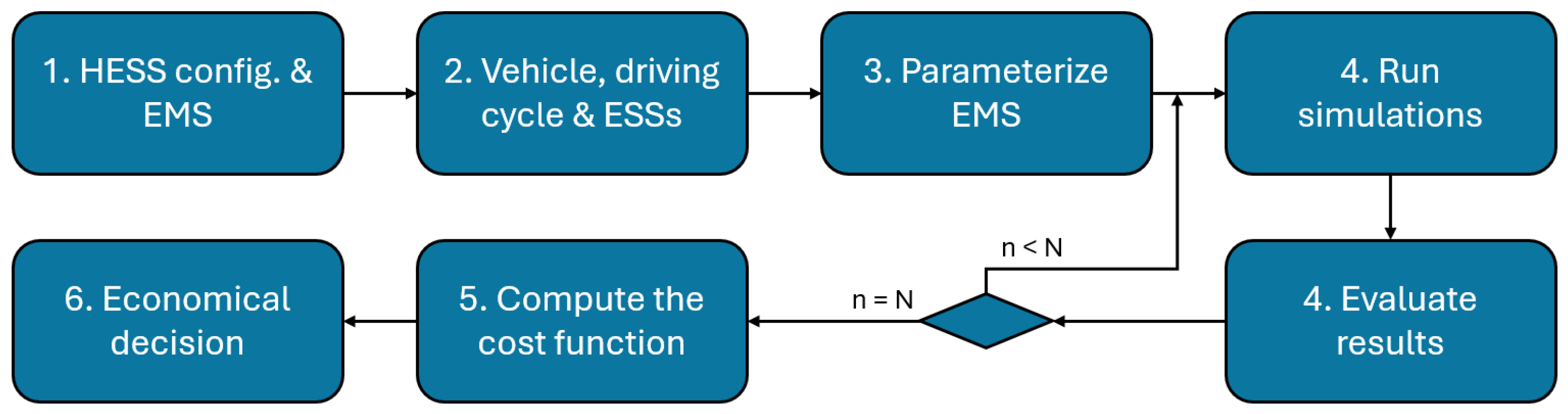
The methodology aims to find the Hyb that maximizes the overall system efficiency while minimizing LiB aging. Thus, from a technical perspective, two variables need to be optimized (HESS efficiency and LiB aging), whereas from an economic perspective, the different cases (Hyb percentages) are compared based on the Total Cost of Ownership (TCO), considering the capital expenditure (CAPEX), operational expenditure (OPEX), and the battery replacement cost upon reaching its end of life (EoL). Given the limited number of optimization variables and the presence of a single design variable (Hyb), the use of optimization methods more complex than a brute-force approach is not justified, as the achieved optimum would not be improved. The proposed methodology comprises the following steps, which are represented in the flowchart in
Figure 1:
Selection of the vehicle, driving cycle, and powertrain components. The first step defines the boundary conditions of the analysis. This involves selecting the specific vehicle chassis, the driving cycle that represents the application, and the specific ESS technologies (LiB cells, SC modules, and FC system) to be used. The technical specifications of these selected components (energy density, power limits, and weight) are inputs required for the subsequent sizing definition.
Definition of HESS topology and EMS. Once the components are selected, the HESS architecture is defined (e.g., active topology with DC/DC converters). The sizing methodology is established based on the Hyb parameter. The base case (Hyb = 0) consists of the FCHEV with only LiBs. Subsequent cases increase the Hyb by substituting a specific mass of LiBs with an equivalent mass of SCs, utilizing the specific weights of the components selected in Step 1 to maintain the total on-board weight constant. Finally, the EMS corresponding to the chosen topology is defined.
Modeling and parametrization. The simulation models for the vehicle powertrain and the EMS are built and parameterized using the data from the components selected in Step 1.
Simulation and performance assessment. Simulations are executed for each Hyb value to evaluate the HESS efficiency and the aging degradation of the LiB under the defined cycle.
Optimization. The simulation results are consolidated to determine the optimal Hyb value that maximizes system efficiency while minimizing component aging.
Economic analysis. The technical results are translated into economic terms, calculating the CAPEX, OPEX, and LiB replacement cost.
For simulation purposes, a low-abstraction model of the heavy-duty FCHEV has been developed in MATLAB/Simulink R2025b. This model incorporates detailed commutation-level modeling of the powertrain’s power converters as well as the dynamic behavior of each ESS. Thermal dynamics are represented for both SCs and LiBs, with aging behavior included for the LiBs and the FC. It has also been utilized to validate an additional model developed in AVL Cruise M 2023 R1, which significantly reduces computation time compared to the MATLAB/Simulink model. This AVL model has been used for performing the simulations.
2.1. Optimization Problem Definition
The dimensioning of the HESS is formulated as a multi-objective optimization problem aimed at finding the best balance between energy efficiency and LiB life. The problem is defined as follows.
2.1.1. Decision Variables
The main decision variable of the methodology is the Hyb, which defines the storage system configuration. This framework can include more variables depending on the case study or the implemented EMS. In the application example presented in this work (
Section 4) the EMS threshold C is added as a second decision variable to evaluate the power split impact.
2.1.2. Objective Function
The objective function J evaluates the performance indicators of the system, and it generally depends on the Hyb. For the specific case study developed in this work (
Section 4), J is defined to maximize normalized efficiency and minimize normalized LiB aging.
This approach allows for a direct comparison of how the sizing and control strategy influence the overall system performance.
2.1.3. Constraints
The methodology uses a constant total weight constraint to ensure a fair comparison between configurations.
For the specific study case presented in this paper, the variables are restricted to the following values:
2.2. Economic Assessment Methodology
To evaluate the economic feasibility of the proposed HESS dimensioning, the TCO is calculated on an annualized basis. The annualized TCO (
) is defined as
The annualized CAPEX accounts for the acquisition cost of the powertrain components, distributed over the project lifetime (
) using the Capital Recovery Factor (CRF):
where
represents the specific cost (€/kWh or €/kW) and
the size of each component.
i denotes the discount rate.
The OPEX corresponds to the hydrogen fuel consumption cost:
where
is the total annual hydrogen consumption and
is the fuel price.
Finally, the battery replacement cost is modeled considering a linear amortization of the degradation. This approach accounts for the consumed useful life of the battery during the project horizon, decoupling the cost from discrete replacement events:
where
is the cumulative capacity loss (in %) projected for the entire project duration (including both cycling and calendar aging) and
is the end-of-life threshold (typically 20%). This formulation ensures that the cost is proportional to the actual battery wear.
4. Results
This section presents a case study applying the techno-economic dimensioning methodology described in
Section 2. The proposed method is applied to a specific heavy-duty FCHEV and driving cycle, following the steps previously defined. The results are analyzed to evaluate the performance of the different HESS configurations and to determine the optimal Hyb from both technical and economic perspectives.
4.1. Step 1. Selection of the Vehicle, Driving Cycle, and Powertrain Components
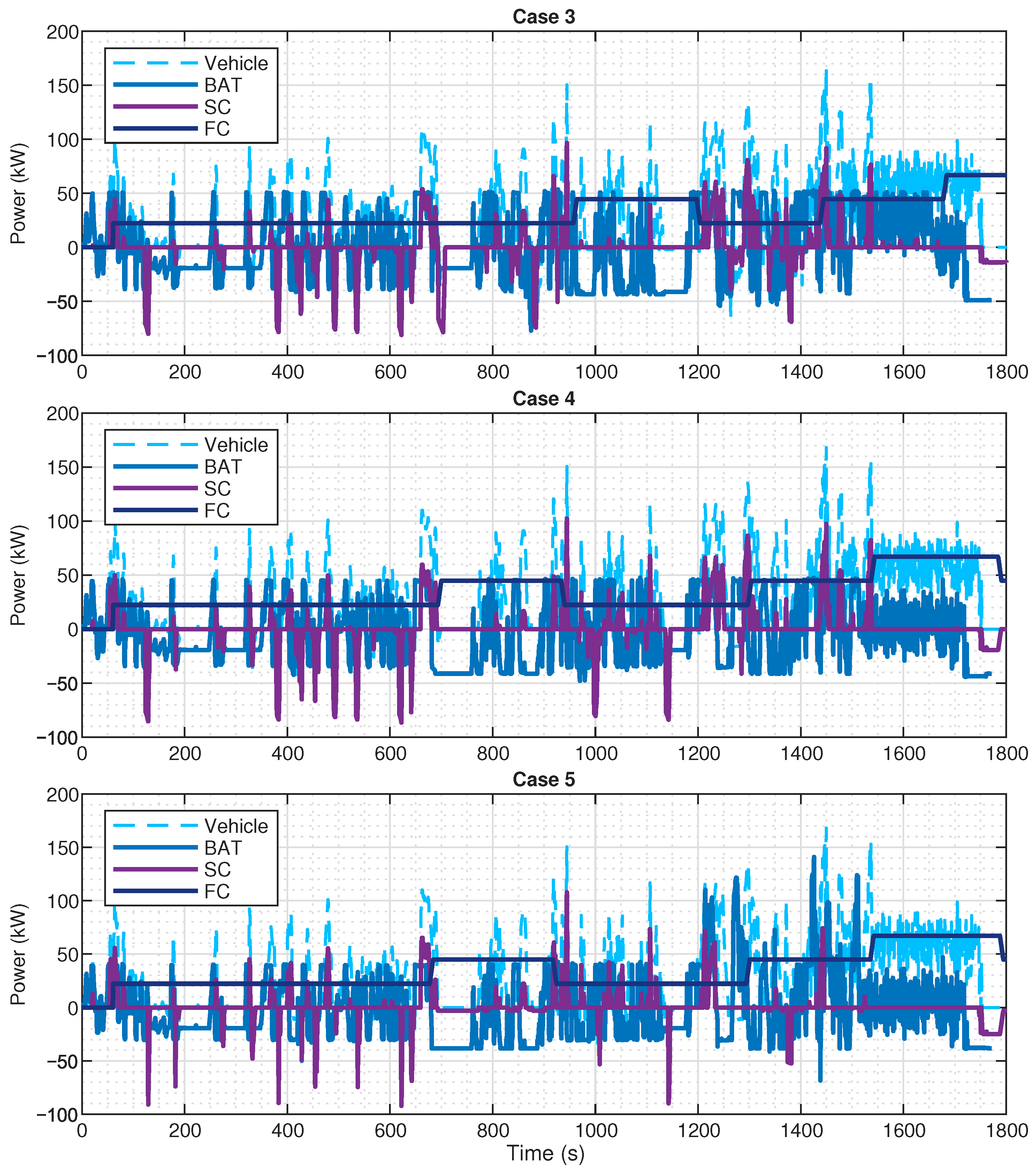
This step defines the boundary conditions and specific components for the study. The selected vehicle is a 40-ton heavy-duty truck, which is simulated under the WHTC to represent a realistic usage profile. As shown in
Figure 3 and
Figure 4, the WHTC allows the HESS behavior to be observed under extreme operating conditions, such as SCs at maximum and minimum SoC and a LiB operating at demanding C-rates. Regarding the powertrain, the FC system selected has a total weight of 256 kg. The LiB base configuration consists of 200 cells in series and 72 parallel strings (200 s 72 p), where each individual cell has a weight of 70 g. On the other hand, the SCs are arranged in strings of 172 cells in series (172 s) to meet the voltage requirements, with each SC cell weighing 475 g. These specific physical parameters are the inputs required to define the hybridization steps.
4.2. Step 2. Definition of HESS Topology and EMS
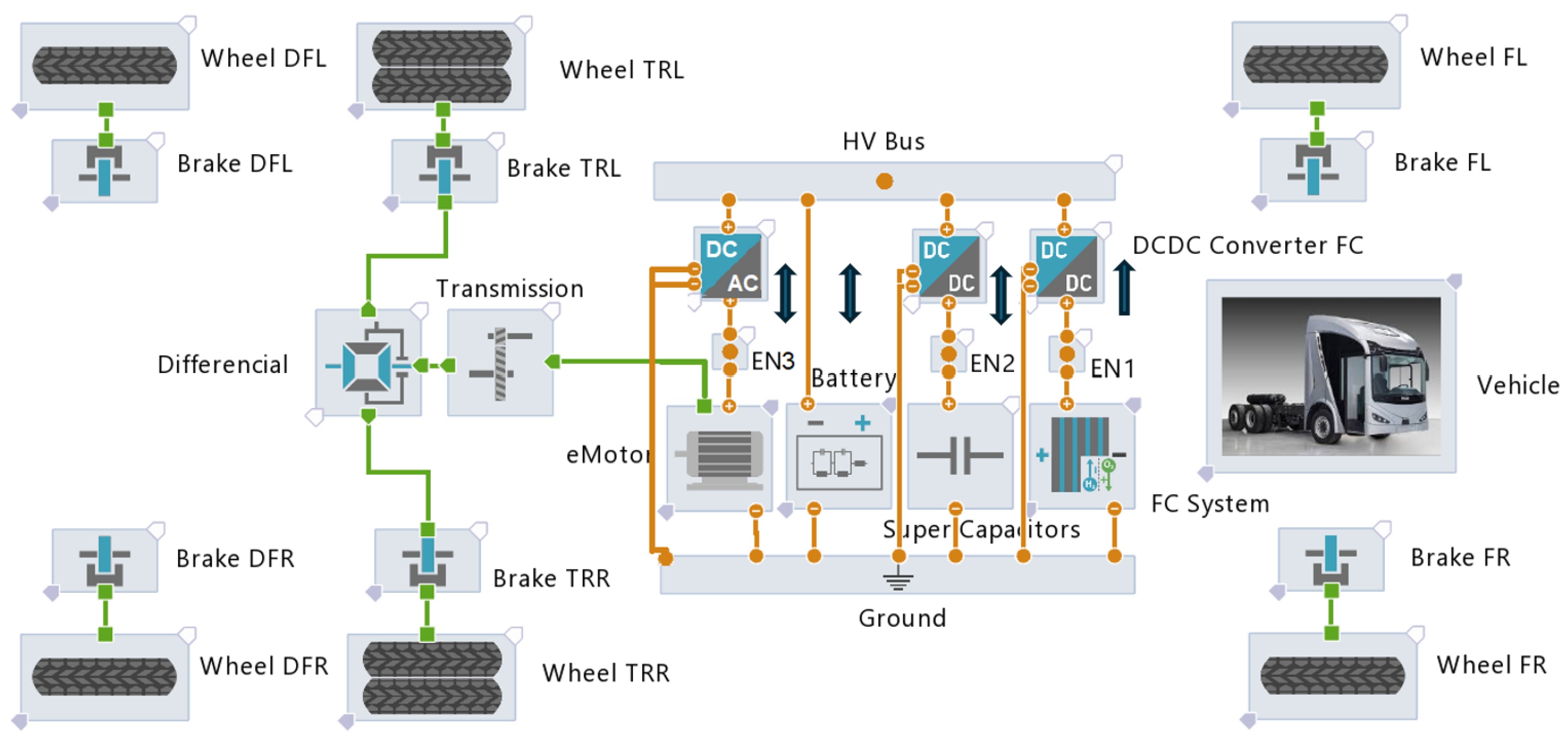
The proposed HESS topology is presented in
Figure 2. To manage the power flows and match the voltage levels of the different sources, the FC, the LiB, and the SCs are connected to a common DC-link through DC/DC power converters (active topology).
Based on the components selected in Step 1, the sizing methodology is established using the Hyb parameter. Consequently, the introduction of SCs implies a reduction in the size of the LiB. Specifically, for each step of hybridization, parallel strings are removed from the LiB configuration to introduce the SC rows, as can be seen in
Table 1. One SC string (172 s) has a weight approximately equivalent to six LiB strings (200 s 6 p). Thus, each Hyb step involves adding one string of 172 SCs and removing six strings of 200 LiB cells. Each step results in an increment of 6.48% hybridization. The DC/DC converter weight is included as a 15% overhead of the total SC weight. To maintain system voltage and facilitate sizing, complete strings are added (SC) or removed (LiB) for each hybridization step. To illustrate the methodology, five Hyb levels are selected.
Regarding the EMS, the FC is operated following a range extender configuration, aiming to maximize its efficiency while extending the vehicle’s range. The FC is used primarily within its optimal efficiency region, supplying power based on the moving average of the vehicle’s demanded power over the last five minutes. Additionally, the EMS incorporates a battery SoC management strategy: the FC remains inactive as long as the SoC is above 50%. When the SoC falls below 50%, the FC is activated according to the moving average demand; if the SoC drops below 30%, the FC operates continuously at its highest power level until recovery.
When SCs are introduced (cases 1 to 5), the LiB power is split. Power peaks exceeding a predefined C-rate threshold are covered by the SCs, protecting the battery and reducing its aging. The LiB contribution is governed by the power limit defined within the EMS. In order to identify the optimal configuration, a sensitivity analysis is performed for this parameter, evaluating different thresholds ranging from 0.3C to 0.7C. These limits are applied to both charge and discharge operations across all studied Hyb cases. It is worth noting that, as Hyb increases, maintaining the same control threshold leads to a reduced contribution from the LiB, meaning that the SCs must handle a greater share of both power and energy.
4.3. Step 3. Modeling and Parametrization
The AVL Cruise MTM model is parameterized to represent the vehicle and ESS components defined in Step 1. The submodels for the LiB, SCs, and the FC are implemented with their corresponding look-up tables for efficiency and internal resistance.
4.4. Step 4. Simulation and Performance Assessment
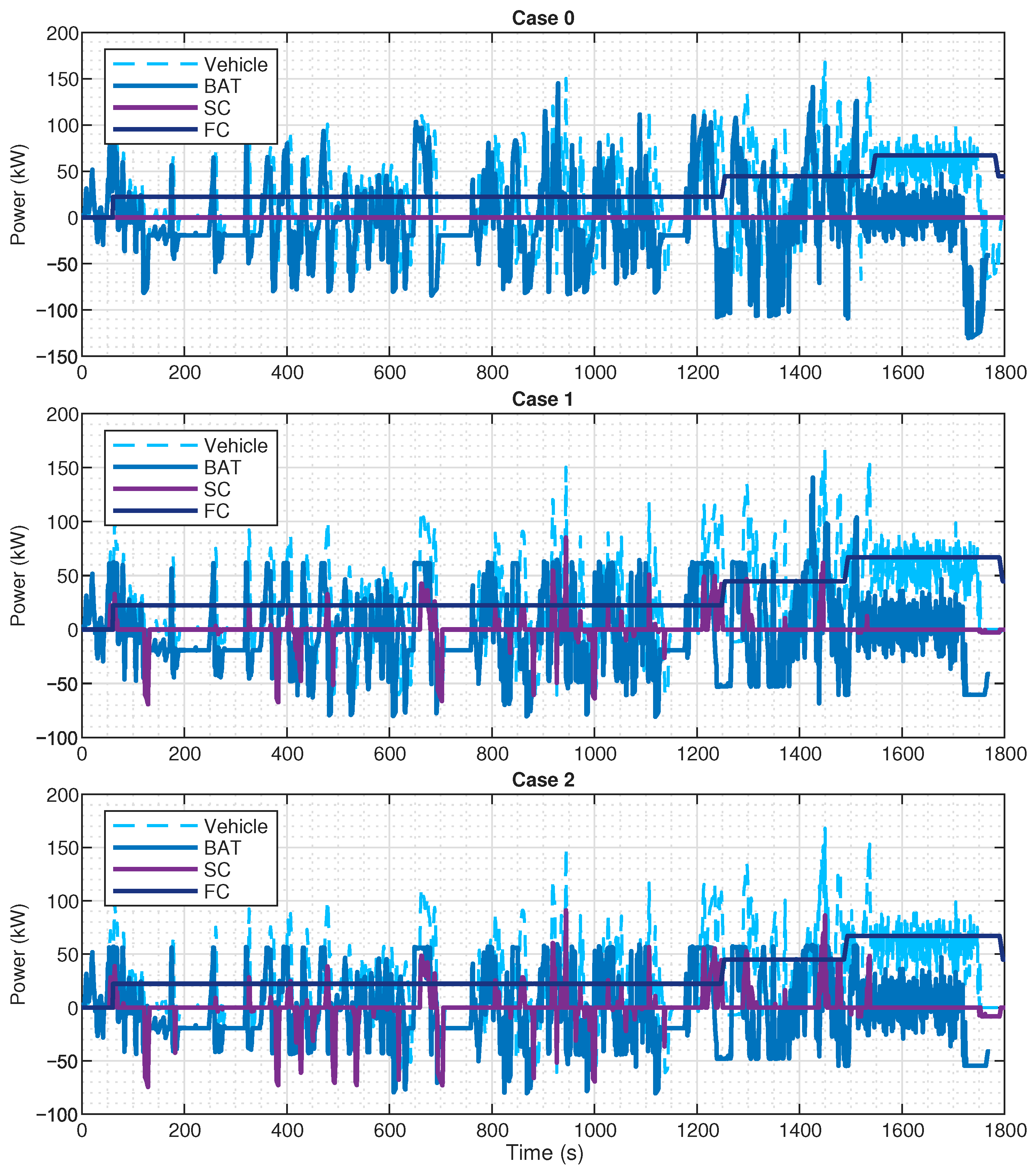
Once the EMS has been selected, the cases defined, and the models parameterized, simulations are performed using the AVL Cruise MTM model. The power time-series for all the cases for a LiB threshold of 0.6C are shown in
Figure 3 and
Figure 4.
Figure 3,
Figure 4,
Figure 5,
Figure 6 and
Figure 7 illustrate the 0.6C scenario as an example. The results for the different LiB thresholds are gathered for
Section 4.5 and
Section 4.6 for the optimization and economic analysis steps.
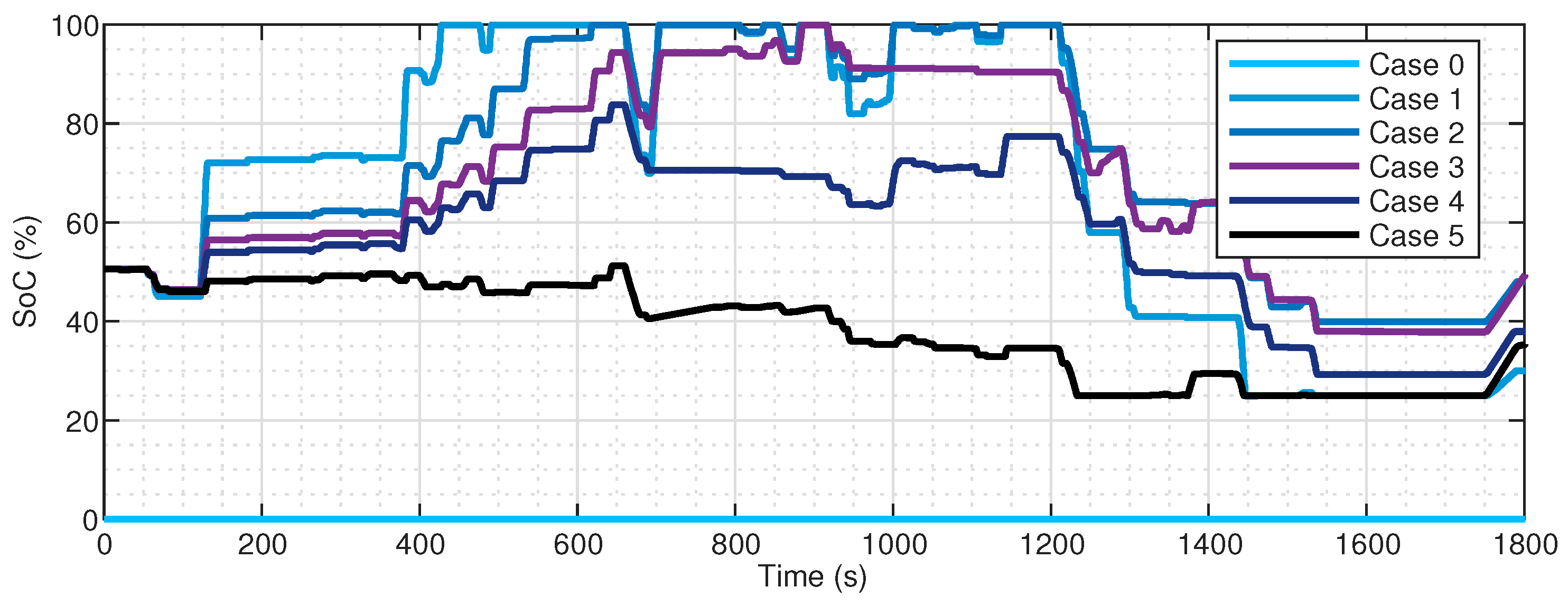
As observed, in case 0 there is no contribution from the SCs, and the LiB is forced to handle all the power peaks demanded by the vehicle while the FC provides a steady power according to the EMS. In the remaining cases, the contribution of the SCs allows the LiB to operate under less stress during both charge and discharge, reducing the effective C-rate, maintaining stricter temperature control, and mitigating the aging associated with cycling. In case 1, due to the lower Hyb grade, the SC energy capacity is limited, meaning they are unable to protect the LiB throughout the entire high-demand segments of the cycle. This behavior is partially corrected for cases 2 and 3, where the SCs succeed in protecting the LiB. The few moments where the LiB is forced to charge with a higher power than the threshold correspond to moments where the SCs are fully charged, as seen in
Figure 5.
Case 4 is the only one that avoids working with a C-rate higher than 0.6C in the LiB throughout the cycle. In case 5, the energy stored in the LiB is highly reduced with respect to case 0 and, consequently, the SCs handle a significant part of the discharge energy during the first half of the cycle. This discharges them to the technical minimum (25% SoC) and removes them from operation for the rest of the cycle, meaning that in the last part of the cycle the FCHEV effectively works as a standard FCEV (without SC support).
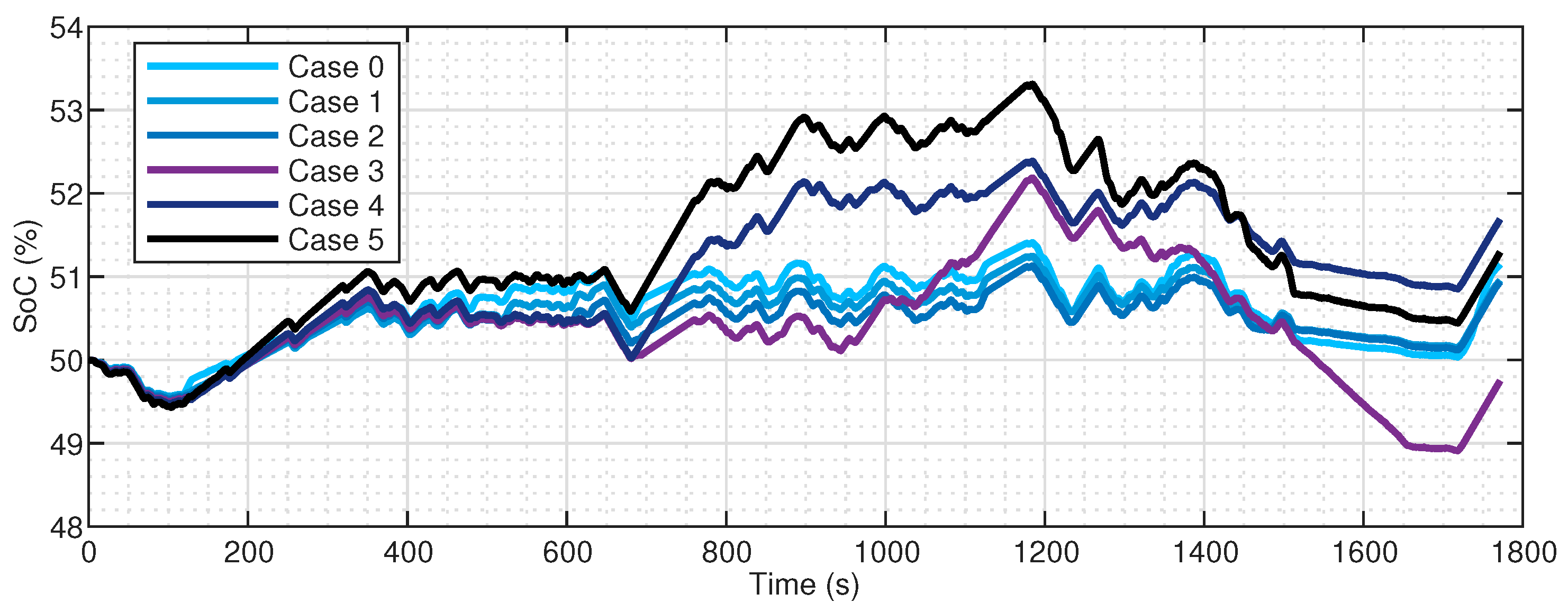
It should be noted that the EMS works as intended, since the LiB SoC for all cases remains close to 50% for the complete duration of the cycle, as seen in
Figure 6.
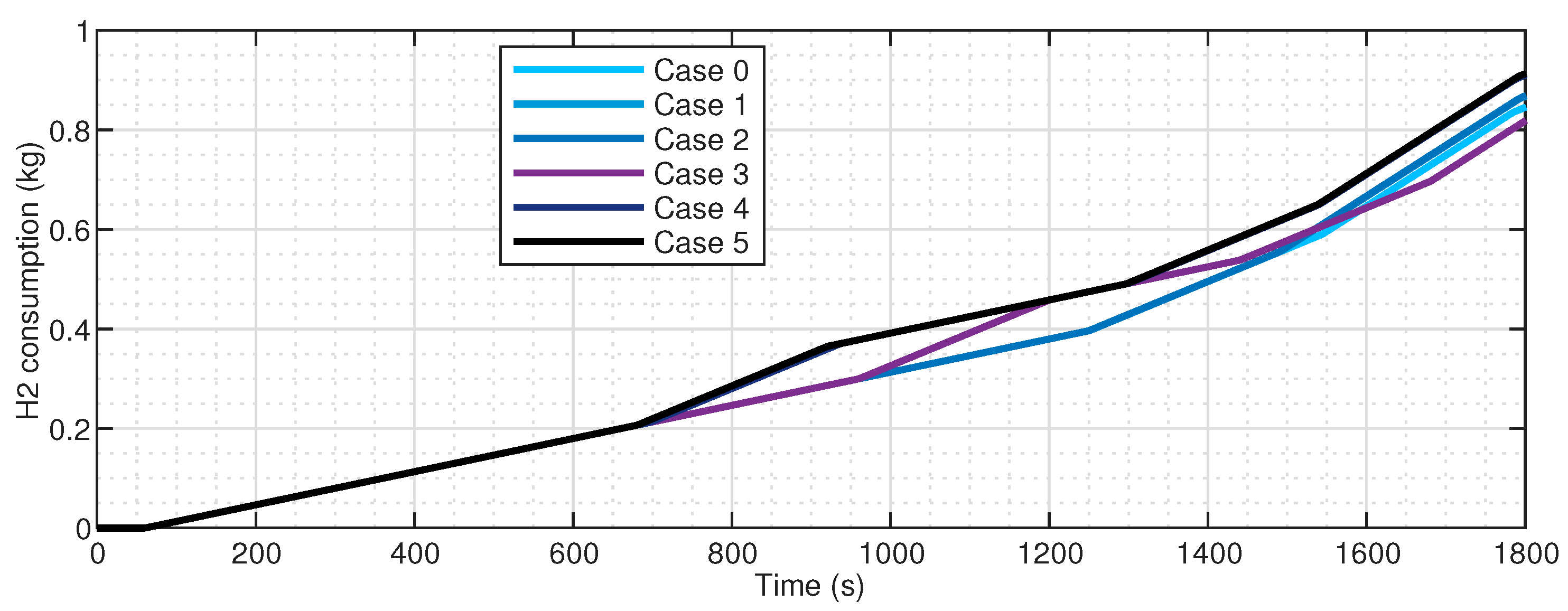
In all cases, the FC behaves similarly, with no sudden changes in the power delivered, as the EMS isolates its operation from the fast transient peaks. However, there are differences in the power contribution and, consequently, in the hydrogen consumption, which affects the OPEX calculations. The hydrogen consumption for all cases is represented in
Figure 7. As shown, cases 4 and 5 present the highest FC contribution. This is due to the reduced LiB capacity in these configurations. The LiB discharges faster, triggering the EMS to increase the FC power output to recharge the battery and maintain the target SoC, which ultimately leads to higher hydrogen consumption.
4.5. Step 5. Optimization
Once the simulations are completed, the results for HESS efficiency and component aging are gathered for all cases and EMS thresholds. For the aging projection, a vehicle lifespan of 10 years is assumed, operating 365 days a year with a frequency of 10 driving cycles per day.
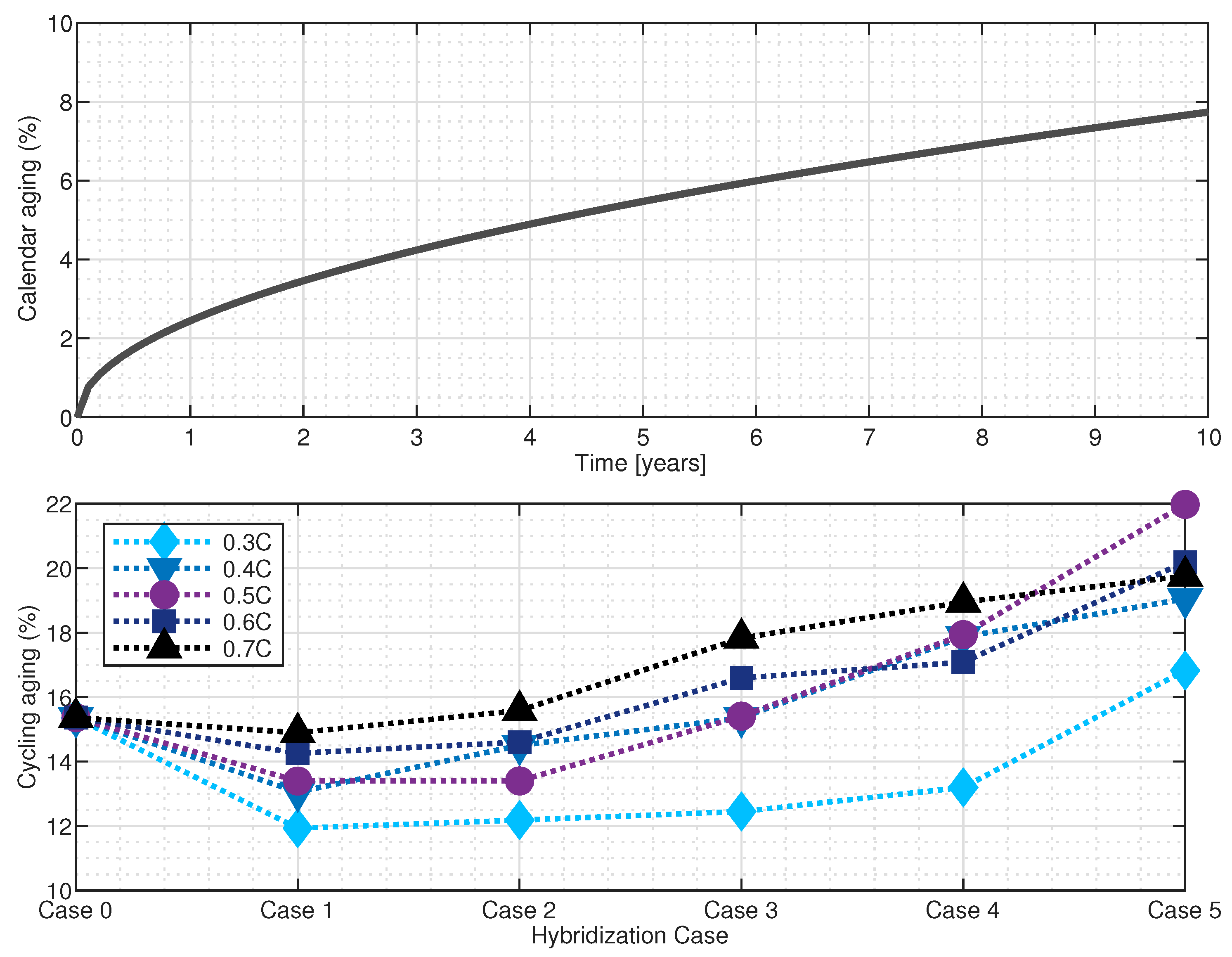
Figure 8 presents the projected capacity loss (cycling and calendar aging) for the LiB under these conditions.
As shown in
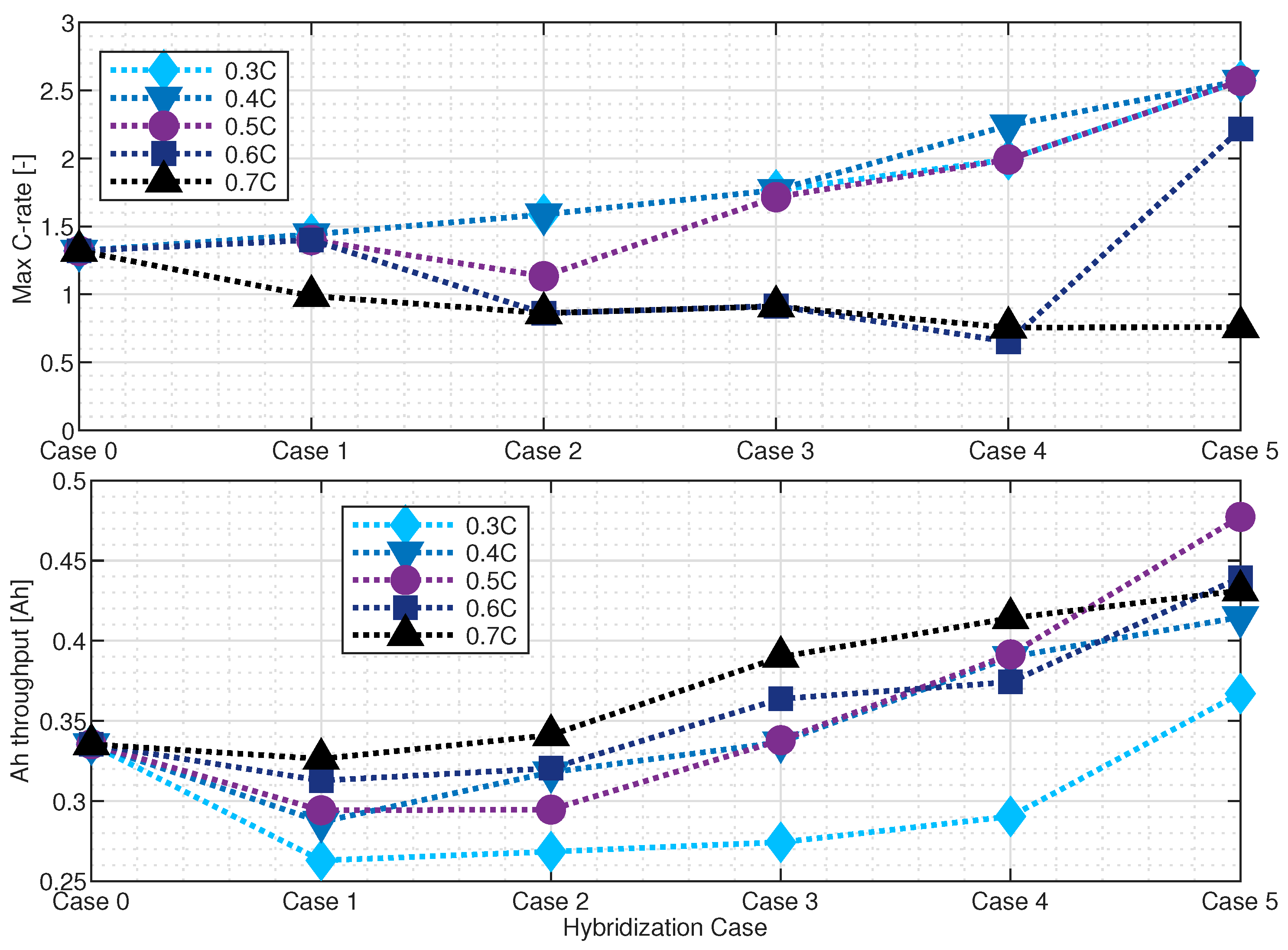
Figure 8, cycling aging decreases for cases 1 and 2 compared to case 0 across all EMS thresholds, with case 1 yielding the lowest aging in all scenarios. This behavior comes from the trade-off between reducing stress (peak shaving) and reducing capacity. Although adding SCs helps by eliminating power peaks, the required reduction in LiB size means that the remaining cells must handle a much higher Ah throughput. Consequently, the minimum aging occurs in case 1. For Hyb levels above case 2, the reduction in LiB energy capacity is more critical than the benefits of peak shaving: the smaller battery suffers a higher number of Equivalent Full Cycles (EFCs), causing higher degradation. This behavior is represented in
Figure 9.
Regarding the C-rate, visualized in
Figure 9, it appears to be ineffective for EMS thresholds of 0.3C and 0.4C, while for 0.5C it succeeds in case 2. The behavior follows an opposite trend for thresholds 0.6C and 0.7C, which is consistent with the fact that a higher LiB threshold implies that SCs handle a smaller energy share and do not reach the technical limit during the cycle. Regarding the 0.6C threshold, there are issues it extreme cases: in case 1, the SC energy is too low to cover all peaks, while in case 5, the SCs are discharged to the technical minimum early on, forcing the battery to work without SC protection during important parts of the cycle. Calendar aging is assumed to be equivalent for all cases, since it accounts for the capacity loss occurring outside the operation of the WHTC cycle. Thus, keeping it constant ensures a fair comparison between the different sizing solutions.
Table 2 summarizes the average HESS efficiency for each case and EMS threshold.
Table 2 shows that efficiency drops as Hyb increases for all EMS thresholds. First, going from case 0 to case 1 introduces DC/DC converter losses. Moreover, higher SC usage increases these losses. However, the dominant factor is the LiB resistance. As the LiB reduces its size, its internal resistance rises. Consequently, the LiB losses outweigh the SC benefits, lowering the overall system efficiency.
To identify the optimal configuration from a technical perspective, trend surfaces for both HESS efficiency and LiB aging are derived from the discrete simulation points as a function of Hyb and EMS threshold (C):
Both trend surfaces exhibit a mean absolute error (MAE) below 1% compared to simulation results, with a maximum error of 2.86%.
Finally, a multi-objective function J is defined to minimize battery degradation while maximizing system efficiency. To ensure comparability, both variables are normalized. Assigning equal weights (50%), the objective function is defined as
From a technical perspective, assuming equal weights yields an optimal Hyb of 0%. The efficiency penalty outweighs the slight aging improvement observed in cases 1 and 2. However, if the weights are adjusted to 25% for efficiency and 75% for aging, the optimal configuration shifts to case 1 at 0.3C. In this specific scenario, the reduction in LiB degradation compensates for the efficiency loss caused by the hybridization.
4.6. Step 6. Economic Analysis
The final step of the methodology consists of the economic evaluation, covering CAPEX, OPEX, and LiB replacement costs driven by aging. Factors that remain constant across all hybridization scenarios, such as the FC CAPEX and the BoP, were excluded to focus the comparative analysis on the parameters that influence the selection of the optimal Hyb. Additionally, the salvage value of the components was neglected as its effect on the relative economic results is considered minimal within the project lifespan. Consequently, based on the formulation in
Section 2.2 and the parameters in
Table 3, the annualized cost is computed and shown in
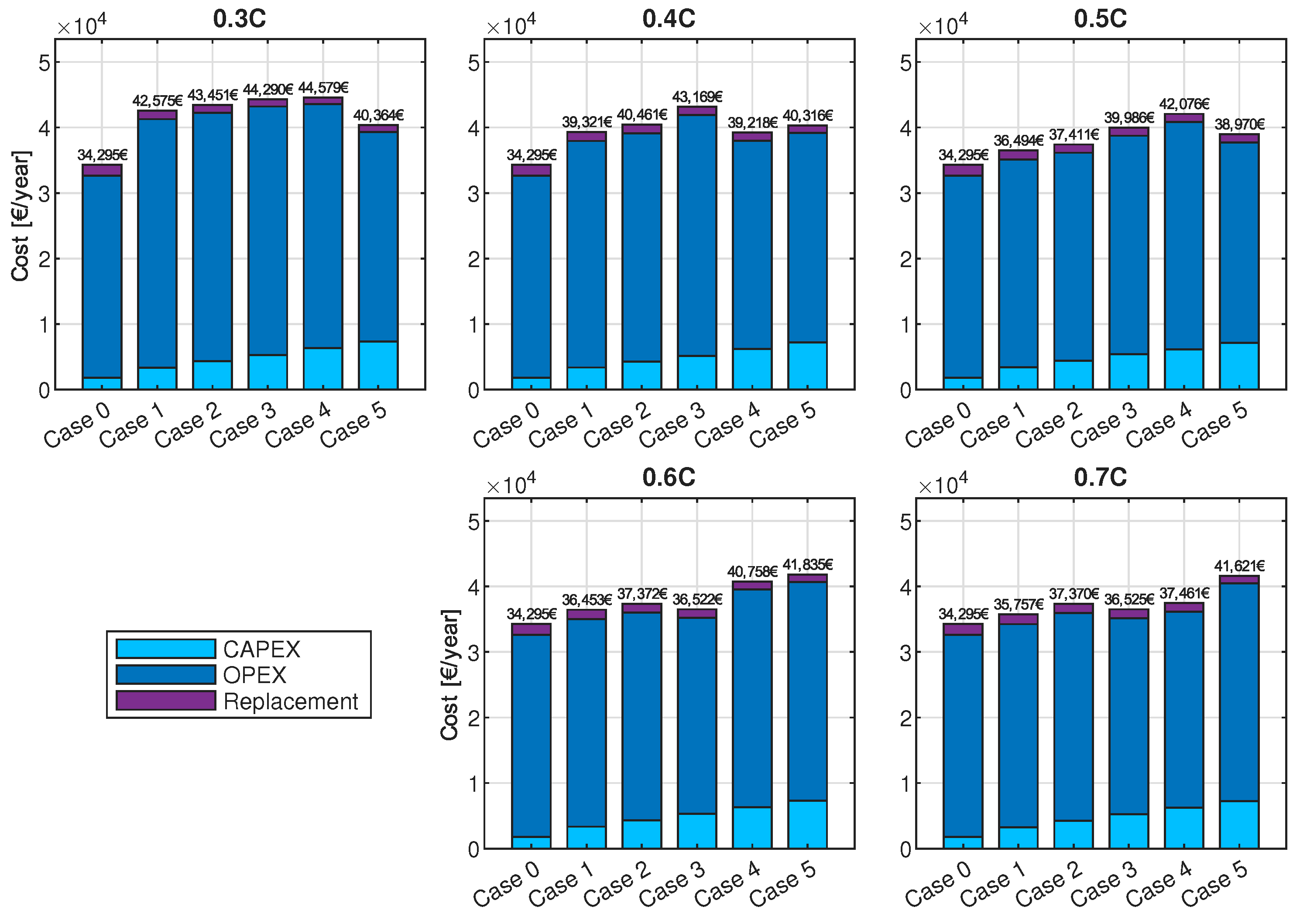
Figure 10.
As seen in
Figure 10, the most economically favourable case is case 0, where no SCs are included. The CAPEX increases from case 0 to case 5 for all EMS thresholds, since introducing SCs is more expensive than the savings obtained by reducing the LiB size. Moreover, the OPEX (hydrogen consumption) is the dominant cost factor. Consequently, cases like case 3 at 0.6C, where hydrogen consumption is lower due to the EMS behavior, show improved annualized results. Finally, replacement costs remain similar across all cases and EMS thresholds, since the differences in aging are insufficient to significantly alter the replacement schedule, and LiB EoL is reached near the end of the project in all scenarios.
An economic analysis was also performed by halving the SC price to evaluate its impact on the optimal configuration. While case 0 remains the most cost-effective option, the total costs for case 3 in the 0.6C and 0.7C scenarios reach 34,874 € and 34,877 € respectively, placing them very close to case 0. These results indicate that a decrease in SC costs could favor designs with higher Hyb percentages if LiB longevity and efficiency are prioritized. Nevertheless, the high importance of the OPEX in this specific study limits the overall influence of reduced SC prices.
5. Discussion
According to the results, hybridizing the FCEV with SCs while keeping a constant weight does not seem promising for this specific case study, neither from a technical nor an economic point of view. The outcome of the methodology clearly indicates that case 0 (0% Hyb) performs best. However, some important insights can be derived from the analysis.
Technically, introducing SCs helps the LiB by reducing the power peaks it suffers. However, to be effective, SCs need enough energy capacity to cover the complete high-demand segments. Since the total weight is constant, introducing SCs implies reducing the LiB size. This has a critical side effect: a smaller LiB (fewer rows in parallel) is forced to deal with a higher Ah throughput per cycle. Consequently, the battery ages faster, outweighing the benefits of peak shaving.
The outcome is highly dependent on the driving cycle and the EMS. While other cycles with more sudden power peaks could benefit from hybridizing with SCs, this work has expanded the analysis by including the control threshold as a second design variable. The sensitivity study conducted from 0.3C to 0.7C demonstrates that the non-hybridized configuration remains the optimal technical solution for the baseline optimization weights. A different strategy could also favour the introduction of SCs, although the physical limitation of the reduced battery capacity remains a bottleneck.
From an economic point of view, SCs are much more expensive than LiBs. For the baseline scenario, the increase in capital expenditure from hybridization exceeds the savings obtained from reducing the LiB size. However sensitivity analysis shows that halving the SC price makes hybridized configurations such as case 3 significantly more competitive. Furthermore, if the optimization weights are adjusted to prioritize LiB aging, the optimal configuration shifts to a 6.48% hybridization grade at a 0.3C threshold. This proves that, while the non-hybridized case is often the most cost-effective, the final design is sensitive to both component prices and the specific technical priorities of the designer.
6. Conclusions
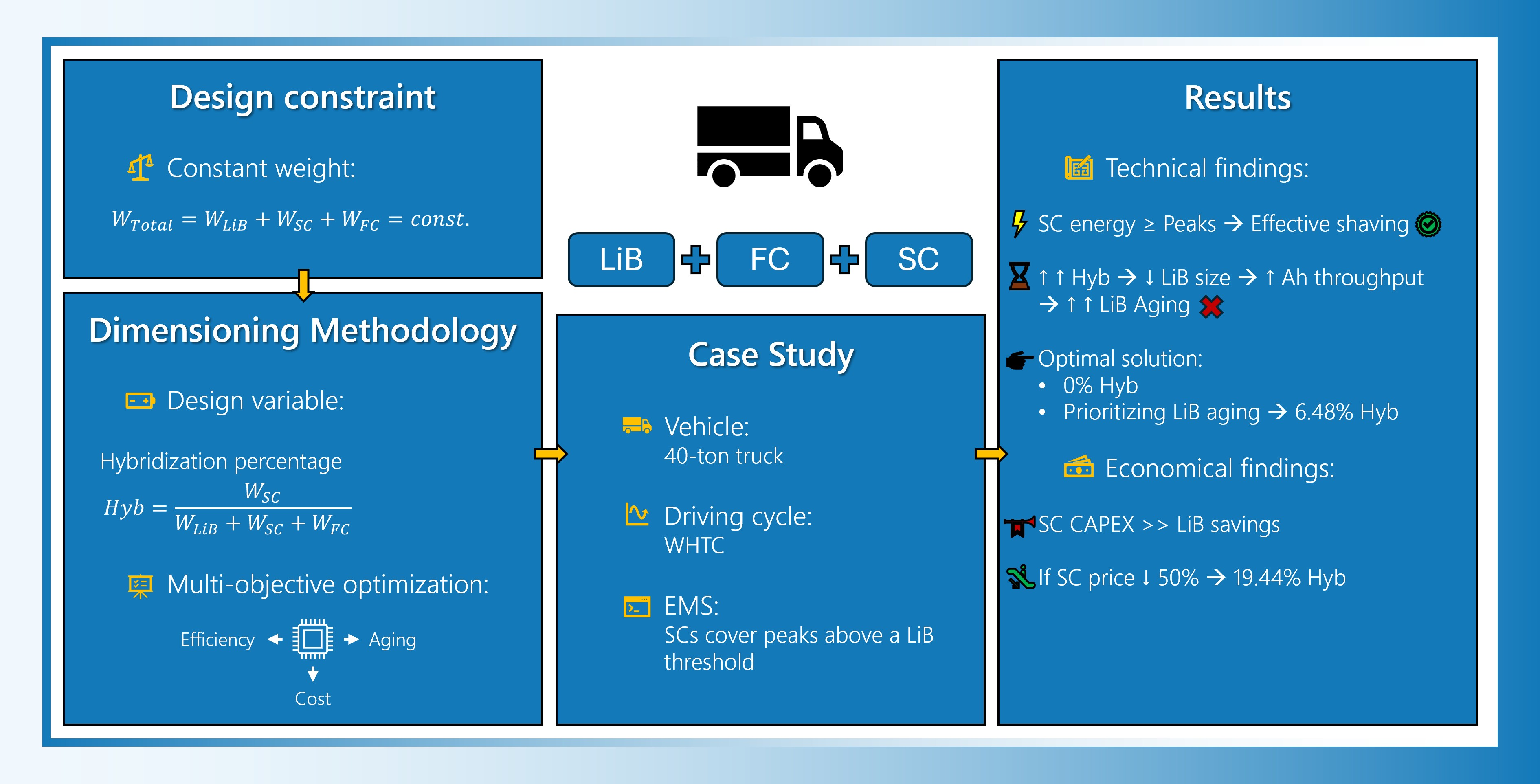
This work proposes a techno-economic dimensioning methodology to find the optimal HESS configuration for FCHEVs. The proposed method, detailed in
Section 2, is based on a brute-force analysis using the hybridization grade (Hyb) as the main design variable. A key feature of this methodology is the imposition of a constant total weight constraint, which ensures a fair comparison between the different storage system configurations. The decision-making process is divided into two stages: a technical assessment, aiming to maximize system efficiency and minimize LiB aging, and an economic evaluation, based on the TCO, including CAPEX, OPEX, and replacement costs.
To implement this methodology, a dynamic model of the heavy-duty FCHEV was developed using AVL Cruise MTM. This tool was selected to perform the required simulations efficiently, integrating the specific behavior of the powertrain components. The methodology was tested on a realistic case study, defined by commercial equipment for the ESS, a standard driving cycle (WHTC), and a well-known rule-based EMS.
The application of the methodology to this specific case study yielded clear results. Technically, the analysis indicates that hybridizing with SCs under a constant weight constraint does not improve the vehicle performance. Case 0 (0% Hyb) proved to be the optimal solution. The methodology revealed that the necessary reduction in LiB size to accommodate SCs creates a negative trade-off: the smaller battery suffers higher stress per cell, which accelerates aging and reduces overall efficiency, outweighing the peak-shaving benefits of the SCs.
Economically, the results align with the technical findings. The non-hybridized solution is the most favorable option. The high specific cost of the SCs significantly increases the CAPEX, and the TCO analysis shows that it is more cost-effective to replace the LiB due to aging than to invest in a complex HESS to protect it.
While the results are focused on a specific case study, the proposed methodology establishes a generalizable framework for the initial sizing of the HESS under weight constraints. The use of a brute-force approach is justified by the reduced design space and ensures the identification of the global optimum. Although the economic evaluation relies on a simplified model, it successfully identifies the primary cost drivers, such as operational expenditure and battery replacement costs. The aging model allows for calculating the trend surfaces to identify critical trade-offs between efficiency and LiB life. Future iterations can incorporate alternative hybridization metrics or broader boundary conditions. However, the current approach serves as a robust decision-making tool for fleet operators to evaluate the viability of hybridization in FCHEV applications.




 ,
,