

Micro-Platform Verification for LiDAR SLAM-Based Navigation of Mecanum-Wheeled Robot in Warehouse Environment



Abstract
1. Introduction
2. Mecanum-Wheeled Robot and Warehouse Environment
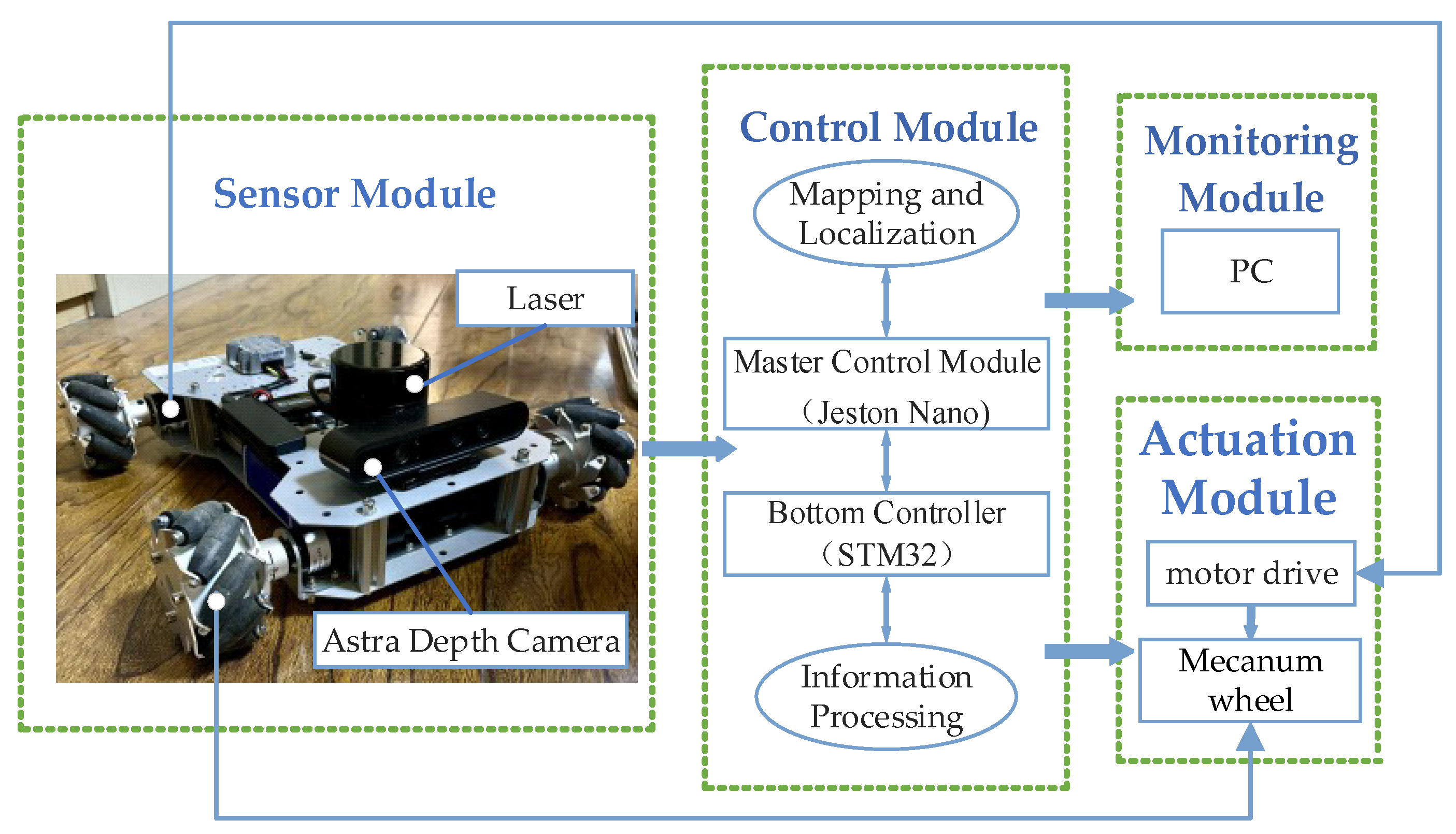
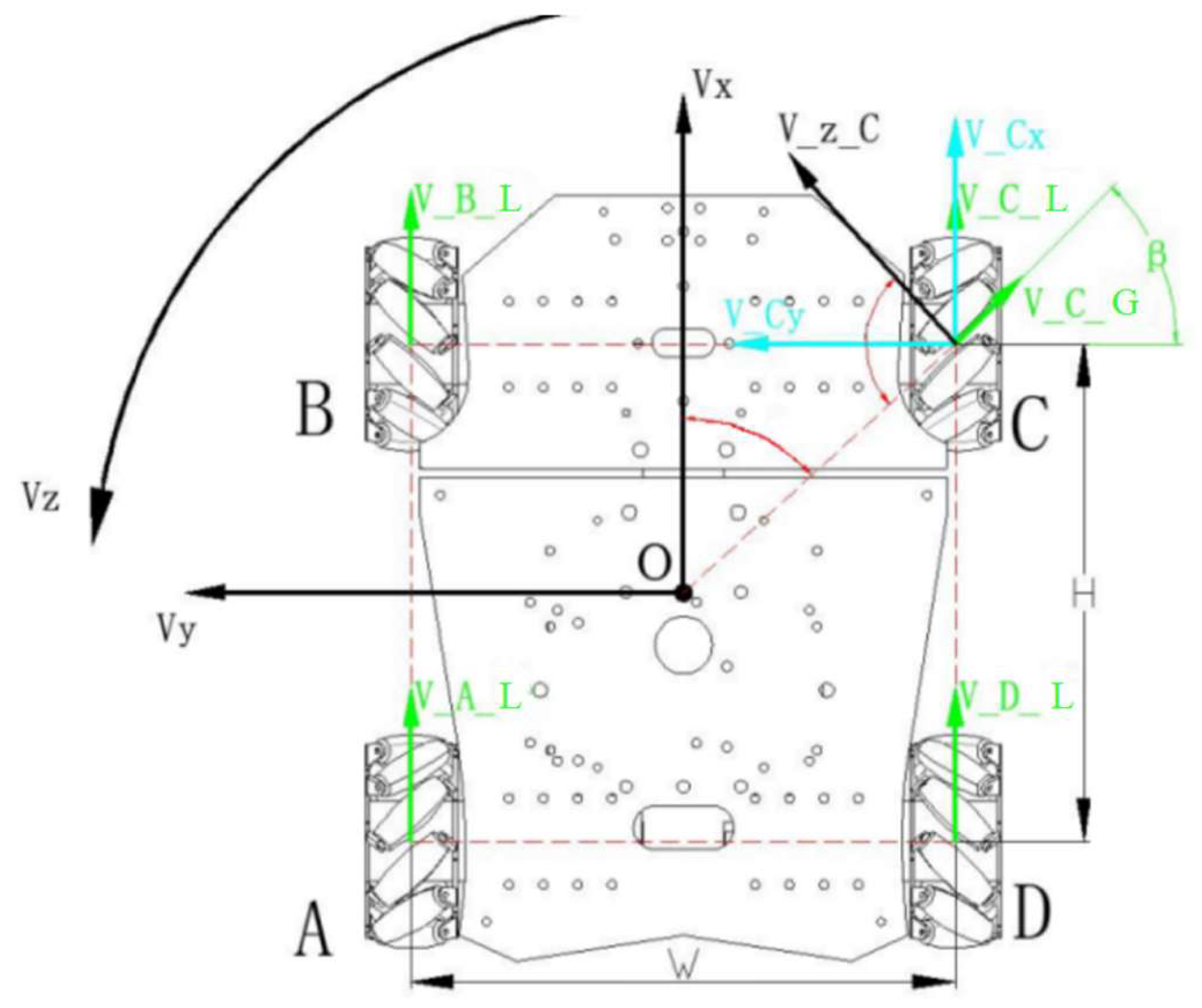
2.1. Modeling for Mecanum-Wheeled Robots Based on SLAM
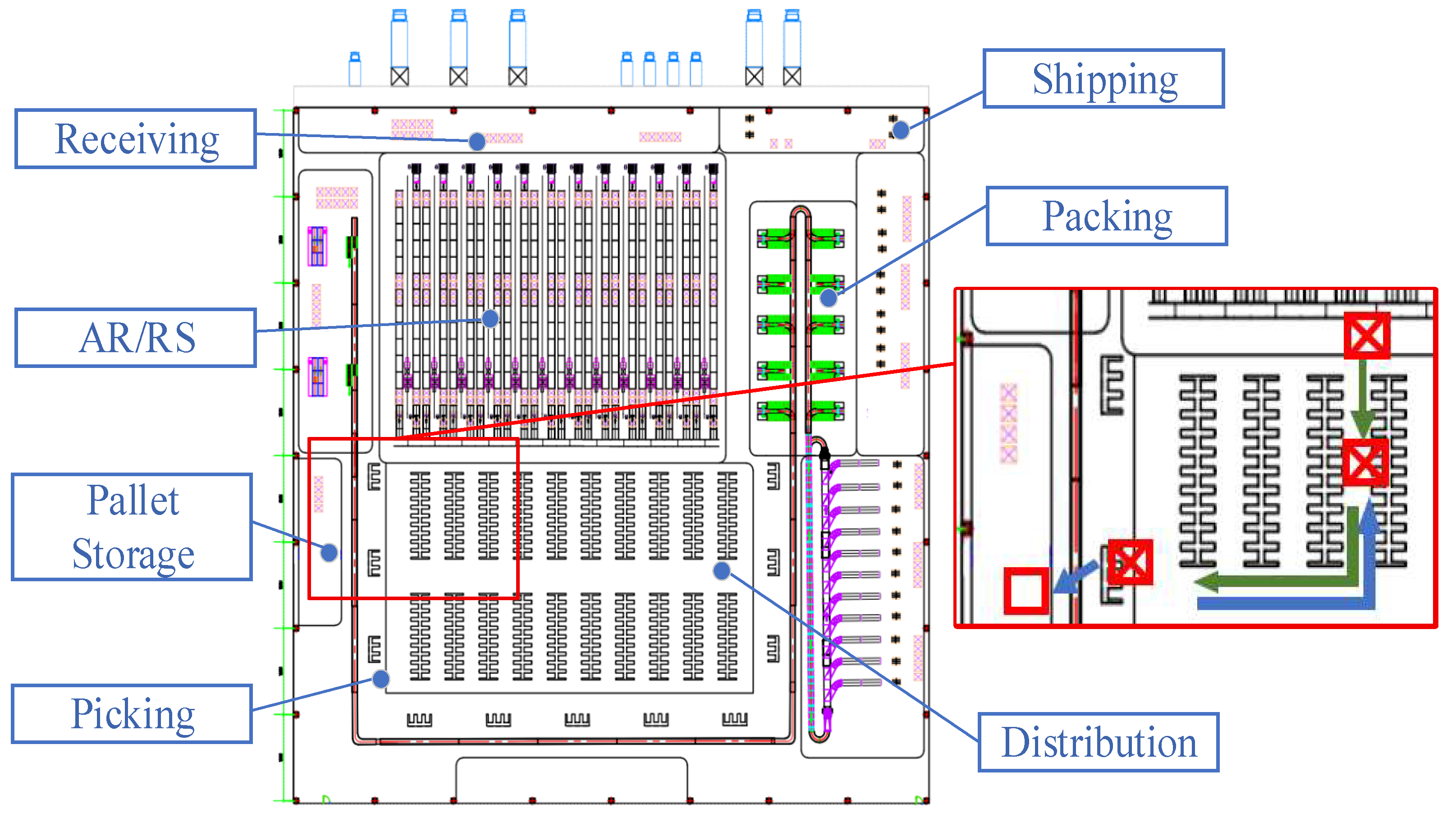
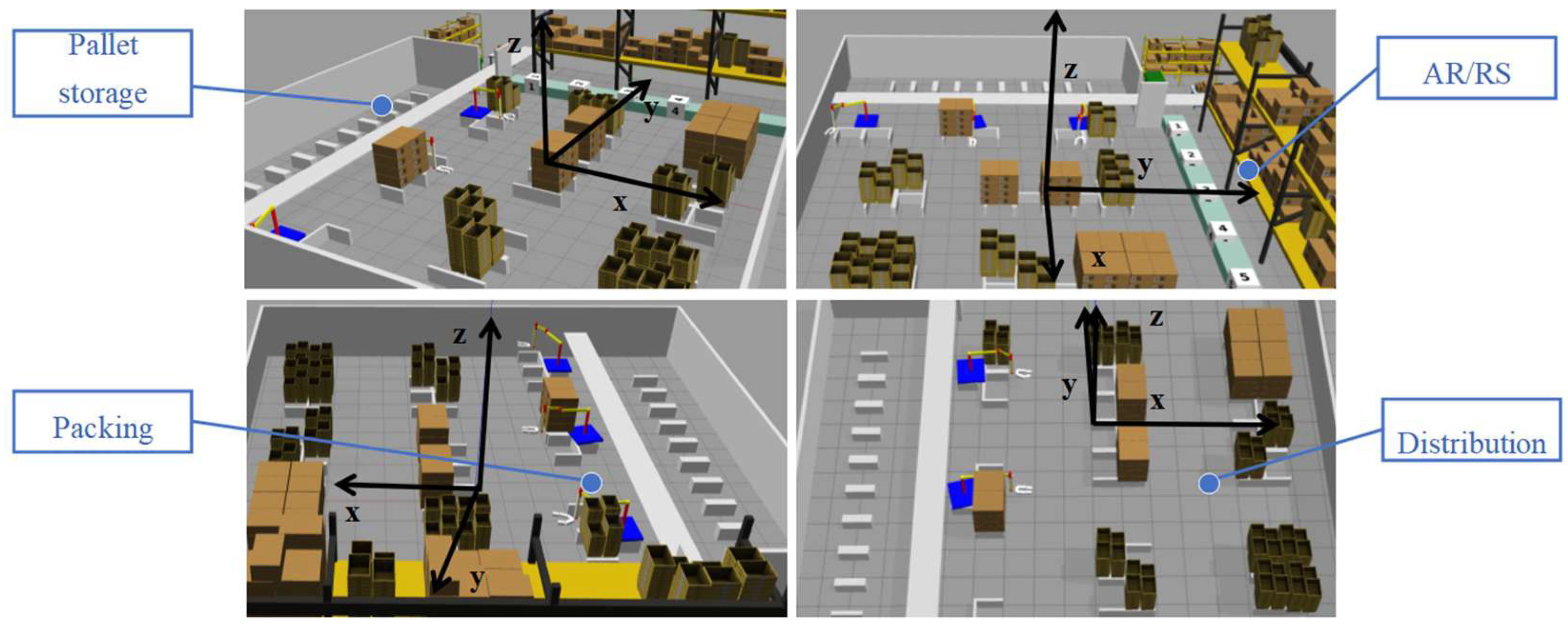
2.2. Gazebo-Based Warehouse Environment Construction
- (1)
- Preparation for goods receipt: Palletized-unit goods are first unloaded to the receiving area in preparation for warehousing. After operations including quantity counting, inspection, label printing, and system entry are completed, forklifts transport the goods to the entrance of the AR/RS warehouse area for storage.
- (2)
- Order processing: Based on order requirements, goods are retrieved from the AR/RS warehouse area. AGVs then transport the goods to the distribution area for buffering, after which they are sent to the picking area for order picking operations.
- (3)
- Pallet handling: Empty pallets are conveyed to the pallet storage area, while nonempty pallets are returned to the distribution area shelf for storage.
- (4)
- Goods sorting and distribution: The picked goods are transferred via conveyor belts to the packing area for packaging and subsequently loaded onto trucks in the shipping area for distribution.
3. TD3 Deep Reinforcement Learning-Based Path Planning
3.1. DRL Problem Modeling
3.1.1. State Space
3.1.2. Action Space
3.1.3. Reward Function
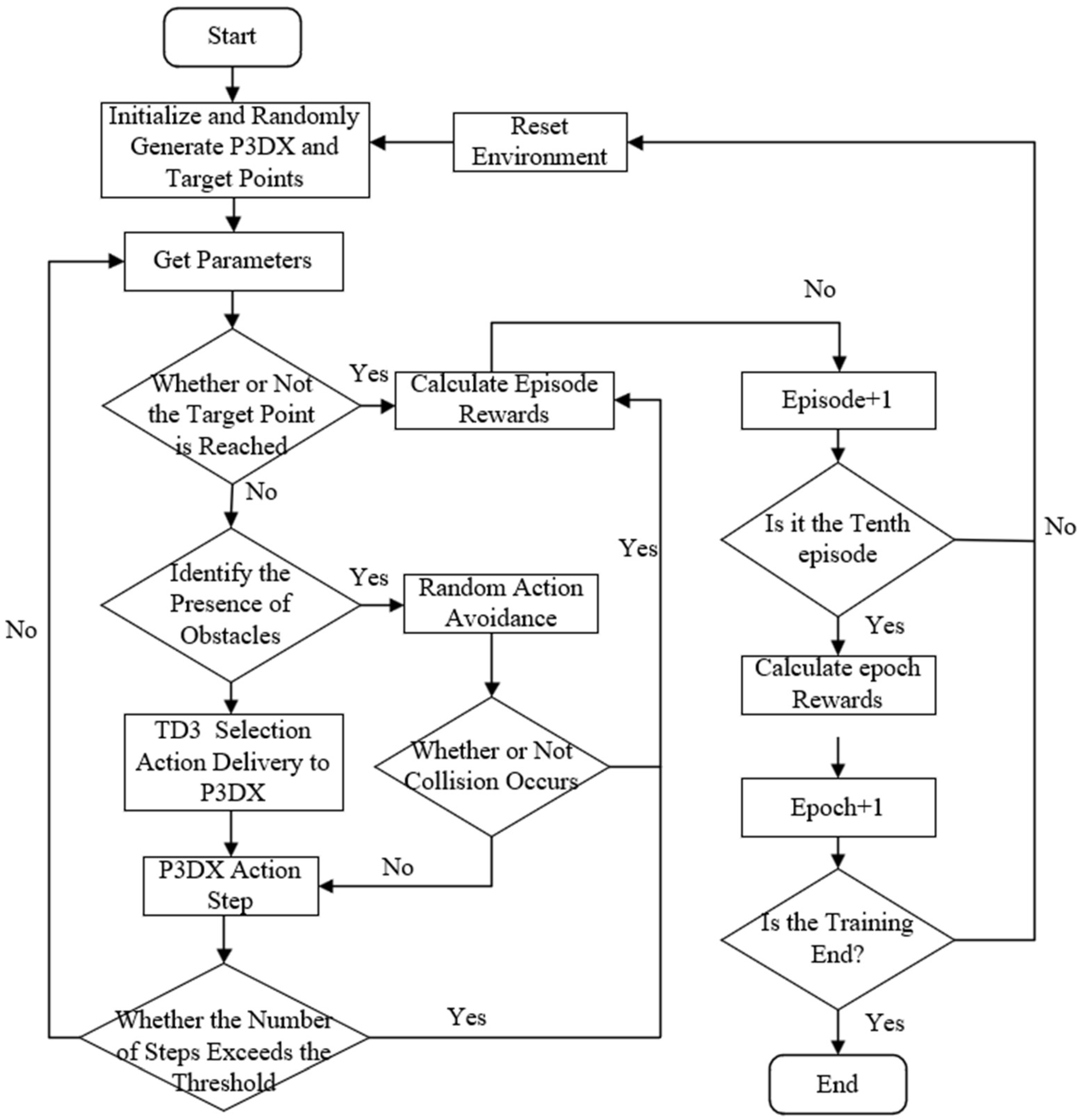
3.2. TD3 Algorithm Design
| Algorithm 1: TD3 Path Planning Strategy |
| Initialize with random weights; ; ; random near obstacle triggers = true. for t = 1 to T do of size N from D to [−1, 1]; Select action: < 0.35 random near obstacle triggers=true = pre-generated random action(8-15steps) w = [−3.14, 3.14] rad/s random steps counter = random steps counter− 1 if t mod d = 0: Update actor by the deterministic policy gradient Update target networks end if end for |
3.3. TD3 Algorithm Training
3.3.1. Setup of Training Environment
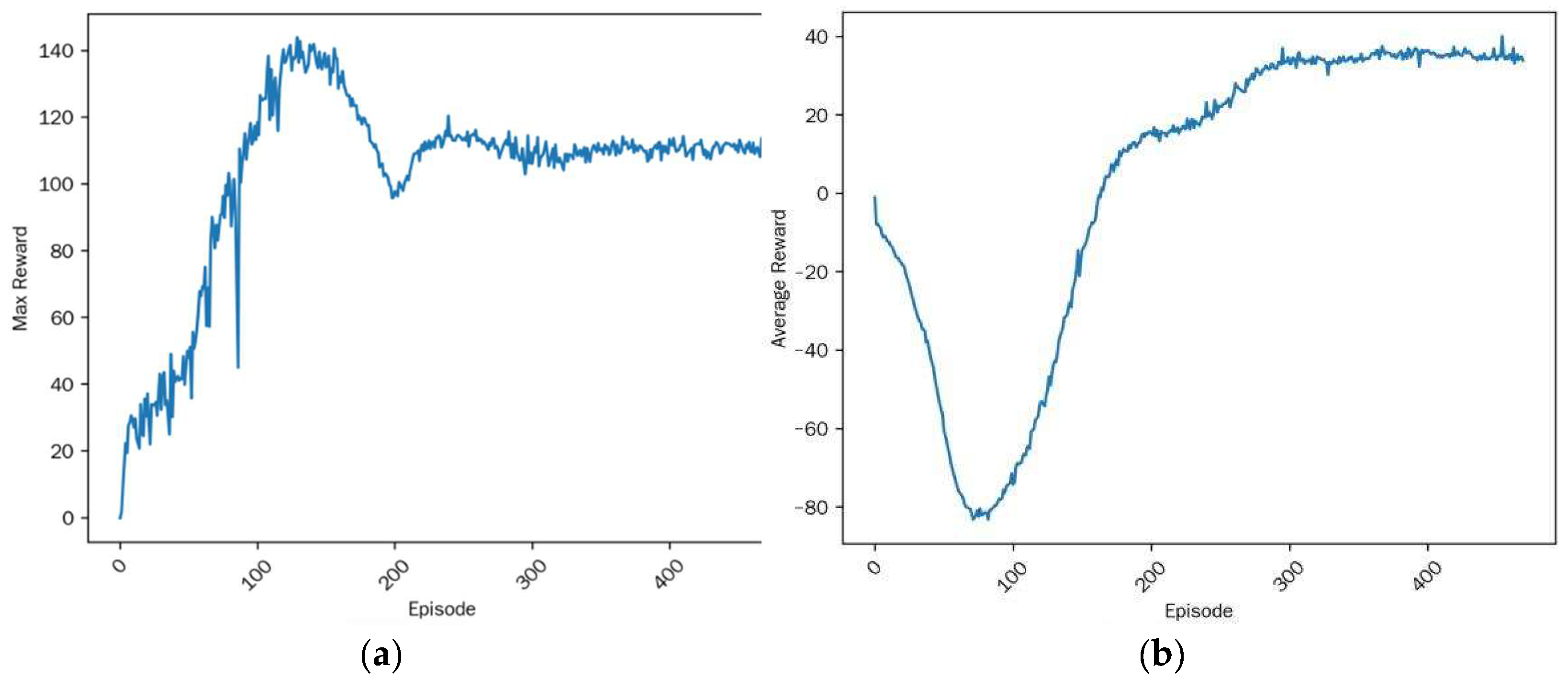
3.3.2. Training Results and Analysis
4. Warehousing Micro-Platform Verification for Navigation
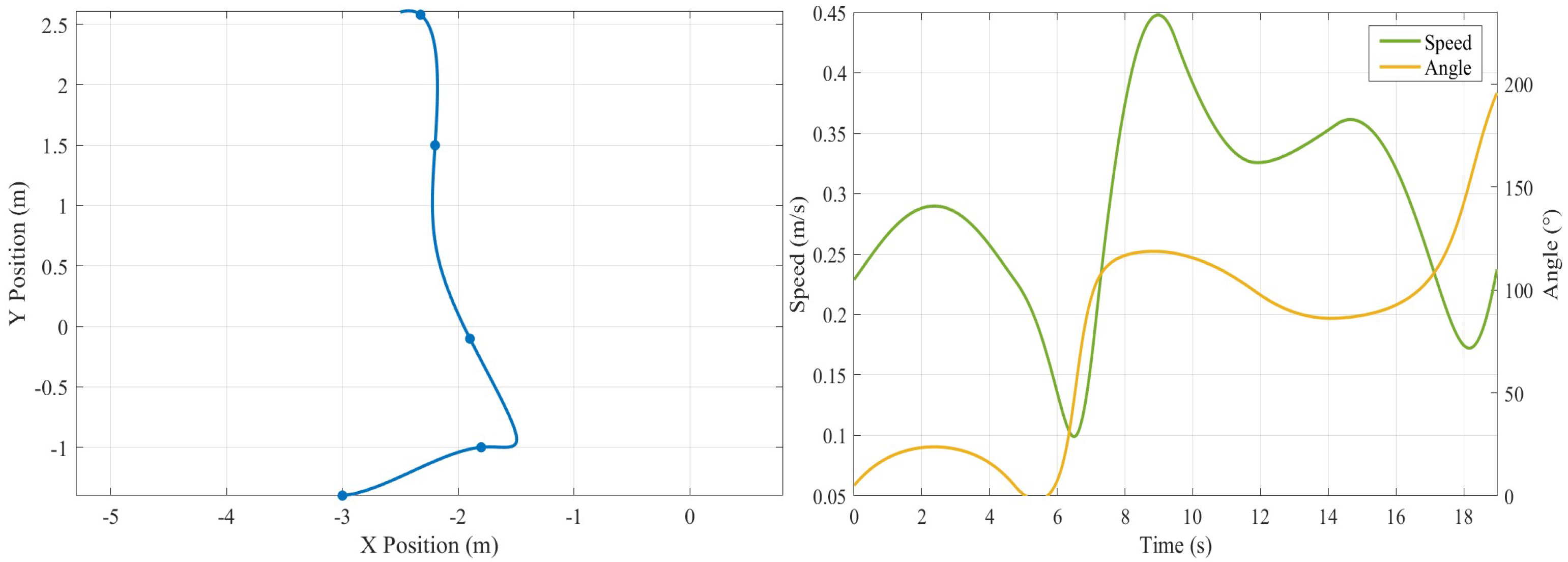
4.1. Astar-TEB Algorithm Experiments
- (1)
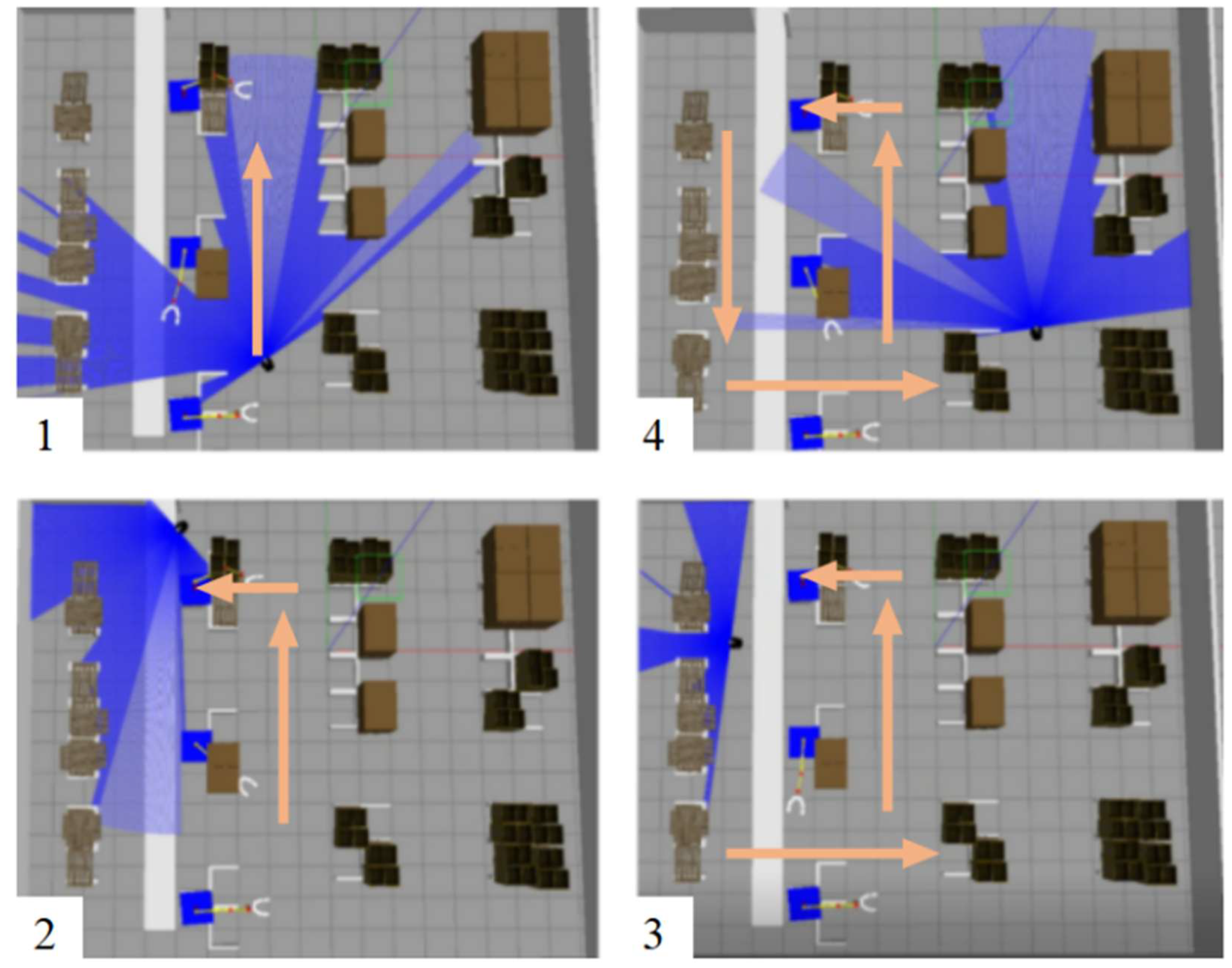
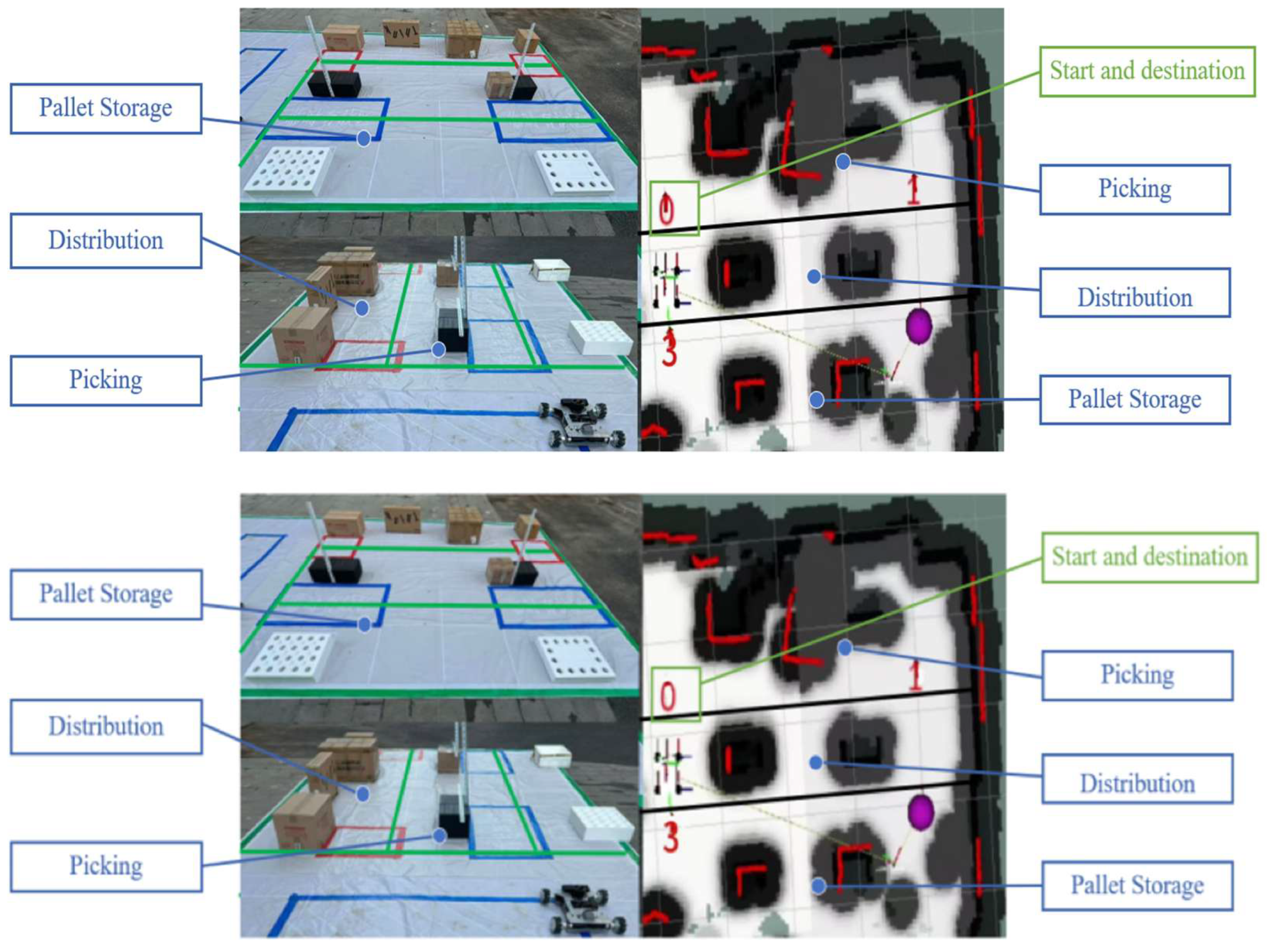
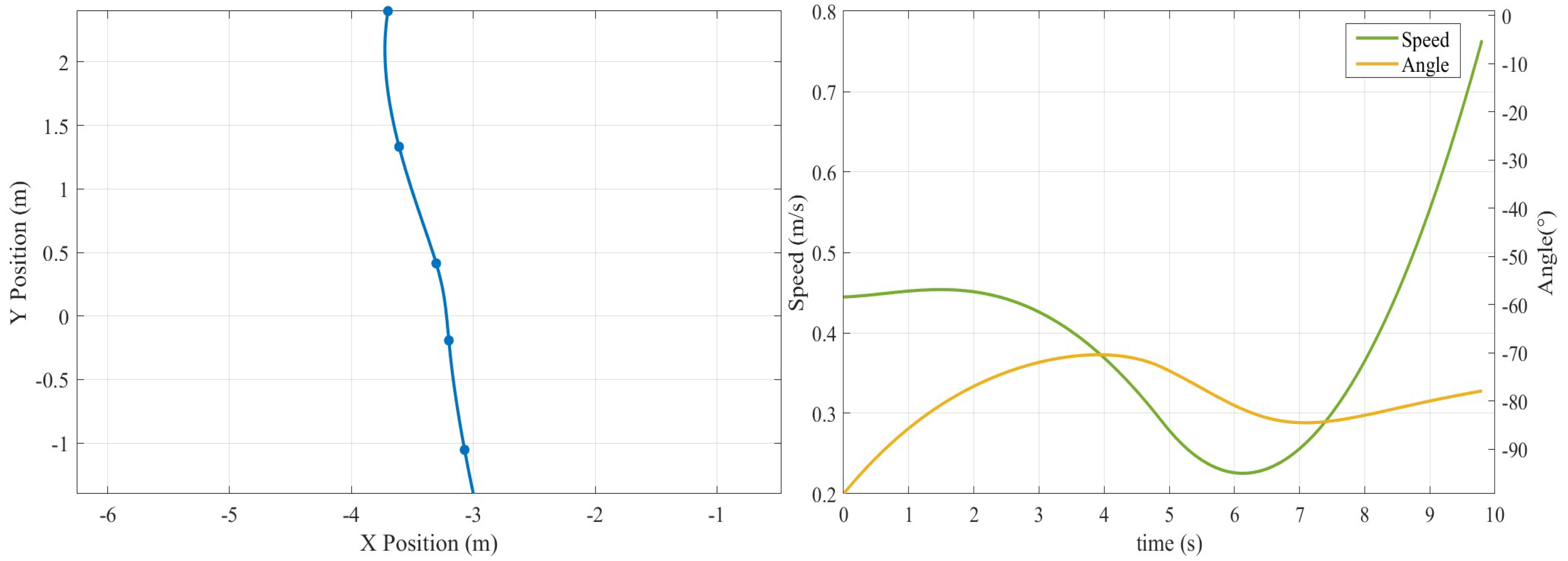
- In the Distribution to Picking Area, the robot traveled for 10 s with an average speed of 0.42 m/s. The speed variation reached 0.5 m/s, and the steering angle variation remained moderate at 20°, reflecting adaptation to the wide aisles and sparse obstacles in this segment.
- (2)
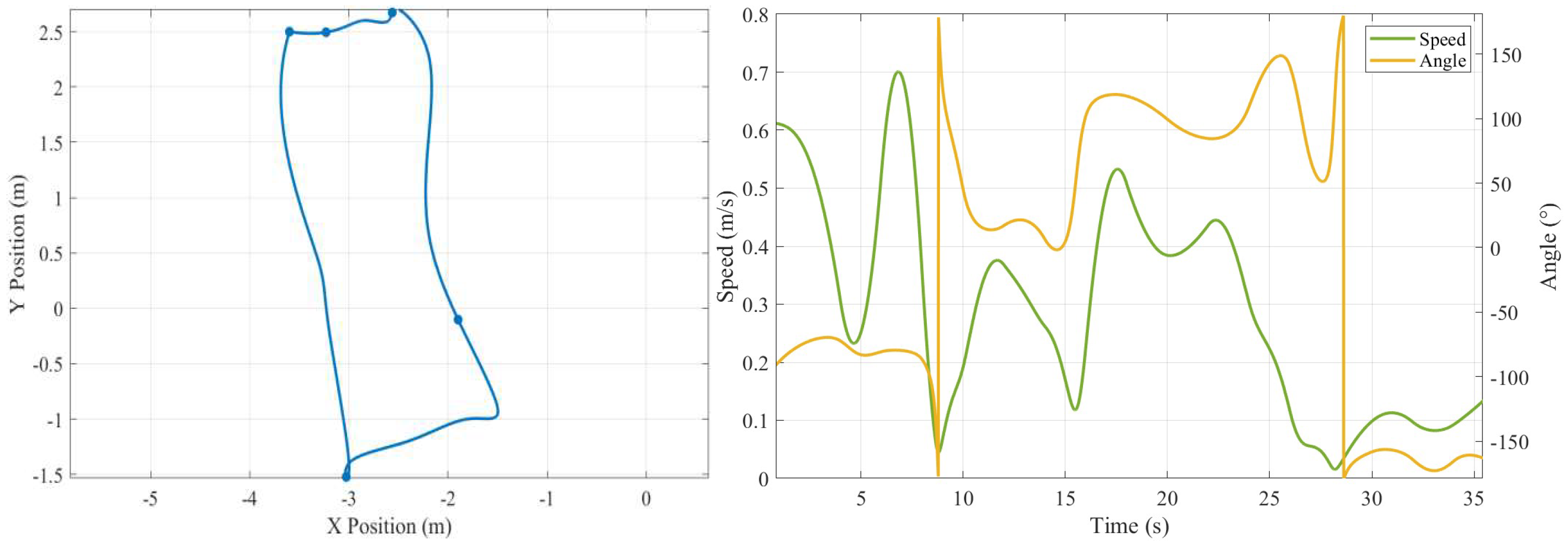
- In the Picking to Pallet Storage, the travel time increased to 18 s. The average speed decreased to 0.30 m/s to ensure safety during turning maneuvers. Steering variation reached 200°, reflecting multiple directional adjustments.
- (3)
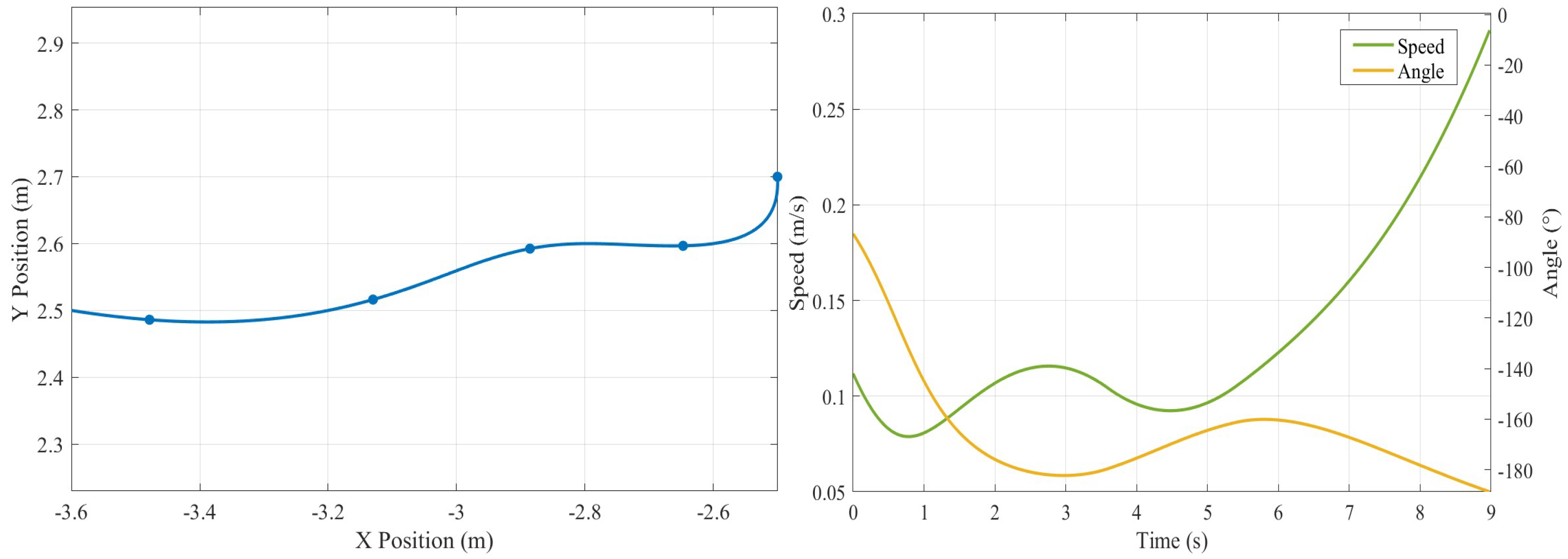
- In the Pallet Storage to Distribution Area, the robot operated for 9 s. It maintained a low speed of 0.15 m/s, with minimal speed fluctuation. This motion profile emphasizes precise positioning and stability during the final approach to the target. These patterns align with expected behavior in structured warehouse environments.
4.2. Dynamic Scene Testing of Mobile Robot
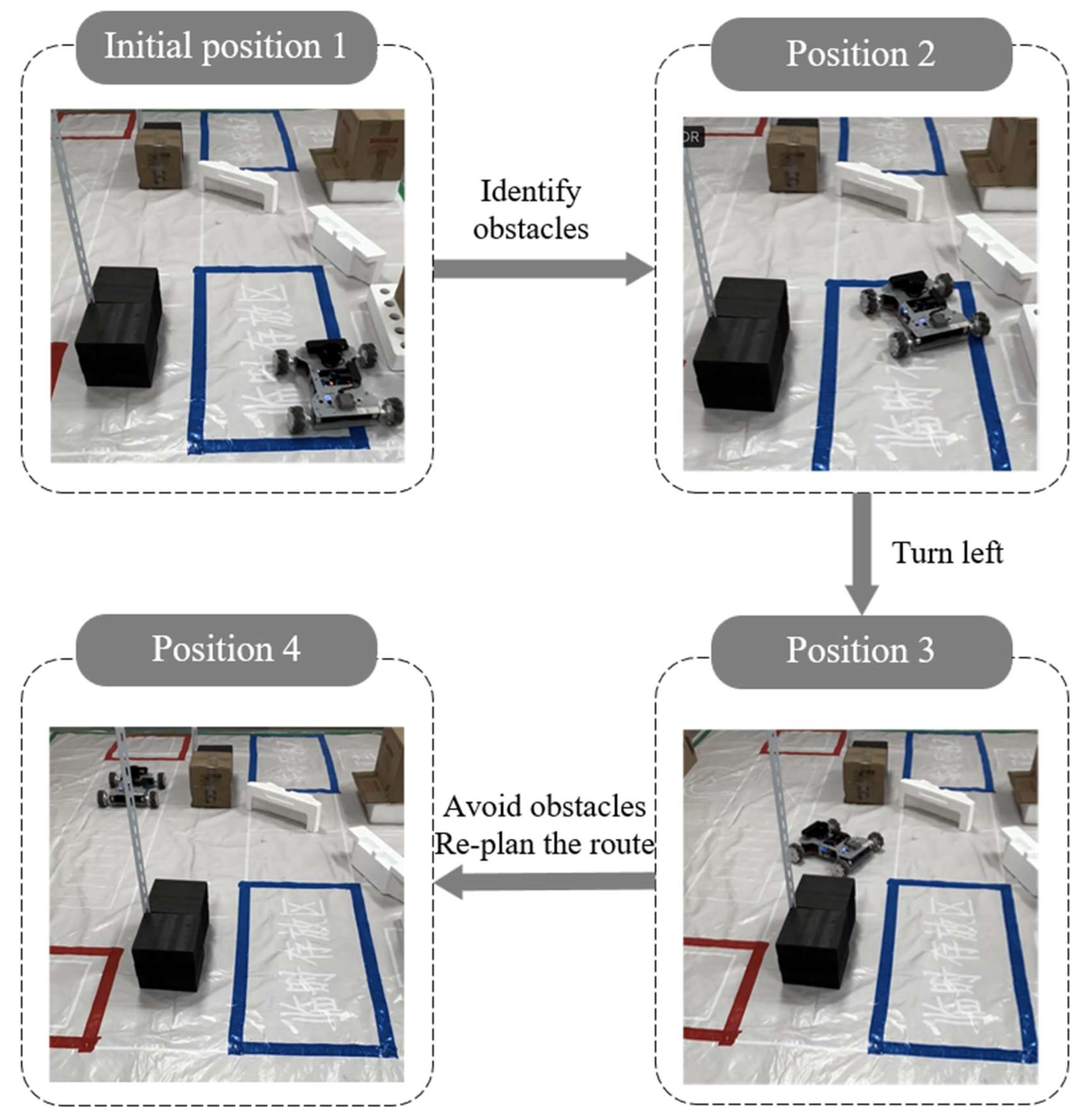
4.2.1. Obstacle Blocking Road Environment Test
4.2.2. Dynamic Obstacle Avoidance Environment Test
5. Conclusions
- (1)
- Based on the TD3 deep reinforcement learning path planning method, offline training and verification were performed via a Gazebo-simulated warehouse model. The simulation results indicate that mobile robots can make continuous, effective decisions and complete path planning tasks in warehouse environments.
- (2)
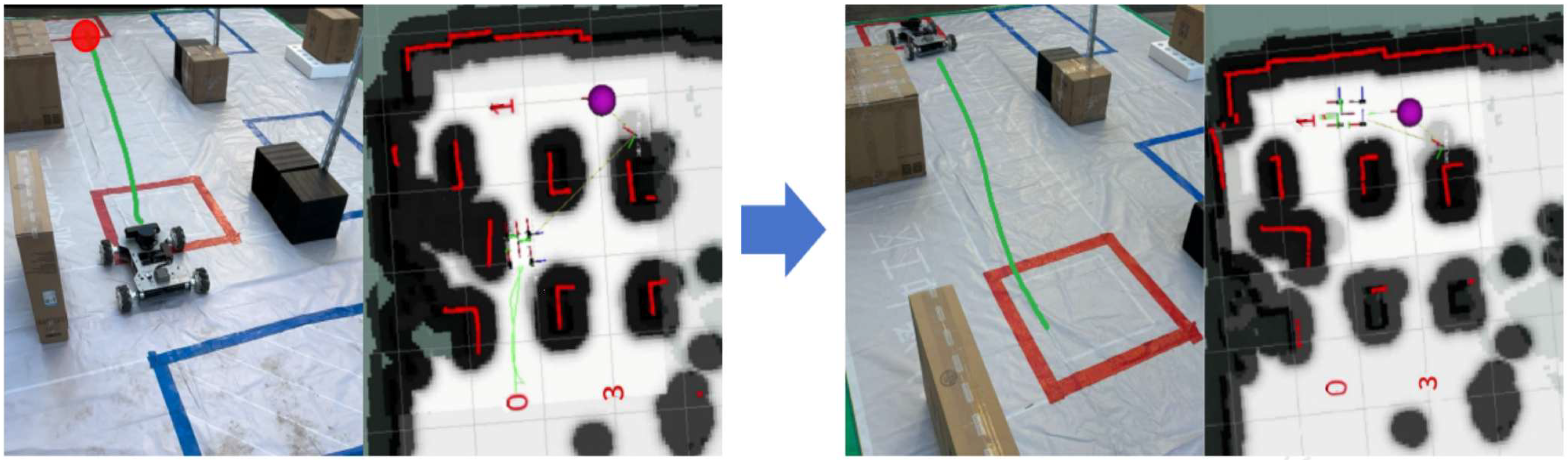
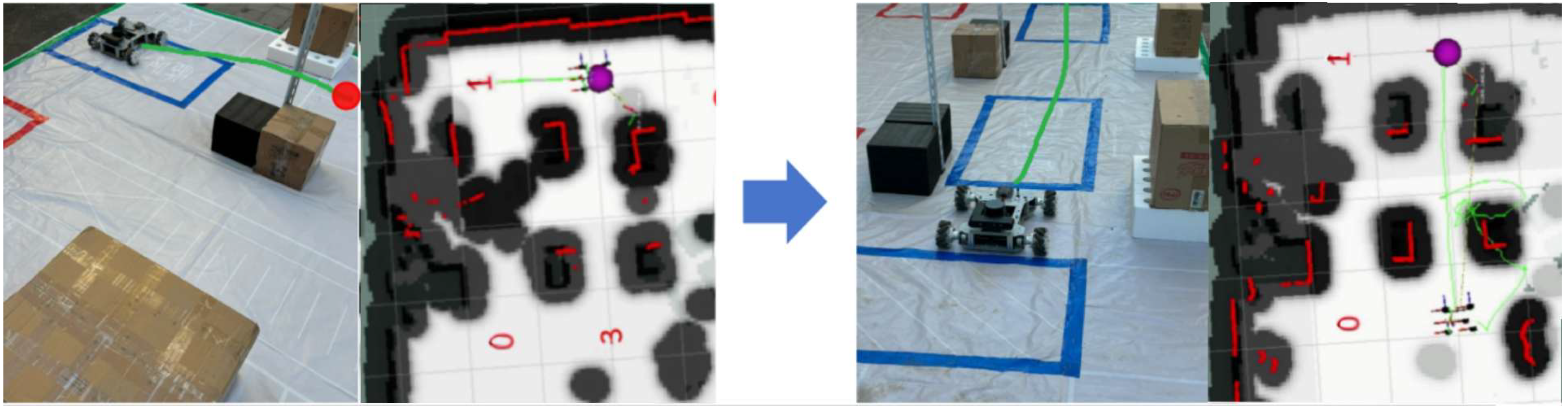
- A laser SLAM-equipped Mecanum-wheeled mobile robot based on the Astar-TEB hybrid algorithm. Experiments demonstrate the successful completion of path planning tasks and obstacle avoidance in both static and dynamic real-world scenarios.
Author Contributions
Funding
Data Availability Statement
Conflicts of Interest
References
- Li, J.; Zhang, S.; Wang, J.; Xiao, H. Application and Development of 5G Technology in Smart Logistics Industry. In Proceedings of the 2023 9th International Conference on Computer and Communications (ICCC), Chengdu, China, 8–11 December 2023; pp. 1329–1333. [Google Scholar]
- Xu, Y.; Qi, L.; Luan, W.; Guo, X.; Ma, H. Load-In-Load-Out AGV Route Planning in Automatic Container Terminal. IEEE Access 2020, 8, 157081–157088. [Google Scholar] [CrossRef]
- Liu, L.; Wang, X.; Yang, X.; Liu, H.; Li, J.; Wang, P. Path planning techniques for mobile robots: Review and prospect. Expert Syst. Appl. 2023, 227, 120254. [Google Scholar] [CrossRef]
- Zhang, B.; Zhang, Y.; Liang, W.; Wang, X.; Yang, Y. Warehouse AGV Navigation Based on Multimodal Information Fusion. J. Acta Opt. Sin. 2024, 44, 0915003. [Google Scholar]
- Wei, Y.; Yang, R.; Tan, B.; Xu, S.; Cen, M. A Fast 3D Laser SLAM Method for Indoor Scenarios. In Proceedings of the 2022 34th Chinese Control and Decision Conference (CCDC), Hefei, China, 15–17 August 2022; pp. 2756–2761. [Google Scholar]
- Hashim, H.A. Guaranteed Performance Nonlinear Observer for Simultaneous Localization and Mapping. IEEE Control. Syst. Lett. 2021, 5, 91–96. [Google Scholar] [CrossRef]
- Duan, L.-M. Path Planning for Batch Picking of Warehousing and Logistics Robots Based on Modified A* Algorithm. Acad. J. Manuf. Eng. 2018, 16, 99–106. [Google Scholar] [CrossRef]
- Tao, W.; Daichuan, Y.; Weifeng, L.; Chenglin, W.; Baigen, C. A Novel Integrated Path Planning Algorithm for Warehouse AGVs. Chin. J. Electron. 2021, 30, 331–338. [Google Scholar] [CrossRef]
- Falcó, A.; Hilario, L.; Montés, N.; Mora, M.C.; Nadal, E. A Path Planning Algorithm for a Dynamic Environment Based on Proper Generalized Decomposition. Mathematics 2020, 8, 2245. [Google Scholar] [CrossRef]
- Ma, J.; Liu, Y.; Zang, S.; Wang, L. Robot Path Planning Based on Genetic Algorithm Fused with Continuous Bezier Optimization. Comput. Intell. Neurosci. 2020, 2020, 9813040. [Google Scholar] [CrossRef]
- Kou, B.; Zhang, Y. Geometric parameter identification of industrial robots based on improved particle swarm algorithm. Results Eng. 2025, 27, 106331. [Google Scholar] [CrossRef]
- Akka, K.; Khaber, F. Mobile robot path planning using an improved ant colony optimization. Int. J. Adv. Robot. Syst. 2018, 15, 1–7. [Google Scholar] [CrossRef]
- Lamini, C.; Benhlima, S.; Elbekri, A. Genetic Algorithm Based Approach for Autonomous Mobile Robot Path Planning. Procedia Comput. Sci. 2018, 127, 180–189. [Google Scholar] [CrossRef]
- Liu, L.S.; Wang, B.; Xu, H. Research on path-planning algorithm integrating optimization a-star algorithm and artificial po-tential feld method. J. Electron. 2022, 11, 3660. [Google Scholar]
- Wang, Y.; Tong, K.; Fu, C.; Wang, Y.; Li, Q.; Wang, X.; He, Y.; Xu, L. Hybrid path planning algorithm for robots based on modified golden jackal optimization method and dynamic window method. Expert Syst. Appl. 2025, 282, 127808. [Google Scholar] [CrossRef]
- Zhang, J.; Ling, H.; Tang, Z.; Song, W.; Lu, A. Path planning of USV in confined waters based on improved A ∗ and DWA fusion algorithm. Ocean Eng. 2025, 322, 120475. [Google Scholar] [CrossRef]
- Ho, G.; Tang, Y.M.; Leung, E.K.; Tong, P. Integrated reinforcement learning of automated guided vehicles dynamic path planning for smart logistics and operations. Transp. Res. Part E Logist. Transp. Rev. 2025, 196, 104008. [Google Scholar] [CrossRef]
- Zhang, J.-H.; Zhang, Y.; Zhou, Y. Path Planning of Mobile Robot Based on Hybrid Multi-Objective Bare Bones Particle Swarm Optimization with Differential Evolution. IEEE Access 2018, 6, 44542–44555. [Google Scholar] [CrossRef]
- Li, P.; Wang, Y.; Gao, Z. Path Planning of Mobile Robot Based on Improved TD3 Algorithm. In Proceedings of the 2022 IEEE International Conference on Mechatronics and Automation (ICMA), Guilin, China, 7–10 August 2022; pp. 715–720. [Google Scholar]
- Khan, M.R.; Ibrahim, A.M.; Al Mahmud, S.; Samat, F.A.; Jasni, F.; Mardzuki, M.I. Advancing mobile robot navigation with DRL and heuristic rewards: A comprehensive review. Neurocomputing 2025, 652, 131036. [Google Scholar] [CrossRef]
- Abdalmanan, N.; Kamarudin, K.; Bakar, M.A.A.; Rahiman, M.H.F.; Zakharia, A.; Mamduh, S.M. 2D LiDAR Based Reinforcement Learning for Multi-Target Path Planning in Unknown Environment. IEEE Access 2023, 11, 35541–35555. [Google Scholar] [CrossRef]
- Deshpande, S.V.; Harikrishnan, R.; Ibrahim, B.S.K.K.; Ponnuru, M.D.S. Mobile robot path planning using deep deterministic policy gradient with differential gaming (DDPG-DG) exploration. Cogn. Robot. 2024, 4, 156–173. [Google Scholar] [CrossRef]
- Choi, J.; Lee, G.; Lee, C. Reinforcement learning-based dynamic obstacle avoidance and integration of path planning. Intell. Serv. Robot. 2021, 14, 663–677. [Google Scholar] [CrossRef]
- Fujimoto, S.; van Hoof, H.; Meger, D. Addressing Function Approximation Error in Actor-Critic Methods. In Proceedings of the 35th International Conference on Machine Learning, Stockholm, Sweden, 10–15 July 2018. [Google Scholar]
- Li, P.; Chen, D.; Wang, Y.; Zhang, L.; Zhao, S. Path planning of mobile robot based on improved TD3 algorithm in dynamic environment. Heliyon 2024, 10, e32167. [Google Scholar] [CrossRef]
- Nghiem, G.-K.; Le, T.-L.; Phung, T.C.; Dinh, Q.H. A study on the optimal control strategy using sliding mode controller for Mecanum-Wheeled omnidirectional mobile robot. Measurement 2025, 255, 118113. [Google Scholar] [CrossRef]
- Cheng, C.; Zhang, H.; Sun, Y.; Tao, H.; Chen, Y. A cross-platform deep reinforcement learning model for autonomous navigation without global information in different scenes. Control Eng. Pract. 2024, 150, 105991. [Google Scholar] [CrossRef]
- Nie, J.; Zhang, G.; Lu, X.; Wang, H.; Sheng, C.; Sun, L. Reinforcement learning method based on sample regularization and adaptive learning rate for AGV path planning. Neurocomputing 2024, 614, 128820. [Google Scholar] [CrossRef]
- Chen, X.; Liu, S.; Zhao, J.; Wu, H.; Xian, J.; Montewka, J. Autonomous port management based AGV path planning and optimization via an ensemble reinforcement learning framework. Ocean Coast. Manag. 2024, 251, 107087. [Google Scholar] [CrossRef]
- Zhao, X.; Zheng, S. Robot Trajectory Planning Optimization Algorithm Based on Improved TD3 Algorithm. In Proceedings of the 2023 International Conference on Intelligent Communication and Networking (ICN), Changzhou, China, 10–12 November 2023; pp. 281–285. [Google Scholar]
- Agarwal, R.; Schuurmans, D.; Norouzi, M. An Optimistic Perspective on Offline Reinforcement Learning. In Proceedings of the 37th International Conference on Machine Learning, Vienna, Austria, 13–18 July 2020. [Google Scholar]
- Liu, J.; Xi, B.; Chen, S.; Gao, F.; Wang, Z.; Long, Y. The Path Planning Study of Autonomous Patrol Robot based on Modified Astar Algorithm and Genetic Algorithm. In Proceedings of the 2022 34th Chinese Control and Decision Conference (CCDC), Hefei, China, 15–17 August 2022; pp. 4713–4718. [Google Scholar]
- Koval, A.; Karlsson, S.; Nikolakopoulos, G. Experimental evaluation of autonomous map-based Spot navigation in confined environments. Biomim. Intell. Robot. 2022, 2, 100035. [Google Scholar] [CrossRef]
- Zai, W.; Lin, Q.; Wang, S.; Lin, X. Path Planning for Wheeled Robots Based on the Fusion of Improved A* and TEB Algorithms. In Proceedings of the 2023 China Automation Congress (CAC), Chongqing, China, 17–19 November 2023; pp. 3257–3261. [Google Scholar]








| Warehouse Area | x-Coordinate (m) | y-Coordinate (m) |
|---|---|---|
| AR/RS | 0 | (6, 9) |
| Distribution | (−1, 8) | (−9, 6) |
| Pallet storage | (−7, 9) | (−9, 6) |
| Picking | (−3, 5) | (−9, 6) |
| Overall storage | (−8, 8) | (−9, 6) |
| Training Parameter | Parameter Value |
|---|---|
| Max_steps | 500 |
| Soft Update Coefficient | 0.005 |
| Batch Size | 40 |
| Picking | 2 |
| Discount Factor | 0.99 |
| Replay Buffer Size | 1 × 10⁻⁶ |
| Noise | 0.5 |
| Stage | Re-Planning Time(s) | Success Rate |
|---|---|---|
| Static Obstacle | 0.2 | 93% |
| Dynamic Obstacle | 2.3 | 80% |
Disclaimer/Publisher’s Note: The statements, opinions and data contained in all publications are solely those of the individual author(s) and contributor(s) and not of MDPI and/or the editor(s). MDPI and/or the editor(s) disclaim responsibility for any injury to people or property resulting from any ideas, methods, instructions or products referred to in the content. |
© 2025 by the authors. Published by MDPI on behalf of the World Electric Vehicle Association. Licensee MDPI, Basel, Switzerland. This article is an open access article distributed under the terms and conditions of the Creative Commons Attribution (CC BY) license (https://creativecommons.org/licenses/by/4.0/).
Share and Cite
Wang, Y.; Ye, Y.Y.; Zhong, W.; Gao, B.L.; Mu, C.Z.; Zhao, N. Micro-Platform Verification for LiDAR SLAM-Based Navigation of Mecanum-Wheeled Robot in Warehouse Environment. World Electr. Veh. J. 2025, 16, 571. https://doi.org/10.3390/wevj16100571
Wang Y, Ye YY, Zhong W, Gao BL, Mu CZ, Zhao N. Micro-Platform Verification for LiDAR SLAM-Based Navigation of Mecanum-Wheeled Robot in Warehouse Environment. World Electric Vehicle Journal. 2025; 16(10):571. https://doi.org/10.3390/wevj16100571
Chicago/Turabian StyleWang, Yue, Ying Yu Ye, Wei Zhong, Bo Lin Gao, Chong Zhang Mu, and Ning Zhao. 2025. "Micro-Platform Verification for LiDAR SLAM-Based Navigation of Mecanum-Wheeled Robot in Warehouse Environment" World Electric Vehicle Journal 16, no. 10: 571. https://doi.org/10.3390/wevj16100571
APA StyleWang, Y., Ye, Y. Y., Zhong, W., Gao, B. L., Mu, C. Z., & Zhao, N. (2025). Micro-Platform Verification for LiDAR SLAM-Based Navigation of Mecanum-Wheeled Robot in Warehouse Environment. World Electric Vehicle Journal, 16(10), 571. https://doi.org/10.3390/wevj16100571