Article

An Improved Gaussian Process Regression Based Aging Prediction Method for Lithium-Ion Battery

1
School of Information Engineering, Southwest University of Science and Technology, Mianyang 621010, China
2
Tianfu Institute of Research and Innovation, Southwest University of Science and Technology, Chengdu 610299, China
3
School of Manufacturing Science and Engineering, Southwest University of Science and Technology, Mianyang 621010, China
*
Author to whom correspondence should be addressed.
World Electr. Veh. J. 2023, 14(6), 153; https://doi.org/10.3390/wevj14060153
Submission received: 13 May 2023 / Revised: 5 June 2023 / Accepted: 7 June 2023 / Published: 9 June 2023
(This article belongs to the Special Issue Lithium-Ion Batteries for Electric Vehicle)

Abstract

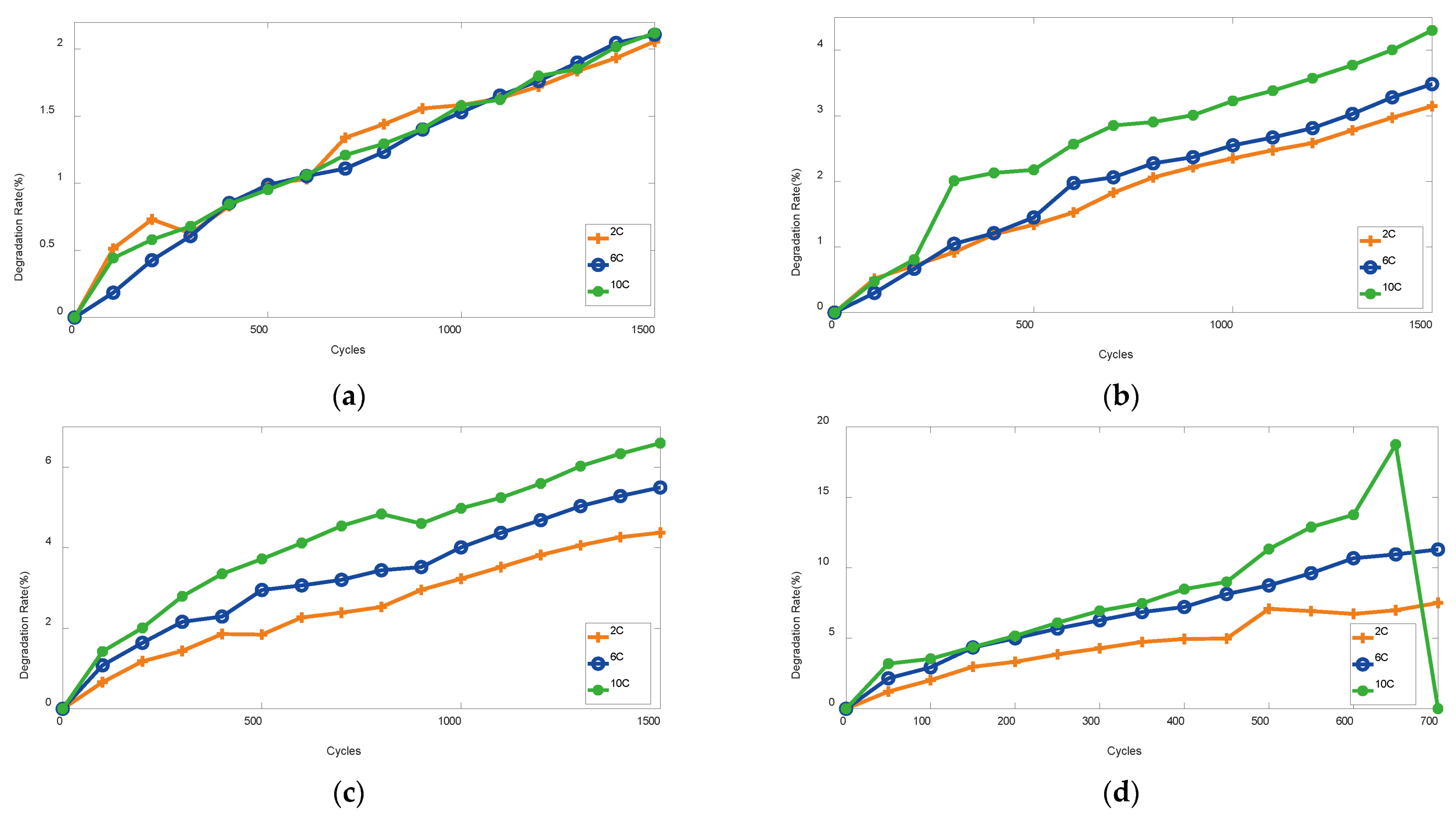
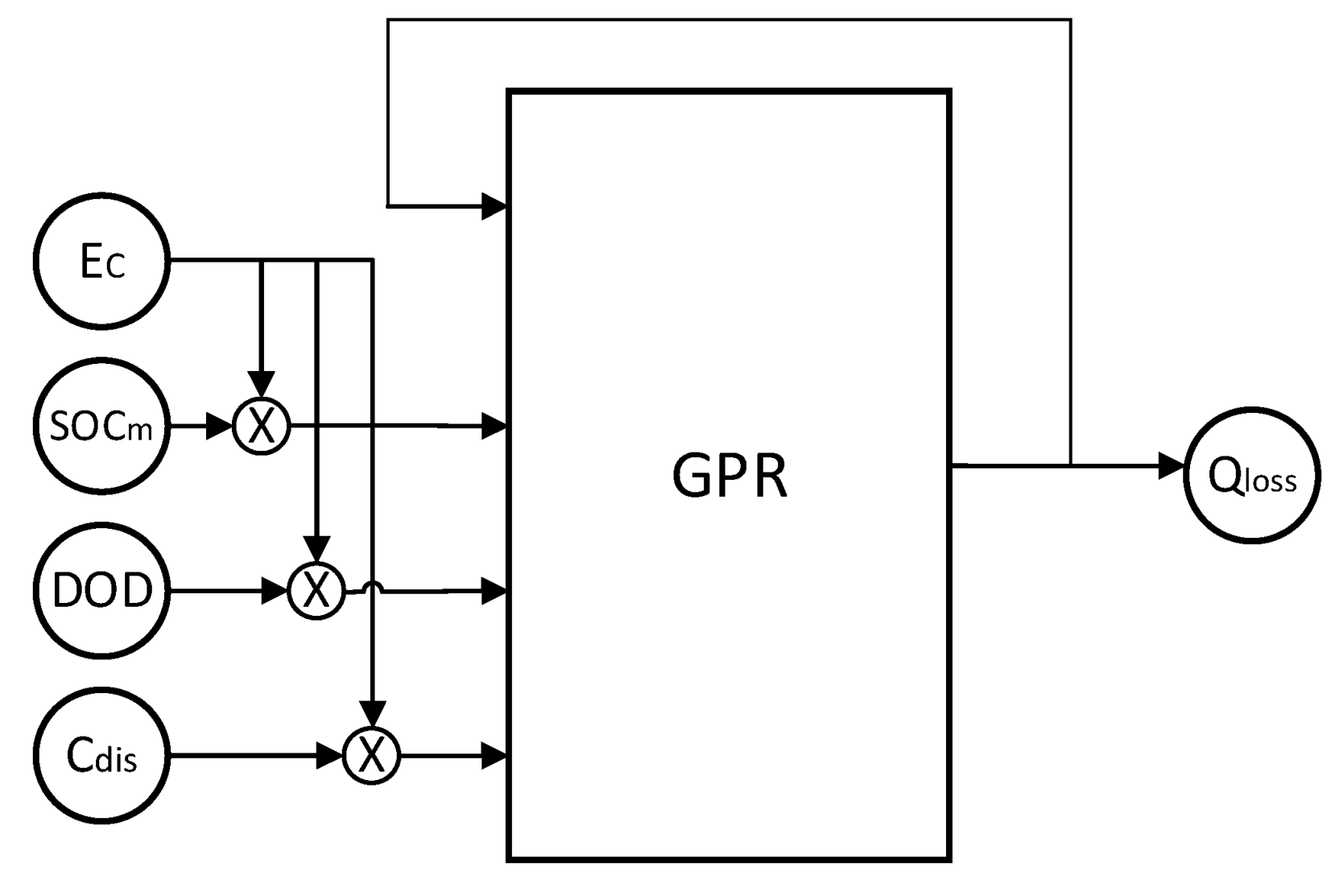
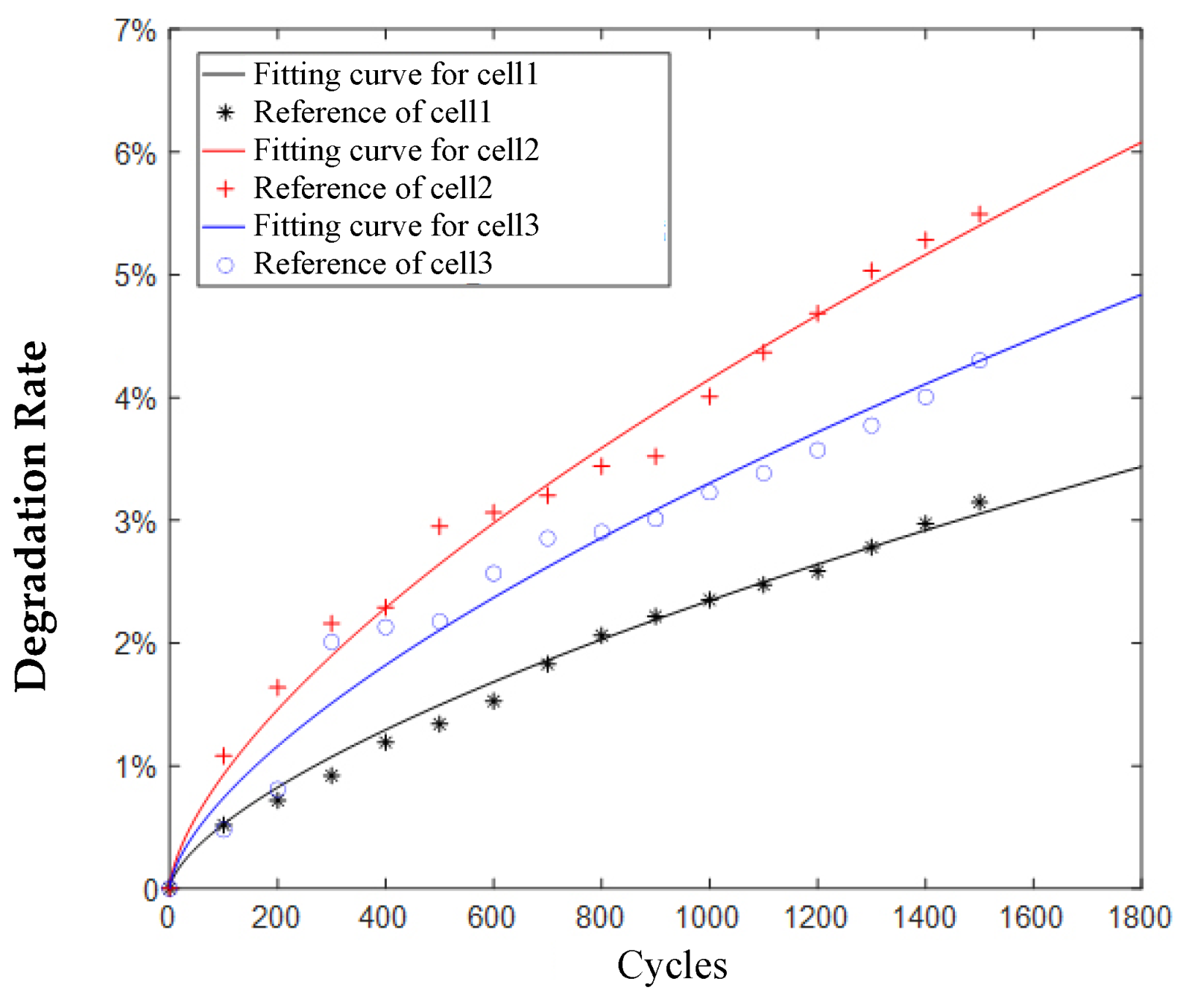
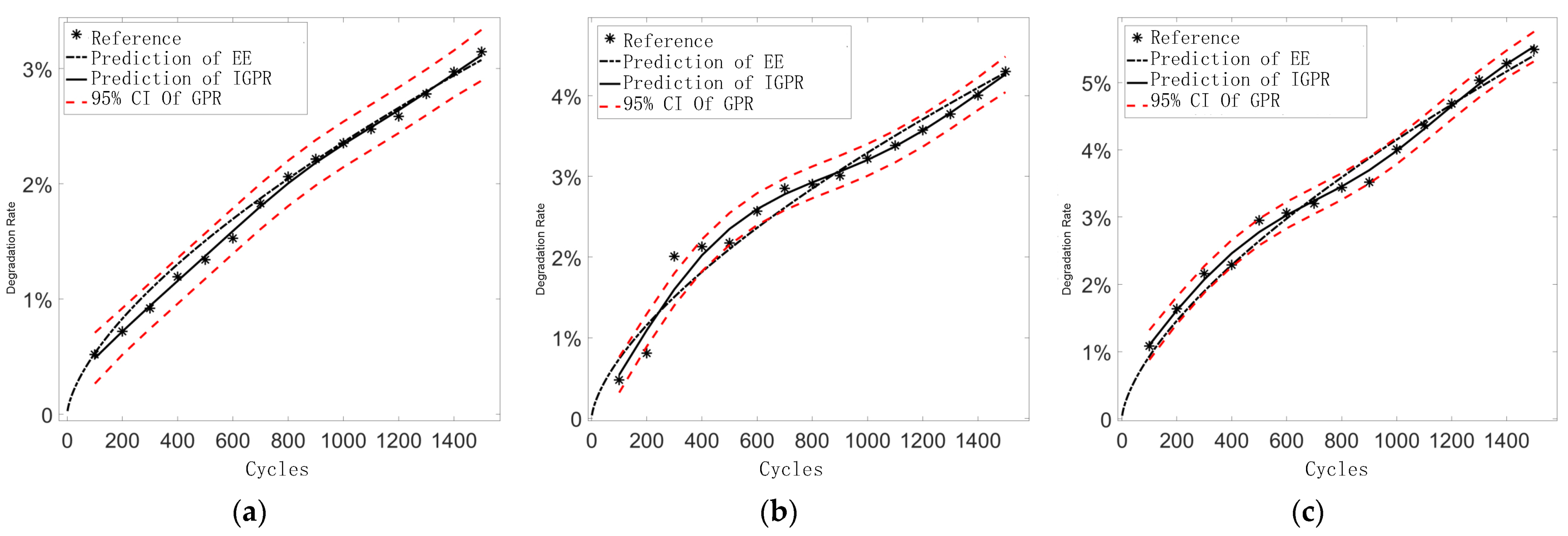
A reliable aging-prediction method is significant for lithium-ion batteries (LIBs) to prolong the service life and increase the efficiency of operation. In this paper, an improved Gaussian-process regression (GPR) is proposed to predict the degradation rate of LIBs under coupled aging stress to simulate working conditions. The complicated degradation processes at different ranges of the state of charge (SOC) under different discharge rates were analyzed. A composed kernel function was conducted to optimize the hyperparameter. The inputs for the kernel function of GPR were improved by coupling the constant and variant characteristics. Moreover, previous aging information was employed as a characteristic to improve the reliability of the prediction. Experiments were conducted on a lithium–cobalt battery at three different SOC ranges under three discharge rates to verify the performance of the proposed method. Some tips to slow the aging process based on the coupled stress were discovered. Results show that the proposed method accurately estimated the degradation rate with a maximum estimation root-mean-square error of 0.14% and regression coefficient of 0.9851. Because of the proposed method’s superiority to the exponential equation and GPR by fitting all cells under a different operating mode, it is better for reflecting the true degradation in actual EV.
Keywords: lithium-ion battery; degradation rate; Gaussian-process regression; coupled aging stress lithium-ion battery; degradation rate; Gaussian-process regression; coupled aging stress