Article

Forest Carbon Compensation Accounting and Zoning Optimization Path from the Perspective of Carbon Budget in Fujian Province


1
College of Digital Economy, Fujian Agriculture and Forestry University, Fuzhou 350002, China
2
Research Institute of Forestry Policy and Information, Chinese Academy of Forestry, Beijing 100091, China
*
Authors to whom correspondence should be addressed.
Forests 2026, 17(3), 369; https://doi.org/10.3390/f17030369
Submission received: 9 February 2026 / Revised: 11 March 2026 / Accepted: 13 March 2026 / Published: 16 March 2026

Abstract

Rapid urbanization has seriously interfered with the carbon sink function of forests, and has even led to an increased risk of forest carbon imbalance. It is important to explore the regional carbon compensation mechanism and zoning optimization path based on forest carbon accounting to achieve the “dual carbon” goal and sustainable forest management in Fujian Province. Based on remote sensing and GIS technologies, this study measured forest carbon emissions and carbon sequestration of each county in Fujian Province, revealed spatial and temporal evolution of forest carbon budget during the period from 2000 to 2020, and calculated carbon compensation value of each county, so as to realize scientific accounting of forest carbon compensation, and then explored zoning optimization pathways of forest carbon compensation in Fujian Province. The results show the following: (1) From 2000 to 2020, the forest carbon budget in Fujian Province as a whole showed a spatial pattern of “coastal deficit, northwest surplus”, with obvious spatial imbalance characteristics, and showed a high growth trend of net carbon sequestration. (2) From 2000 to 2020, the average carbon compensation rate in Fujian Province was 7.92, and compensation zones were mainly concentrated in the economically developed southeast coastal regins such as Fuzhou, Quanzhou, Xiamen, Zhangzhou, and Putian, while compensation-receiving zones were mainly concentrated in northwestern mountainous areas such as Nanping, Ningde, and Longyan, which had a high forest coverage rate. (3) From 2000 to 2020, there was a significant difference in growth rates of compensation amounts and compensation-receiving amounts in Fujian Province. The cumulative increase in compensation amounts was 322.82%, while the cumulative increase in compensation-receiving amounts was only 17.5%. (4) Based on priority levels, the counties in Fujian Province are classified into six types of forest carbon compensation zones—potential compensation zones, secondary compensation zones, priority compensation zones, potential compensation-receiving zones, secondary compensation-receiving zones and priority compensation-receiving zones—and optimization paths of differentiated zones are explored.

1. Introduction

The “dual-carbon” goal is an important way for China to cope with climate change, and forest carbon sinks maintain the stability and sustainability of the ecosystem through the function of carbon sequestration and oxygen release. In recent years, China’s annual forest carbon sinks have ranked first globally in LULUCF inventory [1,2]. However, forest carbon sinks have significant positive externalities, making it difficult to achieve efficient resource allocation solely through market forces, and it is necessary to internalize externalities through an ecological compensation system [3,4]. Carbon compensation refers to the act where entities responsible for carbon emissions provide compensation to those responsible for carbon sequestration. It serves as an effective means to coordinate regional ecological and environmental protection, promote economic development, and achieve carbon neutrality [5]. With the official implementation of the “Ecological Protection Compensation” (2024), China’s ecological compensation system explicitly requires that ecological beneficiary zones and ecological protection zones establish ecological protection compensation mechanisms through negotiation and other means, and implement inter-regional horizontal ecological protection compensation [6]. Fujian Province combines regional characteristics of coastal industry and excellent ecology in mountainous zones, and the forest coverage rate within the region has consistently ranked first in the country for many years, which is a typical representative of rapid urbanization among China’s mountainous cities and a zone of intertwined conflicts between economic development and ecological protection [7]. Therefore, establishing a scientific accounting system for forest carbon budget and further exploring pathways and zoning optimization for forest carbon compensation at the county level in Fujian Province holds significant importance for constructing horizontal ecological compensation mechanisms and realizing the value of ecological products in China’s mountainous cities.
Carbon budget generally refers to the balance between carbon sequestration and emissions within an ecosystem or region in a specific period of time. Scholars mainly calculate the carbon budget in a region by subtracting forests’ carbon sinks from carbon sources. Therefore, the spatial quantitative measurement of carbon sources and sinks is the basis for regional carbon accounting. Among these, scholars’ measurement methods for carbon sources mainly include the carbon emission coefficient method, remote sensing estimation, life cycle assessment, mass balance, actual measurement, etc. [8,9,10]. For example, the carbon emission coefficient method calculates carbon emissions from each energy source based on the IPCC inventory approach [6,11], scientifically accounting carbon emissions at multiple scales such as national, regional, provincial, municipal, and county [12,13], and the remote sensing estimation method utilizes nighttime light coefficients at grid scale to account for regional carbon dioxide emissions [14,15]. In contrast, the measurement of carbon sinks comprehensively considers factors such as monitoring methods, geographical environments and scale, primarily forming two major carbon sinks estimation models: the biomass method and the carbon flux method [16]. Among these, the biomass method further derives methods such as biomass conversion factor method, biomass continuous function method, biomass inventory method and stock expansion method. Meanwhile, the use of remote sensing technology to extract net primary productivity for estimating forest carbon sinks at grid scale [17,18], enables large-scale, fine-grained forest carbon accounting. On the basis of the carbon budget, scholars have also conducted a series of studies on spatiotemporal differences, influencing factors, and carbon balance of regional carbon budge; delineated optimization zoning of national land spatial patterns; and further explored optimization strategies to regulate the risk of regional carbon imbalance [19,20].
Ecological compensation is a kind of transaction between ecosystem service users and ecosystem service providers [21] and is an economic compensation for the loss caused by giving up the opportunity for economic development due to the protection of the ecological environment [22]. Based on the different entities responsible for compensation, ecological compensation is divided into vertical ecological compensation, horizontal ecological compensation, and market-based ecological compensation. Carbon compensation is a form of regional low-carbon development linked by carbon in the context of global change; it is a new type of ecological compensation model [10,15,23]. The existing research on carbon compensation primarily focuses on fields such as forestry, agriculture, and tourism [6,24,25]. These studies adopt the “compensation basis, compensation entity, compensation standards, and compensation methods” as a research framework and are conducted across multiple scales, including provincial, municipal, and county levels [4,5,18]. The selection of ecological compensation targets is generally based on the surplus and deficit status of ecosystem services [21,22], and the “carbon budget method” is a specific application of “surplus-deficit method” in the field of carbon compensation research. Therefore, current scholars primarily use carbon budget accounting methods to determine carbon compensation targets [6], identifying “ compensation-receiving zones” and “compensation zones” based on the difference between carbon emissions and carbon sequestration. Currently, there are three main measurement methods for carbon compensation standards [16,22]. The first is the carbon sink value method, which determines carbon compensation standards based on the added value of carbon sinks. However, this approach overlooks regional carbon emissions [26,27]. The second is the willingness-to-compensate method, which determines carbon compensation standards by conducting field questionnaire surveys to gauge respondents’ willingness to compensate, but the results of the survey are often overly subjective [25,28]. The third is carbon balance method, which determines carbon compensation standards based on the carbon budget. This approach facilitates the establishment of a unified carbon compensation standard, but it requires consideration of numerous factors, such as differences in resource endowments and economic development levels across regions [10].
In summary, forest carbon compensation is one of the important branches of ecological compensation research, and determining the compensation targets and compensation standards is the focus and difficulty of realizing the value of forest ecological products. However, existing research on forest carbon compensation lacks consideration of the regional economic development level in accounting of compensation value, and the compensation zoning lacks exploration of spatial and temporal differences in priorities. In view of this, this study establishes a county-level carbon budget accounting system. By utilizing remote sensing and GIS technologies, it conducts spatially refined and dynamic quantitative estimations of forest carbon emissions and carbon sequestration across counties in Fujian Province from 2000 to 2020. A dual-dimensional carbon compensation value correction model is developed by incorporating the Pearl growth curve and economic development levels, enabling the scientific calculation of carbon compensation priorities and corresponding compensation amounts. Based on estimated compensation priorities, differentiated forest carbon compensation zoning and optimization pathways are proposed, forming a replicable decision-support framework for county-level carbon compensation. This provides a scientific basis for establishing forest ecological compensation mechanisms.

2. Materials and Methods

2.1. Overview of the Study Area

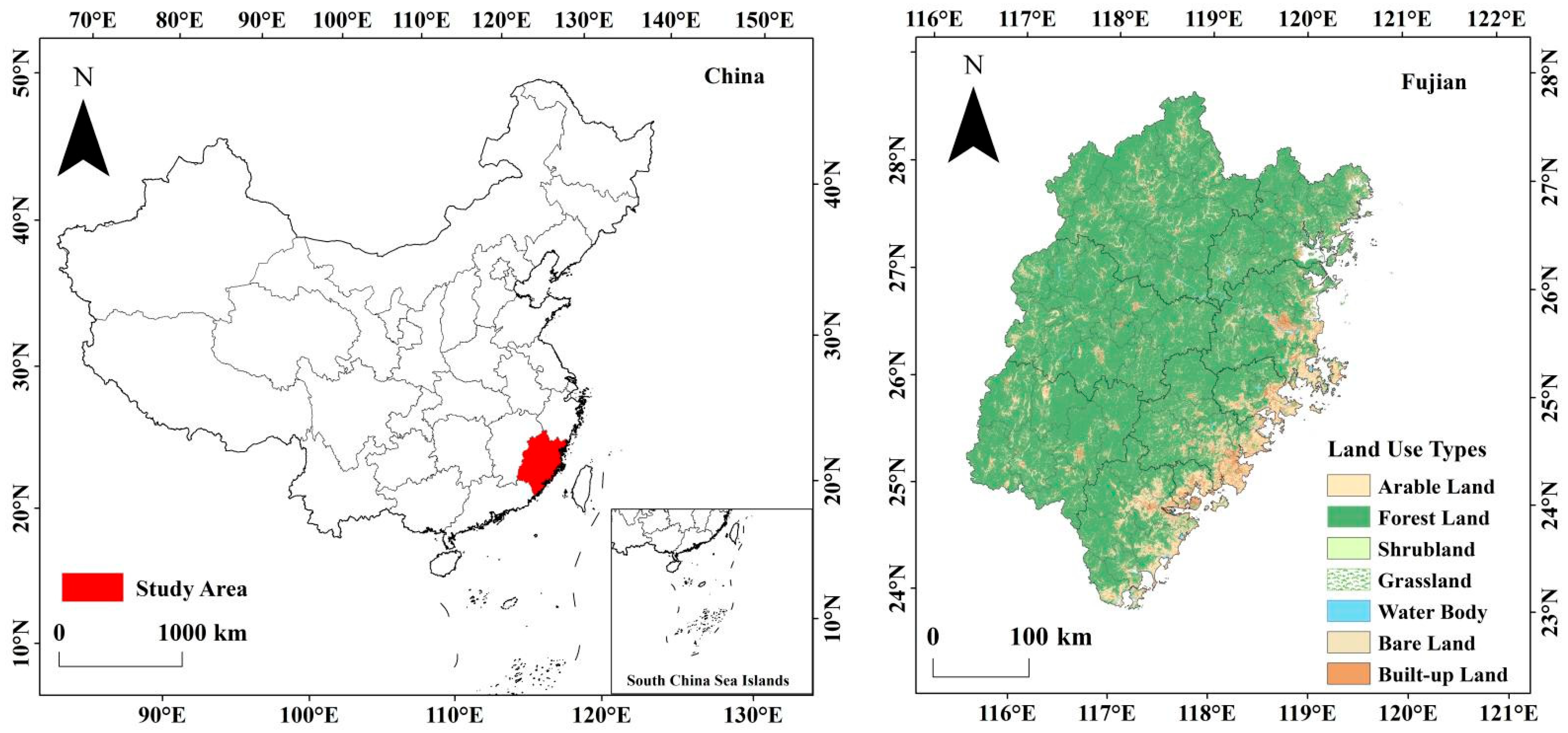
Fujian Province is located along China’s southeastern coast (23°31′–28°18′ N, 115°50′–120°43′ E), comprising 9 prefecture-level cities and 84 counties (excluding Kinmen County), with a total land area of 124,000 km2 (Figure 1). With a forest coverage rate of 65.12%, Fujian has ranked first nationally for 46 consecutive years. Through afforestation and forest management practices that optimize stand structure, its carbon sequestration capacity continues to be enhanced. With the steady advancement of ecological civilization construction, leveraging its ecological endowment, Fujian Province has established a diversified carbon compensation mechanism. This mechanism supports the implementation of the “Dual Carbon” goals through multiple channels and promotes the sustainable development of the regional economy and ecology. However, the current forest carbon compensation accounting system remains incomplete. Based on the forest carbon budget situation in Fujian Province, there is an urgent need to explore implementation mechanism for regional horizontal compensation.

2.2. Research Framework Construction

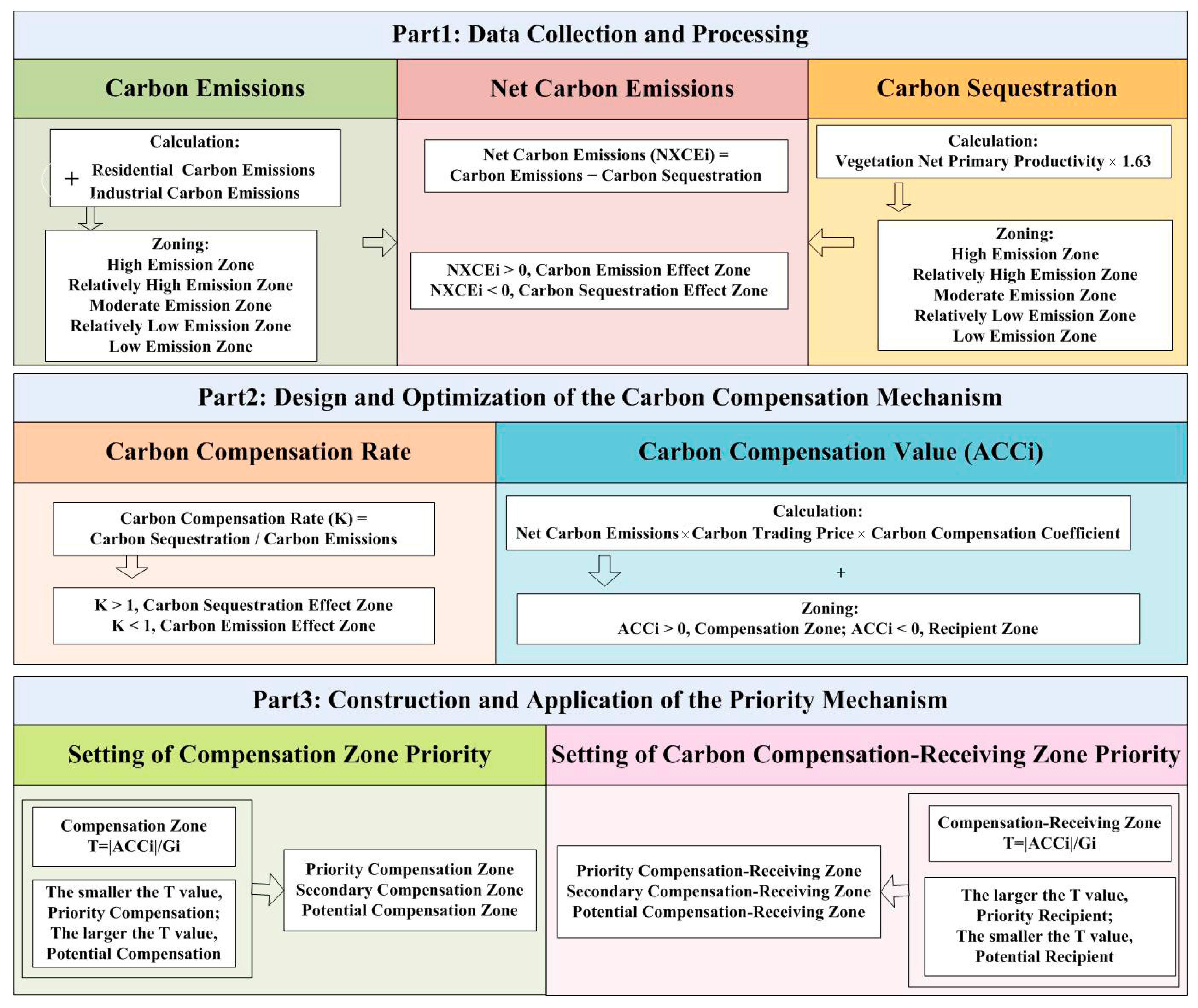
Based on the forest carbon budget in Fujian Province, this study constructs a research framework following the logic of “carbon budget measurement-carbon compensation zoning-carbon compensation accounting”(Figure 2). This framework aims to establish a practical pathway from quantifying carbon sources/sinks to the application of ecological compensation policies. Firstly, starting with spatial quantification of carbon sources and sinks, this study calculates carbon emissions at the county level in Fujian Province from two dimensions: residential carbon emissions and industrial carbon emissions. Simultaneously, carbon sequestration was estimated based on the net primary productivity of vegetation. Secondly, based on the measurement results of carbon emissions and carbon sequestration, the net carbon emissions and carbon compensation rate are calculated, respectively. This helps to analyze regional carbon source/sink effects and identify carbon surplus zones and carbon deficit zones, thereby providing data support for ecological compensation zoning. Simultaneously, by incorporating carbon trading prices and carbon compensation coefficients, a carbon compensation value accounting model is constructed and refined. This model transforms the carbon budget into a quantifiable value system, clarifying compensation entities and compensation-receiving entities for each region. Finally, based on the compensation relationships derived from carbon compensation value zoning, and combined with the ranking of unit carbon compensation values, hierarchical classifications are established for both compensation zones and compensation-receiving zones. This process calculates ecological compensation amounts for different zones and constructs zoning optimization strategies to enhance the spatial allocation efficiency of ecological compensation.

2.3. Carbon Budget Accounting

2.3.1. Carbon Emissions Accounting

The forest carbon budget in this study measures the offset capacity and emission reduction effect of forest carbon sinks on regional anthropogenic carbon emissions, rather than accounting for the carbon budget of the forest ecosystem itself. Therefore, this study uses regional anthropogenic carbon emissions, rather than carbon emissions of forest ecosystem itself, to represent forest carbon emissions. Carbon emissions primarily originate from residential and industrial sources. This study employs the population density method and nighttime light data to account for carbon emissions at county level in Fujian Province. The spatial distribution of residential carbon emissions was calculated using population density grids, per capita energy consumption, and carbon emission coefficients. Industrial carbon emissions were estimated based on DMSP/OLS and NPP/VIIRS nighttime remote sensing imagery [17], whereby the proportion of the nighttime light index of each grid cell to the total nighttime light index of the county was used to allocate county-level industrial carbon emissions to each grid. Finally, at the county scale, residential and industrial carbon emissions were integrated at the grid level. The calculation formula is as follows:
XCE i   =   Pop i ×   Ea i   ×   θ   +   LE i LE sum ×   ICE i
In the formula, XCE i represents regional carbon emissions (tCO2e), Pop i denotes population density (persons/km2), Ea i is per capita energy consumption (tce/person), θ is the carbon emission conversion coefficient of energy (tCO2e/tce), LE i stands for the nighttime light index of a grid cell, LE sum is the total nighttime light index of the county, and ICE i indicates county-level industrial carbon emissions (tCO2e). Nighttime light data effectively reflect the intensity of human activities and spatial differences in carbon emissions at the county level, offering advantages such as spatial continuity, temporal stability, and comprehensive coverage, making it suitable for spatially explicit carbon emission accounting at the county scale. However, due to influences such as industrial structure, urban light saturation, and coastal disturbances, certain estimation biases may exist. The nighttime light data used in this study are derived from the PANDA-China nighttime light dataset [29], which has been optimized to account for biases related to industrial structure differences and data saturation effects.

2.3.2. Carbon Sequestration Accounting

This study estimates the net primary productivity (NPP) of vegetation across counties in Fujian Province based on remote sensing imagery, thereby calculating carbon sequestration. Referring to the standard established by scholars, 1 unit of NPP absorbs 1.63 units of carbon dioxide (kg CO2/kg DW) [17]. Concurrently, using GIS spatial analysis tools, county-level forest carbon sequestration XCS i (tCO2e) was extracted.
The carbon sequestration accounting formula is as follows:
XNPP i   =   NPP i   ×   1.63 × A i
In the formula, XNPP i (tCO2e) represents carbon sequestration of the i-th region, NPP i (gDW/m2/yr) denotes net primary productivity of vegetation in the i-th region, and A i is area of the i-th region (km2).

2.3.3. Estimation of Net Carbon Emissions

This study adopts net carbon emissions as the metric for carbon compensation. The calculation formula is as follows:
NXCE i   =   XCE i   -   XCS i
In the formula, NXCE i (tCO2e) represents carbon compensation base (net carbon emissions) for the i-th region. When NXCE i > 0, the region is a carbon deficit zone; when NXCE i < 0, the region is a carbon surplus zone; when NXCE i = 0, the region is a carbon-balanced zone

2.4. Calculation of Carbon Compensation Value

Referencing existing research [30], we introduce standard carbon unit price P (carbon trading price) and carbon compensation coefficient θ i to calculate carbon compensation value, which represents carbon compensation funds. Given the varying payment capacities across counties due to differences in economic development levels, this study refers to the research findings of Yu Guanghui et al. and employs a modified Pearl growth curve model to calculate carbon compensation coefficient [31]. The formula is as follows:
ACC i   =   NXCE i   ×   P   ×   θ i
θ i = GDP i GDP T   ×   1 1 + a e - bt
In the formula, ACC i represents carbon compensation value of the i-th region; a and b are coefficients, both set to 1 in this study, referring to the classic research by Yu Guanghui et al. on county-level ecological compensation in regions such as the Yangtze River Economic Belt [31]; t denotes annual Engel coefficient of each city in Fujian Province, used to characterize the nonlinear constraint mechanism of residents’ payment capacity, ensuring that carbon compensation amount accurately matches the regional fiscal capacity; e is natural logarithm; GDP i represents per capita GDP of the i-th county; GDP T is per capita GDP of Fujian Province. P stands for standard carbon unit price. Considering the availability of carbon market data (the national trading market began operation in July 2021), this study adopts the 2021 carbon price as the baseline year price. The formula is as follows [32]:
P   =   P MAX   +   P MIN 2   ×   GDP Fujian GDP National
In the formula, P MAX and P MIN represent the maximum and minimum carbon trading prices in China’s carbon market for 2021. To eliminate the impact of inflation across different years, GDP Fujian represents the GDP deflator of Fujian Province in 2021, and GDP National represents the national GDP deflator in 2021.

2.5. Priority of Carbon Compensation Value

This study references the calculation method for ecological value compensation priority to determine the priority of carbon compensation value. The formula is as follows:
T   =   ACC i G i
In the formula, T represents the priority level of the carbon compensation value, ACC i represents the carbon compensation value of the i-th region, and G i represents the GDP of the i-th region. For carbon compensation zones, a lower T value indicates that compensation funds have a smaller impact on the local economy, making it preferable to prioritize payment of carbon compensation funds. For carbon compensation-receiving zones, a higher T value indicates that compensation funds are more conducive to driving local economic development, making it preferable to prioritize receiving carbon compensation funds.

2.6. Data Sources and Preprocessing

This study takes the counties of Fujian Province as research units. Utilizing remote sensing and GIS spatial analysis tools(V10.1), multiple dimensions—including natural, social, and economic aspects—are considered by selecting indicators such as population density, nighttime light data, carbon emissions, vegetation data (net primary productivity), GDP, administrative boundary data, and carbon trading prices (Table 1). These are integrated to construct an accounting model for forest carbon budget in Fujian Province, thereby facilitating research on forest carbon compensation. In order to ensure the operability of the assessment model, this study spatialized evaluation indicators from multiple sources in GIS and then constructed a GIS spatial database, all data are uniformly projected to the Krasovsky_1940_Albers coordinate system.

3. Results

3.1. Spatial and Temporal Characteristics of Carbon Emissions

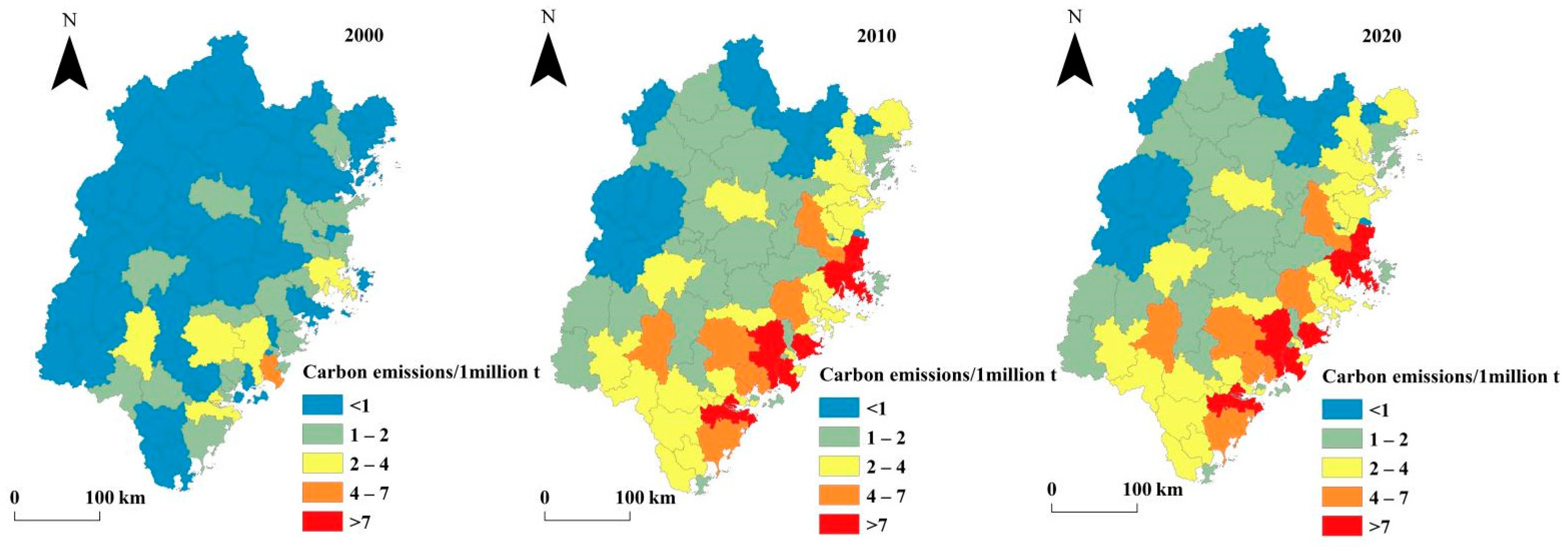
In this study, we constructed carbon emission (CE) measurement model from the dimensions of residential carbon emission and industrial carbon emission, measured spatial quantification of carbon emission in Fujian province counties from 2000 to 2020, and classified them into five grades based on emission levels: heavy emission zones (CE > 7) Mt, moderately heavy emission zones (4 < CE ≤ 7) Mt, moderate emission zones (2 < CE ≤ 4) Mt, relatively light emission zones (1 < CE ≤ 2) Mt, and light emission zones (CE ≤ 1) Mt. This analysis reveals the spatiotemporal patterns of county-level carbon emissions in Fujian Province from 2000 to 2020 (Figure 3). Overall, carbon emissions in Fujian Province exhibited a gradual increasing trend over a 20-year period, with a spatial pattern characterized by “higher emissions in coastal areas and lower emissions in mountainous regions.”
Specifically, during the period of 2000–2020, the level of carbon emissions in Fujian Province has gradually increased. Most counties transitioned from light emission zones to relatively light or moderate emission zones, and they are mainly concentrated in Nanping, Sanming, Longyan, and Ningde, etc. Heavy and moderately heavy emission zones also expanded progressively, mainly concentrated in coastal regions such as Fuzhou, Putian, Quanzhou, Xiamen, and Zhangzhou. Concurrently, county-level carbon emissions in Fujian Province exhibited temporal heterogeneity. In 2000, most counties were classified as light emission zones, with Jinjiang being the only moderately heavy emission zone. Fuqing, Anxi, Nan’an, Longhai, and Xinluo were moderate-emission zones, while 23 counties, including Fu’an Yanping, and Minhou, were relatively light-emission zones. In 2010, most counties had shifted from light to relatively light emission zones. Jinjiang, Nan’an, and Licheng in Quanzhou escalated to heavy-emission zones, while eight counties, including Xinluo, Anxi, and Longhai, escalated to moderately heavy-emission zones. Twenty-three counties, such as Shanghang, Yongding, and Nanjing, escalated to moderate emission zones. In 2020, Longhai, Hui’an, Fuqing, and Changle escalated from moderately heavy to heavy emission zones. Tong’an, Xiang’an, Jimei, Zhangpu, and Xianyou escalated to moderately heavy emission zones. Counties including Pinghe, Yunxiao, Zhao’an, Xiangcheng, Longwen, Changtai, Chengxiang, Mawei, Luoyuan, and Jiaocheng shifted to moderate emission zones, while Shunchang, Hua’an, and Pingtan moved up to relatively light emission zones.
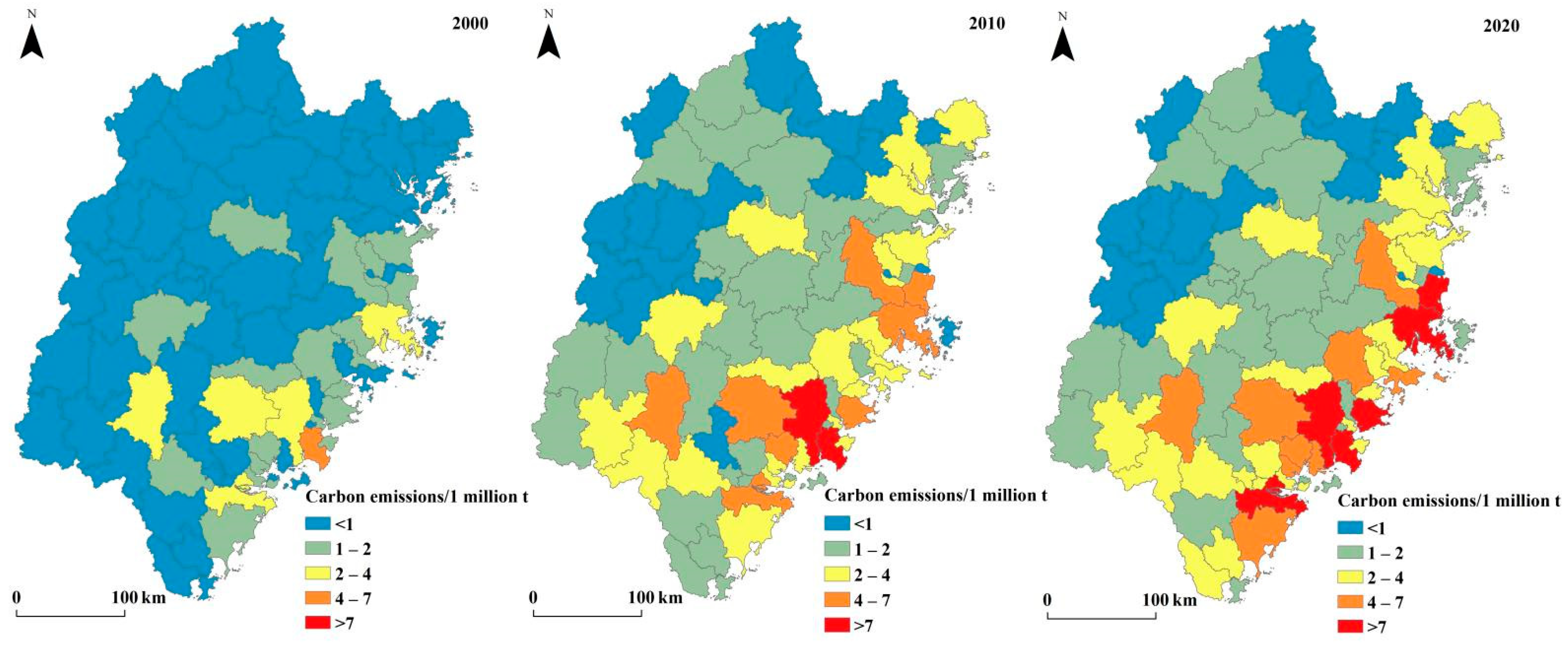
To further validate the robustness of carbon emission model, this study compares the aggregated county-level emission data with publicly available CEADs provincial emission inventory. The results indicate that the model exhibits strong stability in terms of total accuracy, spatial distribution, and temporal trends, confirming reliability of the estimates for subsequent carbon compensation research. Specifically, from the perspective of total emissions, the relative error between county-level carbon emissions estimated in this study and the CEADs provincial inventory remained below 2% from 2000 to 2020, with an error rate of only 0.32% in 2000, demonstrating the high reliability of total estimates. Meanwhile, the correlation coefficient (R) and the coefficient of determination (R2) at the county level both exceeded 0.9, indicating a high degree of consistency in spatial distribution patterns between this study’s data and the CEADs provincial data, and confirming the strong fit of the model. In terms of spatial distribution (Figure 3 and Figure 4), the two datasets exhibit a high degree of spatial consistency, with high-emission areas concentrated in coastal counties and low-emission areas concentrated in mountainous counties of northwestern Fujian, demonstrating the model’s strong ability to capture regional heterogeneity. Regarding temporal trends, both datasets show a pattern of “rapid growth in coastal areas and steady growth in inland areas,” with the difference in carbon emission growth rates between 2000 and 2020 being less than 5%, further validating the model’s stability over long time series.

3.2. Spatial and Temporal Characteristics of Carbon Sequestration

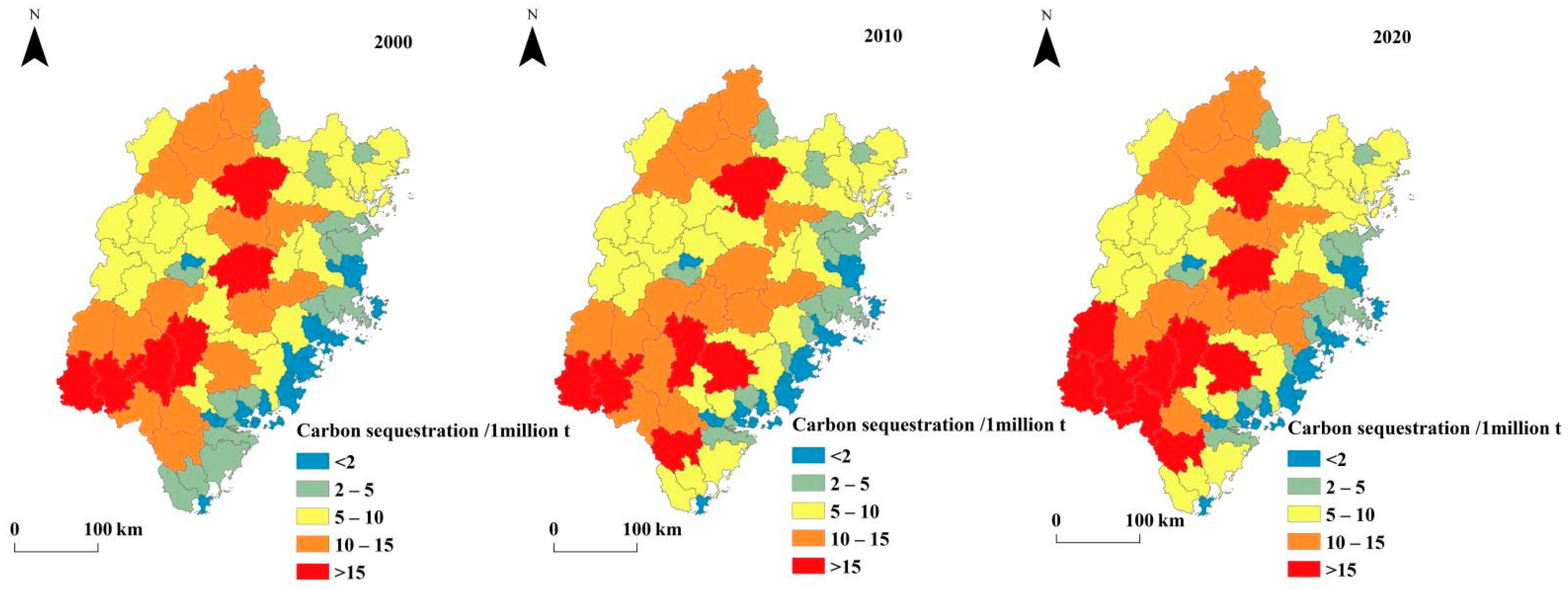
This study constructs a forest carbon sequestration (CS) accounting model based on the net primary productivity (NPP) of vegetation. It spatially quantifies carbon sequestration at county level in Fujian Province from 2000 to 2020 and classifies the regions into five grades according to sequestration levels: high sequestration zones (CS > 15) Mt, moderately high sequestration zones (10 < CS ≤ 15) Mt, moderate sequestration zones (5 < CS ≤ 10) Mt, relatively low sequestration zones (2 < CS ≤ 5) Mt, and low sequestration zones (CS ≤ 2) Mt. This analysis reveals the spatiotemporal patterns of county-level carbon sequestration in Fujian Province from 2000 to 2020 (Figure 5). Overall, from 2000 to 2020, the amount of carbon sequestration across counties in Fujian Province exhibited a spatial pattern characterized by “higher in central region and lower on both sides.” Low carbon sequestration was predominantly observed in coastal regions, while high carbon sequestration was mainly concentrated in the southwestern region, with a slight extension toward the central area.
Specifically, in 2000, Wuping, Shanghang, Xinluo, Zhangping, Youxi, and Jian’ou were classified as high carbon sequestration zones, while 22 counties, including Mawei, Cangshan, and Changle, were classified as low carbon sequestration zones. Between 2000 and 2010, shifts in classification occurred in some counties: Pinghe and Anxi rose from relatively high to high carbon sequestration zones; Xinluo and Youxi declined from high to relatively high carbon sequestration zones; Datian advanced from moderate to relatively high carbon sequestration zones; Zhao’an, Yunxiao, Zhangpu, and Changtai advanced from relatively low to moderate carbon sequestration zones; Yanping decreased from relatively high to moderate carbon sequestration zones; and Luojian and Chengxiang elevated from low to relatively low carbon sequestration zones. During 2010–2020, Changting, Xinluo, Yongding, Pinghe, and Youxi were newly classified as high carbon sequestration zones; Yanping and Xianyou were newly designated as relatively high carbon sequestration zones; and Zhouning and Luoyuan were newly classified as moderate carbon sequestration zones.

3.3. Spatial and Temporal Characteristics of the Carbon Budget

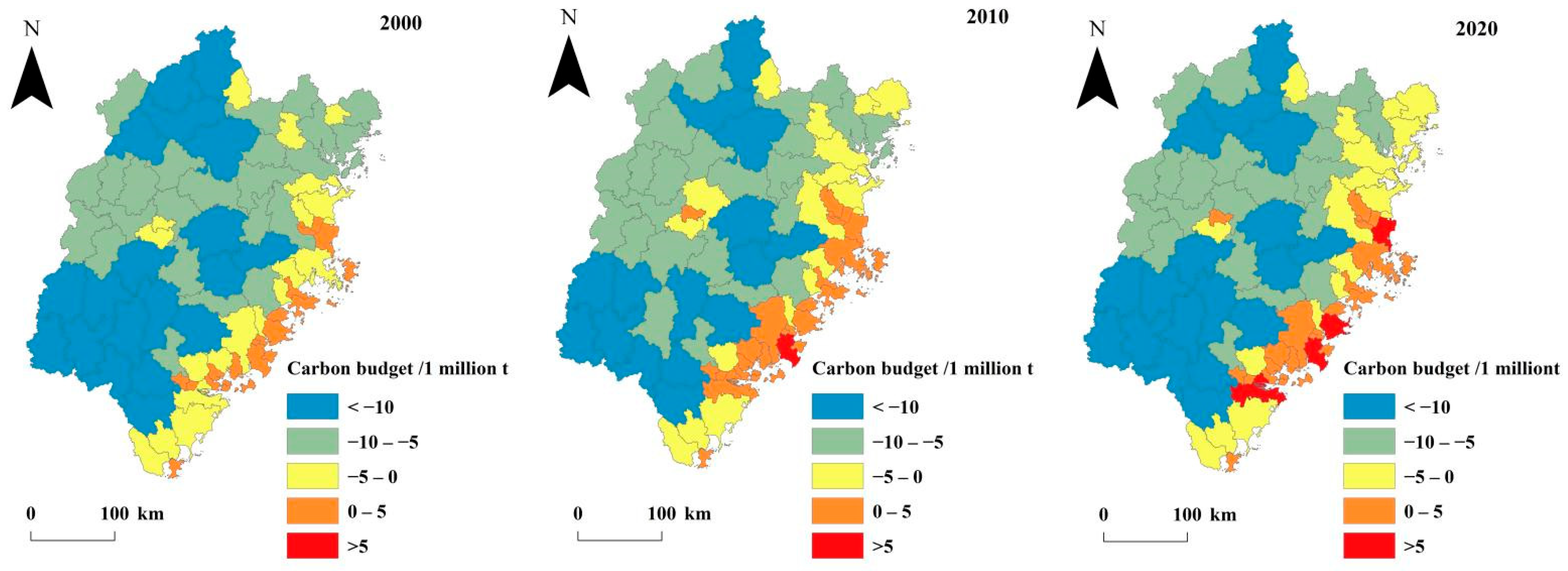
In this study, the difference between carbon emissions and carbon sequestration is used to calculate the carbon budget of counties (Figure 6), which in turn characterizes the surplus and deficit of carbon budget across counties in Fujian Province. When net carbon emissions are greater than 0, the county is classified as a carbon budget deficit zone; when net carbon emissions are less than 0, it is classified as a carbon budget surplus zone. On the whole, the distribution of carbon budget in counties in Fujian Province is in an unbalanced state, with the deficit zones in a small coastal area and expanding along the coastline, and its spatial and temporal trends are consistent with those of carbon emissions, while the surplus zones of carbon budget cover more than three-quarters of the province’s area, most of which is in counties with relatively backward economy and high forest coverage. Specifically, from 2000 to 2020, Jinjiang consistently recorded the highest net carbon emissions, which continued to increase, while carbon budget deficit zones gradually extended across coastal regions. In contrast, counties such as Jian’ou, Zhangping, Wuping, Shanghang, and Youxi remained carbon budget surplus zones, though the absolute amount of their net carbon emissions showed a slight decline over the 20-year period. Simultaneously, six counties, including Longhai and Nan’an, exhibited a significant upward trend in net carbon emissions, transitioning from surplus to deficit zones. Meanwhile, the surplus amount in counties such as Chengxiang and Luojiang shrank considerably. It is evident that counties with high net carbon emissions in Fujian Province, such as Jinjiang, Shishi, Hui’an, and Changle, are characterized by rapid economic development and intensive human activity.
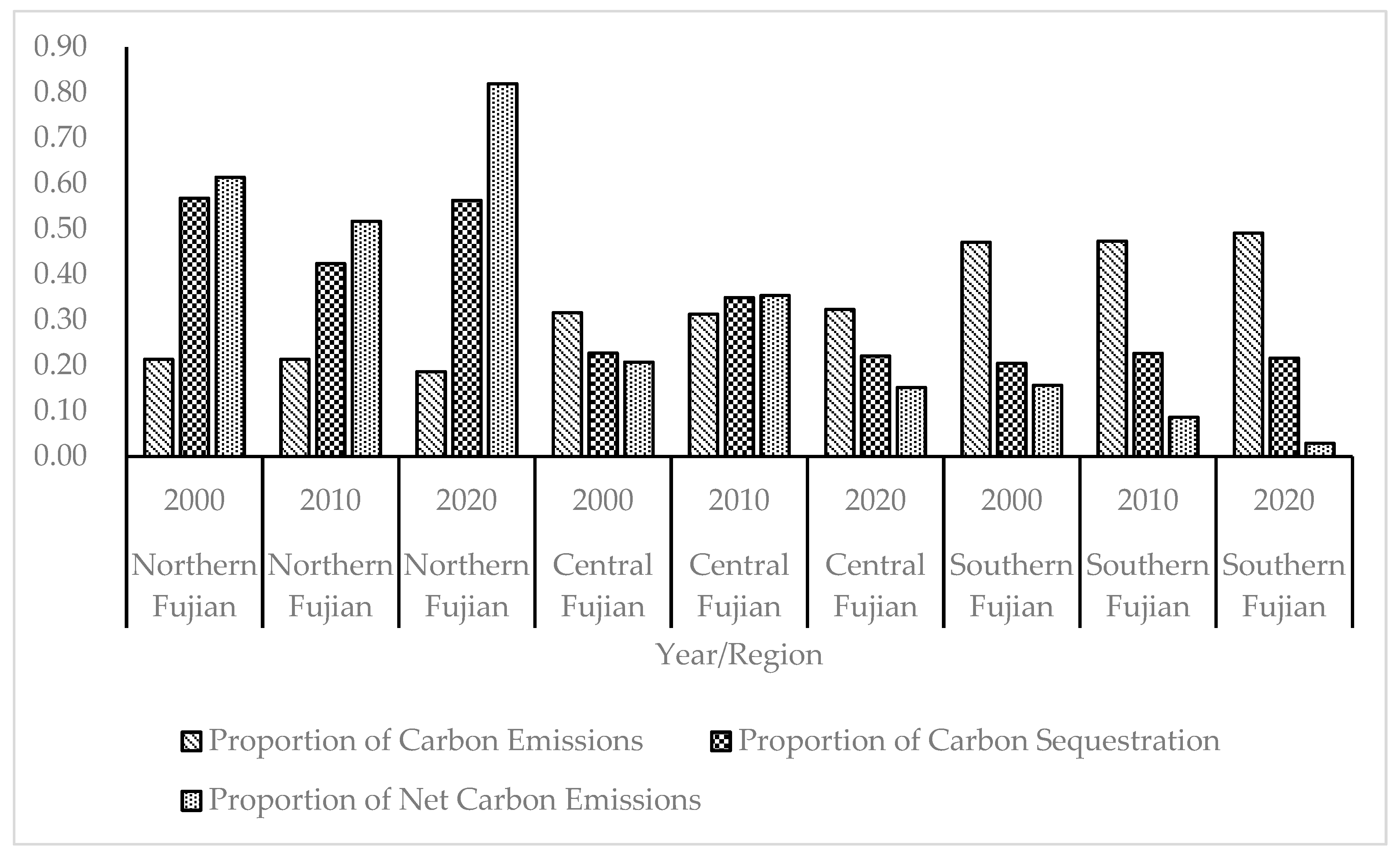
In order to better compare the regional characteristics of carbon budget in Fujian Province, this study analyzes the evolution of the carbon budget in three regions—Northern Fujian, Southern Fujian, and Central Fujian—from 2000 to 2020, based on carbon emissions, carbon sequestration, and the carbon budget for the years 2000, 2010, and 2020 (Figure 7). Overall, from 2000 to 2020, carbon emissions in Fujian Province showed a year-on-year increasing trend, with an overall growth rate of 209.52%. Specifically, the growth rate from 2000 to 2010 was 146.23%, while from 2010 to 2020, it was 25.70%. During the same period, changes in carbon sequestration were relatively stable, with a growth rate of 8.47% from 2000 to 2020. The growth rate from 2000 to 2010 was 0.71%, and from 2010 to 2020 it was 7.71%. Meanwhile, from 2000 to 2020, the net carbon emissions at the county level in Fujian Province remained negative, with total carbon emissions consistently exceeding total carbon sequestration, demonstrating an overall carbon sink effect. The difference between carbon sequestration and carbon emissions was greatest in 2000, while this difference gradually narrowed in 2010 and 2020, though carbon sequestration consistently exceeded carbon emissions. Furthermore, annual variations in carbon emissions, carbon sequestration, and net carbon emissions within the same region were not significant, whereas notable differences existed between regions. The trend in proportion of net carbon emissions is ranked as Northern Fujian < Central Fujian < Southern Fujian, with the proportion of net carbon emissions in Northern Fujian being substantially higher than that in Southern Fujian. From 2000 to 2020, the proportion of carbon sequestration in Northern Fujian was significantly higher than in Southern and Central Fujian, with a carbon sequestration contribution rate exceeding 50%, while its proportion of carbon emissions was below 20%, demonstrating a strong carbon sink effect. During the same period, Southern Fujian was the key region for carbon emissions, accounting for over 50% of annual carbon emissions, while its contribution to carbon sequestration remained around 20%.

3.4. Accounting for Forest Carbon Compensation

3.4.1. Spatial and Temporal Patterns of Carbon Compensation Rates

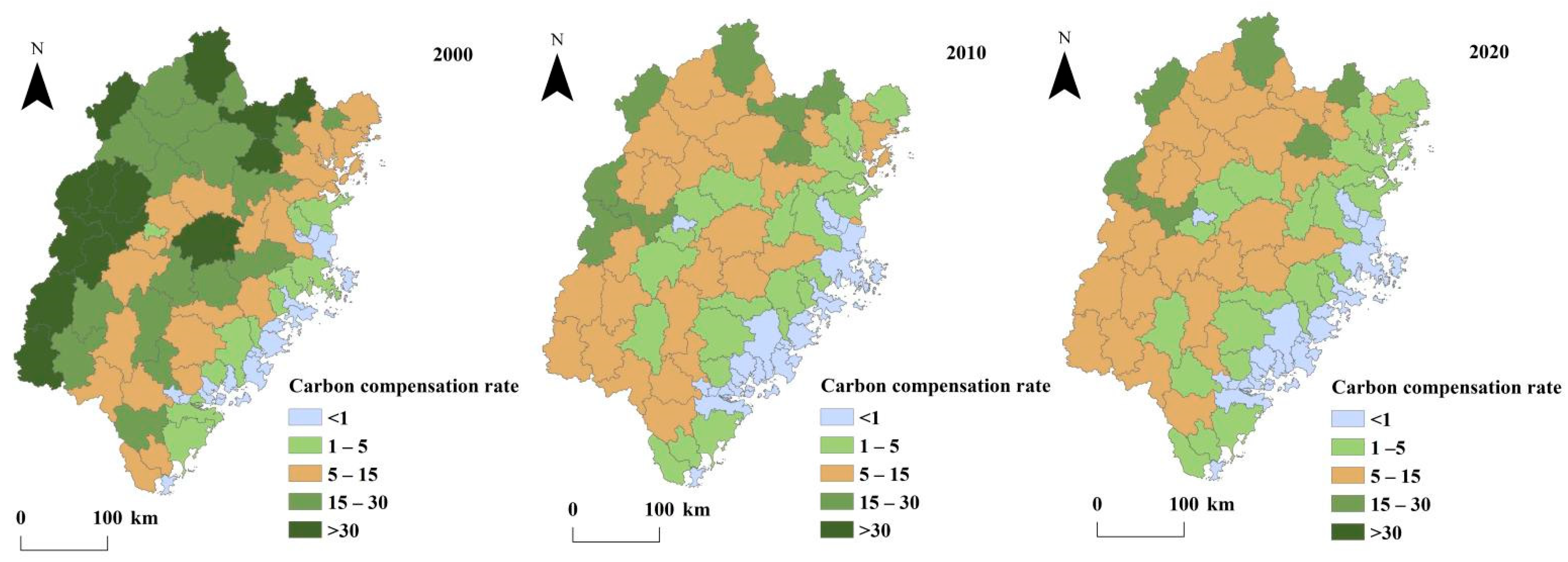
This study calculates the carbon compensation rate (P) using the ratio of county-level carbon sequestration to carbon emissions, thereby characterizing the spatiotemporal patterns of carbon compensation rate across counties in Fujian Province from 2000 to 2020 (Figure 8). It should be noted that a higher carbon compensation rate indicates stronger carbon sink capacity. When the carbon compensation rate ratio is greater than 1, it signifies that the region’s carbon sequestration exceeds its carbon emissions, resulting in negative net carbon emissions and classifying it as a carbon sink surplus zone. Conversely, when the carbon compensation rate ratio is less than 1, it indicates that carbon sequestration is lower than carbon emissions, leading to positive net carbon emissions and classifying it as a carbon sink deficit zone. Based on the magnitude of carbon compensation rate, county-level carbon compensation zones in Fujian Province are categorized into five grades: high carbon emission zone (p ≤ 1), low carbon sequestration zone (1 < p ≤ 5), relatively low carbon sequestration zone (5 < p ≤ 15), moderate carbon sequestration zone (15 < p ≤ 30), and high carbon sequestration zone (p > 30).
Overall, from 2000 to 2020, the carbon compensation rate in most counties of Fujian Province was generally greater than 1, indicating an overall carbon sink effect, with a trend of higher carbon compensation rates in areas farther from the coast. Counties with a carbon compensation rate less than 1 were mainly concentrated in coastal regions. Between 2000 and 2010, the carbon compensation rate across counties in Fujian Province showed a continuous decline. The average carbon compensation rate in carbon sequestration zones was 18 in 2000, dropping to 7.99 in 2010 and further to 7.58 in 2020. Over the 20-year period, high carbon sequestration zones such as Wuping, Changting, Qingliu, Taining, Youxi, and Jiangle transitioned to relatively low carbon sequestration zones. High carbon sequestration zones, including Ninghua, Jianning, Mingxi, Guangze, Pucheng, Zhenghe, Pingnan, and Shouning, shifted to moderate carbon sequestration zones. Relatively low carbon sequestration zones such as Longhai, Haicang, Tong’an, Nan’an, Fuqing, Jin’an, and Meilie declined to low carbon sequestration zones. Xiapu, Yongding, and Nanjing maintained their status as relatively low carbon sequestration zones, while all other counties declined by one grade from their original levels. Additionally, from 2010 to 2020, changes in carbon compensation rate across counties in Fujian Province were minimal. During this period, Ninghua and Zhenghe declined from moderate to relatively low carbon sequestration zones, Yong’an rose from a low to a relatively low carbon sequestration zone, and Nanjing declined from a relatively low to a low carbon sequestration zone.

3.4.2. Accounting for Forest Carbon Compensation Value

Based on the calculation method for the carbon compensation value, this study accounts for carbon compensation amounts for each county in Fujian Province from 2000 to 2020 (Table 2). The results indicate that counties requiring carbon compensation payments are mainly concentrated in Fuzhou (seven counties), Quanzhou (seven counties), Xiamen (six counties), Zhangzhou (four counties), and Sanming (one county). In 2020, the total carbon compensation amount required across all counties in Fujian Province reached 73.4774 million yuan. Among them, Jinjiang required the highest compensation payments, accounting for 32.07% of the total, with a carbon compensation rate of 0.09, indicating a significant imbalance in its carbon budget. This was followed by Hui’an, Longhai, Changle, Nan’an, Fuqing, Siming, and other areas. Quanzhou, Fuzhou, and Xiamen are the three cities contributing most to Fujian’s GDP, with their average annual GDP accounting for 61.51% of the province’s total, thus requiring higher carbon compensation payments. Simultaneously, counties that should receive carbon compensation funds are primarily concentrated in Longyan City, Ningde City, Nanping City, Sanming City (excluding Meilie), and some mountainous counties in other cities. In 2020, the total carbon compensation amount these counties should receive reached 92.9312 million yuan. Among them, Xinluo should receive the highest compensation, accounting for 8.59%, followed by Anxi, Shanghang, Yong’an, Jian’ou, Zhangping, and other areas. Furthermore, for counties with smaller carbon compensation payments or receipts, such as Langqi, Chengxiang, and Meilie, the relatively small amounts are mainly due to the narrow gap between carbon sequestration and carbon emissions, leading to correspondingly lower carbon compensation funds.

4. Discussion

4.1. Carbon Compensation Zoning and Prioritization

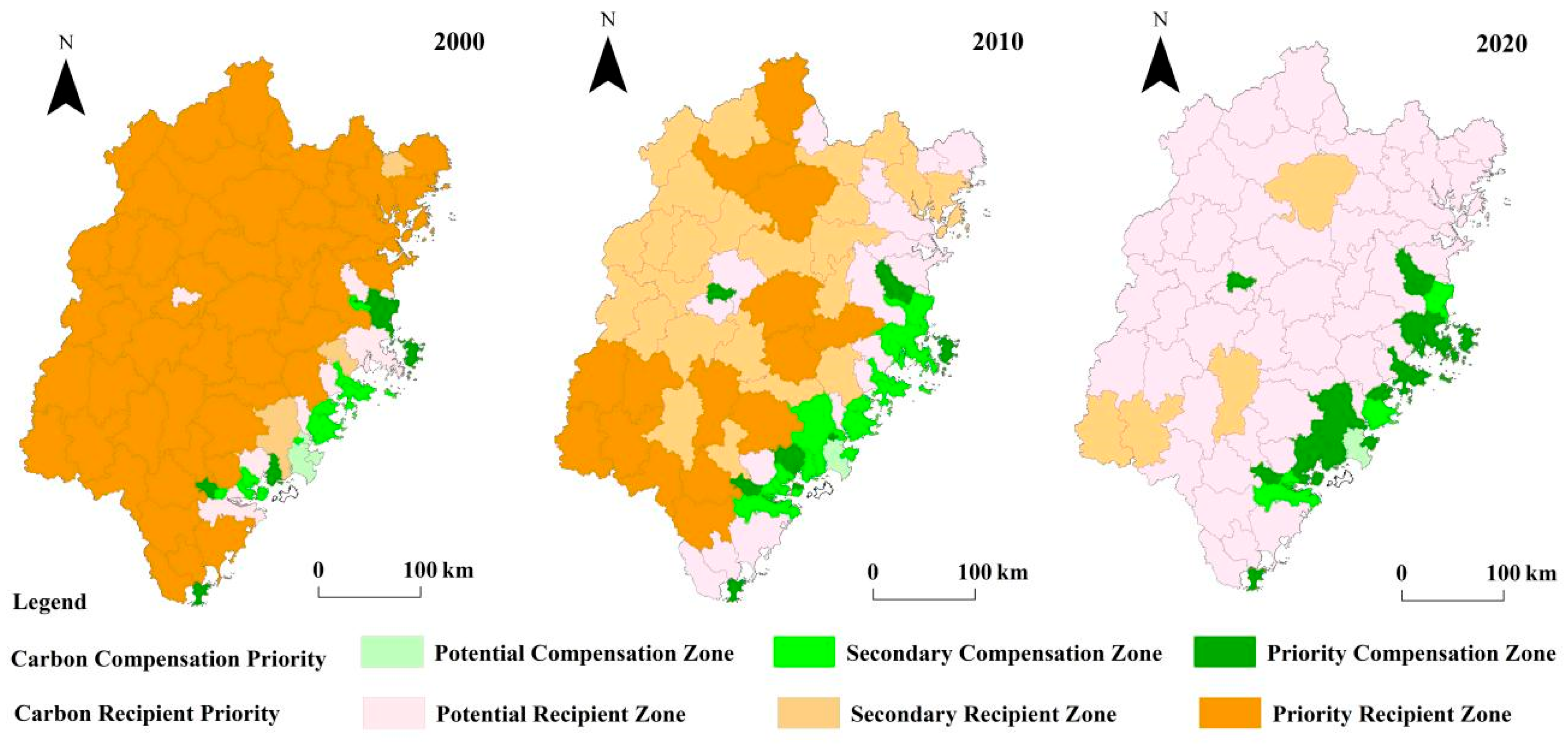
Based on the positive or negative values of carbon compensation, this study divides carbon compensation zones of Fujian Province into compensation zones and compensation-receiving zones (Figure 9). Overall, from 2000 to 2020, the carbon compensation zoning across counties in Fujian Province remained relatively stable, exhibiting a consistent pattern of “coastal deficits and northwestern surpluses.” The formation of this spatial pattern is largely the result of long-term interactions among factors such as regions’ natural background, industrial structure, energy consumption, and development policies. First, the forest coverage rate in the northwestern mountainous areas of Fujian has long ranked first in the country, making them natural carbon sink surplus areas. In contrast, the eastern coastal areas have relatively low forest coverage, and their carbon sink supply capacity has been continuously weakened due to the pressures of urbanization and industrialization. Second, the coastal areas concentrate over 60% of Fujian’s industrial output and more than 70% of its permanent population, resulting in carbon emissions far exceeding carbon sequestration. The northwestern region, however, is primarily dominated by agriculture, forestry, and tourism, with energy consumption much lower than that of the coastal areas. Finally, as the frontier of opening up, the coastal areas have attracted substantial industrial transfer and investment, with policy preferences reinforcing their industrialization status and further increasing carbon emissions. In contrast, the northwestern region, designated as a key ecological function area, implements strict ecological red line controls, while ecological compensation policies have further strengthened its regional carbon sink capacity.
Specifically, in 2000, compensation zones were concentrated in coastal cities of Xiamen, Quanzhou, Fuzhou, Putian, and Zhangzhou. From 2000 to 2010, six additional areas were incorporated into compensation zones, located in Fuzhou, Quanzhou, Xiamen, Zhangzhou, and Meilie District of Sanming City. However, Meilie District had a carbon compensation rate of only 0.83, with relatively low baselines for both carbon emissions and sequestration, resulting in a smaller carbon compensation payment. During this period, Fujian Province’s total GDP increased by 251.92%. Carbon emissions in compensation zones grew rapidly, while carbon sequestration slightly declined. Consequently, compared to 2000, the total carbon compensation payment in Fujian Province increased by 235.37%. From 2010 to 2020, the compensation zones showed no significant changes. During this period, Fujian Province’s total GDP increased by 183.87%. However, carbon sources in compensation zones still grew by 29.05%, while carbon sinks increased by only 5.21%, leading to a 25.73% rise in total carbon compensation payment.
Meanwhile, from 2000 to 2020, the compensation-receiving zones also exhibited certain spatiotemporal evolution patterns. These zones were primarily concentrated in four cities: Nanping, Ningde, Sanming, and Longyan. The economic development in those regions is relatively low, and the terrain is predominantly mountainous and hilly, with forest coverage rates reaching 78.89%, 69.98%, 77.12%, and 79.12%, respectively, indicating a high level of carbon sink capacity. Compared to 2000, the total compensation funds in 2010 and 2020 decreased by 21.68% and 17.50%, respectively. This decline may be attributed to Fujian Province’s emphasis on economic development during this period, with some counties paying insufficient attention to ecological and environmental protection. Some even adopted development models that sacrificed the ecological environment for rapid economic growth, resulting in a 12.4% increase in regional carbon emissions and a 3.74% decrease in carbon sequestration. Starting in 2010, the functional positioning of ecological zones in Fujian Province began to be gradually implemented. As a result, by 2020, the province’s carbon sequestration increased by 7.87% compared to 2010. However, carbon emissions also rose by 22.98%, leading to a 5.34% increase in total compensation funds in 2020.
To better reveal the characteristics of carbon compensation zones at different priority levels and explore differentiated zoning optimization strategies, this study categorizes the priority levels of compensation zones in Fujian Province into potential compensation zones, secondary compensation zones, and priority compensation zones. Similarly, the priority levels of compensation-receiving zones are classified into potential compensation-receiving zones, secondary compensation-receiving zones, and priority compensation-receiving zones, based on the calculation results of carbon compensation priority. On this basis, the study analyzes spatiotemporal characteristics of compensation and compensation-receiving zones at different priority levels across counties in Fujian Province from 2000 to 2020 (Figure 9, Table 3).
From the perspective of compensation zones at different priority levels, Mawei, Pingtan, Xiangcheng, and Dongshan have consistently been classified as priority compensation zones. These counties exhibit low carbon compensation values and relatively low GDP levels, resulting in low carbon compensation priority coefficients, making them suitable for prioritized carbon compensation payments. In 2000, priority compensation zones included six counties, such as Mawei and Pingtan, which were prioritized for carbon compensation payments. Secondary compensation zones comprised 12 counties, including Gulou, Cangshan, and Licheng, while potential compensation zones consisted of Shishi, Jinjiang, and Fengze. Potential and secondary compensation zones had relatively high carbon compensation values, exerting a greater impact on economic growth, and thus were assigned lower priority for compensation. Between 2000 and 2010, Fuqing, Longhai, and Nan’an transitioned from compensation-receiving zones to secondary compensation zones, while Jin’an Meilie and Tong’an shifted from compensation-receiving zones to priority compensation zones. Meilie, characterized by a relatively low carbon compensation value and moderate GDP, was assigned a lower priority. From 2010 to 2020, the spatial extent of compensation zones remained unchanged, but significant variations in compensation priority emerged. Most counties classified as secondary compensation zones in 2010 were elevated to priority compensation zones. These areas experienced substantial GDP growth with only minor increases in carbon compensation value, justifying their prioritization for carbon compensation. By 2020, secondary compensation zones were reduced to only Longhai, Changle, and Hui’an, while the potential compensation zone remained Jinjiang. These regions, characterized by high GDP and high carbon compensation values, exert a significant impact on economic growth and are therefore not prioritized for carbon compensation.
From the perspective of compensation-receiving zones at different priority levels, in 2000, most compensation-receiving zones were classified as priority compensation-receiving zones. Potential compensation-receiving zones included eight counties, such as Longhai, Tong’an, and Luojiang. Secondary compensation-receiving zones consisted of Nan’an, Hanjiang, and Zherong, while all other counties were designated as priority compensation-receiving zones. Between 2000 and 2010, most compensation-receiving zones underwent differentiated adjustments. With rapid economic development, the growth in carbon compensation value outpaced GDP growth, leading to an increase in priority coefficient values. By 2010, priority compensation-receiving zones were reduced to 15 counties, including Pucheng, Jianyang, and Jian’ou. Secondary compensation-receiving zones increased to 25 counties, and potential compensation-receiving zones also rose to 18 counties. During this period, in Longhai, Fuqing, Meilie, Nan’an, Hanjiang, and Tong’an, carbon emissions exceeded carbon sequestration, resulting in positive net carbon emissions. Consequently, these areas transitioned to compensation zones by 2010. From 2010 to 2020, compensation-receiving zones experienced rapid economic development, with the growth rate of carbon emission value lagging behind that of GDP. Compared to 2010, the GDP of compensation-receiving zones in 2020 increased by 205.29%, while the carbon emission value increased by only 5.34%. Consequently, the carbon compensation priority coefficient declined. Most compensation-receiving zones were adjusted to potential compensation-receiving zones, as carbon compensation had a negligible impact on economies of most counties. However, four counties—Wuping, Shanghang, Zhangping, and Jian’ou —were classified as secondary compensation-receiving zones and could be prioritized for compensation payment.

4.2. Optimization Pathways for Carbon Compensation Zoning

Based on the priority zoning results of carbon compensation at the county level in Fujian Province, the spatial and temporal evolution of carbon compensation zones across counties exhibits a characteristic dynamic of “upgrading compensation zones and downgrading compensation-receiving zones.” Specifically, the number of counties classified as potential compensation zones and secondary compensation zones has continuously decreased, while priority compensation zones have steadily increased. Concurrently, the spatial distribution of compensation-receiving zones has also undergone significant changes, with potential compensation-receiving zones and secondary compensation-receiving zones expanding, while priority compensation-receiving zones disappeared by 2020. The research results indicate that different carbon compensation zones possess distinct characteristics and evolutionary patterns. It is necessary to formulate differentiated zoning optimization pathways based on local conditions, thereby providing theoretical reference for various counties to establish targeted carbon compensation optimization strategies. Therefore, based on the carbon compensation zoning features, natural conditions, and economic development levels of counties in Fujian Province, specific optimization pathways and policy recommendations for different carbon compensation zones are proposed as follows.
① Potential Compensation Zones: As shown in Table 3, Jinjiang has consistently been classified as a potential compensation zone from 2000 to 2020. This region exhibits strong economic development, high carbon emission intensity (Figure 3), but relatively weak carbon sequestration capacity (Figure 5). With further economic growth, the carbon budget deficit in this area is expected to widen (Figure 6). Therefore, it is recommended that this region be optimized from the following three aspects: First, reduce carbon emissions from high-energy-consuming industries by implementing industry-specific emission reduction plans tailored to local conditions. For example, in Jinjiang’s footwear, apparel, and paper industries, support technological upgrades and intelligent equipment through subsidies to lower carbon emissions per unit of output. Additionally, establish low-carbon industrial parks and prioritize the introduction of clean energy sources such as photovoltaic and wind power. Second, local governments should take measures to improve land use efficiency. For example, local governments can increase land use taxes for enterprises whose carbon emissions per unit area exceed standards, enhance urban carbon sink capacity by promoting rooftop greening, permeable paving, and other green infrastructure measures in urban areas. Third, local governments should take measures to increase carbon sequestration, such as encouraging residents in these counties to plant tree species with strong carbon sequestration potential on scattered plots of land, supported by dedicated afforestation subsidies. Simultaneously, incorporate natural forests and ecological public welfare forests into provincial carbon sink reserves and expand the scope of ecological protection redlines.
② Secondary Compensation Zones: As shown in Table 3, representative counties in this region include Longhai, Hui’an, and Changle. These counties have experienced relatively slower economic development and a deceleration in carbon emission growth, with their industrial structures in a transitional phase. However, they possess a relatively strong capacity to pay for carbon compensation (Table 2, Figure 9). Therefore, it is recommended that this region pursue coordinated development between economic construction and ecological protection. Efforts can be focused on the following three aspects: First, promote industrial transformation and upgrading by implementing industry-specific emission reduction plans tailored to local conditions in relevant counties. Simultaneously, build eco-industrial chains, such as developing green circular agriculture, encouraging the procurement of green products with purchasing subsidies, and incentivizing heavily polluting industries to adopt clean energy through clean energy subsidies. Second, encourage intensive land use. Promote the reclamation of idle rural construction land into ecological uses such as forests and farmland to enhance county-level carbon sinks. Third, improve forest carbon sequestration quality. Conduct thinning and tending in young and middle-aged forests, replant degraded forest land and farmland, and prioritize planting tree species with strong carbon sequestration potential.
③ Priority Compensation Zones: As shown in Table 3, representative counties in priority compensation-receiving zones include Pingtan, Dongshan, and Mawei. These areas have a solid ecological foundation, but with economic development, their carbon emission intensity has been continuously increasing (Figure 3). Therefore, it is recommended that these regions plan ahead to prevent carbon budget imbalances and uphold ecological protection redlines while promoting economic growth. Efforts can be focused on the following three aspects: First, plan ahead for low-carbon industries. Promote industrial models such as under-forest cultivation, eco-health tourism, and carbon sink research education, thereby enhancing the ecological value of products and transforming ecological advantages into economic benefits. Second, implement incentives for farmland protection. Enforce special protection for permanent basic farmland and provide subsidies to farmers who plant crops with strong carbon sequestration potential, such as soybeans and rapeseed. Third, enhance ecosystem resilience. Protect biodiversity and habitats of rare species, strengthen forest fire and pest control measures, and improve the stability and carbon sequestration capacity of forest ecosystems.
④ Potential Compensation-Receiving Zones: As shown in Table 3, most compensation-receiving zones fall under the category of potential compensation-receiving zones. These areas have a good ecological foundation but have not yet developed a stable carbon sink supply capacity. Therefore, it is recommended that these regions gradually improve the carbon sink trading mechanism while promoting economic development. Optimization efforts can be carried out in the following three aspects: First, establish county-level carbon sink accounting ledgers. Integrate fragmented carbon sink resources, such as scattered forest land, into a unified database to serve as the foundational documentation for carbon trading. Sign forward carbon sink purchase agreements with priority compensation zones to secure future revenue in advance, thereby alleviating initial funding pressures. Second, develop eco-friendly industries. Leverage ecological advantages to promote under-forest economy models, such as “forest-fungi” and “forest-medicinal herb” integrated management systems, to create value-added ecological forest products. Introduce clean energy solutions, revitalize idle rural residential land, and develop low-carbon homestays. Third, enhance supportive systems. Conduct regular training sessions on carbon sink accounting to improve the capacity for participating in carbon sink project verification. Establish mutual aid funds for ecological protection to address losses from forest fires, pests, and other disasters, thereby reducing ecological risks.
⑤ Secondary Compensation-Receiving Zones: As shown in Table 3, secondary compensation-receiving zones include counties such as Wuping, Shanghang, and Zhangping. These areas face challenges such as ecosystem fragmentation and low industrial added value. Therefore, it is recommended that these regions be optimized in terms of the following three aspects: First, consolidate fragmented forest land. Adopt a combined model of “afforestation + forest management” to enhance carbon sink density per unit area. Explore cross-regional carbon sink trusteeship mechanisms, delegating the carbon sink resources of county forest lands to enterprises in compensation zones, which would be responsible for forest management, pest control, and disease prevention. Second, develop the “Bamboo Carbon Sink” eco-industry. Local bamboo resources can be leveraged to develop bamboo-based construction materials and bamboo fiber processing enterprises, forming a “Bamboo Carbon Sink” ecological industry chain in Fujian. At the same time, partnerships can be established with cafeterias and supermarkets in compensation zones to create direct sales channels for ecological products from compensation-receiving zones. Third, strengthen forest ecosystem resilience. Enhance thinning and tending practices in young and middle-aged forests, promote the planting of broad-leaved tree species with strong carbon sequestration capacity, and bolster the resilience of forest ecosystems.
⑥ Priority Compensation-Receiving Zones: As shown in Table 3, all compensation-receiving zones in Fujian Province had transitioned to secondary or potential compensation-receiving zones by 2020, with no priority compensation-receiving zones remaining. In 2010, priority compensation-receiving zones included counties such as Pucheng, Jianyang, and Jian’ou. These areas had high forest coverage and substantial carbon sink capacity but faced conflicts between ecological protection and economic development, with notable ecological fragility (Figure 5). Therefore, it is recommended that these regions be optimized from the following three aspects: First, diversify the monetization of ecological value by launching carbon sink traceability tours, where visitors pay for the carbon sink value of the sites they visit. Second, implement rigid control of ecological redlines by enforcing dual supervision of “satellite remote sensing + ground protection” for forest lands within redline zones. Utilize compensation transactions obtained from priority compensation zones to fund ecological infrastructure development and livelihood improvements in priority compensation-receiving zones. Third, incorporate county-level natural forests and ecological public welfare forests into the provincial carbon sink reserve pool, implementing quota-based management. Compensation zones can purchase carbon sink quotas from the reserve pool, while promoting forest fire and pest control insurance.

4.3. Comparisons, Limitations and Prospects

Fujian Province has maintained a forest coverage rate above 65% over the past decade and is located in the economically developed southeastern coastal region of China, which makes it a typical region where the conflict between economic development and ecological environmental protection is particularly intense. Therefore, this study selects the representative region as a case study to conduct county-level forest carbon budget accounting, carbon compensation value measurement, and carbon compensation priority zoning. The research findings can provide references for formulating carbon compensation policies in similar regions. Based on GIS technology, this study calculates the carbon budgets of counties in Fujian Province from 2000 to 2020 and employs a modified carbon compensation value estimation method to assess carbon compensation values across different periods. It scientifically delineates carbon compensation zones and carbon compensation priorities, providing effective support for optimizing carbon compensation zoning at the county level. Furthermore, compared to other studies in the literature, this study not only identifies carbon compensation entities based on carbon compensation value and divides carbon compensation into compensation zones and compensation-receiving zones, but also attempts to construct a carbon compensation priority model [34,35,36]. This model dynamically reveals the hierarchical evolution pattern of “upgrading compensation zones and downgrading compensation-receiving zones,” supplementing the existing zoning system and enriching the theories and methods of regional carbon compensation research.
However, this study still has certain limitations in terms of carbon compensation measurement methods and construction of compensation mechanisms, which are specifically reflected in the following three aspects: First, this study focuses on forest carbon budgets and does not incorporate carbon budgets from other ecosystems, such as farmland and wetlands, thereby underestimating the overall carbon sink capacity of the region [37]. Second, the accuracy of forest carbon budgets is insufficient, as factors such as carbon emission intensity, carbon emission efficiency, and variations in net carbon emissions across counties were overlooked, leading to less precise and comprehensive calculation results [30]. Third, the study did not delve into cross-county interest linkages and collaborative governance mechanisms between “compensation zones and compensation-receiving zones,” nor did it establish an effective cross-regional carbon sink-source flow mechanism [37].
In light of these limitations, future research could focus on the following directions: First, it would be beneficial to effectively integrate carbon budget data from other land types such as farmland and wetlands to construct a “multi-ecosystem coupled” carbon budget accounting system. This would enable a more comprehensive assessment of regional carbon compensation responsibilities and enhance the scientific basis of carbon compensation zoning. Second, subsequent studies could consider introducing economic contribution coefficients and ecosystem service values to refine net carbon emissions, thereby improving the accuracy of carbon compensation value calculations. Furthermore, exploring the interests and collaborative governance pathways between compensation zones and compensation-receiving zones to develop a “cross-regional carbon compensation synergy model” would help improve the cross-regional ecological compensation mechanism. Third, selecting typical counties to track the effectiveness of carbon sink transactions and industrial upgrades would provide empirical feedback to optimize policy pathways based on compensation priority coefficients, thereby enhancing the mechanism’s effectiveness. Additionally, designing a multi-faceted synergy mechanism combining “carbon sink transactions + fiscal transfers + ecological product co-construction,” and exploring carbon compensation pathways involving social capital through initiatives like “carbon sink trusts” and “ecological crowdfunding,” would broaden funding channels for ecological compensation in compensation-receiving zones and facilitate the transformation of ecological value into economic value.

5. Conclusions

This study takes Fujian Province as the research area and utilizes remote sensing and GIS technologies” to measure the spatiotemporal characteristics of forest carbon emissions and carbon sequestration at the county level. Based on the carbon budget, it further prioritizes forest carbon compensation, quantitatively calculates forest carbon compensation amounts for each county, and explores zoning optimization strategies for forest carbon compensation in Fujian Province. The main conclusions are as follows:
(1) From 2000 to 2020, Fujian Province exhibited an overall carbon sink effect. Temporally, net carbon emissions in counties across Fujian Province continued to increase, while carbon sequestration remained relatively stable during the same period. Spatially, economically developed coastal counties predominantly served as high carbon emission areas, while mountainous counties in northwestern Fujian mainly functioned as high carbon sequestration areas.
(2) From 2000 to 2020, the forest carbon budget in Fujian Province overall exhibited a spatial pattern characterized by “coastal deficits and northwestern surpluses.” The county-level carbon compensation rate showed a continuous downward trend. Over the 20-year period, the average county-level carbon compensation rate decreased from 18.7% to 7.58%, reflecting spatial changes in carbon budget imbalances and compensation pressures.
(3) From 2000 to 2020, significant spatial zonation existed between compensation zones and compensation-receiving zones across counties in Fujian. Compensation zones were primarily concentrated in the economically developed southeastern coastal areas, while compensation-receiving zones were mainly distributed in the ecological barrier regions of northwestern Fujian, reflecting a pronounced spatial mismatch between ecological contributions and economic development.
(4) From 2000 to 2020, the carbon compensation zoning across counties in Fujian Province remained relatively stable. Compensation priority gradually shifted toward “priority compensation zones,” while compensation-receiving priority became increasingly concentrated in “potential compensation-receiving zones,” indicating that the core functional areas of regional carbon compensation mechanism have gradually become clearer.

Author Contributions

Conceptualization, W.C., Y.O., X.H. and W.L.; data curation, W.C., J.L. and J.H.; software, W.C., J.L., J.H. and G.H.; writing—original draft preparation, W.C., Y.O., X.H. and W.L.; writing—review and editing, J.L. and G.H.; funding acquisition, J.L. and W.C. All authors have read and agreed to the published version of the manuscript.

Funding

This research was funded by the Major Project of Social Science Research Base of Fujian Province (FJ2023JDZ029); Project of the Institute for Xi Jinping Thought on Ecological Civilization, Fujian Agriculture and Forestry University (STWMSX23-01); Young Scholars Project of Fujian Provincial Social Sciences (FJ2025C051); Special Fund for Science and Technology Innovation of Fujian Agriculture and Forestry University (KSBCX2549).

Data Availability Statement

All raw and processed derivative data of this study are available upon reasonable request for editorial review and academic research. For relevant inquiries, please contact the corresponding author.

Conflicts of Interest

The authors declare no conflicts of interest.

References

  1. Forster, P.M.; Smith, C.; Walsh, T.; Otto, F.E.L.; Cowtan, K.; Gillett, N.P.; Hausfather, Z.; Jacobs, P.; Mann, M.E.; Masson-Delmotte, V.; et al. Indicators of global climate change 2023: Annual update of key indicators of the state of the climate system and human influence. Earth Syst. Sci. Data 2024, 16, 2625–2658. [Google Scholar] [CrossRef]
  2. Davoudabadi, M.J.; Pagendam, D.; Drovandi, C.; Baldock, J.; White, G. Innovative approaches in soil carbon sequestration modelling for better prediction with limited data. Sci. Rep. 2024, 14, 3191. [Google Scholar] [CrossRef]
  3. National Forestry and Grassland Administration. Forest Resource Growth Supports the ‘Dual Carbon’ Goals. Available online: https://www.forestry.gov.cn/c/www/lcdt/15141.jhtml (accessed on 27 March 2022).
  4. Xu, J.T.; Yi, Y.Y. “Dual carbon” goals and nature-based solutions: Potential and policy needs of forest carbon sinks. Issues Agric. Econ. 2022, 9, 11–23. [Google Scholar] [CrossRef]
  5. Liu, M.J.; Pei, X.T.; Zhu, W.Y.; Jiao, J.Z. Simulation of the ecological service value and ecological compensation in Arid Area: A case study of ecologically vulnerable oasis. Remote. Sens. 2023, 15, 3927. [Google Scholar] [CrossRef]
  6. Song, H.; Li, Y.; Gu, L.; Tang, J.; Zhang, X. Spatiotemporal pattern of carbon compensation potential and network association in urban agglomerations in the Yellow River Basin. ISPRS Int. J. Geo-Inf. 2023, 12, 435. [Google Scholar] [CrossRef]
  7. State Council. Regulations on Ecological Protection Compensation. Available online: https://www.gov.cn/zhengce/zhengceku/202404/content_6944395.htm (accessed on 6 April 2024).
  8. Xu, J.B.; Wu, X.; Qiao, W.; Qiao, W.; Wang, S.W.; Zhao, D.N.; Chen, X.Y. Life cycle carbon emission assessment for ecological protection slopes: Focus on construction and maintenance phases. J. Clean. Prod. 2025, 497, 145174. [Google Scholar] [CrossRef]
  9. Zhang, X.F.; Wan, J.X.; Li, J.L. Life-cycle economics and GHG emissions of forest biomass harvesting and utilization for alternative value-added bioproducts. Forests 2025, 16, 871. [Google Scholar] [CrossRef]
  10. Nicolini, G.; Aubinet, M.; Feigenwinter, C.; Heinesch, B.; Lindroth, A.; Mamadou, O.; Moderow, U.; Mölder, M.; Montagnani, L.; Rebmann, C.; et al. Impact of CO2 storage flux sampling uncertainty on net ecosystem exchange measured by eddy covariance. Agric. For. Meteorol. 2018, 248, 228–239. [Google Scholar] [CrossRef]
  11. Jian, K.; Lu, D.; Li, G. Modeling forest carbon stock based on sample plots and UAV lidar data from multiple sites and examining its vertical characteristics in Wuyishan National Park. Remote. Sens. 2025, 17, 377. [Google Scholar] [CrossRef]
  12. Borovics, A.; Király, É.; Kottek, P. Projection of the carbon balance of the hungarian forestry and wood industry sector using the forest industry carbon model. Forests 2024, 15, 600. [Google Scholar] [CrossRef]
  13. Liu, Z.; Deng, Z.; Davis, S.J.; Ciais, P. Global carbon emissions in 2023. Nat. Rev. Earth Environ. 2024, 5, 253–254. [Google Scholar] [CrossRef]
  14. Dong, G.Y.; Jiang, F.; Zhang, Y.G.; Ju, W.M.; Piao, S.L.; Ciais, P.; Peters, W.; Luijkx, I.T.; Liu, J.; Chevallier, F.; et al. Canadian net forest CO2 uptake enhanced by heat drought via reduced respiration. Nat. Geosci. 2026, 19, 145–152. [Google Scholar] [CrossRef]
  15. IPCC. Climate Change 2021: The Physical Science Basis: Working Group I Contribution to the Sixth Assessment Report of the Intergovernmental Panel on Climate Change; Cambridge University Press: Cambridge, UK, 2021. [Google Scholar]
  16. Joshi, P.R.; Aidi, H.; Mgana, A.S.; Mishra, B.K. Community forestry and carbon dynamics in Nepal’s Lowland Sal Forests: Integrating field inventories and remote sensing for REDD+ insights. Forests 2025, 16, 1867. [Google Scholar] [CrossRef]
  17. Huang, J.X.; Liu, W.Y.; Lin, J.H.; Dai, Y.W.; Huang, Y.; Ouyang, Y.Q. Horizontal ecological compensation in Fujian Province based on ecosystem carbon sequestration service flow. Chin. J. Appl. Ecol. 2025, 36, 3443–3456. [Google Scholar] [CrossRef]
  18. Alongi, D.M. Global Meta-Analysis of Mangrove Primary Production: Implications for Carbon Cycling in Mangrove and Other Coastal Ecosystems. Forests 2025, 16, 747. [Google Scholar] [CrossRef]
  19. Shen, R.; Yang, Y.; Xu, J.; Li, X.S.; Chen, J.Q. Research on carbon compensation zoning guided by major function zones: A case study of the Yangtze River Delta region. Ecol. Indic. 2025, 173, 113383. [Google Scholar] [CrossRef]
  20. Chen, J.Q.; Zhang, K.; Li, X.S.; Shen, R.; Liu, Y. Accounting of carbon sources and sinks and zonal regulation of carbon balance in the Yangtze River Economic Belt: Practicing the concept of “jointly promoting protection and not engaging in large-scale development”. J. Nat. Resour. 2025, 40, 3370–3393. [Google Scholar] [CrossRef]
  21. Wunder, S. Revisiting the concept of payments for environmental services. Ecol. Econ. 2015, 117, 234–243. [Google Scholar] [CrossRef]
  22. Polasky, S.; Nelson, E.; Pennington, D.; Johnson, K.A. The impact of land-use change on ecosystem services, biodiversity and returns to landowners: A case study in the state of Minnesota. Environ. Resour. Econ. 2011, 48, 219–242. [Google Scholar] [CrossRef]
  23. Lu, W.J.; Zhang, C. Does ecological protection compensation help narrow the urban-rural income gap? China Popul. Resour. Environ. 2023, 33, 107–116. [Google Scholar] [CrossRef]
  24. Pan, Y.; Birdsey, R.A.; Fang, J.; Houghton, R.A.; Kauppi, P.E.; Kurz, W.A.; Phillips, O.L.; Shvidenko, A.; Lewis, S.L.; Canadell, J.G.; et al. A large and persistent carbon sink in the world’s forests. Science 2011, 333, 988–993. [Google Scholar] [CrossRef] [PubMed]
  25. Wang, X.; Adamowski, J.F.; Wang, G.; Zhang, L. Farmers’ willingness to accept compensation to maintain the benefits of urban forests. Forests 2019, 10, 691. [Google Scholar] [CrossRef]
  26. Ye, Y.; Liu, Y.J.; Xiu, C.B.; Tian, Y.L.; Arshad, M.U.; Dureng, B. Advancing the valuation of grassland carbon sinks: A study of three calculation methods for fair value measurement. SAGE Open 2025, 7, 21582440251357254. [Google Scholar] [CrossRef]
  27. Huang, X.J.; Zhong, T.Y.; Chen, Z.G. Research on ecological protection compensation mechanism adapting to the goals of carbon peaking and carbon neutrality—Based on the perspective of carbon sink value. Bull. Chin. Acad. Sci. 2022, 37, 621–630. [Google Scholar] [CrossRef]
  28. Li, C.; Yang, X.; Wei, H.; Hu, Z.; Zhang, Z. Research on the Influencing Factors of College Students’ Willingness-to-Pay for Carbon Offsets in the Context of Climate Change. Sustainability 2025, 17, 2678. [Google Scholar] [CrossRef]
  29. Zhang, L.; Ren, Z.; Chen, B.; Gong, P.; Fu, H.; Xu, B. A Prolonged Artificial Nighttime-Light Dataset of China (1984–2020); National Tibetan Plateau/Third Pole Environment Data Center: Beijing, China, 2021. [Google Scholar] [CrossRef]
  30. Zhao, R.Q.; Liu, Y.; Li, Y.X.; Ding, M.L.; Zhang, Z.P.; Chuai, X.W.; Jiao, S.X. A review of regional carbon compensation research: Mechanisms, models and policy suggestions. Areal Res. Dev. 2015, 34, 116–120. [Google Scholar]
  31. Yu, G.H.; Geng, J.J.; Zhou, P.C.; Zhu, J.W.; Li, Z.G. Quantitative research on regional ecological compensation based on carbon balance—A case study of Zhaoshan Demonstration Zone in Changzhutan Green Heart. Resour. Environ. Yangtze Basin 2012, 21, 454–458. [Google Scholar]
  32. Li, Z.J.; Xu, L.F.; Ye, Y.; Wu, Q. Spatiotemporal differentiation of land use carbon budget and carbon compensation zoning in the Yangtze River Delta urban agglomeration. Environ. Sci. 2025, 46, 7415–7427. [Google Scholar] [CrossRef]
  33. Xu, X.L. 1 km Grid Dataset of China’s Population Spatial Distribution; Resource and Environmental Science Data Registration and Publishing System: Beijing, China, 2017. [Google Scholar] [CrossRef]
  34. Huang, Y.; Lin, W.; Wang, Y.; Luo, H.F.; Zhu, L.; He, Y.M.; Wang, F.; Lai, W.T.; Shi, R. Driving factors of CO2 emissions in southeast China: Comparative study of long-term trends, short-term fluctuations, and spatial variations. Elementa 2024, 12, 1. [Google Scholar] [CrossRef]
  35. Wei, Y.R.; Chen, S.L. Spatial correlation and carbon balance zoning of land use carbon emissions in Fujian Province. Acta Ecol. Sin. 2021, 41, 5814–5824. [Google Scholar] [CrossRef]
  36. Wei, T.Y.; Zhang, C.; Miao, Y.Y. Spatio-temporal evolution of carbon overshoot and its attenuation pathways in Fujian Province. Acta Ecol. Sin. 2022, 42, 9677–9688. [Google Scholar] [CrossRef]
  37. Weng, S.H.; Zhang, Y.Q.; Jiang, D.X.; Pan, W.H.; Li, L.C.; Zhang, F.M. Spatio-temporal variation of forest vegetation NEP and analysis of its influencing factors in Fujian Province. Ecol. Environ. Sci. 2023, 32, 845–856. [Google Scholar] [CrossRef]
Figure 1. Study area.
Forests 17 00369 g001
Figure 2. Research framework.
Forests 17 00369 g002
Figure 3. Spatial distribution of carbon emissions across counties in Fujian province, 2000–2020.
Forests 17 00369 g003
Figure 4. Spatial distribution of carbon emissions (CEADs) across counties of Fujian Province, 2000–2020.
Forests 17 00369 g004
Figure 5. Spatial distribution of carbon sequestration across counties in Fujian province, 2000–2020.
Forests 17 00369 g005
Figure 6. Spatial distribution of carbon budget across counties in Fujian province, 2000–2020.
Forests 17 00369 g006
Figure 7. Proportion of carbon budget by subregion in Fujian province, 2000–2020.
Forests 17 00369 g007
Figure 8. Spatial distribution of carbon compensation rate across counties in Fujian Province, 2000–2020.
Forests 17 00369 g008
Figure 9. Spatial distribution of carbon compensation prioritization in Fujian province, 2000–2020.
Forests 17 00369 g009
Table 1. Data source.
Data TypeData SourceSpatial ResolutionTemporal FrequencyPreprocessing StepsMissing Data
Population densityChina’s 1 km Population Spatial Distribution Dataset [33] (https://doi.org/10.12078/2017121101) (accessed on 6 April 2025)1 km × 1 kmAnnualAlign to administrative boundaries;No missing data
Nighttime lighting dataProlonged Artificial Nighttime-light Dataset of China (PANDA-China) [29] (https://doi.org/10.1038/s41597-024-03223-1) (accessed on 6 April 2025)1 km × 1 kmAnnualCalibrate to consistent radiance unitsNo missing data
Net primary productivity of vegetationNASA MODIS17A3 (http://www.gscloud.cn/) (accessed on 6 April 2025)500 m × 500 mAnnualResample to 1 km × 1 km;No missing data
Carbon emission dataCarbon Emission Accounts and Datasets (https://www.ceads.net.cn/) (accessed on 6 April 2025)County-levelAnnualAggregate to county-level totals;
Check consistency with energy statistics
No missing data
Engel’s coefficientFujian Provincial Bureau of Statistics (https://tjj.fujian.gov.cn/) (accessed on 6 April 2025)City-levelAnnualInterpolate missing city-level values using linear trendNo missing data
GDPFujian Provincial Bureau of Statistics (https://tjj.fujian.gov.cn/) (accessed on 6 April 2025)County-levelAnnualInterpolate missing County-level values using linear trendNo missing data
Carbon trading priceShanghai Environment and Energy Exchange (https://www.cneeex.com/) (accessed on 6 April 2025)National-levelAnnualCompute annual average using annual high and low prices;
Deflate to 2021 constant prices using GDP deflator
No missing data
Administrative boundary data Fujian Provincial Development Center for Surveying, Mapping and Geographic Information (https://www.fjch.org.cn/) (accessed on 6 April 2025)1:1,000,000 scaleStatic (2020)Dissolve to county-level polygons;
Check for topological errors;
Project to Albers equal-area projection
No missing data
Table 2. Carbon compensation amount across counties in Fujian province, 2000–2020. Unit: 10,000 yuan.
County200020102020County200020102020
Meilie−18.09 7.56 4.63 Licheng31.77 87.88 123.50
Sanyuan−47.86 −39.85 −40.76 Xiuyu38.25 80.52 133.64
Mingxi−48.07 −41.78 −56.06 Xianyou−275.85 −197.28 −204.30
Qingliu−49.53 −59.07 −83.47 Licheng19.38 54.91 54.70
Ninghua−98.60 −101.74 −128.13 Fengze53.76 124.16 136.90
Datian−141.30 −155.81 −154.67 Luojiang−22.84 −13.49 −8.86
Youxi−330.69 −283.16 −232.10 Quangang20.36 113.65 130.78
Shaxian−117.27 −103.85 −121.08 Huian95.34 323.89 614.31
Jiangle−102.40 −85.21 −100.99 Anxi−728.63 −688.81 −608.86
Taining−60.53 −49.01 −42.79 Yongchun−263.35 −202.47 −207.74
Jianning−48.80 −52.84 −64.63 Dehua−287.85 −223.23 −228.31
Yongan−447.33 −363.66 −348.83 Shishi96.24 237.14 213.35
Shunchang−91.40 −63.80 −60.12 Nanan−359.94 207.43 431.47
Pucheng−144.77 −158.50 −163.36 Jinjiang915.94 2134.27 2356.68
Guangze−56.23 −56.98 −72.68 Xiangcheng14.65 63.83 113.82
Songxi−25.75 −16.47 −20.26 Longwen14.49 35.57 49.58
Zhenghe−41.13 −33.74 −51.81 Yunxiao−93.72 −58.37 −50.99
Shaowu−240.96 −202.62 −174.83 Zhangpu−160.62 −94.98 −47.65
Wuyishan−136.10 −123.96 −146.04 Zhaoan−130.23 −89.78 −67.60
Jianou−444.19 −328.21 −339.49 Changtai−75.43 −55.73 −51.51
Jianyang−201.84 −165.45 −202.25 Dongshan5.78 11.60 15.32
Xinluo−781.89 −819.05 −779.95 Nanjing−352.05 −238.97 −269.56
Changting−213.05 −237.98 −321.83 Pinghe−343.50 −252.52 −248.67
Yongding−311.71 −272.27 −267.70 Huaan−74.24 −66.31 −96.00
Shanghang−309.12 −383.42 −483.83 Longhai−57.23 173.94 482.87
Wuping−225.19 −227.57 −320.70 Jiaocheng−145.06 −109.32 −226.95
Liancheng−177.53 −179.40 −244.74 Xiapu−136.06 −98.78 −93.21
Zhangping−356.51 −326.21 −329.04 Gutian−194.75 −157.58 −146.71
Gulou74.39 156.37 147.73 Pingnan−50.22 −47.01 −48.04
Cangshan70.87 174.74 176.05 Shouning−61.53 −48.80 −54.87
Mawei5.13 47.44 54.37 Zhouning−30.99 −25.42 −25.95
Jinan−60.14 84.74 85.63 Zherong−13.05 −13.04 −12.17
Minhou−347.99 −176.70 −167.39 Fuan−228.36 −198.59 −240.19
Lianjiang−161.92 −66.84 −27.69 Fuding−146.08 −118.22 −100.32
Luoyuan−92.96 −63.72 −59.23 Yanping−356.70 −248.00 −218.81
Minqing−153.28 −90.92 −127.44 Taijiang24.76 35.21 25.02
Yongtai−194.13 −164.80 −237.28 Siming102.69 257.34 308.02
Pingtan1.34 8.41 23.60 Haicang41.23 141.53 181.35
Fuqing−159.59 754.62 365.60 Jimei38.29 134.01 209.43
Changle20.66 194.61 482.03 Tongan−30.18 31.06 120.59
Langqi−2.48 −2.64 −2.08 Xiangan2.84 51.42 176.14
Chengxiang−53.96 −17.61 −3.91 Huli54.32 115.93 130.37
Hanjiang−151.28 −60.66 −58.71
Note: Positive values = payment of compensation, negative values = receipt of compensation.
Table 3. Zoning of carbon compensation priority across counties in Fujian province, 2000–2020.
Carbon Offset Zoning200020102020
compensation zonesPriority compensation zonesPingtan, Dongshan, Mawei, Xiangcheng, Xiangan, ChanglePingtan, Dongshan, Mawei, Xiangcheng, Jinan, Meilie, Longwen, Gulou, Licheng, Tongan, HuliPingtan, Dongshan, Mawei, Xiangcheng, Jinan, Meilie, Longwen, Gulou, Licheng, Tongan, Huli, Cangshan, Fuqing, Quangang, Xiuyu, Licheng, Nanan, Fengze, Shishi, Xiangan, Jimei, Haicang, Siming
Sub-compensatory zonesLongwen, Gulou, Jimei, Haicang, Huli, Siming, Licheng, Huian, Quangang, Xiuyu, Licheng, CangshanCangshan, Fuqing, Quangang, Xiuyu, Licheng, Nanan, Fengze, Shishi, Xiangan, Jimei, Haicang, Siming, Huian, Changle, LonghaiLonghai, Huian, Changle
Potential compensation zonesFengze, Jinjiang, ShishiJinjiangJinjiang
compensation-receiving zonesPriority compensation-reveiving zonesAll counties other than potential compensation-receiving zones and secondary compensation-receiving zonesPucheng, Jianyang, Jianou, Youxi, Yongtai, Dehua, Zhangping, Anxi, Liancheng, Nanjing, Pinghe, Changting, Wuping, Shanghang, Yongdingnone
Sub-compensation-receiving zonesNanan, Hanjiang, ZherongGuangze, Wuyishan, Zhenghe, Shouning, Fuan, Xiapu, Shaowu, Taining, Jiangle, Jianning, Mingxi, Ninghua, Shunchang, Yanping, Pingnan, Gutian, Minqing, Qingliu, Yongan, Xingluo, Datian, Huaan, Yongchun, Xianyou, XingluoWuping, Shanghang, Zhangping, Jianou
potential compensation-receiving zonesLonghai, Tongan, Luojiang, Chengxiang, Fuqing, Jinan, Meilie, LangqiSongxi, Minhou, Shaxian, Fuding, Zherong, Zhouning, Jiaocheng, Luoyuan, Lianjiang, Langqi, Hangjiang, Chengxiang, Luojiang, Sanyuan, Changtai, Zhangpu, Yunxiao, Shaoanareas other than Wuping, Shanghang, Zhangping, Jian’ou
Disclaimer/Publisher’s Note: The statements, opinions and data contained in all publications are solely those of the individual author(s) and contributor(s) and not of MDPI and/or the editor(s). MDPI and/or the editor(s) disclaim responsibility for any injury to people or property resulting from any ideas, methods, instructions or products referred to in the content.