


Abstract
Tannin-boron (TB) treatment is an effective method for enhancing the biological resistance of some types of wood, although knowledge regarding its efficacy as a preservative in a wider range of wood is limited. In this study, we investigated the effects of TB treatment on the mechanical and microscopic properties, and on biological resistance of six types of wood (Pinus massoniana Lamb., Cunninghamia lanceolata (Lamb.) Hook, Pseudotsuga menziesii (Mirb.) Franco, Intsia bijuga (Colebr.) Kuntze, Tectona grandis L. f., and Quercus mongolica Fisch. ex Ledeb.). The results showed that the six types of wood exhibited different boron retention after leaching, with the highest retention rate, 21.85%, observed in P. massoniana. The TB treatment did not significantly alter the original density and compressive strength of the wood, except in the case of I. bijuga, where the compressive strength significantly decreased after treatment. Scanning electron microscopy revealed that TB preservative is attached around the tracheids of softwood, or deposited within the vessels of hardwood. No-choice feeding tests showed that the TB-treated wood exhibited high resistance to Coptotermes formosanus with a maximum weight loss of 2.5%. TB treatment significantly improved the resistance of P. massoniana, C. lanceolata, P. menziesii, and T. grandis to Trametes hirsuta. These results demonstrate the potential usefulness of TB preservatives in different wood types.
1. Introduction
Wood is widely used in housing construction, furniture manufacture, and landscape design due to its natural appearance, smooth texture, and ease of processing. It is estimated that the amount of wood used annually for building and construction worldwide is 1366 mm3, accounting for 38.1% of the total wood used [1]. However, the porous structure and chemical composition of wood make it susceptible to biological attack. A 10% mass loss caused by fungal infestation will reduce the strength of wood by 70%–90% [2], and insects can also strongly influence wood decomposition [3]. Therefore, protection and treatment of wood with preservatives is imperative to improve its durability.
Preservative treatment has a long history of application. Historically, oil-based preservatives such as pentachlorophenol (Penta), creosote, and water-borne chromated copper arsenate (CCA) were commonly used in industrial wood-based products. However, Penta and creosote are regarded as posing a fatal risk to humans, and therefore their use has been gradually prohibited [4]. CCA was the most predominant of the copper-based preservatives, but it is already banned in many regions due to its toxicity as a heavy metal [5]. Since the late 1980s, amine-copper-based water-borne preservatives such as alkaline copper quaternary (ACQ) and copper azole (CA) have been commercially applied and have gradually replaced oil-based preservatives and CCA. These preservatives exhibit excellent biological resistance to termites and fungi, and are of lower risk to human health compared to CCA or oil-based preservatives [6]. However, copper metal is prone to leaching out from wood treated with amine-copper-based preservatives, and the eluted copper is still harmful to aquatic environments [7]. As a result, developing safe, effective, and environmentally friendly wood preservatives has become a major focus in the field of wood protection.
Boron compounds have been used as non-metallic wood preservatives for many years due to their broad-spectrum efficacy, low toxicity, and relatively low cost [8,9,10]. However, the high water solubility of these compounds results in rapid leaching under humid or rainy conditions, which significantly reduces their long-term efficacy and limits the use of boron compounds in outdoor environments [11,12]. In order to address this limitation, various strategies have been investigated to improve boron retention in wood. These strategies include surface and envelope treatments with wax or polyurethane-acrylic [13,14], fixation with rosin or silicon-based compounds [9,15,16], the formation of organoboron with polyols [17,18], and vapor treatment [19]. Such approaches have shown varying degrees of success in enhancing the leaching resistance and preservative performance of boron compounds.
Condensed tannins are a type of polyflavonoid produced during the secondary metabolism of plants, and have high resistance to wood-decay fungi [20]. When Lewis acids, such as boric acid, silica, silicates, and aluminum chloride, are present, these tannins will undergo auto-condensation and harden [21]. Based on this reaction, a new mechanism for boron fixation has been developed in which boron is partly fixed within the auto-condensed tannin matrix [22]. This fixation retains some mobility of boron within the wood, and allows boron to maintain antifungal and anti-termite activity. Additionally, Thevenon et al. [23] discovered that the incorporation of hexamethylenetetramine (hexamine) into the tannin system can further enhance its hardening and cross-linking processes, thereby enabling the boron to be complexed onto the network. This tannin-boron-hexamine preservative markedly slows the loss of boron from wood (beech, Fagus sylvatica L.) used in the field. Subsequently, this preservative has been applied to Scots pine (Pinus sylvestris L.), beech (F. sylvatica), yellow-poplar (Liriodendrum tulipifera L.), and plywoods to investigate its biological resistance, boron loss, as well as its effects on the dimensional stability, compressive strength, hardness, and density of the wood [24,25,26,27,28,29]. The mechanical and flame-retardant properties of bamboo, as well as its resistances to fungal decay and mildew, have all been improved following treatment of bamboo with this preservative [30,31]. Life cycle assessment has indicated that the tannin-boron preservative has low environmental impact and has potential for commercial applications [32].
Previous studies have made many excellent attempts to enhance wood preservative performance using the tannin-boron system [23,24,25]. However, studies of this system have concentrated on beech and Scots pine, and its efficiency and the resistance of treated wood to biodegeneration in other woody species is as yet unknown. In China, the wood-based industry is a very large market. There are many species of wood used, including native species such as pine (Pinus massoniana), China fir (Cunninghamia lanceolata), and oak (Quercus mongolica), which are mainly used for building and construction, and imported wood, such as Douglas fir (Pseudotsuga menziesii), merbau (Intsia bijuga), and teak (Tectona grandis), which are mainly used for manufacturing furniture and flooring [33]. These wood types all need to undergo preservative treatment before usage. The tannin-boron system has very promising application prospects in this regard. However, one of the practical challenges in implementing its application is that the efficiency of this system needs to be evaluated in a wider range of wood samples.
In order to obtain more experimental data and assess the preservative effect of the tannin-boron system in various types of wood to support the possibility of its practical application in the future, three softwoods (pine [P. massoniana], China fir [C. lanceolata], and Douglas fir [P. menziesii]) and three hardwoods (merbau [I. bijuga], teak [T. grandis], and oak [Q. mongolica]) were selected to evaluate the resistance of preservative-treated wood to termite and fungal attacks and the effects of the preservative on the mechanical properties of the study species. The objective of the study is to clarify the effects of this preservative on the biological resistances and mechanical properties of three types of softwood and three types of hardwood.
2. Materials and Methods
2.1. Chemicals and Wood
Boric acid was obtained from Xilong Chemical Co., Ltd. (Chengdu, China). Tannin extract derived from Myrica esculenta was provided by the Guangxi Wuming Tannin Factory (Nanning, China). Other chemical reagents, including hexamine, sodium hydroxide, curcumin, anhydrous ethanol, oxalic acid, sulfuric acid, glacial acetic acid, and 2-ethyl-1,3-hexanediol (EHD), were purchased from Aladdin (Shanghai, China). Six commercial wood species were selected to evaluate the effectiveness of the tannin-boron preservative system, including three softwoods (Pine: P. massoniana, China fir: C. lanceolata, and Douglas fir: P. menziesii) and three hardwoods (merbau: I. bijuga, teak: T. grandis, and oak: Q. mongolica). All wood materials were acquired from Lin’an Timber Factory (Hangzhou, China). Sapwood blocks (25 × 25 × 5 mm3) were conditioned in a constant-temperature incubator at 25 °C and 65% relative humidity for at least 2 weeks prior to treatment.
2.2. Wood Impregnation
A mixed solution containing 4% (w/v) boric acid, 20% (w/v) tannin extract and 1.2% (w/v) hexamine was prepared as described by Tondi et al. [25], and the mixture was adjusted to a pH of 9.0 using sodium hydroxide solution under continuous stirring. The resulting solution was stirred for an additional 30 min to ensure its uniformity and stability.
Wood blocks were treated with tannin–boron–hexamine solution (TB) using the vacuum impregnation method [28]. Firstly, the blocks were dried at 103 °C and weighed to record the initial mass (M0). Secondly, the blocks were transferred to a desiccator where vacuum impregnation was performed by reducing the pressure to 8 mbar for 30 min to remove air from wood pores, introducing preservative solution slowly and increasing pressure gradually to atmospheric pressure. The blocks were soaked in the preservative for 2 h at atmospheric pressure to facilitate preservative penetration. After treatment, the blocks were blotted with absorbent paper and weighed (M1). Finally, the blocks were kept at 103 °C for 24 h to allow the tannin-hexamine resin to harden. For the controls, wood blocks from each species were treated with deionized water following the same procedure. All samples were conditioned at 25 °C and 65% relative humidity for at least two weeks before further testing. The amount of boric acid retained in the block before leaching was calculated as follows:
where V is the volume (m3) of the block.
Retention (kg/m3) = (M1 − M0) × 4%/V
In the following paragraphs, the word “boron” is used to describe boric acid.
2.3. Leaching Test
A leaching test was conducted on the treated wood blocks following the American Wood Protection Association Standard E11-16 (R2022) [34]. For each experimental group, one treated block was immersed in a beaker containing 100 mL deionized water. The beaker was placed in a constant-temperature shaking incubator operating at 80 rpm. The immersion water was replaced with fresh 100 mL deionized water at the following time points: 6 h, 24 h, 48 h, and on days 4, 6, 8, 10, 12, and 14. Leachates were collected after each replacement, and stored at 4 °C for subsequent boron content analysis. This experiment was repeated five times in each type of wood.
2.4. Determination of Boron Residue
The boron content in the leachate was determined using the curcumin spectrophotometric method [35]. First, the leachate was diluted with an appropriate amount of deionized water. Then, 100 μL diluted sulfuric acid solution (9 M) was added to 500 μL diluted leachate and mixed thoroughly, after which 3.5 mL EHD-chloroform solution was added. The mixture was vortexed for 2 min and allowed to separate into two layers. One hundred microliters of the lower layer was collected and mixed with the same volume of curcumin solution, followed by the addition of 50 μL of concentrated sulfuric acid (18 M), and allowed to react for 30 min. Subsequently, 2.5 mL of anhydrous ethanol was added to the reaction, and the solution was left to stand for 10 min. The absorbance of the solution was then measured at 550 nm using a spectrophotometer (Shimadzu, Kyoto, Japan, UV-2550), and the values were applied to the previously established standard curve to determine the boron content in the leachate. The treatment was repeated five times for each leachate. The boron content (kg/m3) of leached wood was calculated as follows:
where Bn represents the boron retention of the wood block after the n-th collection, ai is the boron mass (kg) in the i-th leachate, and n (1, 2, 3, …9) is the collection number of the leachate.
2.5. Density and Compression Strength
Two representative physical parameters (density and compressive strength) were selected to assess the impact of preservative treatment on the mechanical properties of the wood. Ten leached blocks of each species were randomly selected from both treated and control groups, and maintained in a chamber at 25 °C and 65% relative humidity until they reached constant mass. The stabilized mass (M2) of each block was recorded. The density (D) of each block was calculated as follows:
where V = 2.5 × 2.5 × 0.5 cm3.
D (g/cm3) = M2/V
The compression strength of the leached blocks was assessed parallel to the longitudinal (grain) direction using a Universal Wood Testing Machine (Ji’nan Shijin, Jinan, China) at a loading speed of 5 mm/min. The maximum load (Pmax) and elasticity modulus were registered. Each type of wood was tested ten times. The compression strength was calculated as follows:
where A is the loading area (2.5 ×2.5 × 10−4 m2).
Compression strength (MPa) = Pmax/A
2.6. Microscope Analysis
After leaching, the blocks were fixed in a bio-holder to reduce the fragility of the surface layer and were sectioned crosswise into small pieces measuring approximately 1 mm × 5 mm × 5 mm [36]. The small pieces were mounted on specimen stubs using double-sided adhesive tape, and their transversal sections were subjected to metal sputter coating with a Polaron sputtering instrument to enhance electrical conductivity. Surface morphology was then examined using a cold field emission scanning electron microscope (FE-SEM, model SU8010, Hitachi, Tokyo, Japan). Additionally, samples of Douglas fir after fungal exposure were selected to assess the effects of fungal decay on wood microstructure using the same SEM procedure.
2.7. Termite Resistance Test
Treated (tannin-boron) and control (deionized water) samples following leaching were exposed to Coptotermes formosanus in no-choice feeding tests following AWPA E1-23 standards [37]. Each block was placed in the center of a 9 cm diameter Petri dish. The bottom of each Petri dish was lined with 20 g of sterilized, dried 40-mesh sand moistened with 1 mL deionized water. A total of 155 termites (150 soldiers and 5 workers) were introduced into each dish. The dishes were kept at 25 °C and 65% relative humidity in the dark for 21 days. During the test, the sand in the Petri dish was regularly moistened by adding water, and the number of dead termites was recorded every day. After 21 days, wood blocks were collected, oven-dried at 103 °C, and weighed. The weight loss of block before and after the test was calculated. Each treatment was repeated five times. Additionally, photos were taken to record the condition of termites exposed to treated and control wood blocks during the test.
2.8. Fungal Resistance Test
Treated and control samples following leaching were exposed to a white rot fungus (Trametes hirsuta) following AWPA E10-22 standards to assess their resistance to fungal decay [38]. A fungal disk of T. hirsuta was inoculated into the center of a 9 cm diameter Petri dish containing 20 mL of sterilized malt agar solid medium, and incubated at 28 °C until the mycelium fully or nearly covered the inner surfaces. One treated and one control wood block from each of the six wood species were aseptically placed inside each dish using sterilized tweezers. The Petri dishes were sealed to prevent contamination and incubated in a climate chamber at 25 °C and 65% relative humidity for 12 weeks. After incubation, samples were gently brushed to remove any surface mycelium, oven-dried at 103 °C for 48 h, and weighed. The weight loss of block before and after the test was calculated. Five replicates were performed for each treatment.
3. Results
3.1. Boron Retention
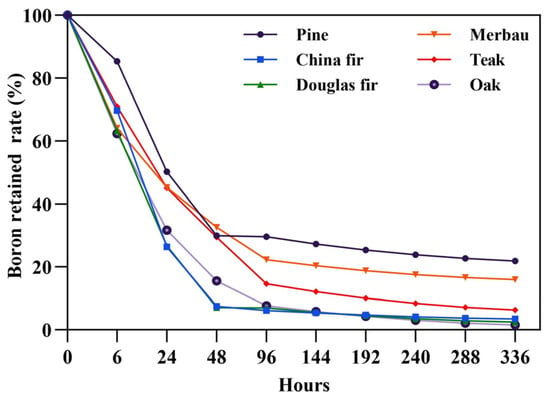
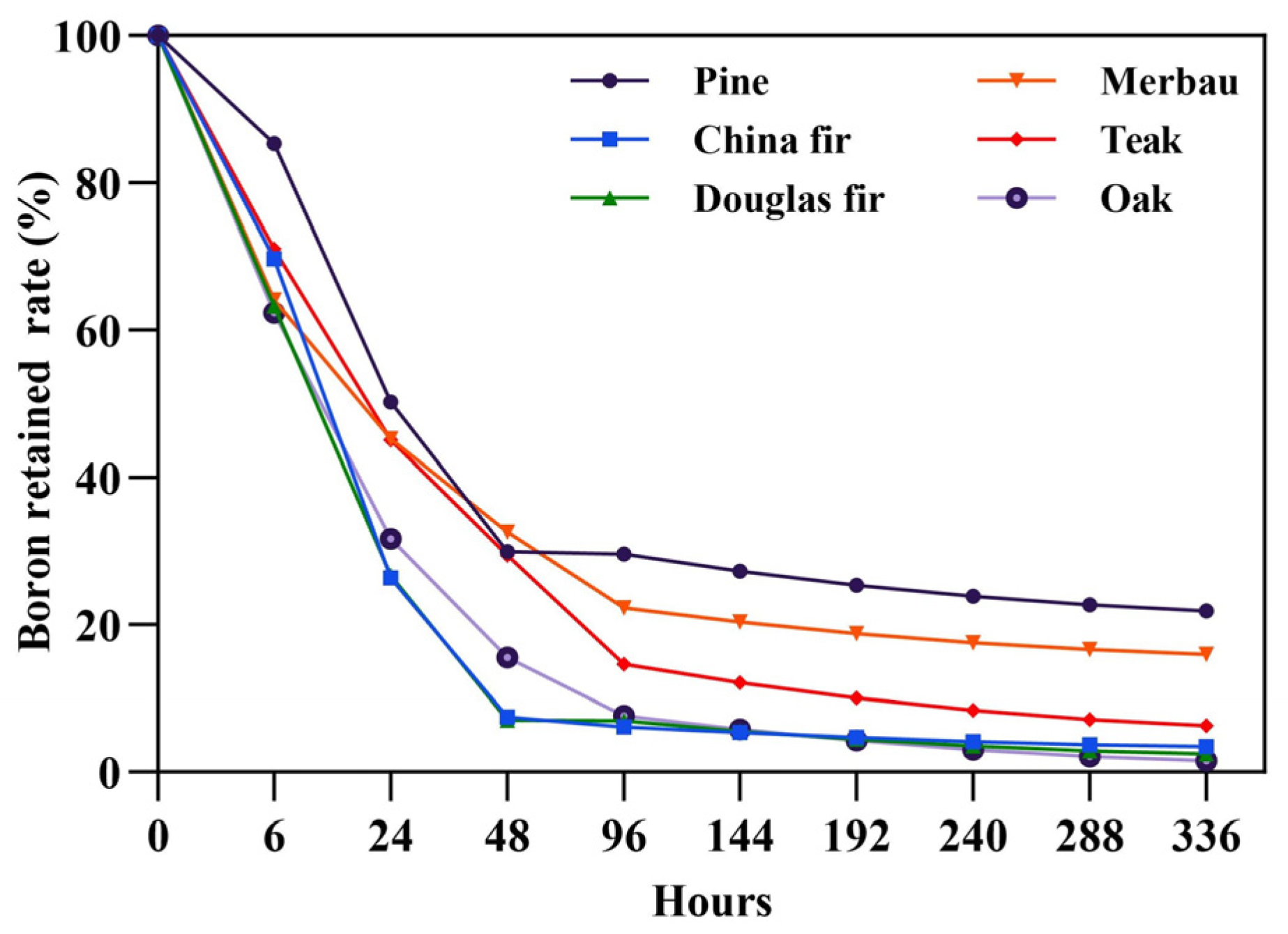
In this study, the boron retention of six species of wood was evaluated before and after a 14-day dynamic water immersion leaching test. Changes in boron retention rate in the six wood species over the nine leaching cycles are shown in Figure 1. The results showed that the boron retention rate of all tested wood continuously decreased over leaching time, exhibiting rapid loss during the initial leaching phase (before 48 h). After 48 h of leaching, the boron retention rates in all the wood samples were below 32.58%. Table 1 shows the boron retention in six wood species before and after leaching. The results show that softwoods exhibited higher initial boron content prior to leaching, whereas hardwoods had lower initial retention levels. The highest boron retention of the tested woods was 29.89 kg/m3 in China fir, and the lowest was 9.08 kg/m3 in teak. After leaching, the boron retention varied greatly depending on the species of wood. In the three softwoods, the boron retention of pine was higher than 5 kg/m3, while that of Douglas fir was only 0.39 kg/m3. Of the three hardwoods, merbau had a boron retention of 2.01 kg/m3, and oak had a retention of only 0.16 kg/m3. Pine wood performed the best in terms of boron retention with the highest retention rate (21.85%), followed by merbau, while oak wood performed the worst with the lowest retention rate of 1.57%.
Figure 1.
Boron retention rate in six TB-treated wood species monitored at nine collections of the 14 days of leaching.
Table 1.
Boron retention (mean ± SD) in six wood species before and after leaching.
3.2. Density and Compression Strength
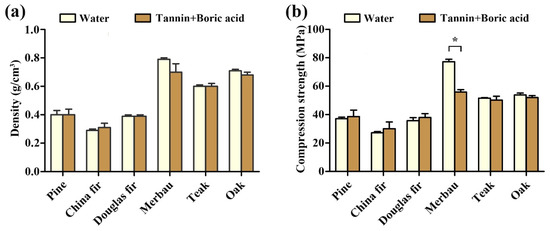
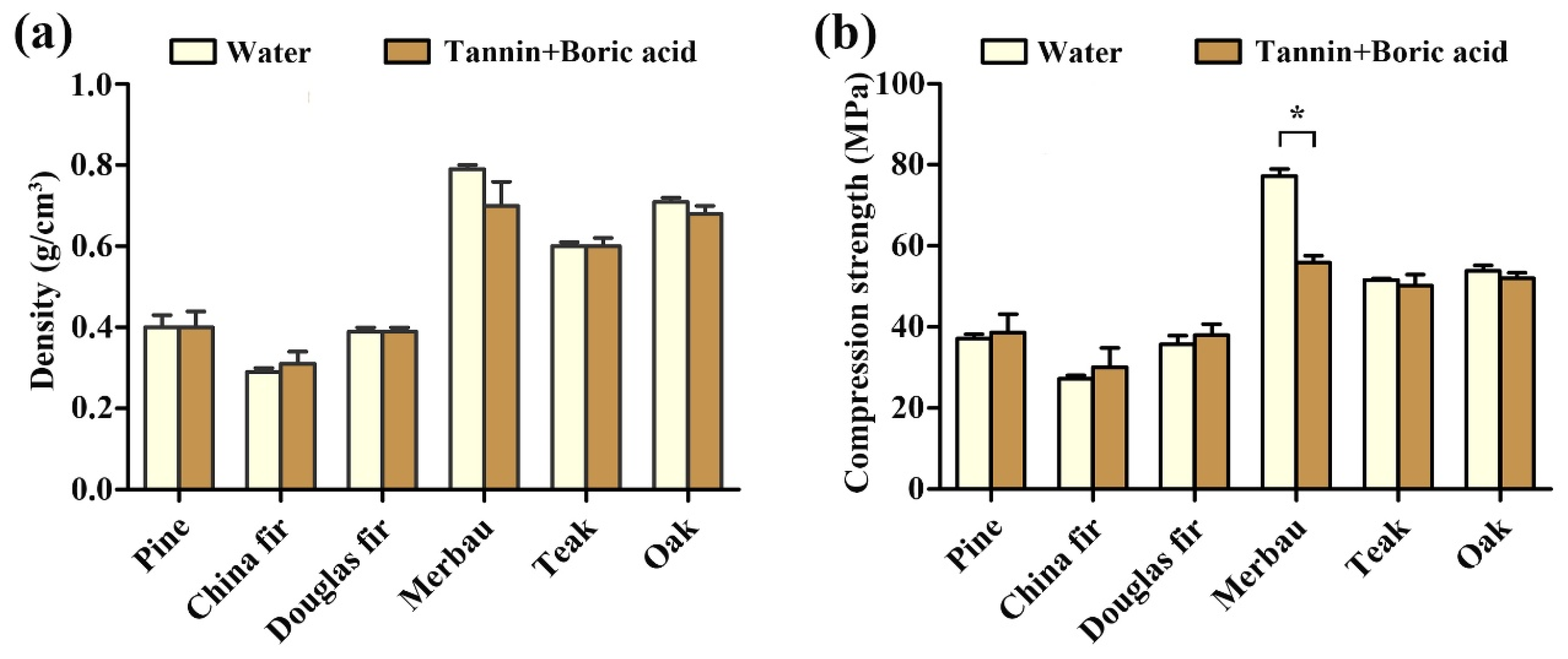
The physical properties of wood, including density and compressive strength parallel to the grain, are important factors influencing the durability of the used wood. In this study, these two properties were measured in six species of TB-treated wood. Before the measurement, a 14-day leaching test on each of the treated blocks of wood was performed. Our results demonstrated that there were no significant changes in density in any of the tested wood species following treatment (Figure 2a). The compressive strength of the three softwoods (pine, China fir, and Douglas fir) increased slightly after treatment, while that of the three hardwoods (merbau, teak, and oak) decreased (Figure 2b). The compressive strength decreased significantly after treatment compared to the control group in the case of merbau. These findings suggest that the tannin-boron-hexamine preservative system effectively maintains the physical stability of most tested wood species, maintaining the mechanical properties of the wood even after treatment.
Figure 2.
Density (a) and compressive strength (b) of six wood species treated with water (control) or tannin-boron preservative. The asterisk indicates a significant difference between the control and treated wood (t-test, α < 0.05).
3.3. Wood Microstructure
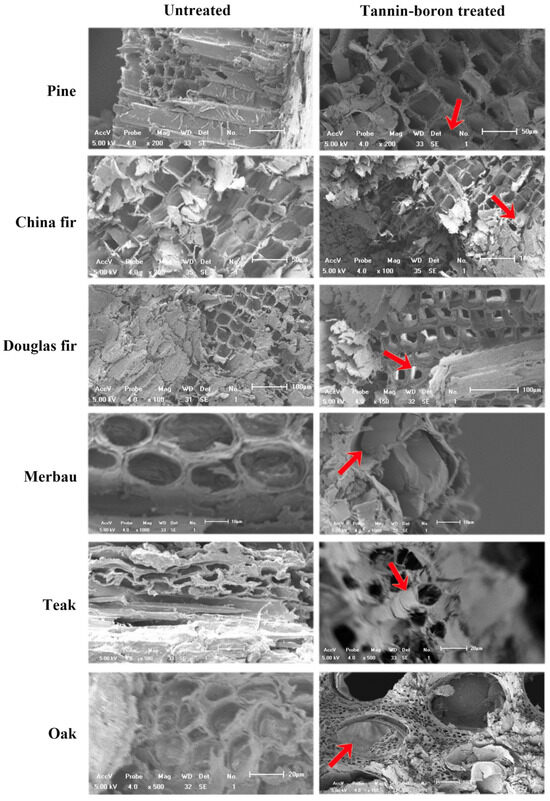
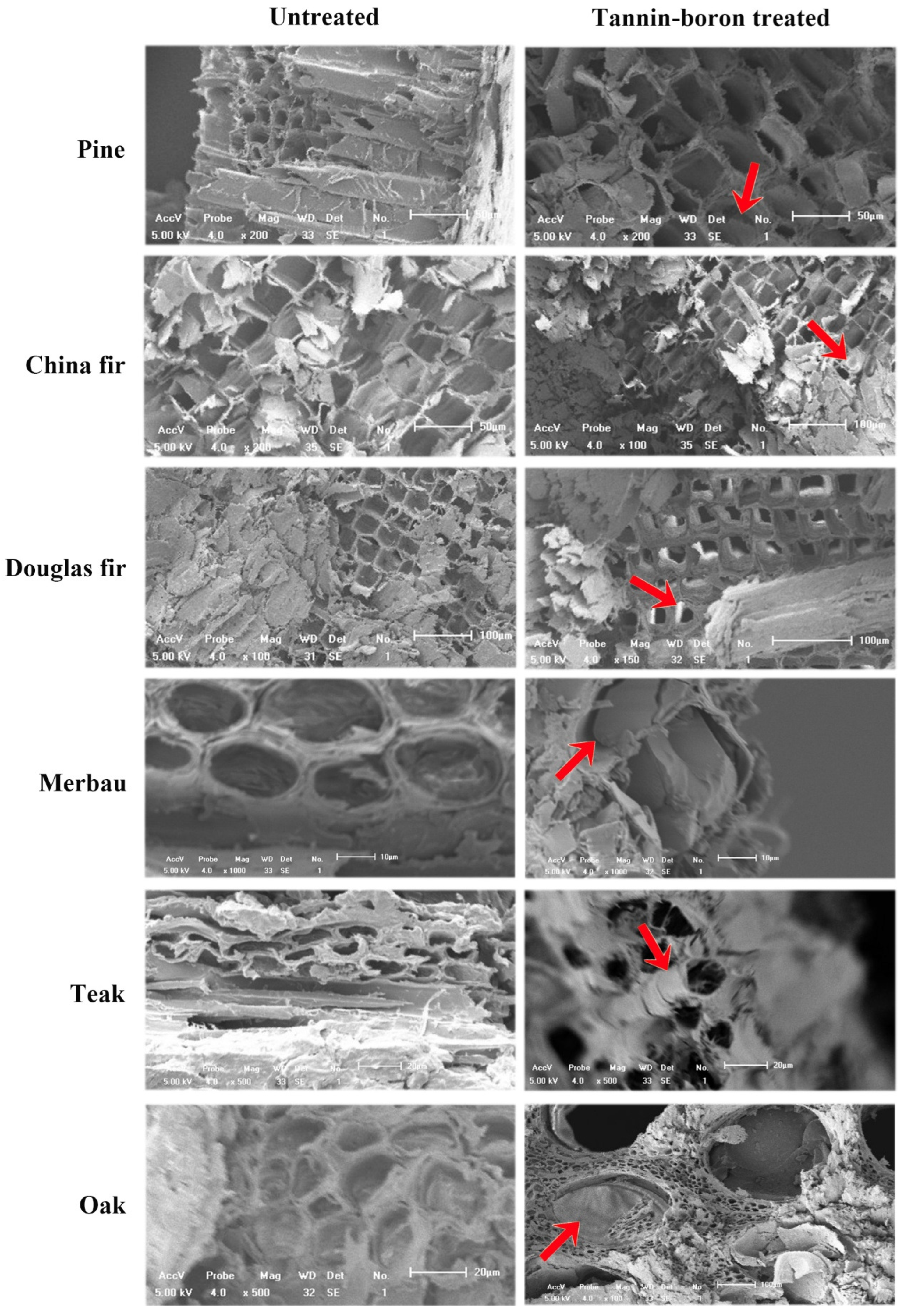
Scanning electron microscopy (SEM) was employed to observe the microstructure of six wood species and to reveal the retention characteristics of the tannin–boron preservative system (Figure 3). The results demonstrate significant alterations in wood microstructure following tannin-boron treatment, with notable differences in adsorption and fixation behavior between softwoods and hardwoods. In untreated pine samples, tracheid elements were intact and closely packed, exhibiting high cell cavity permeability. After TB treatment, plate-like or fine granular deposits (indicated by red arrows) appeared on the inner walls of the tracheids, while most cell cavities remained unobstructed. This suggests that the treatment agent primarily formed a thin film on the cell wall surface without significantly blocking the lumen. China fir and Douglas fir, both softwoods characterized by a tracheid-dominated tissue structure and the absence of vessel elements, displayed irregular, flocculent deposits loosely distributed within the cell cavities post-treatment. Most deposits adhered to cell wall peripheries, with many cavities remaining unsealed, indicating the preservative’s limited capacity to form dense, solid deposits in such wood structures. In contrast, hardwoods such as merbau, teak, and oak possess well-defined and regularly distributed vessel systems. After treatment, dense, shell-like deposits were formed within these vessels and intercellular spaces (Figure 3). The deposition was the most obvious in merbau, and vessel blockage was also observed in oak and teak. These observations confirmed that adsorption and solidification of the treatment agent predominantly occur within the vessel system of hardwoods. The results demonstrate that the distribution and fixation of tannin–boron preservatives are strongly influenced by the cellular tissue structure. In softwoods, adsorption occurs mainly on cell walls, resulting in loosely deposited preservative material, whereas the prominent vessel structures in hardwoods facilitate the formation of dense deposits.
Figure 3.
Microstructure of six wood species before and after tannin-boron treatment. The red arrows show where the tannin-boron accumulates in the wood.
3.4. Termite Resistance
The evaluation of termite feeding on TB treated and untreated wood samples following leaching is an effective method for assessing the efficacy of preservatives. In this study, a 21-day termite feeding test was conducted following AWPA E1-23 standards, and wood mass loss and termite mortality rates were recorded. The results showed that all TB treated samples exhibited significantly lower mass loss rates than the water-treated controls (Table 2). The mass loss rates of the TB-treated wood caused by termite feeding were all below 2.5%, even in softwoods. Termites seem to prefer to feed on softwood, and mass loss rates of the three species of softwood treated only with water all exceeded 36%, while those of the three species of water-treated hardwood were lower than 20%. Except in the case of teak, termites feeding on all treated wood types showed mortality rates reaching 100%, whereas those exposed to control samples exhibited mortality rates below 3%. These findings confirm that TB treatment imparts excellent resistance to termite damage.
Table 2.
Mass loss of water- or tannin-boron-treated wood and termite mortality after termite testing.
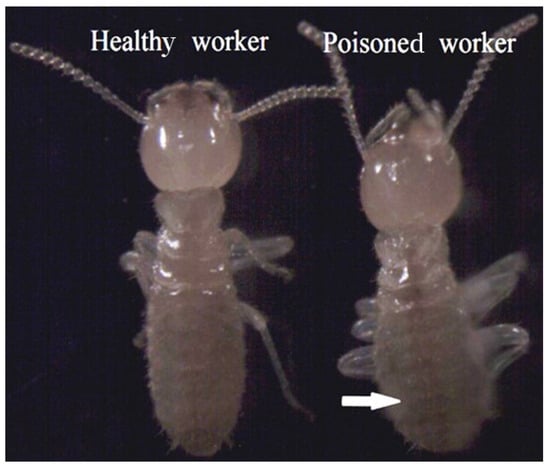
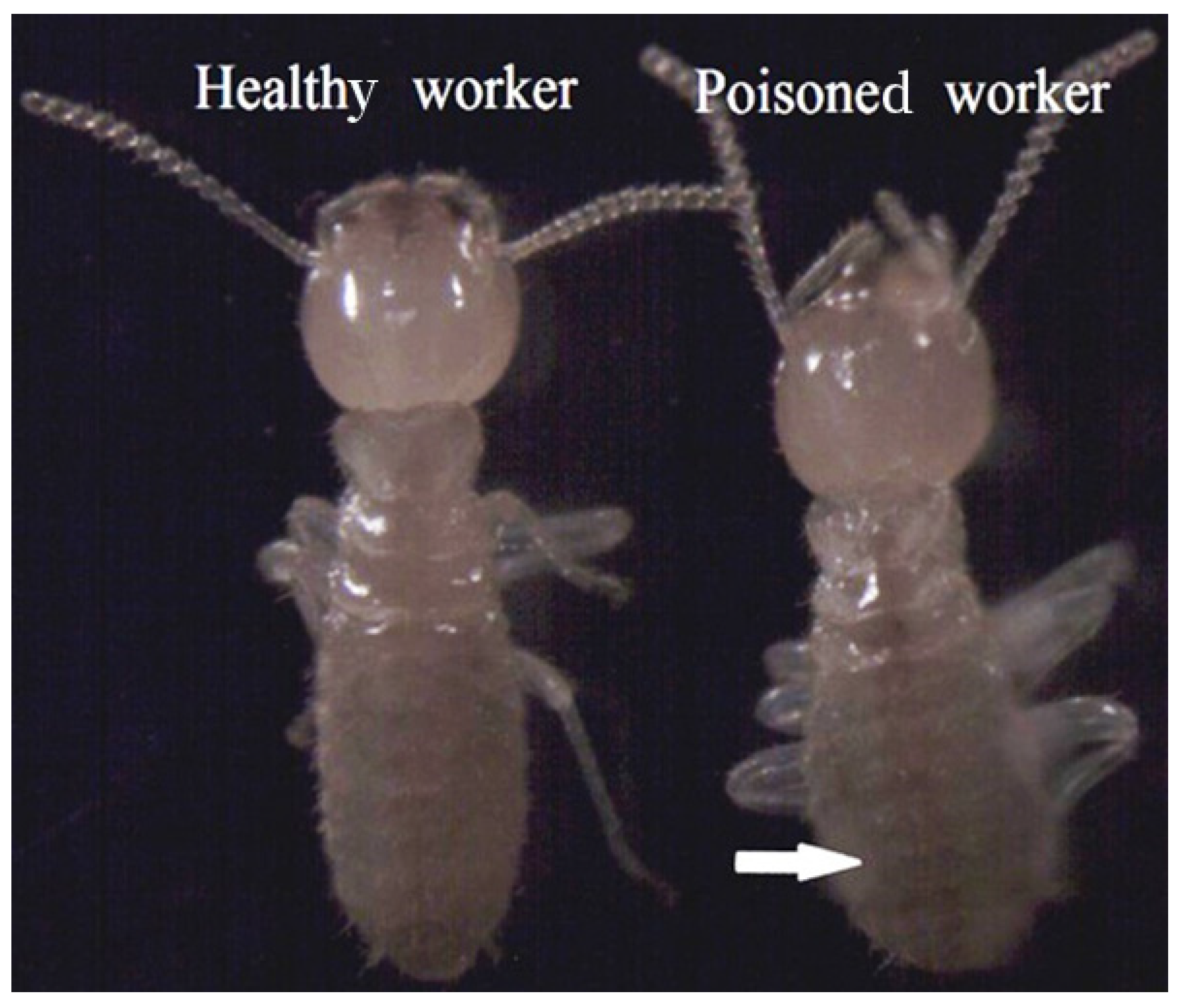
Termite abdominal morphology examined under a light microscope provides a visual indication of adverse effects following feeding on TB-treated wood. The abdomens of termites exposed to treated wood are markedly shriveled and deformed compared to those of healthy termites (Figure 4). This morphological alteration reflects the toxic impact of the preservative treatment on termite physiology.
Figure 4.
Healthy worker (left) and poisoned worker (right) was exposed to wood treated with water and TB, respectively, for 6 days. The arrow shows the flat abdomen of a poisoned worker after exposure to TB-treated wood (a state of starvation).
3.5. Fungal Resistance
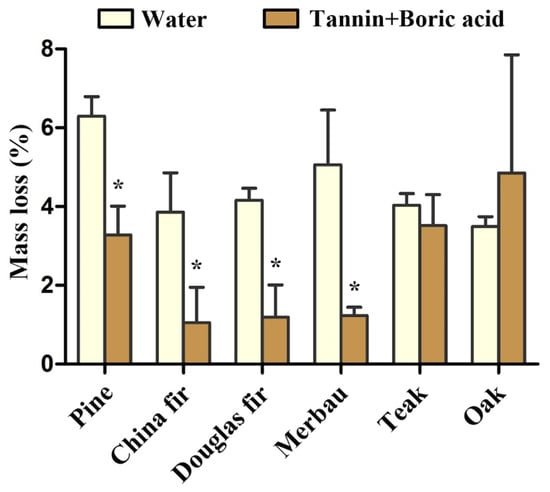
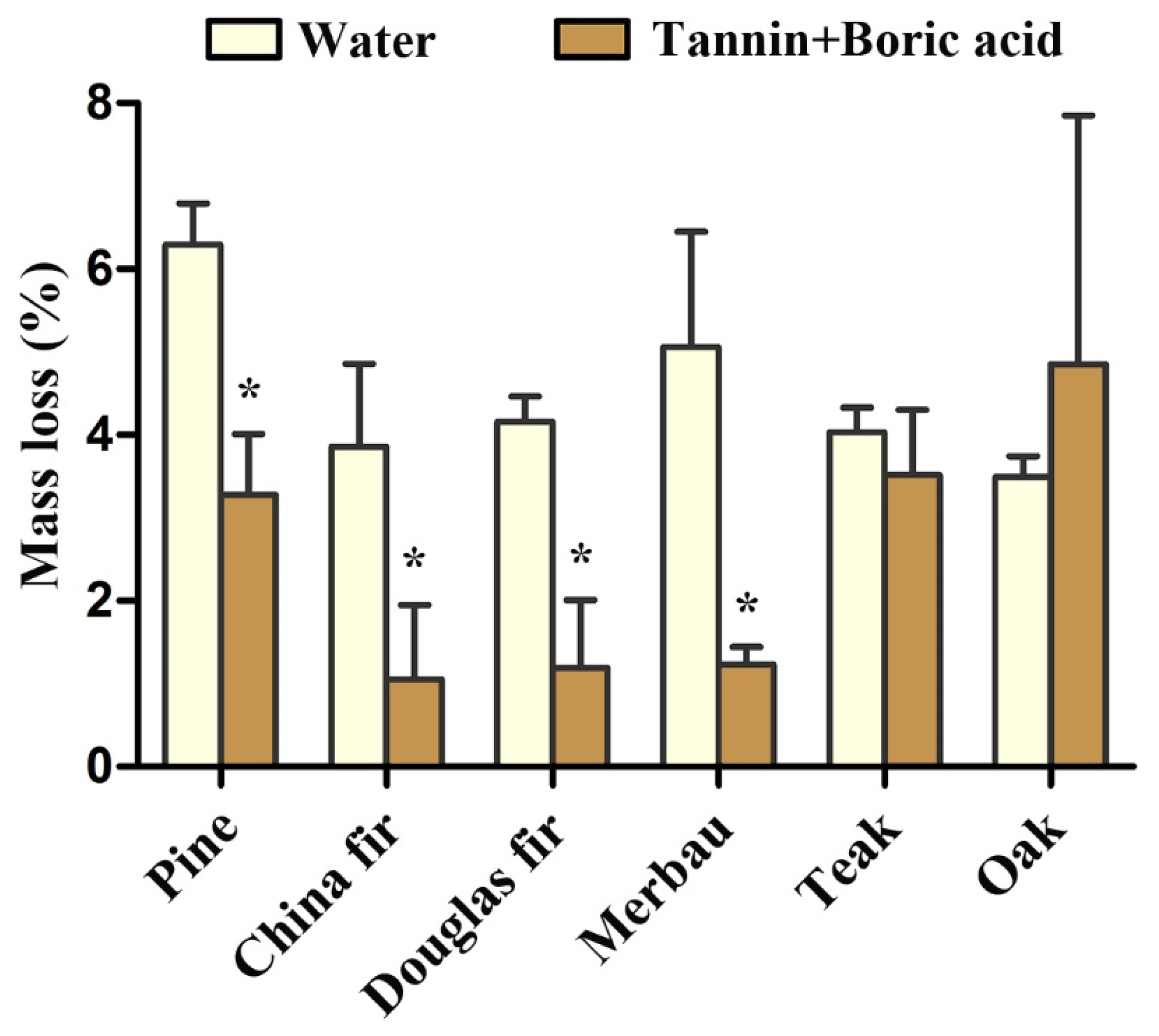
The weight loss of TB-treated wood (following leaching) exposed to T. hirsuta for 12 weeks is shown in Figure 5. The results showed that the resistances of TB-treated blocks, including pine, China fir, Douglas fir and merbau, to fungal decay have been significantly enhanced. These four species of treated wood exhibited a significant reduction in weight loss when compared to the corresponding control samples. For teak, the weight loss of TB treatment was slightly lower than that of the water treatment (control group), indicating that TB treatment does not seem to significantly improve the resistance of teak to fungal attacks. The oak blocks treated with TB showed an unexpectedly higher weight loss compared to the control samples.
Figure 5.
Mass loss of six wood species treated with water (control) or tannin-boron preservative after 12 weeks of exposure to Trametes hirsuta. Asterisks indicate a significant decrease in mass loss from tannin-boron-treated wood compared to the control (t-test, α < 0.05).
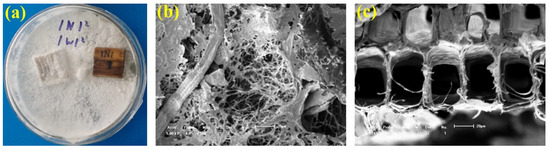
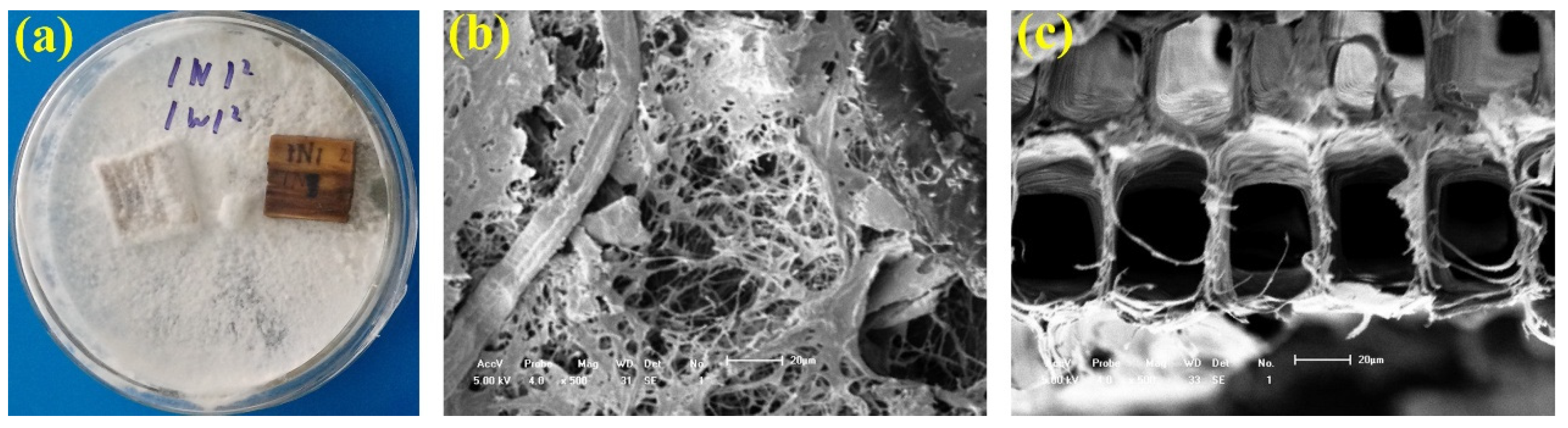
In order to investigate the antifungal mechanism of TB preservatives at the microscopic level, Douglas fir was selected for SEM examination after fungal exposure. No visible fungal colonization was detected on the surface of the TB-treated wood (Figure 6a), whereas the surface of the water-treated control was extensively covered with fungal hyphae. Figure 6b,c depict the internal microstructures of water-treated and TB-treated wood post-fungal exposure, respectively. The tracheid elements in the water-treated samples were severely degraded and disrupted by fungal activity, while those in the TB-treated samples remained largely intact. These pronounced structural differences provide compelling evidence of the superior antifungal properties conferred by TB treatment.
Figure 6.
Fungal resistance test (a) and microstructure of Douglas fir treated with water (b) and tannin-boron (c) after 12 weeks of exposure to Trametes hirsuta.
4. Discussion
Boron retention before and after leaching is a critical parameter for evaluating the efficacy of the tannin–boron–hexamine (TB) preservative system. In previous studies, this system was mainly tested in Scots pine (P. sylvestris), beech (F. sylvatica), and quebracho (Schinopsis balansae). The boron retention in Scots pine was found to increase as the concentration of boric acid used in the treatment increased [25]. When treated with 20% tannin and 1.4% boric acid, Scots pine could retain a boron content of 9.57 kg/m3. Similarly, as the concentration of boric acid treatment increased from 0.5% to 1.4%, the boron retention in beech wood also rose from 2.88 to 9.16 kg/m3 [25]. Efhamisisi et al. [27] showed that a 3-ply panel made of quebracho wood only retained 0.811 kg/m3 of boron when treated with 4% boric acid. Although belonging to the same genus as Scots pine, P. massoniana (pine) demonstrated a higher boron content (25.03 kg/m3) following treatment and prior to leaching in this study. The other five types of wood tested in this study also all showed a boron content above 9 kg/m3. Compared with previous reports, a higher boron retention in this study may be associated with a higher impregnation concentration of boric acid: the impregnation concentration of boric acid used in previous studies was usually less than 2% [25,28], while the concentration used in this study was 4%.
The six types of wood tested in this study are commonly used in real applications involving non-contact ground and above ground service environments. However, considering that they are sometimes also exposed to outdoor ground contact environments, a severe leaching procedure proposed by the AWPA E11-16 (R2022) was adopted in this study. The boron content after leaching varied widely among the six wood species, ranging from 0.16 to 5.47 kg/m3 (Table 1). The highest boron retention rate observed in this study was 21.85%, which is markedly lower than has been reported previously. Tondi et al. [25] reported that European beech (F. sylvatica) and Scots pine (P. sylvestris) retained between 2.24 and 7.41 kg/m3 boron following a 5-day leaching test, with the boron retention rate being between 72.9% and 86%. This 5-day leaching test may not be able to effectively remove boron from the wood compared to the 14-day leaching test in this study, thus resulting in a higher boron retention rate. Using the same TB preservative system, Lopes et al. [29] used disodium octaborate tetrahydrate (DOT) instead of boric acid to treat Southern yellow pine (Pinus spp.) and yellow poplar (Liriodendron tulipifera). After undergoing the same leaching procedures as this study, the retention rates of boron in these two types of wood were also significantly higher than those in this study, being 56.8% and 48.2%, respectively. Therefore, in addition to the leaching test methods, both the boron compounds used in the impregnation and the species of wood may also be important factors influencing the retention rate of boron.
The structure of the wood plays a crucial role in the impregnation and maintaining of TB [39]. Generally, softwood is mainly composed of tracheids, which constitute more than 90% of its structure, whereas in hardwood the tracheids are replaced by large vessels [40]. The TB can penetrate softwoods such as Scots pine through the tracheids, while the penetration of the hardwood beech occurs mainly through in the vessels [39]. In our study, the TB treatment of the softwoods pine, China fir and Douglas fir resulted in deposition of the TB mainly around the cell walls of the tracheids, rather than filling the entire tracheids as observed by Tondi et al. [39]. This might be a result of the loss of some TB from the leached wood. For the hardwoods merbau, teak and oak, TB was also mostly found in the vessels, with some of the vessels being completely filled with TB. However, an extremely low post-leaching retention value of boron (0.16 kg/m3) was observed in oak. In ring-porous hardwoods such as oak, the vessels are filled with many tyloses [41]. These tyloses likely limited TB preservative penetration into the lumen system and resulted in predominantly surface-localized treatment. Under such conditions, near-complete removal of boron during leaching is to be expected. Therefore, this anatomical constraint may fundamentally limit the applicability of this preservative system to certain wood types.
It is generally believed that TB treatment can enhance the mechanical properties, such as compression strength, tensile shear strength, and thermal stability, of wood, plywood, and bamboo [26,27,30]. However, the assessment of mechanical properties of wood without considering leaching does not truly reflect the performance changes of the wood during its actual use, especially in outdoor applications. After weathering, Scots pine treated with TB was found to be more prone to cracking and presented deeper cracks compared to the untreated samples [24], indicating that the leaching test will affect some mechanical properties of the treated wood. In this study, in order to simulate the mechanical properties changes of wood during its actual usage, TB-treated wood blocks subjected to 14 days of leaching were used to assess density and compressive strength. In terms of density, the treated blocks showed no significant change compared to the untreated samples. The TB treatment improved the compressive strength of the softwood, but reduced the compressive strength of the hardwood. In particular, the compressive strength of merbau was significantly decreased after treatment. The softwood is mainly composed of tiny, closely arranged tracheids. When TB penetrates the areas surrounding these tracheids, the support provided by the cell fibers may have been enhanced, which in turn increases the compressive strength of the wood. In hardwoods, the wide vessels were forcibly expanded by the infiltration of TB, and contracted once again due to the loss of TB following the leaching test. This stretching may make the wood fibers fragile, and lead to a decrease in compressive strength. In addition, the reduction in the compressive strength of hardwood cannot be ruled out as being caused by chemical modification. The TB-treated wood had previously been immersed in an alkaline impregnation solution (approximately pH 9). The alkaline condition promotes partial lignin depolymerization by cleaving ether linkages, especially β–O–4 bonds [42], thereby weakening the cell wall structure and reducing mechanical resistance. It has been demonstrated that tannin can improve the physico-mechanical properties of wood [26,43]. We were unable to take measurements of tannin retention after leaching, limiting the interpretation of the results presented in Figure 2. Therefore, future research should investigate the effects of chemical modification and tannin polymers on the mechanical properties of these wood species.
Termite feeding and fungal decay tests are common methods for assessing the biological resistance of wood preservatives. Termite resistance tests typically involve exposing treated wood to termites (Reticulitermes or Coptotermes) for no-choice feeding in accordance with EN117 or AWPA E1. TB-treated wood has been regarded as having excellent termite resistance. The weight loss of TB-treated plywood caused by termite feeding ranged from 2.41% to 5.11%, which was obviously lower than that of the control sample treated with water (18.29%) according to EN117 guidelines [28]. TB heat treatment can significantly reduce the damage caused by termites to Southern yellow pine (Pinus spp.), with the weight loss dropping from 26.76% in the control sample to 13.08% in the treated wood [29]. Similarly, termite feeding tests in our study also indicated that TB treatment could improve the resistance of wood to termites. The weight loss of all test wood types treated with TB was significantly less than that of control sample.
Boron is considered to be the component of the TB preservative effective against termites [28]. Termites fed on borate-treated wood will exhibit respiratory depression and symptoms of starvation [44,45]. In this study, termites showed flat abdomens when they fed on TB-treated wood for six days (Figure 4), indicating that TB inhibited termite feeding, eventually leading to their deaths. However, although the workers appeared to have symptoms of TB poisoning, more morphological and statistical analysis of the poisoned workers will be necessary to confirm the impact of TB on termites. The retention of boron in wood is an important factor affecting the termite resistance of TB preservative. Tondi et al. [25] believed that the retention threshold for boron efficacy was 2.5 kg/m3, which could reduce the wood weight loss caused by termites to less than 3%. However, it has been found that a lower retention of boron (0.16–2.01 kg/m3) is also able to show good termite resistance in TB-treated wood in this study. In addition to the retention of boron, there are other factors that affect the feeding behavior of termites. It has been reported that some types of wood, such as merbau and teak, have inherent resistance to termites due to their high strength and their secondary metabolites [46,47]. Oak (Q. mongolica) is not preferred by C. formosanus [48]. Therefore, the inherent species resistance of wood to termites may be one of the factors contributing to the low mass loss, even when the post-leaching retention of boron was very low.
White-rot and brown-rot fungi are the most significant wood decomposition fungi in nature, and are commonly used in tests assessing fungal resistance properties of wood preservatives. Previous studies have found that TB treatment offers excellent resistance to white rot in hardwood and to brown rot in softwood [25,29]. The white-rot fungus Pycnoporus sanguineus demonstrated a stronger ability to decompose bamboo treated with TB than the brown-rot fungus Gloeophyllum trabeum [30]. In this study, a white-rot fungus (T. hirsuta) was selected to test the decay resistance of different types of wood after treatment with TB. The results showed that low weight loss was observed in all types of wood (including the untreated control samples), which might be due to the weak infectivity of the selected fungi, although T. hirsuta is also often used in the evaluation of preservative resistance [49,50]. With the exception of oak, the five species of wood treated with TB (both softwood and hardwood) demonstrated good resistance to T. hirsuta. However, the ability of these woods to resist fungal decay is not entirely dependent on the amount of boron present in the wood. For instance, Douglas fir, with a lower boron retention (0.39 kg/m3), exhibited a stronger antifungal ability, while teak, with a higher boron retention (0.57 kg/m3), did not show any significant antifungal effect. Therefore, the inherent resistance of the wood itself may also reduce the degradation of the treated wood. The results of SEM show that the antifungal properties of wood treated with TB are achieved by preventing the fungal hyphae from invading the interior of wood cells. In this study, only one white-rot fungus was used to evaluate the antifungal effect of treatment of the wood with TB, which limited the scope and representativeness of the decay resistance assessment. Therefore, it will be necessary to verify the resistance of TB-treated wood to other types of fungi in future experiments.
5. Conclusions
In this study, six species of wood were treated with TB preservative and subsequently evaluated for boron content, mechanical properties, microstructure and biological resistance. The retention of boron in the tested wood varied significantly following 14 days leaching, and showed a pronounced species-dependent variability. In particular, in oak, Douglas fir and teak, a very low post-leaching boron retention was observed, which suggests that further study is required to increase the anchorage of boron to wood. The treated blocks showed no significant change in density compared to the untreated samples. However, the compressive strength of the three types of hardwood decreased after TB treatment. Since the blocks were treated by impregnating in an alkaline solution, it is necessary to consider the potential impact of the alkaline treatment conditions on the wood’s chemistry and strength. SEM observations revealed that TB adhered mainly to the periphery of the cell walls of the tracheids in the softwood, while it was deposited in the vessels in hardwood. The treated softwood exhibited a significant resistance to termites. In contrast, relatively low mass losses were observed both in control and treated hardwood specimens, which may be not only attributed to TB treatment, but also the inherent species resistance. The TB treatment seems to have provided a slightly antifungal effect in pine, China fir, Douglas fir, and merbau. The low mass losses observed in the control specimens suggests that the infectivity of the selected decay fungi appears to be relatively weak. Therefore, the fungal resistance of TB requires further verification using different types of decay fungi. Since the tested wood is commonly used in indoor non-contact ground or outdoor above-ground conditions in practical applications, these results will be helpful for the application of TB in protecting wood in these scenarios.
Author Contributions
Conceptualization, K.J. and C.P.; methodology, K.J. and Z.H.; validation, K.J., J.Y. and L.H.; formal analysis, Z.H.; data curation, Y.X.; writing—original draft preparation, K.J. and Z.H.; writing—review and editing, C.P.; visualization, D.Z.; supervision, C.P.; funding acquisition, Y.Y., Y.P. and C.P. All authors have read and agreed to the published version of the manuscript.
Funding
This research was supported by the National Natural Science Foundation of China (grant number: 32171802) and the Joint Fund of Zhejiang Provincial Natural Science Foundation of China (grant number: LGEZ25C040002).
Data Availability Statement
The original contributions presented in this study are included in the article. Further inquiries can be directed to the corresponding author.
Acknowledgments
We are grateful to Jane Marczewski for her suggestions and language revisions on this project.
Conflicts of Interest
Author Mr. Yongxin Yao and Mr. Yuan Peng were employed by the company Zhejiang Guangchuan Engineering Consulting Co., Ltd. The remaining authors declare that the research was conducted in the absence of any commercial or financial relationships that could be construed as a potential conflict of interest.
References
- Ramage, M.H.; Burridge, H.; Busse-Wicher, M.; Fereday, G.; Reynolds, T.; Shah, D.U.; Wu, G.; Yu, L.; Fleming, P.; Densley-Tingley, D.; et al. The wood from the trees: The use of timber in construction. Renew. Sustain. Energy Rev. 2017, 68, 333–359. [Google Scholar] [CrossRef] [Scilit]
- Rajput, H.; Rajan, P.; Li, S.; Stratton, G.W.; Murray, G.; He, Q.S. Development of wood preservatives to prevent biodeterioration. J. Wood Chem. Technol. 2023, 43, 371–389. [Google Scholar] [CrossRef] [Scilit]
- Ulyshen, M.D. Wood decomposition as influenced by invertebrates. Biol. Rev. 2016, 91, 70–85. [Google Scholar]
- Cao, Y.; Fang, J.; Chen, S.; Zhu, L.; Xie, X.; Xing, H.; Liu, M.; Ding, Y.; Qiao, Y. Preservation of wood-based products against biotic and chemical degradation: Past, present and future. Wood Mater. Sci. Eng. 2025; Online. [CrossRef] [Scilit]
- Omo-Okoro, P.; Curtis, C.; Emenike, C. Current trends in wood preservation with emphasis on approaches for the remediation of soils contaminated with pentachlorophenol and creosote. J. Soil Sci. Plant Nutr. 2023, 23, 4788–4804. [Google Scholar] [CrossRef] [Scilit]
- Tascioglu, C.; Yoshimura, T.; Tsunoda, K. Biological decay and termite resistance of post-treated wood-based composites under protected above-ground conditions: A preliminary study after 36 months of exposure. BioResources 2013, 8, 833–843. [Google Scholar]
- Hasan, A.R.; Hu, L.; Solo-Gabriele, H.M.; Fieber, L.; Cai, Y.; Townsend, T.G. Field-scale leaching of arsenic, chromium and copper from weathered treated wood. Environ. Pollut. 2010, 158, 1479–1486. [Google Scholar] [CrossRef] [Scilit]
- Salman, S.; Pétrissans, A.; Thévenon, M.F.; Dumarçay, S.; Perrin, D.; Pollier, B.; Gérardin, P. Development of new wood treatments combining boron impregnation and thermo modification: Effect of additives on boron leachability. Eur. J. Wood Wood Prod. 2014, 72, 355–365. [Google Scholar] [CrossRef] [Scilit]
- Nguyen, T.T.H.; Tran, V.C.; Li, S.; Li, J. Effects of rosin-aluminum sulfate treatment on the leachability, color stability, and decay resistance of wood treated with a boron-based preservative. BioResources 2020, 15, 172–186. [Google Scholar] [CrossRef] [Scilit]
- Wen, L.; Su, H.; Wang, X.; Zhang, Y.; Sun, S.; Cai, L. Enhancement of corrosion resistance of structural timber by injecting boron preservatives labeled with fluorescent carbon dots into living trees. Ind. Crops Prod. 2025, 228, 120889. [Google Scholar] [CrossRef] [Scilit]
- Obanda, D.N.; Shupe, T.F.; Barnes, H.M. Reducing leaching of boron-based wood preservatives—A review of research. Bioresour. Technol. 2008, 99, 7312–7322. [Google Scholar] [CrossRef] [Scilit] [PubMed]
- Demir, A.; Öztürk, H.; İlhan, O.; Birinci, A.U.; Demirkir, C.; Gezer, E.D. Enhancing the durability of cross-laminated timber (CLT) with boron treatment in ground-contact conditions. Wood Mater. Sci. Eng. 2025, 20, 814–827. [Google Scholar] [CrossRef] [Scilit]
- Lesar, B.; Kralj, P.; Humar, M. Montan wax improves performance of boron-based wood preservatives. Int. Biodeterior. Biodegrad. 2009, 63, 306–310. [Google Scholar] [CrossRef] [Scilit]
- Mohd Ghani, R.S. A review of different barriers and additives to reduce boron movement in boron dual treated wood. Prog. Org. Coat. 2021, 160, 106523. [Google Scholar] [CrossRef] [Scilit]
- Kartal, S.N.; Yoshimura, T.; Imamura, Y. Modification of wood with Si compounds to limit boron leaching from treated wood and to increase termite and decay resistance. Int. Biodeterior. Biodegrad. 2009, 63, 187–190. [Google Scholar] [CrossRef] [Scilit]
- Bhatt, S.; Tripathi, S. Effect of silicic acid on boron leaching in plywood manufacture. Appl. Biol. Res. 2021, 23, 122–128. [Google Scholar] [CrossRef] [Scilit]
- Namyslo, J.C.; Kaufmann, D.E. Chemical improvement of surfaces. Part 1: Novel functional modification of wood with covalently bound organoboron compounds. Holzforschung 2009, 63, 627–632. [Google Scholar] [CrossRef] [Scilit]
- Mohareb, A.; Thévenon, M.F.; Wozniak, E.; Gérardin, P. Effects of polyvinyl alcohol on leachability and efficacy of boron wood preservatives against fungal decay and termite attack. Wood Sci. Technol. 2011, 45, 407–417. [Google Scholar] [CrossRef] [Scilit]
- Baysal, E.; Yalinkiliç, M.K. A new boron impregnation technique of wood by vapor boron of boric acid to reduce leaching boron from wood. Wood Sci. Technol. 2005, 39, 187–198. [Google Scholar] [CrossRef] [Scilit]
- Anttila, A.-K.; Pirttilä, A.M.; Häggman, H.; Harju, A.; Venäläinen, M.; Haapala, A.; Holmbom, B.; Julkunen-Tiitto, R. Condensed conifer tannins as antifungal agents in liquid culture. Holzforschung 2013, 67, 825–832. [Google Scholar] [CrossRef] [Scilit]
- Meikleham, N.; Pizzi, A.; Stephanou, A. Induced accelerated autocondensation of polyflavonoid tannins for phenolic polycondensates. I. 13C-NMR, 29Si-NMR, X-ray, and polarimetry studies and mechanism. J. Appl. Polym. Sci. 1994, 54, 1827–1845. [Google Scholar] [CrossRef] [Scilit]
- Pizzi, A.; Baecker, A. A new boron fixation mechanism for environment friendly wood preservatives. Holzforschung 1996, 50, 507–510. [Google Scholar] [CrossRef] [Scilit]
- Thevenon, M.-F.; Tondi, G.; Pizzi, A. High performance tannin resin-boron wood preservatives for outdoor end-uses. Eur. J. Wood Wood Prod. 2009, 67, 89–93. [Google Scholar] [CrossRef] [Scilit]
- Tondi, G.; Palanti, S.; Wieland, S.; Thevenon, M.-F.; Petutschnigg, A.; Schnabel, T. Durability of tannin-boron-treated timber. BioResources 2012, 7, 5138–5151. [Google Scholar] [CrossRef] [Scilit]
- Tondi, G.; Wieland, S.; Lemenager, N.; Petutschnigg, A.; Pizzi, A.; Thevenon, M.-F. Efficacy of tannin in fixing boron in wood: Fungal and termite resistance. BioResources 2012, 7, 1238–1252. [Google Scholar] [CrossRef] [Scilit]
- Tondi, G.; Wieland, S.; Wimmer, T.; Thevenon, M.F.; Pizzi, A.; Petutschnigg, A. Tannin-boron preservatives for wood buildings: Mechanical and fire properties. Eur. J. Wood Wood Prod. 2012, 70, 689–696. [Google Scholar] [CrossRef] [Scilit]
- Efhamisisi, D.; Thevenon, M.-F.; Hamzeh, Y.; Karimi, A.-N.; Pizzi, A.; Pourtahmasi, K. Induced tannin adhesive by boric acid addition and its effect on bonding quality and biological performance of poplar plywood. ACS Sustain. Chem. Eng. 2016, 4, 2734–2740. [Google Scholar] [CrossRef] [Scilit]
- Efhamisisi, D.; Thevenon, M.-F.; Hamzeh, Y.; Pizzi, A.; Karimi, A.; Pourtahmasi, K. Tannin-boron complex as a preservative for 3-ply beech plywoods designed for humid conditions. Holzforschung 2017, 71, 249–258. [Google Scholar] [CrossRef] [Scilit]
- Lopes, D.J.V.; Barnes, H.M.; dos Santos Bobadilha, G. Influence of heat treatment and tannin impregnation on boron depletion and wood durability. Forests 2020, 11, 201. [Google Scholar] [CrossRef] [Scilit]
- Gauss, C.; Kadivar, M.; Pereira, R.G.F.; Savastano, H. Assessment of dendrocalamus asper (Schult and schult f.) (Poaceae) bamboo treated with tannin-boron preservatives. Constr. Build. Mater. 2021, 282, 122723. [Google Scholar] [CrossRef] [Scilit]
- Zhang, Y.; Bai, M.; Zhang, A.; Zhang, X.; Dong, Y.; Kang, H.; Zhang, Q.; Li, J. A facile and small-molecule regulated borate network gelation to improve the mildew proof, fire-retardant of bamboo. Ind. Crops Prod. 2023, 197, 116602. [Google Scholar] [CrossRef] [Scilit]
- Hu, J.; Skinner, C.; Ormondroyd, G.; Thevenon, M.-F. Life cycle assessment of a novel tannin-boron association for wood protection. Sci. Total Environ. 2023, 858, 159739. [Google Scholar] [CrossRef] [Scilit] [PubMed]
- Barbu, M.C.; Tudor, E.M. State of the art of the Chinese forestry, wood industry and its markets. Wood Mater. Sci. Eng. 2022, 17, 1030–1039. [Google Scholar]
- AWPA E11-16 (R2022); Standard Method for Accelerated Evaluation of Preservative Leaching. American Wood Protection Association (AWPA): Hoover, AL, USA, 2016.
- Mair, J.W.; Day, H.G. Curcumin method for spectrophotometric determination of boron extracted from radiofrequency ashed animal tissues using 2-ethyl-1,3-hexanediol. Anal. Chem. 1972, 44, 2015–2017. [Google Scholar] [CrossRef] [Scilit]
- Mamoňová, M.; Ciglian, D.; Reinprecht, L. SEM analysis of glued joints of thermally modified wood bonded with PUR and PVAc glues. Materials 2022, 15, 6440. [Google Scholar] [CrossRef] [Scilit]
- AWPA E1-23; Laboratory Methods for Evaluating the Termite Resistance of Wood-Based Materials: Choice and No-Choice Tests. AWPA Book of Standards. American Wood Protection Association (AWPA): Hoover, AL, USA, 2023.
- AWPA E10-22; Laboratory Method for Evaluating the Decay Resistance of Wood-Based Materials Against Pure Basidiomycete Cultures: Soil/Block Test. AWPA Book of Standards. American Wood Protection Association (AWPA): Hoover, AL, USA, 2022.
- Tondi, G.; Thevenon, M.F.; Mies, B.; Standfest, G.; Petutschnigg, A.; Wieland, S. Impregnation of Scots pine and beech with tannin solutions: Effect of viscosity and wood anatomy in wood infiltration. Wood Sci. Technol. 2013, 47, 615–626. [Google Scholar] [CrossRef] [Scilit]
- Geers, C.; Rodríguez-Lorenzo, L.; Placencia Peña, M.I.; Brodard, P.; Volkmer, T.; Rothen-Rutishauser, B.; Petri-Fink, A. Distribution of silica-coated silver/gold nanostars in soft- and hardwood applying SERS-based imaging. Langmuir 2016, 32, 274–283. [Google Scholar] [CrossRef] [Scilit]
- Kim, D.; Gollihue, J.; Poovathingal, S.J.; DeBolt, S. Detailed three-dimensional analyses of tyloses in oak used for bourbon and wine barrels through X-ray computed tomography. Sci. Rep. 2024, 14, 17044. [Google Scholar] [PubMed]
- Evstigneyev, E.I.; Shevchenko, S.M. Lignin valorization and cleavage of arylether bonds in chemical processing of wood: A mini-review. Wood Sci. Technol. 2020, 54, 787–820. [Google Scholar] [CrossRef] [Scilit]
- Shirmohammadli, Y.; Efhamisisi, D.; Pizzi, A. Tannins as a sustainable raw material for green chemistry: A review. Ind. Crops Prod. 2018, 126, 316–332. [Google Scholar]
- Toyoshima, I.; Yoshimura, T.; Tsunoda, K.; Takahashi, M. Comparative toxicity, residual nature and effect on respiration of boron compounds in a lower termite, Coptotermes formosanus Shiraki (Isoptera: Rhinotermitidae). Mater. Org. 1997, 31, 217–226. [Google Scholar]
- Gentz, M.C.; Grace, J.K. The response and recovery of the Formosan subterranean termite (Coptotermes formosanus Shiraki) from sublethal boron exposures. Int. J. Pest Manag. 2009, 55, 63–67. [Google Scholar] [CrossRef] [Scilit]
- Hsiao, N.-C.; Chang, T.-C.; Hsu, F.-L.; Chang, S.-T. Environmentally benign treatments for inhibiting the release of aqueous extracts from merbau heartwood. Wood Sci. Technol. 2016, 50, 333–348. [Google Scholar]
- Ismayati, M.; Nakagawa-Izumi, A.; Kamaluddin, N.N.; Ohi, H. Toxicity and feeding deterrent effect of 2-methylanthraquinone from the wood extractives of Tectona grandis on the subterranean termites Coptotermes formosanus and Reticulitermes speratus. Insects 2016, 7, 63. [Google Scholar] [CrossRef] [Scilit]
- Li, J.; Yuan, X.; Xu, R.; Nan, X.; Mo, J. Food preference of workers of Coptotermes formosanus (Isoptera: Rhinotermitidae). Sociobiology 2012, 59, 731–740. [Google Scholar]
- Hınçal, S.; Yalçın, M. Biological control of some wood-decay fungi with antagonistic fungi. Biodegradation 2023, 34, 597–607. [Google Scholar] [CrossRef] [Scilit]
- Bansal, R.; Mamatha, N.; Kumar, R.; Pandey, K.K. Fungal resistance of Hevea brasiliensis (rubberwood) treated with nano-ZnO and nano-CuO dispersed linseed oil and paraffin wax nanoemulsion. Eur. J. Wood Wood Prod. 2024, 82, 1095–1109. [Google Scholar] [CrossRef] [Scilit]

Disclaimer/Publisher’s Note: The statements, opinions and data contained in all publications are solely those of the individual author(s) and contributor(s) and not of MDPI and/or the editor(s). MDPI and/or the editor(s) disclaim responsibility for any injury to people or property resulting from any ideas, methods, instructions or products referred to in the content. |
© 2026 by the authors. Licensee MDPI, Basel, Switzerland. This article is an open access article distributed under the terms and conditions of the Creative Commons Attribution (CC BY) license.