Review

Bibliometric Analysis of Highly Cited Publications on Mangrove Sustainability

by
Mangala Jayarathne
1,*,
Takehiro Morimoto
2 and
Manjula Ranagalage
3
1
Graduate School of Science and Technology, University of Tsukuba, 1-1-1, Tennodai, Tsukuba 305-8572, Japan
2
Institute of Life and Environmental Sciences, University of Tsukuba, 1-1-1, Tennodai, Tsukuba 305-8572, Japan
3
Department of Environmental Management, Faculty of Social Sciences and Humanities, Rajarata University of Sri Lanka, Mihintale 50300, Sri Lanka
*
Author to whom correspondence should be addressed.
Forests 2026, 17(2), 240; https://doi.org/10.3390/f17020240
Submission received: 9 January 2026 / Revised: 7 February 2026 / Accepted: 8 February 2026 / Published: 11 February 2026
(This article belongs to the Section Forest Hydrology)

Abstract

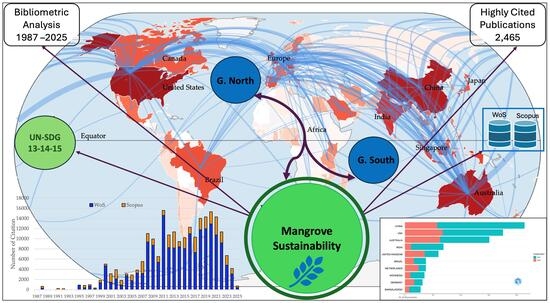
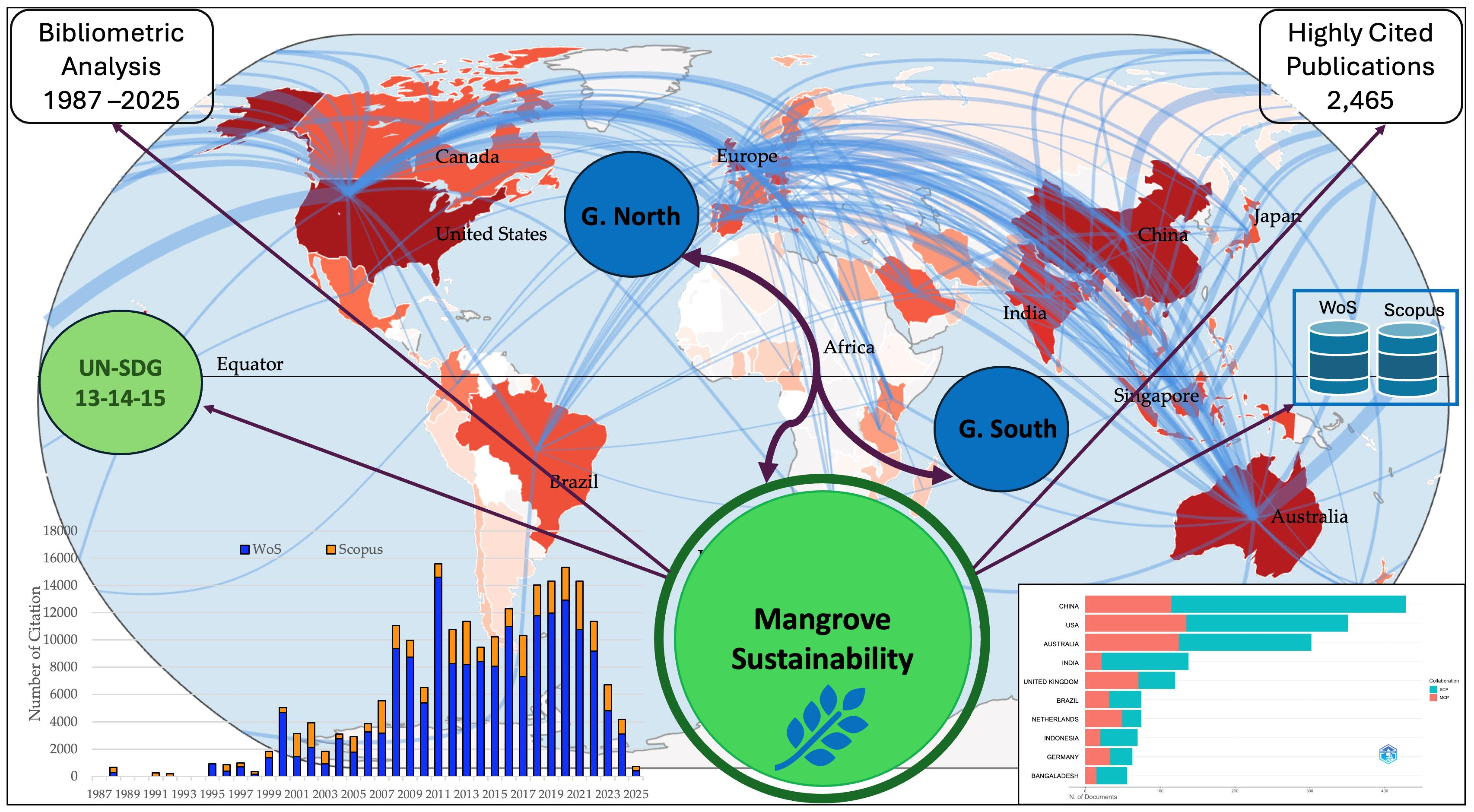
This bibliometric analysis synthesizes 39 years (1987–2025) worth of highly cited publications on mangrove sustainability, using 2465 publications from the Web of Science and Scopus. This study offers researchers and policymakers a clear map of the core knowledge and emerging areas in this field. It highlights influential publications and traces the field’s development through bibliometric analyses of keywords, citations, co-authorships, and geographic collaborations. Research on this area crystallizes around threat assessment, management, ecosystem services, and operationalizing blue carbon, strongly supported by remote sensing and aligned with SDGs 13, 14, and 15. Catherine E. Lovelock is the most prolific author, and Science of the Total Environment is the leading journal. Geographically, the Global North (USA, Australia, and Europe) remains dominant, while China asserts institutional and country-level leadership as a hybrid collaborator in the Global South. The collaboration network reveals a hub-and-spoke structure and a research capacity gap in mangrove-rich nations across Africa and South America. Global events, environmental issues, and modern technologies are driving the development of new theories, concepts, and techniques regarding mangrove sustainability. This study reveals key research imbalances and concludes that achieving mangrove sustainability requires robust South–South collaboration and autonomous research capacity in climate-vulnerable regions.

Graphical Abstract

1. Introduction

Mangroves, the only forests at the land–sea interface in the tropics and subtropics, are among Earth’s most productive ecosystems, covering approximately 13.76 million hectares globally (see [1,2,3,4,5]). In response to the mounting threats posed by anthropogenic activities and climate change over the past three decades, a significant volume of research has emerged to diagnose the various challenges pertaining to mangrove sustainability (see [6,7,8,9,10,11]).
Mangroves have long faced high rates of deforestation, contamination, and habitat loss [9,10,11,12,13]. Due to human settlement, the expansion of agricultural or salt-making lands, the development of coastal industries, and the expansion of coastal aquaculture, climate change impacts, such as sea-level rise and extreme weather events, have inflicted considerable damage on mangrove forests [14,15,16,17]. In addition to mangrove loss, mangrove degradation also requires more attention globally, as remaining mangrove patches are often exposed to significant pollution and fragmentation [15,18,19,20]. Mangrove loss and degradation can be addressed through rehabilitation efforts and, most importantly, protection [12,15,21].
Despite mangroves’ ecological and economic importance, global mangrove cover declined by approximately 35% from 1980 to 2000 [9,15,22,23]. This issue is exacerbated by unsustainable exploitation, poor governance, and a lack of awareness [24,25,26]. Promising solutions are emerging through community-based conservation and geospatial technologies like remote sensing, the latter of which enables accurate monitoring that can support informed policymaking for the sustainable management of mangroves [27,28,29,30,31,32,33,34,35,36].
The concept of sustainability, advanced by the Brundtland report and later frameworks such as the Millennium Development Goals (MDGs) and Sustainable Development Goals (SDGs), is a cornerstone of public policy [10,15,37,38]. In this context, mangrove ecosystems are a critical natural resource, and their unsustainable degradation has become a significant focus of scientific research [15,39]. Conservation of mangroves is directly aligned with global frameworks, specifically the UN SDGs for climate action (SDG 13), life below water (SDG 14), and life on land (SDG 15) [37,38]. Meanwhile, the proliferation of digital scholarly databases and analytical software [40,41] has unlocked a powerful new capacity for synthesizing large volumes of research, enabling sophisticated bibliometric analyses of complex sustainability challenges like those faced by mangrove ecosystems [41,42,43,44].
A bibliometric analysis is a quantitative examination method in which researchers focus on documents—primarily scientific ones, such as articles and books—to uncover research categories, publication types, key research institutions, citation patterns, and countries and conduct keyword and title content analysis [11,43,45]. The insights it provides can significantly impact both scholars and practitioners, as they offer a wider range of options for redesigning next steps to expedite advancement in specific disciplines or fields [46,47,48]. In mangrove studies, bibliometric analysis is pivotal for external evaluations conducted to investigate research quality, interest in impact and prestige factors, and the field’s development [24,46,49,50]. Numerous studies on mangrove-related topics using bibliometric analysis have been published in a variety of journals [44,46,48,51,52,53,54,55], and they always provide new perspectives on debates and discussions in mangrove studies [6,15,39].
In this study, we present a systematic bibliometric analysis of highly cited publications to explore and delineate the global intellectual structure of mangrove sustainability research [56,57]. By specifically targeting the most influential literature, we use keyword co-occurrence, co-authorship, co-citation, and bibliographic coupling to accomplish four main goals: (1) identify and visualize the core intellectual structure of mangrove sustainability research; (2) trace the thematic evolution of the field over time, highlighting shifts in research focus and emerging frontiers; (3) map global scholarly networks to reveal key collaborative patterns and influential contributions; and (4) distinguish between foundational knowledge clusters and current research fronts, providing a clear taxonomy of the field’s development. This analysis provides a strategic evidence base allowing research funders to redirect resources towards underfunded geographies and critical thematic gaps, enhancing the field’s overall capacity to support on-the-ground mangrove sustainability.

2. Materials and Methods

Bibliometric analysis is a widely recognized cross-disciplinary research technique that relies on quantitatively and qualitatively mapping research landscapes to understand a field’s evolution and accelerate knowledge production [38,40,57,58,59] to create a map of the structure and patterns of knowledge on data repositories as part of the development of a particular field of study [53,60]. While there are several databases, such as Web of Science (WoS), Scopus, and PubMed, available for bibliometric analysis, we used WoS and Scopus as primary data sources to retrieve studies on mangrove sustainability [53,60,61,62,63].
Currently, over 20,000 research articles have been published on diverse topics related to mangrove sustainability in WoS and Scopus [26,64]. Notably, both databases provide trusted data with comprehensive coverage, superior quality, and cleanliness and ensure efficient retrieval for robust bibliometric analysis [53,65,66]. WoS was the first database used in this study, with 8591 publications, and Scopus was the second, with 13,111 publications [62,63]. Figure 1 presents the data-mining framework used for bibliometric analysis in this research.
As shown in Figure 1, there were seven stages in the data-mining framework [67]:
  • Defining the field of study: The primary field of study for this research is mangrove sustainability.
  • Defining search platforms: WoS and Scopus databases were used.
  • Mining bibliometric data: (a) Define the execution search criteria—search terms “mangrove* AND sustainab* OR conserv* OR manag* OR restor* OR rehabilitat* OR ecosystem service*” and other criteria were used as described in Table 1. Although numerous terms are associated with mangrove sustainability, the selected search terms capture the core conceptual dimensions [10,24,43,68]. Figure 1 outlines the data screening and refinement procedure applied to the two databases. Based on the subject area keywords, a total of 21,702 publications were identified across both databases.

The concept of sustainability was first formally articulated in 1987 by the Brundtland Commission report [37,69,70,71]; therefore, we limited our analysis to the period from 1987 to 2025, encompassing 39 years of research publication. After the time limitation filter was applied, 20,950 articles were identified: 8542 from WoS and 12,408 from Scopus. To identify foundational, high-impact studies, we used a normalized citation metric called Citation Per Year (CPY = Total Citations/Years since publication) [72,73,74,75]. A threshold of ≥5 CPY was chosen as a recognized standard for high-impact research on environmental science, balancing inclusivity with a focus on keywords [51,73,74,75,76]. While this criterion applies to both older and recent publications, it helps us map the field’s well-established intellectual core. The refined result for this step was 3959 for both databases. In the final stage, WoS served as the primary source, with Scopus serving as the secondary source. After deduplication in RStudio (version 2025.09.2+418) in Bibliometrix, the final dataset comprised 1762 publications from WoS and 703 from Scopus, for a total of 2465 unique publications. A study by Mongeon et al. found that WoS covers 54 percent of Scopus publications [62]; therefore, Scopus displays only a few highly cited publications.
Table 1. Criteria for publication searching using WoS and Scopus.
CriteriaWoS Core CollectionScopus
Keywords((mangrove*) AND (sustainab* OR conserv* OR manag* OR restor* OR rehabilitat* OR ecosystem service*))((mangrove*) AND (sustainab* OR conserv* OR manag* OR restor* OR rehabilitat* OR ecosystem service*))
Subject Area and IndexTopic field, Science Citation Index Expanded (SCIE), and Social Sciences Citation Index (SSCI)Title, Abstract, and Keywords
Document typesArticle, Review Article, Conference Paper, Editorial, and Book ChapterArticle, Book Chapter, Review, Conference Paper, and Editorial
AuthorAnonymously written and undefined documents were excludedAnonymously written and undefined documents were excluded
Highly cited≥5 CPY method (Citation rate = Total Citations/Years since publication [76])≥5 CPY method (Citation rate =Total Citations/Years since publication [76])
YearsFrom 1987 to 2025 (39 years)From 1987 to 2025 (39 years)
Search date20 December 2025, at 10.00 a.m.20 December 2025, at 03.00 p.m.
LocationUniversity of Tsukuba, JapanUniversity of Tsukuba, Japan
Result finalization and exporting: We refined our searches of both the WoS Core Collection and Scopus databases according to criteria in Table 1 and imported the library source metadata into plaintext (txt) and comma-separated values (csv) format to ensure data accuracy and quality, respectively.
  • Importing data: After determining the criteria, we exported the recorded data to the web-based interface Bibliometrix (biblioshiny) [59] in RStudio; the program VOSViewer (version 1.6.20) [77,78]; and MS Excel, which are valuable software products designed to allow users to construct and view bibliometric maps, graphs, and data.
  • Analyzing bibliometric data: We employed bibliometric analysis, a quantitative operational method in which research data are examined through three key indicators—quantity, quality, and structural variables.
  • Mapping the state of the art and identification, along with grouping and analyzing gaps and trends: We used Bibliometrix (biblioshiny) and VOSviewer to operationalize bibliometric mapping by analyzing authors, institutions, journals, keywords, citations, and geographical regions. This process generated distance-based maps, where proximity reflects relationship strength, and graph-based maps for visualizing networks to identify research trends, gaps, and the state of the art [59,78].
  • Concluding: Here, the bibliometric results were analyzed to map the intellectual landscape and emerging trends in mangrove sustainability research. The synthesis identifies research gaps and dominant paradigms, providing a framework for guiding future research and policy application.

3. Results and Discussion

3.1. Publication Output and Citation Impact Trends

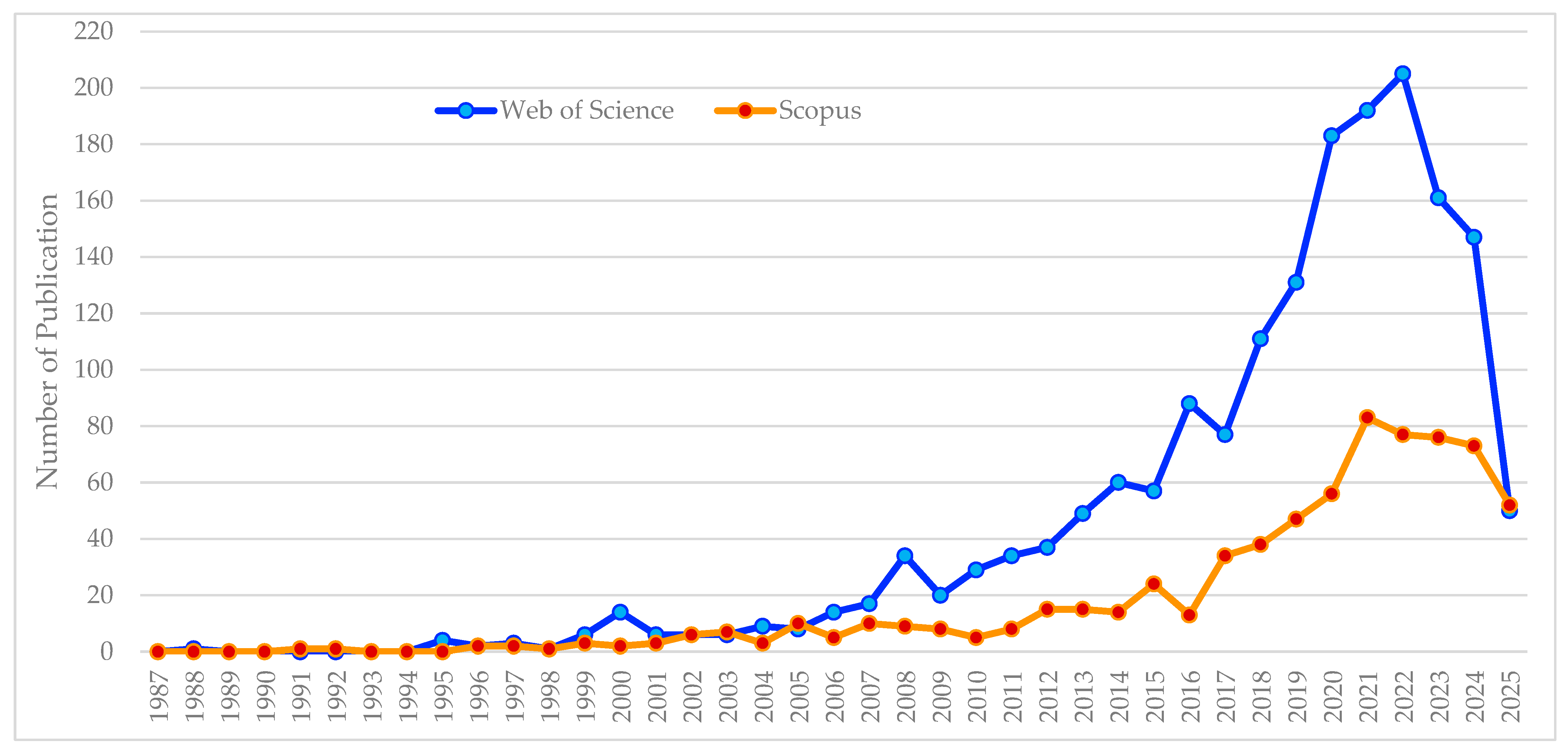
The results illustrate that journal articles constitute the majority of publications in the databases, accounting for 1985 publications (80.5%), highlighting the predominance of original study contributions in this field. Review articles account for the second-largest share, with 367 (14.9%) publications, indicating the considerable importance of knowledge synthesis. Book chapters (53; 2.1%), proceedings papers (39; 1.6%), and editorial materials (21; 0.9%) made up a minor proportion of the total output. Figure 2 shows the number of highly cited articles on mangrove sustainability in each year from 1987 to 2025 on WoS and Scopus.
More publications on mangrove sustainability are indexed on WoS than on Scopus. Both databases recorded their highest publication counts in recent years: 205 for WoS in 2022 and 83 for Scopus in 2021. Although there are numerous publications from 1987 to 1999, this period is considered less highly cited in the field of mangrove sustainability. Only three publications were recorded as highly cited from 1987 to 1994: one from WoS and two from Scopus. Highly cited publications on mangrove sustainability have steadily increased since 2000, with a significant acceleration in growth from 2015 to 2022. Although a decline was observed after 2022, it is not a true drop in scholarly output but rather a data artifact. Bibliometric databases like WoS and Scopus exhibit a significant lag in indexing, processing, and assigning publications to annual volumes, meaning that publications from May 2023 to 2025 are not yet fully reflected in the data. However, the overall volume remains high for the study period.
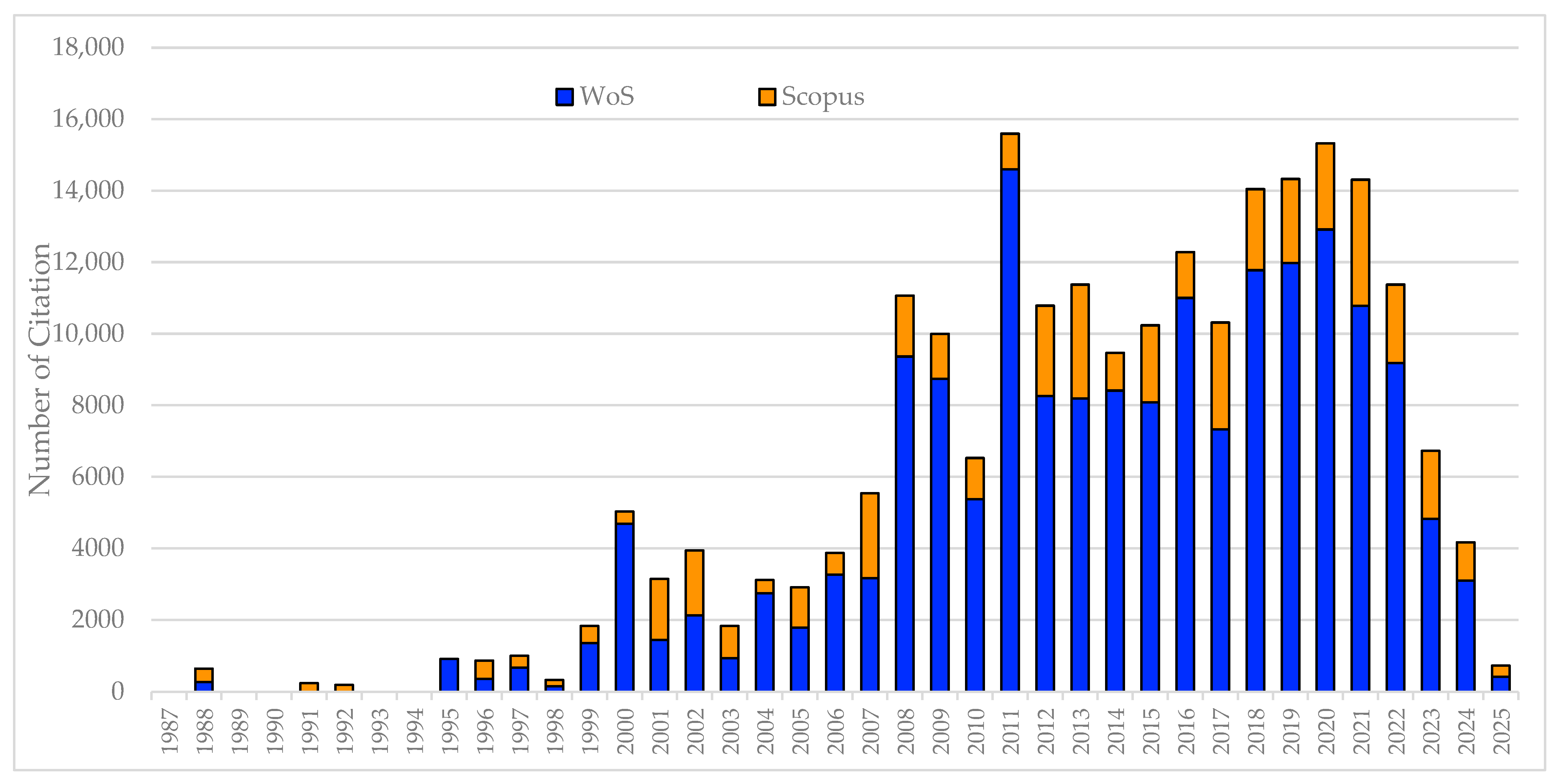
To map the field’s core material—its foundational studies and their impact trajectory—we analyzed the annual citation trends of highly cited publications (Figure 3). The WoS database was searched first, followed by Scopus. The duplication process revealed a 37.7% overlap between the two databases, with the Scopus records being largely redundant relative to those already found on WoS, resulting in fewer unique publications from Scopus. However, the result presented here accounts for the aggregated citation counts of all mangrove sustainability publications from 1987 to 2025. Publications from 1987 to 1994 received few or no citations because there were fewer highly cited publications during this period. The highest citation count in 2011 and 2020 was over 15,000 for both WoS and Scopus publications; these two years represent the highest WoS citation counts, 14,598 and 12,915, respectively. Citation counts on both WoS and Scopus increased gradually from 1995 to 2007 and accelerated substantially from 2008 to 2022; however, from 2023 to 2025, they decreased. Notably, over 2000 highly cited publications on mangrove sustainability were published in the first quarter of the 21st century.
Furthermore, a strong positive correlation was observed between annual publication count and citation numbers for the highly cited literature from both databases, indicating that increases in research output correspond to greater scholarly impact and discourse. Several key developments in the field have likely driven this link. First, the discovery of mangroves as key ‘blue carbon’ sinks created a vital research agenda, stimulating widespread study [15]. Second, major advancements in remote sensing technology enabled large-scale, long-term monitoring, generating new, high-impact data streams [5,21,31]. Finally, the rise in global policy initiatives and collaborative scientific programs explicitly framed mangrove conservation as a climate solution, mobilizing international research efforts and creating a focused, citable body of work [15,26].
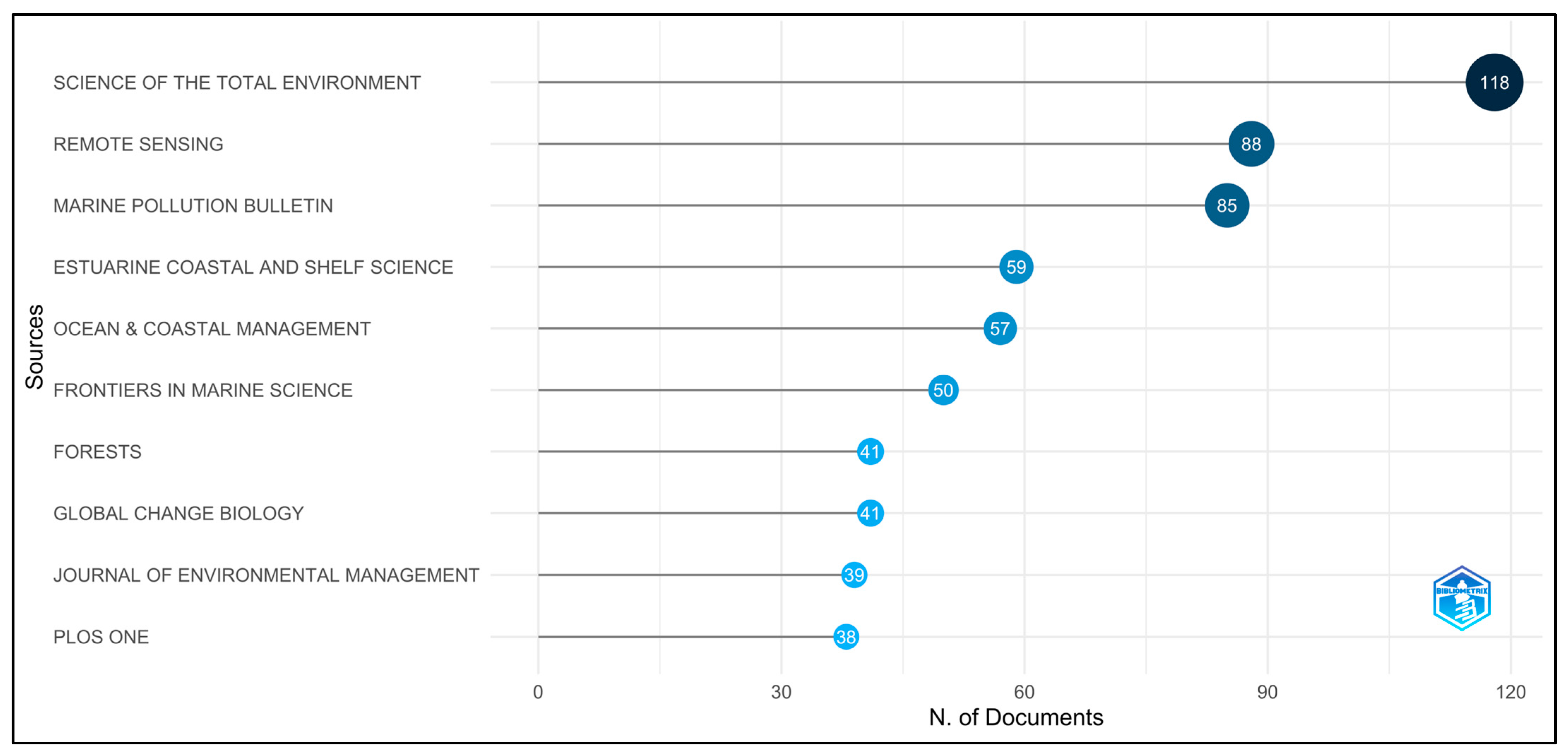
The publications in the leading journals (Figure 4) reveal key phases in the maturation of mangrove sustainability science. The Journal Science of the Total Environment is the leading journal in the field, with 118 highly cited publications in the database, all of which were abstracted and indexed in Scopus and WoS (SCIE). The journal has a CiteScore of 16.4 and is an open-access publication on Elsevier’s ScienceDirect platform. The second top journal is Remote Sensing, for which 88 highly cited publications were recoded, abstracted, and indexed in Scopus and WoS. This success is the result of playing a significant role in GIS and remote sensing for detecting spatiotemporal changes in mangrove ecosystems [31,32,34,79,80]. In 2023, all the top 10 journals were classified as Q1 or Q2, each with a CiteScore above 4.5. Five are published by Elsevier, two are published by MDPI, and the remaining three are published by Frontiers Media, Wiley, and PLOS, respectively. All are indexed in both WoS and Scopus, forming a platform for mangrove sustainability research that is science-based, technologically advanced, and field relevant.
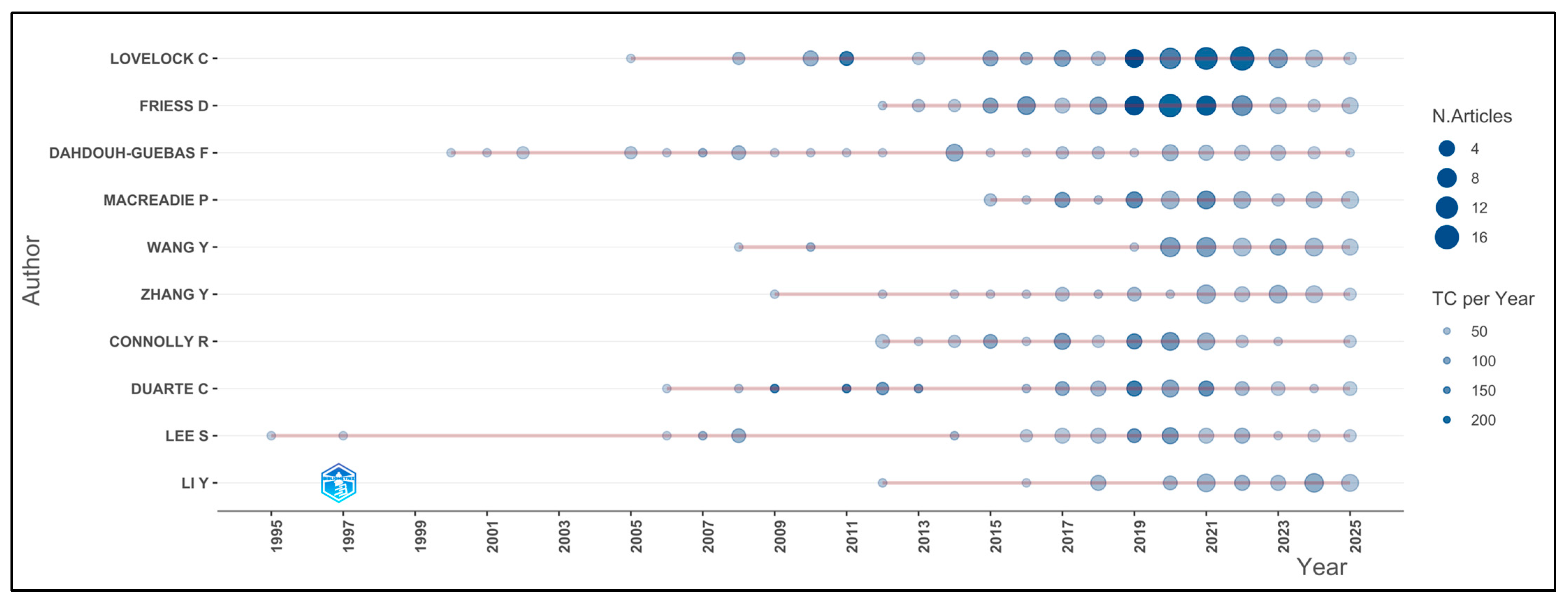
Figure 5 illustrates the top 10 authors, along with their quantities of articles and citations, based on the timescale generated by Biblioshiny’s “author production over time” analysis. These authors have contributed continuously to mangrove sustainability research since 2005, with the highest level of contribution occurring between 2019 and 2023. The years 2020 and 2021 saw the highest annual publication output, with each of the top ten researchers publishing over four articles per year and being cited more than 100 times during this period. The most articles and citations were recorded for C. Lovelock and D. Friess, as well as S. Lee and F. Dahdouh-Guebas, who are also noted as long-term, continuous contributors, with approximately 30 years of experience. Furthermore, among the top ten most prolific authors, 60% are affiliated with institutions in high-income countries (primarily in the Global North). In contrast, 40% are affiliated with institutions in low- and middle-income countries (generally associated with the Global South) as classified by the World Bank income categories [81].
The observed publication trends are directly linked to major international policy events and technological progress. Foundational reports like the Brundtland Report (1987) [37,82] and the Millennium Ecosystem Assessment (2001) [83] established the scientific value of ecosystem services [84], while subsequent accords such as the Paris Agreement (2015) [85] and the SDGs [86] set explicit climate and biodiversity targets, channeling research toward mangroves’ roles in mitigation and adaptation. Dedicated initiatives such as the UNEP Blue Carbon Report (2009) [87,88] and the Global Mangrove Alliance (2017) [48] provided focused frameworks and funding. High-impact events like the 2004 Indian Ocean tsunami [89,90] underscored mangroves’ protective services, triggering focused study [5,91,92]. Over the past three decades, advancements in remote sensing have provided the tools necessary for the large-scale monitoring demanded by these global agendas [27,93].

3.2. Thematic Evolution and Key Research Fronts

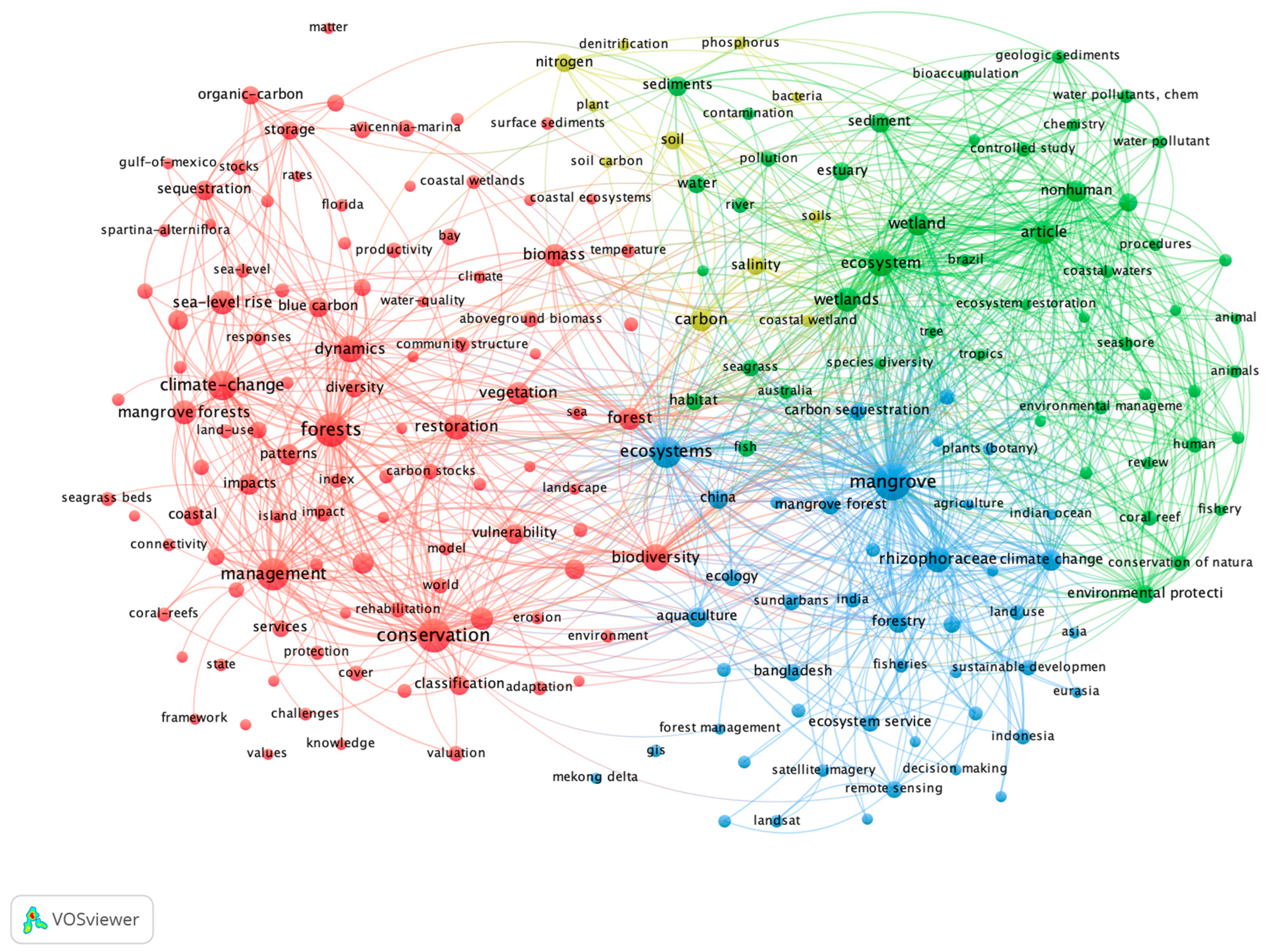
The co-occurrence of author keywords in bibliometrics analysis is crucial for effectively presenting research topics and providing insights into publications within databases [53,94,95]. In this context, the idea is that keyword co-occurrence enriches documents, supporting the notion that each research area can be characterized by a list of its most essential keywords [96]. Figure 6 shows the 212 keywords selected from a total of 5861 across the WoS and Scopus databases that met a minimum occurrence threshold of 20. These keywords reflect the corresponding scientists’ and researchers’ research publication priorities and directions within the selected discipline, along with global knowledge flow directions.
There are four clusters in Figure 6. The central keyword, “Mangrove” (427 occurrences, 192 links), and other frequently used keywords, ranked by total link strength, can be listed, such as “management (157)”, “conservation (196)”, and “ecosystem (201)”, which connect four thematic clusters. The blue cluster highlights spatial analysis, remote sensing, and monitoring, with keywords such as ‘land use’, ‘satellite imagery’, ‘gis’, and ‘Landsat’, indicating the use of geospatial technology to assess extent and change. The red cluster addresses conservation, management, and socioeconomics, linking ecological value to human action. Keywords such as ‘conservation’, ‘management’, ‘restoration’, ‘biomass’, ‘biodiversity’, ‘climate change’, and ‘values’ reflect research on sustainable use and human impacts. The green cluster encompasses ecology and ecosystem dynamics keywords such as ‘environmental protection’, ‘water pollution’, and ‘geological sediment’, with highlighted studies on species distribution and ecosystem health. The yellow cluster focuses on mangrove research and integrates core ecological processes with blue carbon and biogeochemistry (soil carbon, sediments, and salinity), with a research emphasis on mangroves’ roles in carbon sequestration and climate adaptation. However, the evolution of keyword priorities over the study period reflects the direct influence of major global policies, concepts, and scientific initiatives aimed at monitoring and identifying the many countries in the Global South facing mangrove-related issues [97,98]. This alignment began with major international events, newly introduced concepts, and technological advancements related to mangrove sustainability.

3.3. Influential Institutions and Research Networks

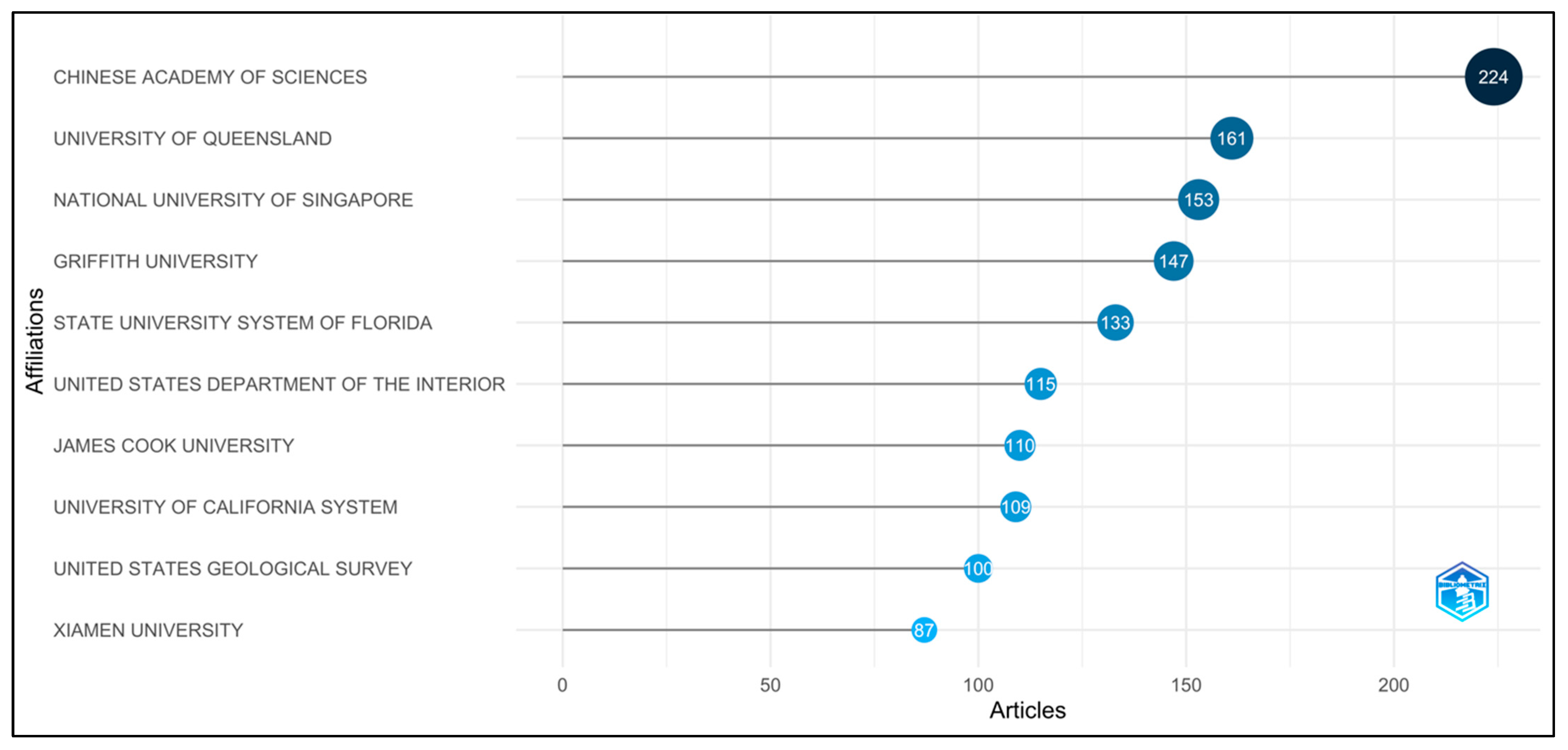
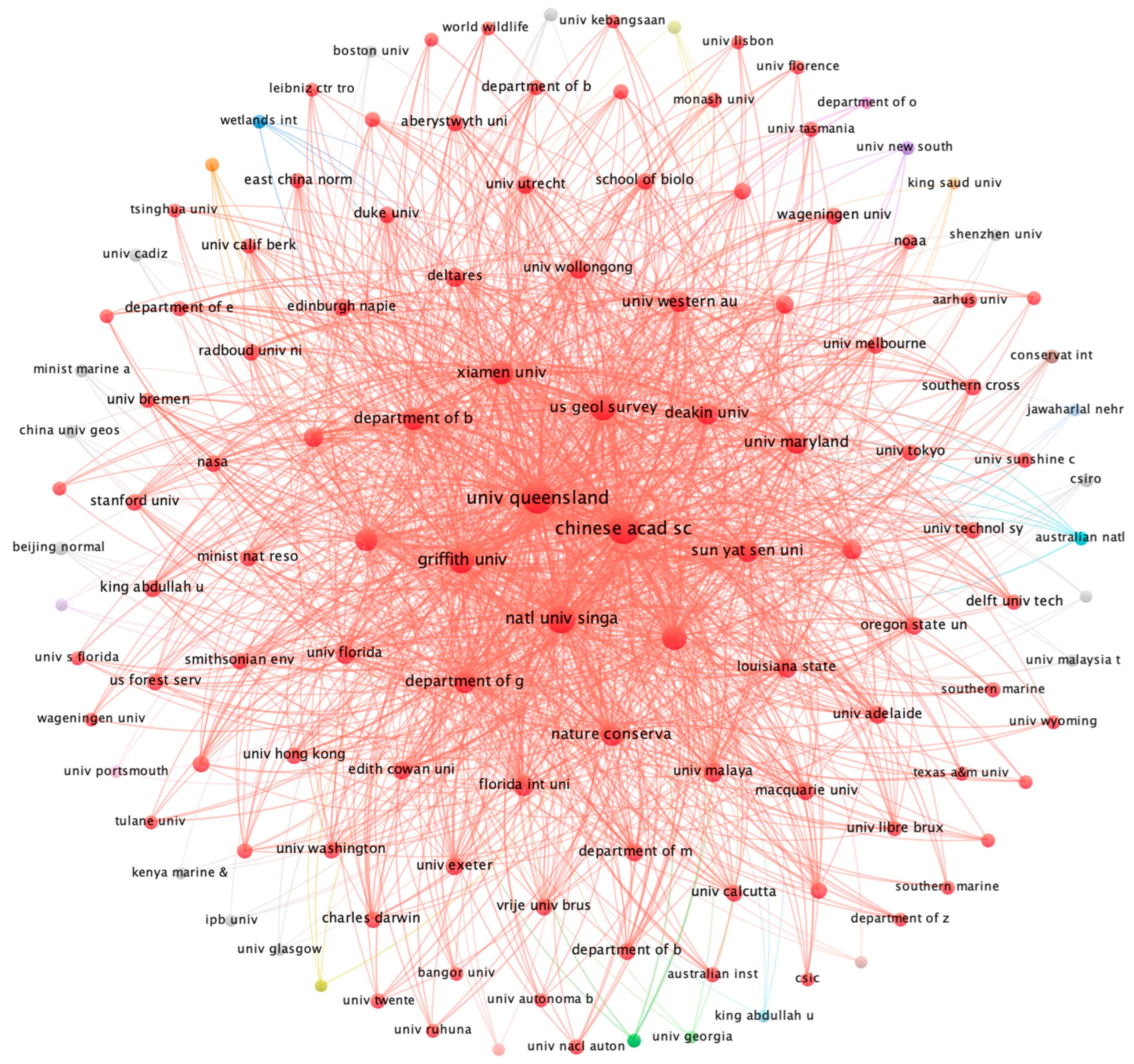
Universities and academic institutions serve as the primary hubs of knowledge generation and dissemination [99]. Figure 7 illustrates the most relevant affiliations among the leading universities and institutions in regard to mangrove sustainability publications. The Chinese Academy of Sciences and the University of Queensland (Australia) are the two most influential institutions, with 224 and 161 highly cited publications, respectively.
Although developed countries have become pioneers in knowledge generation and dissemination, in the field of mangrove sustainability publications, the Chinese Academy of Sciences has the most relevant affiliations. Two more of Asia’s institutes rank among the top ten affiliations, including the National University of Singapore and Xiamen University in China. The other top seven publication affiliations correspond to the USA (four) and Australia (three).
The co-authorship network (Figure 8) reveals not only the structure of scientific collaboration but also the thematic foundations of affiliations for highly cited publications in mangrove sustainability research drawn from the WoS and Scopus databases. It shows that the top ten affiliations have a strong relationship with publications on mangrove sustainability. This bibliographic coupling figure confirms that the main red cluster forms the core area and indicates that each of these affiliations constitutes a highly integrated global knowledge base on mangrove sustainability. The Chinese Academy of Sciences, the University of Queensland, the National University of Singapore, and Griffith University generated many references, with strong alignment across theoretical frameworks, methodologies, and research themes in regard to the field of mangrove sustainability.
Furthermore, this figure shows the institutional integration of closely convergent research and the dependence on key studies among the groups involved in mangrove and coastal sustainability studies.

3.4. Geographical and International Collaboration Patterns

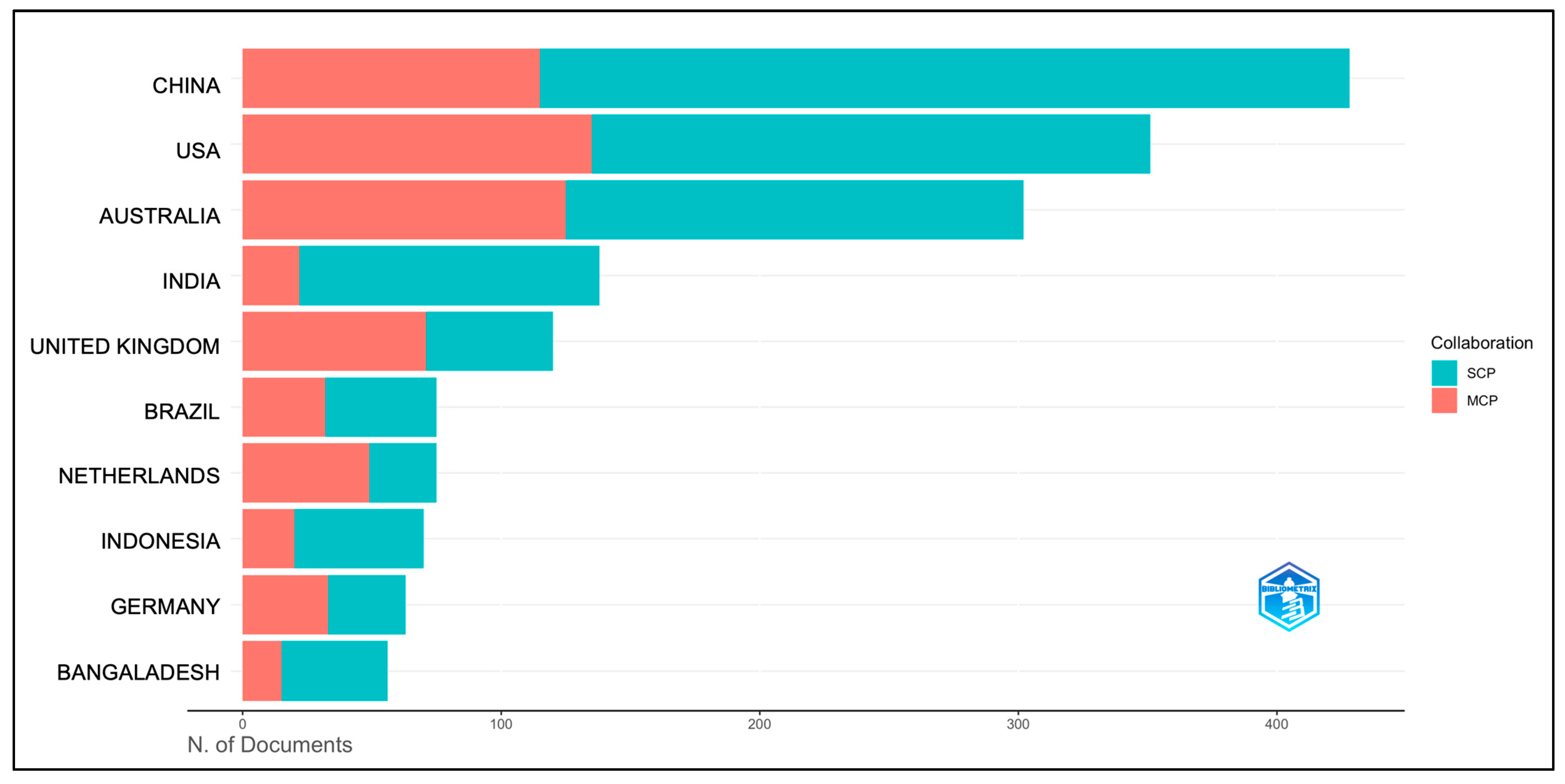
The geographical distribution of publications reveals the global origins of mangrove sustainability research, highlighting significant disparities in scholarly output across countries. Mangroves are globally distributed across tropical and subtropical coastlines [5,15]. Thus, most of the publications on mangrove studies are not recorded in these zones. Figure 9 illustrates the top 10 single- and multi-country publications by corresponding authors on mangrove sustainability research in the WoS and Scopus databases. As a country, the USA has the most publishers, with approximately 135. However, China leads in terms of on single- and multiple-country collaborative publishers, with over 428 of such publications. Australia ranks third in terms of publications on mangrove sustainability, with 302 contributions, both independently and through intranational collaboration.
The most important detail is that among the top ten countries, four are Asian: China, India, Indonesia, and Bangladesh. Among the highly cited publications, these four countries contributed approximately 700 out of the 2465 publications as single and collaborative publishers. This reveals a new trend regarding the Global South’s academic strength in Asia. A considerable number of Asian countries are becoming economically strong and have prioritized higher education to generate new scientific knowledge [15]. However, there are no countries in the African continent in the top ten single- and multiple-publication country list.
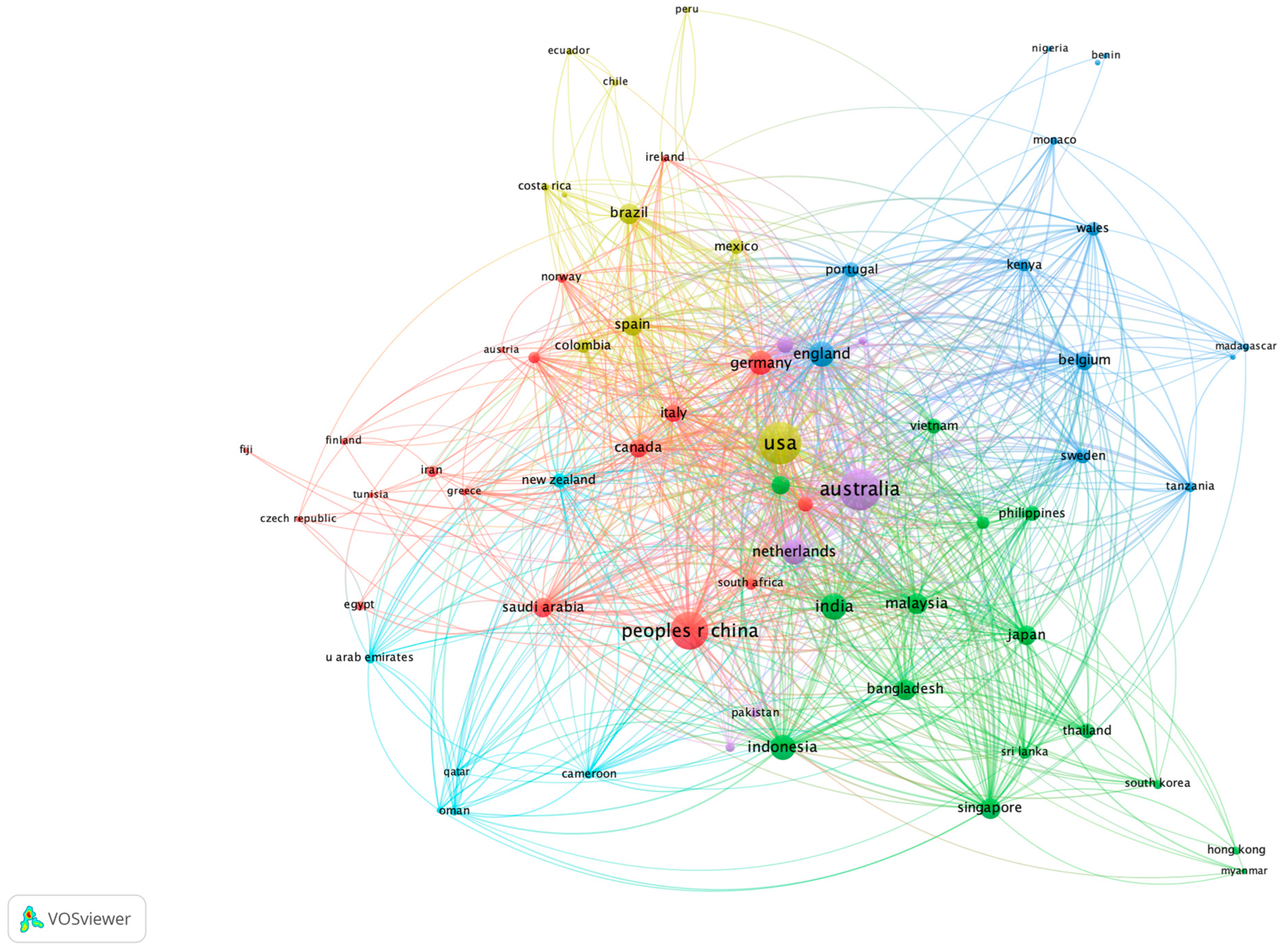
Figure 10 shows the co-authorship network among the top contributing countries, highlighting the collaborative landscape that supports the field’s core ideas. The USA, Australia, and the People’s Republic of China were among the top-ranked countries for the highest level of collaboration with other countries on mangrove studies. These three countries serve as central hubs within the global mangrove sustainability research network, with total link strengths of 1371, 1328, and 772, respectively, indicating their pivotal role in facilitating extensive international collaboration and knowledge exchange. England (734), Germany (568), the Netherlands (497), Spain (491), Indonesia (445), Malaysia (434), Singapore (404), Belgium (367), and India (361) have strong network links with other countries. The People’s Republic of China, Indonesia, Malaysia, India, and Singapore play leading roles in Asia and are closely associated with the USA, Australia, and European countries.
In Figure 10, the yellow, purple, and blue clusters combine the USA, Australia, Belgium, England, Brazil, and the Netherlands, highlighting strong international collaboration, particularly between Australia and many other Western countries. Furthermore, the red and green clusters represent collaborations among Asian countries, regionally led by China, as well as partnerships with leading countries outside the region. Canada, Italy, Germany, and Saudi Arabia have a significant number of publications written in collaboration with China. There are few countries representing Africa—even though this region accounts for approximately 10% of the world’s mangrove cover [5,91]—and most of the publications are linked to European countries. Saudi Arabia, Canada, Belgium, India, and Indonesia function as minor hubs in the field of mangrove sustainability publication.
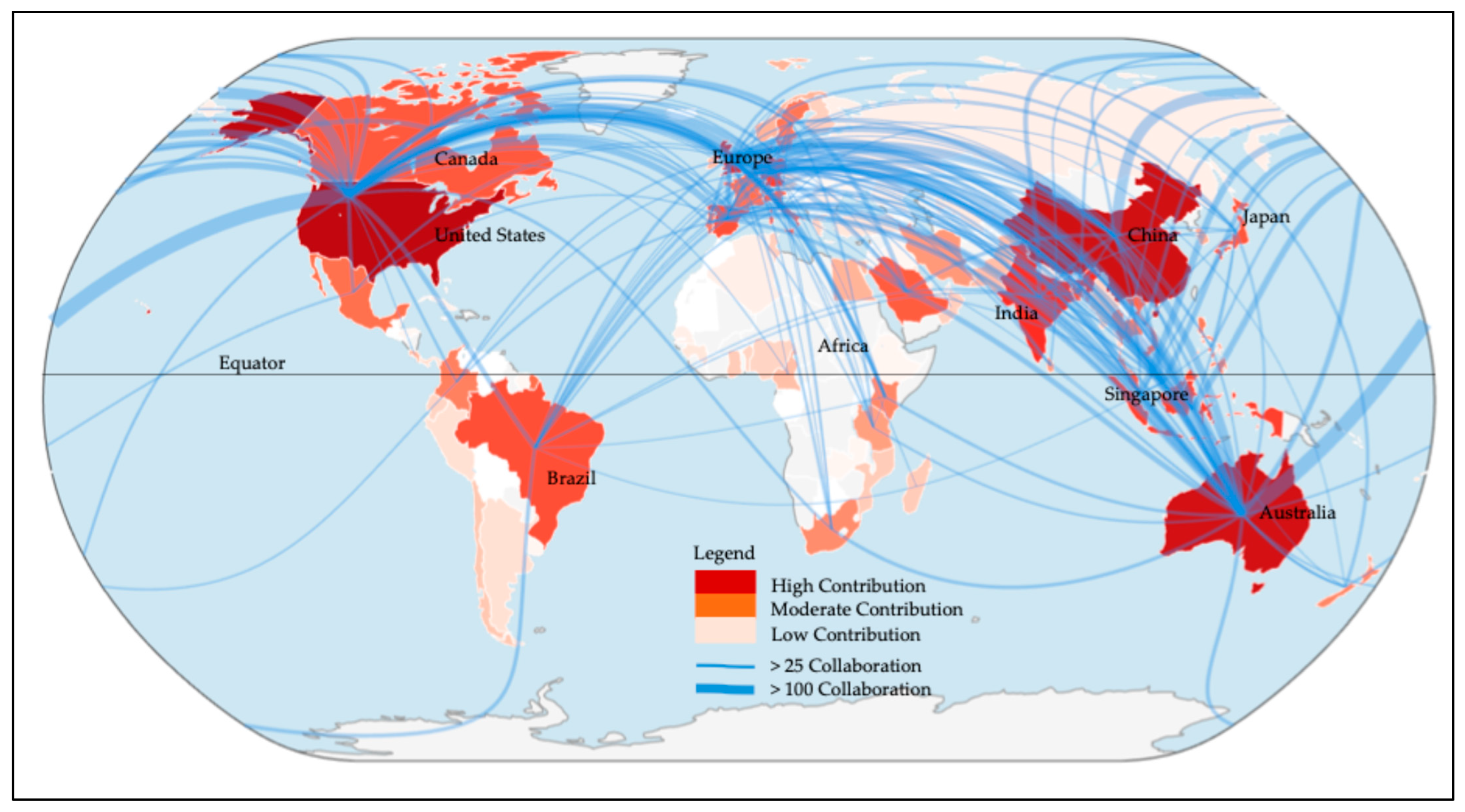
Figure 11 demonstrates that the top three most prolific countries in terms of contributions have strong social and geographical ties in their scientific communication networks on mangrove sustainability studies. The USA, China, and Australia have engaged in over 100 collaborations pertaining to highly cited publications, as the leaders of economic development in the USA and China have collaborated with developing nations to share knowledge on mangrove sustainability. Many Southeast Asian and Middle Eastern countries collaborate with China, the USA, and Australia in regard to their publication networks. Latin American countries are primarily linked with the USA and Europe.
Among the continents, the USA in North America, Brazil in South America, China in Asia, the United Kingdom in Europe, and Australia in Oceania lead, with the highest number of publications.
The global landscape of mangrove sustainability research exhibits distinct geographical and collaborative patterns, strongly influenced by mangrove distribution. Asia, which contains over 40% of the world’s mangroves, is a dominant knowledge producer, demonstrating a correlation between research output and proximity to the studied ecosystem [15,93]. However, output is highly concentrated in specific regions, notably Southeast Asia, Australia, and the USA. At the same time, mangrove-rich nations in Africa and South America exhibit disproportionately low publication rates, indicating a significant research capacity gap [9,15]. Many African countries face economic barriers due to high article-processing charges [15,98], publication bias, language barriers [99], limited collaboration with international communities [33], and historical underinvestment [15]. The international collaboration network is structured around central hubs, with the United States, China, and Australia serving as the most connected knowledge hubs, facilitating broad global links.
Secondary hubs exist in Western Europe, East Asia, and South Asia. This network operates through defined pathways, Global North–South partnerships for capacity building, strong regional intra-networks (e.g., within ASEAN and the EU), and an overarching hub-and-spoke model where central hubs connect numerous low-connected countries [81]. This concentrated structure accelerates knowledge dissemination and has significant implications. It risks allowing central hubs to set the global agenda disproportionately and may perpetuate academic dependencies. This dynamic is reinforced by a common trend in which researchers from the Global South publish through affiliations with northern host institutions, further centralizing knowledge production. Consequently, there is an urgent need to strengthen South–South collaboration and support the autonomous research capacity of mangrove-rich nations to foster a more equitable and responsive global science. Within this context, China, together with a few Asian countries, plays a significant role as a unique and hybrid superpower in the Global South, substantially contributing to the generation and dissemination of academic knowledge on mangrove sustainability.

4. Conclusions

This bibliometric analysis spanning nearly four decades (1987–2025) establishes a clear intellectual and structural map of mangrove sustainability by identifying its core themes, tracing their evolution over time, mapping global collaboration patterns, and distinguishing foundational knowledge from emerging research frontiers. It reveals a field defined by a feedback cycle in which global policy agendas, from the Brundtland Report to the SDGs and the Paris Agreement, drive research on threats, blue carbon, and ecosystem services, which in turn is enabled and validated by advances in remote sensing. This cycle has firmly embedded mangroves within the global climate agenda. However, a stark geographical imbalance persists: although mangroves are predominantly located in the global South (Southeast Asia, Latin America, and Africa), research leadership remains concentrated in the North (the USA, Australia, and Europe). Meanwhile, China acts as a key hybrid collaborator, bringing regions into the dominant hub-and-spoke model, which risks deepening dependencies rather than fostering autonomy. To ensure that science advances both global sustainability and local resilience, the field must actively foster equitable South–South collaboration and develop independent, place-based research capacity across all mangrove-rich regions. In terms of funding and capacity-building, parties should prioritize the creation of autonomous, local research hubs in mangrove-rich countries. The aim should be to shift from a northern-led, extraction-oriented model to an equitable, southern-empowered network where local science directly contributes to and guides effective, context-specific conservation and sustainable management.

Author Contributions

Conceptualization, M.J., T.M. and M.R.; methodology, M.J.; software, M.J. and M.R.; validation, M.J., T.M. and M.R.; formal analysis, M.J.; investigation, M.J.; resources, M.J.; data curation, M.J.; writing—original draft preparation, M.J.; writing-review and editing, T.M. and M.R.; visualization, M.J.; supervision, T.M. and M.R.; project administration, M.J. and T.M.; funding acquisition, T.M. All authors have read and agreed to the published version of the manuscript.

Funding

This research was funded by the Japan Science and Technology Agency through Support for Pioneering Research Initiated by the Next Generation (JST SPRING) (Grant Number—JPMJSP2124), and the University of Tsukuba, operating funds (Japan).

Data Availability Statement

Data were downloaded at the University of Tsukuba, Japan, from the WoS and Scopus databases according to the keywords ((mangrove*) AND (sustainab* OR conserv* OR manag* OR restor* OR rehabilitat* OR ecosystem service*)) on 20 December 2025, at 1.00 a.m., and on the same day at 03.00 p.m., respectively.

Acknowledgments

The authors express their sincere gratitude for the comprehensive training on VOSviewer and Bibliometric analysis in RStudio provided by the A-to-Z group. Additionally, we thank the University of Tsukuba for providing access to the Web of Science database, and we are grateful for the funding via the JST SPRING Scholarship. Special thanks are extended to our families for their unwavering patience, understanding, and support throughout this endeavor. We also extend our appreciation to Chaminda Mahanayakage for his insightful suggestions and steadfast encouragement.

Conflicts of Interest

The authors declare no conflict of interest.

Abbreviations

ASEANAssociation of Southeast Asian Nations
COVID-19Coronavirus Disease 2019
CPYCitations per Year
CVSComma-Separated Values
ESCIEmerging Sources Citation Index
EUEuropean Union
GISGeographic Information Systems
GMWGlobal Mangrove Watch
IPCCIntergovernmental Panel on Climate change
MFFMangroves for the Future
MGDsMillenium Development Goals
MDPIMultidisciplinary Digital Publishing Institute
NC Number of Citations
SCI-EScience Citation Index Expanded
SDGSustainable Development Goals
SSCISocial Science Citation Index
UNUnited Nations
UNEPUnited Nations Environment Program
USAUnited States of America
USGSUnited States Geological Survey
WoSCCWeb of Science Core Collection

References

  1. Alongi, D.M. Carbon sequestration in mangrove forests. Carbon Manag. 2012, 3, 313–322. [Google Scholar] [CrossRef]
  2. Jia, M.; Wang, Z.; Zhang, Y.; Mao, D.; Wang, C. Monitoring loss and recovery of mangrove forests during 42 years: The achievements of mangrove conservation in China. Int. J. Appl. Earth Obs. Geoinf. 2018, 73, 535–545. [Google Scholar] [CrossRef]
  3. Trialfhianty, T.I.; Muharram, F.W.; Suadi; Quinn, C.H.; Beger, M. Spatial multi-criteria analysis to capture socio-economic factors in mangrove conservation. Mar. Policy 2022, 141, 105094. [Google Scholar] [CrossRef]
  4. Thomas, N.; Bunting, P.; Lucas, R.; Hardy, A.; Rosenqvist, A.; Fatoyinbo, T. Mapping mangrove extent and change: A globally applicable approach. Remote Sens. 2018, 10, 1466. [Google Scholar] [CrossRef]
  5. Bunting, P.; Rosenqvist, A.; Hilarides, L.; Lucas, R.M.; Thomas, N.; Tadono, T.; Worthington, T.A.; Spalding, M.; Murray, N.J.; Rebelo, L.-M. Global Mangrove Extent Change 1996–2020: Global Mangrove Watch Version 3.0. Remote Sens. 2022, 14, 3657. [Google Scholar] [CrossRef]
  6. Alongi, D.M. Present state and future of the world’s mangrove forests. Environ. Conserv. 2002, 29, 331–349. [Google Scholar] [CrossRef]
  7. Friess, D.A.; Yando, E.S.; Abuchahla, G.M.O.; Adams, J.B.; Cannicci, S.; Canty, S.W.J.; Cavanaugh, K.C.; Connolly, R.M.; Cormier, N.; Dahdouh-Guebas, F.; et al. Mangroves give cause for conservation optimism, for now. Curr. Biol. 2020, 30, 135–158. [Google Scholar] [CrossRef]
  8. Duke, N.C.; Meynecke, J.-O.; Dittmann, S.; Ellison, A.M.; Anger, K.; Berger, U.; Cannicci, S.; Diele, K.; Ewel, K.C.; Field, C.D.; et al. A World Without Mangroves? Science 2007, 317, 41–42. Available online: https://serm.ulb.be/wp-content/uploads/2022/04/Dukeetal_2007_Science.pdf (accessed on 1 December 2025). [CrossRef]
  9. Richards, D.R.; Friess, D.A. Rates and drivers of mangrove deforestation in Southeast Asia, 2000–2012. Proc. Natl. Acad. Sci. USA 2016, 113, 344–349. [Google Scholar] [CrossRef]
  10. Barbier, E.B.; Hacker, S.D.; Kennedy, C.; Koch, E.W.; Stier, A.C.; Silliman, B.R. The value of estuarine and coastal ecosystem services. Ecol. Monogr. 2011, 81, 169–193. [Google Scholar] [CrossRef]
  11. Nagelkerken, I.; Blaber, S.J.M.; Bouillon, S.; Green, P.; Haywood, M.; Kirton, L.G.; Meynecke, J.-O.; Pawlik, J.; Penrose, H.M.; Sasekumar, A.; et al. The habitat function of mangroves for terrestrial and marine fauna: A review. Aquat. Bot. 2008, 89, 155–185. [Google Scholar] [CrossRef]
  12. Chamberland-Fontaine, S.; Estrada, G.T.; Heckadon-Moreno, S.; Hickey, G.M. Enhancing the Sustainable Management of Mangrove Forests: The Case of Punta Galeta, Panama. Trees For. People 2022, 8, 100274. [Google Scholar] [CrossRef]
  13. Primavera, J.H. Socio-economic impacts of shrimp culture. Aquac. Res. 1997, 28, 815–827. [Google Scholar] [CrossRef]
  14. Amri, A. Mangrove Plantation and Land Property Rights: A Lesson from the Coastal Area of South Sulawesi, Indonesia. Southeast Asian Stud. 2005, 43, 181–203. [Google Scholar]
  15. Friess, D.A.; Rogers, K.; Lovelock, C.E.; Krauss, K.W.; Hamilton, S.E.; Lee, S.Y.; Lucas, R.; Primavera, J.; Rajkaran, A.; Shi, S. The State of the World’s Mangrove Forests: Past, Present, and Future. Annu. Rev. Environ. Resour. 2019, 44, 89–115. [Google Scholar] [CrossRef]
  16. Godoy, M.D.P.; De Lacerda, L.D. Mangroves response to climate change: A review of recent findings on mangrove extension and distribution. An. Acad. Bras. Cienc. 2015, 87, 651–667. [Google Scholar] [CrossRef]
  17. Waycott, M.; Duarte, C.M.; Carruthers, T.J.B.; Orth, R.J.; Dennison, W.C.; Olyarnik, S.; Calladine, A.; Fourqurean, J.W.; Heck, K.L., Jr.; Hughes, A.R.; et al. Accelerating loss of seagrasses across the globe threatens coastal ecosystems. Proc. Natl. Acad. Sci. USA 2009, 106, 12377–12381. [Google Scholar] [CrossRef]
  18. Bayen, S. Occurrence, bioavailability and toxic effects of trace metals and organic contaminants in mangrove ecosystems: A review. Environ. Int. 2012, 48, 84–101. [Google Scholar] [CrossRef]
  19. Li, R.; Zhang, L.; Xue, B.; Wang, Y. Abundance and characteristics of microplastics in the mangrove sediment of the semi-enclosed Maowei Sea of the South China Sea: New implications for location, rhizosphere, and sediment compositions. Environ. Pollut. 2019, 244, 685–692. [Google Scholar] [CrossRef]
  20. Branoff, B.L. Quantifying the influence of urban land use on mangrove biology and ecology: A meta-analysis. Glob. Ecol. Biogeogr. 2017, 26, 473–483. [Google Scholar] [CrossRef]
  21. Brown, B.; Fadillah, R.; Nurdin, Y.; Soulsby, I.; Ahmad, R. Community-based ecological mangrove rehabilitation (CBEMR) in Indonesia: From small (12–33 ha) to medium scales (400 ha) with pathways for adoption at larger scales (>5000 ha). S.A.P.I.EN.S. (Surv. Perspect. Integr. Environ. Soc.) 2014, 7, 153–164. [Google Scholar]
  22. Hamilton, S.E.; Casey, D. Creation of a high spatio-temporal resolution global database of continuous mangrove forest cover for the 21st century (CGMFC-21). Glob. Ecol. Biogeogr. 2016, 25, 729–738. [Google Scholar] [CrossRef]
  23. Pendleton, L.; Donato, D.C.; Murray, B.C.; Crooks, S.; Jenkins, W.A.; Sifleet, S.; Craft, C.; Fourqurean, J.W.; Kauffman, J.B.; Marbà, N.; et al. Estimating Global ‘Blue Carbon’ Emissions from Conversion and Degradation of Vegetated Coastal Ecosystems. PLoS ONE 2012, 7, e43542. [Google Scholar] [CrossRef]
  24. Barbier, E.B. The protective service of mangrove ecosystems: A review of valuation methods. Mar. Pollut. Bull. 2016, 109, 676–681. [Google Scholar] [CrossRef]
  25. Polidoro, B.A.; Carpenter, K.E.; Collins, L.; Duke, N.C.; Ellison, A.M.; Ellison, J.C.; Farnsworth, E.J.; Fernando, E.S.; Kathiresan, K.; Koedam, N.E.; et al. The Loss of Species: Mangrove Extinction Risk and Geographic Areas of Global Concern. PLoS ONE 2010, 5, e10095. [Google Scholar] [CrossRef]
  26. Lee, S.Y.; Primavera, J.H.; Dahdouh-Guebas, F.; McKee, K.; Bosire, J.O.; Cannicci, S.; Diele, K.; Fromard, F.; Koedam, N.; Marchand, C.; et al. Ecological role and services of tropical mangrove ecosystems: A reassessment. Glob. Ecol. Biogeogr. 2014, 23, 726–743. [Google Scholar] [CrossRef]
  27. Kuenzer, C.; Bluemel, A.; Gebhardt, S.; Quoc, T.V.; Dech, S. Remote sensing of mangrove ecosystems: A review. Remote Sens. 2011, 3, 878–928. [Google Scholar] [CrossRef]
  28. Richards, J.A. Remote Sensing Digital Image Analysis; Springer: Cham, Switzerland, 2022; pp. 1–567. [Google Scholar] [CrossRef]
  29. Heumann, B.W. Satellite remote sensing of mangrove forests: Recent advances and future opportunities. Prog. Phys. Geogr. 2011, 35, 87–108. [Google Scholar] [CrossRef]
  30. Zimudzi, E.; Sanders, I.; Rollings, N.; Omlin, C.W. Remote sensing of mangroves using unmanned aerial vehicles: Current state and future directions. J. Spat. Sci. 2021, 66, 195–212. [Google Scholar] [CrossRef]
  31. He, Y.; Zhang, T.; You, S.; Luo, Z.; Zhang, X.; Zhang, R. Remote Sensing Monitoring of Mangrove Variation in Jiulong River Estuary of Fujian from 1978 to 2018. In Proceedings of the International Geoscience and Remote Sensing Symposium (IGARSS), Waikoloa, HI, USA, 26 September–2 October 2020; pp. 6654–6657. [Google Scholar] [CrossRef]
  32. Li, Z.; Zan, Q.; Yang, Q.; Zhu, D.; Chen, Y.; Yu, S. Remote estimation of mangrove aboveground carbon stock at the species level using a low-cost unmanned aerial vehicle system. Remote Sens. 2019, 11, 1018. [Google Scholar] [CrossRef]
  33. Chowdhury, M.S.; Hafsa, B. Multi-decadal land cover change analysis over Sundarbans Mangrove Forest of Bangladesh: A GIS and remote sensing-based approach. Glob. Ecol. Conserv. 2022, 37, e02151. [Google Scholar] [CrossRef]
  34. Dahdouh-Guebas, F.; Zetterström, T.; Rönnbäck, P.; Troell, M.; Wickramasinghe, A.; Koedam, N. Recent changes in land-use in the Pambala-Chilaw Lagoon complex (Sri Lanka) investigated using remote sensing and GIS: Conservation of mangroves vs. development of shrimp farming. Environ. Dev. Sustain. 2002, 4, 185–200. [Google Scholar] [CrossRef]
  35. Xia, Q.; He, T.T.; Qin, C.Z.; Xing, X.M.; Xiao, W. An Improved Submerged Mangrove Recognition Index-Based Method for Mapping Mangrove Forests by Removing the Disturbance of Tidal Dynamics and S. alterniflora. Remote Sens. 2022, 14, 3112. [Google Scholar] [CrossRef]
  36. Chen, R.; Zhang, R.; Zhao, C.; Wang, Z.; Jia, M. High-Resolution Mapping of Mangrove Species Height in Fujian Zhangjiangkou National Mangrove Nature Reserve Combined GF-2, GF-3, and UAV-LiDAR. Remote Sens. 2023, 15, 5645. [Google Scholar] [CrossRef]
  37. World Commission on Environment and Development. Our Common Future: “Report of the World Commission on Environment and Development”; Oxford University Press: Oxford, UK, 1987. [Google Scholar]
  38. Costanza, R.; d’Arge, R.; de Groot, R.; Farber, S.; Grasso, M.; Hannon, B.; Limburg, K.; Naeem, S.; O’Neill, R.V.; Paruelo, J.; et al. The value of the world’s ecosystem services and natural capital. Nature 1997, 387, 253–260. [Google Scholar] [CrossRef]
  39. Valiela, I.; Bowen, J.L.; York, J.K. Mangrove forests: One of the world’s threatened major tropical environments. Am. Inst. Biol. Sci. 2001, 51, 807–815. [Google Scholar] [CrossRef]
  40. Salouw, E.; Aji, K.B.; Tahalea, S.P. Cross-Border Tourism: What We Can Learn So Far from Eminent Scientific Publications Using Bibliometric Analysis. Int. J. Sustain. Dev. Plan. 2023, 18, 457–484. [Google Scholar] [CrossRef]
  41. Moral-Muñoz, J.A.; Herrera-Viedma, E.; Santisteban-Espejo, A.; Cobo, M.J. Software tools for conducting bibliometric analysis in science: An up-to-date review. Prof. Inf. 2020, 29, e290103. [Google Scholar] [CrossRef]
  42. Liu, Z.; Yin, Y.; Liu, W.; Dunford, M. Visualizing the intellectual structure and evolution of innovation systems research: A bibliometric analysis. Scientometrics 2015, 103, 135–158. [Google Scholar] [CrossRef]
  43. Donthu, N.; Kumar, S.; Mukherjee, D.; Pandey, N.; Lim, W.M. How to conduct a bibliometric analysis: An overview and guidelines. J. Bus. Res. 2021, 133, 285–296. [Google Scholar] [CrossRef]
  44. Fahimnia, B.; Sarkis, J.; Davarzani, H. Green supply chain management: A review and bibliometric analysis. Int. J. Prod. Econ. 2015, 162, 101–114. [Google Scholar] [CrossRef]
  45. Heersmink, R.; van den Hoven, J.; van Eck, N.J.; den van Berg, J. Bibliometric mapping of computer and information ethics. Ethics Inf. Technol. 2011, 13, 241–249. [Google Scholar] [CrossRef]
  46. Ho, Y.S.; Mukul, S.A. Publication performance and trends in mangrove forests: A bibliometric analysis. Sustainability 2021, 13, 12532. [Google Scholar] [CrossRef]
  47. Zupic, I.; Čater, T. Bibliometric Methods in Management and Organization. Organ. Res. Methods 2015, 18, 429–472. [Google Scholar] [CrossRef]
  48. Razali, S.M.; Radzi, M.A.; Marin, A.; Samdin, Z. A bibliometric analysis of tropical mangrove forest land use change from 2010 to 2020. Environ. Dev. Sustain. 2022, 24, 11530–11547. [Google Scholar] [CrossRef]
  49. Thattai, D.; Rangarajan, S.; Rajan, R.J.; Rajan, L.J. Mangrove Literature from 2000 to 2019—A Scientometric Analysis of Scopus Records. J. Scientometr. Res. 2022, 11, 458–468. [Google Scholar] [CrossRef]
  50. Yap, C.K.; Al-Mutairi, K.A. Mangrove ecosystems in Western Asia: A literature review of trends, conservation gaps, and sustainable management strategies. Front. For. Glob. Change 2025, 8, 1556158. [Google Scholar] [CrossRef]
  51. Zhang, X.; Estoque, R.C.; Xie, H.; Murayama, Y.; Ranagalage, M. Bibliometric analysis of highly cited articles on ecosystem services. PLoS ONE 2019, 14, e0210707. [Google Scholar] [CrossRef]
  52. Li, X.; Gong, S.; Shi, Q.; Fang, Y. A Review of Ecosystem Services Based on Bibliometric Analysis: Progress, Challenges, and Future Directions. Sustainability 2023, 15, 16277. [Google Scholar] [CrossRef]
  53. Aji, K.B.; Salouw, E.; Darajat, I.R.; Irdana, N.; Sushartami, W. Mangrove Ecotourism Research Progress, Trends, and Updates: A Bibliometric Analysis Based on the Scopus and Web of Science Databases. Geoj. Tour. Geosites 2024, 52, 49. [Google Scholar] [CrossRef]
  54. Badaluddin, N.A.; Lion, M.; Razali, S.M.; Khalit, S.I. Bibliometric Analysis of Global Trends on Soil Moisture Assessment Using the Remote Sensing Research Study from 2000 to 2020. Water Air Soil Pollut. 2021, 232, 271. [Google Scholar] [CrossRef]
  55. Wang, S.; Yan, D.; Wang, C.; Wu, L.; Huang, Y. A bibliometric analysis of blue carbon (1993–2023): Evolution of research hot topics and trends. Front. Mar. Sci. 2024, 11, 1430545. [Google Scholar] [CrossRef]
  56. Usman, M.; Ho, Y.S. A bibliometric study of the Fenton oxidation for soil and water remediation. J. Environ. Manag. 2020, 270, 110886. [Google Scholar] [CrossRef]
  57. Mao, N.; Wang, M.H.; Ho, Y.S. A bibliometric study of the trend in articles related to risk assessment published in Science Citation Index. Hum. Ecol. Risk Assess. 2010, 16, 801–824. [Google Scholar] [CrossRef]
  58. Small, H. Co-citation in the scientific literature: A new measure of the relationship between two documents. J. Am. Soc. Inf. Sci. 1973, 24, 265–269. [Google Scholar] [CrossRef]
  59. Shashi, S.; Centobelli, P.; Cerchione, R.; Merigo, J.M. Mapping Knowledge Management Research: A Bibliometric Overview. Technol. Econ. Dev. Econ. 2021, 28, 239–267. [Google Scholar] [CrossRef]
  60. Liao, H.; Tang, M.; Luo, L.; Li, C.; Chiclana, F.; Zeng, X.J. A bibliometric analysis and visualization of medical big data research. Sustainability 2018, 10, 166. [Google Scholar] [CrossRef]
  61. Alryalat, S.A.S.; Malkawi, L.W.; Momani, S.M. Comparing Bibliometric Analysis Using PubMed, Scopus, and Web of Science Databases. J. Vis. Exp. 2019, 2019, e58494. [Google Scholar] [CrossRef]
  62. Mongeon, P.; Paul-Hus, A. The journal coverage of Web of Science and Scopus: A comparative analysis. Scientometrics 2016, 106, 213–228. [Google Scholar] [CrossRef]
  63. Pranckutė, R. Web of Science (WoS) and Scopus: The titans of bibliographic information in today’s academic world. Publications 2021, 9, 12. [Google Scholar] [CrossRef]
  64. Taillardat, P.; Friess, D.A.; Lupascu, M. Mangrove blue carbon strategies for climate change mitigation are most effective at the national scale. Biol. Lett. 2018, 14, 20180251. [Google Scholar] [CrossRef]
  65. Murad, A.U.; Cetindamar, D.; Chakraborty, S. Big Data Analytics Capability and Sustainability: A Systematic Literature Review. In Proceedings of the 2023 Portland International Conference on Management of Engineering and Technology (PICMET), Monterrey, Mexico, 23–27 July 2023; pp. 1–8. [Google Scholar] [CrossRef]
  66. Tang, W.; Zheng, M.; Zhao, X.; Shi, J.; Yang, J.; Trettin, C.C. Big geospatial data analytics for global mangrove biomass and carbon estimation. Sustainability 2018, 10, 472. [Google Scholar] [CrossRef]
  67. de Oliveira, O.J.; da Silva, F.F.; Juliani, F.; Barbosa, L.C.F.M.; Nunhes, T.V. Bibliometric Method for Mapping the State-of-the-Art and Identifying Research Gaps and Trends in Literature: An Essential Instrument to Support the Development of Scientific Projects. In Scientometrics Recent Advances; IntechOpen: London, UK, 2019. [Google Scholar] [CrossRef]
  68. Alongi, D.M. Mangrove forests: Resilience, protection from tsunamis, and responses to global climate change. Estuar. Coast. Shelf Sci. 2008, 76, 1–13. [Google Scholar] [CrossRef]
  69. Mebratu, D. Sustainability and sustainable development: Historical and conceptual review. Environ. Impact Assess. Rev. 1998, 18, 493–520. [Google Scholar] [CrossRef]
  70. Kuhlman, T.; Farrington, J. What is sustainability. Sustainability 2010, 2, 3436–3448. [Google Scholar] [CrossRef]
  71. Kusmana, C. Integrated Sustainable Mangrove Forest Management. J. Nat. Resour. Environ. Manag. 2015, 5, 1–6. [Google Scholar] [CrossRef]
  72. Barbosa, F.G.; Schneck, F. Characteristics of the top-cited papers in species distribution predictive models. Ecol. Model. 2015, 313, 77–83. [Google Scholar] [CrossRef]
  73. Khan, M.A.; Ho, Y.S. Top-cited articles in environmental sciences: Merits and demerits of citation analysis. Sci. Total Environ. 2012, 431, 122–127. [Google Scholar] [CrossRef]
  74. Leydesdorff, L.; Bornmann, L.; Marx, W.; Milojević, S. Referenced Publication Years Spectroscopy applied to iMetrics: Scientometrics, Journal of Informetrics, and a relevant subset of JASIST. J. Informetr. 2014, 8, 162–174. [Google Scholar] [CrossRef]
  75. Bornmann, L.; Marx, W. Methods for the generation of normalized citation impact scores in bibliometrics: Which method best reflects the judgements of experts? J. Assn. Inf. Sci. Technol. 2015, 9, 408–418. [Google Scholar] [CrossRef]
  76. Aksnes, D.W.; Langfeldt, L.; Wouters, P. Citations, Citation Indicators, and Research Quality: An Overview of Basic Concepts and Theories. Sage Open 2019, 9, 215824401982957. [Google Scholar] [CrossRef]
  77. VOSviewer—Visualizing Scientific Landscapes. Available online: https://www.vosviewer.com/ (accessed on 1 December 2025).
  78. van Eck, N.J.; Waltman, L. Software survey: VOSviewer, a computer program for bibliometric mapping. Scientometrics 2010, 84, 523–538. [Google Scholar] [CrossRef]
  79. Xu, W.; Ouyang, X.; Xiao, X.; Hong, Y.; Zhang, Y.; Xu, Z.; Kwon, B.-O.; Yang, Z. A Review of Applying Drones and Remote Sensing Technology in Mangrove Ecology. Forests 2025, 16, 870. [Google Scholar] [CrossRef]
  80. Zheng, Y. Quantitative Assessment of Mangrove Conservation and Restoration in China by Remote Sensing-Based Ecological Footprint Accounting. Ph.D. Thesis, The University of Tokyo, Tokyo, Japan, 2021. Available online: https://repository.dl.itc.u-tokyo.ac.jp/record/2008614/files/A38631.pdf (accessed on 1 December 2025).
  81. Gaillard, J.F. North-South research partnership: Is collaboration possible between unequal partners? Knowl. Policy 1994, 7, 31–63. [Google Scholar] [CrossRef]
  82. “United Nations Conference on Environment and Development,” Agenda 21, United Nations, 1992. Available online: http://www.un.org/esa/sustdev/agenda21.htm (accessed on 1 December 2025).
  83. World Commission on Environment and Development. Ecosystems and Human Well-Being: Synthesis; Island Press: Washington, DC, USA, 2005. [Google Scholar]
  84. Gardner, R.C.; Okuno, E.; Pritchard, D. Ramsar Convention governance and processes at the international level. In Ramsar Wetlands: Values, Assessment, Management; Elsevier: Amsterdam, The Netherlands, 2023; pp. 37–67. [Google Scholar] [CrossRef]
  85. United Nations. “Paris Agreement,” Treaty Series, no. 54113. December 2015. Available online: https://unfccc.int/sites/default/files/resource/parisagreement_publication.pdf (accessed on 1 December 2025).
  86. United Nations. Global Sustainable Development Report 2015 Edition Advance Unedited Version; United Nations: New York, NY, USA, 2015. [Google Scholar]
  87. Nellemann, C. Blue Carbon: The Role of Healthy Oceans in Binding Carbon: A Rapid Response Assessment; GRID-Arendal: Arendal, Norway, 2009. [Google Scholar]
  88. Donato, D.C.; Kauffman, J.B.; Murdiyarso, D.; Kurnianto, S.; Stidham, M.; Kanninen, M. Mangroves among the most carbon-rich forests in the tropics. Nat. Geosci. 2011, 4, 293–297. [Google Scholar] [CrossRef]
  89. Dahdouh-Guebas, F.; Jayatissa, L.P.; Di Nitto, D.; Bosire, J.O.; Seen, D.L.; Koedam, N. How effective were mangroves as a defense against the recent tsunami? Curr. Biol. 2005, 15, R443–R447. [Google Scholar] [CrossRef]
  90. Danielsen, F.; Sørensen, M.K.; Olwig, M.F.; Selvam, V.; Parish, F.; Burgess, N.D.; Hiraishi, T.; Karunagaran, V.M.; Rasmussen, M.S.; Hansen, L.B.; et al. The Asian tsunami: A protective role for coastal vegetation. Science 2005, 310, 643. [Google Scholar] [CrossRef]
  91. Bunting, P.; Rosenqvist, A.; Lucas, R.M.; Rebelo, L.M.; Hilarides, L.; Thomas, N.; Hardy, A.; Itoh, T.; Shimada, M.; Finlayson, C.M. The Global Mangrove Watch—A New 2010 Global Baseline of Mangrove Extent. Remote Sens. 2018, 10, 1669. [Google Scholar] [CrossRef]
  92. Hughes, A.C.; Grumbine, R.E. The Kunming-Montreal Global Biodiversity Framework: What it does and does not do, and how to improve it. Front. Environ. Sci. 2023, 11, 1281536. [Google Scholar] [CrossRef]
  93. Giri, C.; Ochieng, E.; Tieszen, L.L.; Zhu, Z.; Singh, A.; Loveland, T.; Masek, J.; Duke, N. Status and distribution of mangrove forests of the world using earth observation satellite data. Glob. Ecol. Biogeogr. 2011, 20, 154–159. [Google Scholar] [CrossRef]
  94. Garrigos-Simon, F.J.; Narangajavana-Kaosiri, Y.; Narangajavana, Y. Quality in tourism literature: A bibliometric review. Sustainability 2019, 11, 3859. [Google Scholar] [CrossRef]
  95. Tran, T.V.; Reef, R.; Zhu, X. A Review of Spectral Indices for Mangrove Remote Sensing. Remote Sens. 2022, 14, 4868. [Google Scholar] [CrossRef]
  96. de la Hoz-Correa, A.; Muñoz-Leiva, F.; Bakucz, M. Past themes and future trends in medical tourism research: A co-word analysis. Tour. Manag. 2018, 65, 200–211. [Google Scholar] [CrossRef]
  97. Intergovernmental Oceanographic Commission; International Union for Conservation of Nature; Conservation International. Coastal Blue Carbon: Methods for Assessing Carbon Stocks and Emissions Factors in Mangroves, Tidal Salt Marshes, and Seagrass Meadows. 2019. Available online: https://unesdoc.unesco.org/ark:/48223/pf0000372868.locale=en (accessed on 9 December 2025).
  98. Bosire, J.O.; Kaino, J.J.; Olagoke, A.O.; Mwihaki, L.M.; Ogendi, G.M.; Kairo, J.G.; Berger, U.; Macharia, D. Mangroves in peril: Unprecedented degradation rates of peri-urban mangroves in Kenya. Biogeosciences 2013, 11, 2623–2634. [Google Scholar] [CrossRef]
  99. Brennan, J. Burton Clark’s the Higher Education System: Academic organization in cross-national perspective. Lond. Rev. Educ. 2010, 8, 229–237. [Google Scholar] [CrossRef]
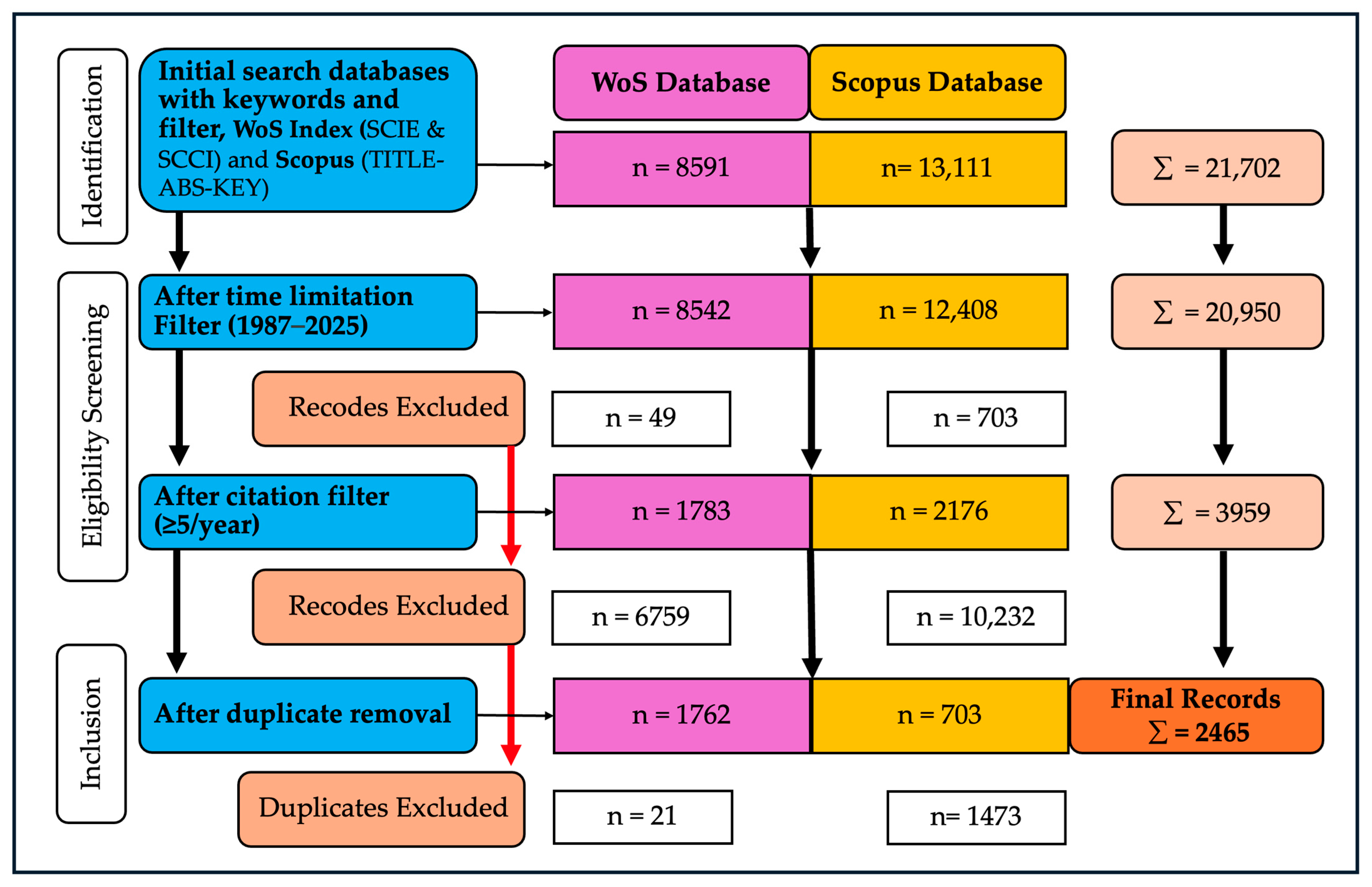
Figure 1. Flow diagram of the systematic literature screening process, showing studies included and excluded from the synthesis.
Forests 17 00240 g001
Figure 2. The number of highly cited articles involving mangrove sustainability on both WoS and Scopus by year from 1987 to 2025.
Forests 17 00240 g002
Figure 3. The number of citations related to mangrove sustainability research among the highly cited publications on WoS and Scopus from 1987 to 2025.
Forests 17 00240 g003
Figure 4. The number of publications on mangrove sustainability research in the top 10 journals, based on the highly cited publications index in WoS and Scopus (1987–2025).
Forests 17 00240 g004
Figure 5. Number of publications over time related to mangrove sustainability research for top-ten authors based on WoS and Scopus highly cited publications from 1987 to 2025 (N = Number, TC = Total Citations).
Forests 17 00240 g005
Figure 6. Co-occurrence network (author keywords) related to mangrove sustainability research in the WoS and Scopus databases based on highly cited publications from 1987 to 2025. Note: A minimum number of occurrences of 20 was applied to highly cited publications, resulting in 212 out of 5861 keywords being distributed among 4 clusters. Bubble size represents the total number of highly cited articles, line thickness indicates the strength of the linkage, and color represents the cluster to which each article belongs.
Forests 17 00240 g006
Figure 7. The most relevant affiliations in the field of mangrove sustainability studies from 1987 to 2025.
Forests 17 00240 g007
Figure 8. Bibliographic coupling of universities and institutions related to mangrove sustainability research on WoS and Scopus based on highly cited journals from 1987 to 2025. Note: A minimum number of occurrences of 10 was applied to highly cited publications, resulting in 128 institutions out of 8128. Bubble size represents the total number of highly cited publications, line thickness indicates the strength of the linkage, and color represents the cluster to which each article belongs.
Forests 17 00240 g008
Figure 9. Highly cited articles: The single- and multiple-country publications pertaining to corresponding authors regarding mangrove sustainability research in the WoS and Scopus databases obtained by accessing the highly cited publications from 1987 to 2025 (SCP—single-country publication; MCP—multiple-country publication).
Forests 17 00240 g009
Figure 10. Co-authorship network of the top countries regarding mangrove sustainability research from WoS and Scopus obtained by accessing the highly cited journals from 1987 to 2025. Note: A minimum number of occurrence value of 6 was applied to highly cited publications, resulting in 67 countries out of 118. Bubble size represents the total number of highly cited articles, line thickness indicates the strength of the linkage, and color represents the cluster to which each article belongs.
Forests 17 00240 g010
Figure 11. Social and geographical structure of the scientific communities for mangrove sustainability studies worldwide from 1987 to 2025 (the minimum number of mid-edge collaborations is 6 in Bibliometrix (biblioshiny)).
Forests 17 00240 g011
Disclaimer/Publisher’s Note: The statements, opinions and data contained in all publications are solely those of the individual author(s) and contributor(s) and not of MDPI and/or the editor(s). MDPI and/or the editor(s) disclaim responsibility for any injury to people or property resulting from any ideas, methods, instructions or products referred to in the content.