Forest Genetic Monitoring: A Global Review on Methods, Results and Consequences of Genetic Studies and Long-Term Monitoring Projects



Abstract
1. Introduction
- (i)
- How the genetic concepts were implemented into the management of forest genetic resources and consequently, developed forest genetic monitoring methods;
- (ii)
- How forest genetic monitoring methods were adapted to local or regional circumstances and prospects;
- (iii)
- Which kinds of genetic markers and phenotypic or morphological traits can be used for genetic monitoring of forest trees and populations;
- (iv)
- Which kinds of scientific evidence or practical consequences are summarized by publications in the context of forest genetic monitoring.
2. Materials and Methods
Literature Review Methodology
3. Results
3.1. A Review of Methods of Forest Genetic Monitoring Published and Referenced at the Global Level
- What principles and methods are used for the field work of FGM studies, such as the selection criteria and minimum size of monitoring plots, geographic location of the plot, morphological and phenological parameters measured on trees, etc.?
- What principles and methods are used in the molecular genetic analyses, specifically, the types of genetic markers?
- What principles and methods are used for measuring and recording the ecological factors and parameters, e.g., soil types, hydrology, exposure, or others?
- What principles and methods are used for the complex data evaluation (statistical evaluation, descriptive models, algorithms, AI-based software, etc.)?
3.1.1. Forest Genetic Monitoring
3.1.2. Design of Monitoring Units and Sampling Strategy
3.1.3. Morphological, Demographic, and Phenological Parameters
3.1.4. Genetic Marker Types and Applications
3.1.5. Genetic Metrics and Data Analysis
3.1.6. Integration of Environmental and Ecological Data
3.2. A Review of Results Published at the Global Level by Continents or by Geographic Regions
3.2.1. Europe & Turkey
3.2.2. North America (USA & Canada)
3.2.3. Central Asia
3.2.4. Countries in Tropical & Subtropical America
3.2.5. Countries in Tropical & Subtropical Africa
3.2.6. Countries in Tropical & Subtropical Asia
3.2.7. North and Sub-Saharan Africa
3.2.8. Australia & New-Zealand
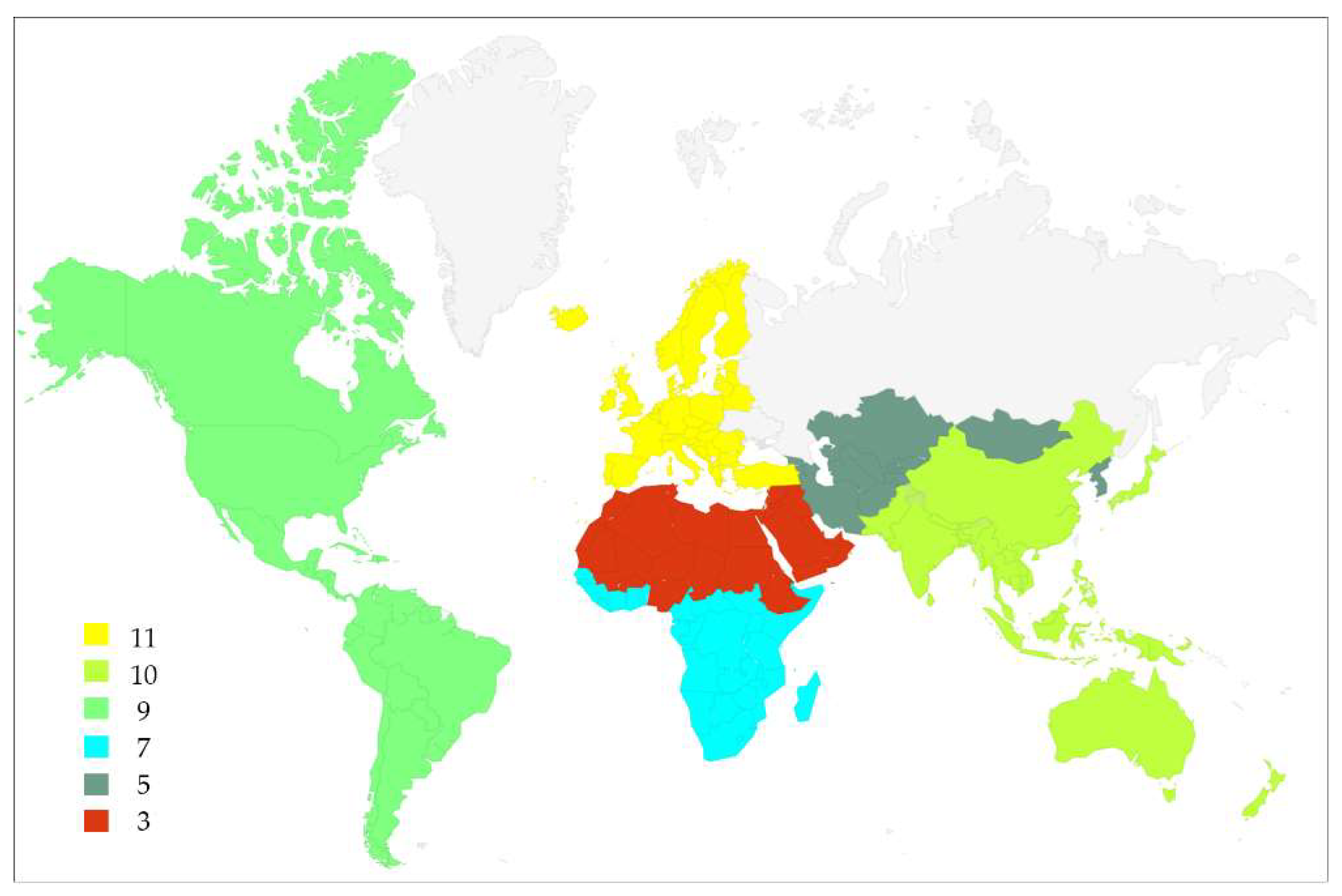
3.3. Comparison
4. Discussion and Conclusions
4.1. General Conclusions of the Publications Reviewed, at the Regional and Global Level
- Forest biodiversity threats, basically by forest fragmentation, urbanization, air pollution, invasive species, and, recently, by climate change effects;
- Policies that support general principles of the conservation of forest genetic resources have been laid down and implemented at the pan-European and national levels;
- National institutions and international platforms have existed, and simultaneously, FGRs have been actively managed, supporting the establishment and maintenance of FGM projects;
- Genetic background has been explored for the most important forest tree species;
- The forests, and in general the biodiversity in Europe, have been in focus for political, economic and social aspects, and consequently, have a great impact on the public.
4.2. Quo Vadis Forest Genetic Monitoring?
4.2.1. General Consequences of FGM Results
4.2.2. What Kind of Short-Term and Long-Term Prospects Could Be Realistic for FGM?
- In the short term (5–10 years), there will likely be no expansion or significant progress in forest genetic monitoring. Based on the conclusions of the latest FAO report, most member states have reported no intention of establishing FGM projects [54,55]. Actually, those will typically be restricted to just a few tree species and forest ecosystems in Europe, since FGM projects (sensu stricto) have been initiated only in some regions. However, the continuous processing and evaluation of the results of FGM projects have been intended.
- The social, economic, and scientific foundations and criteria discussed earlier are in place for the launch of new FGM projects in North America, Southeast Asia, and Australia. The question is whether a critical mass will be reached that shifts and accelerates the current situation and launches FGM activities similar to those reported in Europe.
- In the longer term, it is likely that FGM projects will expand not only in Europe but also in other regions, presumably in the case of pilot species, where extensive and complex research and monitoring activities may be launched in which FGM indicators and verifiers appear in part or in whole. Those may not necessarily use the term FGM, but can utilize or adapt the elements of FGM projects.
- Historically, the new methods and techniques in genomics were relevant driving forces in the conservation and management of forest genetic resources, which have expanded the baseline of genetic knowledge on forest tree species since the end of the 20th century. Innovation and development in genomics, especially the development of new molecular markers, such as RNA-based technologies (e.g., EPIC markers), can also support the launch of new FGM projects [59,60,61].
- An interesting alternative to the monitoring projects, which are generally time-consuming and expensive, could be the utilization of simulation models optimized for various ecological factors [141,142,143,144], and provided that the simulation models correlate or represent genetic composition and shifts. These initiatives, which are still in their early stages, may be able to replace FGM projects in many cases. FGM projects usually provide conclusions restricted to the monitored tree species and forest communities, and even their scientific outputs can be interpreted only for the given geographical region [141,142,143,144]. Additionally, the use of complementary or substitute simulation models can facilitate the adaptability of FGM project results, e.g., to other unmonitored tree species or forest communities. Nevertheless, the prospects and opportunities opened by artificial intelligence or AI-based models are also difficult to assess at this stage.
Supplementary Materials
Author Contributions
Funding
Data Availability Statement
Acknowledgments
Conflicts of Interest
References
- Cogbill, C.V. The effect of acid precipitation on tree growth in eastern North America. Water Air Soil. Pollut. 1977, 8, 89–93. [Google Scholar] [CrossRef]
- McLaughlin, S.B. Effects of Air Pollution on Forests: A Critical Review. J. Air Pollut. Control Assoc. 1985, 35, 512–534. [Google Scholar] [CrossRef]
- Schöpp, W.; Posch, M.; Mylona, S.; Johansson, M. Long-term development of acid deposition (1880–2030) in sensitive freshwater regions in Europe. Hydrol. Earth Syst. Sci. 2003, 7, 436–446. [Google Scholar] [CrossRef]
- Michel, A.; Haggenmüller, K.; Kirchner, T.; Prescher, A.-K.; Schwärzel, K.; Wohlgemuth, L. (Eds.) Forest Condition in Europe: The 2024 Assessment. In ICP Forests Technical Report Under the UNECE Convention on Long-Range Transboundary Air Pollution (Air Convention); Thünen Institute: Eberswalde, Germany, 2024; Volume 96, pp. 1–99. [Google Scholar] [CrossRef]
- de Vries, W.; Dobbertin, M.H.; Solberg, S.; van Dobben, H.F.; Scgaub, M. Impacts of acid deposition, ozone exposure and weather conditions on forest ecosystems in Europe: An overview. Plant Soil. 2014, 380, 1–45. [Google Scholar] [CrossRef]
- Boutin, S.; Haughland, D.L.; Schieck, J.; Herbers, J.; Bayne, E. New Approach to Forest Biodiversity Monitoring in Canada. For. Ecol. Manag. 2009, 258, S168–S175. [Google Scholar] [CrossRef]
- Pearman, P.B.; Broennimann, O.; Aavik, T.; Albayrak, T.; Alves, P.C.; Aravanopoulos, F.A.; Bertola, L.D.; Biedrzycka, A.; Buzan, E.; Cubric-Curik, V.; et al. Monitoring of species’ genetic diversity in Europe varies greatly and overlooks potential climate change impacts. Nat. Ecol. Evol. 2024, 8, 267–281. [Google Scholar] [CrossRef]
- Feng, G.; Mi, X.; Yan, H.; Li, F.Y.; Svenning, J.-C.; Ma, K. CForBio: A Network Monitoring Chinese Forest Biodiversity. Sci. Bull. 2016, 61, 1163–1170. [Google Scholar] [CrossRef]
- Fa, J.E.; Luiselli, L. Community Forests as Beacons of Conservation: Enabling Local Populations Monitor Their Biodiversity. Afr. J. Ecol. 2024, 62, e13179. [Google Scholar] [CrossRef]
- Konnert, M.; Maurer, W.; Degen, B.; Kätzel, R. Genetic monitoring in forests—Early warning and controlling system for ecosystemic changes. iForest Biogeosci. For. 2011, 4, 77–81. [Google Scholar] [CrossRef]
- Namkoong, G.; Boyle, T.; Gregorius, H.-R.; Joly, H.; Savolainen, O.; Ratnam, W.; Young, A. Testing Criteria and Indicators for Assessing the Sustainability of Forest Management: Genetic Criteria and Indicators; Working paper No. 10; CIFOR: Jakarta, Indonesia, 1996. [Google Scholar] [CrossRef][Green Version]
- Aravanopoulos, F.A. Conservation and Monitoring of Tree Genetic Resources in Temperate Forests. Curr. For. Rep. 2016, 2, 119–129. [Google Scholar] [CrossRef]
- Bajc, M.; Aravanopoulos, F.A.; Westergren, M.; Fussi, B.; Kavaliauskas, D.; Alizoti, P.; Kiourtsis, F.; Kraigher, H. (Eds.) Manual for Forest Genetic Monitoring; Silva Slovenica Publishing Centre: Ljubjana, Slovenia, 2020. [Google Scholar] [CrossRef]
- Mátyás, C.S.; Kramer, K. Climate change affects forest genetic resources: Consequences for adaptive management. Forg. Policy Brief. 2016, 10, 4. [Google Scholar] [CrossRef]
- Burley, J. Review of variation in slash pine (Pinus elliottii Engelm.) and loblolly pine (P. taeda L.) in relation to provenance research. Commonw. For. Rev. 1966, 45, 322–338. [Google Scholar]
- EI-Kassaby, Y.A.; Fashler, A.M.K.; Sziklai, O. Effect of family size and number on the accuracy and precision of the estimates of genetic parameters in the IUFRO Douglas-fir provenance-progeny trial. For. Ecol. Manag. 1987, 18, 35–48. [Google Scholar] [CrossRef]
- Park, A.; Rodgers, J.L. Tamm Review: Provenance trials in the service of forestry assisted migration: A review of North American field trials and experiments. For. Ecol. Manag. 2023, 537, 120854. [Google Scholar] [CrossRef]
- Ujvári Jármay, É.; Ujvári, F. Adaptation of Progenies of a Norway Spruce Provenance Test (IUFRO 1964/68) to Local Environment. Acta Silv. Lignaria Hung. 2006, 2, 47–55. [Google Scholar] [CrossRef]
- Liepe, K.J.; Rieckmann, C.A.; Mittelberg, H.S.; Liesebach, M. Phenotypic variation in 1100 provenances of Picea abies measured over 50 years on 33 German trial sites. Sci. Data 2024, 11, 854. [Google Scholar] [CrossRef]
- Kurjak, D.; Petrík, P.; Konôpková, A.R.; Gömöry, D.; Hajek, P.; Liesebach, M.; Leuschner, C.; Schuldt, B. Inter-provenance variability and phenotypic plasticity of wood and leaf traits related to hydraulic safety and efficiency in seven European beech (Fagus sylvatica L.) provenances differing in yield. Ann. For. Sci. 2024, 81, 11. [Google Scholar] [CrossRef]
- Thomas, B.R.; Stoehr, M.; Schreiber, S.G.; Benowicz, A.; Schroeder, W.R.; Soolanayakanahally, R.; Stefner, C.; Elliott, K.A.; Philis, N.; Rubal, N.; et al. Tree Improvement in Canada—Past, present and future, 2023 and beyond. For. Chron. 2024, 100, 59–87. [Google Scholar] [CrossRef]
- Bergmann, F. The allelic distribution at an acid phosphatase locus in Norway spruce (Picea abies) along similar climatic gradients. Theor. Appl. Genet. 1978, 52, 57–64. [Google Scholar] [CrossRef] [PubMed]
- EI-Kassaby, Y.A.; Sziklai, O. Genetic variation of allozyme and quantitative traits in a selected Douglas-fir (Pseudotsuga menziesii var. menziesii (Mirb.) Franco) population. Forest Ecol. Manag. 1982, 4, 115–126. [Google Scholar] [CrossRef]
- Tigerstedt, P.M.A. Studies on isozyme variation in marginal and central populations of Picea abies. Hereditas 1973, 75, 47–60. [Google Scholar] [CrossRef]
- Schulze, E.D. Air pollution and forest decline in a spruce (Picea abies) forest. Science 1989, 244, 776–783. [Google Scholar] [CrossRef] [PubMed]
- Peterson, D.L.; Arbaugh, M.J.; Robinson, L.J. Regional growth changes in ozone-stressed ponderosa pine (Pinus ponderosa) in the Sierra Nevada, California, USA. Holocene 1991, 1, 50–61. [Google Scholar] [CrossRef]
- Eager, C.; Adams, M. Decline of Red Spruce in the Eastern United States. In Ecology and Decline of Red Spruce in the Eastern United States; Eager, C., Adams, M., Eds.; Springer: New York, NY, USA, 1992; pp. 338–382. [Google Scholar]
- McLaughlin, S.B.; Kohut, R.J. The Effects of Atmospheric Deposition and Ozone on Carbon Allocation and Associated Physiological Processes in Red Spruce. In Ecology and Decline of Red Spruce in the Eastern United States; Eagar, C., Adams, M.B., Eds.; Ecological Studies; Springer: New York, NY, USA, 1992; Volume 96. [Google Scholar] [CrossRef]
- Cape, J.N. Direct damage to vegetation caused by acid rain and polluted cloud: Definition of critical levels for forest trees. Environ. Pollut. 1993, 82, 167–180. [Google Scholar] [CrossRef] [PubMed]
- Muzika, R.M.; Guyettea, R.P.; Zielonka, T.; Liebhold, A.M. The influence of O3, NO2 and SO2 on growth of Picea abies and Fagus sylvatica in the Carpathian Mountains. Environ. Pollut. 2004, 130, 65–71. [Google Scholar] [CrossRef]
- Savolainen, O.; Bokma, F.; Knürr, T.; Kärkkäinen, K.; Pyhäjärvi, T.; Wachowiak, W. Adaptation of forest trees to climate change. In Climate Change and Forest Genetic Diversity: Implications for Sustainable Forest Management in Europe; Koskela, J., Buck, A., Teissier, D.C., Eds.; Bioversity International: Rome, Italy, 2007; pp. 19–29. [Google Scholar]
- Schaberg, P.G.; DeHayes, D.H.; Hawley, G.J.; Nijensohn, S.E. Anthropogenic alterations of genetic diversity within tree populations: Implications for forest ecosystem resilience. For. Ecol. Manag. 2008, 256, 855–862. [Google Scholar] [CrossRef]
- Booy, G.; Hendriks, R.J.J.; Smulders, M.J.M.; Van Groenendael, J.M.; Vosman, B. Genetic Diversity and the Survival of Populations. Plant Biol. 2008, 2, 379–395. [Google Scholar] [CrossRef]
- Müller-Starck, G. Genetic differences between “tolerant” and “sensitive” beeches (Fagus sylvatica L.) in an environmentally stressed adult forest stand. Silvae Genet. 1985, 34, 241–247. Available online: https://www.thuenen.de/media/institute/fg/PDF/Silvae_Genetica/1985/Vol._34_Heft_6/34_6_241.pdf (accessed on 21 January 2026).
- Cortés, A.J.; Restrepo-Montoya, M.; Bedoya-Canas, L.E. Modern Strategies to Assess and Breed Forest Tree Adaptation to Changing Climate. Front. Plant Sci. 2020, 11, 583323. [Google Scholar] [CrossRef]
- Gailing, O.; Budde, K.B.; Leinemann, L.; Müller, M.; Wilhelmi, S. Genetic Connectivity and Local Adaptation of Forest Trees in the Face of Climate Change. In Ecological Connectivity of Forest Ecosystems; Lapin, K., Oettel, J., Braun, M., Konrad, H., Eds.; Springer: Cham, Switzerland, 2025; pp. 91–114. [Google Scholar] [CrossRef]
- Kremer, A.; Chen, J.; Lascoux, M. ‘Chimes of resilience’: What makes forest trees genetically resilient? New Phytol. 2025, 246, 1934–1951. [Google Scholar] [CrossRef]
- Ekblom, R.; Galindo, J. Applications of next generation sequencing in molecular ecology of non-model organisms. Heredity 2011, 107, 1–15. [Google Scholar] [CrossRef]
- Plomion, C.; Bartholomé, J.; Bouffier, L.; Brendel, O.; Cochard, H.; de Miguel, M.; Delzon, S.; Gonzalez-Martinez, S.C.; Guehl, J.-M.; Lagraulet, H.; et al. Understanding the genetic bases of adaptation to soil water deficit in trees through the examination of water use efficiency and cavitation resistance: Maritime pine as a case study. J. Plant Hydraul. 2016, 3, e008. [Google Scholar] [CrossRef]
- Sáenz-Romero, C.; Kremer, A.; Nagy, L.; Újvári-Jármay, É.; Ducousso, A.; Kóczán-Horváth, A.; Hansen, J.K.; Mátyás, C. Common garden comparisons confirm inherited differences in sensitivity to climate change between forest tree species. PeerJ 2019, 7, e6213. [Google Scholar] [CrossRef] [PubMed] [PubMed Central]
- Coşgun, S.; Gauthier, J.; Beffa, G.; Bonanomi, G.; Carraro, G.; Cherubini, P.; Gobet, E.; Leunda, M.; Manetti, M.; Mazza, G.; et al. Exploring the connection between climatic conditions and genetic properties of Abies alba Mill., including warm and summer-dry Mediterranean environments. Sci. Total Environ. 2025, 964, 178559. [Google Scholar] [CrossRef] [PubMed]
- Sustainable Forest Management. Official FAO Website. Available online: https://www.fao.org/forestry/sfm/en (accessed on 8 January 2026).
- Namkoong, G.; Boyle, T.; El-Kassaby, Y.A.; Palmberg-Lerche, C.; Eriksson, G.; Gregorius, H.R.; Joly, H.; Kremer, A.; Savolainen, O.; Wickneswari, R.; et al. Criteria and Indicators for Sustainable Forest Management: Assessment and Monitoring of Genetic Variation; Working paper: Forest genetic resources; FAO: Rome, Italy, 2002; 29p, Available online: https://www.cifor-icraf.org/knowledge/publication/1183/ (accessed on 21 January 2026).
- Kätzel, R.; Maurer, W.D.; Konnert, M.; Scholz, F. Genetisches Monitoring in Wäldern. Forst und. Holz 2005, 5, 179–183. [Google Scholar]
- Maurer, W.D. Genetisches Langzeitmonitoring im Wald unter Berücksichtigung von in-situ- und ex-situ-Erhaltungsmaßnahmen. In Analyse und Bewertung der Genetischen Vielfalt in der Land-, Forst- und Fischereiwirtschaft zur Ableitung von Entscheidungskriterien für Erhaltungsmaßnahmen; Begemann, F., Schröder, S., Weigend, S., Eds.; ZADI-Schriften zu genetischen Ressourcen: Bonn, Germany, 2005; Band 24; pp. 82–90. Available online: https://www.fawf.wald-rlp.de/fileadmin/website/fawfseiten/fawf/downloads/Mitteilungen/mit_59/45-56.pdf (accessed on 21 January 2026).
- Maurer, W.D. (Ed.) Anleitung zur Durchführung des Genetischen Monitorings für Bestandesbildende Baumarten; Expertengruppe “Genetisches Monitoring” von BLAG: Trippstadt, Germany, 2008; pp. 1–16. Available online: https://www.genres.de/fileadmin/SITE_MASTER/content/SITE_GENRES/downloads/docs/BLAG-FGR/gm-durchfuehrung_260308_1_.pdf (accessed on 21 January 2026).
- Degen, B.; Jolivet, C.; Liesebach, H.; Hoeltken, A.; Dounavi, A.; Fladung, F.; Naujoks, S.G.; Schneck, V.; Stauber, T.; Steiner, W.; et al. Abschlussbericht „Erfassung der Genetischen Struktur der Vogelkirsche (Prunus avium) als Grundlage für ein Genetisches Monitoring Wichtiger Waldbaumarten in Deutschland. 2008. Available online: https://www.yumpu.com/de/document/read/7699052/erfassung-genetischer-strukturen-wichtiger-waldbaumarten-ble (accessed on 21 January 2026).
- EUFORGEN—Genetic Monitoring. Available online: https://www.euforgen.org/about-us/how-we-operate/discussion-platforms-and-working-groups/genetic-monitoring (accessed on 15 November 2025).
- Aravanopoulos, F.A.; Tollefsrud, M.M.; Graudal, L.; Koskela, J.; Kätzel, R.; Soto, A.; Nagy, L.; Pilipovič, A.; Zhelev, P.; Božič, G.; et al. Development of genetic monitoring methods for genetic conservation units of forest trees in Europe. In European Forest Genetic Resources Programme (EUFORGEN); Bioversity International: Rome, Italy, 2015; pp. ii–xvi+1–46. ISBN 978-92-9255-030-1. [Google Scholar]
- European Commission. FORGER: Towards the Sustainable Management of Forest Genetic Resources in Europe (Project ID: 289119). CORDIS 2011–2015. Available online: https://cordis.europa.eu/project/id/289119 (accessed on 21 January 2026).
- Piotti, A.; Leonardi, S.; Buiteveld, J.; Geburek, T.; Gerber, S.; Kramer, K.; Vettori, C.; Vendramin, G.G. Comparison of pollen gene flow among four European beech (Fagus sylvatica L.) populations characterized by different management regimes. Heredity 2012, 108, 322–331. [Google Scholar] [CrossRef]
- Fussi, B.; Westergren, M.; Aravanopoulos, F.; Baier, R.; Kavaliauskas, D.; Finzgar, D.; Alizoti, P.; Bozic, G.; Avramidou, E.; Konnert, M.; et al. Forest genetic monitoring: An overview of concepts and definitions. Environ. Monit. Assess. 2016, 188, 493. [Google Scholar] [CrossRef]
- Fady, B.; Cottrell, J.; Ackzell, L.; Alía, R.; Muys, B.; Prada, A.; González-Martínez, S.C. Forests and global change: What can genetics contribute to the major forest management and policy challenges of the twenty-first century? Reg. Environ. Change 2023, 16, 927–939. [Google Scholar] [CrossRef]
- Blyth, C.; Lowe, A.; Blyth, S.T. Genetic diversity in trees and other woody plants. Chapter 5. In The Second Report on the State of the World’s Forest Genetic Resources; FAO Commission on Genetic Resources for Food and Agriculture Assessments: Rome, Italy, 2025; pp. 47–63. ISBN 978-92-5-139699-5. [Google Scholar]
- The State of the World’s Forest Genetic Resources. In Commission On Genetic Resources for Food and Agriculture, Food and Agriculture Organization of the United Nations; FAO: Rome, Italy, 2014; p. 277.
- Koskela, J.; Paradisi, D.; Trudic, B. Recommended actions for the future. Chapter 13. In The Second Report on the State of the World’s Forest Genetic Resources; FAO Commission on Genetic Resources for Food and Agriculture assessments: Rome, Italy, 2025; pp. 171–176. ISBN 978-92-5-139699-5. [Google Scholar]
- Schwartz, M.; Luikart, G.; Waples, R. Genetic Monitoring as a Promising Tool for Conservation and Management. Trends Ecol. Evol. 2007, 22, 25–33. [Google Scholar] [CrossRef] [PubMed]
- Wang, L.-L.; Li, Y.; Zheng, S.-S.; Kozlowski, G.; Xu, J.; Song, Y.-G. Complete Chloroplast Genomes of Four Oaks from the Section Cyclobalanopsis Improve the Phylogenetic Analysis and Understanding of Evolutionary Processes in the Genus Quercus. Genes 2024, 15, 230. [Google Scholar] [CrossRef]
- Yao, X.; Li, C.; Dick, C.W. Exon-primed intron-crossing (EPIC) markers for evolutionary studies of Ficus and other taxa in the fig family (Moraceae). Appl. Plant Sci. 2013, 1, 1300037. [Google Scholar] [CrossRef] [PubMed] [PubMed Central]
- Zimmer, E.A.; Wen, J. Using nuclear gene data for plant phylogenetics: Progress and prospects. Mol. Phylogenetics Evol. 2012, 65, 774–785. [Google Scholar] [CrossRef] [PubMed]
- Yao, X.; Liu, L.; Yan, M.; Li, D.; Zhong, C.; Huang, H. Exon primed intron-crossing (EPIC) markers reveal natural hybridization and introgression in Actinidia (Actinidiaceae) with sympatric distribution. Biochem. Syst. Ecol. 2015, 59, 246–255. [Google Scholar] [CrossRef]
- Zanetto, A.; Kremer, G.; Müller-Starck, H.H. Hattemer, Inheritance of Isozymes in Pedunculate Oak (Quercus robur L.). J. Hered. 1996, 87, 364–370. [Google Scholar] [CrossRef]
- Gömöry, D.; Yakovlev, I.; Zhelev, P.; Jedináková, J.; Paule, L. Genetic differentiation of oak populations within the Quercus robur/Quercus petraea complex in Central and Eastern Europe. Heredity 2001, 86, 557–563. [Google Scholar] [CrossRef] [PubMed]
- Müller-Starck, G.; Starke, R. Inheritance of Isoenzymes in European Beech (Fagus sylvatica L.). J. Hered. 1993, 84, 291–296. [Google Scholar] [CrossRef][Green Version]
- Hosius, B.; Bergmann, F.; Konnert, M.; Henkel, W. A concept for seed orchards based on isoenzyme gene markers. For. Ecol. Manag. 2000, 131, 143–152. [Google Scholar] [CrossRef]
- Shaw, K.; Stritch, L.; Rivers, M.; Roy, S.; Wilson, J.; Darbyshire, I. Forest Genetic Resources Conservation and Management: Overview and Principles; Food and Agriculture Organization of the United Nations: Rome, Italy, 2014. [Google Scholar]
- Weising, K.; Gardner, R.C. A set of conserved PCR primers for the analysis of simple sequence repeat polymorphisms in chloroplast genomes of dicotyledonous angiosperms. Genome 1999, 42, 9–19. [Google Scholar] [CrossRef]
- Provan, J.; Powell, W.; Hollingsworth, P.M. Chloroplast microsatellites: New tools for studies in plant ecology and evolution. Trends Ecol. Evol. 2001, 16, 142–147. [Google Scholar] [CrossRef] [PubMed]
- Sebastiani, F.; Carnevale, S.; Vendramin, G.G. A new set of mono- and dinucleotide chloroplast microsatellites in Fagaceae. Mol. Ecol. Notes 2004, 4, 259–261. [Google Scholar] [CrossRef]
- Steinkellner, H.; Fluch, S.; Turetschek, E.; Lexer, C.; Streiff, R.; Kremer, A.; Burg, K.; Glössl, J. Identification and characterization of (GA/CT)n- microsatellite loci from Quercus petraea. Plant Mol. Biol. 1997, 33, 1093–1096. [Google Scholar] [CrossRef] [PubMed]
- Kampfer, S.; Lexer, C.; Glössl, J.; Steinkellner, H. Characterization of (GA)n Microsatellite Loci from Quercus robur. Hereditas 1998, 129, 183–186. [Google Scholar] [CrossRef]
- Pastorelli, R.; Smulders, J.M.J.; Van’t Westende, W.P.C.; Vosman, B.; Giannini, R.; Vettori, C.; Vendramin, G.G. Characterization of microsatellite markers in Fagus sylvatica L. and Fagus orientalis Lipsky. Mol. Ecol. Notes 2003, 3, 76–78. [Google Scholar] [CrossRef]
- Sebastiani, F.; Pinzauti, F.; Kujala, S.T.; González-Martínez, S.C.; Vendramin, G.G. Novel polymorphic nuclear microsatellite markers for Pinus sylvestris L. Conserv. Genet. Resour. 2012, 4, 231–234. [Google Scholar] [CrossRef]
- Durand, J.; Bodénès, C.; Chancerel, E.; Frigerio, J.-M.; Vendramin, G.; Sebastiani, F.; Buonamici, A.; Gailing, O.; Koelewijn, H.-P.; Villani, F.; et al. A fast and cost-effective approach to develop and map EST-SSR markers: Oak as a case study. BMC Genom. 2010, 11, 570. [Google Scholar] [CrossRef]
- Fluch, S.; Burg, A.; Kopecky, D.; Homolka, A.; Spiess, N.; Vendramin, G.G. Characterization of variable EST SSR markers for Norway spruce (Picea abies L.). BMC Res. Notes 2011, 4, 401. [Google Scholar] [CrossRef] [PubMed Central]
- Burger, K.; Müller, M.; Gailing, O. Characterization of EST-SSRs for European beech (Fagus sylvatica L.) and their transferability to Fagus orientalis Lipsky, Castanea dentata Bork., and Quercus rubra L. Silvae Genet. 2018, 67, 127–132. [Google Scholar] [CrossRef]
- López-Aljorna, A.; Bueno, M.Á.; Aguinagalde, I.; Martín, J.P. Fingerprinting and genetic variability in cork oak (Quercus suber L.) elite trees using ISSR and SSR markers. Ann. For. Sci. 2007, 64, 773–779. Available online: https://hal.science/hal-00884129v1 (accessed on 15 November 2025). [CrossRef]
- Coutinho, J.P.; Carvalho, A.; Lima-Brito, J. Genetic diversity assessment and estimation of phylogenetic relationships among 26 Fagaceae species using ISSRs. Biochem. Syst. Ecol. 2014, 54, 247–256. [Google Scholar] [CrossRef]
- Sboeva, Y.; Chertov, N.; Nechaeva, Y.; Valeeva, A.; Boronnikova, S.; Kalendar, R. Genetic Diversity, Structure, and Differentiation of Pinus sylvestris L. Populations in the East European Plain and the Middle Urals. Forests 2022, 13, 1798. [Google Scholar] [CrossRef]
- Gallois, A.; Audran, J.; Burrus, M. Assessment of genetic relationships and population discrimination among Fagus sylvatica L. by RAPD. Theor. Appl. Genet. 1998, 97, 211–219. [Google Scholar] [CrossRef]
- Bellusci, G.; Braglia, R.; Di Marco, G.; Redi, E.L.; Canini, A.; Gismondi, A. Assessing molecular diversity among 87 species of the Quercus L. genus by RAPD markers. Genet. Resour. Crop Evol. 2023, 70, 2683–2694. [Google Scholar] [CrossRef]
- Jump, A.S.; Peñuelas, J. Extensive spatial genetic structure revealed by AFLP but not SSR molecular markers in the wind-pollinated tree, Fagus sylvatica. Mol. Ecol. 2007, 16, 925–936. [Google Scholar] [CrossRef] [PubMed]
- Pluess, A.R.; Weber, P. Drought-Adaptation Potential in Fagus sylvatica: Linking Moisture Availability with Genetic Diversity and Dendrochronology. PLoS ONE 2012, 7, e33636. [Google Scholar] [CrossRef]
- Lepoittevin, C.; Bodénès, C.; Chancerel, E.; Villate, L.; Lang, T.; Lesur, I.; Boury, C.; Ehrenmann, F.; Zelenica, D.; Boland, A.; et al. Single-nucleotide polymorphism discovery and validation in high-density SNP array for genetic analysis in European white oaks. Mol. Ecol. Resour. 2015, 15, 1446–1459. [Google Scholar] [CrossRef]
- Guilbaud, R.; Biselli, C.; Buiteveld, J.; Cattivelli, L.; Copini, P.; Dowkiw, A.; Esselink, D.; Fricano, A.; Guerin, V.; Jorge, V.; et al. Development of a new tool (4TREE) for adapted genome selection in European tree species. In GenTree; HAL: Avignon, France, 2020; (hal-02928391); Available online: https://hal.science/hal-02928391 (accessed on 15 November 2025).
- Estravis Barcala, M.; van der Valk, T.; Chen, Z.; Funda, T.; Chaudhary, R.; Klingberg, A.; Fundova, I.; Suontama, M.; Hallingbäck, H.; Bernhardsson, C.; et al. Whole-genome resequencing facilitates the development of a 50K single nucleotide polymorphism genotyping array for Scots pine (Pinus sylvestris L.) and its transferability to other pine species. Plant J. 2024, 117, 944–955. [Google Scholar] [CrossRef] [PubMed]
- Cuervo-Alarcon, L.; Arend, M.; Müller, M.; Sperisen, C.; Finkeldey, R.; Krutovsky, K.V. A candidate gene association analysis identifies SNPs potentially involved in drought tolerance in European beech (Fagus sylvatica L.). Sci. Rep. 2021, 11, 2386. [Google Scholar] [CrossRef]
- Postolache, D.; Oddou-Muratorio, S.; Vajana, E.; Bagnoli, F.; Guichoux, E.; Hampe, A.; Le Provost, G.; Lesur, I.; Popescu, F.; Scotti, I.; et al. Genetic signatures of divergent selection in European beech (Fagus sylvatica L.) are associated with the variation in temperature and precipitation across its distribution range. Mol. Ecol. 2021, 30, 5029–5047. [Google Scholar] [CrossRef] [PubMed]
- Cosín-Roldán, J.; de Heredia, U.L.; Soto, Á. Highly informative SNP markers for routine individual identification and certification of forest reproductive material in Quercus ilex and Q. suber and their hybrids. For. Ecol. Manag. 2023, 544, 121243. [Google Scholar] [CrossRef]
- Parchman, T.L.; Jahner, J.P.; Uckele, K.A.; Galland, L.M.; Eckert, A.J. RADseq approaches and applications for forest tree genetics. Tree Genet. Genomes 2018, 14, 39. [Google Scholar] [CrossRef]
- Ulaszewski, B.; Meger, J.; Burczyk, J. Comparative Analysis of SNP Discovery and Genotyping in Fagus sylvatica L. and Quercus robur L. Using RADseq, GBS, and ddRAD Methods. Forests 2021, 12, 222. [Google Scholar] [CrossRef]
- Degen, B.; Blanc-Jolivet, C.; Bakhtina, S.; Ianbaev, R.; Yanbaev, Y.; Mader, M.; Nürnberg, S.; Schröder, H. Applying targeted genotyping by sequencing with a new set of nuclear and plastid SNP and indel loci for Quercus robur and Quercus petraea. Conserv. Genet. Resour. 2021, 13, 345–347. [Google Scholar] [CrossRef]
- Tóth, E.G.; Cseke, K.; Benke, A.; Lados, B.B.; Tomov, V.T.; Zhelev, P.; Kámpel, J.D.; Borovics, A.; Köbölkuti, Z.A. Key triggers of adaptive genetic variability of sessile oak [Q. petraea (Matt.) Liebl.] from the Balkan refugia: Outlier detection and association of SNP loci from ddRAD-seq data. Heredity 2023, 131, 130–144. [Google Scholar] [CrossRef]
- Capblancq, T.; Morin, X.; Gueguen, M.; Renaud, J.; Lobreaux, S.; Bazin, E. Climate-associated genetic variation in Fagus sylvatica and potential responses to climate change in the French Alps. J. Evol. Biol. 2020, 33, 783–796. [Google Scholar] [CrossRef]
- Meger, J.; Ulaszewski, B.; Vendramin, G.G.; Burczyk, J. Using reduced representation libraries sequencing methods to identify cpDNA polymorphisms in European beech (Fagus sylvatica L). Tree Genet. Genomes 2019, 15, 7. [Google Scholar] [CrossRef]
- De Kort, H.; Vandepitte, K.; Bruun, H.H.; Closset-Kopp, D.; Honnay, O.; Mergeay, J. Landscape genomics and a common garden trial reveal adaptive differentiation to temperature across Europe in the tree species Alnus glutinosa. Mol. Ecol. 2014, 23, 4709–4721. [Google Scholar] [CrossRef] [PubMed]
- Islam, R.; Siwar, C.; Ismail, S.M.; Chamhuri, N.H. Criteria and Indicators for Sustainable Forest Management in Malaysia. Am. J. Environ. Sci. 2010, 6, 212–218. [Google Scholar] [CrossRef]
- FOREST EUROPE. State of Europe’s Forests 2015. Ministerial Conference on the Protection of Forests in Europe. 2015. Available online: https://foresteurope.org/wp-content/uploads/2022/02/soef_21_12_2015.pdf (accessed on 15 November 2025).
- Konnert, M.; Hosius, B. Contribution of forest genetics for a sustainable forest management. Forstarchiv 2010, 81, 170–174. [Google Scholar] [CrossRef]
- Aide-Mémoire: 21st Montréal Process Working Group Meeting, Hilo, Hawaii, United States of America, 1–4 June 2010. Montréal Process. Available online: https://montreal-process.org/Resources/Meeting_Reports/Working_Group/21_e.shtml (accessed on 15 November 2025).
- Available online: https://www.icp-forests.net/monitoring-and-research/icp-forests-manual (accessed on 15 November 2025).
- Lefèvre, F.; Alia, R.; Bakkebø Fjellstad, K.; Graudal, L.; Oggioni, S.D.; Rusanen, M.; Vendramin, G.G.; Bozzano, M. Dynamic Conservation and Utilization of Forest Tree Genetic Resources: Indicators for In Situ and Ex Situ Genetic Conservation and Forest Reproductive Material; European Forest Genetic Resources Programme (EUFORGEN), European Forest Institute: Barcelona, Spain, 2020; p. 33. ISBN 978-952-5980-81-3. [Google Scholar]
- Whittet, R.; Cavers, S.; Ennos, R.; Cottrell, J. Genetic Considerations for Provenance Choice of Native Trees Under Climate Change in England (Forestry Commission Research Report FCRP030); Forestry Commission: Edinburgh, Scotland, 2019. Available online: https://cdn.forestresearch.gov.uk/2019/03/fcrp030.pdf (accessed on 15 November 2025).
- Forest Research. Hucking Estate Provenance Trials: Summary Report; Forest Research: Kent, UK, 2013. Available online: https://cdn.forestresearch.gov.uk/2022/02/fr_adafor_huckingleaflet_2013.pdf?utm_source (accessed on 15 November 2025).
- Bolte, A.; Czajkowski, T.; Cocozza, C.; Tognetti, R.; de Miguel, M.; Pšidová, E.; Ditmarová, Ĺ.; Dinca, L.; Delzon, S.; Cochard, H.; et al. Desiccation and Mortality Dynamicsin Seedlings of Different European Beech (Fagus sylvatica L.) Populations under Extreme Drought Conditions. Front. Plant Sci. 2016, 7, 751. [Google Scholar] [CrossRef] [PubMed]
- Wuehlisch, G.V. Series of international provenance trials of European beech. In Improvement and Silviculture of Beech, Proceedings from the 7th International Beech Symposium IUFRO Research Group 1.10.00, Teheran, Iran, 10–20 May 2004; Research Institute of Forests and Rangelands (RIFR): Teheran, Iran, 2007; pp. 135–144. Available online: https://www.thuenen.de/media/publikationen/landbauforschung-sonderhefte/lbf_sh350.pdf (accessed on 15 November 2025).
- Ürker, O.; Baykal, N.U.; Ada, E. Increasing temperatures can pose an opportunity to recover endemic and endangered oriental sweetgum tree (Liquidambar orientalis Mill.) from extinction. Turk. J. Bot. 2023, 47, 363–371. [Google Scholar] [CrossRef]
- Chaplin, J. Liquidambar orientalis—Oriental Sweet Gum (Species Profile). 2024 European Forest Genetic Resources Programme (EUFORGEN), Hosted by the European Forest Institute (EFI). Available online: https://www.euforgen.org/species/liquidambar-orientalis (accessed on 8 December 2025).
- Thevs, N. Forest Landscape Restoration in the Caucasus and Central Asia. (UNECE) and (FAO). Geneva Timber and Forest Discussion Paper 72, United Nations New York and Geneva, ECE/TIM/DP/72. 2019. Available online: https://unece.org/fileadmin/DAM/timber/meetings/2019/20191216/Forest_Landscape_Restoration_in_Central_Asia_and_the_Caucasus.pdf (accessed on 15 November 2025).
- Tkacz, B.; Riitters, K.; Percy, K.E. Forest Monitoring Methods in the United States and Canada: An Overview. In Developments in Environmental Science; Ferretti, M., Fischer, R., Eds.; Elsevier: Amsterdam, The Netherlands, 2013; Volume 12, pp. 49–73. [Google Scholar] [CrossRef]
- Risk, C.; McKenney, D.W.; Pedlar, J.; Lu, P. A compilation of North American tree provenance trials and relevant historical climate data for seven species. Sci. Data 2021, 8, 29. [Google Scholar] [CrossRef] [PubMed] [PubMed Central]
- King, J.; Nienstaedt, H. Variation in eastern white pine seed sources planted in the lake states. Silvae Genet. 1969, 18, 83–86. [Google Scholar]
- Genys, J.B. Provenance variation among different populations of Pinus strobus from Canada and the United States. Can. J. For. Res. 1987, 17, 228–235. [Google Scholar] [CrossRef]
- Kriebel, H.B.; Bagley, W.T.; Deneke, F.J.; Funsch, R.W.; Roth, P.; Jokela, J.J.; Merritt, C.; Wright, J.W.; Williams, R.D. Geographic variation in Quercus rubra in north central United States plantations. Silvae Genet. 1976, 25, 118–122. [Google Scholar]
- Rockwood, D.; Huber, D.; White, T. Provenance and family variability in slash pine (Pinus elliottii var. elliottii Engelm.) grown in southern Brazil and northeastern Argentina. New For. 2001, 21, 115–125. [Google Scholar] [CrossRef]
- Falkenhagen, E.R. Thirty five-year results from seven Pinus elliottii (Engelman.) and Pinus taeda (L.) provenance trials in South Africa. S. Afr. For. J. 1978, 107, 22–36. [Google Scholar] [CrossRef]
- Lu, P.; Parker, W.C.; Colombo, S.J.; Man, R. Restructuring tree provenance test data to conform to reciprocal transplant experiments for detecting local adaptation. J. Appl. Ecol. 2016, 53, 1088–1097. [Google Scholar] [CrossRef]
- Rehfeldt, G.E.; Jaquish, B.C.; López-Upton, J.; Sáenz-Romero, C.; Clair, J.B.S.; Leites, L.P.; Joyce, D.G. Comparative genetic responses to climate for the varieties of Pinus ponderosa and Pseudotsuga menziesii: Realized climate niches. For. Ecol. Manag. 2014, 324, 126–137. [Google Scholar] [CrossRef]
- Linser, S.; O’Hara, P. Guidelines for the Development of a Criteria and Indicator Set for Sustainable Forest Management (ECE/TIM/DP/73); Clark, D., Iugov, A., Eds.; UNECE & FAO: Geneva, Switzerland; United Nations: New York, NY, USA, 2019; Available online: https://unece.org/DAM/timber/publications/DP-73-ci-guidelines-en.pdf (accessed on 15 November 2025).
- Riina, J.; Lay Hong, T.; Leong Lee, S.; Loo, L.; Snook, L. Integrating Genetic Factors into Management of Tropical Asian Production Forests: A Review of Current Knowledge. For. Ecol. Manag. 2014, 315, 191–201. [Google Scholar] [CrossRef]
- Dogaroglu, T.; Gunenc, E.; Manap, R.Y.; Taskin, V.; Gocmen Taskin, B.; Dogac, E. Genetic structure and phylogenetic analysis of Liquidambar orientalis Mill. (altingiaceae) populations based on non-coded psaA/ycf3 intergenic region in the chloroplast genome in Türkiye. Turk. J. Biosci. Collect. 2023, 7, 45–58. [Google Scholar] [CrossRef]
- Garzon-Lopez, C.X.; Miranda, A.; Moya, D.; Andreo, V. Remote Sensing Biodiversity Monitoring in Latin America: Emerging Need for Sustained Local Research and Regional Collaboration to Achieve Global Goals. Glob. Ecol. Biogeogr. 2024, 33, e13804. [Google Scholar] [CrossRef]
- van Zonneveld, M.; Thomas, E.; Castañeda-Álvarez, N.P.; Van Damme, V.; Alcazar, C.; Loo, J.; Scheldeman, X. Tree genetic resources at risk in South America: A spatial threat assessment to prioritize populations for conservation. Divers. Distrib. 2018, 24, 718–729. [Google Scholar] [CrossRef]
- Pastorino, M.J.; Gallo, L.A. Preliminary operational genetic management units of a highly fragmented forest tree species of southern South America. For. Ecol. Manag. 2009, 257, 2350–2358. [Google Scholar] [CrossRef]
- da Silva, P.H.M.; Brune, A.; Alvares, C.A.; Amaral, W.D.; de Moraes, M.L.T.; Grattapaglia, D.; de Paula, R.C. Selecting for stable and productive families of Eucalyptus urophylla cross a country-wide range of climates in Brazil. Can. J. For. Res. 2019, 49, 87–95. [Google Scholar] [CrossRef]
- Jimu, L. Threats and conservation strategies for the African cherry (Prunus africana) in its natural range. A review. J. Ecol. Nat. Environ. 2011, 3, 118–130. [Google Scholar]
- African Union Commission; Food and Agriculture Organization of the United Nations. The Sustainable Forest Management Framework for Africa (2020–2030); Food and Agriculture Organization of the United Nations: Ababa, Ethiopia, 2020; Available online: https://faolex.fao.org/docs/pdf/au214444.pdf (accessed on 15 November 2025).
- Vinceti, B.; Loo, J.; Gaisberger, H.; van Zonneveld, M.J.; Schueler, S.; Konrad, H.; Kadu, C.A.C.; Geburek, T. Conservation Priorities for Prunus africana Defined with the Aid of Spatial Analysis of Genetic Data and Climatic Variables. PLoS ONE 2013, 8, e59987. [Google Scholar] [CrossRef]
- FAO. Final Report on the FAO/IBPGR/UNEP Project on Genetic Resources of Arid and Semi-Arid Zone Arboreal Species for the Improvement of Rural Living; FAO: Rome, Italy, 1988; 19p, Available online: https://www.fao.org/4/s9280e/S9280E10.htm (accessed on 21 January 2026).
- Palmberg, C. A vital fuelwood gene pool is in danger. Unasylva 1981, 33, 22–30. Available online: https://www.fao.org/4/p3350E/p3350e04.htm?utm_source=chatgpt.com (accessed on 15 November 2025).
- Sun, P.W.; Chang, J.T.; Luo, M.X.; Liao, P.C. Genomic insights into local adaptation and vulnerability of Quercus longinux to climate change. BMC Plant Biol. 2024, 24, 279. [Google Scholar] [CrossRef]
- Zhang, J.; Huang, S.; Li, J.; Liao, L.; Jiang, X.; Xu, Y.; Yu, X.; Wu, L.; Zhao, L.; Fu, J.; et al. “Two zones and three centers” distribution and suitable areas shift of an evergreen oak in subtropical China under climate scenarios. Ecol. Evol. 2024, 14, e70300. [Google Scholar] [CrossRef]
- Stiti, B.; Touhami, I.; Slama, S.; Ennajah, A.; Hamrouni, L.; Khouja, M.L.; Khaldi, A. Tunisia: Genetic Diversity Assessment of Cork Oak Provenance Trials in the Context of Climate Change. In Ecological Connectivity of Forest Ecosystems; Lapin, K., Oettel, J., Braun, M., Konrad, H., Eds.; Springer: Cham, Switzerland, 2025; pp. 635–646. [Google Scholar] [CrossRef]
- Šeho, M.; Fussi, B.; Kavaliauskas, D. Cedrus atlantica—Possible alternative tree species under changing climate conditions in Central Europe. SilvaWorld 2025, 4, 23–35. [Google Scholar] [CrossRef]
- Available online: https://www.fao.org/publications/fao-flagship-publications/the-state-of-food-and-agriculture/en (accessed on 15 November 2025).
- Lott, R.; Read, S.M. Status of Australia’s Forest Genetic Resources 2021. Australia’s Country Report for The Second Report on the State of the World’s Forest Genetic Resources; ABARES Research Report; ABARES: Canberra, Australia, 2021. [Google Scholar] [CrossRef]
- Steane, D.A.; Potts, B.M.; McLean, E.H.; Collins, L.; Holland, B.R.; Prober, S.M.; Stock, W.D.; Vaillancourt, R.E.; Byrne, M. Genomic Scans across Three Eucalypts Suggest that Adaptation to Aridity is a Genome-Wide Phenomenon. Genome Biol. Evol. 2017, 9, 253–265. [Google Scholar] [CrossRef] [PubMed] [PubMed Central]
- Gibson, A.; Bachelard, E.; Hubick, K. Relationship Between Climate and Provenance Variation in Eucalyptus camaldulensis Dehnh. Aust. J. Plant Physiol. 1995, 22, 453–460. [Google Scholar] [CrossRef]
- Santos, W.; Aguiar, A.V.; Souza, B.M.; Araujo, D.; Machado, C.; Moraes, M.L.T.; Sebbenn, A.M.; Freitas, M.L.M. Performance and genetic variation in a provenance test of Araucaria cunninghamii. Pesqui. Agropecuária Bras. 2021, 56, e02170. [Google Scholar] [CrossRef]
- Dieters, M.J.; Nikles, D.G.; Keys, M.G. Achievements in forest tree improvement in Australia and New Zealand 6: Genetic improvement and conservation of Araucaria cunninghamii in Queensland. Aust. For. 2007, 70, 75–85. Available online: https://era.dpi.qld.gov.au/id/eprint/903/ (accessed on 15 November 2025). [CrossRef]
- Wesselkamp, M.; Roberts, D.R.; Dormann, C.F. Identifying potential provenances for climate-change adaptation using spatially variable coefficient models. BMC Ecol. Evol. 2024, 24, 70. [Google Scholar] [CrossRef] [PubMed]
- Thom, D.; Rammer, W.; Albrich, K.; Braziunas, K.H.; Dobor, L.; Dollinger, C.; Hansen, W.D.; Harvey, B.J.; Hlásny, T.; Hoecker, T.J.; et al. Parameters of 150 temperate and boreal tree species and provenances for an individual-based forest landscape and disturbance model. Data Brief 2024, 55, 110662. [Google Scholar] [CrossRef]
- Guadaño-Peyrot, C.; Vizcaíno-Palomar, N.; Mutke, S.; Alia, R.; Grivet, F.S.; Benito-Garzon, M. Disentangling key drivers for counteracting growth loss in stone pine under climate change: Results based on multisite provenance tests. New For. 2025, 56, 59. [Google Scholar] [CrossRef]
- Oggioni, S.D.; Rossi, L.M.W.; Terzago, S.; Bohn, F.J.; Vacchiano, G. Simulating silver fir provenance responses to climate change: A forest modelling approach in the Northern Apennines. For. Ecosyst. 2026, 15, 100389. [Google Scholar] [CrossRef]


| Genetic Marker | Name/Synonyme | Short Description | SWOT Factors (Strengths, Weaknesses, Opportunities, Threats) | Species Investigated in FGM Projects | References |
|---|---|---|---|---|---|
| isozyme | isoenzyme, allozyme | “first-generation” biochemical marker; mostly neutral for evaluating broad-scale genetic patterns | S: Very low cost; requires minimal equipment; codominant markers enable estimation of heterozygosity; historically comparable datasets across decades. W: Limited genome coverage; low polymorphism reduces resolution; requires fresh or well-preserved tissues; sensitive to enzyme degradation; cannot detect fine-scale structure. O: Useful for long-term baseline monitoring in low-income regions; suitable for training and rapid assessments. T: Largely displaced by DNA-based markers; lack of standardization across labs threatens comparability. | Quercus robur; Quercus petraea; Fagus sylvatica; Abies alba; various tree species | [62,63,64,65,66] |
| cpSSR | chloroplast microsatellite (syn. Simple Sequence Repeat) | uniparental marker type for broad-scale phylogeographical analyses | S: Maternal inheritance allows seed-dispersal inference; useful for reconstructing colonization routes; low cost; suitable for cpDNA haplotype studies. W: Typically low polymorphism in conifers; limited power for fine-scale diversity; dominant scoring possible. O: Integration with cp-genome sequencing; complementary to nuclear markers in landscape genetics. T: Declining use due to complete plastome sequencing becoming affordable. | Fagaceae spp. universal for various tree families | [67,68,69] |
| nSSR | nuclear microsatellite (syn. Simple Sequence Repeat) | genetic fingerprinting; neutral marker type for evaluating both fine- and broad-scale genetic patterns | S: High polymorphism; codominant; excellent resolution for population structure, gene flow, relatedness, and hybridization; widely validated in forest trees; moderate lab cost. W: Requires primer development; allele scoring can be subjective; capillary electrophoresis instruments required; potential scoring inconsistencies across labs. O: Strong candidate for long-term forest genetic monitoring (FGM) time series; harmonizable reference loci; cross-country comparability. T: Being gradually replaced by genome-wide SNP assays; PCR stutter and allele dropout may affect datasets. | Quercus spp.; Fagus sylvatica; Pinus sylvestris | [49,70,71,72,73] |
| EST-SSR | expressed sequence tag SSR | potentially linkage to adaptive traits | S: Targets (linked to) expressed genes; highly transferable across related species; informative for functional diversity and stress response. W: Lower polymorphism compared to genomic SSRs; dependence on EST database quality; locus dropout possible. O: Linking genetic diversity to phenotypic traits and adaptive potential. T: EST resources are disappearing with the shift to full transcriptome sequencing (RNA-seq). | Quercus spp.; Picea abies; Fagus sylvatica | [74,75,76] |
| ISSR | inter simple sequence repeat | highly polimorhic marker; detects polymorphisms in inter-microsatellite DNA regions | S: Simple; no prior genomic information required; more stable than RAPD. W: Dominant scoring, moderate reproducibility; limited genome coverage; moderate resolution O: Practical for rapid screening of variability in understudied species. T: Limited use in high-quality genetic monitoring due to lack of comparability across studies. | Quercus suber; Fagaceae; Pinus sylvestris | [77,78,79] |
| RAPD | randomly amplified polymorphic DNAs | simple PCR-based marker type producing dominant pattern | S: Very low cost; simple workflow; no sequence information needed; useful for initial exploratory studies. W: Extremely poor reproducibility; dominant marker; highly sensitive to primer and PCR conditions; limited scientific acceptance. O: Educational purposes or low-budget preliminary variability scans. T: Considered obsolete; nearly fully replaced by modern sequencing-based methods. | Fagus sylvatica; Quercus spp.; universal for various tree species | [66,80,81] |
| AFLP | amplified fragment length polymorphism | dominant molecular marker combining restriction enzyme digestion and selective amplification steps | S: Genome-wide representation without prior sequence; high reproducibility when standardized; suitable for species delimitation and broad-scale assessments. W: Dominant markers; high sensitivity to lab conditions; requires fluorescent capillary systems; limited repeatability across labs. O: Useful for rapid pre-screening of diversity; applicable to understudied species. T: Superseded by next-generation sequencing (SNP-based) methods; inter-lab comparability issues limit long-term monitoring use. | Prunus avium; Fagus sylvatica; | [10,82,83] |
| SNP array | type of DNA microarrays | studying subtle variations between whole genomes; used for genome-wide association studies | S: Highly standardized; extremely reproducible; low missing data; ideal for long-term monitoring series. W: Limited to predefined SNPs; ascertainment bias affects diversity estimates; arrays age quickly. O: Creation of international reference SNP panels for FGM. T: Obsolescence as genomic resources expand; may miss novel adaptive variants. | Quercus robur; Pinus sylvestris | [84,85,86] |
| KASP | Kompetitive allele specific PCR | SNP genotyping platform | S: Extremely cost-efficient per SNP; high-throughput; highly reproducible across labs; excellent for targeted genotyping panels. W: Only evaluates known loci; requires pre-designed assays; unsuitable for discovery. O: Routine monitoring. T: Less informative than sequencing when genome-wide variation is needed. | Fagus sylvatica; Quercus suber; Quercus ilex; Pinus sylvestris | [87,88,89] |
| ddRADseq | Double digest restriction-site associated DNA | generates a large set of SNP markers; can be used to infer very precisely the genetic diversity and population structure | S: Reproducible reduced-representation sequencing (genome complexity reduced by restriction enzyme digestion); strong SNP density; good for population structure and gene flow. W: Sensitive to enzyme selection; moderate missing data; requires consistent lab workflow. O: Comparative and multi-species monitoring. T: Protocol inconsistency reduces long-term comparability across labs. | Fagus sylvatica; Quercus robur; Quercus petraea; Pinus sylvestris | [90,91,92,93,94] |
| GBS | Genotyping by sequencing | using next-generation sequencing (NGS) for genotyping; a screening method for discovering novel SNPs | S: Genome-wide SNP discovery without reference genome; reduced-representation sequencing method; cost-effective; high data density; suitable for non-model species. W: High missing-data rate; batch effects common; requires harmonized pipelines; sensitive to DNA quality. O: Monitoring adaptive variation, species-wide scans. T: Comparability across years/labs may be reduced by library prep variation. | Fagus sylvatica; Quercus robur; Alnus glutinosa | [90,91,95,96] |
| Geographic Region or Continent | Type of Biological Monitoring | Mode of Conservation and Use of FGRs | Organizational Impacts | Overall Value of FGM | ||||||||
|---|---|---|---|---|---|---|---|---|---|---|---|---|
| Forest (Health) | Provenance Trials | Genetic Studies on Tree Populations | Biodiversity | Forest Genetic | In Situ | Ex Situ | In Vitro | National Governmental | National Non-Governmental | International (FAO, Bioversity International, EUFORGEN) | ||
| Europe & Turkey | * | * | * | * | * | * | * | * | * | * | * | 11 |
| North America (USA & Canada) | * | * | * | * | * | * | * | * | * | 9 | ||
| Tropical & subtropical America | * | * | * | * | * | * | * | * | * | 9 | ||
| Sub-Saharan Africa | * | * | * | 3 | ||||||||
| Tropical & subtropical Africa | * | * | * | * | * | * | * | 7 | ||||
| Tropical & subtropical Asia | * | * | * | * | * | * | * | * | * | * | 10 | |
| Central Asia | * | * | * | * | * | 5 | ||||||
| Australia & Oceania | * | * | * | * | * | * | * | * | * | * | 10 | |
Disclaimer/Publisher’s Note: The statements, opinions and data contained in all publications are solely those of the individual author(s) and contributor(s) and not of MDPI and/or the editor(s). MDPI and/or the editor(s) disclaim responsibility for any injury to people or property resulting from any ideas, methods, instructions or products referred to in the content. |
© 2026 by the authors. Licensee MDPI, Basel, Switzerland. This article is an open access article distributed under the terms and conditions of the Creative Commons Attribution (CC BY) license.
Share and Cite
Gál-Babicz, Á.; Cseke, K.; Pintér, B.; Bordács, S. Forest Genetic Monitoring: A Global Review on Methods, Results and Consequences of Genetic Studies and Long-Term Monitoring Projects. Forests 2026, 17, 165. https://doi.org/10.3390/f17020165
Gál-Babicz Á, Cseke K, Pintér B, Bordács S. Forest Genetic Monitoring: A Global Review on Methods, Results and Consequences of Genetic Studies and Long-Term Monitoring Projects. Forests. 2026; 17(2):165. https://doi.org/10.3390/f17020165
Chicago/Turabian StyleGál-Babicz, Ágnes, Klára Cseke, Beáta Pintér, and Sándor Bordács. 2026. "Forest Genetic Monitoring: A Global Review on Methods, Results and Consequences of Genetic Studies and Long-Term Monitoring Projects" Forests 17, no. 2: 165. https://doi.org/10.3390/f17020165
APA StyleGál-Babicz, Á., Cseke, K., Pintér, B., & Bordács, S. (2026). Forest Genetic Monitoring: A Global Review on Methods, Results and Consequences of Genetic Studies and Long-Term Monitoring Projects. Forests, 17(2), 165. https://doi.org/10.3390/f17020165