Article

Classification Framework of Introduced Crabapple (Malus spp.) Cultivars Based on Morphological and Numerical Traits: Insights for Germplasm Conservation and Landscape Forestry

1
Jiangxi Academy of Forestry, Nanchang 330013, China
2
Department of Forest Resources Management, University of British Columbia, Vancouver, BC V6T 1Z4, Canada
3
College of Materials Science and Engineering, Nanjing Forestry University, Nanjing 210037, China
*
Authors to whom correspondence should be addressed.
Forests 2025, 16(12), 1792; https://doi.org/10.3390/f16121792
Submission received: 15 September 2025 / Revised: 25 November 2025 / Accepted: 27 November 2025 / Published: 28 November 2025
(This article belongs to the Section Urban Forestry)

Abstract

Crabapples (Malus spp.) are widely planted ornamental and multipurpose trees in temperate regions and represent an important component of forest and landscape resources. However, the absence of a standardized classification framework has led to nomenclatural confusion, hindering germplasm conservation, breeding, and international exchange. In this study, 80 introduced crabapple cultivars preserved in the germplasm repository of Nanjing Forestry University were systematically evaluated using 55 morphological traits of flowers, leaves, fruits, and tree architecture. A hierarchical framework was established based on flower type and corolla color, dividing cultivars into Single, Semidouble, and Double Flower groups, with further subdivisions of Single cultivars by color. Numerical taxonomy (R- and Q-type clustering) validated the robustness of this framework, identifying petal number and corolla color as the most consistent traits across cultivars and seasons (inter-cultivar CV < 10%), serving as reliable diagnostic indicators, although within-cultivar variation was not quantified. The proposed system resolved frequent misidentifications (e.g., M. ‘Kelsey’ and M. ‘Molten Lava’) and provided standardized descriptors for cultivar identification. Beyond taxonomy, the framework enhances germplasm management, supports nursery production and landscape forestry, and facilitates international exchange of ornamental resources. These findings highlight the potential of integrating morphological and numerical approaches for germplasm diversity assessment and contribute to the development of a unified global classification system for ornamental crabapples.

1. Introduction

Crabapples (Malus spp.) represent one of the most diverse and horticulturally important woody plant groups in temperate regions of the Northern Hemisphere. In addition to their high ornamental value—characterized by abundant spring blossoms and persistent colorful fruits—crabapples play a key role in germplasm conservation, landscape forestry, and breeding of fruit crops [1,2]. China, as the center of origin and diversification for Malus, possesses exceptionally rich wild and cultivated resources, and has long served as a major source of germplasm for breeding programs in Europe and North America. Over the past century, extensive cross-continental introduction and hybridization have resulted in hundreds of modern ornamental cultivars, many of which have been reintroduced to China for landscaping and urban greening purposes [3,4,5,6].
Despite the ecological and horticultural importance of crabapples, their classification has remained problematic worldwide. A number of historical and contemporary factors have contributed to these difficulties. First, widespread synonymy and homonymy have been repeatedly documented across nursery catalogs, botanical gardens, and horticultural manuals, leading to persistent confusion in germplasm exchange and cultivar registration [7,8]. Second, regional classification systems differ substantially: Western horticultural literature typically emphasizes ornamental characters such as flower color, fruit display, and crown architecture, whereas Chinese classifications have traditionally focused on taxonomic and phylogenetic characters such as sepal persistence and fruit morphology. This mismatch has resulted in inconsistent cultivar naming and limited comparability between regions. [9,10,11,12].
Furthermore, frequent interspecific hybridization—both natural and artificial—has blurred species boundaries within the genus Malus, reducing the taxonomic value of some traditional diagnostic traits [13,14]. Compounding this, many vegetative traits widely used in earlier classification systems (e.g., leaf size, leaf color, and fruit yield) exhibit substantial environmental plasticity, varying across sites, years, and cultivation practices. As a result, several existing systems suffer from low reproducibility and limited applicability beyond the local context.
Recent advances have highlighted the potential of integrative approaches that combine multidimensional morphological descriptors with numerical taxonomy—including clustering analysis, principal component analysis (PCA), and correlation networks—to enhance objectivity in cultivar identification. However, systematic studies using large sets of introduced ornamental cultivars remain scarce. Many previous investigations have evaluated only a limited number of traits or focused on region-specific germplasm, making it difficult to establish a unified global classification scheme. Meanwhile, although molecular techniques such as SSR, SNP markers, and whole-genome sequencing are increasingly used in Malus research, large-scale molecular datasets dedicated to ornamental cultivars are still insufficient, preventing their full integration into practical classification frameworks.
Taken together, these gaps underscore the necessity for a standardized, reproducible, and internationally comparable classification system for ornamental crabapple cultivars. Such a framework would not only help resolve nomenclatural ambiguity and improve germplasm conservation, but also provide a foundation for nursery management, breeding programs, and global germplasm exchange.
To address these shortcomings, this study provides the first systematic and quantitatively validated classification framework for a large set of introduced ornamental crabapple cultivars in China. By integrating 55 morphological descriptors with numerical taxonomy (R-type and Q-type clustering and PCA), the framework addresses long-standing problems of synonymy, misidentification, and inconsistent nomenclature across regions. The results offer significant practical value for germplasm conservation, nursery production, landscape forestry, and breeding. The proposed diagnostic system—centered on stable floral traits such as petal number and corolla color—also enhances reproducibility across years and environments, enabling reliable comparisons among germplasm repositories worldwide. Overall, the study advances the standardization of ornamental Malus classification and contributes important scientific and technical foundations for the global harmonization of crabapple cultivar identification.

2. Materials and Methods

2.1. Plant Materials

The study was conducted at the Crabapple Germplasm Repository of Nanjing Forestry University, located in Fairy Town, Jiangdu, Jiangsu Province, China (119°55′ E, 32°42′ N). The region experiences a subtropical humid monsoon climate, with an average annual temperature of 15.0 °C, annual precipitation of approximately 1000 mm, and a frost-free period of about 220 days.
A total of 80 introduced crabapple cultivars were investigated, Specific cultivar names are shown in the Q-type clustering diagram. These cultivars were originally introduced mainly from the United States and Europe, representing a wide spectrum of ornamental types (single, semidouble, and double flowers; white, pink, red, and purple colors). Each cultivar was represented by 30 individuals planted at 2 × 3 m spacing. Trees aged between 5 and 8 years were selected to ensure stable morphological expression.

2.2. Trait Documentation

A standardized set of 55 morphological traits was selected following the International Code of Nomenclature for Cultivated Plants (ICNCP) and adapted from descriptor lists used internationally for ornamental plants (Table 1), Trait codes (F1–F23, L1–L12, FR1–FR12, T1–T8) were used in numerical taxonomy for convenience. Traits covered four categories:
  • Floral traits (23 indicators): inflorescence type, flower type (single, semidouble, double) (Figure 1), petal number, petal shape, petal margin, flower color, bud color, flower size, fragrance, sepal shape and margin (including eriocalyx type with hairy edge sensu Rehder 1927 [15]), pistil position, stamen fertility.
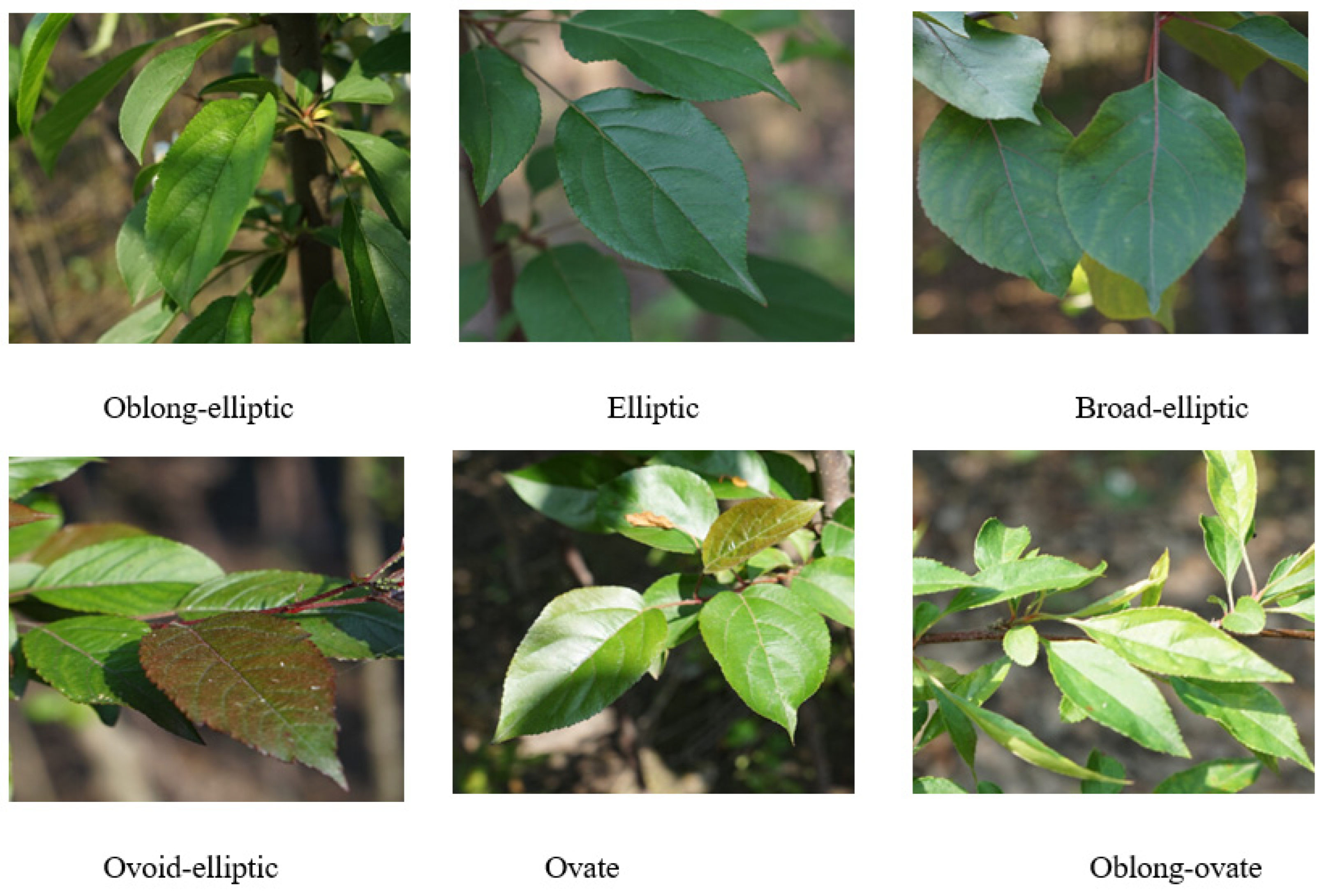
  • Leaf traits (12 indicators): young leaf color, mature leaf shape (Figure 2), margin, venation, pubescence, petiole length, lamina texture.
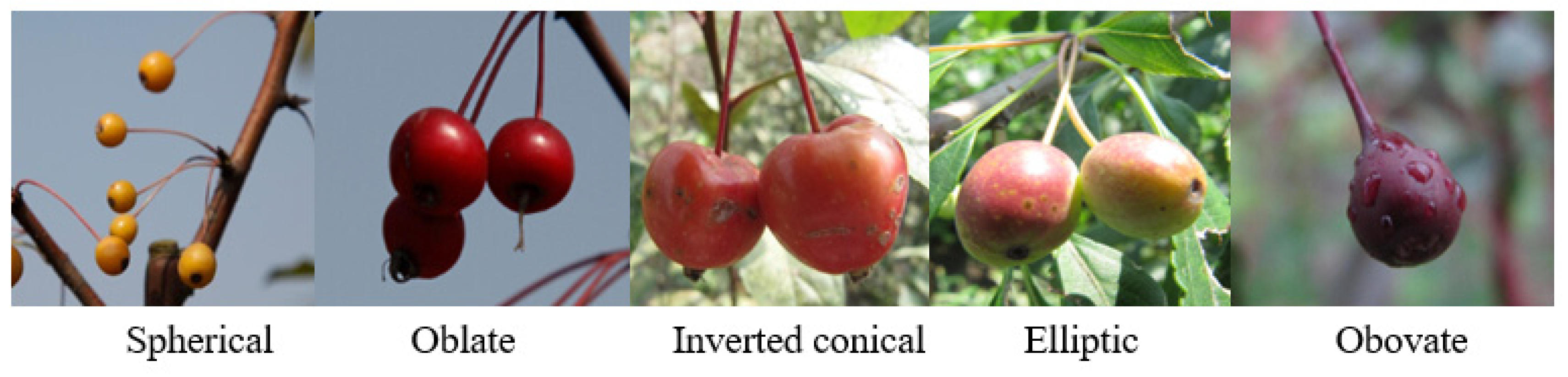
  • Fruit traits (12 indicators): shape (Figure 3), size, surface gloss, color, fruit pedicel length and orientation, calyx persistence, seed number.
  • Tree and bark traits (8 indicators): plant habit (tree, shrub), crown shape, branch density, thorn presence, bark color, trunk form.
Quantitative traits were measured from ten randomly selected trees per cultivar, with three replicates per trait per individual (n = 30 per trait). Mean values were used for subsequent analysis.
Trait scoring followed a 0–5 scale (qualitative) or direct measurement (quantitative).

2.3. Classification Criteria

Morphological classification primarily relied on flower type (single, semidouble, double) and flower color (white, pink, red, purple), which are internationally recognized as the most stable and diagnostic traits. Other traits such as fruit persistence and leaf morphology were used as supplementary criteria.

2.4. Numerical Taxonomy

R-type and Q-type cluster analyses were conducted to examine trait–trait and trait–cultivar relationships. All hierarchical clustering analyses were performed in SPSS Statistics v26.0 (IBM Corp., Armonk, NY, USA) using Ward’s minimum variance method and Euclidean distance as the dissimilarity metric. Cluster quality was evaluated through the Cubic Clustering Criterion (CCC).
Principal Component Analysis (PCA) was carried out in R software (version 4.3.2) under a 64-bit Windows environment using the packages cluster (v2.1.4)and factoextra (v1.0.7). PCA was applied to quantify the contribution rates of each morphological trait and to validate the robustness of SPSS-based clustering. The first two principal components (PC1 and PC2) were extracted based on the Kaiser criterion (eigenvalue > 1) and visualized using factoextra. Biplots and scree plots were inspected to assess variance structure and trait grouping.
To prevent multicollinearity and redundancy among highly correlated variables, an additional clustering test was performed after removing duplicated or derivative traits (e.g., flower type vs. petal number, sepal color vs. petal color). The resulting dendrogram structure remained consistent with the full-trait analysis, with a Cubic Clustering Criterion (CCC) > 0.80, confirming model stability and reliability.

3. Results

3.1. Morphological Classification Framework

Based on floral traits, the 80 cultivars were divided into three primary groups (Table 2):
  • Single Flower Group (I)—71 cultivars
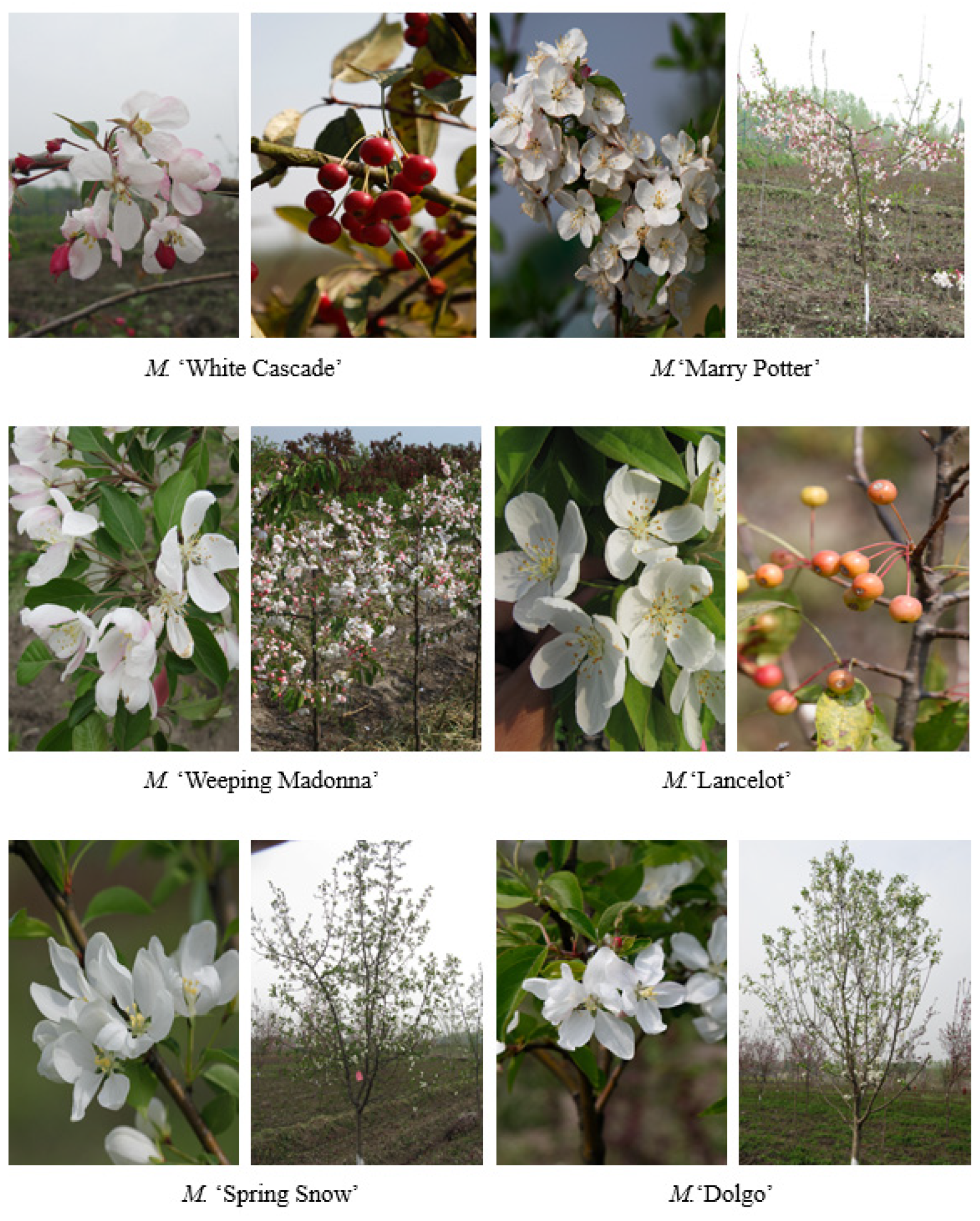
    • Single-white subgroup (i): 31 cultivars (Figure 4).
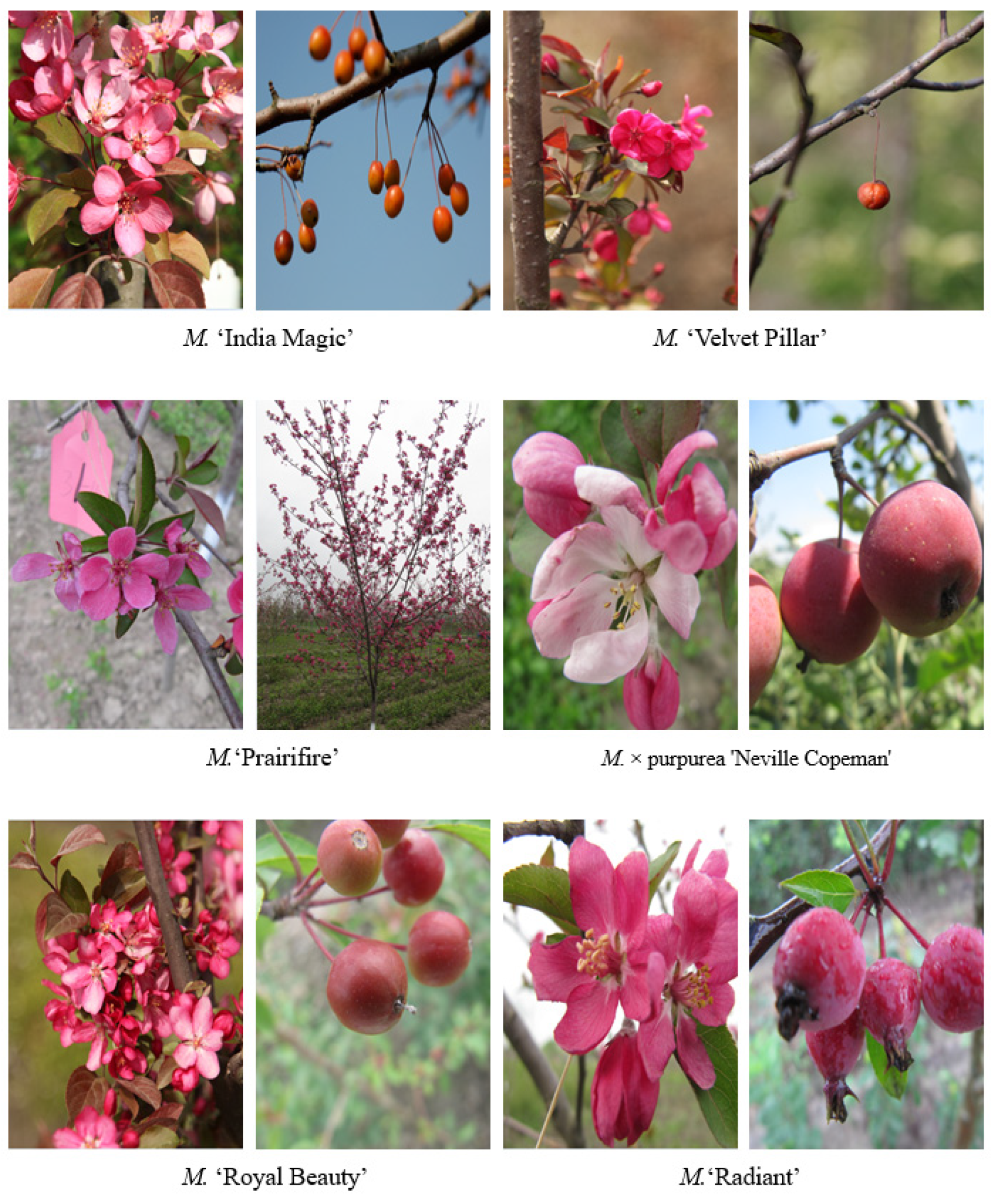
      Single-red subgroup (ii): 40 cultivars, (Figure 5).
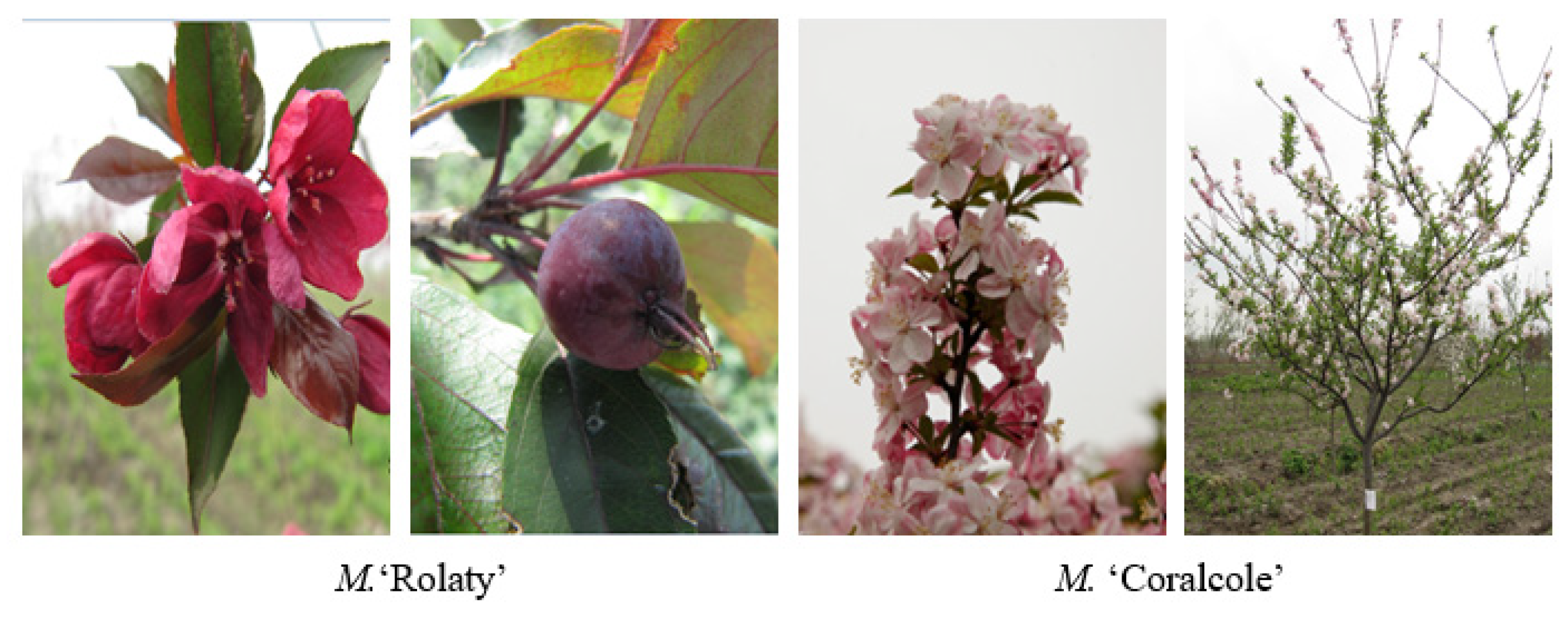
  • Semidouble Flower Group (II)—2 cultivars (Figure 6).
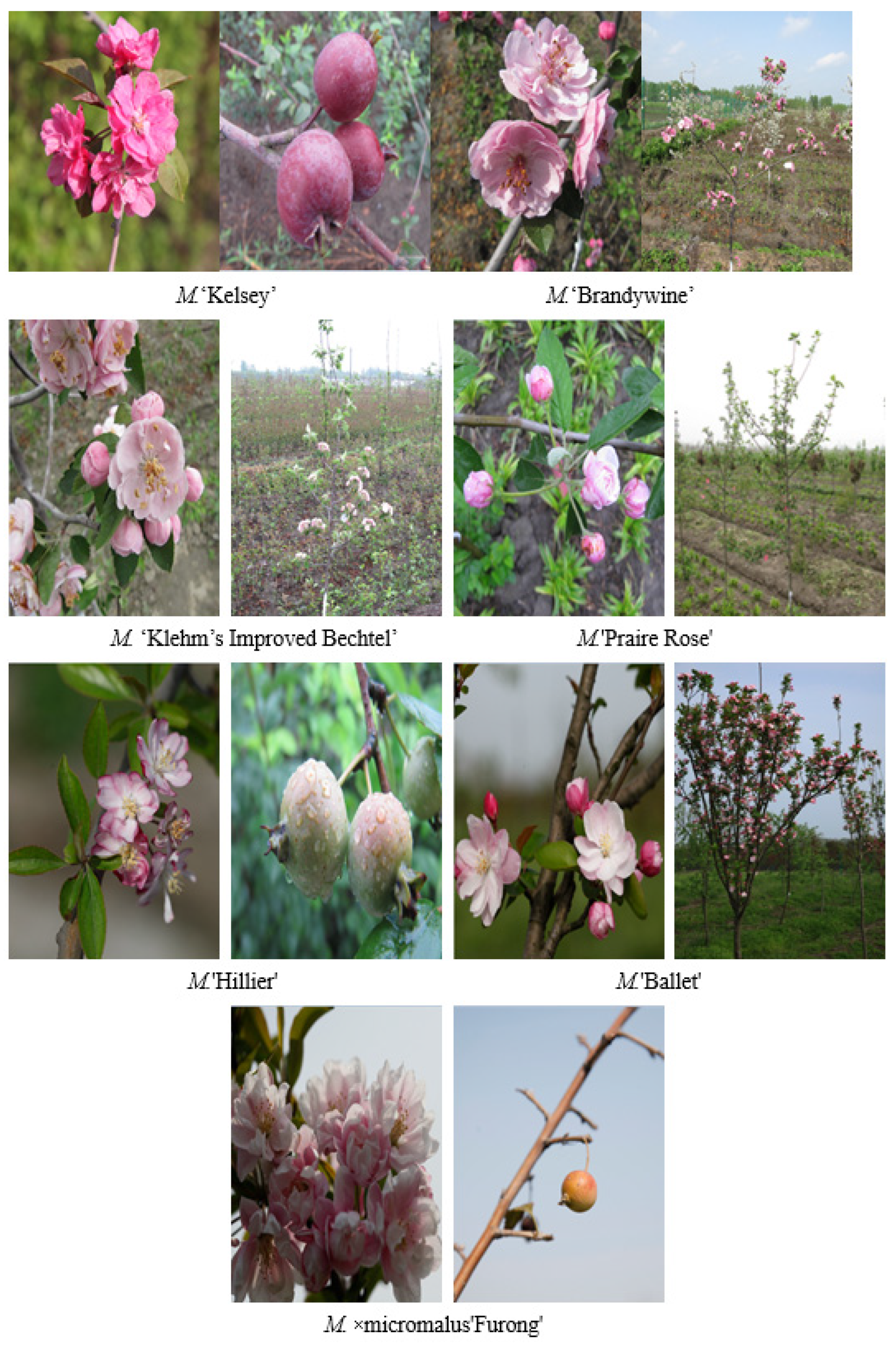
  • Double Flower Group (III)—7 cultivars (Figure 7).
The hierarchical structure based on petal number and flower color was consistent with descriptors recommended by international horticultural manuals [15,16].

3.2. Key Diagnostic Traits

In order to better characterize the classification framework, several morphological traits were identified as being particularly useful for distinguishing among the main groups and subgroups (Table 3). These traits served as reliable diagnostic markers, enabling consistent separation of cultivars despite the influence of environmental variation. Petal number and flower type clearly separated cultivars into three stable groups.
  • Flower color was highly reliable for further subgrouping, with little annual variation.
  • Fruit traits (shape, calyx persistence, pedicel orientation) provided auxiliary criteria, especially for distinguishing cultivars with similar floral morphology.
  • Leaf characters, although variable under different environments, still contributed to the recognition of specific cultivars (e.g., M. ‘Adirondack’ with narrow elliptic leaves).

3.3. Numerical Taxonomy Analysis

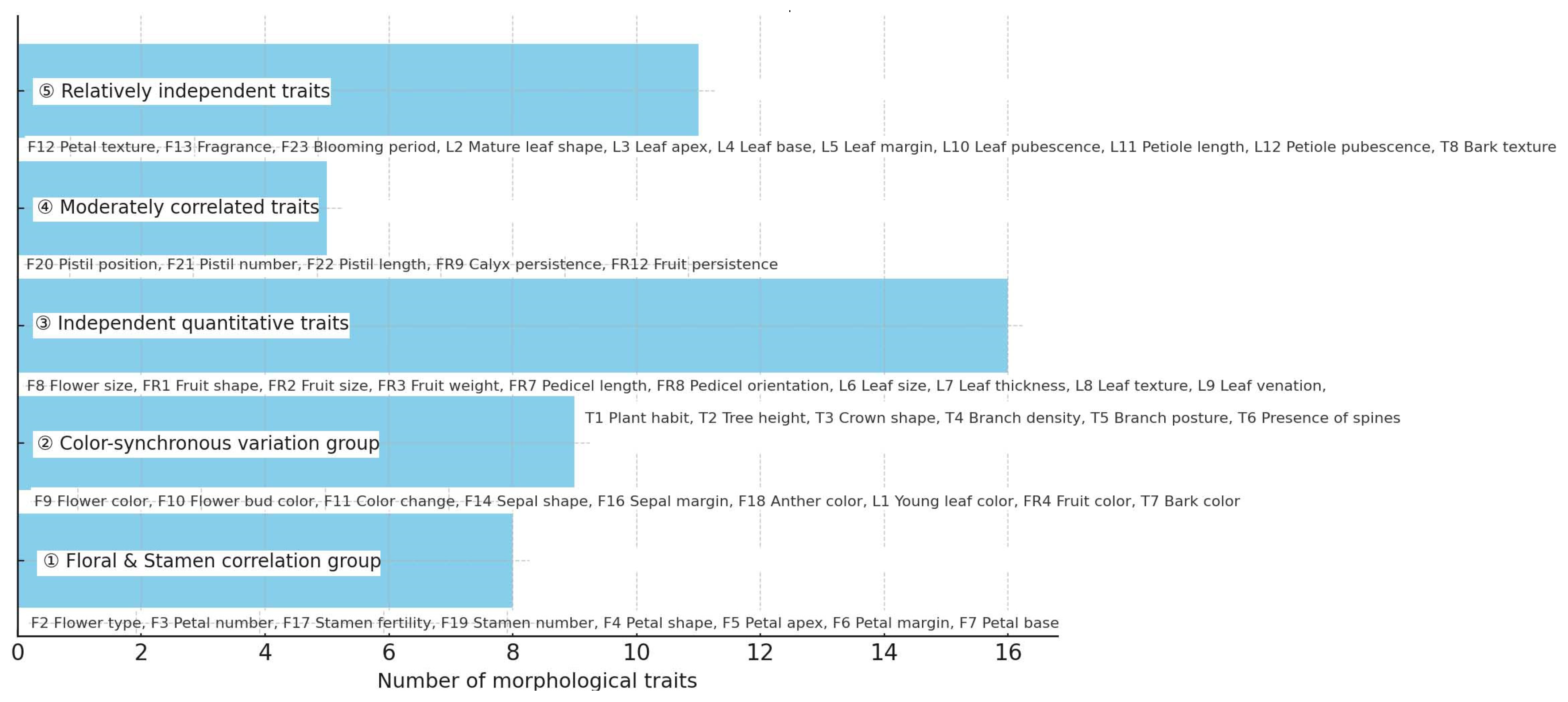
The R-type cluster analysis of 55 morphological traits from 80 introduced crabapple cultivars revealed that floral traits (petal number, petal shape, color) formed an independent and highly diagnostic cluster, while leaf traits showed greater variability and clustered separately (Figure 8). Most traits were relatively independent, but some exhibited strong correlations—for instance, double-flower character with petal number, petal number with stamen number, fruit length with width, sepal with petal color, and pubescence on different plant parts.
“At level L1, traits were divided into two major categories comprising five groups (Figure 8): ① floral and stamen traits with strong correlations; ② color-related traits showing synchronous variation across floral organs; ③ independent quantitative traits mainly involving fruit and tree architecture; ④ moderately correlated traits associated with pistil and fruit persistence; and ⑤ relatively independent traits including leaf and texture characteristics”.
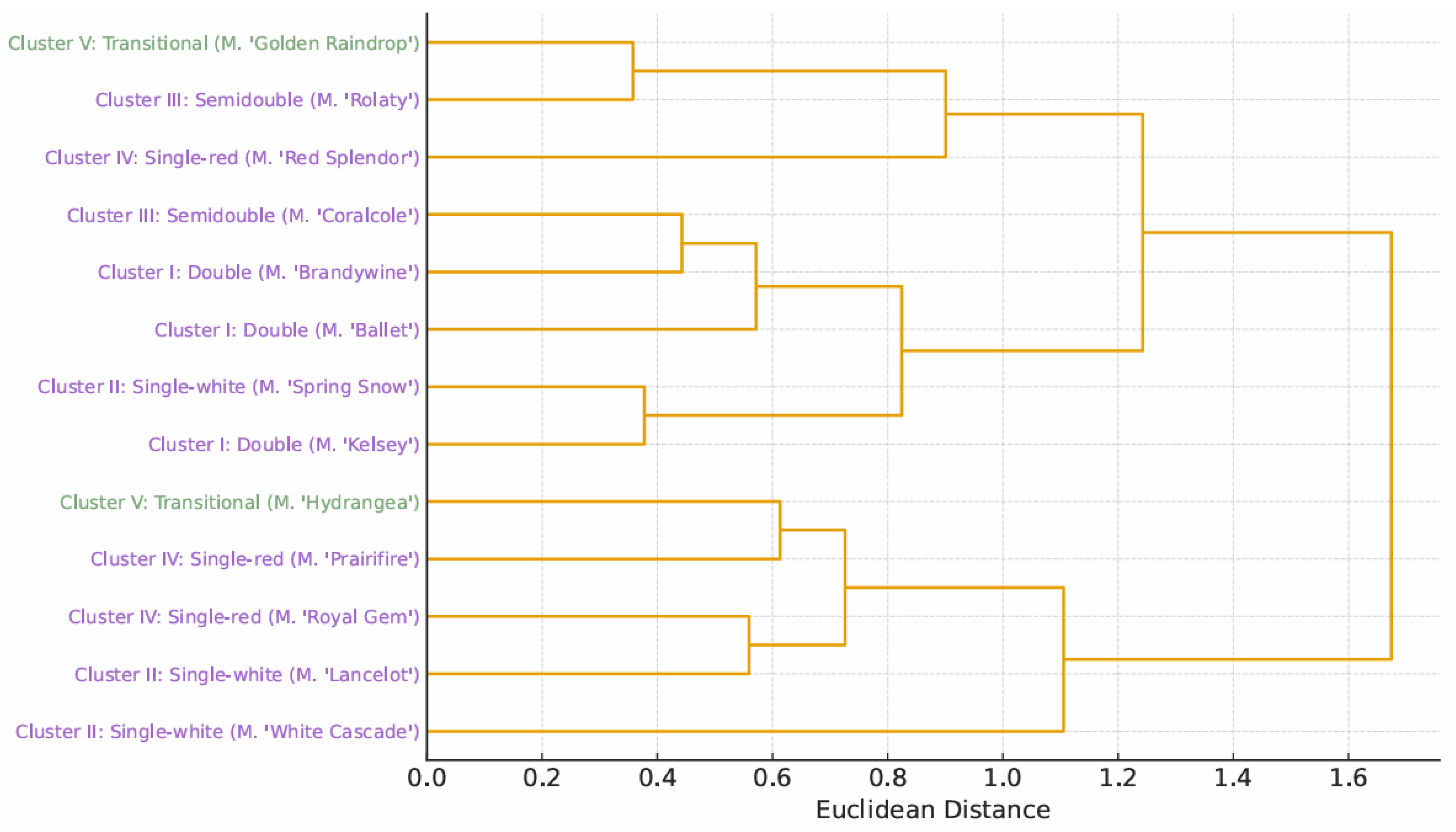
The Q-type cluster analysis of 80 introduced crabapple (Malus spp.) cultivars based on 55 standardized morphological traits produced a clear and consistent classification pattern (Figure 9). Five major clusters were identified, which closely corresponded to the morphological classification framework established earlier in this study.
Cluster I comprised double-flowered cultivars (e.g., M. ‘Ballet’, M. ‘Brandywine’, M. ‘Kelsey’) characterized by more than ten petals, double corollas, and reduced fertility, showing strong ornamental value.
Cluster II included single-white cultivars (e.g., M. ‘White Cascade’, M. ‘Spring Snow’, M. ‘Lancelot’), with five petals, white corollas, and weak fragrance.
Cluster III represented semidouble cultivars (M. ‘Rolaty’, M. ‘Coralcole’), displaying intermediate flower types (6–10 petals) and partial sterility.
Cluster IV contained single-red cultivars (e.g., M. ‘Prairifire’, M. ‘Red Splendor’, M. ‘Royal Gem’), which bear pink to red or purple corollas and exhibit moderate fragrance.
Cluster V consisted of transitional cultivars such as M. ‘Golden Raindrop’ and M. ‘Hydrangea’, which exhibit intermediate or mixed morphological features between the single and double types.
The overall clustering pattern showed high robustness (cophenetic correlation coefficient > 0.85), indicating strong agreement with the morphological framework. Petal number and floral type were confirmed as the most reliable diagnostic traits, while corolla color served as an auxiliary characteristic with partial overlap among clusters. Slight color heterogeneity within some clusters likely reflects the influence of secondary morphological traits such as leaf texture and fruit persistence rather than classification inconsistency.
This consistency between morphological and numerical taxonomy demonstrates the reproducibility of the proposed classification system and its potential for application in germplasm management and breeding programs.
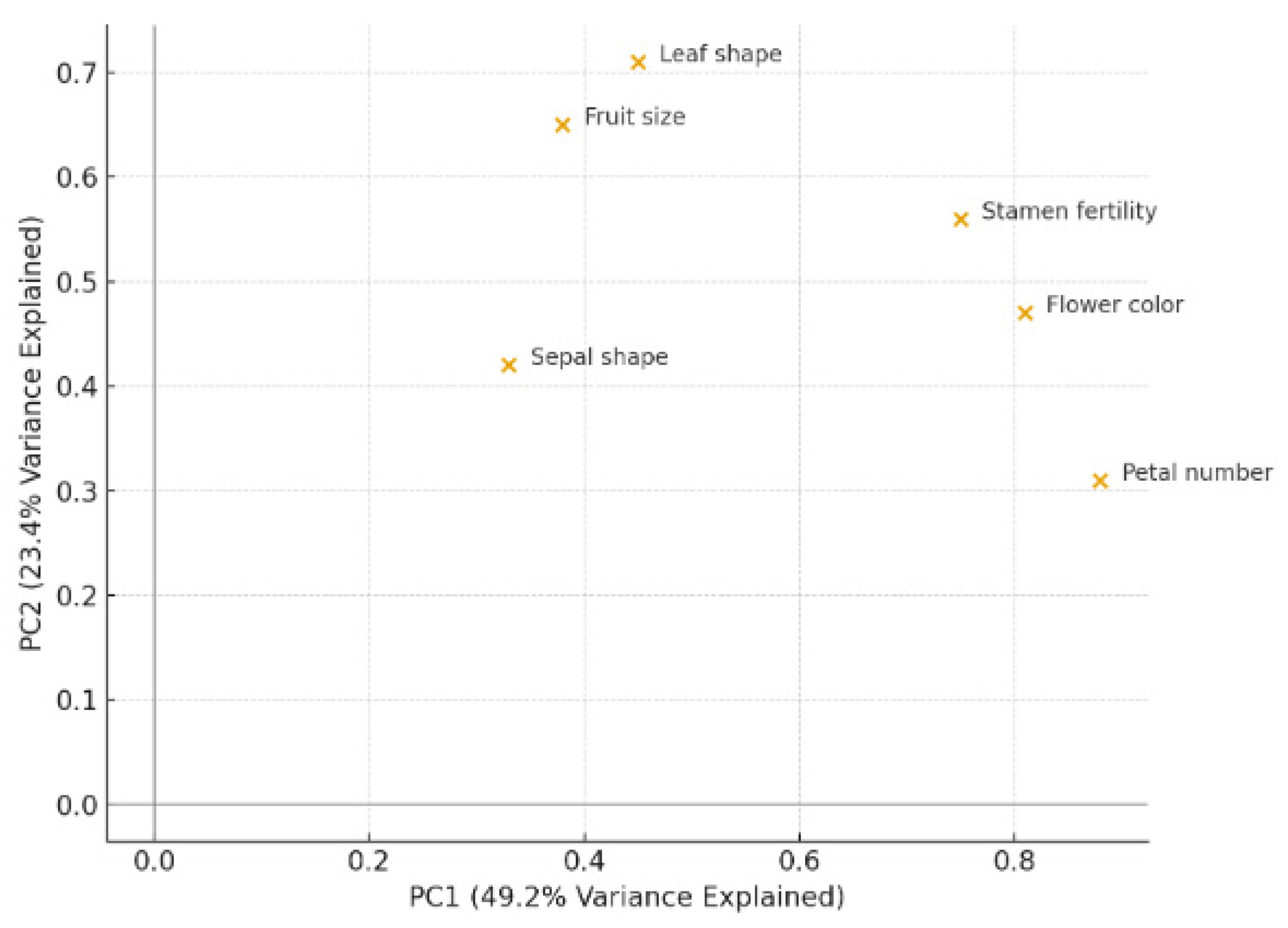
Principal Component Analysis (PCA) further validated the numerical classification (Figure 10). The first two components (PC1 and PC2) explained 72.6% of the total variance, confirming the strong contribution of floral traits to overall morphological differentiation. Petal number, flower color, and stamen fertility showed the highest loadings on both PC1 and PC2, clearly separating double-flowered cultivars from single-flowered groups. Leaf and fruit traits contributed moderately to PC2, indicating environmental variability among vegetative traits.

3.4. Concordance with International Systems

The established classification showed high concordance with descriptive systems widely used in Europe and North America, which emphasize flower type and color as ornamental traits. However, the present framework is more standardized and reproducible due to its incorporation of numerical taxonomy.
Notably, several cultivars frequently misclassified in Western references were clarified in this study. For instance, M. ‘Kelsey’ and M. ‘Molten Lava’, often treated inconsistently in horticultural manuals, were clearly assigned to the Double Flower Group in our system [15,16].

3.5. International Comparison of Classification Approaches

To further evaluate the international relevance of our classification system, we compared the major criteria used in China, Europe, North America, and Japan with those applied in the present study (Table 4) [17,18,19,20,21].

4. Discussion

4.1. Horticultural and Forestry Validation of Classification

Repeated observations across two consecutive years showed that petal number and corolla color varied little among cultivars (CV < 10%), confirming their stability at the inter-cultivar level.
The findings confirm that floral traits—particularly petal number and corolla color—are reliable and stable diagnostic criteria for crabapple classification. These traits are not only taxonomically significant but also directly determine the ornamental and ecological value of crabapple resources in forestry and landscaping. Unlike vegetative traits, which are highly influenced by environmental conditions, floral characteristics provide consistent markers for cultivar identification, thereby facilitating practical applications in nursery production, urban greening, and biodiversity conservation within forest ecosystems.

4.2. Implications for Germplasm Conservation and Nursery Practice

The standardized classification framework directly addresses the widespread problems of synonymy and mislabeling in commercial nurseries. Correct cultivar identification enhances the efficiency of germplasm conservation and ensures the authenticity of planting materials, which is critical for large-scale forestry and landscaping projects. By providing clear diagnostic descriptors, the framework serves as a practical guideline for germplasm banks, breeders, and forestry practitioners, enabling improved registration, certification, and long-term resource management.

4.3. Contribution to Breeding Programs and International Germplasm Exchange

Clarifying cultivar relationships supports breeding programs aimed at improving ornamental traits, stress tolerance, and adaptability. The identification of partially sterile and double-flowered groups also provides insights into fertility constraints that influence hybridization strategies. Furthermore, by aligning with international descriptors, the proposed system reduces regional inconsistencies and facilitates the reliable exchange of crabapple germplasm across countries. This strengthens China’s role as both a center of origin and a hub for global germplasm innovation and utilization.

4.4. Toward a Globally Harmonized Classification Framework

The inconsistencies among regional crabapple classification systems underscore the urgent need for a globally unified framework that integrates morphological, molecular, and horticultural data. Future research should expand to include molecular markers such as SSRs, SNPs, and genomic sequencing, combined with morphological datasets, to refine cultivar relationships and enhance reproducibility. Establishing an international germplasm database for ornamental Malus would further reduce synonymy, support comparative studies, and accelerate collaboration among China, Europe, North America, and Japan. Such a harmonized system would balance taxonomic rigor with practical utility, benefiting both biodiversity conservation and forestry applications.

4.5. Limitations and Future Directions

Although this study provides a robust morphological and numerical framework, the lack of large-scale molecular evidence remains a limitation [22,23]. Future research should combine SSR, SNP, or genomic sequencing with morphological datasets to validate cultivar relationships [7,24,25,26]. Such integration will pave the way for a globally accepted classification standard. The inclusion of PCA strengthened the statistical validation of clustering and revealed the dominant floral traits contributing to morphological variance. Future integration of PCA and molecular markers (SSR, SNP) will further enhance classification reproducibility and global harmonization.

5. Conclusions

This study systematically classified 80 introduced crabapple (Malus spp.) cultivars using a comprehensive set of morphological descriptors and numerical taxonomy, establishing a hierarchical system that divides cultivars into Single, Semidouble, and Double Flower groups with further subdivisions by corolla color. Cluster analysis confirmed the diagnostic value of flower type and petal number. Petal color contributed to subgroup distinction but showed partial overlap among clusters. The classification highlights floral traits as stable and diagnostic, offering a reproducible framework for cultivar identification.
Importantly, the framework extends beyond taxonomy: it provides practical guidelines to reduce cultivar mislabeling in nurseries, enhances the efficiency of germplasm conservation and breeding, and facilitates the application of crabapple resources in landscape forestry. By clarifying the classification of frequently misidentified cultivars, the study strengthens the foundation for international germplasm exchange and utilization.
Looking ahead, integrating morphological frameworks with molecular evidence will be critical for establishing a globally harmonized classification system. Such efforts will contribute to both the conservation of forest genetic resources and the sustainable use of ornamental tree species in forestry and urban landscapes.

Author Contributions

Conceptualization, M.H. and Y.Z., methodology, Y.H., software, Y.H., P.Z. and X.J., validation, M.H. and Y.H., formal analysis, X.J., investigation, M.H., resources, Y.H., data curation, Y.H., M.H. and X.J., writing—original draft preparation, M.H. and X.J., writing—review and editing, M.H. and X.J., funding acquisition, M.H. and X.J. All authors have read and agreed to the published version of the manuscript.

Funding

This research was supported by the Basic Research and Talent Science Research Special Project of Jiangxi Academy of Forestry (Grant 2023511401).

Data Availability Statement

The original contributions presented in this study are included in the article. Further inquiries can be directed to the corresponding authors.

Conflicts of Interest

The authors declare no conflicts of interest.

References

  1. Gong, R.; Zhang, C.Y.; Feng, S.C. Ornamental Germplasm Resources of Crabapple and Their Utilization. Chin. Agric. Sci. Bull. 2019, 35, 75–79. [Google Scholar]
  2. Zhou, T.; Shen, X.; Zhou, D.; Fan, J.; Zhao, M.; Zhang, W.; Cao, F. Advances in the Classification of Crabapple Cultivars. Acta Hortic. Sin. 2018, 45, 380. [Google Scholar]
  3. Sun, T.; Chen, Y.; Zhang, W.; Zhou, T.; Fan, J.; Lu, X. ‘Yanyu Jiangnan’ Crabapple. HortScience 2023, 58, 588–589. [Google Scholar] [CrossRef]
  4. Lu, X.; Chen, Y.; Zhang, W.; Zhang, D.; Zhou, T.; Fan, J.; Sun, T. ‘Yunjuan Yunshu’ Flowering Crabapple. HortScience 2023, 58, 580–582. [Google Scholar] [CrossRef]
  5. Zeng, J.; Zhou, T.; Zhang, D.; Zhang, W. ‘Yi Honglian’ Flowering Crabapple. HortScience 2022, 57, 374–375. [Google Scholar] [CrossRef]
  6. Ma, R.Q.; Sha, G.L.; Huang, Y.; Sun, H.T.; Sun, J.L.; Ge, H.J.; Zhang, R.F. Breeding of a New Crabapple Cultivar ‘Datangqinhong’. China Fruits 2024, 48, 150–151. [Google Scholar]
  7. Goncharovska, I.; Vladimyr, K.; Antonyuk, G.; Dan, C.; Sestras, A.F. Flower and Fruit Morphological Characteristics of Different Crabapple Genotypes of Ornamental Value. Not. Sci. Biol. 2022, 14, 10684. [Google Scholar] [CrossRef]
  8. Ma, G.X. Progress in the Taxonomic Studies of the Genus Malus. Mod. Agric. Sci. Technol. 2012, 6, 154–159. [Google Scholar]
  9. Wang, R.M. The Breeding and Cultivating of 33 Europe Malus Species or Cultivars and Their Ornamental. Master’s Thesis, Nanjing Forestry University, Nanjing, China, 2005. [Google Scholar]
  10. Xiang, Z.W.; Jing, Q.; Jiang, J.H.; Liang, W.H.; Liang, C.F.; Guo, T.G. Studies on Dynamic Characteristics of the Pigment Components of Ornamental Crabapple Cultivars Groups in Flowering Process. Hortic. Plant J. 2014, 41, 1145. [Google Scholar]
  11. Lin, N.; Jiang, W.; Wang, M. Landscape Characters of the Main Species of Malus and Chaenomeles. Chin. Agric. Sci. Bull. 2006, 22, 242–247. [Google Scholar]
  12. Guo, L.; Shen, X.; Wang, L.; Yu, S. Ornamental Crabapple: Present Status of Resources and Breeding Direction. In Proceedings of the International Apple Symposium, Shenyang, China; 2002. [Google Scholar]
  13. Ze, Q.G.; Guo, T.G. A Review on the Plant Taxonomic Study on the Genus Malus Miller. J. Nanjing For. Univ. (Nat. Sci. Ed.) 2005, 29, 94–98. [Google Scholar]
  14. Robinson, J.P.; Harris, S.A.; Juniper, B. Taxonomy of the Genus Malus Mill. (Rosaceae) with Emphasis on the Cultivated Apple, Malus domestica Borkh. Plant Syst. Evol. 2001, 226, 35–58. [Google Scholar] [CrossRef]
  15. Rehder, A. Manual of Cultivated Trees and Shrubs Hardy in North America, Exclusive of the Subtropical and Warmer Temperate Regions; Macmillan Company: New York, NY, USA, 1927. [Google Scholar]
  16. Green, T. Crabapples–When You’re Choosing One of Those Apple Cousins, Make Flowers Your Last Consideration. Am. Hortic. 1996, 75, 18–23. [Google Scholar]
  17. Dirr, M.A. Manual of Woody Landscape Plants: Their Identification, Ornamental Characteristics, Culture, Propagation and Uses; Stipes Pub LLC: Champaign, IL, USA, 1990. [Google Scholar]
  18. Fiala, J.L. Flowering Crabapples: The Genus Malus; Timber Press: Portland, OR, USA, 1994. [Google Scholar]
  19. Wyman, D. The Flowering Crabapples. Bull. Pop. Inf. (Arnold Arbor. Harv. Univ.) 1936, 4, 35–38. [Google Scholar] [CrossRef]
  20. Han, J.; Yao, Y.; Kang, W.; Wang, Y.; Li, J.; Wang, H.; Qin, L. Relationship Between Volatile Aroma Components and Amino Acid Metabolism in Crabapple (Malus spp.) Flowers, and Development of a Cultivar Classification Model. Horticulturae 2025, 11, 845. [Google Scholar] [CrossRef]
  21. Fan, Y.; Li, H.; Ma, J.; Zhou, T.; Fan, J.; Zhang, W. Macrostructure of Malus Leaves and Its Taxonomic Significance. Plants 2025, 14, 1918. [Google Scholar] [CrossRef]
  22. Henderson, A. Traditional Morphometrics in Plant Systematics and Its Role in Palm Systematics. Bot. J. Linn. Soc. 2006, 151, 103–111. [Google Scholar] [CrossRef]
  23. Forte, A.; Ignatov, A.; Ponomarenko, V.; Dorokhov, D.; Savelyev, N. Phylogeny of the Malus (apple tree) Species, Inferred from the Morphological Traits and Molecular DNA Analysis. Russ. J. Genet. 2002, 38, 1150–1161. [Google Scholar] [CrossRef]
  24. Rong, H.; Huang, B.; Han, X.; Wu, K.; Xu, M.; Zhang, W.; Yang, F.; Xu, L.-A. Pedigree Reconstruction and Genetic Analysis of Major Ornamental Characters of Ornamental Crabapple (Malus spp.) Based on Paternity Analysis. Sci. Rep. 2022, 12, 14093. [Google Scholar] [CrossRef]
  25. Zhou, T.; Zhang, W.; Zhang, D.; El-Kassaby, Y.A.; Fan, J.; Jiang, H.; Wang, G.; Cao, F. A Binary-Based Matrix Model for Malus Corolla Symmetry and Its Variational Significance. Front. Plant Sci. 2020, 11, 416. [Google Scholar] [CrossRef]
  26. Liu, B.B.; Ren, C.; Kwak, M.; Hodel, R.G.; Xu, C.; He, J.; Zhou, W.B.; Huang, C.H.; Ma, H.; Qian, G.Z. Phylogenomic Conflict Analyses in the Apple Genus Malus sl Reveal Widespread Hybridization and Allopolyploidy Driving Diversification, with Insights into the Complex Biogeographic History in the Northern Hemisphere. J. Integr. Plant Biol. 2022, 64, 1020–1043. [Google Scholar] [CrossRef] [PubMed]
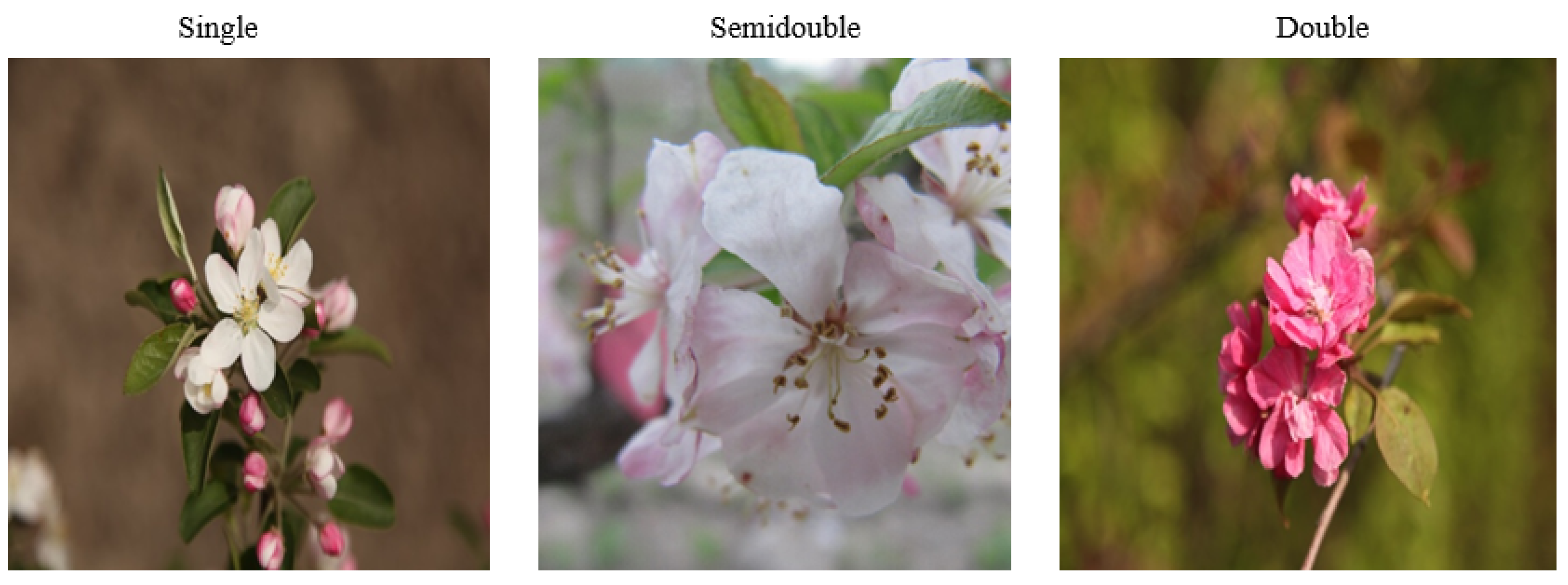
Figure 1. Flower types of crabapple.
Forests 16 01792 g001
Figure 2. Mature leaf shapes of crabapple.
Forests 16 01792 g002
Figure 3. Fruit shapes of crabapple.
Forests 16 01792 g003
Figure 4. Part of Malus Single-white Flower Group.
Forests 16 01792 g004
Figure 5. I ii Part of Malus Single-red Flower Group.
Forests 16 01792 g005
Figure 6. II Malus Semidouble Flower Group.
Forests 16 01792 g006
Figure 7. III Malus Double Flower Group.
Forests 16 01792 g007
Figure 8. R-type cluster analysis of 55 morphological traits of Malus cultivars. Trait codes (F1–F23, L1–L12, FR1–FR12, T1–T8) correspond to the descriptors listed in Table 1.
Forests 16 01792 g008
Figure 9. Q-type cluster analysis of representative crabapple cultivars. Note: The total number of cultivars analyzed was 80. Cluster V represents a small transitional subset derived from within the main four clusters and does not increase the total sample size.
Forests 16 01792 g009
Figure 10. Principal Component Analysis (PCA) of morphological traits of 80 introduced Malus cultivars.
Forests 16 01792 g010
Table 1. Morphological traits used for classification of crabapple (Malus spp.) cultivars.
CategoryTrait No.Trait NameDescriptor/Measurement Method
Floral traits (23)F1Inflorescence typeCorymb/umbel/solitary
F2Flower typeSingle/semidouble/double
F3Petal numberCount of petals per flower
F4Petal shapeOvate/obovate/elliptic
F5Petal apexRounded/emarginate/acute
F6Petal marginEntire/wavy/irregular
F7Petal baseNarrow/broad/clawed
F8Flower sizeDiameter (cm)
F9Flower color (anthesis)White/pink/red/purple
F10Flower bud colorGreenish/pink/red/purple
F11Color change during floweringStable/fading/intensifying
F12Petal textureThin/leathery/papery
F13Flower fragranceAbsent/weak/moderate/strong
F14Sepal shapeLanceolate/ovate/triangular
F15Sepal reflexion at anthesisReflexed/upright
F16Sepal marginEntire/serrulate/hairy (eriocalyx)
F17Stamen fertilityFertile/partially sterile
F18Anther colorYellow/red/purple
F19Stamen numberFew (<10)/Medium (10–20)/Many (>20)
F20Pistil positionSuperior/inferior/semi-inferior
F21Pistil numberSingle/multiple
F22Pistil length relative to stamensShorter/equal/longer
F23Blooming periodEarly/mid/late season
Leaf traits (12)L1Young leaf colorGreen/reddish/purple
L2Mature leaf shapeOvate/elliptic/lanceolate
L3Leaf apexAcute/acuminate/rounded
L4Leaf baseCuneate/rounded/cordate
L5Leaf marginEntire/serrated/doubly serrated
L6Leaf sizeLength × width (cm)
L7Leaf thicknessThin/medium/thick
L8Leaf textureLeathery/papery
L9Leaf venationPinnate/curved/arcuate
L10Leaf pubescenceAbsent/sparse/dense
L11Petiole lengthLength in cm
L12Petiole pubescenceAbsent/sparse/dense
Fruit traits (12)FR1Fruit shapeRound/oblate/conical/elliptic
FR2Fruit sizeDiameter (cm)
FR3Fruit weightg/fruit
FR4Fruit color (mature)Yellow/green/red/purple
FR5Fruit surface glossGlossy/dull
FR6Fruit skin thicknessThin/thick
FR7Fruit pedicel lengthcm
FR8Fruit pedicel orientationUpright/drooping/spreading
FR9Calyx persistencePersistent/deciduous
FR10Seed number per fruitCount
FR11Fruit maturation periodEarly/mid/late
FR12Fruit persistence on treeShort/medium/long
Tree and bark traits (8)T1Plant habitTree/shrub
T2Tree heightm
T3Crown shapeUpright/spreading/weeping/columnar
T4Branch densitySparse/medium/dense
T5Branch postureUpright/horizontal/pendulous
T6Presence of spinesPresent/absent
T7Bark colorGray/brown/reddish
T8Bark textureSmooth/fissured/peeling
Note: “Eriocalyx” refers to sepals with conspicuous marginal trichomes [15].
Table 2. Morphological classification framework of 80 introduced crabapple cultivars.
GroupSubgroupNo. of CultivarsRepresentative CultivarsKey Diagnostic Traits
I. Single Flower Group (71)Single-white (31)31M. ‘White Cascade’, M. ‘Marry Potter’, M. ‘Weeping Madonna’, M.‘Lancelot’, M. ‘Spring Snow’, M.‘Dolgo’, M.‘Fairytail Gold’, M. ‘Red Sentinel’, M. ‘King Arthur’, M. ‘Donald Wyman’, M. ‘Adirondack’, M. ‘Molten Lava’, ‘Sugar Tyme’, M. ‘Everest’, M. ‘Red Great’, M. ‘Spring Sensation’, M. ‘Guard’, M.‘Havest Gold’, M.‘Gorgeous’, M. ‘Winter Red’, M.‘Lollipop’, M.‘Firebird’, M. ‘David’, M. ‘Professor Sprenger’, M. ‘Cinderella’, M.×zumi ‘Calocarpa’, M. ‘Golden Raindrop’, M. ‘Hydrangea’, M. ‘Snow Drift’, M. ‘Sweet SugarTyme’, M.‘Almey’5 petals, white corolla, simple ovate petals, weak fragrance
Single-red (40)40M. ‘Prairifire’, M. ‘Indian Magic’, M. ‘Velvet Pillar’, M. ‘Royal Beauty’, M. ‘Radiant’, M.‘ Profusion’, M. ‘Liset’, M. ‘Royal Raindrop’, M. × purpurea ‘Lemoinei’, M. ‘Purple Prince’,z M. ‘Red Splendor’, M. ‘Abundance’, M. ‘John Downie’, M. ‘Lisa’, M. ‘Rudolph’, M. ‘Red Baron’, M. ‘Thunderchild’, M. ‘Centurion’, M. ‘Eleyi’, M. ‘Louisa Contort’, M. ‘Show Time’, M. ‘Makamik’, M. ‘Cardinal’, M. × purpurea ‘Neville Copeman’, M. ‘Coralburst’, M. ‘Robinson’, M. ‘May’s Delight’, M. ‘Strawberry Jelly’, M. ‘Spring Sensation’, M. ‘Candymint’, M. ‘Pink Princess’, M. ‘Hopa’, M. ‘Royal Gem’, M.‘Butterball’, M.‘Regal’, M.‘Pink Spire’, M.‘Golden Hornet’, M.‘Flame’, M. ‘Red Jade’, M. Sylvestris, M.‘Indian Summer’5 petals, pink/red/purple corolla, medium fragrance, variable sepal reflexion
II. Semidouble Flower Group (2)2M. ‘Royalty’, M. ‘Coralcole’6–10 petals, pink corolla, partial stamen sterility
III. Double Flower Group (7)7M. ‘Ballet’, M. ‘Brandywine’, M. ‘Kelsey’, M. ‘Klehm’s Improved Bechtel’, M. ‘Praire Rose’, M. ‘Hillier’, M. ×micromalus ‘Furong’>10 petals, double corolla, strong ornamental effect, reduced fertility
Table 3. Key diagnostic traits distinguishing the main groups and subgroups.
Group/SubgroupPetal NumberFlower ColorFragranceStamen FertilitySepal ReflexionFruit and Leaf Traits (Auxiliary)
I. Single Flower Group
–Single-white (31)5White (pure to creamy)Weak or absentFertileMostly reflexedFruits small (1–2 cm), leaves ovate with serrated margin
–Single-red (40)5Pink to deep red/purpleWeak to moderateFertileReflexed or uprightFruits variable (1–3 cm), leaves often reddish when young
II. Semidouble Flower Group (2)6–10Light pinkModeratePartially sterileMostly uprightFruits medium (2–3 cm), crown spreading
III. Double Flower Group (7)>10 (often 12–20)Pink, red, or purpleModerate to strongSterile or nearly sterileMostly uprightFruits rare or absent, leaves broad ovate
Table 4. Comparison of crabapple classification criteria used in different regions versus this study.
Region/SystemMain Classification BasisLimitationsThis Study’s Improvements
ChinaEmphasis on phylogenetic background and morphological traits (flower type, fruit traits, sepal persistence).Nomenclatural inconsistencies; over-reliance on variable traits (leaf size, fruit yield).Broader trait dataset (55 traits) combined with numerical taxonomy; reduced synonymy.
EuropeDescriptive manuals; focus on ornamental traits such as flower color, fruit size, and landscape value.Lacks hierarchical framework; descriptive but subjective; cultivars often inconsistently classified.Established a reproducible hierarchical system with clear diagnostic characters (flower type + color).
North AmericaHorticultural orientation; classification often tied to disease resistance, growth habit, and landscape adaptability.Practical but weak in taxonomy; cultivars grouped by utility rather than morphology.Provides a taxonomy-oriented but still horticulturally practical framework.
JapanEmphasis on aesthetic features (floral density, cultural symbolism) in classification.Cultural-horticultural approach; limited systematic studies; descriptors not standardized.Offers standardized descriptors aligned with ICNCP, enabling cross-cultural comparison.
This StudyMorphological classification (flower type and color as primary criteria) validated by numerical taxonomy (R-type and Q-type clustering).Provides an integrative, reproducible, and internationally comparable framework; reference model for global harmonization.
Disclaimer/Publisher’s Note: The statements, opinions and data contained in all publications are solely those of the individual author(s) and contributor(s) and not of MDPI and/or the editor(s). MDPI and/or the editor(s) disclaim responsibility for any injury to people or property resulting from any ideas, methods, instructions or products referred to in the content.