Figure 1.
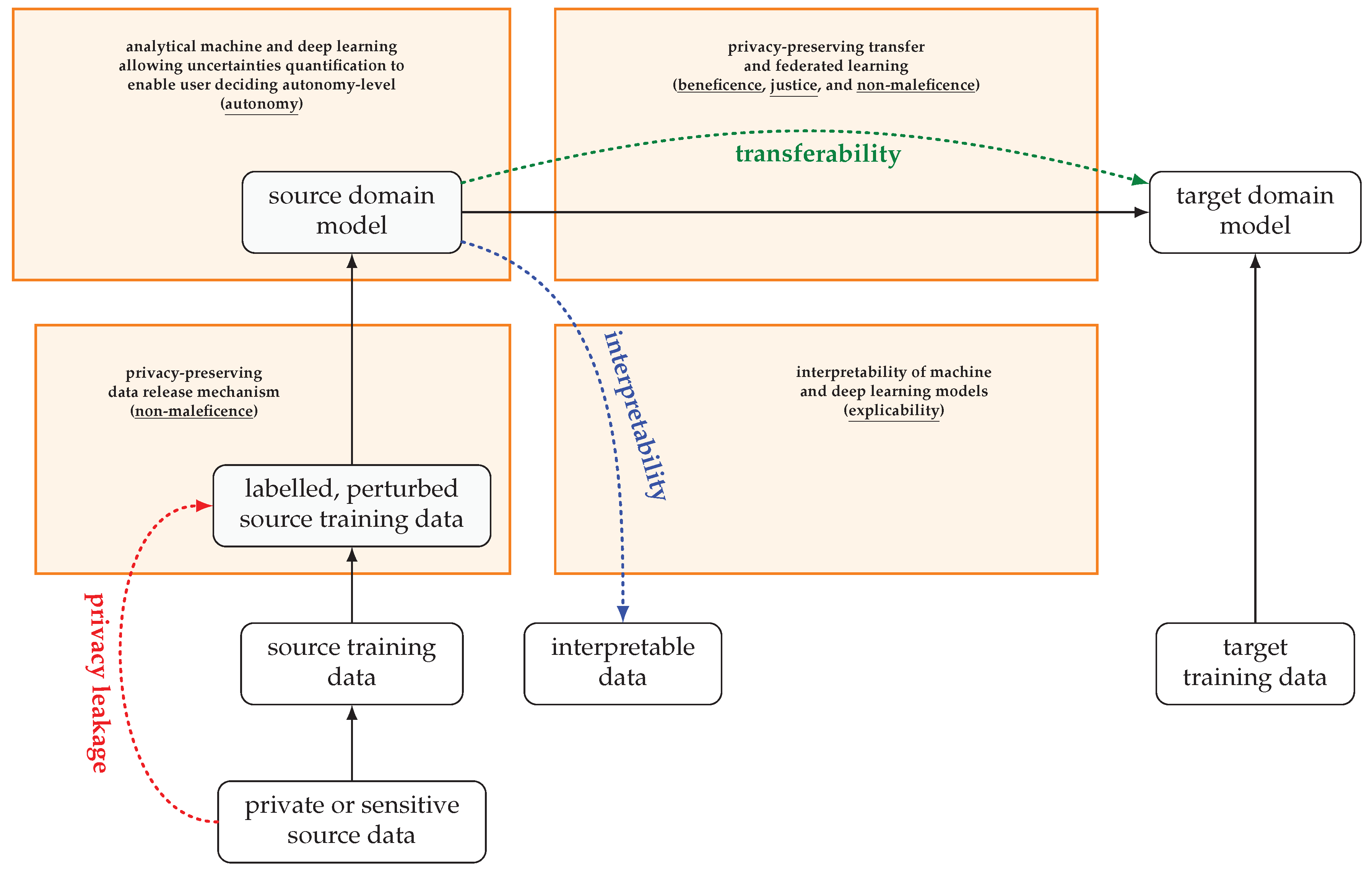
An information theoretic unified approach to “privacy-preserving interpretable and transferable learning” for studying the privacy–interpretability–transferability trade-offs while addressing beneficence, non-maleficence, autonomy, justice, and explicability principles of TAI.
Figure 1.
An information theoretic unified approach to “privacy-preserving interpretable and transferable learning” for studying the privacy–interpretability–transferability trade-offs while addressing beneficence, non-maleficence, autonomy, justice, and explicability principles of TAI.
Figure 2.
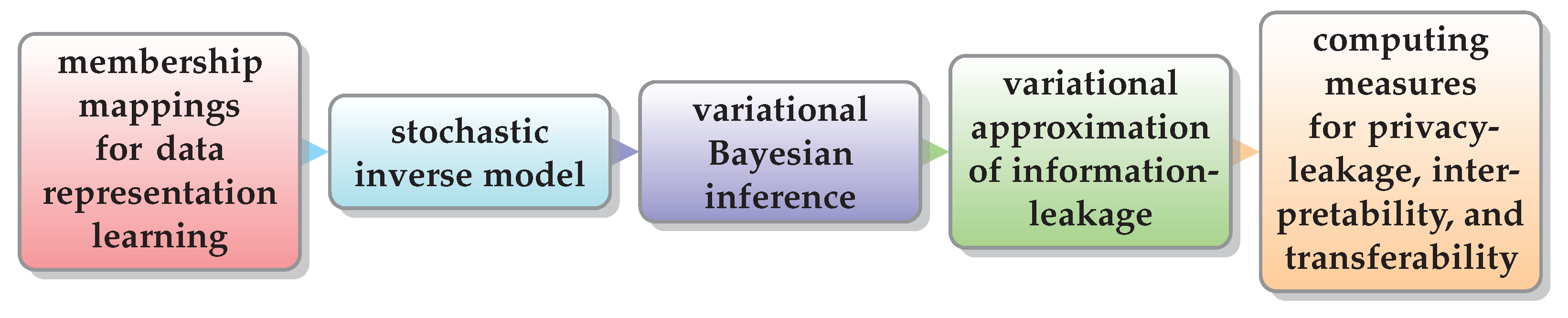
The proposed methodology to evaluate privacy leakage, interpretability, and transferability in terms of the information leakages.
Figure 2.
The proposed methodology to evaluate privacy leakage, interpretability, and transferability in terms of the information leakages.
Figure 3.
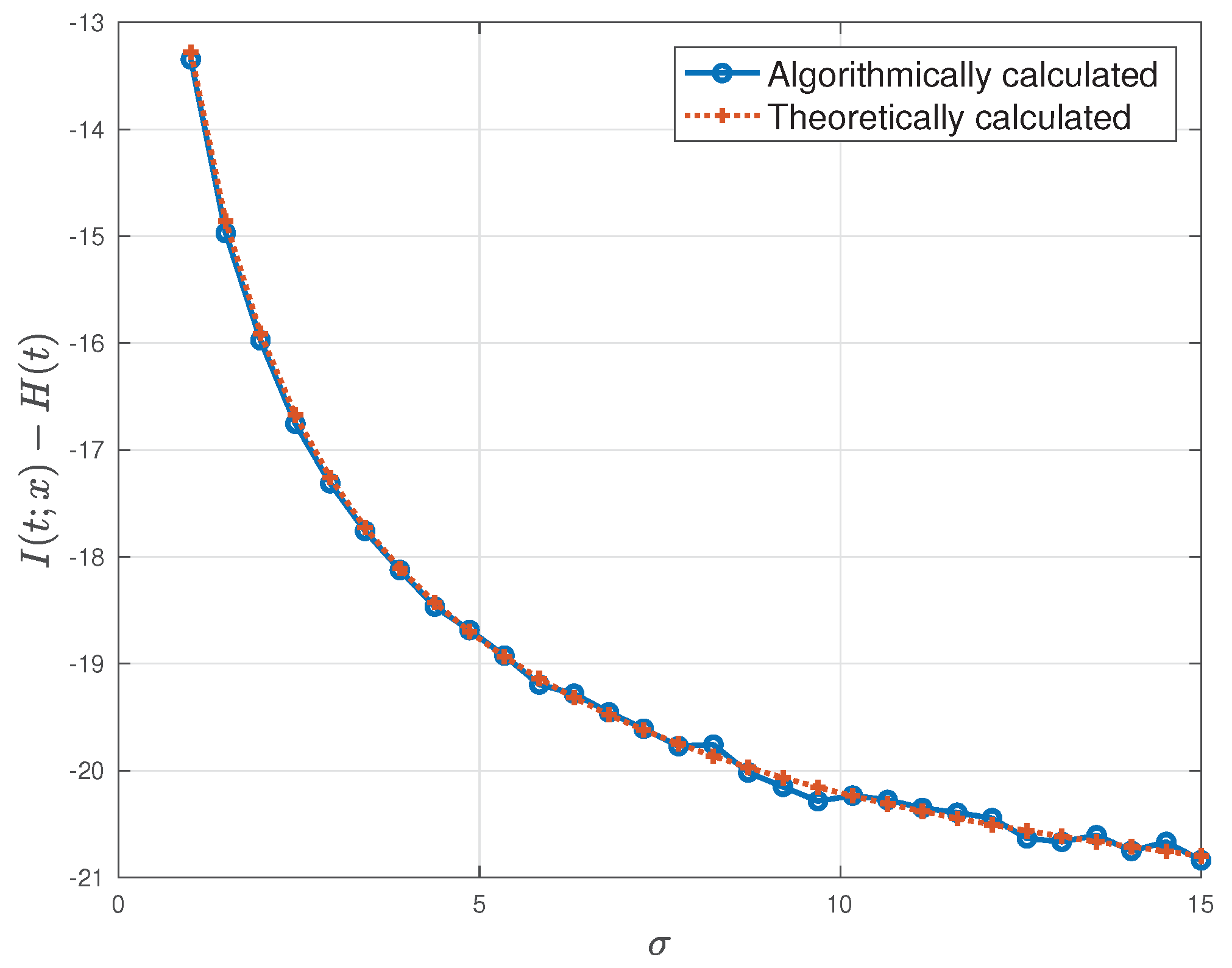
A comparison of the estimated information leakage values with the theoretically calculated values.
Figure 3.
A comparison of the estimated information leakage values with the theoretically calculated values.
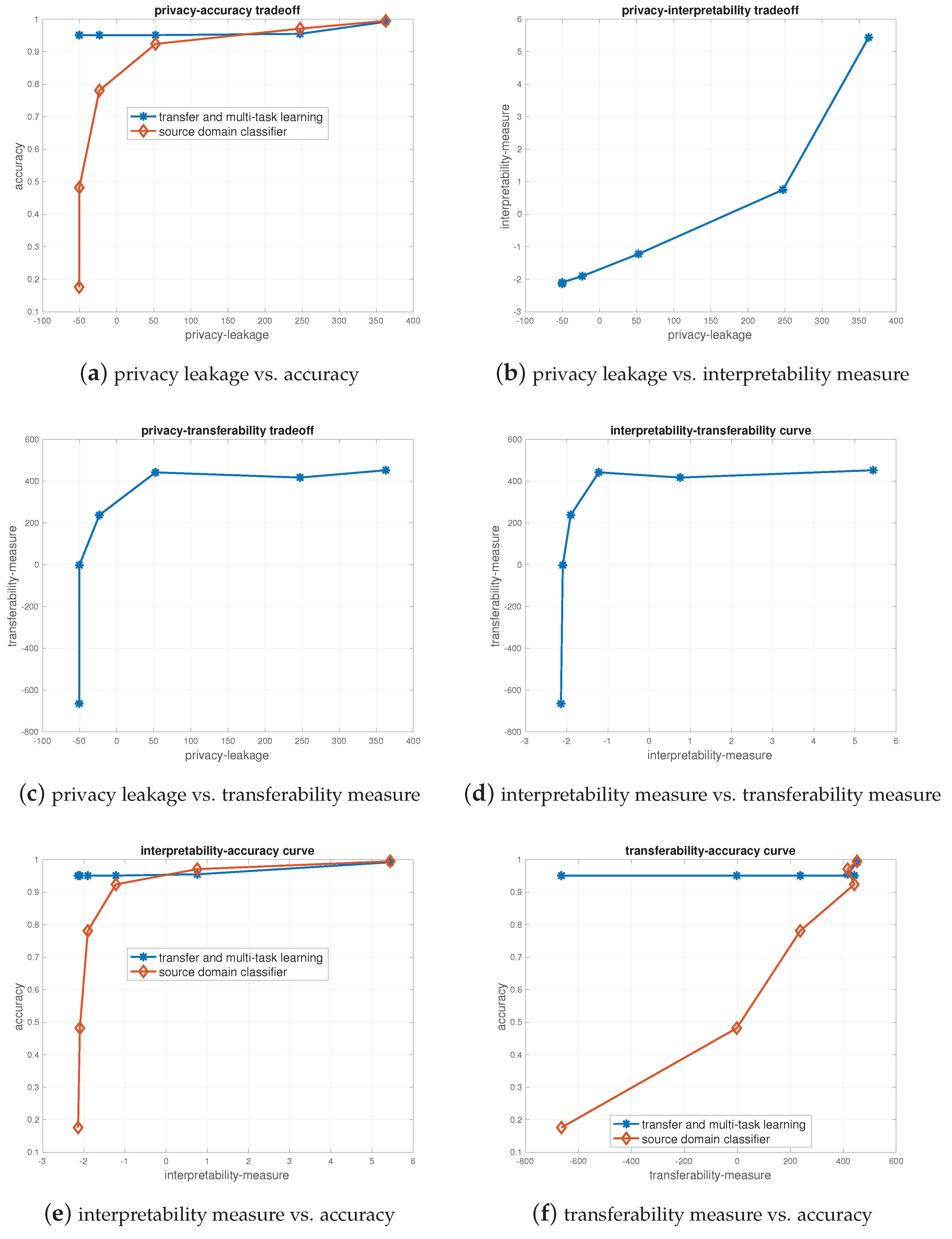
Figure 4.
The plots between privacy leakage, interpretability measure, transferability measure, and accuracy for MNIST dataset.
Figure 4.
The plots between privacy leakage, interpretability measure, transferability measure, and accuracy for MNIST dataset.
Figure 5.
An example of a source domain sample corresponding to different levels of privacy leakage, interpretability measure, and transferability measure.
Figure 5.
An example of a source domain sample corresponding to different levels of privacy leakage, interpretability measure, and transferability measure.
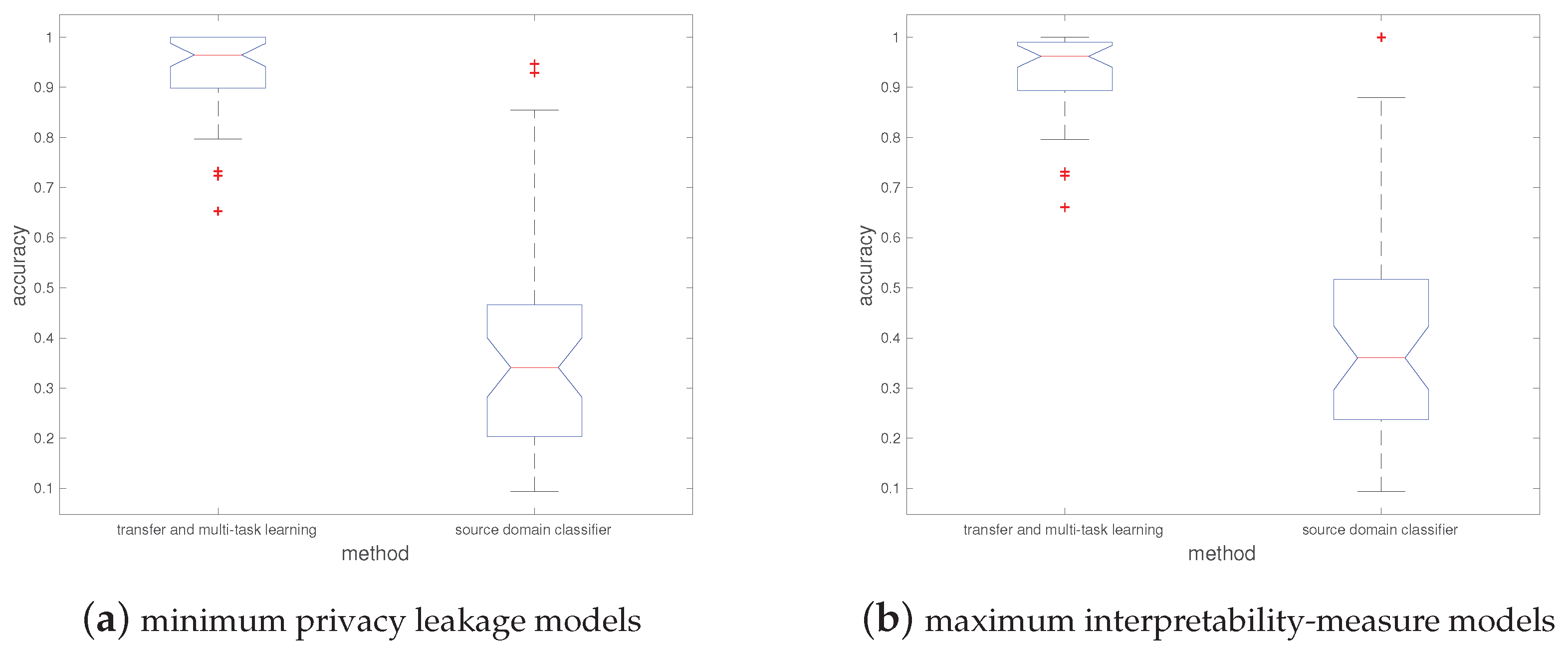
Figure 6.
The box plots of accuracies obtained in detecting mental stress on 48 different subjects.
Figure 6.
The box plots of accuracies obtained in detecting mental stress on 48 different subjects.
Figure 7.
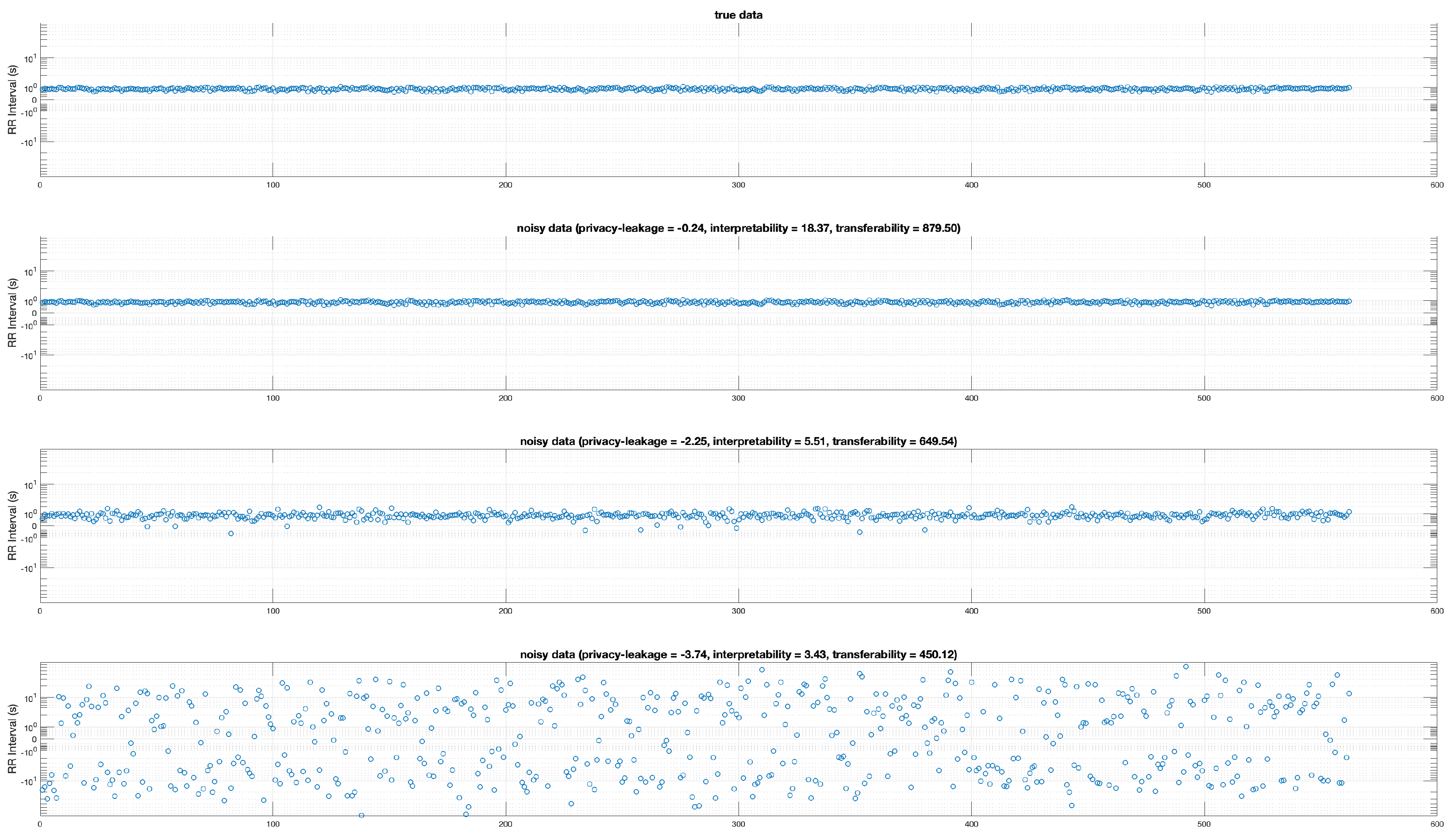
A display of source domain R-R interval data corresponding to different levels of privacy leakage, interpretability measure, and transferability measure.
Figure 7.
A display of source domain R-R interval data corresponding to different levels of privacy leakage, interpretability measure, and transferability measure.
Table 1.
Core issues with TAI principles and solution approaches.
Table 1.
Core issues with TAI principles and solution approaches.
| TAI Principle | Issue | Solution Approach |
|---|
| Beneficence | I1:
| transfer learning |
| I2: | federated learning |
| Non-maleficence | I3: | |
| I4: | |
| Autonomy | I5: | |
| Justice | I6: | federated learning |
| Explicability | I7: | |
Table 2.
Introduced variables and mappings.
Table 2.
Introduced variables and mappings.
| Symbol/Mapping | Definition/Meaning |
|---|
| |
| |
| |
| |
| |
| |
| |
| target domain data vector |
| |
| |
| |
| |
| |
| |
Table 3.
Results of experiments on MNIST dataset for evaluating privacy leakage, interpretability, and transferability.
Table 3.
Results of experiments on MNIST dataset for evaluating privacy leakage, interpretability, and transferability.
| Method | Privacy
Leakage | Interpretability
Measure | Transferability
Measure | Classification
Accuracy |
|---|
| −50.72 | −2.14 | −664.52 | 0.9510 |
| −50.72 | −2.14 | −664.52 | 0.1760 |
| 362.83 | 5.44 | 451.93 | 0.9920 |
| 362.83 | 5.44 | 451.93 | 0.9950 |
| 362.83 | 5.44 | 451.93 | 0.9920 |
| 362.83 | 5.44 | 451.93 | 0.9950 |
Table 4.
Accuracy (in %, averaged over 20 experiments) obtained in amazon→caltech256 semi-supervised transfer learning experiments. The first and second best performances have been marked.
Table 4.
Accuracy (in %, averaged over 20 experiments) obtained in amazon→caltech256 semi-supervised transfer learning experiments. The first and second best performances have been marked.
| Method | Feature Type | Accuracy (%) |
|---|
| privacy-preserving maximum interpretability-measure model | VGG-FC6 | 82.6 |
| privacy-preserving maximum transferability-measure model | VGG-FC6 | 82.6 |
| non-private ILS (1-NN) | VGG-FC6 | 83.3 |
| non-private CDLS | VGG-FC6 | 78.1 |
| non-private MMDT | VGG-FC6 | 78.7 |
| non-private HFA | VGG-FC6 | 75.5 |
| non-private OBTL | SURF | 41.5 |
| non-private ILS (1-NN) | SURF | 43.6 |
| non-private CDLS | SURF | 35.3 |
| non-private MMDT | SURF | 36.4 |
| non-private HFA | SURF | 31.0 |
Table 5.
Accuracy (in %, averaged over 20 experiments) obtained in amazon→dslr semi-supervised transfer learning experiments. The first and second best performances have been marked.
Table 5.
Accuracy (in %, averaged over 20 experiments) obtained in amazon→dslr semi-supervised transfer learning experiments. The first and second best performances have been marked.
| Method | Feature Type | Accuracy (%) |
|---|
| privacy-preserving maximum interpretability-measure model | VGG-FC6 | 88.5 |
| privacy-preserving maximum transferability-measure model | VGG-FC6 | 88.7 |
| non-private ILS (1-NN) | VGG-FC6 | 87.7 |
| non-private CDLS | VGG-FC6 | 86.9 |
| non-private MMDT | VGG-FC6 | 77.1 |
| non-private HFA | VGG-FC6 | 87.1 |
| non-private OBTL | SURF | 60.2 |
| non-private ILS (1-NN) | SURF | 49.8 |
| non-private CDLS | SURF | 60.4 |
| non-private MMDT | SURF | 56.7 |
| non-private HFA | SURF | 55.1 |
Table 6.
Accuracy (in %, averaged over 20 experiments) obtained in amazon→webcam semi-supervised transfer learning experiments. The first and second best performances have been marked.
Table 6.
Accuracy (in %, averaged over 20 experiments) obtained in amazon→webcam semi-supervised transfer learning experiments. The first and second best performances have been marked.
| Method | Feature Type | Accuracy (%) |
|---|
| privacy-preserving maximum interpretability-measure model | VGG-FC6 | 89.3 |
| privacy-preserving maximum transferability-measure model | VGG-FC6 | 89.3 |
| non-private ILS (1-NN) | VGG-FC6 | 90.7 |
| non-private CDLS | VGG-FC6 | 91.2 |
| non-private MMDT | VGG-FC6 | 82.5 |
| non-private HFA | VGG-FC6 | 87.9 |
| non-private OBTL | SURF | 72.4 |
| non-private ILS (1-NN) | SURF | 59.7 |
| non-private CDLS | SURF | 68.7 |
| non-private MMDT | SURF | 64.6 |
| non-private HFA | SURF | 57.4 |
Table 7.
Accuracy (in %, averaged over 20 experiments) obtained in caltech256→amazon semi-supervised transfer learning experiments. The first and second best performances have been marked.
Table 7.
Accuracy (in %, averaged over 20 experiments) obtained in caltech256→amazon semi-supervised transfer learning experiments. The first and second best performances have been marked.
| Method | Feature Type | Accuracy (%) |
|---|
| privacy-preserving maximum interpretability-measure model | VGG-FC6 | 92.6 |
| privacy-preserving maximum transferability-measure model | VGG-FC6 | 92.6 |
| non-private ILS (1-NN) | VGG-FC6 | 89.7 |
| non-private CDLS | VGG-FC6 | 88.0 |
| non-private MMDT | VGG-FC6 | 85.9 |
| non-private HFA | VGG-FC6 | 86.2 |
| non-private OBTL | SURF | 54.8 |
| non-private ILS (1-NN) | SURF | 55.1 |
| non-private CDLS | SURF | 50.9 |
| non-private MMDT | SURF | 49.4 |
| non-private HFA | SURF | 43.8 |
Table 8.
Accuracy (in %, averaged over 20 experiments) obtained in caltech256→dslr semi-supervised transfer learning experiments. The first and second best performances have been marked.
Table 8.
Accuracy (in %, averaged over 20 experiments) obtained in caltech256→dslr semi-supervised transfer learning experiments. The first and second best performances have been marked.
| Method | Feature Type | Accuracy (%) |
|---|
| privacy-preserving maximum interpretability-measure model | VGG-FC6 | 89.1 |
| privacy-preserving maximum transferability-measure model | VGG-FC6 | 89.1 |
| non-private ILS (1-NN) | VGG-FC6 | 86.9 |
| non-private CDLS | VGG-FC6 | 86.3 |
| non-private MMDT | VGG-FC6 | 77.9 |
| non-private HFA | VGG-FC6 | 87.0 |
| non-private OBTL | SURF | 61.5 |
| non-private ILS (1-NN) | SURF | 56.2 |
| non-private CDLS | SURF | 59.8 |
| non-private MMDT | SURF | 56.5 |
| non-private HFA | SURF | 55.6 |
Table 9.
Accuracy (in %, averaged over 20 experiments) obtained in caltech256→webcam semi-supervised transfer learning experiments. The first and second best performances have been marked.
Table 9.
Accuracy (in %, averaged over 20 experiments) obtained in caltech256→webcam semi-supervised transfer learning experiments. The first and second best performances have been marked.
| Method | Feature Type | Accuracy (%) |
|---|
| privacy-preserving maximum interpretability-measure model | VGG-FC6 | 87.8 |
| privacy-preserving maximum transferability-measure model | VGG-FC6 | 87.7 |
| non-private ILS (1-NN) | VGG-FC6 | 91.4 |
| non-private CDLS | VGG-FC6 | 89.7 |
| non-private MMDT | VGG-FC6 | 82.8 |
| non-private HFA | VGG-FC6 | 86.0 |
| non-private OBTL | SURF | 71.1 |
| non-private ILS (1-NN) | SURF | 62.9 |
| non-private CDLS | SURF | 66.3 |
| non-private MMDT | SURF | 63.8 |
| non-private HFA | SURF | 58.1 |
Table 10.
Accuracy (in %, averaged over 20 experiments) obtained in dslr→amazon semi-supervised transfer learning experiments. The first and second best performances have been marked.
Table 10.
Accuracy (in %, averaged over 20 experiments) obtained in dslr→amazon semi-supervised transfer learning experiments. The first and second best performances have been marked.
| Method | Feature Type | Accuracy (%) |
|---|
| privacy-preserving maximum interpretability-measure model | VGG-FC6 | 91.9 |
| privacy-preserving maximum transferability-measure model | VGG-FC6 | 91.9 |
| non-private ILS (1-NN) | VGG-FC6 | 88.7 |
| non-private CDLS | VGG-FC6 | 88.1 |
| non-private MMDT | VGG-FC6 | 83.6 |
| non-private HFA | VGG-FC6 | 85.9 |
| non-private OBTL | SURF | 54.4 |
| non-private ILS (1-NN) | SURF | 55.0 |
| non-private CDLS | SURF | 50.7 |
| non-private MMDT | SURF | 46.9 |
| non-private HFA | SURF | 42.9 |
Table 11.
Accuracy (in %, averaged over 20 experiments) obtained in dslr→caltech256 semi-supervised transfer learning experiments. The first and second best performances have been marked.
Table 11.
Accuracy (in %, averaged over 20 experiments) obtained in dslr→caltech256 semi-supervised transfer learning experiments. The first and second best performances have been marked.
| Method | Feature Type | Accuracy (%) |
|---|
| privacy-preserving maximum interpretability-measure model | VGG-FC6 | 82.9 |
| privacy-preserving maximum transferability-measure model | VGG-FC6 | 82.9 |
| non-private ILS (1-NN) | VGG-FC6 | 81.4 |
| non-private CDLS | VGG-FC6 | 77.9 |
| non-private MMDT | VGG-FC6 | 71.8 |
| non-private HFA | VGG-FC6 | 74.8 |
| non-private OBTL | SURF | 40.3 |
| non-private ILS (1-NN) | SURF | 41.0 |
| non-private CDLS | SURF | 34.9 |
| non-private MMDT | SURF | 34.1 |
| non-private HFA | SURF | 30.9 |
Table 12.
Accuracy (in %, averaged over 20 experiments) obtained in dslr→webcam semi-supervised transfer learning experiments. The first and second best performances have been marked.
Table 12.
Accuracy (in %, averaged over 20 experiments) obtained in dslr→webcam semi-supervised transfer learning experiments. The first and second best performances have been marked.
| Method | Feature Type | Accuracy (%) |
|---|
| privacy-preserving maximum interpretability-measure model | VGG-FC6 | 88.9 |
| privacy-preserving maximum transferability-measure model | VGG-FC6 | 89.0 |
| non-private ILS (1-NN) | VGG-FC6 | 95.5 |
| non-private CDLS | VGG-FC6 | 90.7 |
| non-private MMDT | VGG-FC6 | 86.1 |
| non-private HFA | VGG-FC6 | 86.9 |
| non-private OBTL | SURF | 83.2 |
| non-private ILS (1-NN) | SURF | 80.1 |
| non-private CDLS | SURF | 68.5 |
| non-private MMDT | SURF | 74.1 |
| non-private HFA | SURF | 60.5 |
Table 13.
Accuracy (in %, averaged over 20 experiments) obtained in webcam→amazon semi-supervised transfer learning experiments. The first and second best performances have been marked.
Table 13.
Accuracy (in %, averaged over 20 experiments) obtained in webcam→amazon semi-supervised transfer learning experiments. The first and second best performances have been marked.
| Method | Feature Type | Accuracy (%) |
|---|
| privacy-preserving maximum interpretability-measure model | VGG-FC6 | 92.3 |
| privacy-preserving maximum transferability-measure model | VGG-FC6 | 92.3 |
| non-private ILS (1-NN) | VGG-FC6 | 88.8 |
| non-private CDLS | VGG-FC6 | 87.4 |
| non-private MMDT | VGG-FC6 | 84.7 |
| non-private HFA | VGG-FC6 | 85.1 |
| non-private OBTL | SURF | 55.0 |
| non-private ILS (1-NN) | SURF | 54.3 |
| non-private CDLS | SURF | 51.8 |
| non-private MMDT | SURF | 47.7 |
| non-private HFA | SURF | 56.5 |
Table 14.
Accuracy (in %, averaged over 20 experiments) obtained in webcam→caltech256 semi-supervised transfer learning experiments. The first and second best performances have been marked.
Table 14.
Accuracy (in %, averaged over 20 experiments) obtained in webcam→caltech256 semi-supervised transfer learning experiments. The first and second best performances have been marked.
| Method | Feature Type | Accuracy (%) |
|---|
| privacy-preserving maximum interpretability-measure model | VGG-FC6 | 81.4 |
| privacy-preserving maximum transferability-measure model | VGG-FC6 | 81.4 |
| non-private ILS (1-NN) | VGG-FC6 | 82.8 |
| non-private CDLS | VGG-FC6 | 78.2 |
| non-private MMDT | VGG-FC6 | 73.6 |
| non-private HFA | VGG-FC6 | 74.4 |
| non-private OBTL | SURF | 37.4 |
| non-private ILS (1-NN) | SURF | 38.6 |
| non-private CDLS | SURF | 33.5 |
| non-private MMDT | SURF | 32.2 |
| non-private HFA | SURF | 29.0 |
Table 15.
Accuracy (in %, averaged over 20 experiments) obtained in webcam→dslr semi-supervised transfer learning experiments. The first and second best performances have been marked.
Table 15.
Accuracy (in %, averaged over 20 experiments) obtained in webcam→dslr semi-supervised transfer learning experiments. The first and second best performances have been marked.
| Method | Feature Type | Accuracy (%) |
|---|
| privacy-preserving maximum interpretability-measure model | VGG-FC6 | 90.8 |
| privacy-preserving maximum transferability-measure model | VGG-FC6 | 90.2 |
| non-private ILS (1-NN) | VGG-FC6 | 94.5 |
| non-private CDLS | VGG-FC6 | 88.5 |
| non-private MMDT | VGG-FC6 | 85.1 |
| non-private HFA | VGG-FC6 | 87.3 |
| non-private OBTL | SURF | 75.0 |
| non-private ILS (1-NN) | SURF | 70.8 |
| non-private CDLS | SURF | 60.7 |
| non-private MMDT | SURF | 67.0 |
| non-private HFA | SURF | 56.5 |
Table 16.
Comparison of the methods on “Office+Caltech256” dataset.
Table 16.
Comparison of the methods on “Office+Caltech256” dataset.
| Method | Number of Experiments
in Which Method
Performed Best |
|---|
| privacy-preserving maximum transferability-measure model | 6 |
| privacy-preserving maximum interpretability-measure model | 5 |
| non-private ILS (1-NN) | 5 |
| non-private CDLS | 1 |
Table 17.
Results (median values) obtained in stress detection experiments on a dataset consisting of heart rate interval measurements.
Table 17.
Results (median values) obtained in stress detection experiments on a dataset consisting of heart rate interval measurements.
| Method | Privacy
Leakage | Interpretability
Measure | Transferability
Measure | Classification
Accuracy |
|---|
| −3.74 | 3.47 | 291.84 | 0.9647 |
| −3.74 | 3.47 | 291.84 | 0.3411 |
| 0.43 | 23.92 | 773.36 | 0.9619 |
| 0.43 | 23.92 | 773.36 | 0.3602 |