Advanced Manufacturing of PLA Surgical Templates for Orbital Floor Geometry: Optimizing Fidelity and Surface Morphology via Variable Layer Height MEX 3D Printing

 ,
,  ,
,  , , , , ,
  , and
, and
Highlights
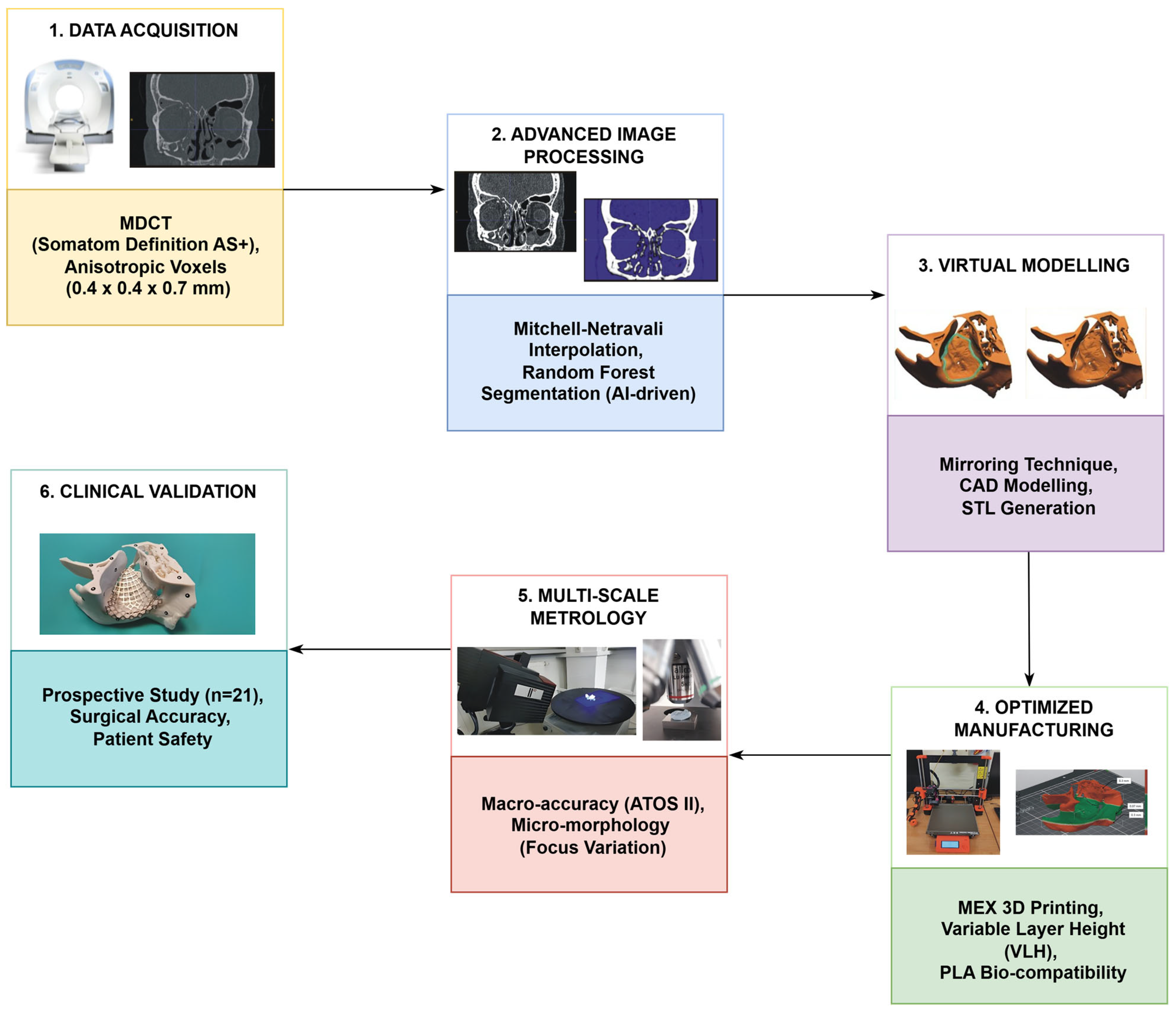
- Precision and Validation: The TARMM procedure ensures orbital floor geometry accuracy up to 0.1 mm, which has been clinically validated across 21 medical cases.
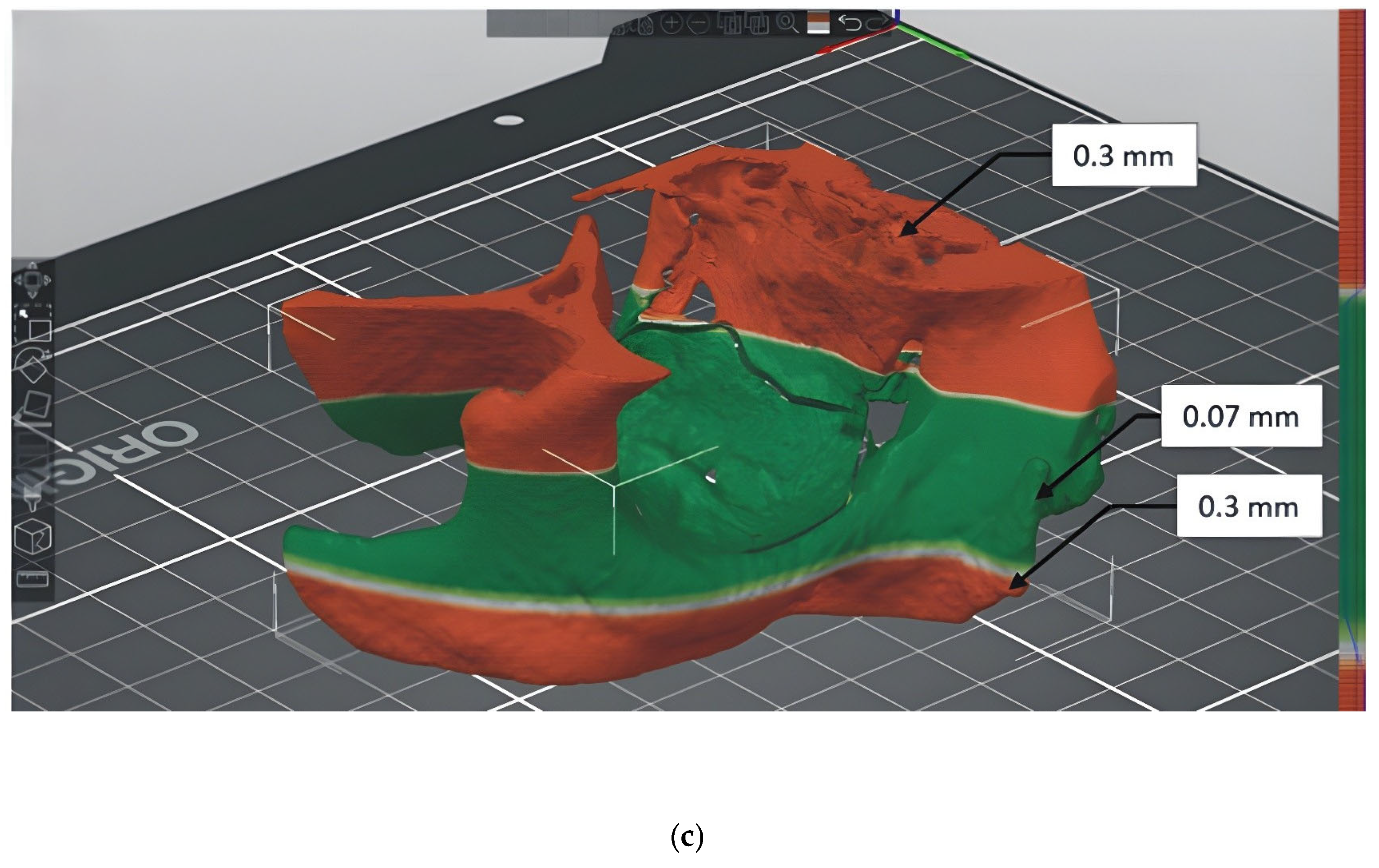
- VLH Optimization: Implementing Variable Layer Height (0.07 mm for critical details and 0.3 mm for the base) eliminates stair-step artifacts while maintaining manufacturing speed.
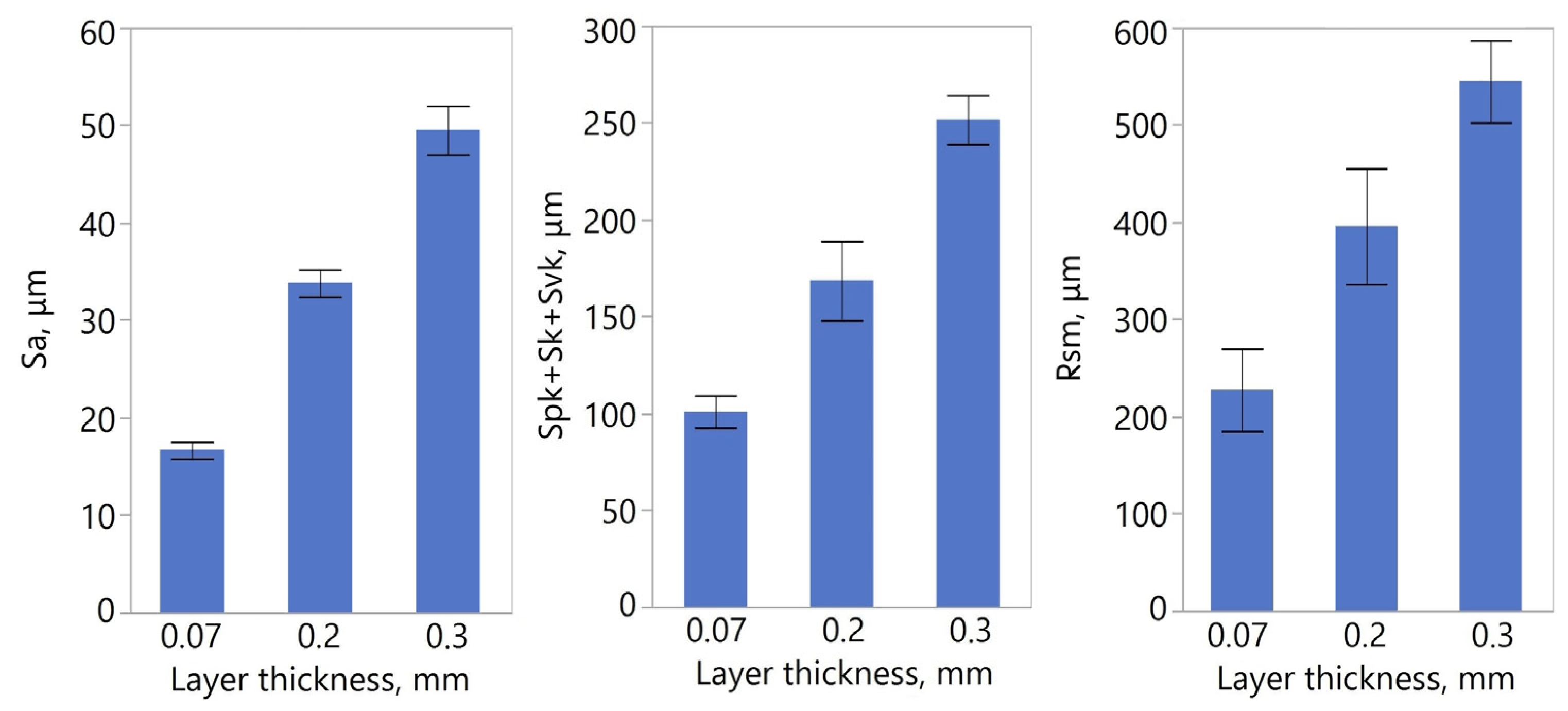
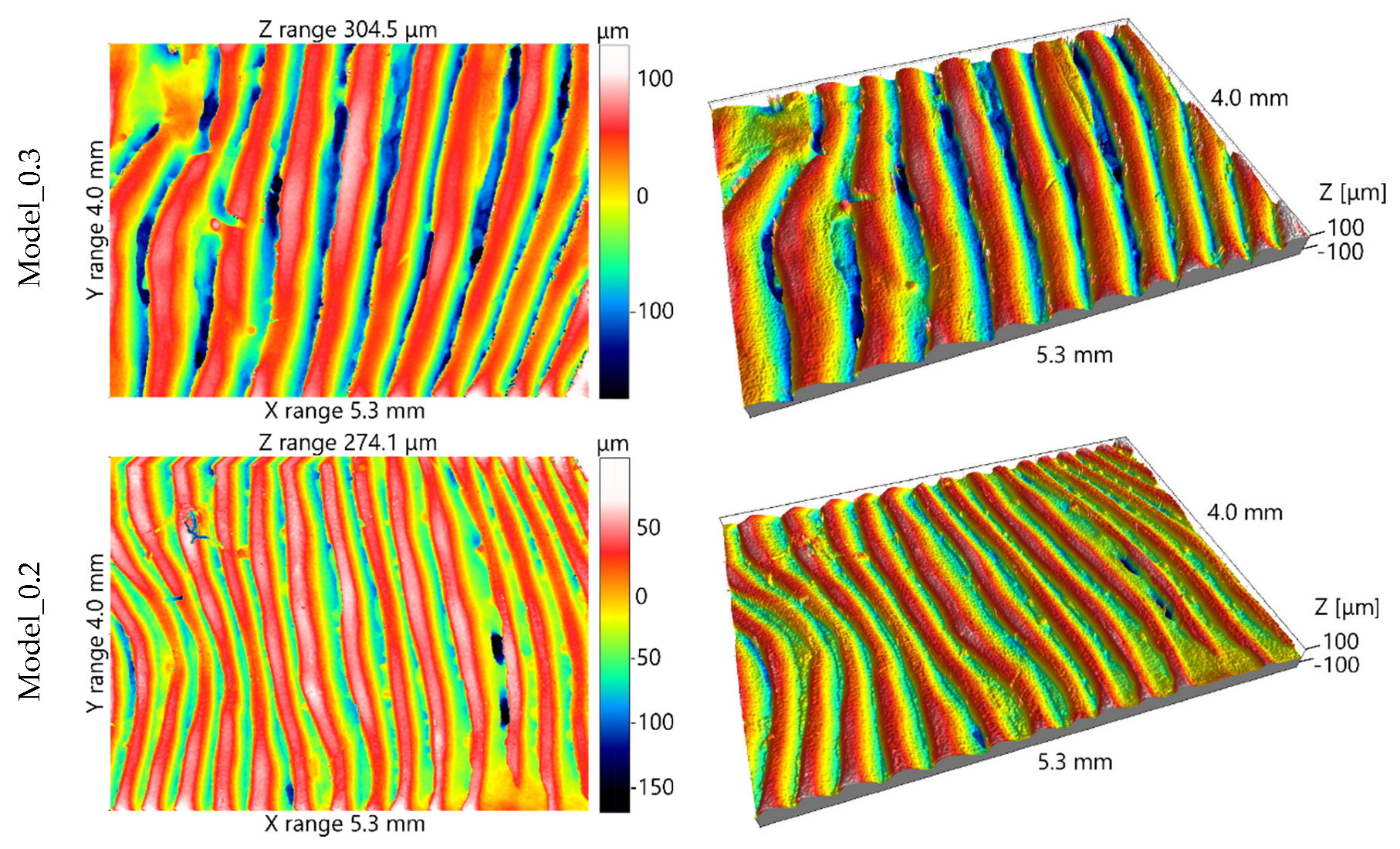
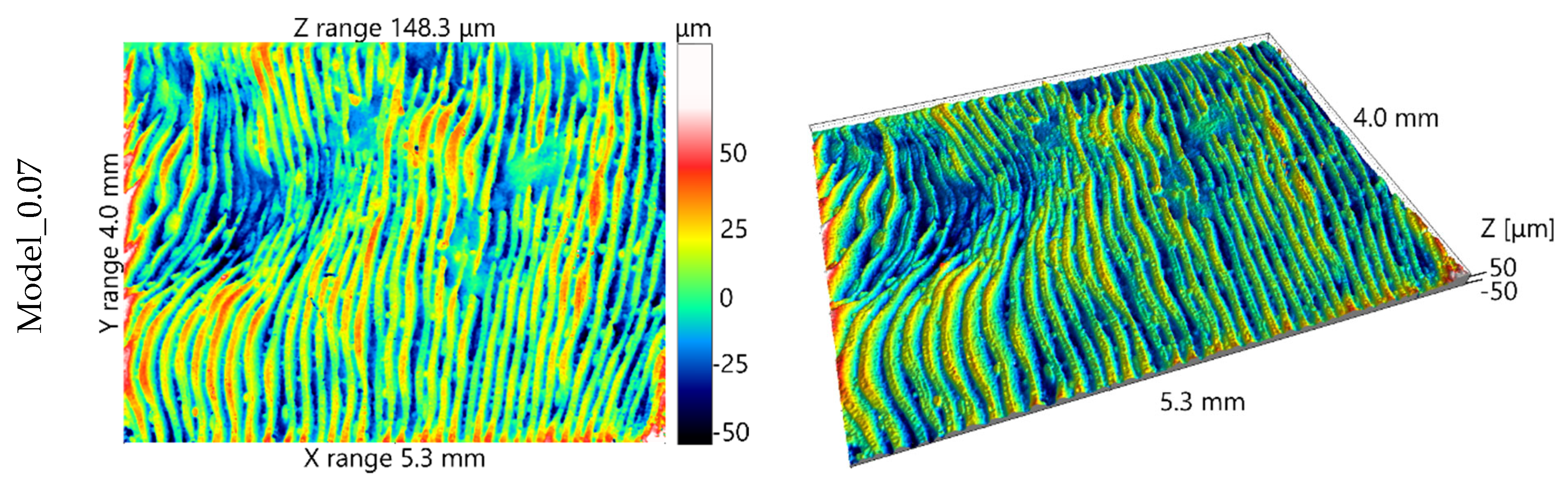
- Surface Quality: A strong correlation (r = 0.99) between layer thickness and roughness allows for the smoothness necessary for precise contouring of titanium meshes.
- Safety and Cost-Effectiveness: The method provides an economical and non-toxic alternative to expensive systems based on photopolymer resins.
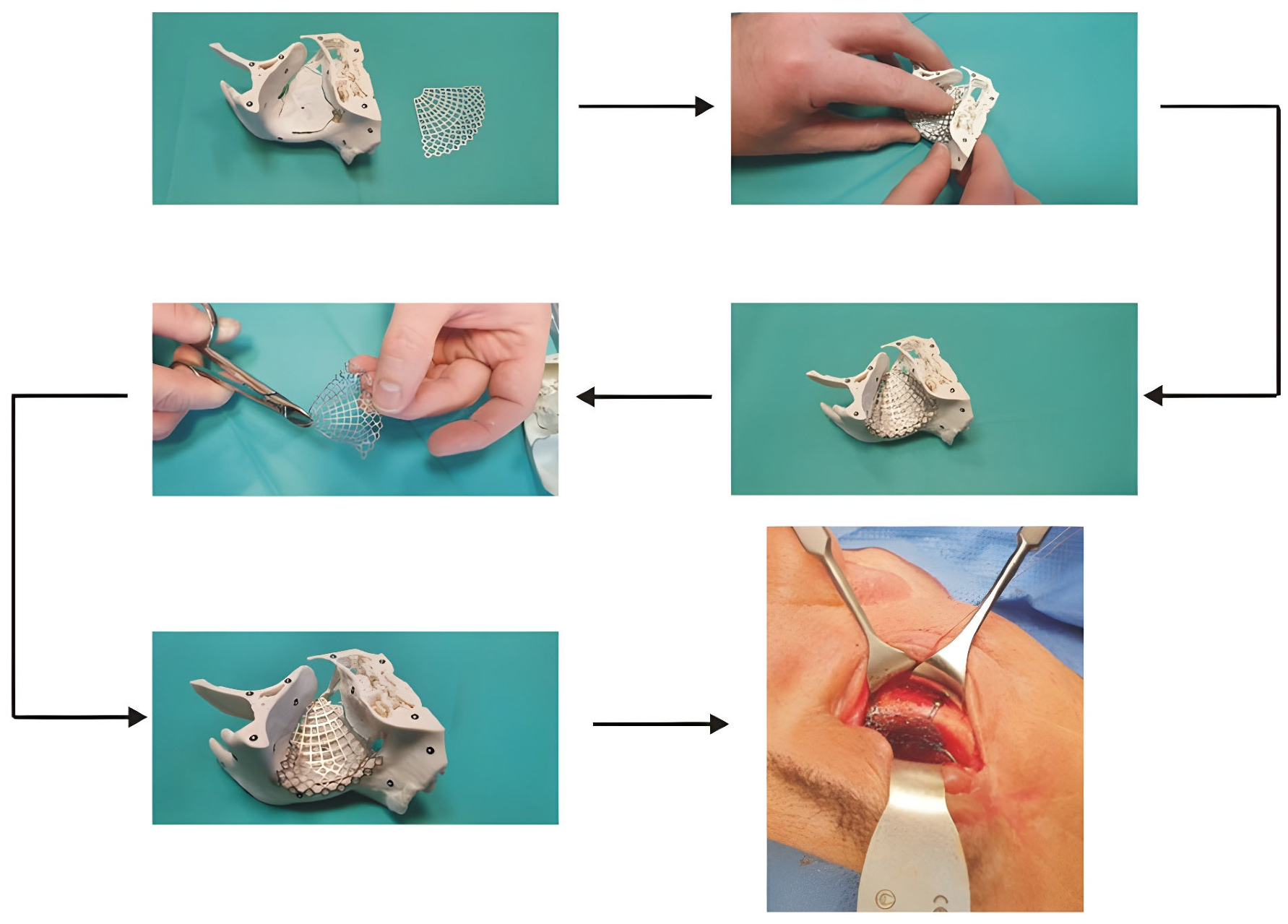
- Operational Efficiency: Reducing model preparation time to 30 min enhances operating theatre efficiency and minimizes the risk of intraoperative errors.
- Surgical Standard: The TARMM workflow is a scalable solution ready for implementation as a routine standard in maxillofacial surgery.
Abstract
1. Introduction
2. Materials and Methods
2.1. The Reconstruction Process of Orbital Geometry
2.2. The 3D-CAD Modelling Process of the Surgical Template
2.3. Manufacturing Surgical Templates Using an MEX Process
2.4. Macro- and Micro-Geometry Measurements of Surgical Templates
3. Results and Discussion
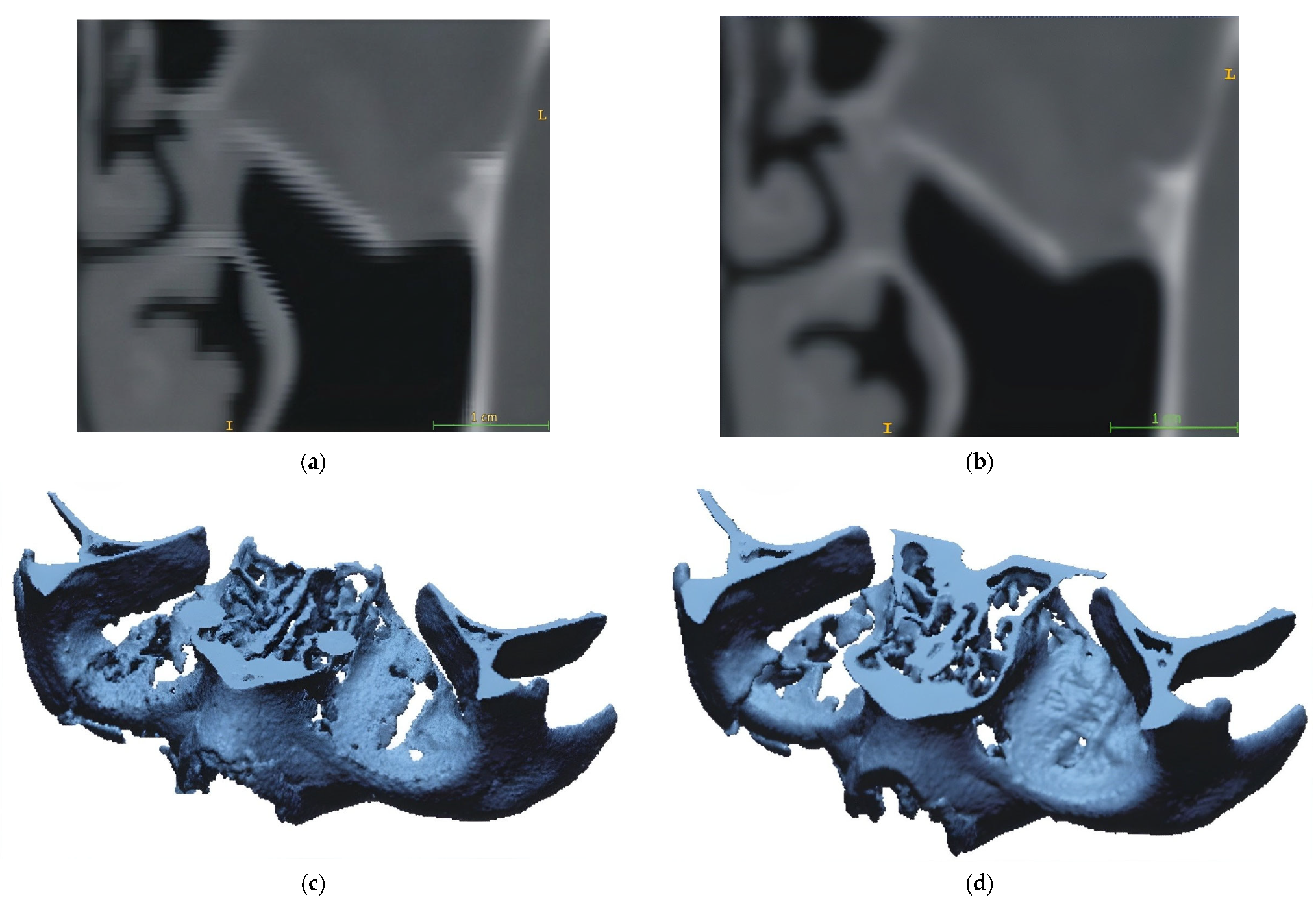
- The exceptionally thin and complex anatomy of the bone.
- The technical limitations inherent in multidetector tomography.
- The subjective nature of selecting segmentation thresholds can lead to unintended geometric alterations.
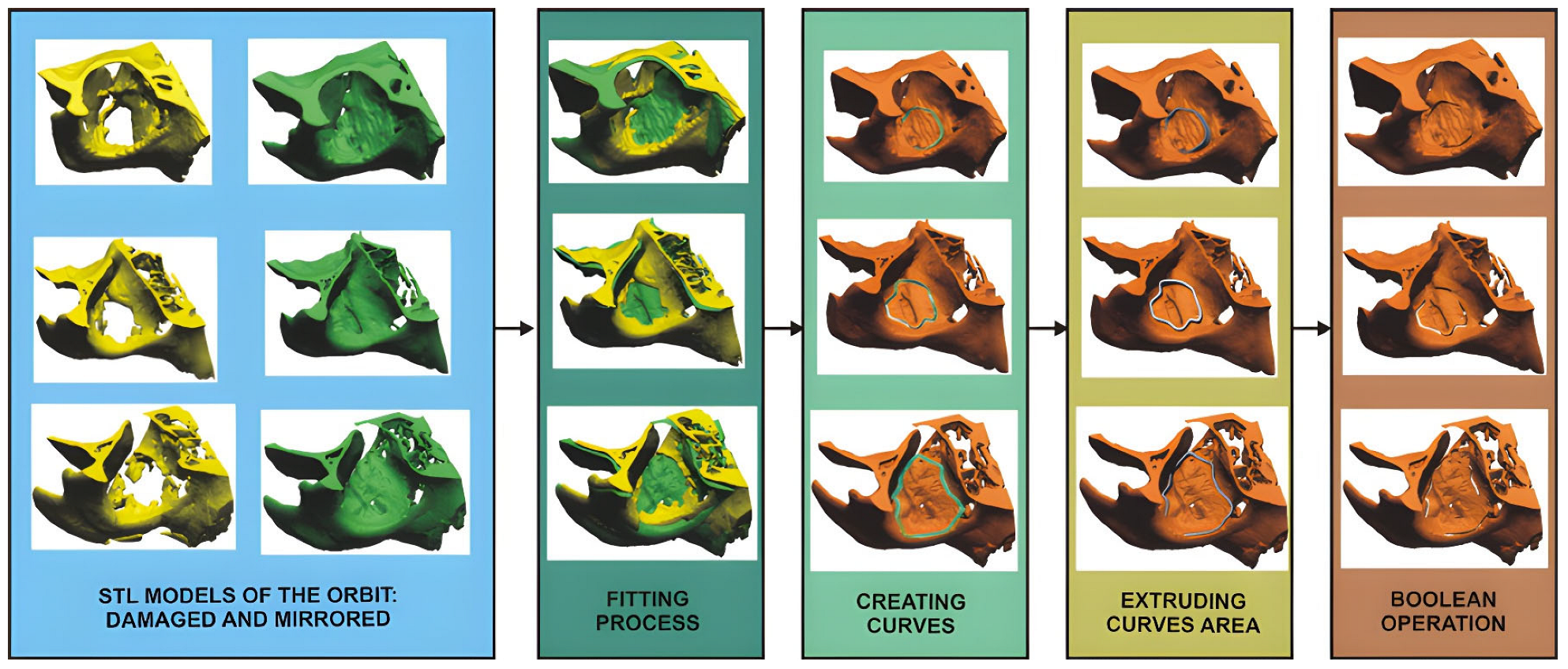
- Incorrect triangle orientation (inverted normals);
- Duplicated edges and vertices;
- Overlapping or duplicated triangles.
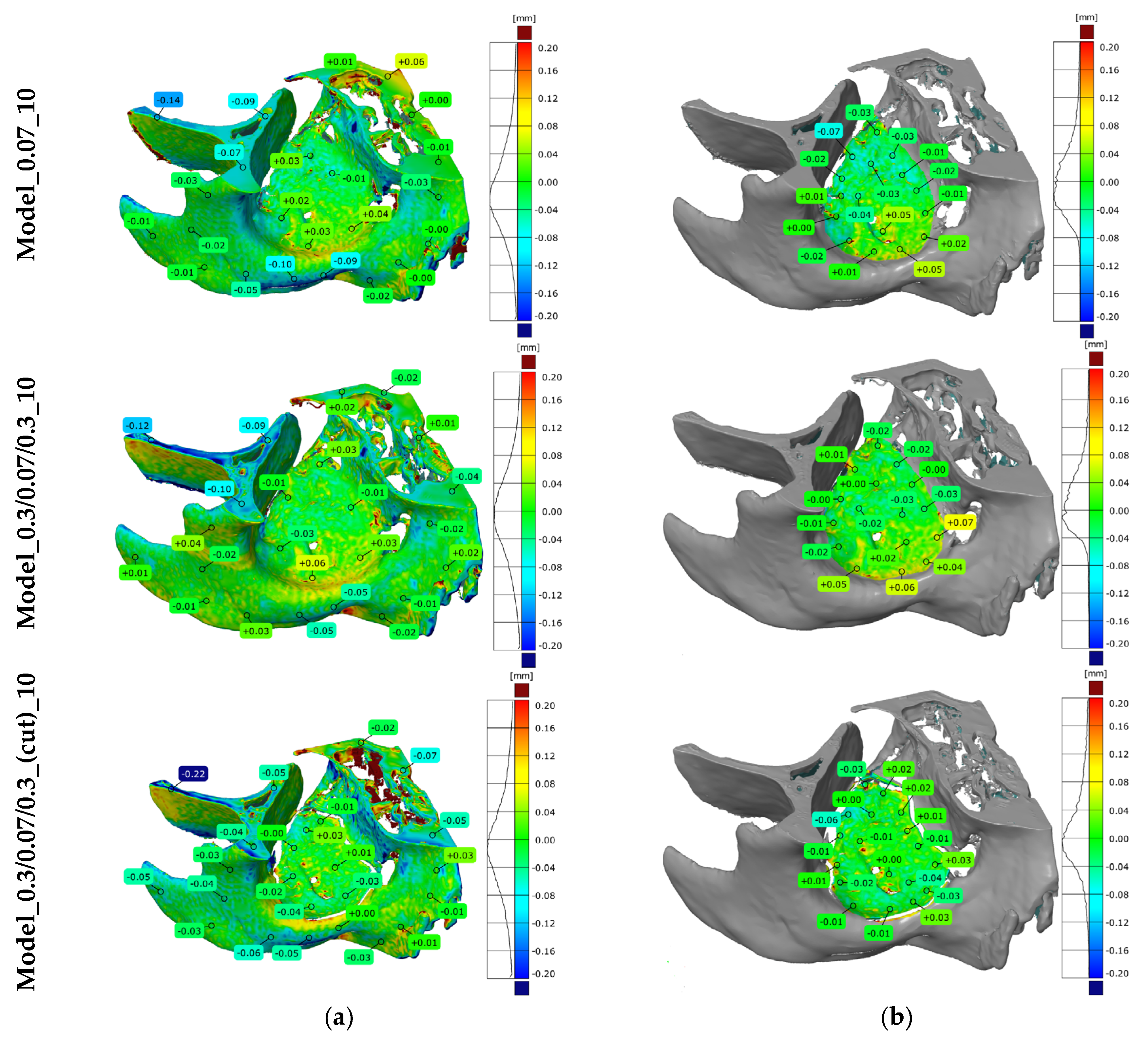
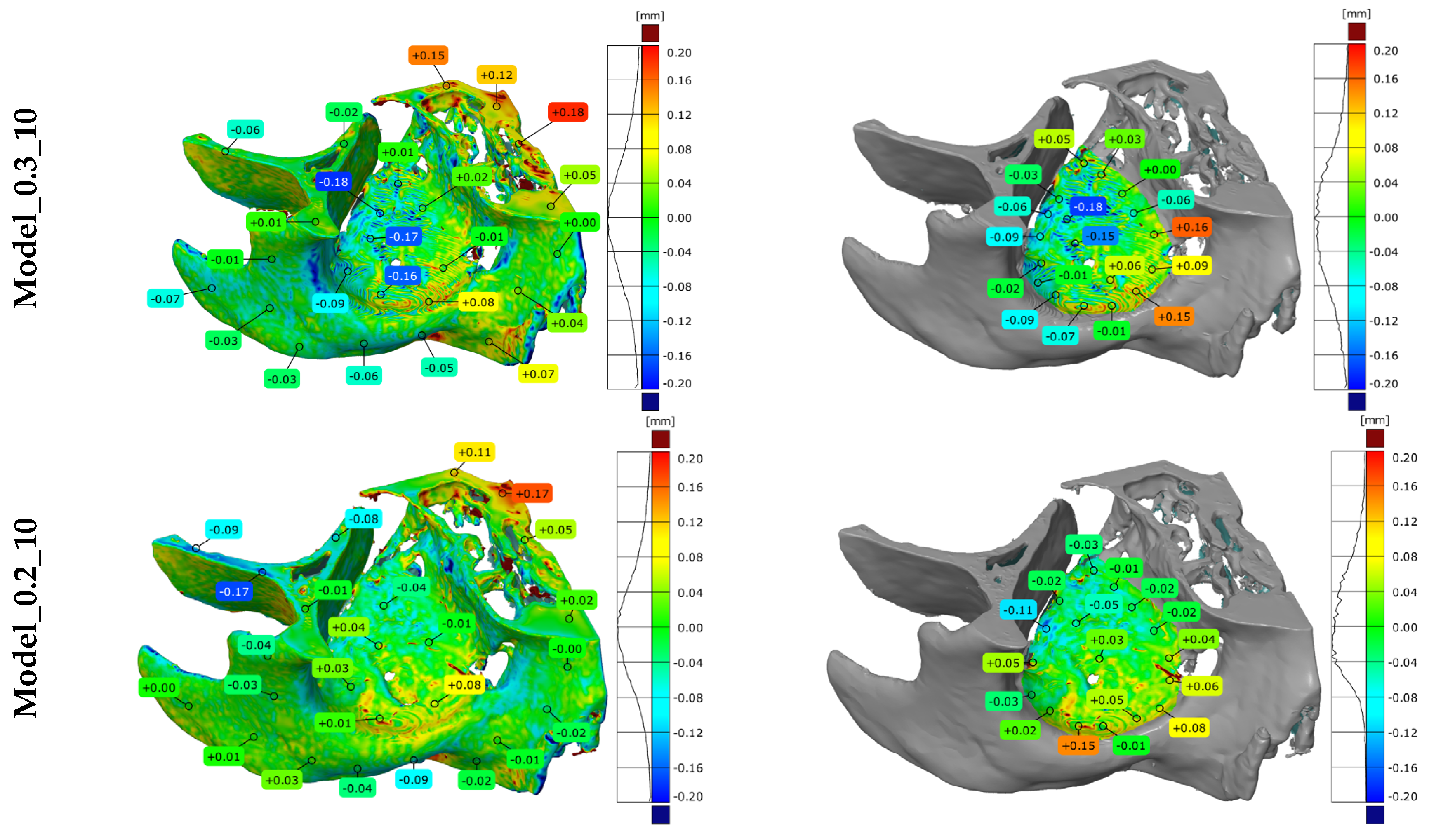
- Three-dimensional deviation maps for the selected patient.
- Histogram data distribution for the entire orbital model (Figure 7a);
- A segment of the orbital floor geometry is used as the basis for forming the implant (Figure 7b).

4. Conclusions
5. Patents
Supplementary Materials
Author Contributions
Funding
Institutional Review Board Statement
Informed Consent Statement
Data Availability Statement
Acknowledgments
Conflicts of Interest
References
- Amin, D.; Al-Mulki, K.; Henriquez, O.A.; Cheng, A.; Roser, S.; Abramowicz, S. Review of Orbital Fractures in an Urban Level I Trauma Centre. Craniomaxillofac. Trauma Reconstr. 2021, 13, 174–179. [Google Scholar] [CrossRef]
- Hwang, K.; You, S.H.; Sohn, I.A. Analysis of Orbital Bone Fractures. J. Craniofacial Surg. 2009, 20, 1218–1223. [Google Scholar] [CrossRef]
- Avashia, Y.J.; Sastry, A.; Fan, K.L.; Mir, H.S.; Thaller, S.R. Materials Used for Reconstruction After Orbital Floor Fracture. J. Craniofacial Surg. 2012, 23, S49–S55. [Google Scholar] [CrossRef] [PubMed]
- Mandolini, M.; Brunzini, A.; Germani, M.; Manieri, S.; Mazzoli, A.; Pagnoni, M. Selective laser sintered mould for orbital cavity reconstruction. Rapid Prototyp. J. 2019, 25, 95–103. [Google Scholar] [CrossRef]
- Kwon, J.; Kim, G.B.; Kang, S.; Byeon, Y.; Sa, H.-S.; Kim, N. Accuracy of 3D printed guide for orbital implant. Rapid Prototyp. J. 2020, 26, 1363–1370. [Google Scholar] [CrossRef]
- Callahan, A.B.; Campbell, A.A.; Petris, C.; Kazim, M. Low-Cost 3D Printing Orbital Implant Templates in Secondary Orbital Reconstructions. Ophthalmic Plast. Reconstr. Surg. 2017, 33, 376–380. [Google Scholar] [CrossRef]
- Podolsky, D.J.; Mainprize, J.G.; Edwards, G.P.; Antonyshyn, O.M. Patient-Specific Orbital Implants. J. Craniofacial Surg. 2016, 27, 131–133. [Google Scholar] [CrossRef]
- Kim, Y.C.; Min, K.H.; Choi, J.W.; Koh, K.S.; Oh, T.S.; Jeong, W.S. Patient-specific puzzle implant preformed with 3D-printed rapid prototype model for combined orbital floor and medial wall fracture. J. Plast. Reconstr. Aesthetic Surg. 2018, 71, 496–503. [Google Scholar] [CrossRef]
- Kanno, T.; Karino, M.; Yoshino, A.; Koike, T.; Ide, T.; Tatsumi, H.; Tsunematsu, K.; Yoshimatsu, H.; Sekine, J. Feasibility of Single Folded Unsintered Hydroxyapatite Particles/Poly-L-Lactide Composite Sheet in Combined Orbital Floor and Medial Wall Fracture Reconstruction. J. Hard Tissue Biol. 2017, 26, 237–244. [Google Scholar] [CrossRef]
- Guillaume, O.; Geven, M.A.; Varjas, V.; Varga, P.; Gehweiler, D.; Stadelmann, V.A.; Smidt, T.; Zeiter, S.; Sprecher, C.; Bos, R.R.; et al. Orbital floor repair using patient specific osteoinductive implant made by stereolithography. Biomaterials 2020, 233, 119721. [Google Scholar] [CrossRef]
- Tabaković, S.Z.; Konstantinović, V.S.; Radosavljević, R.; Movrin, D.; Hadžistević, M.; Hatab, N. Application of Computer-Aided Designing and Rapid Prototyping Technologies in Reconstruction of Blowout Fractures of the Orbital Floor. J. Craniofacial Surg. 2015, 26, 1558–1563. [Google Scholar] [CrossRef]
- Sagar, S.; Natrajan, S.; Naik, S.; Gaur, B.; Chetana, M.S.; Syed, S.A.; Khambati, B.; Ghyar, R.; Bhallamudi, R. Design, Additive Manufacturing and Application of Patient-Customized Orbital Implants. In Design for Tomorrow—Volume 3; Springer: Singapore, 2021; pp. 575–584. [Google Scholar] [CrossRef]
- Manmadhachary, A.; Aditya, M.A.; Haranadha, R.M. Manufacturing of customized implants for orbital fractures using 3D printing. Bioprinting 2021, 21, e00118. [Google Scholar] [CrossRef]
- Zhou, P.; Chambers, C.B. Orbital Fractures. Semin. Plast. Surg. 2021, 35, 269–273. [Google Scholar] [CrossRef]
- Mohd, J.; Haleem, A. Additive manufacturing applications in medical cases: A literature based review. Alex. J. Med. 2018, 54, 411–422. [Google Scholar] [CrossRef]
- Tack, P.; Victor, J.; Gemmel, P.; Annemans, L. 3D-printing techniques in a medical setting: A systematic literature review. BioMed. Eng. OnLine 2016, 15, 115. [Google Scholar] [CrossRef] [PubMed]
- Turek, P. Automating the process of designing and manufacturing polymeric models of anatomical structures of mandible with Industry 4.0 convention. Polimery 2019, 64, 522–529. [Google Scholar] [CrossRef]
- Kumar, D.; Yadav, P.K.; Bhaskar, J. 3D Modelling of Human Joints Using Reverse Engineering for Biomedical Applications. In International Conference on Advanced Production and Industrial Engineering; Springer Nature: Singapore, 2019; pp. 865–875. [Google Scholar] [CrossRef]
- Culmone, C.; Smit, G.; Breedveld, P. Additive manufacturing of medical instruments: A state-of-the-art review. Addit. Manuf. 2019, 27, 461–473. [Google Scholar] [CrossRef]
- Juneja, M.; Thakur, N.; Kumar, D.; Gupta, A.; Bajwa, B.; Jindal, P. Accuracy in dental surgical guide fabrication using different 3-D printing techniques. Addit. Manuf. 2018, 22, 243–255. [Google Scholar] [CrossRef]
- Thompson, M.K.; Moroni, G.; Vaneker, T.; Fadel, G.; Campbell, R.I.; Gibson, I.; Bernard, A.; Schulz, J.; Graf, P.; Ahuja, B.; et al. Design for Additive Manufacturing: Trends, opportunities, considerations, and constraints. CIRP Ann. 2016, 65, 737–760. [Google Scholar] [CrossRef]
- del Junco, M.; Okhunov, Z.; Yoon, R.; Khanipour, R.; Juncal, S.; Abedi, G.; Lusch, A.; Landman, J. Development and Initial Porcine and Cadaver Experience with Three-Dimensional Printing of Endoscopic and Laparoscopic Equipment. J. Endourol. 2015, 29, 58–62. [Google Scholar] [CrossRef]
- Krieger, Y.S.; Roppenecker, D.B.; Stolzenburg, J.-U.; Lueth, T.C. First step towards an automated designed Multi-Arm Snake-Like Robot for minimally invasive surgery. In Proceedings of the 2016 6th IEEE International Conference on Biomedical Robotics and Biomechatronics (BioRob), Singapore, 26–29 June 2016; IEEE: Piscataway, NJ, USA, 2016; pp. 407–412. [Google Scholar] [CrossRef]
- Way, Y.; Mohamad, A.H.; Aesyhah. The Application of Rapid Prototyping Technology and Quality Functional Deployment (QFD) approach in enhancing the Endotracheal Tube Holder Model in Medical Application. MATEC Web Conf. 2015, 35, 02005. [Google Scholar] [CrossRef]
- Wang, X.; Tuomi, J.; Ma, A.A.; Paloheimo, K.-S.; Partanen, J.; Yliperttula, M. The Integrations of Biomaterials and Rapid Prototyping Techniques for Intelligent Manufacturing of Complex Organs. In Advances in Biomaterials Science and Biomedical Applications; Pignatello, R., Ed.; IntechOpen: London, UK, 2013; pp. 437–463. [Google Scholar] [CrossRef]
- O’MAlley, F.L.; Millward, H.; Eggbeer, D.; Williams, R.; Cooper, R. The use of adenosine triphosphate bioluminescence for assessing the cleanliness of additive-manufacturing materials used in medical applications. Addit. Manuf. 2016, 9, 25–29. [Google Scholar] [CrossRef]
- Lowther, M.; Louth, S.; Davey, A.; Hussain, A.; Ginestra, P.; Carter, L.; Eisenstein, N.; Grover, L.; Cox, S. Clinical, industrial, and research perspectives on powder bed fusion additively manufactured metal implants. Addit. Manuf. 2019, 28, 565–584. [Google Scholar] [CrossRef]
- Dubron, K.; Van Camp, P.; Jacobs, R.; Politis, C.; Shaheen, E. Accuracy of virtual planning and intraoperative navigation in zygomaticomaxillary complex fractures: A systematic review. J. Stomatol. Oral Maxillofac. Surg. 2022, 123, e841–e848. [Google Scholar] [CrossRef] [PubMed]
- Graham, D.O.; Lim, C.G.T.; Coghlan, P.; Erasmus, J. A Literature Review of Rapid Prototyping and Patient Specific Implants for the Treatment of Orbital Fractures. Craniomaxillofac. Trauma Reconstr. 2021, 15, 83–89. [Google Scholar] [CrossRef]
- Ngo, T.D.; Kashani, A.; Imbalzano, G.; Nguyen, K.T.Q.; Hui, D. Additive manufacturing (3D printing): A review of materials, methods, applications and challenges. Compos. Part B Eng. 2018, 143, 172–196. [Google Scholar] [CrossRef]
- Gardan, J. Additive manufacturing technologies. In Additive Manufacturing Handbook; CRC Press: Boca Raton, FL, USA, 2017; pp. 149–168. [Google Scholar] [CrossRef]
- Raphael, O.; Herve, R. Clinical Applications of Rapid Prototyping Models in Cranio-Maxillofacial Surgery. In Advanced Applications of Rapid Prototyping Technology in Modern Engineering; IntechOpen: London, UK, 2011; pp. 173–206. [Google Scholar] [CrossRef]
- Ganapathy, A.; Chen, D.; Elumalai, A.; Albers, B.; Tappa, K.; Jammalamadaka, U.; Hoegger, M.J.; Ballard, D.H. Guide for starting or optimizing a 3D printing clinical service. Methods 2022, 206, 41–52. [Google Scholar] [CrossRef]
- Gellrich, N.-C.; Eckstein, F.M.; Rahlf, B.; Lentge, F.; Spalthoff, S.; Jehn, P.; Korn, P. Computer-assisted orbital and midfacial reconstruction. Innov. Surg. Sci. 2023, 8, 185–194. [Google Scholar] [CrossRef]
- Thiele, O.C.; Nolte, I.M.; Mischkowski, R.A.; Safi, A.F.; Perrin, J.; Zinser, M.; Zöller, J.E.; Kreppel, M. Craniomaxillofacial patient-specific CAD/CAM implants based on cone-beam tomography data—A feasibility study. J. Cranio-Maxillofac. Surg. 2018, 46, 1461–1464. [Google Scholar] [CrossRef]
- Budzik, G.; Turek, P.; Traciak, J. The influence of change in slice thickness on the accuracy of reconstruction of cranium geometry. Proc. Inst. Mech. Eng. Part H J. Eng. Med. 2017, 231, 197–202. [Google Scholar] [CrossRef]
- van Eijnatten, M.; Berger, F.H.; de Graaf, P.; Koivisto, J.; Forouzanfar, T.; Wolff, J. Influence of CT parameters on STL model accuracy. Rapid Prototyp. J. 2017, 23, 678–685. [Google Scholar] [CrossRef]
- Romans, L. Computed Tomography for Technologists: A Comprehensive Text; Wolters Kluwer: Baltimore, MD, USA, 2011. [Google Scholar]
- Huotilainen, E.; Jaanimets, R.; Valášek, J.; Marcián, P.; Salmi, M.; Tuomi, J.; Mäkitie, A.; Wolff, J. Inaccuracies in additive manufactured medical skull models caused by the DICOM to STL conversion process. J. Cranio-Maxillofac. Surg. 2014, 42, e259–e265. [Google Scholar] [CrossRef]
- van Eijnatten, M.; Koivisto, J.; Karhu, K.; Forouzanfar, T.; Wolff, J. The impact of manual threshold selection in medical additive manufacturing. Int. J. Comput. Assist. Radiol. Surg. 2016, 12, 607–615. [Google Scholar] [CrossRef] [PubMed]
- Gibson, I.; Rosen, D.; Stucker, B.; Khorasani, M. Additive Manufacturing Technologies; Springer International Publishing: Cham, Switzerland, 2021. [Google Scholar] [CrossRef]
- Gibson, I.; Rosen, D.; Stucker, B.; Khorasani, M. Material Extrusion. In Additive Manufacturing Technologies; Springer: Cham, Switzerland, 2020; pp. 171–201. [Google Scholar] [CrossRef]
- Gibson, I.; Rosen, D.; Stucker, B.; Khorasani, M. Software for Additive Manufacturing. In Additive Manufacturing Technologies; Springer: Cham, Switzerland, 2021; pp. 491–524. [Google Scholar] [CrossRef]
- Chisena, R.S.; Engstrom, S.M.; Shih, J.A. Computed tomography evaluation of the porosity and fiber orientation in a short carbon fiber material extrusion filament and part. Addit. Manuf. 2020, 34, 101189. [Google Scholar] [CrossRef]
- Ravi, P.; Chepelev, L.L.; Stichweh, G.V.; Jones, B.S.; Rybicki, F.J. Medical 3D Printing Dimensional Accuracy for Multi-pathological Anatomical Models 3D Printed Using Material Extrusion. J. Digit. Imaging 2022, 35, 613–622. [Google Scholar] [CrossRef]
- Zhang, C.; Yuan, Y.; Chen, J. Material Extrusion Based Fabrication of Surgical Implant Template and Accuracy Analysis. Materials 2022, 15, 1738. [Google Scholar] [CrossRef]
- Turek, P.; Budzik, G. Estimating the Accuracy of Mandible Anatomical Models Manufactured Using Material Extrusion Methods. Polymers 2021, 13, 2271. [Google Scholar] [CrossRef]
- Vassilakos, A.; Giannatsis, J.; Dedoussis, V. Fabrication of parts with heterogeneous structure using material extrusion additive manufacturing. Virtual Phys. Prototyp. 2021, 16, 267–290. [Google Scholar] [CrossRef]
- Banga, H.K.; Kumar, R.; Kalra, P.; Belokar, R.M. (Eds.) Additive Manufacturing with Medical Applications; CRC Press: Boca Raton, FL, USA, 2022. [Google Scholar]
- Zhong, L. Thresholding-Based Segmentation of the Growing Pediatric Skeleton from MRI for 3D Printing and Surgical Planning. Master’s Thesis, Aalto University, Espoo, Finland, 2025. [Google Scholar]
- Krčma, M.; Paloušek, D.; Škaroupka, D.; Braumann, J.; Koutný, D. Method of Multiaxis Three-Dimensional Printing with Intralayer Height Variation for Stairstep Effect Compensation. 3D Print. Addit. Manuf. 2023, 10, 1178–1189. [Google Scholar] [CrossRef]
- Goh, G.D.; Wong, K.K.; Tan, N.; Seet, H.L.; Nai, M.L.S. Large-format additive manufacturing of polymers: A review of fabrication processes, materials, and design. Virtual Phys. Prototyp. 2024, 19, e2336160. [Google Scholar] [CrossRef]
- Msallem, B.; Sharma, N.; Cao, S.; Halbeisen, F.S.; Zeilhofer, H.-F.; Thieringer, F.M. Evaluation of the Dimensional Accuracy of 3D-Printed Anatomical Mandibular Models Using FFF, SLA, SLS, MJ, and BJ Printing Technology. J. Clin. Med. 2020, 9, 817. [Google Scholar] [CrossRef]
- Gottsauner, M.; Reichert, T.; Koerdt, S.; Wieser, S.; Klingelhoeffer, C.; Kirschneck, C.; Hoffmann, J.; Ettl, T.; Ristow, O. Comparison of additive manufactured models of the mandible in accuracy and quality using six different 3D printing systems. J. Cranio-Maxillofac. Surg. 2021, 49, 855–866. [Google Scholar] [CrossRef] [PubMed]
- Thevenaz, P. Image Interpolation and Resampling. In Handbook of Medical Image Processing and Analysis, 2nd ed.; Bankman, I., Ed.; Academic Press: San Diego, CA, USA, 2009; pp. 465–493. [Google Scholar] [CrossRef]
- Lehmann, T.M.; Gonner, C.; Spitzer, K. Survey: Interpolation methods in medical image processing. IEEE Trans. Med. Imaging 1999, 18, 1049–1075. [Google Scholar] [CrossRef] [PubMed]
- Arangala, C. Decision Trees and Random Forests. In Linear Algebra with Machine Learning and Data; CRC Press: Boca Raton, FL, USA, 2023; pp. 209–236. [Google Scholar] [CrossRef]
- Criminisi, A.; Shotton, J.; Konukoglu, E. Decision Forests: A Unified Framework for Classification, Regression, Density Estimation, Manifold Learning and Semi-Supervised Learning. Found. Trends Comput. Graph. Vis. 2012, 7, 81–227. [Google Scholar] [CrossRef]
- Tsuzuki, M.d.S.G.; Sato, A.K.; Ueda, E.K.; Martins, T.d.C.; Takimoto, R.Y.; Iwao, Y.; Abe, L.I.; Gotoh, T.; Kagei, S. Propagation-based marching cubes algorithm using open boundary loop. Vis. Comput. 2017, 34, 1339–1355. [Google Scholar] [CrossRef]
- Rhee, Y.-K.; Huh, Y.-H.; Cho, L.-R.; Park, C.-J. Comparison of intraoral scanning and conventional impression techniques using 3-dimensional superimposition. J. Adv. Prosthodont. 2015, 7, 460–467. [Google Scholar] [CrossRef]
- Brajlih, T.; Tasic, T.; Valentan, B.; Hadžistević, M.; Pogacar, V.; Drstvenšek, I.; Balic, J.; Acko, B. Possibilities of Using Three-Dimensional Optical Scanning in Complex Geometrical Inspection. Stroj. Vestn. J. Mech. Eng. 2011, 57, 826–833. [Google Scholar] [CrossRef]
- Hamad, K.; Kaseem, M.; Yang, H.W.; Deri, F.; Ko, Y.G. Properties and medical applications of polylactic acid: A review. Express Polym. Lett. 2015, 9, 435–455. [Google Scholar] [CrossRef]
- De Stefano, V.; Khan, S.; Tabada, A. Applications of PLA in modern medicine. Eng. Regen. 2020, 1, 76–87. [Google Scholar] [CrossRef]
- Barbero, B.R.; Ureta, E.S. Comparative study of different digitization techniques and their accuracy. Comput.-Aided Des. 2011, 43, 188–206. [Google Scholar] [CrossRef]
- VDI/VDE 2634 Part 3; Optical 3D Measuring Systems: Systems Based on Area Scanning in Adjacency. VDI/VDE-Gesellschaft Mess- und Automatisierungstechnik: Düsseldorf, Germany, 2008.
- Helmli, F. Focus variation instruments. In Optical Measurement of Surface Topography; Springer: Berlin/Heidelberg, Germany, 2011; pp. 131–166. [Google Scholar] [CrossRef]
- Danzl, R.; Helmli, F.; Scherer, S. Focus variation a robust technology for high resolution optical 3D surface metrology. Stroj. Vestn.—J. Mech. Eng. 2011, 57, 245–256. [Google Scholar] [CrossRef]
- Eltorai, A.E.M.; Nguyen, E.; Daniels, A.H. Three-dimensional printing in orthopedic surgery. Orthopedics 2015, 38, 684–687. [Google Scholar] [CrossRef] [PubMed]
- Dho, Y.-S.; Lee, D.; Ha, T.; Ji, S.Y.; Kim, K.M.; Kang, H.; Kim, M.-S.; Kim, J.W.; Cho, W.-S.; Kim, Y.H.; et al. Clinical application of patient-specific 3D printing brain tumor model production system for neurosurgery. Sci. Rep. 2021, 11, 7005. [Google Scholar] [CrossRef] [PubMed]
- Telich-Tarriba, J.E.; Ramírez-Sosa, L.E.; Palafox, D.; Ortega-Hernández, E.; Rendón-Medina, M.A. Use of 3D printing in reconstructive plastic surgery. Rev. Fac. Med. 2020, 68, 603–607. [Google Scholar] [CrossRef][Green Version]
- Liu, T.; Delavaux, C.; Zhang, Y.S. 3D bioprinting for oncology applications. J. 3D Print. Med. 2019, 3, 55–58. [Google Scholar] [CrossRef]
- Llopis-Grimalt, M.A.; Arbós, A.; Gil-Mir, M.; Mosur, A.; Kulkarni, P.; Salito, A.; Ramis, J.M.; Monjo, M. Multifunctional Properties of Quercitrin-Coated Porous Ti-6Al-4V Implants for Orthopaedic Applications Assessed In Vitro. J. Clin. Med. 2020, 9, 855. [Google Scholar] [CrossRef]
- Turek, P.; Pakla, P.; Budzik, G.; Lewandowski, B.; Przeszłowski, Ł.; Dziubek, T.; Wolski, S.; Frańczak, J. Procedure Increasing the Accuracy of Modelling and the Manufacturing of Surgical Templates with the Use of 3D Printing Techniques, Applied in Planning the Procedures of Reconstruction of the Mandible. J. Clin. Med. 2021, 10, 5525. [Google Scholar] [CrossRef]
- Peel, S.; Eggbeer, D.; Sugar, A.; Evans, P.L. Post-traumatic zygomatic osteotomy and orbital floor reconstruction. Rapid Prototyp. J. 2016, 22, 878–886. [Google Scholar] [CrossRef]
- Hajibandeh, J.; Be, A.; Lee, C. Custom Interlocking Implants for Primary and Secondary Reconstruction of Large Orbital Floor Defects: Case Series and Description of Workflow. J. Oral Maxillofac. Surg. 2021, 79, 2539.e1–2539.e10. [Google Scholar] [CrossRef]
- Kamer, L.; Noser, H.; Schramm, A.; Hammer, B. Orbital form analysis: Problems with design and positioning of precontoured orbital implants. Int. J. Oral Maxillofac. Surg. 2010, 39, 666–672. [Google Scholar] [CrossRef]
- Arabi, H.; Asl, A.R.K. Feasibility study of a new approach for reducing of partial volume averaging artifact in CT scanner. In Proceedings of the 17th Iranian Conference of Biomedical Engineering, Tehran, Iran, 3–4 November 2010; IEEE: Piscataway, NJ, USA, 2010; pp. 1–4. [Google Scholar] [CrossRef]
- Rizzo, B.M.; Sidky, E.Y.; Schmidt, T.G. Non-linear partial volume artifact reduction in spectral CT one step direct inversion reconstruction. Proc. SPIE 2021, 11595, 489–494. [Google Scholar] [CrossRef]
- Liu, X.; Chen, B.; Zhang, Z.; Xia, D.; Sidky, E.Y.; Pan, X. Optimization-based reconstruction for correcting non-linear partial volume artifacts in CT. Proc. SPIE 2019, 10948, 706–711. [Google Scholar] [CrossRef]
- Kim, C.; Yoon, J.; Lee, Y.J. Medical image segmentation by more sensitive adaptive thresholding. In Proceedings of the 6th International Conference on IT Convergence and Security (ICITCS), Prague, Czech Republic, 26–29 September 2016; IEEE: Piscataway, NJ, USA, 2016; pp. 1–3. [Google Scholar] [CrossRef]
- Joseph, S.S.; Aju, D. A Comparative Survey on Three-Dimensional Reconstruction of Medical Modalities Based on Various Approaches. In Information Systems Design and Intelligent Applications; Springer: Singapore, 2019; pp. 223–233. [Google Scholar] [CrossRef]
- Costabile, G.; Fera, M.; Fruggiero, F.; Lambiase, A.; Pham, D. Cost models of additive manufacturing: A literature review. Int. J. Ind. Eng. Comput. 2017, 8, 263–282. [Google Scholar] [CrossRef]
- Baumers, M.; Dickens, P.; Tuck, C.; Hague, R. The cost of additive manufacturing: Machine productivity, economies of scale and technology-push. Technol. Forecast. Soc. Change 2016, 102, 193–201. [Google Scholar] [CrossRef]
- Baumers, M.; Wildman, R.; Wallace, M.; Yoo, J.; Blackwell, B.; Farr, P.; Roberts, C.J. Using total specific cost indices to compare the cost performance of additive manufacturing for the medical devices domain. Proc. Inst. Mech. Eng. Part B J. Eng. Manuf. 2019, 233, 1235–1249. [Google Scholar] [CrossRef]
- Lawless, M.; Swendseid, B.; von Windheim, N.; VanKoevering, K.; Seim, N.; Old, M. Review of cost and surgical time implications using virtual patient specific planning and patient specific implants in midface reconstruction. Plast. Aesthetic Res. 2022, 9, 26. [Google Scholar] [CrossRef]
- Lee, K.-Y.; Cho, J.-W.; Chang, N.-Y.; Chae, J.-M.; Kang, K.-H.; Kim, S.-C.; Cho, J.-H. Accuracy of three-dimensional printing for manufacturing replica teeth. Korean J. Orthod. 2015, 45, 217–225. [Google Scholar] [CrossRef]
- Hazeveld, A.; Slater, J.J.M.; Ren, Y. Accuracy and reproducibility of dental replica models reconstructed by different rapid prototyping techniques. Am. J. Orthod. Dentofac. Orthop. 2014, 145, 108–115. [Google Scholar] [CrossRef]
- Buj-Corral, I.; Bagheri, A.; Sivatte-Adroer, M. Effect of Printing Parameters on Dimensional Error, Surface Roughness and Porosity of FFF Printed Parts with Grid Structure. Polymers 2021, 13, 1213. [Google Scholar] [CrossRef]
- García Plaza, E.; Núñez López, P.J.; Caminero Torija, M.Á.; Chacón Muñoz, J.M. Analysis of PLA Geometric Properties Processed by FFF Additive Manufacturing: Effects of Process Parameters and Plate-Extruder Precision Motion. Polymers 2019, 11, 1581. [Google Scholar] [CrossRef]
- García, E.; Núñez, P.; Chacón, J.; Caminero, M.; Kamarthi, S. Comparative study of geometric properties of unreinforced PLA and PLA-Graphene composite materials applied to additive manufacturing using FFF technology. Polym. Test. 2020, 91, 106860. [Google Scholar] [CrossRef]
- Lo Russo, L.; Mariani, P.; Zhurakivska, K.; Digregorio, C.; Lo Muzio, E.; Laino, L. Three-Dimensional Accuracy of Surgical Guides for Static Computer-Aided Implant Surgery: A Systematic Review. Prosthesis 2023, 5, 809–825. [Google Scholar] [CrossRef]
- Popescu, D.; Zapciu, A.; Amza, C.; Baciu, F.; Marinescu, R. FDM process parameters influence over the mechanical properties of polymer specimens: A review. Polym. Test. 2018, 69, 157–166. [Google Scholar] [CrossRef]
- Tappa, K.; Jammalamadaka, U. Novel Biomaterials Used in Medical 3D Printing Techniques. J. Funct. Biomater. 2018, 9, 17. [Google Scholar] [CrossRef]
- Aimar, A.; Palermo, A.; Innocenti, B. The Role of 3D Printing in Medical Applications: A State of the Art. J. Healthc. Eng. 2019, 2019, 5340616. [Google Scholar] [CrossRef]





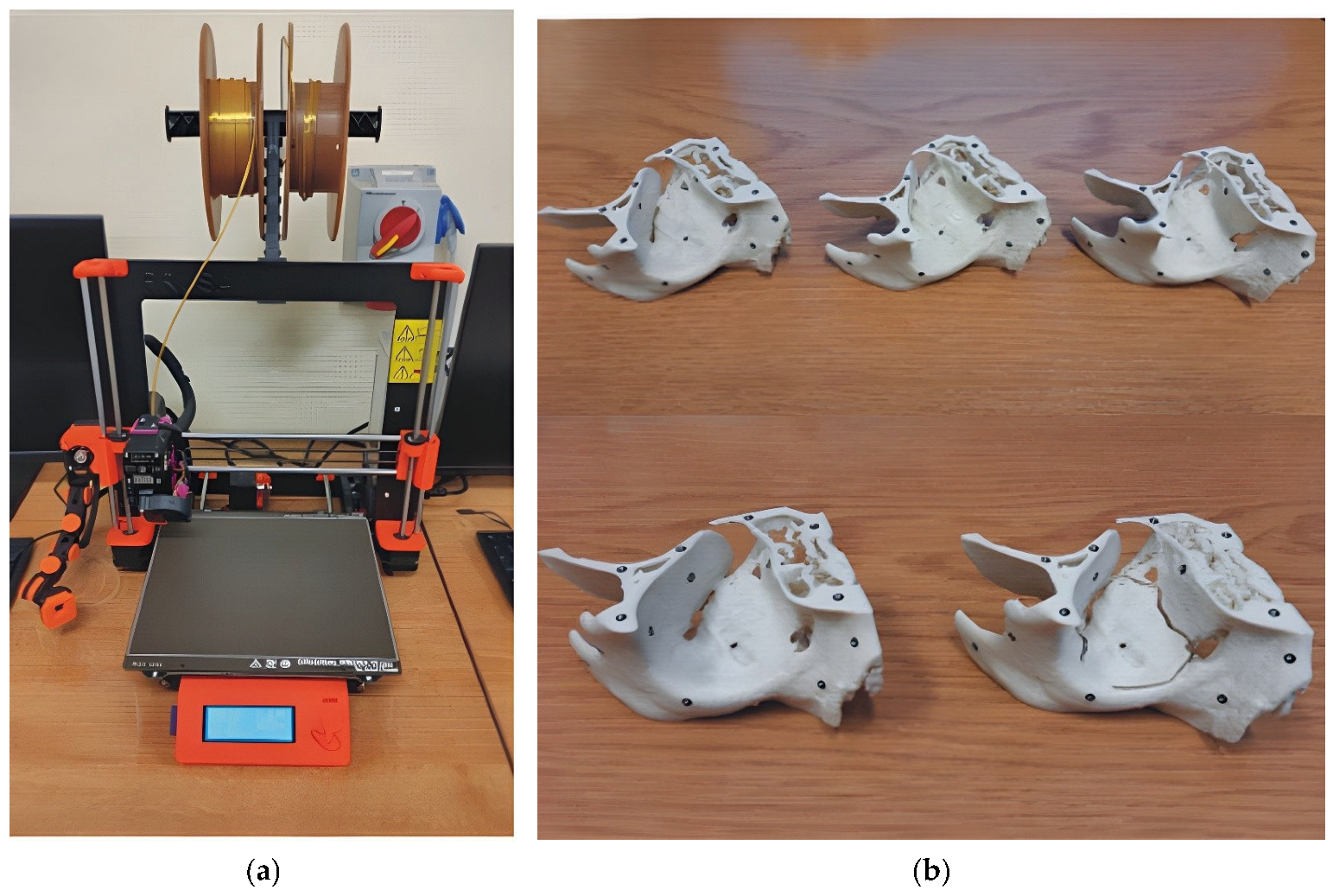
| Name of Surgical Guides | 3D Printed Area | Variable Parameters (Layer Thickness) | |
|---|---|---|---|
| Model_0.3 | Without visualising the size of the damage to the orbital area | 0.3 mm | |
| Model_0.2 | 0.2 mm | ||
| Model_0.07 | 0.07 mm | ||
| Model_0.3/0.07/0.3 | 0.3 mm/0.07 mm/0.3 mm | ||
| Model_0.3/0.07/0.3_(cut) | With visualizing the size of the damage to the orbital area | 0.3 mm/0.07 mm/0.3 mm | |
| Constant Parameters | |||
| Ambient temperature: approximately 23 °C (room temperature) | Nozzle temperature: 215 °C for the first layer (to increase fluidity and improve bed adhesion) | ||
| Cooling: constant cooling with 100% fan speed | Nozzle temperature: 210 °C for subsequent layers | ||
| Material: PLA (ROSA3D, Hipolitów, Poland) | Support removal: Mechanical | ||
| Platform temperature: 60 °C | Postprocessing: None | ||
| Filling/type: 80%/grid | Number of contours: 2 | ||
| Nozzle diameter: 0.4 mm | A number of dense layers: top—4; bottom—4 | ||
| Position in the 3D printer: Central | Movements speed: Contours—70 [mm/s]; filling—200 [mm/s]; bridge—25 [mm/s] | ||
| Time [h: min] | Cost [$] | |||
|---|---|---|---|---|
| Model_0.3 | 4:08 ± 1:04 | 9:13 ± 2:33 | 15.62 ± 5.30 | 34.95 ± 11.85 |
| Model_0.3_(damaged) | 5:05 ± 1:29 | 19.33 ± 6.55 | ||
| Model_0.2 | 5:56 ± 1:43 | 16.15 ± 4.15 | ||
| Model_0.07 | 16:32 ± 4:20 | 62.12 ± 15.96 | ||
| Model_0.3/0.07/0.3 | 7:27 ± 2:26 | 21.58 ± 5.54 | ||
| Model_0.3/0.07/0.3_cut | 7:26 ± 2:20 | 20.58 ± 5.20 | ||
| Whole Model | Number of Points | Maximum Deviation [mm] | Minimum Deviation [mm] | Range [mm] | Mean Deviation [mm] | Standard Deviation [mm] |
|---|---|---|---|---|---|---|
| Model_0.3 | 307,269 | 2.852 | −1.121 | 3.973 | 0.043 | 0.249 |
| Model_0.2 | 282,051 | 2.657 | −0.844 | 3.501 | 0.040 | 0.214 |
| Model_0.07 | 292,617 | 3.129 | −0.744 | 3.873 | 0.033 | 0.231 |
| Model_0.3/0.07/0.3 | 282,067 | 2.128 | −1.274 | 3.402 | 0.011 | 0.182 |
| Model_0.3/0.07/0.3_(cut) | 276,030 | 3.963 | −1.745 | 5.708 | 0.093 | 0.393 |
| Model fragment | ||||||
| Model_0.3 | 40,147 | 0.784 | −0.472 | 1.256 | 0.009 | 0.100 |
| Model_0.2 | 33,233 | 0.720 | −0.365 | 1.085 | 0.005 | 0.090 |
| Model_0.07 | 29,311 | 1.250 | −0.362 | 1.612 | 0.029 | 0.127 |
| Model_0.3/0.07/0.3 | 27,128 | 0.690 | −0.271 | 0.961 | 0.016 | 0.062 |
| Model_0.3/0.07/0.3_(cut) | 27,375 | 0.597 | −0.273 | 0.870 | 0.014 | 0.085 |
| Layer Thickness, mm | Sa | Spk + Sk + Svk, | Rsm | ||||||
|---|---|---|---|---|---|---|---|---|---|
| Mean [μm] | Std Dev [μm] | CV [%] | Mean [μm] | Std Dev [μm] | CV [%] | Mean [μm] | Std Dev [μm] | CV [%] | |
| 0.3 | 49.52 | 2.47 | 4.99 | 251.68 | 12.66 | 5.03 | 544.83 | 21.17 | 3.88 |
| 0.2 | 33.84 | 1.38 | 4.09 | 168.63 | 20.43 | 12.12 | 399.16 | 56.03 | 14.04 |
| 0.07 | 16.69 | 0.85 | 5.10 | 100.94 | 8.33 | 8.25 | 228.56 | 28.10 | 12.29 |
| Parameter | r-Correlation | Lower 95% | Upper 95% | p-Value |
|---|---|---|---|---|
| Sa | 0.9928 | 0.9649 | 0.9985 | <0.0001 |
| Spk + Sk + Sv | 0.9704 | 0.8613 | 0.9939 | <0.0001 |
| Rsm | 0.9728 | 0.8671 | 0.9942 | 0.0003 |
Disclaimer/Publisher’s Note: The statements, opinions and data contained in all publications are solely those of the individual author(s) and contributor(s) and not of MDPI and/or the editor(s). MDPI and/or the editor(s) disclaim responsibility for any injury to people or property resulting from any ideas, methods, instructions or products referred to in the content. |
© 2026 by the authors. Licensee MDPI, Basel, Switzerland. This article is an open access article distributed under the terms and conditions of the Creative Commons Attribution (CC BY) license.
Share and Cite
Turek, P.; Budzik, G.; Przeszłowski, Ł.; Bazan, A.; Lewandowski, B.; Pakla, P.; Dziubek, T.; Brodowski, R.; Zaborniak, M.; Frańczak, J.; et al. Advanced Manufacturing of PLA Surgical Templates for Orbital Floor Geometry: Optimizing Fidelity and Surface Morphology via Variable Layer Height MEX 3D Printing. Materials 2026, 19, 1208. https://doi.org/10.3390/ma19061208
Turek P, Budzik G, Przeszłowski Ł, Bazan A, Lewandowski B, Pakla P, Dziubek T, Brodowski R, Zaborniak M, Frańczak J, et al. Advanced Manufacturing of PLA Surgical Templates for Orbital Floor Geometry: Optimizing Fidelity and Surface Morphology via Variable Layer Height MEX 3D Printing. Materials. 2026; 19(6):1208. https://doi.org/10.3390/ma19061208
Chicago/Turabian StyleTurek, Paweł, Grzegorz Budzik, Łukasz Przeszłowski, Anna Bazan, Bogumił Lewandowski, Paweł Pakla, Tomasz Dziubek, Robert Brodowski, Małgorzata Zaborniak, Jan Frańczak, and et al. 2026. "Advanced Manufacturing of PLA Surgical Templates for Orbital Floor Geometry: Optimizing Fidelity and Surface Morphology via Variable Layer Height MEX 3D Printing" Materials 19, no. 6: 1208. https://doi.org/10.3390/ma19061208
APA StyleTurek, P., Budzik, G., Przeszłowski, Ł., Bazan, A., Lewandowski, B., Pakla, P., Dziubek, T., Brodowski, R., Zaborniak, M., Frańczak, J., & Bałuszyński, M. (2026). Advanced Manufacturing of PLA Surgical Templates for Orbital Floor Geometry: Optimizing Fidelity and Surface Morphology via Variable Layer Height MEX 3D Printing. Materials, 19(6), 1208. https://doi.org/10.3390/ma19061208