3.1. Performance Comparison Among the Three Architectures
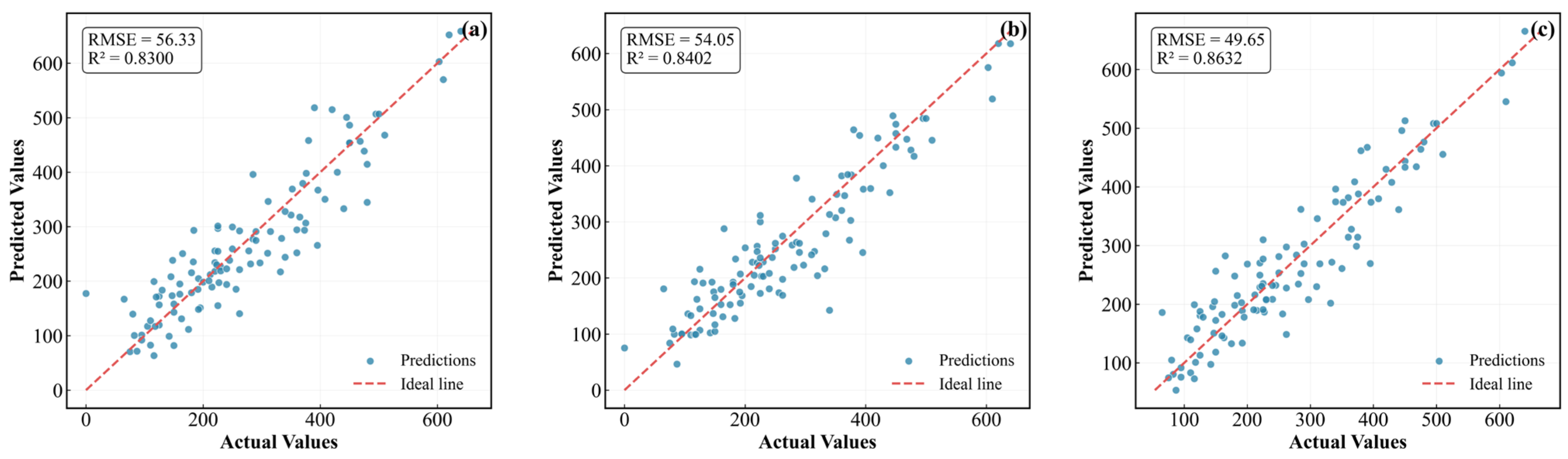
Figure 6 presents the regression results of the piezoelectric coefficient (
) between experimentally measured and model-predicted values for the three neural network models. Quantitative performance metrics, including the coefficient of determination (R
2) and the root-mean-square error (RMSE), are summarized in each subplot.
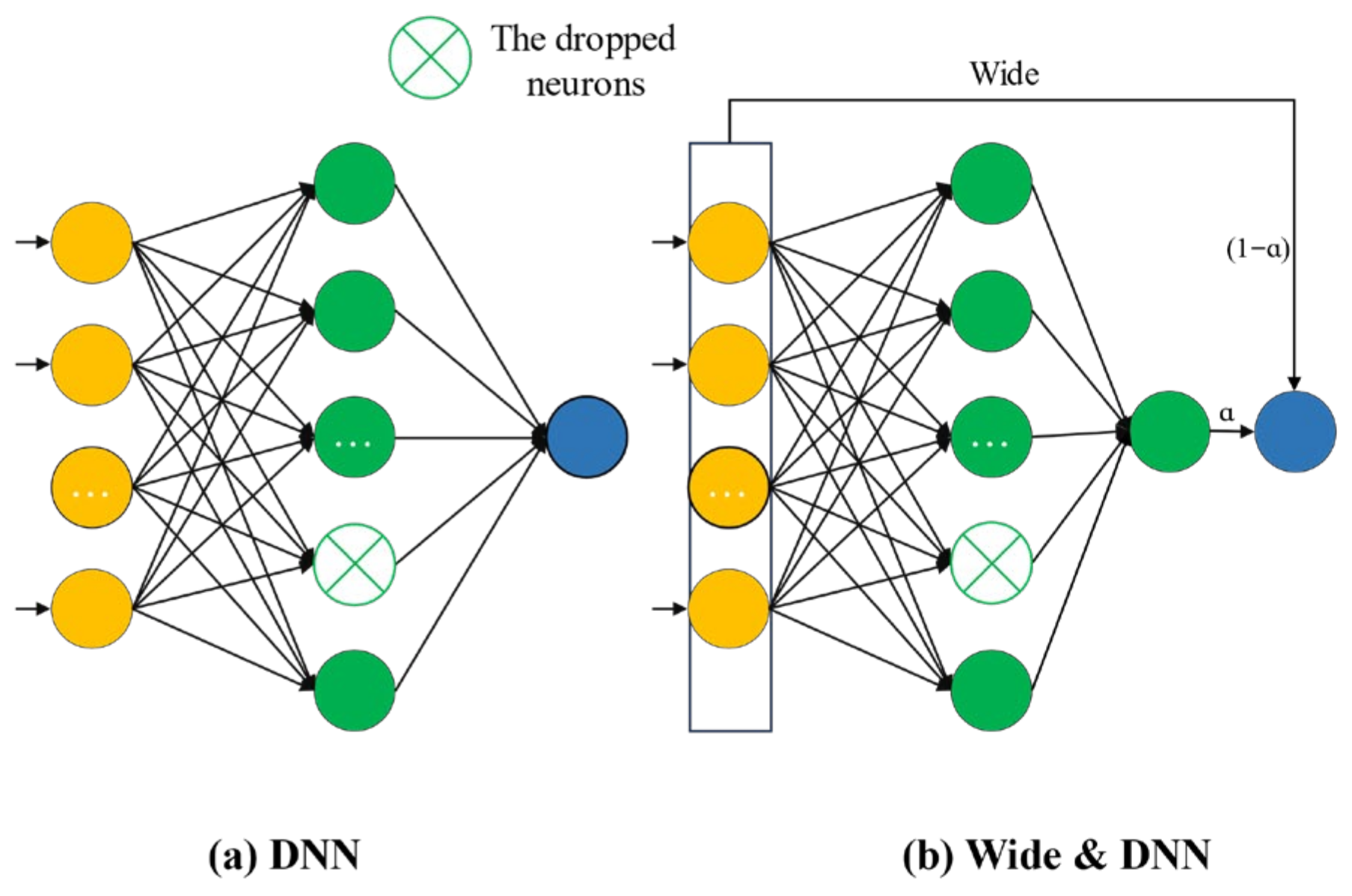
Figure 6 summarizes the predictive performance of three representative neural network architectures trained on the optimized 11-dimensional physically relevant descriptor set for KNN-based piezoelectric ceramics. All models were trained and evaluated using identical data preprocessing, normalization, and partitioning schemes to ensure a fair and physically consistent comparison.
As shown by the clustering of data points around the parity line in
Figure 6a–c, all three architectures can accurately reproduce the experimentally reported
values extracted from the 244 peer-reviewed literature sources described in
Section 2.1. This confirms that the descriptor design—incorporating A-site/B-site decoupling, lattice distortion metrics, electronic structure parameters, and processing conditions—effectively captures the dominant structure–property relationships governing the piezoelectric performance of KNN-based ceramics.
The models’ high predictive accuracy highlights an inherent trade-off between performance and interpretability (
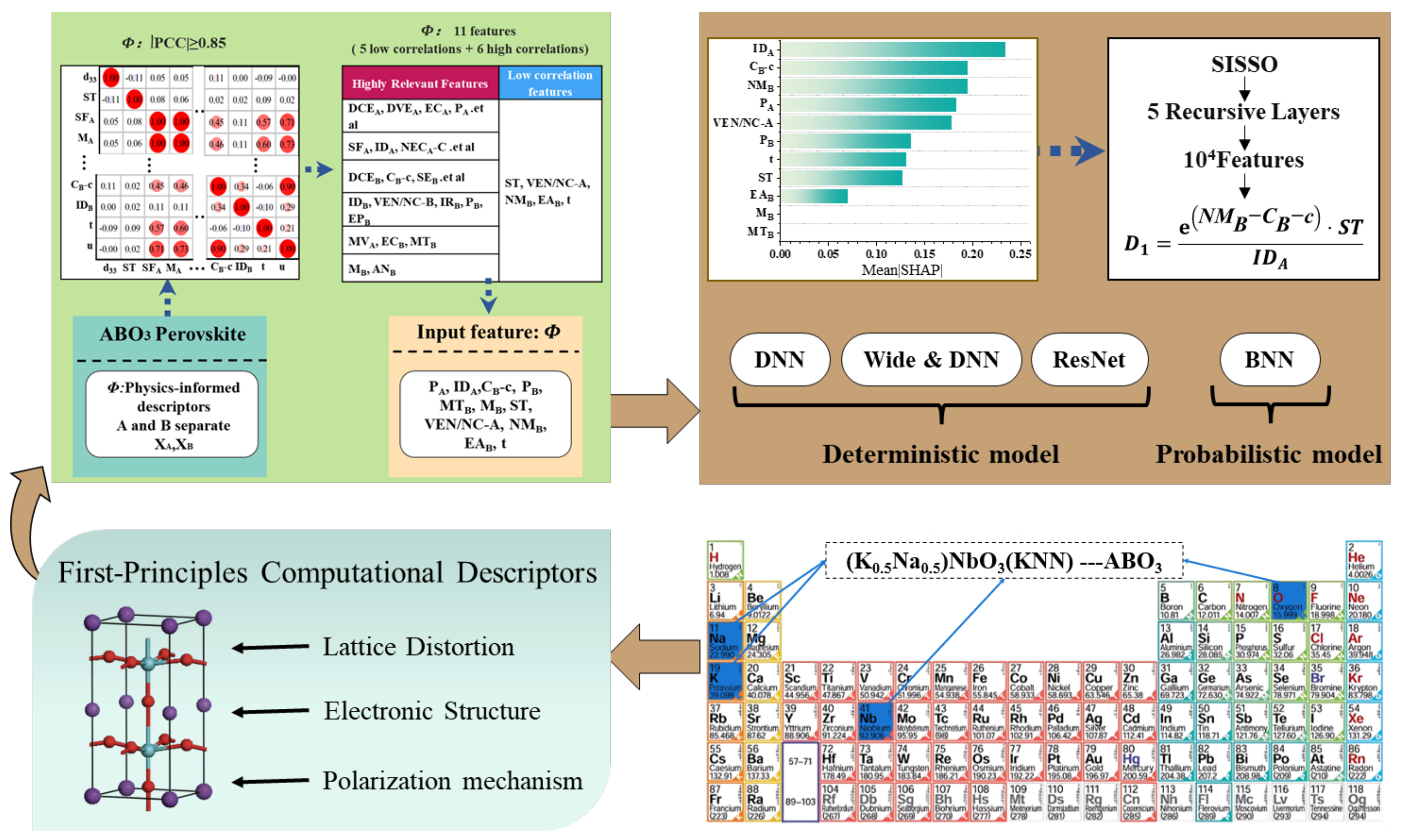
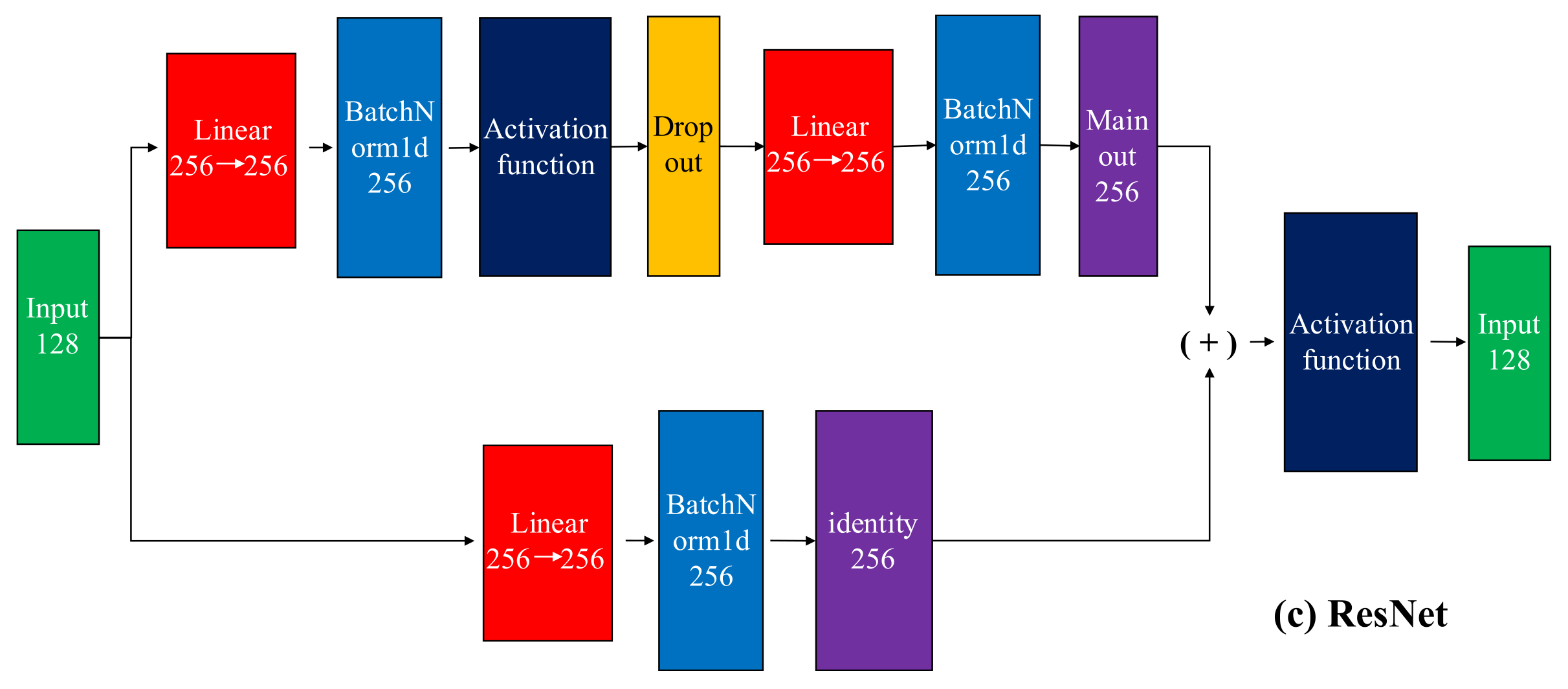
Table 2). While the ResNet architecture delivers the most precise deterministic predictions, its deeply nonlinear nature limits direct physical interpretability at the parameter level. To address this, Bayesian neural networks (BNNs) were employed for uncertainty quantification, and SHAP–SISSO analysis was used for post hoc interpretability and extraction of physically meaningful descriptors. Together, these components establish a unified framework that balances predictive accuracy, reliability, and physical insight.
3.2. Uncertainty Analysis Using Bayesian Models
Deterministic models perform point estimation, returning only a single predicted value while treating model parameters as fixed. For piezoelectric material systems, experimental data inherently contain systematic uncertainties arising from variations in synthesis conditions, microstructural heterogeneity, and instrumental measurement noise. Consequently, relying solely on a single deterministic prediction is insufficient to fully support materials design or experimental decision-making. A reliable predictive model should additionally quantify the confidence associated with its predictions.
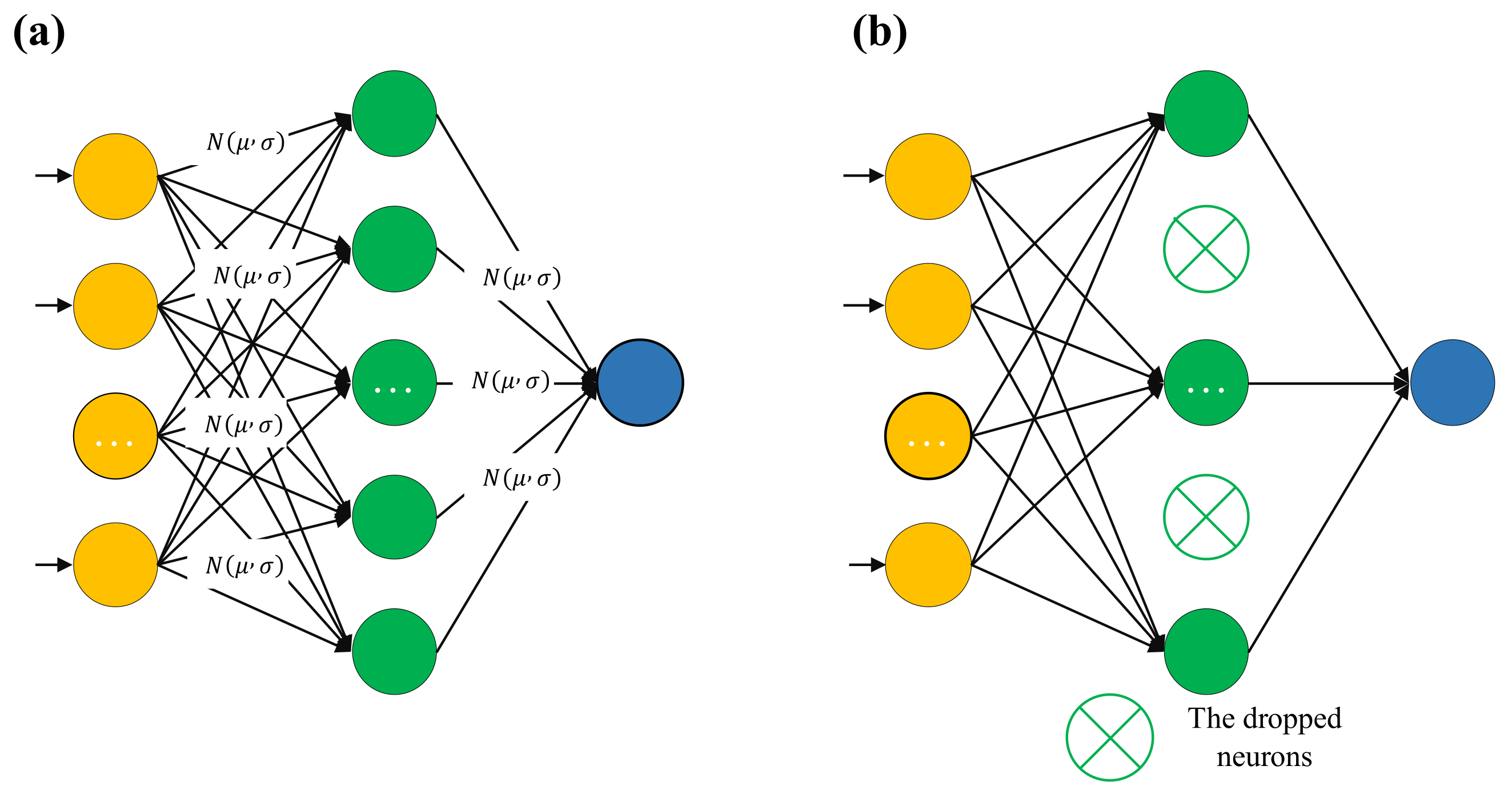
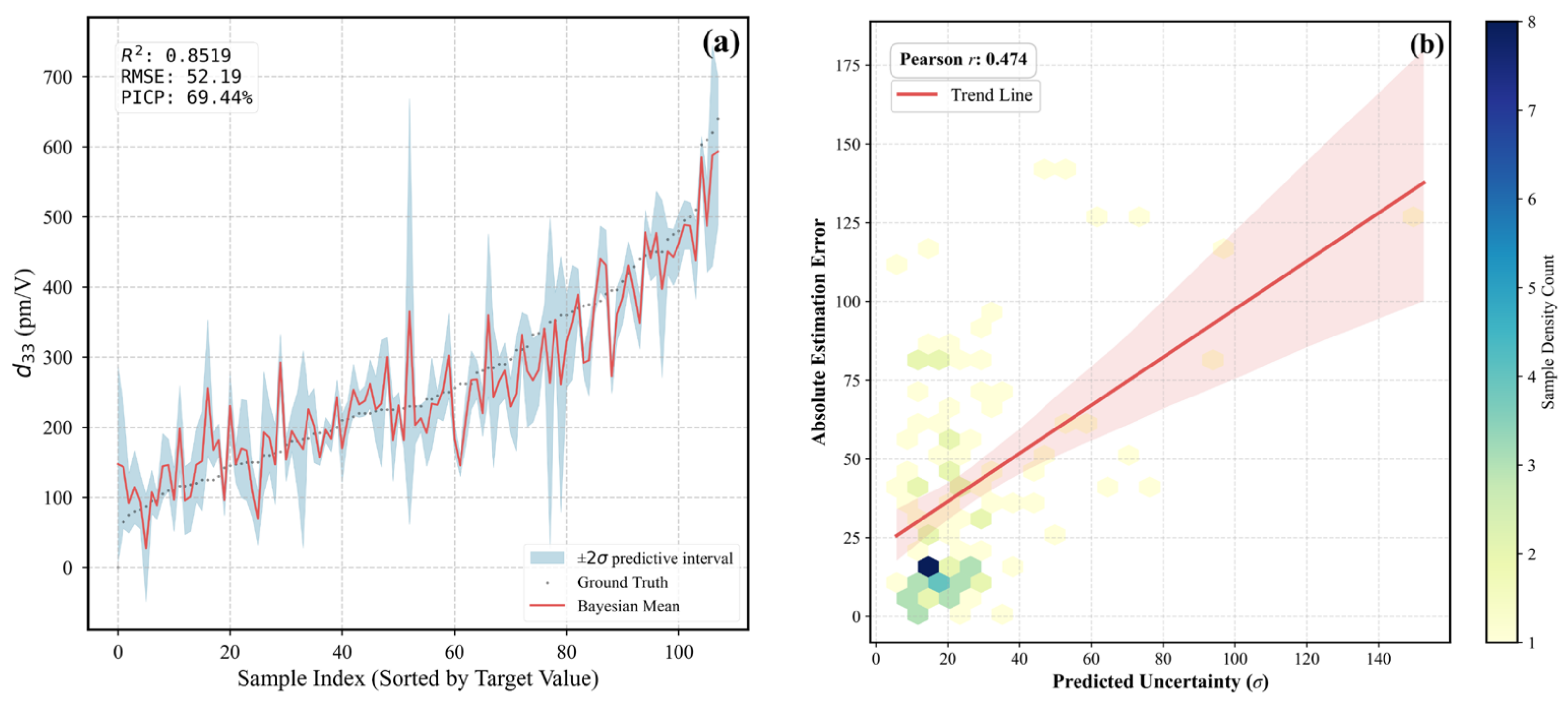
The BNN represents network weights as probability distributions and is optimized via variational inference. During the prediction stage, the BNN performs multiple stochastic forward passes, enabling the estimation of both predictive mean and predictive uncertainty (expressed as the standard deviation). Although the BNN yields a slightly lower test accuracy (R2 = 0.77) compared to the deterministic ResNet model, it achieves a low mean uncertainty ratio of 8.60%, indicating that the predicted confidence intervals are narrow and statistically meaningful. The modest reduction in R2 originates from the KL regularization, which encourages smoother and more conservative predictions, thereby trading a small portion of accuracy for significantly enhanced reliability and generalization stability. By contrast, while ResNet attains a higher accuracy, it lacks the ability to express prediction confidence, limiting its interpretability in scientific and engineering applications.
Overall, a clear trade-off between predictive accuracy and reliability is observed. While ResNet achieves the highest deterministic accuracy, the BNN provides a more balanced and uncertainty-aware predictive framework, with an R2 of 0.77 and a low mean relative uncertainty of 8.60%. To further support experiment-oriented decision-making, we explicitly define a quantitative reliability criterion: predictions with a relative uncertainty exceeding 15%—approximately twice the mean uncertainty level—are considered potentially unreliable and should be treated with caution or excluded from experimental validation. This uncertainty-guided screening strategy enhances the interpretability and trustworthiness of the BNN, making it particularly suitable for piezoelectric material screening and performance evaluation.
Figure 7b shows the relationship between prediction error and predictive uncertainty obtained from the Bayesian neural network. Samples associated with larger prediction errors are generally accompanied by higher uncertainty, indicating that the model effectively identifies regions of reduced confidence. As discussed later, these high-uncertainty regions are closely related to increased physical complexity in the underlying structure–property relationships, which are further elucidated through SISSO-derived descriptors in
Section 3.3.
3.3. Analysis Using SHAP and SISSO
Following the interpretability workflow described in
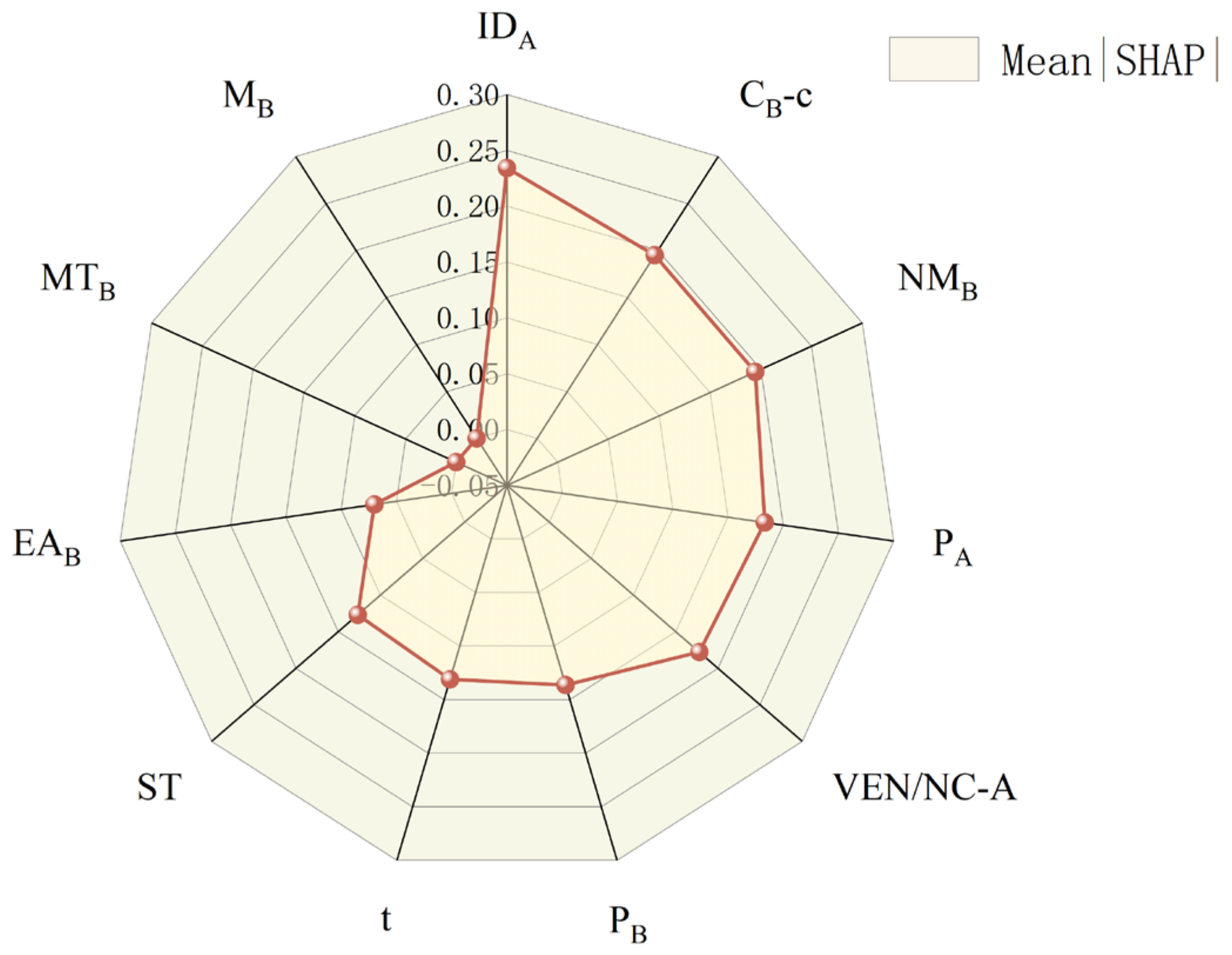
Section 3.3, SHAP was first used to determine the relative contributions of each input descriptor to the prediction of
. The SHAP ranking showed that only a subset of descriptors exerted dominant influence, while features with negligible contributions were excluded. These retained key descriptors then served as the input basis for the subsequent SISSO process, ensuring that the descriptor construction was grounded in physically meaningful and model-relevant variables.
Figure 8 shows the detailed results.
The preliminary feature importance analysis revealed that MT
B and M
B exhibit insignificant contributions to the model, indicating that these variables do not meaningfully influence the prediction of
. Consequently, both features were removed from the descriptor search space. The refined feature set was then subjected to the SISSO (Sure Independence Screening and Sparsifying Operator) methodology to identify physically interpretable, low-dimensional descriptors. The detailed definitions and physical interpretations of the retained features are presented in
Table 3.
To construct an interpretable predictive model for
, the SISSO method was employed. SISSO integrates global feature screening (SIS) with sparsity-driven optimization (SO), enabling the discovery of meaningful nonlinear descriptors while maintaining a compact model structure and strong physical interpretability. Based on the nine primary physical features, a systematically expanded feature space was generated using the following mathematical operator set:
A five-layer recursive feature expansion (feature depth = 5) was performed. In this procedure, the features generated at each layer were used as inputs for the subsequent layer, resulting in a progressively nested nonlinear feature construction. As the recursive depth increases, the size of the feature space grows exponentially. Thus, even when starting from only nine primary physical features, the five-layer expansion yields approximately 10
4 candidate expressions. These candidates span a broad spectrum of functional forms, ranging from simple linear relationships to complex high-order coupling terms. An example is given below (
Table 4).
This hierarchical feature construction process enables a comprehensive exploration of the descriptor space, ranging from simple monotonic relationships to complex nonlinear couplings involving electronic structure, crystallographic distortion, and processing conditions. In the SIS stage, the correlation between each candidate descriptor and the experimental values was evaluated, and only the top-ranked descriptors were retained for further consideration. This preliminary filtering significantly reduces the dimensionality of the search space while ensuring that physically meaningful features are preserved.
Subsequently, the sparsifying operator was applied in the SO stage to identify a concise expression that balances predictive accuracy and descriptor simplicity (see Equation (12)). The resulting optimal descriptor, denoted as D
1, integrates the sintering temperature (ST), the electronic environment of the B-site cation (NM
B-C
B-c), and the A-site ionic displacement (ID
A):
This descriptor highlights a coupled mechanism in which thermally activated densification, B-site electron–lattice interactions, and lattice distortion collectively govern the polarization response. To examine the physical validity of D
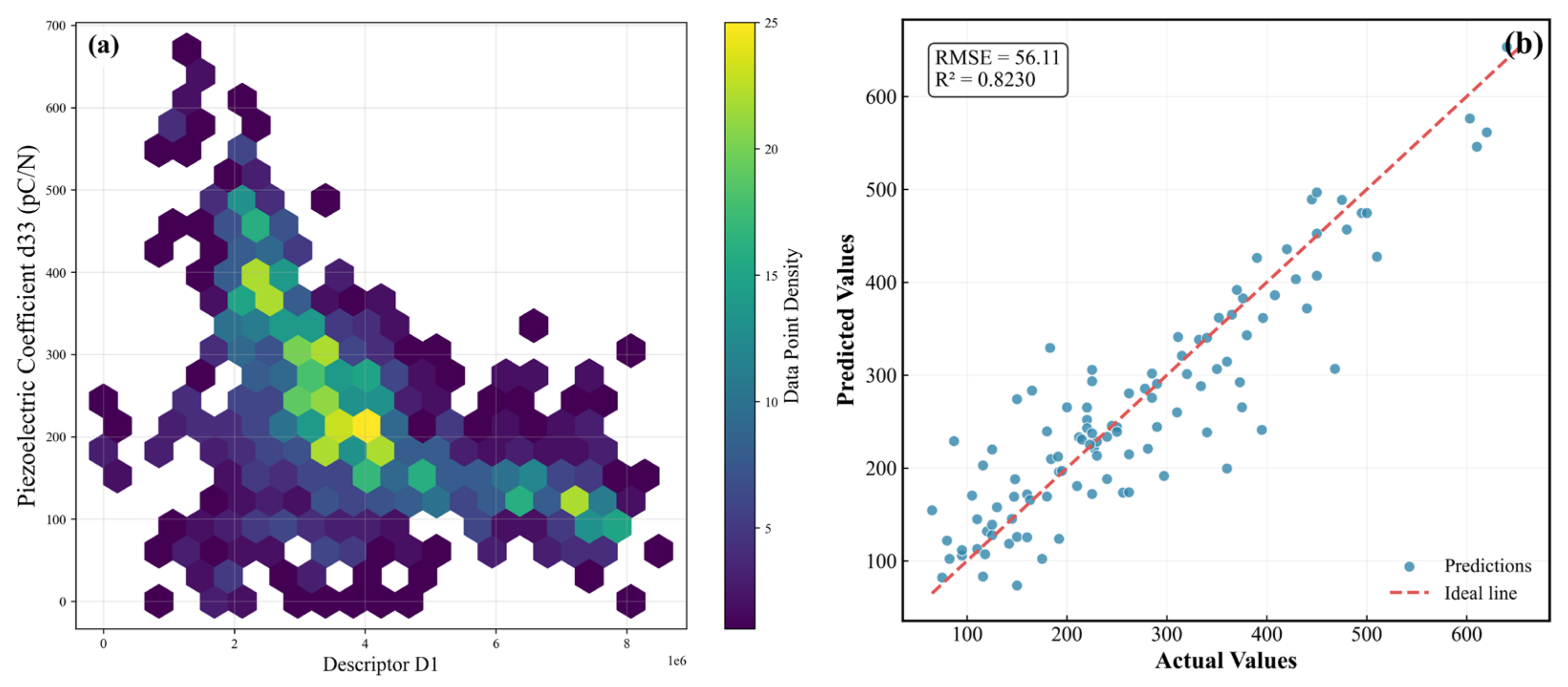
1, its values were numerically computed and incorporated into an extended feature set for retraining the ResNet model. The resulting predictive performance retained high accuracy, with an R
2 of 0.81 and an RMSE of 57.80 pC/N (see
Figure 9) on the test dataset, confirming that D
1 captures the dominant structure–property relationship rather than serving as an empirical fitting term.
A detailed physical interpretation of the descriptor further reinforces its significance. The sintering temperature (ST) regulates densification behavior, influencing grain size evolution, porosity elimination, and domain-wall mobility. The difference term (NMB-CB-c) reflects variations in B-site electronic anisotropy and lattice distortion along the c direction, which are associated with changes in Nb–O bond characteristics and the distortion of NbO6 octahedra in KNN-based perovskites. Such structural and electronic variations affect how easily the polarization direction can reorient within the lattice and may influence domain-wall motion. From a data-driven perspective, (NMB-CB-c) can therefore be regarded as an effective descriptor capturing the coupling between the B-site electronic environment and polarization switching behavior, rather than a direct microscopic measure of domain-wall energetics. Conversely, the A-site ionic displacement (IDA) reflects the degree of lattice distortion arising from cation off-centering and the associated polar instability. A smaller IDA indicates greater structural compliance, enabling more facile polarization reorientation. Therefore, the ratio structure of D1 effectively expresses the balance between polarization mobility and lattice anchoring.
Furthermore, when visualized in a two-dimensional D1–
map (see
Figure 9), high-performance KNN compositions cluster in a well-defined region, demonstrating that the descriptor not only captures physical causation but also serves as a practical indicator for compositional optimization. This clustering trend indicates that compositions with favorable B-site electronic anisotropy and moderate lattice distortion consistently exhibit enhanced domain-wall mobility and polarization rotation freedom, which are key contributors to high
. Such clustering behavior suggests that D
1 can be used prospectively to guide experimental synthesis by adjusting either the B-site electron density environment or the sintering thermal profile to achieve targeted electromechanical performance.
Overall, the integration of SHAP and SISSO yields a unified interpretation framework in which SHAP identifies the most influential variables, and SISSO constructs a concise analytical descriptor that quantitatively expresses how these variables jointly regulate . This combined approach bridges data-driven learning and mechanistic understanding, allowing the prediction model to move beyond black-box inference toward physically grounded insight.