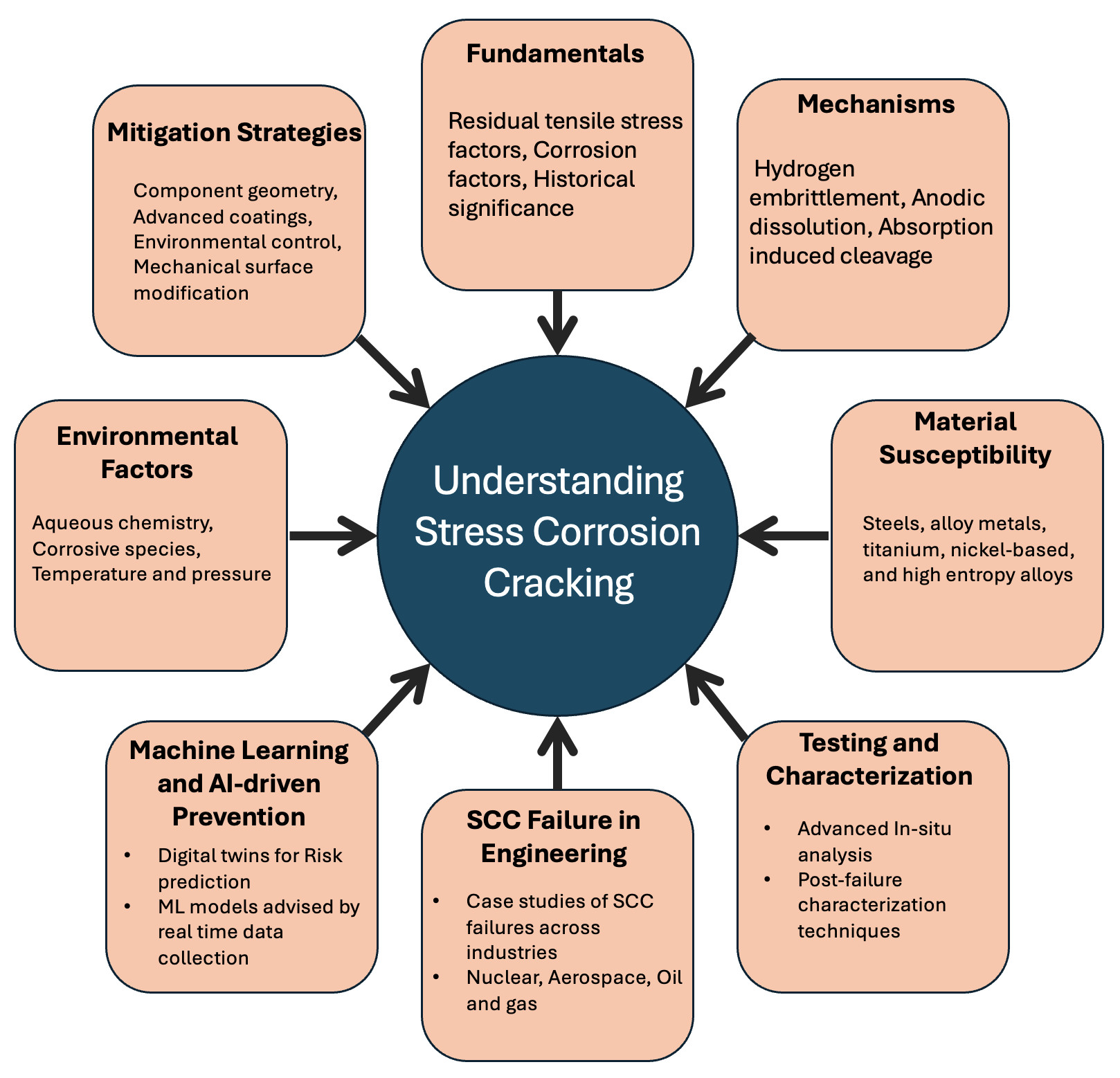
Stress Corrosion Cracking: Mechanisms, Materials Challenges, and Engineering Solutions


Abstract
1. Introduction
1.1. Definition and Importance of SCC
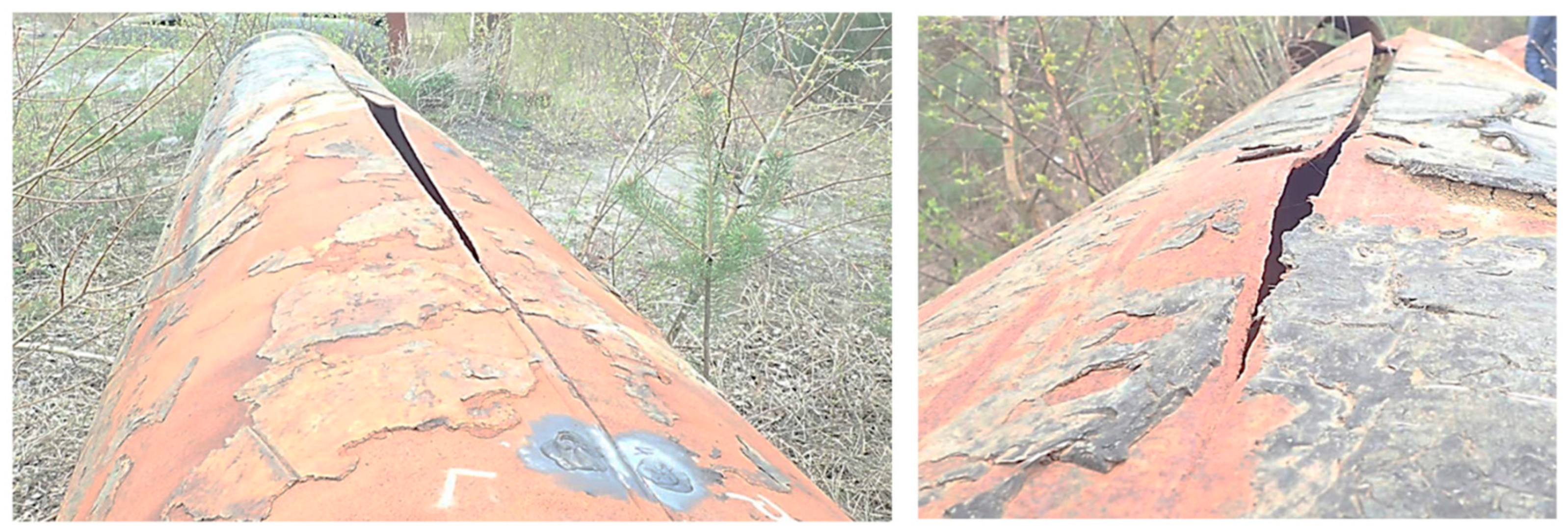
1.2. Historical Perspective and Engineering Failures
1.3. Relevance to Mechanical and Structural Components
2. Fundamentals of Stress Corrosion Cracking
2.1. Role of Stress and Corrosive Environments
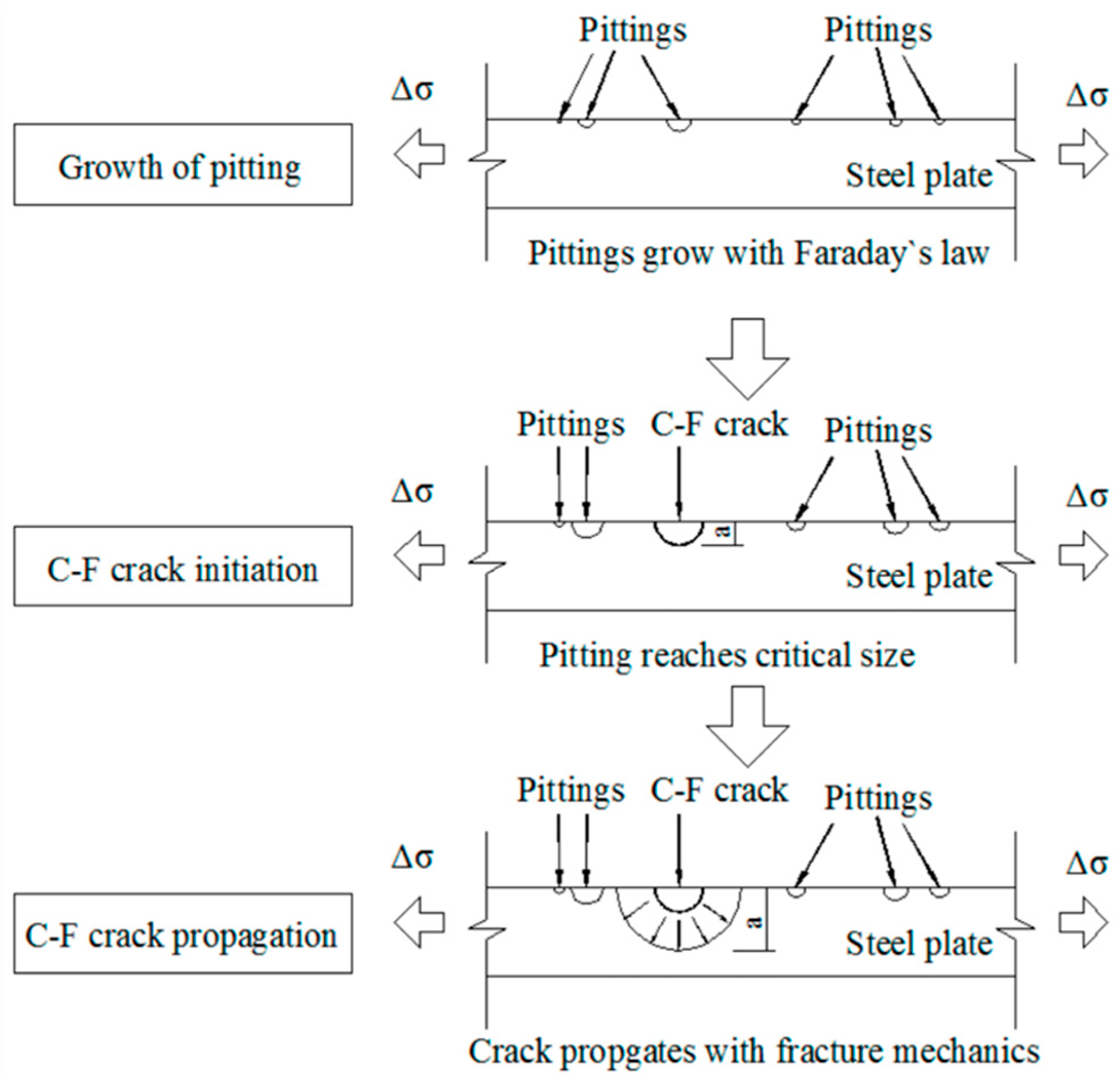
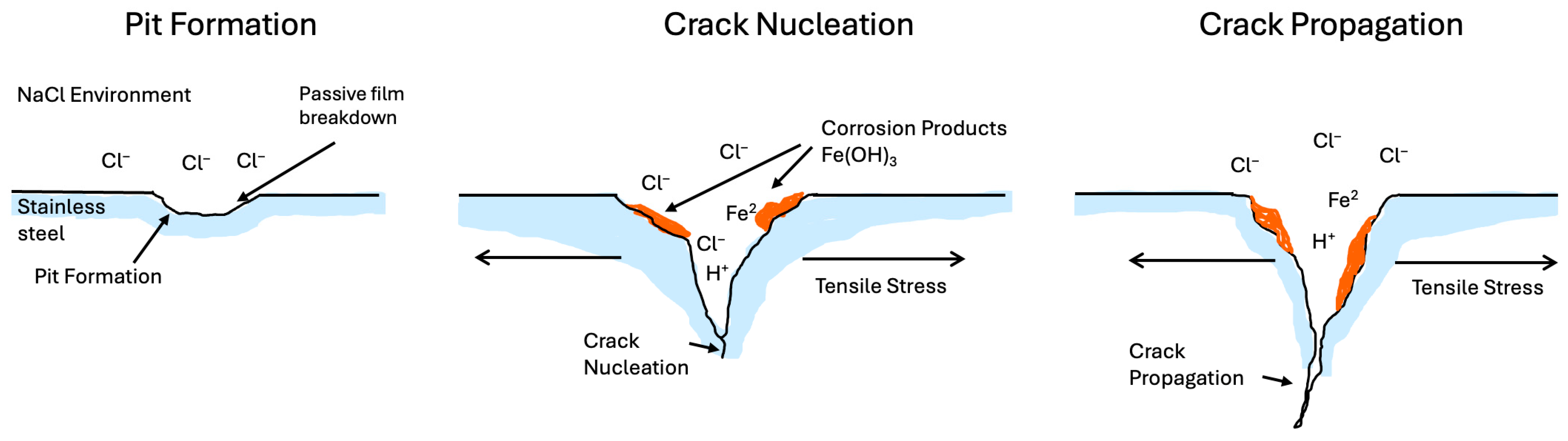
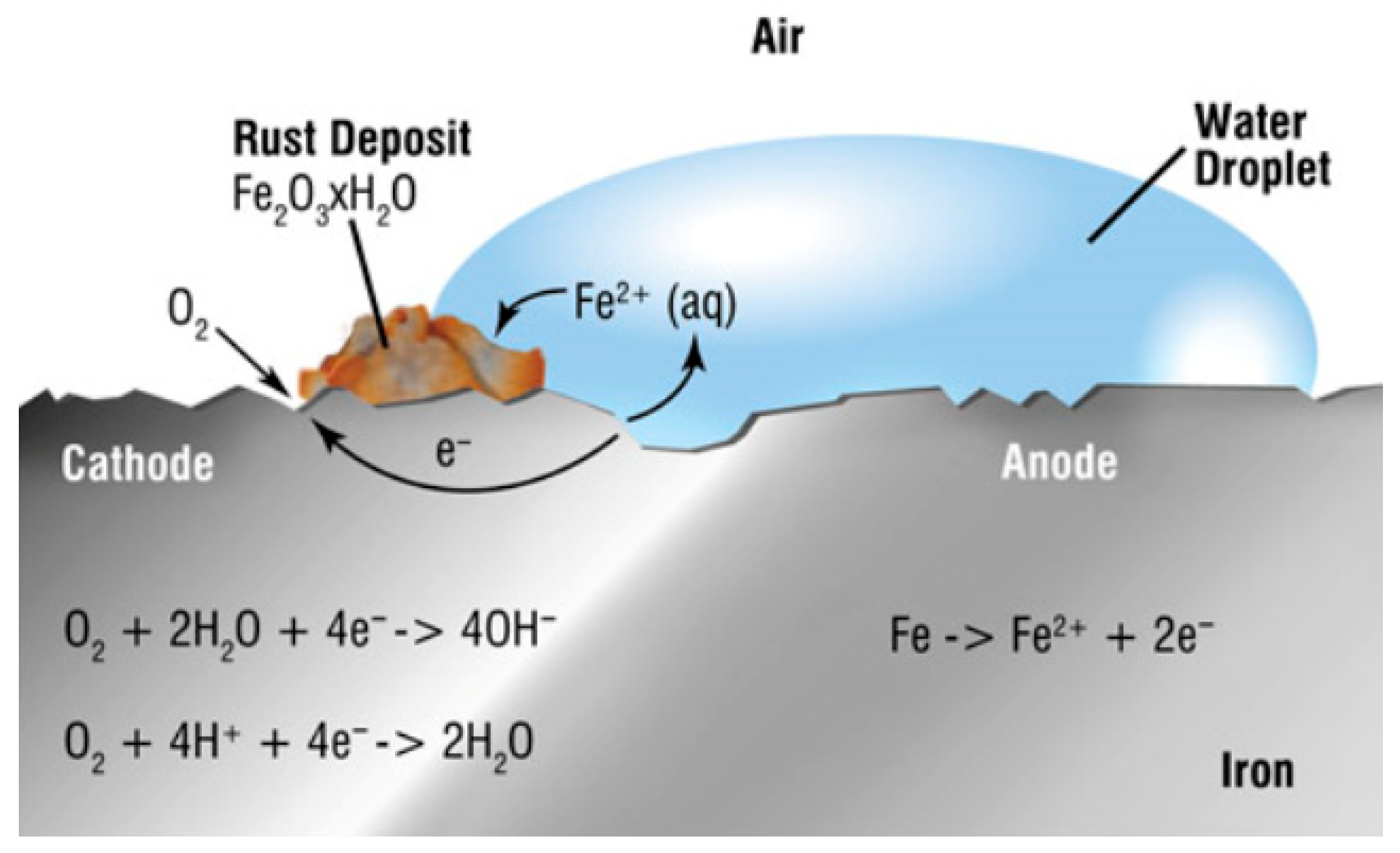
2.2. Electrochemical and Mechanical Aspects
2.3. Distinction Between SCC, Corrosion Fatigue, and Hydrogen Embrittlement
3. Mechanisms of SCC
3.1. Film Rupture and Anodic Dissolution Model
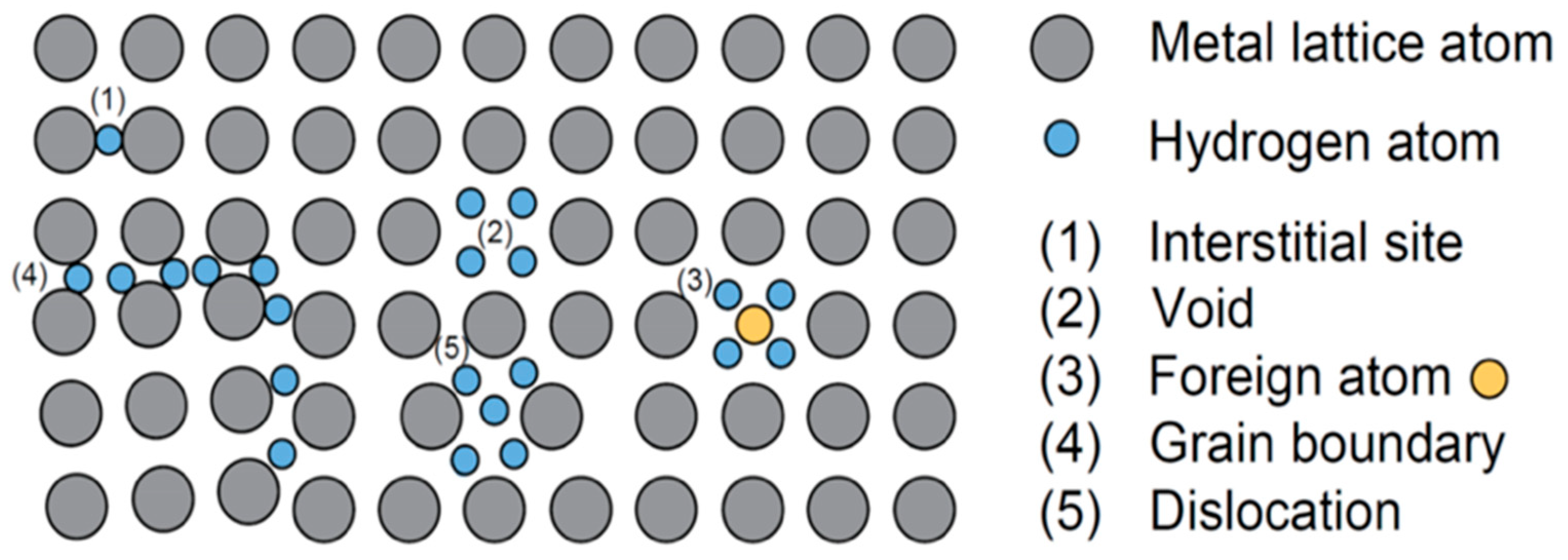
3.2. Hydrogen Embrittlement Model
3.3. Adsorption-Induced Cleavage Model

| Mechanism | Primary Driving Agent | Crack Path Morphology | Mitigation Strategies | References |
|---|---|---|---|---|
| Adsorption-Induced Cleavage (AIC) | Specific adsorption of aggressive ions (e.g., Cl−, S2−, OH−) at highly stressed surface sites weakens metallic bonds and reduces surface energy, promoting brittle cleavage | Predominantly transgranular with cleavage-like facets (bright, mirror-like fracture surfaces) and minimal plastic deformation (a brittle appearance) | Remove or neutralize aggressive ions (use purified water or inhibitors), maintain controlled environment chemistry (pH buffers, de-aeration), reduce applied tensile stress (stress relief, design changes), and improve alloy grain-boundary cohesion (via microalloying or heat treatments) | [20,21] |
| Hydrogen Embrittlement (HE) | Absorption and diffusion of atomic hydrogen into the metal lattice; hydrogen accumulates at stress concentrators (dislocations, grain boundaries, inclusions), reducing cohesive strength or enhancing localized plasticity (via HEDE or HELP models) | Often intergranular in high-strength steels (due to hydrogen at grain boundaries), or transgranular quasi-cleavage with secondary microcracks. Hydride-forming alloys (Ti, Zr) show brittle hydride cracking along grain boundaries | Prevent hydrogen ingress (apply coatings or diffusion barriers, optimize cathodic protection to avoid over-charging with hydrogen), perform bake-out heat treatments to remove absorbed H, lower material strength/hardness if possible, use microstructures or alloying additions that trap hydrogen in benign forms (e.g., adding Ti or Mo to steel to form stable carbides that trap H) | [18,19] |
| Film Rupture/Slip–Dissolution (FR/SD) | Cyclic rupture of a passive oxide film at the crack tip due to localized plastic strain, exposing fresh metal that undergoes anodic dissolution before the film re-passivates. Repetition of film breakage and reformation drives crack advance | Typically transgranular, often showing striations or etched facets where the metal dissolved. Can sometimes become intergranular if grain-boundary precipitates or segregation cause preferential attack | Use alloys that maintain a stable passive film under stress (e.g., add Mo or N to stabilize stainless steel films), reduce surface tensile stress and strain localization (polish surfaces, avoid sharp notches), use inhibitors that promote rapid re-passivation (e.g., molybdate, nitrate), and avoid sensitization heat treatments that would weaken grain-boundary film integrity | [15,16,17] |
4. Material Susceptibility to SCC
4.1. Steels
4.2. Aluminum Alloys
4.3. Nickel-Based Alloys
4.4. Titanium and Advanced Alloys
4.5. Corrosion Potentials
5. Influence of Environmental Factors
5.1. Aqueous Environments
5.2. Influence of Temperature and Pressure
5.3. Role of pH, Dissolved Oxygen, and Specific Ions
| Environmental Factor | Mechanism/Influence | Effect on SCC | Example Environments and Materials | References |
|---|---|---|---|---|
| Chloride Ions (Cl−) | Break down passive films and foster pitting; chloride anions adsorb on metal and promote localized anodic dissolution. | Accelerate crack initiation and propagation by creating pit nuclei and maintaining active crack tip dissolution. | Seawater (SCC of 304 SS, 7000-series Al); chloride process streams attacking stainless reactor components. | [54,55,56] |
| High Temperature | Increases corrosion kinetics and diffusion rates; can destabilize passive films and cause thermal stress gradients. | Greatly speeds up SCC growth and can lower the threshold stress for SCC by enhancing chemical attack at crack tips. | Nuclear reactor water (~300 °C, SCC in Alloy 600); steam boilers (caustic + high T causing cracking in carbon steel). | [58,59,60,61] |
| High Pressure | Raises gas solubility (O2, H2) in liquids and can increase true stress intensity on flaws (if pressure-containing). | Can lead to more H2 absorption (thus more HE) and higher crack-driving force. Often coupled with high T effects. | Deep-sea pipeline (high external pressure, promoting H2 uptake under CP); PWR reactor primary loop (15 MPa, more dissolved H2/O2 affecting Alloy 690). | [60,61] |
| Low pH (Acidic) | Promotes hydrogen evolution (cathodic reaction) and dissolves protective oxides. | Increases risk of hydrogen embrittlement SCC and general acid attack that pre-pits the material. | Sour petroleum fluids (pH ~3–5, steel tubing SCC); acid pickling residues on high-strength steel. | [54,55,56,57] |
| High pH (Caustic) | Causes certain alloys (e.g., carbon steel) to form soluble compounds; can generate atomic H at metal surface. | Leads to caustic cracking (intergranular SCC in steels) if tensile stresses are present. | Boiler caustic environments (NaOH in riveted steam drums); alkali process vessels. | [56,57] |
| Dissolved Oxygen | Increases cathodic reduction rates (oxygen reduction) and raises corrosion potential. | Shifts conditions toward active cracking for alloys like stainless steel by supporting continuous film rupture corrosion cycles. | Aerated vs. de-aerated water in power plants (Alloy 600 SCC occurred in oxygenated water, mitigated when DO removed). | [6] |
| Sulfide/H2S | Poison catalysts for hydrogen recombination, leading to more hydrogen entering the metal; also forms metal sulfides (often less protective). | Causes sulfide stress cracking in steels (a type of hydrogen-assisted SCC) even at mild pH. Embrittles grain boundaries. | Oil & gas sour environments (pipeline steels cracking in H2S-containing brines). | [61] |
| Flow Conditions | Low flow leads to stagnant crevices; high flow causes erosion of passive film and constant supply of reactants. | Low flow: Crevice corrosion initiates cracks. High flow: Strip protective films, possibly higher corrosion currents at crack tip. | Crevices under deposits in seawater heat exchangers (low-flow SCC); high-velocity steam or slurry causing film damage in piping. | [6] |
6. Testing and Characterization of SCC
6.1. Experimental Methods
6.2. Microscopy and Fracture Analysis
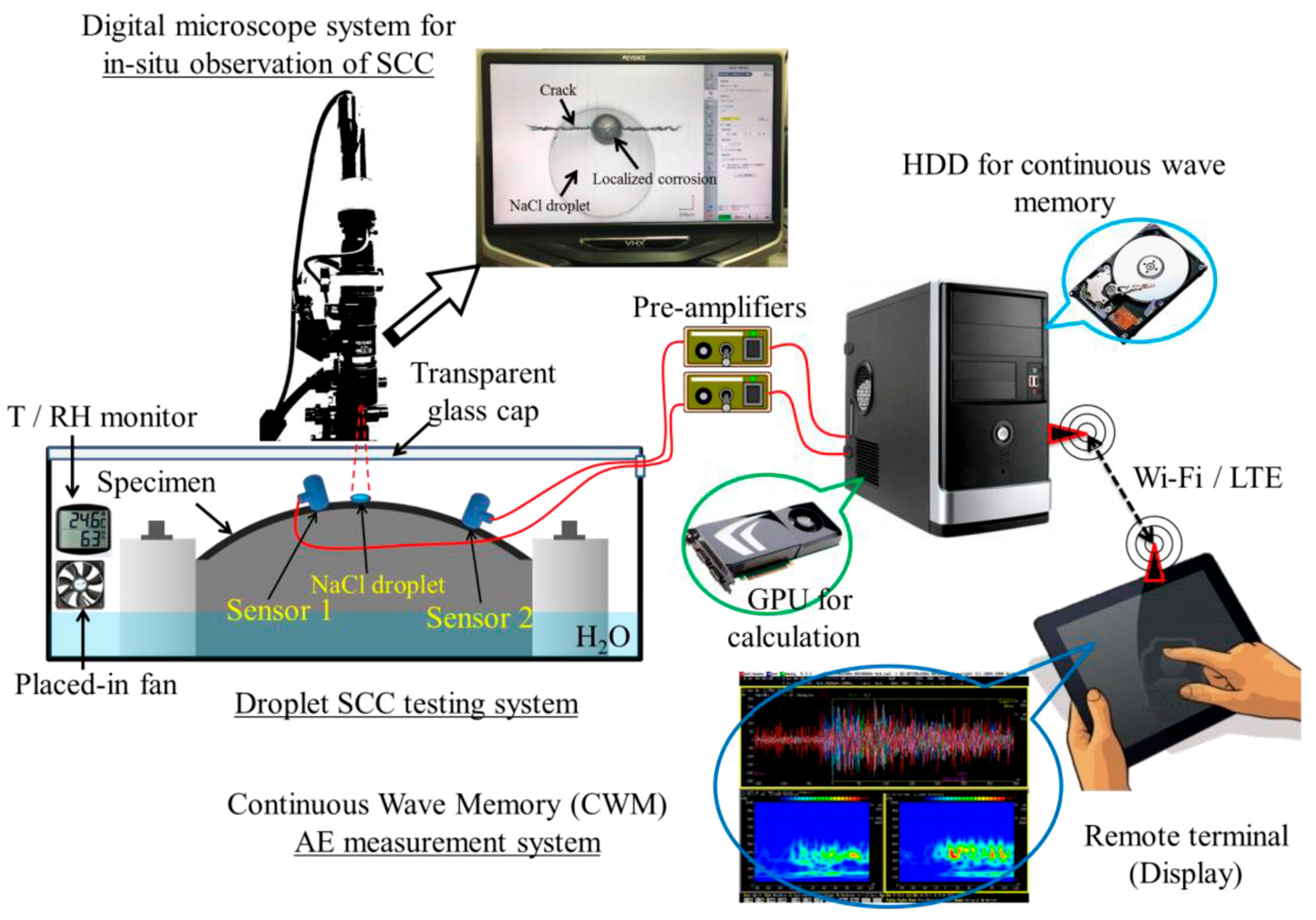
6.3. In Situ Monitoring Techniques
| Method | Key Features | Advantages/Use | Limitations | References |
|---|---|---|---|---|
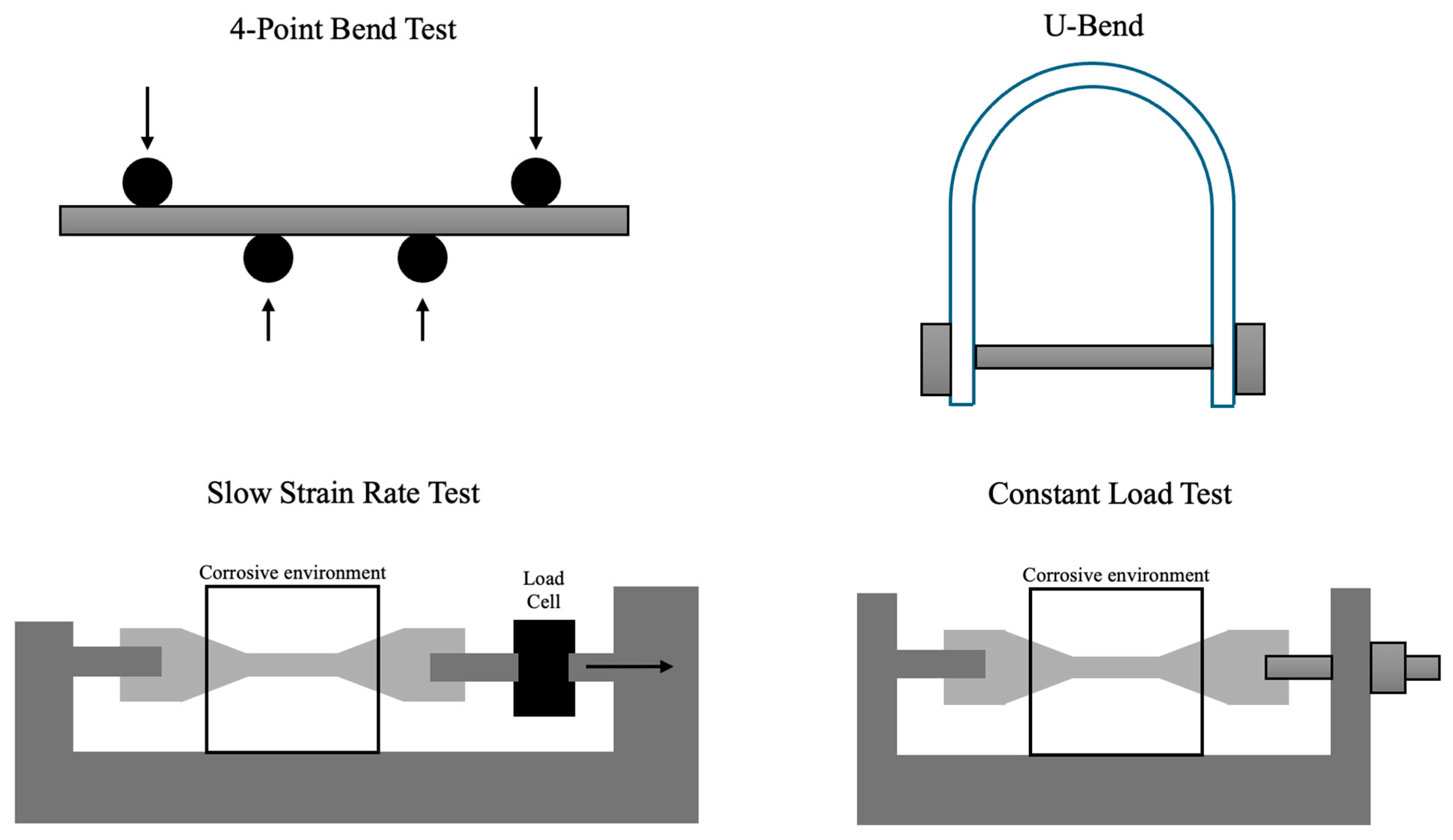
| Constant Load Test | Specimen held at fixed tensile stress in corrosive medium; observe if and when cracking or failure occurs | Closely simulates long-term service conditions; yields quantitative failure data (time-to-failure, threshold stress) | Very long test duration (for corrosion-resistant alloys, may take months/years); requires precise load maintenance | [65] |
| Slow Strain Rate Test (SSRT) | Tensile specimen pulled at extremely low strain rate in environment; compare ductility and fracture surface to inert environment tests | Relatively fast screening (hours to days); sensitive to SCC, clearly reveals reduced elongation or strength due to environment | Non-service loading mode (constant straining instead of static/cyclic load); results can depend on chosen strain rate (too fast may miss SCC, too slow can be overly severe) | [66] |
| U-Bend/C-Ring Test | Coupons bent or C-shaped to impose high tensile stress on inner/outer surface, per ASTM G30 | Simple, inexpensive; can expose many samples at once for go/no-go assessment | Stress is highly non-uniform and often above yield; only provides qualitative results (cracked vs. uncracked) | [67,68] |
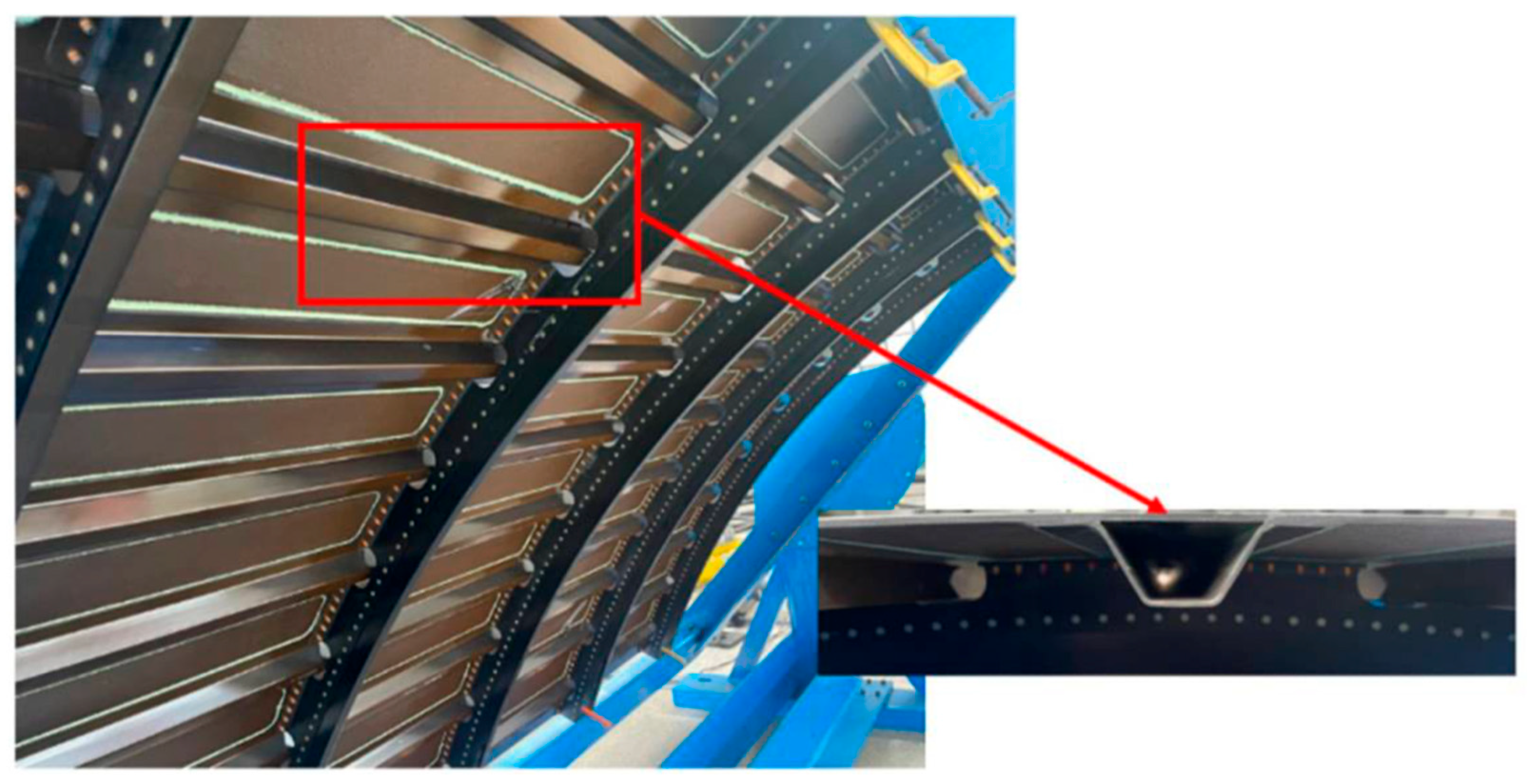
| Four-Point Bend Test | Beam loaded in four-point bending to create a uniform central moment while in environment | More uniform stress on a larger area; can obtain crack growth rate data under known stress intensity; useful for quantitative SCC propagation studies | More complex setup; bending fixture needed; not as rapid as U-bend for crack initiation (lower stress relative to yield) | [15,75] |
| Electrochemical Monitoring (OCP, PDP, EIS) | Track open-circuit potential, polarization curves, or impedance of specimen during SCC test | Detects crack initiation and growth in real time via changes in current or impedance; can differentiate active dissolution vs. passive behavior | Requires stable reference electrode/contacts in test; data interpretation can be complex (need to link electrochemical signals to crack events) | [29] |
7. Engineering Strategies for SCC Mitigation
7.1. Material Selection and Alloy Design
7.2. Stress Reduction
7.3. Surface Modification and Coatings
7.4. Environmental Control and Inhibitors
8. Case Studies of SCC Failures in Engineering Applications
8.1. Oil and Gas Pipelines
8.2. Nuclear Reactors and Power Plants
8.3. Aerospace Structures
8.4. Marine Environments
9. Emerging Trends and Future Perspectives
9.1. High-Entropy Alloys and Advanced Materials for SCC Resistance
9.2. Application of Machine Learning in SCC Prediction and Monitoring
- (a)
- Interpretable Risk Models for Decision Support:
- (b)
- Supervised Learning for Prediction of Growth Rates and Susceptibility:
- (c)
- Integrated Data Domain Frameworks for Asset Management:
9.3. Advanced In Situ Characterization and Simulation Approaches
10. Conclusions
Funding
Data Availability Statement
Conflicts of Interest
References
- Vakili, M.; Koutník, P.; Kohout, J.; Gholami, Z. Analysis, Assessment, and Mitigation of Stress Corrosion Cracking in Austenitic Stainless Steels in the Oil and Gas Sector: A Review. Surfaces 2024, 7, 589–642. [Google Scholar] [CrossRef]
- Zhang, X.; Wang, D.; Cao, F.; Wang, C.; Zha, M. Bridging static corrosion behavior and stress corrosion cracking susceptibility in dilute Mg-Zn-Ca alloys. Corros. Sci. 2025, 251, 112924. [Google Scholar] [CrossRef]
- Wanhill, R.J.H.; Byrnes, R.T.; Smith, C.L. Stress corrosion cracking (SCC) in aerospace vehicles. In Stress Corrosion Cracking; Elsevier: Amsterdam, The Netherlands, 2011; pp. 608–650. [Google Scholar] [CrossRef]
- Federal Aviation Administration. Airworthiness Directives; The Boeing Company Airplanes; Federal Aviation Administration (FAA): Washington, DC, USA, 2023. Available online: https://www.govinfo.gov/content/pkg/FR-2023-02-15/pdf/2023-03138.pdf (accessed on 4 November 2025).
- Mohanty, S.; Majumdar, S.; Natesan, K. A Review of Stress Corrosion Cracking/Fatigue Modeling for Light Water Reactor Cooling System Components; Nuclear Engineering Division Argonne National Laboratory: Lemont, IL, USA, 2012.
- Ehrnstén, U.; Andresen, L.; Que, Z. A review of stress corrosion cracking of austenitic stainless steels in PWR primary water. J. Nucl. Mater. 2024, 588, 154815. [Google Scholar] [CrossRef]
- Zhao, Y.; Tian, G.; Liu, D.; Ren, B.; Zhang, W.; Zhu, Y. Evaluation of Stress Corrosion Cracking Susceptibility of 2195-T8 Al-Li Alloy in Propellant Environment Using Slow Strain Rate Testing. Aerospace 2025, 12, 830. [Google Scholar] [CrossRef]
- Yao, Y.; Quach, W.-M. Numerical Study on Residual Stresses and Plastic Strains in Cold-Formed High-Strength Steel Circular Hollow Sections. Materials 2023, 16, 6337. [Google Scholar] [CrossRef]
- Mutafi, A.; Irwan, J.; Yidris, N.; Alshalif, A.F.; Saif, Y.; Abdulrahman, H.; Mutaafi, A.; Al-Ashmori, Y.Y.; Amran, M.; Maureira-Carsalade, N.; et al. Residual stresses in cold-formed steel sections: An overview of influences and measurement techniques. Forces Mech. 2025, 18, 100306. [Google Scholar] [CrossRef]
- Huang, X.; Costa, D.; Diawara, B.; Maurice, V.; Marcus, P. Protection of Stainless Steels by Mo against Cl Attack: A DFT Study. J. Phys. Chem. C 2025, 129, 3913–3919. [Google Scholar] [CrossRef]
- Coelho, L.B.; Amand, T.; Torres, D.; Olivier, M.; Ustarroz, J. Identifying stable pitting pathways in 316L stainless steel via fractal-inspired PCA-based clustering. npj Mater. Degrad. 2025, 9, 42. [Google Scholar] [CrossRef]
- Trentin, A.; Mardoukhi, A.; Lambai, A.; Pohjanne, P.; Huttunen-Saarivirta, E. Pitting corrosion of austenitic and duplex stainless steels in dilute acids at elevated temperature: Effect of electrolyte chemistry and material microstructure. Corros. Sci. 2025, 247, 112769. [Google Scholar] [CrossRef]
- Akid, R. Corrosion fatigue—Understanding damage from smooth surfaces. Theor. Appl. Fract. Mech. 2025, 140, 105190. [Google Scholar] [CrossRef]
- Li, X.; Zhang, J.; Cui, Y.; Djukic, M.B.; Feng, H.; Wang, Y. Review of the hydrogen embrittlement and interactions between hydrogen and microstructural interfaces in metallic alloys: Grain boundary, twin boundary, and nano-precipitate. Int. J. Hydrogen Energy 2024, 72, 74–109. [Google Scholar] [CrossRef]
- Euesden, R.T.; Curd, M.E.; Yao, Y.; Grant, C.; Holroyd, N.H.; Prangnell, P.B.; Burnett, T.L. Direct comparison of the environmentally induced cracking resistance of 2nd and 3rd generation alloys, AA7050-T7651 and AA7085-T7651. Mater. Des. 2025, 253, 113867. [Google Scholar] [CrossRef]
- Hamdan, H.; Alsit, A.; Al Tahhan, A.B.; Mughieda, O.; Mourad, A.-H.I.; Shehadeh, M.A.; Alkhedher, M. Prognosis methods of stress corrosion cracking under harsh environmental conditions. Heliyon 2024, 10, e25276. [Google Scholar] [CrossRef] [PubMed]
- Mohtadi-Bonab, M.A. Effects of Different Parameters on Initiation and Propagation of Stress Corrosion Cracks in Pipeline Steels: A Review. Metals 2019, 9, 590. [Google Scholar] [CrossRef]
- Javeria, U.; Kim, S.J. Investigation of hydrogen embrittlement in steel alloys: Mechanism, factors, advanced methods and materials, applications, challenges, and future directions: A review. J. Mater. Res. Technol. 2025, 38, 1276–1301. [Google Scholar] [CrossRef]
- Gregorovičová, E.; Pospíšil, J. Hydrogen Safety in Energy Infrastructure: A Review. Energies 2025, 18, 5470. [Google Scholar] [CrossRef]
- Felix, L.C.; Li, Q.-K.; Penev, E.S.; Yakobson, B.I. Ab Initio Molecular Dynamics Insights into Stress Corrosion Cracking and Dissolution of Metal Oxides. Materials 2025, 18, 538. [Google Scholar] [CrossRef] [PubMed]
- Zhang, Y.; Zheng, K.; Heng, J.; Zhu, J. Corrosion-Fatigue Evaluation of Uncoated Weathering Steel Bridges. Appl. Sci. 2019, 9, 3461. [Google Scholar] [CrossRef]
- Katona, R.M.; Taylor, J.M.; McCready, T.A.; Bryan, C.R.; Schaller, R.F. Towards understanding stress corrosion cracking of austenitic stainless steels exposed to realistic sea salt brines. Corros. Sci. 2024, 232, 111992. [Google Scholar] [CrossRef]
- Hassan, H.M. Evaluation of several austenitic varieties of stainless steel’s chemical corrosion resistance. Chem. Methodol. 2023, 7, 853–870. [Google Scholar] [CrossRef]
- Reda, A.; Shahin, M.A.; Montague, P. Review of Material Selection for Corrosion-Resistant Alloy Pipelines. Eng. Sci. 2025, 33, 1373. [Google Scholar] [CrossRef]
- Yeh, C.-P.; Tsai, K.-C.; Huang, J.-Y. Environmental Factors Influencing Stress Corrosion Cracking Behavior of Austenitic Stainless Steels in Simulated Seawater. Materials 2025, 18, 4317. [Google Scholar] [CrossRef]
- Wu, H.; Wang, L.; Bian, G.; Wei, Z.; Tian, H.; Cui, Z. Determining the controlling factor of the stress corrosion cracking of 2024 aluminum alloy with different heat treatments in thin electrolyte layer environment. Mater. Charact. 2025, 225, 115183. [Google Scholar] [CrossRef]
- Charalampidou, C.M.; Siskou, N.; Georgoulis, D.; Kourkoulis, S.K.; Zheludkevich, M.; Alexopoulos, N.D. Corrosion of aluminium alloy AA2024-Τ3 specimens subjected to different artificial ageing heat treatments. npj Mater. Degrad. 2024, 8, 93. [Google Scholar] [CrossRef]
- Yang, X.; Fan, W.; Zhang, Y. The influence Cl− on stress corrosion of 7xxx series aluminium alloys studied by experimental and simulation technology. Heliyon 2024, 10, e33012. [Google Scholar] [CrossRef]
- Kharal, S.; Jones, N.J.; Petculescu, G. Sensitization of 5xxx Series Aluminum Alloys Explored with an Adapted Johnson-Mehl-Avrami-Kolmogorov Model for Phase Evolution and Ultrasonics. Corrosion 2025, 81, 172–181. [Google Scholar] [CrossRef] [PubMed]
- Fujii, T.; Endo, Y.; Shimamura, Y. Nucleation of stress corrosion cracking in 6061 aluminum alloy in sodium chloride solution: Electrochemical aspects. J. Alloys Compd. 2025, 1037, 182566. [Google Scholar] [CrossRef]
- Charalampidou, C.M.; Pretorius, C.C.; Salojee, M.; Karousos, D.; Khodja, M.; Mostert, R.J.; Alexopoulos, N.D. Investigation of the mechanisms affecting corrosion susceptibility of wrought aeronautical aluminium alloys Al–Cu–Li (AA2198) and Al–Cu–Mg (AA2024) for different pre-stretching levels. J. Mater. Res. Technol. 2025, 35, 7253–7272. [Google Scholar] [CrossRef]
- Wang, T.; Wen, K.; Lin, B.; Li, X.; Li, Y.; Li, Z.; Zhang, Y.; Xiong, B. Influence of Cryogenic Temperatures on the Mechanical Properties and Microstructure of 2195-T8 Alloy. Metals 2023, 13, 740. [Google Scholar] [CrossRef]
- Ma, J.; Sun, J.; Guan, Q.; Yang, Q.; Tang, J.; Zou, C.; Wang, J.; Tang, B.; Kou, H.; Wang, H.; et al. The Localized Corrosion and Stress Corrosion Cracking of a 6005A-T6 Extrusion Profile. Materials 2021, 14, 4924. [Google Scholar] [CrossRef]
- Baart, B.V. Stress-Corrosion Cracking Susceptibility of Polystyrene/TiO2 Nanocomposite Coated Thin-Sheet Aluminum Alloy 2024—T3 with 3.5% NaCl. Master’s Thesis, University of Alaska Fairbanks, Fairbanks, AK, USA, 2020. [Google Scholar]
- Blanc, C.; Lavelle, B.; Mankowski, G. The role of precipitates enriched with copper on the susceptibility to pitting corrosion of the 2024 aluminium alloy. Corros. Sci. 1997, 39, 495–510. [Google Scholar] [CrossRef]
- Siwowski, T.W. Structural behaviour of aluminium bridge deck panels. Eng. Struct. 2009, 31, 1349–1353. [Google Scholar] [CrossRef]
- Iqbal, M.A.; Skotnicová, K.; Shafiq, A.; Sindhu, T.N. Inconel alloys: A comprehensive review of properties and advanced manufacturing techniques. Int. J. Thermofluids 2025, 29, 101394. [Google Scholar] [CrossRef]
- Wang, X.; Wang, G.; Wang, W.; Liu, X.; Liu, Y.; Jin, Y.; Zhang, Y. Enhancing corrosion resistance of nickel-based alloys: A review of alloying, surface treatments, and environmental effects. J. Alloys Compd. 2025, 1032, 181014. [Google Scholar] [CrossRef]
- Liu, R.; Xie, Y.; Jin, Y.; Cui, Y.; Liu, L.; Wang, F. Stress corrosion cracking of the titanium alloys under hydrostatic pressure resulting from the degradation of passive films. Acta Mater. 2023, 252, 118946. [Google Scholar] [CrossRef]
- Yang, T.; Wang, Z.; Zhang, C.-H. The impact of hydrides on crack propagation in dual-phase Ti-6Al-4V alloy. J. Mater. Sci. 2025, 60, 24004–24023. [Google Scholar] [CrossRef]
- Chen, W.; Wang, W.; Liu, L.; Liu, R.; Cui, Y.; Chen, Z.; Wang, Q.; Wang, F. The effect of NaCl-induced corrosion on Ti60’s hot salt stress corrosion cracking. Corros. Sci. 2024, 226, 111677. [Google Scholar] [CrossRef]
- Xu, Y.; Zhang, X.; Lu, X.; Zhang, S.; Sun, Z.; Gao, F.; Li, J.; Lai, M. Influences of microstructures and macrozones on the stress corrosion cracking sensitivity of a near alpha titanium alloy. Corros. Sci. 2024, 232, 112015. [Google Scholar] [CrossRef]
- Oketola, A.M.; Adegbola, T.A.; Jamiru, T.; Ogunbiyi, O.; Salifu, S. Advances in High-Entropy Alloy Research: Unraveling Fabrication Techniques, Microstructural Transformations, and Mechanical Properties. J. Bio Tribo Corros. 2025, 11, 79. [Google Scholar] [CrossRef]
- Varshney, P.; Kumar, N. Early Stages of Crack Nucleation Mechanism in Fe39Mn20Co20Cr15Si5Al1 High-Entropy Alloy during Stress Corrosion Cracking Phenomenon: Pit Initiation and Growth. Crystals 2024, 14, 719. [Google Scholar] [CrossRef]
- Yu, B.; Ren, Y.; Zeng, Y.; Ma, W.; Morita, K.; Zhan, S.; Lei, Y.; Lv, G.; Li, S.; Wu, J. Recent progress in high-entropy alloys: A focused review of preparation processes and properties. J. Mater. Res. Technol. 2024, 29, 2689–2719. [Google Scholar] [CrossRef]
- Varshney, P.; Kumar, N. Investigating the susceptibility of Fe39Mn20Co20Cr15Si5Al1 high entropy alloy to stress corrosion cracking in a 3.5 wt.% NaCl environment. Corros. Sci. 2023, 222, 111422. [Google Scholar] [CrossRef]
- Gudić, S.; Vrsalović, L.; Matošin, A.; Krolo, J.; Oguzie, E.E.; Nagode, A. Corrosion Behavior of Stainless Steel in Seawater in the Presence of Sulfide. Appl. Sci. 2023, 13, 4366. [Google Scholar] [CrossRef]
- Zhou, X.Y.; Lvov, S.N.; Wei, X.J.; Benning, L.G.; Macdonald, D.D. Quantitative evaluation of general corrosion of Type 304 stainless steel in subcritical and supercritical aqueous solutions via electrochemical noise analysis. Corros. Sci. 2002, 44, 841–860. [Google Scholar] [CrossRef]
- Li, W.; Chen, X.; Chen, B. Effect of aging on the corrosion behavior of 6005 Al alloys in 3.5 wt% NaCl aqueous solution. J. Mater. Res. 2018, 33, 1830–1838. [Google Scholar] [CrossRef]
- Khalaf, M.M.; Salih, A.-E.; Al-Saadi, T.H.A.; Mustafa, A.M. Comparative Study of Corrosion Behavior of AA6061 and AA5086 Aluminum Alloys in Polluted Local Seawater -Iraq. Corros. Sci. Technol. 2025, 24, 1–10. [Google Scholar]
- Giarola, J.M.; Calderón-Hernández, J.W.; Conde, F.F.; Marcomini, J.B.; de Melo, H.G.; Avila, J.A.; Filho, W.W.B. Corrosion Behavior and Microstructural Characterization of Friction Stir Welded API X70 Steel. J. Mater. Eng. Perform. 2021, 30, 5953–5961. [Google Scholar] [CrossRef]
- Łyczkowska, K.; Michalska, J. Studies on the Corrosion Resistance of Laser-Welded Inconel 600 and Inconel 625 Nickel-Based Superalloys. Arch. Metall. Mater. 2017, 62, 653–656. [Google Scholar] [CrossRef]
- Malinovschi, V.; Marin, A.H.; Ducu, C.; Moga, S.; Andrei, V.; Coaca, E.; Craciun, V.; Lungu, M.; Lungu, C.P. Improvement of Mechanical and Corrosion Properties of Commercially Pure Titanium Using Alumina PEO Coatings. Coatings 2021, 12, 29. [Google Scholar] [CrossRef]
- Wei, B.; Cai, Z.; Niu, M.; Xu, J.; Liao, B.; Wu, T.; Yu, C.; Sun, C. Synergistic microbial interactions and electrochemical mechanisms driving microbiologically influenced corrosion in offshore platform produced seawater at 60 °C. Corros. Sci. 2025, 248, 112797. [Google Scholar] [CrossRef]
- Liu, B.; Lu, F.; Zhu, S.; Du, C.; Li, X. Enhancement resistance to microbiologically influenced stress corrosion of Cu-bearing steel against Bacillus cereus. npj Mater. Degrad. 2024, 8, 35. [Google Scholar] [CrossRef]
- Sun, Q.; Xie, F.; Zhu, M.; Wang, L.; Wang, D.; Wu, M. Analysis of stress corrosion cracking failure of 316L stainless steel flow promoter string in the aggressive oilfield environment. Eng. Fail. Anal. 2025, 167, 109087. [Google Scholar] [CrossRef]
- Shirazi, H.; Eadie, R.; Chen, W. A review on current understanding of pipeline circumferential stress corrosion cracking in near-neutral PH environment. Eng. Fail. Anal. 2023, 148, 107215. [Google Scholar] [CrossRef]
- Martin, U.; Birbilis, N.; Macdonald, D.D.; Bastidas, D.M. Pit-to-crack mechanisms of 316LN stainless steel reinforcement in alkaline solution influenced by strain induced martensite. npj Mater. Degrad. 2023, 7, 88. [Google Scholar] [CrossRef]
- Galakhova, A.; Prattes, K.; Mori, G. High-temperature high-pressure SCC testing of corrosion-resistant alloys. Mater. Corros. 2021, 72, 1831–1842. [Google Scholar] [CrossRef]
- Wang, Z.; Xue, Y.; Wang, R.; Wu, J.; Zhang, Y.; Xue, H. Review on crack growth driving force at the tip of stress corrosion cracking in the safe end dissimilar metal welded joint. Nucl. Eng. Des. 2024, 429, 113609. [Google Scholar] [CrossRef]
- Yan, K.; Shi, B.; Ma, S.; Zhu, Z. Effect of Stress on High-Temperature Molten Salt Corrosion of T91 Steel. Metals 2025, 15, 446. [Google Scholar] [CrossRef]
- Bosch, R.-W.; Ritter, S.; Herbst, M.; Kilian, R.; Burke, M.G.; Duff, J.; Scenini, F.; Gu, Y.; Dinu, A.; Ehrnstén, U.; et al. Stress corrosion crack initiation testing with tapered specimens in high-temperature water—Results of a collaborative research project. Corros. Eng. Sci. Technol. 2021, 56, 103–118. [Google Scholar] [CrossRef]
- Lopez-Dominguez, D.; Gomez-Guzman, N.B.; Porcayo-Calderón, J.; Lopez-Sesenes, R.; Larios-Galvez, A.K.; Sarmiento-Bustos, E.; Rodriguez-Clemente, E.; Gonzalez-Rodriguez, J.G. An Electrochemical Study of the Corrosion Behaviour of T91 Steel in Molten Nitrates. Metals 2023, 13, 502. [Google Scholar] [CrossRef]
- Faisal, N.H.; Rajendran, V.; Prathuru, A.; Hossain, M.; Muthukrishnan, R.; Balogun, Y.; Pancholi, K.; Hussain, T.; Lokachari, S.; Horri, B.A.; et al. Thermal spray coatings for molten salt facing structural parts and enabling opportunities for thermochemical cycle electrolysis. Eng. Rep. 2024, 6, e12947. [Google Scholar] [CrossRef]
- Wang, Y.; Chen, M.; Zhao, Y. Preparation and Corrosion Resistance of Microarc Oxidation-Coated Biomedical Mg–Zn–Ca Alloy in the Silicon–Phosphorus-Mixed Electrolyte. ACS Omega 2019, 4, 20937–20947. [Google Scholar] [CrossRef]
- Liu, Z.; Wang, J.; Qin, Z.; Xia, D.-H.; Behnamian, Y.; Hu, W.; Tribollet, B. A mechanistic study on stress corrosion cracking of sensitized AA5083 in a simulated water level fluctuation zone: Combined impedance analysis and tensile tests. Corros. Sci. 2025, 245, 112701. [Google Scholar] [CrossRef]
- Fan, Y.; Lu, Y.H.; Wang, F.; Hong, C.; Shoji, T. Development of a methodology to study the stress corrosion cracking behavior in high-temperature and high-pressure water environment based on small punch test. Nucl. Eng. Des. 2025, 432, 113830. [Google Scholar] [CrossRef]
- Yang, J.; Chen, X.; Wu, L.; Ding, X.; Jiao, J.; Cui, M.; Lian, Y.; Zhang, J.; Ji, P.; Wu, S.; et al. Stress corrosion behavior using in-situ stress-electrochemical method of 7A52 aluminum alloy prepared by various processes. Corros. Sci. 2025, 257, 113269. [Google Scholar] [CrossRef]
- Nelson, G.; Eadie, R.; Chen, W. The role of hydrogen embrittlement in the near-neutral pH corrosion fatigue of pipeline steels. Corros. Sci. 2024, 233, 112078. [Google Scholar] [CrossRef]
- Williams, K.S.; Chauhan, R.R.; Cooper, K.; Thomas, N.; Ahmed, K.; Shao, L. Combining four-point bending and corrosion to map stress-dependent corrosion susceptibility of 316H stainless steel in FLiNaK. Mater. Today Commun. 2025, 49, 114225. [Google Scholar] [CrossRef]
- Chen, Y.-S.; Huang, C.; Liu, P.-Y.; Yen, H.-W.; Niu, R.; Burr, P.; Moore, K.L.; Martínez-Pañeda, E.; Atrens, A.; Cairney, J.M. Hydrogen trapping and embrittlement in metals—A review. Int. J. Hydrogen Energy 2025, 136, 789–821. [Google Scholar] [CrossRef]
- Freixes, M.L.; Peguet, L.; Warner, T.; Gault, B. Nanoscale perspective on the stress-corrosion cracking behavior of a peak-aged 7XXX-Al alloy. Corros. Sci. 2024, 229, 111904. [Google Scholar] [CrossRef]
- Nuthalapati, S.; Kee, K.E.; Pedapati, S.R.; Jumbri, K. A review of chloride induced stress corrosion cracking characterization in austenitic stainless steels using acoustic emission technique. Nucl. Eng. Technol. 2024, 56, 688–706. [Google Scholar] [CrossRef]
- Wu, K.; Ito, K.; Shinozaki, I.; Chivavibul, P.; Enoki, M. A Comparative Study of Localized Corrosion and Stress Corrosion Cracking of 13Cr Martensitic Stainless Steel Using Acoustic Emission and X-ray Computed Tomography. Materials 2019, 12, 2569. [Google Scholar] [CrossRef]
- Li, B.; Gong, Y.; Gao, Y.; Hou, M.; Li, L. Failure Analysis of Hat-Stringer-Stiffened Aircraft Composite Panels under Four-Point Bending Loading. Materials 2022, 15, 2430. [Google Scholar] [CrossRef]
- Zuniga, A.R.; Bakhtiari, S.; Aldrich, C.; Calo, V.M.; Iannuzzi, M. Predicting stress corrosion cracking in downhole environments: A Bayesian network approach for duplex stainless steels. npj Mater. Degrad. 2025, 9, 122. [Google Scholar] [CrossRef]
- Moazzen, P.; Shahriari, A.; Shamsdini, S.; Seraj, P.; Forooghi, F.; Aghayar, Y.; Shakerin, S.; Purdy, M.R.; Mohammadi, M. Optimum corrosion performance using microstructure design and additive manufacturing process control. npj Mater. Degrad. 2025, 9, 10. [Google Scholar] [CrossRef]
- John, M.; Ralls, A.M.; Misra, M.; Menezes, L. Effect of ultrasonic impact peening on stress corrosion cracking resistance of austenitic stainless-steel welds for nuclear canister applications. J. Nucl. Mater. 2023, 584, 154590. [Google Scholar] [CrossRef]
- Jose, S.A.; John, M.; Misra, M.; Menezes, L. Peening Techniques for Mitigating Chlorine-Induced Stress Corrosion Cracking of Dry Storage Canisters for Nuclear Applications. Materials 2025, 18, 438. [Google Scholar] [CrossRef]
- John, M.; Kalvala, R.; Misra, M.; Menezes, L. Peening Techniques for Surface Modification: Processes, Properties, and Applications. Materials 2021, 14, 3841. [Google Scholar] [CrossRef]
- Wei, H.; Wang, Y.; Guo, J.; Shen, N.Z.; Jiang, D.; Zhang, X.; Yan, X.; Zhu, J.; Wang, Q.; Shao, L.; et al. Advanced micro/nanocapsules for self-healing smart anticorrosion coatings. J. Mater. Chem. A 2015, 3, 469–480. [Google Scholar] [CrossRef]
- Kartsonakis, I.A.; Kontiza, A.; Kanellopoulou, I.A. Advanced Micro/Nanocapsules for Self-Healing Coatings. Appl. Sci. 2024, 14, 8396. [Google Scholar] [CrossRef]
- Daroonparvar, M.; Helmer, A.; Ralls, A.; Khan, M.F.; Kasar, A.; Gupta, R.; Misra, M.; Shao, S.; Menezes, P.; Shamsaei, N. Pitting corrosion behavior and corrosion protection performance of cold sprayed double layered noble barrier coating on magnesium-based alloy in chloride containing solutions. J. Magnes. Alloys 2023, 11, 3099–3119. [Google Scholar] [CrossRef]
- Yeh, C.-P.; Tsai, K.-C.; Huang, J.-Y. Influence of Chloride Concentration on Stress Corrosion Cracking and Crevice Corrosion of Austenitic Stainless Steel in Saline Environments. Materials 2020, 13, 5640. [Google Scholar] [CrossRef]
- Răuță, D.-I.; Matei, E.; Avramescu, S.-M. Recent Development of Corrosion Inhibitors: Types, Mechanisms, Electrochemical Behavior, Efficiency, and Environmental Impact. Technologies 2025, 13, 103. [Google Scholar] [CrossRef]
- Samaei, A.; Chaudhuri, S. Role of Zirconium Conversion Coating in Corrosion Performance of Aluminum Alloys: An Integrated First-Principles and Multiphysics Modeling Approach. Electrochim. Acta 2022, 433, 141195. [Google Scholar] [CrossRef]
- Pan, Y.; Sun, B.; Chen, H.; Liu, Z.; Dai, W.; Yang, X.; Yang, W.; Deng, Y.; Li, X. Stress corrosion cracking behavior and mechanism of 2205 duplex stainless steel under applied polarization potentials. Corros. Sci. 2024, 231, 111978. [Google Scholar] [CrossRef]
- Transportation Safety Board of Canada. Pipeline Transportation Safety Investigation Report P24H0018; Transportation Safety Board of Canada: Gatineau, QC, Canada, 2024.
- Sun, H.; Yan, L.; Bibby, D.; Gravel, J.; Kang, J.; Zhou, W. Full-scale testing of near-neutral pH stress corrosion cracking growth behavior of a vintage X52 oil pipe. Fatigue Fract. Eng. Mat. Struct. 2024, 47, 1638–1655. [Google Scholar] [CrossRef]
- National Transportation Safety Board. Marathon Pipe Line LLC Pipeline Rupture and Crude Oil Release; National Transportation Safety Board: Edwardsville, IL, USA, 2023.
- Sarwar, U.; Mokhtar, A.A.; Muhammad, M.; Wassan, R.K.; Soomro, A.A.; Wassan, M.A.; Kaka, S. Enhancing pipeline integrity: A comprehensive review of deep learning-enabled finite element analysis for stress corrosion cracking prediction. Eng. Appl. Comput. Fluid Mech. 2024, 18, 2302906. [Google Scholar] [CrossRef]
- John, M.; Ralls, A.M.; Misra, M.; Menezes, L. Understanding the Mechanism of Stress Corrosion Cracking Resistance in Stainless Steel Welds Subjected to Laser Shock Peening without Coating for Nuclear Canister Applications. J. Mater. Eng. Perform. 2024, 33, 3957–3977. [Google Scholar] [CrossRef]
- Du, D.; Song, M.; Chen, K.; Zhang, L.; Andresen, P.L. Effect of deformation level and orientation on SCC of 316L stainless steel in simulated light water environments. J. Nucl. Mater. 2020, 531, 152038. [Google Scholar] [CrossRef]
- Was, G.S.; Singlawi, A.; Swaminathan, S.; Sun, K. The Mechanism of Irradiation Assisted Stress Corrosion Cracks in Stainless Steels; U.S. Department of Energy: Washington, DC, USA, 2023.
- Wei, Y.; La, P.; Zheng, Y.; Zhan, F.; Yu, H.; Yang, P.; Zhu, M.; Bai, Z.; Gao, Y. Review of Molten Salt Corrosion in Stainless Steels and Superalloys. Crystals 2025, 15, 237. [Google Scholar] [CrossRef]
- Liu, H.; Lei, G.-H.; Huang, H.-F. Review on synergistic damage effect of irradiation and corrosion on reactor structural alloys. Nucl. Sci. Tech. 2024, 35, 57. [Google Scholar] [CrossRef]
- Cheng, Q.; Ye, L.; Wang, S.; Gao, Q.; Xu, Y.; Xu, Y.; Chen, Y. Analysis of Cracking of 7075 Aluminum Alloy High-Lock Nuts. Metals 2024, 14, 1427. [Google Scholar] [CrossRef]
- Zhu, H.; Li, J. Advancements in corrosion protection for aerospace aluminum alloys through surface treatment. Int. J. Electrochem. Sci. 2024, 19, 100487. [Google Scholar] [CrossRef]
- Liang, J.; Wang, W.; Cao, Z.; Guo, J.; Sun, Z.; Hai, Y. Corrosion resistance and mechanism of high-entropy alloys: A review. Mater. Corros. 2024, 75, 424–432. [Google Scholar] [CrossRef]
- Sasi, A.; Vikram, R.J.; Dash, K. Corrosion and oxidation behavior of high entropy alloys in extreme and harsh environments: A perspective on steam corrosion. J. Appl. Phys. 2025, 138, 020701. [Google Scholar] [CrossRef]
- Pan, Y.; Sun, B.; Wang, L.; Liu, Z.; Jiang, B.; Yang, W.; Deng, Y.; Li, X. Investigating the correlation of microstructure with stress corrosion cracking of the high-temperature heat treated 2205 duplex stainless steel. J. Mater. Res. Technol. 2025, 35, 6280–6295. [Google Scholar] [CrossRef]
- Wang, P.; Wu, H.; Liu, X.; Xu, C. Machine Learning-Assisted Prediction of Stress Corrosion Crack Growth Rate in Stainless Steel. Crystals 2024, 14, 846. [Google Scholar] [CrossRef]
- Seghier, M.E.A.B.; Mohamed, O.A.; Ouaer, H. Machine learning-based Shapley additive explanations approach for corroded pipeline failure mode identification. Structures 2024, 65, 106653. [Google Scholar] [CrossRef]
- Hussain, M.; Zhang, T.; Chaudhry, M.; Jamil, I.; Kausar, S.; Hussain, I. Review of Prediction of Stress Corrosion Cracking in Gas Pipelines Using Machine Learning. Machines 2024, 12, 42. [Google Scholar] [CrossRef]
- Zhao, Z.; Akhtar, M.N.; Bakar, E.A.; Abdul Razak, N.B. A review on corrosion modelling for submarine pipeline. Ain Shams Eng. J. 2025, 16, 103411. [Google Scholar] [CrossRef]
- Xiong, X.; Zhang, N.; Yang, J.; Chen, T.; Niu, T. Machine Learning-Assisted Prediction of Corrosion Behavior of 7XXX Aluminum Alloys. Metals 2024, 14, 401. [Google Scholar] [CrossRef]
- Schoell, R.; Xi, L.; Zhao, Y.; Wu, X.; Yu, Z.; Kenesei, P.; Almer, J.; Shayer, Z.; Kaoumi, D. In situ synchrotron X-ray tomography of 304 stainless steels undergoing chlorine-induced stress corrosion cracking. Corros. Sci. 2020, 170, 108687. [Google Scholar] [CrossRef]
- Martínez-Pañeda, E. Phase-field simulations opening new horizons in corrosion research. MRS Bull. 2024, 49, 603–612. [Google Scholar] [CrossRef]
- Elkhodbia, M.; Barsoum, I. Coupled Chemo-Thermo-Mechanical Phase Field Modeling of Hydrogen Assisted Cracking. Int. J. Hydrogen Energy 2025, 140, 65–83. [Google Scholar] [CrossRef]
- Makuch, M.; Kovacevic, S.; Wenman, M.R.; Martínez-Pañeda, E. A microstructure-sensitive electro-chemo-mechanical phase-field model of pitting and stress corrosion cracking. arXiv 2024, arXiv:2403.20301. [Google Scholar] [CrossRef]
- Reddy, K.S.; Rajagopal, A.; Rabczuk, T. A phase-field model for stress-assisted hydrogen diffusion and fracture: An Abaqus implementation. Theor. Appl. Fract. Mech. 2025, 139, 104988. [Google Scholar] [CrossRef]




| Alloy | Temp C | Yield Strength MPa | Crack Growth Rate | Environment | Reference |
|---|---|---|---|---|---|
| 6005A | 35 | 260–275 | 5.88 × 10⁻⁷ mm/s | 3.5% NaCl | [33] |
| 2024-T3 | 25 | 324–345 | ~10−7–10−6 mm/s | 3.5% NaCl | [34] |
| Material Class | SCC Susceptibility | Common Industries | Contributing Factors | References |
|---|---|---|---|---|
| Austenitic Stainless Steels (304, 316L, 904L) | Moderate to high in hot chloride environments; much lower in cool or de-aerated conditions. | Chemical processing, desalination, marine, power (condenser tubes). | Sensitization (chromium carbide at grain boundaries), presence of chlorides, tensile weld stresses, crevices trapping chlorides. | [1,23,24] |
| Duplex Stainless Steels (2205, 2507 | Low to moderate; better chloride SCC resistance than austenitic up to ~120 °C. Can suffer hydrogen-induced cracking in sour service or under cathodic protection. | Offshore oil & gas (pipes, platforms), pulp & paper, desalination. | Imbalanced phase ratio (too much ferrite or austenite), high-temperature (>130 °C) chlorides, hydrogen pickup in H2S environments, improper welding (sigma phase formation). | [1,23,24] |
| High-Strength Aluminum Alloys (2xxx, 7xxx series) | High in susceptible tempers. 7xxx (e.g., 7075-T6) high SCC risk (e.g., stress-corrosion cracks in aircraft skins); 2xxx (2024-T3) moderate to high (often intergranular SCC in airframe components). 5xxx (Al-Mg like 5083) low, unless sensitized by elevated temp exposure (then high); 6xxx (6061) low to moderate. Al-Li alloys moderate or low (improved vs. older alloys). | Aerospace structures (fuselage, ribs 2xxx, 7xxx), marine (5083 in ships), automotive frames (6xxx), spacecraft/rocket propellant tanks (Al-Li). | Grain-boundary precipitates (e.g., MgZn2 in 7xxx, Al2Cu in 2xxx) which create anodic paths; environmental humidity and salt exposure; residual cold-work stress; sensitization (β phase in 5xxx). | [26,27,28,29,30,31,32] |
| Titanium Alloys (Ti, Ti-6Al-4V) | Low in most environments (seawater, chlorides); excellent SCC resistance. Under very specific conditions (high cathodic potentials or methanol presence), moderate via hydrogen-induced cracking. | Aerospace (airframes, fasteners), biomedical (implants), chemical processing (heat exchangers), marine (pumps, valves). | Hydrogen absorption (from cathodic protection or H2S) leading to hydride formation; hot bromide or chloride in the presence of stress (rare cases). Generally, Ti’s SCC risk is low unless improper cathodic protection causes hydrogen embrittlement. | [39,40,41] |
| Nickel-Based Alloys 600/625/718, C-276, 59 | Low to very low in most corrosive media, e.g., Inconel 600 is susceptible to caustic SCC and PWR primary-water SCC over long term; C-276 is extremely resistant even in hot concentrated chlorides; Monel 400 can crack in strongly oxidizing acids but not in seawater. | Nuclear reactors and power plants (steam generator tubes Inconel 690, reactor internals), oil & gas (downhole tubing Incoloy 825, valves Monel), chemical processing (acid heaters Hastelloy). | Specific environment alloy pairings, e.g., Inconel 600 in high-purity water at 330 °C suffered intergranular SCC (addressed by switching to Alloy 690); exposure to caustic solutions (NaOH) at high temp can crack Ni alloys if passive film stability is compromised. Cold work can slightly increase susceptibility, so solution-annealed conditions are preferred for critical uses. | [37,38] |
| High-Entropy Alloys (HEAs) | Low (emerging) early tests show many HEAs have comparable or better SCC resistance than stainless steels, but data are limited. Compositionally complex, behavior depends on elements present. | Currently in R&D; potential use in extreme environments (marine, nuclear) and as protective coatings. | Multi-element composition yields robust passive films (if Cr/Mo present) and can trap hydrogen in stable phases, potentially reducing SCC. However, variability in microstructure (segregation, second phases) from processing can introduce vulnerabilities. Ongoing research focuses on ensuring phase stability and minimizing defects in HEAs to capitalize on their inherent SCC resistance. | [43,44,45,46] |
| Material | E_corr (V) | Reference Electrode | SCC Behavior | Reference |
|---|---|---|---|---|
| 304 SS | −0.2 to −0.35 | Ag/AgCl, KCl saturated | Chloride SCC | [48] |
| 316SS | −0.15 to −0.30 | Ag/AgCl, KCl saturated | Chloride SCC | [47] |
| 6005 Aluminum | −0.70 to −0.80 | Saturated calomel electrode (SCE) | SCC with high stresses | [49] |
| 6061 Aluminum | −0.70 to −0.80 | Ag/AgCl, KCl saturated | SCC with high stresses | [50] |
| High-Strength Steel (X70) | −0.60 to −0.75 | Ag/AgCl, KCl saturated | Hydrogen-assisted | [51] |
| Ni Alloy 600 | −0.10 to −0.25 | Saturated calomel electrode (SCE) | SCC at higher temperatures | [52] |
| Commercially Pure Titanium | −0.49 to −0.52 | Saturated calomel electrode (SCE) | High resistance | [53] |
| Strategy | Mechanism | Examples | Considerations | References |
|---|---|---|---|---|
| Material Selection and Alloy Design | Choose alloys with robust passive films and low hydrogen diffusivity so they inherently resist SCC. Fine-tune chemistry to avoid deleterious phases. | Ti grade 2 in chloride water (immune to chloride SCC); 2205 duplex SS in sour water (resists cracking better than 304); add Mo, N to stainless steel for improved pitting/SCC; use post-heat-treated AM 316L with refined microstructure. | Balance material cost vs. performance; ensure chosen alloy meets mechanical needs (strength, weldability) as well as SCC resistance. Verify microstructure (no sensitization or gross segregation) especially in welds or AM parts. | [76,86] |
| Stress Reduction | Minimize tensile and residual stresses that drive SCC. | PWHT of welds in pressure vessels (relieves residual stress); shot-peening aircraft Al wing skins (imparts surface compression); designing filets instead of sharp corners in a crankshaft. | Full stress relief may be impractical if large components; compressive treatments must be applied uniformly and may require periodic re-application if stresses relax over time. Avoid introducing surface damage during peening. | [78,79,80] |
| Surface Modification and Coatings | Provide a protective barrier or sacrificial layer; eliminate surface defects. | Polishing and passivating stainless steel tubing (removes inclusions, creates a stable oxide); anodizing 7075-T6 fittings (thicker oxide to prevent SCC); thermal-sprayed Al or Zn on steel (sacrificial anode coating); smart polymer coating on aluminum with encapsulated corrosion inhibitors. | Coating must adhere well and tolerate deformation without cracking. Watch for galvanic interactions (e.g., a coating too noble can create a galvanic couple). Maintenance of coating is critical; if coating breaks down, SCC can localize at the defect. | [79,80,81,82] |
| Environmental Control and Inhibitors | Adjust environment to be less aggressive; use chemicals to stifle corrosion processes. | De-aeration of boiler water (add hydrazine to remove O2); chloride removal via water purification in a refinery cooling loop; add nitrite inhibitor in rebar concrete (reduces corrosion); cathodic protection of a buried pipeline at −0.85 V vs Ag/AgCl; injecting filming amine inhibitors in oil wells. | Over-polarization in CP can lead to hydrogen cracking and must maintain proper potential window. Inhibitors can be consumed over time or suffer from flow conditions, so require monitoring & renewal. Ensure inhibitors or water chemistry adjustments do not introduce new issues (e.g., avoid chromate inhibitors if environmental regulations forbid them; check that pH buffers do not cause other forms of corrosion). | [84] |
Disclaimer/Publisher’s Note: The statements, opinions and data contained in all publications are solely those of the individual author(s) and contributor(s) and not of MDPI and/or the editor(s). MDPI and/or the editor(s) disclaim responsibility for any injury to people or property resulting from any ideas, methods, instructions or products referred to in the content. |
© 2026 by the authors. Licensee MDPI, Basel, Switzerland. This article is an open access article distributed under the terms and conditions of the Creative Commons Attribution (CC BY) license.
Share and Cite
Pinoski, L.; Antony Jose, S.; Menezes, P.L. Stress Corrosion Cracking: Mechanisms, Materials Challenges, and Engineering Solutions. Materials 2026, 19, 898. https://doi.org/10.3390/ma19050898
Pinoski L, Antony Jose S, Menezes PL. Stress Corrosion Cracking: Mechanisms, Materials Challenges, and Engineering Solutions. Materials. 2026; 19(5):898. https://doi.org/10.3390/ma19050898
Chicago/Turabian StylePinoski, Lincoln, Subin Antony Jose, and Pradeep L. Menezes. 2026. "Stress Corrosion Cracking: Mechanisms, Materials Challenges, and Engineering Solutions" Materials 19, no. 5: 898. https://doi.org/10.3390/ma19050898
APA StylePinoski, L., Antony Jose, S., & Menezes, P. L. (2026). Stress Corrosion Cracking: Mechanisms, Materials Challenges, and Engineering Solutions. Materials, 19(5), 898. https://doi.org/10.3390/ma19050898