Low-Temperature Self-Healing Cement Mortar Enabled by Novel Composite Microcapsules: Performance, Mechanism, and Optimization


Abstract
1. Introduction
2. Materials and Methods
2.1. Raw Materials
2.1.1. Cementitious Materials and Aggregates
2.1.2. Chemicals for Microcapsule Synthesis
2.2. Preparation of Composite Microcapsules
2.2.1. Formulation Design and Optimization
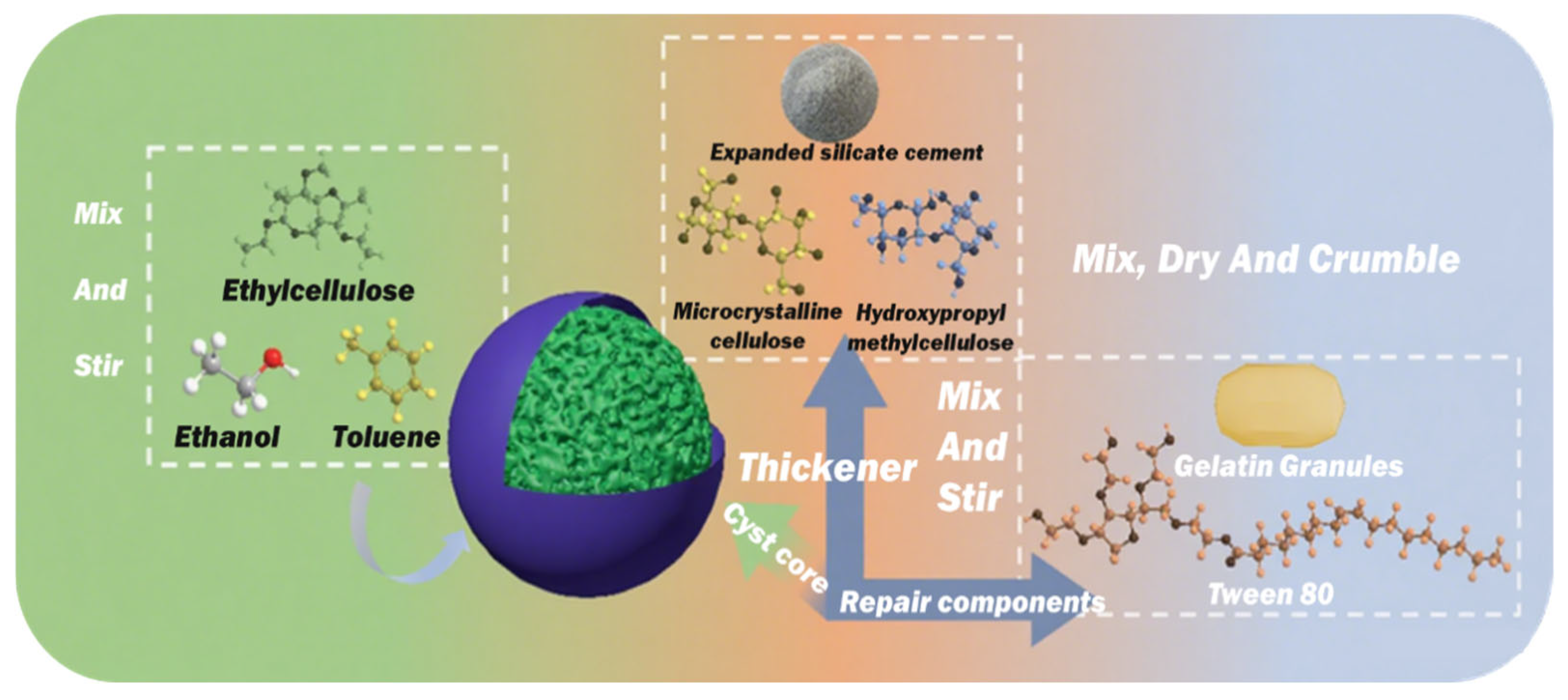
2.2.2. Preparation Procedure of Composite Microcapsules
2.3. Preparation of Cementitious Composites
2.4. Test Method
2.4.1. Mechanical and Self-Healing Performance Tests
2.4.2. XRD Analysis
2.4.3. SEM Analysis
3. Results and Discussion
3.1. Characterization of the Microcapsules
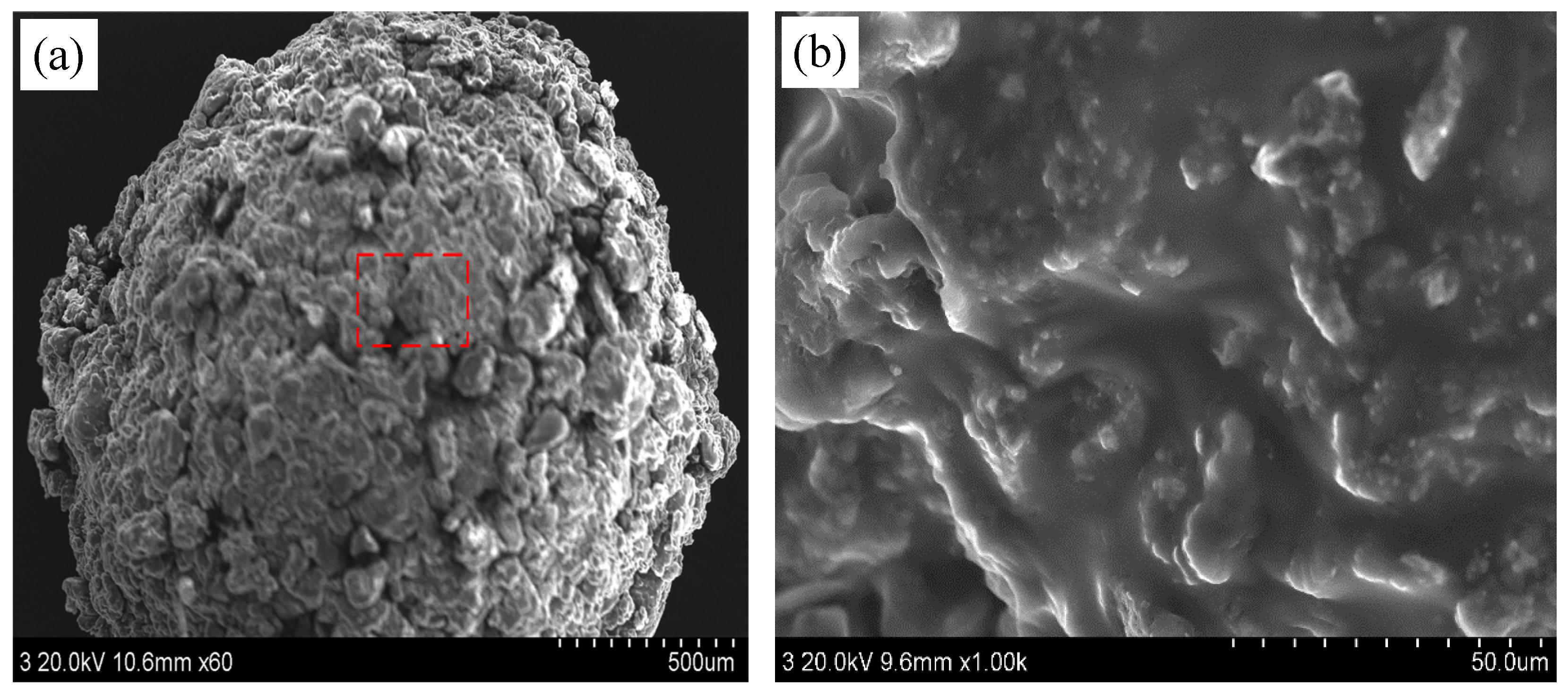
3.1.1. Morphological Analysis
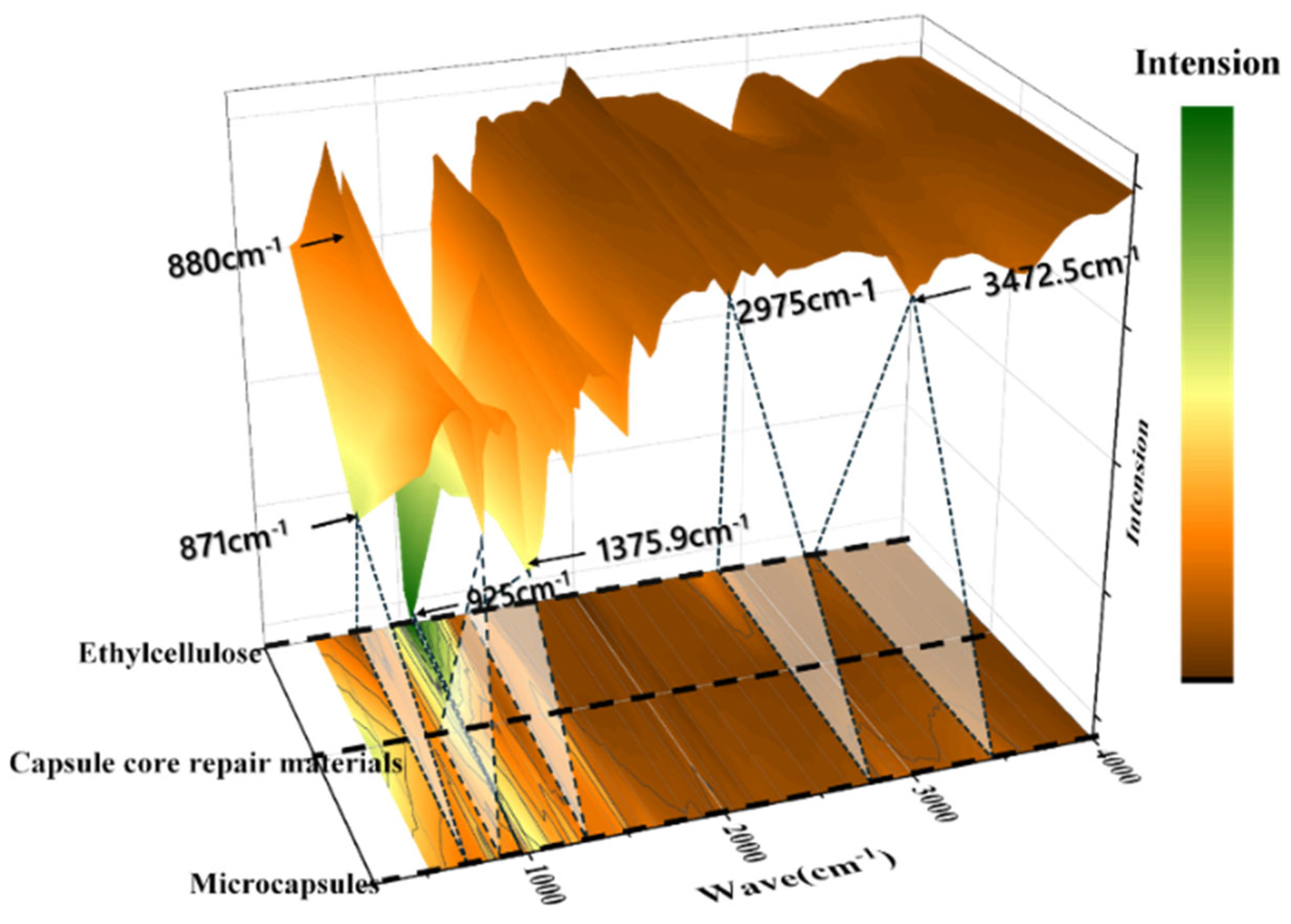
3.1.2. Chemical Structure Analysis
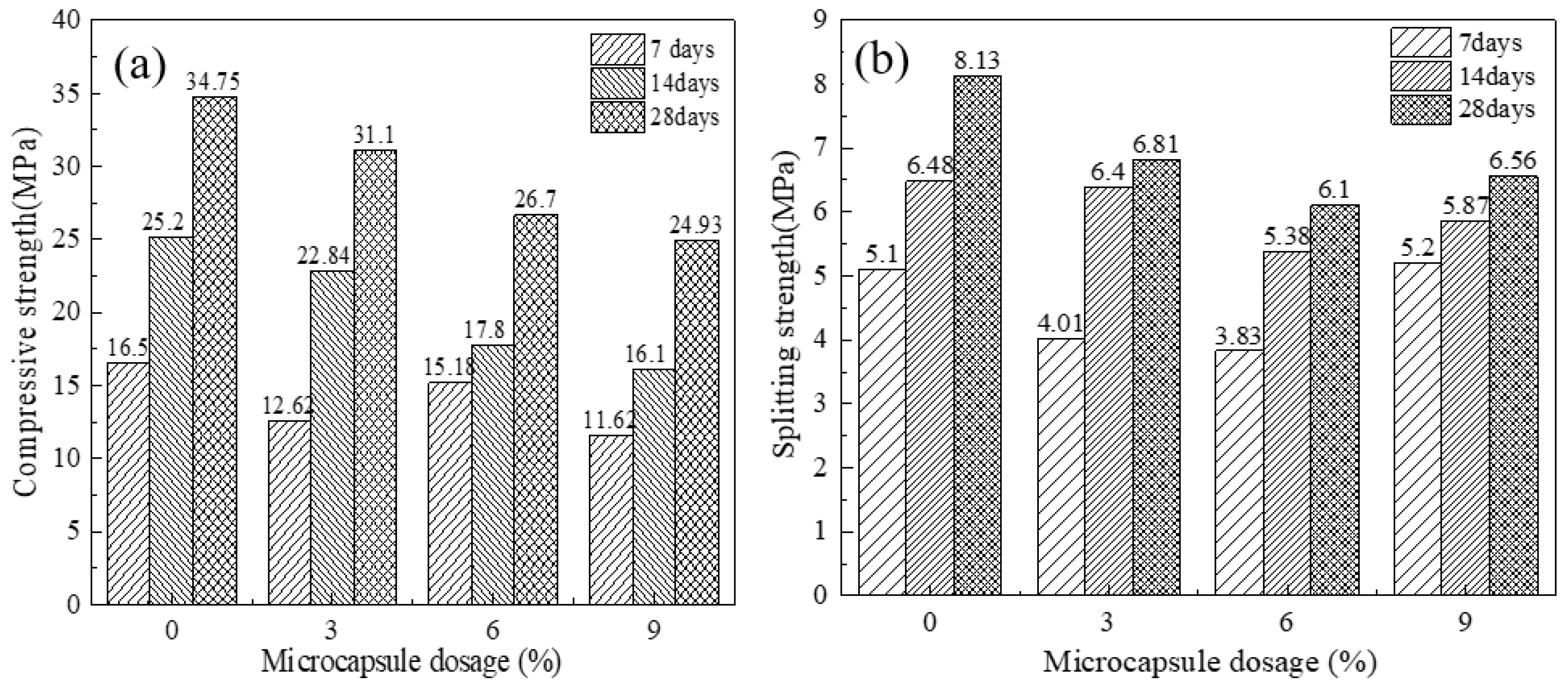
3.2. Mechanical Properties
3.3. Evaluation of Repair Effectiveness
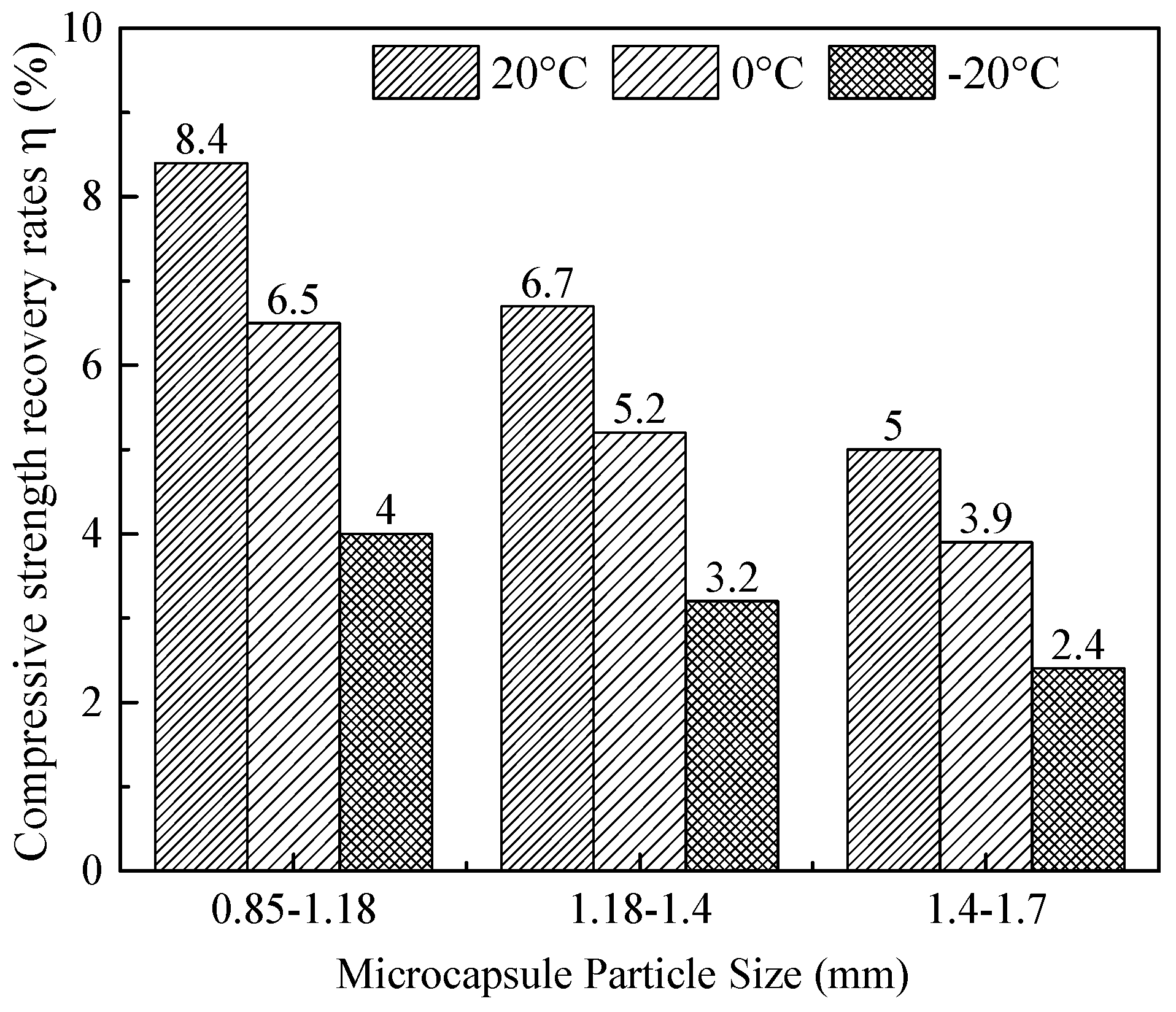
3.3.1. Effect of Microcapsule Particle Size on the Strength Recovery Ratio
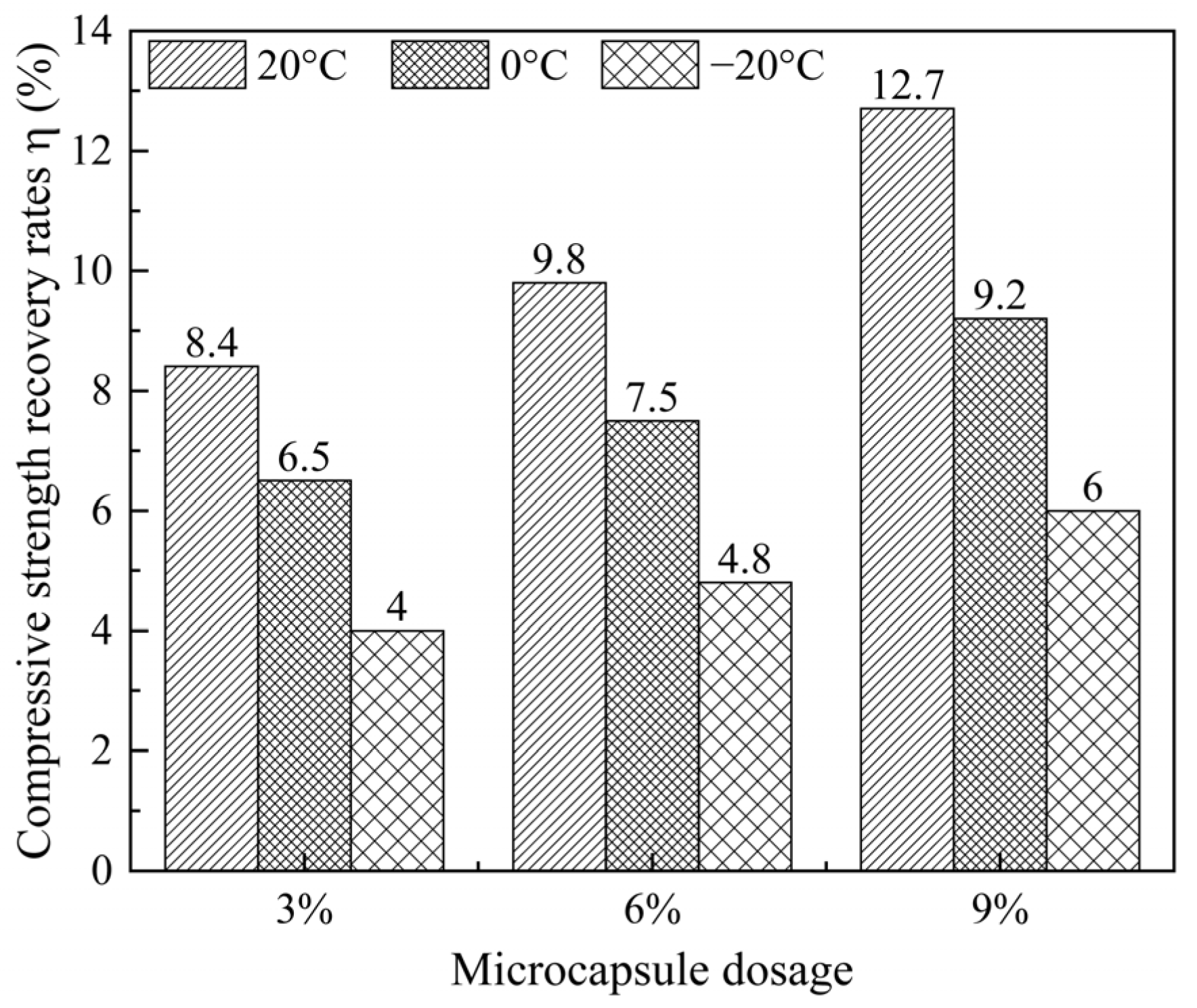
3.3.2. Effect of Microcapsule Content on the Strength Recovery Ratio
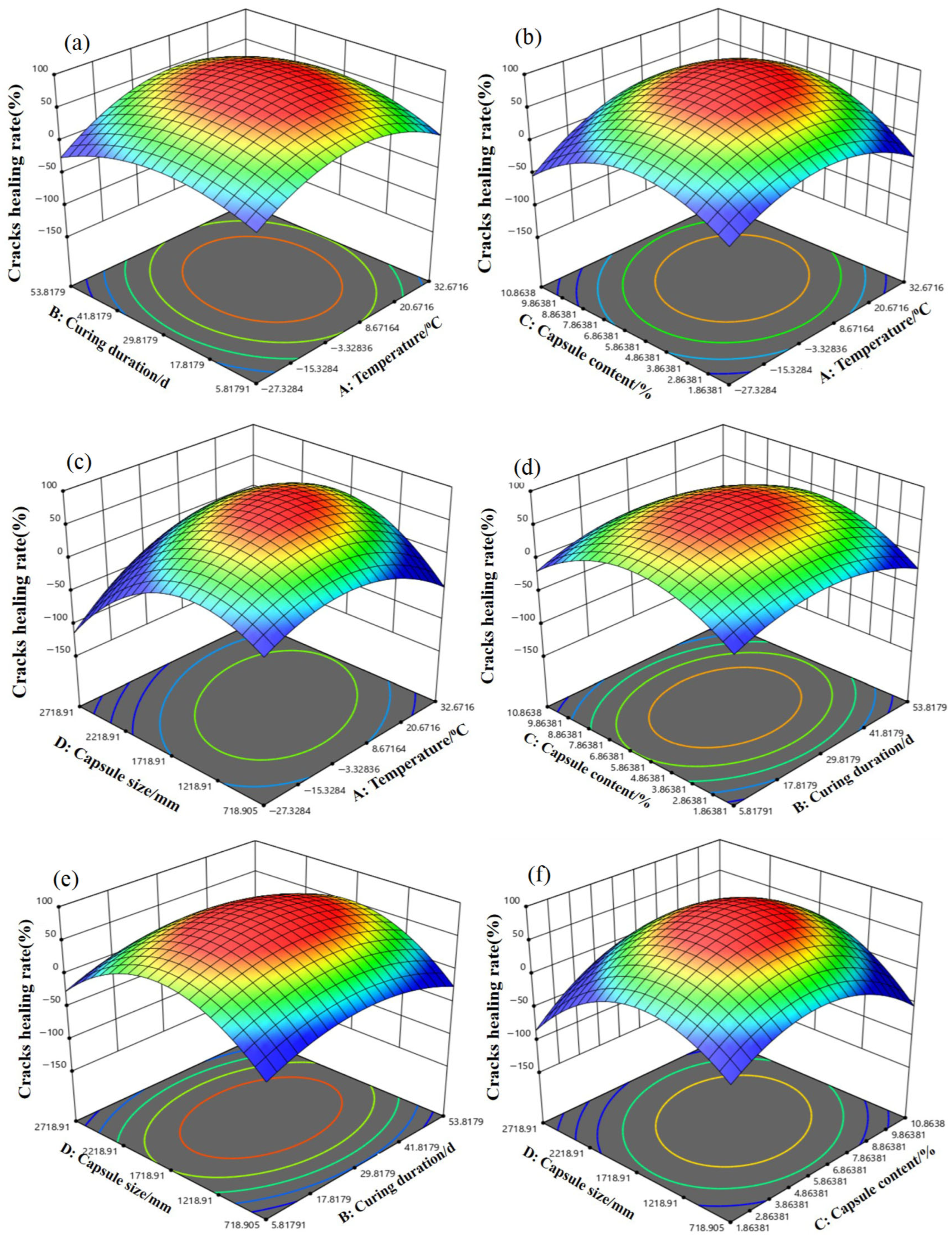
3.3.3. Effect of Microcapsules on Crack-Width Healing
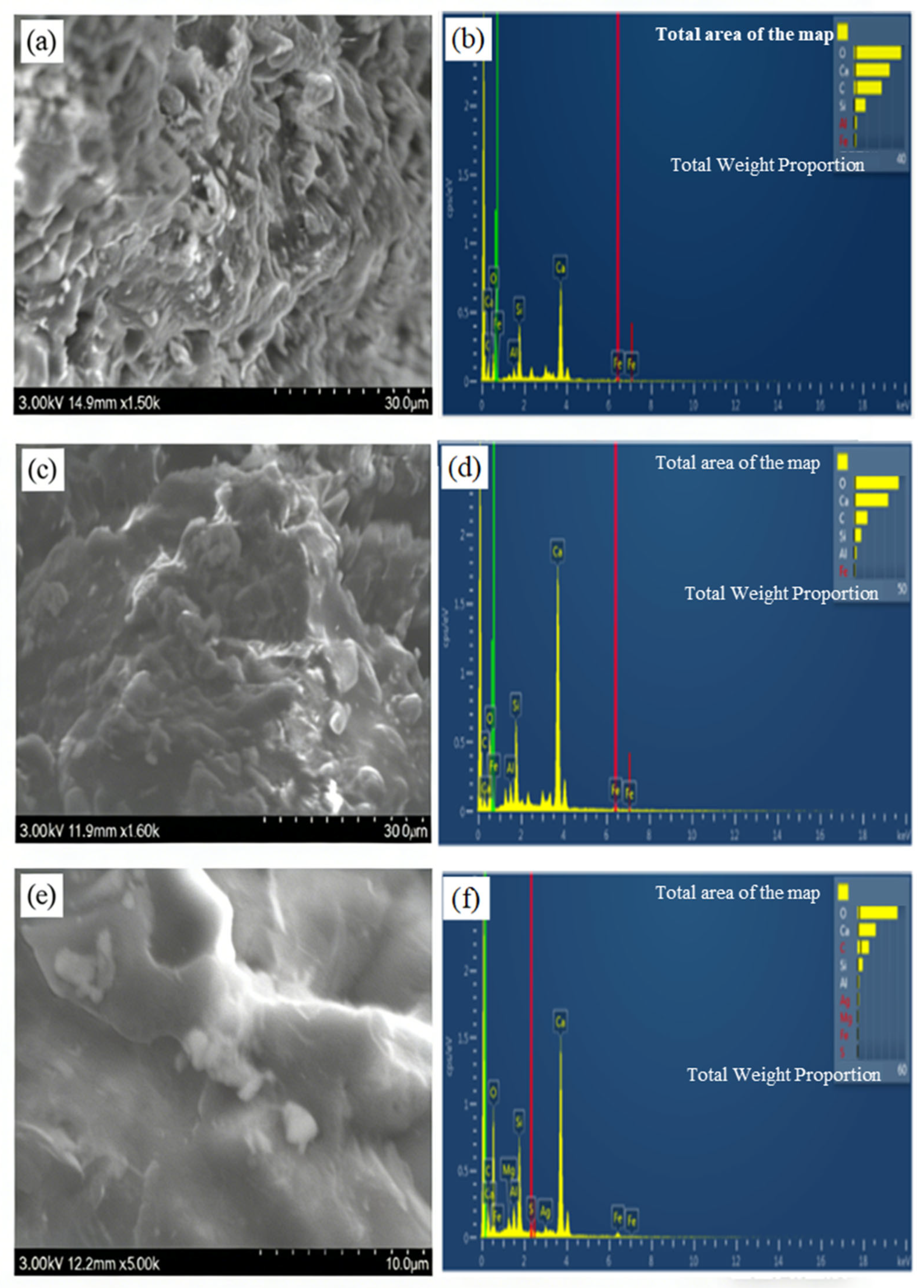
3.4. Microstructures Analysis
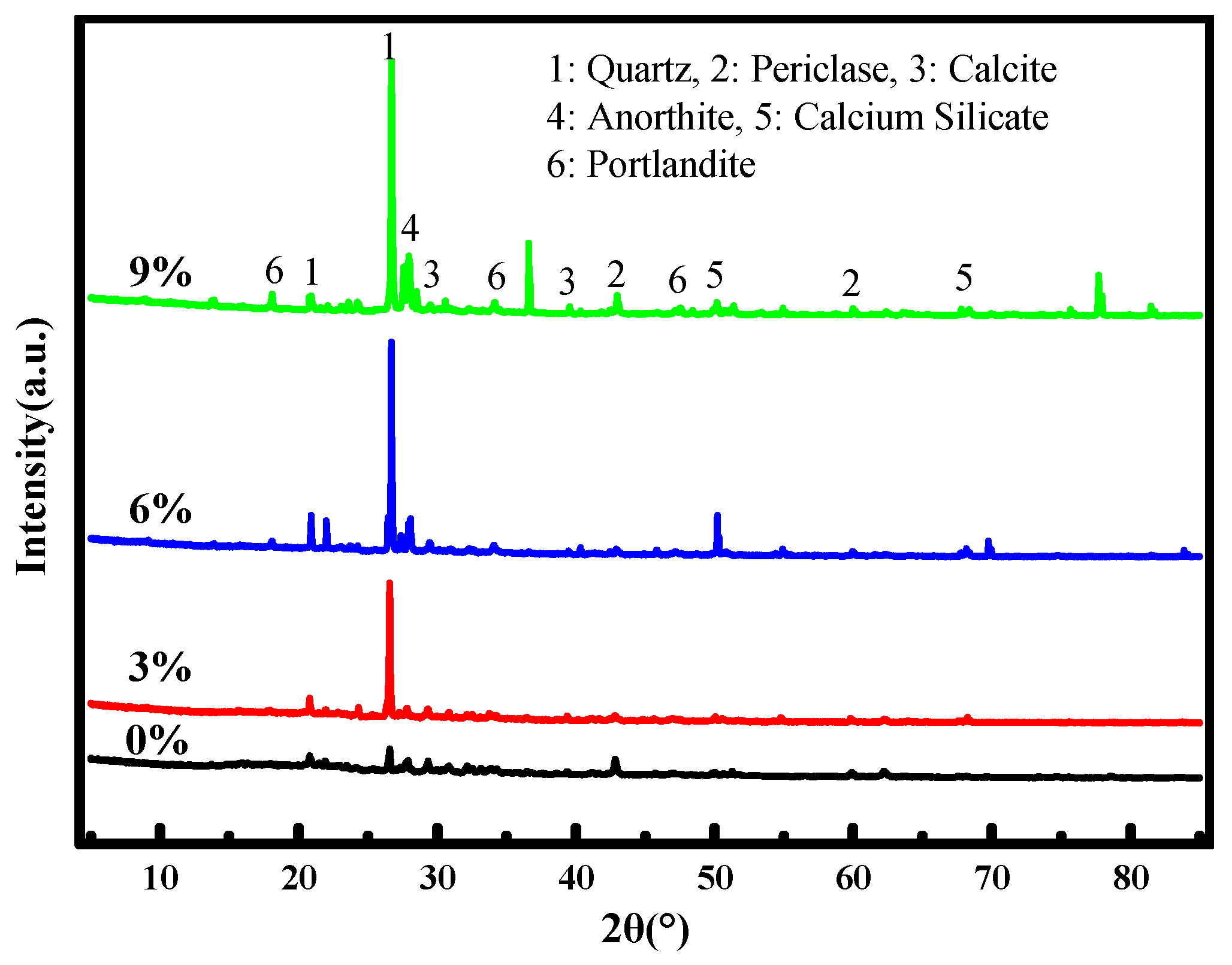
3.5. X-Ray Diffraction (XRD) Analysis
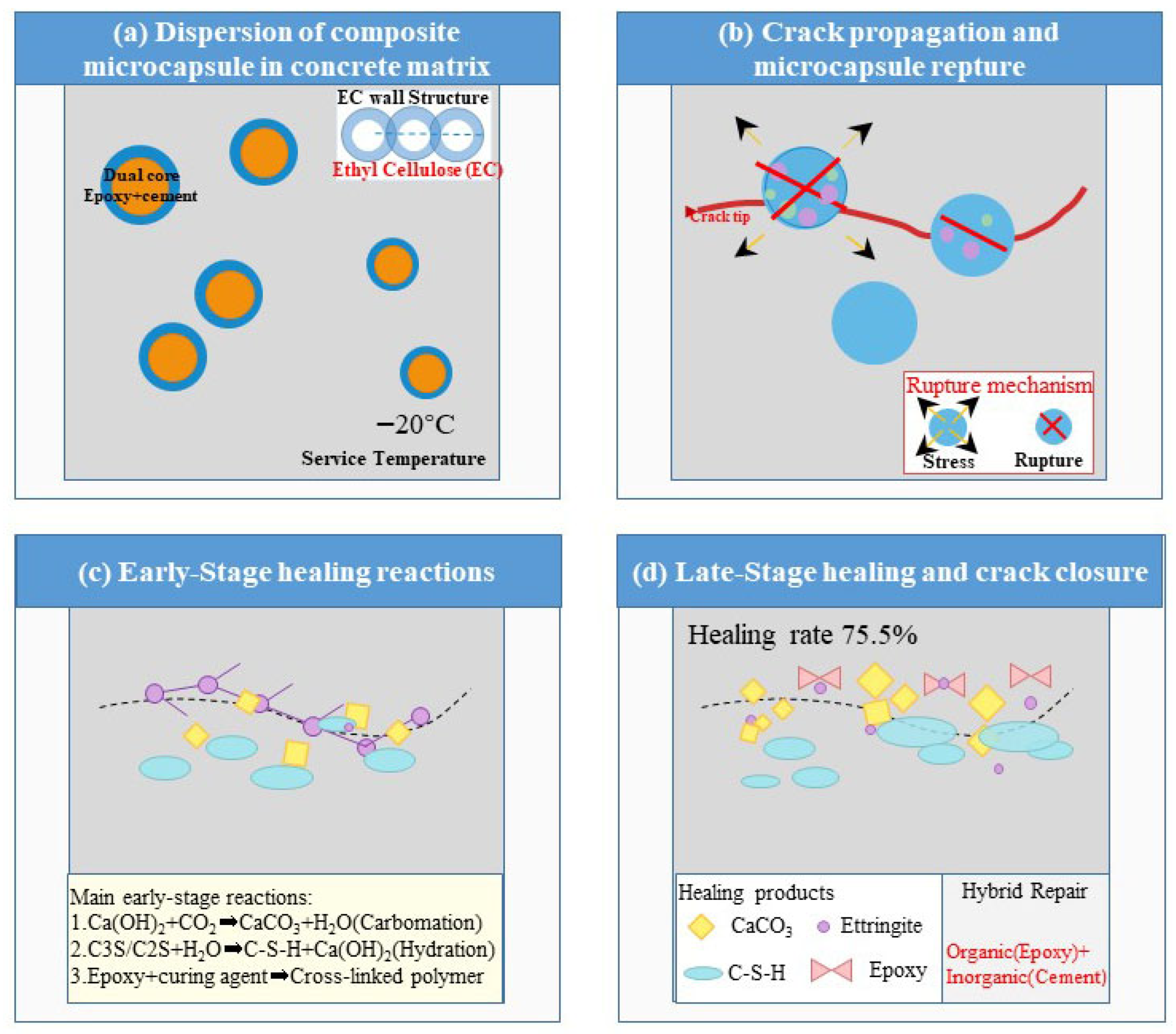
4. Repair Mechanism Analysis
5. Conclusions
- (1)
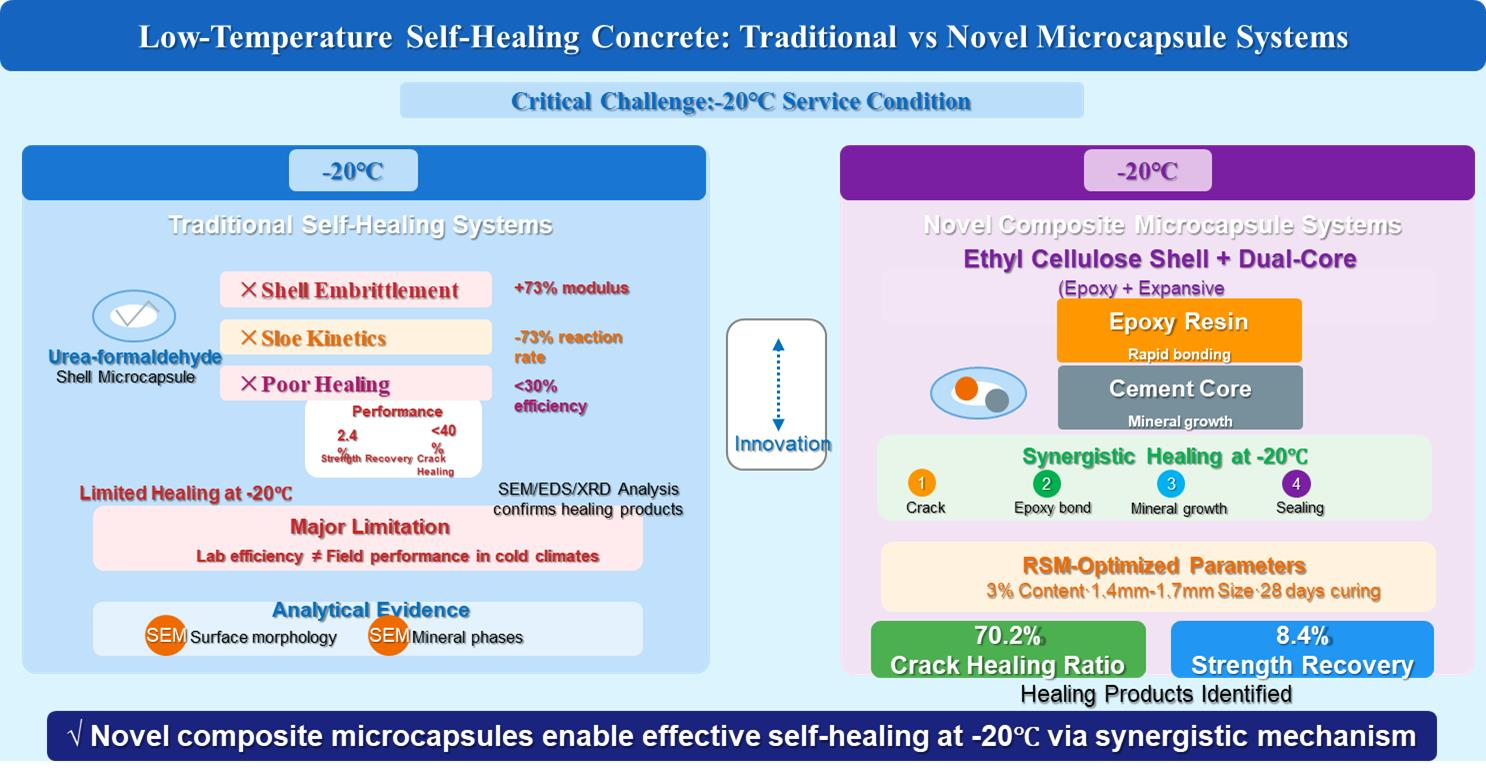
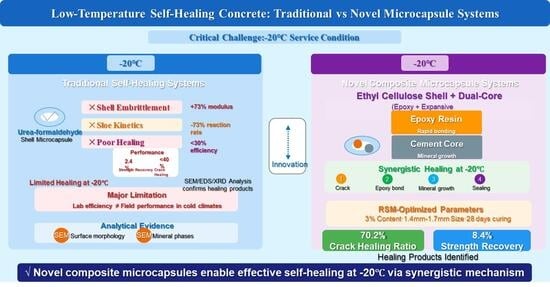
- An optimal microcapsule content of 3% (by mass of cement) was identified. This content balances effective self-healing performance with minimal compromise to the mechanical strength of the mortar. Higher microcapsule contents (6% and 9%) further enhance crack-sealing capacity but lead to a more significant reduction in compressive strength. Under sustained −20 °C conditions, the system achieved a maximum compressive strength recovery of 6.0% (at 9% content) and a surface crack-healing ratio of 44.1%. At 20 °C, the mixture with a 3% microcapsule content yielded a strength recovery of 8.4%. The response surface model predicts that with optimized curing parameters, crack-healing ratios of up to 75.5% are attainable.
- (2)
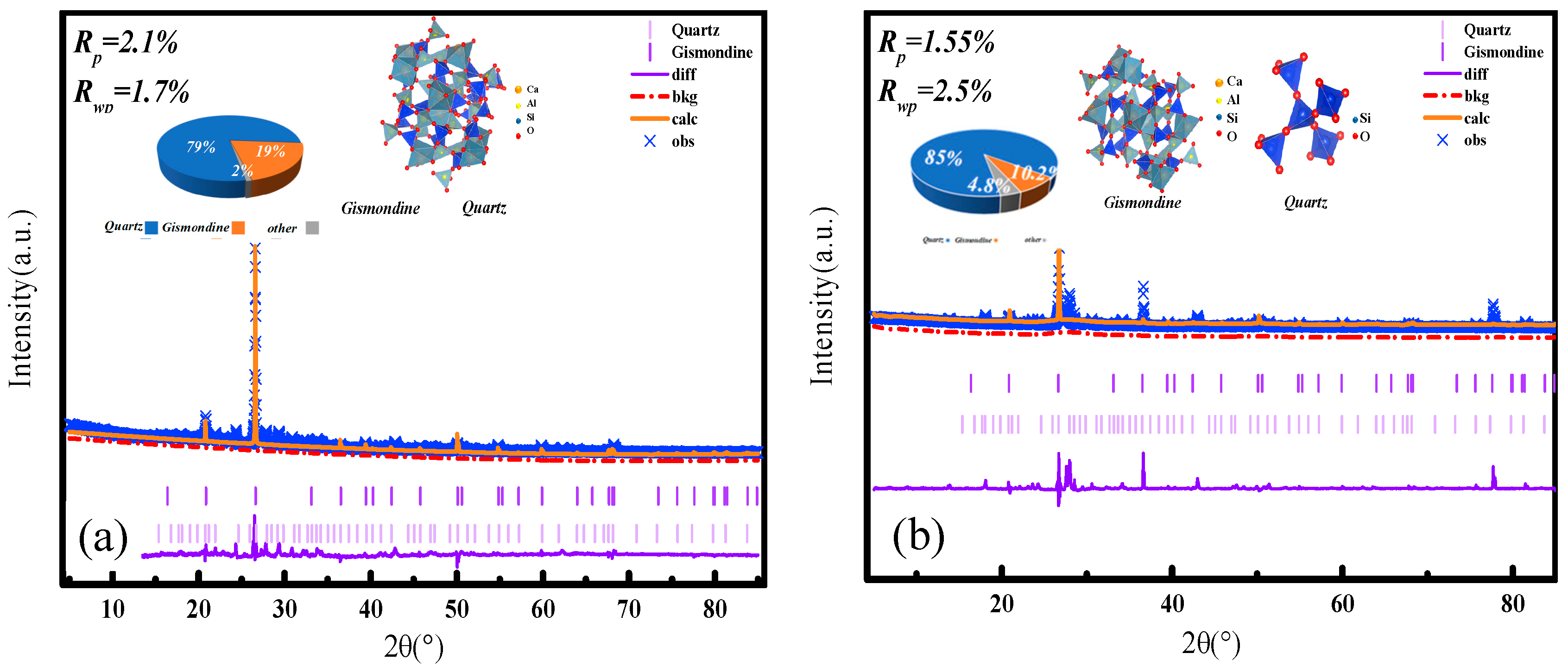
- Microstructural and spectroscopic analyses confirmed a synergistic healing mechanism. This mechanism involves the precipitation of calcium carbonate (CaCO3) and calcium silicate hydrate (C–S–H) gel, alongside the formation of anorthite, all cohesively bonded within a continuous polymerized epoxy network. An optimal microcapsule particle size range of 1.4–1.7 mm was identified. This range ensures a high probability of rupture upon crack intersection while minimizing the detrimental internal stress concentrations induced by larger particles within the cementitious matrix.
- (3)
- A sequential low-temperature healing mechanism was elucidated. This mechanism integrates three key stages: capsule rupture upon cracking, early adhesive bonding provided by the polymerized epoxy, and long-term mineral precipitation from cement hydration and carbonation. Collectively, this work provides a practical and efficient material strategy. This strategy is designed to enhance the durability and extend the service life of concrete infrastructure in cold regions by enabling autonomous crack repair under sub-zero temperatures.
Author Contributions
Funding
Institutional Review Board Statement
Data Availability Statement
Conflicts of Interest
References
- Cappellesso, V.G.; Etcheverry, J.M.; Villagran-Zaccardi, Y.A.; Gruyaert, E.; Van Tittelboom, K.; De Belie, N. Mitigating sulfate attack in self-healing concrete using bacteria-based or crystalline admixture healing agents. Cem. Concr. Compos. 2026, 169, 106514. [Google Scholar] [CrossRef] [Scilit]
- Zhao, G.; Li, J.; Shi, M.; Fan, H.; Cui, J.; Xie, F. Degradation mechanisms of cast-in-situ concrete subjected to internal-external combined sulfate attack. Constr. Build. Mater. 2020, 248, 118683. [Google Scholar] [CrossRef] [Scilit]
- Wang, X.; Xia, L.; Fu, X.; Xu, W.; Wang, X. Particle Characteristics and Sustained-release Properties of Epoxy Resin/Ethyl Cellulose Microcapsules. J. Build. Mater. 2020, 23, 396–400, 484. [Google Scholar]
- Adhikary, S.K.; Rathod, N.; Das Adhikary, S.; Kumar, A.; Perumal, P. Chemical-based Self-healing Concrete: A Review. Discov. Civ. Eng. 2024, 1, 119. [Google Scholar] [CrossRef] [Scilit]
- Banchhor, S.; Sahu, T.K.; Meshram, K.; Mishra, U.; Imam, A. Effect of Dolomite & Glass Fiber on Properties of Self-healing Concrete. Clean Waste Syst. 2025, 10, 100204. [Google Scholar] [CrossRef] [Scilit]
- Zhu, K.F.; Lu, J.Z.; Liu, Y.; Guo, L. Mechanical Properties of Concrete Eroded by Sulfate After Experiencing Load. J. Yangtze River Sci. Res. Inst. 2018, 35, 143–146. [Google Scholar]
- Hamza, O.; Esaker, M.; Abogdera, A.; Elliott, D. Bio-protection of cementitious materials below ground: The significance of natural soil environments. Dev. Built Environ. 2024, 17, 100331. [Google Scholar] [CrossRef] [Scilit]
- He, H.; Guo, Z.; Stroeven, P.; Stroeven, M.; Sluys, L.J. Self-healing Capacity of Concrete—Computer Simulation Study of Unhydrated Cement Structure. Image Anal. Stereol. 2011, 26, 137–143. [Google Scholar] [CrossRef] [Scilit]
- Zhou, F.M. Study on Microcapsule Self-Healing Technology for Cement Concrete. Master’s Dissertation, Chongqing Jiaotong University, Chongqing, China, 2016. [Google Scholar]
- Du, W.; Liu, Q.T.; Lin, R.S. Effects of toluene-di-isocyanate microcapsules on the frost resistance and self-repairing capability of concrete under freeze-thaw cycles. J. Build. Eng. 2021, 44, 102880. [Google Scholar] [CrossRef] [Scilit]
- Zhang, M. Study on Microcapsule Self-Healing Technology and Mechanism for Cement-Based Materials. Ph.D. Dissertation, Central South University, Changsha, China, 2014. [Google Scholar]
- Xie, Y.H. Study on Preparation of Self-Healing Microcapsules for Cement-Based Materials and Strength Repair. Master’s Dissertation, Nanchang University, Nanchang, China, 2020. [Google Scholar] [CrossRef]
- Lin, Z.Y. Study on Preparation of Microcapsule Self-Healing Concrete and Its Self-Healing and Mechanical Properties. Master’s Dissertation, Jiangsu University, Zhenjiang, China, 2021. [Google Scholar] [CrossRef]
- He, P.; Yin, W.; Han, Z. Experimental Study of Effects of Water-Cement Ratio on the Mechanical Property of High-Performance Cement-Based Iron-Tailings Grouting Material. Adv. Mater. Res. 2012, 600, 186–189. [Google Scholar] [CrossRef] [Scilit]
- Wang, X.; Sun, P.; Han, N.; Xing, F. Experimental Study on Mechanical Properties and Porosity of Organic Microcapsules Based Self-healing Cementitious Composite. Materials 2017, 10, 20. [Google Scholar] [CrossRef] [Scilit]
- Beglarigale, A.; Seki, Y.; Yağız Demir, N.; Yazıcı, H. Sodium silicate/polyurethane microcapsules used for self-healing in cementitious materials: Monomer optimization, characterization, and fracture behavior. Constr. Build. Mater. 2018, 162, 57–64. [Google Scholar] [CrossRef] [Scilit]
- Ren, Y.M. Preparation and Mechanical Properties of Microcapsules with Inorganic Wall Materials for Self-Healing Concrete. Master’s Dissertation, Shenzhen University, Shenzhen, China, 2020. [Google Scholar]
- Liu, J.; Li, Q.; Xu, S. Influence of Nanoparticles on Fluidity and Mechanical Properties of Cement Mortar. Constr. Build. Mater. 2015, 101, 892–901. Available online: https://xueshu.baidu.com/usercenter/paper/show?paperid=eb8032e4730f0091c7e1792630406a9c (accessed on 30 August 2025). [CrossRef] [Scilit]
- Wang, X.X. Synthesis and Preliminary Application of Novel Self-Healing Microcapsules Containing Methyl Methacrylate Monomer. Master’s Dissertation, Shandong University, Jinan, China, 2020. [Google Scholar] [CrossRef]
- Jatav, S. Experimental Study of Conventional and Self-healing Concrete. Int. J. Res. Appl. Sci. Eng. Technol. 2025, 13, 1048–1053. [Google Scholar] [CrossRef] [Scilit]
- Ormerod, A.; Augustin, M.; Baker, C.; Chosidow, O.; Cohen, A.; Dam, T.; Garcia-Doval, I.; Lecluse, L.; Schmitt-Egenolf, M.; Spuls, P.; et al. Challenges for Synthesising Data in a Network of Registries for Systemic Psoriasis Therapies. Dermatology 2012, 224, 236–243. [Google Scholar] [CrossRef] [Scilit]
- Pooja, K.; Tarannum, N. Self-healing Concrete: A Path Towards Advancement of Sustainable Infrastructure. Discov. Appl. Sci. 2025, 7, 703. [Google Scholar] [CrossRef] [Scilit]
- Qasim, T.J.; Moosa, A.A.; Mahdi, Z.H. Evaluation of Microcapsules Filled with Nano Magnesium Oxide for Self-healing Concrete. Curr. Nanomater. 2026, 11, 92–105. [Google Scholar] [CrossRef] [Scilit]
- Reda, M.A.; Chidiac, S.E. Properties and Performance Metrics of Healing Agents in Self-healing Concrete. In Proceedings of the Canadian Society for Civil Engineering Annual Conference 2021, Montreal, QC, Canada, 12–15 June 2019; Walbridge, S., Nik-Bakht, M., Ng, K.T.W., Eds.; Springer Nature: Singapore, 2023; pp. 403–414. [Google Scholar] [CrossRef] [Scilit]
- Reinhardt, H.-W.; Jooss, M. Permeability and Self-healing of Cracked Concrete as a Function of Temperature and Crack Width. Cem. Concr. Res. 2003, 33, 981–985. [Google Scholar] [CrossRef] [Scilit]
- Şahmaran, M.; Keskin, S.B.; Ozerkan, G.; Yaman, I.O. Self-healing of Mechanically-loaded Self Consolidating Concretes with High Volumes of Fly Ash. Cem. Concr. Compos. 2008, 30, 872–879. [Google Scholar] [CrossRef] [Scilit]
- Singh, A.; Kaur, T. A Review on Self Healing Concrete. Int. J. Res. Appl. Sci. Eng. Technol. 2023, 11, 890–893. [Google Scholar] [CrossRef] [Scilit]
- Kumar, S.S.; CJ, C. Analysis of Properties of Self-healing Concrete Using Bacteria and Self-healing Concrete Utilising Crystalline Admixture. Sustain. Agric. Food Environ. Res. 2023, 12, 1–7. [Google Scholar] [CrossRef] [Scilit]
- Sreenu, R.; Suryawanshi, S.R.; Ashish, A. Experimental Study on Self-compacting and Self-healing Concrete with Recycled Coarse Aggregates. Int. J. Eng. 2024, 37, 625–634. [Google Scholar] [CrossRef] [Scilit]
- Van Tittelboom, K.; Wang, J.; Araújo, M.; Snoeck, D.; Gruyaert, E.; Debbaut, B.; Derluyn, H.; Cnudde, V.; Tsangouri, E.; Van Hemelrijck, D.; et al. Comparison of Different Approaches for Self-healing Concrete in a Large-scale Lab Test. Constr. Build. Mater. 2016, 107, 125–137. [Google Scholar] [CrossRef] [Scilit]
- Wiktor, V.; Jonkers, H.M. Quantification of Crack-healing in Novel Bacteria-based Self-healing Concrete. Cem. Concr. Compos. 2011, 33, 763–770. [Google Scholar] [CrossRef] [Scilit]
- Hussin, M.; Majid, M. A Review of Self-Healing Concrete Research Development. 17 January 2026. Available online: https://www.semanticscholar.org/paper/A-Review-of-Self-healing-Concrete-Research-Hussin-Majid/0fbc55ff697607425bc8cf8c71195d012b6a3bd3 (accessed on 19 January 2026).
- Al Balushi, S.A.K.; Macquaker, J.H.S.; Hollis, C.; Marshall, J.D. Influence of Oxic Diagenesis on Source Potential and Lithofacies Cyclicity: Insight from Cenomanian Natih-B Member Intrashelf Basinal Carbonates, Oman. Pet. Geosci. 2011, 17, 243–261. [Google Scholar] [CrossRef] [Scilit]
- Liang, P.; Mao, Q.J.; Wang, Z.M.; Cui, S.P. Mechanical Properties of Self-Healing System in Cementitious Material with Microcapsule. Mater. Sci. Forum 2018, 913, 1090–1096. [Google Scholar] [CrossRef] [Scilit]
- Fan, W.; Zhang, Y.; Li, W.; Wang, W.; Zhao, X.; Song, L. Multi-level Self-healing Ability of Shape Memory Polyurethane Coating with Microcapsules by Induction Heating. Chem. Eng. J. 2019, 368, 1033–1044. [Google Scholar] [CrossRef] [Scilit]
- Ashraf, W.; Olek, J.; Sahu, S. Phase Evolution and Strength Development During Carbonation of Low-lime Calcium Silicate Cement (CSC). Constr. Build. Mater. 2019, 210, 473–482. [Google Scholar] [CrossRef] [Scilit]
- Kavas, T.; Olgun, A.; Erdoğan, Y. Setting and Hardening of Borogypsum–Portland Cement Clinker–Fly Ash Blends. Studies on Effects of Molasses on Properties of Mortar Containing Borogypsum. Cem. Concr. Res. 2005, 35, 711–718. [Google Scholar] [CrossRef] [Scilit]
- Mao, H.; Cao, X.; Guo, M.; Jiang, C.; Chen, D. Study on the Repair Effect of Self-healing Cementitious Material with Urea-formaldehyde Resin/Epoxy Resin Microcapsule. Buildings 2024, 14, 2201. [Google Scholar] [CrossRef] [Scilit]
- Li, X.; Wang, S.J.; Chen, Z.H. Study on Three-dimensional Reconstruction of Macro/meso-structure Evolution of Expansive Soils with CT-triaxial Apparatus. Appl. Mech. Mater. 2012, 238, 422–426. [Google Scholar] [CrossRef] [Scilit]
- Tang, M.; Tian, Y.; Mu, X. The Pore Fractal Characteristics of Concrete Materials Under Salt Freezing Conditions in Cold Area. Adv. Mater. Res. 2011, 233–235, 2522–2527. [Google Scholar] [CrossRef] [Scilit]
- Cui, H.; Liao, W.; Memon, S.A.; Dong, B.; Tang, W. Thermophysical and Mechanical Properties of Hardened Cement Paste with Microencapsulated Phase Change Materials for Energy Storage. Materials 2014, 7, 8070–8087. [Google Scholar] [CrossRef] [Scilit] [PubMed]






| Component | CaO | SiO2 | Al2O3 | Fe2O3 | MgO | R2O | SO3 | Loss |
|---|---|---|---|---|---|---|---|---|
| Content | 62.97 | 21.18 | 5.61 | 4.07 | 1.74 | 0.51 | 2.45 | 1.47 |
| Specific Surface Area m2/Kg | Density g/cm3 | Initial Setting Time/Min | Compressive Strength/MPa | Flexural Strength/MPa | |||
|---|---|---|---|---|---|---|---|
| Initial | Final | 3d | 28d | 3d | 28d | ||
| 350 | 3.1 | 198 | 264 | 23.6 | 52.3 | 5.7 | 9.6 |
| Substance | Content (wt.%) | Specification | Materials Sources |
|---|---|---|---|
| Epoxy Resin Particles | 34 | Chemically Pure | Nantong Xingchen Synthetic Materials Co., Ltd. (Nantong, China) |
| Expanded Portland Cement | 32 | Chemically Pure | Guangxi Yunyan Special Cement Building Materials Co., Ltd. (Hengzhou, China) |
| Microcrystalline Cellulose | 30 | Column Chromatography Grade | Shanghai Macklin Biochemical Technology Co., Ltd. (Shanghai, China) |
| Hydroxypropyl Methylcellulose | 2 | Chemically Pure | Shenyang Cellulose Factory (Shenyang, China) |
| Tween 80 | 2 | Chemically Pure | Tianjin Damoo Chemical Reagent Co., Ltd. (Tianjin, China) |
| Component | Substance | Content (%) | Specification | Materials Sources |
|---|---|---|---|---|
| Wall Material | Ethyl Cellulose | 10 | Chemically Pure | Shanghai Macklin Biochemical Technology Co., Ltd. (Shanghai, China) |
| Solvent | Toluene/Ethanol Mixture | 90 | - | - |
| Toluene | 80 | Analytical Pure | Suzhou Jiren Advanced Materials Co., Ltd. (Suzhou, China) | |
| Anhydrous Ethanol | 20 | Analytical Pure | Tianjin Damoo Chemical Reagent Factory (Tianjin, China) |
| No. | Component | 0% | 3% | 6% | 9% |
|---|---|---|---|---|---|
| 1 | Cement | 450 | 450 | 450 | 450 |
| 2 | Fine Aggregate | 1350 | 1350 | 1350 | 1350 |
| 3 | Water | 225 | 225 | 225 | 225 |
| 4 | Microcapsules | 0 | 13.5 | 27 | 40.5 |
| 5 | Curing agent | 0 | 6.75 | 13.5 | 20.25 |
| Number | Temperature/°C | Curing Duration/d | Microcapsule Content/% | Particle Size/mm | Cracks Healing Ratio/% |
|---|---|---|---|---|---|
| 1 | −20 | 3 | 6 | 1.18–1.4 | 8.2 |
| 2 | 20 | 3 | 6 | 1.18–1.4 | 32.4 |
| 3 | −20 | 28 | 6 | 1.18–1.4 | 44.1 |
| 4 | 20 | 28 | 6 | 1.18–1.4 | 71.8 |
| 5 | 0 | 14 | 3 | 0.85~1.18 | 15.4 |
| 6 | 0 | 14 | 9 | 0.85~1.18 | 12.3 |
| 7 | 0 | 14 | 3 | 1.4–1.7 | 39.4 |
| 8 | 0 | 14 | 9 | 1.4–1.7 | 31.3 |
| 9 | −20 | 14 | 6 | 0.85~1.18 | 15.4 |
| 10 | 20 | 14 | 6 | 0.85~1.18 | 46.2 |
| 11 | −20 | 14 | 6 | 1.4–1.7 | 11.6 |
| 12 | 20 | 14 | 6 | 1.4–1.7 | 56.3 |
| 13 | 0 | 3 | 3 | 1.18–1.4 | 9.7 |
| 14 | 0 | 28 | 3 | 1.18–1.4 | 47.5 |
| 15 | 0 | 3 | 9 | 1.18–1.4 | 10.4 |
| 16 | 0 | 28 | 9 | 1.18–1.4 | 54.1 |
| 17 | −20 | 14 | 3 | 1.18–1.4 | 23.4 |
| 18 | 20 | 14 | 3 | 1.18–1.4 | 51.2 |
| 19 | 20 | 14 | 9 | 1.18–1.4 | 41.9 |
| 20 | 20 | 14 | 9 | 1.18–1.4 | 42.4 |
| 21 | 0 | 3 | 6 | 0.85~1.18 | 10.6 |
| 22 | 0 | 28 | 6 | 0.85~1.18 | 70.1 |
| 23 | 0 | 3 | 6 | 1.4–1.7 | 14.3 |
| 24 | 0 | 28 | 6 | 1.4–1.7 | 71.2 |
| 25 | 0 | 14 | 6 | 1.18–1.4 | 66 |
| 26 | 0 | 14 | 6 | 1.18–1.4 | 55.5 |
| 27 | 0 | 14 | 6 | 1.18–1.4 | 54.3 |
| 28 | 0 | 14 | 6 | 1.18–1.4 | 55.6 |
| 29 | 0 | 14 | 6 | 1.18–1.4 | 64.1 |
| 30 | 0 | 14 | 6 | 1.18–1.4 | 54.8 |
| 31 | 0 | 14 | 6 | 1.18–1.4 | 63.9 |
| 32 | 0 | 14 | 6 | 1.18–1.4 | 65.1 |
| 33 | 0 | 14 | 6 | 1.18–1.4 | 65.4 |
| 34 | 0 | 14 | 6 | 1.18–1.4 | 65.7 |
| 35 | 0 | 14 | 6 | 1.18–1.4 | 54.2 |
| 36 | 0 | 14 | 6 | 1.18–1.4 | 49.3 |
| Source | Sum of Squares | Freedom | Root-Mean-Square | F Value | p Value |
|---|---|---|---|---|---|
| model | 18,752.3 | 14 | 1339.45 | 28.34 | <0.0001 |
| A | 189.4 | 1 | 189.4 | 4.01 | 0.0482 |
| B | 338.6 | 1 | 338.6 | 7.16 | 0.0091 |
| C | 4582.1 | 1 | 4582.1 | 96.94 | <0.0001 |
| D | 215.8 | 1 | 215.8 | 4.56 | 0.0354 |
| AB | 164.2 | 1 | 164.2 | 3.47 | 0.0462 |
| AC | 19.1 | 1 | 19.1 | 0.4 | 0.5286 |
| AD | 8.6 | 1 | 8.6 | 0.18 | 0.6723 |
| BC | 28.1 | 1 | 28.1 | 0.59 | 0.4437 |
| BD | 52.3 | 1 | 52.3 | 1.11 | 0.2958 |
| CD | 22.8 | 1 | 22.8 | 0.48 | 0.4899 |
| A2 | 3124.5 | 1 | 3124.5 | 66.09 | <0.0001 |
| B2 | 538.8 | 1 | 538.8 | 11.34 | 0.0012 |
| C2 | 10,162.4 | 1 | 10,162.4 | 215.08 | <0.0001 |
| D2 | 28.4 | 1 | 28.4 | 0.6 | 0.4412 |
| Residual | 992.7 | 21 | 47.27 | ||
| Misfit term | 874.3 | 10 | 87.43 | 1.85 | 0.1521 |
| Net error | 118.4 | 11 | 10.76 | ||
| Total | 19,745.0 | 35 | |||
| R2 = 0.9912, RAdj2 = 0.9758, RPred2 = 0.9741 | |||||
| Factor | Horizontal Coding | ||
|---|---|---|---|
| −1 | 0 | 1 | |
| curing temperature/°C | −20 | 0 | 20 |
| curing duration/d | 3 | 14 | 28 |
| microcapsule content/% | 3 | 6 | 9 |
| particle size/mm | 0.85~1.18 | 1.18–1.4 | 1.4–1.7 |
Disclaimer/Publisher’s Note: The statements, opinions and data contained in all publications are solely those of the individual author(s) and contributor(s) and not of MDPI and/or the editor(s). MDPI and/or the editor(s) disclaim responsibility for any injury to people or property resulting from any ideas, methods, instructions or products referred to in the content. |
© 2026 by the authors. Licensee MDPI, Basel, Switzerland. This article is an open access article distributed under the terms and conditions of the Creative Commons Attribution (CC BY) license.
Share and Cite
Li, Y.; Deng, Y. Low-Temperature Self-Healing Cement Mortar Enabled by Novel Composite Microcapsules: Performance, Mechanism, and Optimization. Materials 2026, 19, 933. https://doi.org/10.3390/ma19050933
Li Y, Deng Y. Low-Temperature Self-Healing Cement Mortar Enabled by Novel Composite Microcapsules: Performance, Mechanism, and Optimization. Materials. 2026; 19(5):933. https://doi.org/10.3390/ma19050933
Chicago/Turabian StyleLi, Yao, and Yonggang Deng. 2026. "Low-Temperature Self-Healing Cement Mortar Enabled by Novel Composite Microcapsules: Performance, Mechanism, and Optimization" Materials 19, no. 5: 933. https://doi.org/10.3390/ma19050933
APA StyleLi, Y., & Deng, Y. (2026). Low-Temperature Self-Healing Cement Mortar Enabled by Novel Composite Microcapsules: Performance, Mechanism, and Optimization. Materials, 19(5), 933. https://doi.org/10.3390/ma19050933