Characteristics and Microstructure of Coatings of Ultradisperse TiB2-TiAl Electrodes with Nanosized Additives Deposited on Ti-Gr2 by Non-Contact Electrospark Deposition

 , , ,
, , ,  ,
,  , ,
, ,  and
and
Abstract
1. Introduction
2. Materials and Methods
2.1. Electrode Selection
2.2. Substrate
2.3. Research Apparatus
2.4. Measurement Methodology
- -
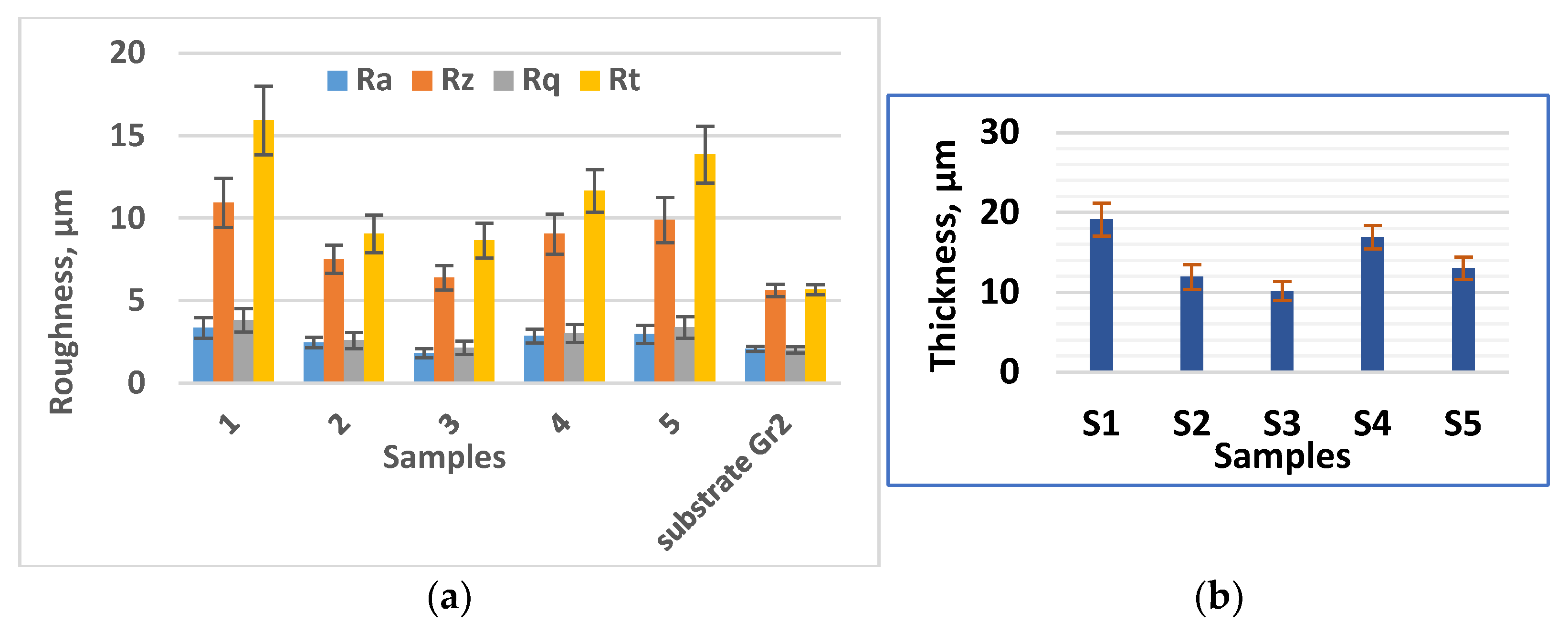
- The roughness parameters of the coatings (average roughness—Ra; root mean square rough-ness Rq; maximum profile height—Rt; the average value of the 5 highest protrusions and 5 deepest depressions of the profile within the basic length—Rz) were measured with the profilometer “AR-132B” (Shenzhen Graigar Technology Co., Ltd., Shenzhen, China) in two mutually perpendicular directions in five sections. The number of parallel measurements is 5; the measurement length is 2.5 mm. The arithmetic average values, standard deviation and confidence interval were determined. Significantly different values were rejected using the Grubbs method.
- -
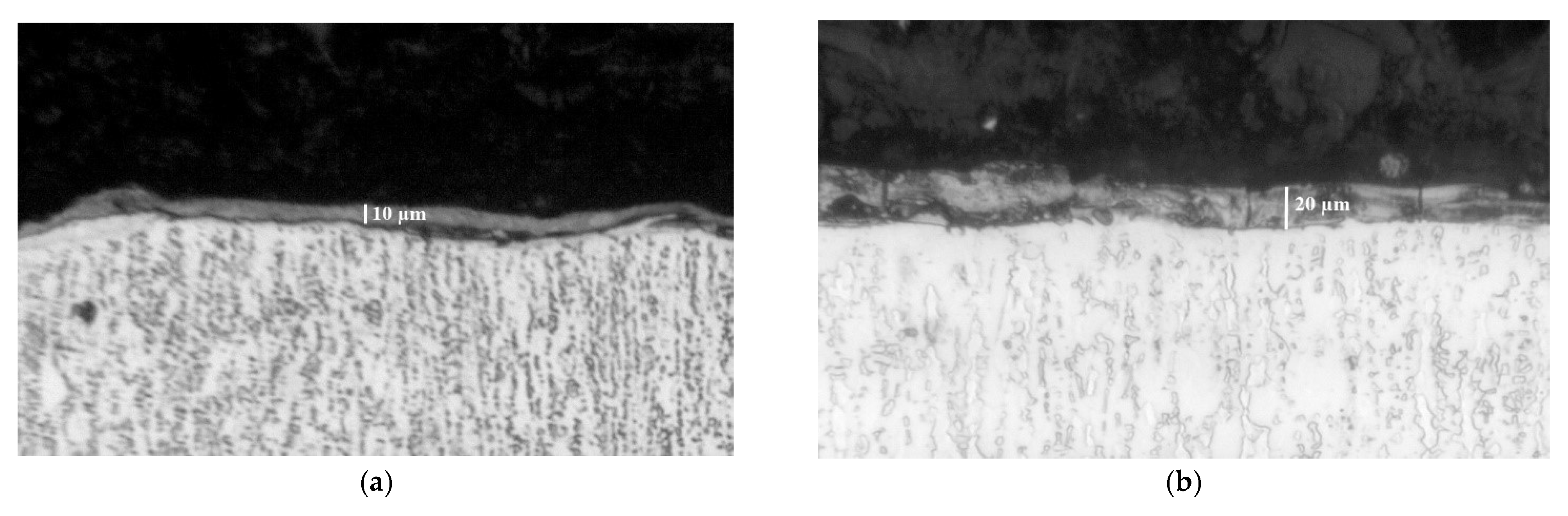
- The thickness δ was measured with a dial indicator with an accuracy of 0.001 mm. The results are the arithmetic mean of 5 parallel measurements.
- -
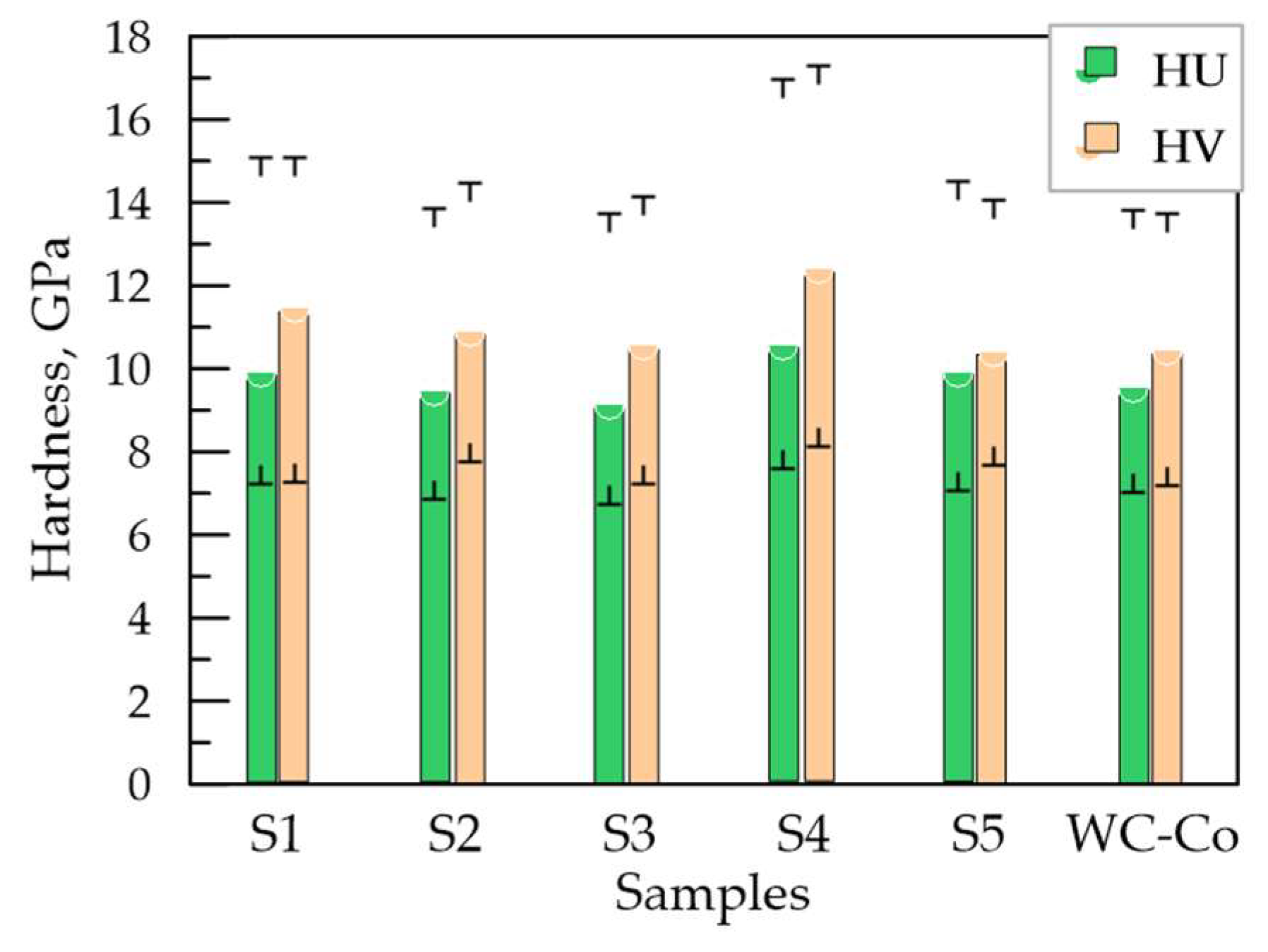
- Vickers microhardness (HV) was measured from above (on the top of the coating) after smoothing the surface irregularities. The hardness tester “Zwick 4350” (Zwick Roell, GmbH & Co., KG, Ulm, Germany) equipped with a Vickers diamond prism indenter at a load of 0.2 N for a time of 10 s was used. The number of parallel measurements was 10. In order to eliminate the influence of the substrate, the measured hardness was calculated according to the method presented in [52].
- -
- To obtain a more accurate assessment of the properties of the coatings, the universal hardness HU was used, which characterizes both the elastic and plastic properties of the material. The measurements were carried out with a computer-controlled FISCHERSCOPE® H100 (Helmut Fischer GmbH, Sindelfingen, Germany) nanotester at a load of 300 mN with a Vickers diamond indenter and a penetration depth of 0.8–1.6 μm. The average values of the 10 measurements performed on each Sample were taken.
- -
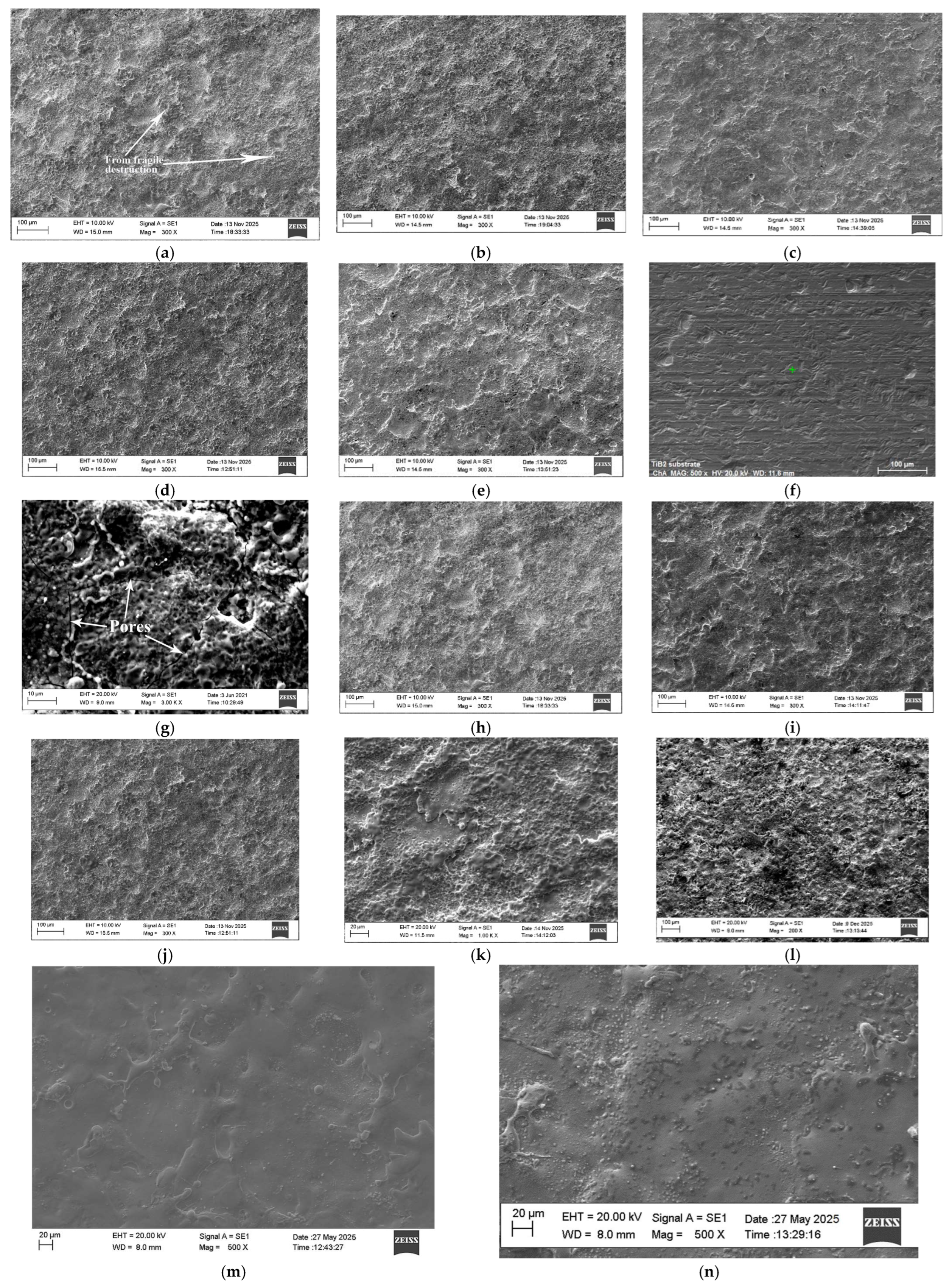
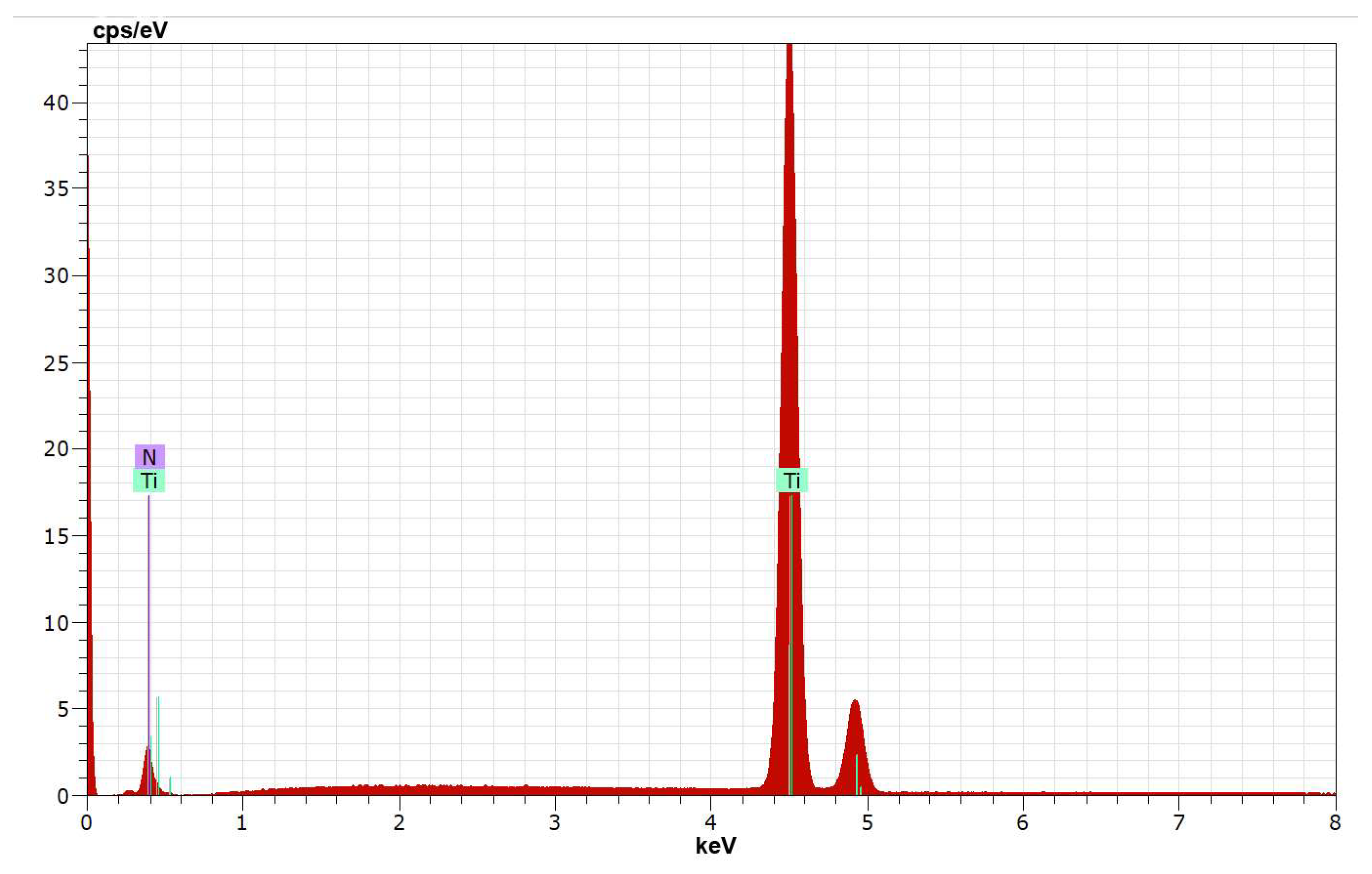
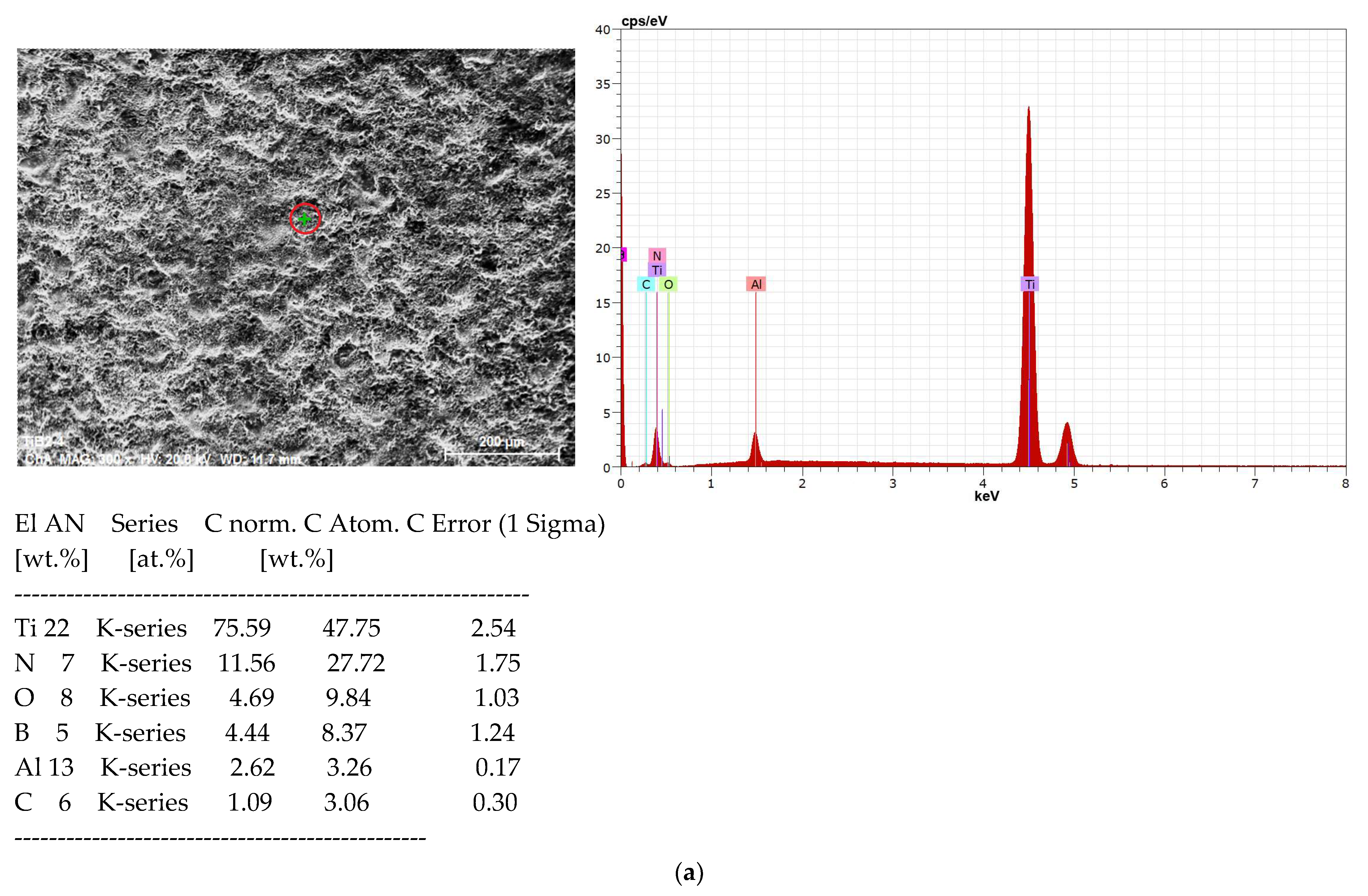
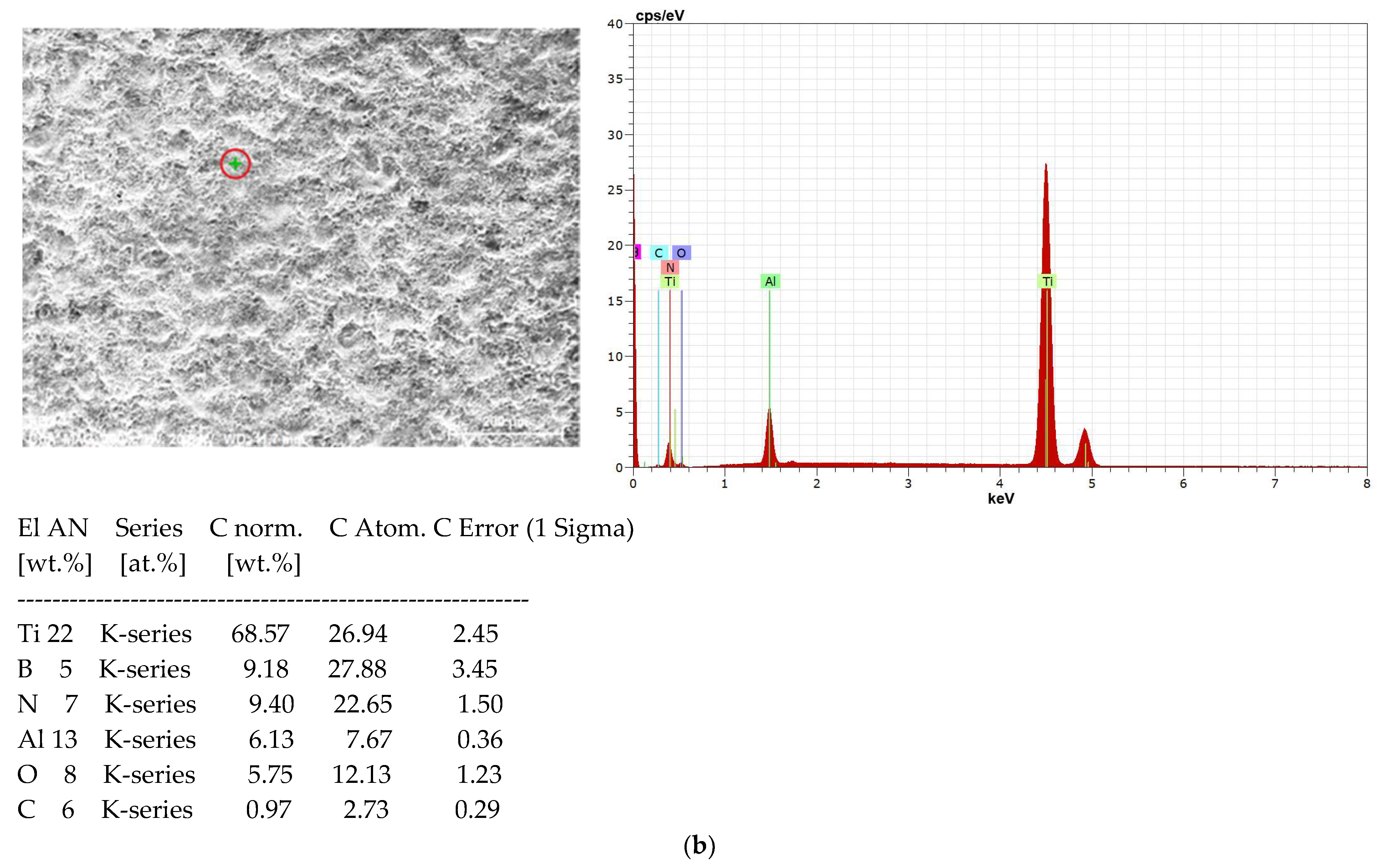
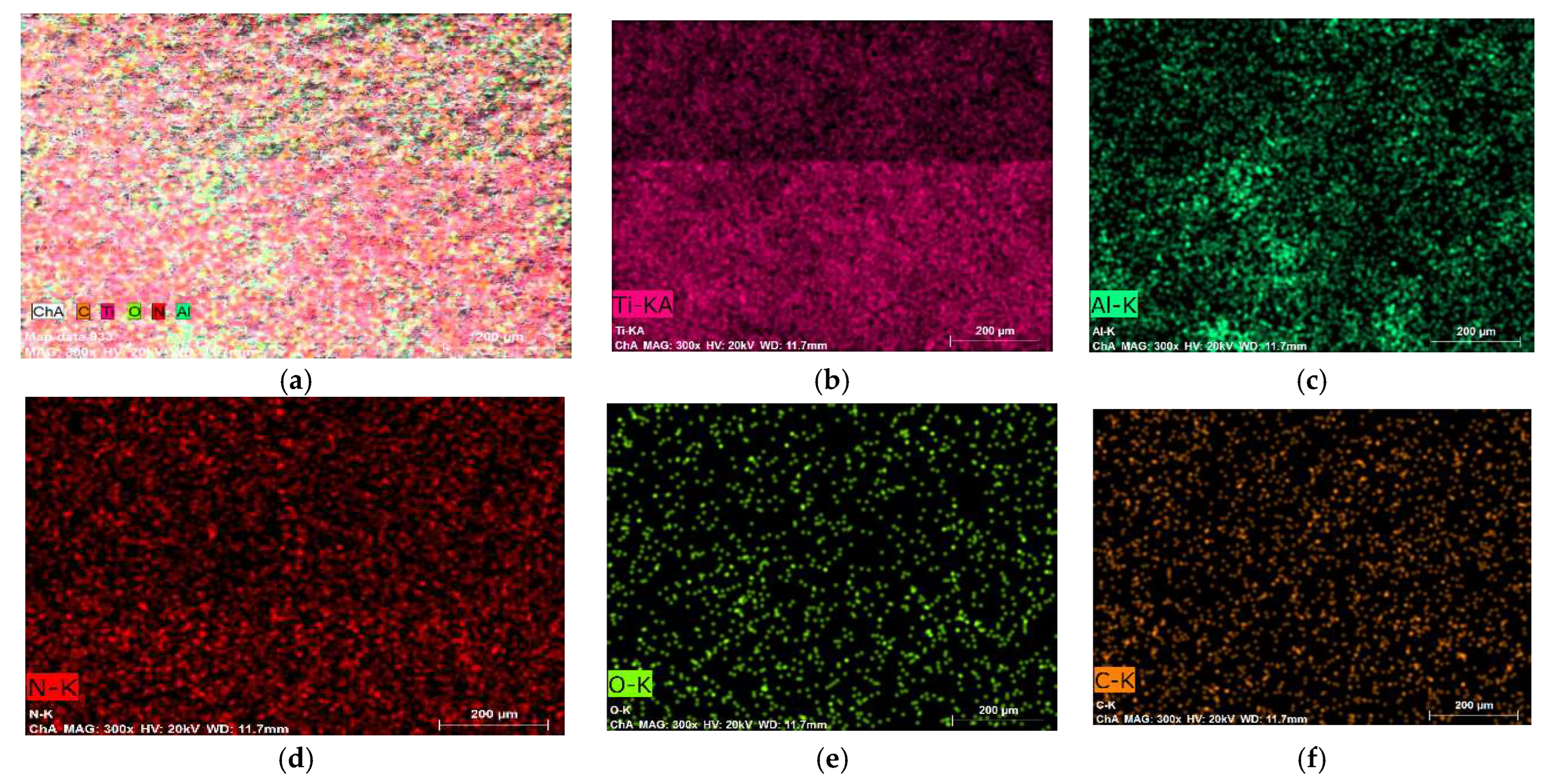
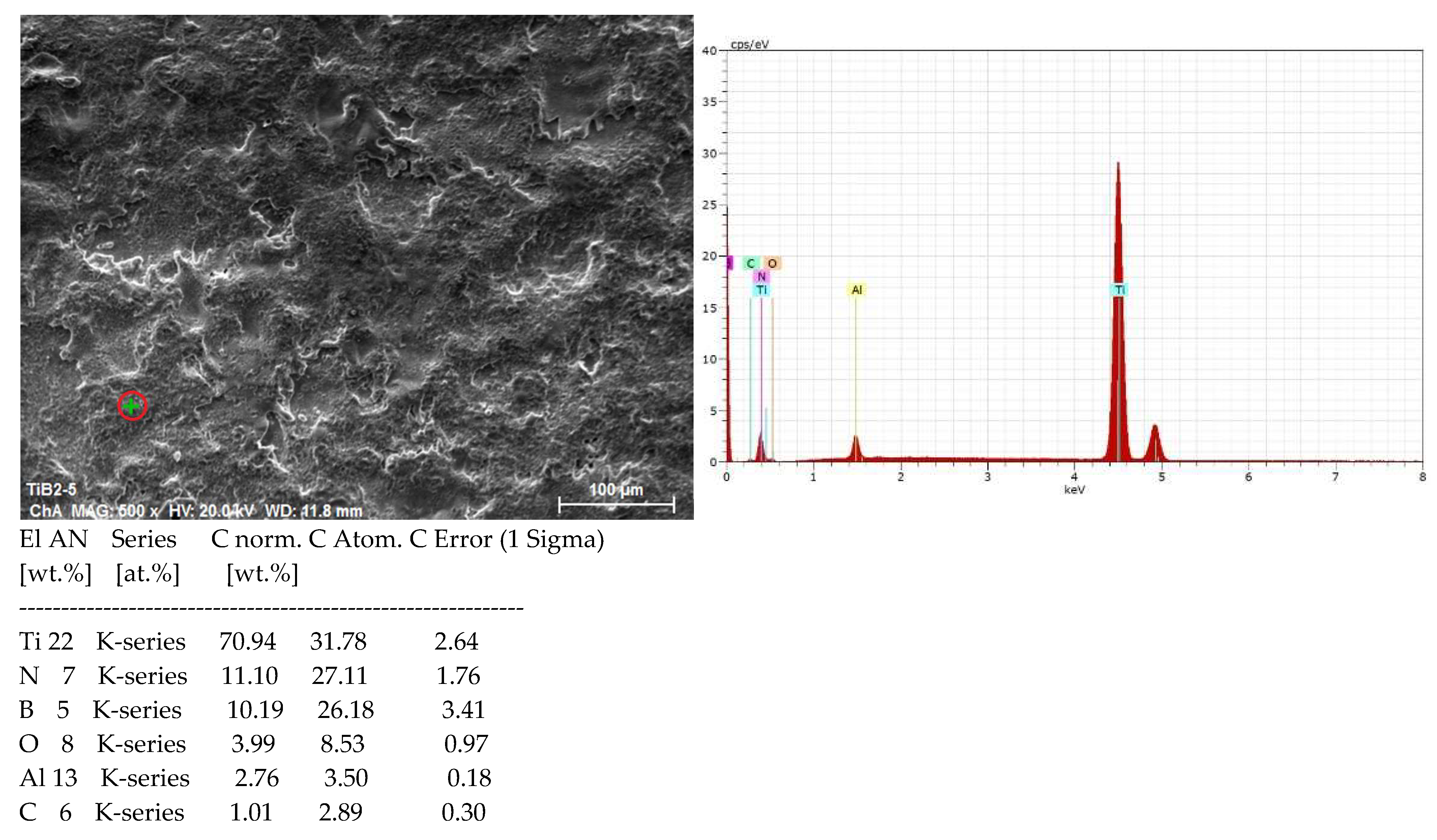
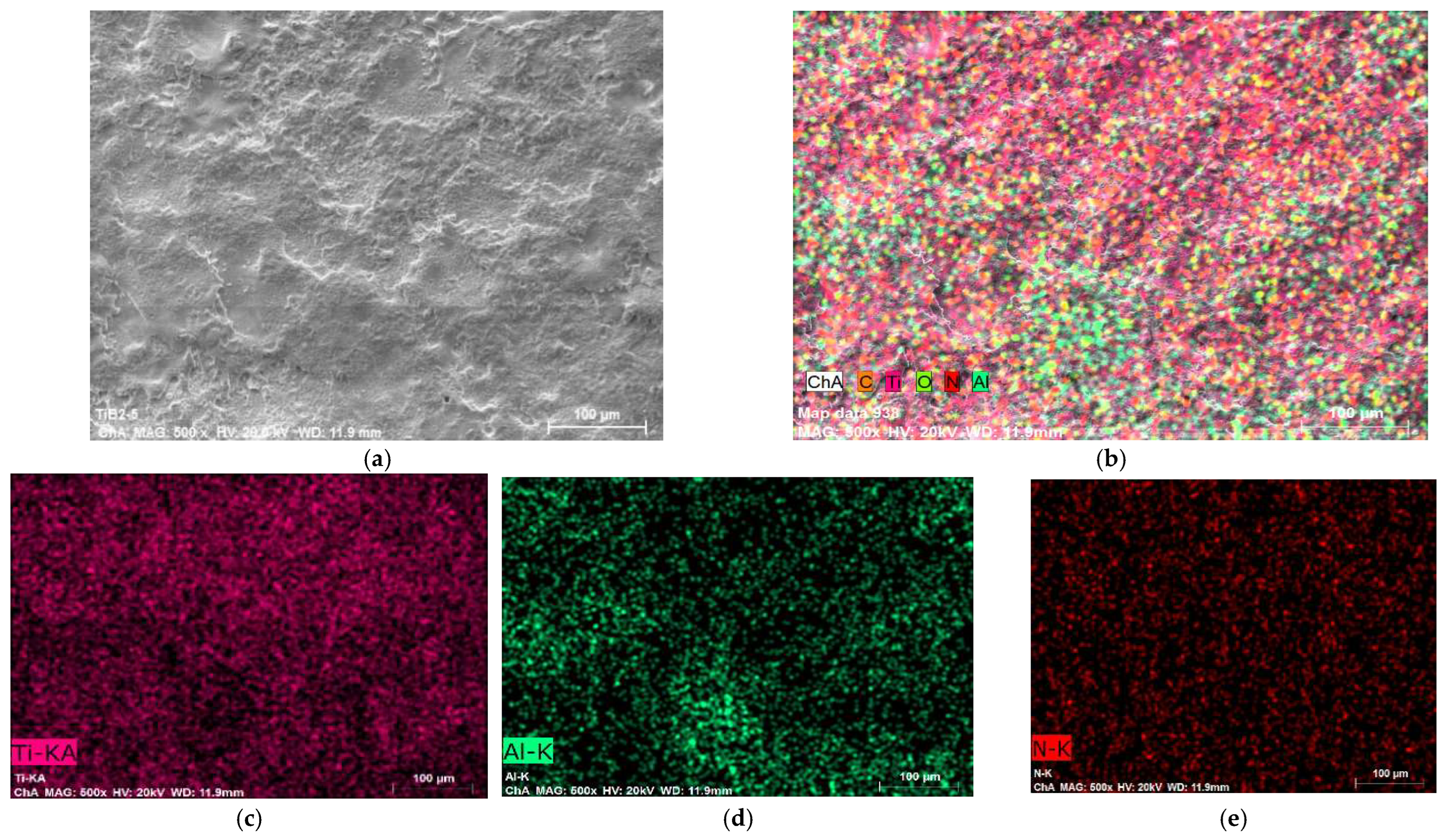
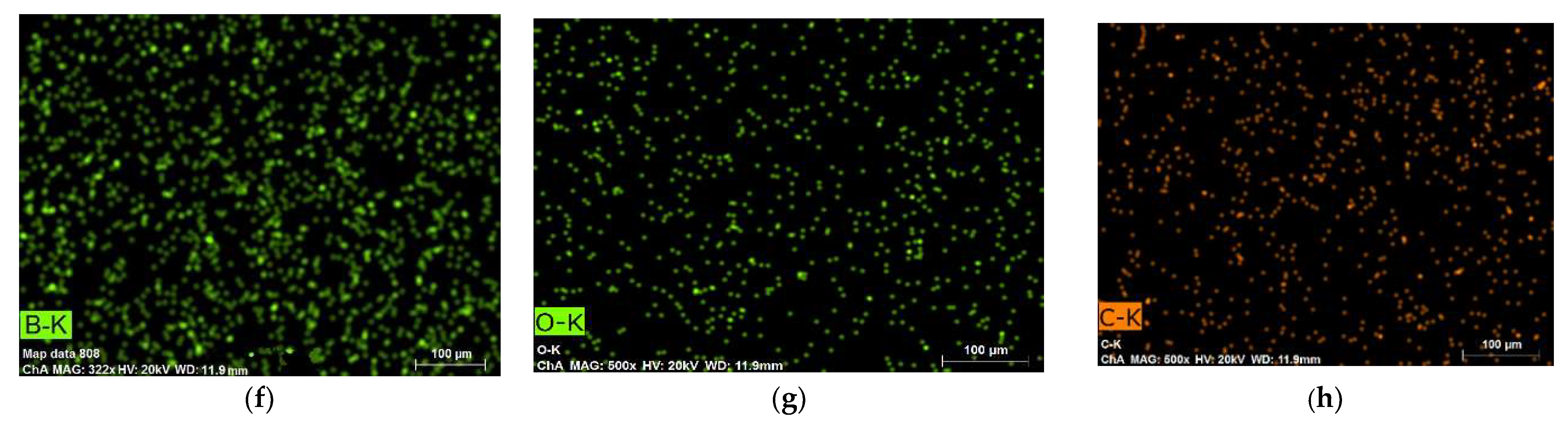
- Microstructural, topographic and morphological analyses and the distribution of elements of the coatings were performed with the metallographic optical microscope “Neophot 22” (Carl-Zeiss, Jena, Germany) and the scanning electron microscope (SEM-EDS) “EVO MA 10 Carl Zeiss” with a built-in X-ray energy-dispersive microanalyzer EDX system from “Bruker” (Bruker AXS, Karlsruhe, Germany).
- -
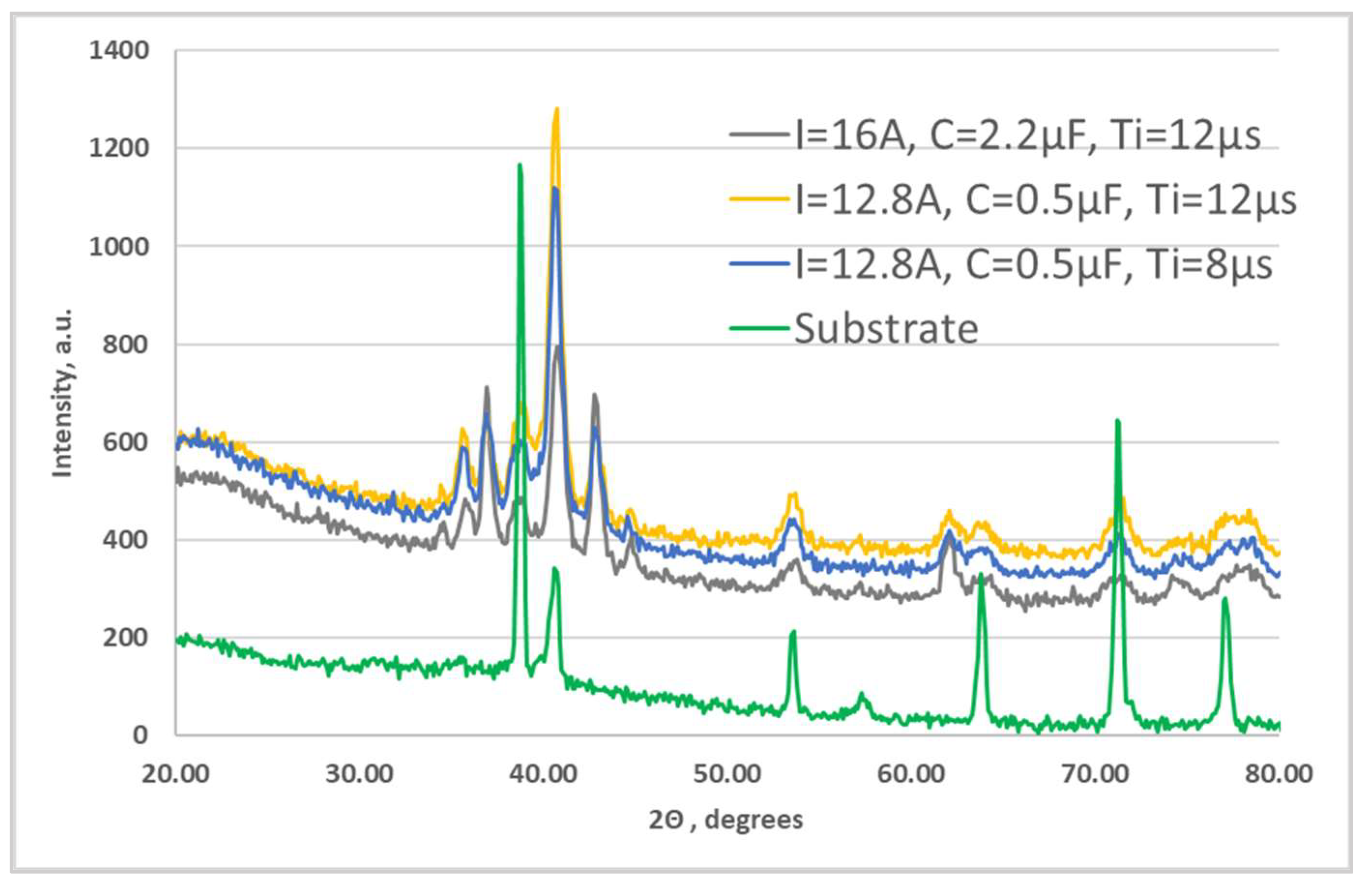
- The phase composition was investigated with a Bruker D8 Advance X-ray diffractometer (Bruker AXS, Karlsruhe, Germany) in “Cu Kά” radiation. The X-ray spectrum was recorded in the angular range from 5.3 to 80° 2θ with a step of 0.03° 2θ and a counting time of 52.5 s/step. Qualitative phase analysis was performed using the PDF-2(2009) database of the International Center for Diffraction Data (ICDD).
3. Results and Discussion
3.1. Coating Characterization—Roughness, Thickness δ, and Structure of Coatings
3.2. Phase Composition and Microhardness of the Coatings
4. Conclusions
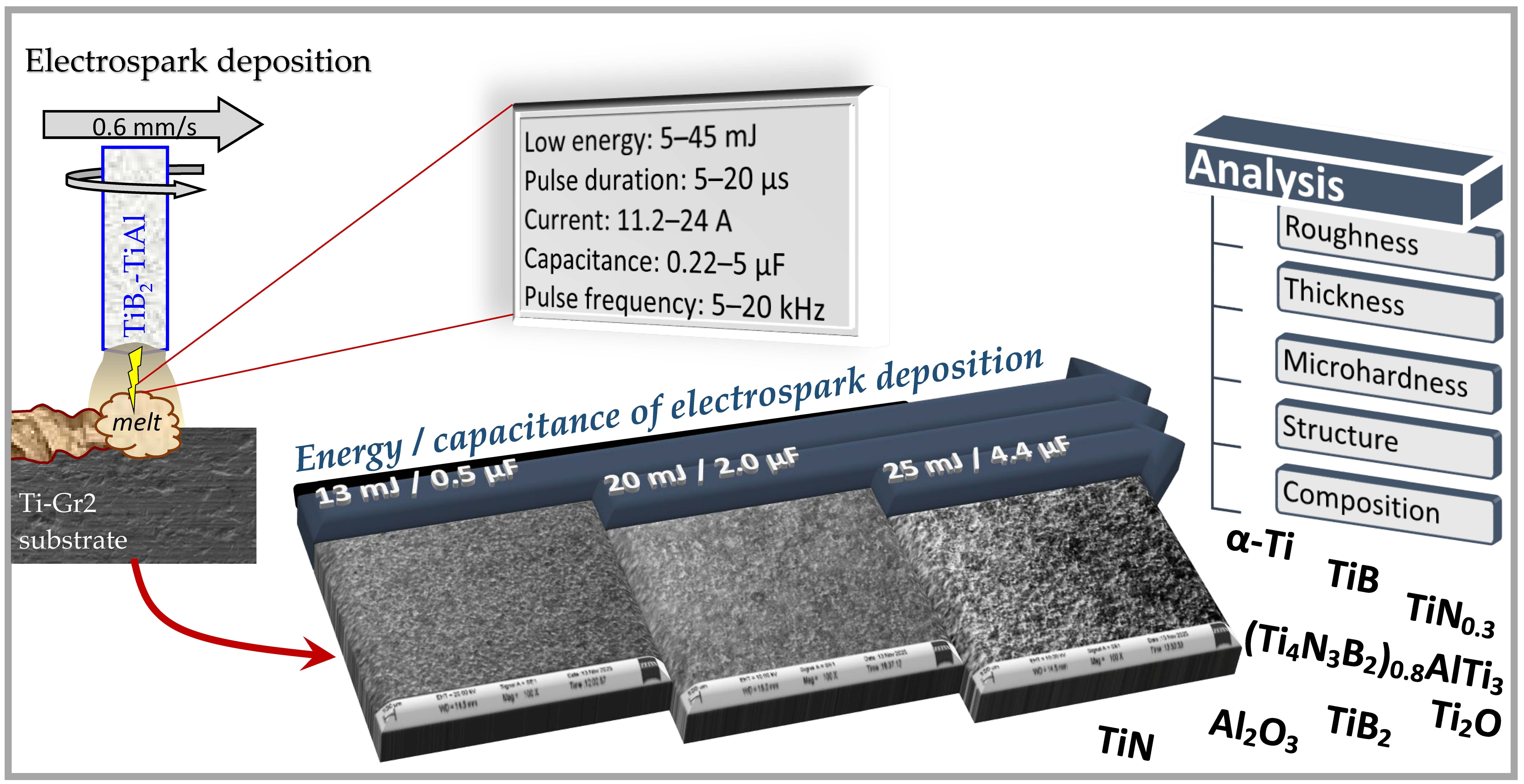
- By LESD with ultradisperse TiB2-TiAl electrodes and using low-energy pulses in the range I = 11.2–16 A, C = 0.5–2.2 µF, Ti = 8–12 µs, dense and uniform coatings can be obtained with reduced roughness, minimal structural defects and with thickness, roughness and microhardness that can be controlled through the energy parameters of the LESD mode in the ranges δ = 9–19.5 µm, Ra = 1.8–3.2 µm and HV = 9–13 GPa, respectively.
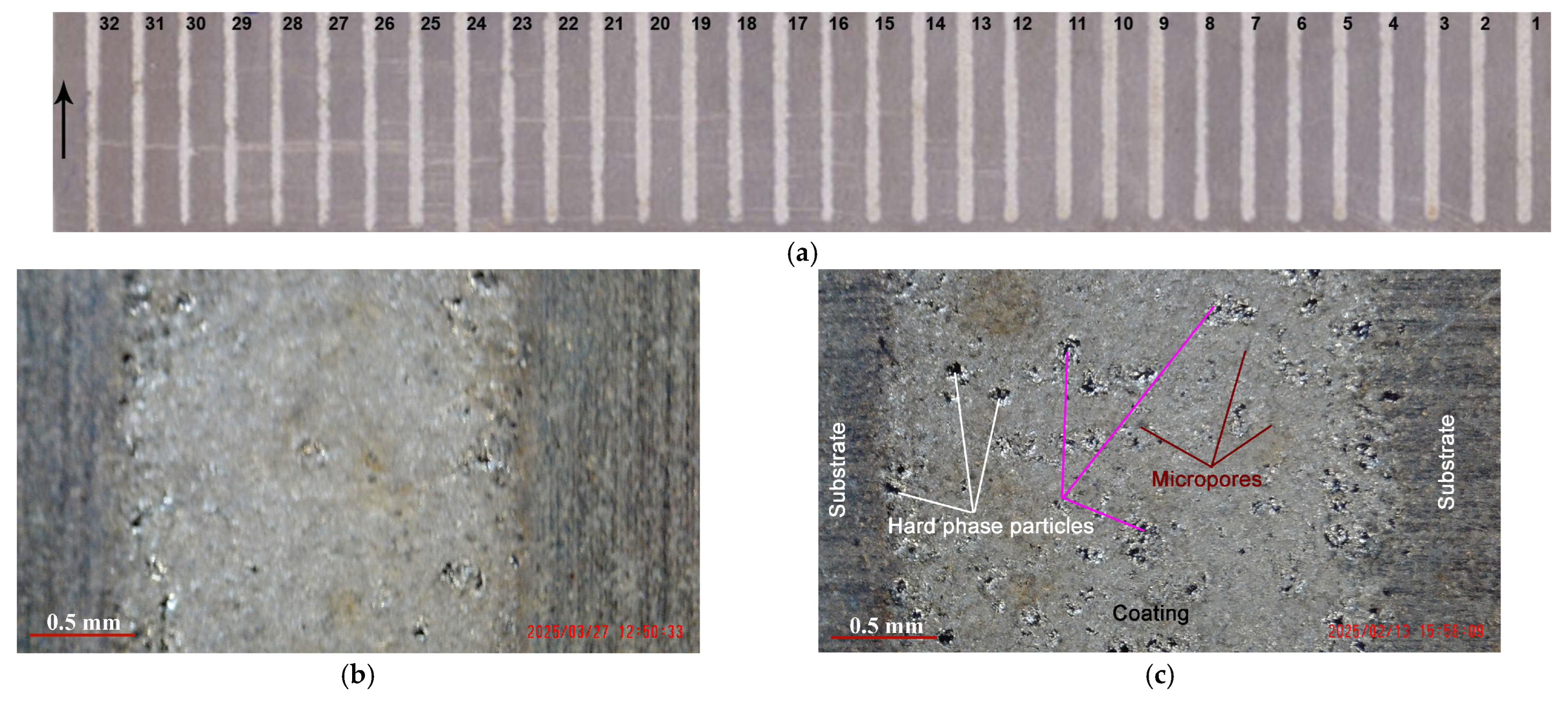
- The results show that at a relatively low capacitance of up to 2.2 µF and pulses of 12 µs, a continuous and uniform layer with fewer defects and cracks with a thickness of up to 20 µm can be obtained.
- The micro and nanohardness of the coatings is 3–4.5 times higher than that of the titanium base, with the differences in the values of the coatings deposited in the used modes varying in the range of 1.5–2.5 GPa. The highest microhardness is in LESD with a pulse energy of 0.025 J and pulse parameters I = 16 A, C = 2.2 µF, Ti = 12 µs.
- During the LESD process, a large number of newly formed wear-resistant phases and intermetallic compounds are synthesized in the coatings, as well as an increased amount of amorphous–nanocrystalline structures and improved micro and nanohardness. The largest amount of amorphous–nanocrystalline regions is registered in the coatings in the mode with pulse energy E = 0.025 J and current values I = 16 A, capacitance C = 2.2 µF, pulse duration Ti = 12 µs and pulse frequency f = 8.33 kHz.
- Based on the results of experimental studies, it can be stated that by using TiB2-TiAl electrodes by the LESD method with low pulse energy, it was achieved to obtain coatings with reduced surface defects, with improved topography, morphology, composition and structure, increased hardness as a result of obtaining new compounds and amorphous–crystalline structures and significantly improved quality of titanium surfaces. The results of the present study confirm the positive effect of coatings from TiB2-TiAl electrodes on the geometric characteristics, microhardness, composition and structure of coated titanium surfaces.
- The obtained results create opportunities for preliminary selection of LESD modes to obtain coatings with the desired thickness, composition and roughness structure, to optimize the quality of the surface in order to create prerequisites for obtaining maximum triboeffect and increasing the operational properties corresponding to the type and requirements for the coated titanium surface.
- In order to evaluate the effect of the improved characteristics of the coatings on their tribological and corrosion properties, it is necessary to conduct additional studies.
Author Contributions
Funding
Institutional Review Board Statement
Informed Consent Statement
Data Availability Statement
Acknowledgments
Conflicts of Interest
References
- Tomashov, N.D. Titanium and Corrosion-Resistant Alloys Based on It; Metallurgy: Moscow, Russia, 1985. (In Russian) [Google Scholar]
- Leyens, C.; Peters, M. Titanium and Titanium Alloys: Fundamentals and Applications; Wiley-VCH Verlag GmbH & Co. KGaA: Weinheim, Germany, 2003. [Google Scholar] [CrossRef]
- Gorynin, I.V.; Chechulin, B.B. Titanium in Mechanical Engineering; Mashinostroenie: Moscow, Russia, 1990. (In Russian) [Google Scholar]
- Gupta, M.K.; Etri, H.E.; Korkmaz, M.E.; Ross, N.S.; Krolczyk, G.M.; Gawlik, J.; Yaşar, N.; Pimenov, D.Y. Tribological and Surface Morphological Characteristics of Titanium Alloys: A review. Arch. Civ. Mech. Eng. 2022, 22, 72. [Google Scholar] [CrossRef]
- Philip, J.T.; Mathew, J.; Kuriachen, B. Tribology of Ti6Al4V: A review. Friction 2019, 7, 497–536. [Google Scholar] [CrossRef]
- Dong, H. Tribological properties of titanium-based alloys. In Surface Engineering of Light Alloys; Woodhead Publishing Series in Metals and Surface Engineering: Cambridge, UK, 2010; pp. 58–80. [Google Scholar] [CrossRef]
- Garbacz, H.; Wiecinski, P.; Ossowski, M.; Ortore, G.; Wierzchoń, T.; Kurzydłowski, K.J. Surface engineering techniques used for improving the mechanical and tribological properties of the Ti6A14V alloy. Surf. Coat. Technol. 2008, 202, 2453–2457. [Google Scholar] [CrossRef]
- Zhang, L.-C.; Chen, L.-Y.; Wang, L. Surface Modification of Titanium and Titanium Alloys: Technologies, Developments, and Future Interests. Adv. Eng. Mater. 2020, 22, 1901258. [Google Scholar] [CrossRef]
- Martini, C.; Ceschini, L. A Comparative Study of the Tribological Behaviour of PVD coatings on the Ti–6Al–4V Alloy. Tribol. Int. 2011, 44, 297–308. [Google Scholar] [CrossRef]
- Kaya, M.A.; Aydin, M. Effect of plasma nitriding on pistol slides. Proc. Inst. Mech. Eng. Part L J. Mater. Des. Appl. 2025, 14644207251396551. [Google Scholar] [CrossRef]
- Zhang, X.; Zhang, S.; Peng, Y.; Geng, L.; Kang, C.; Feng, Z.; Fan, W.; Tan, H.; Lin, X. Process Optimization, Microstructure and Mechanical Properties of SiC + TiB2/AlSi10Mg Composites Fabricated by Laser-Directed Energy Deposition. J. Manuf. Mater. Process. 2025, 9, 404. [Google Scholar] [CrossRef]
- Grabarczyk, J.; Batory, D.; Kaczorowski, W.; Pązik, B.; Januszewicz, B.; Burnat, B.; Czerniak-Reczulska, M.; Makówka, M.; Niedzielski, P. Comparison of Different Thermo-Chemical Treatments Methods of Ti-6Al-4V Alloy in Terms of Tribological and Corrosion Properties. Materials 2020, 13, 5192. [Google Scholar] [CrossRef]
- Vizureanu, P.; Perju, M.-C.; Achiţei, D.-C.; Nejneru, C. Advanced Electro-Spark Deposition Process on Metallic Alloys. In Advanced Surface Engineering Research; Chowdhury, M.A., Ed.; IntechOpen: London, UK, 2018. [Google Scholar] [CrossRef]
- Zhang, Z.; Guanjun, L.; Konoplianchenko, I.; Tarelnyk, V.; Zhiqin, G.; Xin, D. A Review of the Electro-Spark Deposition Technology. Bull. Sumy Nat. Agr. Univ. Ser. Mech. Autom. Prod. Process. 2022, 2, 45–53. [Google Scholar] [CrossRef]
- Barile, C.; Casavola, C.; Pappalettera, G.; Renna, G.; Pappalettera, G. Advancements in electrospark deposition (ESD) technique: A short review. Coatings 2022, 12, 1536. [Google Scholar] [CrossRef]
- Zhang, Y.; Li, L.; Chang, Q. Research status and prospect of electro-spark deposition technology. Surf. Technol. 2021, 50, 150–161. [Google Scholar]
- Wang, J.; Zhang, M.; Dai, S.; Zhu, L. Research Progress in Electrospark Deposition Coatings on Titanium Alloy Surfaces: A Short Review. Coatings 2023, 13, 1473. [Google Scholar] [CrossRef]
- Mikhailov, V.V.; Gitlevich, A.; Verkhoturov, A.; Mikhaylyuk, A.; Belyakov, A.V.; Konevtsov, L.A. Electrospark alloying of titanium and its alloys, physical and technological aspects and the possibility of practical use. Short review. Surf. Eng. Appl. Electrochem. 2013, 49, 373–395. [Google Scholar] [CrossRef]
- Podchernyaeva, I.; Juga, A.I.; Berezanskaya, V.I. Properties of electrospark coatings on titanium alloy. Key Eng. Mater. 1997, 132, 1507–1510. [Google Scholar]
- Penyashki, T.G.; Kamburov, V.V.; Kostadinov, G.D.; Kandeva, M.K.; Dimitrova, R.; Nikolov, A.A. Possibilities and prospects for improving the tribological properties of titanium and its alloys by electrospark deposition. Surf. Eng. Appl. Electrochem. 2022, 58, 135–146. [Google Scholar] [CrossRef]
- Mulin, Y.I.; Verkhoturov, A.D.; Vlasenko, V.D. Electrospark alloying of surfaces of titanium alloys. Perspect. Mater. 2006, 1, 79–85. [Google Scholar]
- Cadney, S.; Goodall, G.; Kim, G.; Moran, A.; Brochu, M. The transformation of an Al based crystalline electrode material to an amorphous deposit via the electrospark welding process. J. Alloys Compd. 2009, 476, 147–151. [Google Scholar] [CrossRef]
- Milligan, J.; Heard, D.W.; Brochu, M. Formation of nanostructured weldments in the Al-Si system using electrospark welding. Appl. Surf. Sci. 2010, 256, 4009–4016. [Google Scholar] [CrossRef]
- Liu, Y.; Wang, D.; Deng, C.; Huo, L.; Wang, L.; Fang, R. Novel method to fabricate Ti–Al intermetallic compound coatings on Ti–6Al–4V alloy by combined ultrasonic impact treatment and electrospark deposition. J. Alloys Compd. Interdiscip. J. Mater. Sci. Solid–State Chem. Phys. 2015, 628, 208–212. [Google Scholar] [CrossRef]
- Burkov, A.A.; Chigrin, P.G. Synthesis of Ti–Al intermetallic coatings via electro spark deposition in a mixture of Ti and Al granules technique. Surf. Coat. Technol. 2020, 387, 125550. [Google Scholar] [CrossRef]
- Hong, X.; Feng, K.; Tan, Y.F.; Wang, X.; Tan, H. Effects of process parameters on microstructure and wear resistance of TiN coatings deposited on TC11 titanium alloy by electro spark deposition. Trans. Nonferrous Met. Soc. China 2017, 27, 1767–1776. [Google Scholar] [CrossRef]
- Podchernyaeva, I.A.; Lavrenko, V.A.; Berezanskaya, V.I.; Smirnov, V.P. Electrospark alloying of the titanium alloy VT6 with tungsten–free hard alloys. Powder Metall. Met. Ceram. 1996, 35, 588–591. [Google Scholar] [CrossRef]
- Levashov, E.A.; Kudryashov, A.E.; Pogozhev, Y.S.; Vakaev, P.V.; Zamulaeva, E.I.; Sviridova, T.A. Specific features of formation of nanostructured electrospark protective coatings on the OT4-1 titanium alloy with the use of electrode materials of the TiC-Ti3AlC2 system disperse-strengthened by nanoparticles. Russ. J. Non-Ferrous Met. 2007, 48, 362–372. [Google Scholar] [CrossRef]
- Zamulaeva, A.E.; Kudryashov, A.E.; Levashov, E.A.; Vakaev, P.V.; Petrzhik, M.I.; Sanz, A. Materials science and technological aspects of electrospark deposition of nanostructured WC-Co coatings onto titanium substrates. Plasma Process. Polym. 2007, 4, 293–300. [Google Scholar]
- Tarelnyk, V.B.; Paustovskii, A.V.; Tkachenko, Y.G.; Konoplianchenko, E.V.; Martsynkovskyi, V.S.; Antoszewski, B. Electrode Materials for Composite and Multilayer Electrospark-Deposited Coatings from Ni–Cr and WC–Co, Alloys and Metals. Powder Metall. Met. Ceram. 2017, 55, 585–595. [Google Scholar] [CrossRef]
- Teplenko, M.A.; Podchernyaeva, I.A.; Panasyuk, A.D. Structure and wear resistance of coatings on titanium alloy and steels obtained by electro spark alloying with AlN–ZrB2 material. Powder Metall. Met. Ceram. 2002, 41, 154–161. [Google Scholar] [CrossRef]
- Gökçe, M.; Kayali, Y.; Talaş, Ş. The Ceramic Composite Coating (TiC+TiB2) by ESD on Ti6AL4V Alloy and Its Characterization. Ceram. Sci. Eng. 2020, 3, 1136. [Google Scholar] [CrossRef]
- Shafyei, H.; Salehi, M.; Bahrami, A. Fabrication, microstructural characterization and mechanical properties evaluation of Ti/TiB/TiB2 composite coatings deposited on Ti6Al4V alloy by electro–spark deposition method. Ceram. Int. 2020, 46, 15276–15284. [Google Scholar] [CrossRef]
- Kovacik, J.; Baksa, P.; Emmer, S. Electro spark deposition of TiB2 layers on Ti6A14V alloy. Acta Metall. Slovaca 2016, 22, 52–59. [Google Scholar] [CrossRef]
- Burkov, A.A. The effect of discharge pulse energy in electrospark deposition of amorphous coatings. Prot. Met. Phys. Chem. Surf. 2022, 58, 1018–1027. [Google Scholar] [CrossRef]
- Manakova, O.S.; Kudryashov, A.E.; Levashov, E.A. On the application of dispersion–hardened SHS electrode materials based on (Ti, Zr)C carbide using electrospark deposition. Surf. Eng. Appl. Electrochem. 2015, 51, 413–421. [Google Scholar] [CrossRef]
- Kudryashov, A.E.; Levashov, E.A. Application of SHS-electrode materials in pulsed electrospark deposition technology, XV. International Symposium on Self-Propagating High-Temperature Synthesis: Book of Abstracts; IPCP RAS: Chernogolovka, Russia, 2019; pp. 199–201. Available online: https://www.ism.ac.ru/events/SHS2019/doc/abstract_shs2019.pdf?utm_source=chatgpt.com (accessed on 24 December 2025).
- Levashov, E.A.; Vakaev, P.V.; Zamulaeva, E.I.; Kudryashov, A.E.; Kurbatkina, V.V.; Shtansky, D.V.; Voevodin, A.A.; Sanz, A. Disperse-strengthening by nanoparticles advanced tribological coatings and electrode materials for their deposition. Surf. Coat. Technol. 2007, 201, 6176–6181. [Google Scholar] [CrossRef]
- Levashov, E.A.; Vakaev, P.V.; Zamulaeva, E.I.; Kudryashov, A.E.; Pogozhev, Y.S.; Shtansky, D.V.; Voevodin, A.A.; Sanz, A. Nanoparticle dispersion-strengthened coatings and electrode materials for electrospark deposition. Thin Solid Film. 2006, 515, 1161–1165. [Google Scholar] [CrossRef]
- Levashov, E.A.; Malochkin, O.Y.; Kudryashov, A.E.; Glukhov, S.A.; Sviridova, T.A.; Gammel, F.; Zuhentrung, R. Influence of nano-sized powders on combustion processes and formation of composition, structure, and properties of alloys of the system Ti-Al-B. J. Non-Ferr. Met. 2003, 1, 54–59. [Google Scholar]
- Wang, Z.; Zhang, S. Research Progress of Laser Cladding Coating on Titanium Alloy Surface. Coatings 2024, 14, 1495. [Google Scholar] [CrossRef]
- Cao, L.; Li, S.; Yuan, J. Laser-Clad TiB2–TiC Ferroboron Coatings Resist Molten Al. Coatings 2026, 16, 43. [Google Scholar] [CrossRef]
- Umanskii, A.P.; Storozhenko, M.S.; Hussainova, I.; Terentiev, A.E.; Kovalchenko, A.M.; Antonov, M. Structure, phase composition and wear mechanisms of plasma-sprayed NiCrBSi–20 wt.% TiB2 coating. Powder Metall. Met. Ceram. 2015, 53, 663–671. [Google Scholar] [CrossRef]
- Kazamer, N.; Valean, P.C.; Pascal, D.; Serban, V.A.; Muntean, R.; Margineal, G. Microstructure and phase composition of NiCrBSi–TiB2 vacuum furnace fused flame-sprayed coatings. In Proceedings of the 7th International Conference on Advanced Materials and Structures—AMS 2018; IOP Publishing: Bristol, UK, 2018; Volume 416, pp. 1–7. [Google Scholar] [CrossRef]
- Fang, J.-J.; Li, Z.-X.; Shi, Y.-W. Microstructure and properties of TiB2-containing coatings prepared by arc spraying. April. Appl. Surf. Sci. 2008, 254, 3849–3858. [Google Scholar] [CrossRef]
- Riquelme, A.; Torres, B.; Rams, J.; Rodrigo, P. Process–microstructure–property relationships in Ti–Al alloys fabricated by laser directed energy deposition of Ti6Al4V and al powders. Prog. Addit. Manuf. 2025. [Google Scholar] [CrossRef]
- Antonov, B. Device for Local Electric-Spark Layering of Metals and Alloys by Means of Rotating Electrode. U.S. Patent No. 3,832,514, 27 August 1974. [Google Scholar]
- Kostadinov, G.; Danailov, P.; Dimitrova, R.; Kandeva, M.; Penyashki, T.; Kamburov, V.; Nikolov, A.; Elenov, B. Surface topography and roughness parameters of electrospark coatings on titanium and nickel alloys. Appl. Eng. Lett. 2021, 6, 89–98. [Google Scholar] [CrossRef]
- Penyashki, T.G.; Kostadinov, G.D.; Dimitrova, R.B.; Kamburov, V.V.; Kandeva, M.K.; Valkanov, S.T.; Nikolov, A.A.; Elenov, B.P. Improving Surface Properties of Titanium Alloys by Electrospark Deposition with Low Pulse Energy. Surf. Eng. Appl. Electrochem. 2022, 6, 580. [Google Scholar] [CrossRef]
- Penyashki, T.; Kostadinov, G.; Kandeva, M.; Nikolov, A.; Dimitrova, R.; Kamburov, V.; Danailov, P.; Bozhkov, S. Study of the Influence of Coating Roughness on the Properties and Wear Resistance of Electrospark Deposited Ti6Al4V Titanium Alloy. Tribol. Ind. 2024, 46, 13–28. [Google Scholar] [CrossRef]
- Penyashki, T.; Kostadinov, G.; Kandeva, M.; Nikolov, A.; Dimitrova, R.; Kamburov, V. Surface Characteristics, Properties and Wear Resistance of TIB2 BASED Hard-Alloy Coatings Obtained by Electrospark Deposition at Negative Polarity on Ti6Al4V Alloy. Tribol. Ind. 2023, 45, 686–698. [Google Scholar] [CrossRef]
- Jönsson, B.; Hogmark, S. Hardness measurements of thin films. Thin Solid Film. 1984, 114, 257–269. [Google Scholar] [CrossRef]



| N | Designation | Current, I, A | Capacitance, C, μF | Pulse Duration, Ti, μs | Frequency, f, kHz | Pulse Energy, E, J |
|---|---|---|---|---|---|---|
| 1 | Sample 1 | 16 | 4.4 | 12 | 8.33 | 0.025 |
| 2 | Sample 2 | 11.2 | 0.5 | 12 | 8.33 | 0.013 |
| 3 | Sample 3 | 12.8 | 0.5 | 8 | 12.5 | 0.013 |
| 4 | Sample 4 | 16 | 2.2 | 12 | 8.33 | 0.02 |
| 5 | Sample 5 | 12.8 | 4.4 | 8 | 12.5 | 0.02 |
| Main Phases | 2θ° | Phases in Small Amounts | 2θ° | Traces of Phases | 2θ° |
|---|---|---|---|---|---|
| α-Ti | 35.38; 38.5; 40.2; 53; 63; 70.8; 74; 76.2; 77.2 | AlTi | 38.72; 45.6; 65.35; 66.05; 70.5; 78.45; 79.20 | Al | 38.5; 44.7; 65 |
| AlTi3 | 26.33; 31.12; 35.65; 38.8; 39.4; 40.8; 43.05; 53.8 | Ti6O | 34.9; 37; 38.4; 40; 52.5; 70.1; 75.6 | TiC0.7N0.3 | 35; 42; 61; 72.9 |
| TiN | 36.95; 42.95; 62.2; 74.5; 78.5 | Ti3O | 37.8; 39.9; 52.1; 62.5; 69.6; 75.3 | AlN | 20.5; 33.2; 36.2; 38.1; 59.4; 61; 66; 70; 71.8; 72.7 |
| TiB2 | 27.7; 33.38; 34.2; 44.6; 56.9; 61.1; 67.9; 72; 78.6 | TiC0.3N0.7 | 36.5; 74.5 | AlB | 21.5; 23.3; 36.8 |
| TiN0.3 | 35; 37.5; 39.5; 52.2; 62.5; 69.2; 75.5; 77 | Al2O3 | 19.5; 32.1; 35.65; 37.6; 39.2; 43.05; 44.5; 45.6; 50; 56.7; 60.5; 66.8; 71.4; 75.3; 78.55 | BN | 43.1; 74; 76 |
| TiB | 37.05; 42.95; 62.25; 78.5 | Ti2O | 33.6,35.65; 38.45; 40.7; 53; 63.7; 70.5; 76.6; 77.15; 78.5 | Al2.86O3.45N0.55 | 32; 37.5; 45.8; 66.5; 69.5 |
| Ti3.2B1.6 N2.4 (Ti4N3B2)0.8 | 33.36; 37; 42.95; 62.25; 74.5; 78.5 | TiC1−x | 35.9; 41.7; 60.3; 72.2 | Al3Ti | 25.5; 33.5; 39.5; 42.2; 46; 48; 55; 65.8; 66.6; 70; 75.3 |
| Phases | α-Ti | TiN | TiN0.3 | TiC0.3N0.7 | TiB2 | TiB | Ti3.2B1.6N2.4 | Al3Ti | Ti3O | Ti2O | Al2O3 | TiC1−x | AlN | AlTi |
|---|---|---|---|---|---|---|---|---|---|---|---|---|---|---|
| Crystallite size, nm | 26–87 | 13–66 | 31–46 | 6–51 | 15–78 | 14–55 | 31–53 | 26–49 | 17–44 | 33–40 | 22–76 | 10–44 | 14–37 | 22–49 |
Disclaimer/Publisher’s Note: The statements, opinions and data contained in all publications are solely those of the individual author(s) and contributor(s) and not of MDPI and/or the editor(s). MDPI and/or the editor(s) disclaim responsibility for any injury to people or property resulting from any ideas, methods, instructions or products referred to in the content. |
© 2026 by the authors. Licensee MDPI, Basel, Switzerland. This article is an open access article distributed under the terms and conditions of the Creative Commons Attribution (CC BY) license.
Share and Cite
Kostadinov, G.; Nikolov, A.; Sofronov, Y.; Penyashki, T.; Mishev, V.; Tzaneva, B.; Dimitrova, R.; Petrov, K.; Miltchev, R.; Gavrilov, T. Characteristics and Microstructure of Coatings of Ultradisperse TiB2-TiAl Electrodes with Nanosized Additives Deposited on Ti-Gr2 by Non-Contact Electrospark Deposition. Materials 2026, 19, 572. https://doi.org/10.3390/ma19030572
Kostadinov G, Nikolov A, Sofronov Y, Penyashki T, Mishev V, Tzaneva B, Dimitrova R, Petrov K, Miltchev R, Gavrilov T. Characteristics and Microstructure of Coatings of Ultradisperse TiB2-TiAl Electrodes with Nanosized Additives Deposited on Ti-Gr2 by Non-Contact Electrospark Deposition. Materials. 2026; 19(3):572. https://doi.org/10.3390/ma19030572
Chicago/Turabian StyleKostadinov, Georgi, Antonio Nikolov, Yavor Sofronov, Todor Penyashki, Valentin Mishev, Boriana Tzaneva, Rayna Dimitrova, Krum Petrov, Radoslav Miltchev, and Todor Gavrilov. 2026. "Characteristics and Microstructure of Coatings of Ultradisperse TiB2-TiAl Electrodes with Nanosized Additives Deposited on Ti-Gr2 by Non-Contact Electrospark Deposition" Materials 19, no. 3: 572. https://doi.org/10.3390/ma19030572
APA StyleKostadinov, G., Nikolov, A., Sofronov, Y., Penyashki, T., Mishev, V., Tzaneva, B., Dimitrova, R., Petrov, K., Miltchev, R., & Gavrilov, T. (2026). Characteristics and Microstructure of Coatings of Ultradisperse TiB2-TiAl Electrodes with Nanosized Additives Deposited on Ti-Gr2 by Non-Contact Electrospark Deposition. Materials, 19(3), 572. https://doi.org/10.3390/ma19030572