Surface Nanoengineering of Gold via Oxalic Acid Anodization: Morphology, Composition, Electronic Properties, and Corrosion Resistance in Artificial Saliva


Highlights
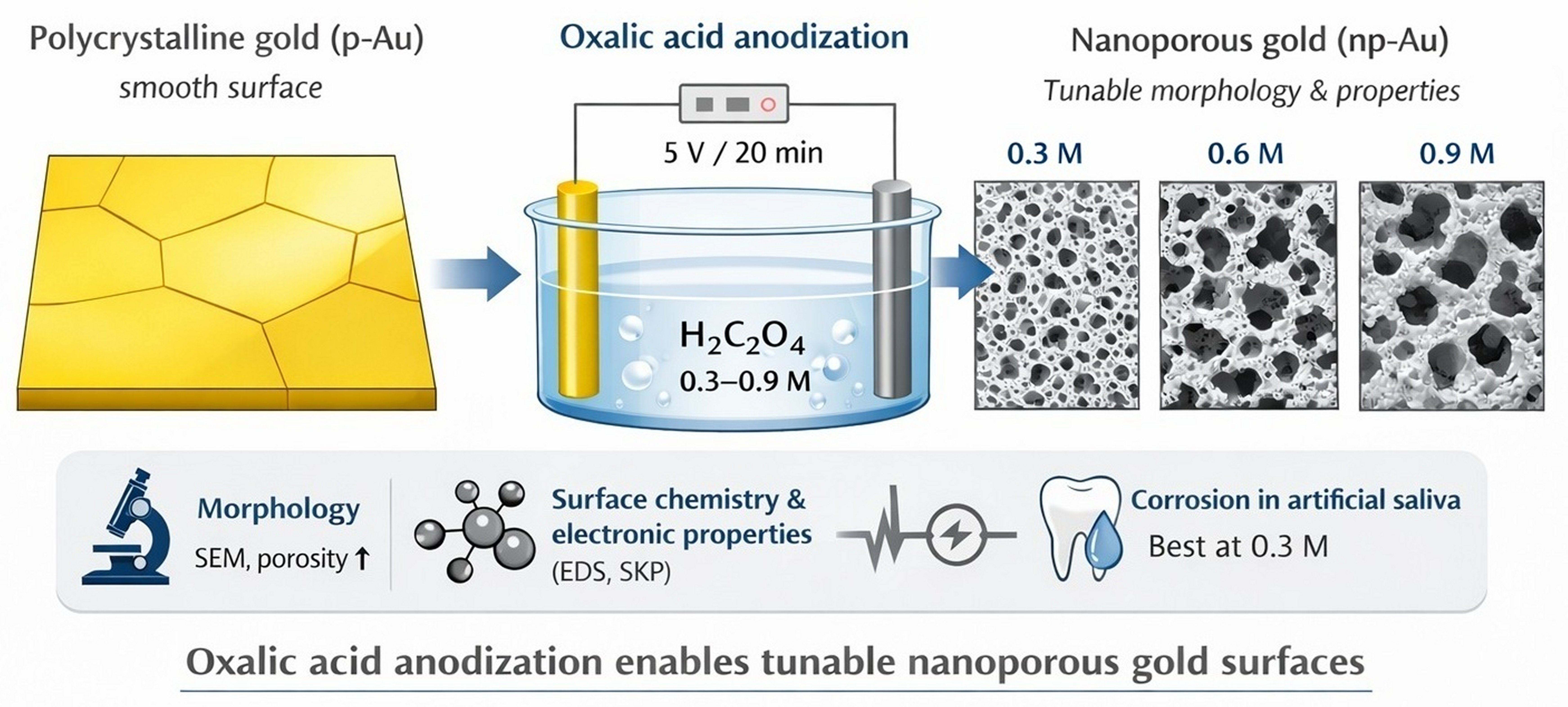
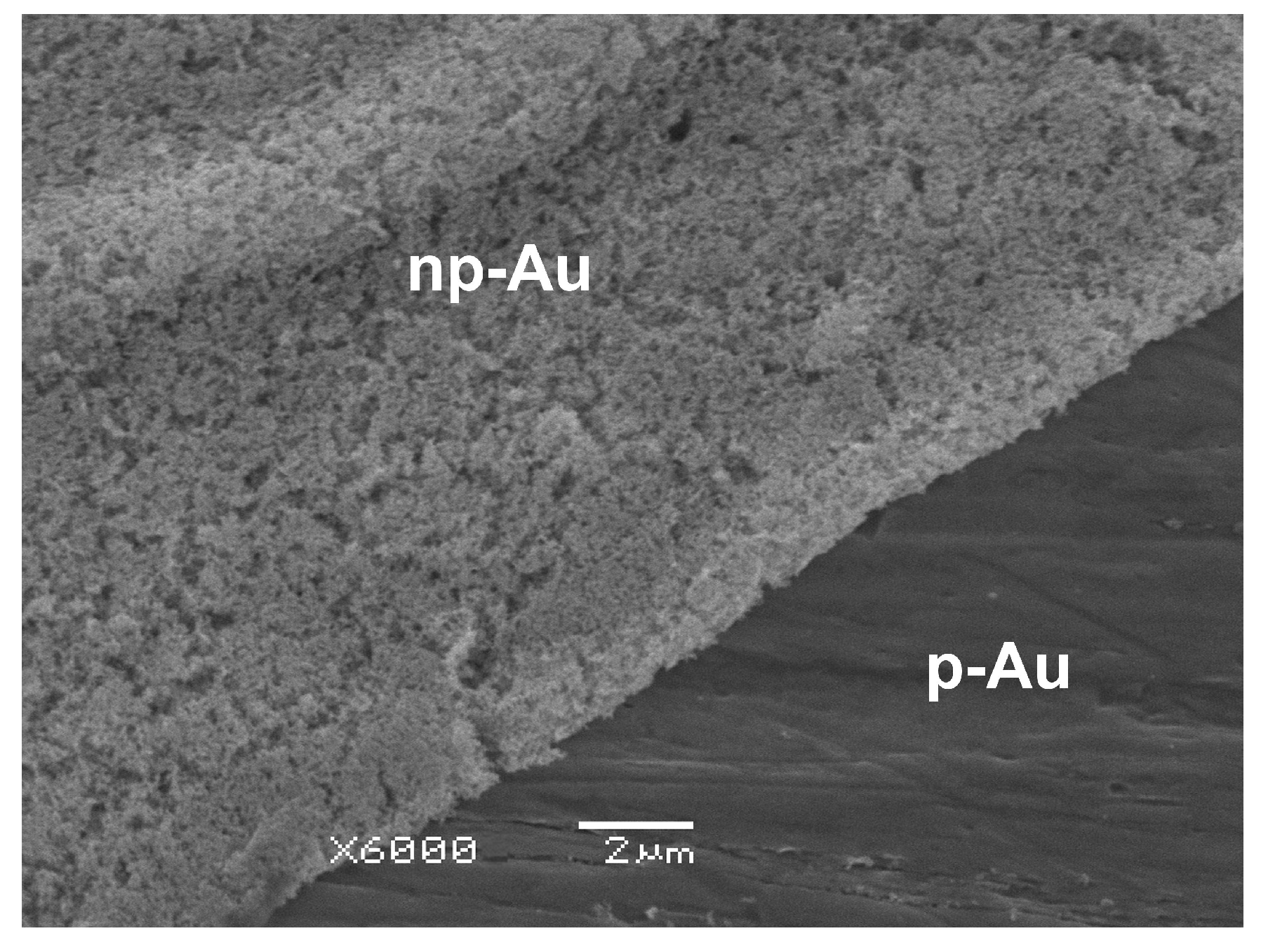
- Oxalic acid anodization enables controlled formation of nanoporous gold layers.
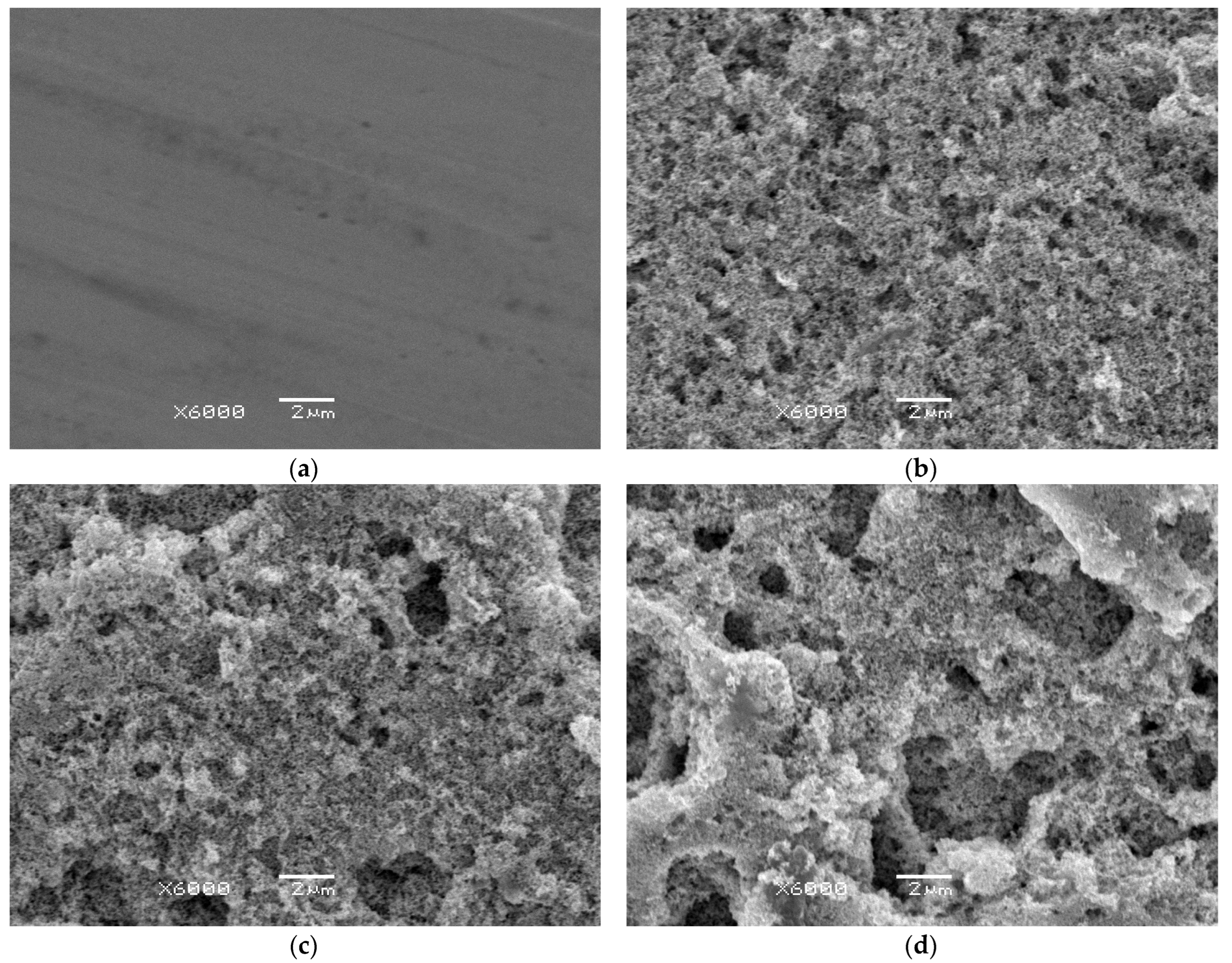
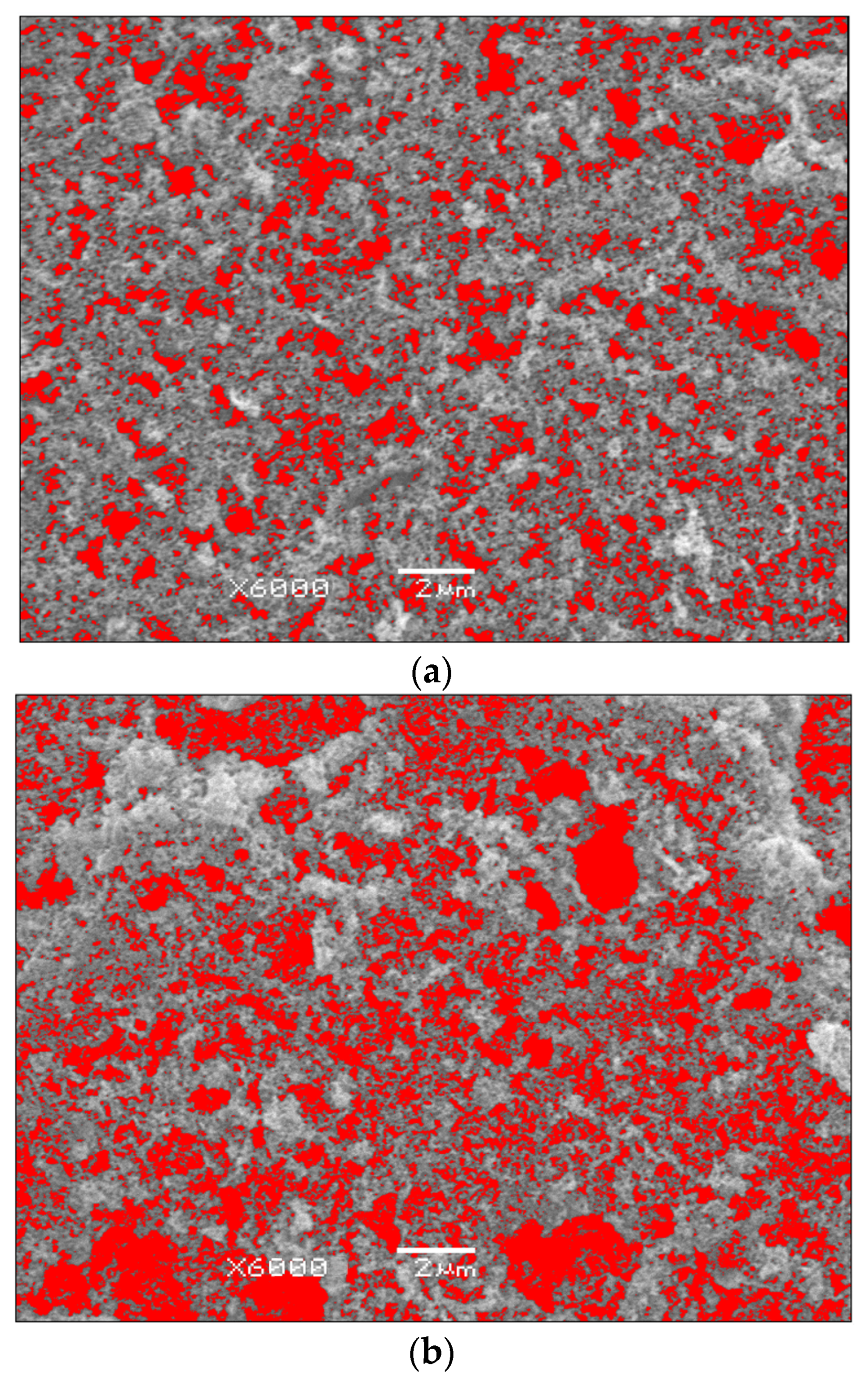
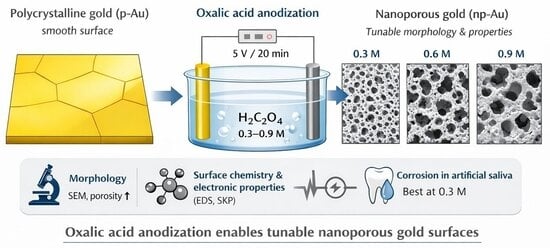
- Increasing acid concentration increases pore size, porosity, and layer thickness.
- Nanoporous gold shows altered electronic properties and work function.
- Moderate anodization (0.3 M oxalic acid) offers optimal structural uniformity.
- Electronic and corrosion properties are tunable via anodization conditions.
- Nanoporous gold is promising for dental and biomedical surface applications.
Abstract
1. Introduction
2. Materials and Methods
2.1. Preparation of p-Au Electrodes
2.2. Electrochemical Production of np-Au Electrodes
2.3. Scanning Electron Microscopy
2.4. Image Analysis and Porosity Evaluation of np-Au
2.5. Energy-Dispersive Spectroscopy
2.6. Contact Potential Difference
2.7. Corrosion Resistance in Artificial Saliva
3. Results
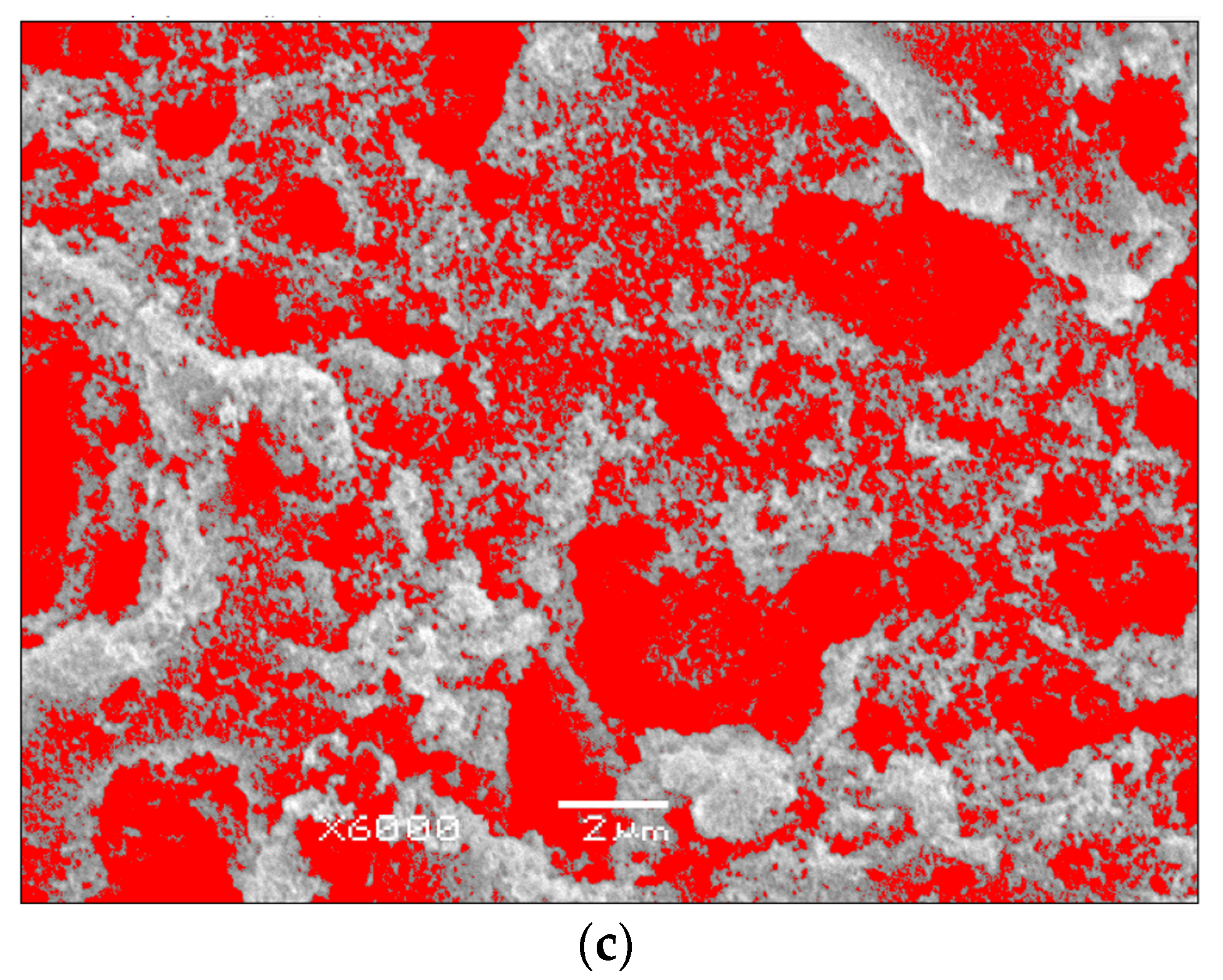
3.1. The Effect of Anodizing on the Surface Morphology and Porosity of p-Au
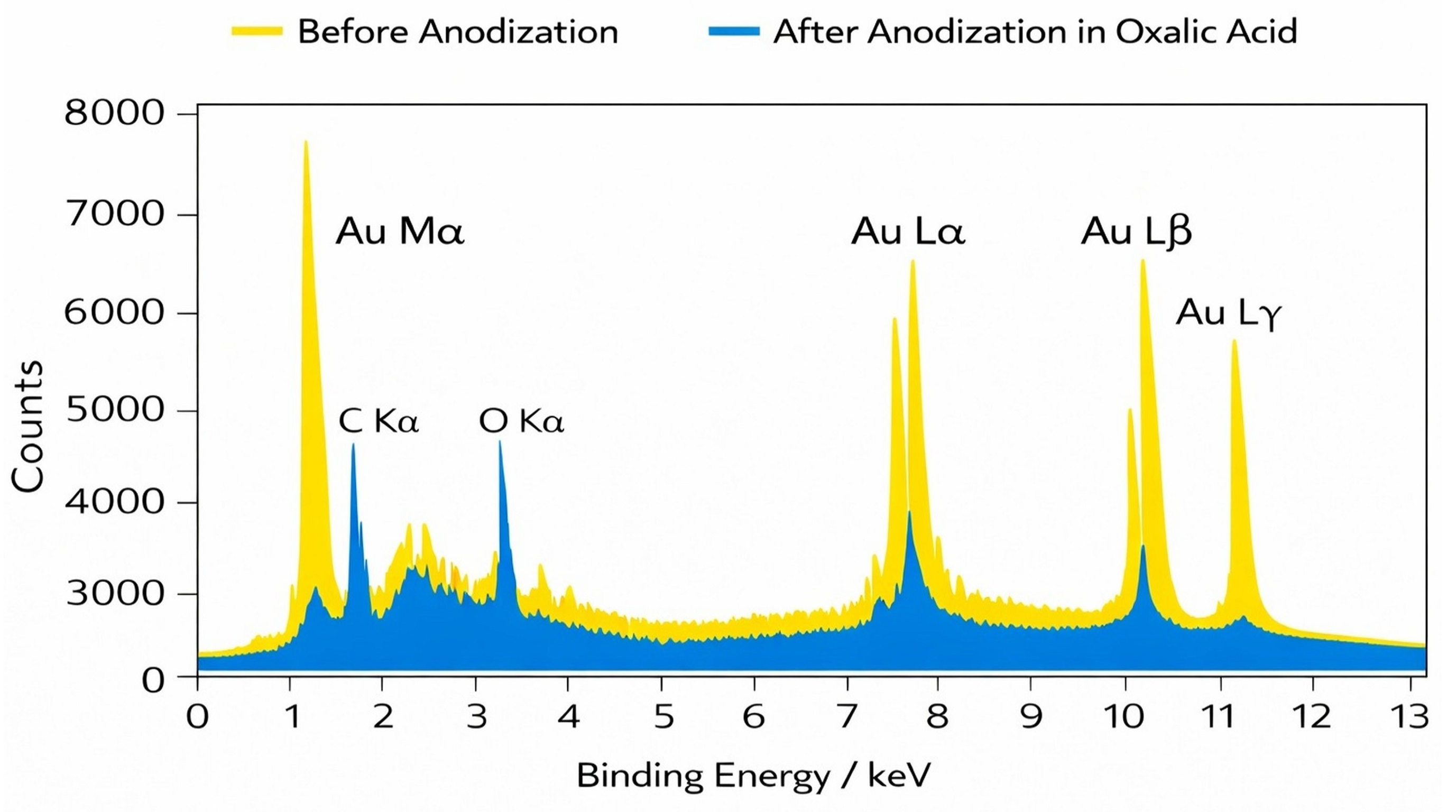
3.2. The Effect of Anodizing on the Chemical Composition of the p-Au Surface
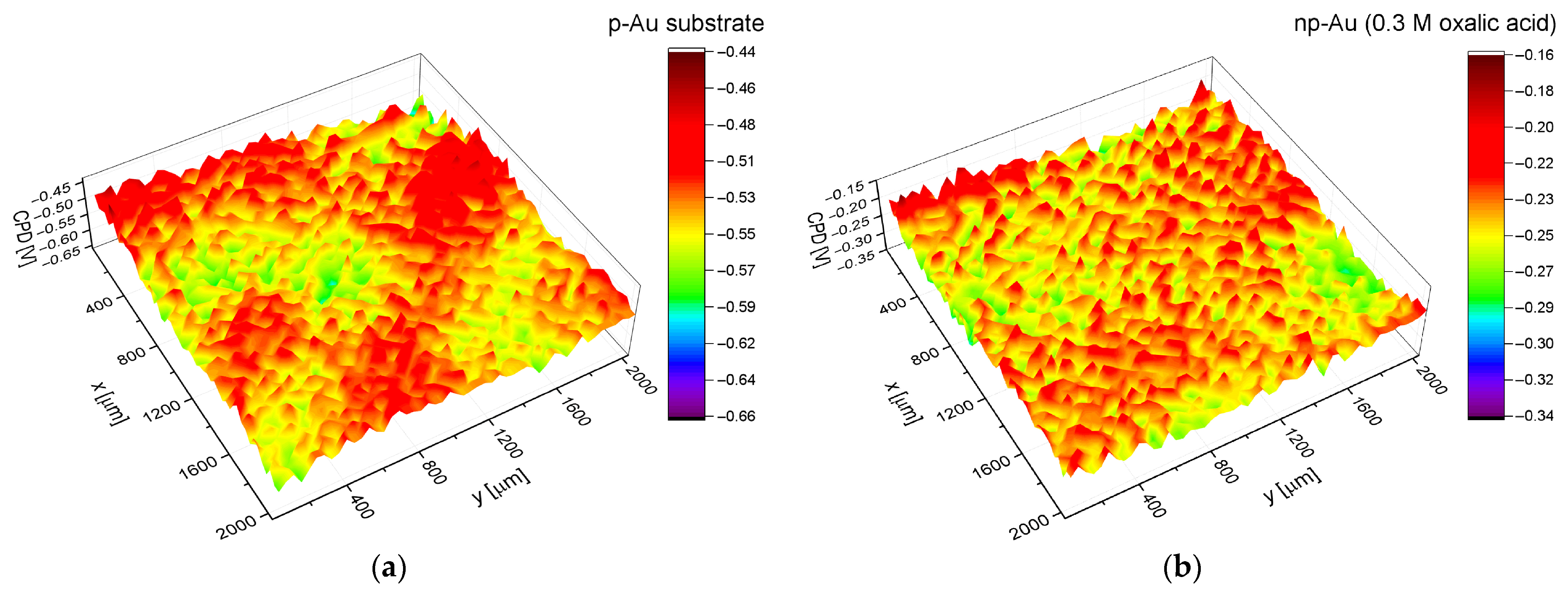
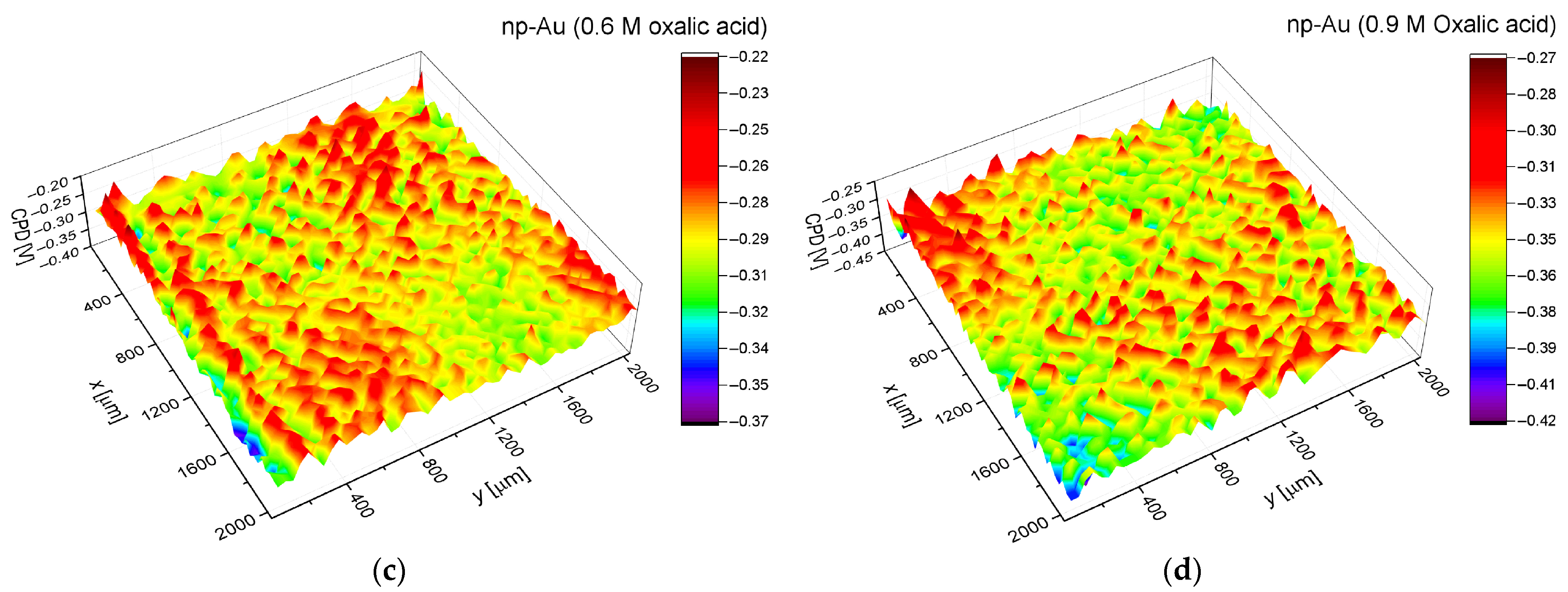
3.3. The Effect of Anodizing on the Electronic Properties of p-Au
3.4. The Effect of Anodizing on the In Vitro Corrosion Resistance of p-Au
4. Conclusions
Author Contributions
Funding
Institutional Review Board Statement
Informed Consent Statement
Data Availability Statement
Conflicts of Interest
Abbreviations
| CPD | Contact potential difference |
| CPDav | Arithmetic mean of contact potential difference |
| CPDku | Kurtosis of contact potential difference distribution |
| CPDq | Root mean square of contact potential difference |
| CPDsk | Skewness of contact potential difference distribution |
| CV | Cyclic voltammetry |
| EDS | Energy-dispersive spectroscopy |
| EOC | Open circuit potential |
| np-Au | Nanoporous gold |
| p-Au | Polycrystalline gold |
| SEM | Scanning electron microscopy |
| SKP | Scanning Kelvin probe |
| SSA | Specific surface area |
| TAS | Template-assisted synthesis |
References
- Wittstock, G.; Bäumer, M.; Dononelli, W.; Klüner, T.; Lührs, L.; Mahr, C.; Moskaleva, L.V.; Oezaslan, M.; Risse, T.; Rosenauer, A.; et al. Nanoporous Gold: From Structure Evolution to Functional Properties in Catalysis and Electrochemistry. Chem. Rev. 2023, 123, 6716–6792. [Google Scholar] [CrossRef] [Scilit]
- Xiao, S.; Wang, S.; Wang, X.; Xu, P. Nanoporous Gold: A Review and Potentials in Biotechnological and Biomedical Applications. Nano Sel. 2021, 2, 1437–1458. [Google Scholar] [CrossRef] [Scilit]
- Chauvin, A.; Lafuente, M.; Mevellec, J.-Y.; Mallada, R.; Humbert, B.; Pina, M.P.; Tessier, P.-Y.; El Mel, A. Lamellar Nanoporous Gold Thin Films with Tunable Porosity for Ultrasensitive SERS Detection in Liquid and Gas Phase. Nanoscale 2020, 12, 12602–12612. [Google Scholar] [CrossRef] [Scilit]
- Islam, M.S.; Banik, S.; Collinson, M.M. Recent Advances in Bimetallic Nanoporous Gold Electrodes for Electrochemical Sensing. Nanomaterials 2023, 13, 2515. [Google Scholar] [CrossRef] [Scilit]
- Jongrungsomran, S.; Pissuwan, D.; Yavirach, A.; Rungsiyakull, C.; Rungsiyakull, P. The Integration of Gold Nanoparticles into Dental Biomaterials as a Novel Approach for Clinical Advancement: A Narrative Review. J. Funct. Biomater. 2024, 15, 291. [Google Scholar] [CrossRef] [Scilit]
- Demurtas, D.; Alvarez-Malmagro, J.; Rathore, A.; Mandal, T.; Quintero-Jaime, A.F.; Belochapkine, S.; Lielpetere, A.; Jayakumar, K.; Leech, D.; Schuhmann, W.; et al. Development of Flexible Nanoporous Gold Electrodes for the Detection of Glucose. Bioelectrochemistry 2025, 165, 108949. [Google Scholar] [CrossRef] [Scilit]
- Chen, S.; He, S.; Wang, W.; Jin, H.; Lu, J.; Zhang, Y. Functionalized Nanoporous Gold Membrane for Pancreatic Islet Cells Encapsulation. Mater. Lett. 2021, 301, 130224. [Google Scholar] [CrossRef] [Scilit]
- Yang, S.-N.; Xie, H.; Liu, F.; Jin, H.-J. Unexpected Cellular Growth of Nanoporous Gold during Dealloying: Indication of Vacancy Injection? Acta Mater. 2025, 290, 120959. [Google Scholar] [CrossRef] [Scilit]
- Zhang, L.; Wang, Z.; Zhang, W.; Xia, P.; Fan, S.; Tang, S. High-Volume Shrinkage Nanoporous Gold Microspheres Fabricated by Non-Wetting Liquid–Solid Interface and Chemical Dealloying for High-Reliability Electronic Packaging. Colloids Surf. A 2025, 727, 138325. [Google Scholar] [CrossRef] [Scilit]
- Raj, D.; Fiore, G.; Celegato, F.; Coïsson, M.; Barrera, G.; Scaglione, F.; Tiberto, P.; Rizzi, P. Unraveling the Dealloying Mechanism of a Au33Fe67 Metastable Precursor for a Low-Cost Nanoporous Gold Production. J. Alloys Compd. 2024, 1005, 175984. [Google Scholar] [CrossRef] [Scilit]
- Xiao, X.; Si, P.; Magner, E. An Overview of Dealloyed Nanoporous Gold in Bioelectrochemistry. Bioelectrochemistry 2016, 109, 117–126. [Google Scholar] [CrossRef] [Scilit]
- Li, F.; Luo, S.; Qu, F.; Wang, D.; Li, C.; Liu, X. Electrochemical Dealloying Preparation and Morphology Evolution of Nanoporous Au with Enhanced SERS Activity. Coatings 2023, 13, 489. [Google Scholar] [CrossRef] [Scilit]
- Yu, M.; Wu, X.; Qin, C.; Wang, Z. Dealloyed Nanoporous Gold-Based Materials for Energy Storage and Conversion. Metals 2023, 13, 1298. [Google Scholar] [CrossRef] [Scilit]
- Jose, A.; Dmitrieva, E.; Schiemenz, S.; Schlörb, H.; Gemming, T.; Wolf, D.; Devi, A.; Gebert, A. Nanoporous Gold Nanostructures via Overpotential Electrodeposition and Two-Step Dealloying for SERS Applications. J. Alloys Compd. 2025, 1046, 184881. [Google Scholar] [CrossRef] [Scilit]
- Liu, Y.; Zhang, Y.; Yu, B.; Tan, F.; Cheng, G.; Zhang, Z. Formation and Microstructures of Nanoporous Gold Films with Tunable Compositions/Porosities/Sizes Through Chemical Dealloying of Dilute Solid Solution Cu–Au Alloys. J. Alloys Compd. 2025, 1010, 178152. [Google Scholar] [CrossRef] [Scilit]
- Welborn, S.S.; Corsi, J.S.; Wang, L.; Lee, A.; Fu, J.; Detsi, E. Effects of Side Reactions on the Kinetics of Nanoporous Gold Formation Revealed by Real-Time X-Ray Scattering during Electrolytic Dealloying. J. Mater. Chem. A 2021, 9, 19994–20005. [Google Scholar] [CrossRef] [Scilit]
- Zandersons, B.; Lührs, L.; Li, Y.; Weissmüller, J. On Factors Defining the Mechanical Behavior of Nanoporous Gold. Acta Mater. 2021, 215, 116979. [Google Scholar] [CrossRef] [Scilit]
- Wang, Y.; Sang, X.; Bi, J.; Fu, H.; Liu, N.; Zhang, X.; Wang, Z.; Han, Y. Template-Assisted Synthesis of 3D Ordered Mesoporous Graphitic Carbon Nitride Decorated with Gold Nanoparticles for Dopamine Sensing. New J. Chem. 2024, 48, 17928–17934. [Google Scholar] [CrossRef] [Scilit]
- Ren, S.; Ren, L.; Wei, B.; Liu, Y.; Yang, J.; Li, J.; Wang, L. DNA-Templated Fabrication of Metal Nanostructures with Special Shapes. Adv. Sens. Energy Mater. 2025, 4, 100133. [Google Scholar] [CrossRef] [Scilit]
- Nugraha, A.S.; Amiralian, N.; Hossain, M.S.A.; Yamauchi, Y. Nanoporous Gold Architectures: Design, Function, and Emerging Applications. npj Mater. Sustain. 2025, 3, 37. [Google Scholar] [CrossRef] [Scilit]
- Qin, Y.; Fang, D.; Wu, Y.; Wu, Y.; Yao, W. Controllable Preparation of Gold Nanocrystals with Different Porous Structures for SERS Sensing. Molecules 2023, 28, 2316. [Google Scholar] [CrossRef] [Scilit]
- Nasir, T.; Shao, L.; Han, Y.; Beanland, R.; Bartlett, P.N.; Hector, A.L. Mesoporous Silica Films as Hard Templates for Electrodeposition of Nanostructured Gold. Nanoscale Adv. 2022, 4, 4798–4808. [Google Scholar] [CrossRef] [Scilit]
- Shulga, O.V.; Jefferson, K.; Khan, A.R.; D’Souza, V.T.; Liu, J.; Demchenko, A.V.; Stine, K.J. Preparation and Characterization of Porous Gold and its Application as a Platform for Immobilization of Acetylcholine Esterase. Chem. Mater. 2007, 19, 3902–3911. [Google Scholar] [CrossRef] [Scilit]
- Kanti Maiti, T.; Liu, W.; Niyazi, A.; Squires, A.M.; Chattpoadhyay, S.; Di Lorenzo, M. Soft-Template-Based Manufacturing of Gold Nanostructures for Energy and Sensing Applications. Biosensors 2024, 14, 289. [Google Scholar] [CrossRef] [Scilit]
- Gul, M.; Kashif, M.; Muhammad, S.; Azizi, S.; Sun, H. Various Methods of Synthesis and Applications of Gold-Based Nanomaterials: A Detailed Review. Cryst. Growth Des. 2025, 25, 2227–2266. [Google Scholar] [CrossRef] [Scilit]
- Tian, Z.; Wei, C.; Sun, J. Recent Advances in the Template-Confined Synthesis of Two-Dimensional Materials for Aqueous Energy Storage Devices. Nanoscale Adv. 2020, 2, 2220–2233. [Google Scholar] [CrossRef] [Scilit]
- Dinh, T.; Dobó, Z.; Palotás, Á.B.; Kovács, H. A Review of Gold Nanoparticle Synthesis: Transitioning from Conventional Techniques to Plant-Mediated Green Nanofabrication. Mater. Today Chem. 2025, 48, 103003. [Google Scholar] [CrossRef] [Scilit]
- Žalnėravičius, R.; Naujokaitis, A.; Jasulaitienė, V.; Rutkienė, R.; Meškys, R.; Dagys, M. A 2D-to-3D Morphology Transitions of Gold in Organic Acid Electrolytes: Characterization and Application in Bioanode Design. Appl. Surf. Sci. 2024, 642, 158654. [Google Scholar] [CrossRef] [Scilit]
- Lingden, D.; Willis, P.; Bhattarai, J.K.; Stine, K.J. Nanoporous Gold Nanoparticles-Modified Electrode for the Detection of Endotoxins. Micromachines 2025, 16, 1014. [Google Scholar] [CrossRef] [Scilit]
- Sondhi, P.; Lingden, D.; Bhattarai, J.K.; Demchenko, A.V.; Stine, K.J. Applications of Nanoporous Gold in Therapy, Drug Delivery, and Diagnostics. Metals 2023, 13, 78. [Google Scholar] [CrossRef] [Scilit]
- Hondred, J.A.; Johnson, Z.T.; Claussen, J.C. Nanoporous Gold Peel-and-Stick Biosensors Created with Etching Inkjet Maskless Lithography for Electrochemical Pesticide Monitoring with Microfluidics. J. Mater. Chem. C 2020, 8, 11376–11388. [Google Scholar] [CrossRef] [Scilit]
- Godet, J.; Massé, G.; Shahine, I.; Hatte, Q.; Bahsoun, H.; Bouard, F.; Vernisse, L.; Pizzagalli, L.; Le Granvalet, M.; Tessier, P.-Y. Experimental Characterization of Quasi-2-Dimension Nanoporous Gold Ultra-Thin Film From Nano to Micro Length Scale. Thin Solid Films 2023, 787, 140136. [Google Scholar] [CrossRef] [Scilit]
- Zhao, F.; Zeng, J.; Shih, W.-C. Nanoporous Gold Nanocomposites as a Versatile Platform for Plasmonic Engineering and Sensing. Sensors 2017, 17, 1519. [Google Scholar] [CrossRef] [Scilit]
- Wittstock, A.; Biener, J.; Erlebacher, J.; Bäumer, M. Nanoporous Gold: From an Ancient Technology to a High-Tech Material; Royal Society of Chemistry: Cambridge, UK, 2012; ISBN 978-1-84973-374-8. [Google Scholar]
- Robson, T.; Shah, D.S.H.; Welbourn, R.J.L.; Phillips, S.R.; Clifton, L.A.; Lakey, J.H. Fully Aqueous Self-Assembly of a Gold-Nanoparticle-Based Pathogen Sensor. Int. J. Mol. Sci. 2023, 24, 7599. [Google Scholar] [CrossRef] [Scilit]
- Kim, S.H.; Jeon, S.; Yoo, D.; Zhang, M.; Park, W.; Kang, Y.; Choi, C.; Hong, S.W.; Lee, D. Guided Wrinkling of Hierarchically Structured Nanoporous Gold Films for Improved Surface-Enhanced Raman Scattering Performance. Adv. Mater. Interfaces 2023, 10, 2300212. [Google Scholar] [CrossRef] [Scilit]
- He, W.; Frueh, J.; Shao, J.; Gai, M.; Hu, N.; He, Q. Guidable GNR-Fe3O4-PEM@SiO2 Composite Particles Containing Near Infrared Active Nanocalorifiers for Laser Assisted Tissue Welding. Colloids Surf. A 2016, 511, 73–81. [Google Scholar] [CrossRef] [Scilit]
- Žalnėravičius, R.; Talaikis, M.; Klimas, V.; Serapinas, S.; Butkevičius, M.; Vaičiūnienė, J.; Morkvėnas, A.; Karabanovas, V.; Niaura, G.; Jagminas, A.; et al. Fabrication of Porous Black Gold Films by One-Step Anodic Treatment: Towards the Development of SERS-Active Nanosensors. Mater. Today Chem. 2025, 47, 102849. [Google Scholar] [CrossRef] [Scilit]
- Pfeiffer, M.; Wu, X.; Ebrahimi, F.; Mameka, N.; Eich, M.; Petrov, A. Chemical Interface Damping by Electrochemical Gold Oxidation. J. Phys. Chem. C 2024, 128, 15686–15693. [Google Scholar] [CrossRef] [Scilit]
- Nasrollahi, S.; Ghoreishi, S.M.; Khoobi, A. Nanoporous Gold Film: Surfactant-Assisted Synthesis, Anodic Oxidation and Sensing Application in Electrochemical Determination of Quercetin. J. Electroanal. Chem. 2020, 864, 114097. [Google Scholar] [CrossRef] [Scilit]
- Łosiewicz, B.; Osak, P.; Nowińska, D.; Maszybrocka, J. Developments in Dental Implant Surface Modification. Coatings 2025, 15, 109. [Google Scholar] [CrossRef] [Scilit]
- Nishio, K.; Udagawa, Y. Formation of Nanoporous Gold Film on Ti by Anodization in Oxalic Acid. Chem. Lett. 2021, 50, 1794–1796. [Google Scholar] [CrossRef] [Scilit]
- Xu, S.; Yao, Y.; Wang, P.; Yang, Y.; Xia, Y.; Liu, J.; Li, Z.; Huang, W. Anodic Fabrication of Nanoporous Gold Films from Pure Gold in Oxalic Acid Solution and Their Applications in Electrocatalysis and SERS. Int. J. Electrochem. Sci. 2013, 8, 1863–1870. [Google Scholar] [CrossRef] [Scilit]
- Popović, A.S.; Miličić Lazić, M.; Mitić, D.; Rakočević, L.; Jugović, D.; Živković, P.; Grgur, B.N. Corrosion Stability and Biological Activity of Anodized CpTi for Dental Application. Metals 2025, 15, 817. [Google Scholar] [CrossRef] [Scilit]
- Kitazumi, Y.; Shirai, O.; Kano, K. Nanostructured Porous Electrodes by the Anodization of Gold for an Application as Scaffolds in Direct-Electron-Transfer-Type Bioelectrocatalysis. Anal. Sci. 2018, 34, 1317–1322. [Google Scholar] [CrossRef] [Scilit]
- Abràmoff, M.D.; Magalhães, P.J.; Ram, S.J. Image Processing with ImageJ. Biophotonics Int. 2004, 11, 36–42. [Google Scholar]
- AFNOR NF S91-141; Dentistry—Artificial Saliva for Corrosion Testing of Dental Materials. Association Française de Normalisation (AFNOR): Paris, France, 2001.
- Wang, Y.; Laborda, E.; Crossley, A.; Compton, R.G. Surface Oxidation of Gold Nanoparticles Supported on a Glassy Carbon Electrode in Sulphuric Acid Medium: Contrasts with the Behaviour of ‘Macro’ Gold. Phys. Chem. Chem. Phys. 2013, 15, 3133–3136. [Google Scholar] [CrossRef] [Scilit]
- Foroozan-Ebrahimy, A.; Langelier, B.; Newman, R.C. Probing the Surface Chemistry of Nanoporous Gold via Electrochemical Characterization and Atom Probe Tomography. Nanomaterials 2021, 11, 1002. [Google Scholar] [CrossRef] [Scilit]
- Ruffino, F.; Grimaldi, M.G. Nanoporous Gold-Based Sensing. Coatings 2020, 10, 899. [Google Scholar] [CrossRef] [Scilit]
- Bollella, P. Porous Gold: A New Frontier for Enzyme-Based Electrodes. Nanomaterials 2020, 10, 722. [Google Scholar] [CrossRef] [Scilit]
- Łosiewicz, B.; Osak, P.; Górka-Kulikowska, K.; Maszybrocka, J. Effect of Artificial Saliva Modification on Corrosion Resistance of Metal Oxide Coatings on Co–Cr–Mo Dental Alloy. Materials 2024, 17, 5166. [Google Scholar] [CrossRef] [Scilit]
- Otero, F.; Magner, E. Biosensors—Recent Advances and Future Challenges in Electrode Materials. Sensors 2020, 20, 3561. [Google Scholar] [CrossRef] [Scilit]
- Seker, E.; Reed, M.L.; Begley, M.R. Nanoporous Gold: Fabrication, Characterization, and Applications. Materials 2009, 2, 2188–2215. [Google Scholar] [CrossRef] [Scilit]
- Li, Y.; Chen, X.; Yuan, Z.; Yi, Z.; Wang, Z.; Wang, R. Nanoporous Gold-Modified Screen-Printed Electrodes for the Simultaneous Determination of Pb2+ and Cu2+ in Water. Sensors 2024, 24, 5745. [Google Scholar] [CrossRef] [Scilit]
- Barrera, G.; Scaglione, F.; Celegato, F.; Coïsson, M.; Tiberto, P.; Rizzi, P. Electroless Cobalt Deposition on Dealloyed Nanoporous Gold Substrate: A Versatile Technique to Control Morphological and Magnetic Properties. Nanomaterials 2023, 13, 494. [Google Scholar] [CrossRef] [Scilit]
- Stasyuk, N.; Demkiv, O.; Gayda, G.; Zakalskiy, A.; Klepach, H.; Bisko, N.; Gonchar, M.; Nisnevitch, M. Highly Porous 3D Gold Enhances Sensitivity of Amperometric Biosensors Based on Oxidases and CuCe Nanoparticles. Biosensors 2022, 12, 472. [Google Scholar] [CrossRef] [Scilit]
- Oesch, U.; Janata, J. Electrochemical Study of Gold Electrodes with Anodic Oxide Films—I. Formation and Reduction Behaviour of Anodic Oxides on Gold. Electrochim. Acta 1983, 28, 1237–1246. [Google Scholar] [CrossRef] [Scilit]
- Łosiewicz, B.; Osak, P.; Górka-Kulikowska, K.; Goryczka, T.; Dworak, M.; Maszybrocka, J.; Aniołek, K. Effect of Artificial Saliva Modification on Pitting Corrosion and Mechanical Properties of the Remanium®-Type Orthodontic Archwire. Materials 2023, 16, 6791. [Google Scholar] [CrossRef] [Scilit]



| Component | Content [g·L−3] |
|---|---|
| NaCl | 6.70 |
| KCl | 1.20 |
| Na2HPO4 | 0.26 |
| KH2PO4 | 0.20 |
| NaHCO3 | 1.50 |
| KSCN | 0.33 |
| Oxalic Acid Concentration | Average Pore Diameter [nm] | Median Pore Diameter [nm] | Standard Deviation [nm] | Pore Density [1/µm2] | Surface Porosity [%] | Estimated SSA [m2/g] |
|---|---|---|---|---|---|---|
| 0.3 M | 25 ± 8 | 22 | 7 | 420 | 18 | 1.49 |
| 0.6 M | 45 ± 15 | 42 | 13 | 280 | 32 | 1.47 |
| 0.9 M | 85 ± 40 | 70 | 38 | 150 | 48 | 1.17 |
| Type of Sample | CPDav [V] | CPDq [V] | CPDsk | CPDku |
|---|---|---|---|---|
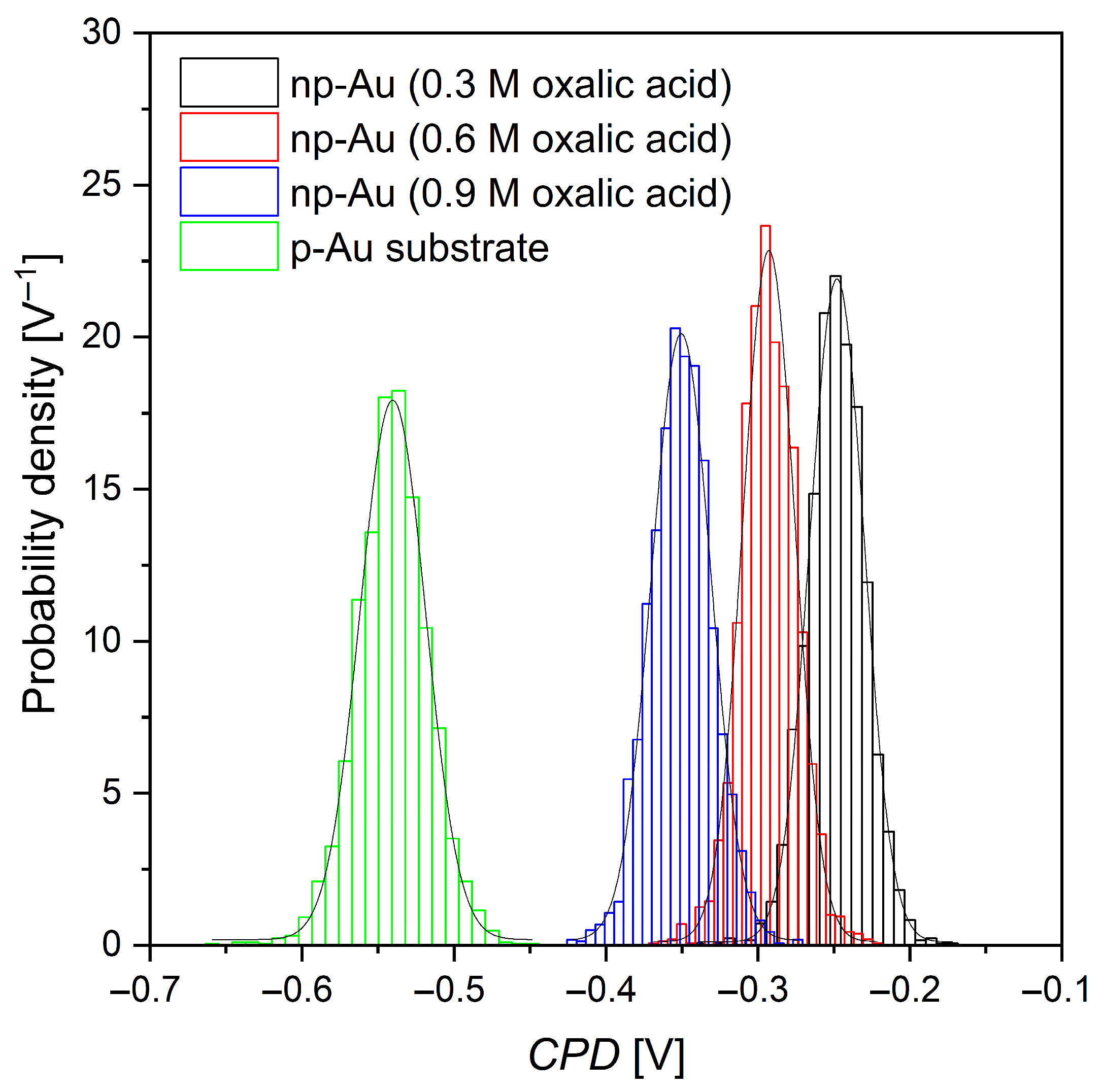
| p-Au substrate | −0.1823 ± 0.0003 | 0.1829 ± 0.0003 | −0.067 ± 0.061 | 0.534 ± 0.141 |
| np-Au (0.3 M oxalic acid) | −0.2447 ± 0.0004 | 0.2454 ± 0.0004 | −0.081 ± 0.080 | 0.662 ± 0.240 |
| np-Au (0.6 M oxalic acid) | −0.2895 ± 0.0004 | 0.2900 ± 0.0004 | −0.042 ± 0.074 | 0.746 ± 0.163 |
| np-Au (0.9 M oxalic acid) | −0.3278 ± 0.0005 | 0.3286 ± 0.0005 | −0.015 ± 0.069 | 0.812 ± 0.152 |
Disclaimer/Publisher’s Note: The statements, opinions and data contained in all publications are solely those of the individual author(s) and contributor(s) and not of MDPI and/or the editor(s). MDPI and/or the editor(s) disclaim responsibility for any injury to people or property resulting from any ideas, methods, instructions or products referred to in the content. |
© 2026 by the authors. Licensee MDPI, Basel, Switzerland. This article is an open access article distributed under the terms and conditions of the Creative Commons Attribution (CC BY) license.
Share and Cite
Łosiewicz, B.; Nowińska, D.; Kubisztal, J.; Osak, P. Surface Nanoengineering of Gold via Oxalic Acid Anodization: Morphology, Composition, Electronic Properties, and Corrosion Resistance in Artificial Saliva. Materials 2026, 19, 335. https://doi.org/10.3390/ma19020335
Łosiewicz B, Nowińska D, Kubisztal J, Osak P. Surface Nanoengineering of Gold via Oxalic Acid Anodization: Morphology, Composition, Electronic Properties, and Corrosion Resistance in Artificial Saliva. Materials. 2026; 19(2):335. https://doi.org/10.3390/ma19020335
Chicago/Turabian StyleŁosiewicz, Bożena, Delfina Nowińska, Julian Kubisztal, and Patrycja Osak. 2026. "Surface Nanoengineering of Gold via Oxalic Acid Anodization: Morphology, Composition, Electronic Properties, and Corrosion Resistance in Artificial Saliva" Materials 19, no. 2: 335. https://doi.org/10.3390/ma19020335
APA StyleŁosiewicz, B., Nowińska, D., Kubisztal, J., & Osak, P. (2026). Surface Nanoengineering of Gold via Oxalic Acid Anodization: Morphology, Composition, Electronic Properties, and Corrosion Resistance in Artificial Saliva. Materials, 19(2), 335. https://doi.org/10.3390/ma19020335