Recycled Polypropylene Composites Reinforced with Microcellulose Fibres and Microcellulose-Derived Biochar: Thermal, Rheological and Mechanical Performance

 ,
, 
 and
and 
Highlights
- Biochar retained most of the original microcellulose fibre morphology.
- MCF and BC nucleated rPP crystallization and increased stiffness.
- BC improved thermal stability and char residue of rPP composites.
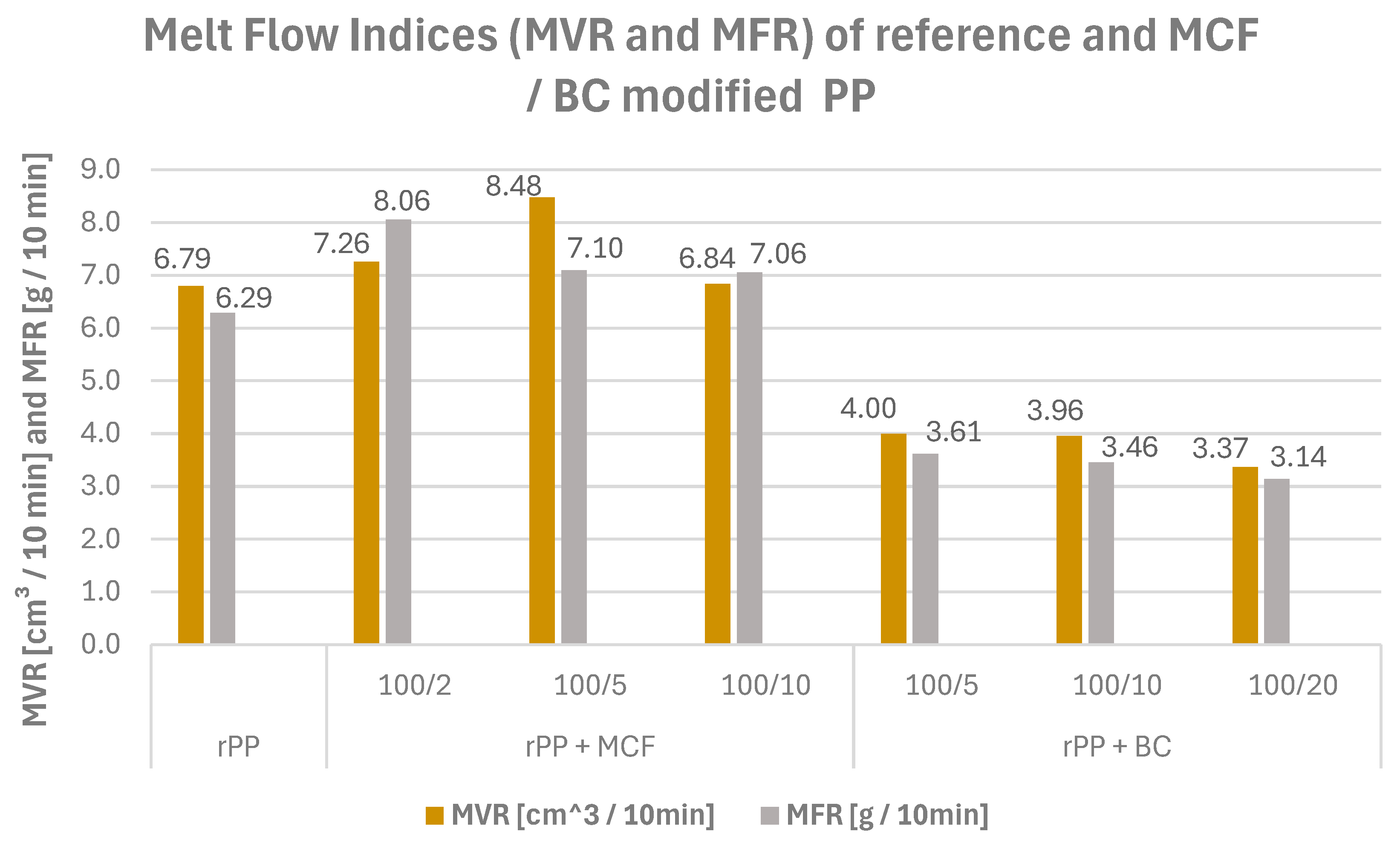
- Low MCF loading increased flowability, while BC reduced melt flow indices.
- The approach supports circular use of PP waste and cellulosic biomass.
Abstract
1. Introduction
2. Materials and Methods
2.1. Polypropylene Matrix
2.2. Bio-Fillers
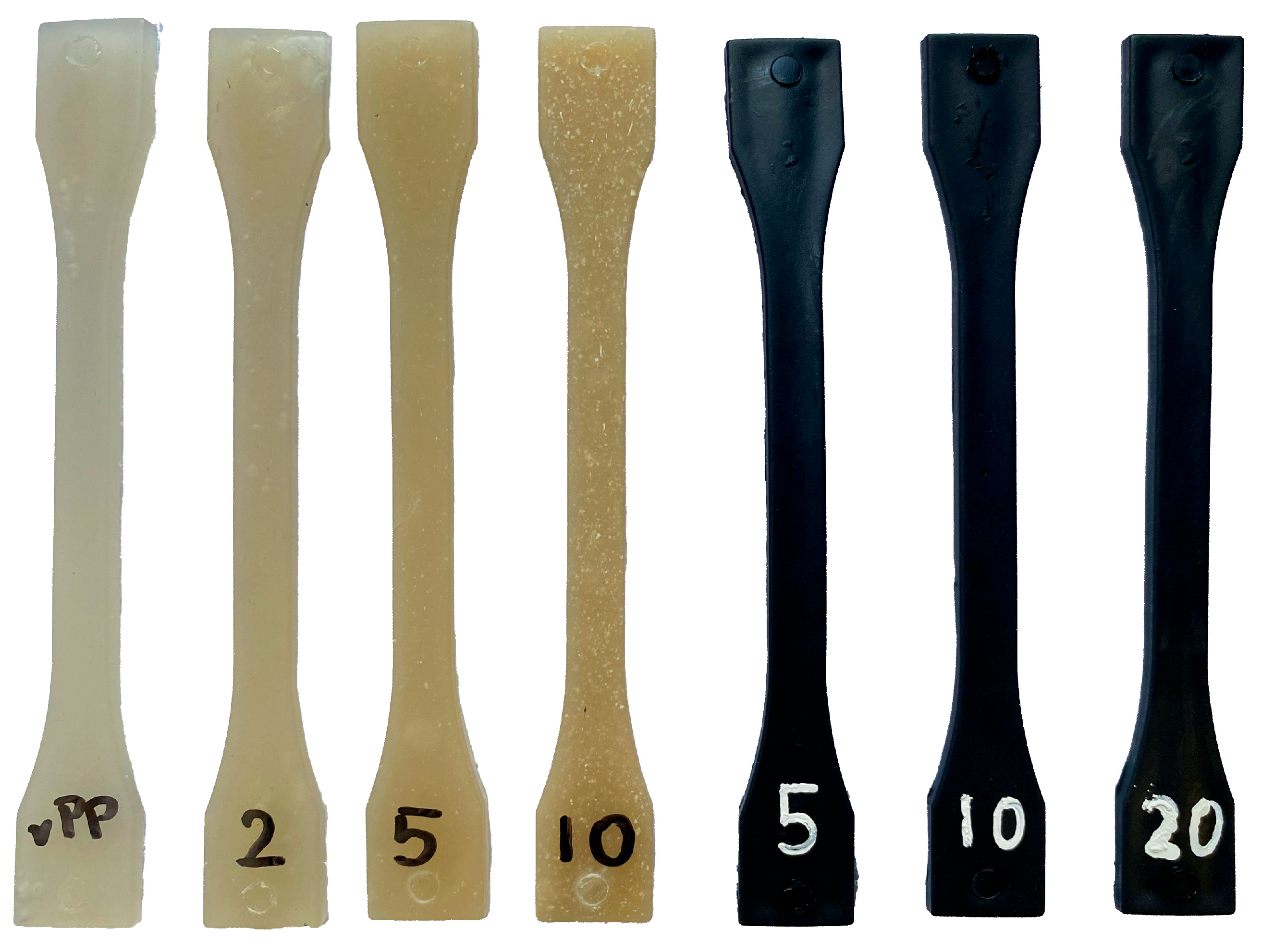
2.3. Composition
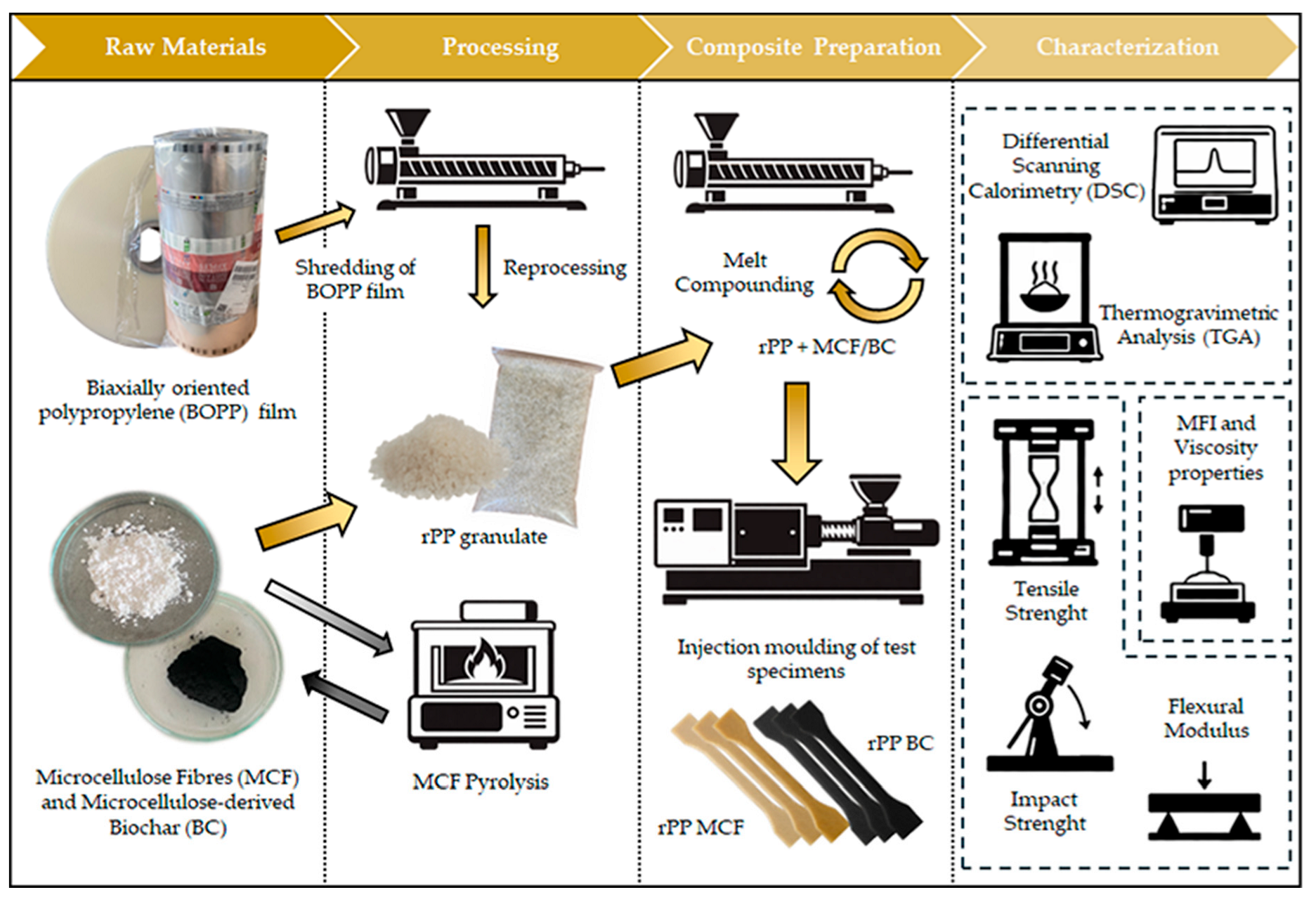
2.4. Preparation of rPP-Based Bio-Composite Compounds
2.5. Injection Moulding of rPP Bio-Composite Specimens
2.6. Impact Strength
2.7. Mechanical Properties Under Static Tensile Loading
2.8. Three-Point Bending
2.9. Hardness
2.10. Thermal Analysis (DSC/TGA)
2.11. Melt Flow Index (MFI)
2.12. Viscosity as a Function of Temperature
2.13. Surface Wettability (WCA)
2.14. Optical Microscopy
2.15. Statistical Analysis and ANOVA
3. Results and Discussion
3.1. Mechanical Properties
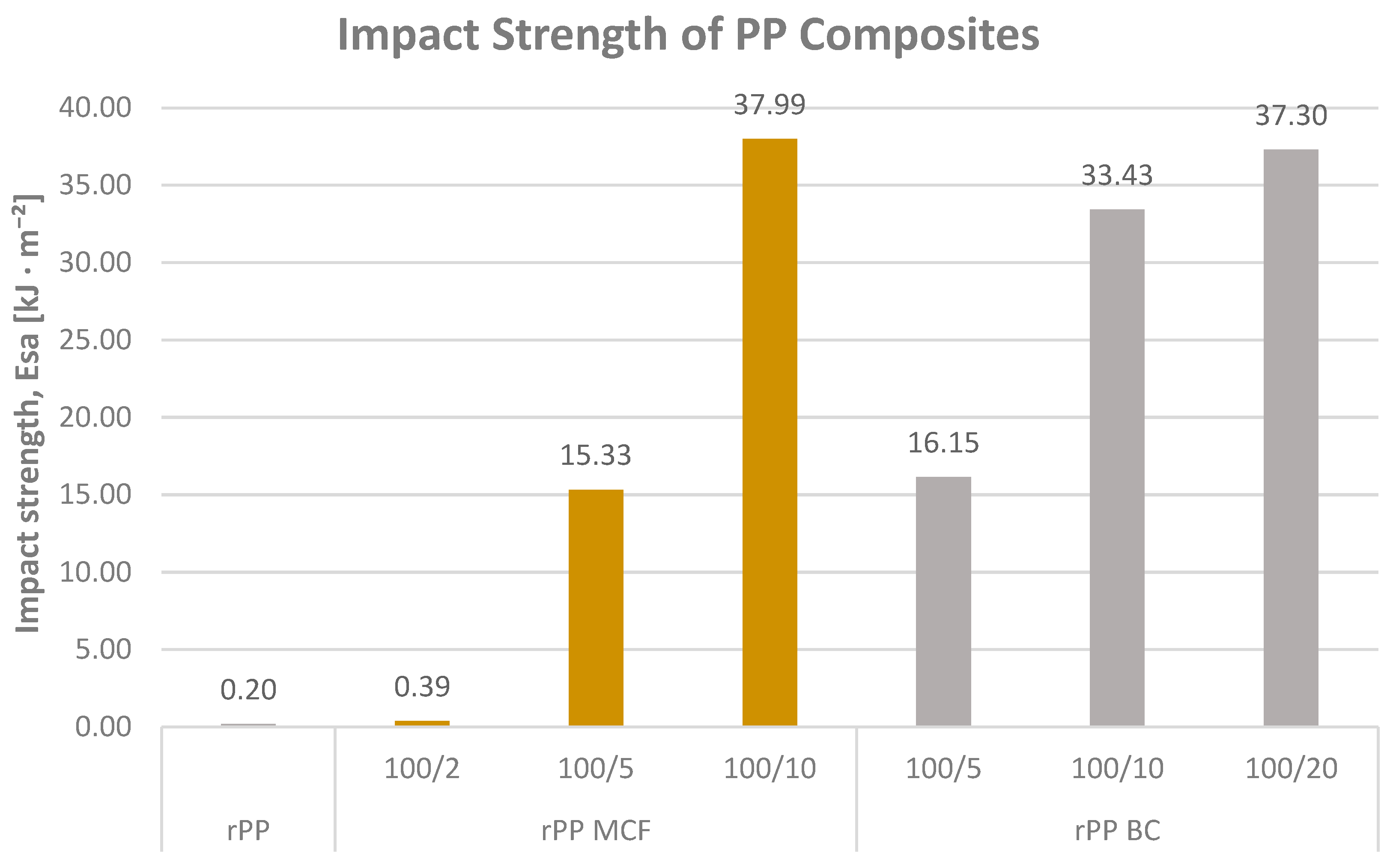
3.1.1. Impact Strength
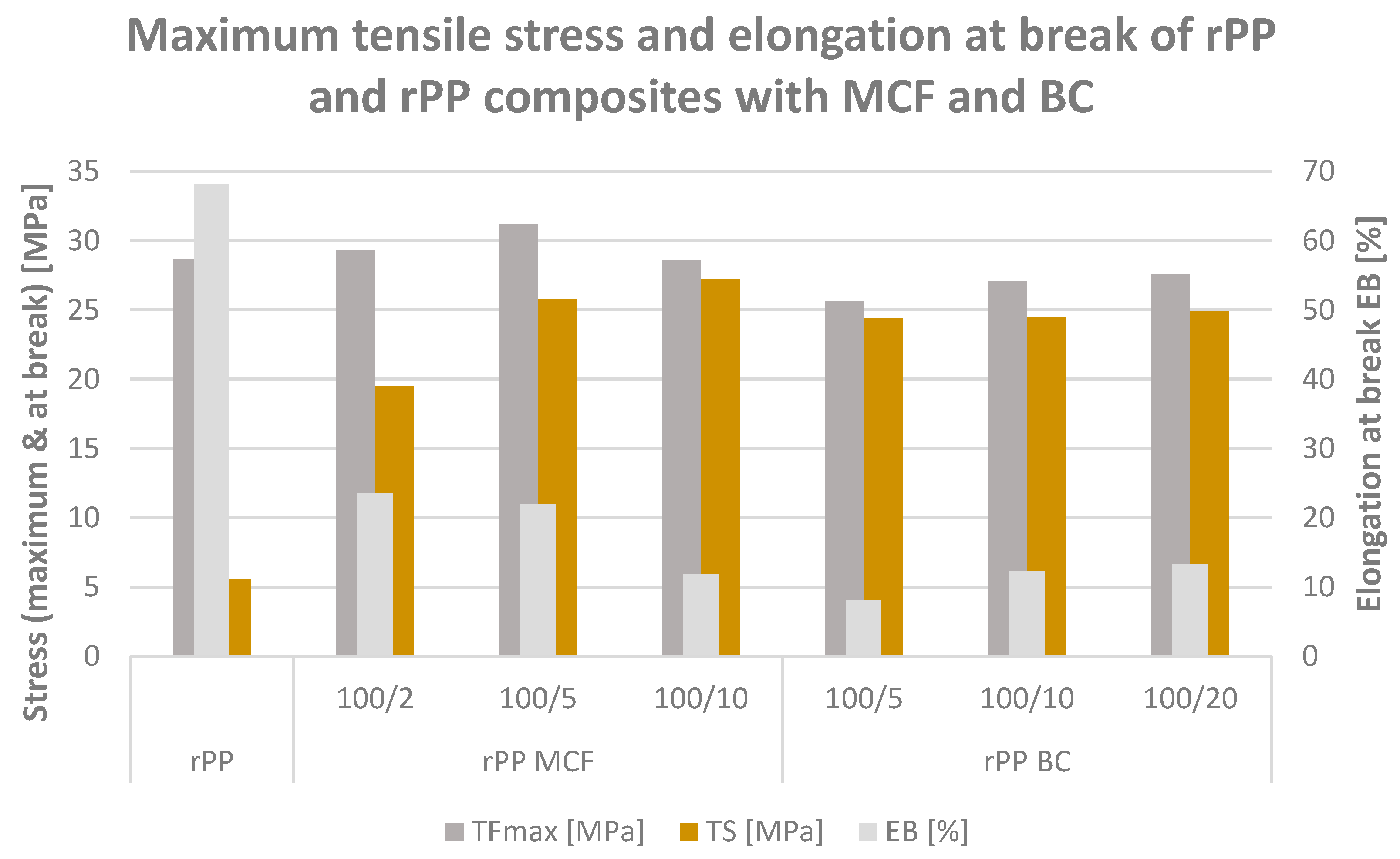
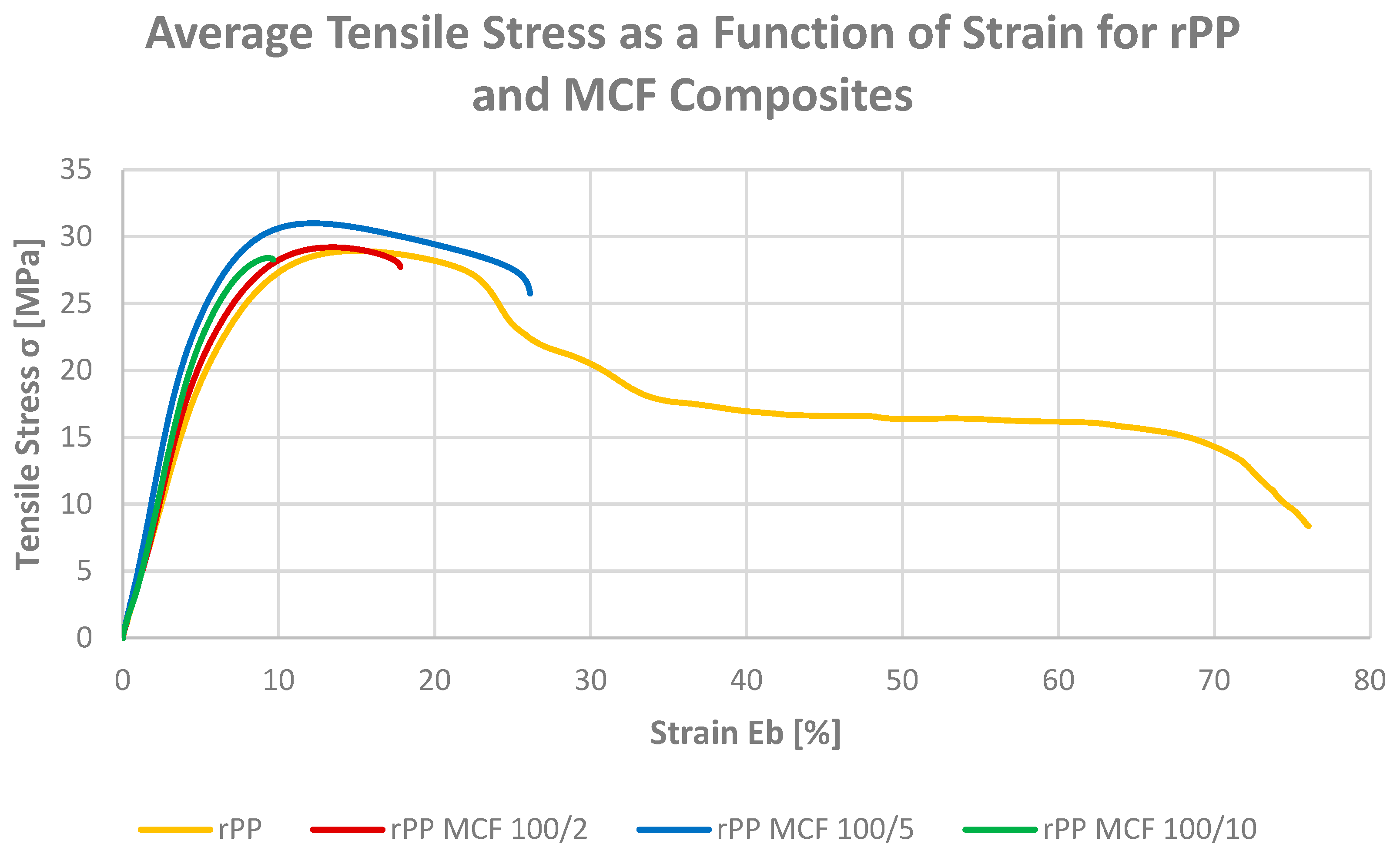
3.1.2. Tensile Strength and Elongation at Break
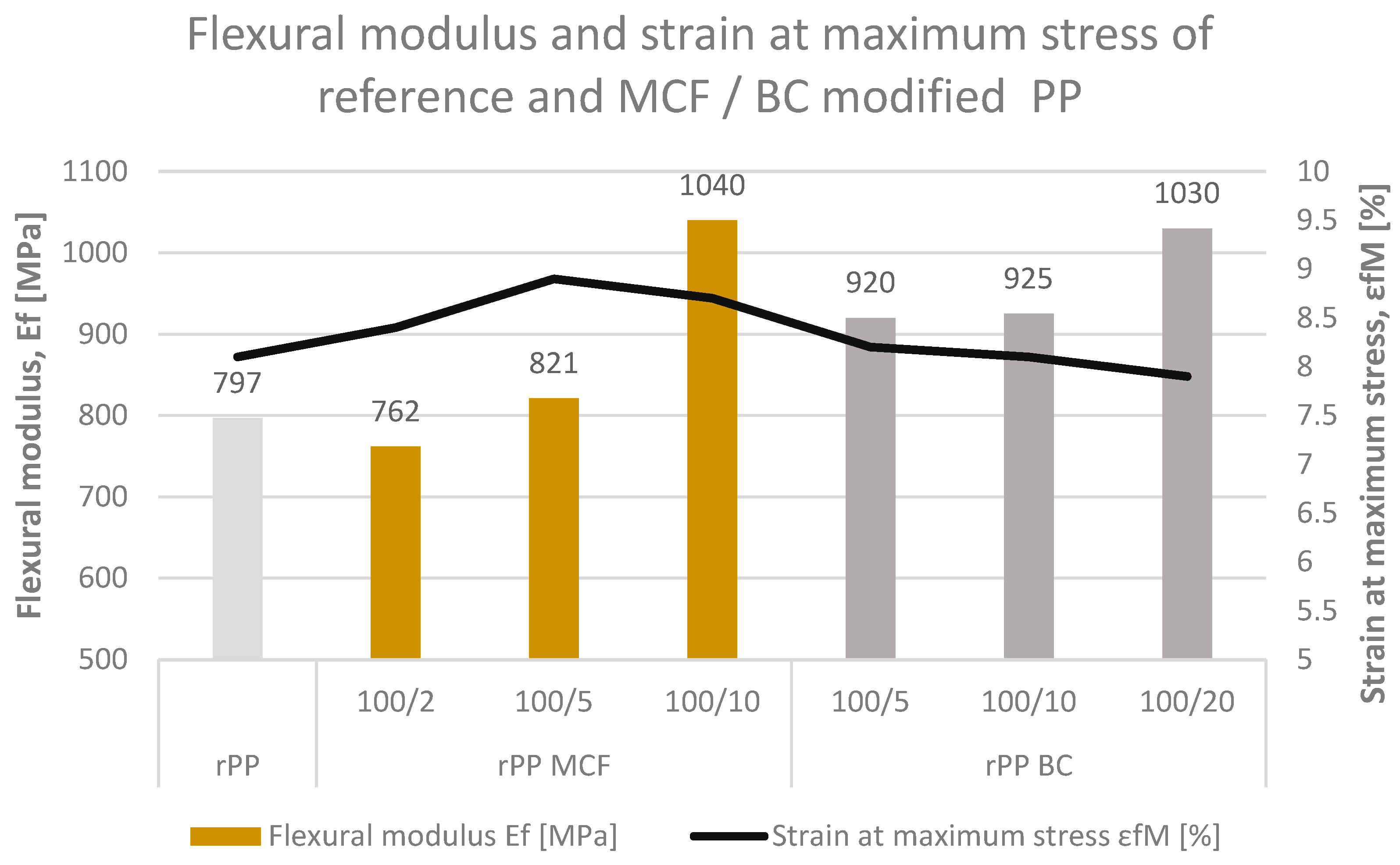
3.1.3. Flexural Properties Under Three-Point Bending
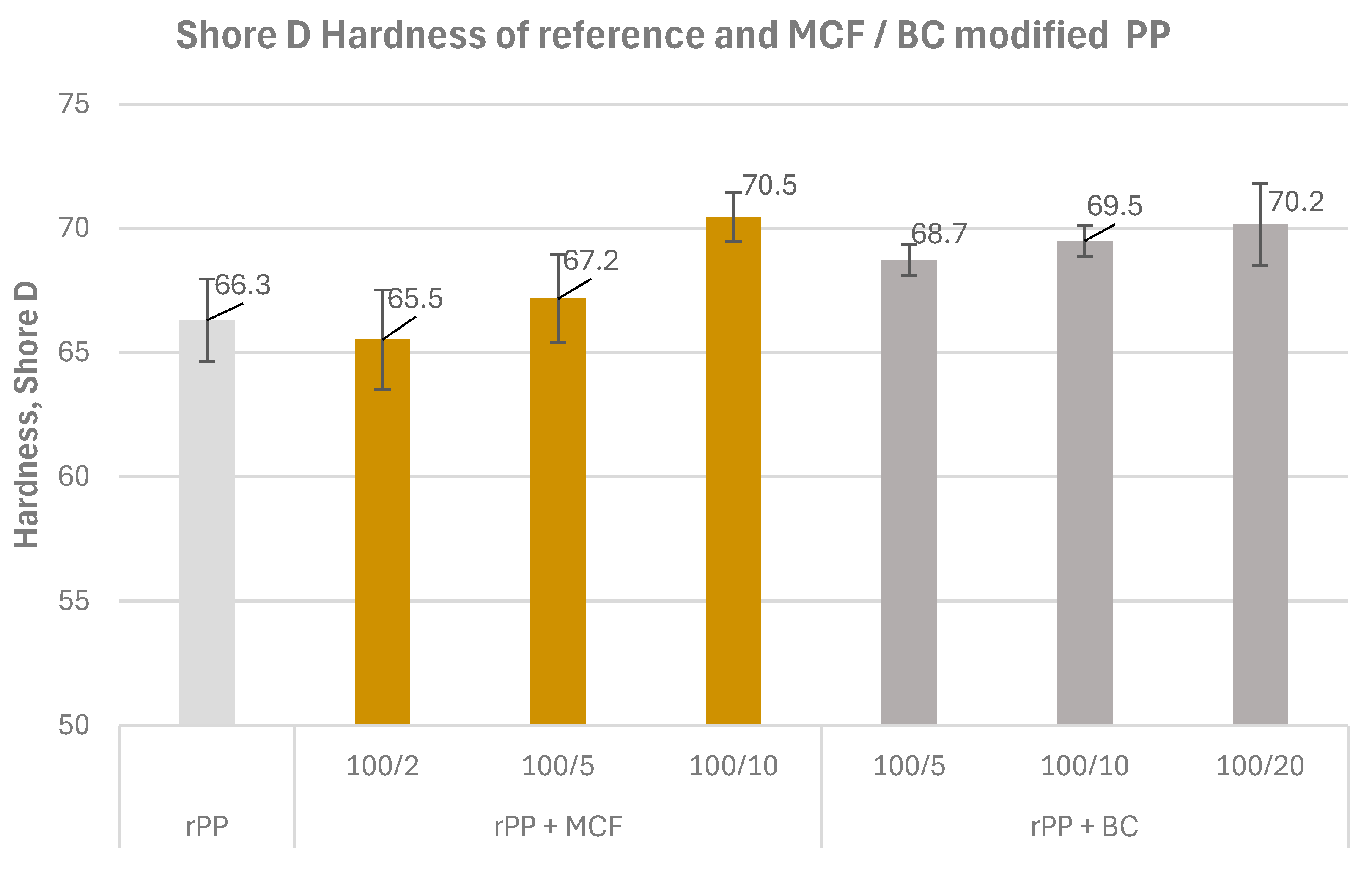
3.1.4. Hardness
3.2. Thermal Properties
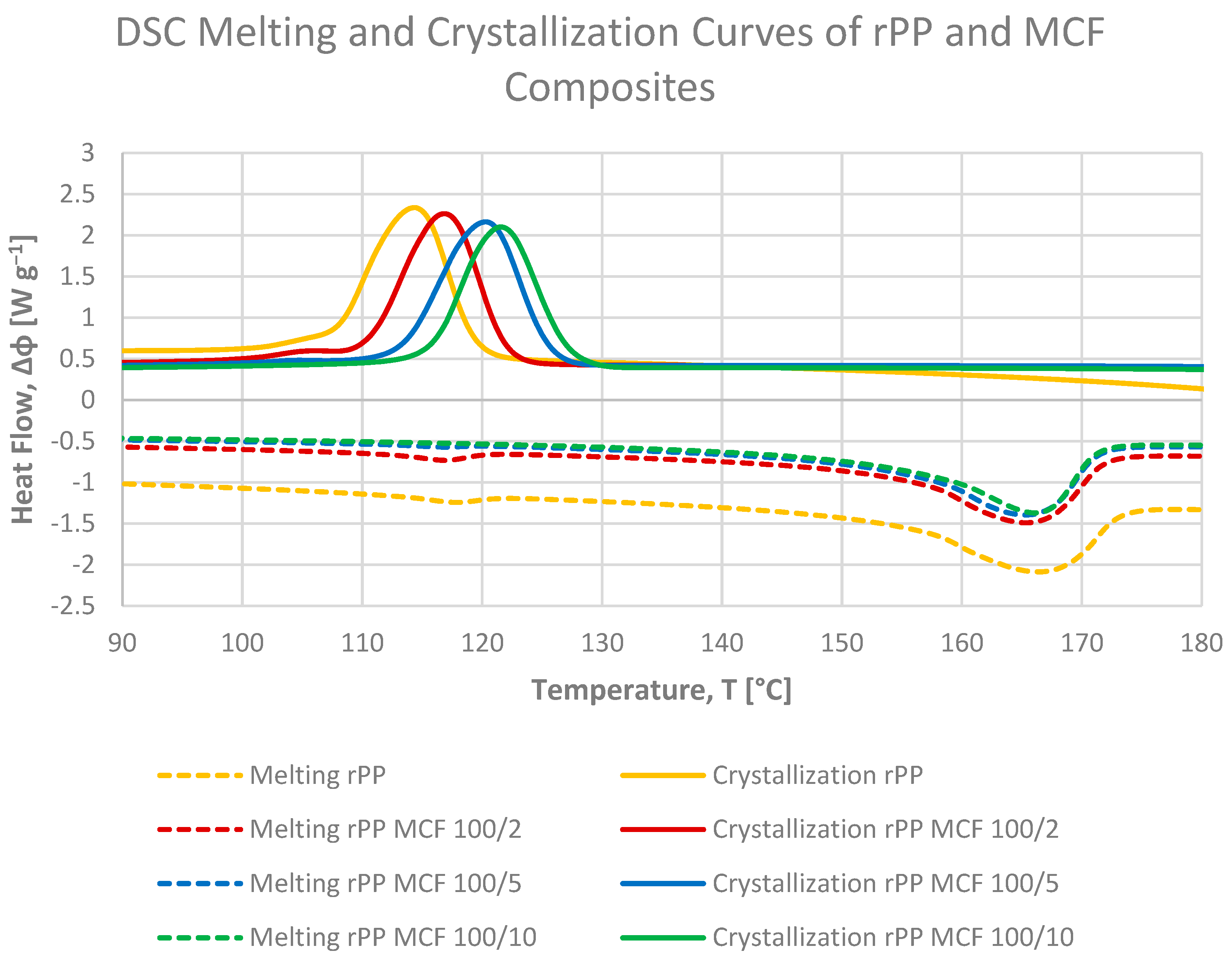
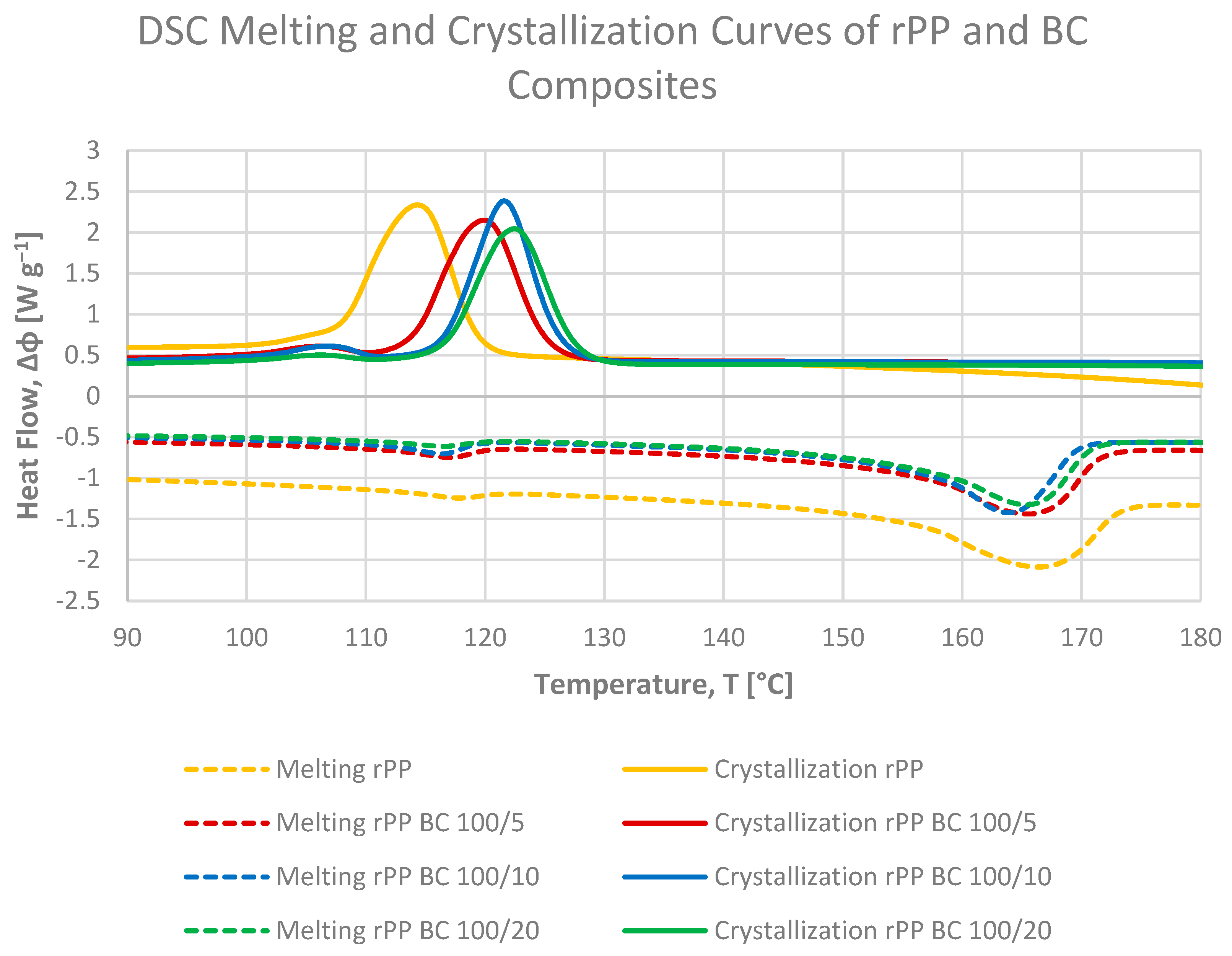
3.2.1. Differential Scanning Calorimetry (DSC) Analysis
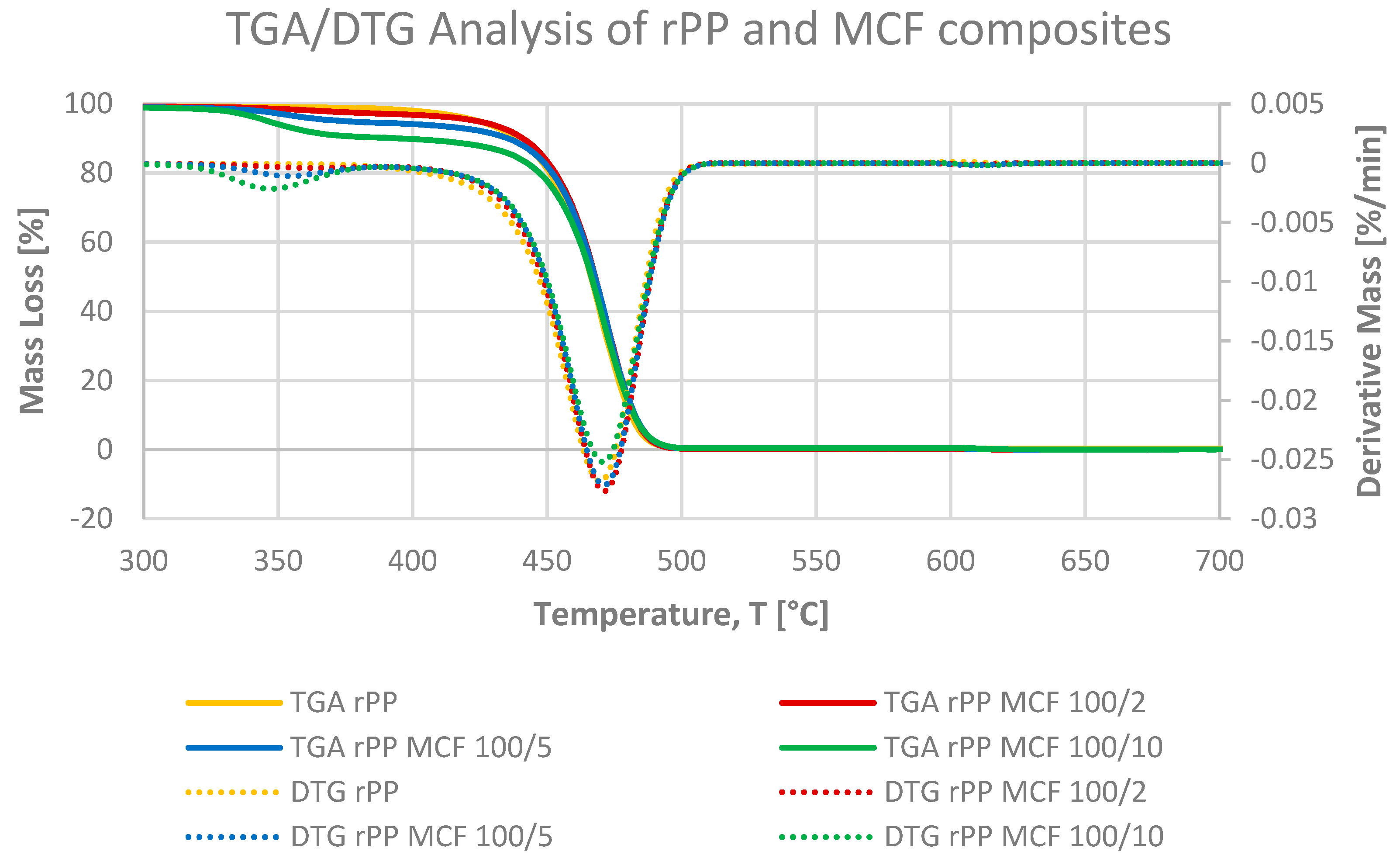
3.2.2. Thermogravimetric Analysis
3.3. Melt Flow and Temperature-Dependent Rheological Properties
3.3.1. Melt Flow Indices (MVR/MFR)
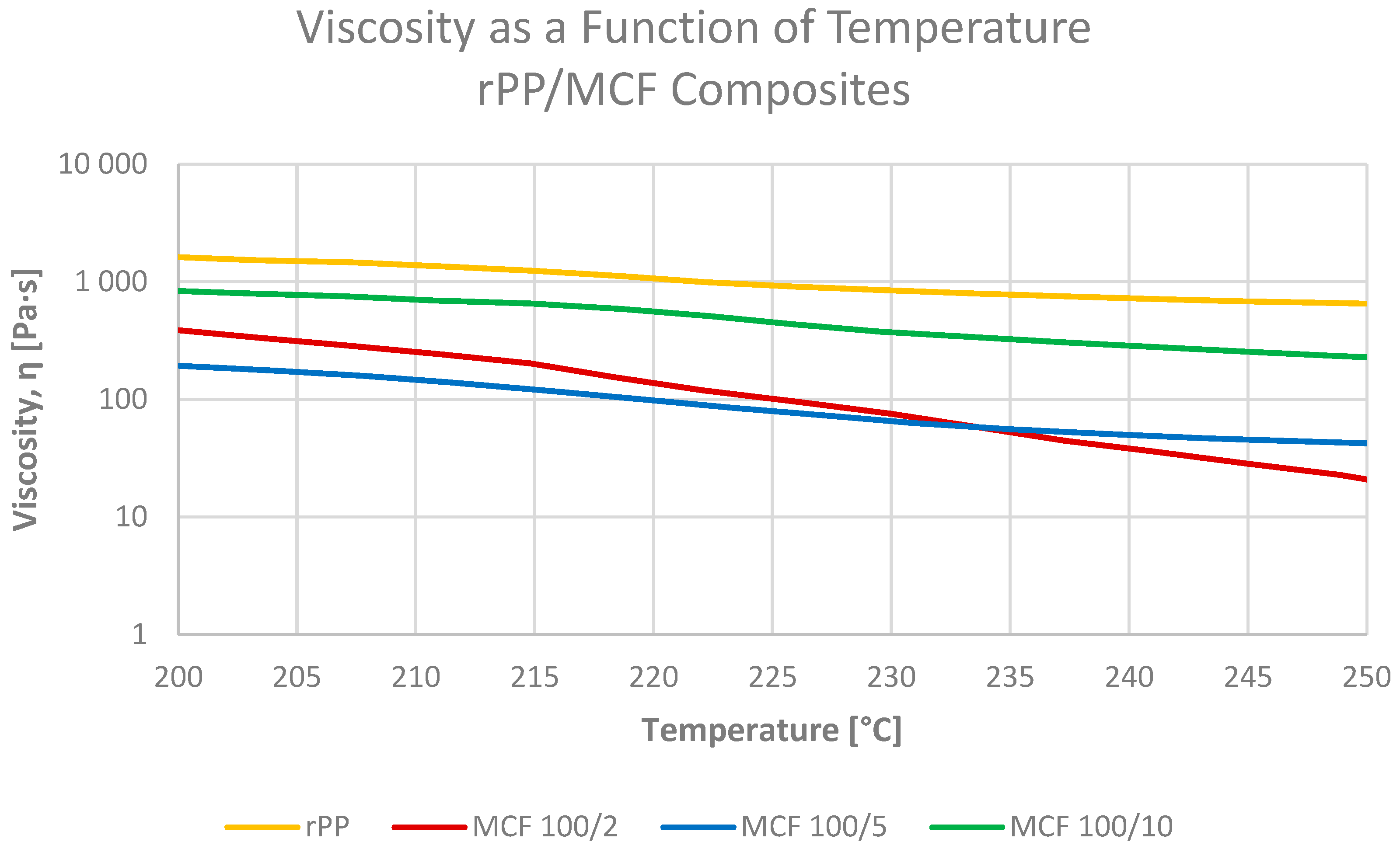
3.3.2. Temperature-Dependent Melt Viscosity
3.4. Water Contact Angle
3.5. Microstructure Characterization by Optical Microscopy
4. Conclusions
Author Contributions
Funding
Institutional Review Board Statement
Data Availability Statement
Acknowledgments
Conflicts of Interest
References
- Sarkar, S.; Aparna, K. Food Packaging and Storage. In Research Trends in Home Science and Extension (Volume-3); AkiNik Publications: New Delhi, India, 2020. [Google Scholar] [CrossRef]
- Kumar, R.; Dhaliwal, J.S.; Kapur, G.S.; Shashikant. Mechanical properties of modified biofiller-polypropylene composites. Polym. Compos. 2014, 35, 708–714. [Google Scholar] [CrossRef]
- Drzyzga, O.; Prieto, A. Plastic waste management, a matter for the ‘community,’. Microb. Biotechnol. 2019, 12, 66–68. [Google Scholar] [CrossRef]
- Charitopoulou, M.-A.; Koutroumpi, S.; Achilias, D.S. Thermal Characterization and Recycling of Polymers from Plastic Packaging Waste. Polymers 2025, 17, 1786. [Google Scholar] [CrossRef]
- Pettersen, M.K.; Grøvlen, M.S.; Evje, N.; Radusin, T. Recyclable mono materials for packaging of fresh chicken fillets: New design for recycling in circular economy. Packag. Technol. Sci. 2020, 33, 485–498. [Google Scholar] [CrossRef]
- Zhou, J.; Hsu, T.; Wang, J. Mechanochemical Degradation and Recycling of Synthetic Polymers. Angew. Chem. Int. Ed. 2023, 62, e202300768. [Google Scholar] [CrossRef] [PubMed]
- Nasir, A.; Yasin, T.; Islam, A. Thermo-oxidative degradation behavior of recycled polypropylene. J. Appl. Polym. Sci. 2011, 119, 3315–3320. [Google Scholar] [CrossRef]
- Schyns, Z.O.G.; Shaver, M.P. Mechanical Recycling of Packaging Plastics: A Review. Macromol. Rapid Commun. 2021, 42, 2000415. [Google Scholar] [CrossRef]
- Jones, H.; Saffar, F.; Koutsos, V.; Ray, D. Polyolefins and Polyethylene Terephthalate Package Wastes: Recycling and Use in Composites. Energies 2021, 14, 7306. [Google Scholar] [CrossRef]
- Del Barco Valdivia, R.A.; Espinosa, E.K.A. Tensile and Impact Properties of Mechanically Recycled Polypropylene: A Structured Literature Review. J. Boliv. Cienc. 2025, 21, 64–74. [Google Scholar] [CrossRef]
- Castro-Dominguez, B.; Gröls, J.R.; Alkandari, S.; Perge, L.; Sierra-Avila, C.; Ramirez, H.Z.; Fontes, M.d.L.; Yamada, C.; Lazarini, S.C.; Silva, J.M.; et al. Biopolymers and biocomposites: A comprehensive review of feedstocks, functionalities, and advanced manufacturing techniques for sustainable applications. Biotechnol. Sustain. Mater. 2025, 2, 8. [Google Scholar] [CrossRef]
- Wyderkiewicz, W.; Gogolewski, R.; Miedzianowska-Masłowska, J.; Szustakiewicz, K.; Masłowski, M. Effect of Biobased and Mineral Additives on the Properties of Recycled Polypropylene Packaging Materials. Polymers 2025, 17, 2368. [Google Scholar] [CrossRef]
- Barrick, A.; Champeau, O.; Chatel, A.; Manier, N.; Northcott, G.; Tremblay, L.A. Plastic additives: Challenges in ecotox hazard assessment. PeerJ 2021, 9, e11300. [Google Scholar] [CrossRef]
- Morici, E.; Carroccio, S.C.; Bruno, E.; Scarfato, P.; Filippone, G.; Dintcheva, N.T. Recycled (Bio)Plastics and (Bio)Plastic Composites: A Trade Opportunity in a Green Future. Polymers 2022, 14, 2038. [Google Scholar] [CrossRef]
- Ābele, A.; Merijs-Meri, R.; Žiganova, M.; Iesalniece, Z.; Bochkov, I. Effect of Agricultural Biomass Residues on the Properties of Recycled Polypropylene/Polyethylene Composites. Polymers 2023, 15, 2672. [Google Scholar] [CrossRef]
- Kaynak, B.; Spoerk, M.; Shirole, A.; Ziegler, W.; Sapkota, J. Polypropylene/Cellulose Composites for Material Extrusion Additive Manufacturing. Macromol. Mater. Eng. 2018, 303, 1800037. [Google Scholar] [CrossRef]
- Ljungberg, N.; Bonini, C.; Bortolussi, F.; Boisson, C.; Heux, L.; Cavaillé, J.Y. New Nanocomposite Materials Reinforced with Cellulose Whiskers in Atactic Polypropylene: Effect of Surface and Dispersion Characteristics. Biomacromolecules 2005, 6, 2732–2739. [Google Scholar] [CrossRef]
- Mihalic, M.; Sobczak, L.; Pretschuh, C.; Unterweger, C. Increasing the Impact Toughness of Cellulose Fiber Reinforced Polypropylene Composites—Influence of Different Impact Modifiers and Production Scales. J. Compos. Sci. 2019, 3, 82. [Google Scholar] [CrossRef]
- Chakrabarty, A.; Teramoto, Y. Recent Advances in Nanocellulose Composites with Polymers: A Guide for Choosing Partners and How to Incorporate Them. Polymers 2018, 10, 517. [Google Scholar] [CrossRef]
- Zhiltsova, T.; Campos, J.; Costa, A.; Oliveira, M.S.A. Sustainable Polypropylene-Based Composites with Agro-Waste Fillers: Thermal, Morphological, Mechanical Properties and Dimensional Stability. Materials 2024, 17, 696. [Google Scholar] [CrossRef]
- Yuan, Q.; Zhang, G.; Li, C.; He, L.; Xu, S. Effect of microcellulose modification methods on the properties of polypropylene composites. APL Mater. 2025, 13, 041111. [Google Scholar] [CrossRef]
- Sabaruddin, F.A.; Ariffin, H.; Shazleen, S.S.; Foong, L.N.Y.; Rujitanaroj, P.-O.; Thitiwutthisakul, K.; Permpaisarnsakul, P.; Tinnasulanon, P. Enhanced mechanical strength of polypropylene bionanocomposites through spray-dried nanocrystalline cellulose reinforcement. RSC Sustain. 2025, 3, 352–364. [Google Scholar] [CrossRef]
- Kim, S.-H.; Kim, E.-S.; Choi, K.; Cho, J.K.; Sun, H.; Yoo, J.W.; Park, I.-K.; Lee, Y.; Choi, H.R.; Kim, T.; et al. Rheological and mechanical properties of polypropylene composites containing microfibrillated cellulose (MFC) with improved compatibility through surface silylation. Cellulose 2019, 26, 1085–1097. [Google Scholar] [CrossRef]
- Contreras-Atuesta, I.Y.; Murillo, E.A. Recycled polypropylene/crystalline cellulose composites obtained using polypropylene functionalized with maleinized hyperbranched polyol polyester as compatibilizing and plasticizing agent. Polym. Compos. 2025, 46, 3176–3192. [Google Scholar] [CrossRef]
- Miedzianowska-Masłowska, J.; Masłowski, M.; Delekta, M.; Strzelec, K. Waste management of straw to manufacture biochar: An alternative reinforcing filler for natural rubber biocomposites. Ind. Crops Prod. 2024, 222, 119629. [Google Scholar] [CrossRef]
- Bartoli, M.; Arrigo, R.; Malucelli, G.; Tagliaferro, A.; Duraccio, D. Recent Advances in Biochar Polymer Composites. Polymers 2022, 14, 2506. [Google Scholar] [CrossRef]
- Aboughaly, M.; Babaei-Ghazvini, A.; Dhar, P.; Patel, R.; Acharya, B. Enhancing the Potential of Polymer Composites Using Biochar as a Filler: A Review. Polymers 2023, 15, 3981. [Google Scholar] [CrossRef]
- de Souza, D.C.S.; Freire, J.V.d.A.; da Silva, L.F.; da Silva, P.P.; Antunes, L.F.d.S.; Souto, A.G.d.L.; Valença, R.D.; Fernandes, B.C.C.; Lima, A.E.d.O.; dos Santos, J.C.S.; et al. Carbon Sequestration with Biochar: Global Trends, Knowledge Gaps, and Future Directions. ACS EST Water 2025, 5, 6479–6502. [Google Scholar] [CrossRef]
- Das, O.; Kim, N.K.; Hedenqvist, M.S.; Lin, R.J.T.; Sarmah, A.K.; Bhattacharyya, D. An Attempt to Find a Suitable Biomass for Biochar-Based Polypropylene Biocomposites. Environ. Manag. 2018, 62, 403–413. [Google Scholar] [CrossRef]
- Szymańska, J.; Doczekalska, B.; Strzemiecka, B.; Bednarek, W.H.; Woźniak, M.; Paukszta, D. Polypropylene Composites with Biochars from Miscanthus and Tomato Biomass—Part I: Thermal and Structural Properties. J. Nat. Fibers 2023, 20, 2282047. [Google Scholar] [CrossRef]
- Omran, A.A.B.; Mohammed, A.A.B.A.; Sapuan, S.M.; Ilyas, R.A.; Asyraf, M.R.M.; Koloor, S.S.R.; Petrů, M. Micro- and Nanocellulose in Polymer Composite Materials: A Review. Polymers 2021, 13, 231. [Google Scholar] [CrossRef]
- PN-EN ISO 179-1:2023; Plastics—Determination of Charpy Impact Properties—Part 1: Non-Instrumented Impact Test. Polish Committee for Standardization: Warsaw, Poland, 2023.
- PN-EN ISO 527-1:2020; Plastics—Determination of Tensile Properties—Part 1: General Principles. Polish Committee for Standardization: Warsaw, Poland, 2020.
- PN-EN ISO 178:2019; Plastics—Determination of Flexural Properties. Polish Committee for Standardization: Warsaw, Poland, 2019.
- PN-EN ISO 868:2005; Plastics and Ebonite—Determination of Indentation Hardness by Means of a Durometer (Shore Hardness). Polish Committee for Standardization: Warsaw, Poland, 2005.
- Oliveira, G.H.M.; Maia, T.H.S.; Talabi, S.I.; Canto, L.B.; Lucas, A.A. Characterization of cellulose nano/microfibril reinforced polypropylene composites processed via solid-state shear pulverization. Polym. Compos. 2021, 42, 1371–1382. [Google Scholar] [CrossRef]
- PN-EN ISO 1133-1:2022; Plastics—Determination of the Melt Mass-Flow Rate (MFR) and Melt Volume-Flow Rate (MVR) of Thermoplastics—Part 1: Standard Method. Polish Committee for Standardization: Warsaw, Poland, 2022.
- Ye, Y.; Zou, D.; Si, S.; Li, X. Effects of Reed Biochar Mass Fraction on the Properties of Polypropylene/Reed Char Composites. Polymers 2022, 14, 2212. [Google Scholar] [CrossRef]
- Alghyamah, A.A.; Elnour, A.Y.; Shaikh, H.; Haider, S.; Poulose, A.M.; Al-Zahrani, S.; Almasry, W.A.; Park, S.Y. Biochar/polypropylene composites: A study on the effect of pyrolysis temperature on crystallization kinetics, crystalline structure, and thermal stability. J. King Saud Univ. Sci. 2021, 33, 101409. [Google Scholar] [CrossRef]
- Yasim-Anuar, T.A.T.; Yee-Foong, L.N.; Lawal, A.A.; Farid, M.A.A.; Yusuf, M.Z.M.; Hassan, M.A.; Ariffin, H. Emerging application of biochar as a renewable and superior filler in polymer composites. RSC Adv. 2022, 12, 13938–13949. [Google Scholar] [CrossRef]
- Esmizadeh, E.; Tzoganakis, C.; Mekonnen, T.H. Degradation Behavior of Polypropylene during Reprocessing and Its Biocomposites: Thermal and Oxidative Degradation Kinetics. Polymers 2020, 12, 1627. [Google Scholar] [CrossRef]
- Elnour, A.Y.; Alghyamah, A.A.; Shaikh, H.M.; Poulose, A.M.; Al-Zahrani, S.M.; Anis, A.; Al-Wabel, M.I. Effect of Pyrolysis Temperature on Biochar Microstructural Evolution, Physicochemical Characteristics, and Its Influence on Biochar/Polypropylene Composites. Appl. Sci. 2019, 9, 1149. [Google Scholar] [CrossRef]
- Hemlata. Mechanical, thermal, morphological, and rheological behavior of recycled polypropylene/pine needle biochar composite: An innovative approach towards circular economy. Polym. Compos. 2025, 46, 8490–8507. [Google Scholar] [CrossRef]
- Rueda, M.M.; Auscher, M.-C.; Fulchiron, R.; Périé, T.; Martin, G.; Sonntag, P.; Cassagnau, P. Rheology and applications of highly filled polymers: A review of current understanding. Prog. Polym. Sci. 2017, 66, 22–53. [Google Scholar] [CrossRef]
- Malkin, A.Y.; Kulichikhin, V.G.; Khashirova, S.Y.; Simonov-Emelyanov, I.D.; Mityukov, A.V. Rheology of Highly Filled Polymer Compositions—Limits of Filling, Structure, and Transport Phenomena. Polymers 2024, 16, 442. [Google Scholar] [CrossRef]
- Long, S.; Hu, Y.; Dong, X.; Shen, L.; Wang, Y.; Huang, Y.; Li, X. Superhydrophobic Polypropylene Surface via Migration of SiO2 Nanoparticles with Low Surface Energy. Macromol. Rapid Commun. 2025, 46, e2500195. [Google Scholar] [CrossRef]
- Bîrleanu, E.; Mihăilă, I.; Topală, I.; Borcia, C.; Borcia, G. Adhesion Properties and Stability of Non-Polar Polymers Treated by Air Atmospheric-Pressure Plasma. Polymers 2023, 15, 2443. [Google Scholar] [CrossRef] [PubMed]
- Rathnayake, W.S.M.; Karunanayake, L.; Samarasekara, A.M.P.B.; Amarasinghe, D.A.S. Fabrication and Characterization of Polypropylene Microcrystalline Cellulose Based Composites with Enhanced Compatibility. In 2019 Moratuwa Engineering Research Conference (MERCon); IEEE: New York, NY, USA, 2019; pp. 354–359. [Google Scholar] [CrossRef]
- Żołek-Tryznowska, Z.; Bednarczyk, E.; Tryznowski, M.; Kobiela, T. A Comparative Investigation of the Surface Properties of Corn-Starch-Microfibrillated Cellulose Composite Films. Materials 2023, 16, 3320. [Google Scholar] [CrossRef]
- Atmakuri, A.; Palevicius, A.; Siddabathula, M.; Vilkauskas, A.; Janusas, G. Analysis of Mechanical and Wettability Properties of Natural Fiber-Reinforced Epoxy Hybrid Composites. Polymers 2020, 12, 2827. [Google Scholar] [CrossRef] [PubMed]
- Koffi, A.; Mijiyawa, F.; Koffi, D.; Erchiqui, F.; Toubal, L. Mechanical Properties, Wettability and Thermal Degradation of HDPE/Birch Fiber Composite. Polymers 2021, 13, 1459. [Google Scholar] [CrossRef] [PubMed]
- Asgari, A.; Hemmasi, A.; Bazyar, B.; Talaeipour, M.; Nourbakhsh, A. Inspecting the properties of polypropylene/ poplar wood flour composites with microcrystalline cellulose and starch powder addition. Bioresources 2020, 15, 4188–4204. [Google Scholar] [CrossRef]
- Botta, L.; Teresi, R.; Titone, V.; Salvaggio, G.; La Mantia, F.P.; Lopresti, F. Use of Biochar as Filler for Biocomposite Blown Films: Structure-Processing-Properties Relationships. Polymers 2021, 13, 3953. [Google Scholar] [CrossRef]
- Nagarajan, V.; Mohanty, A.K.; Misra, M. Biocomposites with Size-Fractionated Biocarbon: Influence of the Microstructure on Macroscopic Properties. ACS Omega 2016, 1, 636–647. [Google Scholar] [CrossRef]
- Barszcz, W.; Łożyńska, M.; Molenda, J. Impact of pyrolysis process conditions on the structure of biochar obtained from apple waste. Sci. Rep. 2024, 14, 10501. [Google Scholar] [CrossRef]







| Sample | rPP [pbw] | Micro-Cellulose Fibres (MCF) [pbw] | Biochar (BC) [pbw] | Bio-Filler [wt %] |
|---|---|---|---|---|
| rPP | 100 | - | - | 0 |
| rPP MCF2 | 100 | 2 | - | 2.0 |
| rPP MCF5 | 100 | 5 | - | 4.8 |
| rPP MCF10 | 100 | 10 | - | 9.1 |
| rPP BC5 | 100 | - | 5 | 4.8 |
| rPP BC10 | 100 | - | 10 | 9.1 |
| rPP BC20 | 100 | - | 20 | 16.7 |
| Sample | Tconset [°C] | Tcpeak [°C] | Tcendset [°C] | ΔHc [J/g] | Xc [%] | |
|---|---|---|---|---|---|---|
| rPP | 120 | 115 | 108 | 88.6 | 42.8 | |
| rPP MCF | 100/2 | 122 | 118 | 111 | 84.9 | 41.5 |
| 100/5 | 126 | 121 | 113 | 80.6 | 40.6 | |
| 100/10 | 127 | 122 | 116 | 76.3 | 40.5 | |
| rPP BC | 100/5 | 125 | 121 | 114 | 82.6 | 41.7 |
| 100/10 | 126 | 122 | 117 | 78.9 | 40.9 | |
| 100/20 | 128 | 123 | 117 | 73.0 | 42.3 | |
| Sample | Tmonset [°C] | Tmpeak [°C] | Tmendset [°C] | −ΔHm [J/g] | Xc [%] | |
|---|---|---|---|---|---|---|
| rPP | 153 | 165 | 173 | 63.2 | 30.6 | |
| rPP MCF | 100/2 | 153 | 165 | 172 | 65.1 | 32.0 |
| 100/5 | 153 | 165 | 171 | 72.9 | 37.0 | |
| 100/10 | 154 | 166 | 171 | 67.7 | 35.8 | |
| rPP BC | 100/5 | 154 | 165 | 171 | 64.1 | 32.5 |
| 100/10 | 155 | 163 | 170 | 64.7 | 33.4 | |
| 100/20 | 154 | 165 | 171 | 61.7 | 35.8 | |
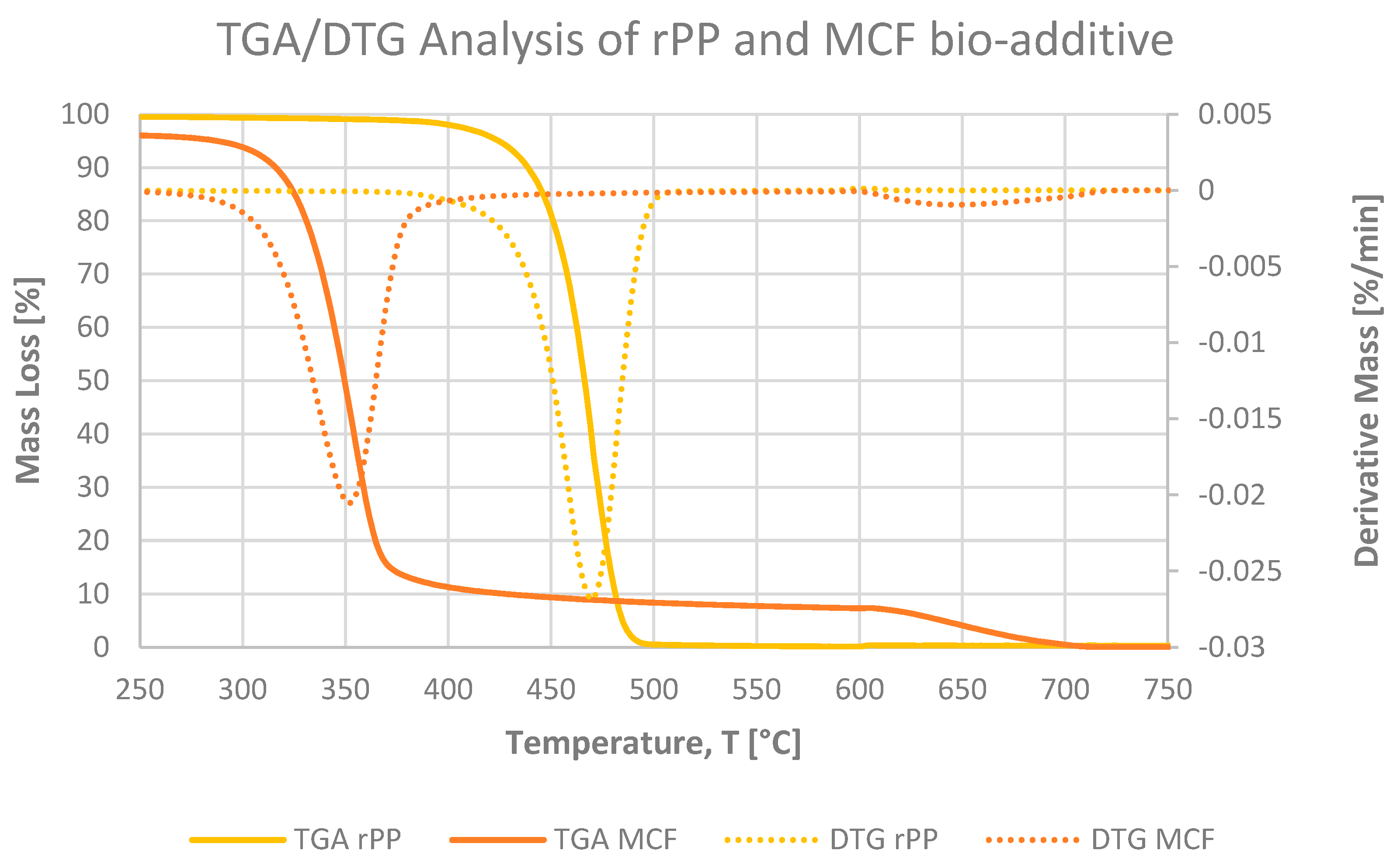
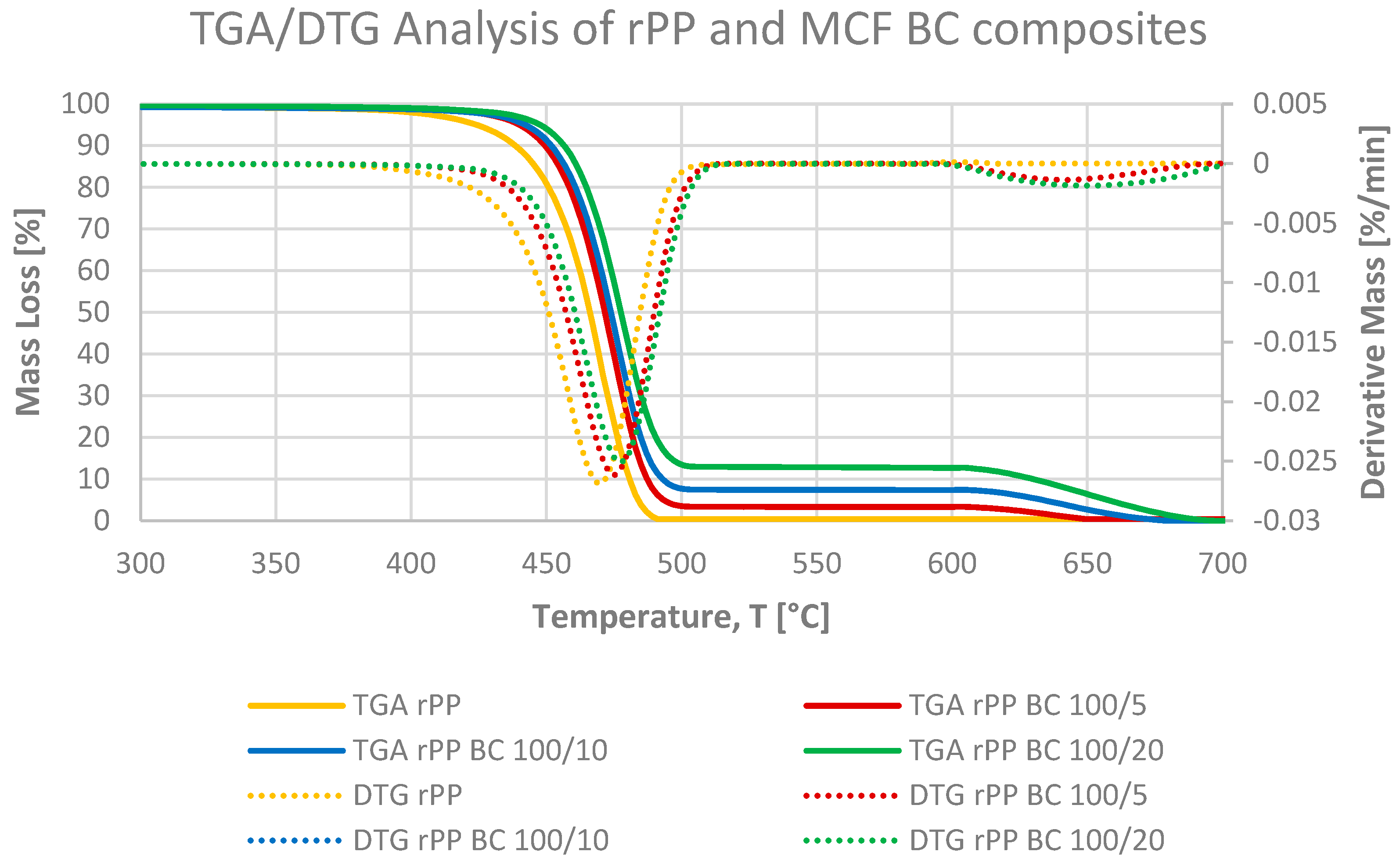
| Sample | T5 [°C] | TDTG [°C] | ΔM25–600 [%] | |
|---|---|---|---|---|
| rPP | 425 | 469 | 99.9 | |
| MCF | 288 | 352 | 92.7 | |
| rPP MCF | 100/2 | 425 | 471 | 99.8 |
| 100/5 | 375 | 471 | 99.7 | |
| 100/10 | 347 | 471 | 99.6 | |
| rPP BC | 100/5 | 441 | 475 | 96.0 |
| 100/10 | 443 | 477 | 92.4 | |
| 100/20 | 449 | 477 | 87.2 | |
Disclaimer/Publisher’s Note: The statements, opinions and data contained in all publications are solely those of the individual author(s) and contributor(s) and not of MDPI and/or the editor(s). MDPI and/or the editor(s) disclaim responsibility for any injury to people or property resulting from any ideas, methods, instructions or products referred to in the content. |
© 2026 by the authors. Licensee MDPI, Basel, Switzerland. This article is an open access article distributed under the terms and conditions of the Creative Commons Attribution (CC BY) license.
Share and Cite
Wyderkiewicz, W.; Miedzianowska-Masłowska, J.; Sowińska-Baranowska, A.; Masłowski, M. Recycled Polypropylene Composites Reinforced with Microcellulose Fibres and Microcellulose-Derived Biochar: Thermal, Rheological and Mechanical Performance. Materials 2026, 19, 1942. https://doi.org/10.3390/ma19101942
Wyderkiewicz W, Miedzianowska-Masłowska J, Sowińska-Baranowska A, Masłowski M. Recycled Polypropylene Composites Reinforced with Microcellulose Fibres and Microcellulose-Derived Biochar: Thermal, Rheological and Mechanical Performance. Materials. 2026; 19(10):1942. https://doi.org/10.3390/ma19101942
Chicago/Turabian StyleWyderkiewicz, Wiktor, Justyna Miedzianowska-Masłowska, Anna Sowińska-Baranowska, and Marcin Masłowski. 2026. "Recycled Polypropylene Composites Reinforced with Microcellulose Fibres and Microcellulose-Derived Biochar: Thermal, Rheological and Mechanical Performance" Materials 19, no. 10: 1942. https://doi.org/10.3390/ma19101942
APA StyleWyderkiewicz, W., Miedzianowska-Masłowska, J., Sowińska-Baranowska, A., & Masłowski, M. (2026). Recycled Polypropylene Composites Reinforced with Microcellulose Fibres and Microcellulose-Derived Biochar: Thermal, Rheological and Mechanical Performance. Materials, 19(10), 1942. https://doi.org/10.3390/ma19101942