Effect of Viscosity Reduction by Rubber Organic Degradation Agents in High-Rubber-Content Asphalt



Abstract
1. Introduction
2. Materials and Experiments
2.1. Materials
2.2. Preparation of Vulcanized Rubber
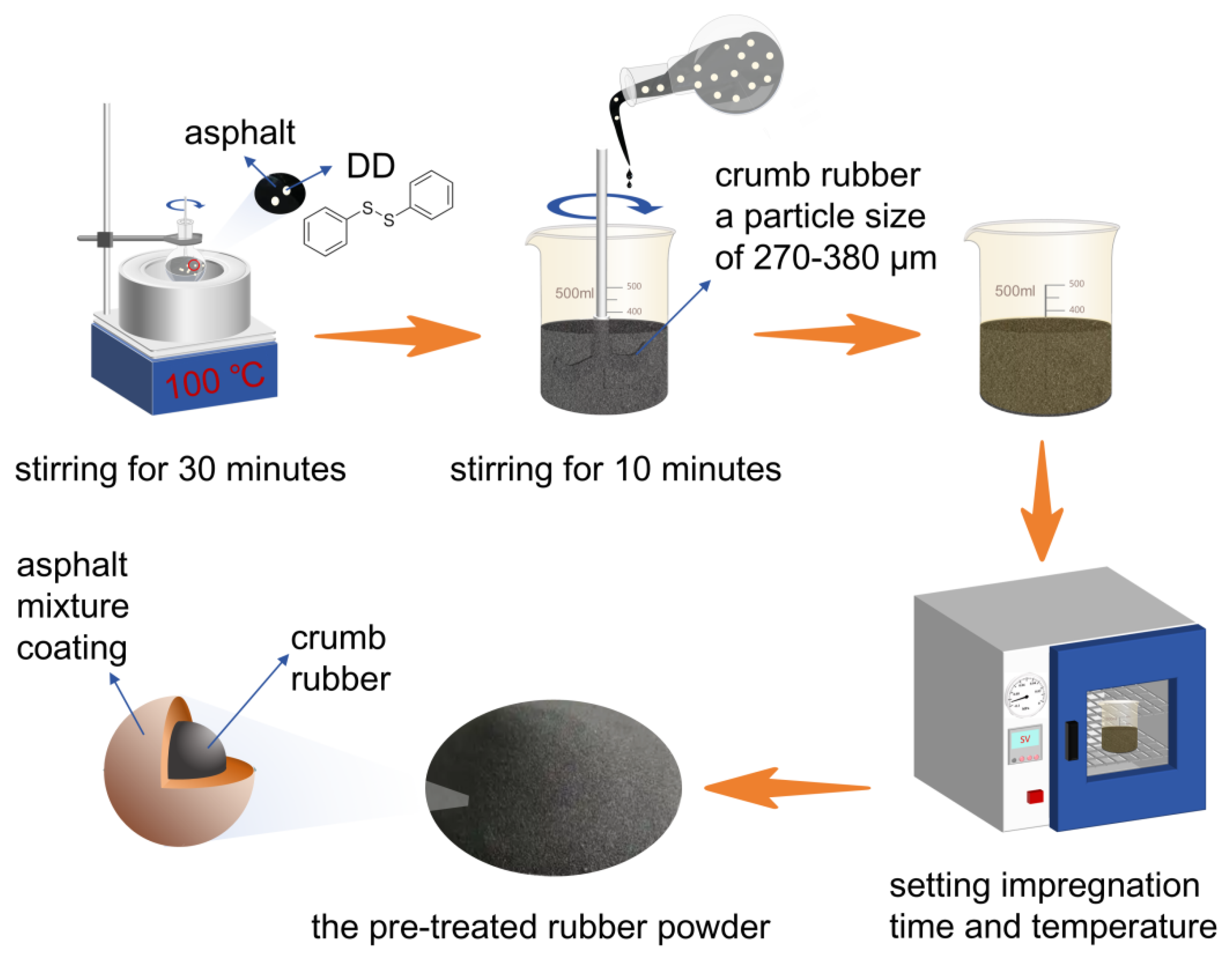
2.3. Study on the Impregnation and Diffusion of DD in Vulcanized Rubber
2.4. Study on the Viscosity Reduction Effect of DD in High-Content Rubber Asphalt
2.5. Characterization
3. Results and Discussion
3.1. Effects of Impregnation and Diffusion of DD in Vulcanized Rubber
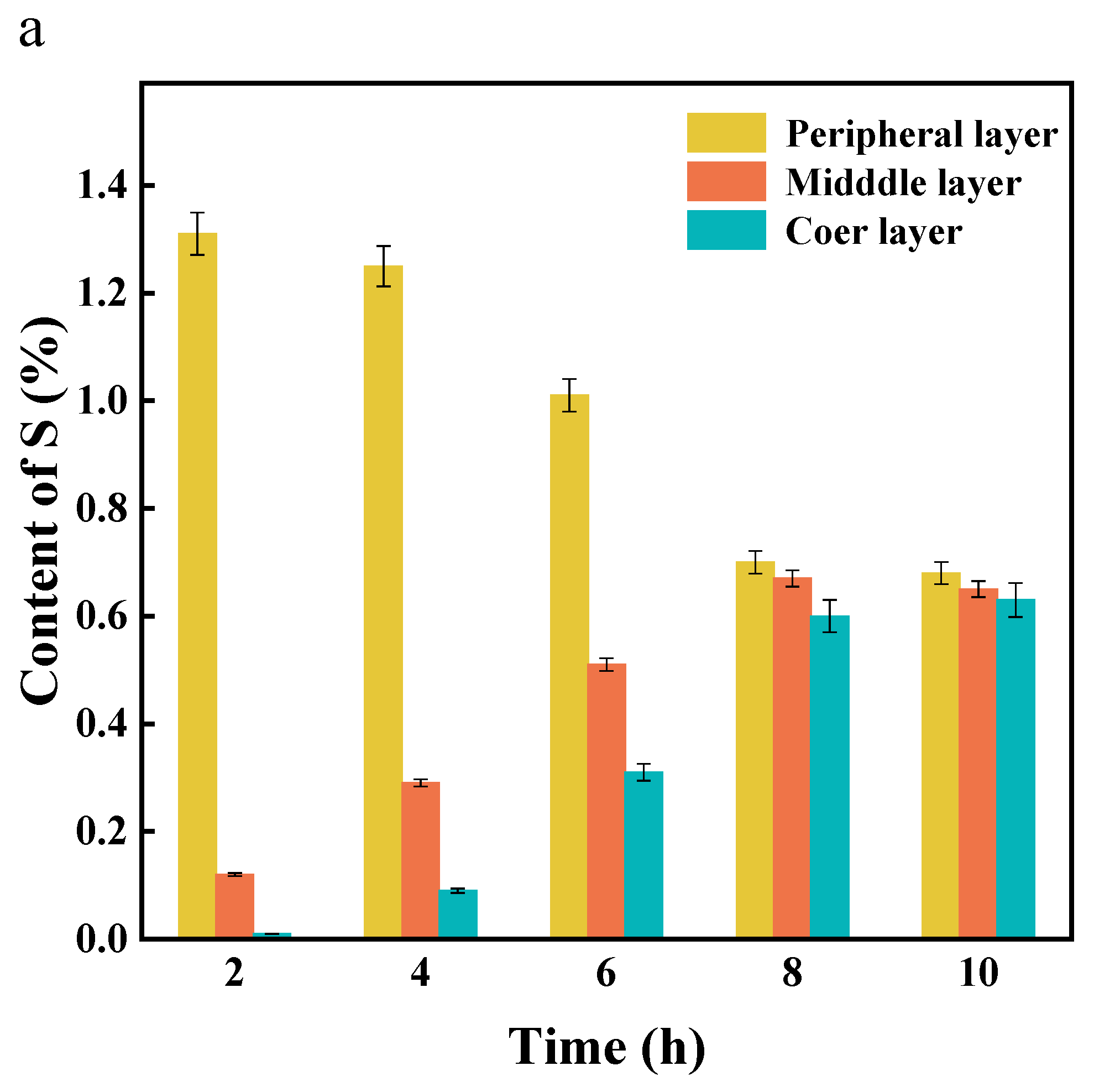
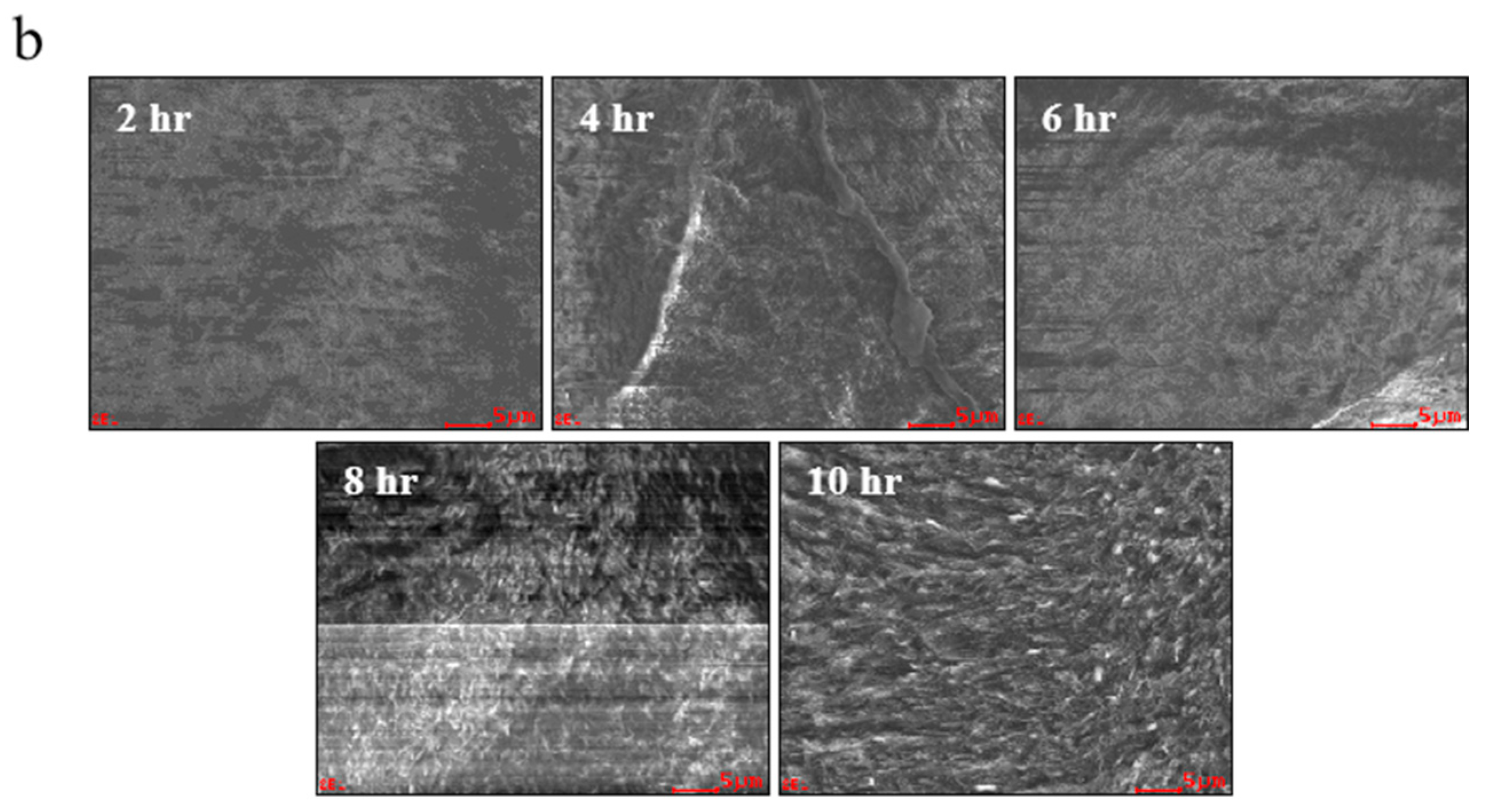
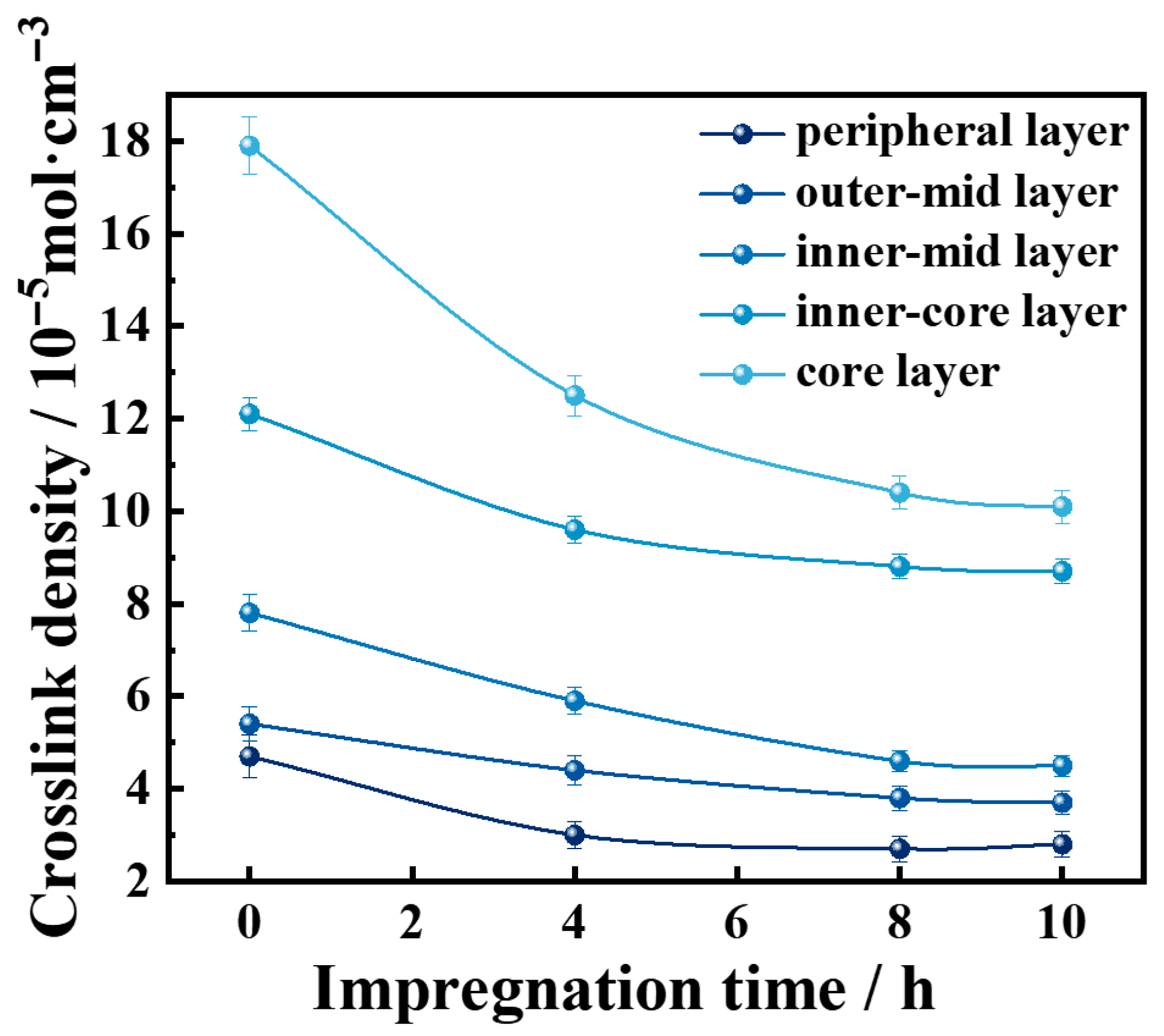
3.1.1. Effects of Impregnation Duration on DD Diffusion Efficiency
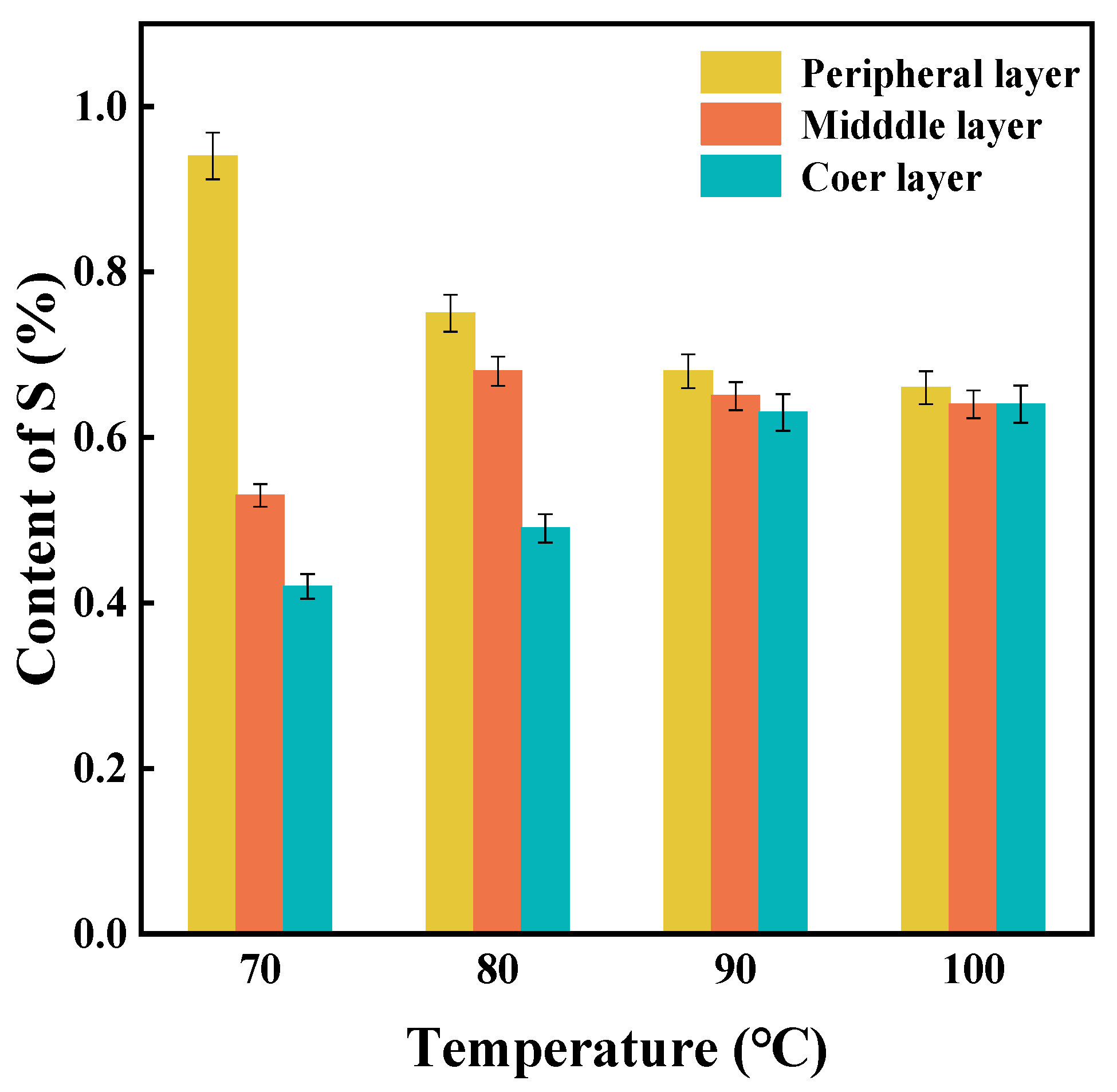
3.1.2. Effects of Impregnation Temperature on DD Diffusion Efficiency
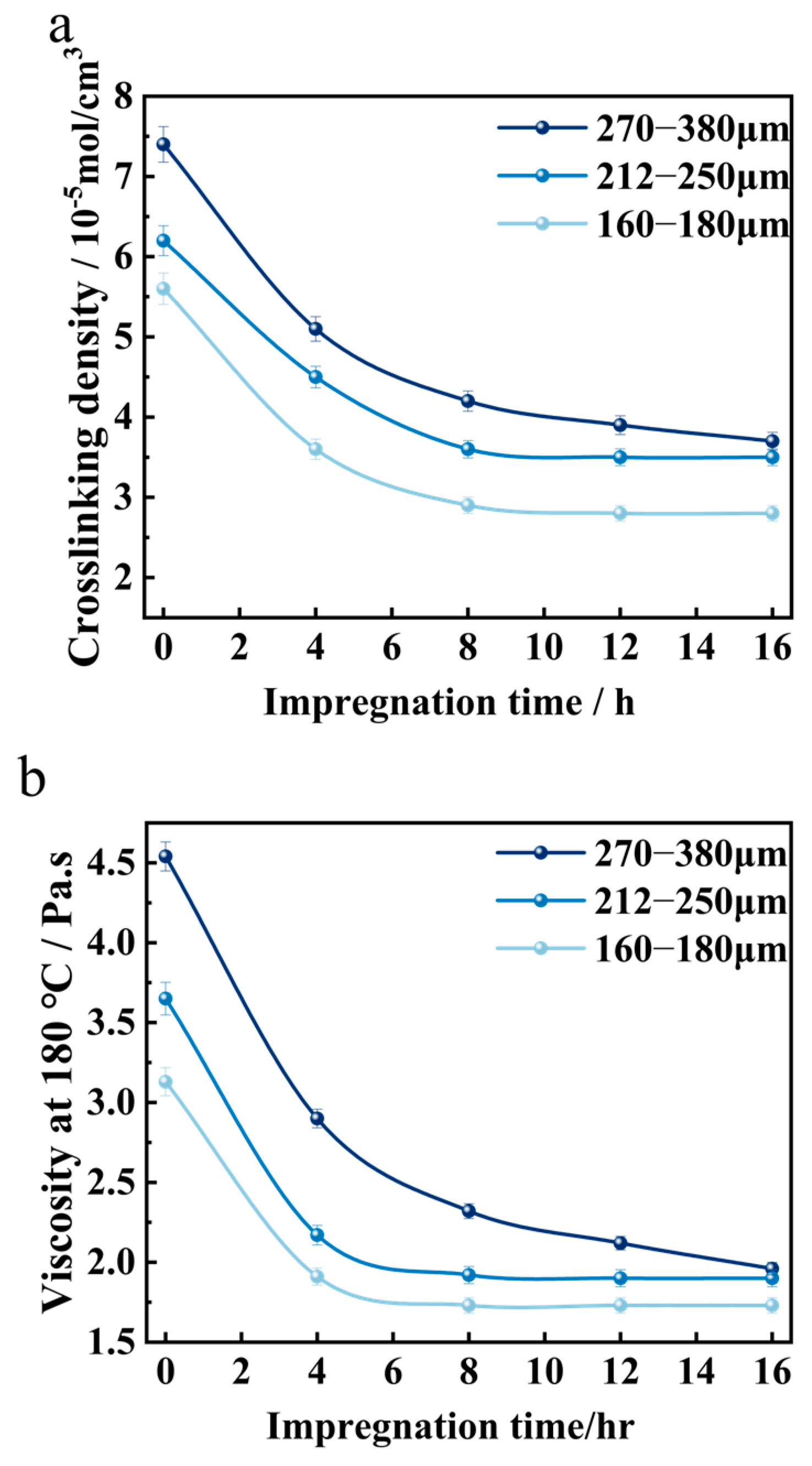
3.1.3. Effects of DD Impregnation and Diffusion on the Devulcanization of Vulcanized Rubber
3.2. Effects of DD Action on High-Rubber-Content Asphalt
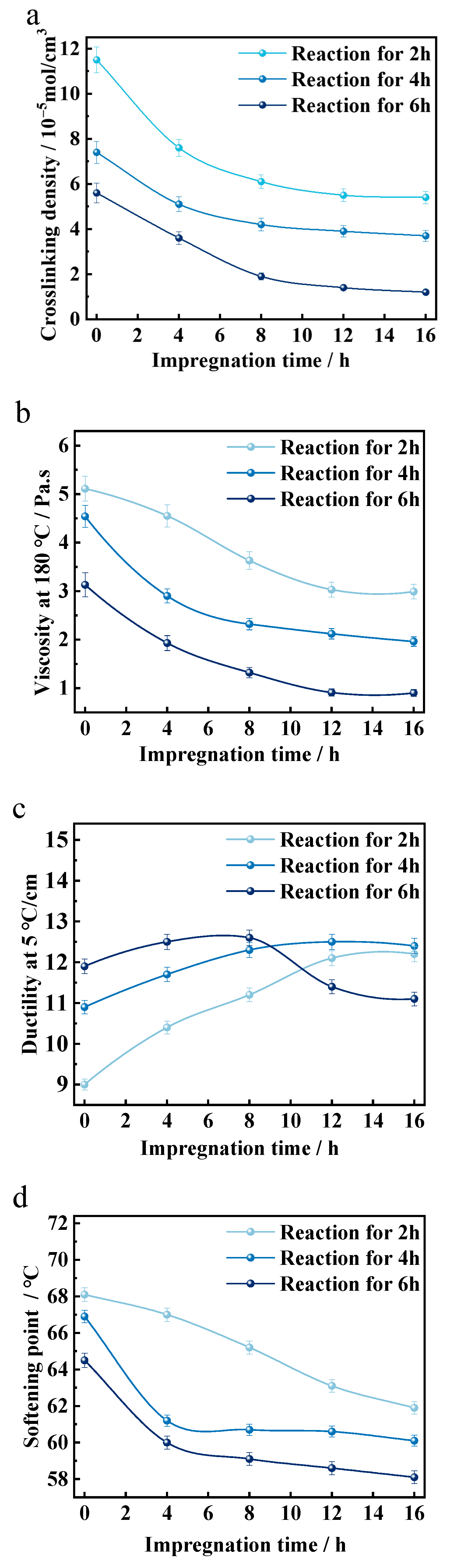
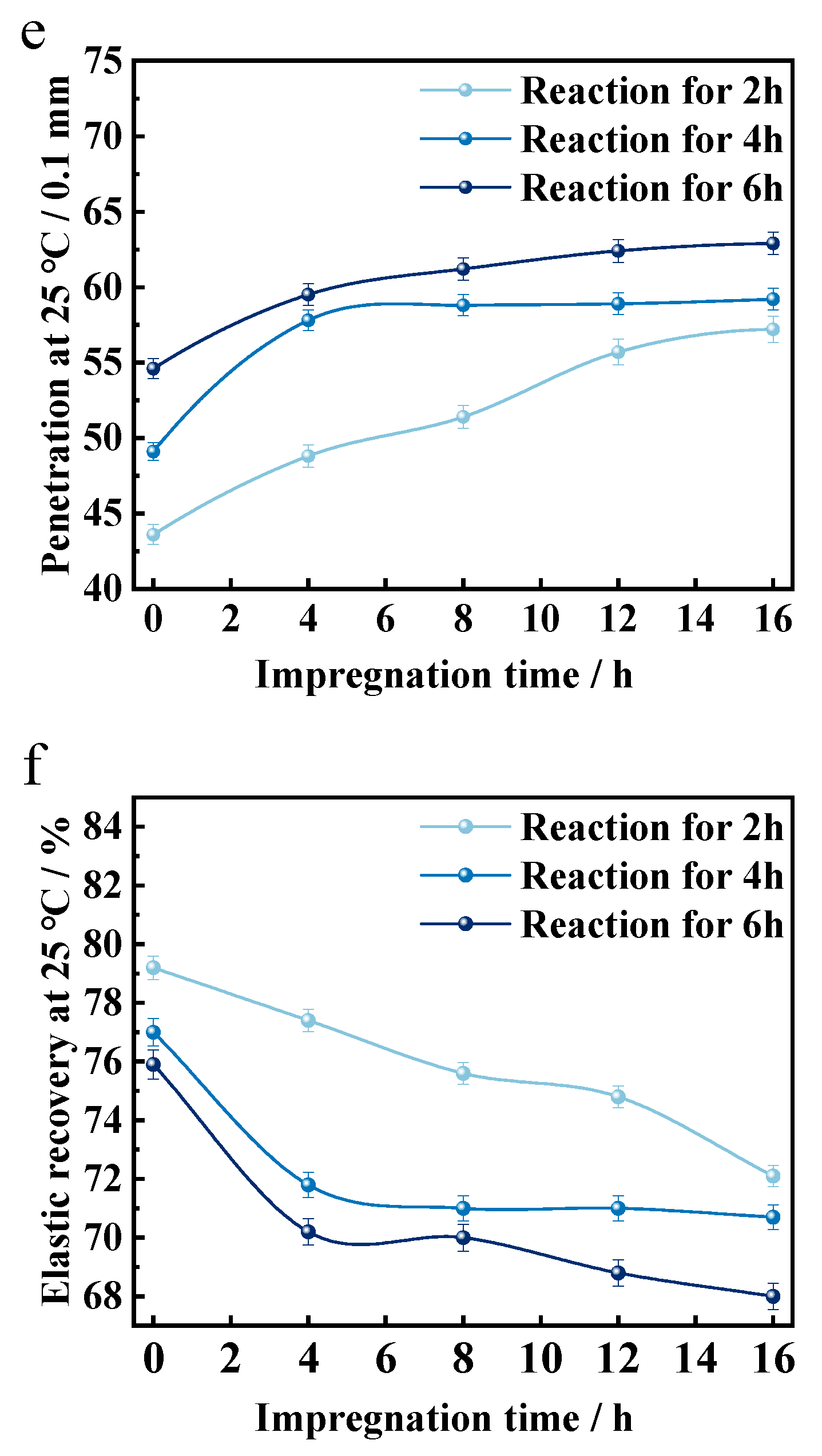
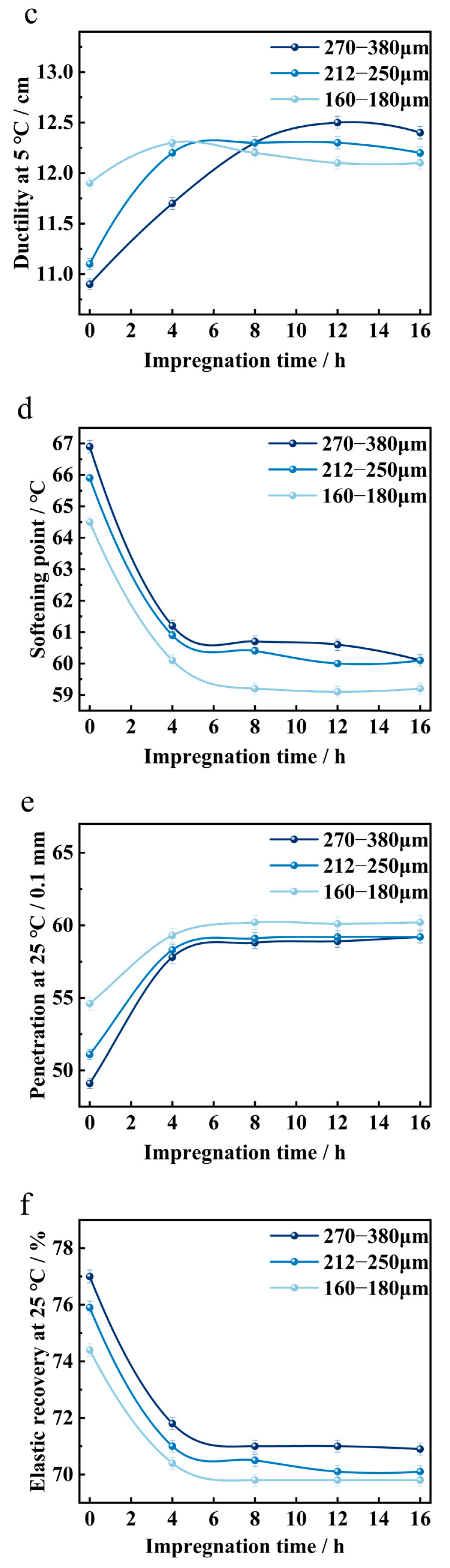
3.2.1. Effects of DD Pre-Impregnation Time on Rubberized Asphalt Properties
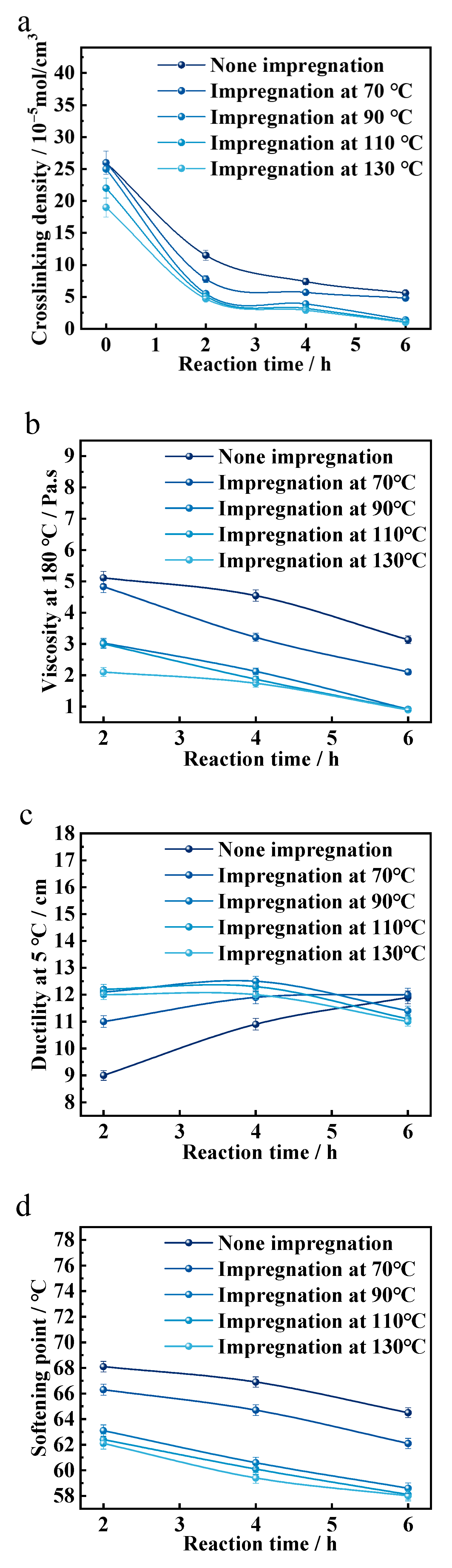
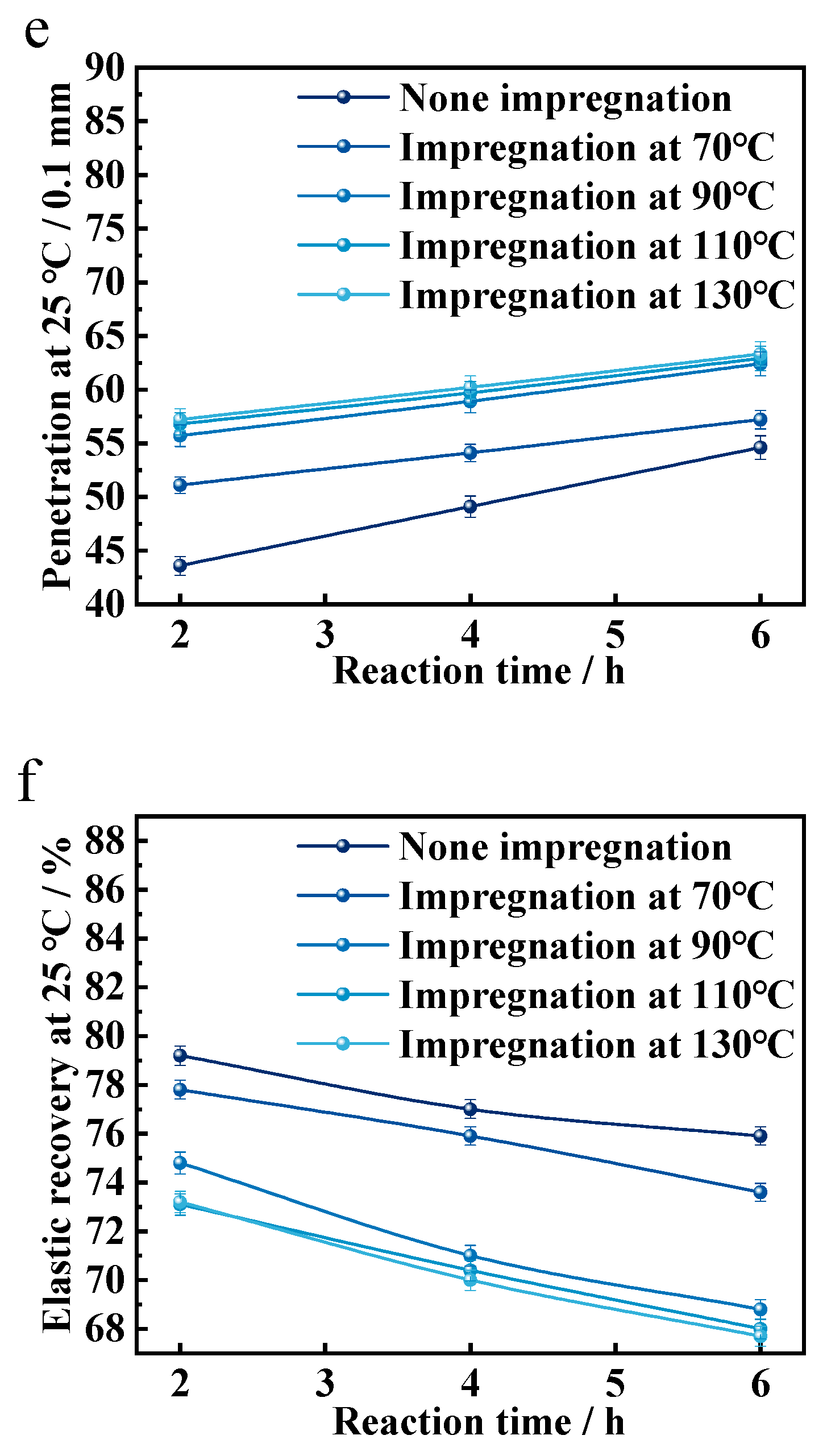
3.2.2. Effects of DD Pre-Impregnation Temperature on Rubberized Asphalt Properties
3.2.3. Effects of Rubber Powder Particle Size on Rubberized Asphalt Properties
4. Conclusions
- (1)
- The mechanism of action of diphenyl disulfide (DD) in high-rubber-content asphalt modified with rubber powder was elucidated through the simulation of its impregnation and diffusion process in vulcanized rubber. This includes three stages: dissolution and dispersion, impregnation and diffusion, and the formation of active free radicals that dominate the de-crosslinking reactions.
- (2)
- The dispersion of DD within rubber powder is most efficient under conditions of 12 h of impregnation, a temperature of 110 °C, and rubber powder particle sizes ranging from 160 to 180 µm. These conditions are crucial in achieving the rapid and uniform distribution of DD throughout the three-dimensional crosslinked network of the rubber powder, which significantly enhances the viscosity reduction of high-rubber-content asphalt.
- (3)
- The adoption of pre-impregnated rubber powder in the asphalt modification process not only shortens the processing cycle but also enables the asphalt to reach superior physical properties in a more expedited manner compared to using untreated powder. This research provides actionable insights and a set of parameters that are valuable in guiding future industrial applications, thereby improving the overall efficiency and effectiveness of the asphalt modification process.
Author Contributions
Funding
Data Availability Statement
Conflicts of Interest
References
- Xie, Z.; Shen, J. Effect of Weathering on Rubberized Porous European Mixture. J. Mater. Civ. Eng. 2016, 28, 04016043. [Google Scholar] [CrossRef]
- Xie, Z.; Shen, J. Fatigue Performance of Rubberized Stone Matrix Asphalt by a Simplified Viscoelastic Continuum Damage Model. J. Mater. Civ. Eng. 2016, 28, 04015162. [Google Scholar] [CrossRef]
- Yu, H.-Y.; Deng, G.-S.; Wang, D.-Y.; Zhang, Z.-Y.; Oeser, M. Warm Asphalt Rubber: A Sustainable Way for Waste Tire Rubber Recycling. J. Cent. South Univ. 2020, 27, 3477–3498. [Google Scholar] [CrossRef]
- Aljarmouzi, A.; Dong, R. Sustainable Asphalt Rejuvenation by Using Waste Tire Rubber Mixed with Waste Oils. Sustainability 2022, 14, 8246. [Google Scholar] [CrossRef]
- Zhao, Z.; Wu, S.; Xie, J.; Yang, C.; Yang, X.; Chen, S.; Liu, Q. Recycle of Waste Tire Rubber Powder in a Novel Asphalt Rubber Pellets for Asphalt Performance Enhancement. Constr. Build. Mater. 2023, 399, 132572. [Google Scholar] [CrossRef]
- Li, F.; Zhang, X.; Wang, L.; Zhai, R. The Preparation Process, Service Performances and Interaction Mechanisms of Crumb Rubber Modified Asphalt (Crma) by Wet Process: A Comprehensive Review. Constr. Build. Mater. 2022, 354, 129168. [Google Scholar] [CrossRef]
- Šernas, O.; Vaitkus, A.; Škulteckė, J. Performance of Crumb Rubber Bitumen and Asphalt Modified in the Wet Process Alone and in Combination with SBS Polymer. Road Mater. Pavement Des. 2023, 24, 107–123. [Google Scholar] [CrossRef]
- Li, D.; Leng, Z.; Zou, F.; Yu, H. Effects of Rubber Absorption on the Aging Resistance of Hot and Warm Asphalt Rubber Binders Prepared with Waste Tire Rubber. J. Clean. Prod. 2021, 303, 127082. [Google Scholar] [CrossRef]
- Poovaneshvaran, S.; Zheng, L.W.; Hasan, M.R.M.; Yang, X.; Diab, A. Workability, Compactibility and Engineering Properties of Rubber-Modified Asphalt Mixtures Prepared via Wet Process. Int. J. Pavement Res. Technol. 2021, 14, 560–569. [Google Scholar] [CrossRef]
- Yu, H.; Leng, Z.; Zhang, Z.; Li, D.; Zhang, J. Selective Absorption of Swelling Rubber in Hot and Warm Asphalt Binder Fractions. Constr. Build. Mater. 2020, 238, 117727. [Google Scholar] [CrossRef]
- Riekstins, A.; Baumanis, J.; Barbars, J. Laboratory Investigation of Crumb Rubber in Dense Graded Asphalt by Wet and Dry Processes. Constr. Build. Mater. 2021, 292, 123459. [Google Scholar] [CrossRef]
- Yang, X.; Ning, Z.; Feng, X.; He, X.; Tan, S. Methods for Improving Storage Stability of Rubber Bitumen: A Review. J. Clean. Prod. 2024, 449, 141595. [Google Scholar] [CrossRef]
- Jeong, K.-D.; Lee, S.-J.; Amirkhanian, S.N.; Kim, K.W. Interaction Effects of Crumb Rubber Modified Asphalt Binders. Constr. Build. Mater. 2010, 24, 824–831. [Google Scholar] [CrossRef]
- Zhang, H.; Zhang, Y.; Chen, J.; Liu, W.; Wang, W. Effect of Desulfurization Process Variables on the Properties of Crumb Rubber Modified Asphalt. Polymers 2022, 14, 1365. [Google Scholar] [CrossRef] [PubMed]
- Wang, H.; Liu, X.; Erkens, S.; Skarpas, A. Experimental Characterization of Storage Stability of Crumb Rubber Modified Bitumen with Warm-Mix Additives. Constr. Build. Mater. 2020, 249, 118840. [Google Scholar] [CrossRef]
- Wang, G.; Wang, X.; Lv, S.; Qin, L.; Peng, X. Laboratory Investigation of Rubberized Asphalt Using High-Content Rubber Powder. Materials 2020, 13, 4437. [Google Scholar] [CrossRef]
- Li, H.; Zhao, Q.; Feng, Z.; Zhang, F.; Zou, X. Recycling Waste Engine Oil as a Viscosity Reducer for Asphalt Rubber: An Insight from Molecular Dynamics Simulations and Laboratory Tests. Environ. Sci. Pollut. Res. 2023, 30, 44251–44265. [Google Scholar] [CrossRef]
- Xu, L.; Ni, H.; Zhang, Y.; Sun, D.; Zheng, Y.; Hu, M. Porous Asphalt Mixture Use Asphalt Rubber Binders: Preparation and Noise Reduction Evaluation. J. Clean. Prod. 2022, 376, 134119. [Google Scholar] [CrossRef]
- Wang, X.; Hong, L.; Wu, H.; Liu, H.; Jia, D. Grafting Waste Rubber Powder and Its Application in Asphalt. Constr. Build. Mater. 2021, 271, 121881. [Google Scholar] [CrossRef]
- Zhang, J.; Chen, M.; Leng, B.; Wu, S.; Chen, D.; Zhao, Z. Investigation on Storage Stability, H2S Emission and Rheological Properties of Modified Asphalt with Different Pretreated Waste Rubber Powder. J. Clean. Prod. 2024, 456, 142469. [Google Scholar] [CrossRef]
- Kong, P.; Xu, G.; Fu, L.; Feng, H.; Chen, X. Chemical Structure of Rubber Powder on the Compatibility of Rubber Powder Asphalt. Constr. Build. Mater. 2023, 392, 131769. [Google Scholar] [CrossRef]
- Zhao, Z.; Wu, S.; Xie, J.; Yang, C.; Wang, F.; Li, N.; Liu, Q.; Amirkhanian, S. Effect of Direct Addition of Asphalt Rubber Pellets on Mixing, Performance and Vocs of Asphalt Mixtures. Constr. Build. Mater. 2024, 411, 134494. [Google Scholar] [CrossRef]
- Fan, Y.; Sun, L.; Duan, D.; Zhang, B.; Wang, G.; Zhang, S.; Yu, W. Enhancing the Storage Stability and Rutting Resistance of Modified Asphalt through Surface Functionalization of Waste Tire Rubber Powder. Appl. Sci. 2024, 14, 4195. [Google Scholar] [CrossRef]
- Jiao, B.; Pan, B.; Che, T. Evaluating Impacts of Desulfurization and Depolymerization on Thermodynamics Properties of Crumb Rubber Modified Asphalt through Molecular Dynamics Simulation. Constr. Build. Mater. 2022, 323, 126360. [Google Scholar] [CrossRef]
- Vislavath, P.; Patro, T.U.; Kathi, S.; Rath, S.K.; Ratna, D. Molecular-Scale Free Volume and Dynamic Properties of a Model Ionomeric Elastomer: Effect of Curative Systems. J. Macromol. Sci. Part A 2025, 62, 85–94. [Google Scholar] [CrossRef]
- JTG E20-2011; Standard Test Methods of Bitumen and Bituminous Mixtures for Highway Engineering. China Communications Press: Beijing, China, 2011.
- Jiang, K.; Shi, J.; Ge, Y.; Zou, R.; Yao, P.; Li, X.; Zhang, L. Complete Devulcanization of Sulfur-Cured Butyl Rubber by Using Supercritical Carbon Dioxide. J. Appl. Polym. Sci. 2013, 127, 2397–2406. [Google Scholar] [CrossRef]
- Gschwind, L.; Jordan, C.S.; Vennemann, N. Devulcanization of Ethylene-Propylene-Diene Monomer Rubber Waste. Effect of Diphenyl Disulfide Derivate as Devulcanizing Agent on Vulcanization, and Devulcanization Process. J. Appl. Polym. Sci. 2022, 139, 52141. [Google Scholar] [CrossRef]
- Bongiardina, N.J.; Soars, S.M.; Podgorski, M.; Bowman, C.N. Radical-Disulfide Exchange in Thiol–Ene–Disulfidation Polymerizations. Polym. Chem. 2022, 13, 3991–4003. [Google Scholar] [CrossRef]
- Delor, F.; Barrois-Oudin, N.; Duteurtre, X.; Cardinet, C.; Lemaire, J.; Lacoste, J. Oxidation of Rubbers Analysed by Hatr/Ir Spectroscopy. Polym. Degrad. Stab. 1998, 62, 395–401. [Google Scholar] [CrossRef]
- Madeira, N.C.L.; Lacerda, V., Jr.; RomaãO, W. Characterization of Asphalt Aging by Analytical Techniques: A Review on Progress and Perspectives. Energy Fuels 2022, 36, 5531–5549. [Google Scholar] [CrossRef]
- Gao, Z.; Xu, Z.; Zhao, S.; Zhang, L. Heavy Petroleum Supercritical Fluid Deasphalting Process Simulation Based on the Saturate, Aromatic, Resin, and Asphaltene Composition. Energy Fuels 2022, 36, 8818–8827. [Google Scholar] [CrossRef]
- Mikhailenko, P.; Baaj, H. Comparison of Chemical and Microstructural Properties of Virgin and Reclaimed Asphalt Pavement Binders and Their Saturate, Aromatic, Resin, and Asphaltene Fractions. Energy Fuels 2019, 33, 2633–2640. [Google Scholar] [CrossRef]
- Asaro, L.; Gratton, M.; Poirot, N.; Seghar, S.; Hocine, N.A. Devulcanization of Natural Rubber Industry Waste in Supercritical Carbon Dioxide Combined with Diphenyl Disulfide. Waste Manag. 2020, 118, 647–654. [Google Scholar] [CrossRef]



| Raw Material | NR | SBR | ZnO | SA | CZ | NOBS | Sulfur |
|---|---|---|---|---|---|---|---|
| Composition (phr) | 60 | 40 | 6 | 2.5 | 0.5 | 0.5 | 2.5 |
Disclaimer/Publisher’s Note: The statements, opinions and data contained in all publications are solely those of the individual author(s) and contributor(s) and not of MDPI and/or the editor(s). MDPI and/or the editor(s) disclaim responsibility for any injury to people or property resulting from any ideas, methods, instructions or products referred to in the content. |
© 2025 by the authors. Licensee MDPI, Basel, Switzerland. This article is an open access article distributed under the terms and conditions of the Creative Commons Attribution (CC BY) license (https://creativecommons.org/licenses/by/4.0/).
Share and Cite
Zhao, J.; Gao, J.; Jiang, K.; Dong, D.; Zhang, X.; Huang, Y.; Wang, Y.; Wang, Z.; Guo, F. Effect of Viscosity Reduction by Rubber Organic Degradation Agents in High-Rubber-Content Asphalt. Materials 2025, 18, 5619. https://doi.org/10.3390/ma18245619
Zhao J, Gao J, Jiang K, Dong D, Zhang X, Huang Y, Wang Y, Wang Z, Guo F. Effect of Viscosity Reduction by Rubber Organic Degradation Agents in High-Rubber-Content Asphalt. Materials. 2025; 18(24):5619. https://doi.org/10.3390/ma18245619
Chicago/Turabian StyleZhao, Jingzhuo, Junchang Gao, Kuan Jiang, Dawei Dong, Xingjun Zhang, Yong Huang, Yiqing Wang, Zhao Wang, and Fucheng Guo. 2025. "Effect of Viscosity Reduction by Rubber Organic Degradation Agents in High-Rubber-Content Asphalt" Materials 18, no. 24: 5619. https://doi.org/10.3390/ma18245619
APA StyleZhao, J., Gao, J., Jiang, K., Dong, D., Zhang, X., Huang, Y., Wang, Y., Wang, Z., & Guo, F. (2025). Effect of Viscosity Reduction by Rubber Organic Degradation Agents in High-Rubber-Content Asphalt. Materials, 18(24), 5619. https://doi.org/10.3390/ma18245619