Article

Development of PEO in Low-Temperature Ternary Nitrate Molten Salt on Ti6Al4V

by
Michael Garashchenko
,
Yuliy Yuferov
and
Konstantin Borodianskiy
*
Department of Chemical Engineering, Ariel University, Ariel 40700, Israel
*
Author to whom correspondence should be addressed.
Materials 2025, 18(15), 3603; https://doi.org/10.3390/ma18153603
Submission received: 29 June 2025 / Revised: 29 July 2025 / Accepted: 29 July 2025 / Published: 31 July 2025
(This article belongs to the Special Issue Microstructure Engineering of Metals and Alloys, 3rd Edition)

Abstract

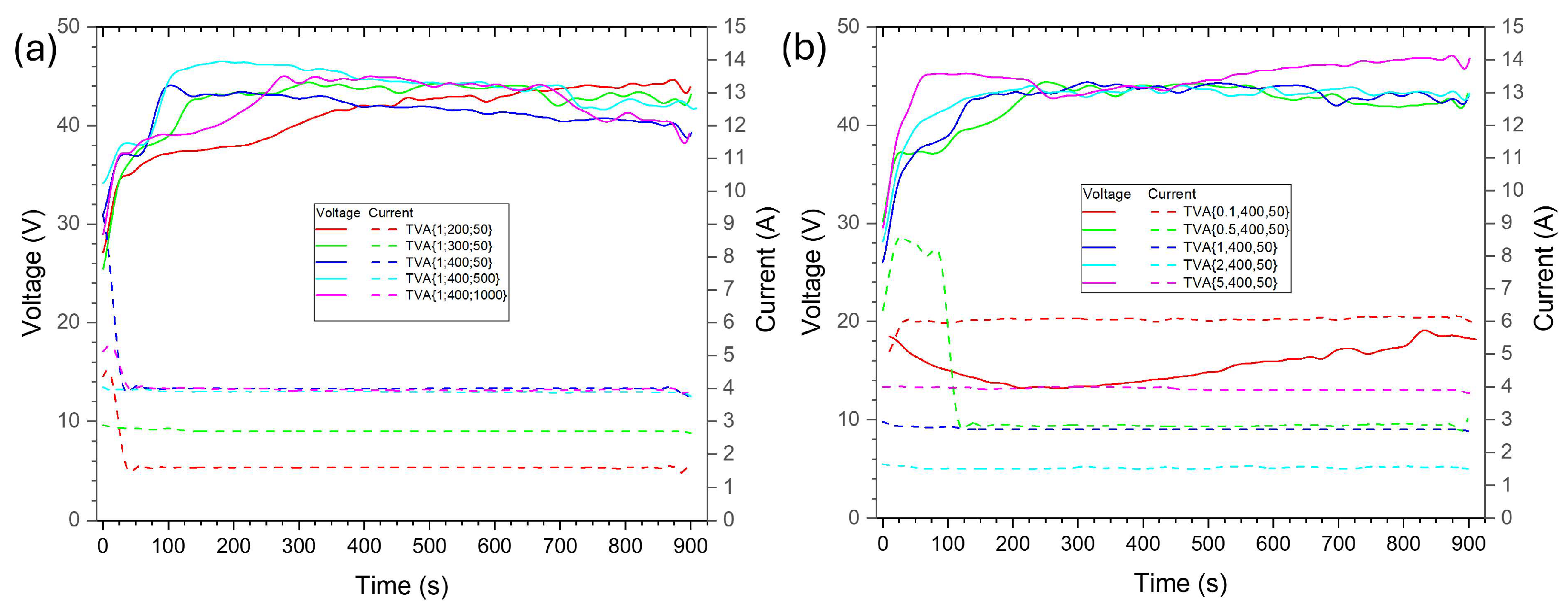
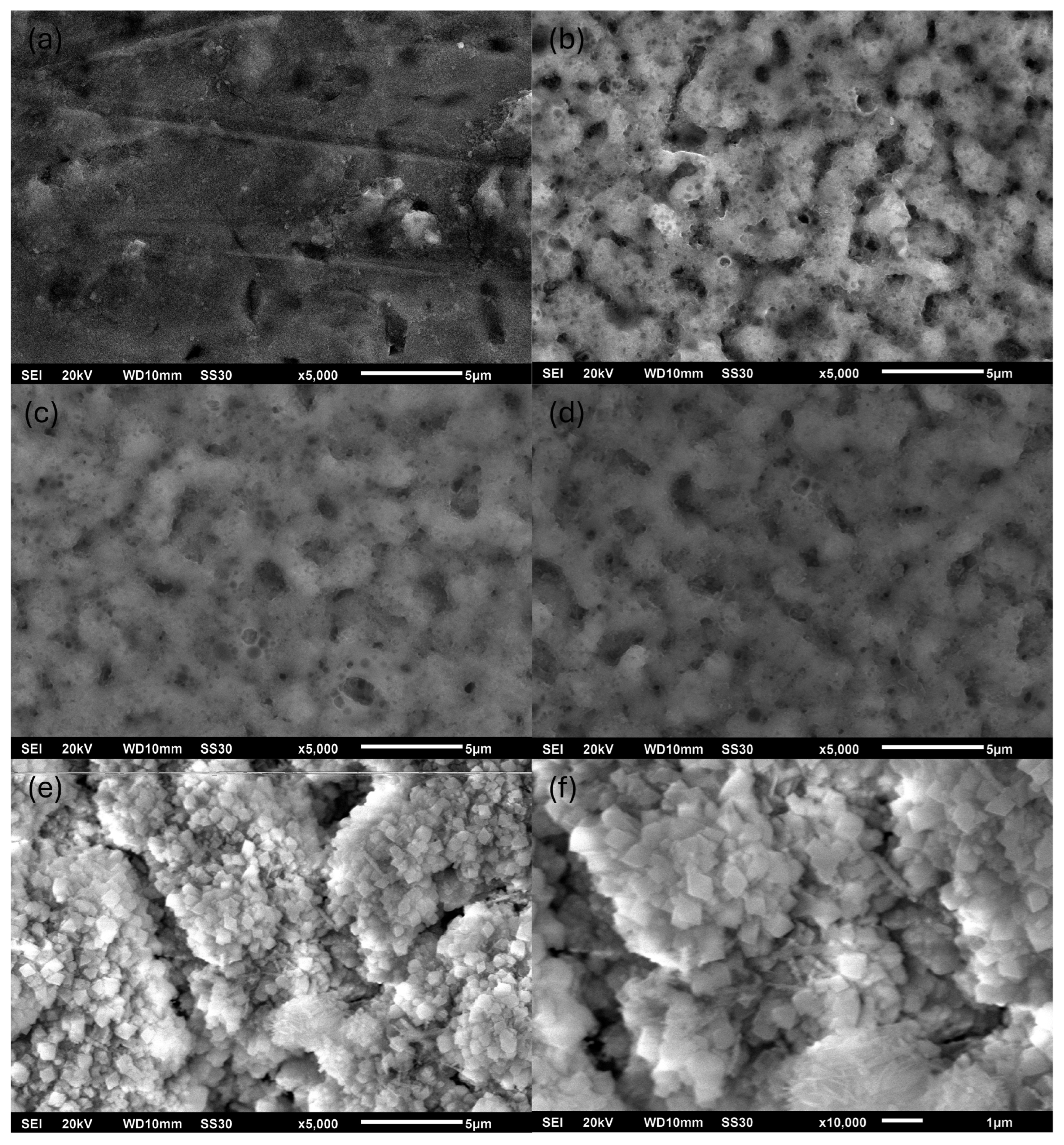
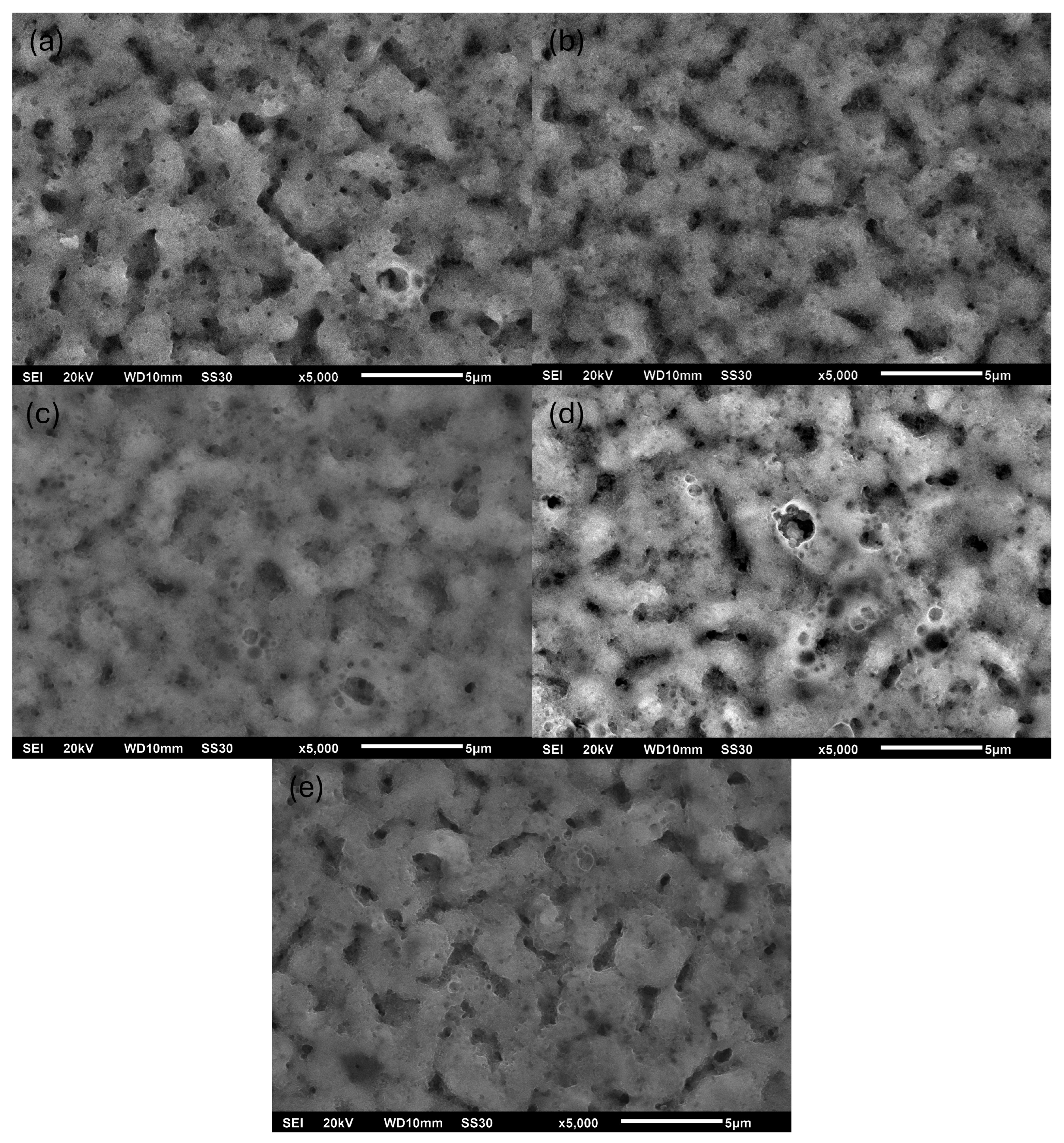
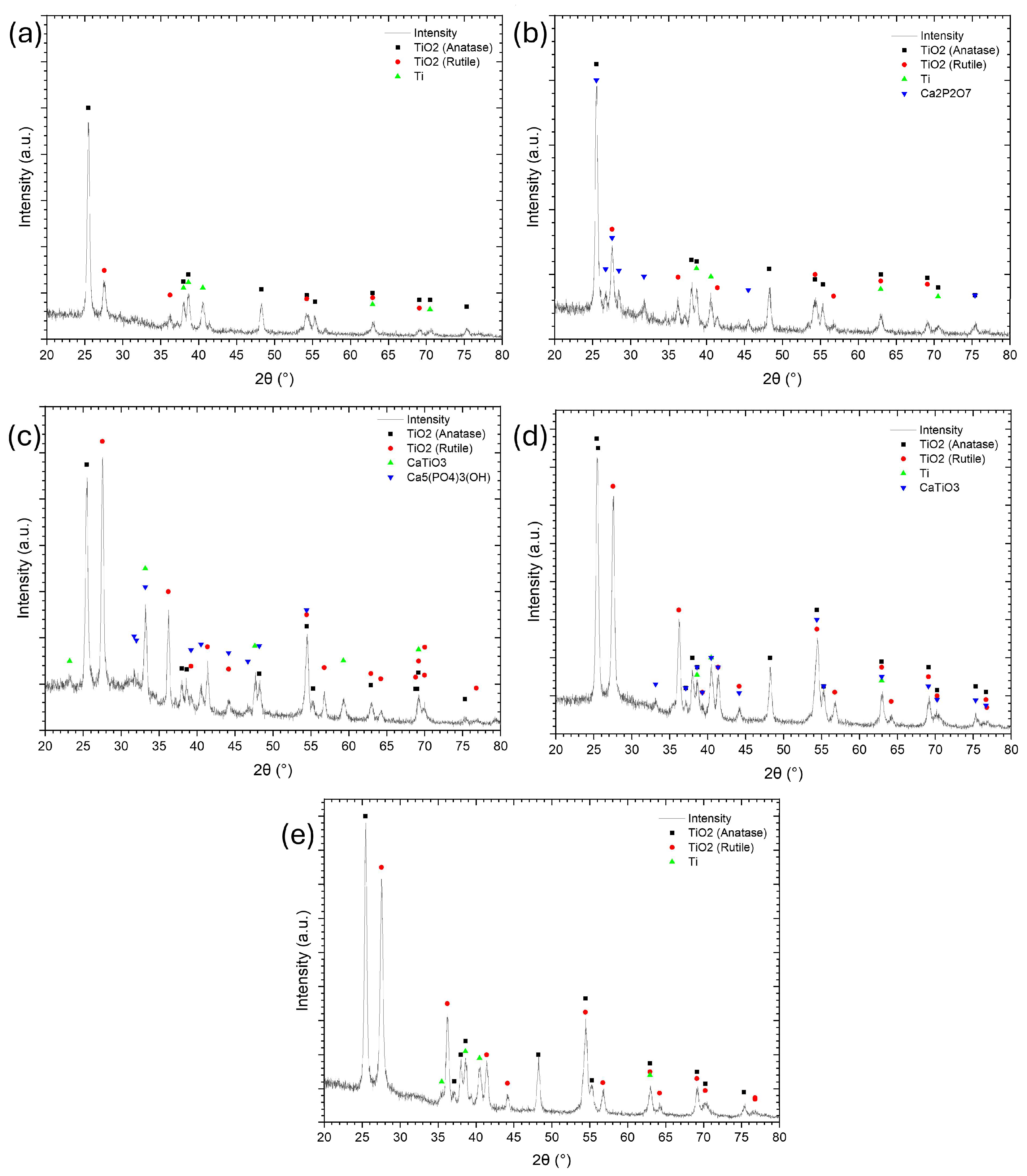
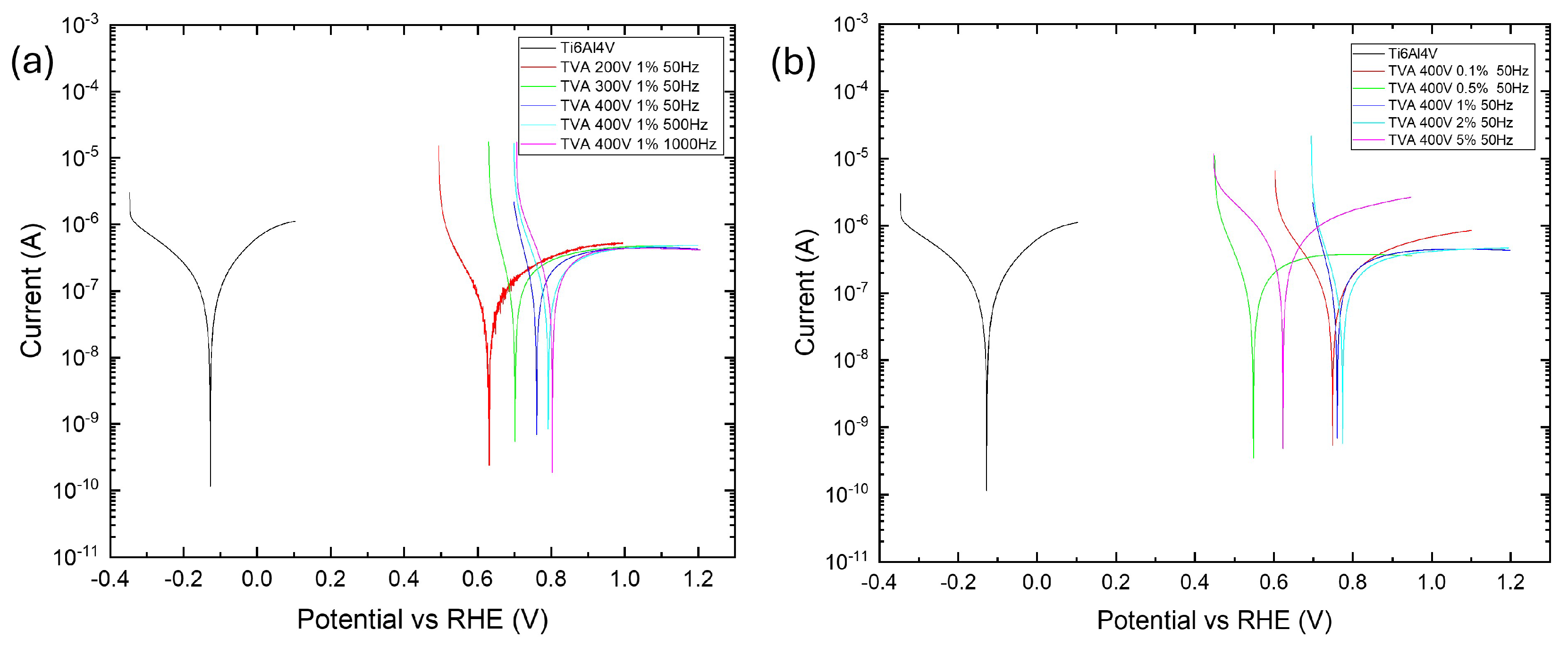
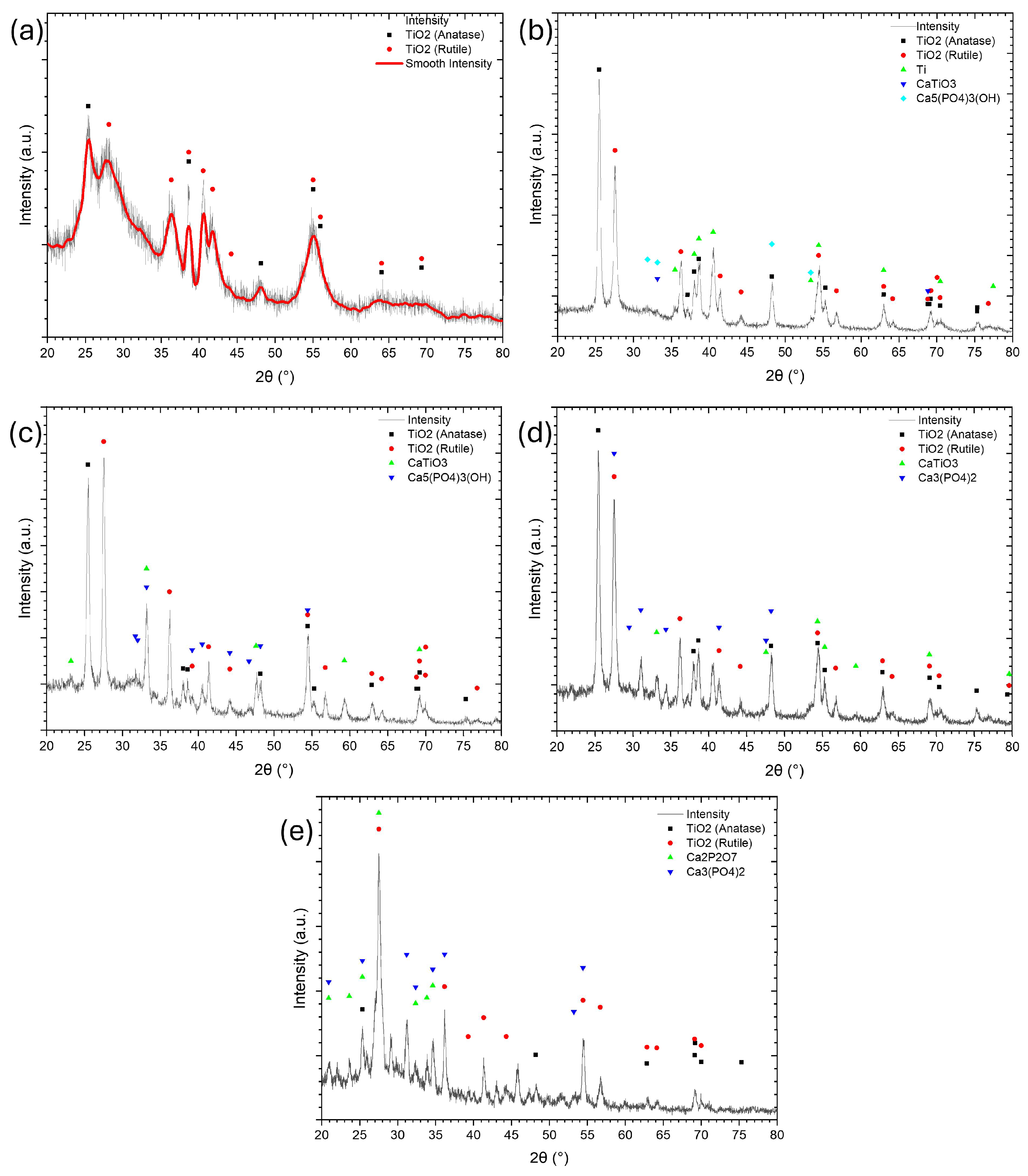
Titanium alloys are frequently subjected to surface treatments to enhance their biocompatibility and corrosion resistance in biological environments. Plasma electrolytic oxidation (PEO) is an environmentally friendly electrochemical technique capable of forming oxide layers characterized by high corrosion resistance, biocompatibility, and strong adhesion to the substrate. In this study, the PEO process was performed using a low-melting-point ternary eutectic electrolyte composed of Ca(NO3)2–NaNO3–KNO3 (41–17–42 wt.%) with the addition of ammonium dihydrogen phosphate (ADP). The use of this electrolyte system enables a reduction in the operating temperature from 280 to 160 °C. The effects of applied voltage from 200 to 400V, current frequency from 50 to 1000 Hz, and ADP concentrations of 0.1, 0.5, 1, 2, and 5 wt.% on the growth of titanium oxide composite coatings on a Ti-6Al-4V substrate were investigated. The incorporation of Ca and P was confirmed by phase and chemical composition analysis, while scanning electron microscopy (SEM) revealed a porous surface morphology typical of PEO coatings. Corrosion resistance in Hank’s solution, evaluated via Tafel plot fitting of potentiodynamic polarization curves, demonstrated a substantial improvement in electrochemical performance of the PEO-treated samples. The corrosion current decreased from 552 to 219 nA/cm2, and the corrosion potential shifted from −102 to 793 mV vs. the Reference Hydrogen Electrode (RHE) compared to the uncoated alloy. These findings indicate optimal PEO processing parameters for producing composite oxide coatings on Ti-6Al-4V alloy surfaces with enhanced corrosion resistance and potential bioactivity, which are attributed to the incorporation of Ca and P into the coating structure.
Keywords: Ti alloy; plasma electrolytic oxidation; titanium oxide; ternary molten salt; calcium phosphates; corrosion resistance; biocompatibility Ti alloy; plasma electrolytic oxidation; titanium oxide; ternary molten salt; calcium phosphates; corrosion resistance; biocompatibility