Sustainable Thermoelectric Composites: A Study of Bi2Te3-Filled Biobased Resin


 ,
,  ,
,  and
and Highlights
- Sustainable bio-based thermoelectric composites have been developed for 3D printing.
- High filler loading hinders UV-curing; DLP printing remains challenging.
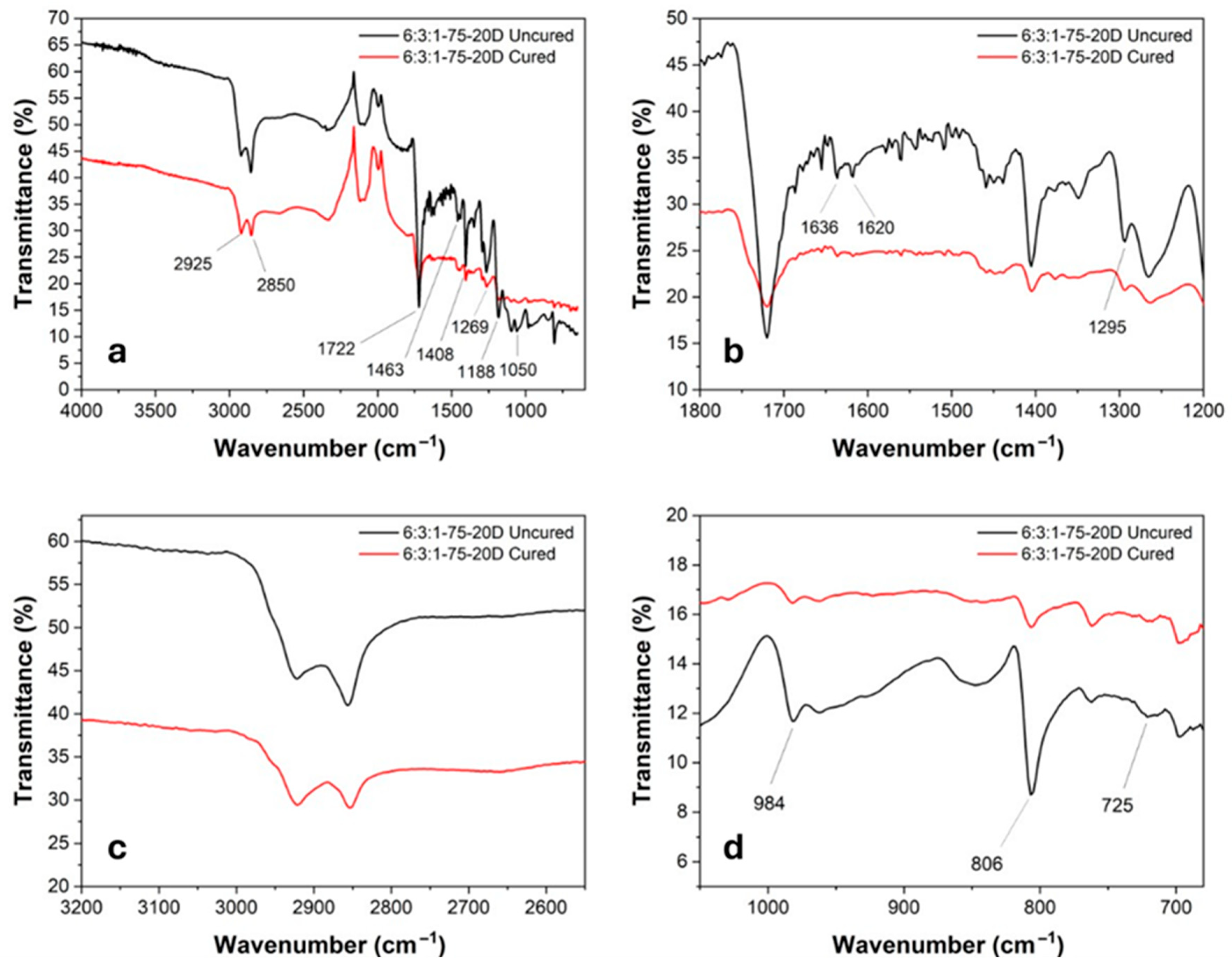
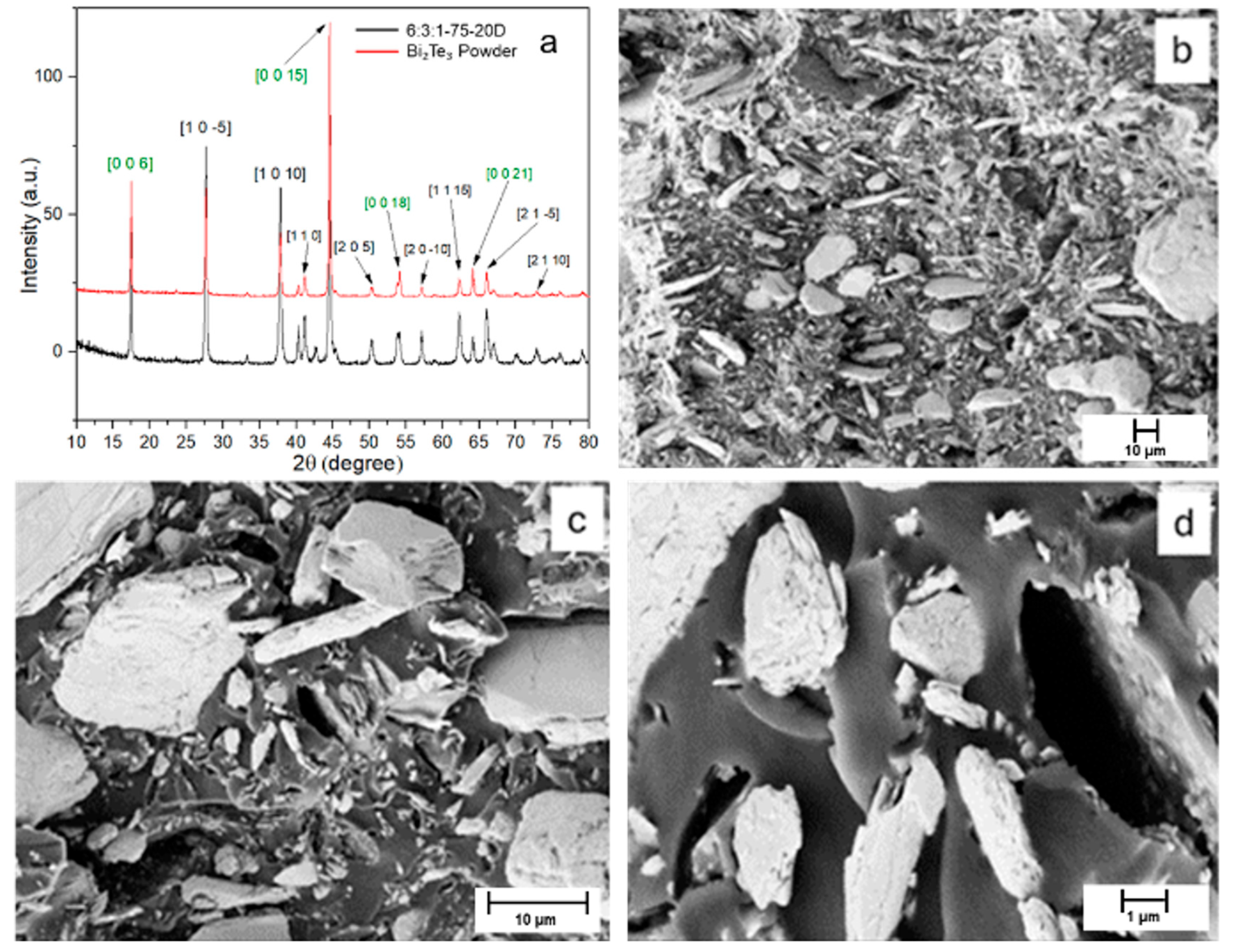
- Thermal curing with DCP enables effective Bi2Te3 dispersion and crosslinking.
- A Seebeck coefficient of up to 51 µV/K shows promise for energy harvesting.
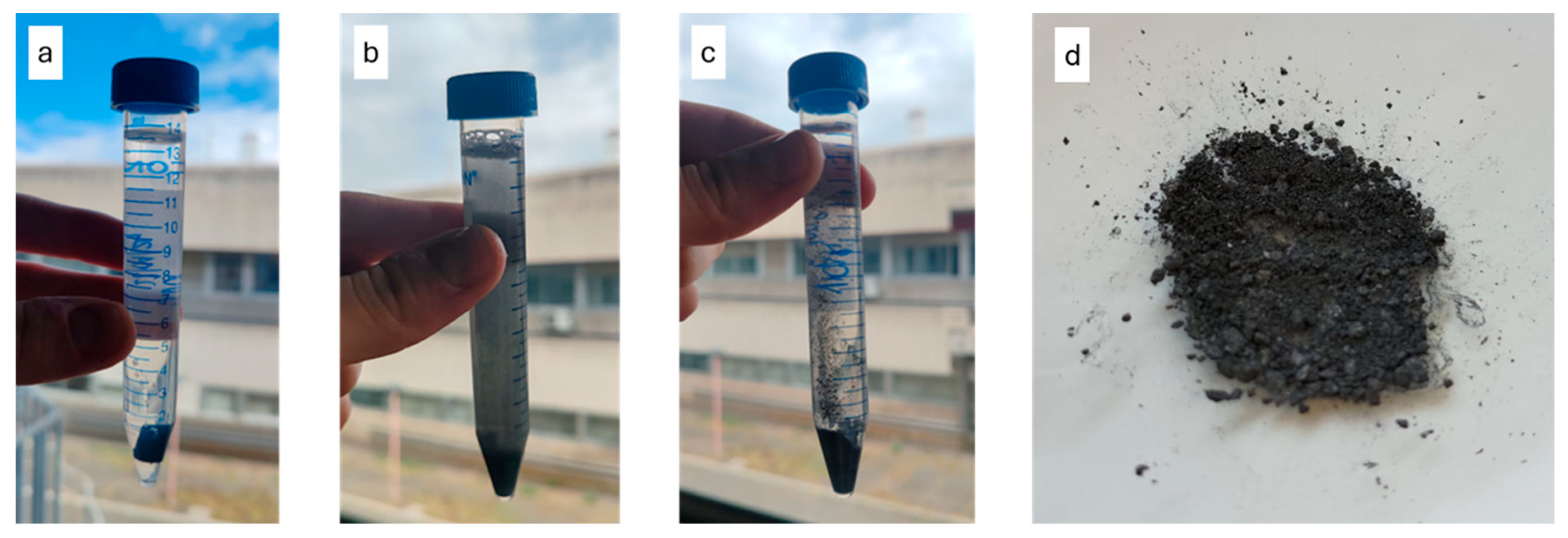
- The matrix degrades in basic media, allowing for the recovery and reuse of Bi2Te3 filler.
Abstract
Share and Cite
Ferretti, L.; Russo, P.; Passaro, J.; Nanni, F.; D’Ascoli, S.; Fabbrocino, F.; Bragaglia, M. Sustainable Thermoelectric Composites: A Study of Bi2Te3-Filled Biobased Resin. Materials 2025, 18, 3453. https://doi.org/10.3390/ma18153453
Ferretti L, Russo P, Passaro J, Nanni F, D’Ascoli S, Fabbrocino F, Bragaglia M. Sustainable Thermoelectric Composites: A Study of Bi2Te3-Filled Biobased Resin. Materials. 2025; 18(15):3453. https://doi.org/10.3390/ma18153453
Chicago/Turabian StyleFerretti, Luca, Pietro Russo, Jessica Passaro, Francesca Nanni, Saverio D’Ascoli, Francesco Fabbrocino, and Mario Bragaglia. 2025. "Sustainable Thermoelectric Composites: A Study of Bi2Te3-Filled Biobased Resin" Materials 18, no. 15: 3453. https://doi.org/10.3390/ma18153453
APA StyleFerretti, L., Russo, P., Passaro, J., Nanni, F., D’Ascoli, S., Fabbrocino, F., & Bragaglia, M. (2025). Sustainable Thermoelectric Composites: A Study of Bi2Te3-Filled Biobased Resin. Materials, 18(15), 3453. https://doi.org/10.3390/ma18153453