Article

In Vitro Investigations in a Biomimetic Approach to Restore One-Piece Zirconia Implants
Biomaterials and Technology, Department of Reconstructive Dentistry, University Center for Dental Medicine Basel UZB, University of Basel, 4058 Basel, Switzerland
*
Author to whom correspondence should be addressed.
Reto Nueesch and Sabrina Märtin are equivalent first authors.
Materials 2021, 14(16), 4361; https://doi.org/10.3390/ma14164361
Submission received: 30 June 2021 / Revised: 27 July 2021 / Accepted: 31 July 2021 / Published: 4 August 2021
(This article belongs to the Special Issue Zirconia Implants: Current Status and Future Prospects)

Abstract

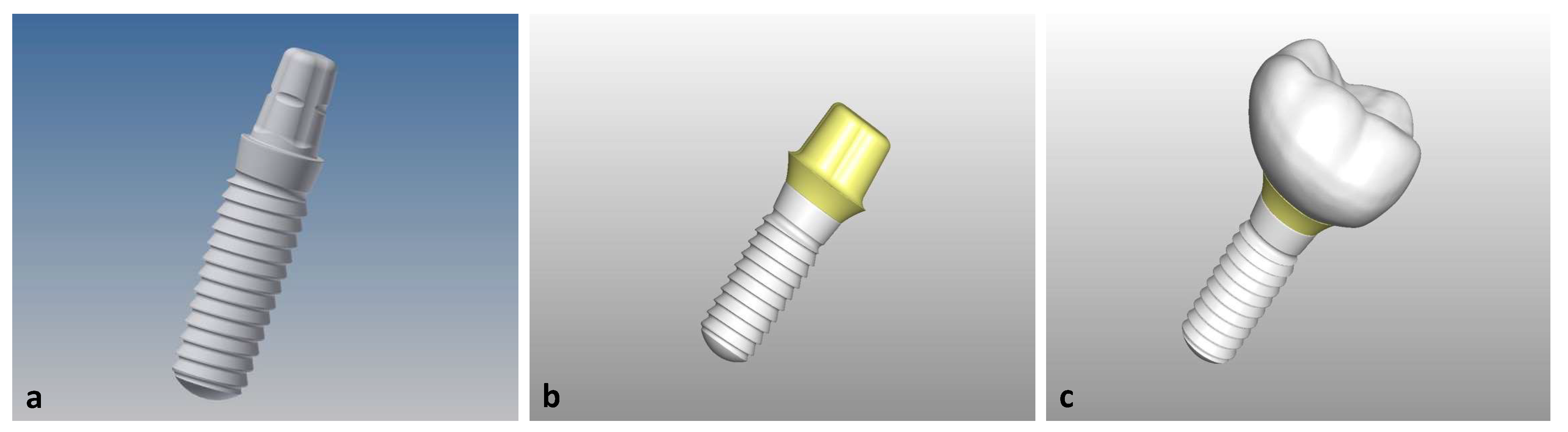
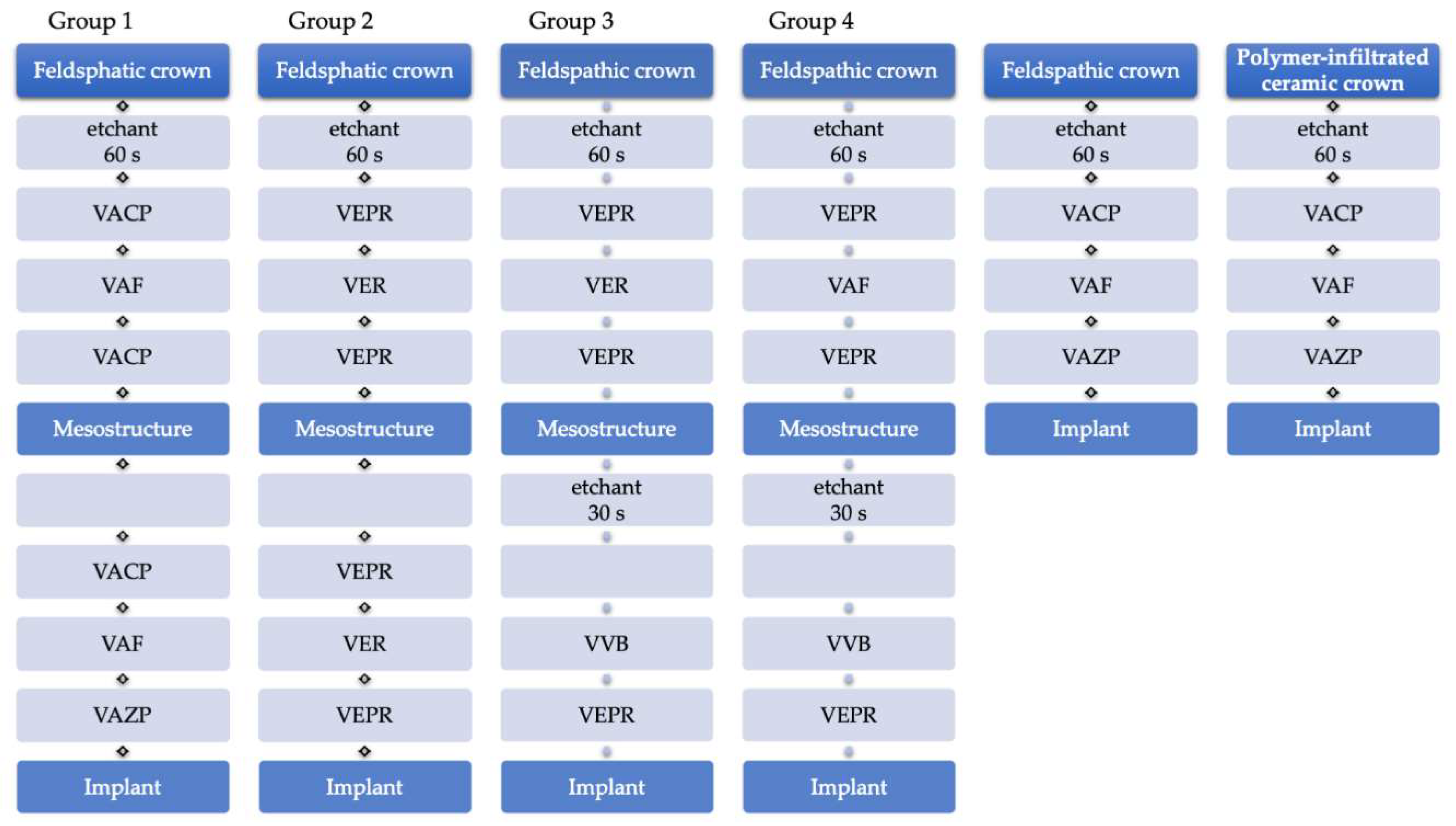
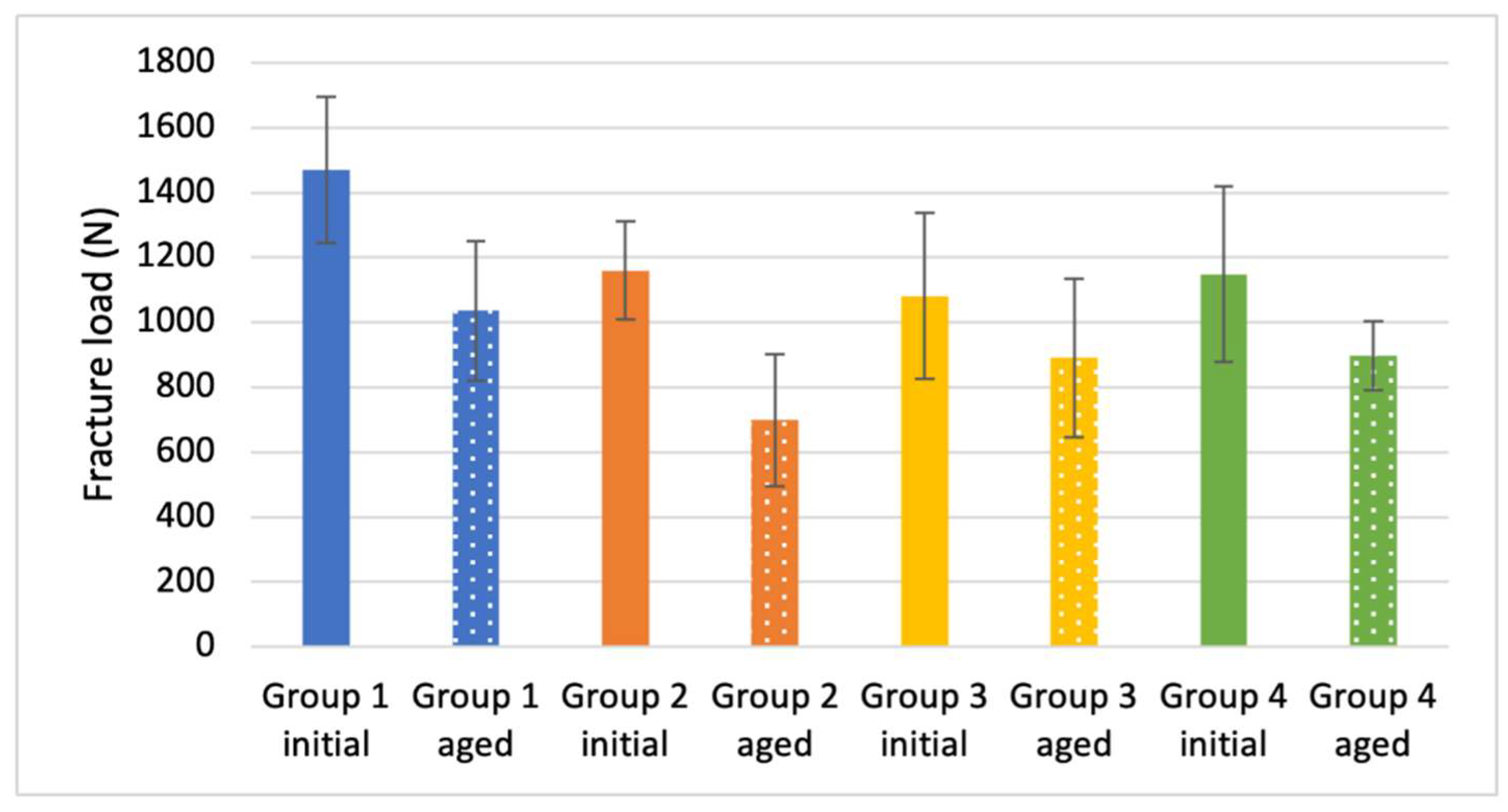
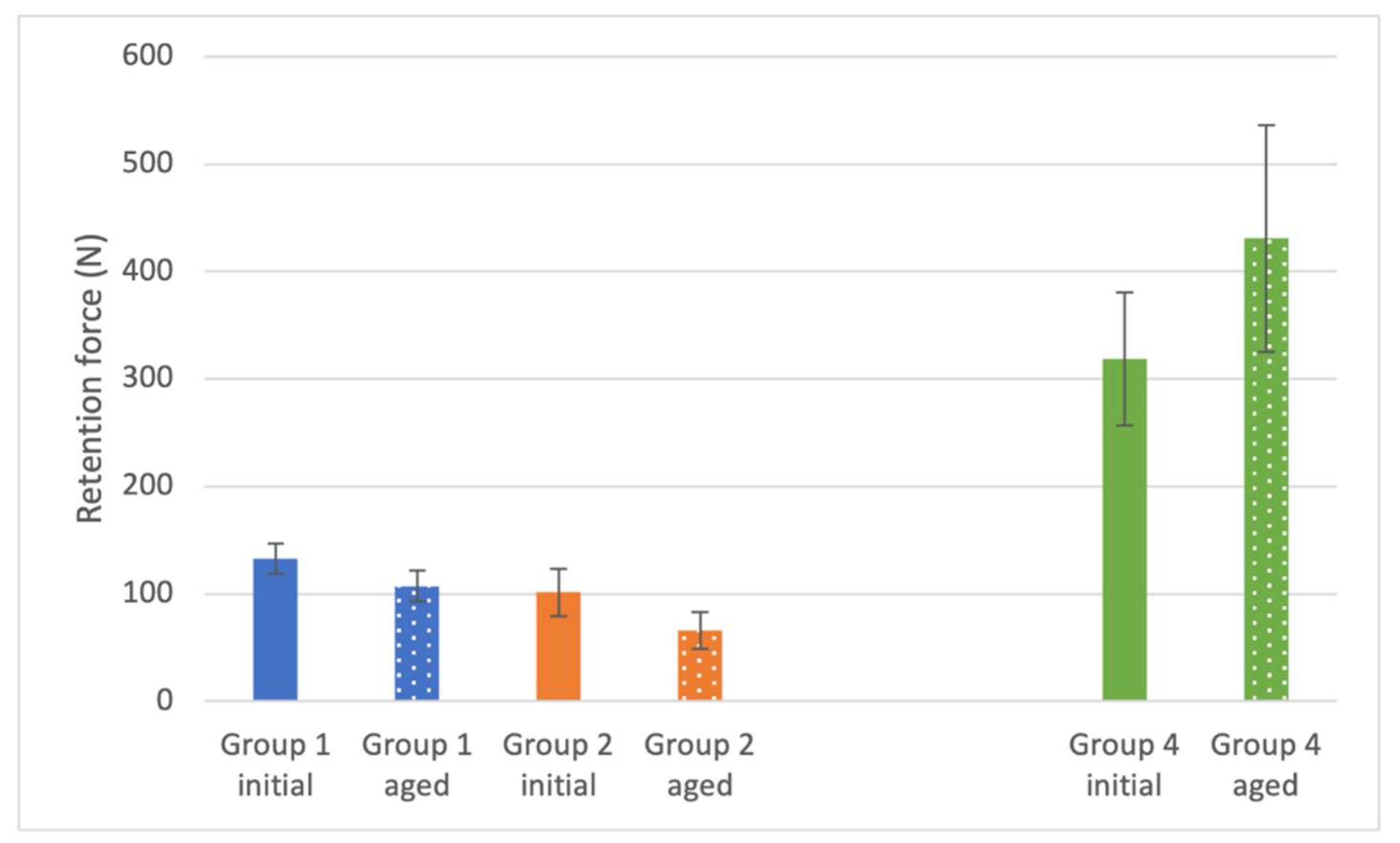
The objective of this study was to evaluate the fracture load and retention force of different bonding systems while restoring one-piece zirconia implants with a novel cementation approach using a mesostructure. Polymer-infiltrated ceramic mesostructures (n = 112) were therefore designed as caps on the implant abutment, and a molar feldspathic ceramic crown was constructed on top of it as a suprastructure. For cementation, different bonding systems were used. Fracture load and retention force were measured immediately after storage in water at 37 °C for 24 h (n = 8) as well as after artificial aging in a chewing simulator and subsequent thermal cycling (n = 8). Combined restorations showed higher fracture load compared to monolithic restorations of polymer-infiltrated ceramic (n = 8) or feldspathic ceramic (n = 8) identical in shape. However, the fracture load of the combined restorations was significantly affected by aging, independent of the primers and cements used. Restorations cemented with primers containing methyl methacrylate and 10-methacryloyloxydecyl dihydrogen phosphate exhibited the highest retention force values. Aging did not affect the retention force significantly. Similar fracture load values can be expected from combination restorations when compared with monolithic crowns.
Keywords: mesostructure; suprastructure; polymer-infiltrated ceramic; feldspathic ceramic; cementation; ceramic implant mesostructure; suprastructure; polymer-infiltrated ceramic; feldspathic ceramic; cementation; ceramic implant