Effect of Thermomechanical Treatment on Structure and Functional Fatigue Characteristics of Biodegradable Fe-30Mn-5Si (wt %) Shape Memory Alloy
 , , ,
, , ,  and
and
Abstract
1. Introduction
2. Materials and Methods
3. Results and Discussion
3.1. Microstructure of Thermally and Thermomechanically Treated Fe-30Mn-5Si Alloy
3.2. Tensile Fatigue Test in Air
3.3. Effect of Mechanical Cycling on the Phase Composition of the Fe-30Mn-5Si Alloy
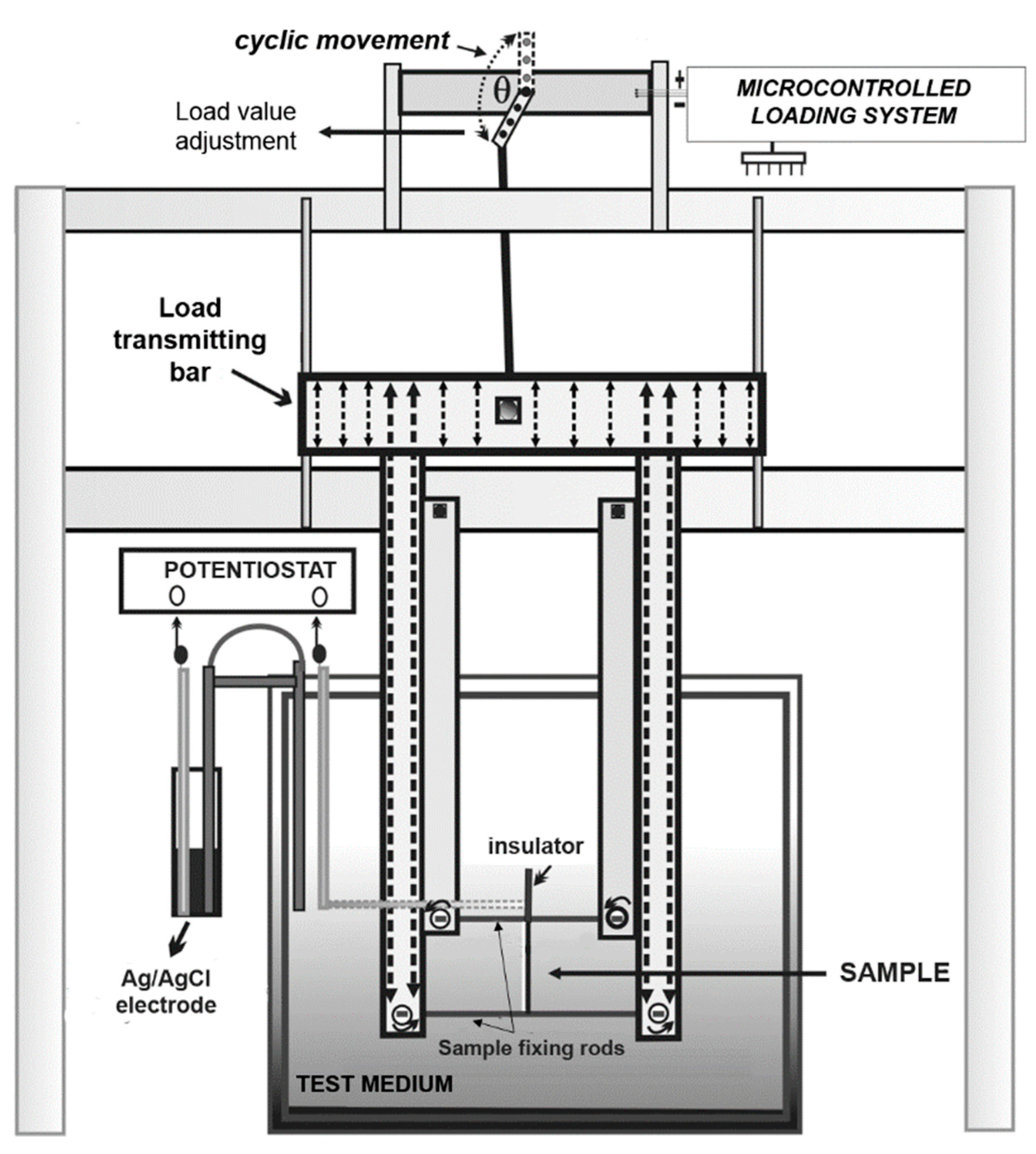
3.4. Corrosion Fatigue Bending Tests in Hanks’ Solution
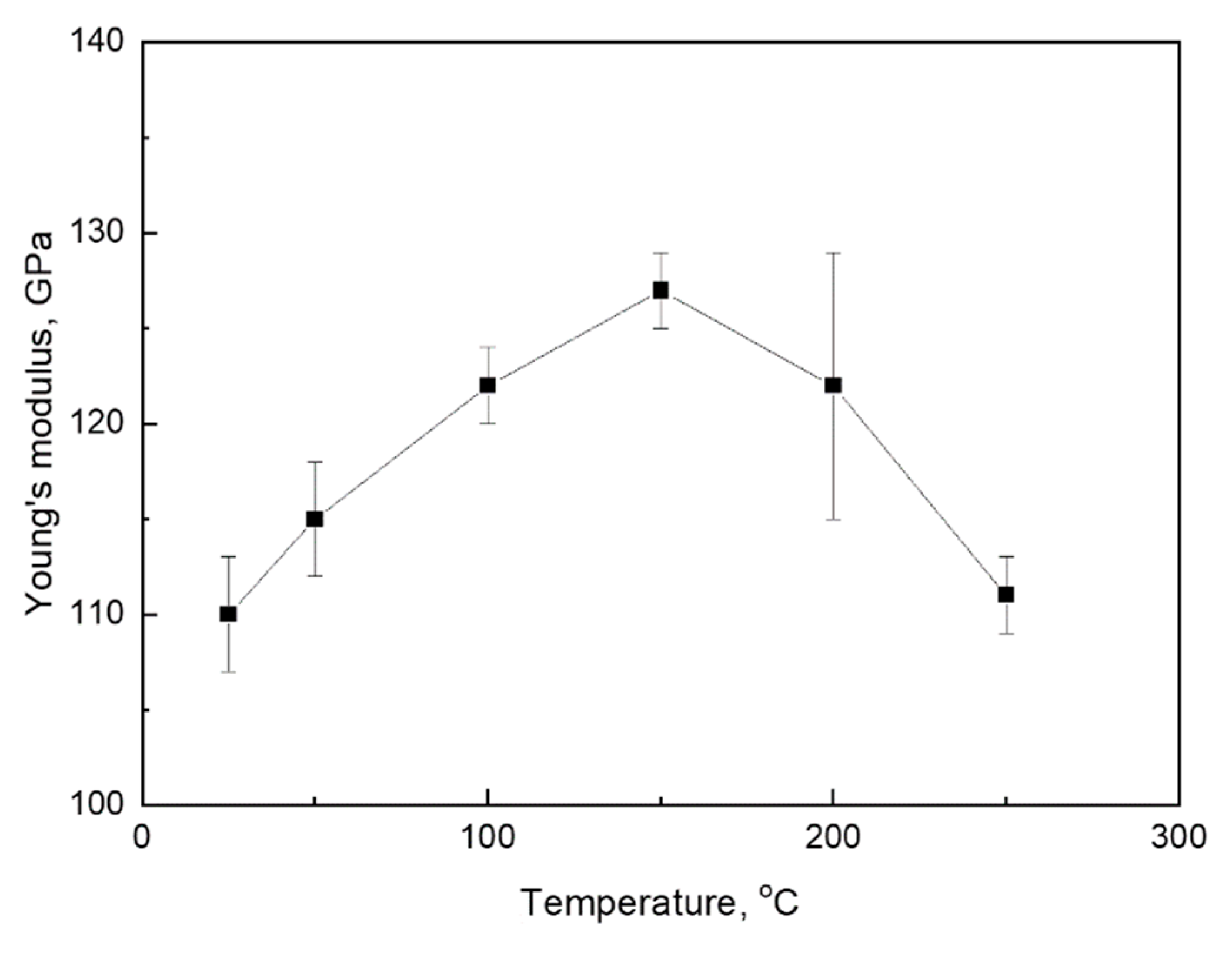
3.5. Temperature Dependence of Young’s Modulus
4. Conclusions
- (1)
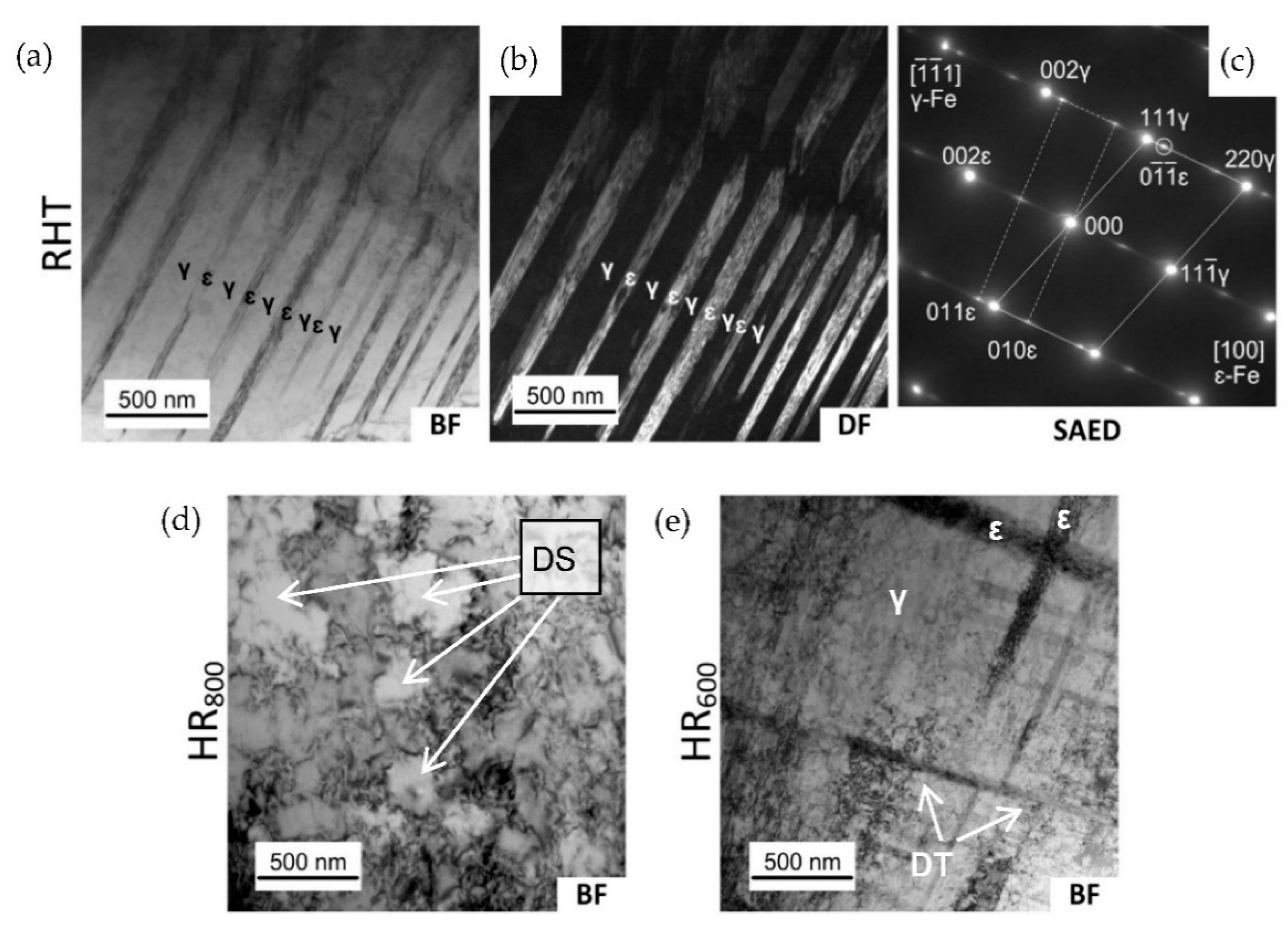
- A comparative TEM study of the Fe-30Mn-5Si (wt %) alloy performed after a reference heat treatment (RHT) and thermomechanical treatments (TMT) comprising hot rolling at 600 and 800 °C (HR600 and HR800, respectively) followed by water cooling, reveals a two-phase mixture of FCC γ-austenite and HCP ε-martensite. The ε-phase amount after RHT was significantly higher than after TMTs due to incompleteness of γ→ε transformation on cooling after TMTs. The γ-austenite matrix and ε-martensite crystals did not contain high dislocation density. A well-developed dislocation substructure formed in γ- and ε-phases due to dynamic recrystallization of austenite during hot deformation at 800 °C. The most highly dislocated substructure formed after HR600; it consisted of dislocation tangles and cells, while a typical polygonized dislocation substructure consisting of perfect subgrains did not form.
- (2)
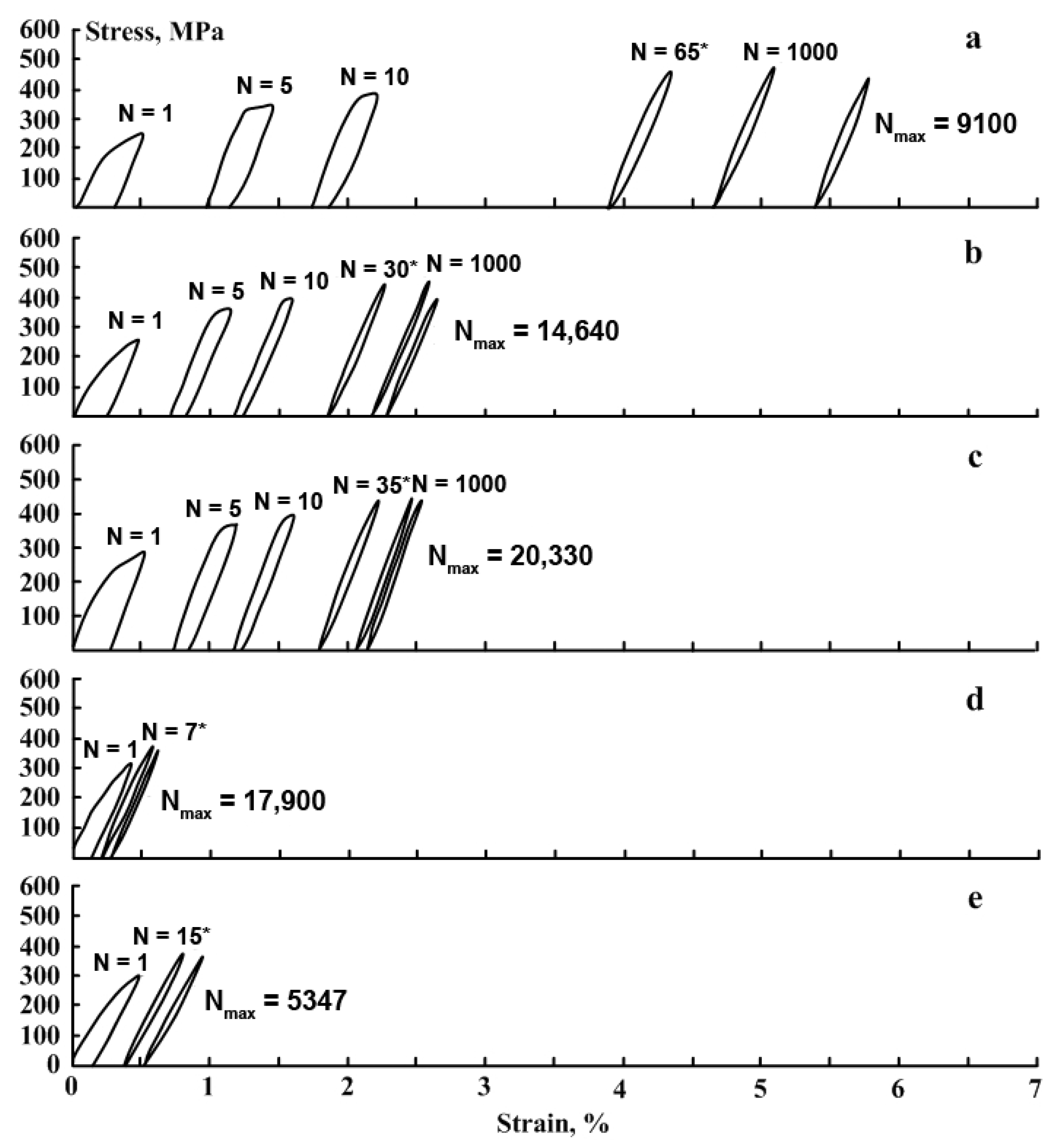
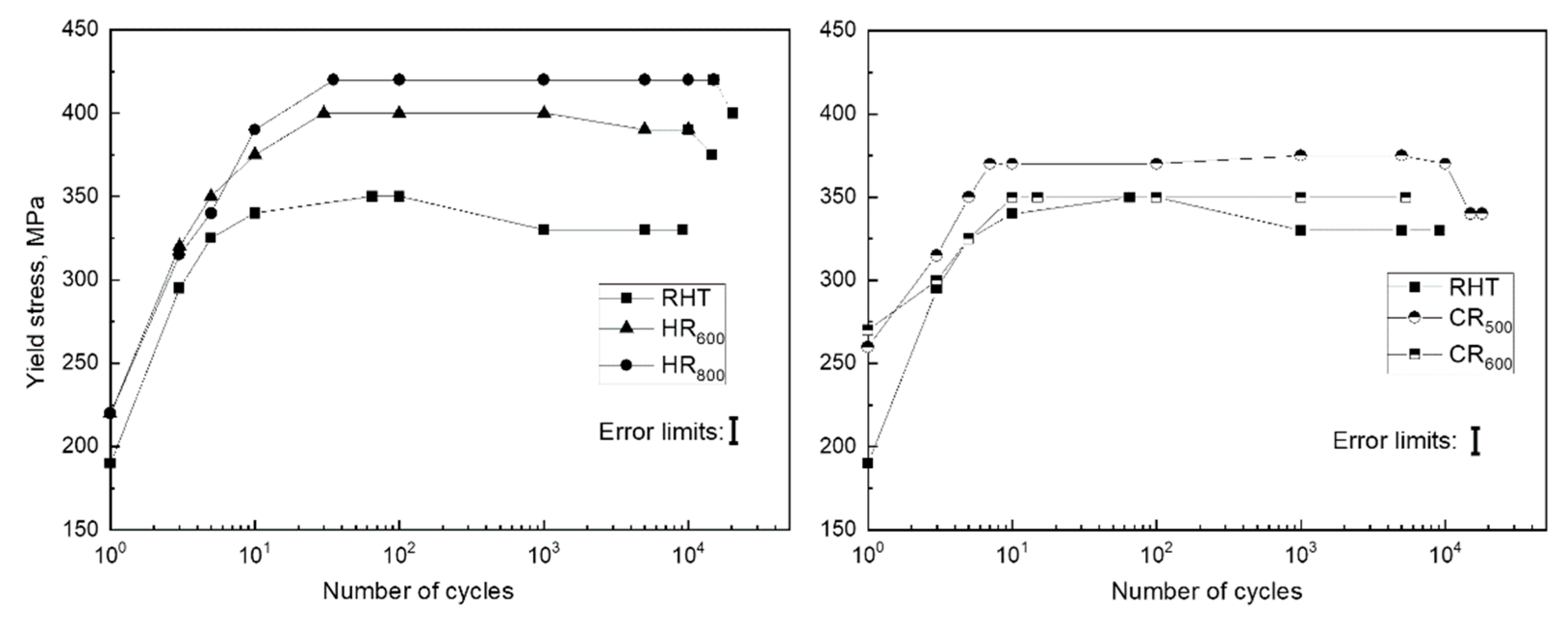
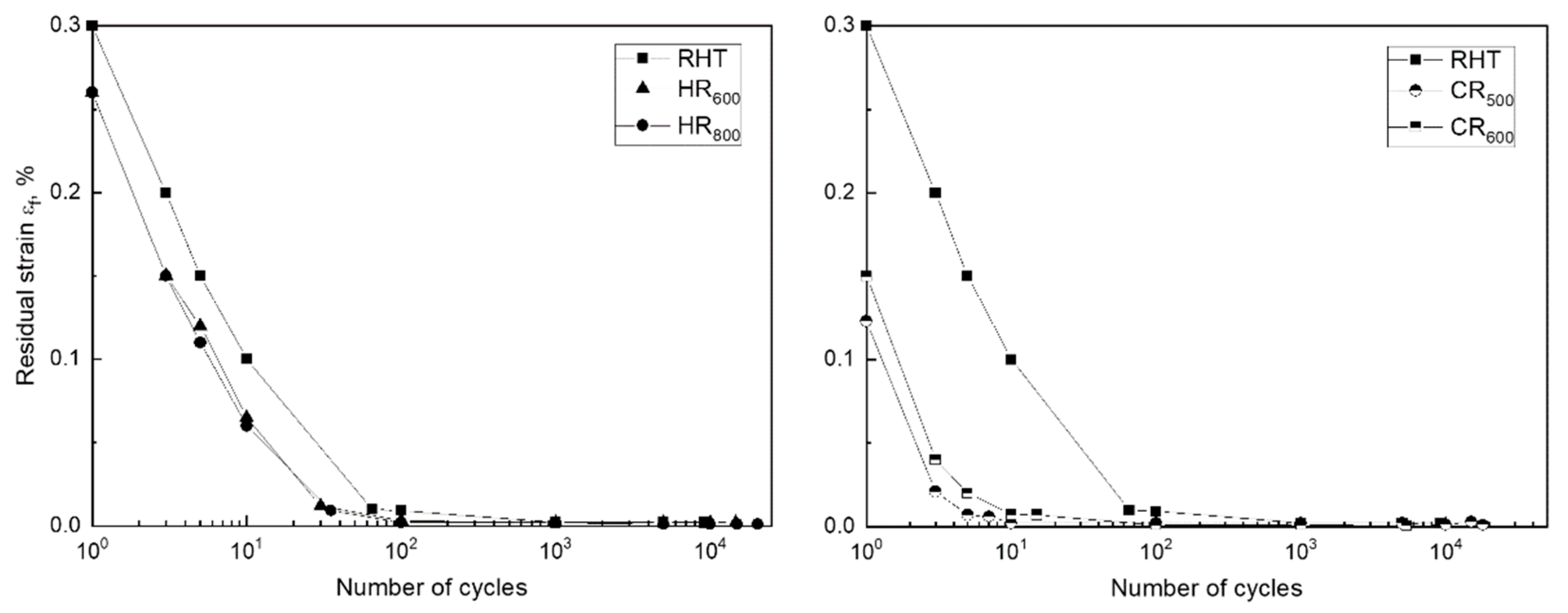
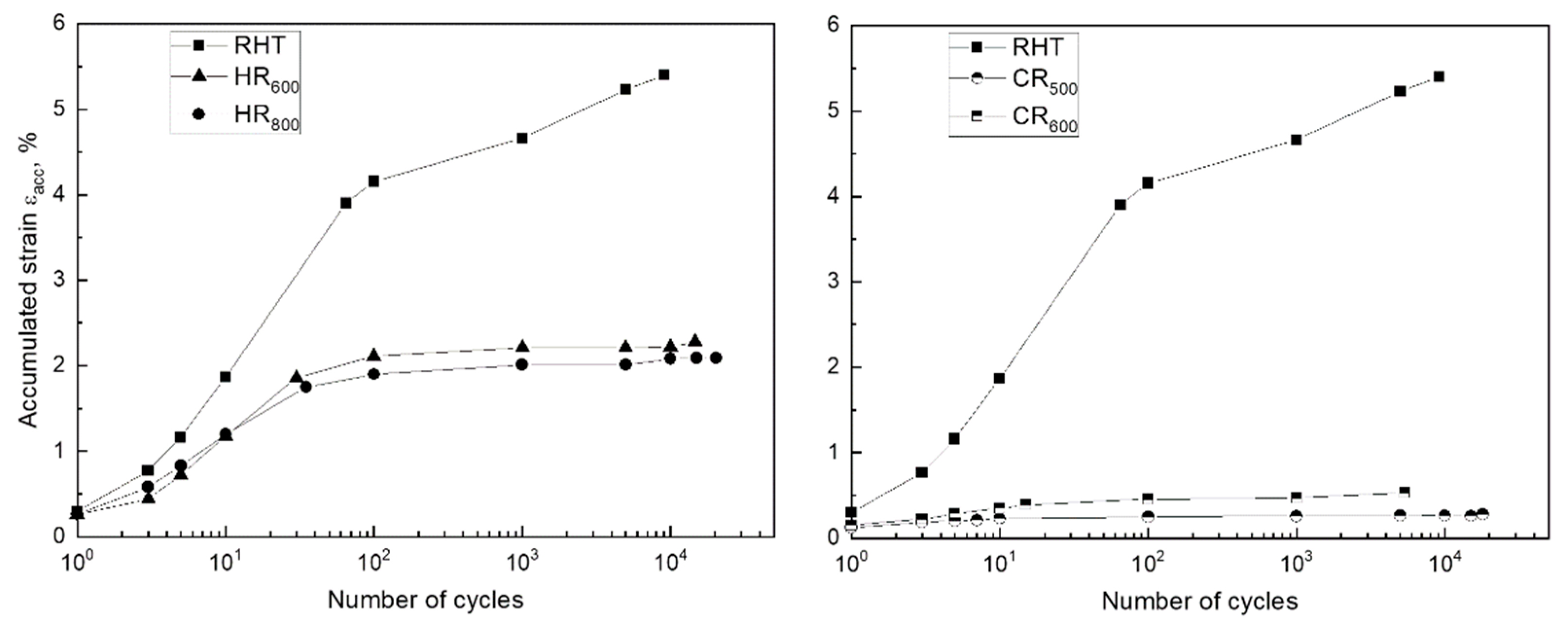
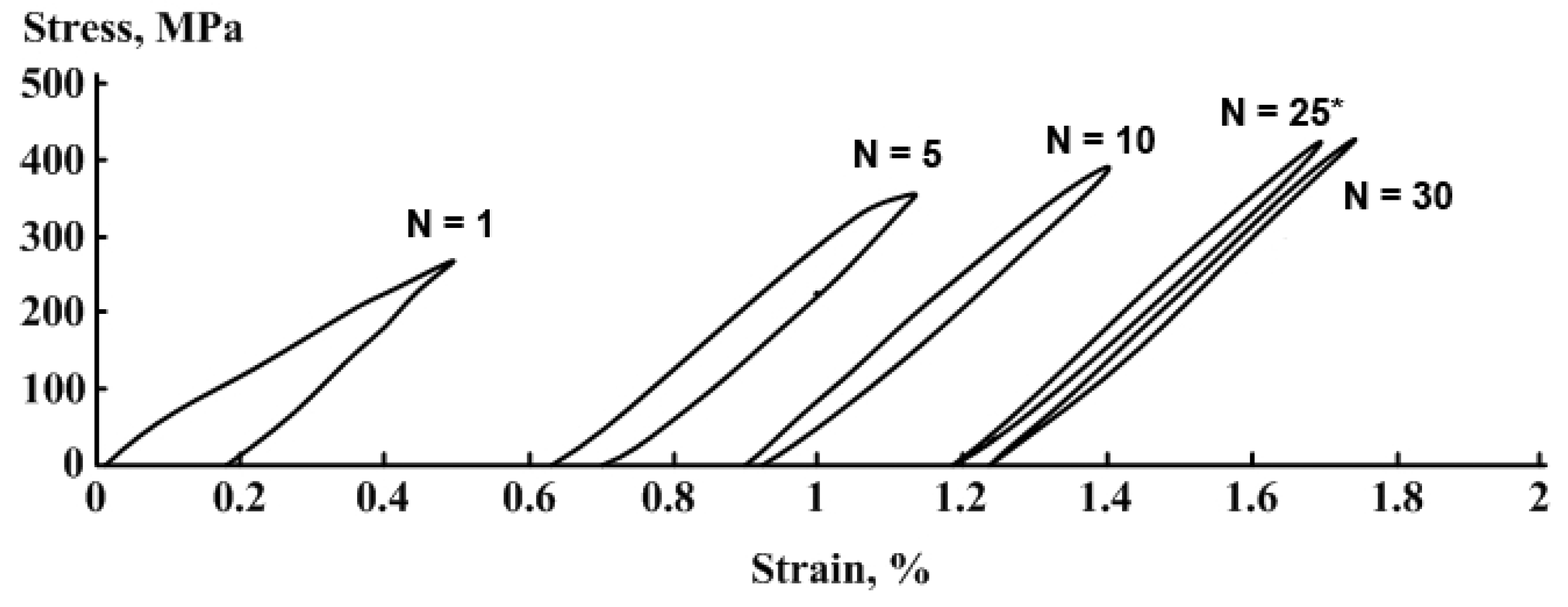
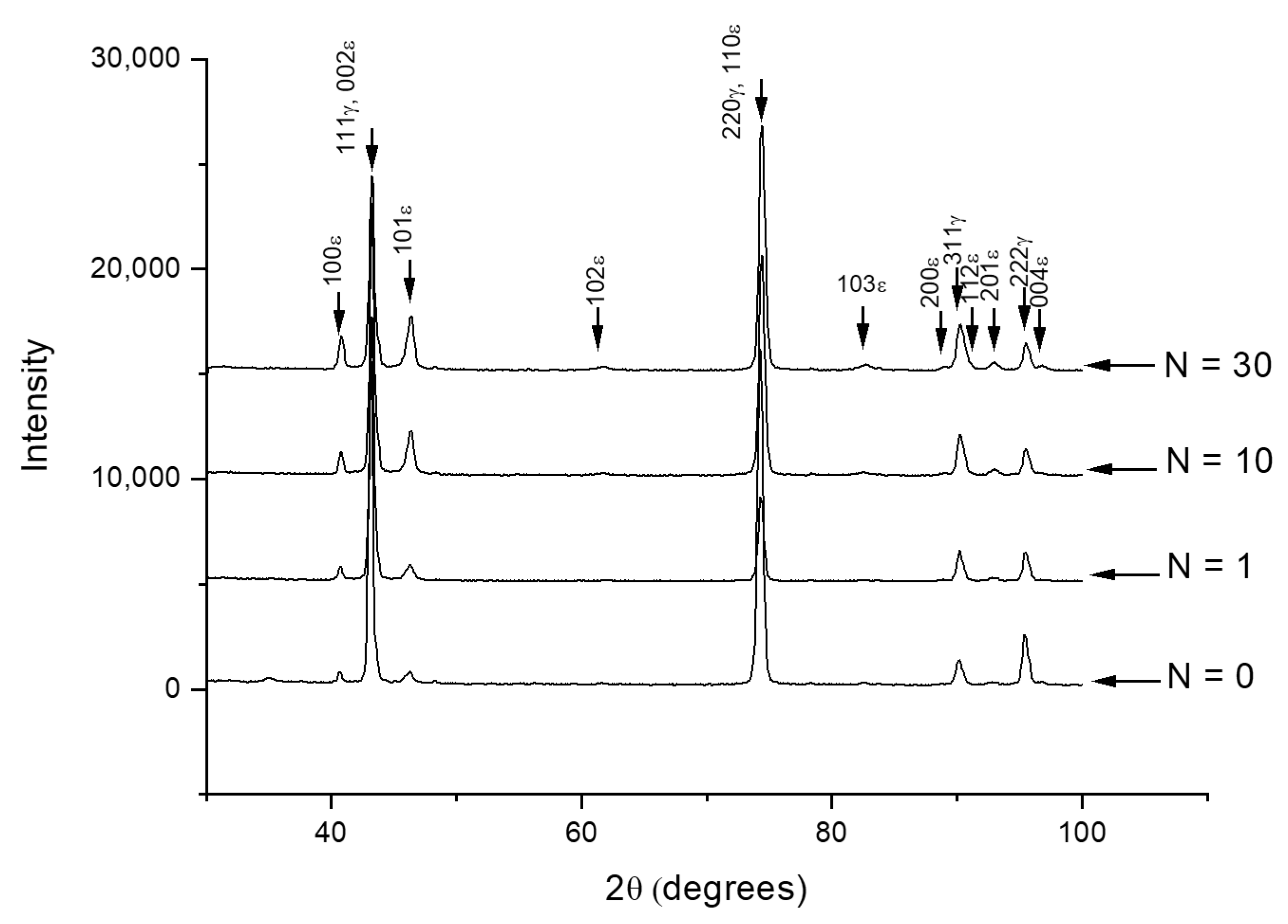
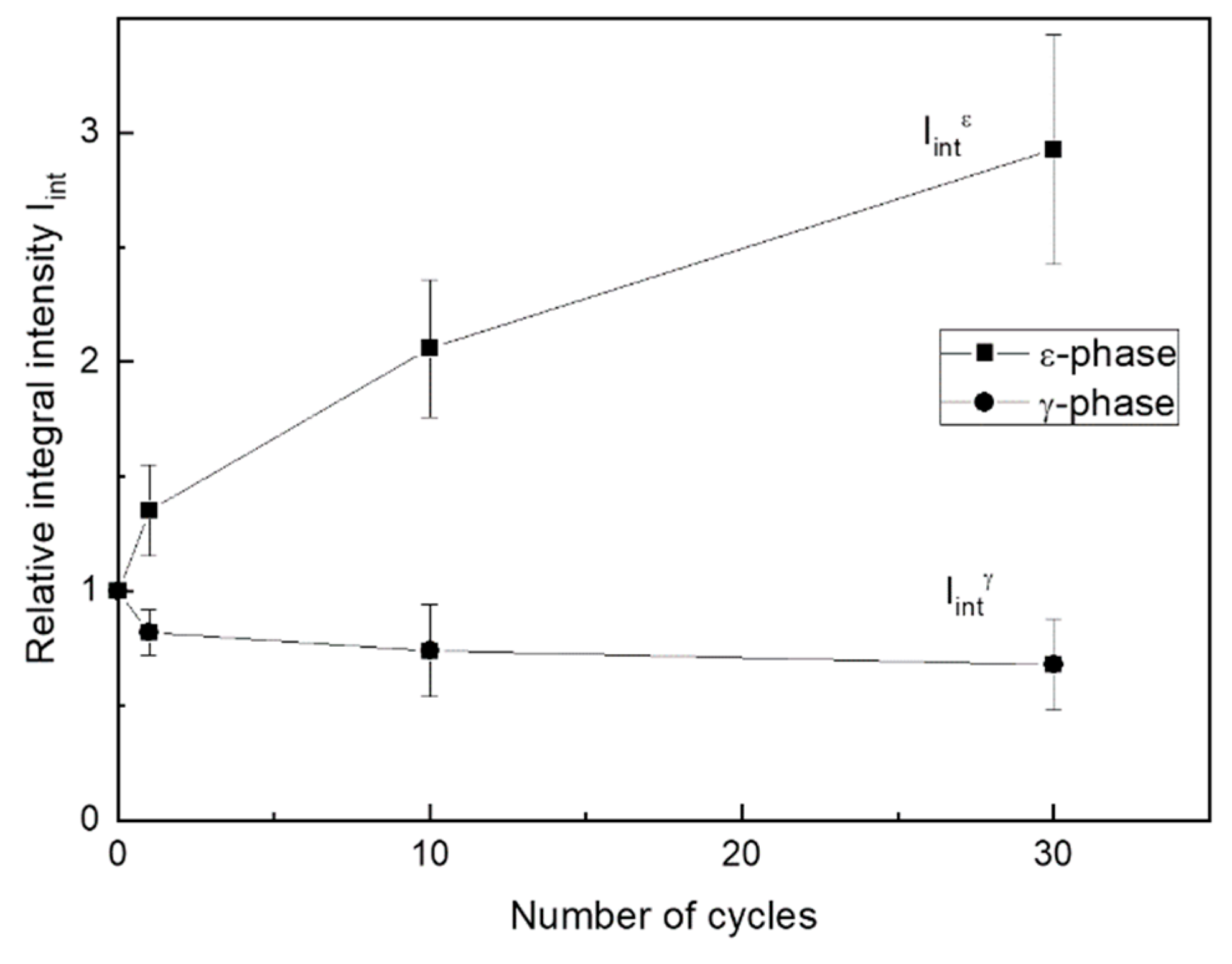
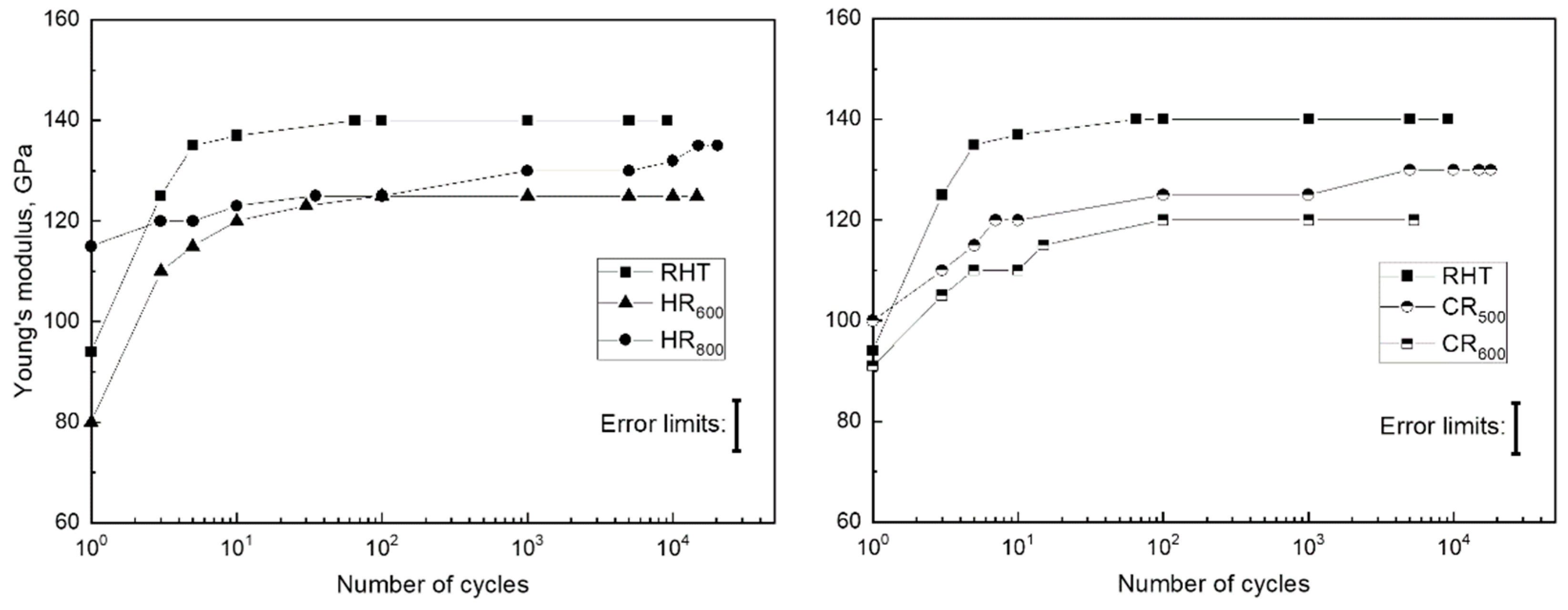
- As a result of functional tensile fatigue tests with 0.5% strain in a cycle after RHT and all TMTs, the changes of stress–strain diagrams parameters were as follows: the increase of dislocation yield stress, accumulated strain, and apparent Young’s modulus, and decrease of residual strain in a cycle, and their subsequent stabilization after 10–65 cycles. After TMTs, the residual strain in a cycle dropped to almost zero much faster than after RHT; the accumulated strain was much larger while the stabilized yield stress was lower, and Young’s modulus was significantly lower. Based on the XRD study carried out in a cycling range until the parameters’ stabilization, these parameters’ changes were explained in terms of a decelerated increase in dislocation density and amount of ε-martensite formed during the stress-induced γ→ε transformation in that range. The number of cycles to failure after TMTs comprising hot rolling was much higher than after RHT and reached its maximum of about 20,000 after the HR800 regime.
- (3)
- A specific temperature dependence of the apparent modulus E was determined by comparative tensile testing and DSC study in a temperature range of 250–20 °C. The specificity features E decreased instead of its normal increase with decreasing temperature as the Ms temperature was approached. For the HR800 regime, E dropped from 130 GPa at 150 °C to its minimum of 110 GPa at room temperature, i.e., it became equal to the elastic modulus of pure titanium conventionally used for bone implants. Thus, the applicability of this approach to the Fe-30Mn-5Si SMA was confirmed, which comprises increasing its biomechanical compatibility by maximizing the convergence of the Ms temperature and the operating temperature (37 °C) due to the lattice premartensitic softening phenomenon.
- (4)
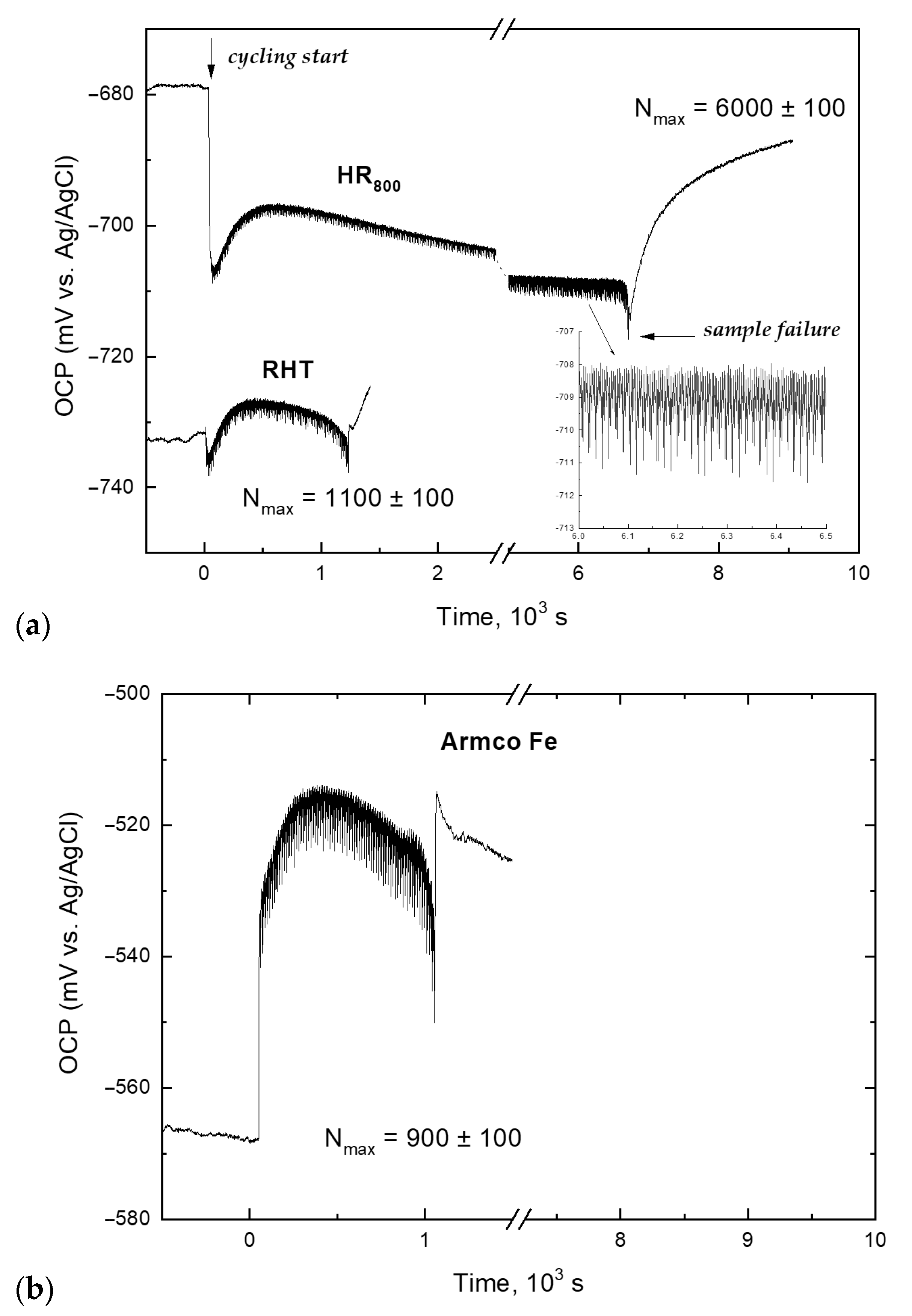
- Based on the analysis of the open-circuit potential (OCP) measurement during immersion of the alloy’s RHT and HR800 samples in Hanks’ solution at 37 °C, a non-monotonic nature of the OCP change after the initial drop at the loading action start is revealed and explained, as follows: (1) mechanical activation enhanced the tendency of the newly formed surface to adsorb anions and form corrosion products, resulting in anodic polarization; (2) the irreversible stress-induced martensitic γ→ε transformation resulted in an increase in the volume fraction of the more electronegative ε-phase in each loading half-cycle, which, after reaching a certain number of cycles, manifests itself in a stable shift of the samples’ potential to more negative values. The accumulation of the martensitic ε-phase is the reason for the high corrosion fatigue resistance after TMT using the HR800 regime, which is associated with the efficient barrier effect of martensite crystals that inhibits the propagation of fatigue cracks, with this effect being supported by much higher yield stress evidencing more developed dislocation substructure as compared to the RHT.
Author Contributions
Funding
Institutional Review Board Statement
Informed Consent Statement
Data Availability Statement
Conflicts of Interest
Appendix A. Abbreviations and Symbols
| SMA | shape memory alloy; |
| γ | austenite phase with face-centered cubic (FCC) crystal lattice; |
| ε | martensite phase with hexagonal close-packed (HCP) crystal lattice; |
| Ms | start temperature of the γ→ε forward martensitic transformation; |
| Mf | finish temperature of the γ→ε forward martensitic transformation; |
| As | start temperature of the ε→γ reverse martensitic transformation; |
| Af | finish temperature of the ε→γ reverse martensitic transformation; |
| TMT | thermomechanical treatment; |
| RHT | reference heat treatment; |
| HR | hot rolling; |
| CR | cold rolling; |
| XRD | X-ray diffraction; |
| 2θ | X-ray diffraction angle; |
| TEM | transmission electron microscopy; |
| BF | bright field; |
| DR | dark field; |
| SAED | selected area electron diffraction; |
| XPS | X-ray photoelectron spectroscopy; |
| E | Young’s modulus; |
| σ0.05 | dislocation yield stress; |
| εf | residual strain in a mechanical cycle; |
| εacc | accumulated strain after each mechanical cycle; |
| Nmax | number of cycles to failure; |
| OCP | open circuit potential. |
References
- Hermawan, H. Biodegradable Metals—From Concept to Applications; Springer: Berlin/Heidelberg, Germany, 2012. [Google Scholar] [CrossRef] [Scilit]
- Narushima, T. Metals for Biomedical Devices, 2nd ed.; Elsevier: Amsterdam, The Netherlands, 2019; pp. 495–521. [Google Scholar] [CrossRef] [Scilit]
- Zheng, Y.F.; Gu, X.N.; Witte, F. Biodegradable metals. Mater. Sci. Eng. R 2014, 77, 1–34. [Google Scholar] [CrossRef] [Scilit]
- Li, H.; Zheng, Y.; Qin, L. Progress of biodegradable metals. Prog. Nat. Sci. Mater. Int. 2014, 24, 414–422. [Google Scholar] [CrossRef] [Scilit]
- He, J.; He, F.-L.; Li, D.-W.; Liu, Y.-L.; Liu, Y.-Y.; Ye, Y.-J.; Yin, D.-C. Advances in Fe-based biodegradable metallic materials. RSC Adv. 2016, 6, 112819–112838. [Google Scholar] [CrossRef] [Scilit]
- Liu, Y.; Zheng, Y.; Chen, X.-H.; Yang, J.-A.; Pan, H.; Chen, D.; Wang, L.; Zhang, J.; Zhu, D.; Wu, S.; et al. Fundamental Theory of Biodegradable Metals—Definition, Criteria, and Design. Adv. Funct. Mater. 2019, 29, 1805402. [Google Scholar] [CrossRef] [Scilit]
- Han, H.-S.; Loffredo, S.; Jun, I.; Edwards, J.; Kim, Y.-C.; Seok, H.-K.; Witte, F.; Mantovani, D.; Glyn-Jones, S. Current status and outlook on the clinical translation of biodegradable metals. Mater. Today 2019, 23, 57–71. [Google Scholar] [CrossRef] [Scilit]
- Li, C.; Guo, C.; Fitzpatrick, V.; Ibrahim, A.; Zwierstra, M.J.; Hanna, P.; Lechtig, A.; Nazarian, A.; Lin, S.J.; Kaplan, D.L. Design of biodegradable, implantable devices towards clinical translation. Nat. Rev. Mater. 2020, 5, 61–81. [Google Scholar] [CrossRef] [Scilit]
- Park, J.; Lakes, R.S. Biomaterials–An Introduction; Springer: New York, NY, USA, 2007. [Google Scholar] [CrossRef] [Scilit]
- Denkena, B.; Lucas, A. Biocompatible Magnesium Alloys as Absorbable Implant Materials—Adjusted Surface and Subsurface Properties by Machining Processes. CIRP Ann. 2007, 56, 113–116. [Google Scholar] [CrossRef] [Scilit]
- Heiden, M.; Walker, E.; Stanciu, L. Magnesium, Iron and Zinc Alloys, the Trifecta of Bioresorbable Orthopaedic and Vascular Implantation—A Review. J. Biotechnol. Biomater. 2015, 5, 1000178. [Google Scholar] [CrossRef]
- Kraus, T.; Moszner, F.; Fischerauer, S.; Fiedler, M.; Martinelli, E.; Eichler, J.; Witte, F.; Willbold, E.; Schinhammer, M.; Meischel, M.; et al. Biodegradable Fe-based alloys for use in osteosynthesis: Outcome of an in vivo study after 52 weeks. Acta Biomater. 2014, 10, 3346–3353. [Google Scholar] [CrossRef] [Scilit]
- Peuster, M.; Wohlsein, P.; Brügmann, M.; Ehlerding, M.; Seider, K.; Fink, C.; Brauer, H.; Fischer, A.; Hausdorf, G. A novel approach to temporary stenting: Degradable cardiovascular stents produced from corrodible metal—Results 6–18 months after implantation into New Zealand white rabbits. Heart 2001, 86, 563–569. [Google Scholar] [CrossRef] [Scilit] [PubMed]
- Liu, B.; Zheng, Y.F.; Ruan, L. In vitro investigation of Fe30Mn6Si shape memory alloy as potential biodegradable metallic material. Mater. Lett. 2011, 65, 540–543. [Google Scholar] [CrossRef] [Scilit]
- Hanks, J.H.; Wallace, R.E. Relation of Oxygen and Temperature in the Preservation of Tissues by Refrigeration. Exp. Biol. Med. 1949, 71, 196–200. [Google Scholar] [CrossRef] [Scilit]
- Drevet, R.; Zhukova, Y.; Malikova, P.; Dubinskiy, S.; Korotitskiy, A.; Pustov, Y.; Prokoshkin, S. Martensitic Transformations, Mechanical and Corrosion Properties of Fe-Mn-Si Alloys for Medical Implant Applications. Metall. Mater. Trans. A 2018, 49, 1006–1013. [Google Scholar] [CrossRef] [Scilit]
- Pustov, Y.A.; Zhukova, Y.S.; Malikova, P.E.; Prokoshkin, S.D.; Dubinskii, S.M. Structure and Corrosion-Electrochemical Behavior of Bioresorbable Alloys Based on the Fe–Mn System. Prot. Met. Phys. Chem. Surf. 2018, 54, 469–476. [Google Scholar] [CrossRef] [Scilit]
- Gulyaev, A. Some Features of γ-ε Martensitic Transformation and Shape Memory Effect in Fe-Mn-Si Based alloys. J. Phys. IV Fr. 1995, 5, C8-469–C8-474. [Google Scholar] [CrossRef] [Scilit]
- Sato, A.; Yamaji, Y.; Mori, T. Physical properties controlling shape memory effect in Fe-Mn-Si alloys. Acta Metall. 1986, 34, 287–294. [Google Scholar] [CrossRef] [Scilit]
- Vintaikin, E.Z.; Gulyaev, A.A.; Oralbaev, A.B.; Polyakova, N.A.; Svistunova, E.L. Concerning the nature of the shape memory effect in Fe-Mn-Si Alloys. Metallofisika 1991, 13, 43–51. [Google Scholar]
- Venezuela, J.; Dargusch, M.S. Addressing the slow corrosion rate of biodegradable Fe-Mn: Current approaches and future trends. Curr. Opin. Solid State Mater. Sci. 2020, 24, 100822. [Google Scholar] [CrossRef] [Scilit]
- Schinhammer, M.; Hänzi, A.C.; Löffler, J.F.; Uggowitzer, P.J. Design strategy for biodegradable Fe-based alloys for medical applications. Acta Biomater. 2010, 6, 1705–1713. [Google Scholar] [CrossRef] [Scilit]
- Brailovski, V.; Prokoshkin, S.; Terriault, P.; Trochu, F. Shape Memory Alloys: Fundamentals, Modeling and Applications; Presses De L’université Du Québec: Quebec City, QC, Canada, 2003; pp. 685–729. [Google Scholar]
- Prokoshkin, S.; Pustov, Y.; Zhukova, Y.; Kadirov, P.; Dubinskiy, S.; Sheremetyev, V.; Karavaeva, M. Effect of thermomechanical treatment on functional properties of biodegradable Fe-30Mn-5Si shape memory alloy. Metall. Mater. Trans. A 2021, 5, 2024–2032. [Google Scholar] [CrossRef] [Scilit]
- Koster, M.; Lee, W.; Schwarzenberger, M.; Leinenbach, C. Cyclic deformation and structural fatigue behavior of an Fe–Mn–Si shape memory alloy. Mater. Sci. Eng. A 2015, 637, 29–39. [Google Scholar] [CrossRef] [Scilit]
- Wu, Y.-X.; Tang, D.; Jiang, H.; Mi, Z.-L.; Xue, Y.; Wu, H.-P. Low Cycle Fatigue Behavior and Deformation Mechanism of TWIP Steel. J. Iron Steel Res. Int. 2014, 21, 352–358. [Google Scholar] [CrossRef] [Scilit]
- Schilke, M.; Ahlström, J.; Karlsson, B. Low cycle fatigue and deformation behaviour of austenitic manganese steel in rolled and in as-cast conditions. Procedia Eng. 2010, 2, 623–628. [Google Scholar] [CrossRef] [Scilit]
- Shao, C.W.; Zhang, P.; Liu, R.; Zhang, Z.J.; Pang, J.C.; Zhang, Z.F. Low-cycle and extremely-low-cycle fatigue behaviors of high-Mn austenitic TRIP/TWIP alloys: Property evaluation, damage mechanisms and life prediction. Acta Mater. 2016, 103, 781–795. [Google Scholar] [CrossRef] [Scilit]
- Klein, M.W.; Smaga, M.; Beck, T. Surface Morphology and Its Influence on Cyclic Deformation Behavior of High-Mn TWIP Steel. Metals 2018, 8, 832. [Google Scholar] [CrossRef] [Scilit]
- Klein, M.W.; Smaga, M.; Beck, T. Influence of the surface morphology on the cyclic deformation behavior of HSD® 600 steel. MATEC Web Conf. 2018, 165, 6010. [Google Scholar] [CrossRef] [Scilit]
- Ghafoori, E.; Hosseini, E.; Leinenbach, C.; Michels, J.; Motavalli, M. Fatigue Behavior of a Fe-Mn-Si Shape Memory Alloy used for Prestressed Strengthening. Mater. Sci. Technol. 2017, 133, 349–362. [Google Scholar] [CrossRef] [Scilit]
- Konopatskii, A.S.; Zhukova, Y.S.; Dubinskii, S.M.; Korobkova, A.A.; Filonov, M.R.; Prokoshkin, S.D. Microstructure of Superplastic Alloys Based on Ti–Nb for Medical Purposes. Metallurgist 2016, 60, 223–228. [Google Scholar] [CrossRef] [Scilit]
- Zhukova, Y.S.; Pustov, Y.A.; Konopatsky, A.S.; Filonov, M.R.; Prokoshkin, S.D. Electrochemical Behavior of Novel Superelastic Biomedical Alloys in Simulated Physiological Media Under Cyclic Load. J. Mater. Eng. Perform. 2014, 23, 2677–2681. [Google Scholar] [CrossRef] [Scilit]
- Ijaz, M.F.; Dubinskiy, S.; Zhukova, Y.; Korobkova, A.; Pustov, Y.; Brailovski, V.; Prokoshkin, S. Novel Electrochemical Test Bench for Evaluating the Functional Fatigue Life of Biomedical Alloys. JOM 2017, 69, 1334–1339. [Google Scholar] [CrossRef] [Scilit]
- Dubinskij, S.M.; Zhukova, Y.S.; Korobkova, A.A.; Rulev, M.S.; Kadirov, P.O.; Korotitskij, A.V.; Pustov, Y.A.; Prokoshkin, S.D. Device for Studying Corrosion-Fatigue Destruction of Metals and Alloys During Mechanical Tests in Liquid Electrolyte. RU Patent 2725108 C1, 29 June 2020. [Google Scholar]
- Bernstein, M.L.; Kaputkina, L.M.; Prokoshkin, S.D.; Dobatkin, S.V. Structural changes during hot deformation of austenite in alloy steels. Acta Metall. 1985, 33, 247–254. [Google Scholar] [CrossRef] [Scilit]
- Čapek, J.; Kubásek, J.; Vojtěch, D.; Jablonská, E.; Lipov, J.; Ruml, T. Microstructural, mechanical, corrosion and cytotoxicity characterization of the hot forged FeMn30(wt.%) alloy. Mater. Sci. Eng. C 2016, 58, 900–908. [Google Scholar] [CrossRef] [Scilit]
- Konopatsky, A.S.; Dubinskiy, S.M.; Zhukova, Y.S.; Sheremetyev, V.; Brailovski, V.; Prokoshkin, S.D.; Filonov, M.R. Ternary Ti-Zr-Nb and quaternary Ti-Zr-Nb-Ta shape memory alloys for biomedical applications: Structural features and cyclic mechanical properties. Mater. Sci. Eng. A 2017, 702, 301–311. [Google Scholar] [CrossRef] [Scilit]
- Wayman, C.M.; Otsuka, K. Shape Memory Materials; Cambridge University Press: Cambridge, UK, 1999. [Google Scholar]
- Brailovski, V.; Prokoshkin, S.; Inaekyan, K.; Demers, V. Functional properties of nanocrystalline, submicrocrystalline and polygonized Ti-Ni alloys processed by cold rolling and post-deformation annealing. J. Alloy. Compd. 2011, 509, 2066–2075. [Google Scholar] [CrossRef] [Scilit]
- Demers, V.; Brailovski, V.; Prokoshkin, S.; Inaekyan, K. Thermomechanical fatigue of nanostructured Ti-Ni shape memory alloys. Mater. Sci. Eng. A 2009, 513–514, 185–196. [Google Scholar] [CrossRef] [Scilit]
- Prokoshkin, S.; Brailovski, V.; Korotitskiy, A.; Inaekyan, K.; Dubinskiy, S.; Filonov, M.; Petrzhik, M. Formation of nanostructures in thermomechanically treated Ti-Ni and Ti-Nb-(Zr,Ta) SMAs and their roles in martensite crystal lattice changes and mechanical behavior. J. Alloy. Compd. 2013, 577 (Suppl. 1), 418–422. [Google Scholar] [CrossRef] [Scilit]
- Sheremetyev, V.; Brailovski, V.; Prokoshkin, S.; Inaekyan, K.; Dubinskiy, S. Functional fatigue behavior of superelastic beta Ti-22Nb-6Zr(at.%) alloy for load-bearing biomedical applications. Mater. Sci. Eng. C 2016, 58, 935–944. [Google Scholar] [CrossRef] [Scilit]
- Sheremetyev, V.; Kudryashova, A.; Dubinskiy, S.; Galkin, S.; Prokoshkin, S.; Brailovski, V. Structure and functional properties of metastable beta Ti-18Zr-14Nb (at.%) alloy for biomedical applications subjected to radial shear rolling and thermomechanical treatment. J. Alloy. Compd. 2018, 737, 678–683. [Google Scholar] [CrossRef] [Scilit]
- Lee, W.J.; Weber, B.; Feltrin, G.; Czaderski, C.; Motavalli, M.; Leinenbach, C. Phase transformation behavior under uniaxial deformation of an Fe–Mn–Si–Cr–Ni–VC shape memory alloy. Mater. Sci. Eng. A 2013, 581, 1–7. [Google Scholar] [CrossRef] [Scilit]
- Maruyama, T.; Kubo, H. Ferrous (Fe-based) shape memory alloys (SMAs): Properties, processing and applications. Shape Mem. Superelastic Alloy. 2011, 141–159. [Google Scholar] [CrossRef] [Scilit]
- Baruj, A.; Bertolino, G.; Troiani, H.E. Temperature dependence of critical stress and pseudoelasticity in a Fe–Mn–Si–Cr pre-rolled alloy. J. Alloy. Compd. 2010, 502, 54–58. [Google Scholar] [CrossRef] [Scilit]
- Zhang, J.; Chen, S.; Li, L.; Hsu, T.Y. Analysis of the Stress-Strain Curves of a Fe-Mn-Si Shape Memory Alloy. Mater. Charact. 1998, 40, 37–41. [Google Scholar] [CrossRef] [Scilit]
- Sheremetyev, V.; Prokoshkin, S.; Brailovski, V.; Dubinski, S.; Korotitskiy, A.; Filonov, M.; Petrzhik, M. Investigation of the structure stability and superelastic behavior of thermomechanically treated Ti-Nb-Zr and Ti-Nb-Ta shape-memory alloys. Phys. Met. Metallogr. 2015, 116, 413–422. [Google Scholar] [CrossRef] [Scilit]
- Revie, R.W. (Ed.) Uhlig’s Corrosion Handbook, 3rd ed.; John Wiley & Sons, Inc.: Hoboken, NJ, USA, 2011; p. 589. [Google Scholar] [CrossRef] [Scilit]
- Gutman, E.M. Mechanochemistry of Solid Surfaces; World Scientific Publishing Co.: Hackensack, NJ, USA, 1994. [Google Scholar]
- Yi, S.; Gao, S. Fracture toughening mechanism of shape memory alloys due to martensite transformation. Int. J. Solids Struct. 2000, 37, 5315–5327. [Google Scholar] [CrossRef] [Scilit]





| Number of Cycles to Failure | RHT | HR600 | HR800 | CR500 | CR600 |
|---|---|---|---|---|---|
| Nmax | 9139 | 14,642 | 20,330 | 17,984 | 5347 |
| Number of Cycles | 111γ, 002ε, 2θ deg. | 220γ, 110ε, 2θ deg. |
|---|---|---|
| N = 0 | 0.41 | 0.53 |
| N = 1 | 0.41 | 0.53 |
| N = 10 | 0.41 | 0.54 |
| N = 30 | 0.45 | 0.58 |
Publisher’s Note: MDPI stays neutral with regard to jurisdictional claims in published maps and institutional affiliations. |
© 2021 by the authors. Licensee MDPI, Basel, Switzerland. This article is an open access article distributed under the terms and conditions of the Creative Commons Attribution (CC BY) license (https://creativecommons.org/licenses/by/4.0/).
Share and Cite
Prokoshkin, S.; Pustov, Y.; Zhukova, Y.; Kadirov, P.; Karavaeva, M.; Prosviryakov, A.; Dubinskiy, S. Effect of Thermomechanical Treatment on Structure and Functional Fatigue Characteristics of Biodegradable Fe-30Mn-5Si (wt %) Shape Memory Alloy. Materials 2021, 14, 3327. https://doi.org/10.3390/ma14123327
Prokoshkin S, Pustov Y, Zhukova Y, Kadirov P, Karavaeva M, Prosviryakov A, Dubinskiy S. Effect of Thermomechanical Treatment on Structure and Functional Fatigue Characteristics of Biodegradable Fe-30Mn-5Si (wt %) Shape Memory Alloy. Materials. 2021; 14(12):3327. https://doi.org/10.3390/ma14123327
Chicago/Turabian StyleProkoshkin, Sergey, Yury Pustov, Yulia Zhukova, Pulat Kadirov, Maria Karavaeva, Alexey Prosviryakov, and Sergey Dubinskiy. 2021. "Effect of Thermomechanical Treatment on Structure and Functional Fatigue Characteristics of Biodegradable Fe-30Mn-5Si (wt %) Shape Memory Alloy" Materials 14, no. 12: 3327. https://doi.org/10.3390/ma14123327
APA StyleProkoshkin, S., Pustov, Y., Zhukova, Y., Kadirov, P., Karavaeva, M., Prosviryakov, A., & Dubinskiy, S. (2021). Effect of Thermomechanical Treatment on Structure and Functional Fatigue Characteristics of Biodegradable Fe-30Mn-5Si (wt %) Shape Memory Alloy. Materials, 14(12), 3327. https://doi.org/10.3390/ma14123327