Evaluation of Asphalt with Different Combinations of Fire Retardants

 ,
, 
 ,
, 
Abstract
:1. Introduction
2. Experimental Materials and Methods
2.1. Combinations of Fire Retardants and Asphalt
2.2. TG–MS Test
2.3. Manufacturing Technique and Sample Preparation
2.4. Evaluation Index in Laboratory Experiments
2.4.1. Thermogravimetric Analysis
2.4.2. Growth Rate of Activation Energy
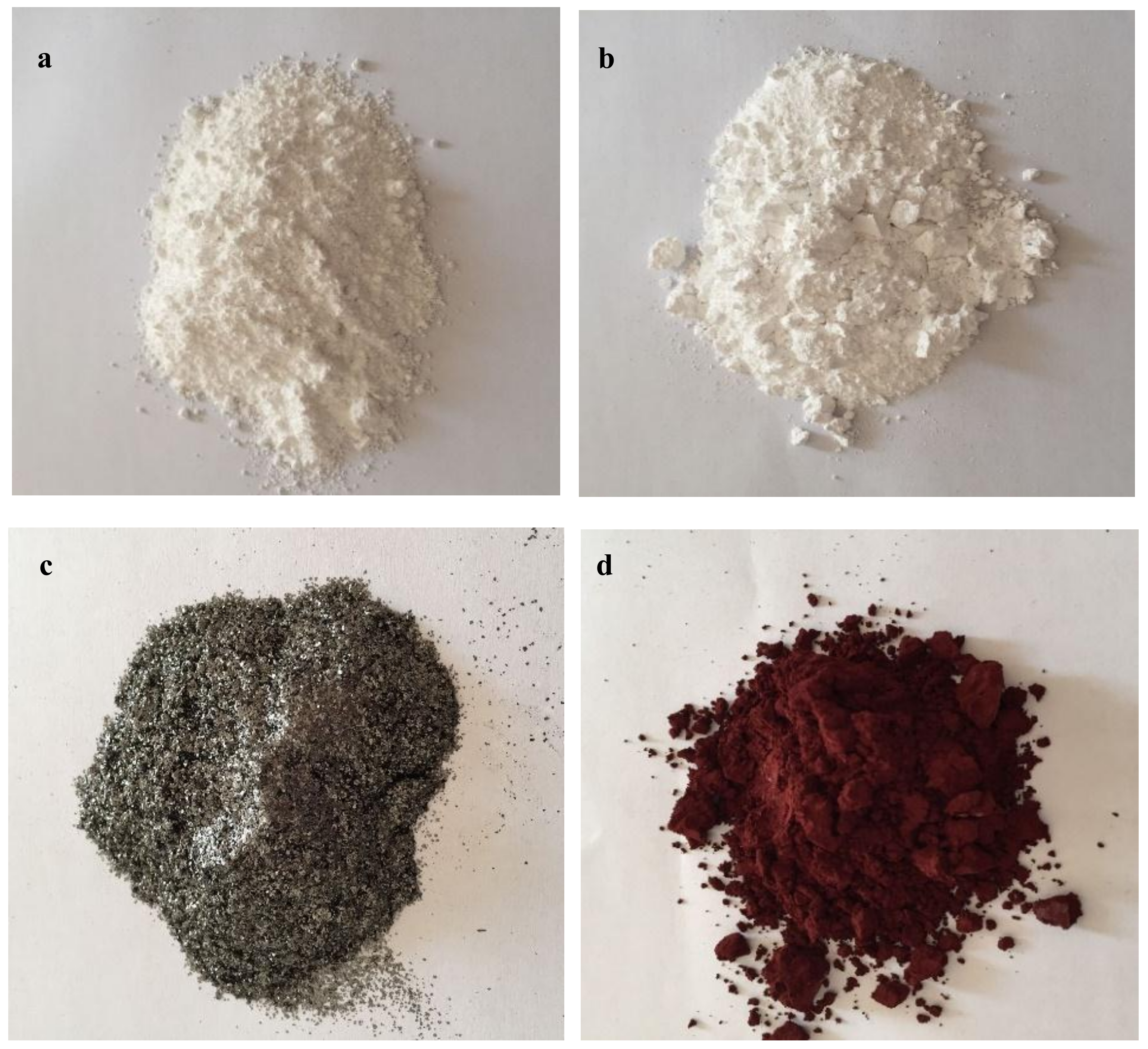
2.5. Thermodynamic Properties of Four Basic Fire Retardants
2.6. Experiment Design
3. Numerical Analysis Model and Methods
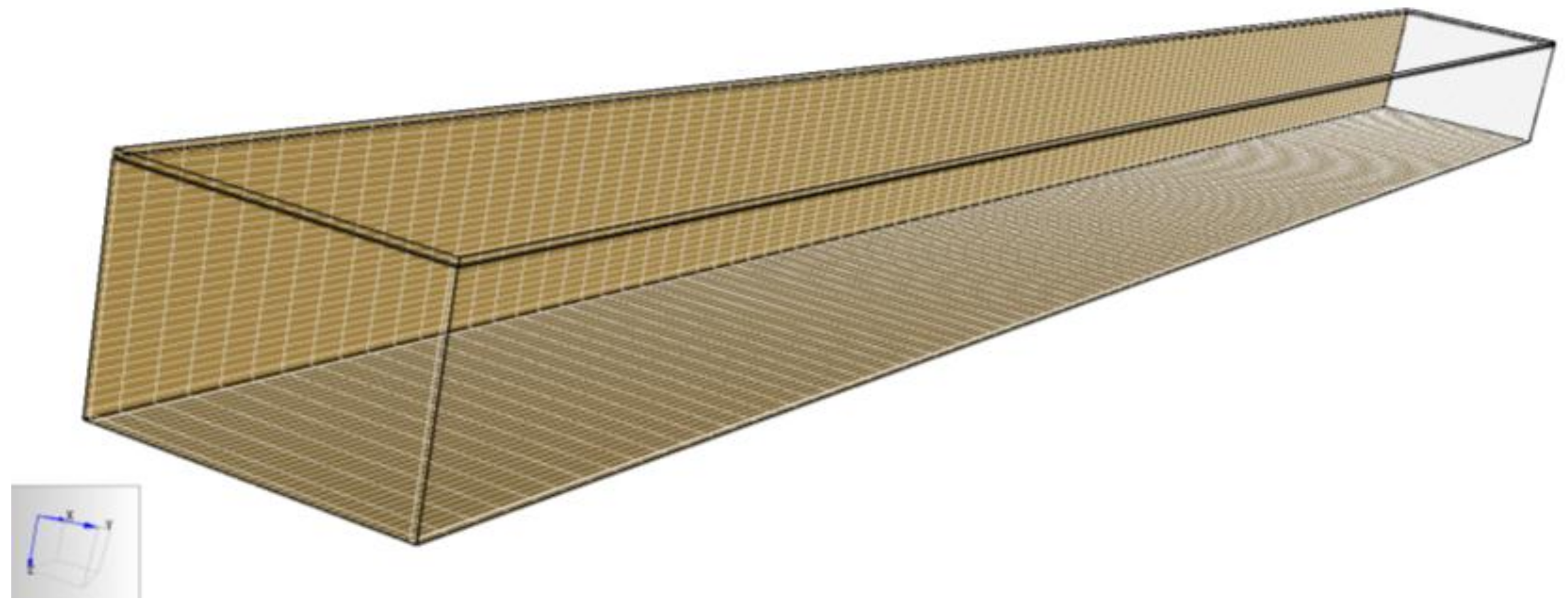
3.1. Model Establishment
3.2. Evaluation Index in Numerical Analysis
4. Results
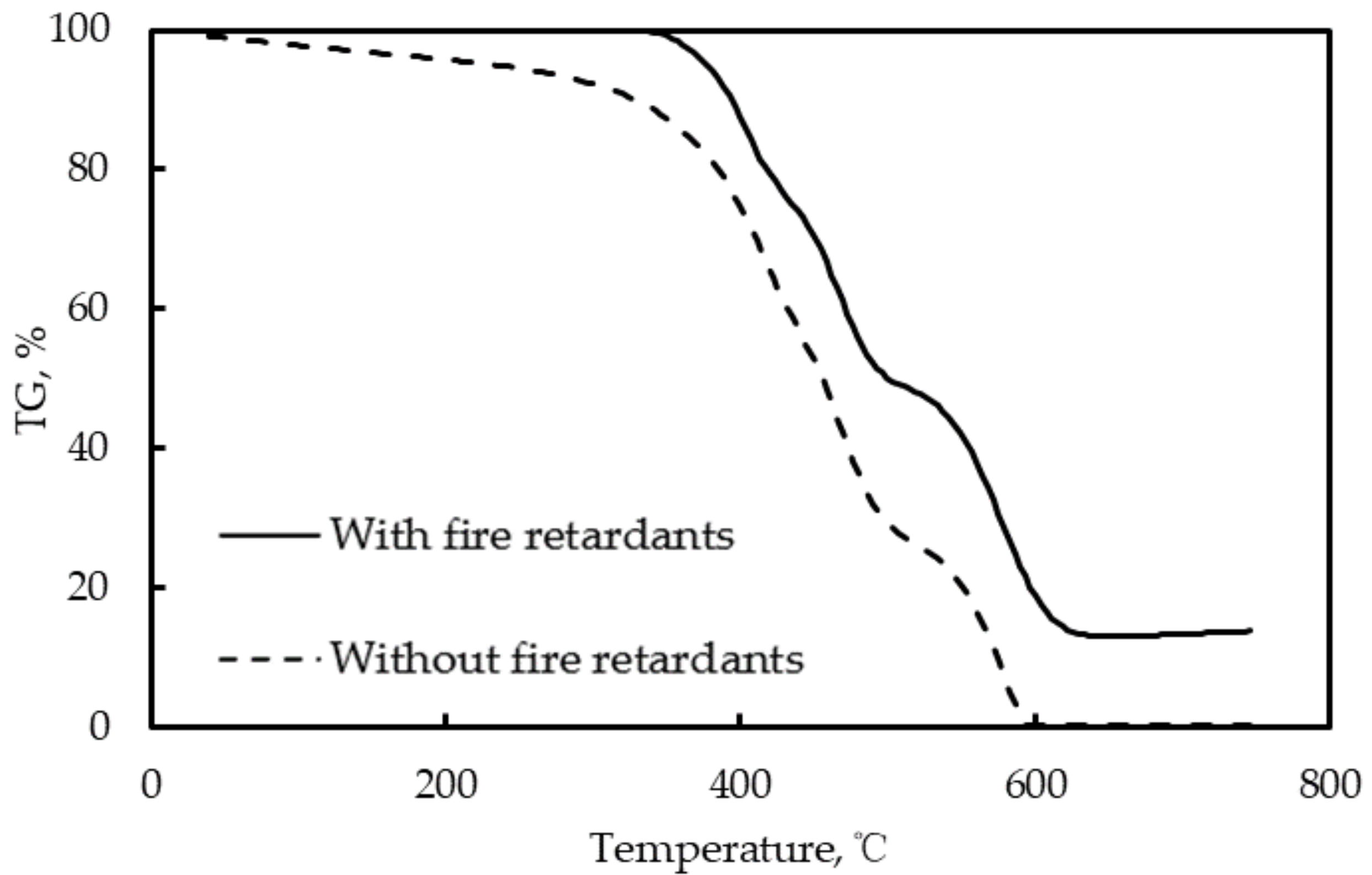
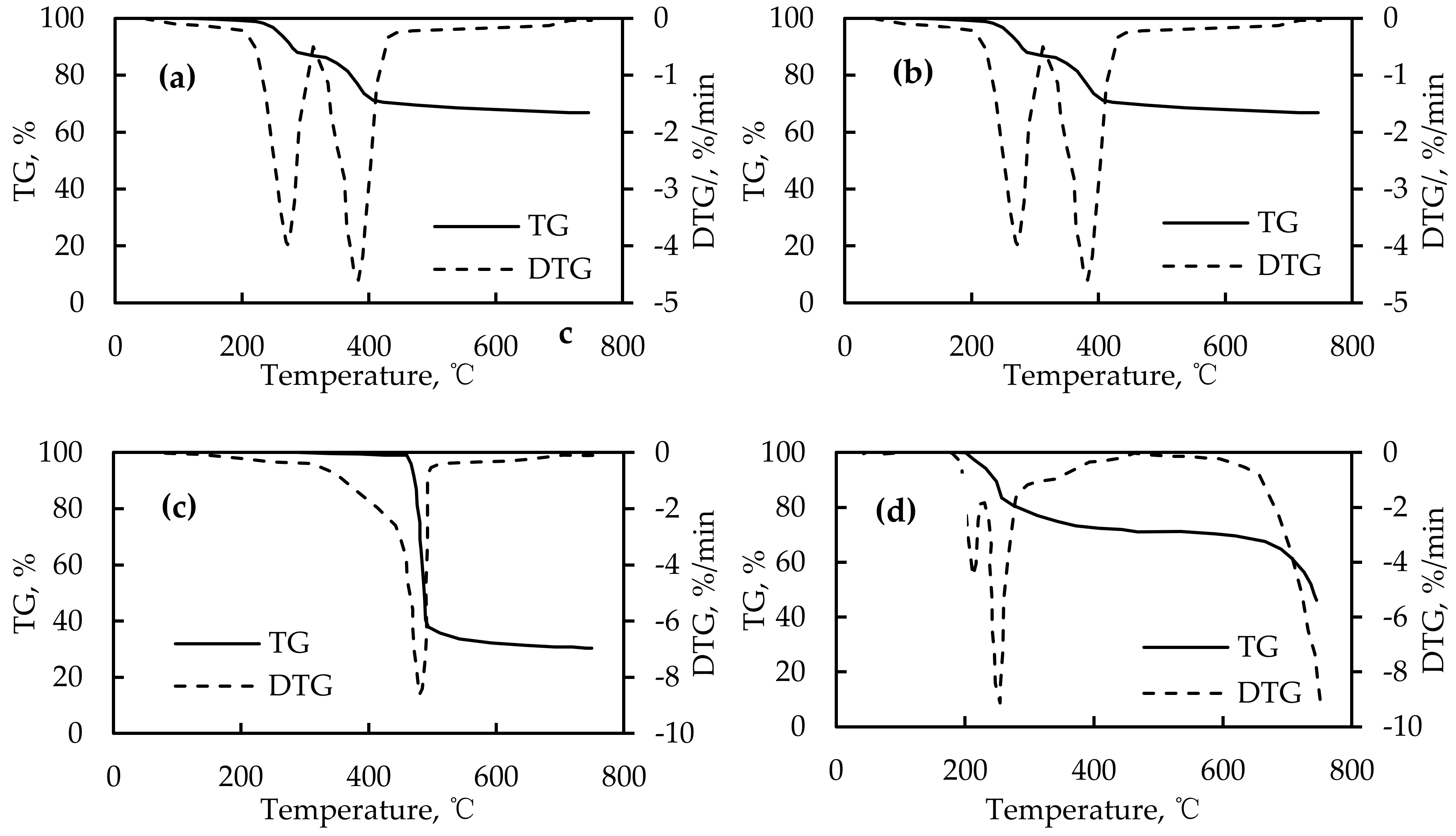
4.1. Experimental Analysis of Fire Retardance Effects Based on the TG Curve
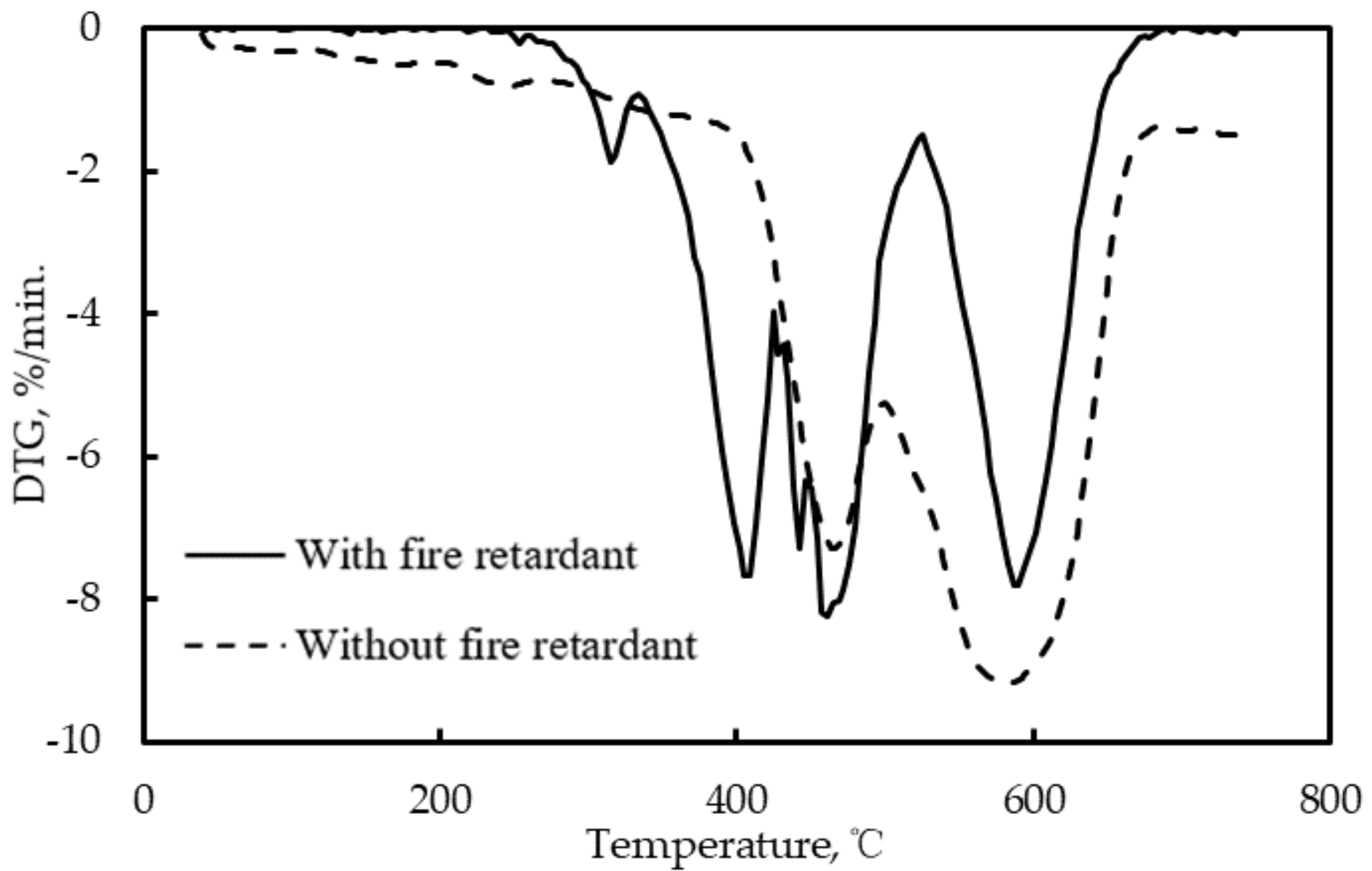
4.2. Experimental Analysis of Fire Retardance Effects Based On the DTG Curve
4.3. Experimental Analysis of Fire Retardance Effects Based on Activation Energy
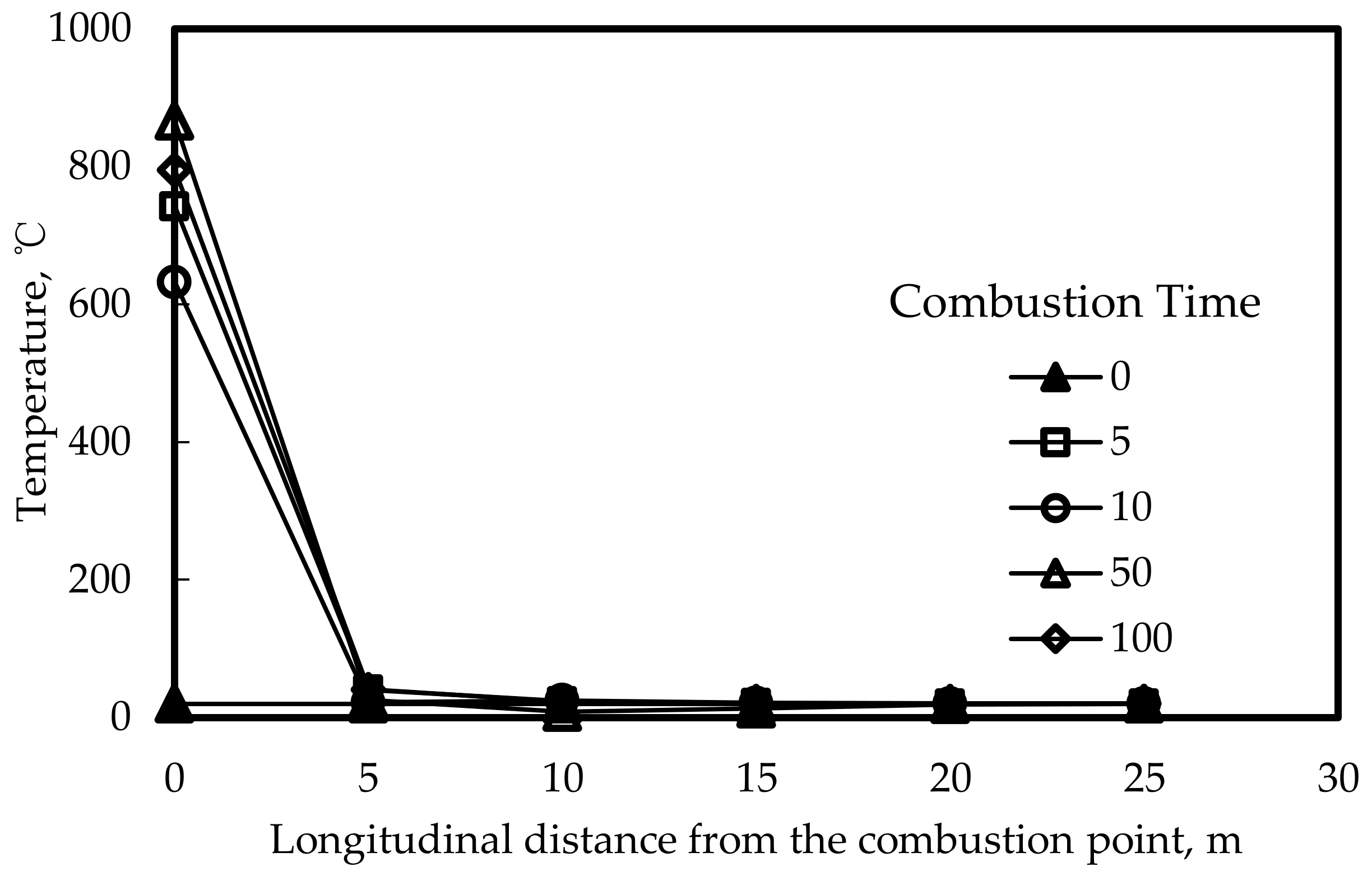
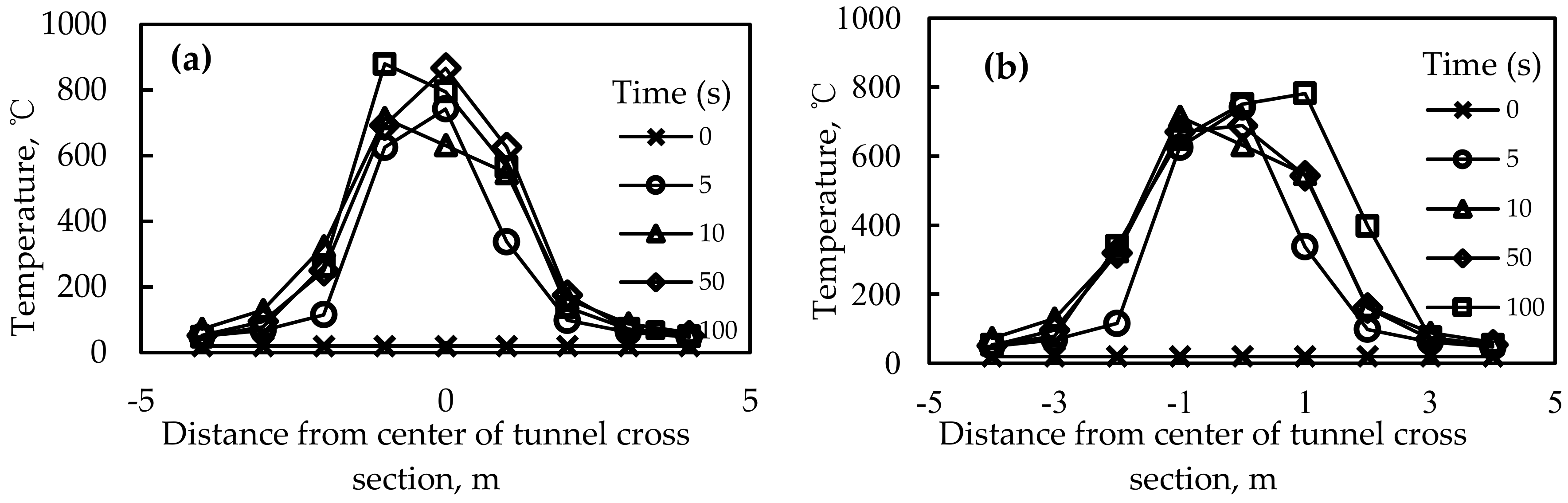
4.4. Numerical Analysis of Fire Retardance Effects Based on Temperature Distribution over Time
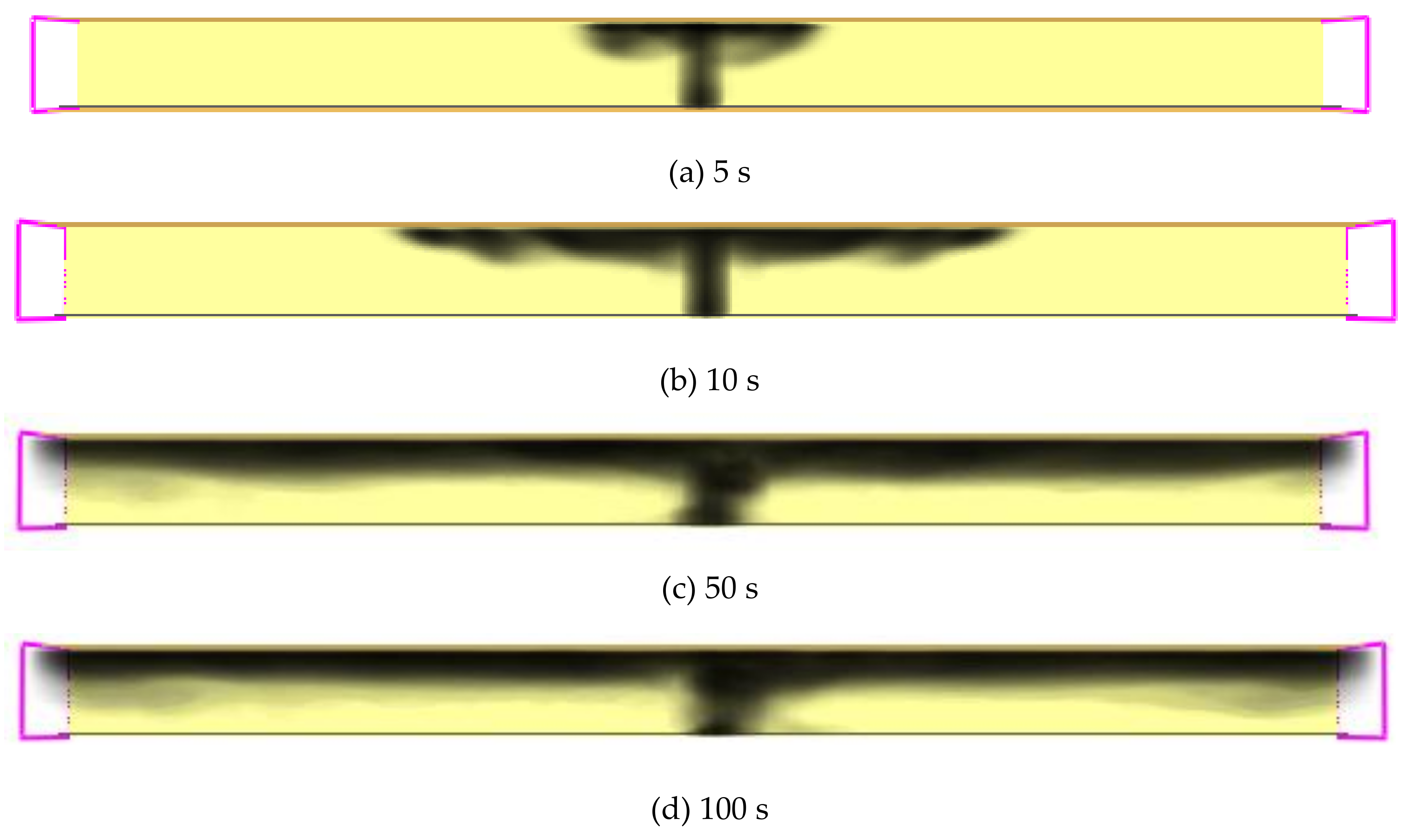
4.5. Numerical Analysis of Fire Retardance Effects Based on the Smoke Height Distribution over Time
5. Conclusions
- Among all the combinations of fire retardants used in this study, the combination of 48% aluminum hydroxide, 32% magnesium hydroxide, 5% expanded graphite, and 15% encapsulated red phosphorous leads to the best effect on fire retardance in experimental analysis. In numerical modeling, that combination also leads to an improved smoke suppression effect, while further research is needed to evaluate it in the real scenario.
- The aluminum hydroxide indicated a better effect on fire retardance and smoke suppression than the magnesium hydroxide in both experimental and numerical analysis.
- The temperature distribution on both sides of the combustion point is basically symmetrical. When the fire retardants were added, the temperature at each time and space point decreased to different degrees. Among all the combinations adopted in this study, it led to the largest decrease when 48% aluminum hydroxide, 32% magnesium hydroxide, 5% expanded graphite, and 15% encapsulated red phosphorous were added into the asphalt.
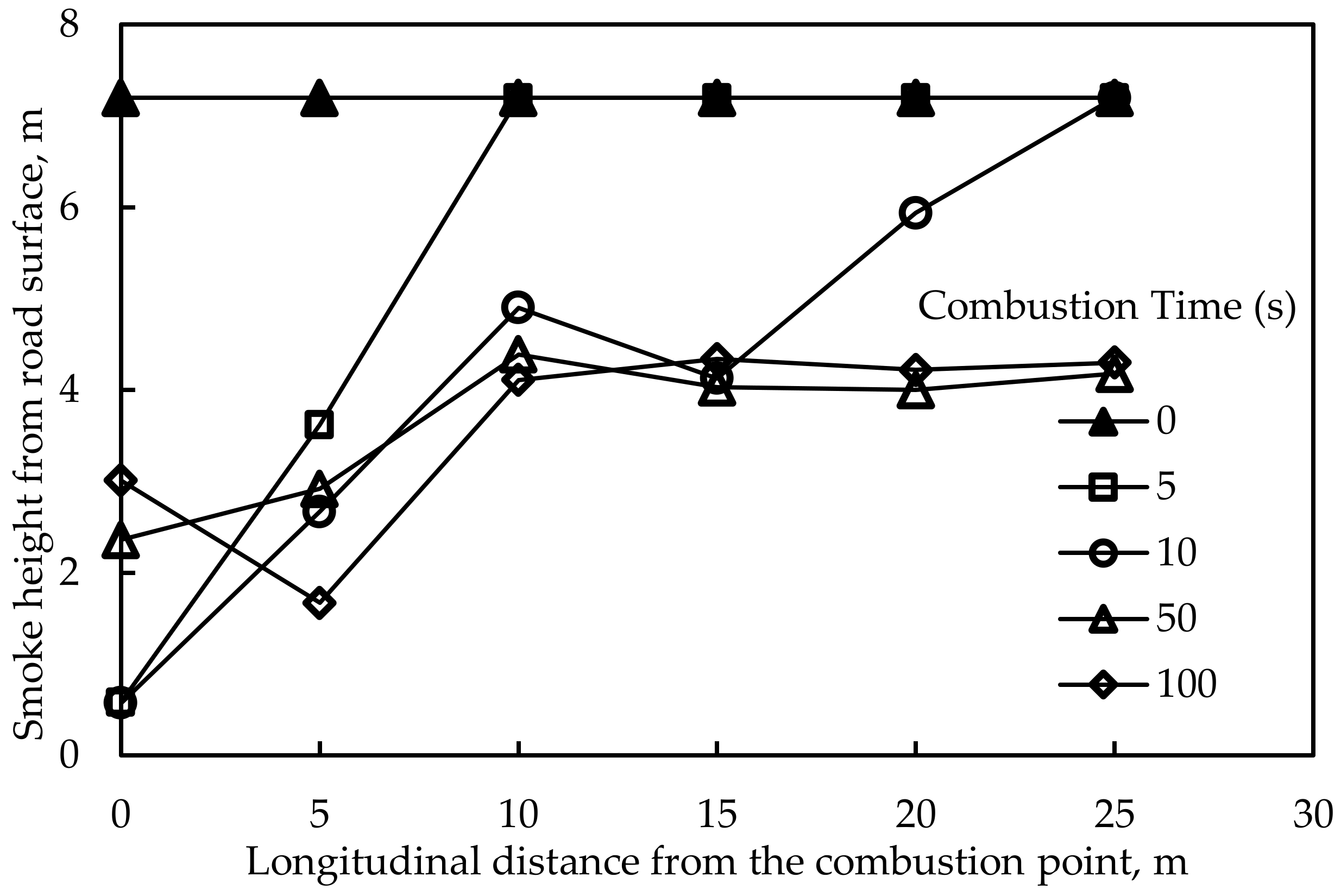
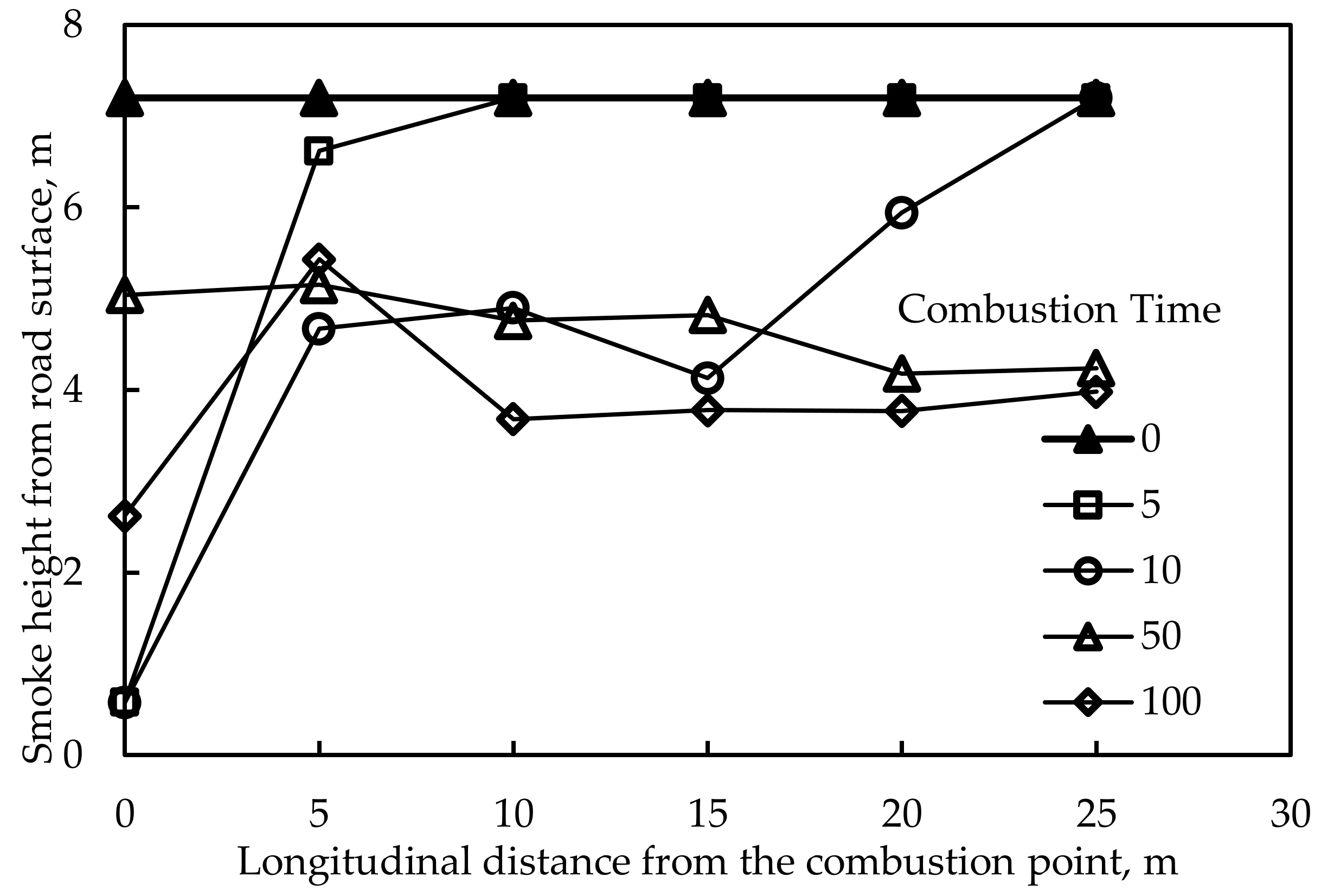
- When no fire retardant was added, the smoke height at 5 m away from the combustion point was about 2 m. Among all the combinations adopted in this study, when fire retardants were added, the smoke height increased to different degrees and the height distribution became the highest when 48% aluminum hydroxide, 32% magnesium hydroxide, 5% expanded graphite, and 15% encapsulated red phosphorous were added.
Author Contributions
Funding
Conflicts of Interest
References
- Petersen, J.C. Chapter 14 Chemical Composition of Asphalt as Related to Asphalt Durability. Dev. Pet. Sci. 2000, 40, 363–399. [Google Scholar]
- Bazzaz, M.; Darabi, M.K.; Little, D.N.; Garg, N. A Straightforward Procedure to Characterize Nonlinear Viscoelastic Response of Asphalt Concrete at High Temperatures. Transp. Rec. 2018, 2672, 481–492. [Google Scholar] [CrossRef]
- Bazzaz, M. Experimental and Analytical Procedures to Characterize Mechanical Properties of Asphalt Concrete Materials for Airfield Pavement Applications. Ph.D. Thesis, University of Kansas, Lawrence, KS, USA, August 2018; p. 247. [Google Scholar]
- Liu, K.; Lu, L.; Wang, F.; Liang, W. Theoretical and experimental study on multi-phase model of thermal conductivity for fiber reinforced concrete. Constr. Build. Mater. 2017, 148, 465–475. [Google Scholar] [CrossRef]
- Karimi, M.M.; Jahanbakhsh, H.; Jahangiri, B.; Nejad, F.M. Induced heating-healing characterization of activated carbon modified asphalt concrete under microwave radiation. Constr. Build. Mater. 2018, 178, 254–271. [Google Scholar] [CrossRef]
- Jahanbakhsh, H.; Karimi, M.M.; Nejad, F.M.; Jahangiri, B. Viscoelastic-based approach to evaluate low temperature performance of asphalt binders. Constr. Build. Mater. 2016, 128, 384–398. [Google Scholar] [CrossRef]
- Xu, T.; Wang, H.; Huang, X.M.; Guo, F.L. Inhibitory action of fire retardant on the dynamic evolution of asphalt pyrolysis volatiles. Fuel 2013, 105, 757–763. [Google Scholar] [CrossRef]
- Qiu, J.; Yang, T.; Wang, X.; Wang, L.; Zhang, G. Review of the flame retardancy on highway tunnel asphalt pavement. Constr. Build. Mater. 2019, 195, 468–482. [Google Scholar] [CrossRef]
- Ding, X.; Chen, L.; Ma, T.; Ma, H.; Gu, L.; Chen, T.; Ma, Y. Laboratory investigation of the recycled asphalt concrete with stable crumb rubber asphalt binder. Constr. Build. Mater. 2019, 203, 552–557. [Google Scholar] [CrossRef]
- Li, J.; Zhang, J.; Qian, G.; Zheng, J.; Zhang, Y. Three-Dimensional Simulation of Aggregate and Asphalt Mixture Using Parameterized Shape and Size Gradation. J. Mater. Civ. Eng. 2019, 31, 04019004. [Google Scholar] [CrossRef]
- Chen, J.; Li, J.; Wang, H.; Huang, W.; Xie, P.; Xu, T. Preparation and Effectiveness of Composite Phase Change Material for Performance Improvement of Open Graded Friction Course. J. Clean. Prod. 2019, 214, 259–269. [Google Scholar] [CrossRef]
- Huang, J.; Liu, J.; Chen, J.; Xie, W.; Kuo, J.; Lu, X.; Chang, K.; Wen, S.; Sun, G.; Cai, H.; et al. Combustion behaviors of spent mushroom substrate using TG-MS and TG-FTIR: Thermal conversion, kinetic, thermodynamic and emission analyses. Bioresour. Technol. 2018, 266, 389–397. [Google Scholar] [CrossRef] [PubMed]
- Kmita, A.; Fischer, C.; Hodor, K.; Holtzer, M.; Roczniak, A. Thermal decomposition of foundry resins: A determination of organic products by thermogravimetry–smoke chromatography–mass spectrometry (TG–GC–MS). Arab. J. Chem. 2018, 11, 380–387. [Google Scholar] [CrossRef]
- Jayaraman, K.; Kok, M.V.; Gokalp, I. Thermogravimetric and mass spectrometric (TG-MS) analysis and kinetics of coal-biomass blends. Renew. Energy 2017, 101, 293–300. [Google Scholar] [CrossRef]
- Xu, T.; Huang, X.M. Combustion properties and multistage kinetics models of asphalt binder filled with fire retardant. Combust. Sci. Technol. 2011, 183, 1027–1038. [Google Scholar] [CrossRef]
- Michelle, G.M.; Leni, F.M.L.; Cheila, G.M. Kinetic parameters of different asphalt binders by thermal analysis. J. Therm. Anal. Calorim. 2011, 106, 279–284. [Google Scholar]
- Shen, T.-S.; Huang, Y.-H.; Chien, S.-W. Using fire dynamic simulation (FDS) to reconstruct an arson fire scene. Build. Environ. 2008, 43, 1036–1045. [Google Scholar] [CrossRef]
- Sellami, I.; Manescau, B.; Chetehouna, K.; de Izarra, C.; Nait-Said, R.; Zidani, F. BLEVE fireball modeling using Fire Dynamics Simulator (FDS) in an Algerian smoke industry. J. Loss Prev. Process Ind. 2018, 54, 69–84. [Google Scholar] [CrossRef]
- Wahlqvist, J.; Van Hees, P. Validation of FDS for large-scale well-confined mechanically ventilated fire scenarios with emphasis on predicting ventilation system behavior. Fire Saf. J. 2013, 62, 102–114. [Google Scholar] [CrossRef]
- Mo, S.J.; Li, Z.R.; Liang, D.; Li, J.X.; Zhou, N.J. Analysis of Smoke Hazard in Train Compartment Fire Accidents Base on FDS. Procedia Eng. 2013, 52, 284–289. [Google Scholar] [CrossRef]
- Kang, D.I.; Kim, K.; Jang, S.-C.; Yoo, S.Y. Risk assessment of main control board fire using fire dynamics simulator. Nucl. Eng. Des. 2015, 289, 195–207. [Google Scholar] [CrossRef]
- Oliveira, R.L.F.; Doubek, G.; Vianna, S.S. On the behaviour of the temperature field around pool fires in controlled experiment and numerical modelling. Saf. Environ. Prot. 2019, 123, 358–369. [Google Scholar] [CrossRef]
- Li, M.; Pang, L.; Chen, M.; Xie, J.; Liu, Q. Effects of Aluminum Hydroxide and Layered Double Hydroxide on Asphalt Fire Resistance. Materials 2018, 11, 1939. [Google Scholar] [CrossRef] [PubMed]
- Chai, H.; Duan, Q.; Jiang, L.; Sun, J. Effect of inorganic additive flame retardant on fire hazard of polyurethane exterior insulation material. J. Therm. Anal. Calorim. 2018, 135, 2857–2868. [Google Scholar] [CrossRef]
- Zhao, H.; Li, H.-P.; Liao, K.-J. Study on Properties of Flame Retardant Asphalt for Tunnel. Pet. Sci. Technol. 2010, 28, 1096–1107. [Google Scholar] [CrossRef]
- Shen, M.Y.; Chen, W.J.; Tsai, K.C.; Kuan, C.F.; Kuan, H.C.; Chou, H.W.; Chiang, C.L. Preparation of expandable graphite and its flame retardant properties in HDPE composites. Polym. Compos. 2017, 38, 2378–2386. [Google Scholar] [CrossRef]
- Ahn, J.; Eastwood, C.; Sitzki, L.; Ronney, P.D. Gas-phase and catalytic combustion in heat-recirculating burners. Proc. Combust. Inst. 2005, 30, 2463–2472. [Google Scholar] [CrossRef]
- Naqvi, S.R.; Tariq, R.; Hameed, Z.; Ali, I.; Naqvi, M.; Chen, W.-H.; Ceylan, S.; Rashid, H.; Ahmad, J.; Taqvi, S.A.; et al. Pyrolysis of high ash sewage sludge: Kinetics and thermodynamic analysis using Coats-Redfern method. Renew. Energy 2019, 131, 854–860. [Google Scholar] [CrossRef]
- Xu, P.; Jiang, S.; Xing, R.; Tan, J. Full-scale immersed tunnel fire experimental research on smoke flow patterns. Tunn. Undergr. Space Technol. 2018, 81, 494–505. [Google Scholar] [CrossRef]
- Gao, Z.; Ji, J.; Fan, C.; Li, L.; Sun, J. Determination of smoke layer interface height of medium scale tunnel fire scenarios. Tunn. Undergr. Space Technol. 2016, 56, 118–124. [Google Scholar] [CrossRef]
- Valasek, L.; Glasa, J. Simulation of the course of evacuation in tunnel fire conditions by FDS+ Evac. In Proceedings of the 2013 International Conference on Applied Mathematics and Computational Methods in Engineering, Almería, Spain, 24–27 June 2013; pp. 288–295. [Google Scholar]
- Li, Q.; Li, S.H.; Wang, Z.-H. Research on Smoke Exhaust Effect at Different Installation Height of Mechanical Exhaust Port in Ring Corridor of High-Rise Building. Ind. Eng. Manag. 2016, 5, 327–335. [Google Scholar] [CrossRef]




| Aluminum Hydroxide | Magnesium Hydroxide | Expanded Graphite | Encapsulated Red Phosphorous | |
|---|---|---|---|---|
| Moisture Content | 0.15% | 0.3% | 0.1% | 0.65% |
| Mean Size | 20 nm | 1.2 μm | 7.5 μm | 12.5 μm |
| Density | 0.15 g/cm3 | 2.36 g/cm3 | 2.1 g/cm3 | 2.2 g/cm3 |
| Purity | 99.9% | 96.0% | 99.0% | 70% |
| Specific Surface Area | 5 m2/g | 200 m2/g | 150 m2/g | - |
| Combination Number | Aluminum Hydroxide (%) | Magnesium Hydroxide (%) | Expanded Graphite (%) | Encapsulated Red Phosphorous (%) |
|---|---|---|---|---|
| 1 | 0 | 100 | 0 | 0 |
| 2 | 20 | 80 | 0 | 0 |
| 3 | 40 | 60 | 0 | 0 |
| 4 | 60 | 40 | 0 | 0 |
| 5 | 80 | 20 | 0 | 0 |
| 6 | 100 | 0 | 0 | 0 |
| 7 | 16 | 64 | 5 | 15 |
| 8 | 32 | 48 | 5 | 15 |
| 9 | 48 | 32 | 5 | 15 |
| 10 | 64 | 16 | 5 | 15 |
| 11 | 0 | 0 | 0 | 0 |
| Combination Number | Aluminum Hydroxide (%) | Magnesium Hydroxide (%) | Expanded Graphite (%) | Encapsulated Red Phosphorous (%) | Residual Mass Percentage (%) |
|---|---|---|---|---|---|
| 1 | 0 | 100 | 0 | 0 | 14 |
| 2 | 20 | 80 | 0 | 0 | 16 |
| 3 | 40 | 60 | 0 | 0 | 15 |
| 4 | 60 | 40 | 0 | 0 | 20 |
| 5 | 80 | 20 | 0 | 0 | 12 |
| 6 | 100 | 0 | 0 | 0 | 17 |
| 7 | 16 | 64 | 5 | 15 | 17 |
| 8 | 32 | 48 | 5 | 15 | 19 |
| 9 | 48 | 32 | 5 | 15 | 23 |
| 10 | 64 | 16 | 5 | 15 | 19 |
| 11 | 0 | 0 | 0 | 0 | 0 |
| Combination Number | Maximum Mass Loss Rate (%/min.) | Decay Rate Of Mass Loss Rate (%) |
|---|---|---|
| 1 | −7.9 | 13.4 |
| 2 | −7.9 | 13.4 |
| 3 | −8.0 | 12.3 |
| 4 | −7.4 | 18.9 |
| 5 | −7.9 | 13.4 |
| 6 | −7.8 | 14.5 |
| 7 | −7.8 | 14.5 |
| 8 | −7.5 | 17.8 |
| 9 | −7.2 | 21.1 |
| 10 | −7.8 | 14.5 |
| 11 | −9.2 | - |
| Combination Number | Activation Energy (kJ/mol) | Increasing Rate of Activation Energy (%) |
|---|---|---|
| 1 | 117.12 | 5.17 |
| 2 | 124.8 | 12.07 |
| 3 | 126.72 | 13.79 |
| 4 | 128.64 | 15.52 |
| 5 | 120.96 | 8.62 |
| 6 | 126.72 | 13.79 |
| 7 | 124.8 | 12.07 |
| 8 | 126.72 | 13.79 |
| 9 | 132.48 | 18.97 |
| 10 | 120.96 | 8.62 |
| 11 | 103.62 | 3.21 |
© 2019 by the authors. Licensee MDPI, Basel, Switzerland. This article is an open access article distributed under the terms and conditions of the Creative Commons Attribution (CC BY) license (http://creativecommons.org/licenses/by/4.0/).
Share and Cite
Xu, G.; Chen, X.; Zhu, S.; Kong, L.; Huang, X.; Zhao, J.; Ma, T. Evaluation of Asphalt with Different Combinations of Fire Retardants. Materials 2019, 12, 1283. https://doi.org/10.3390/ma12081283
Xu G, Chen X, Zhu S, Kong L, Huang X, Zhao J, Ma T. Evaluation of Asphalt with Different Combinations of Fire Retardants. Materials. 2019; 12(8):1283. https://doi.org/10.3390/ma12081283
Chicago/Turabian StyleXu, Guangji, Xiao Chen, Shichao Zhu, Lingdi Kong, Xiaoming Huang, Jiewen Zhao, and Tao Ma. 2019. "Evaluation of Asphalt with Different Combinations of Fire Retardants" Materials 12, no. 8: 1283. https://doi.org/10.3390/ma12081283
APA StyleXu, G., Chen, X., Zhu, S., Kong, L., Huang, X., Zhao, J., & Ma, T. (2019). Evaluation of Asphalt with Different Combinations of Fire Retardants. Materials, 12(8), 1283. https://doi.org/10.3390/ma12081283