


Abstract
The increasing emphasis on sustainable and decentralized energy has elevated microgrids as a central element of modern power systems. By integrating renewable energy sources, advanced energy storage technologies, and intelligent control strategies, microgrids enhance efficiency, stability, and flexibility and play a vital role in creating resilient and adaptable energy networks. This review provides a comprehensive analysis of Energy Management Systems (EMSs) in microgrids, distinguishing between planning-oriented tools for techno-economic evaluation and control-oriented platforms for real-time operation and optimization. Hierarchical control architectures spanning primary, secondary, and tertiary levels are examined, highlighting their roles in frequency and voltage regulation, load sharing, and economic dispatch. Optimization techniques for EMSs are analyzed across deterministic, stochastic, metaheuristic, and artificial intelligence/machine learning methods, addressing objectives, constraints, uncertainties, and multi-timeframe decision-making. AI-based methods, including supervised learning, deep learning, and reinforcement learning, are highlighted for their ability to enhance predictive control, system autonomy, and operational efficiency, despite their computational demands. Future trends emphasize AI-based predictive control, deep learning for energy forecasting, multi-microgrid coordination, hybrid energy storage management, and cybersecurity enhancements. Overall, an intelligent EMS, combined with innovative technologies, is critical for developing resilient, scalable, and sustainable microgrid solutions that meet the evolving demands of modern energy systems.
1. Introduction
Renewable energy demand increased by approximately 1.5% in the first quarter of 2020, driven by additional solar and wind capacity commissioned in the previous year. Renewable energy sources generally receive priority access to the power grid. However, due to their intermittent nature, they cannot easily adjust generation in response to fluctuations in electricity demand, resulting in operational inflexibility during periods of low demand [1]. According to projections, including those reflected in the current energy outlook of ExxonMobil, green energy and nuclear power are expected to supply approximately 25% of global electricity by 2040 [2].
Renewable resources are energy sources that naturally replenish over time, with renewal rates ranging from daily cycles to processes spanning hundreds of years. Distributed generation (DG) technologies based on renewable energy utilize sustainable sources such as wind, solar, geothermal energy, small-scale hydropower, and bioenergy [3,4]. In many countries worldwide, environmental policies have been implemented to promote the deployment of these clean energy technologies, aiming to reduce greenhouse gas emissions and mitigate climate change [4]. Each microgrid (MG) comprises distributed energy sources such as wind turbines (WT), photovoltaic (PV) systems, biomass, and fuel cells, along with distributed energy storage units, including battery energy storage systems (BESSs), supercapacitors, and superconducting inductors, coordinated by a central control unit. Energy storage technologies are used to store surplus power and compensate for energy deficits [5]. Depending on the type of energy source they integrate, microgrids can be classified as alternating current (AC) or direct current (DC) systems, as illustrated in Figure 1.
Figure 1.
Fundamental Steps in Energy Planning and Integration of Microgrid Systems.
Moreover, the microgrid system requires hierarchical control schemes to achieve specific objectives at different levels. At the first level, the control process is responsible for the stability of the system and power sharing, often using droop controllers and Fuzzy Logic Controllers (FLCs) to balance the state of charge (SoC) among multiple ESSs [6]. At the second level, the control process is mainly concerned with voltage regulation, frequency, and precise power distribution, employing techniques such as cooperative consensus algorithms and Q-learning-based controllers [7,8]. At the third level, the control process is centered on scheduling and economic dispatch, which can be accomplished by using optimization techniques like Particle Swarm Optimization (PSO) and Genetic Algorithms (GA) [9,10]. Numerous studies have investigated the use of advanced control strategies in microgrids, including adaptive control, sliding mode control (SMC), model predictive control (MPC), and intelligent control approaches. However, discussions on intelligent control are frequently limited to methods such as neural networks (NNs), fuzzy logic controllers (FLCs), and Adaptive Neuro-Fuzzy Inference Systems (ANFISs) [11]. Although some literature reviews present a comprehensive review of linear, nonlinear, adaptive, predictive, robust, and intelligent control techniques over hierarchical levels, they generally lack detailed analysis of their specific roles, applications, and operational performance within each control level [12]. Similarly, other review studies provide a concise overview of the use of Artificial Neural Networks (ANNs) and reinforcement learning techniques in microgrid applications [13].
Microgrid energy management relies on control software that enables the system to operate at an optimal level [14]. Integrating Distributed Energy Resources (DERs) into microgrids offers clear sustainability benefits but also introduces challenges for system reliability and stability due to the variable output of renewable energy sources. To address these challenges, effective implementation of energy management (EM) systems is essential [15]. Various studies have investigated EM strategies in microgrids using different approaches. Some research has applied rule-based techniques that depend on predefined rules to control renewable energy sources and energy storage systems, while others adopted optimization-based techniques to meet objectives such as improving energy efficiency or reducing operational costs. Despite the development of several approaches for optimizing microgrid configuration and energy management, additional improvements are still required, particularly with the growing integration of distributed generation units, storage technologies, and electric vehicles [16]. Energy Management Systems (EMSs) play a crucial role in managing the variability of renewable energy sources while also contributing to objectives such as reducing environmental impacts. Over time, significant research efforts have focused on different aspects of EMSs, particularly mid-term planning and operational scheduling [17,18,19,20,21,22,23]. Some research works combine system sizing with scheduling strategies to address both medium- and long-term planning objectives [24,25]. In contrast, other studies concentrate on real-time optimization of active power references for power converters. Although these approaches differ in their time horizons, they all aim to improve EMS optimization by defining clear objectives, identifying operational constraints, and applying suitable solution techniques.
Additionally, the study in ref. [26] addresses local microgrid control and energy efficiency measures. It emphasizes the role of distributed power resources, including photovoltaic (PV) systems, wind turbines, conventional generators, and energy storage technologies. The paper integrates energy optimization with voltage and frequency stability control, allowing smooth transitions between islanded and grid-connected operating modes. Hybrid optimization techniques and mathematical modeling are employed to manage real-world uncertainties, renewable variability, and load constraints. Emerging trends highlighted include advanced load management, multi-microgrid coordination, cyber–physical integration, and AI-based approaches aimed at the optimal design of efficient, scalable, and robust microgrids. These approaches seek to maximize the use of renewable energy while maintaining reliable system operation and minimizing operational costs.
The global expansion of power grids, combined with the increasing integration of renewable energy sources, introduces significant challenges for the operation and reliability of electrical systems. Although renewable technologies such as solar and wind energy play a crucial role in the transition toward sustainable energy, their intermittent and unpredictable generation makes it more difficult to maintain the balance between electricity supply and demand in interconnected networks. This variability creates important challenges for ensuring the stability, reliability, and cost-effective operation of microgrids. Integrating new power sources often requires the expansion of transmission infrastructure, which involves substantial investment and careful planning to prevent bottlenecks and congestion. One of the most critical concerns is the risk of cascading blackouts, where a localized failure can propagate throughout the system and trigger widespread outages [27,28]. For instance, European transmission networks have demonstrated real vulnerabilities, such as the partial grid separation on 8 January 2021, which highlighted the susceptibility of interconnected systems to frequency deviations and sudden disturbances [28]. Traditional control and optimization methods are insufficient to address these challenges, particularly in systems with multiple renewable sources, energy storage, and dynamic load profiles. This highlights the critical need for advanced energy management systems that can effectively coordinate distributed generation, optimize energy storage, preserve grid stability, and reduce operational costs.
The global expansion of power grids, combined with the increasing integration of renewable energy sources, introduces significant challenges for the operation and reliability of electrical systems. Although renewable technologies such as solar and wind energy play a crucial role in the transition toward sustainable energy, their intermittent and unpredictable generation makes it more difficult to maintain the balance between electricity supply and demand in interconnected networks. This variability creates important challenges for ensuring the stability, reliability, and cost-effective operation of microgrids.
Motivated by these challenges, this paper aims to provide a comprehensive and structured review of advanced control strategies and optimization techniques for microgrid energy management systems. The main difficulty lies in coordinating multiple control layers operating at different time scales, managing uncertainties associated with renewable energy sources, and integrating diverse system components under complex operational constraints. Furthermore, the wide variety of existing approaches and the absence of a unified analytical framework make it difficult to identify the most suitable solutions for specific applications. Therefore, this study seeks to address these issues by systematically analyzing and linking control strategies, optimization techniques, and software tools within a unified framework.
To identify the studies included in this review, a comprehensive examination of the available literature on advanced control strategies and optimization techniques for microgrid planning and energy management systems was carried out. To facilitate a systematic and organized approach for this study, a research methodology was designed and organized, as depicted in Figure 2. This research methodology provides a clear and systematic approach for the selection, screening, evaluation, and interpretation of the studies. A systematic approach was followed, which included four general steps: planning, screening, selection, and data analysis.
Figure 2.
Methodology Framework for Systematic Literature Review.
During the planning stage, the literature review focused on identifying advanced control strategies, optimization algorithms, and software tools applied in microgrid energy management systems. A list of keywords was employed, which included “microgrids,” “microgrid control,” “energy management,” “optimization techniques,” “advanced control techniques,” and “simulation tools,” These keywords were used to search the literature in prominent databases such as MDPI, IEEE Xplore, ScienceDirect, Web of Science, Wiley Online Library, and Google Scholar, and the search included publications between 2011 and 2025.
In the screening stage, the initial set of literature was examined to select relevant studies on advanced control techniques and optimization in microgrids. To filter the literature and include only high-impact studies, the search was conducted using title, abstract, keywords, field, and publication year and citation counts. This helped reduce the initial amount of 170 articles to 150.
The selection process involved a comprehensive review of the entire text of the shortlisted articles to ensure their relevance to the research topic. Particular attention was given to studies that proposed software tools for microgrids, developed and compared advanced control strategies, and investigated optimization techniques in microgrid energy management. Following this evaluation process, the final dataset consisted of 145 high-quality publications that served as the foundation for this review.
After completing the selection stage, the information obtained from the chosen studies was systematically arranged and examined to determine major trends, commonly used methodologies, and existing research gaps in microgrid energy management systems. An Excel database was created to catalog essential information from each article, including publication year, research focus, control strategies, optimization techniques, validation methods, and software tools used. This dataset was then analyzed to extract insights into the evolution of research topics over time, the distribution of methodologies, and the prevalence of various optimization approaches.
This paper presents a comprehensive overview of microgrid systems, with particular attention to the tools, control techniques, and optimization methods applied in energy management systems (EMSs). In Section 2, the software and simulation platforms used for microgrid studies are reviewed, distinguishing between the planning and simulation tools. Section 3 discusses hierarchical control architectures for microgrids, including the primary, secondary, and tertiary control levels. It also examines various control approaches such as conventional, adaptive, and AI-based for local stability, regulate voltage and frequency, and support economic dispatch. Section 4 examines the optimization techniques used in EMSs, including deterministic, stochastic, metaheuristic, and AI/ML-based approaches, with emphasis on the goals, constraints, and performance characteristics under uncertain conditions. Finally, Section 5 discusses future trends and perspectives in microgrid research, providing a general outlook on challenges, opportunities, and possible directions for the continued development of microgrid systems.
2. Design Software Employed in Microgrids
In the literature on microgrid planning and energy management, a wide variety of software tools has been employed for system analysis, simulation, and optimization. A clear differentiation should be made between software packages applied for long-term techno-economic planning and those used for developing control strategies for system operation, as these issues relate to different research objectives.
For instance, HOMER, HYBRID2, iHOGA, TRNSYS, and RETScreen are planning-oriented software packages applied for the evaluation of hybrid renewable energy systems/microgrids. HOMER optimizes the sizing of different system components for off-grid and grid-connected systems depending on the available energy resources and economic indices [29]. HYBRID2 assesses long-term system performance using probabilistic and time-series simulations [30]. iHOGA enables multi-objective optimization considering cost, CO2 emissions, and unmet load using genetic algorithms. TRNSYS offers accurate modeling of photovoltaic, solar thermal, and hybrid systems. However, TRNSYS lacks inherent real-time control and optimization features [31]. RETScreen can be used for feasibility analysis, sensitivity analysis, environmental impact assessment, and financial analysis of renewable energy-based projects. All these tools are suitable for long-term planning and feasibility analysis. However, they are not well-suited for designing and validating high-end energy management systems and hierarchical control systems. This is mainly because these tools are not capable of modeling dynamic and real-time control elements.
To address these limitations, control-oriented environments like MATLAB/Simulink play a vital role in supporting microgrid research activities. MATLAB/Simulink can be used to develop and test advanced control techniques such as droop control strategies and learning-based EMS algorithms. It also supports code generation for real-time simulators. Real-time digital simulators and hardware-in-the-loop (HIL) platforms, including OPAL-RT and RT-LAB, are essential for validating EMSs under realistic conditions, allowing high-fidelity models to run in real time with physical controllers, and evaluating system performance under fast dynamics, fault scenarios, and communication constraints. In addition, several mathematical modeling and analysis tools complement microgrid studies. The MATPOWER tool supports power flow analysis with steady-state and Monte Carlo simulation results. The GAMS tool, combined with other optimization toolsets such as CPLEX, helps in optimizing microgrid sizing and other EMS-based energy management activities in terms of linear, nonlinear, and mixed-integer optimization problems. Simulink and PSCAD/EMTDC support detailed microgrid modeling to evaluate power control strategies and EMS performance under various operating conditions [32].
A key aspect of microgrid design lies in the integration of planning-oriented and control-oriented tools. Specifically, the results obtained from planning tools—including optimal sizing decisions, economic metrics, and system constraints—serve as critical inputs for control platforms. These inputs facilitate the construction of high-fidelity dynamic models, enabling the implementation and validation of advanced real-time control and optimization strategies. This coordinated approach ensures alignment between long-term planning objectives and real-time operational requirements, ultimately improving system reliability, efficiency, and robustness.
This distinction highlights that planning-oriented and control-oriented tools address different layers of the microgrid design problem and should not be conflated. While techno-economic tools are essential for determining system size and evaluating feasibility, the use of tools for developing real-time control and optimization are essential for evaluating microgrid operational performance. As shown in Table 1, commonly used simulation tools for microgrid energy management systems are listed along with their main objectives and typical applications.
Table 1.
Simulation Tools for Microgrid Energy Management Systems.
3. Hierarchical Control for Microgrid Systems
The hierarchical control concept has emerged as a foundational approach to microgrid operation, addressing the inherently multi-timescale and multi-objective nature of such systems. Building on the hierarchical structure of microgrid control, hierarchical architectures enable scalable integration with Transmission System Operators (TSOs) and Distribution System Operators (DSOs) to ensure reliable microgrid operation, including frequency regulation, voltage stability, and the effective exchange of electrical power in systems hosting high penetrations of RES-based generation [49,50,51,52]. Hierarchical control structures are widely utilized in microgrids and are conceptually similar to those implemented in large-scale power systems. This structure is generally divided into three main control layers—primary, secondary, and tertiary—as shown in Figure 3 [53]. The hierarchical framework is based on the separation of time scales, the decoupling of control functions, and the coordinated interaction among different control layers. The tertiary control layer operates at the slowest time scale and is responsible for global optimization and energy management by collecting system-wide information through the communication network and generating optimal active and reactive power reference setpoints based on economic and operational objectives. These setpoints are communicated to the secondary control layer, which operates at an intermediate time scale and ensures system-level regulation by compensating frequency and voltage deviations and maintaining the balance between generation and demand, particularly in islanded operation [54]. The refined control signals are then transmitted to the primary control layer, which operates at the fastest time scale and provides immediate local regulation of voltage and frequency through decentralized control of distributed energy resources. In addition, system measurements and feedback are propagated from the primary level to higher control layers, enabling continuous adaptation and coordination.
Figure 3.
Hierarchical control architecture of a microgrid system.
The hierarchical framework is based on time-scale separation and functional decoupling. Fast local dynamics are regulated at the primary level through decentralized controllers, while the secondary level restores voltage and frequency deviations via coordinated control. Slower system-level objectives, including economic dispatch and power flow optimization, are handled at the tertiary level. In grid-connected operation, microgrids typically interface with Automatic Generation Control (AGC) schemes at the TSO level, where they are modeled as controllable entities capable of providing ancillary services rather than passive loads [49]. This structure preserves local autonomy while enabling participation in system-wide regulation. Treating each microgrid or distribution network as an aggregated control unit within hierarchical AGC coordination reduces computational and communication burdens at the transmission level without degrading global performance [49]. Advanced techniques, for example, two-timescale Model Predictive Control (MPC), enhance the synchronization of both fast-operating converter-based DERs and slower synchronous generators, taking into account operational constraints and uncertainties.
At the primary level of control, conventional droop and grid-following, grid-forming, and grid-supporting methods provide essential local regulation. To improve response and robustness, advanced techniques such as adaptive droop, MPC, virtual impedance loops, and data-driven controllers are increasingly used. Artificial intelligence–based approaches, including Artificial Neural Networks (ANNs), Adaptive Neuro-Fuzzy Inference Systems (ANFISs), and Q-learning, enhance local stability, reduce circulating currents, and improve adaptation to rapid load changes. At the secondary control level, traditional PI/PID-based voltage and frequency restoration schemes can incorporate distributed control approaches, including Multi-Agent Systems (MASs), Distributed MPC (DMPC), consensus algorithms, and reinforcement learning techniques. These control schemes enable system-wide coordination and resilience to disturbances and allow microgrids to cooperate with other DERs for collective regulation. However, their effectiveness depends on reliable communication networks and careful controller tuning to prevent instability under latency or communication failures. The tertiary control level addresses economic dispatch, power flow optimization, and grid interaction. Advanced approaches complement conventional reference-setting and linear optimization methods. These include distributed consensus control, fuzzy-optimized cooperative strategies, and machine learning–based methods (e.g., supervised learning, regression models, support vector regression (SVR), and ANN), which improve decision-making under uncertainty. Deep reinforcement learning techniques, including Deep Neural Networks (DNNs), Deep Q-Networks (DQN), Deep Reinforcement Learning (DRL), imitation learning-based scheduling, and optimization-integrated reinforcement learning methods, further enhance operational and economic performance while maintaining system stability. Nevertheless, these approaches often involve high computational requirements and rely on accurate measurement and forecasting data.
Overall, a hierarchical control approach provides a cohesive, scalable architecture, enabling microgrids to achieve local stability, coordinate effectively with TSO/DSO systems, and operate at an economically optimized level. Its effectiveness is strongly influenced by communication reliability, coordination mechanisms, and the dynamic nature of DER integration [50,51,52]. To provide a structured comparison of the discussed strategies, Table 2 evaluates the efficacy of these control approaches using performance metrics such as robustness, interoperability, response time, scalability, and stability [55].
Table 2.
Evaluation of MG Performance-Based Control Approaches.
3.1. Primary Control
Primary control in microgrids is a major decentralized system that provides balancing of production and use, voltage and frequency stabilizing, synchronization of generators to a shared frequency, load distribution between generators, auto-synchronization facilitating, and avoiding harmful circulating currents. It is divided into three main modes [53]:
Grid-following: Converters track the grid’s frequency and voltage and function as current sources. This mode of operation is suitable for attaining maximum power extraction from renewable energy.
Grid-forming: Converts the voltage and frequency and functions as a voltage source. Mode utilizes such methods as droop regulation to allow auto-synchronization without the use of communications and a virtual synchronous machine for higher stability.
Grid-supporting: This mode allows converters to contribute to frequency and voltage regulation by adjusting reactive and active power, often in combination with PV inverters and storage systems.
Guarantees local stability through control of power converters. It regulates frequency and voltage in AC subgrids and voltage in DC subgrids.
AC control focuses on the amplitude and frequency of the AC bus voltage, utilizing droop control for independent load sharing as depicted in Figure 4, regulating active and reactive power based on reference deviations. Key formulas include [56]:
Figure 4.
Primary and secondary control strategies in an AC microgrid.
Here, and are the references for ω and , and and represent the droop slope or coefficient. The settings for and are given by:
where and are the maximum frequency and voltage limit deviations, and and are the maximum active and reactive inverter output power. Figure 5 shows the equivalent circuit of two DC power sources in parallel with a common load through resistive output impedances. Circulating currents are caused by voltage differences between the sources. Virtual output impedances are used in a primary control loop to minimize this. The loop is used to control the voltage reference input to the current and voltage control loops (Level 0), and the output voltage is defined as:
where represents the output current, is the virtual output impedance, and is the no-load reference voltage. Assuming is the maximum permissible voltage deviation and should be designed as follows:
where is the maximum output current and represents the nominal output voltage.
Figure 5.
Primary and secondary control strategies in a DC microgrid.
Droop control, as described by Equations (1)–(4), enables decentralized regulation of voltage and frequency in microgrids. However, this control strategy exhibits several limitations, including sensitivity to load variations, the presence of circulating currents, and limited adaptability under high penetration levels of renewable energy sources. These challenges can lead to voltage deviations and frequency instability, thereby affecting the overall system performance. To address these issues, several advanced control strategies have been developed. Adaptive droop control dynamically adjusts the droop coefficients according to system operating conditions, thereby improving voltage and frequency regulation. In addition, Model Predictive Control (MPC) has been employed to optimize power output over a prediction horizon while satisfying operational constraints, resulting in enhanced dynamic performance and stability.
More recently, Artificial Intelligence (AI)-based techniques, particularly Artificial Neural Networks (ANNs) and reinforcement learning (RL), have gained significant attention for primary control applications. These approaches exploit learning capabilities to handle system non linearities and uncertainties, leading to improved voltage and frequency stabilization under complex operating conditions.
ANN-based methods have been widely applied to enhance dynamic performance in microgrids. For example, ANN-based inverter control has demonstrated improved voltage regulation and reduced total harmonic distortion (THD) compared to conventional control methods [57]. Similarly, feedforward neural networks have been used to achieve effective active and reactive power sharing while maintaining stable voltage and frequency in multi-distributed generator systems [58]. In [59], an ANN was employed to tune the parameters of a generalized droop control-based distributed resource, resulting in enhanced voltage regulation and stable frequency operation through flexible load management. Reinforcement learning techniques have also shown promising performance in primary control. Liu [60] proposed a deep reinforcement learning (DRL) approach capable of regulating voltage while ensuring coordinated current and load sharing among distributed units. Furthermore, studies in [61,62,63,64] demonstrated that the limitations of conventional PI controllers in inverter regulation can be mitigated using neural network-based dynamic programming techniques. In addition, feedforward neural networks have been used to replace virtual impedance control, thereby improving droop control performance [65]. ANN-supported sliding mode droop control strategies have also been proposed to address rapid frequency variations caused by high penetration of photovoltaic systems and battery storage, improving system inertia and dynamic response [66]. To further enhance ANN performance, advanced training strategies have been explored. Instead of relying solely on heuristic tuning, some approaches utilize optimized d–q axis voltage references obtained through offline Particle Swarm Optimization (PSO) to mitigate the effects of load and line variations [67]. In [68], an ANN-trained MPC framework was proposed to replace conventional PI controllers and achieve faster damping. Similarly, ref. [61] introduced a control strategy combining ANN with a generalized Hebbian learning rule to adapt PI controller gains for disturbance compensation. More recently, ref. [69] proposed an ANN-based proportional-resonant (PR) regulator for voltage control with minimal deviation, improving voltage source inverter (VSI) performance, while integrating droop control to ensure effective power sharing among distributed generators. Overall, these advanced control strategies, particularly AI-based approaches, significantly enhance voltage and frequency stabilization in microgrids, making them more resilient to uncertainties and dynamic operating conditions.
3.2. Secondary Control
Secondary control is essential in stabilizing microgrids and optimizing their operation by correcting frequency and voltage deviations. It adjusts the deviations between actual amplitude values , frequency values and reference values using proportional and integral controllers. The secondary controller is applied in both the DC and AC subgrids, monitoring real-time frequency and voltage deviations and issuing compensations to all DGs in the AC subgrid to rectify the amplitudes of frequency and voltage, thereby balancing the system perfectly. As shown in Figure 4.
This is carried out through the following equations:
where and are used as compensator control coefficients in secondary Control.
In the case of the DC grid, since frequency is not involved, the voltage compensation is sufficient to provide the stability of the DC bus voltage and restore it to its rated value by using [70], as illustrated in Figure 5.
3.3. Tertiary Control
Tertiary control targets the optimal allocation of power flow based on economic criteria and assigns reference values to every unit in the microgrid. It manages the interaction between the primary grid and the microgrid and focuses on energy management and scheduling of the system based on an economic perspective while keeping it stable [71].
The microgrid tertiary control mechanism compares the reading values of the monitored P and Q values measured with the assistance of the static bypass switch to their reference and values and calculates a difference shown in Figure 6. Control and regulation are then imposed on the microgrid through the use of the following equations:
Figure 6.
Tertiary control of an AC microgrid.
The parameters are the tertiary control compensator control gains. In islanded mode, the reference values are internally generated by the secondary control , and are subject to saturation if they exceed the predefined limits.
While the MG is online connected to the DC source, we can control the power exchange by regulating the voltage inside the MG. As shown in Figure 7, the controller can be depicted as follows:
Figure 7.
Tertiary control and synchronization loop of a DC microgrid.
In which and are the tertiary’s control parameters and control compensators.
To provide a structured and comparative overview of microgrid control strategies, a summary of the main approaches reported in the relevant literature is presented in tabular form. Table 3, Advantages and Limitations of Different Control Strategies in Microgrids, highlights the trade-offs between implementation simplicity, robustness, computational complexity, and adaptability. Similarly, Table 4, Comparison of Hierarchical Control Methods in Microgrids, presents a classification of various microgrid control strategies based on a hierarchical structure (primary, secondary, tertiary), emphasizing their typical methods, operational benefits, limitations, and application scenarios. Together, these tables facilitate a clear understanding of how different control paradigms contribute to microgrid stability, performance enhancement, and economic optimization under varying operating conditions.
Table 3.
Advantages and limitations of different control strategies at different in microgrids.
Table 4.
Comparison of different hierarchical control approaches in microgrid systems.
4. Optimization in Energy Management Systems (EMSs) in Microgrids
In this section, optimization of EMSs in MGs will be presented, including objectives, constraints, time frames, uncertainties, and optimization methods. Figure 8 provides a schematic representation of a standard optimization workflow for an Energy Management System (EMS), depicting steps from data acquisition to validation and decision-making, and showing the transition from system states to associated actions or optimization strategies.
Figure 8.
Schematic representation of a standard Energy Management System optimization workflow in microgrids.
4.1. Problem Formulation
4.1.1. Optimization Objectives
The objectives of Energy Management Systems (EMSs) depend on the specific operational goals of microgrids (MGs). Typical aims include lowering operating costs, reducing environmental impacts, and improving system reliability by limiting power supply shortages, increasing grid resilience, and optimizing power flow within the system.
The formulation of objective functions in EMS optimization is determined by the operational goals of the microgrid. Table 5 summarizes the commonly used objective functions together with the optimization techniques applied in microgrid energy management systems. Objectives associated with energy balance and system reliability emphasize the need to ensure stable operation. Frequently investigated objectives include reducing operational costs (such as fuel consumption and generator cycling), limiting environmental impacts by decreasing emissions, and improving system reliability through the reduction in power supply shortages, increased grid resilience, and optimized power flow. In many studies, EMS optimization is formulated as a single-objective problem. Nevertheless, multi-objective optimization approaches are increasingly adopted to address conflicting requirements, including cost reduction, emission mitigation, higher penetration of renewable energy sources, and the limitation of battery degradation. The choice between single- and multi-objective formulations generally depends on factors such as system complexity, operational priorities, and the presence of competing objectives. When multiple objectives are considered, additional optimization techniques, including Pareto-based methods, are typically employed to support comprehensive evaluation and informed decision-making.
In [90], a hybrid microgrid is optimized for three objectives: hourly generator cost, fuel cost, and battery degradation cost. This approach is considered optimal and is compared with a rule-based priority strategy. This strategy seeks to reduce diesel generator operation while ensuring that each distributed generator operates above its technical minimum power level. In addition, it prioritizes photovoltaic (PV) production with minimal curtailment and schedules battery charging and discharging to further decrease diesel fuel usage. The results demonstrate that the optimal approach enables higher PV penetration through effective battery scheduling, thereby reducing energy costs by decreasing diesel generator operation.
4.1.2. Constraints
Constraints are a vital component of EMSs, ensuring safe and stable operation while complying with resource limitations. Usually, constraints are categorized into technical, operational, and economic constraints [91]. Technical constraints define the physical and electrical limits of the system, such as power balance requirements, generation capacity limits, state-of-charge and depth-of-discharge boundaries, voltage constraints, ramp-rate limits, and system imbalance restrictions. Operational constraints govern the performance of the power system and encompass charging and discharging strategies, limits on the renewable energy fraction, demand response obligations, and spinning reserve requirements. Economic constraints ensure financial viability by considering budget limits, investment costs, and energy trading restrictions. Furthermore, some studies incorporate logical and environmental constraints into the EMS framework.
4.2. Time Frames for EMS Optimization
In predictive modeling for EMS optimization, it is crucial to define a precise time frame [92,93]. This involves specifying two main components: the optimization horizon, which determines the duration over which predictions are made, and the resolution, which sets the granularity of those predictions [91]. Depending on the application, the time horizon can span from a few hours to multiple years. In EMSs, time frames are commonly classified as short-, mid-, and long-term horizons. The short-term horizon, ranging from a few seconds to several hours, is typically applied for real-time control, load balancing, and other immediate operational decisions. The mid-term horizon ranges from one day up to several weeks and is used for optimal scheduling strategies, demand-side management, and energy forecasting. Long-term horizons, spanning months to years, are crucial for infrastructure planning, microgrid expansion feasibility analysis, and long-term policy evaluation.
4.3. Uncertainty in Microgrid Energy Management Systems
Microgrid Energy Management Systems are subject to multiple sources of uncertainty that can significantly affect energy scheduling, cost minimization, and the reliability of system operation. These uncertainties originate from environmental factors, economic variations, and technical limitations [94]. According to their characteristics and source, different optimization techniques may be required to ensure effective system management [95]. Managing uncertainty in microgrid energy management is crucial, as errors in forecasting renewable energy generation, electricity market prices, or load demand can lead to inefficient power dispatch, increased operational costs, and reduced system stability [96]. To model and validate methods for effectively handling these uncertainties, relevant data are obtained from historical records, experimental microgrid datasets, meteorological databases, and simulation-based sources.
Table 5.
Objective functions and optimization methods employed in microgrid energy management systems.
4.4. Optimization Methods
Numerous optimization approaches have been explored in the literature to improve the performance and efficiency of microgrids (MGs). These methods aim to improve energy scheduling, cost minimization, reliability, and renewable energy integration. Figure 9 illustrates the main energy management techniques applied in building microgrids [83]. This section reviews the principal optimization methods employed in Microgrid Energy Management Systems (EMSs). To support method selection and comparison, Table 4 summarizes these techniques, outlining their main advantages and disadvantages. Furthermore, examples of their application in MG systems are provided.
Figure 9.
Energy management approaches used for building a microgrid.
4.4.1. Deterministic Optimization
Deterministic optimization algorithms operate based on well-defined rules and inputs. They generally require accurate system information and utilize mathematical models to solve the problem. Due to their structured formulation and computational reliability, deterministic methods have been widely applied in microgrid energy management systems (EMSs). Within this deterministic framework, several mathematical programming techniques have been developed for microgrid energy management. Among these, Linear Programming (LP) represents one of the fundamental approaches. LP models combine continuous variables linearly. Although this restricts modeling flexibility, the resulting problems are comparatively simple to solve, as the feasible region of an LP problem is convex.
Mixed-Integer Linear Programming (MILP) is commonly applied in microgrid energy management system design, allowing decision variables to be either integer or continuous. It solves problems in which some variables must be expressed as integers, as is usually the case in resource allocation or planning tasks. This feature has made MILP widely used in microgrid management [123]. MILP has been utilized for balancing generation and demand energy in [124], along with rolling-horizon-based load forecasting. In [125], MILP was used to determine optimal sizing and evaluation of renewable energy sources (RES), energy storage units, and demand-side management devices for a residential microgrid in Okinawa. Similarly, study [90] employed a MILP-based approach to develop an optimal Energy Management System. This strategy enhances the utilization of the Battery Energy Storage System by incorporating forecasted load demand and renewable generation, which increases renewable energy penetration and reduces reliance on diesel generators. The strategy simultaneously addresses multiple objectives, including minimizing generator operating costs and mitigating battery degradation. Furthermore, long-term EMS optimization has been carried out to allocate storage device capacities—such as battery State of Charge (SOC) and hydrogen tank State of Health (SOH)—over a planning horizon to meet predefined energy management goals [101]. Within this framework, dynamic programming is employed to optimize battery SOC and hydrogen fuel cell SOH according to long-term operational strategies.
Mixed-Integer Non-Linear Programming (MINLP) solves more complex problems and allows precise modeling with multiple optimal solutions. However, it requires high computational resources. Mixed-integer programming techniques are frequently employed to solve optimization problems, making them particularly suitable for Energy Management Systems (EMSs) in microgrids. Mathematical modeling of microgrid components in MILP-based EMSs primarily focuses on cost function optimization. These MILP models consider factors such as wind speed, solar irradiance, load demand, and component costs. In contrast, MINLP models involve non-linear objective functions and constraints. Attempts to linearize these models often require approximations. MINLP models account for power from available generators, electricity imported or exported to the point of common coupling (PCC), and power supplied by the energy storage system (ESS) for continuous variables. In microgrid systems, power flow equations are inherently non-linear and complex [32].
Dynamic Programming (DP) approaches problems by breaking them into smaller subproblems and storing their partial solutions. DP is advantageous for optimization because it can incrementally optimize subproblems based on previous solutions. Its strength lies in solving sequential decision problems; however, it can be difficult to implement in practice due to the extensive recursion required [126]. Applying DP to discrete-time control systems has proven effective compared to static dispatch solutions. For instance, a practical battery and energy storage management system utilizing a DP algorithm was described in [127], which included new battery and energy storage models along with constraint-based cost models. In [128], long-term EMS optimization aims to allocate the available capacity of storage devices—such as battery State of Charge (SOC) and hydrogen tank State of Health (SOH)—over a future planning horizon to meet predefined energy management objectives. Within this framework, DP is used to optimize battery SOC and hydrogen fuel cell SOH management according to long-term operational strategies. Overall, DP is commonly used for energy storage optimization and real-time supply–demand balancing, helping to reduce the variability of renewable energy generation.
Deterministic optimization methods constitute a solid mathematical foundation for microgrid energy management, as they are capable of yielding optimal solutions when the problem is clearly defined and convex. Techniques such as linear programming (LP) and mixed-integer linear programming (MILP) are particularly suitable for planning, scheduling, and resource allocation problems in which system parameters are known with a high degree of certainty. However, their main limitation lies in their sensitivity to model accuracy and their limited ability to handle uncertainty, nonlinearities, and time-varying conditions inherent in microgrid environments. In addition, approaches such as mixed-integer nonlinear programming (MINLP) and dynamic programming enable the modeling of more complex systems, but at the expense of significantly higher computational complexity. Consequently, deterministic approaches are most suitable for long-term planning and offline optimization tasks, while their applicability to real-time energy management remains limited when compared to stochastic, metaheuristic, and AI-based approaches.
4.4.2. Stochastic and Metaheuristic Methods
Stochastic optimization seeks to maximize an objective function despite the presence of randomness in the system variables. Typically, this involves a two-step procedure: an optimal operating point is first selected based on predictive data and then adjusted in real time according to actual values [32]. In microgrid (MG) environments, the variability of renewable energy sources (RESs), mainly caused by fluctuating weather conditions, leads to unpredictable power generation. Consequently, stochastic modeling becomes essential for efficient energy management [129]. Several stochastic techniques have been applied in microgrid energy management. Scenario-based stochastic Model Predictive Control (MPC) has been applied to reduce operational costs while increasing the reliability of scheduling in microgrid systems [130]. Similarly, Stochastic Dual Dynamic Programming (SDDP) has been utilized in energy trading to address cost fluctuations caused by uncertainties in power supply and demand [131]. By incorporating multiple scenarios and probability distributions, stochastic methods provide a realistic representation of system behavior, allowing EMS frameworks to effectively manage the variability of intermittent renewable energy generation [131]. Nevertheless, stochastic programming approaches often demand high computational effort, particularly for real-time implementation. Stochastic dynamic programming mitigates this issue by considering uncertainties at each time step, enhancing the system’s ability to respond to real-time variations [40].
However, despite their stochastic characteristics, nature-inspired algorithms such as PSO can still become trapped in local minima, particularly in complex problem spaces or when parameters are not properly set [91]. To address this limitation, alternative algorithms like the Grasshopper Optimization Algorithm have been investigated, showing enhanced ability to escape local optima [109]. PSO has been extensively used for multi-objective optimization in battery energy storage systems. For instance, study [132] reported its application in optimizing battery maintenance expenses and extending battery lifetime, adapting to changing charging and discharging patterns due to fluctuating power generation. This adaptability enables PSO to explore the solution space efficiently while maintaining moderate computational requirements, making it suitable for real-time control applications. Similarly, GOA has been applied to multi-objective optimization in hybrid microgrids, particularly for minimizing the Cost of Energy (COE) and the Deficiency of Power Supply Probability (DPSP) [109]. When compared with PSO and the Cuckoo Search algorithm, GOA showed better convergence performance, leading to improved cost efficiency and enhanced reliability of power supply.
A notable development in stochastic optimization for microgrid energy management is presented in [6], which proposes a real-time optimal control strategy for a standalone DC PV microgrid. This system integrates battery storage and a proton exchange membrane (PEM) electrolyzer to produce green hydrogen. The key innovation lies in formulating the energy management problem as a Markov decision process (MDP), enabling the direct modeling and prediction of the stochastic behavior of solar irradiance and, crucially, load demand. The MDP-based controller dynamically optimizes power distribution by learning a policy that balances immediate load satisfaction, battery State of Charge (SoC) management, and the overall goal of maximizing hydrogen production. The study’s principal results indicate that this stochastic strategy significantly surpasses traditional deterministic approaches such as perturb-and-observe. This study presents a computationally efficient and resilient framework that integrates probabilistic load forecasting into the control layer without requiring extensive historical data, making it suitable for real-time applications in remote, off-grid microgrids and facilitating stochastic optimal control during the transition to clean energy.
Another stochastic energy management framework for independent PV-battery-PEM electrolyzer systems, which incorporates an MDP-based load forecasting and a stochastic MPPT controller, was explored in [8]. The technique, validated using real-time weather data, dynamically orchestrates power flows to optimize hydrogen generation, demonstrating enhanced performance compared to traditional P & O methods, with a reduced tracking error (0.3125 vs. 9.8836) and increased efficiency (99.9% against 98.64%). This method optimally channels excess photovoltaic power to the electrolyzer during battery charging, therefore increasing hydrogen production, minimizing battery cycling, and providing a computationally efficient strategy for real-time energy management in off-grid microgrids.
A comparison of metaheuristic optimization models helps identify the most suitable approach for a given problem. Popular algorithms are compared in Table 6.
Table 6.
Comparison of different metaheuristic algorithms.
Stochastic and metaheuristic optimization techniques provide enhanced flexibility when dealing with uncertainty, nonlinear systems, and multi-objective problems, in contrast to deterministic methods. By using probabilistic modeling and population-based search mechanisms, these approaches are better equipped to reflect the variability of renewable energy generation and fluctuations in load demand. Algorithms such as particle swarm optimization (PSO) and grasshopper optimization algorithm (GOA) are particularly useful for navigating large and complex search spaces without relying on strict assumptions like convexity. Despite these strengths, they often require higher computational resources, are sensitive to parameter configuration, and may converge prematurely to suboptimal solutions. In addition, stochastic optimization techniques need to perform a large number of scenarios, which might not be suitable for real-time applications. Therefore, these methods can be applied to solve uncertainty modeling and multi-objective optimization problems rather than real-time control problems.
4.4.3. Artificial Intelligence (AI) and Machine Learning (ML) Techniques
Machine Learning (ML) and Artificial Intelligence (AI) are increasingly applied in various fields, including renewable energy. As highlighted in the literature, ML can be broadly divided into the following categories:
Supervised Learning, a machine learning approach, relies on labeled datasets to train models that can subsequently make predictions for new, unseen data using the labeled information as a guide. These algorithms are generally easy to implement. For instance, study [133] proposed a multi-objective energy management strategy for microgrids using Random Forest (RF) and Support Vector Machine (SVM) algorithms. Supervised learning methods are highly effective when sufficient high-quality labeled data are available, but their performance can decline if the data are incomplete or incorrectly labeled. They are highly dependent on data quality and feature selection. Since supervised learning relies on past data, it is particularly well-suited for forecasting tasks. Several studies have analyzed the performance of supervised learning in energy demand and production forecasting for building microgrids (BMGs). For instance, load forecasting in MGs using ML algorithms was examined in [134].
Unsupervised Learning is an ML method that identifies patterns and similarities in unlabeled data, typically operating on raw data. It does not require human effort for data labeling. For example, ref. [135] applied unsupervised learning to demand-level clustering in demand-side management. While unsupervised learning is primarily useful for clustering unknown data, it is less suitable for energy management in microgrids. Tasks such as cost reduction or load balancing require specific outcomes that cannot be directly obtained through unsupervised methods. These challenges are better addressed using supervised learning or optimization approaches. Additionally, energy management involves complex decision-making with multiple variables and constraints, including energy prices and forecasted demand, which can be more effectively incorporated within supervised learning or optimization frameworks. Since accurate prediction of future demand and supply is essential for microgrid management, supervised learning approaches remain more suitable for these applications.
Deep Learning, a subset of machine learning, utilizes artificial neural networks (ANNs) modeled after the structure and function of the human brain. A deep neural network is composed of interconnected neurons with weighted connections that quantify the strength of relationships between nodes. These networks process information through multiple hidden layers, allowing the model to learn complex patterns and feature representations. The output layer then generates predictions based on the learned relationships among neurons. Deep learning has been successfully applied to the control and optimization of building microgrids (BMGs). In [136], a deep learning-based forecasting and optimization framework was implemented, enabling the energy management system (EMS) to reduce grid dependence and increase autonomy. Similarly, in [137], a hybrid EMS was proposed combining offline optimization with an online rule-based strategy. This approach employed a Long Short-Term Memory (LSTM) model within a rolling-horizon framework for solar power and load forecasting, aiming to minimize daily electricity expenditures.
Reinforcement Learning (RL) is a technique in which models learn optimal actions through trial and error, receiving rewards for favorable outcomes. The goal is to maximize cumulative long-term rewards by performing actions that lead to the best results. RL operates on a reward-based mechanism, conceptually similar to Model Predictive Control (MPC), as both aim to optimize decisions over a planning horizon. In [138], real-time optimal energy management was achieved using deep reinforcement learning techniques. The study demonstrated that RL is more robust to parameter update rates and better suited to handling system uncertainties. In some systems, such as multiple-input multiple-output (MIMO) systems, other control techniques like MPC have also been applied. MPC predicts system behavior using dynamic models and optimizes control actions accordingly. In [139], MPC was applied to residential BMGs with a focus on economically optimal configuration. Similarly, ref. [140] developed a demand response scheduling approach integrating Q-learning and MPC to enhance operational efficiency.
Model Predictive Control (MPC) involves the use of dynamic system models, an optimizer, and a central controller to forecast and regulate control actions. It predicts future system behavior over a rolling time horizon and solves an optimization problem at each time step, continuously updating decisions as new information becomes available. This approach is particularly useful for short-term microgrid operation, where real-time responsiveness and adaptability are critical [141].
Fuzzy Logic is a computational technique that allows variables to have multiple truth values rather than conventional binary true-or-false logic. Fuzzy logic is effective when working with imprecise, uncertain, or complex data, using heuristic rules to reach intelligent conclusions. This method allows accurate decision-making even with fuzzy or incomplete information.
However, the implementation of AI-based and learning-driven control strategies in microgrid energy management systems often leads to increased communication requirements, especially in distributed and multi-agent architectures. Continuous data exchange among controllers, sensors, and agents may result in significant communication burden, network congestion, and increased latency, which can negatively affect system scalability and real-time performance. To address this limitation, event-triggered control mechanisms have been widely proposed as an effective alternative to conventional time-triggered communication schemes. In event-triggered approaches, information is transmitted only when certain predefined conditions are satisfied, rather than periodically, thereby significantly reducing unnecessary data transmissions and communication load. It has been shown that event-triggered strategies can effectively reduce communication frequency while maintaining system stability and control performance [142,143]. In addition, these mechanisms have demonstrated their effectiveness in multi-agent systems by significantly decreasing communication resource consumption and improving overall system efficiency [144]. Therefore, integrating event-triggered communication schemes with AI-based control methods represents a promising research direction for enhancing the efficiency, scalability, and practical implementation of microgrid energy management systems.
Although ML-based optimization approaches are highly effective, they have some limitations. Deep learning models, in particular, require significant computational resources for both training and real-time deployment [145]. Moreover, the performance of machine learning algorithms depends strongly on the availability of large, high-quality datasets. Their effectiveness is influenced by the reliability and completeness of historical energy data, which may not always be ensured in real-world energy management applications [146].
Artificial intelligence and machine learning-based optimization techniques provide promising solutions for the real-time management of the microgrid’s energy resources in the presence of uncertainty. In contrast to deterministic and classical stochastic optimization techniques, machine learning-based optimization techniques have the potential to learn the complex relationships in the system and improve the quality of the solution. In particular, reinforcement learning and deep learning-based optimization techniques have the potential to solve complex optimization problems without the need for explicit mathematical modeling of the system. However, the performance of machine learning-based optimization techniques largely depends on the availability of high-quality datasets. Additionally, issues related to generalization, interpretability, and robustness under unseen conditions remain important challenges. Compared to deterministic and stochastic approaches, AI/ML methods are more flexible and scalable for dynamic environments, but their practical implementation requires careful consideration of data availability, computational cost, and system reliability.
The reviewed optimization methods deterministic, stochastic/metaheuristic, and AI/ML-based approaches possess different advantages and disadvantages for implementation in a microgrid EMS, as summarized in Table 7. Deterministic methods (LP, MILP, MINLP, DP) are reliable for well-defined problems and long-term planning but struggle under uncertainty and complex nonlinear dynamics. Stochastic and metaheuristic approaches (GA, PSO, GOA) are more effective at handling variability and multi-objective problems; however, they may suffer from convergence issues and high computational costs. AI and ML-based methods provide adaptive, data-driven solutions, making them suitable for real-time EMS applications, although they require high-quality data and significant computational resources. Comparative insights indicate that, for short-term operational control, stochastic/metaheuristic and AI-based methods offer superior adaptability to real-time variability, whereas deterministic methods remain robust and interpretable for long-term planning and system sizing. Furthermore, in multi-objective EMS contexts, metaheuristic algorithms and reinforcement learning methods typically provide a more balanced compromise between economic efficiency, system reliability, and environmental performance than single-objective deterministic strategies. These approaches aim to optimize various aspects of microgrid operation, such as system sizing, energy management, and stability, with objective functions ranging from cost minimization to efficiency and reliability.
Table 7.
Comparative Analysis of Optimization Methods in Microgrid Energy Management Systems.
5. Future Trends and Research Directions in Microgrids
Microgrid control and optimization are rapidly evolving fields, driven by the increasing penetration of renewable energy sources, emerging technologies, and the growing need for resilient and efficient energy systems. The following section outlines the key trends shaping the future of microgrid operation and management.
- Droop-based PI controllers are widely employed in island and grid-connected microgrids, but their parameters cannot guarantee optimal performance under varying conditions. Machine learning methods, such as neural networks and reinforcement learning, optimize control parameter design, but challenges remain, such as inadequate or inaccurate data, lack of standardized criteria for algorithm selection, low interpretability of control processes, and difficulties in modeling hierarchical control levels. Stability analysis in the presence of disturbances is still inadequate [10], and achieving a balance between model accuracy and computational efficiency continues to be a major challenge for real-time control in systems with multiple distributed generators.
- Deep learning techniques are a significant application of artificial intelligence in microgrid management, owing to their ability to accurately forecast future energy demand. Reliable predictions help minimize energy losses, optimize the allocation of available resources, and reduce reliance on costly peaking power generation units. Furthermore, AI-based approaches can enhance the operation of energy storage systems (ESSs) by enabling efficient and economically optimized battery charging and discharging strategies [130]. The integration of these technologies is expected to significantly transform the energy sector, as they contribute to the development of smarter and more scalable microgrid systems.
- Most studies have focused primarily on mid-term scheduling, often overlooking short- and long-term operational strategies. Future investigations should consider system sizing, real-time control applications, power quality, and other aspects of energy management systems (EMSs), expanding optimization efforts beyond scheduling to enhance overall microgrid performance.
- Distributed microgrids operating under distributed architectures are highly vulnerable to cyberattacks such as false data injection (FDI), which can compromise measurement integrity and degrade system stability [147]. To address emerging attack scenarios, future research should focus on the development of resilient and adaptive control strategies, including fault-tolerant control schemes, distributed attack detection and isolation mechanisms, and secure communication frameworks. In particular, cooperative control methods combined with observer-based detection and event-triggered communication can enhance robustness against stochastic and time-varying cyberattacks while reducing communication overhead. These approaches are essential to ensure stable and secure operation of microgrids under increasingly complex and uncertain cyber–physical environments.
- ESSs are essential for mitigating renewable intermittency and maintaining system reliability. Future research will focus on optimizing storage performance, improving battery management systems, and developing hybrid storage configurations to enhance operational flexibility, extend system lifetime, and support multi-objective optimization.
- Emerging research explores the role of blockchain and distributed ledger technologies to enable secure, transparent energy trading and peer-to-peer transactions within microgrid ecosystems. This can support decentralized energy markets and enhance economic participation among prosumers and grid stakeholders.
6. Conclusions
The global expansion of the grid and the integration of renewable energy have become unavoidable due to rapid population growth. This expansion is accompanied by numerous challenges, such as the need for massive investments in transmission lines and the risk of cascading blackouts. In light of these issues, microgrids offer a viable alternative for grid restructuring, enabling future grid expansion and transformation. However, since their resources are distributed in nature, microgrids require sophisticated energy management and control systems to operate economically and reliably. Despite extensive research over the past decade, this topic continues to attract significant interest. This study presents a comprehensive review of control strategies and optimization tools employed in microgrid planning and energy management.
Hierarchical control remains the fundamental framework for ensuring microgrid stability and coordination, with primary control enabling fast local regulation of voltage and frequency, secondary control restoring deviations and enhancing power quality, and tertiary control managing economic dispatch and grid interaction. The adoption of advanced strategies, including Model Predictive Control (MPC), distributed control schemes, and artificial intelligence-based methods, has markedly enhanced system adaptability, robustness, and operational performance, especially in microgrids with high levels of renewable energy integration. From an optimization standpoint, deterministic, stochastic/metaheuristic, and AI-based methods each provide complementary strengths: deterministic techniques offer structured and reliable solutions for well-defined problems with clear constraints. Stochastic and metaheuristic approaches are more effective in handling uncertainty and addressing multi-objective trade-offs. AI and machine learning-based methods enable adaptive, data-driven decision-making in complex and dynamic environments. Therefore, the selection of an appropriate optimization technique must be aligned with system objectives, time horizon, uncertainty levels, and computational constraints.
Despite considerable progress, several challenges remain, including uncertainty management, communication reliability, cybersecurity risks, computational complexity, and the need for scalable real-time solutions. Future research should aim to integrate multi-timescale optimization, enhance the interpretability and reliability of AI-driven controllers, improve storage management strategies, and develop secure, decentralized energy trading mechanisms. In conclusion, advancing microgrid energy management systems requires a holistic, interdisciplinary approach that integrates control theory, optimization techniques, digitala simulation tools, and emerging intelligent technologies. Such integration will be essential to achieving reliable, economically viable, and environmentally sustainable microgrid operation in the evolving smart grid landscape.
Funding
This research received no external funding.
Data Availability Statement
No new data were created or analyzed in this study.
Conflicts of Interest
The authors declare no conflict of interest.
Abbreviations
| AC | Alternating current line |
| AI | Artificial intelligence |
| AGC | Automatic Generation Control |
| BESSs | Battery energy storage systems |
| BMG | Building microgrid |
| COE | Cost of Energy |
| CSA | Crow search algorithm |
| DC | Direct current |
| DERs | Distributed energy resources. |
| DG | Diesel generator. |
| DP | Dynamic programming |
| DSOs | Distribution System Operators |
| EMS | Energy management system. |
| ESS | Energy storage system. |
| FC | Fuel cell. |
| HOGA | Hybrid optimization by genetic algorithms |
| HOMER | Hybrid optimization model for multiple energy resources |
| IHOGA | Improved hybrid optimization by genetic algorithms |
| GA | Genetic Algorithm. |
| GOA | Grasshopper optimization algorithm |
| LCOE | levelized cost of energy |
| LP | Linear programming. |
| LPSP | Loss of power supply probability |
| MG | Microgrid. |
| ML | Machine learning |
| MILP | Mixed integer linear programming. |
| MINLP | Mixed integer non-linear programming |
| MPC | Model Predictive Control. |
| NPC | Net present value |
| NSGA-II | Non-dominated Sorting Genetic Algorithm II |
| PSO | Particle Swarm Optimization |
| PV | Photovoltaic. |
| RES | Renewable Energy Sources. |
| RF | Reinforcement learning |
| TSOs | Transmission System Operators |
References
- Agency, I.E. Global Energy Review 2020; OECD Publishing: Paris, France, 2020. [Google Scholar]
- Corporation, E.M. 2017 Outlook for Energy: A View to 2040; ExxonMobil: Spring, TX, USA, 2017. [Google Scholar]
- Adefarati, T.; Bansal, R.C. Integration of renewable distributed generators into the distribution system: A review. IET Renew. Power Gener. 2016, 10, 873–884. [Google Scholar] [CrossRef] [Scilit]
- Sims, R.; Mercado, P.E.; Krewitt, W. Integration of Renewable Energy into Present and Future Energy Systems; Cambridge University Press: Cambridge, UK, 2011. [Google Scholar]
- Fathima, A.H.; Palanisamy, K. Optimization in microgrids with hybrid energy systems–A review. Renew. Sustain. Energy Rev. 2015, 45, 431–446. [Google Scholar] [CrossRef] [Scilit]
- Diaz, N.L.; Wu, D.; Dragicevic, T.; Vasquez, J.C.; Guerrero, J.M. Stored energy balance for distributed PV-based active generators in an AC microgrid. In 2015 IEEE Power & Energy Society General Meeting; IEEE: New York, NY, USA, 2015. [Google Scholar]
- Li, Y.; Zhang, Z.; Dragicevic, T.; Rodriguez, J. A unified distributed cooperative control of DC microgrids using consensus protocol. IEEE Trans. Smart Grid 2020, 12, 1880–1892. [Google Scholar] [CrossRef] [Scilit]
- Liu, W.; Shen, J.; Zhang, S.; Li, N.; Zhu, Z.; Liang, L.; Wen, Z. Distributed secondary control strategy based on $ Q $-learning and pinning control for droop-controlled microgrids. J. Mod. Power Syst. Clean Energy 2022, 10, 1314–1325. [Google Scholar] [CrossRef] [Scilit]
- Shan, Y.; Ma, L.; Yu, X. Hierarchical control and economic optimization of microgrids considering the randomness of power generation and load demand. Energies 2023, 16, 5503. [Google Scholar] [CrossRef] [Scilit]
- Yeh, W.-C.; He, M.-F.; Huang, C.-L.; Tan, S.-Y.; Zhang, X.; Huang, Y.; Li, L. New genetic algorithm for economic dispatch of stand-alone three-modular microgrid in DongAo Island. Appl. Energy 2020, 263, 114508. [Google Scholar] [CrossRef] [Scilit]
- Marimuthu, R. Review on advanced control techniques for microgrids. Energy Rep. 2023, 10, 3054–3072. [Google Scholar] [CrossRef] [Scilit]
- Mbungu, N.T.; Ismail, A.A.; AlShabi, M.; Bansal, R.C.; Elnady, A.; Hamid, A.K. Control and estimation techniques applied to smart microgrids: A review. Renew. Sustain. Energy Rev. 2023, 179, 113251. [Google Scholar] [CrossRef] [Scilit]
- Fazal, S.; Haque, E.; Arif, M.T.; Gargoom, A.; Oo, A.M.T. Grid integration impacts and control strategies for renewable based microgrid. Sustain. Energy Technol. Assess. 2023, 56, 103069. [Google Scholar] [CrossRef] [Scilit]
- Su, W.; Wang, J. Energy management systems in microgrid operations. Electr. J. 2012, 25, 45–60. [Google Scholar] [CrossRef] [Scilit]
- Thirunavukkarasu, G.S.; Seyedmahmoudian, M.; Jamei, E.; Horan, B.; Mekhilef, S.; Stojcevski, A. Role of optimization techniques in microgrid energy management systems—A review. Energy Strategy Rev. 2022, 43, 100899. [Google Scholar] [CrossRef] [Scilit]
- Zia, M.F.; Elbouchikhi, E.; Benbouzid, M. Microgrids energy management systems: A critical review on methods, solutions, and prospects. Appl. Energy 2018, 222, 1033–1055. [Google Scholar] [CrossRef] [Scilit]
- Alghamdi, A.S. Microgrid energy management and scheduling utilizing energy storage and exchange incorporating improved gradient-based optimizer. J. Energy Storage 2024, 97, 112775. [Google Scholar] [CrossRef] [Scilit]
- Rong, H.; Wang, J.; Kuang, H. A two-stage, four-layer robust optimisation model for distributed cooperation in multi-microgrids. IET Energy Syst. Integr. 2024, 6, 406–420. [Google Scholar] [CrossRef] [Scilit]
- He, W.; Wu, X.; Li, X.; He, M.; Cao, B.; Wang, X. Low-carbon economic operation of multi-energy microgrid based on multi-level robust optimisation. IET Energy Syst. Integr. 2024, 6, 606–621. [Google Scholar] [CrossRef] [Scilit]
- Chakraborty, A.; Ray, S. Multi-objective energy management using a smart charging technique of a microgrid with the charging impact of plug-in hybrid electric vehicles. Sustain. Cities Soc. 2024, 117, 105923. [Google Scholar] [CrossRef] [Scilit]
- Gholampour, K.; Adabi, J.; Gholinezhad, H.; Inegbedion, O. Optimal hierarchical energy management system with plug-and-play capability for neighborhood home microgrids. IEEE Trans. Ind. Electron. 2023, 71, 9067–9076. [Google Scholar] [CrossRef] [Scilit]
- Nezhad, S.M.; Saghafi, H.; Delshad, M.; Sadeghi, R. Nonparametric correlative-probabilistic microgrid power energy management based sine-cosine algorithm. IEEE Access 2021, 9, 156323–156336. [Google Scholar] [CrossRef] [Scilit]
- Dey, B.; Bhattacharyya, B.; Márquez, F.P.G. A hybrid optimization-based approach to solve environment constrained economic dispatch problem on microgrid system. J. Clean. Prod. 2021, 307, 127196. [Google Scholar] [CrossRef] [Scilit]
- Ling, J.-M.; Mulani, F.I. Planning and optimization of a residential microgrid utilizing renewable resources and integrated energy storage. J. Energy Storage 2024, 97, 112933. [Google Scholar] [CrossRef] [Scilit]
- Ibrahim, N.N.; Jamian, J.J.; Rasid, M.M. Optimal multi-objective sizing of renewable energy sources and battery energy storage systems for formation of a multi-microgrid system considering diverse load patterns. Energy 2024, 304, 131921. [Google Scholar] [CrossRef] [Scilit]
- Jirdehi, M.A.; Tabar, V.S.; Ghassemzadeh, S.; Tohidi, S. Different aspects of microgrid management: A comprehensive review. J. Energy Storage 2020, 30, 101457. [Google Scholar] [CrossRef] [Scilit]
- Fotis, G.; Vita, V.; Maris, T.I. Risks in the European transmission system and a novel restoration strategy for a power system after a major blackout. Appl. Sci. 2022, 13, 83. [Google Scholar] [CrossRef] [Scilit]
- Fotis, G.; Maris, T.I.; Mladenov, V. Risks, obstacles and challenges of the electrical energy transition in Europe: Greece as a case study. Sustainability 2025, 17, 5325. [Google Scholar] [CrossRef] [Scilit]
- Lamnadi, M.; Boulezhar, A.; Bossoufi, B. Optimal Design of Standalone Hybrid Renewable Energy Systems Using HOMER. In International Conference on Digital Technologies and Applications; Springer: Berlin/Heidelberg, Germany, 2022. [Google Scholar]
- Rey, J.M.; Vergara, P.P.; Solano, J. Design and optimal sizing of microgrids. In Microgrids Design and Implementation; Springer: Berlin/Heidelberg, Germany, 2018; pp. 337–367. [Google Scholar]
- Sinha, S.; Chandel, S.S. Review of software tools for hybrid renewable energy systems. Renew. Sustain. Energy Rev. 2014, 32, 192–205. [Google Scholar] [CrossRef] [Scilit]
- Hoummadi, M.A.; Bouderbala, M.; Aroussi, H.A.; Bossoufi, B.; El Ouanjli, N.; Karim, M. Survey of sustainable energy sources for microgrid energy management: A review. Energies 2023, 16, 3077. [Google Scholar] [CrossRef] [Scilit]
- Tuballa, M.L.; Abundo, M.L. A review of the development of Smart Grid technologies. Renew. Sustain. Energy Rev. 2016, 59, 710–725. [Google Scholar] [CrossRef] [Scilit]
- Ali, Z.M.; Calasan, M.; Aleem, S.H.E.A.; Jurado, F.; Gandoman, F.H. Applications of energy storage systems in enhancing energy management and access in microgrids: A review. Energies 2023, 16, 5930. [Google Scholar] [CrossRef] [Scilit]
- Talaat, M.; Elkholy, M.H.; Alblawi, A.; Said, T. Artificial intelligence applications for microgrids integration and management of hybrid renewable energy sources. Artif. Intell. Rev. 2023, 56, 10557–10611. [Google Scholar] [CrossRef] [Scilit]
- Khan, M.R.; Haider, Z.M.; Malik, F.H.; Almasoudi, F.M.; Alatawi, K.S.S.; Bhutta, M.S. A comprehensive review of microgrid energy management strategies considering electric vehicles, energy storage systems, and AI techniques. Processes 2024, 12, 270. [Google Scholar] [CrossRef] [Scilit]
- Safari, A.; Daneshvar, M.; Anvari-Moghaddam, A. Energy intelligence: A systematic review of artificial intelligence for energy management. Appl. Sci. 2024, 14, 11112. [Google Scholar] [CrossRef] [Scilit]
- Ali, A.; Muqeet, H.A.; Khan, T.; Hussain, A.; Waseem, M.; Niazi, K.A.K. IoT-enabled campus prosumer microgrid energy management, architecture, storage technologies, and simulation tools: A comprehensive study. Energies 2023, 16, 1863. [Google Scholar] [CrossRef] [Scilit]
- Chowdhury, R.; Boruah, T. Design of a micro-grid system in matlab/simulink. Int. J. Innov. Res. Sci. Eng. Technol. 2015, 4, 5262–5269. [Google Scholar] [CrossRef] [Scilit]
- Cabrera-Tobar, A.; Massi Pavan, A.; Petrone, G.; Spagnuolo, G. A review of the optimization and control techniques in the presence of uncertainties for the energy management of microgrids. Energies 2022, 15, 9114. [Google Scholar] [CrossRef] [Scilit]
- Ndeke, C.B.; Adonis, M.; Almaktoof, A. Energy management strategy for DC micro-grid system with the important penetration of renewable energy. Appl. Sci. 2024, 14, 2659. [Google Scholar] [CrossRef] [Scilit]
- Khatua, P.K.; Ramachandaramurthy, V.K.; Kasinathan, P.; Yong, J.Y.; Pasupuleti, J.; Rajagopalan, A. Application and assessment of internet of things toward the sustainability of energy systems: Challenges and issues. Sustain. Cities Soc. 2020, 53, 101957. [Google Scholar] [CrossRef] [Scilit]
- Rosero, D.; Díaz, N.; Trujillo, C. Cloud and machine learning experiments applied to the energy management in a microgrid cluster. Appl. Energy 2021, 304, 117770. [Google Scholar] [CrossRef] [Scilit]
- El-Shahat, A.; Sumaiya, S. DC-microgrid system design, control, and analysis. Electronics 2019, 8, 124. [Google Scholar] [CrossRef] [Scilit]
- Muhtadi, A.; Pandit, D.; Nguyen, N.; Mitra, J. Distributed energy resources based microgrid: Review of architecture, control, and reliability. IEEE Trans. Ind. Appl. 2021, 57, 2223–2235. [Google Scholar] [CrossRef] [Scilit]
- Faouzi, J.; Colliot, O. Classic machine learning algorithms. In Machine Learning for Brain Disorders; Humana: New York, NY, USA, 2023. [Google Scholar]
- Upadhyay, S.; Ahmed, I.; Mihet-Popa, L. Energy management system for an industrial microgrid using optimization algorithms-based reinforcement learning technique. Energies 2024, 17, 3898. [Google Scholar] [CrossRef] [Scilit]
- Muhsen, H.; Alkhraibat, A.; Al-Halhouli, A.A. Real-time simulation and energy management attainment of microgrids. Sustainability 2023, 15, 2696. [Google Scholar] [CrossRef] [Scilit]
- Shen, Y.; Wu, W.; Wang, Q.; Li, Y.; Li, S.; Teng, W. Hierarchical coordinated automatic generation control involving distributed energy resources: An aggregation approach. IEEE Trans. Smart Grid 2024, 16, 1379–1391. [Google Scholar] [CrossRef] [Scilit]
- Kalantar-Neyestanaki, M.; Cherkaoui, R. Grid-cognizant TSO and DSO coordination framework for active and reactive power flexibility exchange: The Swiss case study. Electr. Power Syst. Res. 2024, 235, 110747. [Google Scholar] [CrossRef] [Scilit]
- Archetti, J.A.G.; Silva, D.C.; de Medeiros, L.; Salamanca, H.L.; Fuchs, L.; de Oliveira, L.W.; Oliveira, J.G. Real time validation of a control system for microgrids with distributed generation and storage resources. Electr. Power Syst. Res. 2023, 223, 109683. [Google Scholar] [CrossRef] [Scilit]
- Alazemi, T.; Darwish, M.; Radi, M. TSO/DSO coordination for RES integration: A systematic literature review. Energies 2022, 15, 7312. [Google Scholar] [CrossRef] [Scilit]
- Unamuno, E.; Barrena, J.A. Hybrid ac/dc microgrids—Part II: Review and classification of control strategies. Renew. Sustain. Energy Rev. 2015, 52, 1123–1134. [Google Scholar] [CrossRef] [Scilit]
- Feng, X.; Shekhar, A.; Yang, F.; E. Hebner, R.; Bauer, P. Comparison of hierarchical control and distributed control for microgrid. Electr. Power Compon. Syst. 2017, 45, 1043–1056. [Google Scholar] [CrossRef] [Scilit]
- Rashwan, A.; Mikhaylov, A.; Senjyu, T.; Eslami, M.; Hemeida, A.M.; Osheba, D.S.M. Modified droop control for microgrid power-sharing stability improvement. Sustainability 2023, 15, 11220. [Google Scholar] [CrossRef] [Scilit]
- Zobaa, A.; Kreishan, M. Optimal allocation and operation of droop controlled islanded microgrids: A review. Energies 2021, 14, 4653. [Google Scholar] [CrossRef] [Scilit]
- Singh, M.K.; Ugender, M.; Bhavani, M. Performance of Micro-grid connected Hybrid Photovoltaic/Fuel cell with ANN control to improve the Power quality. Adv. Sci. Technol. Lett. 2014, 58, 75–82. [Google Scholar]
- Vigneysh, T.; Kumarappan, N. Artificial neural network based droop-control technique for accurate power sharing in an islanded microgrid. Int. J. Comput. Intell. Syst. 2016, 9, 827–838. [Google Scholar] [CrossRef] [Scilit]
- Habibi, F.; Shafiee, Q.; Bevrani, H. Online generalized droop-based demand response for frequency control in islanded microgrids. Electr. Eng. 2019, 101, 409–420. [Google Scholar] [CrossRef] [Scilit]
- Liu, Z.; Luo, Y.; Zhuo, R.; Jin, X. Distributed reinforcement learning to coordinate current sharing and voltage restoration for islanded DC microgrid. J. Mod. Power Syst. Clean Energy 2018, 6, 364–374. [Google Scholar] [CrossRef] [Scilit]
- Saadatmand, S.; Nia, M.S.S.; Shamsi, P.; Ferdowsi, M.; Wunsch, D.C. Heuristic dynamic programming for adaptive virtual synchronous generators. In 2019 North American Power Symposium (NAPS); IEEE: New York, NY, USA, 2019; pp. 1–6. [Google Scholar]
- Saadatmand, S.; Nia, M.S.S.; Shamsi, P.; Ferdowsi, M.; Wunsch, D.C. Dual heuristic dynamic programing control of grid-connected synchronverters. In 2019 North American Power Symposium (NAPS); IEEE: New York, NY, USA, 2019; pp. 1–6. [Google Scholar]
- Saadatmand, S.; Shamsi, P.; Ferdowsi, M. Adaptive critic design-based reinforcement learning approach in controlling virtual inertia-based grid-connected inverters. Int. J. Electr. Power Energy Syst. 2021, 127, 106657. [Google Scholar] [CrossRef] [Scilit]
- Lai, H.; Xiong, K.; Zhang, Z.; Chen, Z. Droop control strategy for microgrid inverters: A deep reinforcement learning enhanced approach. Energy Rep. 2023, 9, 567–575. [Google Scholar] [CrossRef] [Scilit]
- Alzayed, M.; Lemaire, M.; Chaoui, H.; Massicotte, D. A novel bi-directional grid inverter control based on virtual impedance using neural network for dynamics improvement in microgrids. IEEE Trans. Power Syst. 2024, 40, 612–622. [Google Scholar] [CrossRef] [Scilit]
- Kanwal, S.; Rauf, M.Q.; Khan, B.; Mokryani, G. Artificial neural network assisted robust droop control of autonomous microgrid. IET Renew. Power Gener. 2024, 18, 1346–1369. [Google Scholar] [CrossRef] [Scilit]
- Belgana, S.; Fortin-Blanchette, H. A novel neural network-based droop control strategy for single-phase power converters. Energies 2024, 17, 5825. [Google Scholar] [CrossRef] [Scilit]
- Akpolat, A.N.; Habibi, M.R.; Baghaee, H.R.; Dursun, E.; Kuzucuoğlu, A.E.; Yang, Y.; Blaabjerg, F. Dynamic stabilization of DC microgrids using ANN-based model predictive control. IEEE Trans. Energy Convers. 2021, 37, 999–1010. [Google Scholar] [CrossRef] [Scilit]
- Zaman, T.; Feng, Z.; Mitra, S.; Syed, M.; Karanki, S.; Villa, L.; Burt, G.M. ANN driven FOSMC based adaptive droop control for enhanced DC microgrid resilience. IEEE Trans. Ind. Appl. 2023, 60, 2053–2064. [Google Scholar] [CrossRef] [Scilit]
- Meng, L.; Dragicevic, T.; Vasquez, J.C.; Guerrero, J.M. Tertiary and secondary control levels for efficiency optimization and system damping in droop-controlled DC–DC converters. IEEE Trans. Smart Grid 2015, 6, 2615–2626. [Google Scholar] [CrossRef] [Scilit]
- Su, Y.; Cai, H.; Huang, J. The cooperative output regulation by the distributed observer approach. Int. J. Netw. Dyn. Intell. 2022, 1, 20–35. [Google Scholar] [CrossRef] [Scilit]
- Hemmati, R.; Azizi, N.; Shafie-Khah, M.; Catalão, J.P. Decentralized frequency-voltage control and stability enhancement of standalone wind turbine-load-battery. Int. J. Electr. Power Energy Syst. 2018, 102, 1–10. [Google Scholar] [CrossRef] [Scilit]
- Guo, F.; Wen, C.; Mao, J.; Song, Y.-D. Distributed secondary voltage and frequency restoration control of droop-controlled inverter-based microgrids. IEEE Trans. Ind. Electron. 2014, 62, 4355–4364. [Google Scholar] [CrossRef] [Scilit]
- Augustine, S.; Mishra, M.K.; Lakshminarasamma, N. Adaptive droop control strategy for load sharing and circulating current minimization in low-voltage standalone DC microgrid. IEEE Trans. Sustain. Energy 2014, 6, 132–141. [Google Scholar] [CrossRef] [Scilit]
- Armin, M.; Roy, P.N.; Sarkar, S.K.; Das, S.K. LMI-based robust PID controller design for voltage control of islanded microgrid. Asian J. Control 2018, 20, 2014–2025. [Google Scholar] [CrossRef] [Scilit]
- Prasad, P.S.; Parimi, A.M. Robust μ-synthesis controller design and analysis for load frequency control in an AC microgrid system. IFAC-Pap. 2022, 55, 547–554. [Google Scholar] [CrossRef] [Scilit]
- Xiong, L.; Li, H.; Wang, J. LMI based robust load frequency control for time delayed power system via delay margin estimation. Int. J. Electr. Power Energy Syst. 2018, 100, 91–103. [Google Scholar] [CrossRef] [Scilit]
- Ahmadi, A.; Aldeen, M. An LMI approach to the design of robust delay-dependent overlapping load frequency control of uncertain power systems. Int. J. Electr. Power Energy Syst. 2016, 81, 48–63. [Google Scholar] [CrossRef] [Scilit]
- Mehdi, M.; Jamali, S.Z.; Khan, M.O.; Baloch, S.; Kim, C.-H. Robust control of a DC microgrid under parametric uncertainty and disturbances. Electr. Power Syst. Res. 2020, 179, 106074. [Google Scholar] [CrossRef] [Scilit]
- Armghan, H.; Yang, M.; Armghan, A.; Ali, N.; Wang, M.; Ahmad, I. Design of integral terminal sliding mode controller for the hybrid AC/DC microgrids involving renewables and energy storage systems. Int. J. Electr. Power Energy Syst. 2020, 119, 105857. [Google Scholar] [CrossRef] [Scilit]
- Ibraheem, M.I.; Edrisi, M.; Gholipour, M.; Alhelou, H.H. A novel frequency regulation in islanded microgrid using sliding mode control with disturbance observers considering storages and EVs. Comput. Electr. Eng. 2023, 105, 108537. [Google Scholar] [CrossRef] [Scilit]
- Ge, S.; He, X.; Liu, H.; Mi, Y.; Wang, C. Frequency coordinated control strategy based on sliding mode method for a microgrid with hybrid energy storage system. IET Generation. Transm. Distrib. 2021, 15, 1962–1971. [Google Scholar] [CrossRef] [Scilit]
- Bordons, C.; Garcia-Torres, F.; Ridao, M.A. Demand-side management and electric vehicle integration. In Model Predictive Control of Microgrids; Springer: Berlin/Heidelberg, Germany, 2019; pp. 147–168. [Google Scholar]
- Van Kriekinge, G.; De Cauwer, C.; Sapountzoglou, N.; Coosemans, T.; Messagie, M. Peak shaving and cost minimization using model predictive control for uni-and bi-directional charging of electric vehicles. Energy Rep. 2021, 7, 8760–8771. [Google Scholar] [CrossRef] [Scilit]
- Jayachandran, M.; Ravi, G. Decentralized model predictive hierarchical control strategy for islanded AC microgrids. Electr. Power Syst. Res. 2019, 170, 92–100. [Google Scholar] [CrossRef] [Scilit]
- Dridi, A.; Afifi, H.; Moungla, H.; Badosa, J. A novel deep reinforcement approach for IIoT microgrid energy management systems. IEEE Trans. Green Commun. Netw. 2021, 6, 148–159. [Google Scholar] [CrossRef] [Scilit]
- Gao, S.; Xiang, C.; Yu, M.; Tan, K.T.; Lee, T.H. Online optimal power scheduling of a microgrid via imitation learning. IEEE Trans. Smart Grid 2021, 13, 861–876. [Google Scholar] [CrossRef] [Scilit]
- Jasim, A.M.; Jasim, B.H.; Aymen, F.; Kotb, H.; Althobaiti, A. Consensus-Based Intelligent Distributed Secondary Control for Multiagent Islanded Microgrid. Int. Trans. Electr. Energy Syst. 2023, 2023, 6812351. [Google Scholar] [CrossRef] [Scilit]
- Yu, Y.; Liu, G.-P.; Hu, W.; Zhou, H. Pinning-based distributed predictive control of secondary voltage for an islanded microgrid. IFAC-Pap. 2020, 53, 12888–12893. [Google Scholar] [CrossRef] [Scilit]
- Azuara-Grande, L.S.; Arnaltes, S.; Alonso-Martinez, J.; Rodriguez-Amenedo, J.L. Comparison of two energy management system strategies for real-time operation of isolated hybrid microgrids. Energies 2021, 14, 6770. [Google Scholar] [CrossRef] [Scilit]
- Raya-Armenta, J.M.; Bazmohammadi, N.; Avina-Cervantes, J.G.; Sáez, D.; Vasquez, J.C.; Guerrero, J.M. Energy management system optimization in islanded microgrids: An overview and future trends. Renew. Sustain. Energy Rev. 2021, 149, 111327. [Google Scholar] [CrossRef] [Scilit]
- Alamo, D.H.; Medina, R.N.; Ruano, S.D.; García, S.S.; Moustris, K.P.; Kavadias, K.K.; Zafirakis, D.; Tzanes, G.; Zafeiraki, E.; Spyropoulos, G.; et al. An advanced forecasting system for the optimum energy management of island microgrids. Energy Procedia 2019, 159, 111–116. [Google Scholar] [CrossRef] [Scilit]
- Antoniadou-Plytaria, K.; Eriksson, L.; Johansson, J.; Johnsson, R.; Kotz, L.; Lamm, J.; Lundblad, E.; Steen, D.; Tuan, L.A.; Carlson, O. Effect of short-term and high-resolution load forecasting errors on microgrid operation costs. In 2022 IEEE PES Innovative Smart Grid Technologies Conference Europe (ISGT-Europe); IEEE: New York, NY, USA, 2022. [Google Scholar]
- Pourbehzadi, M.; Niknam, T.; Aghaei, J.; Mokryani, G.; Shafie-Khah, M.; Catalão, J.P. Optimal operation of hybrid AC/DC microgrids under uncertainty of renewable energy resources: A comprehensive review. Int. J. Electr. Power Energy Syst. 2019, 109, 139–159. [Google Scholar] [CrossRef] [Scilit]
- Abbasi, A.R.; Baleanu, D. Recent developments of energy management strategies in microgrids: An updated and comprehensive review and classification. Energy Convers. Manag. 2023, 297, 117723. [Google Scholar] [CrossRef] [Scilit]
- Ma, G.; Li, J.; Zhang, X.-P. A review on optimal energy management of multimicrogrid system considering uncertainties. IEEE Access 2022, 10, 77081–77098. [Google Scholar] [CrossRef] [Scilit]
- Shi, T.; Xu, C.; Dong, W.; Zhou, H.; Bokhari, A.; Klemeš, J.J.; Han, N. Research on energy management of hydrogen electric coupling system based on deep reinforcement learning. Energy 2023, 282, 128174. [Google Scholar] [CrossRef] [Scilit]
- Aldaouab, I.; Daniels, M.; Hallinan, K. Microgrid cost optimization for a mixed-use building. In 2017 IEEE Texas Power and Energy Conference (TPEC); IEEE: New York, NY, USA, 2017. [Google Scholar]
- Alshammari, N.; Asumadu, J. Optimum unit sizing of hybrid renewable energy system utilizing harmony search, Jaya and particle swarm optimization algorithms. Sustain. Cities Soc. 2020, 60, 102255. [Google Scholar] [CrossRef] [Scilit]
- Mohseni, S.; Khalid, R.; Brent, A.C. Stochastic, resilience-oriented optimal sizing of off-grid microgrids considering EV-charging demand response: An efficiency comparison of state-of-the-art metaheuristics. Appl. Energy 2023, 341, 121007. [Google Scholar] [CrossRef] [Scilit]
- Yimen, N.; Tchotang, T.; Kanmogne, A.; Idriss, I.A.; Musa, B.; Aliyu, A.; Okonkwo, E.C.; Abba, S.I.; Tata, D.; Meva’a, L.; et al. Optimal sizing and techno-economic analysis of hybrid renewable energy systems—A case study of a photovoltaic/wind/battery/diesel system in Fanisau, Northern Nigeria. Processes 2020, 8, 1381. [Google Scholar] [CrossRef] [Scilit]
- Maleki, A.; Khajeh, M.G.; Ameri, M. Optimal sizing of a grid independent hybrid renewable energy system incorporating resource uncertainty, and load uncertainty. Int. J. Electr. Power Energy Syst. 2016, 83, 514–524. [Google Scholar] [CrossRef] [Scilit]
- Bukar, A.L.; Tan, C.W.; Lau, K.Y. Optimal sizing of an autonomous photovoltaic/wind/battery/diesel generator microgrid using grasshopper optimization algorithm. Sol. Energy 2019, 188, 685–696. [Google Scholar] [CrossRef] [Scilit]
- Malheiro, A.; Castro, P.M.; Lima, R.M.; Estanqueiro, A. Integrated sizing and scheduling of wind/PV/diesel/battery isolated systems. Renew. Energy 2015, 83, 646–657. [Google Scholar] [CrossRef] [Scilit]
- Zhao, L.; Jerbi, H.; Abbassi, R.; Liu, B.; Latifi, M.; Nakamura, H. Sizing renewable energy systems with energy storage systems based microgrids for cost minimization using hybrid shuffled frog-leaping and pattern search algorithm. Sustain. Cities Soc. 2021, 73, 103124. [Google Scholar] [CrossRef] [Scilit]
- Hamanah, W.; Abido, M.; Alhems, L.M. Optimum sizing of hybrid PV, wind, battery and diesel system using lightning search algorithm. Arab. J. Sci. Eng. 2020, 45, 1871–1883. [Google Scholar] [CrossRef] [Scilit]
- Alshammari, S.; Fathy, A. Optimum size of hybrid renewable energy system to supply the electrical loads of the northeastern sector in the Kingdom of Saudi Arabia. Sustainability 2022, 14, 13274. [Google Scholar] [CrossRef] [Scilit]
- Kharrich, M.; Kamel, S.; Abdeen, M.; Mohammed, O.H.; Akherraz, M.; Khurshaid, T.; Rhee, S.-B. Developed approach based on equilibrium optimizer for optimal design of hybrid PV/wind/diesel/battery microgrid in Dakhla, Morocco. IEEE Access 2021, 9, 13655–13670. [Google Scholar] [CrossRef] [Scilit]
- Bukar, A.L.; Tan, C.W.; Yiew, L.K.; Ayop, R.; Tan, W.-S. A rule-based energy management scheme for long-term optimal capacity planning of grid-independent microgrid optimized by multi-objective grasshopper optimization algorithm. Energy Convers. Manag. 2020, 221, 113161. [Google Scholar] [CrossRef] [Scilit]
- Heydari, A.; Nezhad, M.M.; Keynia, F.; Fekih, A.; Shahsavari-Pour, N.; Garcia, D.A.; Piras, G. A combined multi-objective intelligent optimization approach considering techno-economic and reliability factors for hybrid-renewable microgrid systems. J. Clean. Prod. 2023, 383, 135249. [Google Scholar] [CrossRef] [Scilit]
- Belboul, Z.; Toual, B.; Kouzou, A.; Mokrani, L.; Bensalem, A.; Kennel, R.; Abdelrahem, M. Multiobjective optimization of a hybrid PV/Wind/Battery/Diesel generator system integrated in microgrid: A case study in Djelfa, Algeria. Energies 2022, 15, 3579. [Google Scholar] [CrossRef] [Scilit]
- Hajjaji, M.; Mezghani, D.; Cristofari, C.; Mami, A. Technical, economic, and intelligent optimization for the optimal sizing of a hybrid renewable energy system with a multi storage system on remote Island in Tunisia. Electronics 2022, 11, 3261. [Google Scholar] [CrossRef] [Scilit]
- Ahmed, E.E.; Demirci, A.; Tercan, S.M. Optimal sizing and techno-enviro-economic feasibility assessment of solar tracker-based hybrid energy systems for rural electrification in Sudan. Renew. Energy 2023, 205, 1057–1070. [Google Scholar] [CrossRef] [Scilit]
- Jasim, A.M.; Jasim, B.H.; Baiceanu, F.-C.; Neagu, B.-C. Optimized sizing of energy management system for off-grid hybrid solar/wind/battery/biogasifier/diesel microgrid system. Mathematics 2023, 11, 1248. [Google Scholar] [CrossRef] [Scilit]
- Chen, X.; Cao, W.; Zhang, Q.; Hu, S.; Zhang, J. Artificial intelligence-aided model predictive control for a grid-tied wind-hydrogen-fuel cell system. IEEE Access 2020, 8, 92418–92430. [Google Scholar] [CrossRef] [Scilit]
- Mohammed, A.; Ghaithan, A.M.; Al-Hanbali, A.; Attia, A.M. A multi-objective optimization model based on mixed integer linear programming for sizing a hybrid PV-hydrogen storage system. Int. J. Hydrogen Energy 2023, 48, 9748–9761. [Google Scholar] [CrossRef] [Scilit]
- Paul, T.G.; Hossain, S.J.; Ghosh, S.; Mandal, P.; Kamalasadan, S. A quadratic programming based optimal power and battery dispatch for grid-connected microgrid. IEEE Trans. Ind. Appl. 2017, 54, 1793–1805. [Google Scholar] [CrossRef] [Scilit]
- Hossain, M.A.; Pota, H.R.; Squartini, S.; Abdou, A.F. Modified PSO algorithm for real-time energy management in grid-connected microgrids. Renew. Energy 2019, 136, 746–757. [Google Scholar] [CrossRef] [Scilit]
- Bacha, B.; Ghodbane, H.; Dahmani, H.; Betka, A.; Toumi, A.; Chouder, A. Optimal sizing of a hybrid microgrid system using solar, wind, diesel, and battery energy storage to alleviate energy poverty in a rural area of Biskra, Algeria. J. Energy Storage 2024, 84, 110651. [Google Scholar] [CrossRef] [Scilit]
- Hatata, A.; Osman, G.; Aladl, M. An optimization method for sizing a solar/wind/battery hybrid power system based on the artificial immune system. Sustain. Energy Technol. Assess 2018, 27, 83–93. [Google Scholar] [CrossRef] [Scilit]
- Güven, A.F.; Yörükeren, N.; Samy, M.M. Design optimization of a stand-alone green energy system of university campus based on Jaya-Harmony Search and Ant Colony Optimization algorithms approaches. Energy 2022, 253, 124089. [Google Scholar] [CrossRef] [Scilit]
- Coppitters, D.; De Paepe, W.; Contino, F. Robust design optimization and stochastic performance analysis of a grid-connected photovoltaic system with battery storage and hydrogen storage. Energy 2020, 213, 118798. [Google Scholar] [CrossRef] [Scilit]
- Jiang, Q.; Xue, M.; Geng, G. Energy management of microgrid in grid-connected and stand-alone modes. IEEE Trans. Power Syst. 2013, 28, 3380–3389. [Google Scholar] [CrossRef] [Scilit]
- Silvente, J.; Kopanos, G.M.; Pistikopoulos, E.N.; Espuña, A. A rolling horizon optimization framework for the simultaneous energy supply and demand planning in microgrids. Appl. Energy 2015, 155, 485–501. [Google Scholar] [CrossRef] [Scilit]
- Atia, R.; Yamada, N. Sizing and analysis of renewable energy and battery systems in residential microgrids. IEEE Trans. Smart Grid 2016, 7, 1204–1213. [Google Scholar] [CrossRef] [Scilit]
- Rahbar, K.; Xu, J.; Zhang, R. Real-time energy storage management for renewable integration in microgrid: An off-line optimization approach. IEEE Trans. Smart Grid 2014, 6, 124–134. [Google Scholar] [CrossRef] [Scilit]
- Khalid, M.; Ahmadi, A.; Savkin, A.V.; Agelidis, V.G. Minimizing the energy cost for microgrids integrated with renewable energy resources and conventional generation using controlled battery energy storage. Renew. Energy 2016, 97, 646–655. [Google Scholar] [CrossRef] [Scilit]
- Jafari, M.; Malekjamshidi, Z.; Zhu, J.; Khooban, M.-H. A novel predictive fuzzy logic-based energy management system for grid-connected and off-grid operation of residential smart microgrids. IEEE J. Emerg. Sel. Top. Power Electron. 2018, 8, 1391–1404. [Google Scholar] [CrossRef] [Scilit]
- Elmouatamid, A.; Ouladsine, R.; Bakhouya, M.; El Kamoun, N.; Khaidar, M.; Zine-Dine, K. Review of control and energy management approaches in micro-grid systems. Energies 2020, 14, 168. [Google Scholar] [CrossRef] [Scilit]
- Hamdipoor, V.; Nguyen, H.N.; Mekhaldi, B.; Parra, J.; Badosa, J.; Obaldia, F.C. Experimental validation of scenario-based stochastic model predictive control of nanogrids. Control Eng. Pract. 2025, 157, 106249. [Google Scholar] [CrossRef] [Scilit]
- Tabares, A.; Cortés, P. Using stochastic dual dynamic programming to solve the multi-stage energy management problem in microgrids. Energies 2024, 17, 2628. [Google Scholar] [CrossRef] [Scilit]
- Sepehrzad, R.; Moridi, A.R.; Hassanzadeh, M.E.; Seifi, A.R. Intelligent energy management and multi-objective power distribution control in hybrid micro-grids based on the advanced fuzzy-PSO method. ISA Trans. 2021, 112, 199–213. [Google Scholar] [CrossRef] [Scilit]
- Li, M.; Wang, L.; Wang, Y.; Chen, Z. Sizing optimization and energy management strategy for hybrid energy storage system using multiobjective optimization and random forests. IEEE Trans. Power Electron. 2021, 36, 11421–11430. [Google Scholar] [CrossRef] [Scilit]
- Wazirali, R.; Yaghoubi, E.; Abujazar, M.S.S.; Ahmad, R.; Vakili, A.H. State-of-the-art review on energy and load forecasting in microgrids using artificial neural networks, machine learning, and deep learning techniques. Electr. Power Syst. Res. 2023, 225, 109792. [Google Scholar] [CrossRef] [Scilit]
- Valdes, J.; Macia, Y.M.; Dorner, W.; Camargo, L.R. Unsupervised grouping of industrial electricity demand profiles: Synthetic profiles for demand-side management applications. Energy 2021, 215, 118962. [Google Scholar] [CrossRef] [Scilit]
- Suresh, V.; Janik, P.; Guerrero, J.M.; Leonowicz, Z.; Sikorski, T. Microgrid energy management system with embedded deep learning forecaster and combined optimizer. IEEE Access 2020, 8, 202225–202239. [Google Scholar] [CrossRef] [Scilit]
- Hafiz, F.; Awal, M.A.; de Queiroz, A.R.; Husain, I. Real-time stochastic optimization of energy storage management using deep learning-based forecasts for residential PV applications. IEEE Trans. Ind. Appl. 2020, 56, 2216–2226. [Google Scholar] [CrossRef] [Scilit]
- Guo, C.; Wang, X.; Zheng, Y.; Zhang, F. Real-time optimal energy management of microgrid with uncertainties based on deep reinforcement learning. Energy 2022, 238, 121873. [Google Scholar] [CrossRef] [Scilit]
- Rehman, S.; Habib, H.U.R.; Wang, S.; Buker, M.S.; Alhems, L.M.; Al Garni, H.Z. Optimal design and model predictive control of standalone HRES: A real case study for residential demand side management. IEEE Access 2020, 8, 29767–29814. [Google Scholar] [CrossRef] [Scilit]
- Ojand, K.; Dagdougui, H. Q-learning-based model predictive control for energy management in residential aggregator. IEEE Trans. Autom. Sci. Eng. 2021, 19, 70–81. [Google Scholar] [CrossRef] [Scilit]
- Prodan, I.; Zio, E. A model predictive control framework for reliable microgrid energy management. Int. J. Electr. Power Energy Syst. 2014, 61, 399–409. [Google Scholar] [CrossRef] [Scilit]
- Sariff, N.; Ismail, Z.H. Broadcast event-triggered control scheme for multi-agent rendezvous problems in a mixed communication environment. Appl. Sci. 2021, 11, 3785. [Google Scholar] [CrossRef] [Scilit]
- Yin, X.; Yue, D.; Su, H. Event-triggered tracking control for discrete-time multi-agent systems. IMA J. Math. Control. Inf. 2014, 31, 165–182. [Google Scholar] [CrossRef] [Scilit]
- He, T.; Goh, H.H.; Yew, W.K.; Kurniawan, T.A.; Goh, K.C.; Phan, Q.D.; Wong, S.Y. Enhancing multi-agent system coordination: Fixed-time and event-triggered control mechanisms for robust distributed consensus. Ain Shams Eng. J. 2024, 15, 103105. [Google Scholar] [CrossRef] [Scilit]
- Fayyazi, M.; Sardar, P.; Thomas, S.I.; Daghigh, R.; Jamali, A.; Esch, T.; Kemper, H.; Langari, R.; Khayyam, H. Artificial intelligence/machine learning in energy management systems, control, and optimization of hydrogen fuel cell vehicles. Sustainability 2023, 15, 5249. [Google Scholar] [CrossRef] [Scilit]
- Jeyaraj, T.; Ponnusamy, A.; Selvaraj, D. Hybrid renewable energy systems stability analysis through future advancement technique: A review. Appl. Energy 2025, 383, 125355. [Google Scholar] [CrossRef] [Scilit]
- Zargarzadeh-Esfahani, F.; Fani, B.; Keyvani-Boroujeni, B.; Sadeghkhani, I.; Sajadieh, M. Resilient oscillator-based cyberattack detection for distributed secondary control of inverter-interfaced islanded microgrids. Sci. Rep. 2025, 15, 20685. [Google Scholar] [CrossRef] [Scilit]
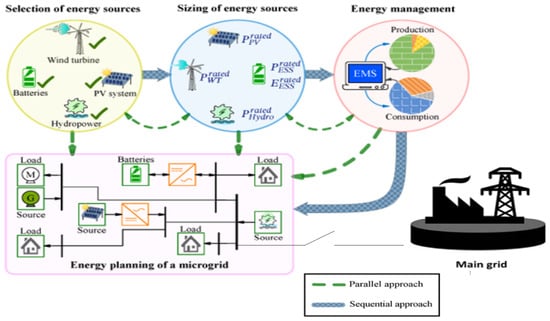
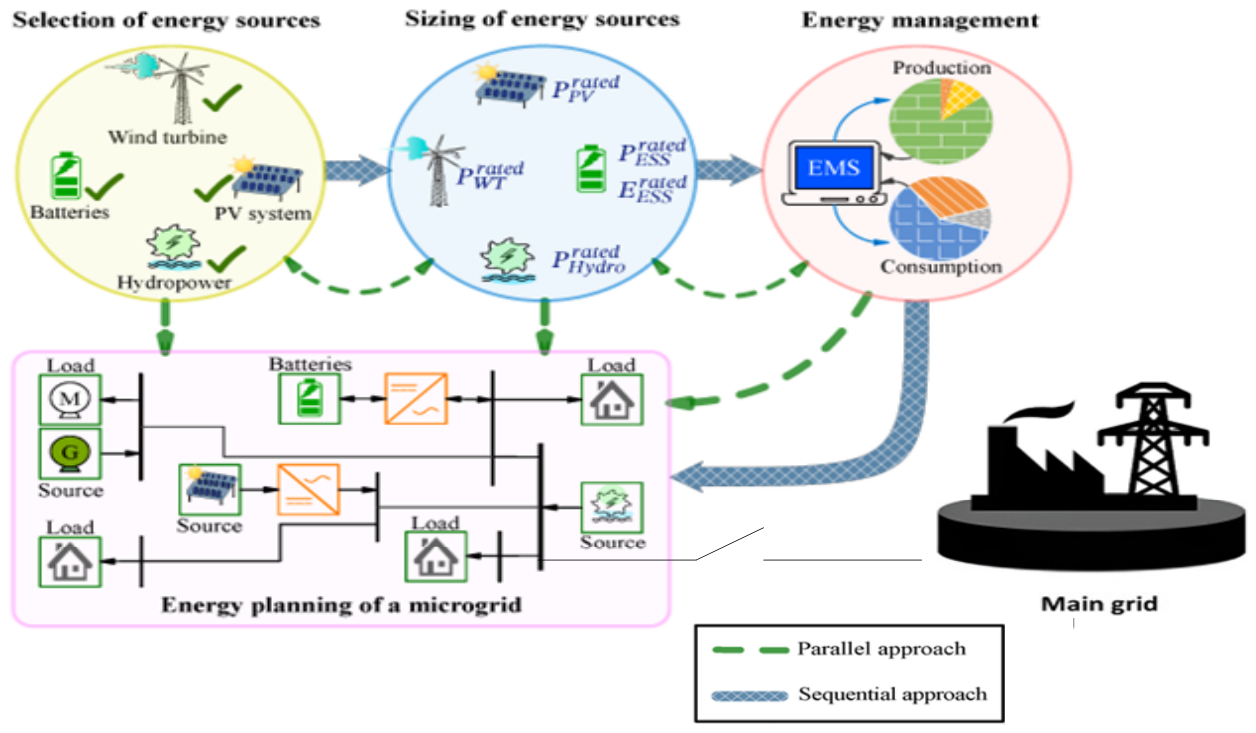


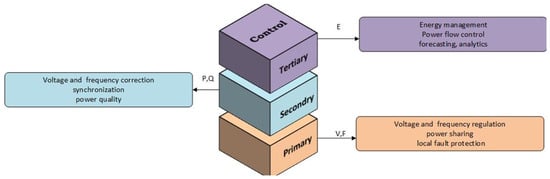
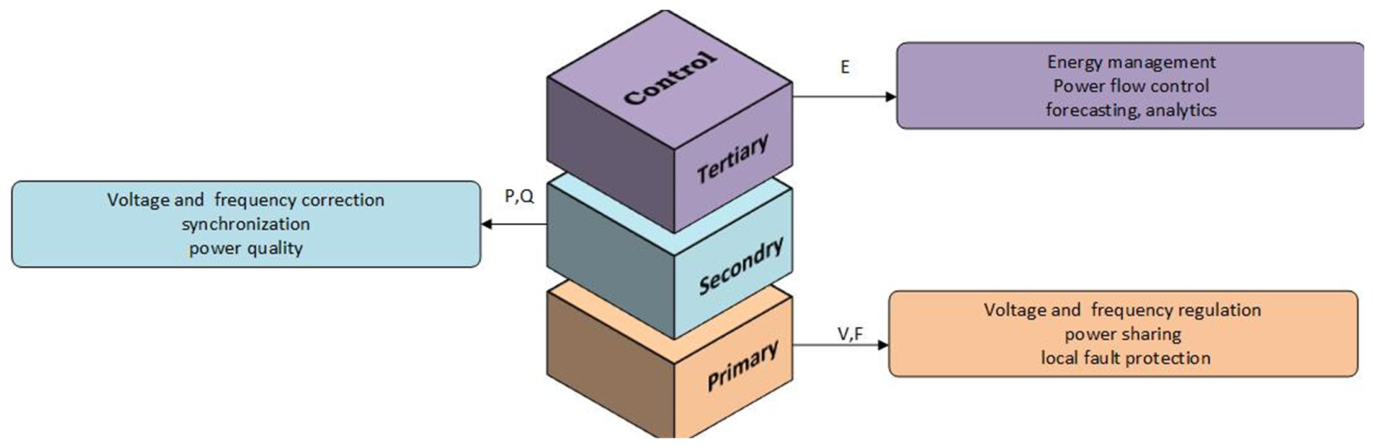
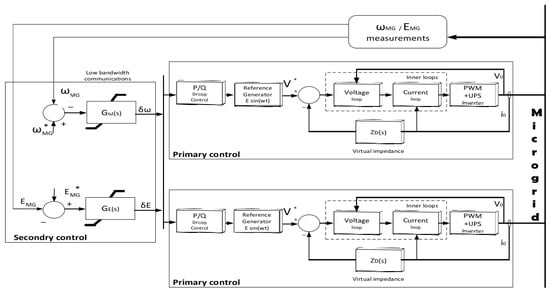
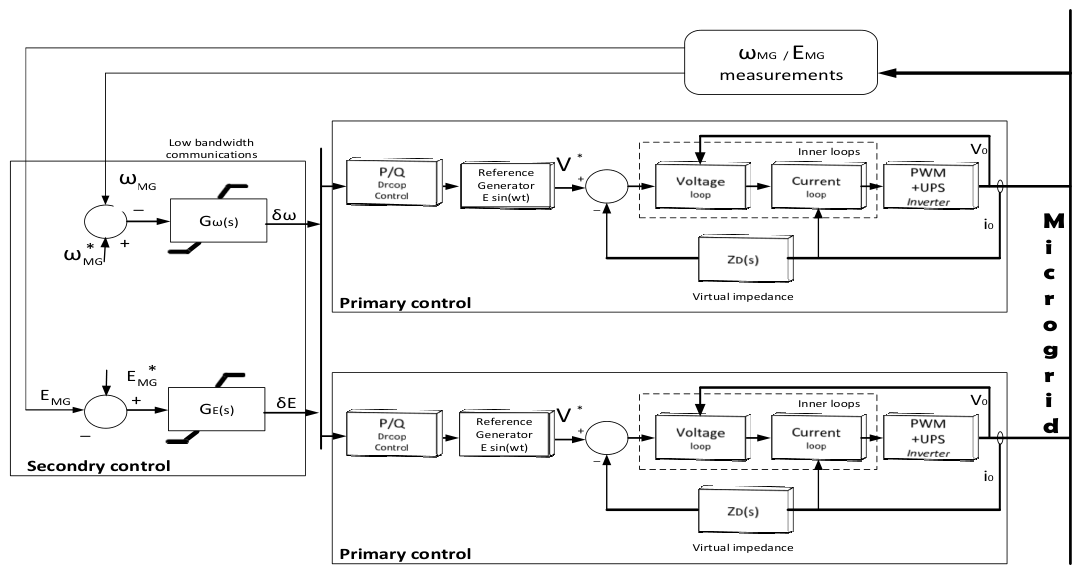
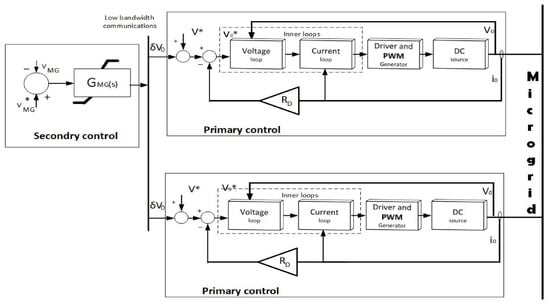
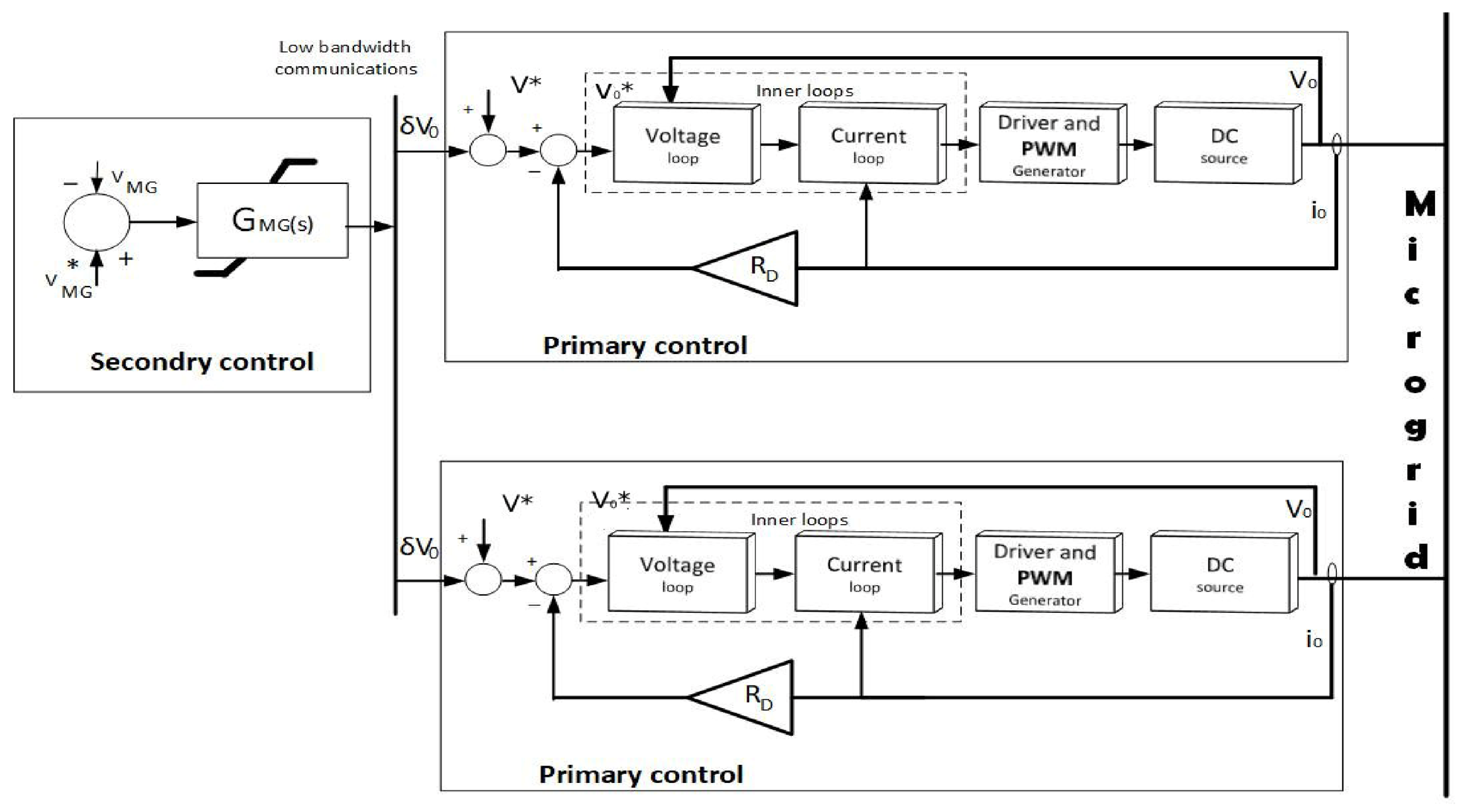
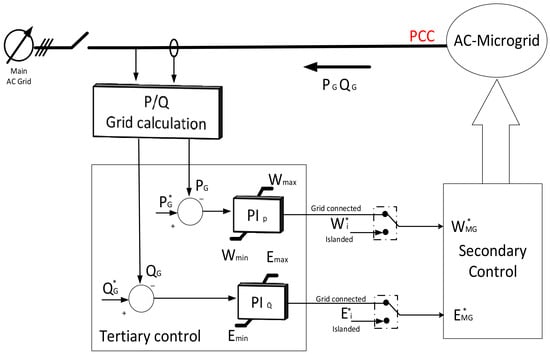
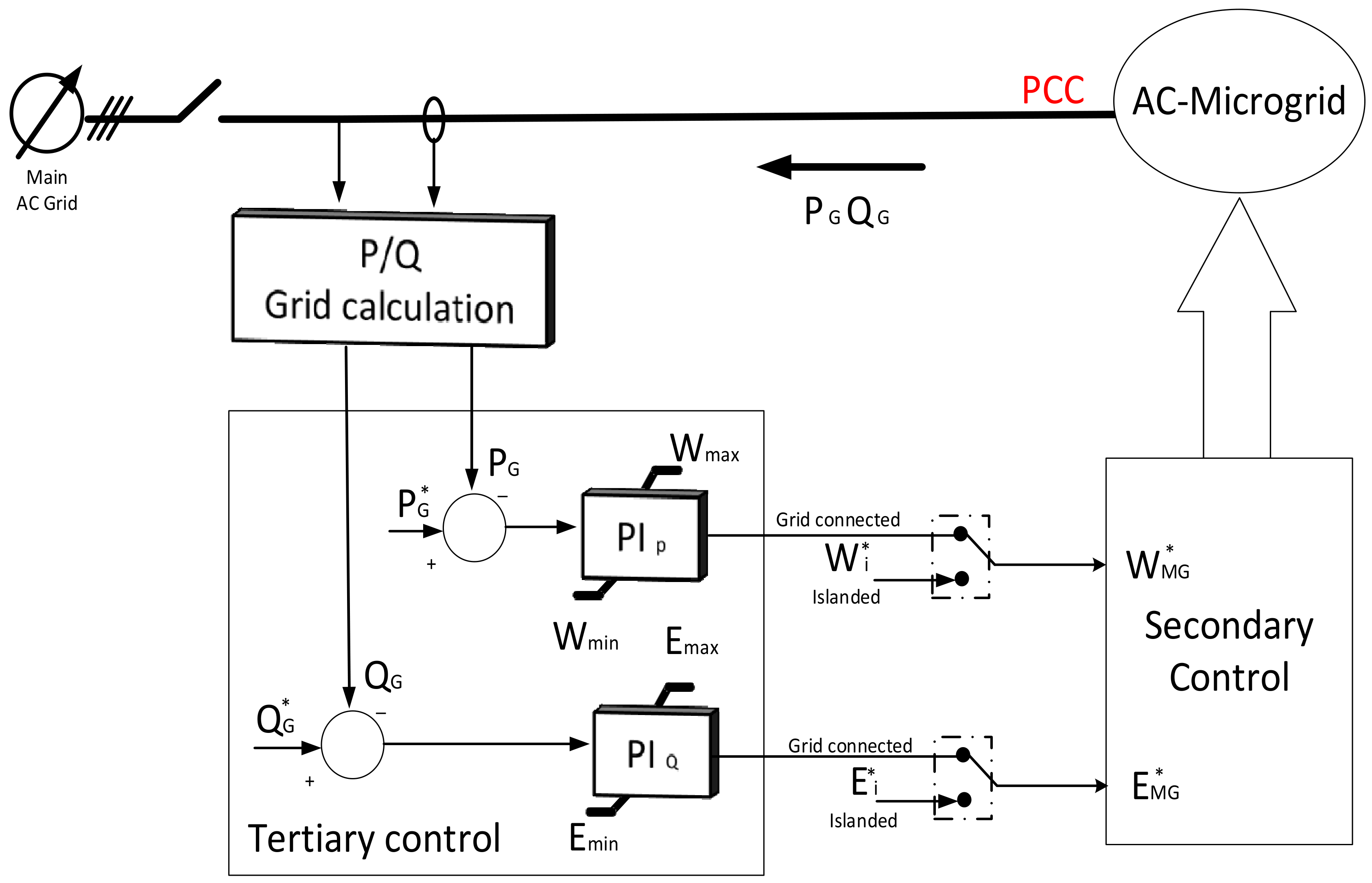
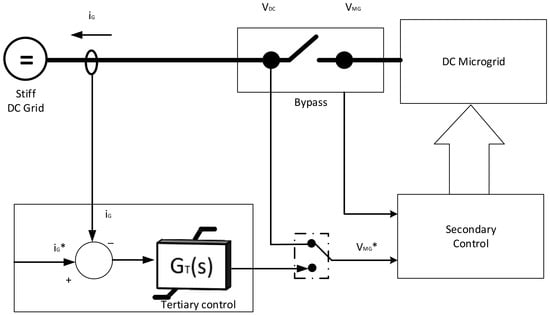
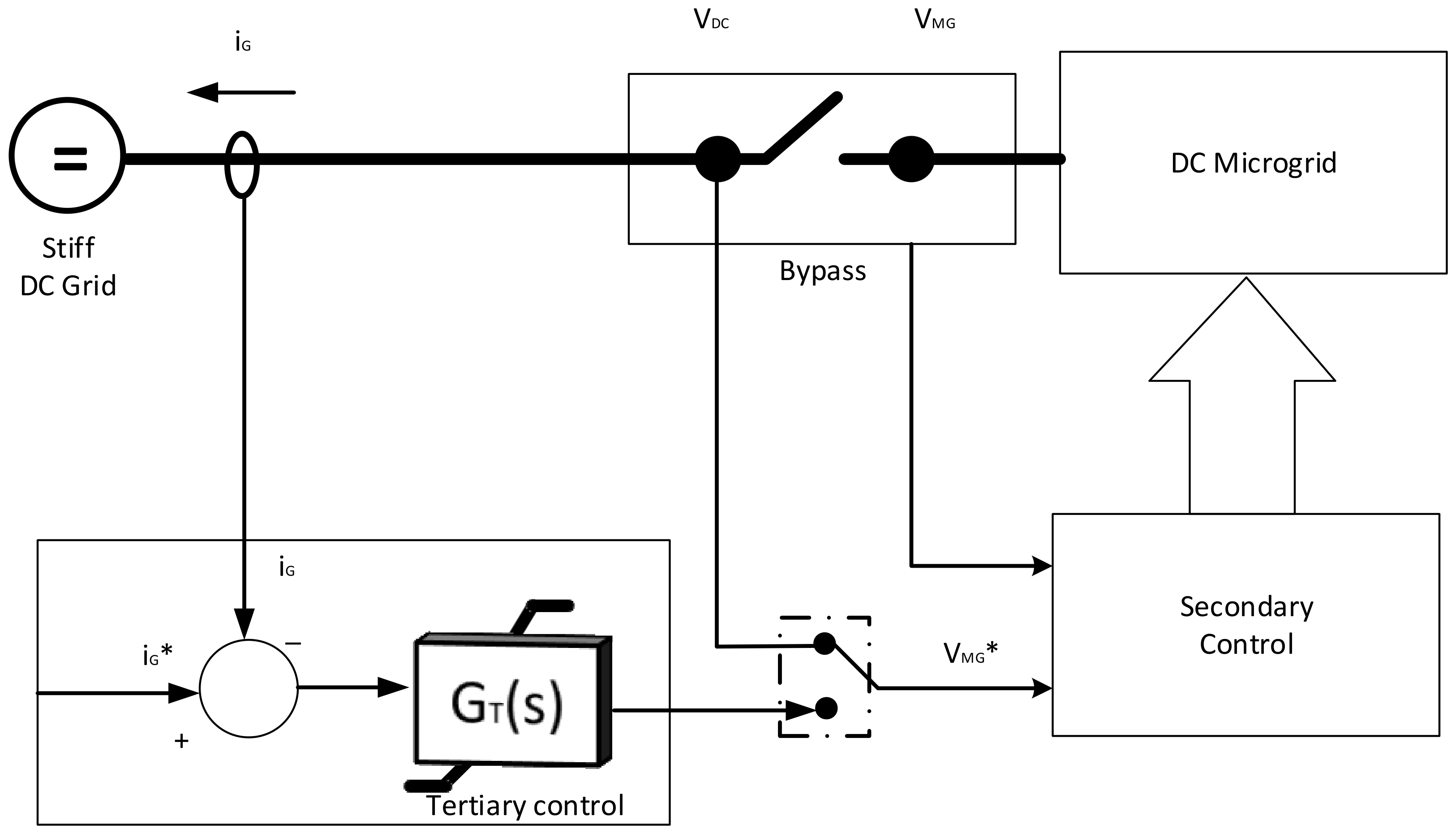
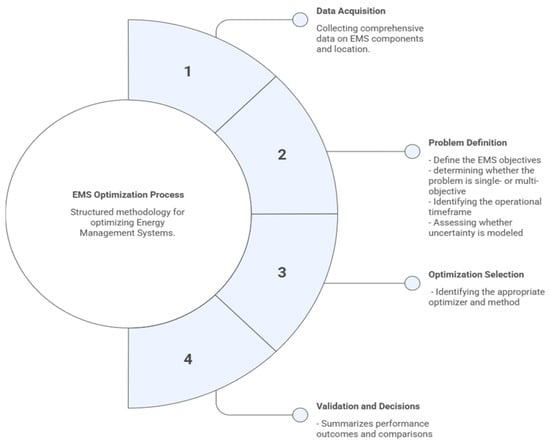
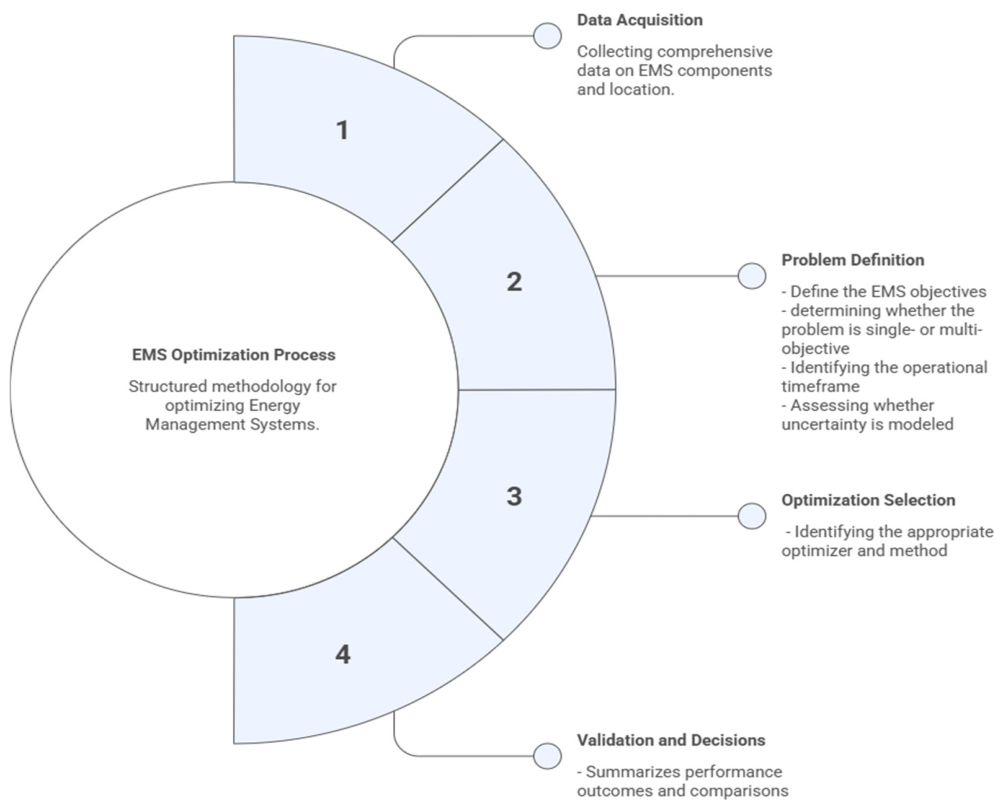
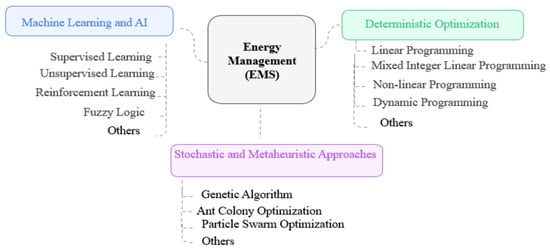
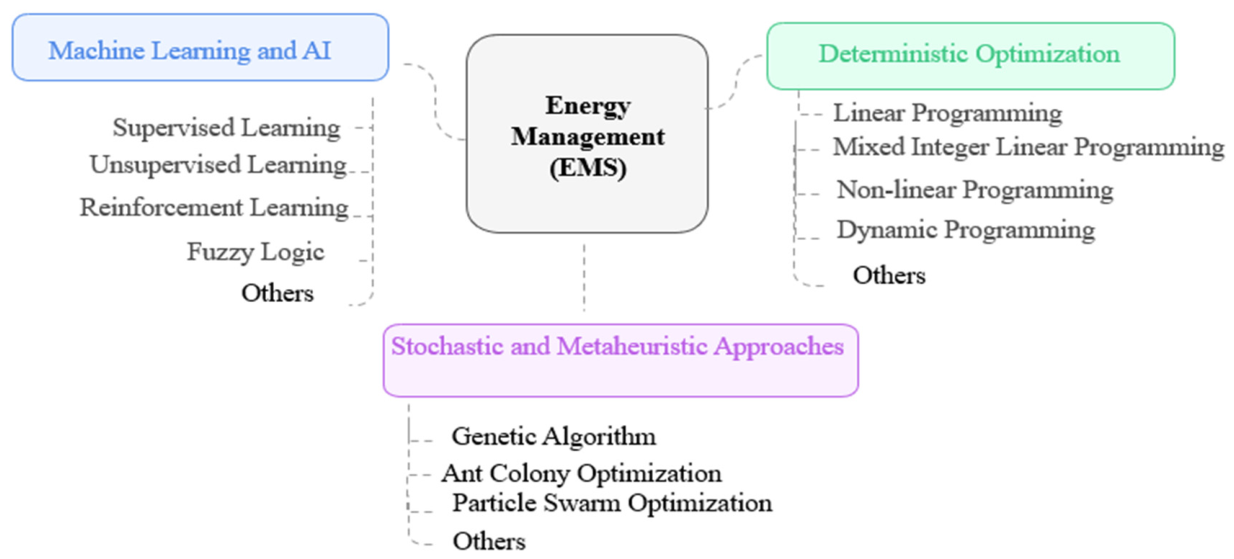

Disclaimer/Publisher’s Note: The statements, opinions and data contained in all publications are solely those of the individual author(s) and contributor(s) and not of MDPI and/or the editor(s). MDPI and/or the editor(s) disclaim responsibility for any injury to people or property resulting from any ideas, methods, instructions or products referred to in the content. |
© 2026 by the authors. Licensee MDPI, Basel, Switzerland. This article is an open access article distributed under the terms and conditions of the Creative Commons Attribution (CC BY) license.