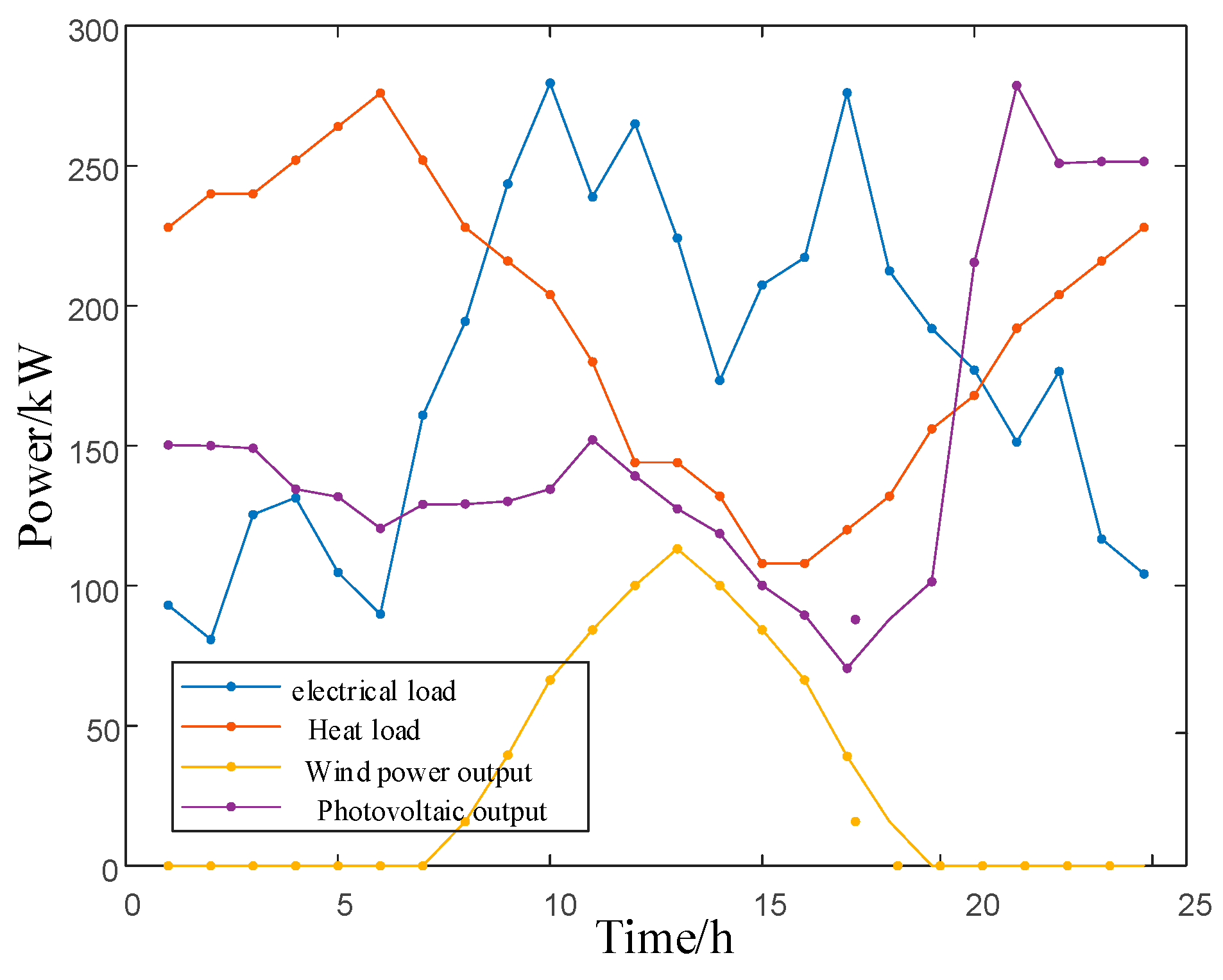
1. Introduction
Currently, the advancement of modern society faces persistent threats from global warming and energy crises. Consequently, the green and low-carbon Integrated Energy System (IES) is progressively superseding traditional power systems [
1,
2]. Functioning as an efficient carrier for renewable energy, the IES can effectively integrate diverse distributed energy resources, loads, and Electrical Energy Storage (ESS) devices [
3], thereby satisfying the multifaceted energy demands of the user side. However, the inherent volatility and stochasticity of renewable energy sources often lead to significant renewable energy curtailment [
4], complicating IES scheduling. Fortunately, demand response (DR) from flexible loads, such as Electric Vehicles (EVs), offers a viable solution to mitigate this curtailment [
5,
6]. Nevertheless, uncoordinated EV charging and discharging behaviors inevitably exacerbate load fluctuations and increase the scheduling complexity for Electric Vehicle Charging Stations (EVCS) [
7]. Therefore, effectively coordinating the IES, EVCS, and load aggregators within a multi-stakeholder scenario to minimize operating costs and enhance renewable energy consumption presents a significant challenge.
Extensive research has been conducted domestically and internationally on the optimal scheduling of IESs. Reference [
8] proposed an optimization strategy that enhances the economic performance of an IES through the coordinated complementary operation of multiple energy carriers. However, the inherent volatility and uncertainty of renewable energy pose obstacles to the economic scheduling of the IES. Reference [
9] further increased the renewable energy penetration rate and achieved higher profits by coordinating ESS with demand response. Reference [
10] incorporated various flexible loads into demand response but neglected the application of Power-to-Gas (P2G) devices. Conversely, Reference [
11] considered P2G technology and proposed an integrated demand response model accounting for multi-energy loads, including electricity, gas, and heat. Reference [
12] investigated the impact of price-based demand response on the economic operation of an IES and analyzed the effects of varying electricity prices on an IES integrated with Carbon Capture and Storage (CCS). In the aforementioned studies, demand response models typically bind user interests directly with IES interests or treat user demands merely as constraints, failing to consider the interactive interest relationship and the iterative interaction process between the IES and the load side.
With the increasing popularity of EVs, they have become a common load within IESs. Consequently, integrating EVs into the low-carbon economic operation of IESs has emerged as a research hotspot in recent years. Given that EVs possess the dual attributes of controllable loads and energy storage devices, reference [
13] indicates that EV participation in power market scheduling is an effective approach for constructing a new power system dominated by renewable energy. References [
14,
15] considered EVs’ participation in the economic scheduling of an IES; however, these approaches focused solely on charging behaviors, failing to fully exploit the demand response potential of EVs. References [
16,
17] employed dynamic electricity pricing to guide EV charging and discharging behaviors, achieving coordinated control and further enhancing the consumption of renewable energy output. However, the aforementioned literature primarily focused on the interests of EVCS, failing to achieve a win-win situation for multiple parties in multi-stakeholder scenarios.
Existing research indicates that bi-level programming methods are widely utilized to address interest coordination in multi-stakeholder scenarios. References [
18,
19] constructed bi-level optimization models based on the matching degree between renewable energy and loads, where the upper layer optimizes energy prices and transmits them to the lower level, further improving the economic performance of an IES. Reference [
20] established a leader–follower game optimization model based on Stackelberg theory, utilizing the upper-level distribution network operator to set energy interaction prices to guide the optimal operation of multi-microgrid systems. These studies demonstrate that in bi-level optimization, the energy prices offered by the dominant entity directly influence the system’s optimal operation results. However, there remains a scarcity of literature regarding the establishment of energy-side pricing mechanism models.
While bi-level optimization effectively coordinates multi-stakeholder interests, the exploration of underlying energy-side pricing mechanisms remains insufficient [
21,
22]. Recent literature has begun to explore advanced pricing structures, such as Distribution Locational Marginal Pricing (DLMP) to reflect network congestion, and peer-to-peer (P2P) transactive energy pricing to encourage localized energy trading among prosumers [
23]. However, most of these models primarily target single-carrier electrical networks. There remains a critical gap in establishing a comprehensive, multi-carrier dynamic pricing mechanism that seamlessly integrates carbon emission penalties, EV charging spatial–temporal flexibilities, and multi-energy demand response within an Integrated Energy System.
Against this backdrop, this paper investigates the comprehensive dynamic pricing mechanism and the active participation of EVs and load aggregators in the economic scheduling of the IES within multi-stakeholder scenarios. Firstly, considering factors such as EVCS scheduling plans, carbon emissions, and load demand response, this paper proposes a comprehensive dynamic pricing mechanism. This mechanism guides lower-level EVs and electro–thermal loads to participate in the optimized operation of the upper-level IES operator, thereby formulating a scheduling plan that aligns with the interests of multiple parties. Simultaneously, to address the potential degradation of the user energy consumption experience during demand response participation, this paper constructs a load demand response utility model based on the electro–thermal load dissatisfaction coefficient [
24], incorporating load satisfaction into the system operating costs. Finally, CPLEX is employed to iteratively solve the IES-EVCS-load aggregator bi-level optimization model, and the optimal solution is selected via an optimal joint formula.
2. System Model
This paper constructs a bi-level optimization model composed of three entities: the IES, the EVCS, and the load aggregator. In this framework, the IES operator functions as the upper-level model. The IES proposed in this paper is capable of power exchange with the utility grid. The energy equipment within the IES includes Gas Turbines (GT), photovoltaic (PV) generation units, and wind power generation units. The heating equipment consists of a Gas Boiler (GB), while energy storage devices encompass Electrical Energy Storage (ESS) and Thermal Energy Storage (TES). Furthermore, the system incorporates Carbon Capture and Storage (CCS) and Power-to-Gas (P2G) technologies. The IES purchases electricity and natural gas from the utility grid at wholesale market prices and subsequently sells them to the lower-level Electric Vehicle Charging Stations and load aggregators at retail market prices.
To clarify the “data-model-driven” optimization framework proposed in this paper, it is essential to distinguish between the data-driven parameters and the physical model components. The physical model layer encompasses the thermodynamic and electrical operational constraints of the equipment, including Gas Turbines (GT), Gas Boilers (GB), Carbon Capture and Storage (CCS), and Power-to-Gas (P2G). Conversely, the data-driven layer utilizes predictive insights and historical statistics to formulate boundary conditions and user behaviors. Specifically, parameters such as the EV arrival time distribution (µ = 17.47, б = 3.41), baseline load demand profiles, and wind/solar power generation forecasts are derived from historical data mining. The synergistic integration of these two layers ensures that the optimization is physically feasible while remaining adaptable to actual statistical uncertainties.
2.1. Upper-Layer IES Operator Model
2.1.1. Gas Turbine Model
GT uses natural gas as fuel to convert the energy released after combustion into electrical energy. At the same time, a significant amount of waste heat is generated during the power generation process. To reduce thermal energy waste and achieve the decoupling of combined heat and power (CHP), this paper integrates Organic Rankine Cycle (ORC) technology into the
GT to utilize waste heat for power generation. Its mathematical model is as follows [
25]:
where
is the natural gas consumption within the gas turbine during period
t;
is the actual electrical power output of the GT during period
t;
represents the power generation efficiency of the
GT;
is the heating value of natural gas;
is the waste heat power output during period
t; and
is the power generation efficiency of the ORC technology.
It should be noted that in Equation (2), the power generation efficiency of the GT () is assumed to be a constant value. In practical thermodynamic operations, GT efficiency often experiences degradation under partial load conditions. In this paper, to ensure the computational tractability of the bi-level optimization and to maintain the problem within a Mixed-Integer Linear Programming (MILP) framework, a constant nominal efficiency is deployed under the assumption that the GT operates near its rated capacity during dispatch. Incorporating non-linear, part-load efficiency curves into the multi-stakeholder game model will be a valuable extension for our future work to further enhance the precision of the physical model.
2.1.2. Gas Boiler Model
The
GB system generates high-temperature gas by burning natural gas to output thermal power, thereby maintaining the system’s thermal energy balance. It features high combustion efficiency and strong heating reliability. Its mathematical model is as follows [
25]:
In the formula, is the thermal power output of the GB during time interval t; is the natural gas consumption of the GB during time interval t; denotes the thermal efficiency of the GB.
2.1.3. Carbon Capture Equipment Model
Unlike thermal power and gas-fired units, wind power generation exhibits randomness and intermittency in its output. These characteristics lead to significant wind curtailment. The emergence of
CCS technology offers a new pathway for curtailment mitigation. To further reduce system carbon emissions and enhance renewable energy integration rates,
CCS equipment has been introduced. Its mathematical model is as follows [
12]:
In the equation, is the amount of carbon dioxide captured by CCS during time period t; is the amount of carbon dioxide captured per unit of energy consumed by CCS; is the output power of CCS during time period t.
In the proposed localized Energy Hub framework, the synthetic natural gas (CH4) produced by the P2G equipment is assumed to be consumed locally by the system’s gas-fired equipment (such as the Gas Boiler) or injected directly into the distribution gas manifold. Consequently, the specific operational costs, compression energy consumption, and volumetric losses associated with long-distance methane transportation and large-scale storage tanks are omitted in this study. For future large-scale inter-regional IES models, explicit modeling of pipeline transient flows and methanation storage penalties will be necessary to capture the complete economic profile of P2G technologies.
2.1.4. Power-to-Gas Equipment
Power-to-Gas (
P2
G) converts electrical energy into chemical energy stored as natural gas, offering a pathway for further integration of renewable energy. Simultaneously,
P2
G enhances the coupling within integrated electrical energy systems. Its mathematical model is as follows [
11]:
In the equation,
represents the gas power output of the
P2
G system during time interval
t;
denotes the power conversion coefficient of the
P2
G system;
indicates the output power of the
P2
G equipment during time interval
t. Based on the principle of methanation reactions, the volume of CO
2 consumed by the electro-to-gas conversion equipment is identical to the volume of CH
4 produced. Therefore,
In the formula, represents the volume of CH4 produced by the electro-to-gas equipment; represents the gas purchase volume of IES during time period t.
2.2. Lower-Level Load Aggregator Demand Response Model
2.2.1. Load Aggregator Demand Response Model
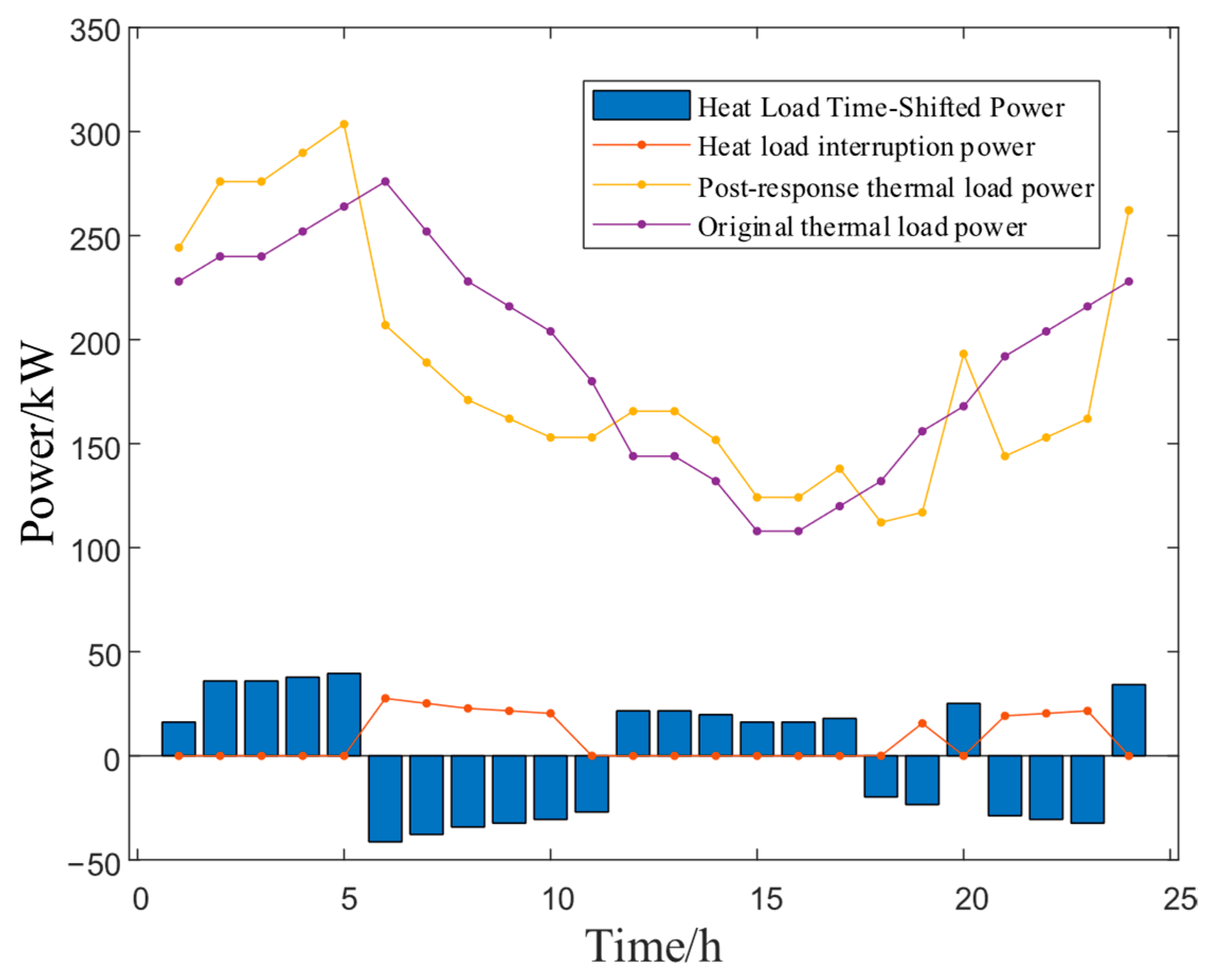
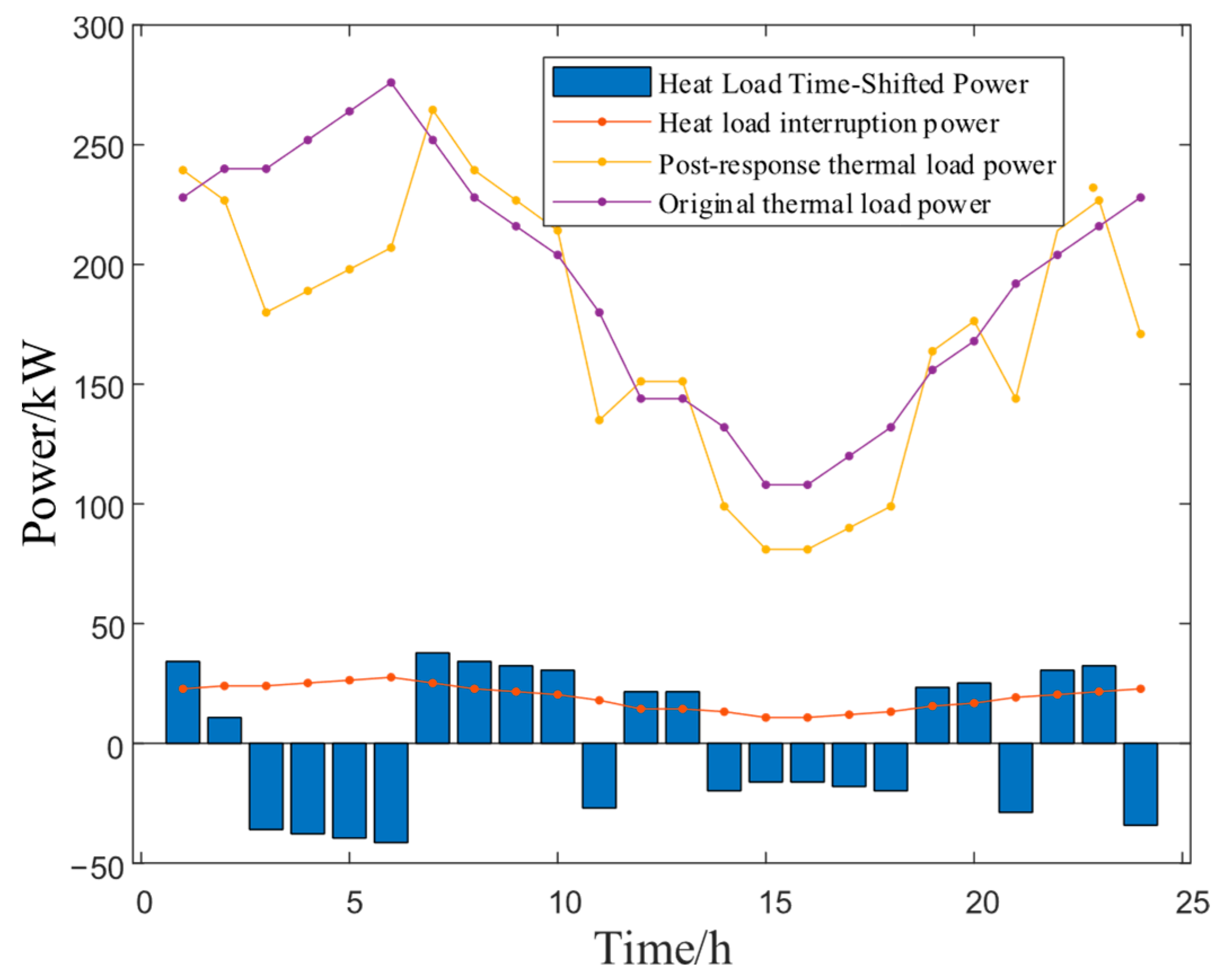
Electric heating loads are categorized into fixed electric heating loads and flexible electric heating loads. Based on demand response characteristics, flexible electric heating loads are further divided into time-shiftable electric heating loads and interruptible electric heating loads.
- (1)
Time-Shiftable Electric Heating Load Model
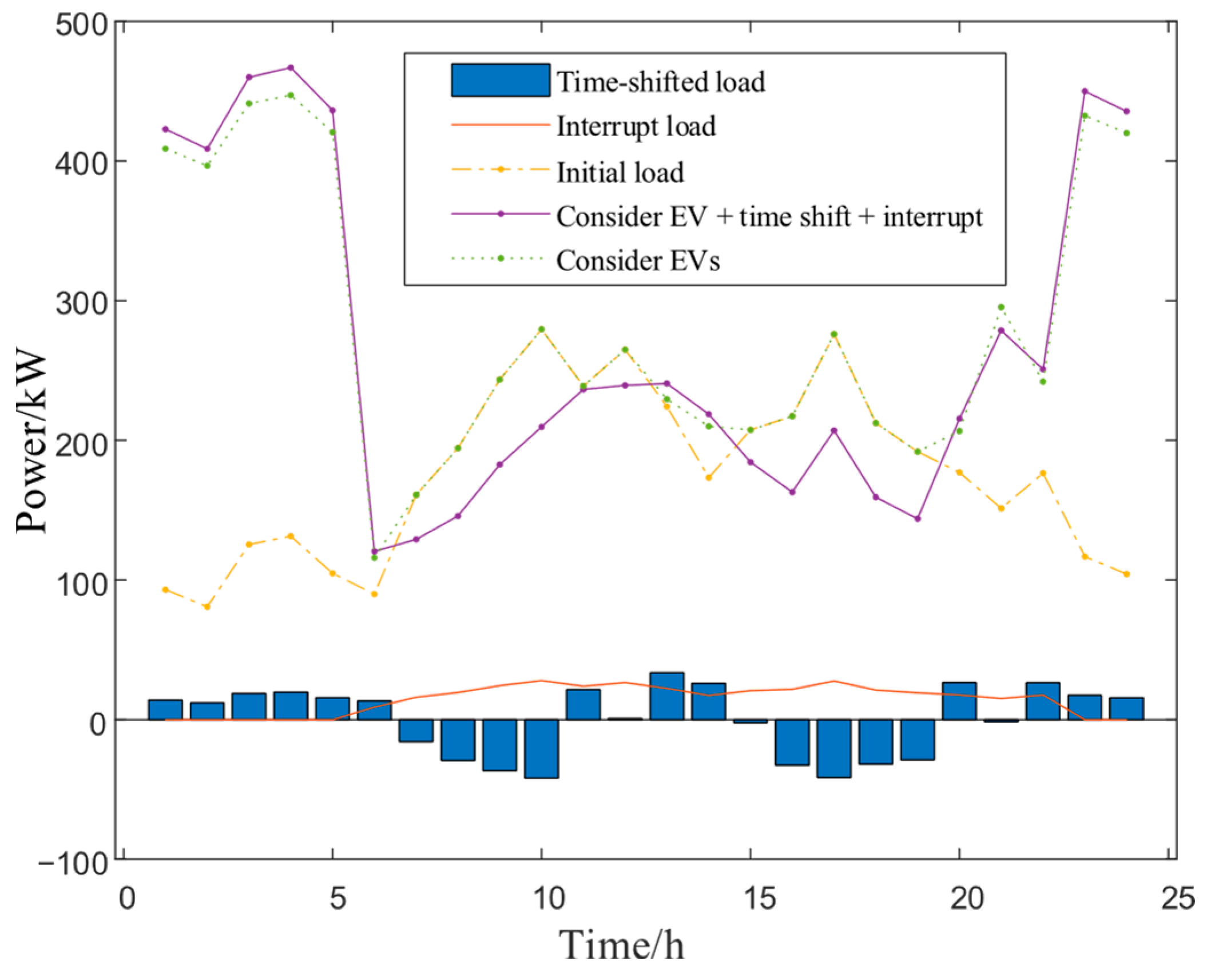
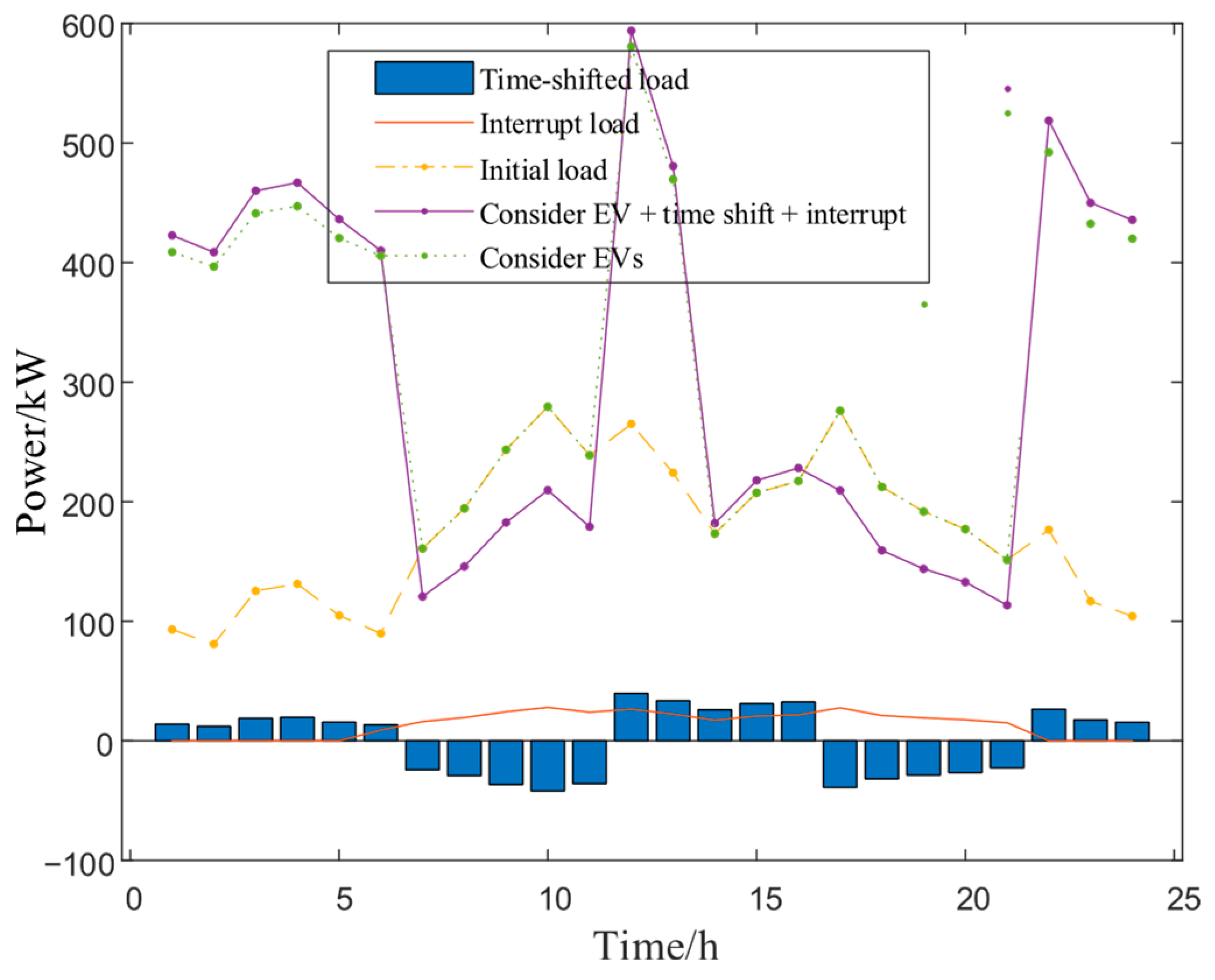
Time-shiftable electric heating loads exhibit lower requirements for uninterrupted electricity supply. They feature constant total energy consumption during scheduling while allowing flexible adjustments to consumption timing. The mathematical model for time-shiftable electric heating loads is described by the following formula:
In the formula, represents the number of scheduling cycle periods, which is 24; denotes the power value of the user’s time-shifted electrical load during period t; and are the minimum and maximum values of the time-shiftable electrical load power during period t, respectively. represents the power value of the time-shifted thermal load during period t; and are the minimum and maximum values of the time-shiftable electrical load power during period t, respectively.
- (2)
Interruptible Electric-to-Thermal Load Model
When power supply is insufficient or electricity prices are excessively high, users can interrupt portions of their load to alleviate supply pressure. The mathematical model for interruptible electric-to-thermal load is described by the following formula:
In the formula, is the interrupted electrical load power value during time period t; is the maximum interruptible electrical load power during time period t; is the interrupted thermal load power value during time period t; is the maximum interruptible thermal load power during time period t.
2.2.2. Comprehensive Demand Response Considering Dissatisfaction Costs
This paper employs incentive-based demand response, wherein load aggregators incentivize user participation through financial compensation. The compensation amount is typically determined by the power value of the participating electric heating load. Concurrently, this compensation is accounted for as demand response compensation costs within the load aggregator’s operational expenses. The specific model is as follows:
In the equation,
represents the demand response compensation cost for load aggregators during time period
t;
and
denote the compensation cost coefficients for interruptible electricity and heat loads, respectively. However, incentive-based demand response reduces users’ demand for electricity and heat, thereby diminishing system economic efficiency. Therefore, this paper introduces the dissatisfaction cost
to address this issue [
21]. The dissatisfaction cost simulates the discomfort level users may experience when reducing demand, defined as convex—meaning dissatisfaction increases sharply as demand decreases. Its mathematical model is as follows:
In the equation, represents the load aggregator’s demand response compensation cost at time t after accounting for dissatisfaction costs; and are two predetermined constants; and are relevant parameters for electric heating load users, reflecting their attitude toward electric heating load demand: the larger the values of and , the more inclined users are to reduce electric heating load usage to enhance satisfaction, and vice versa.
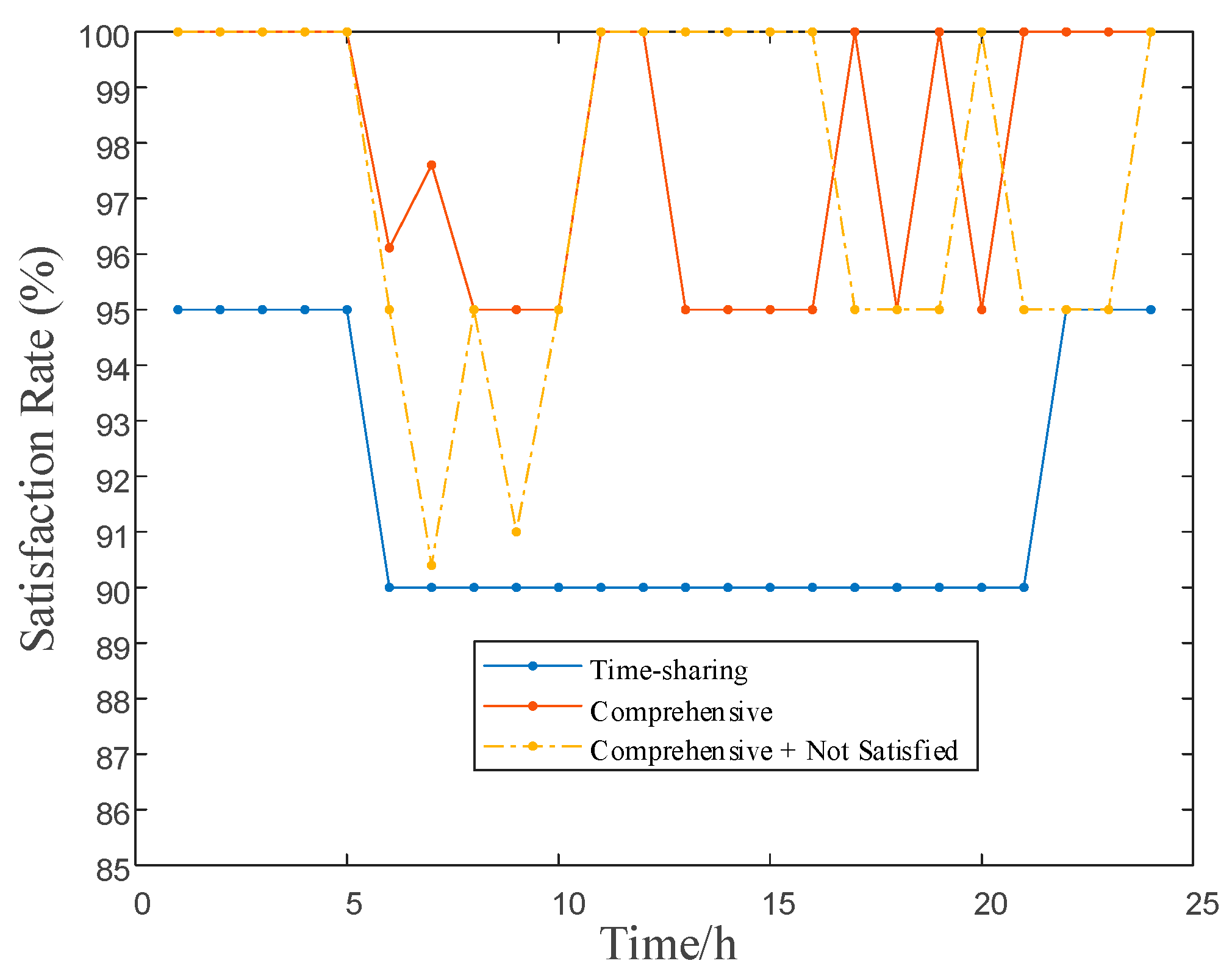
2.2.3. Comprehensive Satisfaction Index for Electric Heating
To reflect the overall satisfaction of users’ electric heating loads under demand response conditions, this paper proposes a user satisfaction index that considers comprehensive satisfaction with electric heating loads, based on Reference [
19]. Its mathematical model is as follows:
In the formula, represents the comprehensive satisfaction level of users within the scheduling cycle.
2.3. Electric Vehicle Model
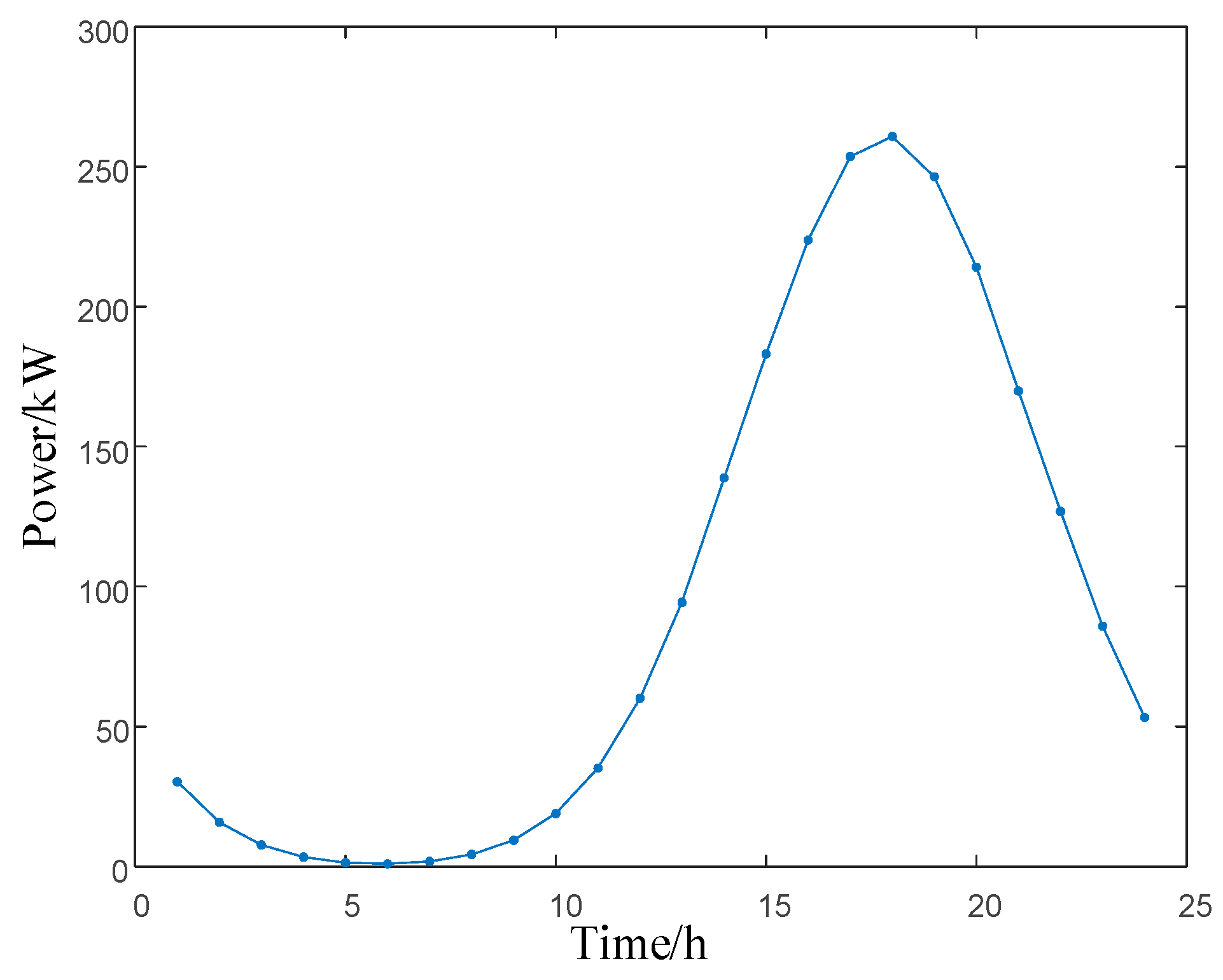
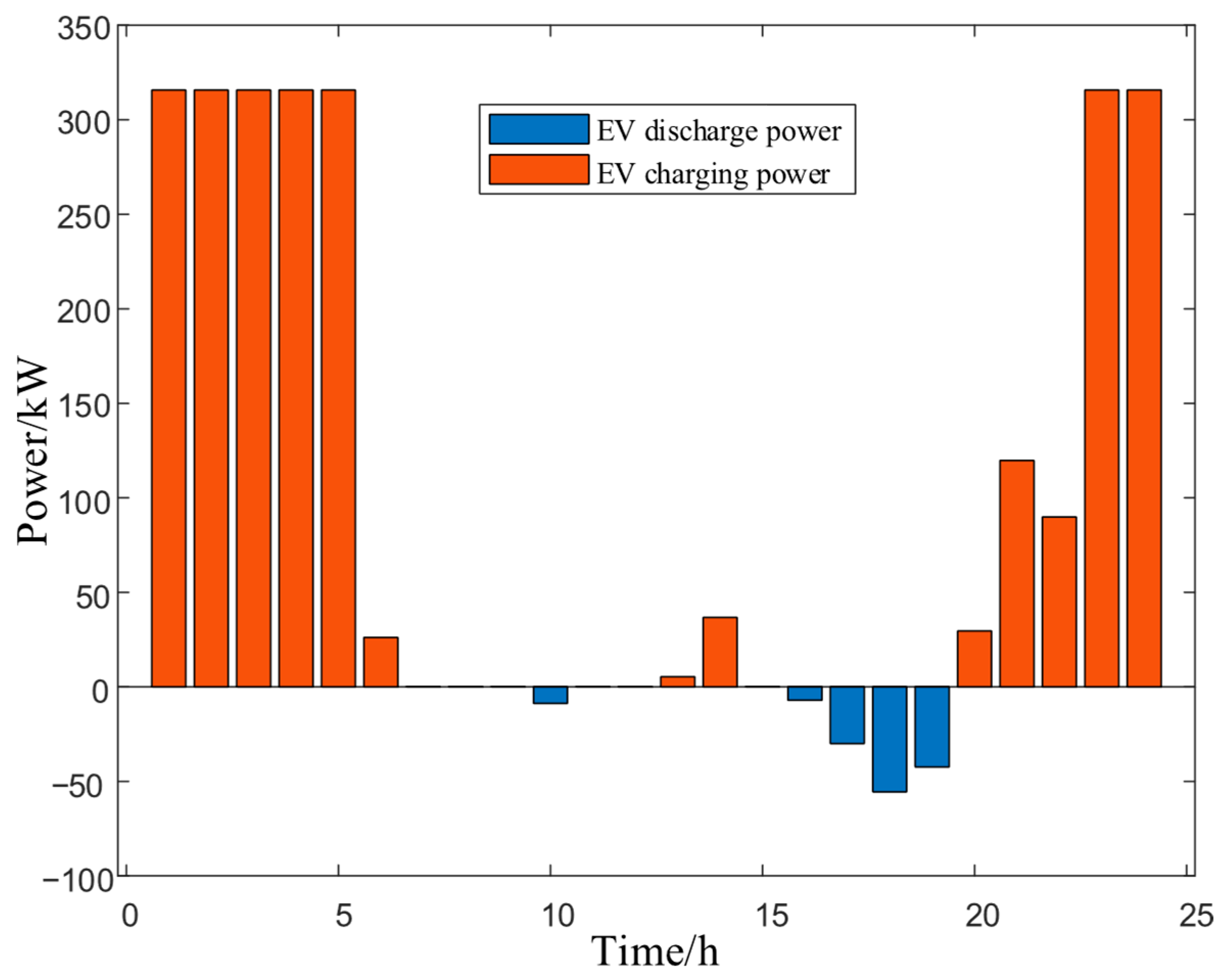
Extensive research indicates that the arrival times of EVs at EVCSs generally follow a normal distribution. The probability density function for EV arrival times at EVCSs is modeled as follows:
In the equation,
μ1 represents the mean time of EV arrival at the charging station;
σ1 denotes the standard deviation of EV arrival times at the charging station. In this study, the arrival times of EVs are modeled using a single-peak normal distribution with a mean arrival time (
µ) of 17.47 (approximately 5:30 p.m.). This parameter setting is specifically designed to simulate the charging behaviors at a residential or community EVCS, where the predominant charging demand occurs when users return home from work in the late afternoon and evening. While real-world commercial or workplace charging stations often exhibit bimodal distributions (e.g., morning arrival and evening return peaks), focusing on a residential single-peak pattern allows this paper to intensely investigate the complex grid interaction during the critical evening peak load hours. Future models will incorporate more complex stochastic arrival patterns, such as multi-peak bimodal distributions representing mixed-use commercial–residential areas, to further evaluate the adaptability of the EVCS operational plan under diverse scheduling scenarios. Here,
μ1 = 3.41 and
σ1 = 17.47. The daily load demand for EV charging is related to the daily driving distance and charging duration. Generally, the daily driving distance of EVs is assumed to follow a normal distribution, with the mathematical model as follows:
In the formula,
represents the EV’s daily mileage;
and
denote the standard deviation and its mean, respectively. Based on the EV’s mileage and its initial state of charge, the actual state of charge at the end of charging is
In the formula,
represents the state of charge at the end of charging;
is the initial state of charge of the
EV;
is the energy consumption of the
EV over 100 km;
is the maximum capacity of the
EV. The mathematical model for the
EV’s charging time is as follows:
In the formula, represents the charging time of the EV; represents the charging efficiency of the EV; represents the charging power of the EV.
While the normal distribution provides a robust statistical baseline for aggregated EV arrivals at a community-level EVCS, it inherently fails to capture the precise dynamics of irregular urban traffic patterns, such as sudden congestion events, spatial–temporal load migration, or complex driving behaviors. To accurately reflect the impact of urban traffic volatility on power distribution networks, future studies will need to couple the IES dispatch model with dynamic traffic assignment models or utilize data-driven Agent-Based Modeling (ABM) to simulate real-time, non-standard EV trajectories.
2.4. Tiered Carbon Emissions
To align with the national “dual carbon” strategy, this paper adopts the most common three-tiered step model for carbon trading. First, the carbon emission quota for IES is determined, followed by establishing the growth rate and growth interval of carbon trading costs. Higher carbon emissions lead to increased carbon trading prices, ultimately driving up carbon trading costs. For computational convenience, carbon emissions are calculated separately for each interval. The mathematical model is as follows:
In the equation, represents the actual carbon emissions during period t; and denotes the carbon emission intensities of GT and GB, respectively; represents the carbon quota for period t; , , and denote the carbon emissions for each of the three intervals; represents the carbon emission trading cost during period t; represents the base price in the carbon market.
2.5. Objective Functions of Upper and Lower Models
2.5.1. Upper-Layer Model Objective Function
The objective function
of the upper-layer IES comprises the following components: electricity purchase cost
from the main grid; gas purchase cost
from the main grid; curtailment cost
for wind and solar power generation; operating cost
for waste heat power generation equipment; carbon emission cost
;
P2
G operating cost
; revenue
from selling electricity and heat load. The mathematical model for the upper-layer IES operator’s objective function is as follows:
In the formula: represents the time-of-use electricity price sold by the utility grid; denotes the electricity purchased by the IES from the utility grid during time period t; represents the time-of-use gas price sold by the utility grid; is the wind and solar curtailment cost coefficient; is the wind and solar curtailment cost during time period t; and are the operating cost coefficients for ORC and P2G equipment, respectively. , , , denote the dynamic electricity prices at which IES sells energy from the grid, GT, renewable energy generators, and waste heat power generation equipment, respectively; is the dynamic thermal power price at which IES sells energy from GB; is the combined output of wind and solar power during time period t.
2.5.2. Lower-Layer Model Objective Function
The EVCS and electricity–heat load aggregator at the system’s lower layer act as energy purchasers. The objective function
represents the lower-layer entities’ energy procurement costs to upper-layer entities and the aggregator’s compensation costs for user participation in demand response. Its mathematical model is as follows:
2.6. Constraints
2.6.1. Electric Power Constraint Balance
To ensure safe and stable system operation, electric power balance constraints must be maintained:
In the equation, represents the electrical load demand during time period t; and denote the charging and discharging power of the ESS, respectively; is the ESS discharge efficiency, set at 0.9; and represent the charging and discharging power of the EV during time period t; is the EV discharge efficiency, set at 0.95.
2.6.2. Thermal Power Balance Constraint
The thermal power balance constraint is defined as
In the formula, represents the thermal load demand during time period t; and denote the heat release power of the TES; is the heat release efficiency of the thermal storage equipment, which is 0.9.
2.6.3. ESS and TES Operational Constraints
ESS operation is subject to constraints related to its state of charge/discharge, charging/discharging power limits, and ESS capacity. Therefore, the operational constraints for ESS are as follows:
In the formula, represents the ESS state of charge at time t; denotes the charge–discharge interval time, set to 1 h; and denote the lower and upper limits of ESS charging power, respectively; and denote the lower and upper limits of ESS discharging power, respectively; and denote the minimum and maximum state of charge of the ESS, respectively.
During operation, the
TES is also subject to constraints on its thermal storage state and heat storage/discharge power. The operational constraints for the
TES are as follows:
In the formula, represents the thermal storage capacity of the TES during time period t; and denote the lower and upper limits of the TES thermal storage power, respectively; and denote the lower and upper limits of the TES thermal discharge power, respectively; and denote the minimum and maximum thermal storage capacities of the TES, respectively.
2.6.4. EV Operational Constraints
During EV operation, both the charging capacity and the charging/discharging power must remain within permissible ranges. The operational constraints for EVs are as follows:
In the formula, represents the battery capacity of the EV during time period t; and denote the maximum charging and discharging efficiencies of the EV, respectively; and denote the maximum and minimum capacities of the EV battery, respectively.
2.6.5. Equipment Capacity Constraints
All power and heating equipment within the system must operate within permissible limits during operation. Their operational constraints are as follows:
In the equation: and represent the minimum and maximum values of GT output power, respectively; and denote the maximum downward and upward ramp rates of GT, respectively; is the maximum conversion efficiency of the ORC device; and denote the maximum downward and upward ramp rates of GB, respectively; is the maximum thermal output power of GB; is the maximum output power of the main grid; is the maximum output power values of the wind and solar energy devices.
3. Two-Layer Optimized Scheduling Strategy
3.1. Comprehensive Dynamic Pricing Mechanism
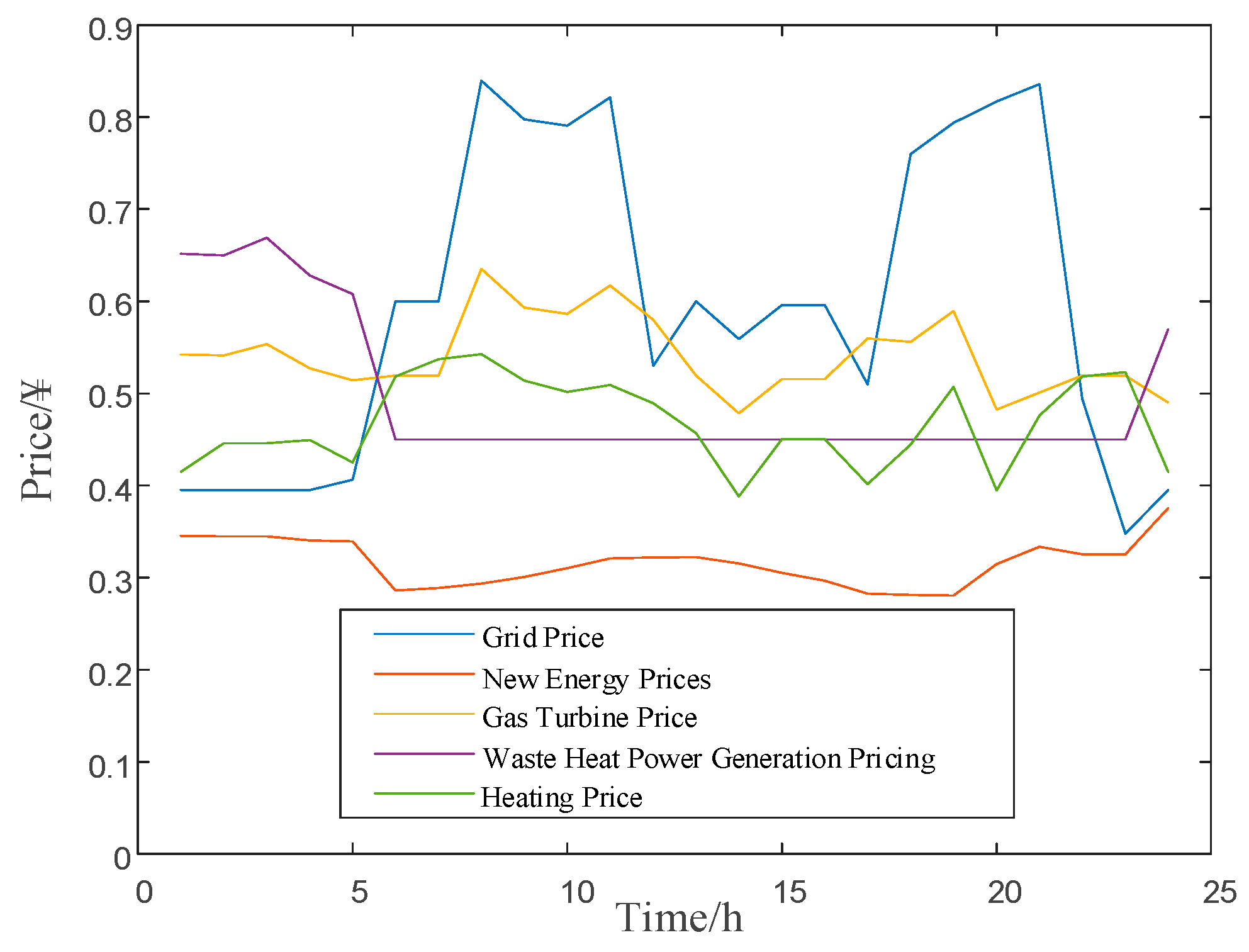
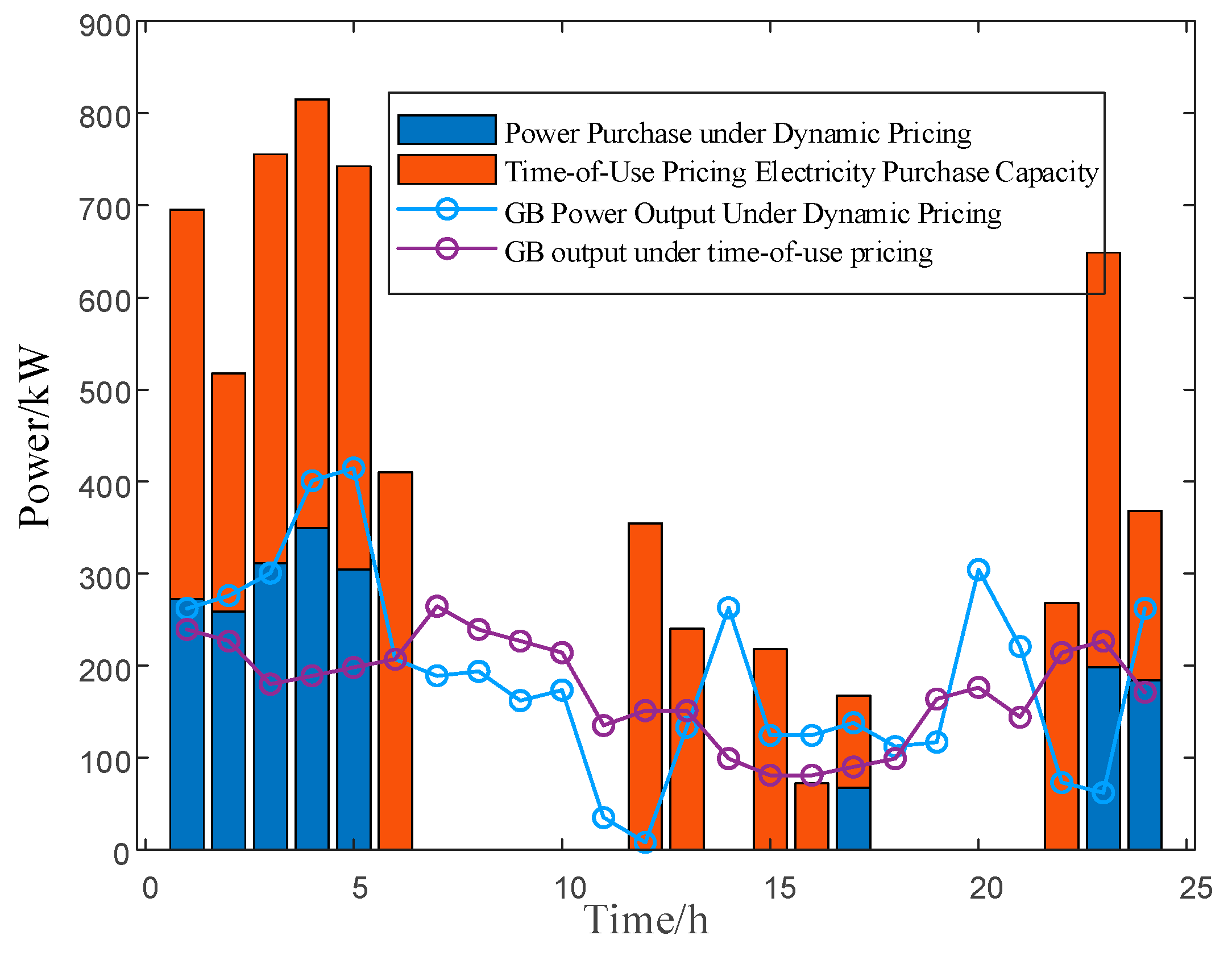
During the IES scheduling process, time-of-use pricing fails to effectively coordinate the distribution of benefits among multiple stakeholders. To address the issue of benefit allocation in IESs involving multiple stakeholders, this paper proposes a comprehensive dynamic pricing mechanism. This mechanism quantifies three factors—EVCS charging/discharging plans, system carbon emissions, and demand response—as determinants influencing energy prices. Simultaneously, to enable IES operators and downstream electricity consumers to effectively identify different energy sources, this paper implements independent pricing for energy from various power and heating supply equipment.
Adjustments to EVCS charging/discharging schedules impact system supply–demand dynamics [
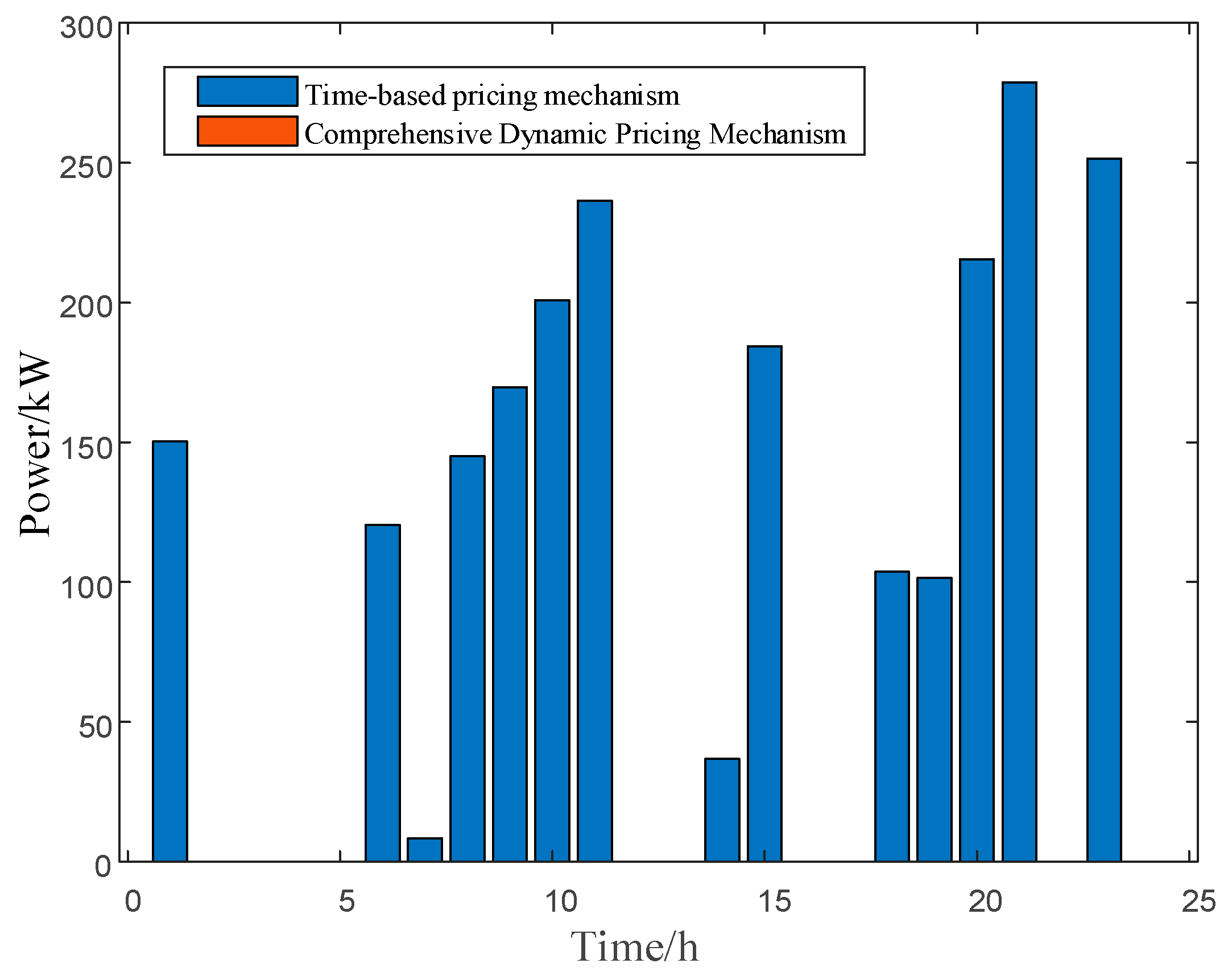
26], driving price fluctuations: increased user energy demand raises prices, and vice versa. Carbon emissions directly reflect an IES’s low-carbon performance. Therefore, this paper incorporates a tiered carbon emissions trading mechanism to quantify carbon emissions’ impact on upper-tier IES operators’ prices, exerting a positive influence on their energy pricing. To maximize user experience in electricity and heating load usage, this paper also considers the impact of interruptible electricity and heating loads on pricing. The utilization of demand response by lower-tier load aggregators exerts a negative influence on energy prices for upper-tier IES operators. These three factors dynamically regulate energy prices while interacting with each other. The proposed pricing mechanism mathematical model is as follows:
In the formula:
represents the adjustment value for electricity and heating prices affected by carbon emissions during time period
t;
and
, respectively, denote the adjustment values for electricity and heating power pricing influenced by demand response during time period
t. The mathematical model is
In the formula, represents the coefficient of carbon emissions’ impact on price. This paper employs the bisection method through multiple experiments to find the optimal solution, ultimately setting it at 0.1. and represent the coefficients of the interruptible electric heating load’s impact on price, respectively. After multiple experiments, this paper ultimately sets them at 0.5.
3.2. Joint Optimization Solver
To obtain the optimal solution for the joint optimization strategy and achieve the best economic benefits, this paper employs a joint optimization objective function [
19], whose mathematical model is as follows:
In the equation, represents the ultimate joint optimization objective. The optimization solution strategy in this paper utilizes MATLAB R2023b to call CPLEX for computation. The specific workflow for solving the two-layer model is as follows:
- (1)
Upper-tier IES operators sell energy to lower-tier EVCS and load aggregators at initial prices derived from time-of-use electricity and gas rates adjusted by supply-demand dynamics.
- (2)
Lower-tier EVCS and load aggregators optimize their dispatch plans based on the energy prices provided by upper-tier IES operators.
- (3)
The optimized dispatch plans from lower-tier EVCS and load aggregators are fed back to the upper-tier IES operator to calculate the IES operator’s profit.
- (4)
The upper-tier IES operator adjusts each energy price according to the integrated dynamic pricing mechanism proposed in this paper, then sells these adjusted energy prices to lower-tier EVCS and load aggregators.
- (5)
Calculate the upper-layer IES operator’s revenue and the lower-layer EVCS and load aggregators’ energy procurement costs.
- (6)
Compute the joint objective cost for each iteration using the joint optimization formula.
- (7)
Repeat the iterative process until the set number of iterations is reached.
- (8)
Derive the optimal solution for the joint optimization strategy based on the joint objective cost.
Due to multiple influencing factors between the upper and lower layer models, the revenue of the upper-layer IES operator and the energy procurement costs of the lower-layer EVCS and load aggregators remain in a state of constant negotiation. They do not exhibit gradual increases or decreases. Therefore, traditional methods of determining the optimal solution based on convergence are not applicable. To obtain the optimal solution for the two-layer model, this paper employs the joint optimization objective function to determine the optimal solution for the joint optimization strategy.
5. Summary
To enhance the absorption rate of renewable energy, address the coordination of interests among multiple stakeholders within the Integrated Energy System (IES), and achieve both economic efficiency and environmental sustainability in IES optimization scheduling, this paper establishes a two-level optimization model for IES incorporating EVCS and load aggregators. It further proposes a comprehensive dynamic pricing mechanism that considers EVCS operation plans, carbon emission intensity, and demand response. This mechanism guides IES operators, EVCS, and load aggregators toward optimal dispatch, achieving low-carbon economic dispatch for IES while ensuring user energy experience through the introduction of dissatisfaction costs. Finally, through simulation and validation, the conclusions drawn are as follows:
- (1)
The proposed integrated dynamic pricing mechanism effectively resolves the strategic interaction among IES operators, EVCS, and load aggregators, reduces joint optimization costs, prioritizes the absorption of wind and solar power, minimizes curtailed wind and solar power, and lowers system carbon emissions.
- (2)
The proposed integrated dynamic pricing mechanism effectively guides load aggregators to design demand response plans that promote supply-demand balance while ensuring overall user satisfaction.
- (3)
The proposed integrated dynamic pricing mechanism effectively guides EVCS charging/discharging behavior, reducing EVCS operational costs while safeguarding IES interests.
It should be noted that the current bi-level optimization model adopts the Energy Hub concept to characterize the interactions among gas, electricity, heat, and EVs, which simplifies the physical network topologies and neglects detailed network energy losses. In practical applications, energy loss within the distribution network and thermal pipelines is a critical issue in integrated energy management. Future research will extend the proposed data-model driven framework to incorporate detailed nonlinear network constraints and power flow dynamics, inspired by advanced studies on precise network models, to further enhance the practicality of the economic dispatch [
27].
Furthermore, the current case study primarily focuses on a winter scenario characterized by significant electrical and thermal load demands. While this effectively demonstrates the efficacy of the proposed pricing mechanism under peak heating stress, the dispatch behaviors may vary across different seasons. Future research will expand the model to multi-seasonal scenarios, incorporating cooling loads and absorption chillers during summer, to comprehensively validate the seasonal adaptability and year-round economic viability of the integrated dynamic pricing strategy.