3.1. Multi-Scale Load Decomposition and Granger Causality Analysis
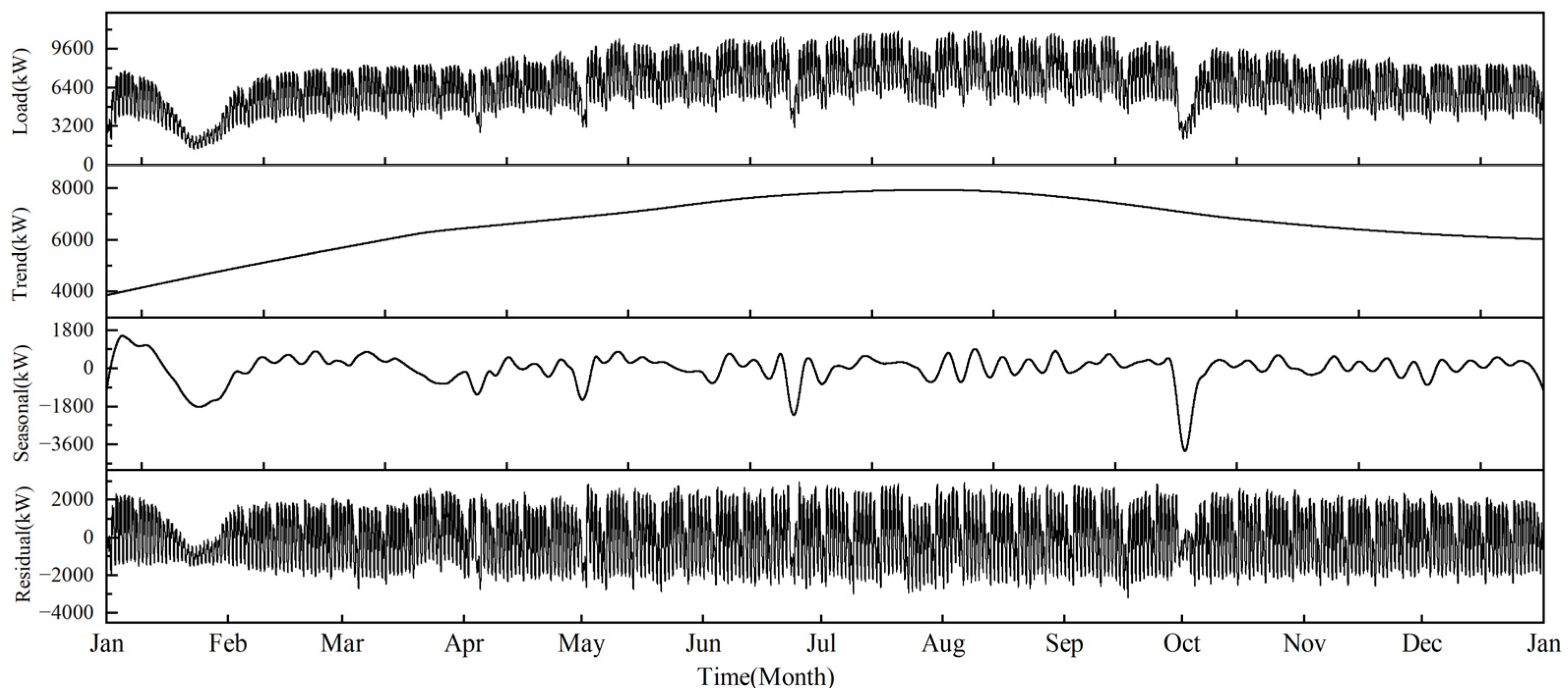
To elucidate the underlying structural characteristics governing transformer load dynamics, the STL method was employed to disaggregate the load time series, recorded at 15-min intervals, into trend, seasonal, and residual components, as illustrated in
Figure 1. This decomposition effectively reveals the multi-scale framework that shapes load evolution and the emergence of overload risk.
The trend component shows smooth and continuous changes over the year, and it reflects long-term load growth and overall climate conditions. This part sets the basic operating level of the transformer, so it mainly affects the chance of long-lasting high load states. The seasonal component describes repeated time patterns, including daily and weekly cycles, which cause regular load changes around the trend level. The residual contains fast and irregular changes, reflecting short-term load variations.
To measure the importance of each time scale, this study calculates and normalizes the variance of each STL component. As presented in
Table 2, the residual component contributes the largest share of total variance, while the trend component ranks second, and the seasonal component contributes the least. The strong influence of the residual part indicates high load variability at a 15-min time step [
22]. At this scale, short-term operational changes and user behavior play a major role in load variation.
The Granger test shows a clear causal link between the residual temperature part and the residual load part at short time lags. As presented in
Table 3, short-term weather changes provide useful predictive information for fast load changes. In contrast, the separated temperature parts show weak causal effects on slow load changes. This result suggests that weather mainly affects load through fast responses. These responses include the use of temperature-sensitive devices and quick changes in user behavior. Low-frequency load trends mainly depend on long-term demand growth and structural conditions.
3.2. Nonlinear Structural Modeling and Factor Network Analysis
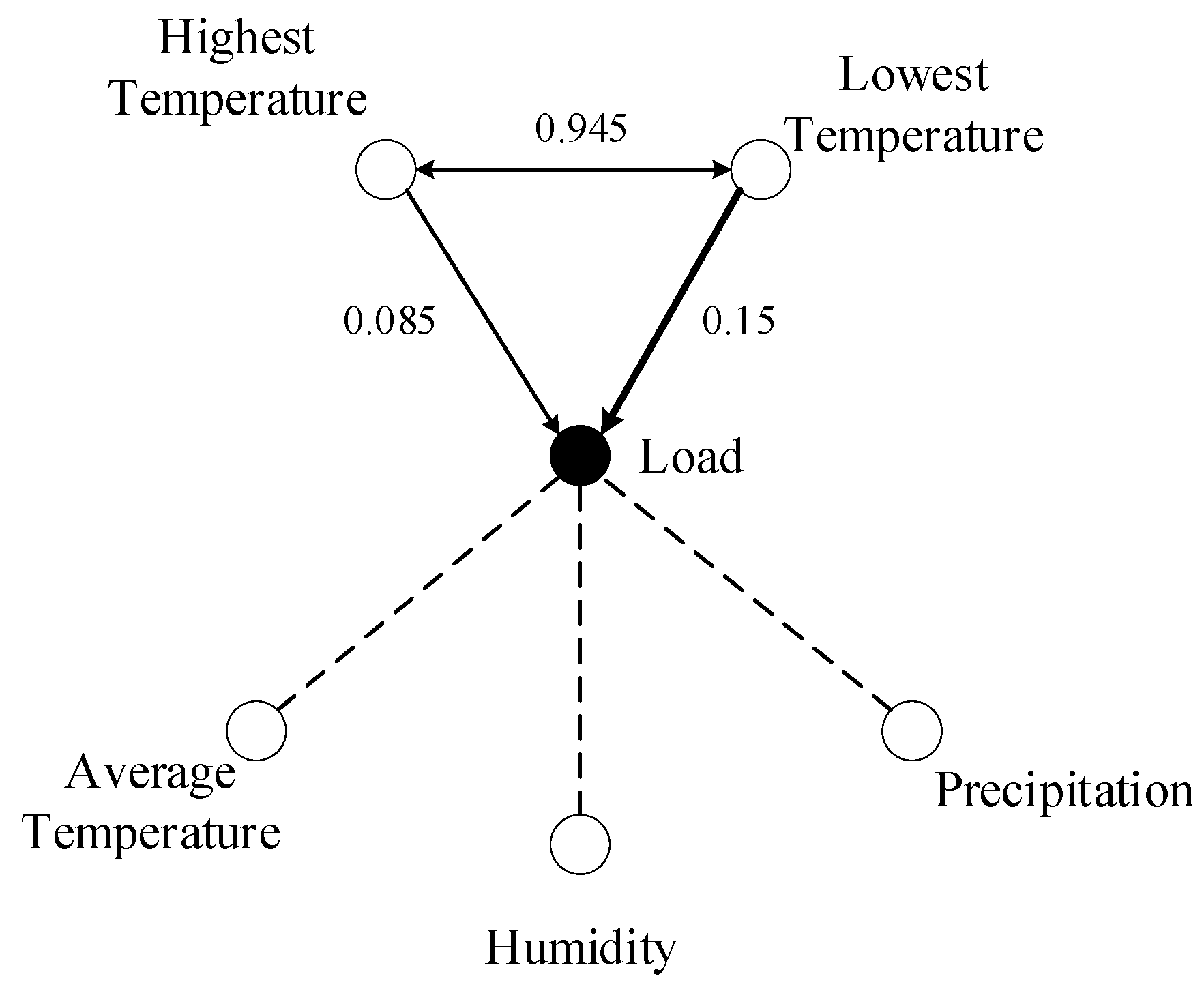
To study nonlinear links between daily average load and weather factors, this study builds a nonlinear influence network based on mutual information. The network shows a sparse structure, which means only a few weather factors have strong nonlinear links with the daily load.
Figure 2 depicts the daily nonlinear influence network after significance filtering. Among all tested factors, only maximum temperature and minimum temperature show clear nonlinear links with the load [
23].
As presented in
Table 4, it summarizes the nonlinear influence strength and network degree for each weather factor. The mutual information results show that minimum temperature has a slightly stronger link with load than maximum temperature. In contrast, average temperature, humidity, and rainfall do not show significant effects on the daily scale. This difference suggests that daily load responds more strongly to low temperature conditions, because heating demand often lasts for long periods during cold days. The results also show a strong mutual link between maximum and minimum temperatures, and this link reflects overall thermal conditions that shape daily load behavior.
Overall, the daily scale nonlinear network provides a clear structure of the main weather drivers. This structure supports later feature selection and multi-scale modeling in the forecasting framework. In this study, humidity and precipitation were specifically excluded from the final feature set based on a rigorous statistical screening. Although these factors are often considered in load analysis, our results showed that their mutual information with the target load fell below the significance threshold after False Discovery Rate (FDR) correction. This ensures that the model remains parsimonious and focuses exclusively on statistically robust causal drivers.
3.3. Integrated Load Forecasting and Overload Early Warning Model
Based on the proven impact of weather factors on load behavior, this section presents an integrated model. The model performs load prediction and overload warning at the same time. It links predicted load values directly to operating states, so it supports clear decision making. In contrast, the proposed framework merges these two tasks into one unified model. This design improves consistency, and reduces information loss between steps. The model uses weather variables as the main inputs, because earlier analysis confirms their strong causal effect on load changes. A nonlinear prediction model first processes these inputs, and generates short-term load forecasts. The predicted load series then becomes the only input for overload state judgment, so the decision path remains simple and easy to interpret.
Load behavior changes over time, so the model introduces a dynamic threshold scheme. These thresholds adjust according to weather correction factors and past operating data. This process allows the model to distinguish normal load, overload, and severe overload under different conditions. The model compares predicted load values with these adaptive thresholds. Based on this comparison, the model outputs probability-based load states instead of fixed yes-or-no results. This approach better reflects real operating uncertainty and supports safer early warning decisions.
Before model training, the input data were processed to match the requirements of the classification model. The validation data come from one transformer in a mixed residential and commercial area. The data cover one full year, and they include load and matching weather records. The dataset contains 106,176 samples in total. The study assigns 70% of the data to training and 30% to testing. After preprocessing, data completeness reaches 99.2%, and only 0.8% of points appear as outliers. The preprocessing step fills missing values through interpolation, so the final data quality meets analysis needs.
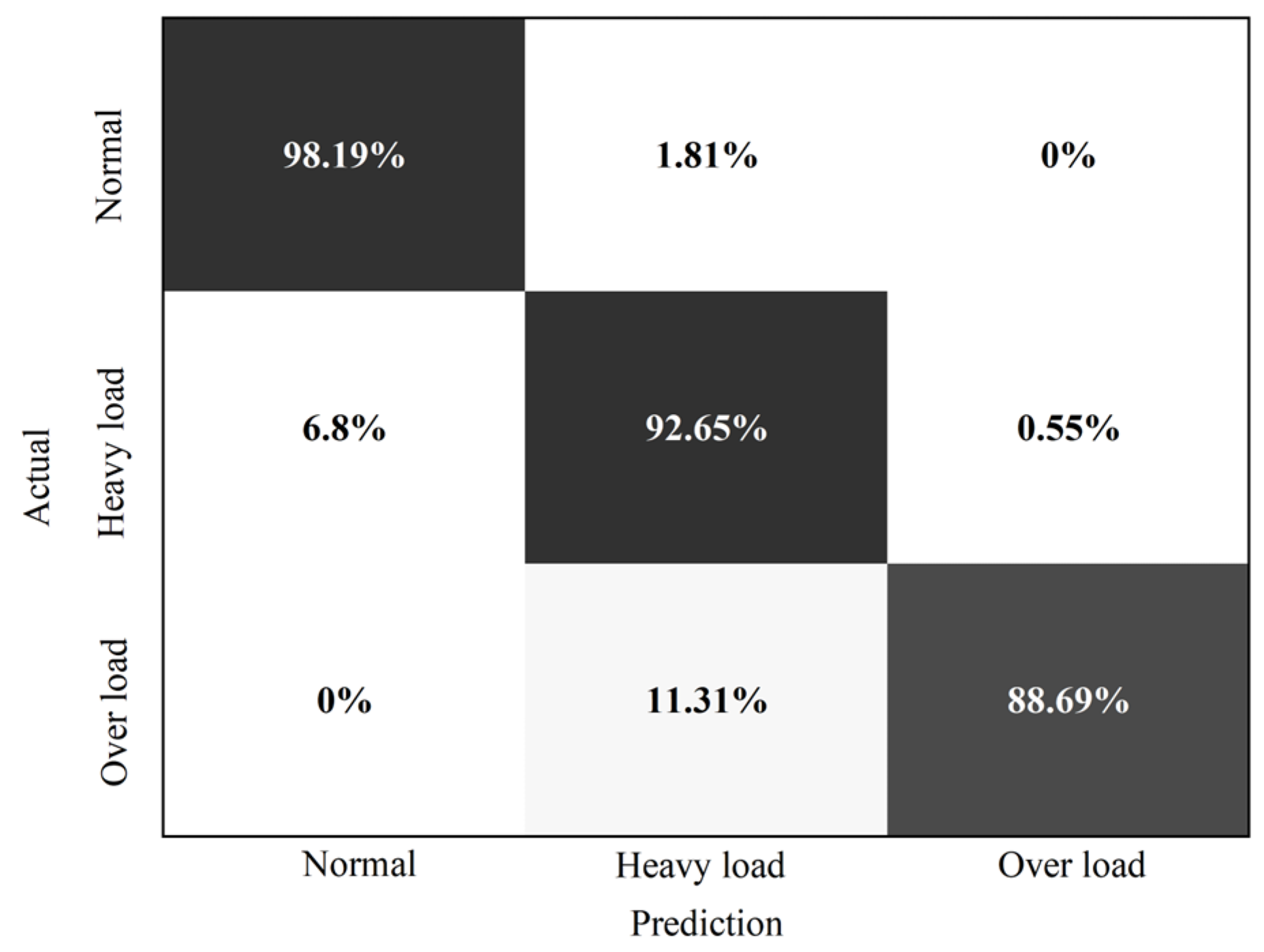
Based on the defined heavy overload states, this study builds a confusion matrix, as shown in
Figure 3.
Table 5 reports the accuracy, recall, and F1 score. The overall accuracy reaches 93.18%, which confirms strong state identification under normal operating conditions. The model maintains high prediction accuracy for all load states. The F1 score further shows balanced performance across categories. These results confirm that the model provides a strong and reliable assessment of heavy overload risk in distribution transformers.
The parameter
λ is the core indicator for adjusting the sensitivity of overload warnings, directly corresponding to the risk preference of power grid operation. With the default setting
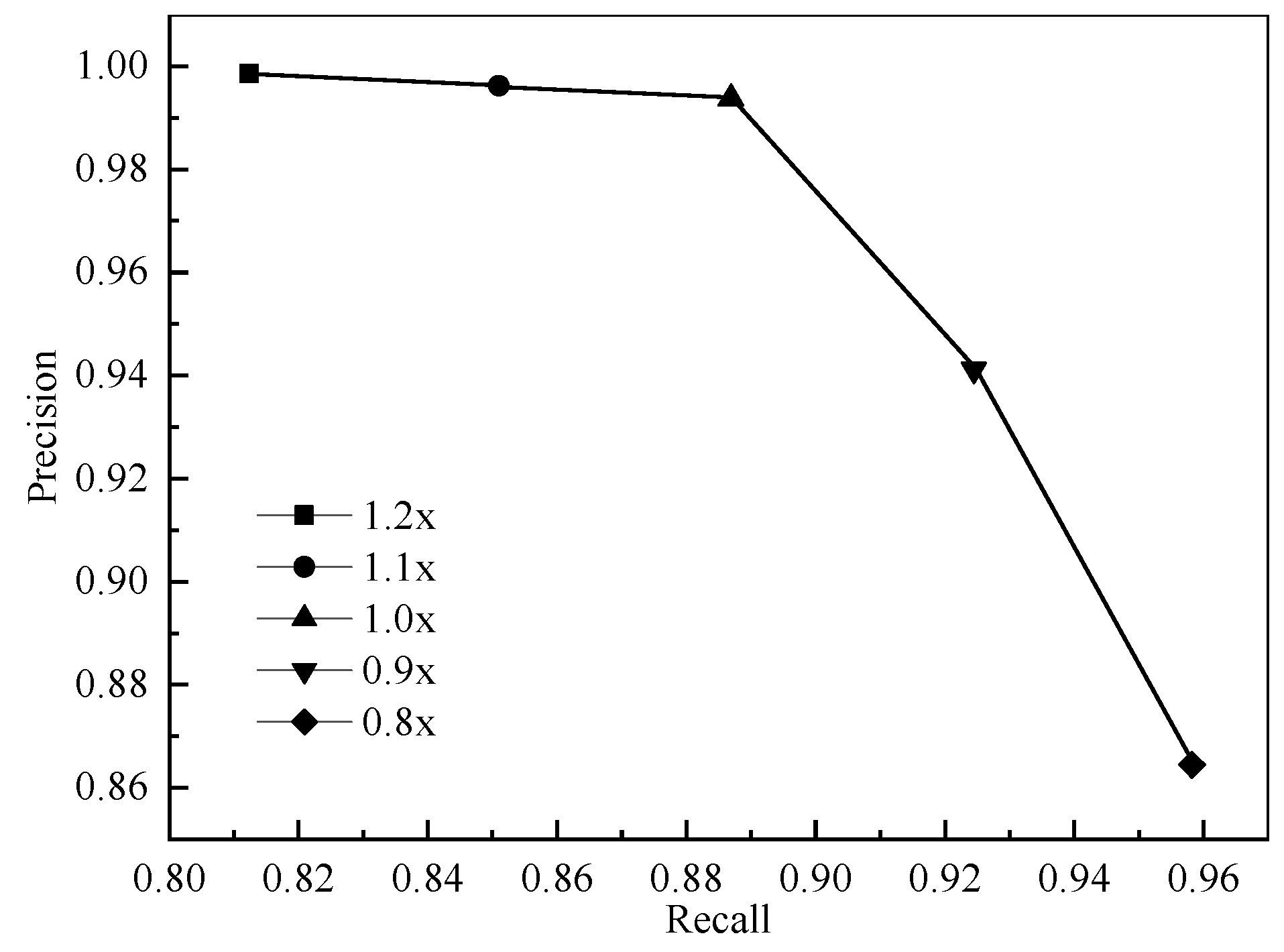
λ = 1.0, the model achieves an accuracy of 0.9938 and a recall of 0.8869 for overload conditions. If operators are more concerned about the safety risks caused by missed overload warnings,
λ can be increased to 1.5, which can capture more potential overload points and improve the recall rate. Experimental data show that even with different parameter values, the F1 score for overload identification consistently remains above 0.9, demonstrating the model’s strong robustness. These results are summarized in
Table 6.
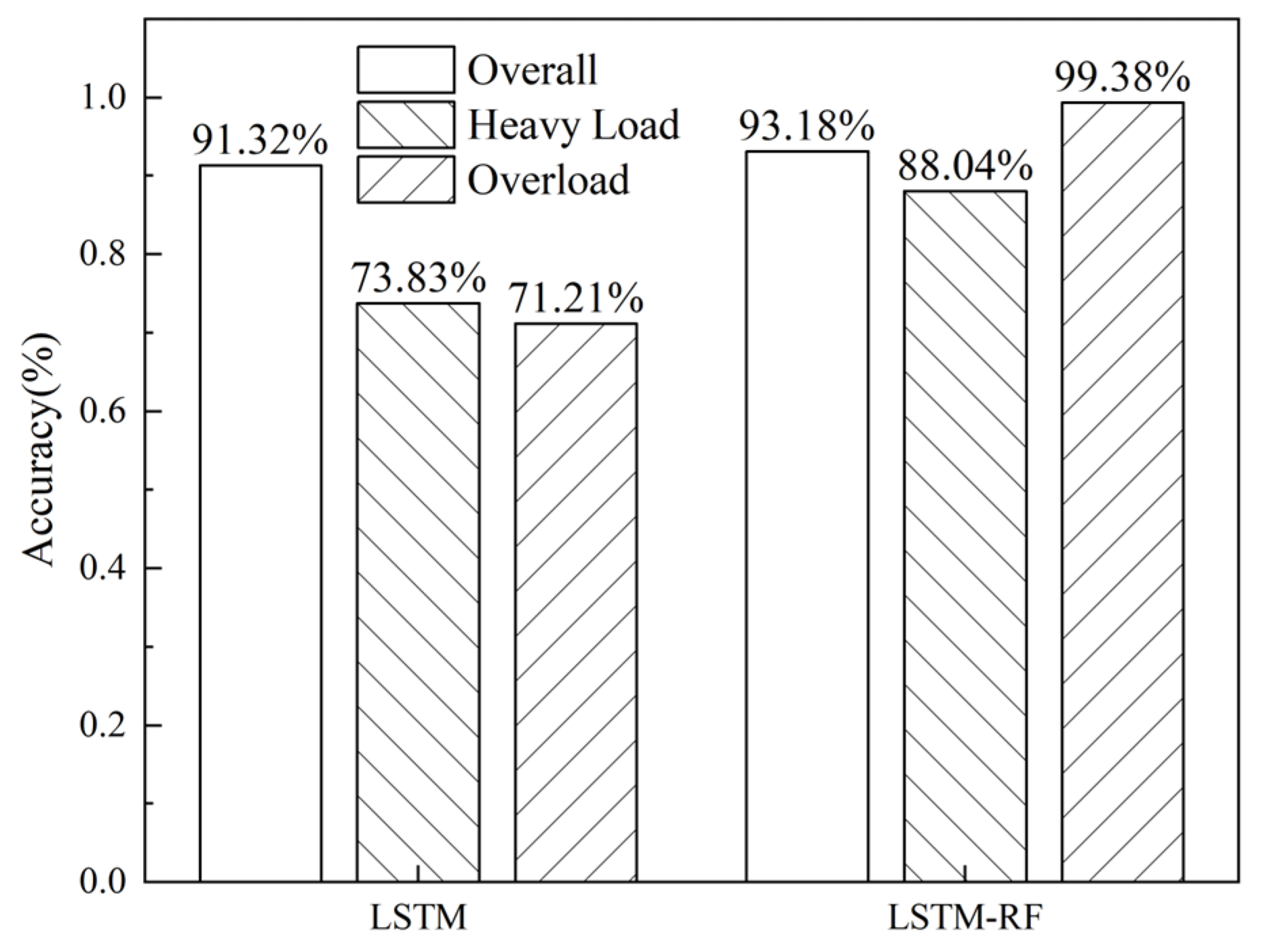
Figure 4 further compares the classification accuracy of the proposed model and a standard LSTM model. The comparison between the two methods shows clear gains in all key metrics. The improved algorithm raises overall classification accuracy by 1.86%, increases heavy load state recognition accuracy by 14.21%, and improves overload state recognition accuracy by 28.17%. These improvements strengthen the reliability of equipment state assessment in real operations.
To test how well the model transfers to complex scenarios, the study uses load and temperature time series from six typical substations in one province of the State Grid. The data cover the period from April 2022 to September 2023. The experiment splits the data by time. It uses the first 17 months, from April 2022 to August 2023, for training, while it uses September 2023 for testing.
The experiment applies strict conditions. The input features include only temperature data, and the sample distribution remains unbalanced.
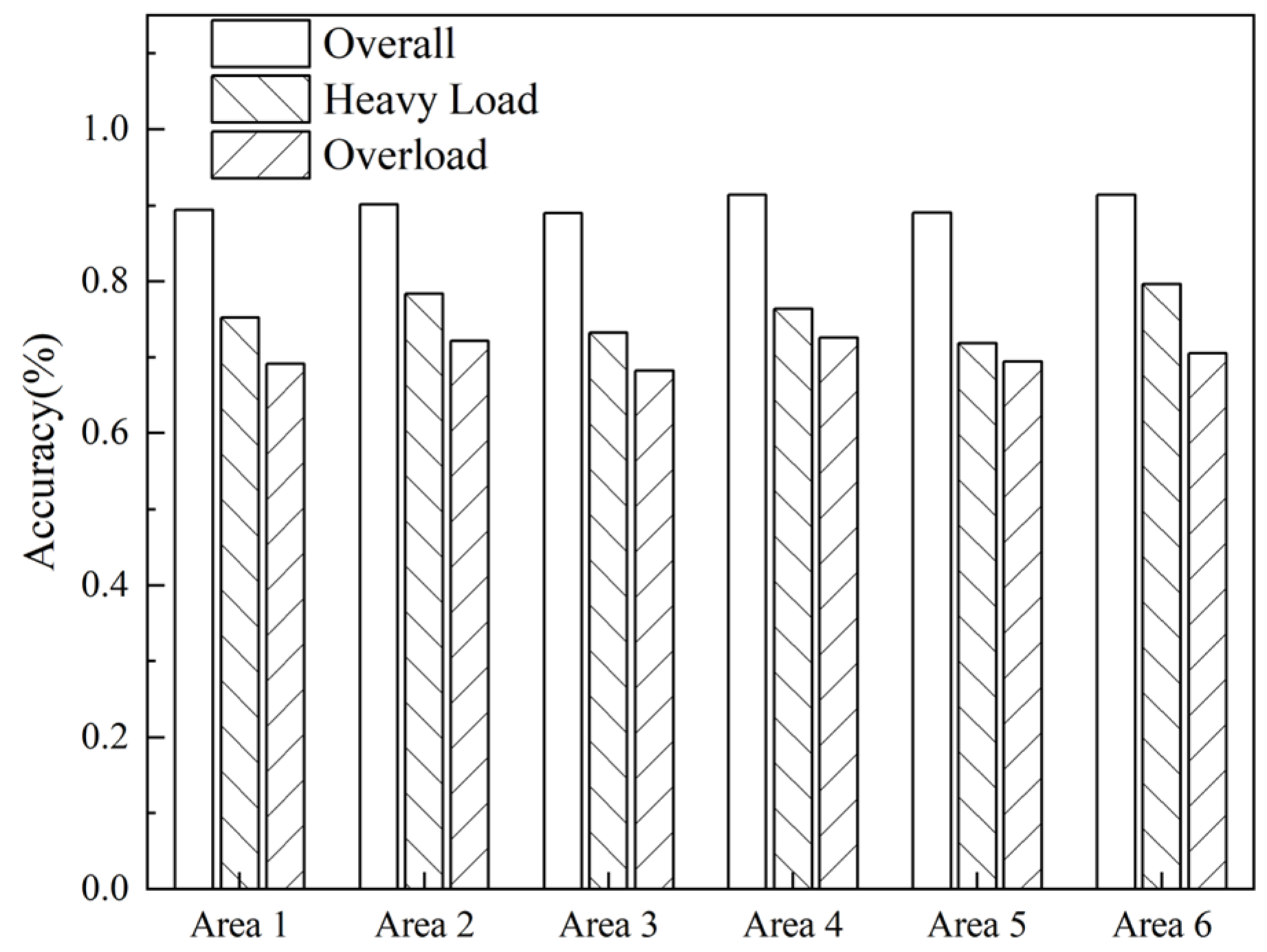
Figure 5 shows the evaluation results under these limits. The results indicate that limited weather inputs reduce short-term load prediction accuracy compared with the benchmark. However, the dynamic overload warning model still provides useful risk predictions. These findings confirm that the optimized system maintains good predictive ability and adapts well to different operating scenarios.
To further validate the reliability of the uncertainty estimates produced by the Gaussian Process residual module, evaluated the prediction intervals against the actual load observations. For a nominal confidence level of 95%, the model achieved a Prediction Interval Coverage Probability (PICP) of approximately 0.967. This indicates that the constructed intervals successfully capture the true load values in 96.7% of the test cases, slightly exceeding the target coverage and confirming good calibration. Concurrently, the Mean Prediction Interval Width (MPIW) was observed to be approximately 9.8% of the transformer’s rated capacity.
To evaluate the sensitivity of the warning threshold and its impact on operational risk, a Precision-Recall (PR) curve was generated for the overload state by scaling the decision threshold from 0.8× to 1.2×, as illustrated in
Figure 6. The results indicate that the default threshold is positioned at the ‘elbow’ of the curve, yielding an optimal balance between precision and recall. Beyond this point, further increasing the recall leads to a rapid decline in precision to 0.8645, which increases false alarms. Conversely, moving to a 1.2× threshold significantly reduces the capture of latent risks.