1. Introduction
Methane, although present in the atmosphere at much lower concentrations than carbon dioxide, has a strong climate impact, with a 100-year global warming potential nearly thirty times that of CO
2 [
1]. Consequently, international institutions and individual countries are introducing new regulations in this area. For example, new penalties for methane emissions from coal mines, introduced by Regulation (EU) 2024/1787 [
2], will partially apply from 1 January 2027 (Article 22). In accordance with Article 33 of this European Union (EU) Directive, member states are required to introduce provisions on penalties applicable in the event of infringements of this Directive by 5 August 2025. Available analyses [
3,
4,
5] indicate that penalties for methane emissions may be several times higher than the current prices of CO
2 emission rights. Given the present methane emissions from Polish hard coal mines, these penalties will become a significant element of operating costs, worsening the already poor financial results of coal companies. The very low concentrations of methane in ventilation air (0.05–0.2% in the shaft) [
6,
7] greatly limit its use for energy purposes. Therefore, the development of new technologies that reduce emissions of methane contained in ventilation air from coal mines, while simultaneously utilizing the energy contained in methane, is of particular importance.
1.1. Mitigation of Climate-Related Risks in Polish Hard Coal Mines
The main component of the analyzed installation for combating climate threats in hard coal mines is advanced catalytic combustion technology for methane from methane-air mixtures, particularly those emitted during mining operations. This technology comprises a comprehensive system of devices designed to effectively reduce methane emissions, characterized by high efficiency and the ability to adapt to the practical, real conditions of a hard coal mine. In addition, this technology provides the added benefit of producing cool air. It can be used to improve miners’ working conditions by reducing the risk of heat stress and increasing the efficiency of coal extraction. In Polish hard coal mines, exceeding the permissible temperatures at workstations, as specified in Polish legal acts [
8,
9], results in a reduction of miners’ working hours and, in cases of significant exceedances, even the suspension of extraction. The use of air conditioning systems in coal mines directly reduces coal extraction costs and improves the financial performance of coal companies. Air conditioning devices used in mines do not generate financial revenue, serving only to achieve economic effects, the monetary valuation of which is very difficult, as it depends on local mining conditions. Therefore, the assessment of economic efficiency was carried out using the differential method, comparing the analyzed technology based on a reactor for catalytic combustion of methane from ventilation air (VAM—Ventilation Air Methane) with the technologies and cooling devices currently used in Polish mining.
Beyond methane abatement, the proposed technology offers an additional and highly relevant benefit: the generation of cooling capacity, which directly influences the thermal conditions in underground workings and, consequently, the safety and productivity of miners. The thermal threat in underground workings refers to the danger of heat stress. According to the National Institute for Occupational Safety and Health (NIOSH) [
10], heat stress is the net heat load to which a worker is exposed, resulting from the combined effects of metabolic heat, environmental factors, and clothing, which leads to increased heat storage in the body. Heat stress adversely affects miners’ health. Headaches, fatigue, and muscle cramps are the most common effects [
11,
12,
13]. Heat stress can also be fatal if it leads to heat stroke [
14]. Therefore, the state of thermal threat is often used as a measure of how close microclimatic conditions are to inducing heat stress. In Polish coal mines, excavation areas with a dry bulb temperature above 28 °C or a cooling power of a wet Kata thermometer below 11 degrees (W/m
2) are considered thermally endangered. The term “space” is crucial here because thermal threats are identified at specific workplaces. In practice, excavations are often divided into sections with grouped workplaces. For example, longwalls may be split into the bottom and upper shields, and the same applies to excavated galleries. This distinction is important because, at thermally endangered workplaces, working time is reduced to six hours from seven and a half. At workplaces where the dry bulb temperature exceeds 33 °C, normal mining operations are prohibited; only rescue actions are permitted. Data from the latest study in this area [
15], presented in
Table 1 below, provides statistics on thermally endangered spaces in Polish coal mines.
However, geothermal conditions in Polish coal basins are quite varied [
16,
17,
18]. Thermal hazards and shortened shifts occur in coal mines even when the virgin rock temperature does not exceed 30 °C. If the virgin rock temperature is higher, thermal hazards become common, particularly in longwalls in operational and liquidated longwalls.
1.2. Air Conditioning Systems Currently Used in Polish Hard Coal Mines
Generally, in underground mining, a significant proportion of thermal problems can be resolved by adjusting the intensity of ventilation in the workings [
19]. Consequently, modern solutions for optimizing ventilation systems and identifying bottlenecks that can increase the ventilation efficiency of mines remain in demand [
20,
21]. In Poland, as a significant part of operations is carried out in rock masses with very high primary temperatures, the adequacy of such solutions is limited and the effectiveness of neutralizing heat from rocks must rely on air conditioning.
Polish coal mines use three air conditioning systems: local air systems, group air systems, and central refrigeration. The first method uses a compressor chiller whose evaporator cools the air directly. The absorbed heat is discharged into the water stream supplied by the fire pipeline. In group air systems, one or two chillers operate with several separate cooling coils. The heat absorbed by the coils is discharged by one or a group of evaporative water coolers. This system is suitable for mining areas where cooling demand exceeds the capacity of individual coolers. Central refrigeration systems mainly use surface-located chillers supported by free cooling towers. In these systems, compressor chillers can be replaced by absorption chillers, as seen in the Pniówek mine [
22]. The heat source for absorption chillers is provided by combusting coalbed methane in gas engines. This method of methane management appears to be the most effective, although ventilation air methane (VAM) will still be present despite achieving high degassing/drainage efficiency. Another alternative for central refrigeration systems entering Polish mining is ice slurry installations, which reduce cooling power on the route of ice water and improve the performance of coils installed in mining areas [
23]. Most Polish coal mines still rely on local air systems; however, the number of mines using central refrigeration is steadily increasing. Currently, there are six mines equipped with such systems. The total cooling capacity of Polish coal mining in 2024 equaled 116 MW, with the highest site capacity at 19 MW; however, in most mines, the output was less than 5 MW (
Table 2).
The air conditioning systems used in Polish hard coal mining rely on energy sources (heat, electricity) located on the surface. The installation analyzed in this article utilizes the energy source (VAM) at the point of its emission, that is, underground, in the immediate vicinity of mining operations. Captured “at source,” methane from mine ventilation air is oxidized to CO2, and the energy obtained in this process is used to produce cooling, which is necessary for reducing climatic hazards occurring in coal mines. The resulting benefits are both economic and ecological:
1.3. The VAM Oxidation Installation in the Emission Context
This article focuses on the economic benefits. It analyzes whether the avoided penalties for methane emissions into the atmosphere compensate for the capital and operating expenditures required to launch and operate an air conditioning system based on a catalytic reactor for the oxidation of methane from ventilation air. The article examines the economic efficiency of using an installation to address climate hazards in hard coal mines based on a catalytic combustion reactor for VAM. An overview of the installation can be found elsewhere [
7].
2. Characteristics of the Applied Cooling Technology Based on the Reactor for Catalytic Oxidation of VAM and the Reference Technology
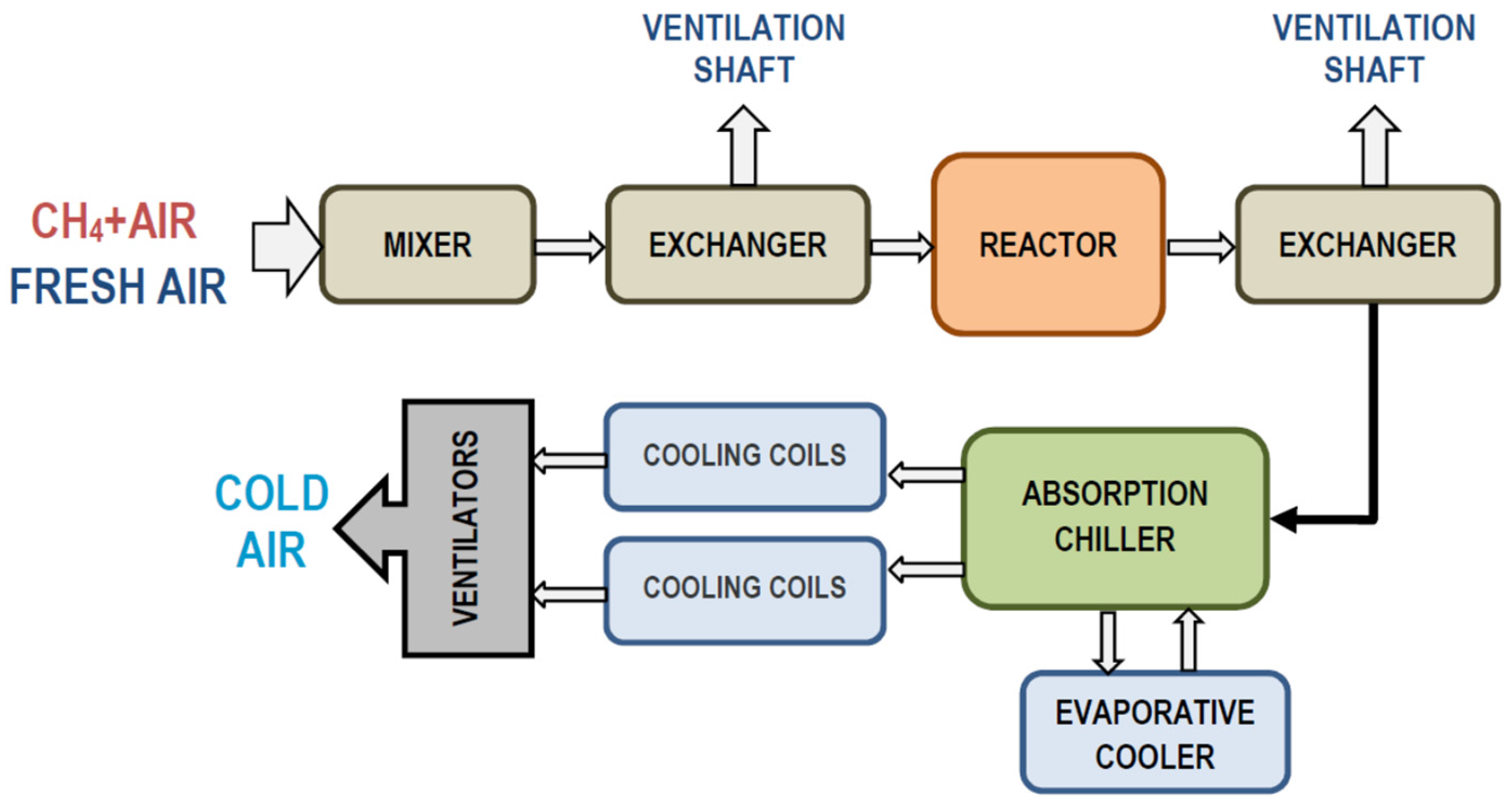
The operation of the installation requires several processes. A dust removal device with a fan is first installed in the airflow path from the mining area (e.g., from the mining wall) to clean the air mixture. The air mixture is then directed to the catalytic reactor, where the exothermic reaction of catalytic oxidation of methane occurs. The heat energy generated is partly used to produce chilled water, which is piped to cooling devices in the mine workings, providing chilled air to the mining area. The intake fan forces the air mixture through the device unit, which consists of a dust collector, a catalytic reactor, and a device for converting heat to cooling. The installation is designed to capture ventilation air with a low methane concentration, up to 1.5% methane. When the methane concentration exceeds the allowable threshold, the distribution system regulates the flow, diluting the methane with ventilation air without methane. This air is then directed to the dust removal installation, where almost complete separation of coal dust (99%) is achieved. The mixture then passes through a reactor equipped with monolithic catalytic blocks in a three-way system, which includes an elliptical recuperator. The commercial monolithic catalyst manufactured by Nikki Universal Co., Ltd. (Tokyo, Japan) [
24] was used for the catalytic reaction. The heat generated from the oxidation of methane is partially recovered and transferred to a heat exchanger placed before the reactor to preheat the incoming mixture. During normal operation, the reactor operates at a temperature of 450–620 °C, and the exhaust gases reach about 240–260 °C. The exhaust gas at this temperature is fed to an absorber, which converts the heat energy into chilled water. This chilled water is then used to power the cooling systems at the miners’ workplace. The installation diagram is shown in
Figure 1.
Although temperatures are high, the process itself is flameless, and the thermal insulation method used in the reactor ensures safety both for the operators (no hot surfaces on the casing) and compliance with regulations. Tests were conducted on the operational installation, measuring temperatures at the ventilation walkways’ inlet, midpoint, and outlet (60 °C, 40 °C, and 25 °C, respectively). It was determined that these conditions do not significantly degrade the excavation’s microclimate. Cooling is provided by the installation, and a portion of this cooled air may be returned to the local ventilation circuit, thereby reducing temperatures adjacent to the unit. The reference for the cooling technology (the VAM-PiRE installation) is the standard MK-500 cooling device commonly used in Polish hard coal mines. These devices are components of the local air conditioning system in mines. The device has two separate cooling circuits. The cooling effect is achieved in the evaporator as a result of the evaporation of the ecological refrigerant R407c at a low pressure generated by the suction side of the compressor. The heat required for the refrigerant evaporation process is obtained from the air heated in the excavation, which is forced into the evaporator employing a fan. The refrigerant from the evaporator is fed to the compressor via the suction line, where it is compressed to a pressure of 17–19 bar. The agent is then sent via the discharge line to the condenser. In the condenser, the coolant changes into the liquid phase as a result of the high temperature (approx. 80 °C) being removed by the cooling water flowing through the condenser. The liquid but still pressurized coolant is supplied to the expansion valve via a liquid line through a drying filter. Here, the coolant is expanded to a pressure of approx. 4 bar, resulting in a further reduction in its temperature. The partially chilled coolant goes to the evaporator, where it evaporates and absorbs heat from the air or water flowing through it. A detailed description of the technology and technical parameters of the MK-500 device is included in [
25].
Table 3 sums up the crucial differences between both technologies.
For both analyzed installations (VAM-PiRE [
26] and MK-500), the same technological parameters of working conditions were assumed, as presented in
Table 4. In Polish mines, the methane concentration of exhaust air measured in the tailgate is rarely less than 0.6%. Therefore, this value was considered in the study as the stable content of “gas” in the air collected by the installation. It was expected that a volume flow of 15 m
3/h and a methane content of 0.6% would provide sufficient thermal energy to generate cooling capacity comparable to that of the MK-500. A volume flow of 15,000 m
3/h with a concentration of 0.6% CH
4 carries a thermal power of approximately 895 kW. Assuming an absorption cooler efficiency of approximately 60%, this results in a cooling capacity equivalent to that of an MK-500 cooler.
Methane Emissions from Polish Coal Mining and the EU Methane Regulation
The largest source of methane emissions in the EU (53%) is agriculture, mainly from livestock digestion and manure management. The energy sector, which accounts for around 19% of EU methane emissions, has made more progress due to regulatory measures and market changes. Emissions have fallen by 67% since 1990, mainly as a result of reduced coal extraction and improved management of oil and gas infrastructure [
27]. Methane emissions in Poland amounted to 1431.73 kt in 2023, i.e., 40.09 million tonnes of CO
2 equivalents. Methane’s share of total national greenhouse gas (GHG) emissions that year was 11.5%. In Poland, the largest methane emissions come from the fuel and energy sector, mainly from coal mines [
28]. Hard coal deposits, especially in the central, southern, and south-western parts of the Upper Silesian Coal Basin, are high-methane deposits. In 2024, 722.1 million m
3 of CH
4 was released from the rock mass affected by coal mining in Poland. Of this amount, only 191.5 million m
3 of CH
4 (approximately 26.5%) was utilized. The remaining 530.6 million m
3 of CH
4 was released into the atmosphere [
29]. On average in 2024, Polish mines emitted as much as 1009.5 m
3 of CH
4 per minute into the atmosphere. Therefore, any action aimed at increasing the amount of methane utilized in Polish mining is particularly important. It helps to limit the negative impact of mining on the environment and, in subsequent years, after the introduction of penalties for methane emissions into the atmosphere in accordance with the Regulation [
2], also significantly reduces the costs of coal mining. Regulation [
2] requires companies extracting fossil fuels to significantly reduce methane emissions. The act, which came into force on 5 August 2024, requires companies extracting natural gas, coal, and crude oil to accurately report their methane emissions. It also introduces penalties for emissions of this gas above established thresholds. The penalties must be effective, proportionate, dissuasive, and proportionate to the damage caused by methane emissions to the environment and human health and safety; appropriate to the economic benefit obtained by violating the regulation; and not exceed 20% of the company’s annual turnover in the previous financial year. Article 22 of Regulation [
2] sets annual permissible CH
4 emission thresholds from mine ventilation shafts depending on the amount of coal extracted. Methane venting through ventilation shafts in coal mines emitting more than 5 tonnes of methane per kilotonne of coal mined, other than coking coal mines, will be prohibited from 1 January 2027. Methane venting in coal mines emitting more than 3 tonnes of methane per kilotonne of coal mined, other than coking coal mines, will be prohibited from 1 January 2031. These restrictions do not apply to emergencies. They apply to the mine and to the operator if one entity operates several coal mines. In the case of operators of multiple mines, we interpret this provision as individual limits for each mine in the operator’s portfolio, and in the rest of the article, we base our analysis on this assumption. To simplify the analysis, we also assume that all methane used in the catalytic oxidation reactor would be subject to penalties from 1 January 2027 if it were emitted into the atmosphere through ventilation shafts.
3. Methodology for Evaluating Economic Efficiency and Calculation Assumptions
The economic efficiency of a system for combating climate hazards in hard coal mines (based on a reactor for catalytic oxidation of VAM) was analyzed using a differential financial model. The costs associated with its construction (CAPEX) and operation (OPEX) were compared with the costs of purchasing, installing, and operating a standard MK-500 refrigeration unit, which is commonly used in Polish hard coal mines. This type of analysis is applied to modernization projects that involve replacing one technology with another that achieves the same result. Such a financial model compares cash flows for the no-modernization scenario (no change in technology) and the post-modernization scenario (after a change in technology). By comparing the two scenarios, differential flows are established, forming the basis for determining the value of the project’s financial efficiency indicators [
30]. In the case analyzed, the financial analysis presents the costs of the first scenario resulting from the operation of the MK-500 cooling unit, minus the costs resulting from the second scenario, which involves the use of cooling technology based on a reactor for catalytic oxidation of VAM. Additional benefits resulting from the use of cooling generated in the installations to mitigate climate hazards in mines were not included in the calculations, as they occur when using both compared technologies: the VAM-PiRE installation and the MK-500. Therefore, with the adopted differential financial model, they do not affect the results of the economic efficiency calculations.
The following economic efficiency indicators were calculated for the determined cash flows: Net Present Value (NPV) and Internal Rate of Return (IRR).
The calculated cash flows for the analyzed period of implementation and operation of the VAM-PiRE installation are summed to obtain the net present value of the project as follows [
31,
32]:
where:
NCFi—the annual net cash flow of a project in years i = 0, 1, 2, 3 … n,
w—the discount rate.
The IRR is calculated using the following equation [
26,
27]:
where:
NCFi—the annual net cash flow of a project in years i = 0, 1, 2, 3 … n,
i = 0, 1, 2, … n—the following years of the calculation period.
The economic analysis was conducted at constant prices (excluding inflation). It covers a one-year investment period (purchase and installation of a cooling unit at the mine) and a ten-year operation period. A discount rate of 4% was applied in the calculations. This rate is recommended by the Ministry of Funds and Regional Policy in a study [
30] for financial analyses performed at constant prices that are subsidized, for example, in the field of environmental protection. The analyzed installation can be classified as such, as it contributes to reducing the greenhouse effect. However, due to the lack of information on the sources of financing for future investments using such installations, it was not possible to apply any methods for calculating the discount rate based on the capital costs associated with financing the investment. Therefore, the impact of the discount rate on the analysis results will be examined as part of a sensitivity analysis.
The residual value was omitted from the calculations because the average depreciation rate, based on the economic life of this type of plant, means that the residual value—calculated as the remaining undepreciated asset—does not exist. Furthermore, in this case, adopting a residual value estimated as a capitalized possible income stream in subsequent years (the so-called income approach) is not possible, as the operation of cooling installations in mines does not generate any cash income. The current macroeconomic forecast published by the Polish Ministry of Finance [
33] was used for forecasting operating costs. The most up-to-date version of this forecast is dated July 2025. In addition, the available electricity price forecast presented in the KOBIZE study [
34] was used. The forecast for CO
2 emission allowance prices was adopted in accordance with the baseline scenario developed as part of the Pilot Strategy Project [
35], concerning the study of geological CO
2 storage sites in the industrial regions of Southern and Eastern Europe to support the development of carbon capture and storage (CCS). The adopted baseline forecast for the price of CO
2 emission allowances (ETS market forecast) is as follows: EUR 75/t in 2025, EUR 100/t in 2030, EUR 115/t in 2035, and EUR 130/t in 2040 and beyond. Compared with available international organization forecasts [
36,
37,
38], the proposed base price is more conservative. Therefore, a sensitivity analysis was performed to examine the impact of changes in the adopted CO
2 emission allowance price on the results of the financial and cost analysis.
The Regulation [
2] does not specify the amount of environmental penalties for methane emissions, leaving their determination to the Member States. For the purposes of this article, it was assumed that they should reflect the social cost of methane emissions (SCM) into the atmosphere. In the case of methane, it is not sufficient to multiply the social cost of CO
2 emissions by the global warming potential, as methane has different properties and affects the environment in different ways. The SCM factor takes into account both the strong climate impact of methane as a greenhouse gas and its harmful effect on human health through the production of tropospheric ozone in the atmosphere [
39]. Estimates of the social cost of methane emissions vary widely, ranging from approximately 1.2 to 5.9 thousand EUR/tonne [
5]. This significant discrepancy arises from differences in the methodologies used and the factors considered. For the calculations, a fixed environmental penalty rate for methane emissions of EUR 1200/t was assumed. This is the lowest penalty rate reflecting the social cost of methane, as presented in [
5]. As these penalties have not yet been defined in Poland, the impact of penalties for methane emissions into the atmosphere on the results of the economic analysis was examined as part of the sensitivity analysis. The basic macroeconomic indicators resulting from the adopted forecasts are presented in
Table 5.
A sensitivity analysis was conducted to assess the economic conditions of using the installation, the uncertainties arising from the CAPEX and OPEX, and the adopted calculation and macroeconomic assumptions. In the methodological assumptions of the sensitivity analysis, it was assumed that the explained (base) variable is the NPV financial efficiency indicator, and the explanatory variable (independent explanatory variable, whose change does not directly affect other variables) is the change in individual parameters. The main objective of the analysis was to demonstrate the sensitivity of the economic analysis result (decision criterion—economic efficiency) to changes in the established parameters. The analysis performed allows one to determine how much the value of the decision parameter (the NPV indicator) will change if the value of the critical variables changes by the adopted percentage deviation. The sensitivity analysis indicates at which cost and macroeconomic parameters the operation of the analyzed technologies is economically efficient. The CAPEX and OPEX of the analyzed installation are higher than those for the standard MK-500 cooling device. The sensitivity analysis also shows at what level of penalties for methane emissions into the atmosphere the operation of the installation based on the reactor for methane catalytic oxidation becomes economically efficient. In the sensitivity analysis, the following key variables were analyzed within the range of deviations from the baseline values of ±10%, ±20%, ±30%, ±40%, and ±50%:
Changes in CAPEX of the installation based on a reactor for catalytic oxidation of VAM;
Changes in electricity costs of the installation based on a reactor for catalytic oxidation of VAM;
Changes in the rates of penalties for methane emissions into the atmosphere;
Changes in methane concentration in ventilation air;
Changes in CO2 emission allowance price;
Changes in the discount rate (capital costs for investment implementation).
Since installations using MK-500 cooling devices are commonly used in Polish hard coal mines, the impact of CAPEX changes for this installation on the NPV value was not examined in the sensitivity analysis. The CAPEX value assumed in the calculations is verified based on actual data from installations operating in Polish hard coal mining.
4. Results and Discussion
4.1. CAPEX and OPEX Calculations
For the analyzed cooling installation based on a reactor for catalytic oxidation of VAM, CAPEX and OPEX were estimated. The calculations were based on data published by manufacturers of individual components and devices included in the installation [
40,
41,
42,
43,
44,
45] and the concept of the installation [
25], the general characteristics of which are presented in
Section 2. The data are summarized in
Table 6,
Table 7,
Table 8,
Table 9 and
Table 10.
The structured commercial methane oxidation catalyst was supplied by a global provider of emission control catalysts and selected for its suitability in low-concentration methane treatment in industrial ventilation systems. As publicly available lifetime data for this specific catalyst are not disclosed, the expected operational service life was estimated based on supplier experience with comparable structured emission catalysts and literature reports on the durability of palladium-based methane oxidation systems. The catalytic reactor is equipped with a dedicated dust filtration unit to limit particulate deposition on the catalyst surface; however, operation under underground mine ventilation conditions still involves elevated particulate exposure, which was considered in adopting a conservative lifetime assumption in the economic model.
The costs of periodic replacement of used catalysts in reactors in the VAM-PiRE installation are included in the maintenance and repairs item.
The CAPEX and OPEX of a conventional cooling plant using the MK-500 cooling unit were determined based on the manufacturer’s technical manual [
26] and cost data (purchase and installation costs) provided by the Pniówek coal mine in Pawłowice.
4.2. Results of Analysis
Table 10 summarizes the calculation of differential CAPEX and OPEX values from which the economic efficiency ratios of a plant based on a reactor for catalytic oxidation of VAM were calculated.
Table 10.
Summary of differential CAPEX and OPEX values and calculated cash flows.
Table 10.
Summary of differential CAPEX and OPEX values and calculated cash flows.
| Item | Costs and Revenues Related to the Use of the Installation [k EUR] |
|---|
| 2025 | 2026 | 2027 | 2028 | 2029 | 2030 | 2031 | 2032 | 2033 | 2034 | 2035 |
|---|
| Additional CAPEX | 1030.0 | 0 | 0 | 0 | 0 | 0 | 0 | 0 | 0 | 0 | 0 |
| Additional electricity costs | 0 | −60.3 | −62.1 | −64.0 | −65.9 | −67.8 | −66.5 | −65.1 | −63.8 | −62.6 | −61.3 |
| Additional wage costs | 0 | 0 | 0 | 0 | 0 | 0 | 0 | 0 | 0 | 0 | 0 |
| Additional maintenance and repair costs | 0 | 53.1 | 54.7 | 56.3 | 58.0 | 59.6 | 59.8 | 60.0 | 60.2 | 60.3 | 60.4 |
| CO2 emission allowances price | 0 | 91.2 | 96.9 | 102.6 | 108.3 | 114.0 | 117.4 | 120.8 | 124.2 | 127.6 | 131.0 |
| TOTAL costs | 1030.0 | 84.0 | 89.5 | 95.0 | 100.4 | 105.8 | 110.7 | 115.7 | 120.6 | 125.4 | 130.2 |
| Revenues—penalties for CH4 emissions avoided | 0 | 0 | 497.3 | 497.3 | 497.3 | 497.3 | 497.3 | 497.3 | 497.3 | 497.3 | 497.3 |
| Cash flows | −1030.0 | −84.0 | 407.7 | 402.3 | 396.9 | 391.5 | 386.5 | 381.6 | 376.7 | 371.9 | 367.1 |
| Discounted cash flows | −1030.0 | −80.8 | 377.0 | 357.7 | 339.3 | 321.8 | 305.5 | 290.0 | 275.3 | 261.3 | 248.0 |
Except for the first year, when the installations are purchased and installed, cash flows are positive. Negative cash flows in 2025 result from the higher CAPEX of the installation based on a reactor for methane catalytic oxidation compared to the CAPEX of the installation using the MK-500 cooling device. Additionally, operating costs, including the costs of purchasing CO2 emission allowances, are significantly higher for this installation than for the one using the MK-500 cooling device. Cash flows in the subsequent years of the analysis are positive, due to the inclusion in the calculations of avoided penalties for methane emissions into the atmosphere. Under the adopted calculation assumptions, avoided methane emissions penalties provide a constant annual benefit that significantly outweighs the additional operating costs and CO2 emissions. Despite rising costs over the analyzed period, the constant benefits from avoided methane emissions penalties resulted in relatively stable annual net cash flows.
Based on the cash flows estimated in this way, the following economic efficiency indicators were obtained:
NPV: EUR 1,664,920;
IRR: 24.9%.
With the adopted calculation assumptions, the use of an installation based on a reactor for catalytic oxidation of VAM is economically viable. This is due to the forecast high penalties for methane emissions into the atmosphere.
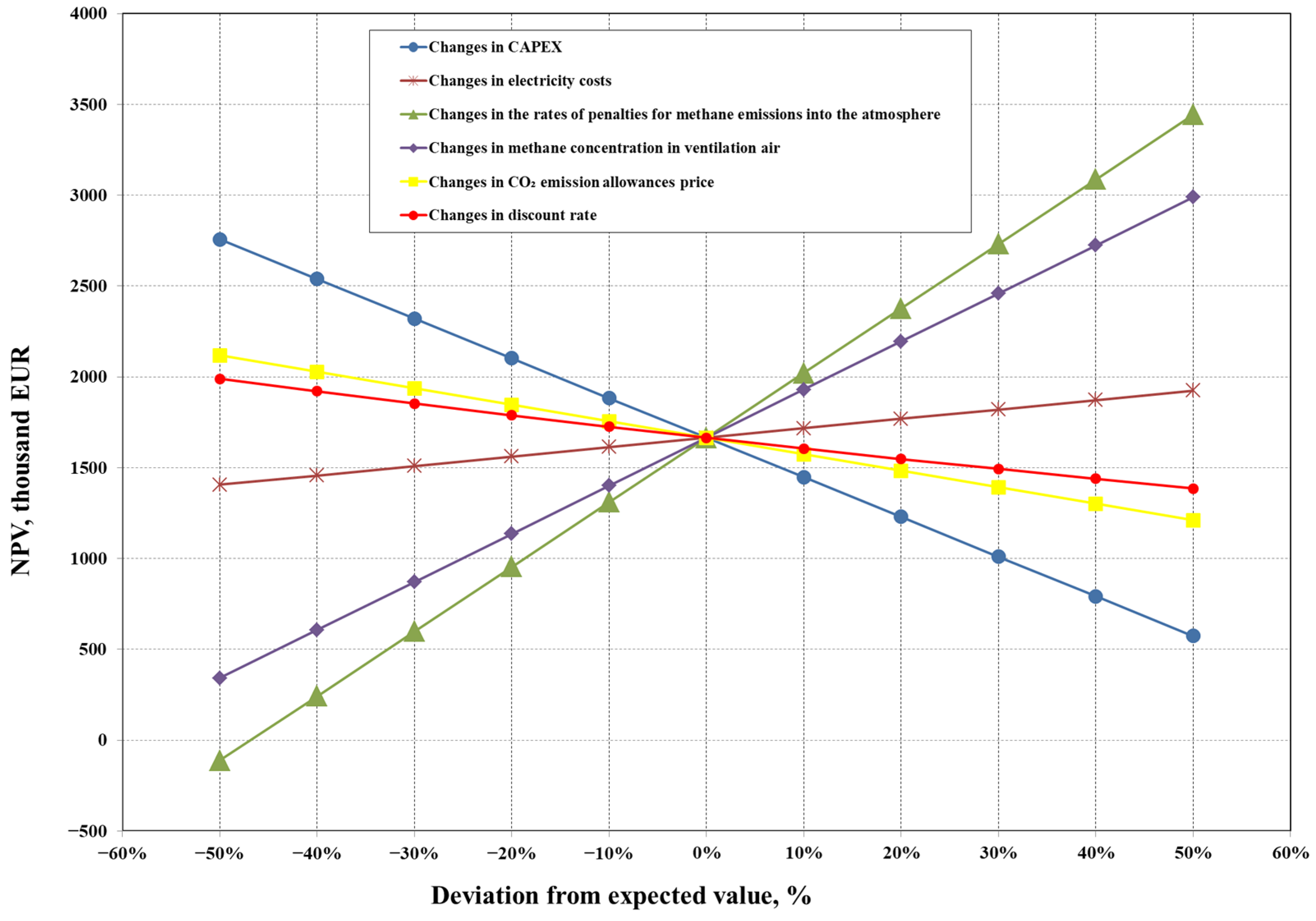
Table 11 presents the results of the sensitivity analysis, which considers changes in the most important calculation assumptions and their impact on the results of the economic efficiency analysis, as expressed by the NPV indicator.
To properly interpret the results of the sensitivity analysis, a graphical interpretation was performed. It is presented in
Figure 2.
The obtained results of the sensitivity analysis allowed us to determine the following hierarchy of the impact of the studied key variables on the economic efficiency expressed by the NPV indicator changes (from the highest to the lowest):
The rates of penalties for methane emissions into the atmosphere;
Methane concentration in ventilation air;
CAPEX of the installation based on a reactor for catalytic oxidation of VAM;
CO2 emission allowance price;
The discount rate;
Electricity costs of the installation based on a reactor for catalytic oxidation of VAM.
The greatest impact on the economic efficiency of the installation based on the reactor for catalytic oxidation of VAM is exerted by penalties for methane emissions into the atmosphere. During the analyzed period, the benefits resulting from avoiding these penalties are 3.8 to 5.5 times higher than the additional OPEX incurred by operating the VAM-PiRE installation. Even at much lower penalty levels for methane emissions, the operation of the analyzed installation remains economically profitable. Only when the value of penalties falls below EUR 638/Mg CH4 does the NPV indicator become negative. Another variable closely related to economic efficiency is the concentration of methane in the ventilation air. The higher the methane concentration, the greater the efficiency of the installation. As methane concentration increases, the avoided penalties for its emission also increase, thereby enhancing the economic benefits of operating the installation. However, increased utilization of methane leads to higher CO2 emissions and associated fees. Therefore, the price of CO2 emission allowances is the next most important factor after CAPEX influencing the economic efficiency of the installation. Changes in electricity prices have the least impact on the economic efficiency of the installation based on the reactor for catalytic oxidation of VAM. Moreover, an increase in unit electricity prices reduces the economic efficiency of the installation. Its operation, due to the use of the chemical energy contained in methane, requires less electricity than the standard MK-500 cooling device.
5. Conclusions
The current state of knowledge regarding the amount of methane present in the ventilation air of coal mines allows it to be considered a permanent energy source for cooling production, aimed at reducing the climate threat in coal mines. Therefore, the use of VAM is crucial for meeting future cooling demand in Polish hard coal mines. Such plants could serve as an intermediate link between local air systems, which are still dominant in numerous mines, and central refrigeration. The presented statistics clearly indicate that Polish coal mines have insufficient cooling capacity to meet their needs.
The penalties for methane emissions from coal mines into the atmosphere, effective from 1 January 2027, will constitute a significant additional financial burden for hard coal mines in Poland. They will most likely have a considerable impact on the financial results of coal companies.
Very low concentrations of methane in ventilation air significantly limit its use for energy purposes. Therefore, the development of new technologies that reduce methane emissions from ventilation air in coal mines to the atmosphere, while simultaneously using the energy contained in methane for economic purposes, is of particular importance.
The analyzed installation, based on a catalytic methane oxidation reactor for ventilation air, enables two types of economic benefits:
Due to the difficulty of accurate estimation and significant variability depending on coal extraction conditions, the economic analysis did not include the benefits arising from the reduction of climatic hazard occurrences.
The analysis of the economic efficiency of the technology based on the reactor for catalytic combustion of VAM showed that simply avoiding penalties for methane emissions from mines makes its use economically viable. The following values for the economic efficiency indicators were obtained:
NPV: 1,664,920 EUR;
IRR: 24.9%.
To account for uncertainties resulting from the CAPEX and OPEX estimates, as well as the adopted calculation and macroeconomic assumptions in the assessment of the economic efficiency of the analyzed installation, a sensitivity analysis was performed.
It was determined that penalties for methane emissions into the atmosphere have the greatest impact on the economic efficiency of the analyzed installation. During the period studied, the benefits from avoiding these penalties are many times greater than the additional OPEX incurred by operating the installation. Even at much lower penalty levels for methane emissions, operating the analyzed installation remains economically viable. Only when the penalty value is reduced from the EUR 1200/Mg CH4 assumed in the analysis to below EUR 638/Mg CH4 does the NPV indicator fall below zero.
Another key variable examined, which also has a significant impact on the economic efficiency of the installation, is the concentration of methane in the ventilation air. The relationship is as follows: the higher the methane concentration in the ventilation air, the more methane is disposed of, and the greater the avoided penalties for its emission into the atmosphere.
Among the key variables examined, changes in the cost of electricity required to power the installation have the smallest impact on its economic efficiency.




 ,
,