Article

Methane Emissions from Coal Mining: Challenges and Opportunities in the Context of Green Mining Technologies

by
Marek Borowski
1,*,
Klaudia Zwolińska-Glądys
1 and
Pedro Riesgo Fernández
2
1
Faculty of Civil Engineering and Resource Management, AGH University of Krakow, 30-059 Krakow, Poland
2
Business Administration Department, University of Oviedo, 33004 Oviedo, Spain
*
Author to whom correspondence should be addressed.
Energies 2026, 19(3), 770; https://doi.org/10.3390/en19030770
Submission received: 24 December 2025 / Revised: 17 January 2026 / Accepted: 23 January 2026 / Published: 2 February 2026

Abstract

Methane is a potent greenhouse gas with strong climate and health impacts, largely originating from coal mining, agriculture, and waste management. This article aims to assess methane emissions at the global, regional, and national levels, with a particular focus on coal mining and its mitigation potential in Poland and Spain. The analysis integrates data from authoritative international and national databases, including time-series evaluation, spatial visualization, and comparative case studies. Results indicate that agriculture, energy, and waste remain the dominant global methane sources, while coal mining continues to play a significant role in Europe, especially in Poland. Case studies from Polish coal mines demonstrate that substantial emission reductions can be achieved through methane drainage, ventilation air methane oxidation, and energy recovery systems, often at low or negative net cost. In contrast, Spain’s coal-related methane emissions are now primarily associated with abandoned mines, highlighting the importance of long-term monitoring and post-mining management. The findings confirm that targeted technological measures combined with robust monitoring, reporting, and verification frameworks and supportive regulation can significantly reduce methane emissions and transform coal mine methane from a climate liability into a valuable energy resource.

1. Introduction

Methane (CH4) is the second most significant greenhouse gas (GHG) contributing to human-caused global warming, after carbon dioxide (CO2). It originates from both natural and anthropogenic (human-related) sources. Natural sources include wetlands, termites, and geological seepage. Human activities contribute methane primarily through fossil fuel extraction and use, agriculture (especially livestock and rice paddies), and waste management, such as landfills and wastewater treatment. Methane emissions from the energy sector originate mainly from oil, natural gas, and coal production, and occur throughout the entire supply chain, from extraction and processing to storage, transmission, and distribution. Unlike agricultural methane, much of the methane emitted in the energy sector is the result of leaks, deliberate venting, or incomplete combustion, making it technically and economically feasible to reduce with existing technology. Once in the atmosphere, methane traps infrared radiation, leading to increased temperatures and climate disruptions. Today, approximately 60% of total global methane emissions stem from anthropogenic sources, while the remaining 40% come from natural processes. Despite its relatively short atmospheric lifetime of about 12 years and smaller concentrations than carbon dioxide, methane has an outsized effect on climate due to its extremely high Global Warming Potential (GWP), about 84–87 times greater than CO2 in the short-term, and around 28–36 times greater over a 100-year period [1].
According to recent estimates, methane emissions from human activity are responsible for roughly one-third of the current global warming [1,2]. Beyond climate impacts, methane also poses significant risks to public health due to its role as a precursor to tropospheric ozone (O3), a pollutant associated with respiratory and cardiovascular diseases. These findings emphasize the multi-dimensional benefits of methane mitigation, including climate stabilization, improved air quality, and public health protection. Targeted interventions in the agriculture, waste, and energy sectors, particularly in rapidly developing regions, are essential to achieving these outcomes. Coordinated international efforts, technological innovation, and integration with sustainable development policies will be critical in steering future trajectories toward the most favorable environmental and societal outcomes [1].
Following a relatively stable period in the 1990s, global atmospheric methane concentrations have increased sharply over the past two decades. Methane levels in the atmosphere are now more than two and a half times higher than they were before the industrial era. Compared to other major greenhouse gases, methane concentrations have been increasing at the fastest relative rate and more rapidly than at any time since measurements began. It could be driven by rising emissions from human activities, though evidence also suggests that a warming climate is boosting methane releases from natural sources like wetlands [3]. If current trends continue, methane levels may align with the worst-case climate scenarios projected in the IPCC Sixth Assessment Report (AR6) by 2030 [4]. The benefits of methane reduction are globally distributed, making international mitigation strategies especially effective. The IPCC emphasizes that reducing methane emissions is one of the fastest ways to slow global warming in the short-term. In its Sixth Assessment Report [4], the IPCC highlighted methane as a critical target for near-term climate mitigation due to its powerful warming effect and relatively short lifetime in the atmosphere. Reducing methane emissions leads to immediate climate benefits, including a slower temperature rise and improved air quality, both locally and globally. However, challenges remain current.
The effectiveness of reduction measures varies significantly between sectors, which is crucial for designing climate and energy policies. In this context, methane emissions from hard coal mining represent a particularly remarkable area for regulatory intervention, as they are technically much more measurable, monitorable, and abatable than, for example, those from the agricultural sector. Mine methane is characterized by high spatial and temporal concentration and clear source traceability, which allows for the implementation of targeted emission reduction measures within monitoring, reporting, and verification systems. Importantly, these emissions persist even as coal mining declines, and in many regions, they are even increasing in relative terms, primarily due to methane from closed and decommissioned mines (AMM). From a climate policy perspective, this means that the mining sector remains a significant source of emissions requiring regulation even during the energy transition. At the same time, numerous analyses indicate that actions to reduce methane emissions in the mining industry can bring rapid climate effects at low, and often negative, net costs, thanks to the possibility of recovering and using energy from captured gas, which makes this sector one of the most cost-effective targets for public intervention.
At the same time, methane emissions from coal mining represent one of the most pressing environmental and operational challenges in the pursuit of green mining. These emissions arise from both active and abandoned operations, and they present opportunities for mitigation and energy recovery if properly managed. Green mining, in this context, refers to coal extraction processes that minimize greenhouse gas emissions through integrated monitoring, capture, utilization, and reclamation practices. A study by Kholod et al. [5] projects that coal-mine methane emissions will continue to rise throughout the twenty-first century, even under scenarios of declining coal production. The authors propose improved methodologies for estimating emissions based on mining depth, coal type, extraction method, and abandoned mine contributions, forecasting a fourfold increase from active mines and up to an eightfold growth from abandoned mines by 2100. Regional assessments corroborate these global trends. Andersen et al. [6] applied drone-borne atmospheric sampling to quantify methane emissions from the Upper Silesian Coal Basin in Poland. The research underscores the need for advanced monitoring in green mining strategies. In the European Union more broadly, analysis of domestic coal mining emissions between 2009 and 2021 shows that underground mining continues to major contributor to methane output [7]. In Australia’s Bowen Basin, Sadavarte et al. [8] used high-resolution satellite data to identify so-called “super-emitting” coal mines. They found that just six surface and underground mines contributed over half of Australia’s reported coal-related methane emissions, highlighting that targeting high-emission sites can significantly enhance the efficiency of green mining interventions. Furthermore, the authors noted that measured emissions were often significantly higher than those reported to the government, calling for increased monitoring and further investment in new technologies. Similarly, a paper by Li et al. [9] used high-resolution satellite data to map and quantify methane emissions from coal mines across China, which revealed widespread underreporting and emphasized the role of satellite remote sensing in supporting transparent and accurate emissions tracking.
Methane emissions from coal mining are controlled by coal pore structure, mechanical degradation, and surrounding rock mass evolution. Methane storage and release depend primarily on pore complexity and adsorption behavior, with micropores dominating adsorption and meso- and macropores facilitating gas migration [10]. Variations in coal rank and pore heterogeneity, therefore, influence methane retention and desorption during mining. Geological deformation further alters pore connectivity, enhancing micropore development and adsorption capacity while promoting free gas accumulation through macropore restructuring, thereby increasing emission potential under stress release [11]. Experimental and data-driven analyses indicate that coal failure under dynamic loading leads to non-linear gas release behavior controlled by particle size, fracture development, and exposure time, reflecting complex energy evolution mechanisms during and after coal breakage [12]. In addition, the structural characteristics of the overburden and post-mining deformation strongly influence gas migration pathways, particularly in longwall panels and abandoned workings, thereby affecting both the magnitude and persistence of methane emissions [13]. These processes are especially relevant for AMM, where flooding conditions, residual permeability, and sealing effectiveness govern long-term emission trends, as demonstrated in recent European case studies conducted under evolving regulatory frameworks [14].
Technological pathways toward green mining emphasize both methane mitigation and utilization. The major coal mine methane (CMM) management technologies can be categorized due to the methane concentration in air flow as high-concentration gas drainage and low-concentration ventilation air methane (VAM) systems. The first group includes solutions such as flaring, purification for town gas, gas engines, gas turbines, and fuel cells. These technologies are well-known and widely used in mines. The latter, including flow reversal reactors, catalytic combustion, lean burn turbines, are shown to offer technical feasibility when methane is combined or enriched, enabling both emissions destruction and energy valorization [15]. Su et al. [15] proposed a new solution that combined a 1% methane lean-burn gas turbine and a conventional gas engine. According to the authors, it allows for the mitigation and utilization of methane from ventilation air and drainage gas. In Australia, Vigil et al. [16] applied improved emission estimation methods to open-cut metallurgical coal operations. The study demonstrated that pre-drainage, combined with subterranean barriers, could reduce methane emissions by up to 46% while enhancing economic performance under carbon pricing regimes. These methods offer transferable frameworks for green mining implementation in varied settings. Innovative strategies further expand the scope of green mining. Enhanced coal bed methane (ECBM), in which CO2 injection displaces CH4 within coal seams, offers a dual benefit of methane recovery and carbon sequestration, though the economics remain uncertain with the absence of incentives [17,18,19]. Similarly, geothermal-assisted methane extraction leverages natural temperature gradients to enhance drainage efficiency in deep coal seams, representing a promising intersection of energy generation and emissions mitigation [20,21]. There is still considerable uncertainty around fugitive methane emissions, those unintentionally released during the extraction, processing, and transport of fossil fuels. To address this, further research and data collection are essential. Fortunately, the rapid development of satellite and ground-based monitoring technologies is improving our ability to measure methane emissions accurately and identify their sources. This technological progress, combined with growing global awareness, offers a crucial opportunity to act decisively in reducing methane emissions and slowing the pace of climate change [1].
Summarizing, these studies illustrate that green mining requires an integrated approach: accurate emissions quantification through improved inventories and remote sensing, targeted capture of methane from active and abandoned mines, implementation of VAM capture systems, and other utilization pathways that convert methane into electricity or hydrogen. Challenges including geological variability, low methane concentration in ventilation air, legacy infrastructure, and inconsistent reporting persist, but the opportunities are increasingly clear. With dedicated policy frameworks, carbon pricing, and investment in green technologies, methane emissions can become a resource rather than a liability, advancing both ecological sustainability and energy resilience in coal mining contexts.
Although methane emissions from coal mining have been widely examined with respect to emission sources, mitigation technologies, and regulatory instruments, existing studies typically address these dimensions in isolation. The available publications rarely offer an integrated, applied perspective that simultaneously considers emission drivers, technological deployment, and policy frameworks. Moreover, comparative analyses that explicitly examine how methane mitigation technologies interact with regulatory contexts across different national settings remain limited. This fragmentation constrains the ability to translate technical and regulatory knowledge into coherent, evidence-based mitigation strategies.
To address these gaps, this article adopts an applied analytical framework that integrates emission inventory analysis, case-study-based assessment of methane mitigation technologies, and policy evaluation. Rather than advancing a single formal theoretical model, the study conceptualizes green mining technologies as practical instruments for methane reduction operating within monitoring, reporting, and verification-based regulatory systems. Through a comparative analysis of Poland and Spain within the EU regulatory context, the article examines how technological implementation and policy interaction jointly influence emission reduction outcomes, thereby contributing to climate mitigation objectives and broader sustainability goals.

2. Materials and Methods

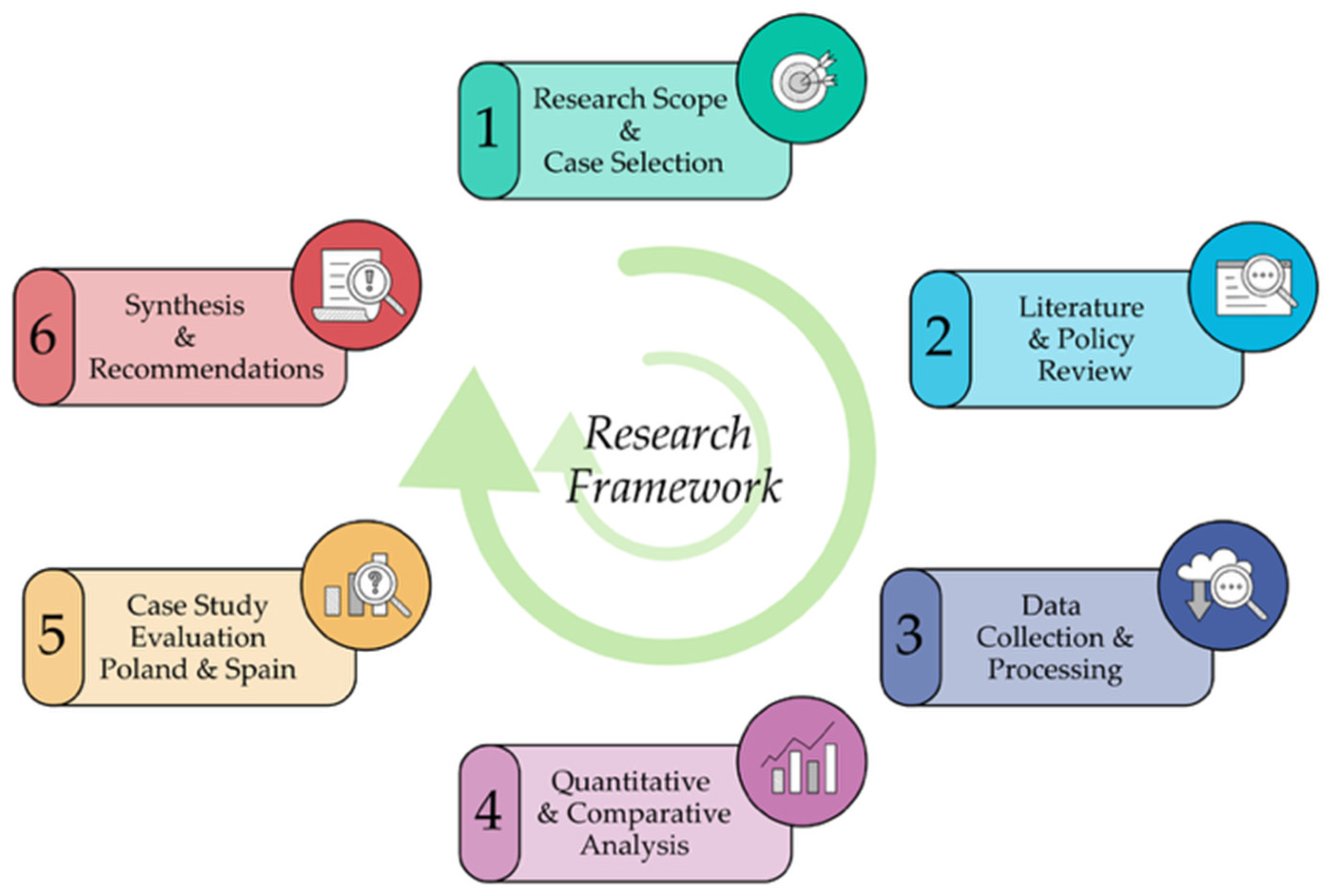
The paper analyzes the methane emissions of countries worldwide, capture technologies, and available mitigation solutions, mainly concentrating on the situation in Poland and Spain. This study employs a comprehensive approach to quantify and analyze methane (CH4) emissions at global, regional, and national levels, integrating data from multiple authoritative sources and applying standardized emission accounting methods. Poland and Spain were selected as case studies because they represent contrasting stages of the coal mining life cycle within the European Union. Poland is characterized by an active coal mining sector with high methane emissions, whereas in Spain, methane emissions are predominantly associated with abandoned mines. This contrast allows for a robust comparative analysis of methane mitigation strategies within a shared regulatory framework. Figure 1 illustrates the research framework applied to assess methane emissions and mitigation strategies in the coal sector. The workflow integrates a literature and policy review, harmonized data collection from authoritative databases, data processing and comparative quantitative analysis, and qualitative case study evaluation for Poland and Spain, leading to the synthesis of evidence-based recommendations.
Results presented in the paper come from the publicly available databases. The data were subsequently analyzed and processed further. Data on global emissions were collected from the Methane Tracker Database (2025 release) provided by the International Energy Agency (IEA) [3] and the Global Energy Monitor (September 2024 release) [22]. Data on methane emissions in Poland were reported by the State Mining Authority [23] and the National Center for Emission Balancing and Management [24], covering the period 1988–2023. Data for Spain were derived from the Spanish Emissions Inventory and AITEMIN national inventories, covering the period 1990–2024. Only official, nationally reported or internationally harmonized datasets were used in the analysis. No additional data filtering or exclusion criteria were applied beyond basic consistency checks and aggregation to country, sectoral, or mine-category levels, as appropriate for comparative analysis. The International Energy Agency (IEA) Methane Tracker database was selected as the primary global data source because it integrates bottom-up national inventories with top-down atmospheric and satellite-based observations, providing a consistent framework for policy-oriented methane assessment. The database offers a sector-resolved, country-level time series explicitly designed to support the evaluation of mitigation potential, abatement costs, and implementation pathways, which are central to the objectives of this study. In addition, the IEA methodology was aligned with the monitoring, reporting, and verification (MRV) requirements introduced under the EU Methane Regulation, ensuring coherence between emission estimates and the regulatory framework.
Based on the gathered data graphical analysis of methane emissions by countries, their structure, and variability over time was provided. Data processing consisted of aggregation to common reporting units, normalization where required, time-series comparison, and cross-country comparative analysis. The analytical workflow was descriptive and comparative in nature, focusing on trend identification, structural differences between emission sources, and qualitative interpretation of technological and policy-related patterns. Data processing, analysis, and visualization were performed using standard spreadsheet tools (Microsoft Excel) and scientific data visualization libraries implemented in Python 3.13.2. Time-series analyses were conducted to examine trends from 1988 to 2023, assessing the impact of economic transitions, policy changes, and global events such as the COVID-19 pandemic. Geographic distribution of emissions was visualized using country-level data, highlighting regional variability and sectoral dominance.
Furthermore, qualitative methods, such as case studies and comparative analysis, were used to provide a deep investigation of the topic. A comparative analysis was focused on the emission source structure, technological innovation, and policy frameworks. Cross-country comparisons provide valuable insights into best practices, challenges, and innovative technologies for mitigating methane emissions. The methodology integrates three key components: (1) a literature review, (2) case study analysis, and (3) policy assessment. First, a detailed review of the scientific literature, technical reports, and international guidance documents, including UNECE Best Practice Guidance and the EPA database on abandoned mines, was conducted to identify effective methane mitigation technologies and strategies. This included ventilation air methane oxidation, methane drainage, flaring, utilization, and hybrid systems for energy recovery, as well as monitoring, reporting, and verification practices. Second, case studies from the Polish coal sector, including Budryk, Pniówek, and Krupiński mines, were analyzed to evaluate real-world implementation of methane capture and utilization systems, highlighting technical challenges, efficiency metrics, and innovative solutions such as cogeneration, trigeneration, and catalytic oxidation of low-concentration VAM. Comparative experiences from other sectors and regions, including preliminary insights from the Spanish mining sector, were also considered. The case studies were selected based on technological and operational representativeness, encompassing key stages and diverse conditions of methane management in hard coal mining. The selected mines differ in their methane hazard levels, gas capture concentrations, operational status, and the degree of advancement of methane utilization technologies. The goal was to present diverse yet complementary solutions, encompassing both active mines with high methane content and closed facilities where methane is recovered in post-mining conditions. This case study design allowed for a comprehensive assessment of the potential for methane emission reduction and energy utilization throughout the mine’s lifecycle. Third, a policy review examined international and national regulatory frameworks, including the EU Methane Regulation, U.S. Clean Air Act, and other country-specific initiatives, to assess policy drivers, enforcement mechanisms, and barriers to adoption of methane mitigation technologies. The integration of technological and policy analysis allows for a holistic assessment of opportunities, challenges, and best practices, providing evidence-based recommendations for reducing methane emissions and promoting energy recovery across the fossil fuel and coal sectors.

3. Results

3.1. Global Overview of Methane Emissions

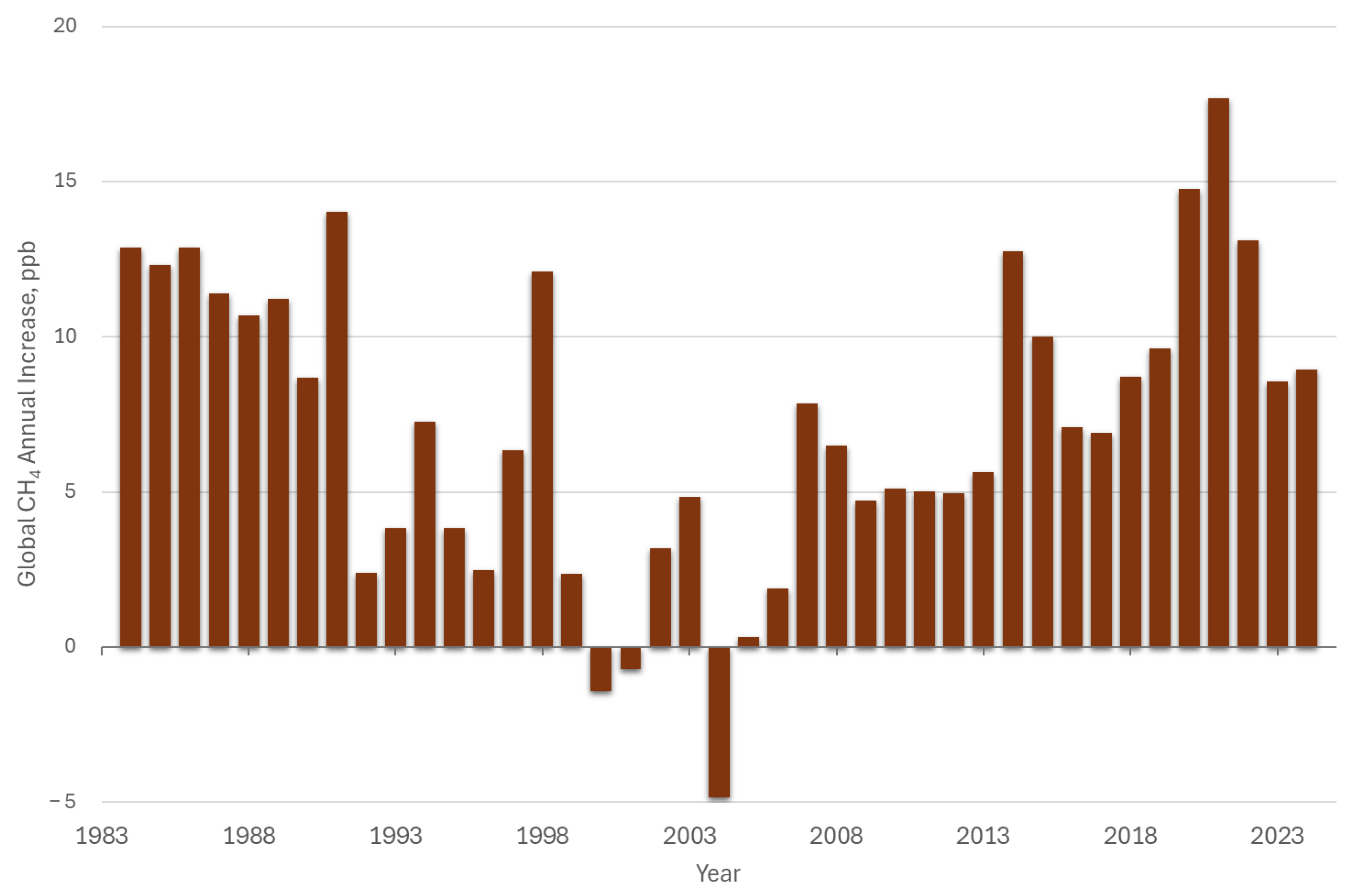
Methane (CH4) is a potent greenhouse gas whose concentration in the atmosphere has shown significant variability over time and space. Since pre-industrial times, atmospheric methane levels have risen dramatically, from approximately 700 parts per billion (ppb) to over 1950 ppb as of 2025 (Figure 2). This increase is not uniform; regional and seasonal variations are evident. Higher concentrations are typically found in the Northern Hemisphere, where most methane-emitting human activities occur. Seasonal changes are influenced by temperature and the availability of hydroxyl radicals, which act as the primary atmospheric sink for methane. The acceleration in methane growth since 2007 has raised concerns among scientists, pointing to both biogenic sources like wetlands and agriculture, as well as fossil fuel-related emissions.
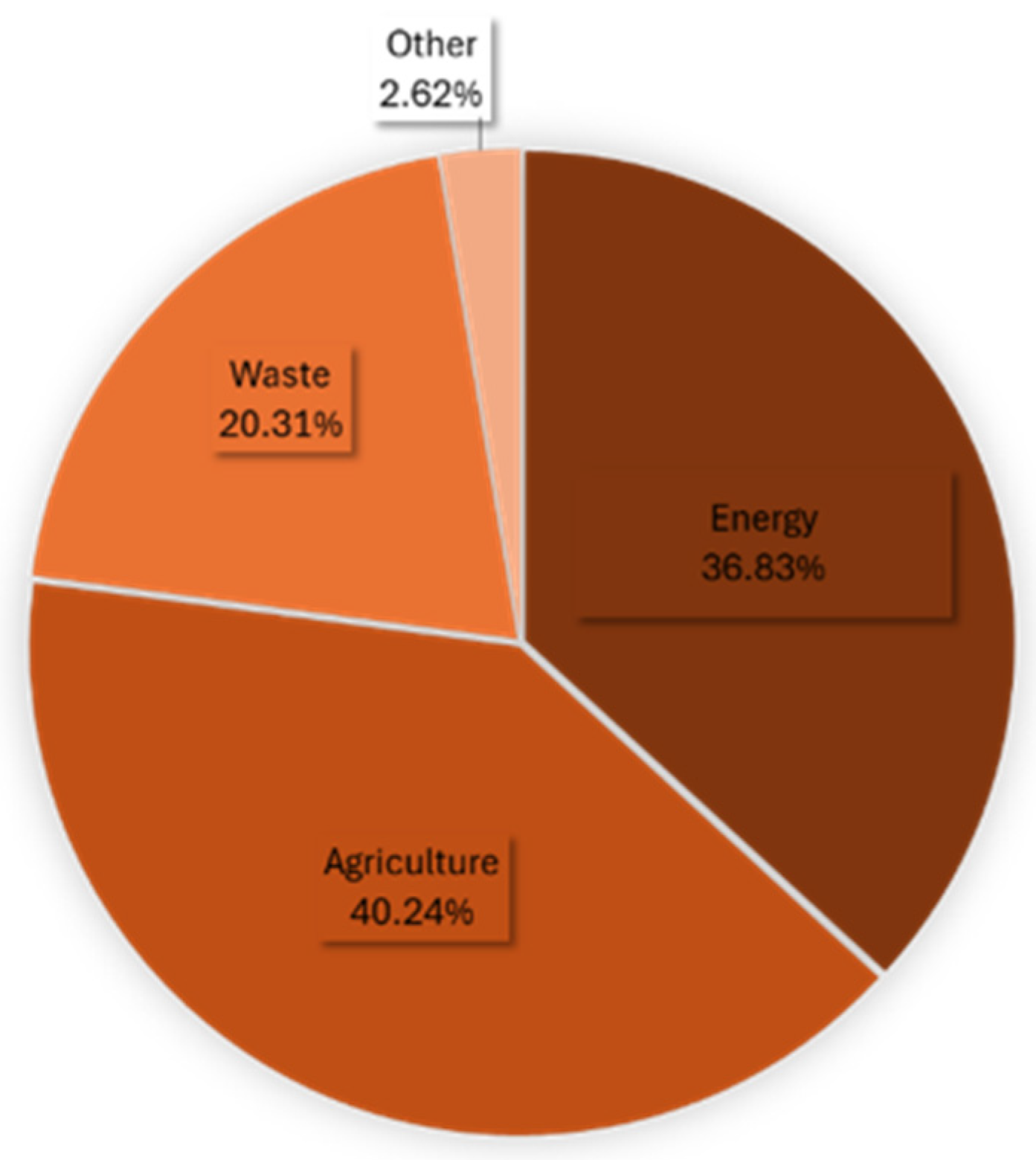
With respect to sectoral contributions to global anthropogenic methane emissions in 2023, agriculture, the energy sector, and waste management constituted the dominant sources. The distribution of global emissions across these sectors is presented in graphical form in Figure 3. Within Europe, the distribution differed, with agriculture accounting for 48%, waste for 34%, and energy for 15% of methane emissions. These figures underscore both the global and regional diversity of methane sources and the need for sector-specific mitigation strategies [3].
Methane emissions are projected to exhibit significant variability by 2050, depending on the mitigation pathways pursued. In particular, waste-related methane emissions could increase by 70% to 130% under pessimistic scenarios but may be reduced by up to 80% in optimistic pathways, relative to 2010 levels. The achievement of Sustainable Development Goals (SDGs) in developing countries is expected to play a key role in enabling these ambitious reductions, highlighting the intersection between climate policy and broader development agendas [1]. The agriculture and waste sectors constitute a significant source of emissions. Nevertheless, the energy sector, in particular, holds substantial potential for cost-effective mitigation. According to the International Energy Agency [3], around 70% of methane emissions from this sector regarding fossil fuels could be mitigated with existing technology at low cost or even negative marginal cost, meaning that the savings from recovered gas would exceed the costs of abatement.
Methane emissions vary across countries, influenced by a complex mix of economic activities, natural landscapes, population density, and energy systems. Generally, the highest methane emissions tend to originate from countries with large agricultural sectors, extensive fossil fuel industries, or significant wetland coverage. For example, China, India, and the United States are among the top emitters of methane due to their combined contributions from livestock, rice cultivation, landfills, and fossil fuel operations. Russia also ranks high due to emissions from oil and natural gas production, particularly from aging infrastructure with significant leakage. In the developing world, such as parts of Sub-Saharan Africa, South Asia, and Southeast Asia, agricultural sources dominate methane emissions, especially from livestock and rice paddies. However, in many of these regions, data availability and monitoring infrastructure are limited, contributing to higher uncertainties in emission estimates. Emissions from energy systems are particularly high in countries with large-scale fossil fuel production. China is the world’s largest coal producer and consumer, and coal mine methane is a growing concern, particularly as more mines reach deeper and more methane-rich seams. The United States also has significant emissions from oil and gas operations. Similarly, Russia is a leading emitter due to extensive natural gas infrastructure, some of which is aging and poorly maintained. Other major emitters in the energy sector include Iran, Algeria, Kazakhstan, and countries in the Middle East, where methane losses occur from both upstream oil production and poorly regulated gas flaring and venting. Many of these emissions are underreported due to limited transparency, inconsistent monitoring, and sometimes weak enforcement.
In Europe, total methane emissions are lower compared to major global emitters, but there is still notable variability among European countries. The largest contributors in Europe include Germany, France, the United Kingdom, Poland, and Italy, each with distinct sectoral profiles. Agricultural emissions, especially from livestock, are the dominant source across most of Europe. Countries such as Poland and the Czech Republic have higher emissions due to active coal mining industries. The Netherlands, Germany, and Italy report emissions associated with natural gas distribution networks, although these are declining thanks to modernization efforts and regulatory oversight.
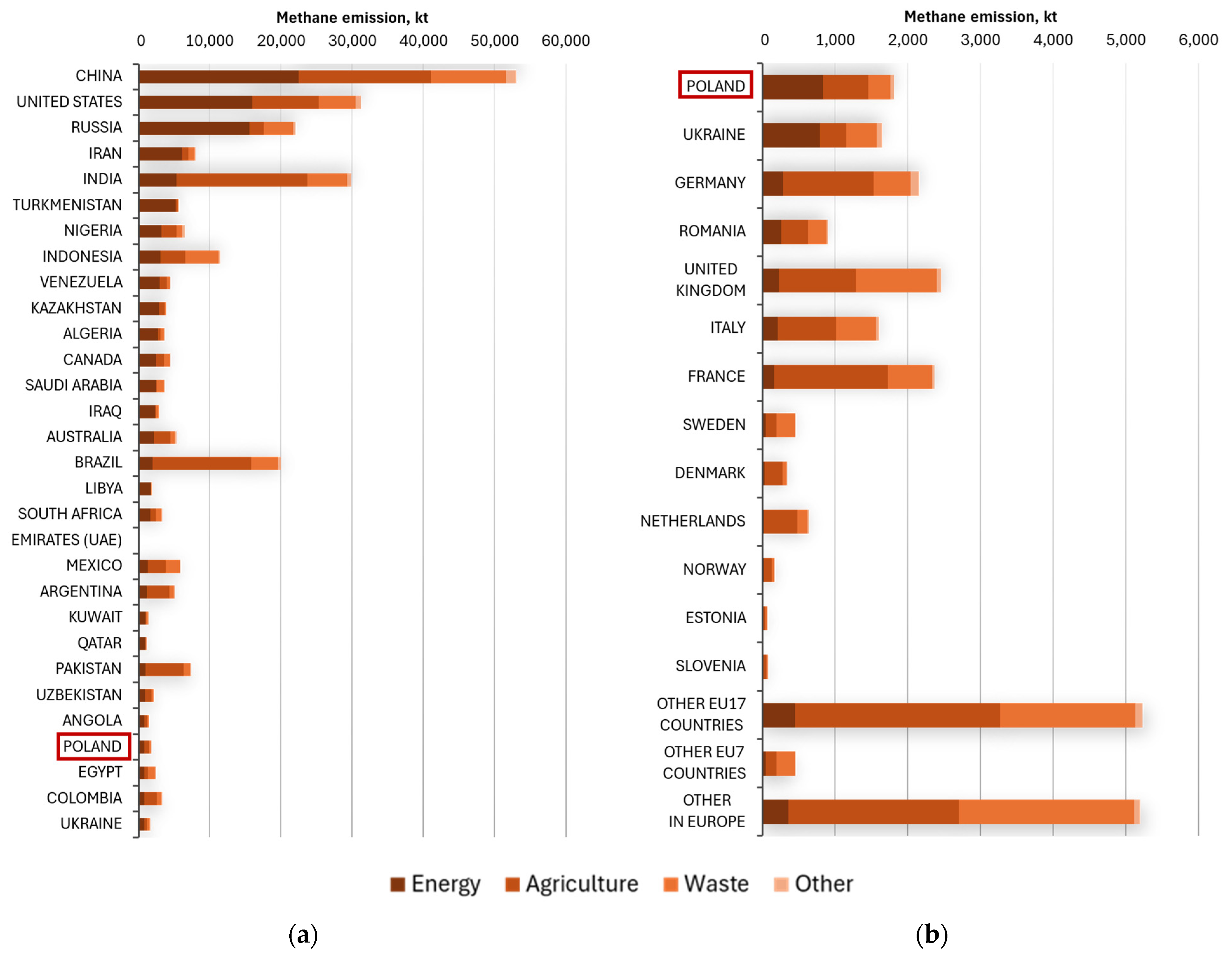
Figure 4 presents a summary of methane emissions by country, in which Poland’s values are highlighted with a red frame. Figure 4a summarizes emissions from various sources for countries with the highest methane emissions from the energy sector. Figure 4b summarizes the data for European countries or regions. As in the first case, this summary also includes the primary emission sources, i.e., the energy sector, agriculture, waste, and others.
Methane emissions vary significantly across countries, shaped by differences in economic structures, energy systems, and natural ecosystems (Figure 4). Countries in Asia and the Americas are the largest contributors, dominating global emission totals. In contrast, Europe, while benefiting from strong regulatory frameworks and lower overall emissions, still accounts for a substantial share that requires continued mitigation efforts.
Methane emission estimates are characterized by considerable uncertainty, largely due to limitations in data availability and the heterogeneity of measurement and reporting methodologies across regions. The use of different data acquisition techniques and monitoring approaches complicates a direct comparison between sources and countries. As a consequence, conducting consistent and detailed analyses of methane emissions at the global scale remains a significant challenge. Recent estimates indicate that global methane emissions amount to approximately 610 Mt per year, of which nearly two-thirds originate from anthropogenic activities, while the remainder is attributed to natural sources. The energy sector is expected to account for about 145 Mt of methane emissions in 2024, corresponding to over 35% of total human-related methane releases [3].
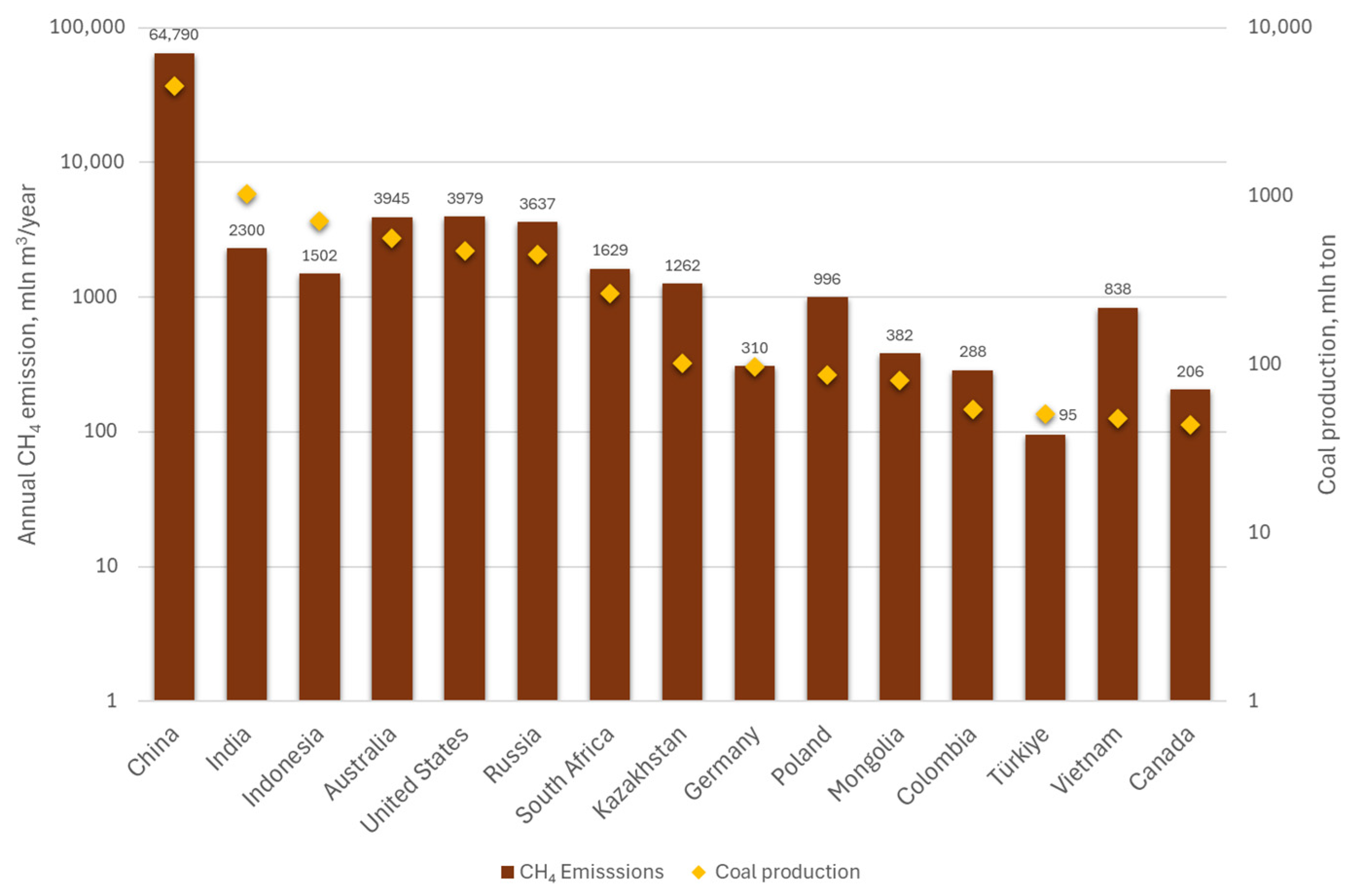
Coal mining alone released an estimated 40.5 Mt of methane to the atmosphere in 2022, accounting for over 10% of global anthropogenic methane emissions. In terms of climate impact, this corresponds to roughly 1.2 Gt CO2-equivalent, underscoring the significant role of coal mine methane in the overall greenhouse gas balance and highlighting its relevance as a priority target for mitigation efforts [26]. The main emitters include China, the United States, and Australia. Figure 5 presents the annual emissions of the ten countries with the highest emissions, along with information on the annual production of each country [22].
China’s coal industry is a major contributor to global methane emissions. This accounts for the majority of methane emissions from coal mining worldwide. The expansion of renewable energy has helped curb reliance on fossil fuels, lowering the fossil fuel share in China’s electricity generation to 62.7% in the first half of 2024 from 65.7% a year earlier. Nevertheless, methane emissions remain heavily concentrated in a few key coal-producing provinces. Shanxi Province alone is responsible for more than 32% of China’s coal-mine methane emissions, making it the top emitter. These high emission levels are largely due to the extensive use of deep underground mining, particularly for bituminous and anthracite coal [27].

3.2. Methane Emissions in Poland

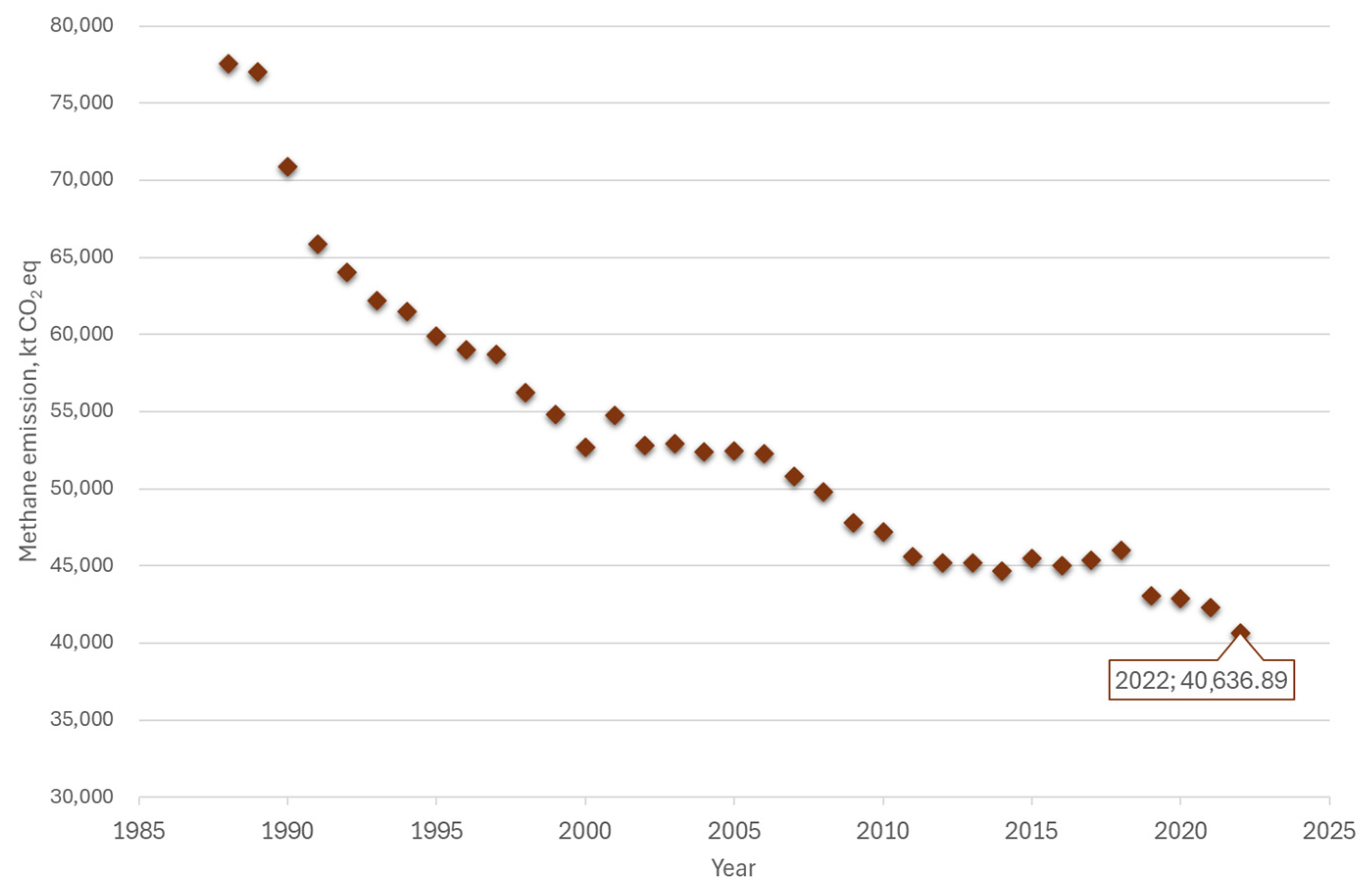
Poland is one of the few European countries with a significant coal mining sector, and as a result, it is a notable source of methane emissions within the EU. Methane is released during both underground coal extraction and from post-mining activities, particularly in hard coal mines located in the Upper Silesian Coal Basin. Coal mine methane accounts for a substantial portion of Poland’s total methane output. While some methane is captured and utilized for energy, a large share is still vented into the atmosphere. Reducing methane emissions from this sector remains a key challenge, requiring enhanced capture technologies, improved ventilation systems, and stronger regulatory oversight aligned with EU climate targets. Figure 6 shows the variability of methane emissions in Poland over the period 1988–2022 [24].
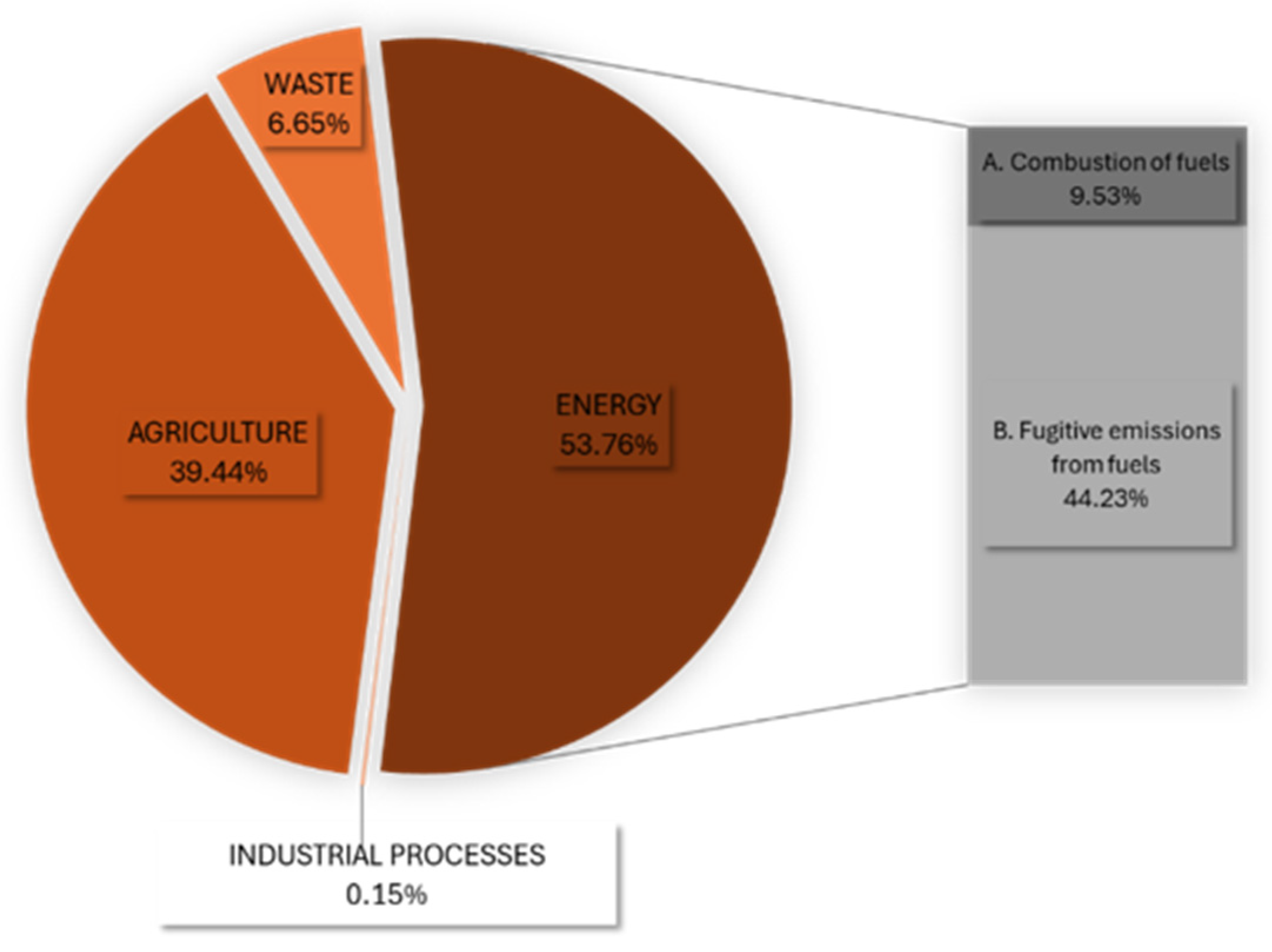
Total annual emissions in 2022 amounted to 40,636.89 kt CO2eq. This represents a decrease of 47.6% and 3.9% compared to 1988 and 2021, respectively. A sharp decline in emissions was recorded between 1988 and 1990, resulting from the systemic transformation and the transition from a centrally planned to market economy. Particularly significant changes occurred in heavy industry and the energy sector. After 1990, with economic recovery and growth, emissions began to gradually increase, reaching a local peak in 1996. In the following years, until 2002, a slow decline in emissions occurred, supported by programs to increase energy efficiency. Then, in the period 2002–2007, emissions increased again, which was associated with dynamic economic development and increased fuel consumption. Between 2008 and 2011, greenhouse gas emissions remained relatively stable, with the exception of 2009, when a significant decline occurred due to the global recession. Between 2012 and 2014, emissions declined again, but began to rise in 2016, largely due to increased fuel consumption in the road transport sector, associated with both improved fuel market controls and the general economic recovery. After 2018, the trend reversed, with emissions falling by 6% in 2019 and by a further 4% in 2020, the first year of the COVID-19 pandemic. During this time, the energy sector saw a significant reduction in fuel consumption: hard coal combustion decreased by over 6% and lignite combustion by over 8%. Fuel consumption in transport and emissions from industrial processes, particularly in the steel industry, also declined. In 2021, following the pandemic, emissions increased again by nearly 8% compared to the previous year, primarily due to increased energy consumption: hard coal by 10.6%, lignite by 19.0%, and natural gas by 10.3%. Gasoline, diesel, and CNG consumption in transport also increased. In 2022, the situation reversed—domestic greenhouse gas emissions fell by almost 5% compared to the previous year, which may indicate a halt in the return to pre-pandemic levels of energy and economic activity. As can be seen, the observed changes were strongly correlated with economic cycles, energy policies, and global events, including economic crises and the pandemic. The structure of methane emissions in Poland is presented in Figure 7.
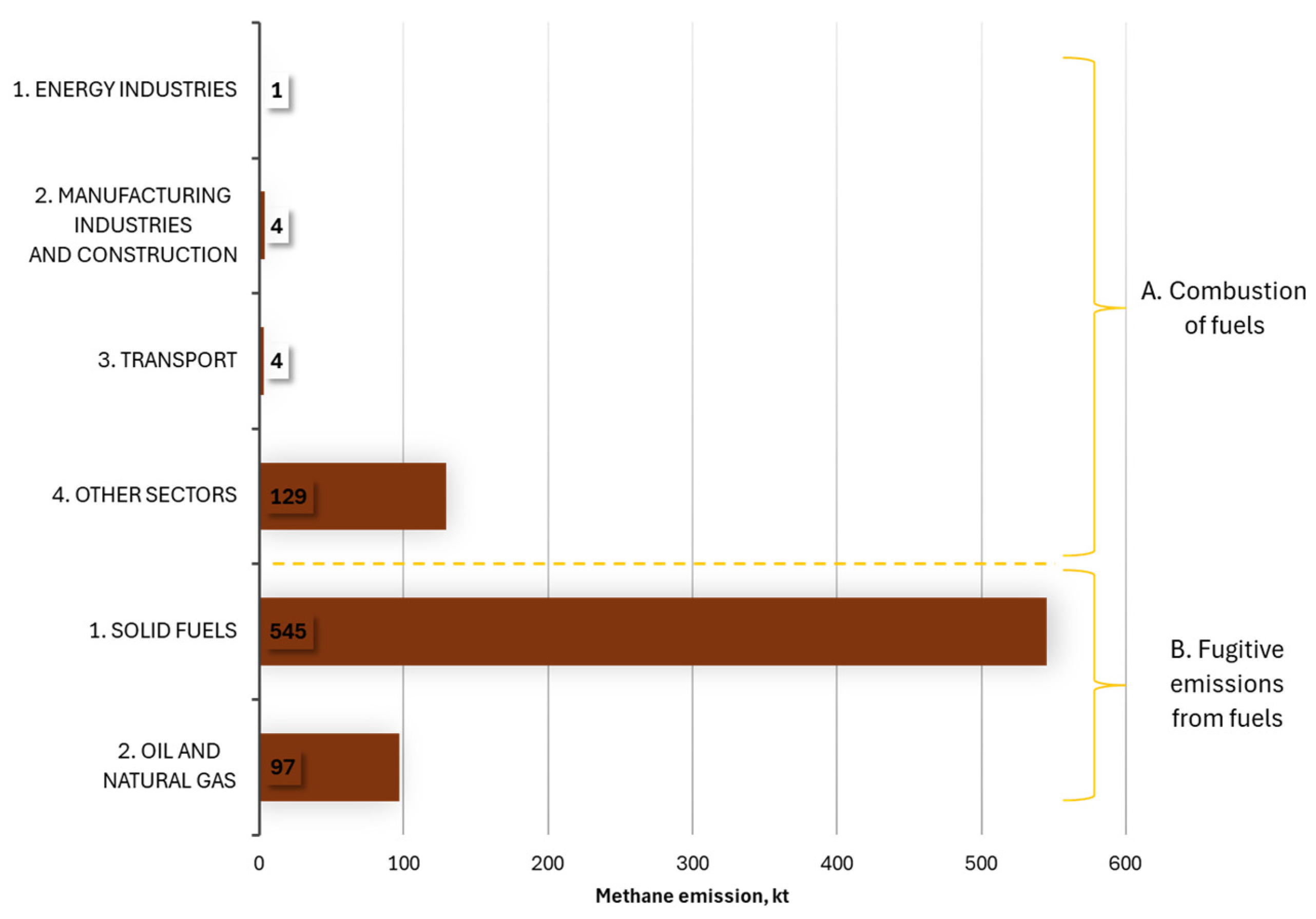
The share of methane in the total national greenhouse gas (GHG) emissions accounted for 10.7%. The largest source of methane emissions was fugitive emissions from fuels (44.2%), mainly from mines (37.6%) and from the extraction, processing, and distribution of oil and gas (6.7%). Emissions from fuel combustion accounted for 9.5% of the total methane emissions, while the agricultural sector accounted for 39.4%. The detailed structure of methane emissions in the Polish energy sector is presented in Figure 8.
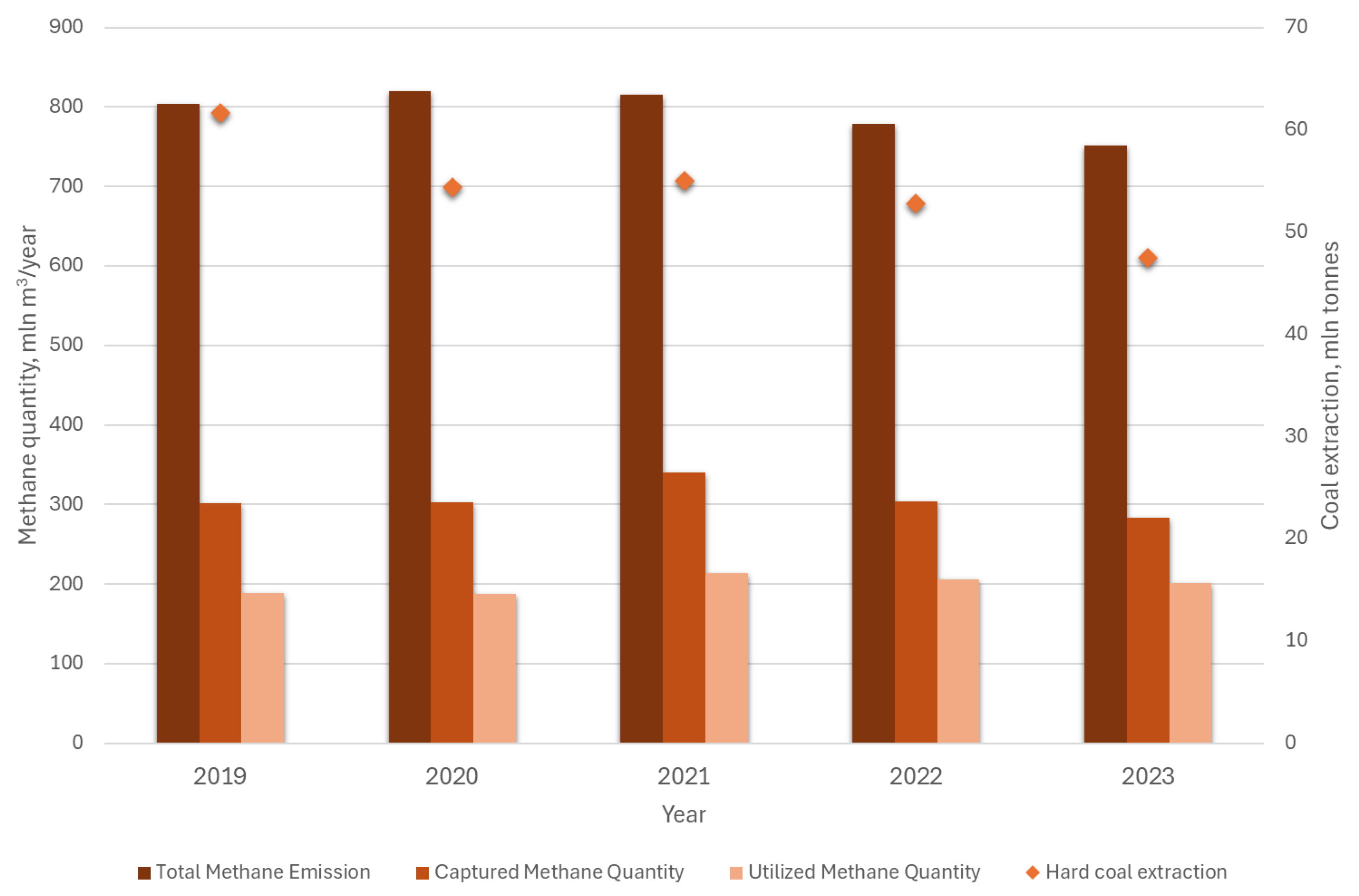
In the energy sector, methane leaks occur in plants producing and processing fossil fuels, as well as in transmission and distribution systems. Some emissions from fossil fuel extraction result from accidents (e.g., leaks in installations) and are accidental, but methane is also intentionally released into the atmosphere, including for safety reasons. Figure 9 presents data on emissions from Polish hard coal mines for the last five years.
In 2023, Polish hard coal mines emitted 752.12 million m3 of methane during extraction, with 73.3% released directly into the atmosphere. Ventilation air methane was the dominant source, accounting for 61% of total emissions. Drainage systems captured 283.24 million m3 (37.7%), but only 200.9 million m3 was used, while 82.34 million m3 still escaped. Methane capture occurred primarily in mining workings (63%), goafs behind dams (35.7%), and to a minor extent in corridors (1.3%). Utilized methane fell slightly from a peak of 214.2 million m3 in 2021 to 200.9 million m3 in 2023, but unused captured methane dropped more sharply, indicating improved drainage efficiency and greater use in energy processes [23].

3.3. Methane Emissions in Spain

Spain’s coal sector has largely wound down over the past three decades, and the country’s coal-related methane profile is now dominated by abandoned underground mines rather than operating pits. In the Spanish Emissions Inventory (SEI) [28], fugitive coal emissions cover active surface and underground mining—both “production” and “post-production”—as well as abandoned underground mines, with methane treated as a key source category.
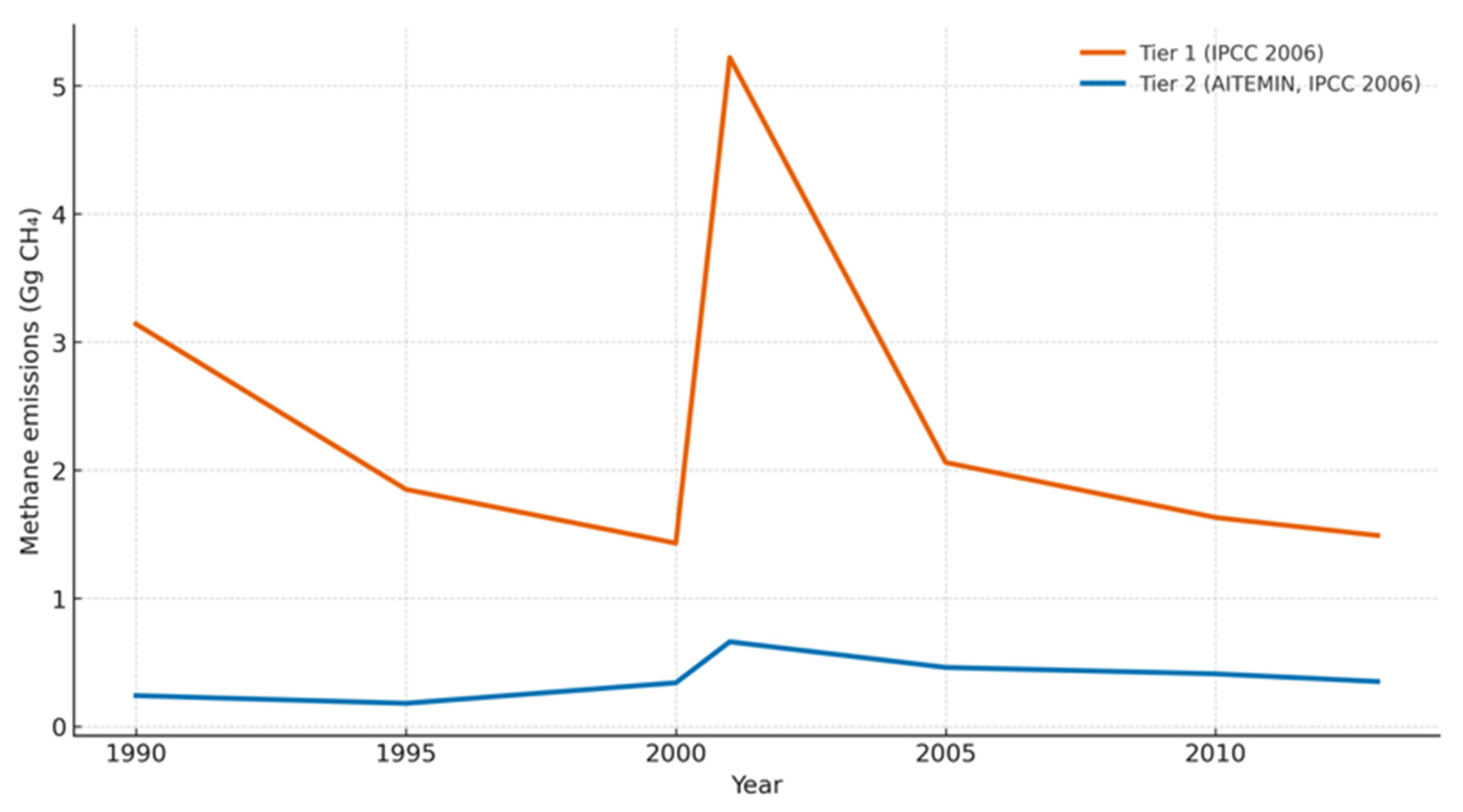
For abandoned mines, Spain commissioned the company AITEMIN to create a national inventory and estimate the AMM series for the period 1990–2013 [29,30]. Tier 2 estimates better align with mine closure timing and are generally lower than Tier 1 values [30], underscoring the sensitivity to hydrological status and decline curves (Figure 10).
The inventory identifies potential emitting sites in Asturias (HUNOSA), e.g., Lieres (estimated 3926 m3 CH4 day−1) and Candín–Siero (21,368 m3 CH4 day−1) when not fully flooded. Together with SEI’s uncertainty assessment (±1% activity; ±50% emission factor), these results frame the residual Spanish AMM footprint and the need for targeted MRV and abatement.
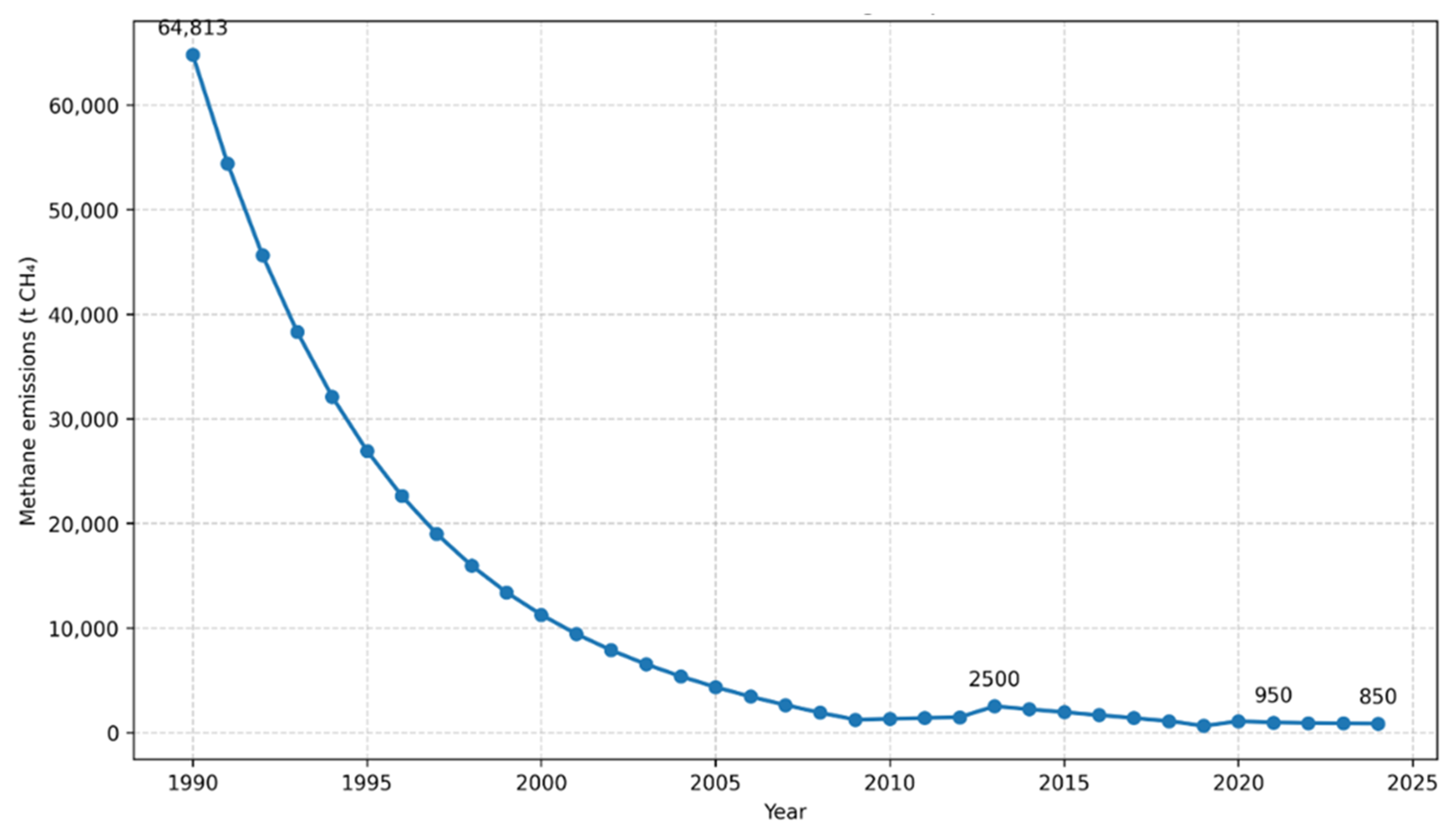
Spain estimates this category using an IPCC Tier 2 method [29,30]; for AMM, it includes only gaseous, non-flooded workings and reports no methane recovery or flaring from AMM. Figure 11 shows the variability of Spain’s coal-mine methane over 1990–2024.
Total methane emissions from coal mining decreased from 64,813 t CH4 in 1990 to 949.68 t CH4 in 2021, representing a 98.5% decrease. Recent values remained low (e.g., 633.41 t in 2019, 1066.19 t in 2020, 949.68 t in 2021), reflecting a “long tail” of residual AMM emissions as mines flood or seal over time. This trajectory mirrors the sharp decline in coal production recorded by the SEI’s activity data, as underground output fell from over 21 million tons (Mt) in 1990 to ~0.5 Mt in 2018, with surface mining contracting in parallel.
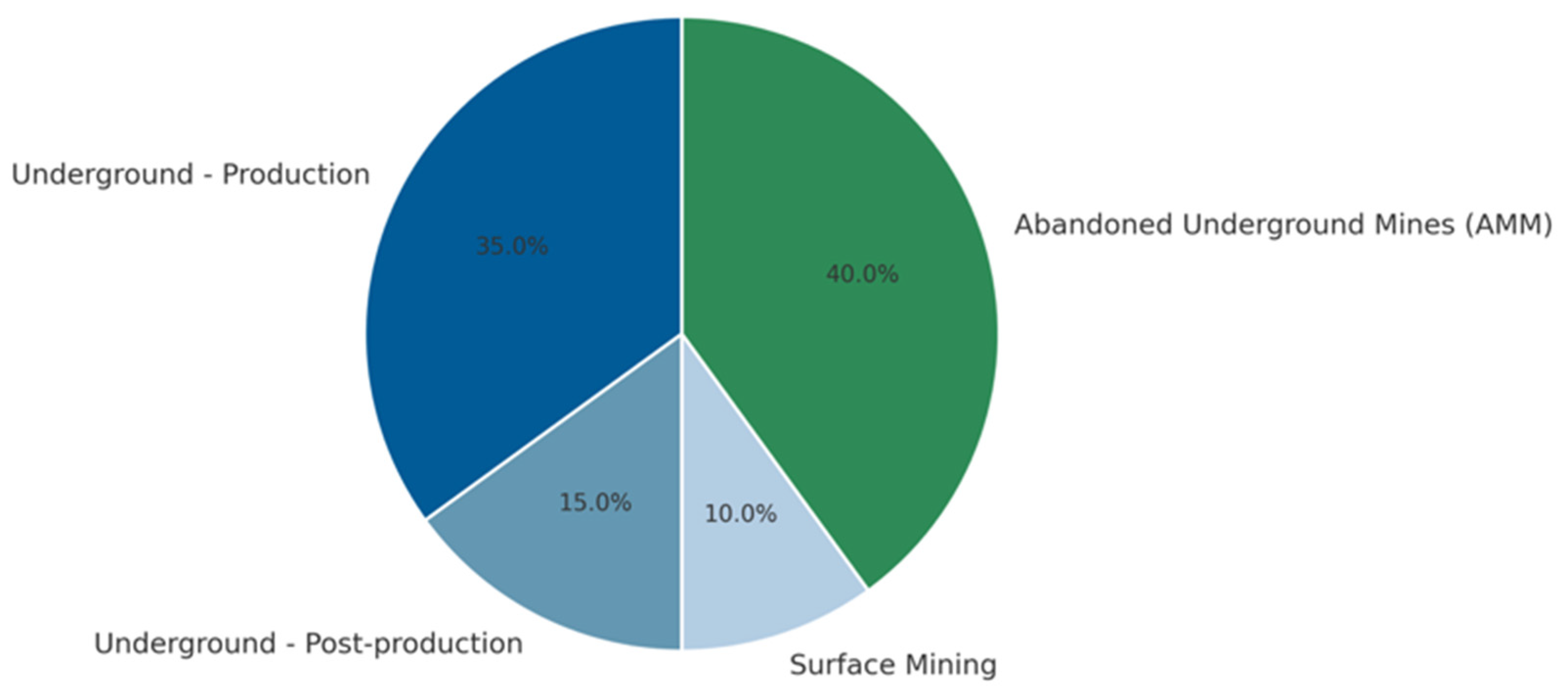
The structure of sources in the Spanish inventory is presented in Figure 12. SEI applies country-specific emission factors (AITEMIN) for active mines—reducing the post-production factor by 30% relative to production—and the IPCC 2019 equations for AMM (type of coal coefficients and years since closure, counting closures since 1983) [30]. Only non-flooded abandoned mines classified as gaseous are included; no recovery or flaring is reported in AMM.
In the broader EU context, underground mining accounted for 84.7% of coal sector methane in 2021, with abandoned underground mines contributing ~25.9%—a pattern that explains why Spain’s residual emissions are chiefly AMM driven and why enhanced monitoring and mitigation under the EU Methane Regulation [31] matter for Spain’s legacy districts.
Methane emissions in Spain reflect the trajectory of a coal sector in advanced transition, where the majority of releases now originate from abandoned rather than active mines. The national inventories prepared by AITEMIN have significantly improved the accuracy of methane quantification by applying Tier 2 methodologies aligned with the IPCC 2019 guidelines. These efforts reveal that while Spain’s overall contribution to European coal mine methane is relatively modest, its emissions are spatially concentrated in Asturias and León, and remain strongly influenced by the hydrological and structural conditions of closed shafts and galleries.
The predominance of Abandoned Mine Methane (AMM) underscores the importance of long-term monitoring and adaptive management, particularly as mine flooding and gas migration processes evolve. Spain’s approach demonstrates the value of detailed site-scale emission inventories and the utility of integrating geological, hydrological, and operational data into methane accounting. However, the lack of systematic recovery or flaring projects illustrates an untapped potential for energy valorization, especially given ongoing regulatory developments under the EU Methane Regulation [31].
In this context, Spain’s experience highlights both progress and opportunity: its well-characterized emission baselines form a solid foundation for future mitigation initiatives, while its mature mining regions provide suitable conditions for pilot-scale methane recovery, oxidation, and monitoring technologies. By coupling improved MRV frameworks with targeted investment in AMM utilization and cross-sectoral coordination, Spain can transform its residual methane emissions from an environmental liability into a managed and potentially productive component of its decarbonization pathway.

4. Discussion

4.1. Best Practices and Emerging Technologies in Methane Management

Technologies that can reduce methane emissions from fossil fuel operations to very low levels already exist and can now be implemented for selected emission sources from hard coal mines, especially where appropriate infrastructure is available, and gas prices make methane capture and use economically viable. Currently, only about 5% of global oil and gas production operates at a near-zero methane emissions standard. However, many stakeholders have committed to cutting methane emissions by 2030, and momentum has grown significantly since the introduction of the Global Methane Pledge in 2021 and the Oil and Gas Decarbonization Charter in 2023. Based on average energy prices in 2024, approximately 35 million tons of methane emissions from oil, gas, and coal could be eliminated at no net cost. This is because the expenses for mitigation are outweighed by the market value of the captured methane, which can be sold or used. In the oil and gas industry, effective abatement strategies include replacing high-emitting equipment—such as swapping wet compressor seals for dry seals—and installing vapor recovery units to capture low-pressure methane leaks. In the coal sector, emissions can be reduced through coal mine methane utilization, flaring, or oxidation technologies [3].
The UNECE’s “Best Practice Guidance for Effective Management of Coal Mine Methane” [32] provides a comprehensive framework for mitigating methane emissions in coal mining operations. It emphasizes the importance of robust monitoring, reporting, and verification systems to accurately track methane emissions. The guidance highlights the adoption of advanced mitigation technologies, including VAM oxidation and methane drainage systems, to reduce emissions effectively. In addition, it encourages the capture and utilization of methane as an energy source, turning a greenhouse gas liability into a valuable resource. Capacity building is also a key focus, with training and knowledge-sharing initiatives aimed at enhancing the skills of stakeholders. Finally, the document stresses the integration of methane management strategies into national climate action plans and policies. Collectively, these practices support the reduction in methane emissions and contribute to broader climate change mitigation efforts.
According to the UNECE Best Practice Guidance on ventilation air methane [33], VAM represents a substantial source of methane emissions. Single large ventilation shafts in active mines are capable of releasing up to 50,000 tons of methane annually, underscoring the urgency of targeted mitigation. The report emphasizes the critical importance of MRV systems to quantify emissions and assess the effectiveness of mitigation measures. It highlights that without precise data, both technical implementation and policy design may be compromised. The guidance identifies a range of mitigation technologies, most notably VAM oxidation and utilization systems. Two main forms of oxidation are thermal oxidizers, which combust methane at high temperatures, and catalytic oxidizers, which achieve combustion at lower temperatures with the aid of catalysts, offering higher energy efficiency. Another important solution is the utilization of VAM as an energy source. Methane in ventilation air can be concentrated and captured for power generation, heating, or as a feedstock for industrial processes. Using hybrid systems that combine oxidation and energy recovery is also a promising approach. For example, thermal oxidation units can be coupled with heat recovery systems to produce electricity or hot water, enhancing the overall efficiency of the mitigation process. It is a technically feasible, environmentally significant, and economically valuable approach to reducing coal mine methane emissions. Additionally, the guidance notes that supportive policy frameworks and financial incentives are essential to facilitate the adoption of VAM mitigation technologies, particularly in contexts where upfront investment costs may be a barrier.
Abandoned coal mines represent a significant and often overlooked source of methane emissions, as residual coal seams continue to release gas long after active mining has ceased. Effective methane management strategies must therefore extend to these sites to mitigate their contribution to greenhouse gas emissions and climate change. A primary approach involves the implementation of methane drainage systems, which extract residual gas from abandoned underground workings. These systems often require the installation of boreholes, collection pipelines, and gas treatment facilities to safely and efficiently capture methane that would otherwise escape into the atmosphere. Once captured, methane can be utilized in several ways. Flaring is a simple method for reducing total emissions, while electricity generation and thermal applications provide opportunities for productive energy use. Hybrid solutions, combining drainage and energy recovery systems, are highlighted as particularly effective in maximizing both emission reduction and energy output. Recovered methane can be used for power generation, heating, or as a fuel source. As with CMM, the critical factors for abandoned mines are robust monitoring, reporting, and verification, as well as policy support and financial incentives to promote the adoption of methane recovery technologies [34]. An EPA report [35] highlights both the challenges and opportunities associated with methane recovery and provides a database of abandoned coal mines in the United States. It identifies approximately 400 abandoned mines that were considered “gassy” at the time of closure. These emissions primarily result from diffuse vents, fissures, and inadequately sealed shafts, which continue to release methane long after mining operations have ceased. The guidance emphasizes the importance of conducting proper gas resource evaluations and suggests preparing an active mine for methane extraction at the time of closure.

4.2. Methane Capture and Utilization Systems—Challenges and Innovations

4.2.1. Experience of the Polish Mining Sector

The case studies of the Budryk, Pniówek, and Krupiński mines were selected to illustrate three distinct but complementary approaches to methane management within the Polish mining sector. The Budryk mine exemplifies operations with very high methane concentrations, where drainage systems and the utilization of high-concentration methane in energy production are central to emission control. The Pniówek mine demonstrates the advanced integration of methane capture technologies with cogeneration and trigeneration systems, enabling the simultaneous generation of electricity, heat, and cooling under conditions of elevated methane and thermal loads. Finally, the Krupiński mine highlights the technical feasibility of long-term post-mining methane capture and energy utilization, underscoring the strategic role of methane from closed mines in post-mining emission reduction initiatives.
Polish coal mines face significant technological challenges in capturing methane due to high methane concentrations, deep mining conditions, and complex geology. Effective methane drainage systems require advanced infrastructure, including multi-stage compressors, vacuum blowers, and real-time monitoring to maintain stable gas flow and safety. While methane capture efficiencies vary, many mines successfully integrate gas engines and cogeneration units to convert captured methane into electricity and heat. However, low-concentration ventilation air methane remains difficult to utilize economically, with emerging technologies like catalytic and thermal oxidation still in pilot phases.
The Budryk mine is one of the newest hard coal mines in the Silesian Province. Its methane utilization system is based on gas engines. The mine operates gas engines totaling over 10 MW to generate electricity and supplies methane for heat production in boiler rooms and external heat plants. Monthly methane capture ranges from 0.59 to 2.75 million m3, corresponding to an electricity output of 2120–6960 MWh. Methane drainage captures about 38–47% of this gas, which is then utilized primarily for the energy system. Expanding cogeneration systems, optimizing methane drainage, implementing real-time monitoring, and advanced technologies for capturing low-concentration VAM are key strategies for methane management enhancement [7,36].
The “Pniówek” mine in the Upper Silesian Coal Basin operates in coal seams with high methane risk and rock temperatures, making underground cooling essential. It utilizes an advanced methane capture and utilization system centered on a fully automated methane drainage station. This station creates negative pressure in the drainage pipeline network using frequency-controlled blowers, enabling stable gas capture and delivery. Captured methane undergoes two-stage compression for use in the mine’s heat plant and transmission network. Safety systems, including detonation and deflagration flame arresters, protect equipment and allow emergency venting. A trigeneration setup in which a gas piston engine, fueled by mine gas, drives both electricity and heat production while powering absorption chillers that cool ventilation air for underground workings. The system achieves a total cooling capacity of 7.9 MW, electric output of 6.4 MW, and thermal output of 7.4 MW. This combined power, heat, and cooling setup, launched in 2000, maximizes methane utilization while improving mine safety and working conditions [37,38].
The “Krupiński” Coal Mine, closed in 2017, continues to serve as a notable example of post-mining methane recovery. An advanced drainage network transports methane-rich gas from sealed workings to a surface station equipped with a compressor, five blowers, and precision monitoring instruments. Captured methane fuels an on-site combined heat and power (CHP) plant with four gas engines (total capacity: 10.6 MW) and supplementary coal- and gas-fired boilers, supplying both electricity and heat. Between 2017 and 2023, methane capture efficiency and gas concentration declined, yet the facility continues to convert a significant share of recovered gas into useful energy [14,37].
Catalytic and thermal flow reversal systems have, in recent decades, enabled the utilization of very low-concentration VAM. Their application remains limited by high capital costs and the need for a minimum methane content of about 0.2% to sustain operation. In Poland, several projects are advancing this technology. The VAMPIRE project by Centrum Transferu i Promocji Technologii integrates VAM utilization with underground air-conditioning. ICON ENTECH GROUP S.A. is developing catalytic flameless oxidation systems that use post-process heat to cool underground work areas. Węglokoks S.A. is preparing an installation at the Brzeszcze mine, and JSW S.A., in cooperation with GIG, is testing Megtec/Dürr VAM equipment at the Budryk mine [39].
Overall, Poland’s experience shows that combining robust drainage systems with innovative utilization methods can significantly reduce methane emissions, but further technological advances and investments are needed for wider, cost-effective implementation.

4.2.2. Experience of the Spanish Mining Sector

The Spanish coal mining sector represents a distinctive case within the European Union, characterized by a rapid process of mine closure and transition toward post-mining management under stringent environmental and safety standards. Historically concentrated in Asturias, León, and Teruel, Spain’s coal production has undergone a sharp decline since the 1990s, leaving an extensive network of underground workings that continue to emit methane—primarily from abandoned rather than active operations. This evolving context positions Spain as a critical reference point for understanding the dynamics of Abandoned Mine Methane (AMM) emissions in mature mining regions, advancing toward complete decarbonization.
Beyond its environmental implications, methane accumulation in underground coal environments has long been associated with significant safety hazards, including explosions that have led to fatalities in Spanish mining districts. While existing technologies allow for the mitigation and potential utilization of this gas, economic limitations and regulatory constraints have hindered large-scale implementation, particularly for methane originating from closed or flooded mines. Research initiatives have nonetheless explored feasible capture and valorization pathways, contributing to the broader framework of green mining practices.
Regulatory oversight of air quality and hazardous gas concentrations in underground coal mines in Spain is primarily defined by two technical instructions: (1) Limits of methane and other gases [40], and (2) Limits of sulfides, carbon monoxide, or carbon dioxide [41], both developed within the broader framework of the General Basic Regulation of Mining Safety Standards [42]. These technical instructions establish limits and monitoring requirements for methane and carbon dioxide concentrations in mine airflows, as well as the acceptable dilution levels to ensure occupational safety.
The prescribed air circulation must meet both hygienic and operational criteria, maintaining methane concentrations below 0.80% in main air returns and 1.50% in other underground areas, except in electrified returns, where the limit is 1.00%. In mines equipped with automatic continuous monitoring systems, the competent authority may authorize slightly higher thresholds—up to 1.00% in main returns and 1.50% in electrified zones. Should methane concentrations exceed these limits, mining operations are halted while gas accumulation trends are assessed; if values surpass 2.5%, evacuation of personnel and additional safety procedures are mandated under the supervision of site management.
Furthermore, the overall outlet air current, commonly referred to as the “reverse current,” must not contain more than 0.50% carbon dioxide, while the permissible limits for other gases are established according to the applicable technical standards. These measures collectively underscore Spain’s comprehensive approach to controlling gas emissions and ensuring worker safety in both active and post-mining contexts.
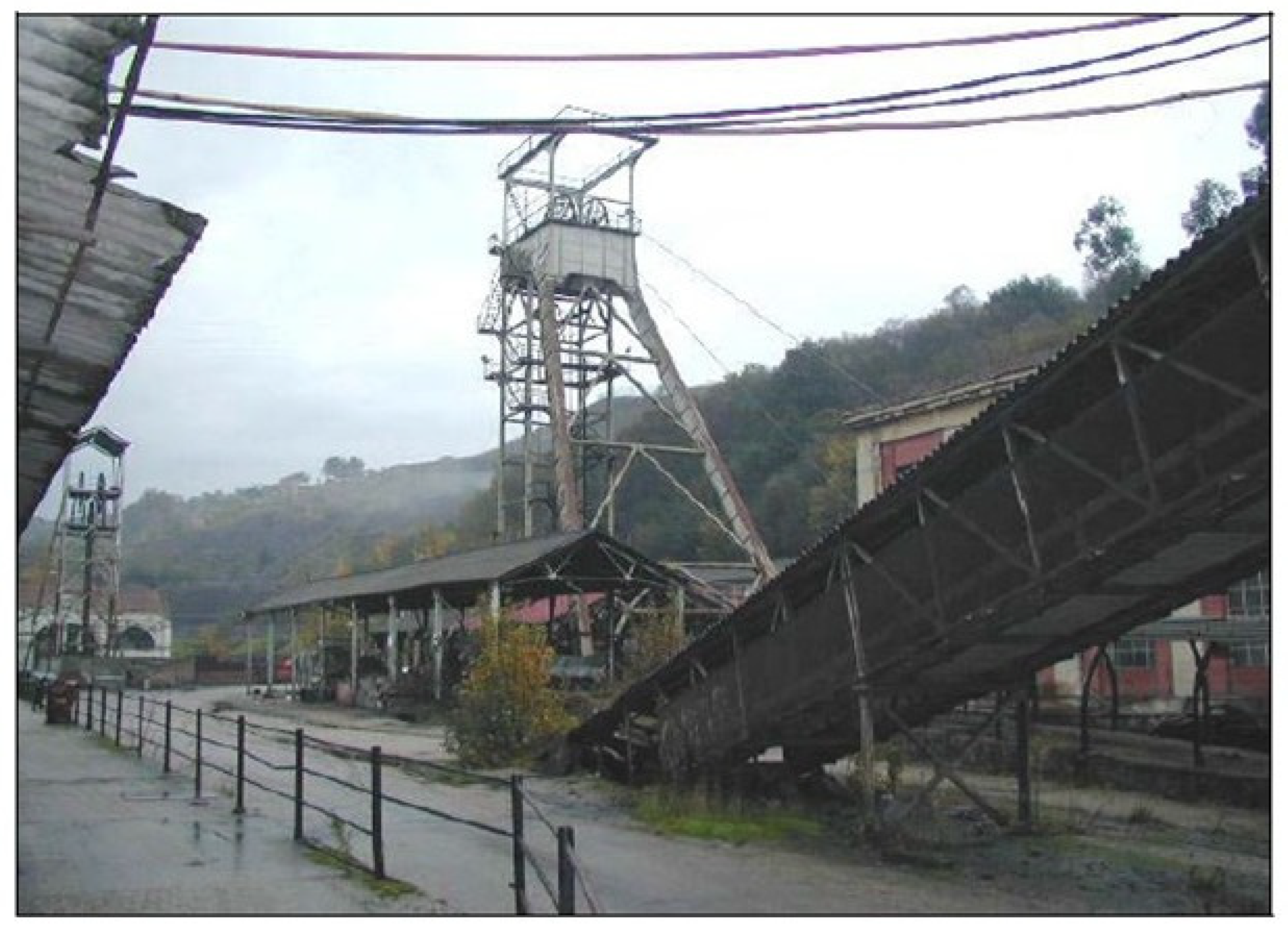
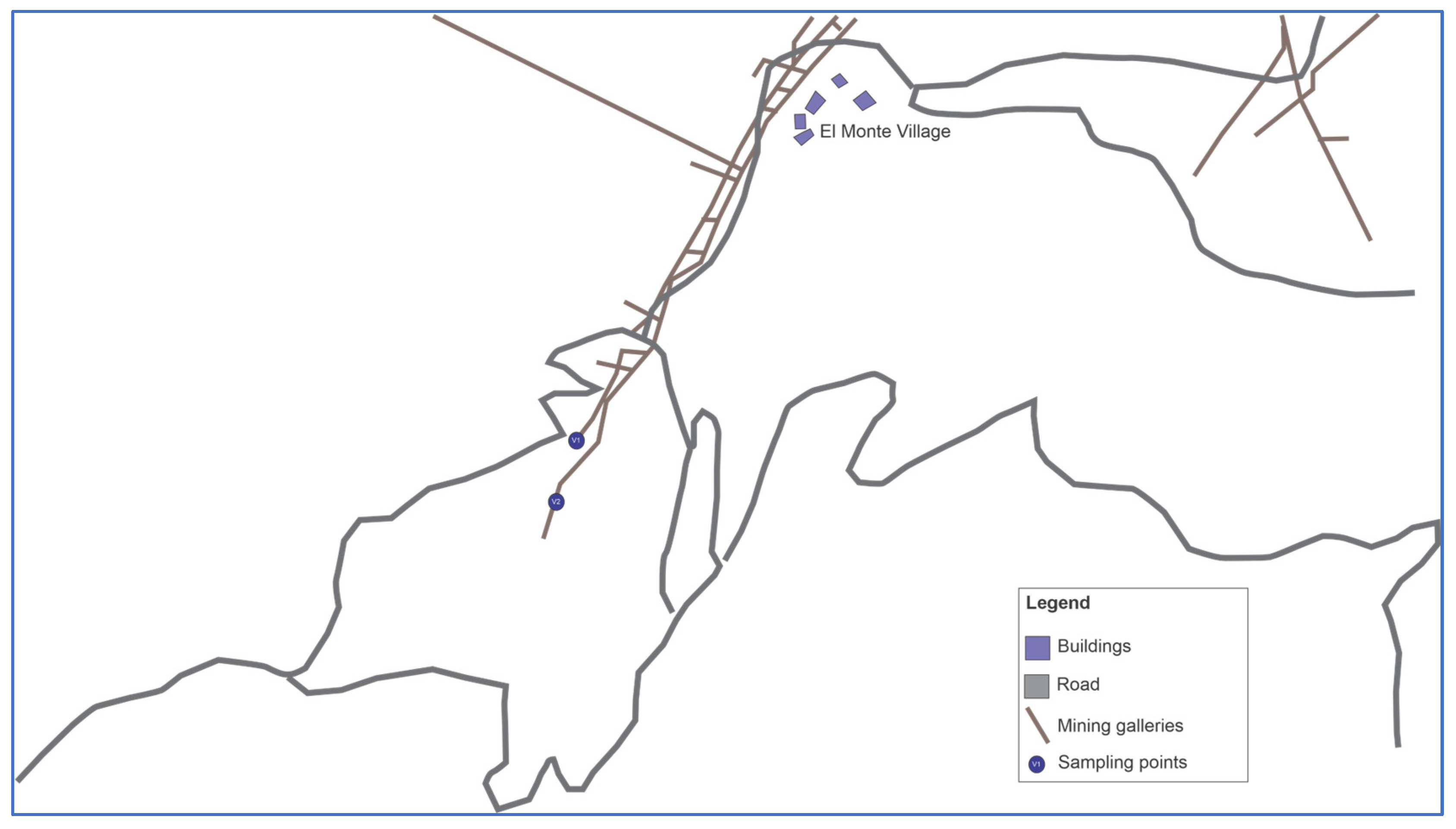
To illustrate the current experience of the Spanish mining sector, this analysis draws on two representative mines operated by the state-owned company Hulleras del Norte S.A. (HUNOSA): Mosquitera and Pumarabule. Both are situated in the central coal mining basin of Asturias, encompassing the municipalities of Siero, Langreo, Bimenes, and San Martín del Rey Aurelio. Figure 13 presents the head frames of Pumarabule 1 and 2.
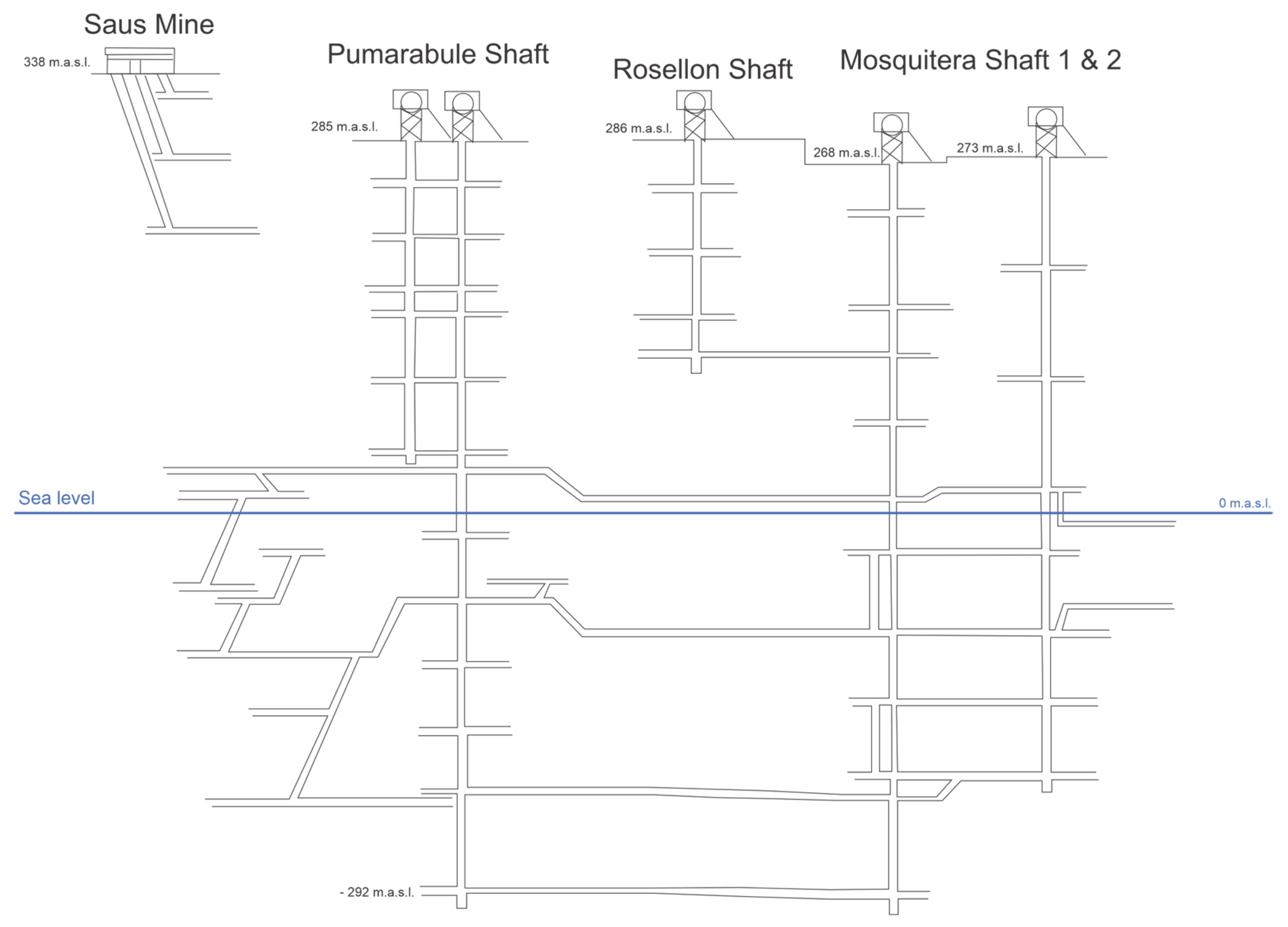
Figure 14 illustrates a schematic representation of the mines and their existing connections.
Pumarabule mine, also known as “Pozo de la muerte” (the mine of death), was started with the excavation of the first pit, Marta 1 (also known as Pumarabule 1), in 1916 by the Mining Engineer Joaquín Velasco, and operations began in 1917. In 1957, the second pit, Marta 2 (also known as Pumarabule 2), was excavated, reaching a depth of 578 m, with a diameter of 5.65 m and 13 levels. In the year 1969, Pumarabule mine was integrated into the national company Hulleras del Norte SA (HUNOSA).
Pumarabule 1 and 2 are underground exploitations, 578 m deep, developed over 14 floors or levels, between 285.75 m above sea level (masl) and −292.74 masl. Topographically, the head frames of both pits are located at a higher level than the rest of the underground workings in the area, except for the Saús mine.
The Pumarabule mine was closed in May 2004, and pumping stopped on 26 October 2010 for both the Pumarabule and Mosquitera mines. At this moment, the water was at −296.38 msl, and the distance of the water level from the pit head was 566.09 m. On 6 February 2015, the water level reached 229.55 masl, and the distance from the pit head to the water level was 55.50 m. From 9 November 2015, HUNOSA was authorized to increase the flooding level by 5 m, with a monthly increase of 1 m. The flooding level is expected to reach 235 masl.
Mosquitera mine or Mosquitera 1, started with its excavation in 1946. In December 1989, a fire occurred on the 7th level due to the burning of a transporting belt. The temperature reached 2000 °C, and after, the fire spread to the coal seam. Four miners died and several were injured. The mine was closed, and from that moment, the exploitation continued through the Pumarabule mine. A total of 700 m away from Mosquitera 1 is “Pozo el Terrerón”, also known as Mosquitera 2, which was excavated in 1926.
Underground mining in Mosquitera 1 has a maximum depth of approximately 566 m, developed across eight floors with eleven levels ranging from 269.36 to −296.73 masl. Mosquitera 2 has five floors, totaling seven levels, with a maximum depth of 477.5 m (−204.50 m above sea level). On 3 July 2015, the water reached 229.14 masl, and the distance of the water level from the pit heads was 40.57 m. From 9 November 2015, HUNOSA was authorized to increase the flooding level by five meters, with a monthly increase of one meter. The flooding level is expected to reach 235 AMSL. Pumarabule mine is used as an auxiliary pumping facility for Mosquitera, so in Pumarabule, there is pumping only when the Mosquitera pumps are not able to maintain the flooding level.
During November 2016 and February 2017, within the Research Fund for Coal and Steel (RFCS) MERIDA project (Management of environmental risks during and after mine closure) with Grant Agreement No. RFCR-CT-2015-00004, the University of Oviedo undertook two measurement campaigns of CH4 and CO2 in Mosquitera and Pumarabule mines with optimal conditions for soil gas measurements: no strong wind, no rain, and medium soil humidity. All Mosquitera mine floors are flooded, except for the first floor in Pumarabule, which is not.
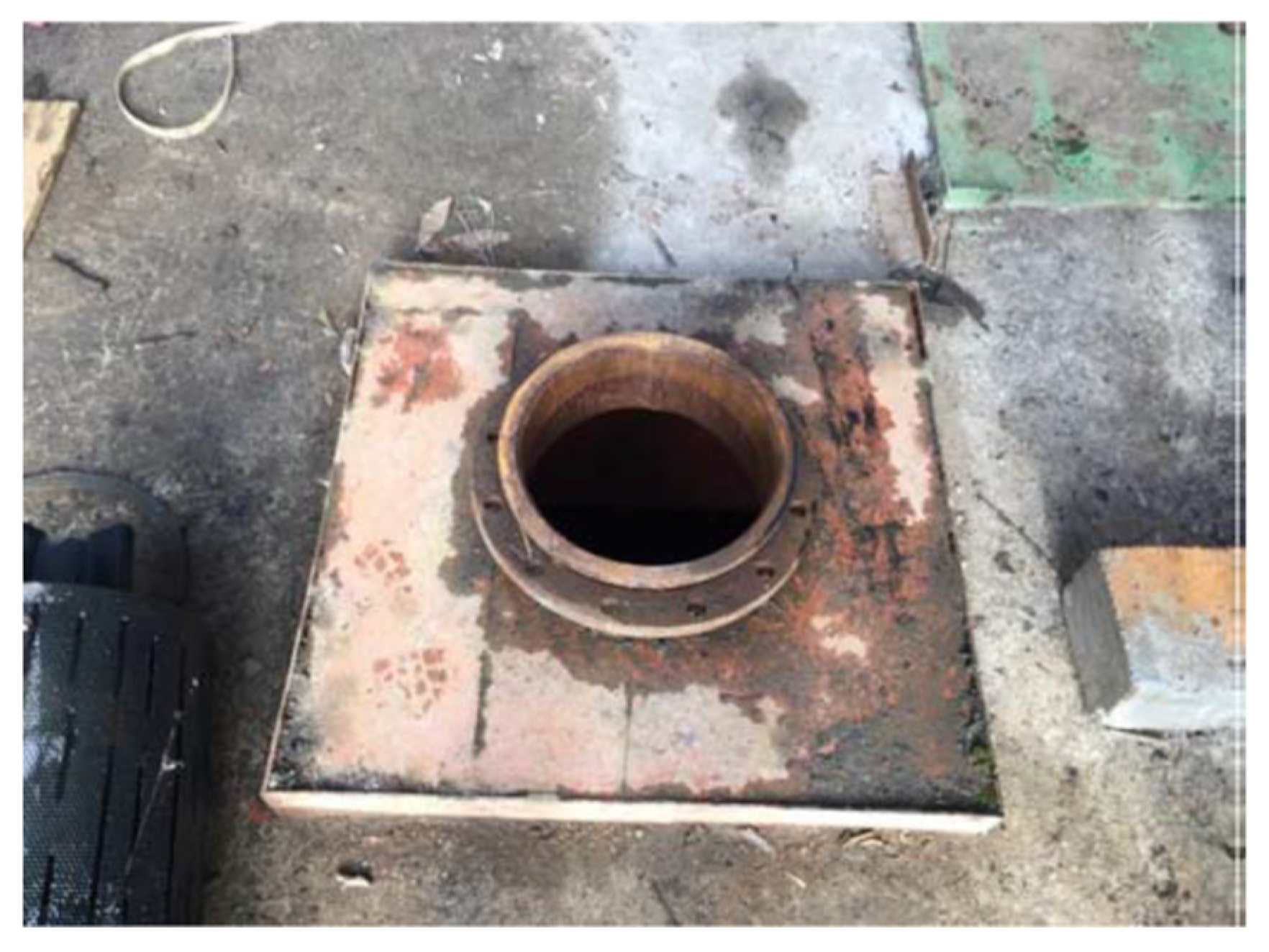
Figure 15 presents a photograph of the Mosquitera pit head that is accessible for measuring gas emissions.
The return gas values for Mosquitera mine are presented in Table 1. When these measurements were taken, the distance of the water to the pit head was around 40 m. At that moment, with all floors flooded, it is reasonable to assume that CH4 measures equal 0%.
In Table 2, the return gas values of Fondón mine, which is within the flooding process, are presented, to allow for a comparison with the Mosquitera values. Both CH4 and CO2 emissions were higher.
To compare gas emissions under various working and closing conditions, the return gas measurements from two operating shafts, connected between them, are presented in Table 3 and Table 4: Sotón mine and María Luisa mine.
The gas concentration measurements presented in Table 1, Table 2, Table 3 and Table 4 represent short-term, site-scale observations and are not intended to reproduce national emission time series. Instead, they provide qualitative support for the inventory-based methane emission trends shown in 10, illustrating the influence of mine flooding status and post-closure conditions on Abandoned Mine Methane emissions. In particular, fully flooded workings exhibit negligible methane concentrations, while partially flooded or non-flooded structures show higher and more variable gas levels, consistent with the observed long-term decline in national emissions.
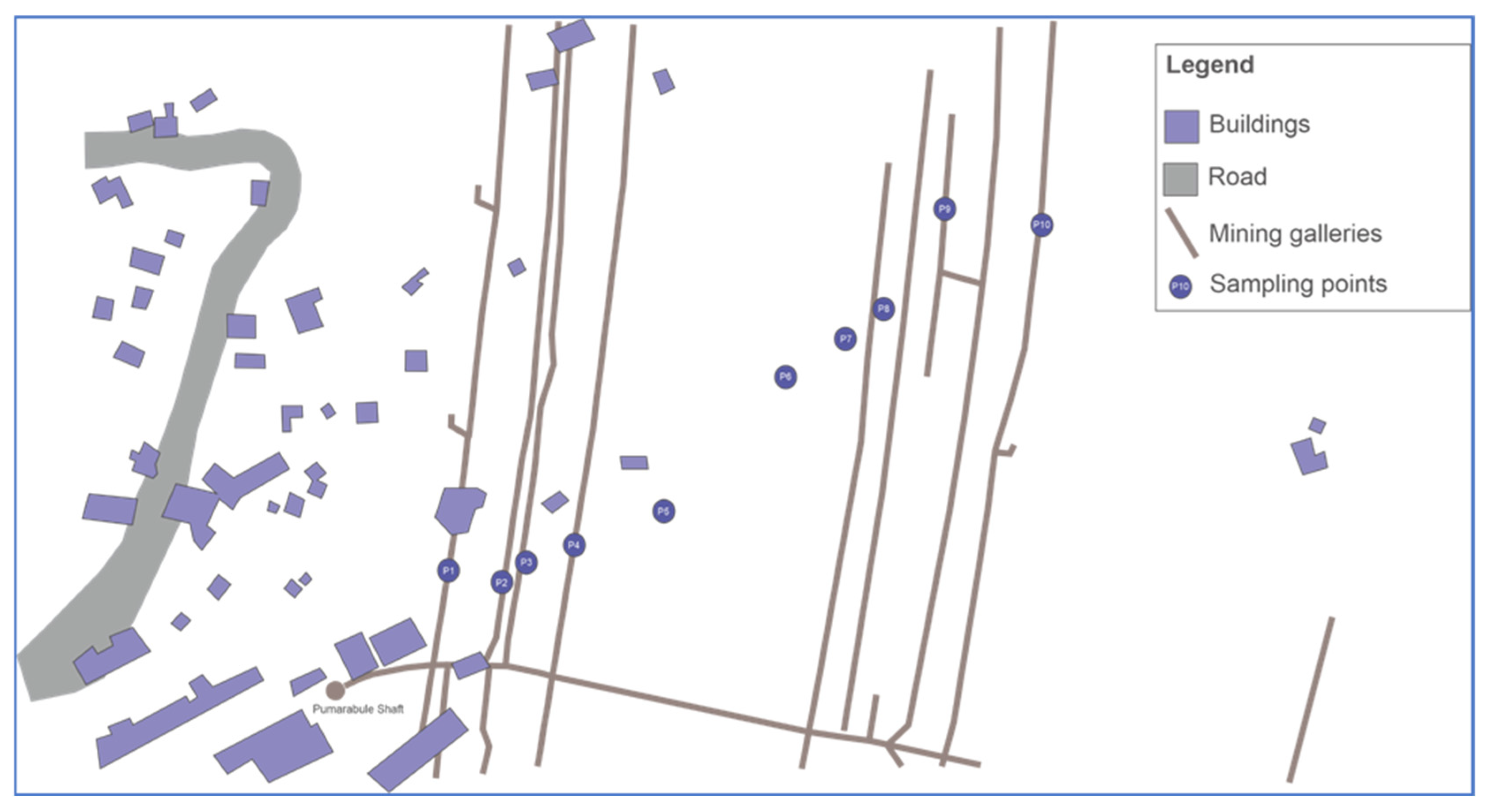
Over Pumarabule superficial galleries (whose first floor is not flooded), five points were measured during a first campaign (P1–P5), and another five (P6–P10) during a second (Figure 16).
During the first campaign, two measurements were taken over two outcrop coal seams in the Mosquitera area (Figure 17). During the second campaign, five measurements were taken over Mosquitera’s superficial galleries, which are completely flooded.
Finally, as there was a gas lighter near the Pumarabule coal seams, a measurement was made there during the first campaign.
At Mosquitera, there were difficulties accessing the most relevant areas due to the mountainous terrain and dense vegetation. Therefore, the measurements focused on the outcrops and the gas lighter. Not surprisingly, there were only CH4 flows at one outcrop (3.6 cm3 min−1 m−2) and at the gas lighter (21.6 cm3 min−1 m−2).
The Spanish coal sector exemplifies a case of methane emissions that are increasingly dominated by abandoned mine methane (AMM) rather than active production sources. Despite comparatively low absolute emission levels, Spain’s experience underscores the structural complexity of legacy methane management, particularly in Asturias and León, where hydrological conditions and mine flooding status critically condition emission dynamics. The AITEMIN and SEI inventories have provided a scientifically sound foundation for quantifying AMM, aligning Tier 2 methodologies with closure chronologies and mine-specific parameters. These improved data frameworks allow for more precise national inventory reporting, addressing previous uncertainties linked to emission factors and activity data.
Although methane capture and utilization initiatives remain limited, Spain’s systematic identification of potential emitting sites positions it to benefit from the provisions of the 2024 EU Methane Regulation, which mandates enhanced MRV and promotes abatement and energy recovery in legacy mining districts. The Spanish case highlights the importance of maintaining long-term monitoring infrastructure and integrating green mining principles into post-extractive landscape management. By combining robust data collection, regulatory enforcement, and targeted technological deployment, Spain can transform residual methane emissions from an environmental liability into a manageable and potentially valorized resource, contributing to the broader decarbonization objectives of the European Union.

4.3. Policy Review and Recommendations

Methane reduction has emerged as a critical policy priority at both the international and national levels. Regulatory frameworks increasingly recognize methane abatement as essential for meeting climate targets, particularly under the commitments of the Paris Agreement and the United Nations Framework Convention on Climate Change (UNFCCC). Various countries have implemented policies and regulations to mitigate methane emissions, including those from active and abandoned coal mines. In the United States, methane emissions are primarily regulated under the Clean Air Act through the Methane Emissions Reduction Program [43]. China has tightened regulations, requiring mines emitting gas with a methane concentration of 8% or higher and a flow rate of 10 m3/min or more to capture it, with utilization or destruction. Canada has proposed draft regulations to establish a national cap-and-trade framework for greenhouse gas emissions in the oil and gas sector, a measure expected to strengthen incentives for operators to adopt methane reduction strategies. Similarly, Brazil’s National Energy Policy Council has issued guidelines promoting the decarbonization of oil and gas activities, with specific provisions to minimize flaring, eliminate routine flaring altogether, and implement measures aimed at preventing and reducing methane leakage across the sector [3].
Policy frameworks have increasingly targeted methane mitigation in coal mining, with the European Union’s Methane Regulation [31] representing one of the most comprehensive and ambitious regulatory measures globally. The regulation, adopted in mid-2024, mandates rigorous MRV of methane emissions across fossil fuel sectors, including coal mining operations. It prohibits routine venting and flaring of methane, allowing these only under strictly defined exceptional circumstances, thus directly addressing avoidable methane emissions. A key component of the regulation is its focus on enhanced MRV systems to ensure transparent and reliable emissions accounting at the source level. As accurate methane quantification is essential for effective policy enforcement, the regulation requires operators to adopt advanced technologies, such as continuous methane monitoring sensors and satellite data integration, supporting real-time emissions tracking. The regulation also mandates that EU member states compile inventories of methane emissions from abandoned mines and implement mitigation strategies, addressing a critical yet often neglected emission source [44]. Phased implementation measures of the EU Methane Regulation are designed to ensure gradual compliance while fostering international alignment. From 2025, coal importers must report methane emissions associated with imported coal and the exporters’ MRV practices. By 2027, contracts for coal imports must demonstrate exporter compliance with MRV standards equivalent to EU requirements, and by 2030, a methane intensity threshold will be enforced, with non-compliance resulting in potential penalties.
Despite the regulation’s strengths, implementation challenges remain. The adoption of advanced MRV and methane capture technologies involves high initial capital investment, which can be prohibitive for smaller operators or those in regions with limited financial resources [45,46]. As critical barriers to implementation for stakeholders, factors such as high initial capital costs, complex regulatory frameworks, and limited understanding of methane sources and available measurement technologies could be considered [46]. A comprehensive global review of methane-related policies conducted by Olczak et al. [47] categorizes policy actions aimed at MRV, preventing, or reducing anthropogenic methane emissions. Their analysis revealed that overall policy coverage remains notably limited. Only 13% of global methane emissions are currently addressed through such interventions, and the effectiveness of these policies is frequently ambiguous or inadequately assessed. It should be highlighted that the analysis carried out covers all sources of methane, not only the energy sector. Furthermore, the article was published in 2023, before the introduction of the EU Methane Regulation. Nevertheless, the authors emphasize the pressing need to enhance regulatory reach and MRV systems, specifically in coal and other under-regulated sectors, to mitigate methane’s substantial climate impact effectively. The article by Zięba et al. [48] emphasizes the policy shift introduced by the proposed EU regulation, which imposes binding requirements for monitoring, reporting, and reducing methane emissions across all coal mining activities, including abandoned sites. Poland, despite not signing the Global Methane Pledge, must comply with these EU rules, posing major challenges for its coal-dependent energy sector. The authors stress the need for harmonized data reporting, enforcement mechanisms, and methane recovery incentives to ensure effective implementation and alignment with EU climate targets. Similarly, Gajdzik et al. [45] argue that to meet EU climate goals, Poland must treat coal mine methane capture as a policy priority, not just a safety issue. It highlights key barriers like high costs and regulatory complexity, calling for stronger government support and clearer rules. Methane use should be integrated into mining strategies to turn emissions into a valuable resource. The regulation addresses key emission sources, including active and abandoned mines, and fosters international alignment through import standards. While challenges related to technology, finance, and global cooperation persist, the policy framework sets a strong precedent, demonstrating how integrated regulation and green technology adoption can synergistically advance climate objectives in the coal mining sector.
Nonetheless, the opportunities offered by the EU Methane Regulation are substantial. Beyond environmental benefits, methane capture technologies enable the recovery of CMM, which can be utilized as a valuable energy resource, creating economic incentives that partially offset mitigation costs. Moreover, the regulation enhances the EU’s global leadership in climate governance by establishing rigorous standards that may encourage the adoption of similar policies elsewhere, thereby contributing to global methane mitigation efforts.

5. Conclusions

Methane is a powerful greenhouse gas with major climate and health impacts, largely driven by human activities like coal mining, agriculture, and waste management. Advances in monitoring, capture, and utilization technologies offer effective mitigation pathways. With coordinated policies and investment, methane emissions can be reduced and even transformed into a valuable energy resource, supporting both climate action and sustainable mining.
Poland and Spain display distinctly different methane emission patterns, largely reflecting the divergent trajectories of their coal sectors. In Poland, methane emissions remain comparatively high and are closely linked to ongoing hard coal extraction, with fugitive emissions from active underground mines constituting the dominant source. These emissions vary in line with economic activity and energy demand, and although methane capture and utilization have expanded in recent years, a substantial fraction of the gas is still released to the atmosphere, making further mitigation in operating mines a persistent challenge. Spain, in contrast, has experienced a dramatic reduction in coal-related methane emissions following the almost complete cessation of coal production, with total emissions falling by nearly 99% since 1990. The remaining emissions are low in absolute terms and arise predominantly from abandoned underground mines, where methane release is governed by post-closure hydrogeological and structural conditions rather than active mining processes. These structural differences are also reflected in national approaches to methane capture and utilization. In Poland, the presence of active mines has fostered the deployment of advanced methane drainage systems and energy recovery technologies, including cogeneration and trigeneration schemes that simultaneously produce electricity, heat, and cooling. However, the efficient and cost-effective treatment of low-concentration ventilation air methane continues to pose significant technical and economic constraints. In Spain, where mining activity has largely ceased, efforts are concentrated on monitoring, safety management, and the refinement of emission inventories, with limited implementation of capture or energy recovery systems for abandoned mine methane.
Taken together, the Polish and Spanish cases illustrate two contrasting but complementary mitigation contexts within the European Union. Poland exemplifies the challenges and opportunities associated with reducing methane emissions in an active, methane-rich mining sector through technological optimization and infrastructure investment. Spain, in turn, highlights the long-term management issues associated with legacy emissions from abandoned mines, underscoring the importance of robust monitoring frameworks and adaptive post-mining strategies. A holistic perspective suggests that effective EU-wide methane mitigation will require policies and technologies tailored both to active extraction environments and to the enduring emissions from closed and flooded mining systems.
This study provides a comprehensive assessment of methane emissions at the global, regional, and national levels, with a detailed focus on Poland and Spain. By combining quantitative data from authoritative databases, time-series analysis, geographic visualization, and qualitative case studies, the research captures the complexity and variability of methane emissions across sectors, countries, and over time. Globally, the agriculture, energy, and waste sectors dominate methane outputs, with emissions concentrated in countries with large fossil fuel industries, intensive agriculture, or significant wetland areas. In Europe, and particularly in Poland, coal mining remains a major source, with substantial portions of methane still vented despite existing capture and utilization technologies.
The analysis demonstrates that methane emissions are strongly influenced by economic cycles, energy policies, and global events such as the COVID-19 pandemic. Case studies of Polish coal mines show both technical challenges and opportunities in capturing and utilizing methane, while cross-country comparisons highlight best practices, policy frameworks, and technological innovations that could enhance mitigation. Importantly, the study underscores that significant reductions are achievable at relatively low cost, particularly in the energy sector, where recovered methane can offset mitigation expenses according to IPCC 2022.
Current technologies allow for near-zero methane emissions in the fossil fuel and coal sectors at little to no net cost, yet adoption remains limited. Effective strategies include robust methane drainage, ventilation air methane oxidation, flaring, and energy utilization, as demonstrated by advanced systems in Polish coal mines such as Budryk, Pniówek, and Krupiński. Emerging innovations, including catalytic and thermal VAM oxidation, offer further potential, particularly for low-concentration emissions. Policy frameworks, most notably the EU Methane Regulation, are increasingly driving methane mitigation through mandatory monitoring, reporting, and utilization requirements, while offering incentives for energy recovery. Challenges remain in terms of high capital costs, technical complexity, and regulatory enforcement, especially for smaller operators and abandoned mines. Overall, integrating technological solutions with supportive policies can significantly reduce methane emissions, transform a climate liability into an energy resource, and advance global climate objectives.
Overall, the findings emphasize the need for integrated strategies combining technological solutions, robust monitoring, and effective policy enforcement to reduce methane emissions. Targeted action in high-emission sectors and regions, along with global cooperation and adoption of best practices, is essential to support climate goals, energy recovery, and sustainable development. The results indicate that coal mining continues to constitute a major source of methane emissions in Europe, with the comparative cases of Poland and Spain highlighting how variations across different stages of the coal mining life cycle influence emission patterns and mitigation potential. The analysis further suggests that existing technological solutions, when effectively integrated with comprehensive regulatory frameworks and supported by rigorous monitoring and policy mechanisms, can achieve significant reductions in methane emissions.
This study concentrated on methane emissions from underground hard coal mines and did not examine potential variations in emission characteristics associated with open-pit mining. Additionally, the policy analysis was confined to the regulatory framework currently in force within the European Union. Future research could extend the proposed approach to include comparative assessments in other regions, where mining practices, governance structures, and methane emission dynamics may differ substantially. Prospective directions also include broadening the applied analytical framework to encompass diverse geographic regions and mining systems, as well as integrating methane mitigation technologies more comprehensively into overarching climate, energy, and sustainability strategies.

Author Contributions

Conceptualization, M.B. and P.R.F.; methodology, M.B.; software, K.Z.-G.; validation, M.B., P.R.F. and K.Z.-G.; formal analysis, P.R.F.; investigation, K.Z.-G.; resources, M.B.; data curation, K.Z.-G.; writing—original draft preparation, K.Z.-G.; writing—review and editing, M.B. and P.R.F.; visualization, P.R.F.; supervision, M.B.; project administration, K.Z.-G.; funding acquisition, M.B. All authors have read and agreed to the published version of the manuscript.

Funding

The work is financially supported by the AGH University of Krakow, Faculty of Civil Engineering and Resource Management (subsidy no. 16.16.100.215). The work is supported by the European Union under the Research Fund for Coal and Steel (RFCS), project METH2GEN—Methane to Hydrogen Conversion for Emission Reduction and Energy Generation (Grant Agreement No. 101193747).

Data Availability Statement

The raw data supporting the conclusions of this article will be made available by the authors on request.

Conflicts of Interest

The authors declare no conflicts of interest.

Abbreviations

The following abbreviations are used in this manuscript:
AMMAbandoned Mine Methane
CHPCombined Heat and Power
CMMCoal Mine Methane
ECBMEnhanced Coal Bed Methane
GHGGreenhouse Gas
GWPGlobal Warming Potential
IEAInternational Energy Agency
MRVMonitoring, Reporting, and Verification
SDGsSustainable Development Goals
UNFCCCUnited Nations Framework Convention On Climate Change
VAMVentilation Air Methane

References

  1. Bessagnet, B.; Belis, C.A.; Crippa, M.; Dentener, F.; van Dingenen, R.; Thunis, P. Trends of Methane Emissions and Their Impact on Ozone Concentrations at the European and Global Levels; European Commission, Joint Research Centre: Luxembourg, 2024. [Google Scholar] [CrossRef]
  2. United Nations Environment Programme. An Eye on Methane—Invisible but not Unseen: How Data-Driven Tools Can Turn the Tide on Methane Emissions—If We Use Them; United Nations Environment Programme: Nairobi, Kenya, 2024. [Google Scholar] [CrossRef]
  3. International Energy Agency. Global Methane Tracker 2025; International Energy Agency: Paris, France, 2025; Available online: https://www.iea.org/reports/global-methane-tracker-2025 (accessed on 27 July 2025).
  4. Intergovernmental Panel on Climate Change (IPCC). Climate Change 2021: The Physical Science Basis. Contribution of Working Group I to the Sixth Assessment Report of the Intergovernmental Panel on Climate Change; Masson-Delmotte, V., Zhai, P., Pirani, A., Connors, S.L., Péan, C., Berger, S., Caud, N., Chen, Y., Goldfarb, L., Gomis, M.I., et al., Eds.; Cambridge University Press: Cambridge, UK, 2021. [Google Scholar]
  5. Kholod, N.; Evans, M.; Pilcher, R.C.; Roshchanka, V.; Ruiz, F.; Coté, M.; Collings, R. Global Methane Emissions from Coal Mining to Continue Growing Even with Declining Coal Production. J. Clean. Prod. 2020, 256, 120489. [Google Scholar] [CrossRef]
  6. Andersen, T.; Zhao, Z.; de Vries, M.; Necki, J.; Swolkien, J.; Menoud, M.; Röckmann, T.; Roiger, A.; Fix, A.; Peters, W.; et al. Local-to-regional methane emissions from the Upper Silesian Coal Basin (USCB) quantified using UAV-based atmospheric measurements. Atmos. Chem. Phys. 2023, 23, 5191–5216. [Google Scholar] [CrossRef]
  7. Borowski, M.; Zwolińska-Glądys, K.; Cheng, J. Methane Emissions from Coal Mines: Quantification, Capture, and Utilization Strategies for Atmospheric Impact Mitigation—A Case Study from Poland. Atmosphere 2025, 16, 174. [Google Scholar] [CrossRef]
  8. Sadavarte, P.; Pandey, S.; Maasakkers, J.D.; Lorente, A.; Borsdorff, T.; van der Gon, H.D.; Houweling, S.; Aben, I. Methane Emissions from Super-Emitting Coal Mines in Australia Quantified Using TROPOMI Satellite Observations. Environ. Sci. Technol. 2021, 55, 16573–16580. [Google Scholar] [CrossRef]
  9. Li, X.; Cheng, T.; Zhu, H.; Ye, X.; Fan, D.; Tang, T.; Tong, H.; Yin, S.; Xiong, J. High-Resolution Satellite Reveals the Methane Emissions from China’s Coal Mines. Remote Sens. 2025, 17, 220. [Google Scholar] [CrossRef]
  10. Wang, L.; Wu, S.; Han, S.; Hu, B.; Wang, Q.; Zhang, K.; Song, T. Fractal Analysis of Coal Pore Structure Based on Low-Pressure Gas Adsorption and Its Influence on Methane Adsorption Capacity: A Perspective from Micropore Filling Model. Energy Fuels 2024, 38, 4031–4046. [Google Scholar] [CrossRef]
  11. Wang, P.; Ju, Y.; Ren, C.; Li, G.; Xiao, L.; Wang, W.; Gao, J.; Chen, R. Effect of pore structure on methane adsorption characteristics in tectonically deformed coals. Front. Earth Sci. 2025, 13, 1609857. [Google Scholar] [CrossRef]
  12. Dogan, H.E.; Demirel, N. Analyzing lump coal gas release as a source of coal mine methane: Using GC and machine learning. Fuel 2025, 397, 135433. [Google Scholar] [CrossRef]
  13. Karacan, C.Ö. Analysis of gob gas venthole production performances for strata gas control in longwall mining. Int. J. Rock Mech. Min. Sci. 2015, 79, 9–18. [Google Scholar] [CrossRef]
  14. Hadro, J.; Jureczka, J.; Suszka, G.; Strzemińska, K. Abandoned Mine Methane Development of the Upper Silesian Coal Basin in the Light of the New EU Regulation on Methane Emission Reduction in the Energy Sector. MATEC Web Conf. 2024, 389, 00085. [Google Scholar] [CrossRef]
  15. Su, S.; Beath, A.; Guo, H.; Mallett, C. An Assessment of Mine Methane Mitigation and Utilisation Technologies. Prog. Energy Combust. Sci. 2005, 31, 123–170. [Google Scholar] [CrossRef]
  16. Vigil, D.A.; Johnson, R.L., Jr.; Tauchnitz, J. Improved Estimation Methods for Surface Coal Mine Methane Emissions for Reporting, Beneficial Use, and Emission Reduction Purposes Relative to Australia’s Safeguard Mechanisms. J. Environ. Manag. 2025, 376, 124366. [Google Scholar] [CrossRef]
  17. Sun, X.; Wang, H.; Gong, B.; Zhao, H.; Wu, H.; Wu, N.; Sun, W.; Zhang, S.; Jiang, K. Investigation into Enhancing Methane Recovery and Sequestration Mechanism in Deep Coal Seams by CO2 Injection. Energies 2024, 17, 5659. [Google Scholar] [CrossRef]
  18. Fan, C.; Yang, L.; Sun, H.; Luo, M.; Zhou, L.; Yang, Z.; Li, S. Recent Advances and Perspectives of CO2-Enhanced Coalbed Methane: Experimental, Modeling, and Technological Development. Energy Fuels 2023, 37, 3371–3412. [Google Scholar] [CrossRef]
  19. Zhao, W.; Su, X.; Xia, D.; Hou, S.; Wang, Q.; Zhou, Y. Enhanced coalbed methane recovery by the modification of coal reservoir under the supercritical CO2 extraction and anaerobic digestion. Energy 2022, 259, 124914. [Google Scholar] [CrossRef]
  20. Wang, F.; Yan, J. CO2 Storage and Geothermal Extraction Technology for Deep Coal Mine. Sustainability 2022, 14, 12322. [Google Scholar] [CrossRef]
  21. Wang, X.; Feng, Z.; Zhou, D.; Zhao, D.; Wang, J.; Hu, L. Principle and Application for Thermal Exploitation of Coalbed Methane Recovery. Energy Fuels 2023, 37, 13840–13850. [Google Scholar] [CrossRef]
  22. Global Methane Emitters Tracker, Global Energy Monitor, September 2024 Release. Available online: https://globalenergymonitor.org/projects/global-coal-mine-tracker/ (accessed on 25 July 2025).
  23. State Mining Authority. Ocena Stanu Bezpieczeństwa Pracy, Ratownictwa Górniczego Oraz Bezpieczeństwa Powszechnego w Związku z Działalnością Górniczo-Geologiczną w 2023 Roku (Porównanie od Roku 2019); State Mining Authority: Katowice, Poland, 2024. (In Polish)
  24. KOBiZE. Poland’s National Inventory Report 2024: Greenhouse Gas Inventory for 1988–2022; Ministry of Climate and Environment: Warsaw, Poland, 2024; (In Polish). Available online: https://www.kobize.pl/uploads/materialy/materialy_do_pobrania/krajowa_inwentaryzacja_emisji/NIR_2024_raport_syntetyczny_PL.pdf (accessed on 29 July 2025).
  25. Lan, X.; Thoning, K.W.; Dlugokencky, E.J. Trends in Globally-Averaged CH4, N2O, and SF6 Determined from NOAA Global Monitoring Laboratory Measurements; Version 2025-05; Global Monitoring Laboratory: Boulder, CO, USA, 2022. [Google Scholar] [CrossRef]
  26. International Energy Agency. Driving Down Coal Mine Methane Emissions; International Energy Agency: Paris, France, 2023; Available online: https://www.iea.org/reports/driving-down-coal-mine-methane-emissions (accessed on 25 September 2025).
  27. Global Energy Monitor. China’s Coal Conundrum: Examining Coal Mine Production, Proposals, and Methane Emissions; Global Energy Monitor: San Francisco, CA, USA, 2024; Available online: https://globalenergymonitor.org/wp-content/uploads/2024/08/GEM-China-Coal-Mines-Sept-2024.pdf (accessed on 1 August 2025).
  28. AITEMIN. Review of Estimates of Greenhouse Gas Emissions from Mines in Spain. Ref: 15CASV014. Carried Out for the Directorate-General for Quality and Environmental Assessment and the Natural Environment (DGCEAyMN) of the Spanish Ministry of Agriculture, Food and the Environment; AITEMIN: Madrid, Spain, 2015. [Google Scholar]
  29. AITEMIN. Estimation of Greenhouse Gas Emissions from Abandoned Mines in Spain and Development of a Methodological Improvement in Their Estimation in the National Emissions Inventory. Ref: 14CASV007. Carried out for the Directorate-General for Quality and Environmental Assessment and the Natural Environment of the Spanish Ministry of Agriculture, Food and the Environment; AITEMIN: Madrid, Spain, 2014. [Google Scholar]
  30. Intergovernmental Panel on Climate Change (IPCC). 2006 IPCC Guidelines for National Greenhouse Gas Inventories; Eggleston, H.S., Buendia, L., Miwa, K., Ngara, T., Tanabe, K., Eds.; IGES: Hayama, Japan, 2006; Available online: https://www.ipcc-nggip.iges.or.jp/public/2006gl/index.html (accessed on 17 October 2025).
  31. European Union. Regulation (EU) 2024/1787 of the European Parliament and of the Council of 13 June 2024 on the Reduction of Methane Emissions in the Energy Sector and Amending Regulation (EU) 2019/94; European Union: Brussels, Belgium, 2024. [Google Scholar]
  32. United Nations Economic Commission for Europe (UNECE). Best Practice Guidance for Effective Management of Coal Mine Methane at National Level: Monitoring, Reporting, Verification and Mitigation; Ece Energy Series No. 71; United Nations: Geneva, Switzerland, 2021; Available online: https://unece.org/sites/default/files/2022-07/2119167_E_ECE_ENERGY_139_WEB.pdf (accessed on 29 July 2025).
  33. United Nations Economic Commission for Europe (UNECE). Best Practice Guidance on Ventilation Air Methane (VAM) Mitigation; United Nations: Geneva, Switzerland, 2025; Available online: https://unece.org/sites/default/files/2025-02/BPG%20VAM%20Mitigation%20Final%2012022025%20v2.pdf (accessed on 29 July 2025).
  34. United Nations Economic Commission for Europe (UNECE). Best Practice Guidance for Effective Methane Recovery and Use from Abandoned Coal Mines; Ece Energy Series No. 64; United Nations: Geneva, Switzerland, 2019; Available online: https://unece.org/sites/default/files/2021-10/Best%20Practice%20Guidance%20for%20Effective%20Methane%20Recovery%20and%20Use%20from%20Abandoned%20Coal%20Mines%20FINAL%20%28with%20covers%29.pdf (accessed on 29 July 2025).
  35. U.S. Environmental Protection Agency. Abandoned Coal Mine Methane Opportunities Database; U.S. Environmental Protection Agency: Washington, DC, USA, 2017. Available online: https://www.epa.gov/sites/default/files/2016-03/documents/amm_opportunities_database.pdf (accessed on 29 July 2025).
  36. Borowski, M.; Życzkowski, P.; Zwolińska, K.; Łuczak, R.; Kuczera, Z. The Security of Energy Supply from Internal Combustion Engines Using Coal Mine Methane—Forecasting of the Electrical Energy Generation. Energies 2021, 14, 3049. [Google Scholar] [CrossRef]
  37. Borowski, M.; Życzkowski, P.; Cheng, J.; Łuczak, R.; Zwolińska, K. The Combustion of Methane from Hard Coal Seams in Gas Engines as a Technology Leading to Reducing Greenhouse Gas Emissions—Electricity Prediction Using ANN. Energies 2020, 13, 4429. [Google Scholar] [CrossRef]
  38. Borowski, M.; Zwolińska-Glądys, K.; Szmuk, A. An analysis of the potential use of methane from hard coal mines in a trigeneration system to reduce emissions into the atmosphere. Min.—Inform. Autom. Electr. Eng. 2023, 61, 7–18. [Google Scholar] [CrossRef]
  39. Napieraj, S.; Borowski, M.; Karch, M. Ecologically and economically effective methods of coal bed methane using. J. Pol. Miner. Eng. Soc. 2019, 21, 279–286. [Google Scholar] [CrossRef]
  40. Spanish Complementary Technical Instruction (ITC 04.7.02). Gas Concentration Limits. Temperature, Humidity, Climate, (Order of 13 September 1985 Approving Certain Complementary Technical Instructions for Chapters III and IV of the General Regulations on Basic Mining Safety Standards. BOE No. 224, of 18/09/1985.). 2002. Available online: https://www.boe.es/buscar/doc.php?id=BOE-A-1985-19595 (accessed on 19 October 2025).
  41. Spanish Complementary Technical Instruction (ITC 05.0.02). Methane Limit Contents in Air Flow, (Order of 2 October 1985 Approving Complementary Technical Instructions for Chapters V, VI and IX of the General Regulations on Basic Mining Safety Standards. BOE No. 242, dated 9 October 1985). 2002. Available online: https://www.boe.es/buscar/act.php?id=BOE-A-1985-20808 (accessed on 19 October 2025).
  42. Spanish Royal Decree 863/1985, of 2 April. Approving the General Regulations on Basic Mining Safety Standards. BOE No. 140, 12 June 1985, 10836–17877, 1985. Available online: https://www.boe.es/buscar/act.php?id=BOE-A-1985-10836 (accessed on 19 October 2025).
  43. The White House: U.S. Methane Emissions Reduction Action Plan: Critical and Commonsense Steps to cut Pollution and Consumer Costs, While Boosting Good-Paying Jobs and American competitiveness; The White House Office of Domestic Climate Policy: Washington, DC, USA, 2021.
  44. European Commission. EU Methane Action Plan; European Commission: Brussels, Belgium, 2022; Available online: https://energy.ec.europa.eu/document/download/f9a49150-903e-46a6-aec7-f2c21272e9e0_en?filename=EU_Methane_Action_Plan.pdf (accessed on 29 July 2025).
  45. Gajdzik, B.; Tobór-Osadnik, K.; Wolniak, R.; Grebski, W.W. European Climate Policy in the Context of the Problem of Methane Emissions from Coal Mines in Poland. Energies 2024, 17, 2396. [Google Scholar] [CrossRef]
  46. Olczak, M.; Piebalgs, A.; Balcombe, P. Methane regulation in the EU: Stakeholder perspectives. on MRV and emissions reductions. Environ. Sci. Policy 2022, 137, 314–322. [Google Scholar] [CrossRef]
  47. Olczak, M.; Piebalgs, A.; Balcombe, P. A Global Review of Methane Policies Reveals That Only 13% of Emissions Are Covered with Unclear Effectiveness. One Earth 2023, 6, 519–535. [Google Scholar] [CrossRef]
  48. Zięba, M.; Skiba, J.; Kalisz, P.; Kościarz, R.; Smoliński, A. Coal mines in light of the provisions of the proposed Regulation of the European Parliament and of the Council on the reduction of methane emissions in the energy sector, amending Regulation (EU) 2019/942. J. Sustain. Min. 2024, 23, 407–423. [Google Scholar] [CrossRef]
Figure 1. Methodological framework of the study.
Energies 19 00770 g001
Figure 2. Variability of methane concentration in atmospheric air [25].
Energies 19 00770 g002
Figure 3. Global methane emissions by major sectors [3].
Energies 19 00770 g003
Figure 4. Methane emissions by country: (a) Countries with the highest emissions from the energy sector globally; (b) European countries or regions (Poland highlighted with a red frame) [3].
Energies 19 00770 g004
Figure 5. Coal mine methane emissions and coal production by country [22].
Energies 19 00770 g005
Figure 6. Variability of methane emissions in Poland from 1988–2022 [24].
Energies 19 00770 g006
Figure 7. Sources of methane emissions in Poland [24].
Energies 19 00770 g007
Figure 8. Sources of methane emissions in the Polish energy sector [24].
Energies 19 00770 g008
Figure 9. Variability of total methane emissions, captured and utilized methane and extraction in hard coal mines from 2019–2023 [23].
Energies 19 00770 g009
Figure 10. Spain’s AMM methane series, 1990–2013: Tier 1 [30] vs. Tier 2 [29,30]. The Tier-2 curve is lower and more temporally consistent with closures.
Energies 19 00770 g010
Figure 11. Variability of methane emissions from coal mining in Spain, 1990–2024 [28,29].
Energies 19 00770 g011
Figure 12. Source categories used by Spain for coal mine methane include active surface and underground (production and post-production) mines, as well as abandoned underground mines [30].
Energies 19 00770 g012
Figure 13. Head frames of Pumarabule 1 and 2.
Energies 19 00770 g013
Figure 14. Connections between mines.
Energies 19 00770 g014
Figure 15. Pit head of Mosquitera mine, accessible for gas measurements.
Energies 19 00770 g015
Figure 16. Measurement locations over Pumarabule superficial galleries.
Energies 19 00770 g016
Figure 17. Measurement locations over outcrop seams.
Energies 19 00770 g017
Table 1. Return gas values in Mosquitera mine.
DateCH4, %CO2, ppmTemperature, °C
11 March 20160.000.0211.0
23 March 20160.000.0211.8
8 April 20160.000.0012.2
22 April 20160.000.0011.8
5 May 20160.000.1511.4
18 May 20160.000.1311.3
3 June 20160.000.0712.4
Table 2. Return gas values in Fondón mine.
DateCH4, %CO2, ppmTemperature, °C
11 March 20160.320.4511.5
23 March 20162.553.3011.8
8 April 20160.350.9012.3
22 April 20160.000.0012.8
5 May 20162.555.6012.3
18 May 20160.200.7212.3
3 June 20162.808.4013.2
Table 3. Return gas values in Sotón mine.
DateSotón Mine (South Return)Sotón Mine (North Return)
CH4, %CO2, %CH4, %CO2, %
11 March 20160.410.260.350.50
23 March 20160.400.300.400.50
8 April 20160.410.120.560.20
22 April 20160.410.300.450.55
5 May 20160.450.400.490.61
18 May 20160.450.330.490.49
3 June 20160.480.310.490.44
Table 4. Return gas values in María Luisa mine.
DateMaría Luisa 9th FloorMaría Luisa 5th Floor
CH4, %CO2, %CH4, %CO2, %
11 March 20160.050.100.590.17
23 March 20160.100.1300.700.20
8 April 20160.070.190.590.19
22 April 20160.090.100.370.21
5 May 20160.100.110.390.21
18 May 20160.050.100.420.21
3 June 20160.120.100.470.21
Disclaimer/Publisher’s Note: The statements, opinions and data contained in all publications are solely those of the individual author(s) and contributor(s) and not of MDPI and/or the editor(s). MDPI and/or the editor(s) disclaim responsibility for any injury to people or property resulting from any ideas, methods, instructions or products referred to in the content.