1. Introduction
Solar thermal collectors are widely used for domestic hot water, space heating, and low- to medium-temperature industrial processes. Among them, Flat-Plate Solar Collectors (FPSCs) are the most common solution, due to their simple construction, low cost, and reliable operation. FPSCs perform well at low and moderate temperature levels, regardless of diffuse or direct solar radiation conditions. Nevertheless, their efficiency decreases as the operating temperature rises, primarily due to higher thermal losses [
1].
Parabolic Trough Collectors (PTCs) can achieve higher outlet temperatures primarily by concentrating direct solar radiation and utilizing solar tracking. Additionally, the use of evacuated-tube technology enables PTCs to achieve lower thermal losses. For this reason, PTCs are attractive for higher-temperature-level applications or when increased annual energy yields are required [
2]. At the same time, PTC systems are more complex, requiring sun-tracking mechanisms and precise optical alignment, and typically incur higher investment and maintenance costs [
3]. Therefore, they are commonly used in industrial processes, rather than domestic water heating.
In a real-world case, both collector types work under strongly transient conditions. Instantaneous changes in solar irradiance, incident angles, ambient temperature, wind speed, mass flow rate, and the solar fluid itself significantly influence the collector’s thermal power output [
4]. To compare FPSC and PTC performance, they must be operated under the same conditions. Since it is challenging to obtain experimental data for both collector types under precisely the same conditions, transient mathematical models validated with experimental data are necessary to accurately predict real-world performance [
5]. In addition to thermal performance assessment, comparison between FPSC and PTC should be supported by techno-economic analysis. In such an analysis, account investment, operating, and delivered heat costs should be considered [
6]. Many studies focus either on thermal modelling or on economic aspects, but fewer combine validated transient models with economic assessment in a consistent framework.
This paper presents a transient cross-comparison of a common FPSC and sun-tracked PTC of a novel construction. The PTC receiver is assembled with a double U-tube located inside an evacuated tube. Both systems are simulated using in-house models and validated against experimental data. Finally, a techno-economic analysis is performed to compare the two collector types in terms of their sustainability for low- and medium-temperature heat applications.
2. Recent Literature Review and Research Gap
Overall, the literature shows that FPSCs are well understood from a modelling perspective, but their performance at higher temperature levels and under fast transients remains a limiting factor. Nevertheless, new works continue to investigate its operation and propose methods to maximize its efficiency. Among others, Özden and Kaya [
7] presented a TRNSYS model of FPSC, which was extensively validated against experimental data. The model was used to identify relationships between various parameters and thermal performance. The parameters are mass flow rate, temperature, and absorptance coefficient. What is more, Sakhaei and Valipour [
8] presented numerical and experimental studies to demonstrate the effects of the coating, the absorber plate, and the air gap between the absorber plate and the glass cover on the thermal performance of FPSCs. They have also analyzed the use of turbulators and nanofluids on heat transfer performance.
Recent research on FPSCs has focused on enhancing their thermal performance by integrating PCMs and optimizing collector design to increase heat capture and storage. A recent experimental and numerical investigation demonstrated that incorporating commercial micro-encapsulated PCM (MEPCM) into an FPSC can improve temperature regulation and prolong heat retention during periods of reduced solar irradiation, thereby enhancing both thermal and exergy efficiency of the collector system [
9]. Moreover, Alktranee et al. [
10] showed that integrating PCM bags with hybrid nanofluids (MWCNT-Al
2O
3) significantly increased the FPSC’s energy gain and thermal efficiency—up to 26% improvement compared with a reference system—while also improving exergy efficiency and shortening the system’s payback period. Zheng et al. [
11] modified FPSC construction by adding transparent insulation materials made of plastic and aerogel-silica to the cover and developed a one-dimensional numerical model to assess the influence of the silica aerogel layer thickness on collector performance. Developed collector prototypes with transparent insulation could collect 1.4–2.5 times more heat than standard collectors in autumn and summer, respectively.
PTC has been widely studied, especially in the context of concentrated solar power, and is increasingly studied for medium-temperature heat production. Recent papers on PTCs address modelling and experimental analysis, including studies on optical–thermal modelling, heat losses, and system integration [
12].
PTCs with double U-tube absorbers are a relatively new type of solar thermal collector. In recent years, they have been considered a possible alternative to conventional FPSCs. Due to their modular design and the use of concentrating optics, these collectors may offer competitive thermal performance under certain operating conditions. However, the available experimental data in the literature for PTCs with double U-tube absorbers are minimal. Apart from the authors’ previous studies [
13,
14], no comprehensive experimental investigations of this type of collector have been reported.
Rosales-Pérez et al. [
5] analyzed hybrid solar thermal systems combining FPCs and PTCs for industrial process heat applications, using the Chilean industrial sector as a case study. Three hybrid configurations were compared with individual collector fields under identical operating conditions. The authors proposed a pre-sizing methodology for hybrid solar fields and examined the influence of process temperature, solar radiation levels, and collector cost scenarios on energetic and economic performance. Their results indicated that hybrid configurations may enhance system performance at higher temperature levels, although economic feasibility remains strongly dependent on local conditions and investment costs. While [
5] focuses on hybrid solar field design and system-level techno-economic optimization for industrial applications, the present study provides a transient, experimentally validated collector-level comparison under identical boundary conditions. The objective is not system sizing, but a controlled assessment of intrinsic thermal and economic differences between FPSC and a modular double U-tube PTC.
After an extensive literature review, only two works have been found about double U-tube collectors. Said et al. [
15] presented an experimental performance analysis of two kinds of evacuated tube collectors—heat pipe and direct-flow systems. Among them, a double U-tube heat-receiver configuration was analyzed. The tests showed that the double U-tube receiver significantly improves the performance of evacuated-tube solar collectors, increasing it from 41% (single U-tube) to 54% (double U-tube) under defined test conditions. The study was conducted on an indoor test stand equipped with an artificial solar radiation simulator. In the second article, Oumachtaq et al. [
16] presented a numerical investigation of different PTC receivers using commercial CFD software ANSYS Fluent. Three different receiver configurations were studied, including U-tube, double U-tube, and Helical tube, under various flow rates and inlet temperature conditions. The study also reported an over 10% increase in efficiency between U-tube and double U-tube configurations. Although the helical coil receiver configuration appears to be the most advantageous arrangement, its practical implementation poses several design challenges.
When PTCs with double U-tube absorbers are considered a real alternative to FPSCs, a direct comparison of their operating parameters is required. At present, such a comparison is missing, which constitutes a clear research gap. In this paper, mathematical models of both a double U-tube PTC and an FPSC are used. The models are validated using experimental data obtained from a dedicated test stand. The validation confirms good agreement between calculated and measured results for both collector types.
After model verification, a comparative analysis is carried out under identical operating conditions. The measured parameters influencing the operation of the double U-tube PTC are used as input data for the FPSC model. Additionally, due to the modular structure of the double U-tube PTC, simulations are performed for different numbers of PTC modules and compared with the FPSC operating at the same total volumetric flow rate of the solar fluid. These simulations aim to determine the number of PTC modules for which the fluid velocity in a single U-tube is close to that in a single FPSC tube. For this selected case, in which the boundary conditions for both collectors are nearly identical, an economic analysis is performed.
In contrast to existing studies on double U-tube receivers, which focus either on isolated experimental tests or on steady or CFD-based numerical analyses, the present work provides the first transient, experimentally validated cross-comparison between an FPSC and a modular double U-tube PTC operated under identical boundary conditions. Furthermore, the study extends the authors’ previous works by integrating long-term annual simulations and a consistent techno-economic assessment, thereby addressing the practical applicability of the analyzed collectors.
3. Overview of the Mathematical Models
In this section, in-house mathematical models are presented for simulating the transient operation of FPSCs and double U-tube PTCs. As these models have already been described in detail in the authors’ earlier publications, only a concise presentation is provided here.
Energy balance equations are formulated for control volumes representing individual components of the collector. All heat fluxes that influence the change in total energy in a control volume over time are taken into account in these equations. The resulting differential equations are solved iteratively using an implicit finite-difference scheme.
The thermophysical properties of the solar fluid, the absorber material, and the air inside the collectors are continuously updated during the calculations. The thermophysical properties of the solar glass covers for both collectors and the thermal insulation in the case of the FPSC are assumed to be constant and independent of temperature. All heat transfer coefficients are calculated online using correlations from the literature.
The calculations are performed along the fluid flow path in a single tube of the collector, with dimensions matching those of the real system. A uniform flow distribution of the solar fluid through all collector tubes is assumed.
Detailed descriptions of the mathematical models are provided in [
17] for the FPSC and in [
13] for the double U-tube PTC.
3.1. FPSC Model Development
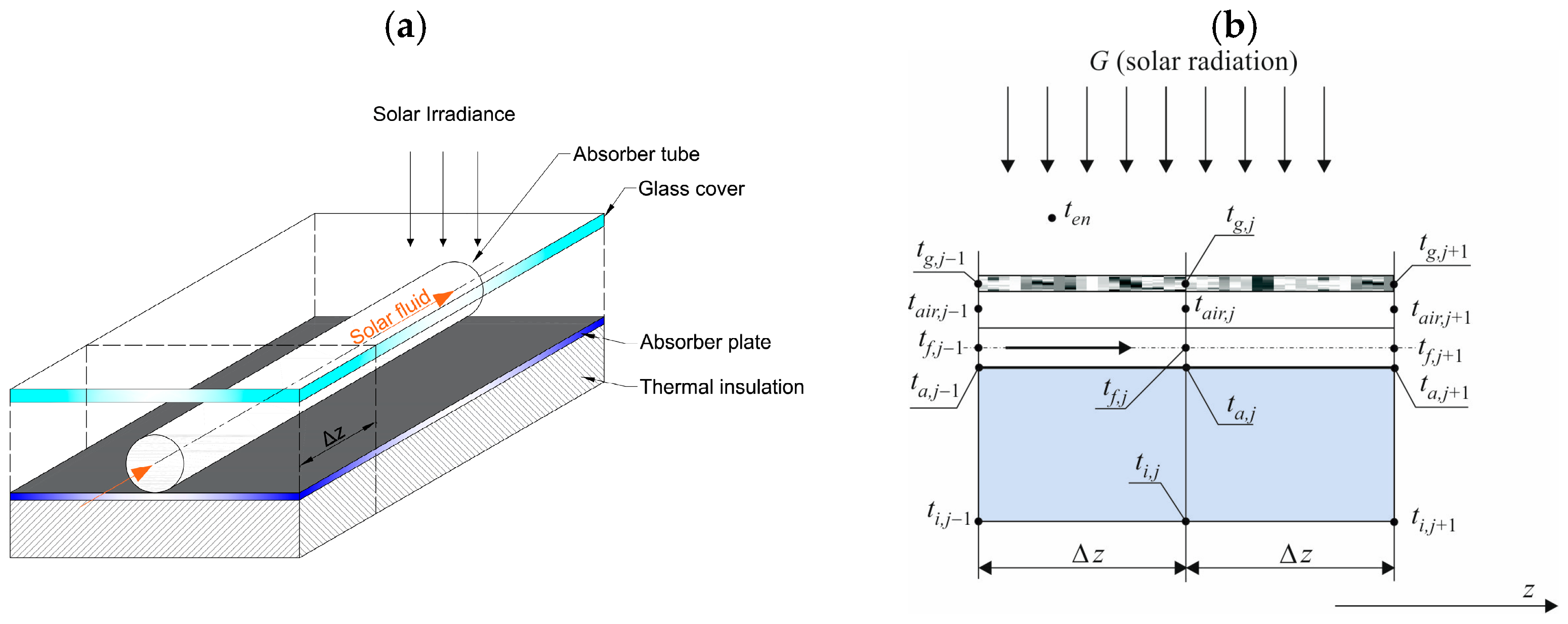
The differential equations are formulated for five control volumes, representing the solar glass cover, the air layer between the glass cover and the absorber, the absorber, the solar fluid, and the thermal insulation (
Figure 1a,b).
Figure 1b illustrates the spatial arrangement of these control volumes in the collector cross-section. The model is therefore a 5 ×
M nodal model, where
M denotes the number of cross-sections in the direction of fluid flow.
The proposed model was developed for collectors operating in a single-harp configuration. It can also be used to simulate the operation of collectors with a double-harp configuration, a double-solar-glass cover, or a serpentine tube arrangement.
Below, simplified energy balance equations are presented for the individual nodes of the collector. The term represents the change in total energy in the control volume over time.
Energy balance equation for the glass cover includes heat flux absorbed by the glass cover due to solar radiation (ϕg,G), heat flux lost to the environment (ϕg,en), and heat fluxes exchanged between the glass cover and:
- -
The absorber due to radiation (ϕg,a).
- -
The air layer due to convection (ϕg,air).
The air layer temperature depends on the heat fluxes exchanged between the air layer and the glass cover (ϕair,g) and between the air layer and the absorber (ϕair,a) due to convection.
In the case of the absorber, its temperature is affected by heat flux absorbed by the absorber due to solar radiation (ϕa,G), and by heat fluxes exchanged between the absorber and:
- -
The fluid due to convection (ϕa,f);
- -
The air layer due to convection (ϕa,air);
- -
The glass cover due to radiation (ϕa,g);
- -
The insulation due to thermal conductivity (ϕa,i).
The solar fluid temperature depends on the heat fluxes flowing into (ϕf,in) and out (ϕf,o) of the control volume with the fluid, and on the heat flux exchanged between the fluid and the absorber due to convection (ϕf,a). The remaining terms of the energy conservation equation are neglected due to their minor influence. This applies to the time-dependent change in the work done by surface and friction forces, as well as to the heat flux entering the control volume by conduction. The momentum and mass balance equations are also omitted.
As a result, a smaller number of final equations is obtained, and their form is simpler. Consequently, the numerical calculations require less computational time. This is particularly important when the model is used for online operation on a real system.
The mission of the above-mentioned balance equations does not limit the proposed method or introduce errors in the numerical calculations. This is confirmed by the experimental validation presented in
Section 3.
The insolation temperature is affected only by heat flux lost to the environment (ϕi,en) and heat flux exchanged between the insulation and the absorber due to thermal conductivity (ϕi,a).
To solve the differential Equations (1)–(5), an implicit differential scheme was applied. Time derivatives were approximated using a forward difference scheme, while spatial derivatives were approximated using a backward difference scheme.
Since the finite-difference schemes analyzed in this study concern one-dimensional problems, the Courant–Friedrichs–Lewy (CFL) stability condition imposed on the time step Δ
τ and the spatial step Δ
z is given by [
18]:
where
is the Courant number.
Satisfaction of the above condition ensures a stable solution of the finite-difference equations. It guarantees that the numerical solution propagates with a velocity greater than the physical velocity .
Considering the iterative nature of the proposed method, the calculations are performed according to the following convergence criterion:
where
- -
Y is the temperature currently calculated at node j;
- -
is the assumed accuracy of the iterative calculations;
- -
denotes the iteration number at the same time step.
3.2. Double U-Tube PTC Model Development
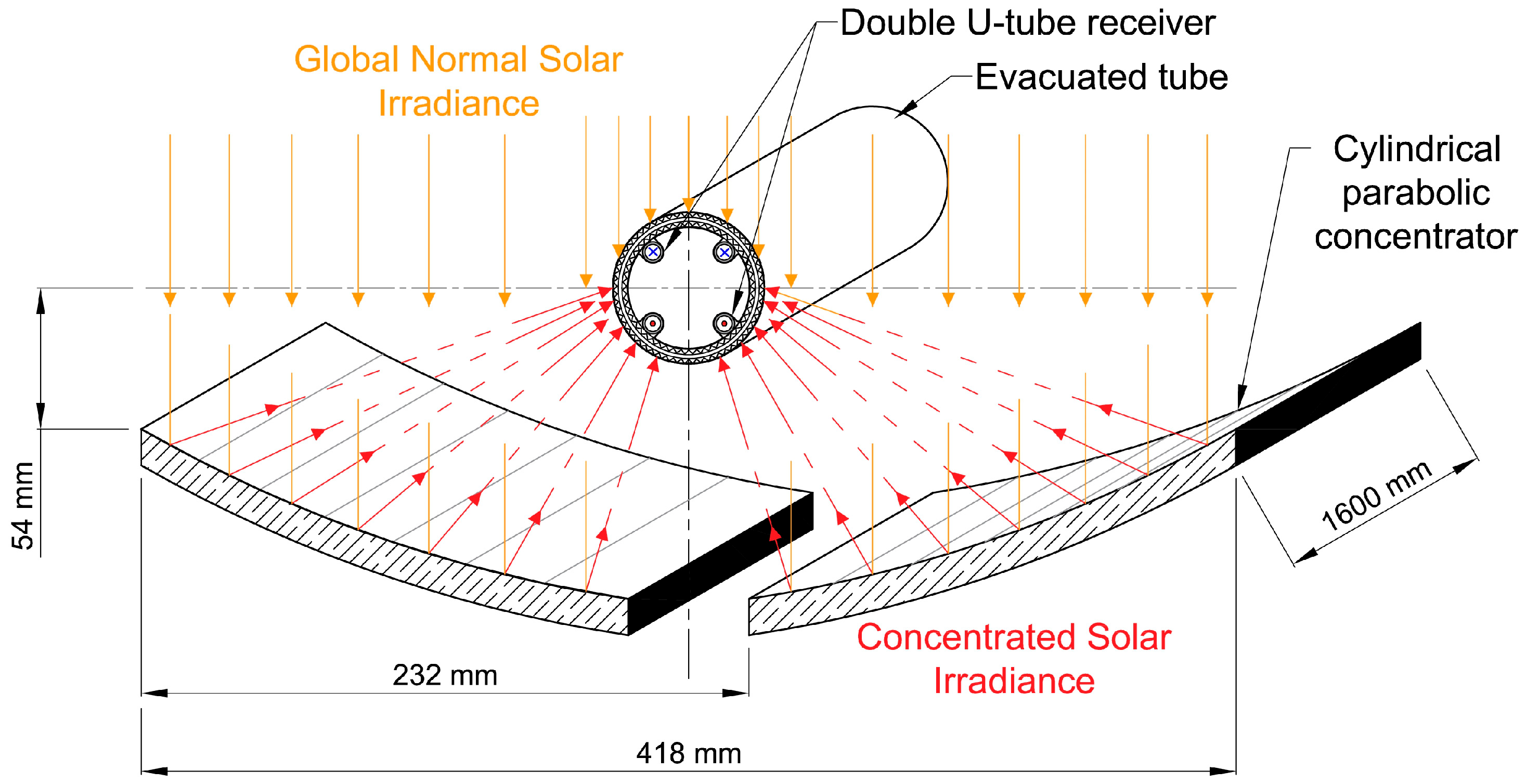
The analyzed double U-tube PTC has a modular design and is intended for low-temperature applications. In its commercial version, the collector consists of eight repetitive segments, each containing an evacuated solar tube with absorbers and a double U-tube receiver that transports the solar fluid (
Figure 2). The absorbers of the double U-tube PTC absorb solar radiation in the form of Global Normal Irradiance and concentrated solar irradiance.
The developed mathematical model includes all components of the collector in both radiation regions, as well as all heat fluxes that affect the temperature of the solar fluid. A simplification of the model is the neglect of circumferential heat conduction in the absorbers. This simplification is adopted because the aluminum absorbers have high thermal conductivity. The high value of this coefficient leads to rapid equalization of the absorber temperature along its circumference.
An analysis of the influence of this simplification on the obtained results is presented in [
16], where a developed 3D model and selected simulation results are shown. This model accounts for heat conduction in the absorbers in the radial, circumferential, and axial directions. It was found that circumferential heat conduction in the absorbers affects only the temperature distribution of the solar fluid and the absorbers along the length of the U-tube (in the section exposed to both global normal and concentrated solar irradiance). It does not affect the fluid’s outlet temperature.
Since the heat fluxes transferred to the solar fluid along the entire length of the U-tube are the same for the simplified (1D) model and the CFD (3D) model, the resulting outlet fluid temperature profiles are also identical. Therefore, neglecting circumferential heat conduction in the absorbers does not affect the accuracy of the results. It simplifies the form of the differential equations and allows results to be obtained in significantly less computation time.
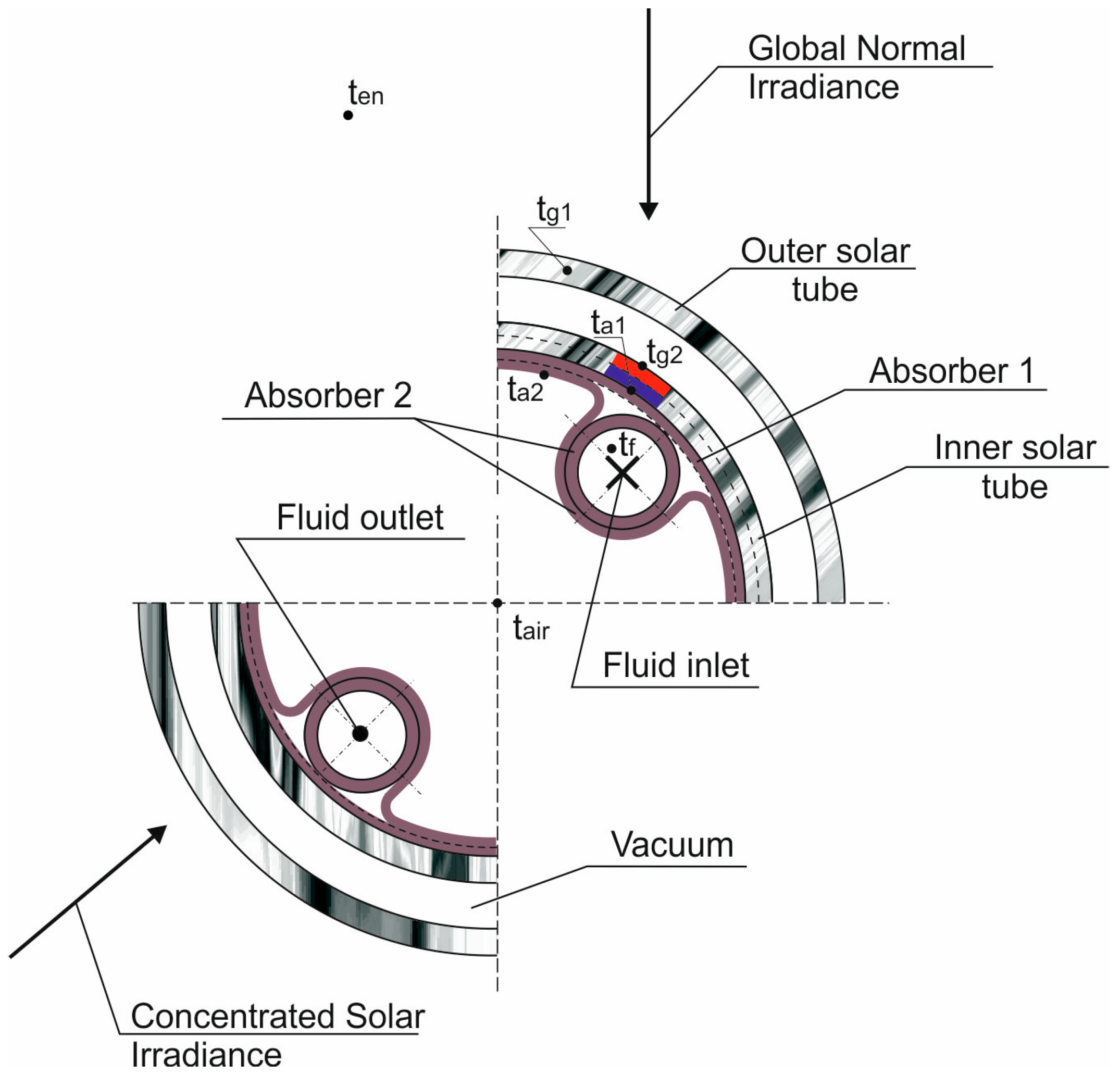
In the mathematical model, it is assumed that the solar fluid flows uniformly through all collector modules. Since each module contains two U-tubes, under the assumption of uniform flow, the following energy balance equations are formulated for a single U-tube. These equations are presented in a simplified form only for the control volumes located in the region affected by global normal irradiance (
Figure 3).
These control volumes include the outer glass tube, the upper part of the inner glass tube, the lower part of the inner glass tube with absorber 1, absorber 2, and the solar fluid. For the control volumes in the region of concentrated solar irradiance, the energy balance equations are identical to those for the global normal irradiance region. In both regions, the same heat fluxes are defined as energy balances for the individual nodes. The only difference concerns the solar radiation absorbed by the absorbers in these regions: global normal irradiance and concentrated solar irradiance, respectively (
Figure 3). The air temperature inside the collector results from the combined influence of these irradiance components.
For the outer glass tube:
The outer solar tube temperature depends on the:
- -
Heat flux lost to the environment (ϕg1,en);
- -
Heat flux exchanged between solar tubes due to radiation (ϕg1,g2);
- -
Solar heat flux absorbed by the outer glass tube (ϕg1,G).
For the inner glass tube (the upper part of the tube marked in red—
Figure 3):
The energy balance equation for the inner glass tube includes:
- -
Heat flux exchanged between solar tubes due to radiation (ϕg2,g1);
- -
Solar heat flux absorbed by the inner solar tube (ϕg2,G);
- -
Heat flux conducted (in the radial direction) by the inner glass tube (ϕg2).
For the inner glass tube (lower part of the tube marked in blue)/absorber 1:
In this case, the control volume includes absorber 1 and the lower part of the inner glass tube (
Figure 3).
The node temperature is affected by:
- -
Heat flux conducted by the inner glass tube (ϕg2);
- -
Heat flux conducted by both layers of the absorber (ϕa1,a2);
- -
Solar heat flux absorbed by the absorber 1 (ϕa1,G).
In the case of the absorber 2, its temperature is affected by:
- -
Heat flux conducted by both layers of the absorber (ϕa2,a1);
- -
Heat flux exchanged between the absorber 2 and the air inside the collector due to convection (ϕa2,air);
- -
Heat flux exchanged between the surfaces of absorber 2 (in the area of concentrated and direct radiation) due to radiation (ϕa2);
- -
Heat flux exchanged between the absorber 2 and the fluid inside the U-tube due to convection (ϕa2,f).
The fluid temperature depends on the:
- -
Heat flux flowing into the control volume with the fluid (ϕf,in);
- -
Heat flux flowing out of the control volume with the fluid (ϕf,o);
- -
Heat flux exchanged between the fluid inside the U-tube and the absorber 2 due to convection (ϕf,a2).
For the air inside the collector:
The energy balance equation for the air inside the collector includes heat fluxes exchanged by convection between the air and the absorber 2 in the direct (ϕair,a2−d) and concentrated radiation (ϕair,a2−c) areas.
The differential Equations (8)–(13), as well as the equations formulated for the concentrated solar radiation region (a total of 11 equations for 11 control volumes in each analyzed cross-section), were also solved using an implicit finite-difference scheme. To obtain a stable solution of the equations, the time and spatial discretization steps must satisfy the Courant–Friedrichs–Lewy condition (Equation (6)).
As in the FPSC mathematical model, the energy balance equations for the double U-tube PTC are solved iteratively. Therefore, the calculations terminate when the convergence criterion given by Equation (7) is satisfied.
The numerical solution procedure of the differential equations is illustrated step by step in
Appendix A using Equation (12) as an example.
4. Experimental Validation
This section presents the experimental validation of both proposed mathematical models. The validation was based on comparing the computed and measured outlet temperatures of the solar fluid for each collector. A 50% aqueous solution of propylene glycol was used as the solar fluid.
The FPSC and the double U-tube PTC are installed on a test stand in the laboratory of the Department of Energy at the Cracow University of Technology. The test stand is equipped with a data acquisition system. The FPSC is oriented south and tilted at 45° to the horizontal plane. This collector does not use a tracking system for the apparent motion of the Sun across the sky.
In contrast, the double U-tube PTC is equipped with a two-axis tracking system. This system increases collector efficiency by allowing changes in orientation from 0° to 270° and in the tilt angle from 0° to 90°. To ensure optimal collector positioning, the controller is equipped with two solar radiation sensors. When a change in solar irradiance exceeding 80 W/m2 is detected, the PTC is rotated toward the higher irradiance.
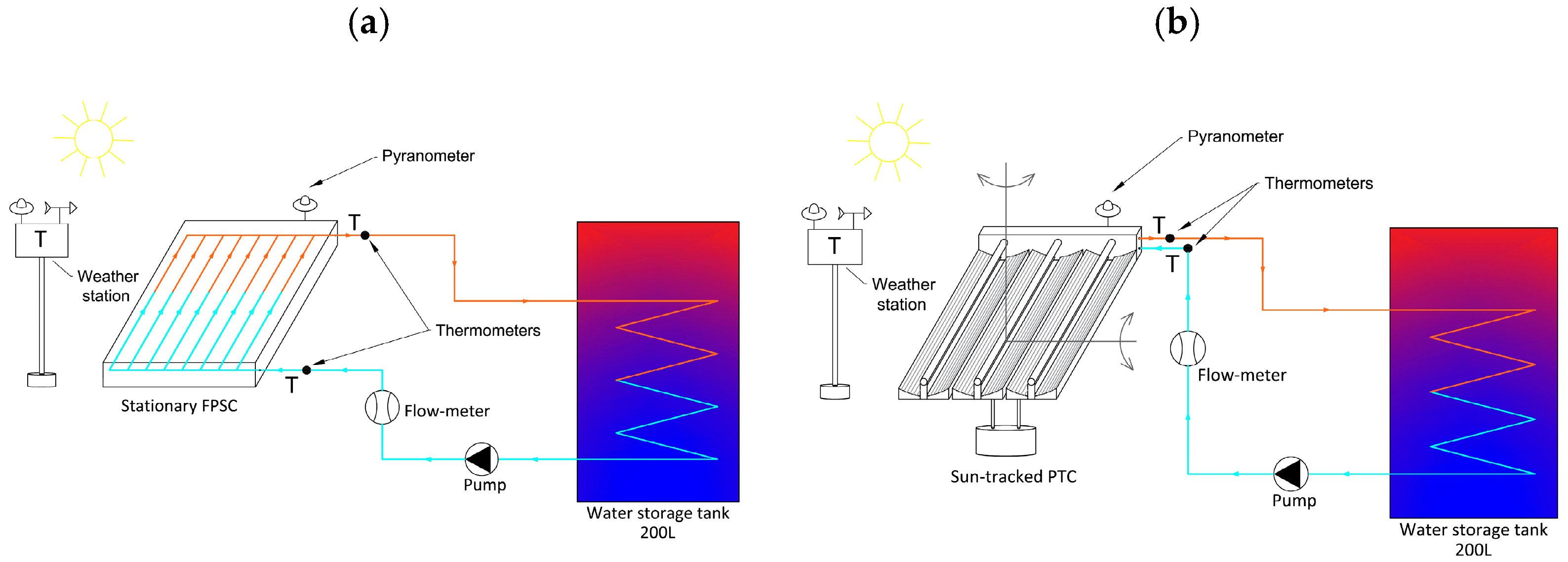
Figure 4 presents an experimental test stand for validating both the FPSC and PTC models. The input data for the computer programs, created using Fortran code [
19], consisted of the measured time histories of:
- -
Solar irradiance;
- -
Volumetric flow rate of the solar fluid at the collector inlet;
- -
Solar fluid temperature at the collector inlet;
- -
Ambient temperature;
- -
Wind velocity.
Measurements at the test stand were performed using devices with the accuracies listed in
Table 1.
Measurements of solar irradiance and volumetric flow rate of the solar fluid were performed with an accuracy of ±0.1% of the measurement range. These ranges were 0–1500 W/m2 and 2–40 L/min, respectively. In measuring the temperature difference across the fluid at the inlet and outlet of a given collector, sensor error compensation was applied at both measurement points. This approach increased measurement accuracy compared to a single temperature measurement.
4.1. FPSC Model Validation
The measurements were carried out on a test stand equipped with an aluminum collector and an absorber built from vertical, parallel copper tubes arranged in a harp configuration (see
Figure 4a). The main parameters of the tested FPSC are listed in
Table 2.
The time and spatial discretization steps, Δ
τ and Δ
z, for the FPSC model were selected based on computational validation results reported in [
20]. The corresponding values were estimated using an analytical solution for transient heat transfer available in the literature [
21]. This solution describes the fluid temperature rise resulting from a heating excitation applied to the outer surface of a tube, a configuration that closely represents the actual operating conditions of solar collectors.
Satisfactory agreement between the results from the analytical solution and the proposed finite-difference solution of the balance equations was achieved for Δτ = 0.1 s and Δz = 0.02 m. These values were adopted for the experimental validation presented below. Given the tube length of the analyzed collector (1.9 m), 96 cross-sections were obtained, each containing 5 control volumes. Thus, at each time step (every 0.1 s), 479 differential equations were solved. At the inlet cross-section, the fluid temperature was measured.
The measurements were performed on 22 April 2025, from 6:00 a.m. to 7:00 p.m. In contrast to the results reported in [
20], this was a sunny, cloudless day. Selected measurement and calculation results are illustrated in
Figure 5,
Figure 6,
Figure 7,
Figure 8 and
Figure 9.
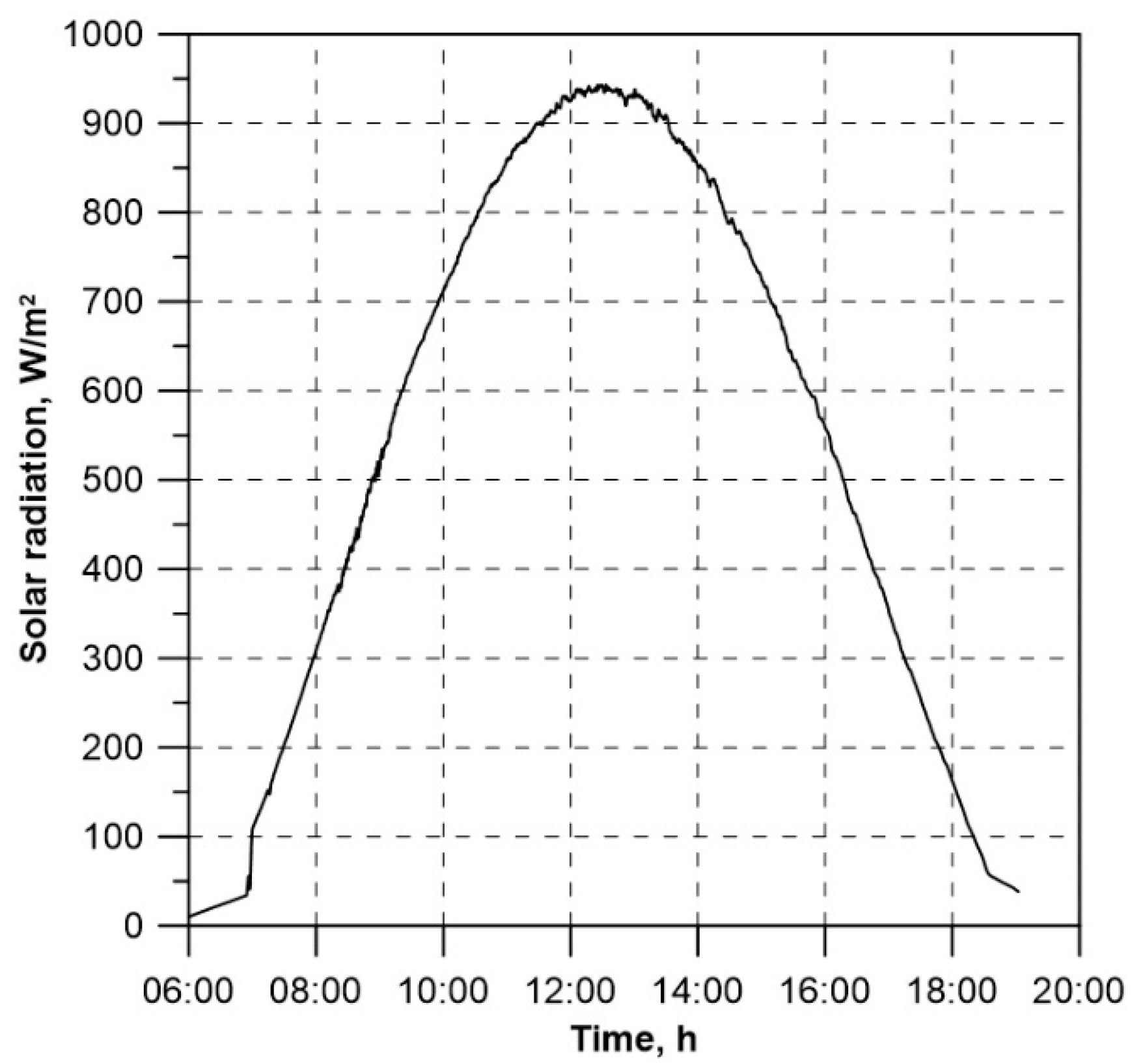
The measured solar irradiance is shown in
Figure 5. This measurement was performed using a pyranometer located in the plane of the collector aperture. This allowed the measured irradiance values to be used directly in the simulations without further conversion. If the pyranometer had been placed in a horizontal plane, the measured values would have required conversion to the aperture plane.
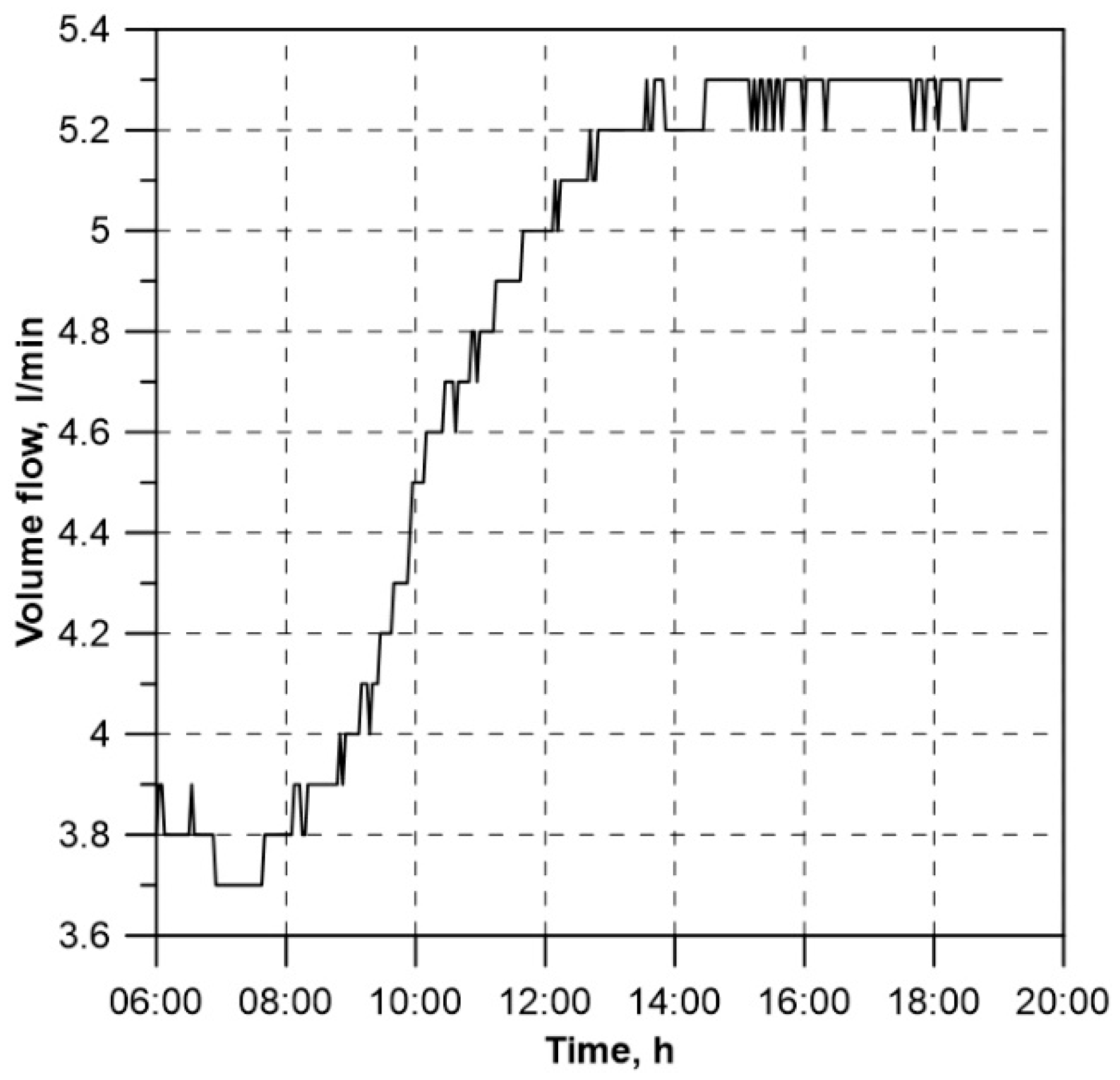
The measured volumetric flow rate of the solar fluid is shown in
Figure 6. This is the total volumetric flow rate measured at the collector inlet.
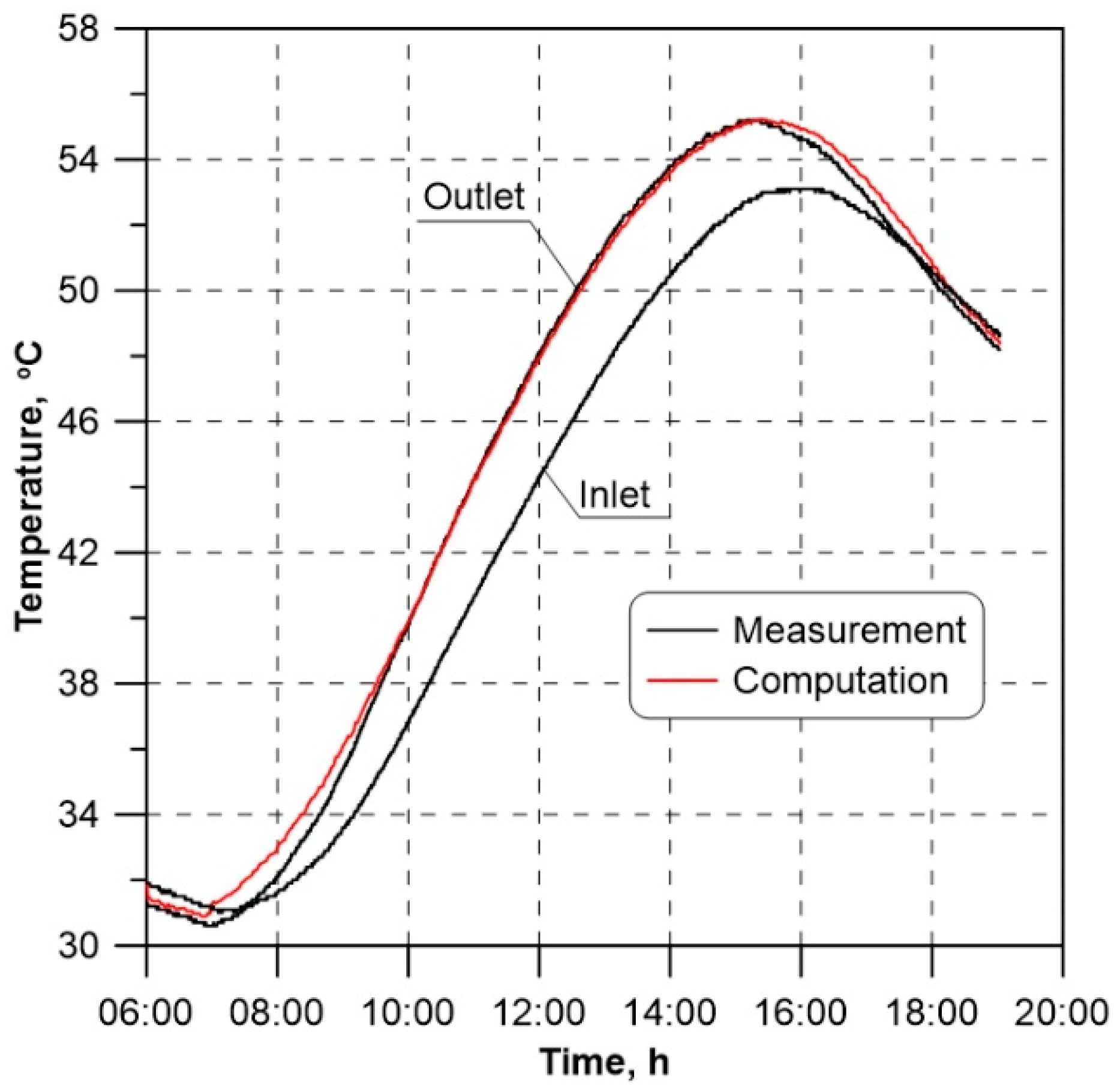
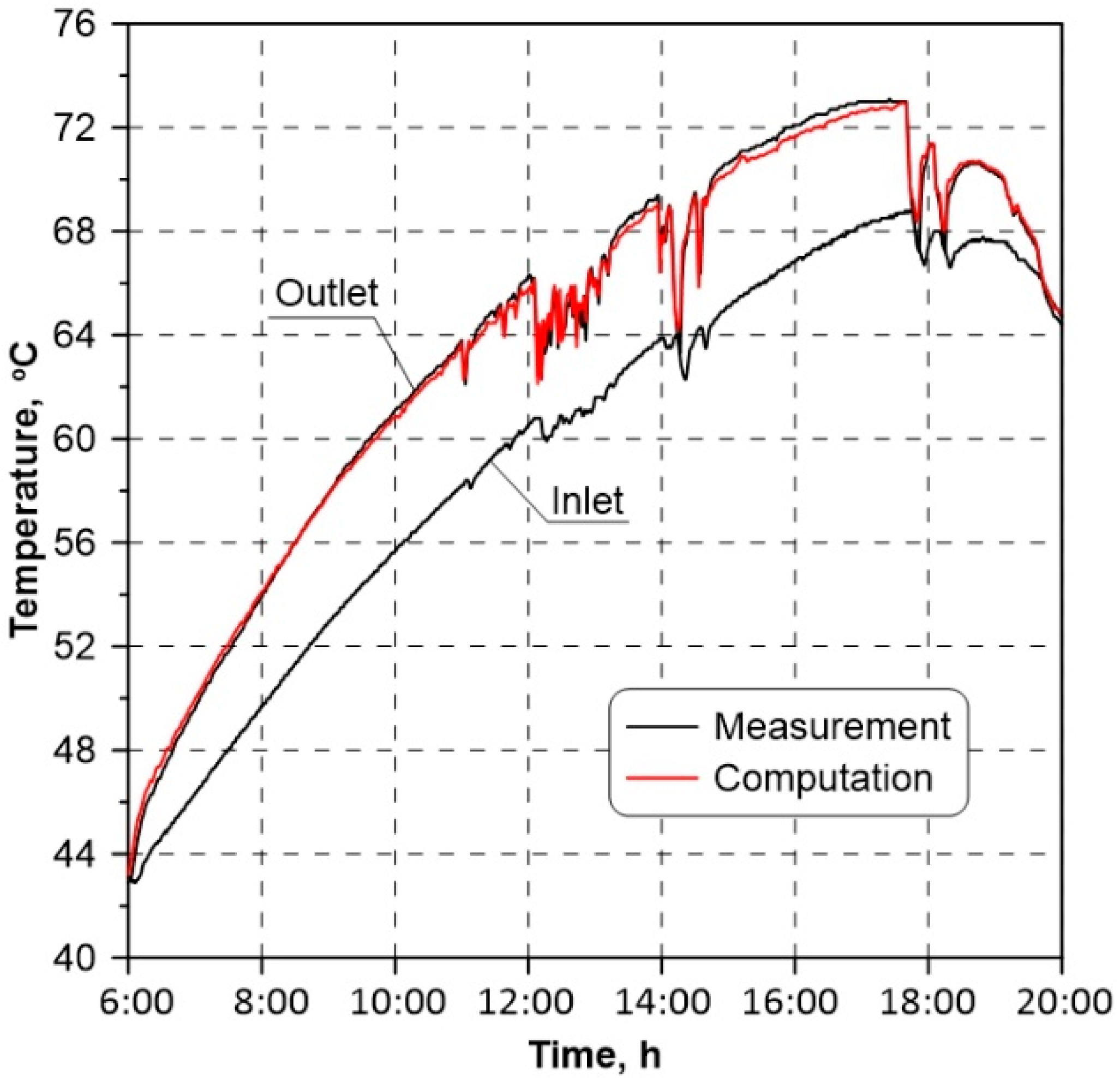
A comparison of the measured and calculated outlet fluid temperature is presented in
Figure 7. The measured inlet fluid temperature is also shown in this figure.
Figure 7 shows the measured inlet and outlet temperatures of the working fluid during the selected day. The inlet temperature trend is directly related to the operating conditions of the domestic hot water storage tank. During the measurement period, no domestic hot water was withdrawn from the tank. As a result, the tank water temperature gradually increased, leading to a progressive rise in the collector inlet temperature. This effect is caused by the decreasing temperature difference between the tank water and the solar fluid returning from the collector.
After approximately 3 p.m., the inlet temperature decreases due to the reduction in solar irradiance (see
Figure 5), which lowers the thermal input to the system. The outlet fluid temperature depends mainly on the inlet temperature, volumetric flow rate, and instantaneous solar irradiance. The time shift between the maximum solar irradiance (around 1 p.m.) and the maximum working fluid temperature (around 3 p.m.) results from the thermal inertia of the collector and the DHW storage tank, which causes a delayed thermal response of the system.
The analysis of
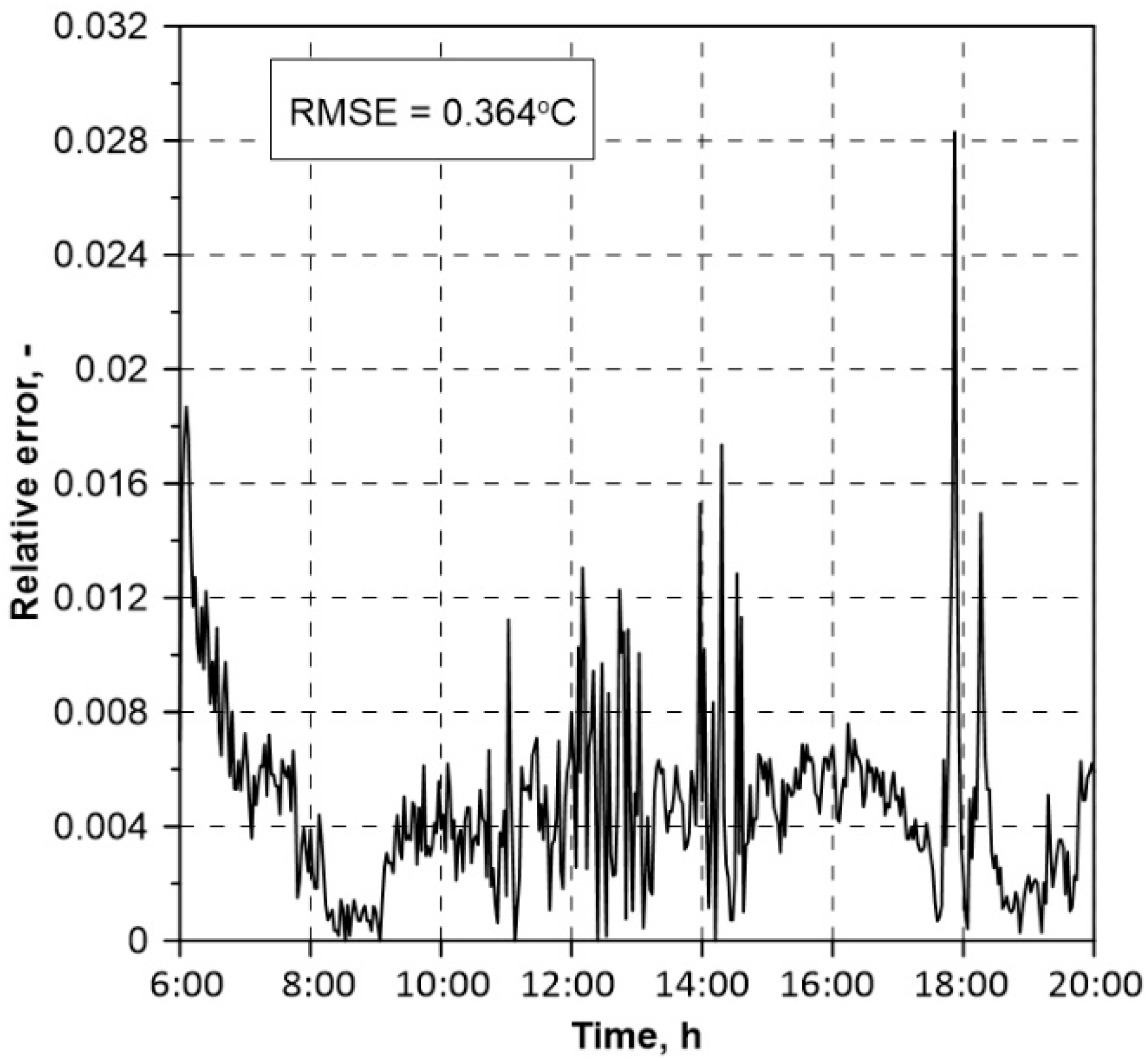
Figure 7 shows very good agreement between the outlet temperature profiles. The largest differences, occurring around 7:00–8:00 a.m., are approximately 0.9 °C. The high performance of the mathematical model is also confirmed by the values of the relative error (
RE), calculated using Equation (14):
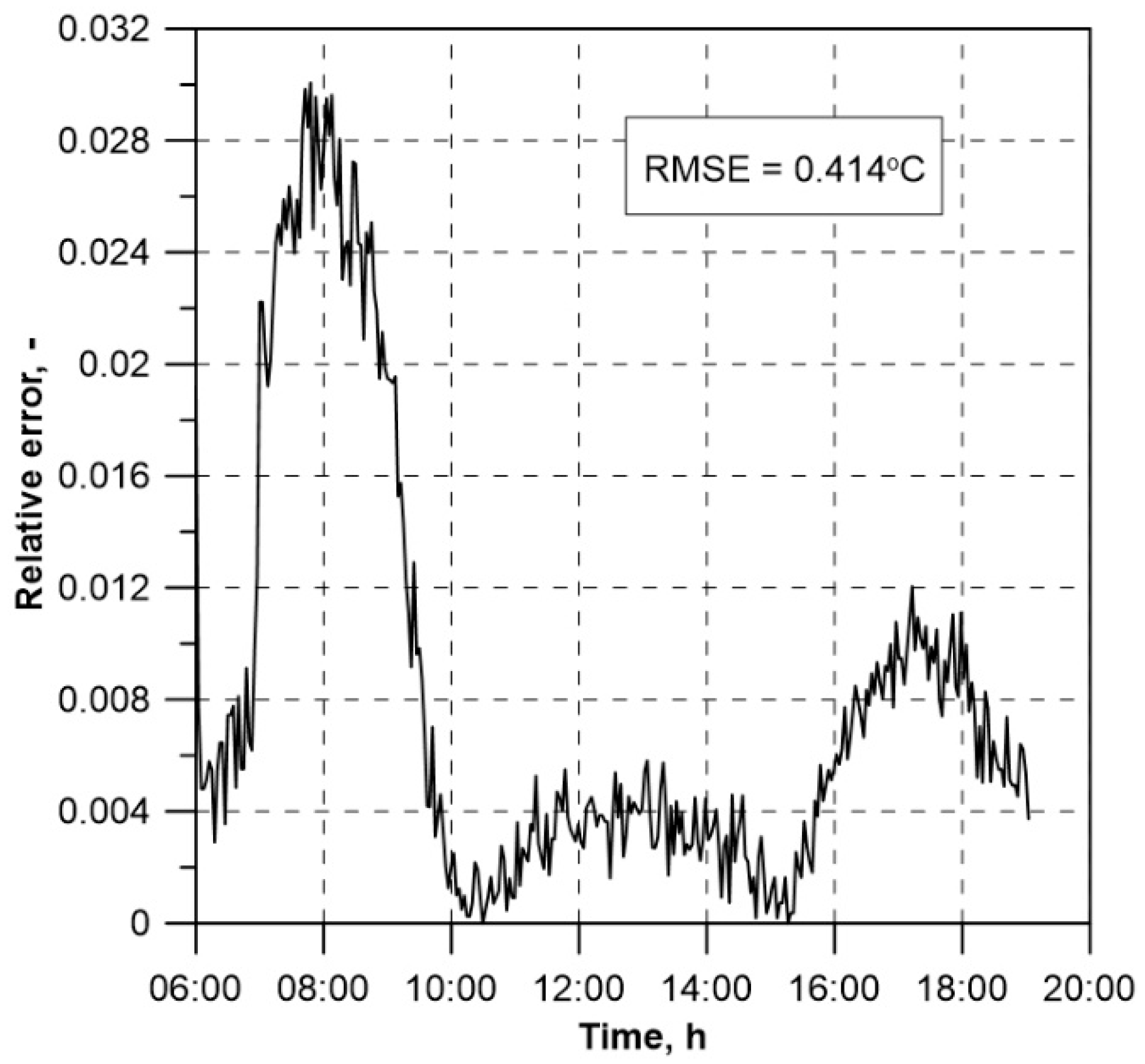
In addition, the root-mean-square error (
RMSE) was calculated using Equation (15):
where:
—measured temperature;
—calculated temperature;
—number of measurements (N = 4680 measurements, performed every 10 s).
The values calculated using Equations (14) and (15) are shown in
Figure 8.
The results presented in
Figure 7 and
Figure 8 indicate high accuracy of the developed FPSC mathematical model. The highest RE values (
Figure 8) correspond to the largest differences between the measured and calculated outlet fluid temperatures (
Figure 7).
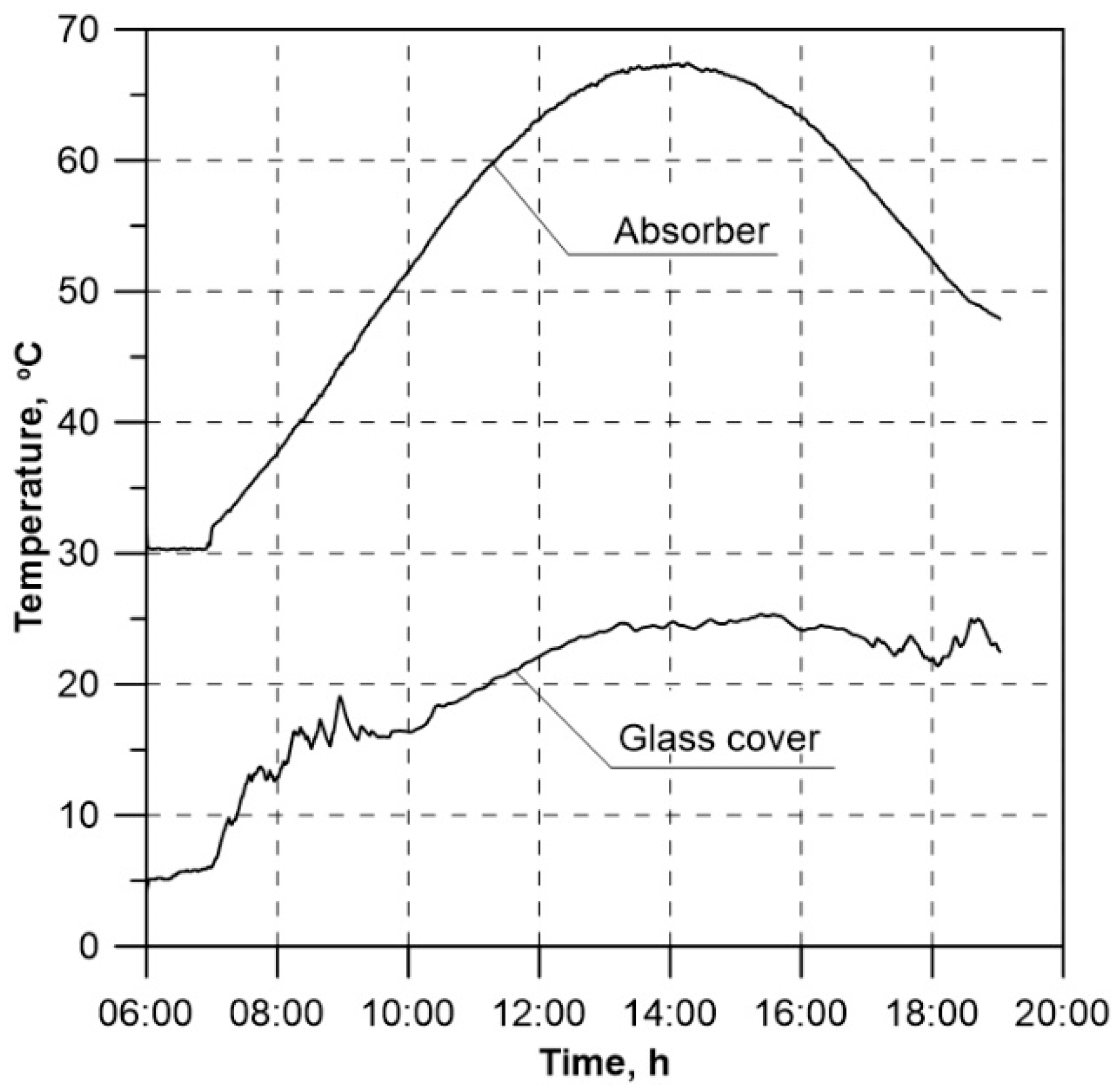
As an example of the calculated temperature distributions of collector components,
Figure 9 presents the temperature profiles of the absorber and the solar glass cover. These profiles were calculated at the outlet cross-section of the collector.
Since the proposed model is fully in-house, it can be used to analyze the influence of arbitrary design, material, and flow modifications on the resulting operating parameters of the collector.
4.2. Double U-Tube PTC Model Validation
The basic parameters of the investigated collector are listed in
Table 3.
For the double U-tube PTC model, the time step Δ
τ and the spatial step Δ
z were selected via computational verification. The results of this verification are presented in [
14]. The verification consisted of comparing the results from solving the differential equations using finite difference schemes with those from CFD methods. Satisfactory agreement was achieved for Δ
τ = 0.01 s and Δ
z = 0.04 m.
For a single U-tube length of 1.6 m, 40 control volumes were obtained. Each control volume contained 11 nodes for which energy balance equations were formulated. As a result, 439 differential equations had to be solved at each time step. The fluid temperature at the inlet to the first control volume in the direct radiation zone was measured.
The double U-tube PTC supplied for the experiments consisted of three modules. Selected measurement and calculation results are shown in
Figure 10,
Figure 11,
Figure 12,
Figure 13,
Figure 14 and
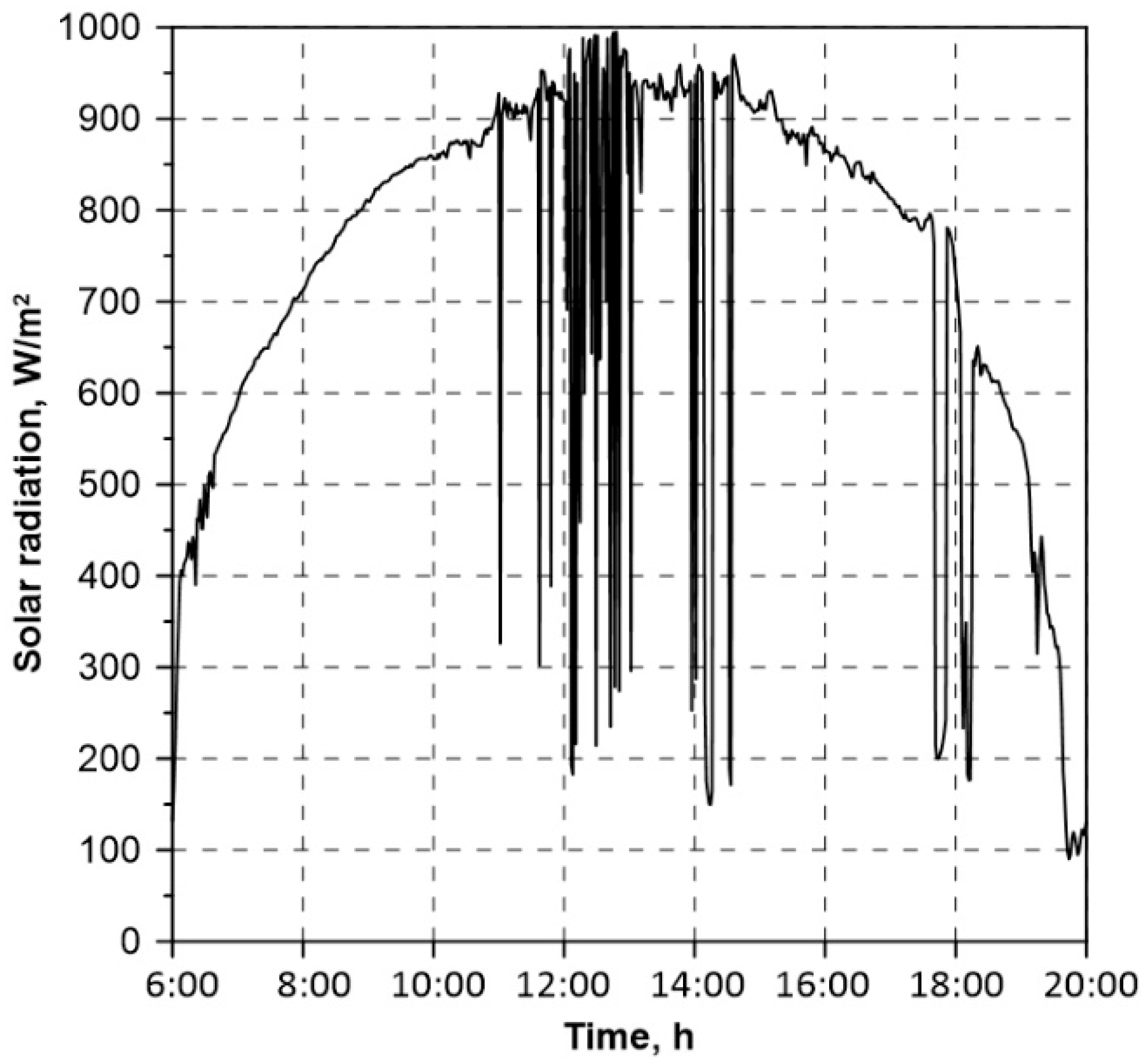
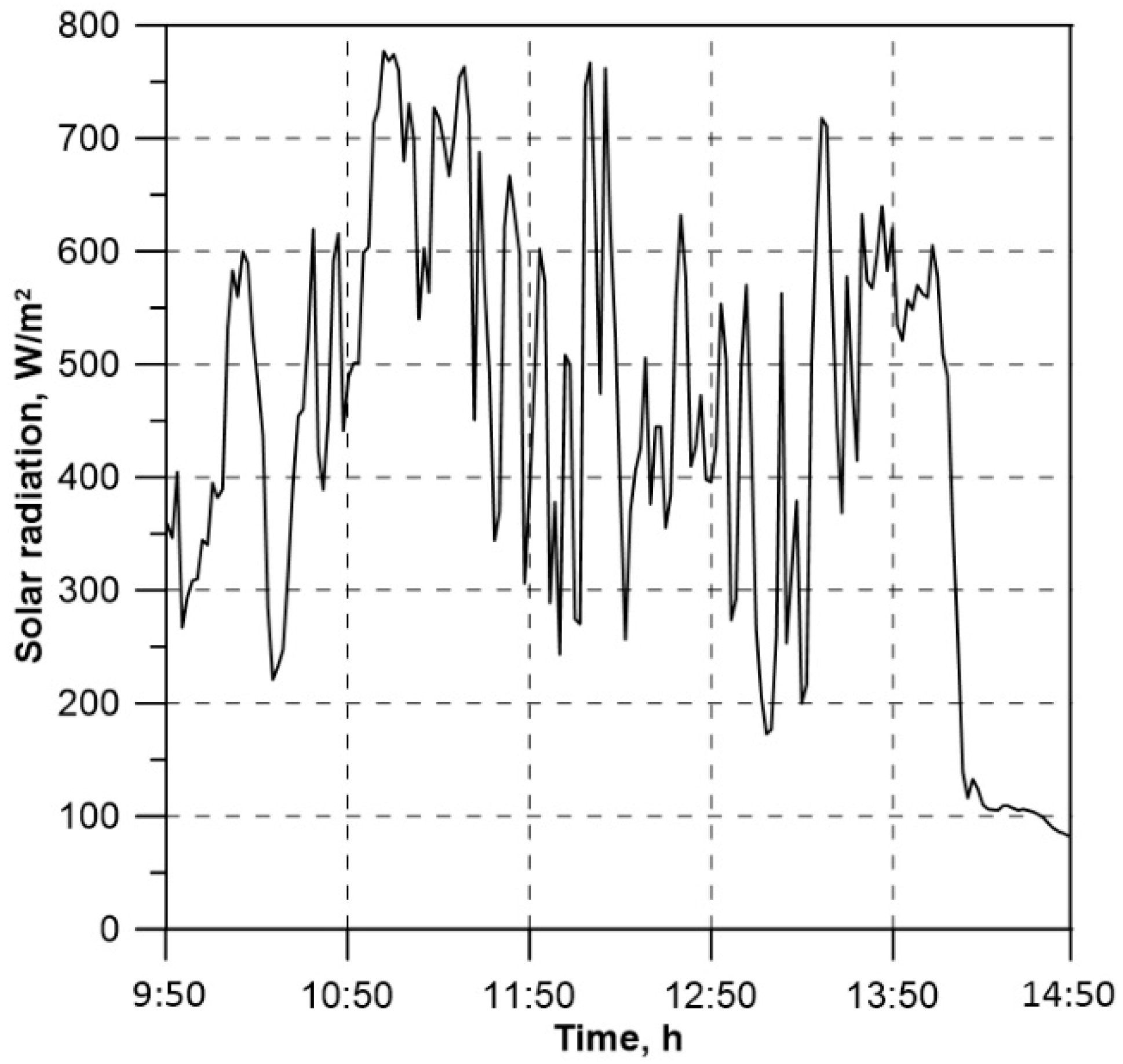
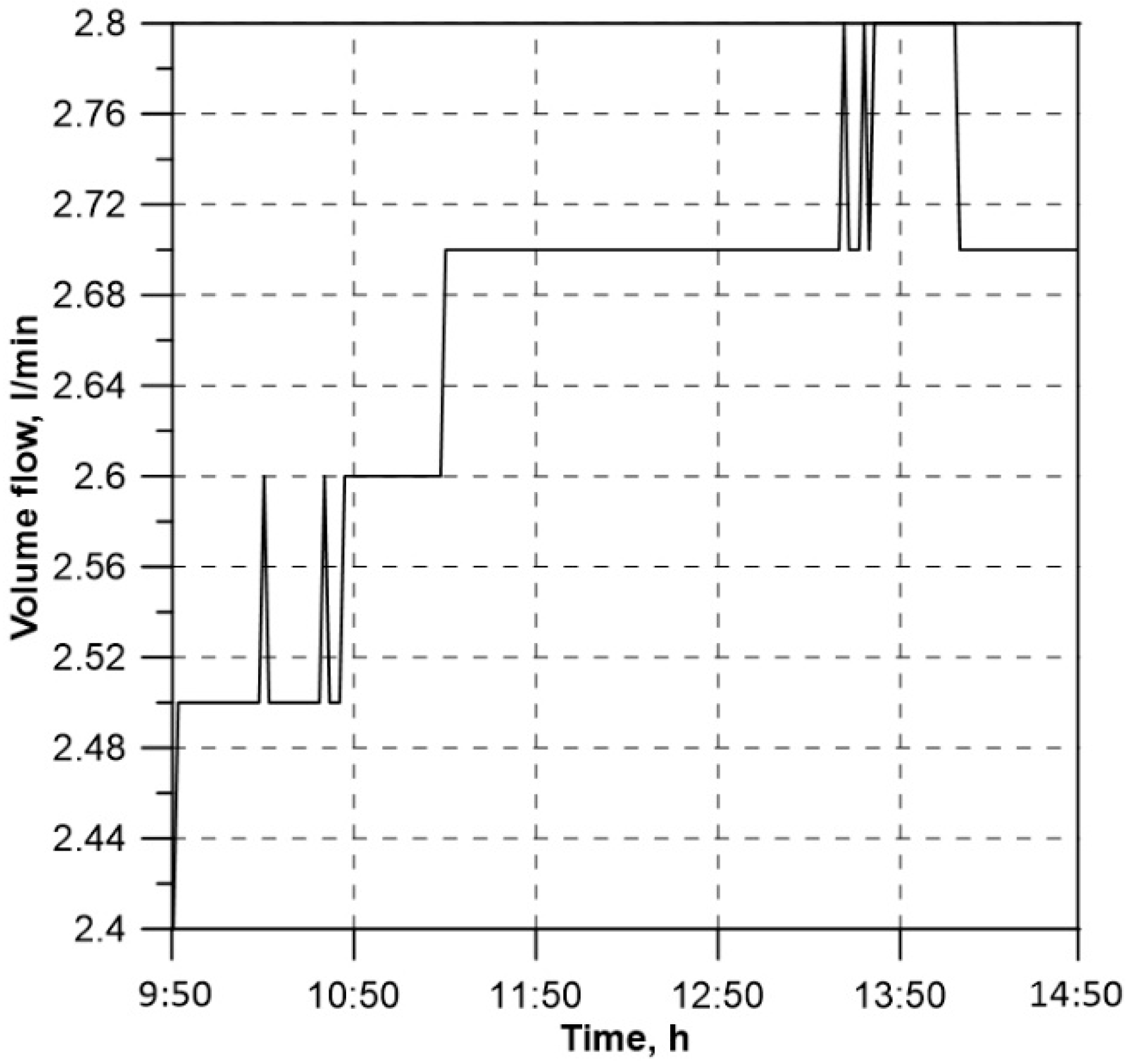
Figure 15. The measurements were carried out on 13 June 2025, from 6 a.m. to 8 p.m. The measured solar irradiance profile is shown in
Figure 10. It was obtained using a solar-tracking system that followed the apparent motion of the Sun across the sky. Compared to
Figure 5, the area under the curve is significantly larger. This area represents the amount of solar energy reaching the collector aperture.
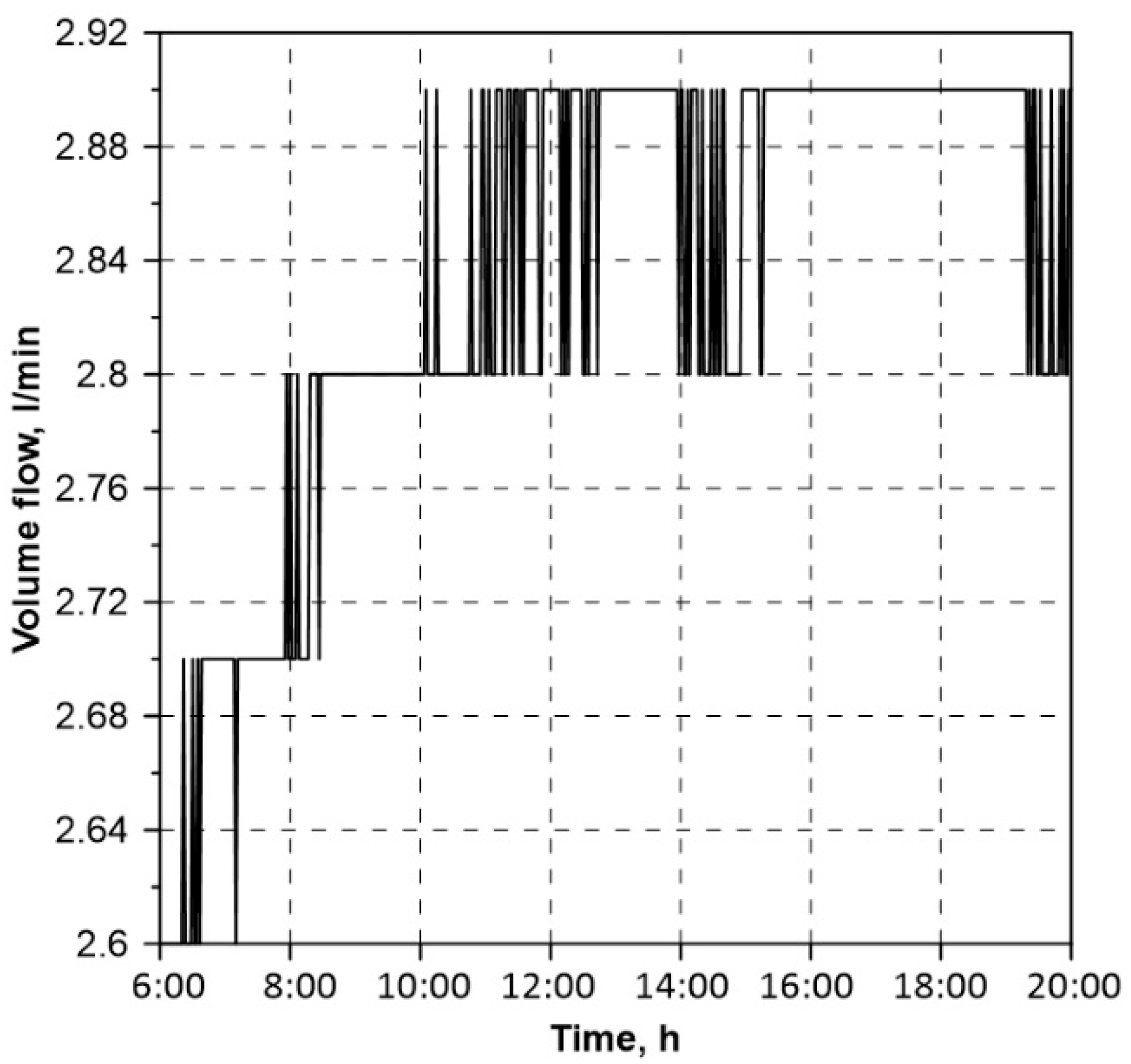
Figure 11 shows the measured volumetric flow rate of the solar fluid.
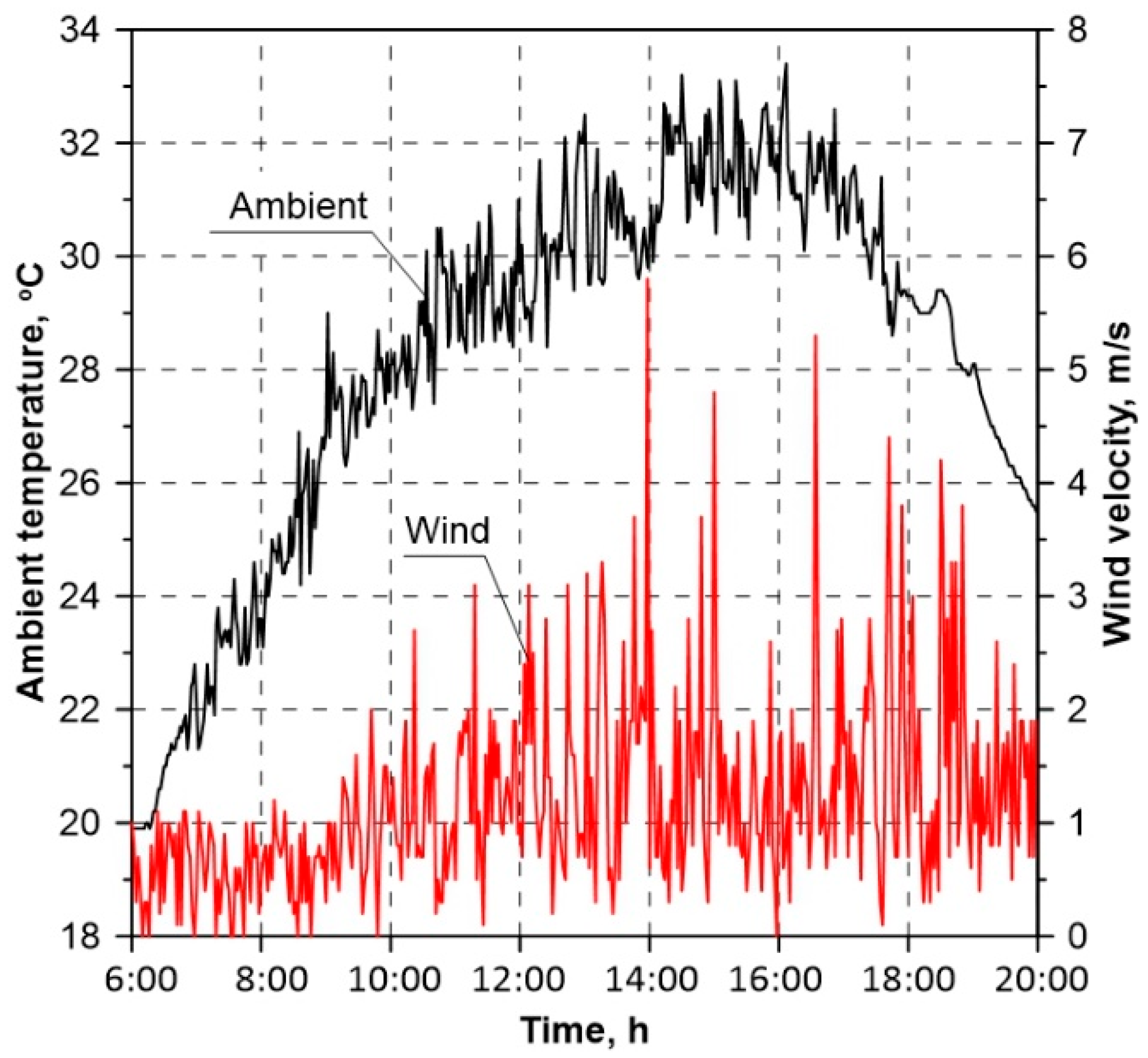
The profiles shown in
Figure 10 and
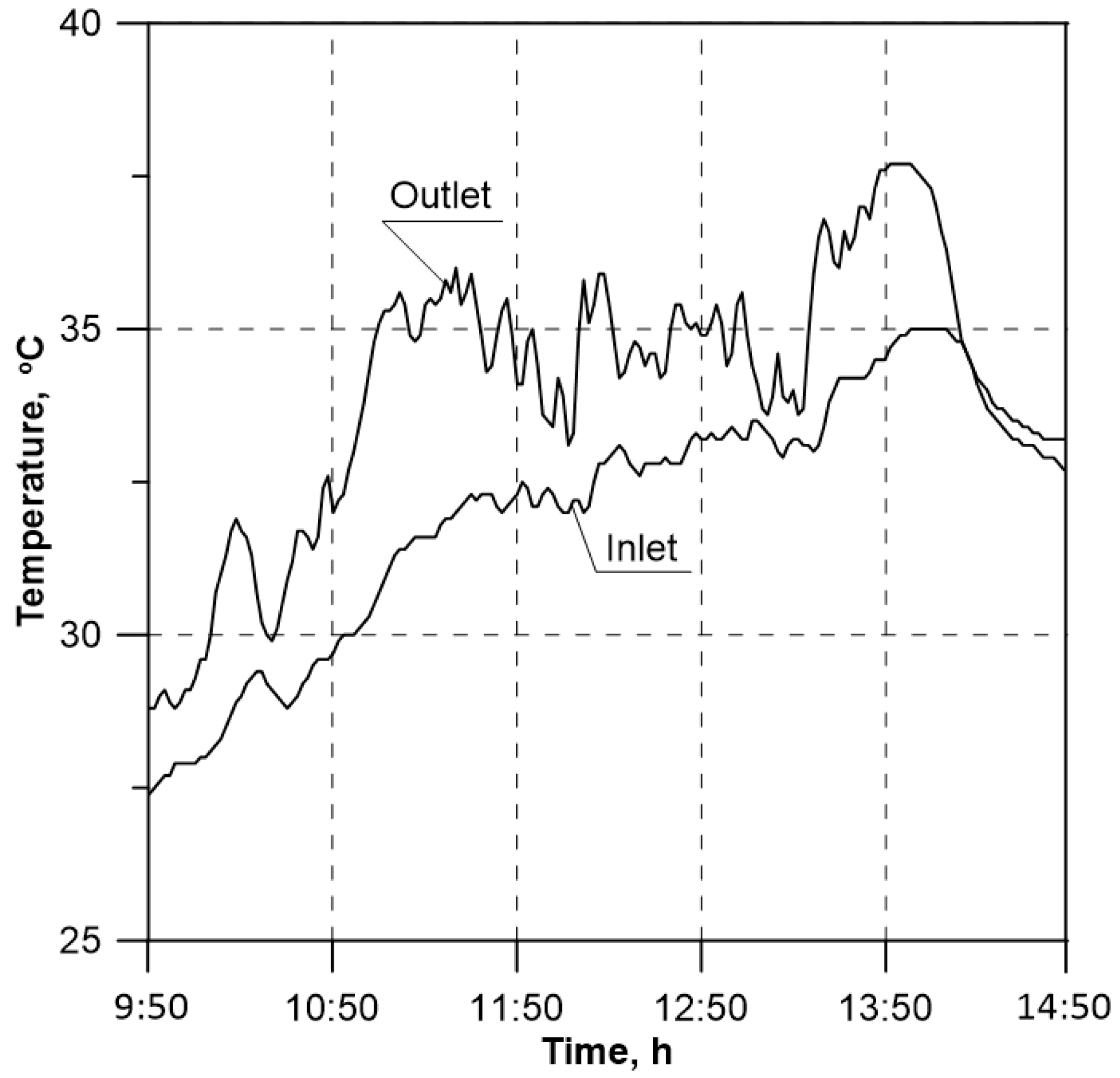
Figure 11 were used as input data for the computational program. Additional inputs included the measured ambient temperature and wind velocity profiles (
Figure 12), as well as the measured fluid temperature at the collector inlet (
Figure 13).
Figure 13 also compares the measured and computed fluid temperatures at the collector outlet. The experimental validation presented here confirms the accuracy and effectiveness of the double U-tube PTC model. The computed outlet fluid temperature profile closely reproduces the measured one. To further support this conclusion,
Figure 14 presents the calculated values of RE and RMSE, determined using Equations (14) and (15), respectively. The obtained error values are low and comparable to those obtained for the FPSC (
Figure 8). As with the FPSC, measurements were recorded every 10 s (
N = 5040).
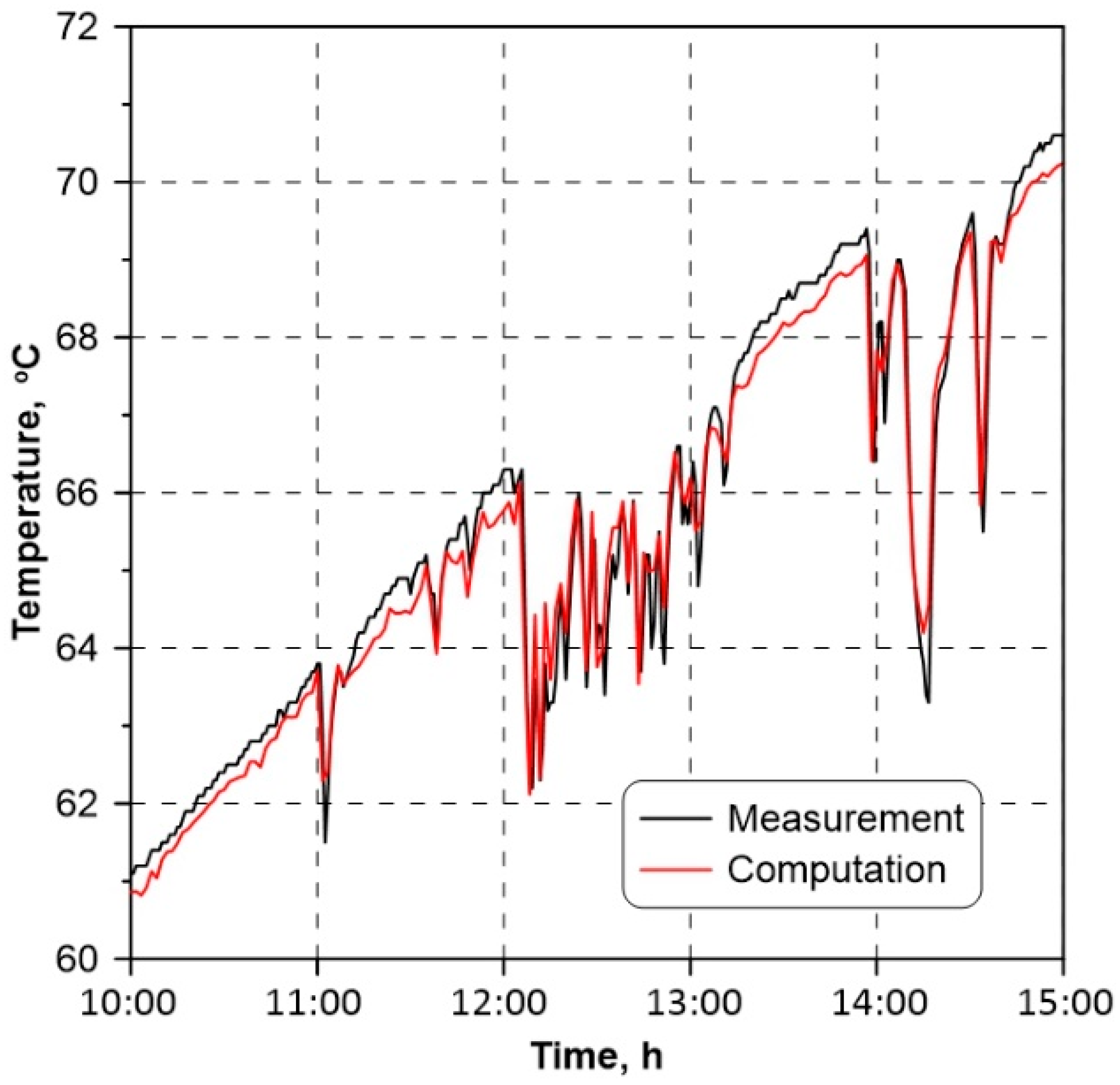
To further illustrate the accuracy of the mathematical model in reproducing the measured data,
Figure 15 shows a fragment of
Figure 13 covering the period with the largest fluctuations in the measured profile, i.e., from 10 a.m. to 3 p.m. The analysis of
Figure 15 confirms the high effectiveness of the developed mathematical model.
5. Comparative Analysis of the FPSC and the Double U-Tube PTC
The fully satisfactory results of the experimental validation of the developed mathematical models for the FPSC and the double U-tube PTC allow these models to be used for selected comparative analyses of both known collectors. The analyses presented focus on comparing collector performance and the economic justification for their application. To ensure the reliability of the comparison, identical boundary conditions were assumed for both collectors.
Since the commercially available double U-tube PTC is an eight-module collector, special attention was paid to the parameters obtained for this configuration, compared with those achieved for the FPSC. As both analyzed collectors are intended for same low-temperature applications, the presented comparisons may be of interest from the perspective of their practical profitability.
One of the compared parameters was the daily thermal energy production, calculated using the following equation:
where:
N—number of measurements taken every 10 s;
—mass flow rate of the solar fluid, kg/s;
—specific heat capacity of the solar fluid, J/(kg·°C);
—solar fluid temperature at the collector outlet and inlet, respectively, °C.
The comparative calculations were performed for two measurement days. For both days, the same input data were assumed for the mathematical models of both collectors. These were the measured profiles obtained for the double U-tube PTC. In the first case, the profiles presented in
Section 4.2 for 13 June 2025 were used. Based on the input data (
Figure 10,
Figure 11,
Figure 12 and
Figure 13), the FPSC parameters were calculated. The calculated parameters for this collector are summarized in
Table 4.
Table 4 also presents selected results for the double U-tube PTC composed of 3, 5, 7, 8, and 9 modules. The values obtained for the three-module configuration correspond to the conditions under which the experimental validation was carried out (
Section 4.2). In this case, the obtained daily energy production is lower than that achieved by the FPSC. For the five-module collector, a higher thermal energy production was already observed.
The commercially available eight-module double U-tube PTC produces more than twice the daily thermal energy of the FPSC. For the nine-module PTC, the fluid velocity in a single U-tube is very close to the velocity in a single FPSC tube. The velocities shown in
Table 4 for the FPSC and for the PTC composed of five or more modules are consistent with values reported in the literature. The velocity of the fluid flowing through the collector tubes is relatively low, ranging from several millimeters per second to several centimeters per second [
22].
Considering the small tube diameters, the resulting Reynolds numbers, ranging from several tens to several hundreds, are much lower than the critical value . Therefore, the flow is laminar.
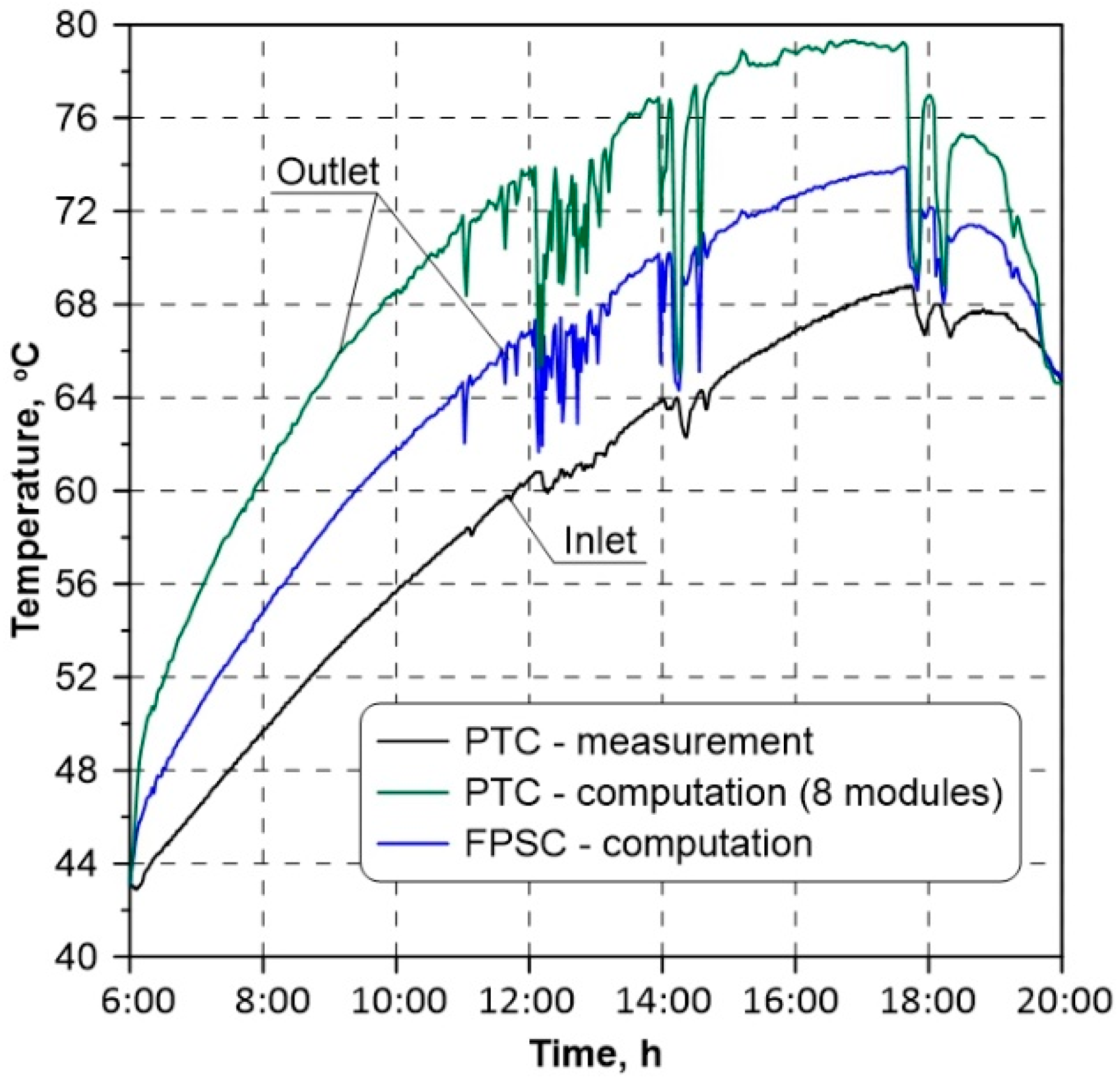
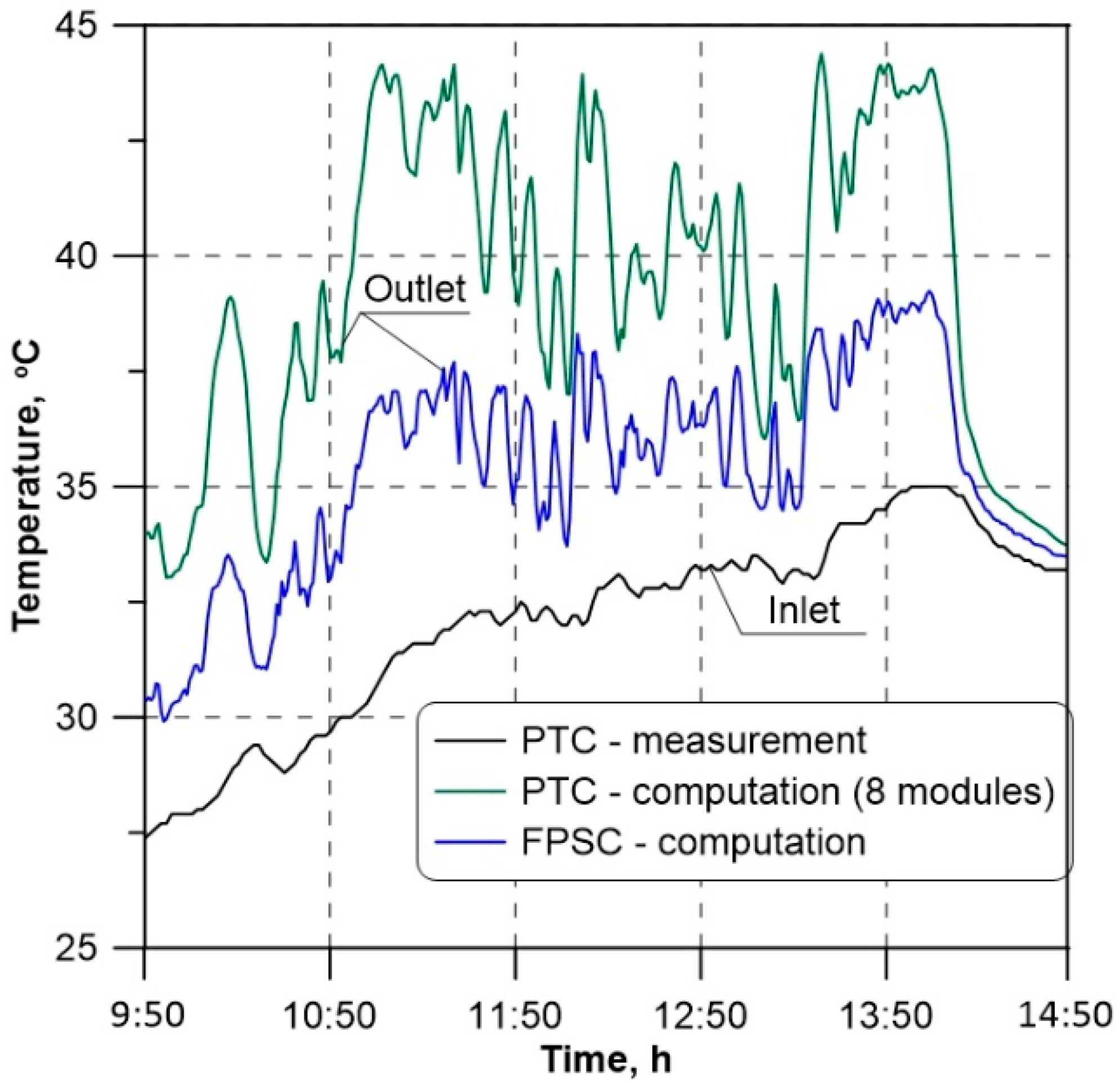
Figure 16 presents the computed outlet fluid temperature profiles for the FPSC and for the eight-module double U-tube PTC. Significantly higher outlet temperatures were obtained for the PTC.
Figure 16 also shows the same inlet fluid temperature profile for both collectors, derived from the measurement at the inlet of the double U-tube PTC (as in
Figure 13).
The second measurement day used for the comparative analysis was 8 February 2025. Selected input data for the model were the measured profiles shown in
Figure 17,
Figure 18 and
Figure 19.
Figure 19 also illustrates the measured temperature curve of the solar fluid at the collector outlet. As in
Section 4.2, the measurements were carried out using a three-module collector setup.
The measurement day was a winter day with partial cloud cover. Solar operation was also observed (
Figure 17). The measurements lasted 5 h.
As part of the comparative analysis of the parameters obtained for the FPSC and the eight-module double U-tube PTC, only selected calculation results are presented below. The input data for the mathematical models of both collectors were the measured profiles obtained for the PTC (
Figure 17,
Figure 18 and
Figure 19). The thermal energy production was equal to:
6380 Wh for the double U-tube PTC; /s (8 modules, 16 U-tubes);
2910 Wh for the FPSC; /s.
Similarly to the case of 13 June 2025, the thermal energy production of the eight-module double U-tube PTC on 8 February 2025 is more than twice that of the FPSC.
Figure 20 shows the calculated outlet fluid temperature profiles for both collectors. Again, higher outlet temperatures were obtained for the double U-tube PTC.
6. Techno-Economic Analysis
After experimental validation of both transient models, the analysis was extended to assess the long-term energetic and economic performance of the FPSC and the sun-tracked PTC over a full year of operation. In the present study, a PTC configuration consisting of eight collector modules was analyzed, as it represents the primary, commercially relevant system layout provided by the collector manufacturer.
6.1. Boundary Conditions and Assumptions for Annual Analysis
Hourly meteorological data were obtained from the Photovoltaic Geographical Information System (PVGIS) provided by the Joint Research Centre of the European Commission [
23]. The dataset included:
The data were generated for the location of the experimental installation at the Cracow University of Technology campus (latitude: 50.0749° N, longitude: 19.9977° E), Kraków, Poland. For the FPSC, irradiance data correspond to a stationary south-facing surface with a tilt angle of 35°, which reflects a typical configuration for low-temperature solar thermal systems in Central Europe. For the PTC, irradiance data were taken for a sun-tracking collector, ensuring that the irradiance accounts for the tracking strategy inherent to this technology.
The same hourly meteorological dataset was applied to both collector models. Thermal-hydraulic parameters of the collectors (geometry, optical and thermal properties) were kept identical to those used in the experimentally validated simulations. Each collector was assumed to operate at its nominal mass flow rate, as defined during the experimental campaign, ensuring consistency with real operating conditions.
For both collector configurations, identical heat removal conditions were assumed. The inlet fluid temperature was assumed to be constant at 30 °C throughout the simulation, and complete, continuous heat removal from the solar installation was assumed. Although this simplifying assumption leads to an overestimation of absolute energy yields, identical boundary conditions were applied to all collector models. Therefore, the relative performance comparison remains valid.
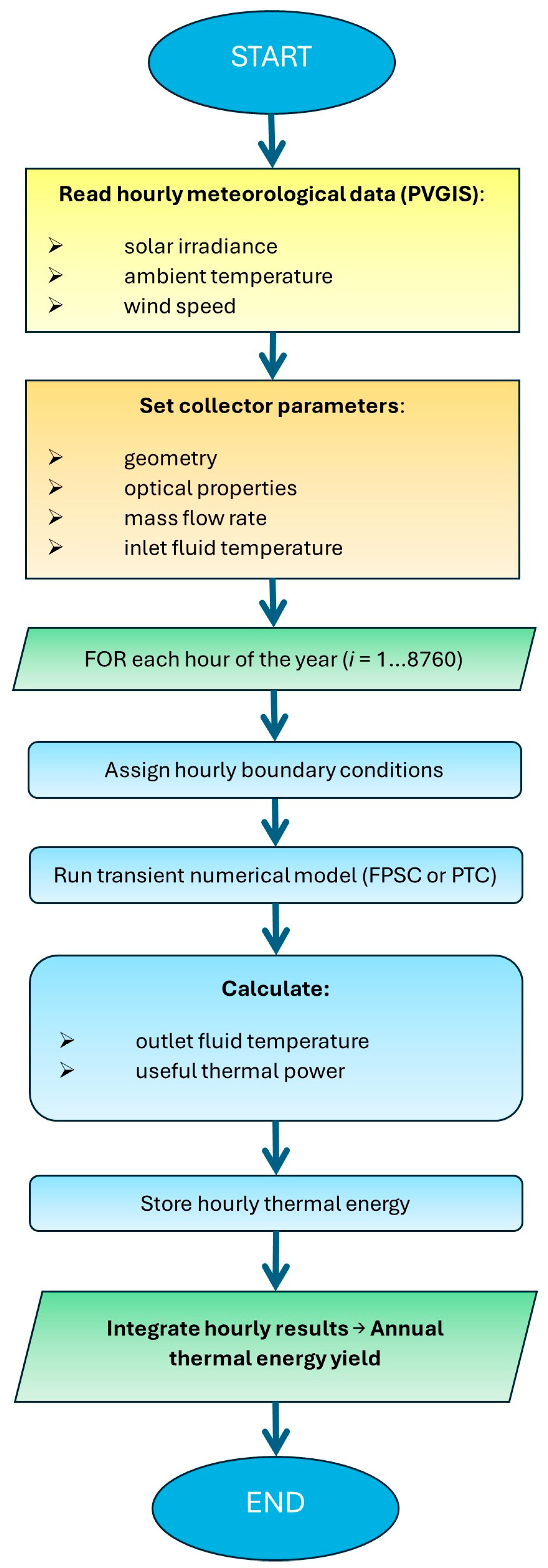
Annual simulations were carried out using validated transient mathematical models of the FPSC and PTC driven by PVGIS hourly meteorological boundary conditions. For each hour of the year, the transient model was executed using the corresponding values of solar irradiance, ambient temperature, and wind speed, and the useful thermal power was calculated. The annual energy yield was then obtained by integrating the hourly results. The objective of the annual analysis was to compare the long-term performance of the FPSC and PTC under identical operating conditions. The overall computational procedure is summarized in a dedicated flowchart shown in
Figure 21.
The results are summarized in
Table 5, which presents the calculated annual thermal energy production for different operating conditions considered. In the first case, thermal energy is assumed to be produced whenever the temperature difference Δ
t0 between the collector outlet and inlet fluid temperatures is greater than zero. This case represents a purely theoretical condition used exclusively for comparative analysis. In the second case, energy production is assumed only when this temperature difference exceeds 5 °C (Δ
t5), which corresponds to typical operating practice in real solar thermal systems, where the circulation pump is activated only when the collector outlet temperature exceeds 35 °C and is higher than the domestic hot water storage tank temperature. A non-tracked concentrating collector was not considered, as such a configuration is not used in practice.
The results demonstrate a strong influence of solar tracking on the achievable annual energy yield under realistic operating conditions. For the stationary FPSC, the thermal energy produced under the Δt5 condition amounts to approximately 50% of the theoretical Δt0 value. The obtained yield of 760 kWh per year corresponds to approximately 430 kWh per square meter of absorber area, which is consistent with values reported in the literature and by collector manufacturers. This provides additional validation of the developed FPSC model.
For the sun-tracked FPSC, the annual energy yield under the Δt5 condition is approximately 1400 kWh, significantly exceeding that of the stationary configuration. This improvement results from higher incident irradiance on the collector aperture, leading to faster heating of the solar fluid and more frequent attainment of the outlet temperature threshold.
The highest annual energy yield under the Δt5 condition is obtained for the sun-tracked PTC and amounts to approximately 4150 kWh. In this case, the required temperature difference of 5 °C is achieved during most operating hours, with only about 9% of the annual operating hours failing to meet this condition. Operating hours are defined as the period during which the solar fluid temperature at the collector outlet exceeds the inlet temperature. This confirms the superior performance of the concentrating collector with solar tracking in delivering useful thermal energy under realistic operating constraints.
The electricity consumption of the sun-tracking system was estimated assuming a constant motor power of 20 W, operating whenever useful thermal energy was generated. It corresponds to manufacturer data and was confirmed by short-term measurements on the experimental setup. Under the following assumption, the annual electricity demand amounted to 66.7 kWh for the PTC and 67.2 kWh for the sun-tracked FPSC. Compared to the corresponding thermal energy yields, the auxiliary electricity consumption is relatively small and does not significantly reduce the net energy benefit of the sun-tracked configurations.
To illustrate the seasonal variability of collector performance, the calculated monthly thermal energy production under the Δ
t5 operating condition is presented in
Table 6. The results clearly show strong seasonal dependence of thermal output, with the highest energy production occurring during the summer months (May–August) and significantly lower values in winter (November–January).
The sun-tracked PTC exhibits substantially higher monthly energy output throughout the entire year. On an annual basis, the PTC produces approximately three times more thermal energy than the sun-tracked FPSC and more than five times the energy of the stationary FPSC. The performance gap is particularly pronounced in winter months, where the stationary FPSC produces only marginal energy, while the PTC maintains noticeable thermal output due to effective utilization of direct solar radiation and tracking capability.
The sun-tracked FPSC shows a significant improvement compared to the stationary configuration (approximately 84% increase in annual yield), confirming the positive impact of sun-tracking. However, the technological advantages of the concentrating PTC system remain dominant under the analyzed conditions.
6.2. Basis of the Economic Evaluation
The Levelized Cost of Heat (LCOH) is a commonly used indicator for the economic assessment of heat generation technologies. It represents the average cost of producing one unit of useful thermal energy over the lifetime of a system, including investment costs, operating and maintenance expenses, and the total heat delivered. The LCOH enables a consistent comparison of different heat production technologies, regardless of their scale or absolute energy output [
24].
In the present study, the LCOH is applied as a simplified techno-economic metric to relate the simulated thermal performance of the analyzed solar collectors to their associated costs. The indicator is used to compare a sun-tracked PTC system with a conventional stationary FPSC under conditions representative of a domestic hot water supply. The analysis explicitly accounts for auxiliary electricity consumption required to operate the sun-tracking system, as well as long-term performance degradation and energy price escalation.
The LCOH is calculated using the following expression:
where
is the initial investment cost,
denotes the operating and maintenance cost in year
,
is the cost of electricity used by auxiliary components (sun-tracking system),
is the useful thermal energy delivered in year
, and
is the assumed system lifetime.
The annual thermal energy yield is assumed to decrease over time due to system degradation and is expressed as:
where
is the thermal energy yield in the first year of operation, and
is the annual degradation rate. In this study, a degradation rate of 0.5% per year is assumed for both collector technologies, which is consistent with values reported for solar thermal systems operating under moderate climatic conditions [
25].
The annual cost of electricity required for sun-tracking is calculated as:
where
is the annual electricity consumption of the tracking system and
is the electricity price in year
. The electricity price is assumed to increase annually according to:
where
is the initial electricity price, and
is the annual electricity price escalation rate. In the present analysis, a 3% annual rate is assumed, reflecting long-term trends in household electricity prices in Poland and the European Union [
26].
Based on the calculated annual energy yields, a simplified techno-economic analysis was conducted to relate the thermal performance of the collectors to their practical deployment. The study focuses on a comparative assessment of the sun-tracked PTC system relative to a conventional stationary FPSC.
The economic evaluation is based on the following assumptions:
According to the latest Eurostat statistics, the average electricity price for household consumers in Poland was approximately 0.21 EUR/kWh [
26], which is below the EU average of about 0.29 EUR/kWh [
27]. This value is used in the present study as a reference cost of heat production when an electric resistance heater supplies domestic hot water.
Annual operating and maintenance costs are assumed for both systems to be 5% of initial investment costs.
Investment cost of the 8-module PTC is assumed to be 900 EUR, with a sun-tracking system required, which is an additional cost reaching 2700 EUR.
Investment cost of a single FPSC reaches 300 EUR.
In the analysis, the energy yields of the sun-tracked PTC and the stationary FPSC are compared under their respective realistic operating conditions. In this case, the electrical energy demand required to drive the tracking mechanism is explicitly accounted for in the energy balance.
This simplified approach does not aim to provide a detailed life-cycle cost analysis but rather to link the thermal performance differences identified in the transient simulations to an intuitive, transparent economic indicator. In this way, the techno-economic analysis complements the thermal comparison. It provides insight into the practical relevance of deploying a sun-tracked PTC for low-temperature applications under Central European climatic conditions.
6.3. Economic Evaluation Based on the Levelized Cost of Heat
The analysis was carried out assuming a system lifetime of 20 years. Annual operation and maintenance costs were assumed to be equal to 5% of the initial investment cost and to increase over time. For the sun-tracked PTC, the auxiliary electricity consumption required to operate the tracking system was explicitly included, together with an annual increase in electricity prices. System degradation was considered for both technologies, assuming a gradual reduction in annual thermal energy production over the system’s lifetime.
The investment cost of the sun-tracked PTC system, including the tracking mechanism, was assumed to be 3600 EUR. The investment cost of the stationary FPSC was assumed to be 900 EUR. In the economic analysis, three FPSC units were considered. Based on the technical data, the aperture area of a single PTC is equal to 5.38 m
2 (
Table 3), while the aperture area of a single FPSC is 1.83 m
2 (
Table 2). As a result, the use of three FPSCs provides an aperture area practically equal to that of one PTC. The annual thermal energy yields used in the analysis were derived from the transient simulations described in the previous sections.
Based on the above-mentioned assumptions, the calculated LCOH amounts to 0.096 EUR/kWh for the sun-tracked PTC and 0.041 EUR/kWh for the stationary FPSC. Despite its significantly higher annual thermal energy yield, the PTC exhibits a substantially higher unit cost of useful heat. This result indicates that the increased investment cost and additional operating expenses associated with solar tracking are not fully compensated by the higher thermal performance of the concentrating collector under the assumed conditions.
The difference in LCOH between the two systems is equal to 0.055 EUR/kWh, meaning that the LCOH of the sun-tracked PTC is more than twice that of the stationary FPSC. From an economic perspective, this highlights the strong influence of investment costs on the resulting heat production cost and confirms that, for low-temperature applications, conventional FPSC can provide a more cost-effective solution despite their lower thermal efficiency.
It should be noted that the absolute LCOH values depend on several assumptions, including system lifetime, maintenance costs, degradation rate, and electricity price growth. However, since identical methodological assumptions were applied to both collector configurations, the relative comparison remains robust. The results indicate that the economic attractiveness of sun-tracked concentrating collectors is highly sensitive to investment cost and is not guaranteed solely by higher thermal energy yields.
7. Conclusions
This work presented a combined transient and techno-economic comparison of a stationary FPSC and a sun-tracked PTC with a double U-tube receiver. The analysis was based on validated in-house transient models and annual simulations performed under identical boundary conditions representative of the Central European climate.
The experimental validation confirmed good agreement between measured and calculated outlet fluid temperatures for both collectors, with low relative and RMS errors. Annual simulations showed that solar tracking and concentration significantly increase the useful thermal energy yield. Under realistic operating conditions, the sun-tracked PTC achieved an annual thermal energy production of about 4150 kWh, compared to 760 kWh for the stationary FPSC. The electricity consumption of the tracking system, estimated at approximately 67 kWh per year, was small relative to the thermal output and had a limited impact on the energy balance.
For the economic comparison, one sun-tracked PTC (aperture area 5.38 m2) was compared with three stationary FPSCs (3 × 1.83 m2), resulting in a total aperture area similar to that of the PTC. Assuming a 20-year lifetime, degradation of 0.5% per year, and cost escalation, the calculated Levelized Cost of Heat amounted to 0.096 EUR/kWh for the sun-tracked PTC and 0.041 EUR/kWh for the stationary FPSC. Despite its significantly higher thermal energy yield, the PTC exhibited more than twice the LCOH of the FPSC, indicating that the higher investment cost dominates the economic performance for low-temperature heat applications.
These results show that, under the assumed cost structure and operating conditions, stationary FPSC remains the more cost-effective solution for domestic hot water and similar low-temperature uses. The analyzed sun-tracked PTC would require a substantial reduction in investment costs or in operating costs in applications with higher temperatures or higher annual heat demand to become economically competitive.
Future work will focus on extending the analysis to different economic scenarios, including varying investment costs, discount rates, and system lifetimes. Further studies will also address the application of the double U-tube PTC in medium-temperature systems and hybrid installations, where its higher thermal performance may improve economic viability.