Review

Survey of Blockchain Technology Deployment in Electric Power Industry in Indonesia

by
Jauzak Hussaini Windiatmaja
1,*,
Budi Sudiarto
1,
Muhammad Salman
1,
Riri Fitri Sari
1,* and
Nugroho Adi Triyono
2
1
Department of Electrical Engineering, Faculty of Engineering, Universitas Indonesia, Kota Depok 16424, Indonesia
2
PT PLN (Persero), Jakarta 12160, Indonesia
*
Authors to whom correspondence should be addressed.
Energies 2026, 19(4), 1104; https://doi.org/10.3390/en19041104
Submission received: 6 January 2026 / Revised: 1 February 2026 / Accepted: 12 February 2026 / Published: 22 February 2026
(This article belongs to the Section F: Electrical Engineering)

Abstract

This study investigates the potential adoption of blockchain technology within the Indonesian electricity sector to address key challenges in digital infrastructure. Blockchain technology has the potential to address the challenges by facilitating immutable and distributed storage of data across multiple network points. A two-stage methodology comprising a comprehensive literature review and selection of case studies is employed to conduct the survey. Research from reputable databases is reviewed by focusing on blockchain applications in energy systems. Key criteria such as Regulation, Implementation Readiness, Urgency, Technology Readiness Level, and Business Maturity Level are analyzed to assess deployment readiness across the main use cases in the Indonesian landscape. The review finds that five main use cases in Indonesia can be enhanced by blockchain technology, including peer-to-peer energy trading, renewable energy certificate trading, electronic billing of electricity, microgrid transactions, and electric vehicle charging transactions. Furthermore, the deployment readiness analysis suggests that electronic billing and electric vehicle charging transactions emerge as the most viable options. It is supported by conducive regulations, high urgency, and existing technological infrastructure.

1. Introduction

Digital transformation has altered global lifestyles. In recent decades, digital data and data-driven technology have transformed communication, commerce, and daily living [1]. The alteration has emerged as a critical element in transforming the energy sector [2]. Technological innovations have resulted in substantial transformations in the production, transmission, and consumption of energy. Digital transformation is currently the primary catalyst for change in the sector. This adjustment yields benefits such as enhanced efficiency, reduced expenses, and increased customer satisfaction. The energy sector is crucial for facilitating the growth and prosperity of other economic sectors and enhancing the daily lives of individuals [3]. This industry faces significant issues that must be addressed to ensure its infrastructure and transactions are secure, dependable, efficient, and capable of withstanding stress [4]. As energy infrastructure increasingly integrates with information technology and the internet, it becomes more susceptible to cyberattacks and other issues that could disrupt power supply. The electrical sector must ensure the safety of this infrastructure to maintain essential supply. Furthermore, Indonesia’s myriad islands complicate the distribution of power due to their interconnectedness. This necessitates substantial infrastructure and innovative concepts to ensure the prompt and effective delivery of electricity. The electrical sector continues to face challenges with data management and the clarity of transactions, particularly within Indonesia’s energy landscape. The opaque data management process can impede efficiency and accountability in sector operations. Indonesia also grapples with challenges concerning the supply and distribution of electricity [3]. The market expansion [5,6] and the growing complexity of transactions within the electricity sector demand solutions capable of optimizing data distribution more efficiently.
Based on these challenges, there are opportunities for improvement to enhance the performance and security of the electricity sector from an Indonesian perspective. Blockchain technology represents a potential solution. Blockchain is a technology that guarantees data security, privacy, and accessibility [7]. Blockchain addresses infrastructure security issues with storing immutably and distributed across several network nodes. Blockchain may automate business processes. Hence, it reduces the likelihood of errors and delays in transaction management. Blockchain can be beneficial to Indonesia’s electricity sector. It may boost the efficiency of transactions inside the energy network. The increased level of transparency will bolster trust among customers and stakeholders in the Indonesian electrical system. We propose a review to assess blockchain technology and business models within the Indonesian electrical system, with the consideration of unique attributes and constraints of the Indonesian energy industry. The assessment analyzes the potential uses of blockchain, suitable business models, and their impact on the efficiency and security of operations in the electrical sector.
The following sections of this paper are structured as follows. Section 2 provides an overview of blockchain technology fundamentals and its types. Section 3 outlines the methodology utilized in this study. Following that, Section 4 presents the analysis of the results. Finally, concluding remarks are provided in Section 5.

2. Materials and Methods

In this section, brief background knowledge about blockchain technology is presented. The subsection describes the core principles of blockchain technology. Moreover, the discussion extends to exploring the types of blockchains.

2.1. Blockchain Fundamentals

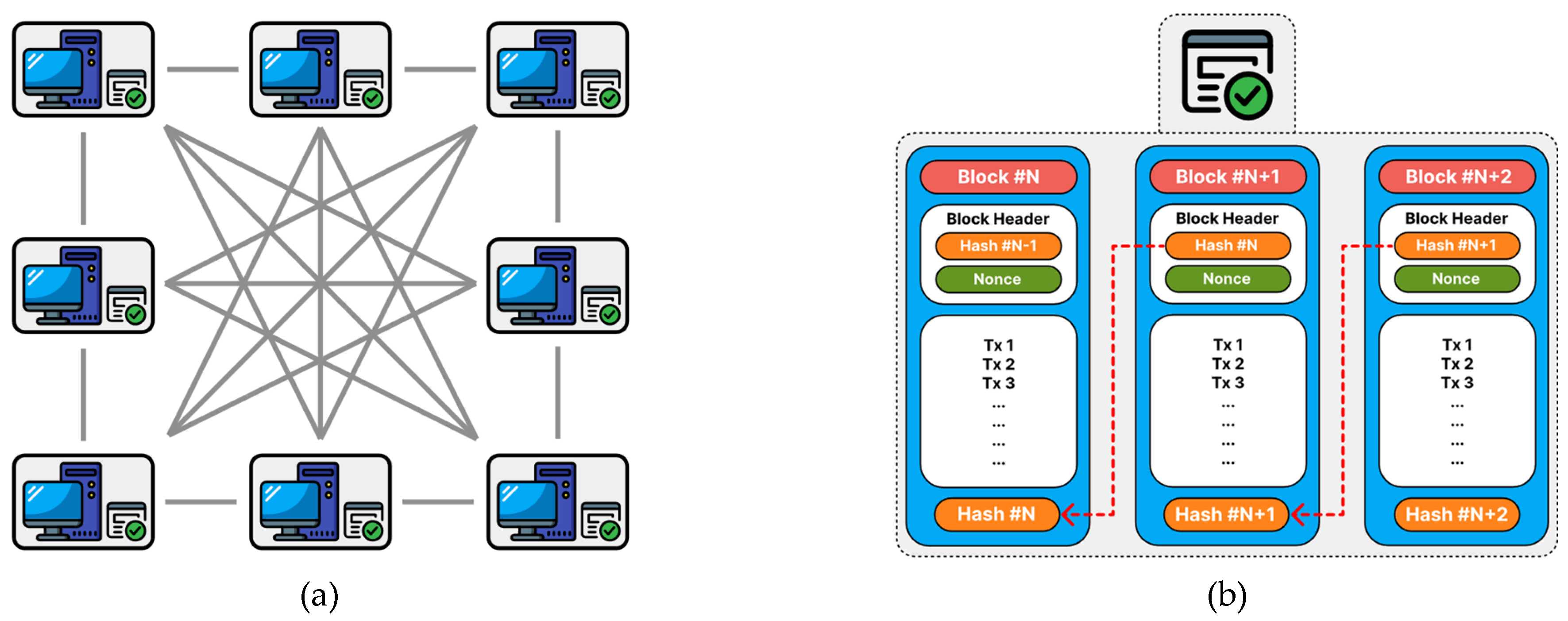
Blockchain can be described as a block-interconnected data structure that forms a collection of records (ledger) [8]. Blockchain has no storage mechanism; instead, these technologies have a set of protocols that govern how information is generated. The blockchain concept was first introduced by Haber et al. [9] at 1991. Haber et al. proposed using cryptographic techniques to create manipulation-resistant timestamps for digital documents. These proposals form the basis of the concept of blockchain technology. In addition, Dwork et al. [10] introduced the cryptography puzzle concept in 1992. This concept is the foundation of security in blockchain technology at its inception. In their proposal, Dwork et al. discussed a new approach to fighting email spam by requiring the email sender to perform a computational cost process. By charging a “cost” for sending email, spammers will not want to carry out system flooding. One of the essential aspects of blockchain is the PoW consensus algorithm. This algorithm was introduced by Jakobsson et al. [11] in 1999. PoW involves a cryptography puzzle to validate transactions and maintain network security. Then, Bitcoin [12] emerged in 2008 as the first application to implement blockchain technology with PoW. Bitcoin has popularized blockchain technology and is a pioneer in driving the adoption of this technology in various industries. Generally, blockchain consists of 5 main components, i.e., a decentralized network, cryptography, a ledger, a consensus algorithm, and intelligent contracts [13]. Figure 1 illustrates the fundamental blockchain architecture, i.e., peer-to-peer communication network and distributed ledger data structure. In the context of this study, the figure clarifies the technical foundation that enables secure and transparent data sharing across multiple entities.
In this study, technical–scientific analysis is conducted at the system and architecture level rather than at the cryptographic or protocol–design level. The focus is placed on how characteristics of electricity systems, such as governance structure, transaction settlement requirements, data integrity needs, and integration with legacy platforms, influence the suitability of blockchain deployment. This perspective is consistent with the study’s objective of assessing deployment readiness within an operational power system context rather than proposing new blockchain algorithms or consensus mechanisms.
From a general perspective, the suitability of blockchain technology in electricity systems depends on several system-level characteristics rather than on specific applications alone. Key factors include the governance structure of the power system (centralized versus multi-actor), the number and heterogeneity of participating entities, and the degree of trust required between transaction counterparties. Blockchain solutions tend to be more applicable in contexts where transparent record-keeping, auditability, and tamper resistance are critical, particularly when transactions involve multiple institutional actors. Conversely, systems with highly centralized control, low transaction diversity, or strict real-time operational constraints may face limited benefits from blockchain adoption. These general characteristics provide a conceptual basis for evaluating blockchain deployment readiness prior to contextual analysis.

2.2. Related Work

Recent survey studies review the application of blockchain technology in electric power systems. Existing reviews mainly classify use cases, architectures, and technical challenges such as scalability, interoperability, and security. Most surveys assume liberalized or multi-actor electricity markets. This assumption limits their relevance for developing countries with a single state-owned electricity utility like in Indonesia. Other surveys compare blockchain platforms or consensus mechanisms. These studies do not evaluate regulatory feasibility or institutional readiness. Policy aspects are usually discussed qualitatively. These aspects are not integrated into a structured evaluation framework. The existing literature does not jointly assess regulation, internal utility readiness, urgency of adoption, technology readiness level, and business maturity level. Table 1 summarizes representative survey and review papers and highlights this gap.
Our work addresses the gap by adopting a deployment-focused evaluative perspective. The research is tailored for power systems overseen by a single national utility. The research evaluates five dimensions within an integrated framework. The study evaluates five dimensions in a unified framework. These dimensions include regulation and policy, implementation readiness, urgency, technology readiness level, and business maturity level. The framework is applied consistently across major blockchain use cases in the electricity sector. The contribution of this paper lies in structured prioritization rather than use case identification. The results support decision-making under monopoly utility constraints.

3. Review Method

In this study, these general system-level considerations are subsequently applied to the Indonesian electricity sector, which operates under a centralized, state-owned utility structure. The research is conducted through two iterative phases, i.e., a comprehensive literature review and a case study analysis. The literature review utilizes Google Scholar, Scopus, and IEEE Xplore. The research focused on articles published from 2022 to 2025. The search was concentrated to titles, abstracts, and author keywords to maintain relevance to blockchain applications within the power sector. The primary search term employed was “Blockchain” AND (“Electric Power” OR “Electricity Sector” OR “Power System” OR “Energy Infrastructure” OR “Indonesia”). Eligibility criteria were used during the review process. The included works comprised peer-reviewed journal publications and refereed conference papers examining the application of blockchain in electrical or energy systems within the specified timeframe. Studies were required to either directly pertain to the Indonesian context or yield conclusions applicable to power systems with a centralized utility operator. Non-peer-reviewed research, editorials, opinion pieces, and studies focused exclusively on cryptocurrency applications without a clear connection to power or energy systems were omitted from the review.
Duplicate records were eliminated following the database search. We examined the titles and abstracts of the other studies to identify any that were uninformative. Subsequently, comprehensive evaluations were conducted to ensure that the energy industry’s use cases were pertinent and contributed to conversations regarding technical, regulatory, or implementation challenges. The chosen studies were further classified into five primary use cases for blockchain technologies in the electrical sector. Subsequently, these use cases were evaluated against a series of standards to determine their readiness for deployment. The assessment commenced with regulations and protocols, preparedness for implementation, and immediacy. Then, it integrates the aspects of technical readiness and commercial maturity to offer a more comprehensive overview. The evaluation of each case study includes regulatory compliance, institutional and operational readiness, urgency of implementation, technical complexity, and commercial viability within the Indonesian context.
The literature review in this study was designed as a structured, purpose-driven review to support deployment readiness assessment rather than as a bibliometric analysis. The selection of studies focused on relevance to electricity sector applications, system architecture, regulatory implications, and implementation considerations. As such, the review emphasizes qualitative synthesis of findings related to feasibility and deployment context, rather than quantitative mapping of publication trends, citation networks, or keyword co-occurrence typically addressed in bibliometric studies.
The identification and comprehension of the deployment readiness requirements were informed by a comprehensive literature review and semi-structured interviews conducted with key personnel from PT PLN (Persero). PT PLN (Persero) is Indonesia’s state-owned electricity utility and the primary entity responsible for electricity generation, transmission, distribution, and retail services nationwide. As a vertically integrated utility, PLN operates under a centralized governance structure and implements national electricity policies set by the government. This institutional position makes PLN the key decision-maker for the adoption of new digital technologies within the electricity sector.
We conducted these interviews to collect empirical data from Indonesia’s primary energy operator concerning the operational regulations, the company’s capabilities and constraints, the technologies utilized, and the business needs. Integrating practitioners’ perspectives enhances the practicality of the evaluation and reduces its dependence solely on theoretical frameworks. The interpretation of the deployment readiness criteria was informed with a semi-structured interviews with key personnel from PT PLN (Persero). The interviews were carried out to integrate practical insights from Indonesia’s leading electricity provider.
The semi-structured interviews were conducted to contextualize and validate findings from the literature review, particularly with respect to regulatory feasibility, institutional readiness, and practical deployment constraints. The interview questions focused on several thematic areas, including the current digital infrastructure of the electricity system, regulatory and policy considerations, operational readiness for blockchain adoption, perceived benefits and risks, and potential implementation barriers. Responses were largely convergent in highlighting regulatory clarity and system integration as the primary determinants of deployment feasibility, while differences emerged mainly in perceptions of business maturity across use cases. The interview data were analyzed qualitatively using thematic synthesis, and the resulting insights were used to inform and validate the readiness assessment rather than to independently determine scores or rankings. The expert interviews were intentionally limited to PLN personnel to reflect the perspective of a centralized, state-owned utility, which is the primary decision-maker for blockchain adoption in the Indonesian electricity sector. The interviews were not intended to provide statistically representative expert opinion, but to validate institutional feasibility and operational constraints identified in the literature.
The deployment readiness assessment presented in this study is intended as a qualitative and comparative decision-support framework rather than a quantitative evaluation model. The scoring and prioritization of use cases are derived from structured criteria defined in Table 2 and are informed by triangulation between regulatory documents, publicly available information on platform deployment, the recent literature, and expert input from a centralized utility perspective. As such, the results reflect relative readiness under the current Indonesian institutional and regulatory context, rather than absolute or universally generalizable rankings.

4. Results

This section examines the main case studies in the application of blockchain technology within Indonesia’s energy infrastructure.

4.1. Main Case Studies in Indonesia

This section presents a brief synthesis of global blockchain applications in the electricity sector with explicit contextual discussion of their current development status in Indonesia. The electric power sector in Indonesia is characterized by its centralized approach. The electric power sector is primarily regulated by the state-owned corporation (Perusahaan Listrik Negara, PLN). PLN is responsible for the generation, distribution, and sale of electricity to the Indonesian populace. In recent years, Indonesia has been exploring the integration of renewable energy sources into its energy portfolio to meet rising demand and reduce carbon emissions. Researchers around have recognized the potential for integrating blockchain technology with power applications as an emerging area of research. Roth et al. [18] have acknowledged the relevance of blockchain technology in the electricity sector throughout European countries, emphasizing several case studies including peer-to-peer electricity trading, decentralized system services, microgrid management, e-roaming, electricity labeling, certificate trading, and machine identities.
The results of Wang et al. [19] are validated with studies conducted by Xie et al. [24] and Yapa et al. [16]. The research examines the significance of blockchain in relation to microgrids. Therefore, it is posited that blockchain technology can be applied in various capacities in Indonesia. Examples of these applications include Peer-to-Peer (P2P) energy trading, trading Renewable Energy Certificates (RECs), electronic billing for electricity, microgrid transactions, and electric vehicle (EV) charging. The subsequent sections elucidate each case study selected based on Indonesia’s ecosystem, technology, and infrastructure.
The five blockchain use cases examined in this study were selected based on three main considerations. First, they represent application categories that recur consistently in recent electricity sector blockchain research. Second, they are directly aligned with the operational scope and regulatory mandate of PT PLN (Persero), covering core functions such as energy transactions, certification, billing, distributed operation, and emerging electrification services. Third, these use cases span a range of regulatory, technical, and business maturity conditions, enabling a comparative assessment of deployment readiness within Indonesia’s centralized electricity system. Other blockchain applications discussed in the literature were not included where their relevance to PLN’s institutional role or current policy priorities in Indonesia is limited.

4.1.1. Peer-to-Peer Energy Trading

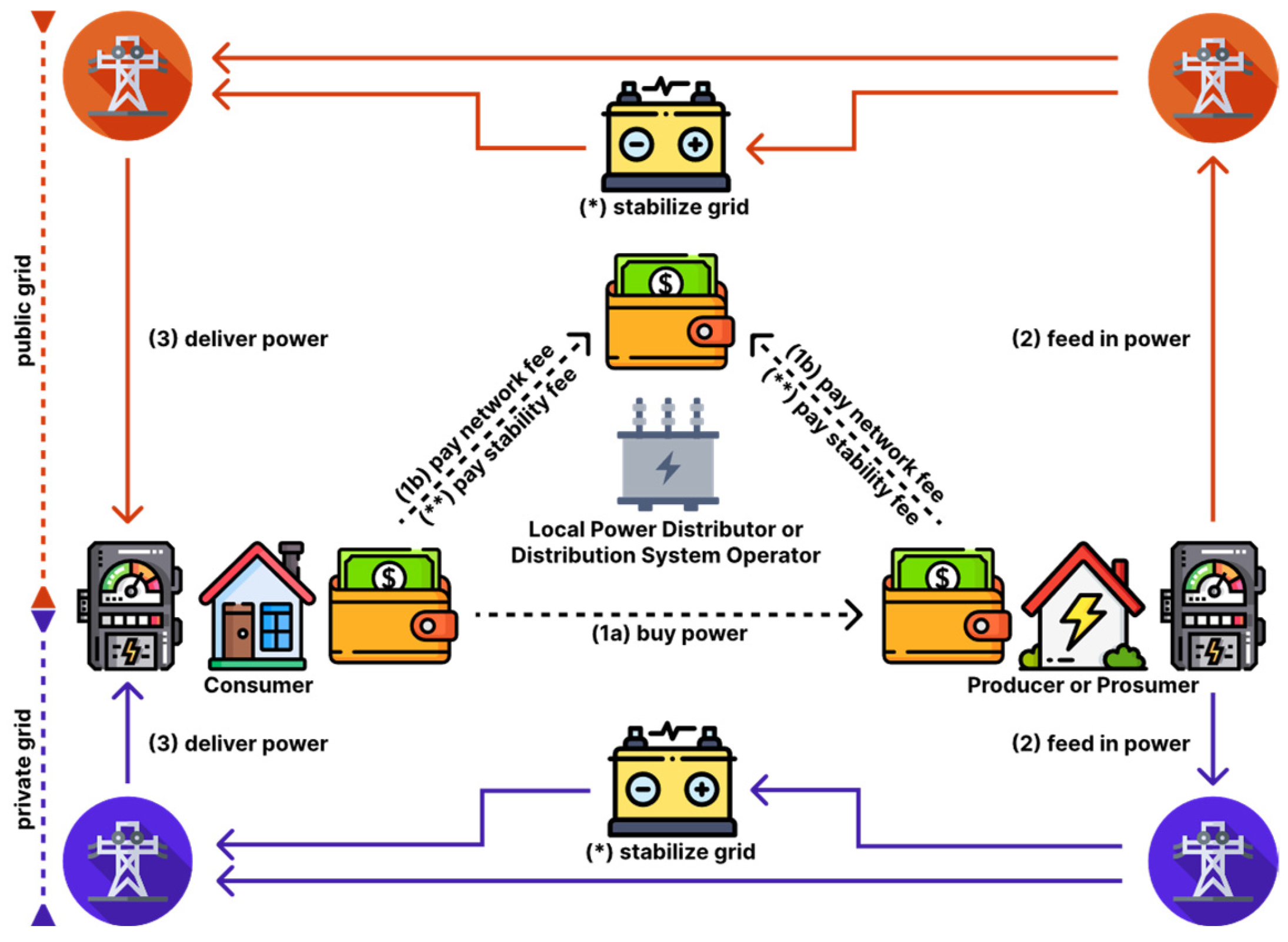
The uses of blockchain in P2P energy trading utilize technology to diminish reliance on centralized market operators [25,26]. Nonetheless, they vary in the market they target [27]. Retail trading applications seek to enable transactions between small entities that typically lack access to the wholesale power market. They aim to diminish the expenses associated with minor transactions by automating transaction processing with blockchain technology and smart contracts [28,29,30]. The reduction in processing costs would allow small electrical producers to gain profits from selling their power [31,32,33]. Most wholesale trading applications aim to enhance the functionality of the wholesale electricity market. They specifically investigate the application of blockchain-based record-keeping and smart contracts to diminish the expenses associated with clearing and settlement processes, such as by lowering the collateral requirements [34,35]. Furthermore, smart contracts are examined for their potential to automate exchange trading operations, including escrow services [34,36]. These enhancements are anticipated to diminish obstacles to access in exchange trading, thereby enabling smaller entities to engage in these marketplaces [15,33]. Figure 2 illustrates the structure of a peer-to-peer network within the framework of smart grid applications.
Certain wholesale trading solutions additionally emphasize Over-The-Counter (OTC) electricity trading [15,34,38]. In instances of disputes or alleged fraud, blockchain is utilized as a secure method for transaction verification [34,39]. Decentralized system service applications such as wholesale applications aim to enhance the functionality of the system services market [37,38,40]. They examine the application of smart contracts to decentralize and automate various control services, i.e., registration, verification, and approval, essential for participation in these marketplaces. While the P2P architecture enables direct transactions between prosumers, it also illustrates the limited role of a central operator. This characteristic explains the low regulatory compatibility and implementation readiness of P2P energy trading in Indonesia, where PLN retains exclusive control over grid operations. In the Indonesian context, peer-to-peer energy trading remains at an early conceptual stage and has not progressed beyond academic studies and limited pilot discussions. Existing regulations primarily emphasize centralized grid control and do not yet permit direct electricity trading between consumers.

4.1.2. Renewable Energy Certificate Trading

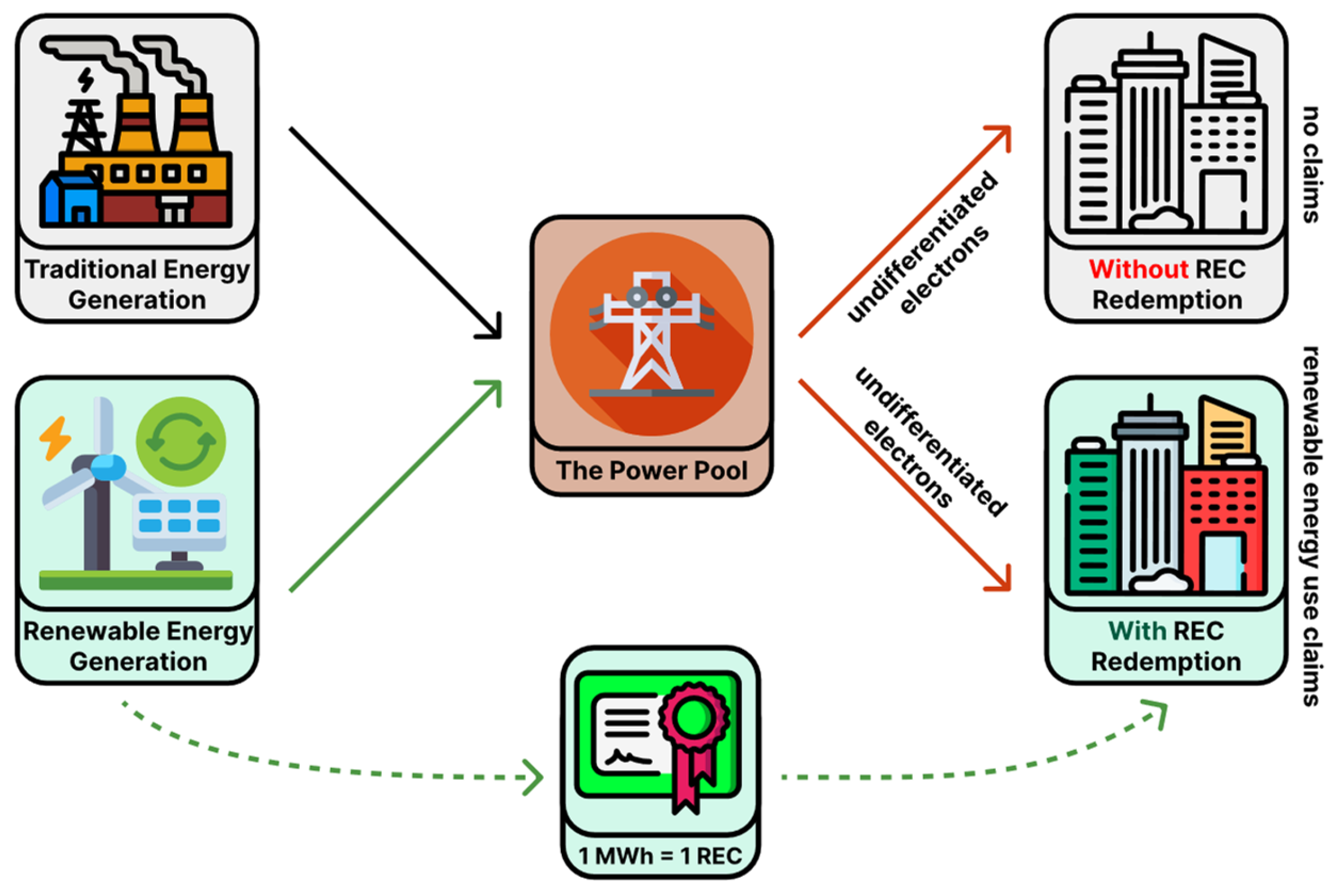
Renewable Energy Certificates (RECs) constitute a category of energy attribute certificates [41]. RECs authenticate power usage from renewable sources to counterbalance consumption from non-renewable sources [41]. RECs can be generated from wind, solar, biomass, hydropower, biogas, geothermal, and landfill gas energy projects. REC trading applications employ blockchain technology to generate and exchange certificates that validate renewable energy acquisitions [42]. REC trading functions as an extension of electricity labeling applications, primarily utilizing labeling data to generate certificates that signify the acquisition of renewable energy for designated generation and storage facilities [43,44]. Certificates can be linked to or entirely maintained on the blockchain to establish a legitimate registration and a visible, incontrovertible ownership history [21,45,46]. Smart contracts facilitate the issuance, processing, and tracking of certificate exchanges [47]. Figure 3 presents a diagrammatic depiction of REC.
Individuals predominantly utilize Renewable Energy Certificates (RECs) as credits to indicate their electricity consumption [48]. Additionally, some jurisdictions implement renewable portfolio standards (RPS) mandating electric firms to increase their renewable energy production annually. The RPS regulations significantly influence the trading of RECs. Utility providers may obtain these certifications from homes to comply with state mandates for renewable energy [49]. In Indonesia, renewable energy certificate trading has begun to develop through initiatives led by PLN, particularly in voluntary REC issuance schemes. However, the market remains limited in scale and lacks a dedicated supervisory institution and standardized trading mechanisms.

4.1.3. Electronic Billing of Electricity

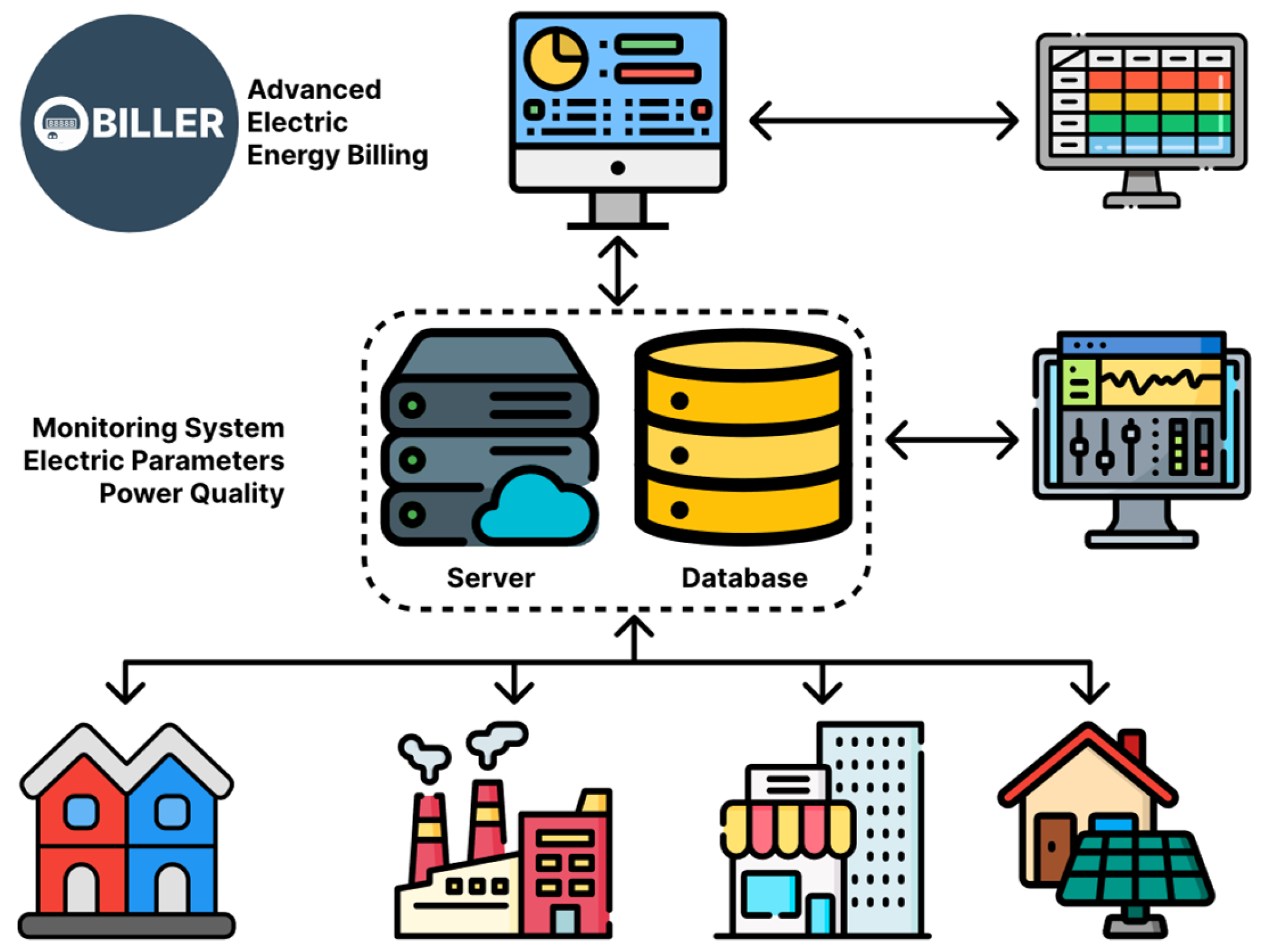
Electronic billing (e-billing) is a digital method for transmitting invoices and facilitating consumer payments online [50]. Integrating blockchain technology into the electricity billing system can effectively merge information flow, energy flow, and control flow, thereby streamlining the settlement process and improving the efficiency of electricity bill settlements relative to conventional approaches [49,51]. Figure 4 depicts the framework for the adoption of blockchain technology in electricity cost settlement. Stakeholders can employ blockchain for electricity cost settlements, transaction settlements, service fee settlements, and retail settlements.
A number of studies have been undertaken regarding the application of blockchain technology in electricity billing systems. Smart contracts facilitate the automation of the bidding process in trade based on the supply and demand of energy in smart cities [52]. This methodology is utilized in urban energy management, and the findings indicate that viable strategies can improve pricing flexibility and security. Lu et al. [53] proposed smart contract-based electrical transactions and settlement fees for electricity network businesses utilizing blockchain technology and transaction models involving smart contracts. The transaction model was developed and implemented using instances of power smart contract purchases and sales. The verification outcomes of this technique can diminish the trust expenses associated with power market transactions. A study introduced a blockchain-based hybrid billing and charging system, applied to a case study in the electricity sector [54]. The research findings demonstrate that blockchain can safeguard user privacy and facilitate credit distribution for users. Khan et al. [55] proposed a payment mechanism utilizing blockchain technology. This initiative can augment confidence, transparency, and privacy among electric car participants. Electronic billing in Indonesia is already widely implemented through PLN’s digital platforms and is fully integrated with the national payment system. The presence of established regulations, operational platforms, and high transaction volumes indicates strong institutional readiness.

4.1.4. Microgrid Transaction

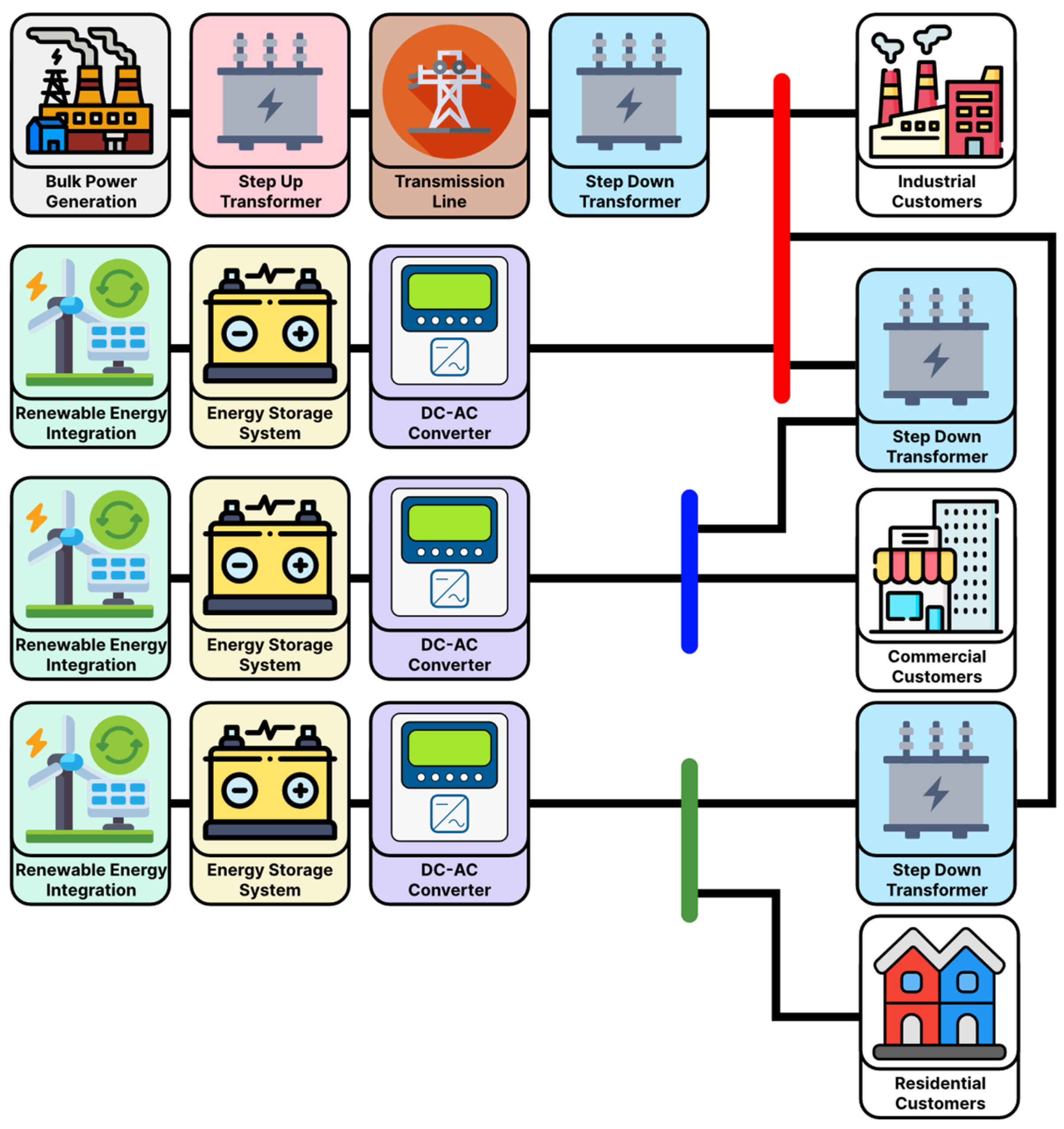
A microgrid is a decentralized assembly of electrical sources and loads that generally functions, connects to, and synchronizes with the conventional bigger synchronous grid [56]. Figure 5 illustrates a representative layout of a microgrid system. Microgrid transaction applications facilitate automatic management in situations where traditional centralized management models and tools are impractical or unwelcome [57,58]. They utilize smart contracts to organize and oversee production and consumption units within the microgrid [20].
A blockchain-based registry aggregates and monitors schedules and possible flexibilities for these units. Smart contracts utilize this information to equilibrate demand and supply, autonomously activate flexibility potentials when required, and perhaps improve cybersecurity [60,61]. The actual electricity generation and consumption levels from these units are recorded in the blockchain-based registry to enable settlement and allocation of flexibility costs subsequently. Investigations into the application of blockchain technology in microgrids predominantly address the subsequent facets. Gai et al. [62] presented a consortium-oriented blockchain methodology to mitigate privacy disclosure concerns without restricting transaction functionalities. Liu et al. [63] developed a secure electrical transaction mechanism that utilizes blockchain technology for smart grid networks via wireless communication. Khan et al. [64] suggested a blockchain system utilizing Hyperledger Sawtooth, which establishes a novel and secure distributed energy transmission node. Zhang et al. [65] introduced a privacy protection framework utilizing a blockchain consortium and a sustainable double auction for direct microgrid electricity transactions. Xuan et al. [66] introduced a methodology for managing power networks and application models via blockchain technology.
Microgrid development in Indonesia is primarily driven by the need to supply electricity to remote and isolated regions. While pilot microgrid projects exist, transactional coordination and settlement mechanisms remain largely centralized and manually managed. Blockchain-based microgrid transactions are still at an early research and planning stage, with no large-scale operational implementation currently in place. In Indonesia, microgrid deployment is primarily driven by electrification needs in remote and isolated regions. While pilot microgrid projects exist, transaction settlement and coordination remain centrally managed and largely non-digital.

4.1.5. Electric Vehicle Charging Transaction

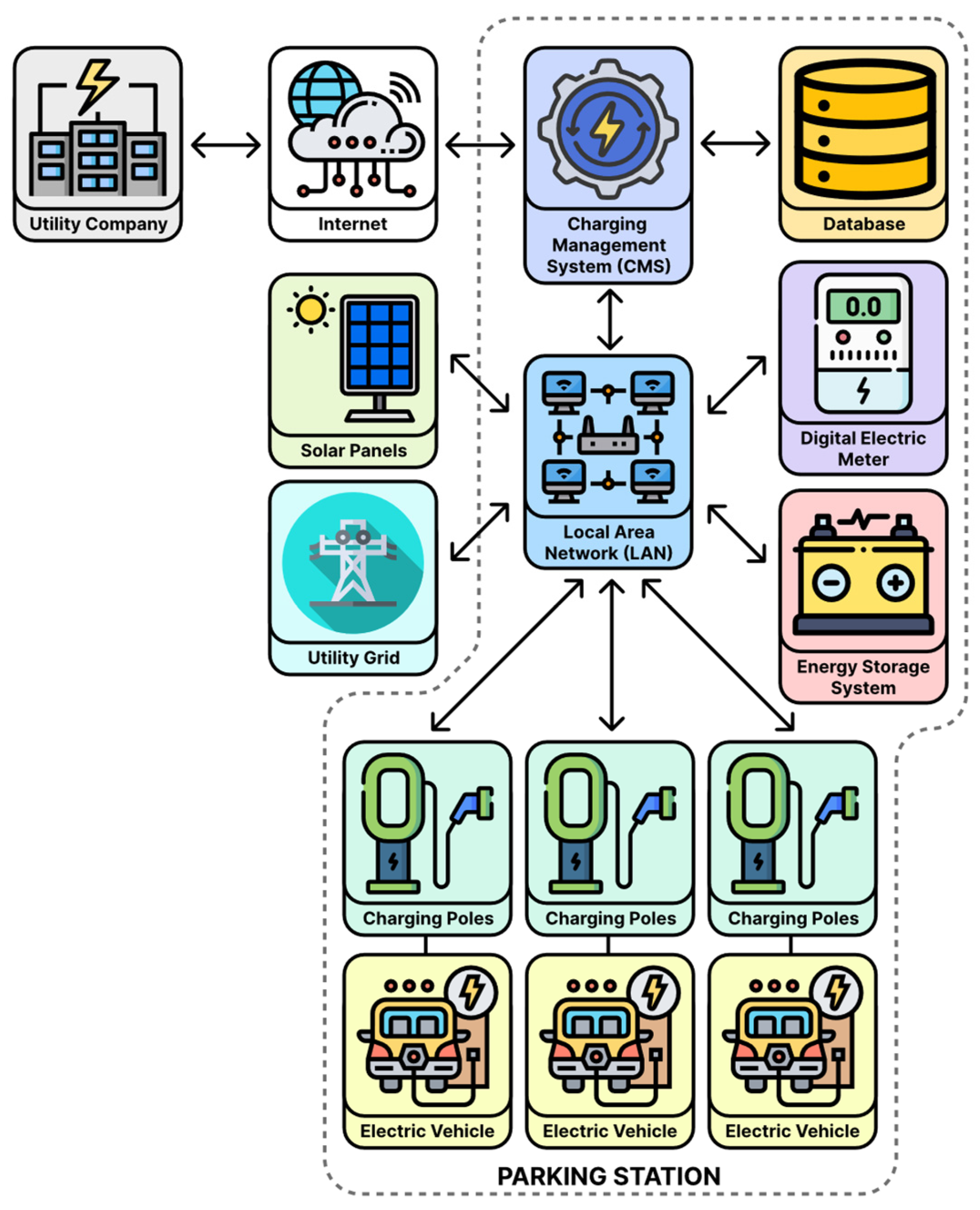
Traditional charging systems are susceptible to security threats, including data breaches and unauthorized access [22]. Blockchain can alleviate these risks by offering a secure foundation for transaction processing. Blockchain technology distributes charging data over numerous nodes, rendering it impervious to manipulation. Furthermore, decentralized identity verification guarantees that only authorized individuals can commence charge sessions. Hence, it mitigates the possibility of fraudulent activities. Traditional billing systems that rely on centralized databases are vulnerable to hacking attempts. It compromises sensitive customer information and transaction data. The decentralized architecture of blockchain guarantees that charge data are kept across numerous nodes. It removes single points of failure and mitigates the danger of data leaks. Figure 6 shows an illustration of electric vehicle charging transactions.
Blockchain also facilitates decentralized identity verification. It augments the security of the billing process. Conventional billing systems sometimes depend on centralized identity verification mechanisms, susceptible to identity theft and fraud. Blockchain enables consumers to manage their identities and securely authenticate themselves to initiate transaction fees without dependence on central authorities. It mitigates the danger of illegal access and guarantees that only authorized users can initiate charging sessions. Numerous organizations and governments have launched pilot programs to investigate the utilization of blockchain in electric vehicle charging. The Share & Charge initiative in Germany has established a blockchain-based platform for the sharing and monetization of private electric vehicle charging stations. These initiatives illustrate the viability and potential of blockchain technology in transforming the electric vehicle charging sector. Electric vehicle charging infrastructure in Indonesia has expanded rapidly, supported by national policies and PLN-operated digital platforms. Public charging stations and payment systems are already operational, particularly in urban areas.

4.2. Deployment Readiness Analysis

After discussing the five most common case studies in Indonesia, an analysis was conducted on Indonesia’s readiness conditions for implementing blockchain in each of these case studies. The readiness analysis was carried out by considering several key factors, i.e., Regulation and Policy, Implementation Readiness, Urgency, Technology Readiness Level (TRL), and Business Maturity Level (BML). The criteria used for the analysis are defined in Table 2.
Table 2. Deployment readiness criteria.
NoCriteriaDefinitionRating Scale
1Regulation and PolicyRegulations and policies governing the case study
  • Regulations do not permit
  • No enabling or prohibiting regulations yet
  • Supportive regulations exist
2Implementation ReadinessInternal readiness of State Electricity Company (PLN) to implement the related case study
  • Business processes and platforms are not in place
  • Business processes exist, but no platform
  • Both business processes and platforms are in place
3UrgencyThe urgency of implementing blockchain and the case study
  • Not urgently required
  • Required but not a priority
  • Required and a priority
4Technology Readiness LevelTechnology readiness level of the related case study
  • TRL 1, 2 and 3
  • TRL 4, 5 and 6
  • TRL Level 7, 8 and 9
5Business Maturity LevelBusiness maturity level of the related case study
  • BML 1 and 2
  • BML 3 and 4
  • BML 5
To reduce ambiguity in the scoring process, each rating level in Table 2 was assigned based on explicit qualitative thresholds. A score of 1 indicates that the required conditions are largely absent, such as missing regulations, lack of internal capability, or purely conceptual development. A score of 3 represents full readiness, where supportive regulations are in force, operational platforms are deployed, and the use case is actively implemented or prioritized. The intermediate score of 2 reflects partial or transitional readiness. This includes situations where enabling regulations exist but remain incomplete, business processes are defined but only supported by pilot systems, or technologies have progressed beyond conceptual validation but have not yet reached full operational deployment. This approach allows for consistent differentiation between early-stage concepts, pilot-level implementation, and mature, production-ready use cases. Although the evaluation criteria incorporate regulatory and institutional dimensions, each criterion also reflects underlying technical and operational considerations, including system interoperability, platform maturity, scalability constraints, and integration feasibility with existing power system infrastructures. The assignment of TRL and BML in this study follows qualitative interpretation of established maturity concepts and is informed by triangulation between regulatory documents, publicly available information on platform deployment, the recent literature, and expert input. TRL reflects the maturity of underlying technologies and system integration, while BML captures the extent of operational deployment, institutional adoption, and business process readiness.

4.2.1. Peer-to-Peer Energy Trading

Blockchain technology offers two primary advantages in peer-to-peer (P2P) energy trading. Initially, blockchain can ensure that the peer-to-peer energy trading process is secure, confidential, and transparent. This technology ensures the security of all transactions and energy sharing through the utilization of a secure and decentralized ledger. This assures stakeholders that their data are secure. Secondly, the State Electricity Company (PLN) can utilize blockchain to serve as the primary authority that regulates and supervises the P2P energy trading network. The PLN may ensure adherence to existing regulations and procedures, maintain network stability, and monitor the P2P energy trading process. Indonesia has several regulations that oversee P2P energy trading enterprises.
(a)
Ministerial Regulation of Energy and Mineral Resources No. 26/2021.
  • The regulation governs the operation of solar photovoltaic rooftop systems connected to the electricity network of a licensed electricity supply business for public use, also known as rooftop installations.
(b)
Government Regulation Number 25 of 2021 (Section IV)
  • The regulation pertains to the electricity business area in Indonesia. The purpose is to organize and optimize the management of electric energy resources efficiently and to ensure reliable and equitable electricity services throughout the country.
(c)
Government Regulation Number 5 of 2021.
  • The regulation concerns the implementation of business licensing based on risk, particularly on the Electricity Supply Business License for Own Use (IUPTLS). The regulation aims to facilitate the licensing process, increase investment in the self-supply electricity sector, and ensure compliance with safety and quality standards in the provision of electricity.
Two fundamental issues arise when attempting to implement P2P energy trading. As PLN’s power generation from alternative sources remains elevated, the demand for electricity from additional sources diminishes. The circumstances may lose the interest of individuals or enterprises in P2P energy trading as PLN’s supplementary electricity supply reduces profitability. Excessive electricity generation by individuals or prosumers during specific periods may lead to complications within the network. To conserve or optimize surplus energy, effective management is essential. This is a significant issue due to insufficient regulatory support for this business strategy. An explicit and effective legal framework is essential for the successful operation of P2P energy trading. It may instill a sense of security among all participants in the network.
Currently, there is no prominent P2P energy trading platform in Indonesia. It remains highly feasible to establish a P2P energy trading platform that enables individuals to trade energy directly and efficiently. This is due to ongoing efforts to enhance the sustainability and accessibility of the energy system for everybody. Considering the aforementioned challenges, Indonesia currently does not prioritize P2P energy trading. This is due to the capability of conventional sources such as coal and gas power plants to generate sufficient electricity to satisfy consumer demands. The TRL for peer-to-peer (P2P) energy trading in Indonesia indicates the advancement of the technology, particularly regarding infrastructure and PLN’s readiness to adopt it. Current regulations indicate that P2P energy trading remains predominantly theoretical, with only a limited number of experiments conducted in laboratories or simulations. The BML for P2P energy trading remains nascent and currently just a concept. This status is due to our ongoing examination of critical factors such as business models, technological selections, and collaborations. Our evaluation assigns TRL a score of 1 and BML a score of 2.

4.2.2. Renewable Energy Certificate Trading

The utilization of blockchain technology in REC trading presents two main opportunities. Blockchain-based certificate trading platforms have the potential to serve as an effective means of regulating the renewable energy certificate market. Blockchain enables stricter monitoring and enforcement of regulations with a secure and decentralized infrastructure. Furthermore, blockchain creates full transparency in REC trading. It eliminates the potential of double counting in transactions and ensures the legitimacy of each certificate. Several regulations in Indonesia govern the activities of REC trading.
(a)
The Ministerial Decree Number 188.K/HK.02/MEM.B.2021 on the Electricity Supply Business Plan (RUPTL) of PT PLN (Persero) for 2021–2030.
  • PLN has outlined plans to utilize REC trading and blockchain technology to facilitate trading renewable energy certificates. PLN recognizes the potential benefits of blockchain applications. The benefit includes new revenue streams and the development of distributed energy resources (DERs) in the PLN grid.
(b)
Presidential Regulation of the Republic of Indonesia Number 112 of 2022 on the Acceleration of Renewable Energy Development for Electricity Provision.
  • The regulation supports the implementation of REC trading in Indonesia by encouraging the development of renewable energy as a primary source of electricity, regulating the obligation to include renewable energy, creating opportunities for REC trading.
(c)
Law (UU) Number 30 of 2007 and Law Number 30 of 2009.
  • The two laws are key regulations governing the energy sector in Indonesia. However, in the context of REC, neither law yet provides a specific legal framework to regulate REC, making REC trading voluntary based. Law Number 30 of 2007 concerning Energy regulates various aspects of energy, including renewable energy, but focuses more on national energy policy and does not specifically regulate REC trading. Law Number 30 of 2009 concerning Electricity is more focused on electricity supply and the operation of the electricity network. Although this law includes important aspects related to renewable energy including the obligation for electricity suppliers to use renewable energy, it does not contain provisions that explicitly regulate REC trading. Since there is no specific legal framework for REC, the trading and use of REC in Indonesia still follow voluntary principles.
(d)
Letter from PT PLN (Persero) Number 43803/KEU.01.02/D01020300/2022.
  • PLN sent a letter to several private renewable energy electricity producers regarding issuing RECs. PLN clarified the rights to attribute energy from renewable energy power plants to Independent Power Producers (IPPs).
Implementing REC trading in Indonesia faces several challenges that must be ad-dressed. First, the difficulty in proving the use of renewable electricity remains a barrier. Providing strong evidence of renewable energy usage in a transaction is still challenging to achieve clearly. Furthermore, the absence of an institution overseeing the REC market presents another challenge. The presence of a supervisory body would help ensure the transparency and legitimacy of REC trading and prevent the practice of double claiming. Another challenge is the lack of specific market regulations for implementing REC trading in Indonesia. Clear and comprehensive regulations are essential to provide guidelines for REC trading for all parties involved.
Indonesia is making strides in preparing to implement REC trading by considering blockchain technology. Currently, PLN is actively conducting studies on implementing blockchain-based REC trading. Therefore, blockchain-based REC trading in Indonesia is perceived to hold significant urgency. This is an integral part of strategic initiatives to increase renewable energy generation capacity in the country. Indonesia can incentivize renewable energy producers to continue investing in clean energy infrastructure by promoting using RECs. Moreover, PLN’s declaration of readiness to distribute clean energy through REC services is a positive step in supporting companies and industries to switch to more environmentally friendly energy sources. The TRL of REC trading in Indonesia remains at an early stage. Current research, development, and pilot studies indicate that Indonesia’s transition to renewable energy is very probable to succeed. Market adoption is crucial as it enhances the robustness of the REC trading ecosystem through more participation from firms and organizations. Existing legislation and presidential directives provide a definitive legal framework that accelerates market readiness and acceptance. The BML for trading REC requires enhancement. PLN must develop a sustainable business strategy that includes definitive marketing goals, appropriate finance sources, and methods to enhance the company’s value. Existing regulations are beneficial; however, PLN must ensure adequate infrastructure, reliable trading platforms, robust information systems, and prompt certificate verification. Market participants require enhanced awareness of the advantages of Renewable Energy Certificates (RECs). The present assessment assigns a score of 2 to both the TRL and BML.

4.2.3. Electronic Billing of Electricity

The utilization of blockchain technology in the implementation of e-billing in Indonesia brings several significant benefits. Blockchain enables the automation of electronic billing through smart contracts and leads to valuable resource savings. Consequently, the billing process becomes more efficient and minimizes human errors. Additionally, blockchain also provides highly reliable transaction records. This will enhance public trust in the e-billing system and eliminates concerns regarding potential fraud or calculation errors. Besides these benefits, blockchain system can easily expand to other services, such as transactions in Public Electric Vehicle Charging Stations (SPKLU). There are several regulations in Indonesia governing e-billing activities.
(a)
Bank Indonesia Regulation No. 20/6/PBI/2018.
  • The regulation governs using electronic money as one electronic payment instrument in Indonesia. It includes provisions related to electronic money use, electronic money issuance, licensing requirements, and obligations of electronic money issuers.
(b)
Bank Indonesia Regulation No. 18/40/PBI/2016.
  • The regulation addresses the organization of payment transaction processing. It covers various aspects of the infrastructure, regulation, and procedures for processing electronic payment transactions.
(c)
Bank Indonesia Regulation No. 22/23/PBI/2020.
  • The regulation encompasses the regulatory framework structure for the payment system in Indonesia. It includes provisions regarding the roles and responsibilities of payment system operators, technical and security requirements.
(d)
Indonesia Payment System 2025 Blueprint.
  • The Indonesia Payment System 2025 Blueprint is a long-term plan that outlines the initiatives and steps to be taken to enhance the efficiency, inclusiveness, and security of the payment system in Indonesia.
(e)
Director General of Tax Regulation (Perdirjen) No. PER-05/PJ/2017, Article 1 Paragraph (3).
  • The article refers to the tax billing system as an electronic state revenue collection system. It indicates that this regulation governs the use of the electronic tax billing system to collect tax revenue electronically.
(f)
Directorate General of Taxes Regulation No. PER-11/PJ/2019 on Electronic Tax Payment.
  • The regulation focuses on electronic tax payments and defines the billing code. This regulation assists in regulating and ensuring a clear understanding of the use of billing codes in electronic tax payments.
Several issues must be resolved prior to the implementation of e-billing in Indonesia. One of main issue is the variability in electricity billing practices. This circumstance presents a risk of errors in determining power charges. It may lead into customer dissatisfaction and a loss of confidence in the e-billing system. The issue requires effective dispute resolution methods to ensure that invoices correspond with actual consumption. Integrating blockchain technology into infrastructure such as the meter data management system (MDMS) may prove to be fairly challenging. Consistent and coherent data flow between many platforms is crucial. Appropriate technology must be developed to bridge this gap.
Indonesia appears poised to implement blockchain technology for electronic billing. PLN has introduced PLN Mobile, its electronic billing platform, to facilitate the use of electronic electricity bills. There are six main features in the PLN Mobile application that customers can use, i.e., purchasing tokens and paying bills, changing power capacity, recording self-meter readings, reporting disturbances and complaints, monitoring post-paid electricity usage, and bill notifications.
Therefore, implementing blockchain-based e-billing platforms in Indonesia is highly recommended considering the rapid economic and financial digitalization developments, as revealed in the Bank Indonesia (BI) report. This digitalization encompasses a shift towards technological solutions for financial services, including payments and billing. Additionally, the Blueprint for Open Banking in the Indonesian Payment System 2025 emphasizes principles such as “Openness, Customer Protection, and Consent.” Implementing blockchain in e-billing platforms will support these principles by enabling open access, protecting consumer rights, and ensuring clear consent in various transactions and payments. Thus, PLN’s blockchain-based e-billing platform will play a crucial role in driving innovation, security, and transparency in the payment system in Indonesia, aligning with BI’s vision for the Indonesian Payment System 2025.
The TRL of e-billing in Indonesia is proven and fully operational. PLN has widely implemented e-billing for residential and industrial electricity payments, making it an integral part of its operations. E-billing is an industry standard, and PLN is fully capable of managing and operating the system efficiently. The BML of e-billing is also high. PLN has established a tested business model that includes marketing, monetization, and customer service. PLN has formed partnerships with financial institutions to facilitate transactions and operates with adequate infra-structure, reliable technology, and secure systems. Therefore, the current assessment assigns a score of 3 for TRL and 3 for BML

4.2.4. Microgrid Transaction

Implement blockchain in Indonesia microgrids holds potential to enhance efficiency and transparency in energy resource management. Microgrids are becoming increasingly popular in Indonesia, especially in remote areas with specific energy needs. Blockchain can facilitate the implementation of microgrids and promote trust in peer-to-peer energy trading. Additionally, blockchain can also aid in reducing carbon emissions in the electricity grid [68]. In some other countries and regions, the implementation of blockchain in microgrids has successfully supported the transition to clean energy and reduced carbon emissions. For instance, in the Port of Rotterdam, Netherlands, blockchain facilitates energy transactions between commercial energy consumers [69]. Several regulations related to microgrids exist:
(a)
The Electricity Supply Business Plan (RUPTL) formulated by PLN from 2021 to 2030.
  • PLN’s RUPTL is categorized as more “green.” This is because the proportion of additional Renewable Energy Power Plants (EBT) has increased by 51.6 percent, greater than that of fossil fuel power plants by 48.4 percent. The microgrid is one of the focal points in the RUPTL, particularly concerning establishing more energy sources for rural areas and utilizing more renewable energy.
(b)
Regulation of the President of the Republic of Indonesia Number 112 of the Year 2022.
  • The regulation stipulates the increase in investment and the development of renewable energy for electricity supply. This implies that the development and implementation of microgrids, which can integrate renewable energy, will receive better support and investment.
The implementation of blockchain in microgrids in Indonesia faces several challenges. First, the challenge arises regarding technology and information system proficiency. In blockchain implementation, proficiency is necessary to ensure that all involved parties can understand and effectively utilize this technology. However, technology and information system proficiency in Indonesia are still diverse and not standardized. This then poses a challenge in the blockchain implementation process. Second, there are also challenges related to regulation. Blockchain is one form of technology that evolves rapidly, so current regulations may be unable to accommodate it. Therefore, new regulations are needed to encourage blockchain implementation in microgrids. Third, another challenge is related to scalability issues. Blockchain needs to handle a large amount of data and transaction volume. It poses challenges in infrastructure and technology capacity. Fourth, there are also challenges related to privacy issues. Blockchain stores transaction data in an immutable ledger, meaning all transactions are recorded and accessible to all stakeholders. This poses challenges in terms of data protection and privacy. Finally, the last challenge is related to economic and implementation cost issues. Implementing blockchain requires significant investment in infrastructure and technology. Additionally, operational costs must be accounted for in managing and maintaining blockchain [70]. Implementing blockchain in microgrids in Indonesia presents opportunities for more efficient and transparent energy management. Additionally, blockchain can support the sale of excess energy from consumers to the grid, providing compensation to consumers and promoting the use of renewable energy. This is relevant in Indonesia, as the trend of renewable energy use is increasing.
The TRL of microgrids in Indonesia remains at an early stage. PLN has identified the need for microgrid transactions to improve distribution efficiency and reliability. Initial research and development have explored technical benefits, integration potential, and operational challenges. PLN still needs controlled or simulation-based pilot testing to assess feasibility before large-scale deployment. The BML of microgrids requires further development. PLN needs an efficient business model, along with evaluations of hardware, software, and control system readiness. Reliable infrastructure, network connectivity, and system resilience are essential. Market adoption and consumer readiness for decentralized energy systems also remain limited, making public outreach and awareness campaigns critical. Therefore, the current assessment assigns a score of 1 for the TRL and 2 for the BML.

4.2.5. Electric Vehicle Charging Transaction

The application of blockchain technology in Indonesia’s EV industry promises various benefits. Blockchain can enhance transparency and security in the electric vehicle charging process, facilitate accurate energy consumption monitoring, and support the integration of renewable energy sources. The following are the regulations in Indonesia that govern energy efficiency, energy audits, and other regulations supporting the implementation of electric vehicles (EVs) in Indonesia.
(a)
Presidential Regulation (PERPRES) Number 55 of 2019.
  • The regulation governs the management of energy efficiency in Indonesia. The primary objective of this regulation is to promote the use of more efficient and sustainable energy. Some key points regulated in this regulation include energy efficiency, audits, savings, and carbon emissions management. Thus, blockchain implementation in EVs can align with this regulation to support the Indonesian government’s goals of achieving energy efficiency and sustainable energy management.
(b)
Presidential Instruction (INPRES) Number 7 of 2022.
  • The instruction specifically addresses using Battery Electric Vehicles (BEVs) as operational service vehicles and/or individual service vehicles of central and regional government agencies.
(c)
Regulation of the Minister of Transportation Number 45 of 2020.
  • The regulation pertains to specific vehicles using electric motor propulsion. It specifically regulates the regulations for public electric vehicle battery exchange stations (SPBKLU) and public electric vehicle charging stations (SPKLU).
Implementing blockchain technology in the context of EVs in Indonesia faces several challenges that need to be addressed. One of the main challenges is regulatory uncertainty. Currently, there are no regulations specifically governing the integration of blockchain in EVs in Indonesia. Therefore, there is a need for a clear and supportive legal framework to facilitate the use of this technology without excessive barriers. Additionally, interoperability issues among various blockchain systems and platforms that stakeholders in the electric vehicle industry may use could pose significant constraints. Developing strong and standardized blockchain infrastructure is key to addressing this issue. Furthermore, data security and user privacy are also important issues in implementing blockchain in EVs. Managing and protecting sensitive customer data requires solutions meeting strict privacy standards. Finally, education and awareness about blockchain technology among stakeholders, including government, industry, and the general public, are also challenges that need to be addressed to optimize the benefits of this technology in the electric vehicle industry. However, EVs in Indonesia have been growing rapidly. Currently, PLN also has a platform dedicated to EVs called Charge.IN. Charge.IN is an application developed by PLN to advance the ecosystem of electric vehicle usage. It features location services, activity history, and consumption history. In this regard, Charge.IN primarily focuses on facilitating transactions for charging electric vehicles.
While there are currently no specific regulations governing EVs in Indonesia, many regulations support the implementation of EVs indirectly. The core activity of EVs is charging, which can occur either at private residences or public charging stations such as SPKLU. Therefore, there is a need for security and data privacy in the charging transaction process. In this context, blockchain technology can ensure data security and privacy. Blockchain can automate processes through smart contracts and maintain data integrity through transparent transaction records. Implementing blockchain technology in electric vehicles presents significant opportunities to enhance the industry’s efficiency, transparency, and sustainability. One key opportunity is the improvement in data transparency and security. Data related to charging, maintenance, vehicle history, and other aspects can be securely recorded and audited through blockchain. This instills trust in EV owners and minimizes the risk of fraud and administrative errors. Additionally, blockchain enables the development of more efficient charging systems. Charging payment transactions can be processed faster and at lower costs, making it more affordable for EV owners and potentially driving wider adoption of electric vehicles. Blockchain also provides opportunities to integrate renewable energy into the EV charging ecosystem. This allows for better monitoring and optimizing renewable energy used in electric vehicles, supporting sustainability goals and reducing carbon emissions. Lastly, blockchain enables accurate and tamper-proof energy consumption monitoring, which benefits tax planning, vehicle performance measurement, and more precise cost assessments.

4.3. Priority Recommendations

Based on the assessment of the five main use cases, it can be observed that each use case possesses distinct characteristics in terms of regulation and policy, implementation readiness, and the urgency of blockchain implementation. The priority ranking recommendation for implementing blockchain in the five main use cases based on the total scores from the assessment criteria provided can be described in Table 3. The priority score presented in Table 3 represents a structured synthesis of the five assessment dimensions rather than an independent metric. It is intended to support comparative prioritization across use cases within the same institutional context, rather than to provide an absolute or universally generalizable ranking.
Ranked fifth and fourth with a score of 3 are P2P energy trading and microgrid transactions. In the present Indonesian context, many use cases lack the requisite regulations, corporate processes, technological maturity, or urgency for implementation. The REC trading use case ranks third with a score of 8. It is supported by urgent regulations but lacks appropriate business protocols in Indonesia. Electronic billing and EV charging transactions rank second and first, respectively, with a score of 9. Critical regulations facilitate the implementation of e-billing and blockchain technology in Indonesia. Bank Indonesia has developed the Indonesia Payment System for 2025 to ensure comprehensive documentation of all transactions. Additionally, PLN has the PLN Mobile application prepared for further blockchain development, as it currently facilitates e-billing. Charging electric vehicles is governed by stringent regulations and necessitates prompt action, as it can significantly reduce oil use and carbon emissions. PLN further possesses the Charge. The application is prepared for further development utilizing blockchain technology.
Indonesia’s electric vehicle charging technology readiness level is elevated. PLN has experienced significant expansion in the electric vehicle sector and has established EV charging stations throughout its network as a component of the national charging infrastructure. PLN operates EV charging systems efficiently with proficient personnel and supplementary systems that facilitate operations. A prototype electric vehicle charging software compatible with the PLN network has been developed and is undergoing modifications to ensure it can accommodate an increasing number of customers while maintaining stability as demand escalates. The BML of charging an electric vehicle is similarly substantial. PLN has established an efficient business model encompassing pricing frameworks, transaction methodologies, and potential revenue streams. We have assessed the preparedness of the infrastructure, including the installation of additional charging stations and the enhancement of the grid. Transaction technologies, such as multipayment systems and data management, are implemented. PLN possesses sufficient operational capability, attributed to its skilled personnel, standardized operational procedures, and maintenance systems. Market awareness and public education on electric vehicles and charging services have been effectively executed. The present assessment assigns the TRL a score of 3 and the BML a score of 3.

5. Conclusions

This study reviewed the potential deployment of blockchain technology in the Indonesian electricity sector under a centralized utility structure. The study integrates regulation and policy, implementation readiness, urgency, technology readiness level, and business maturity level into a unified assessment framework. This approach differs from existing surveys that primarily emphasize technical architectures or application taxonomies by explicitly incorporating institutional and regulatory constraints. The framework provides decision-relevant insights for electricity systems dominated by a single national utility. The analysis focused on five representative use cases: peer-to-peer energy trading, renewable energy certificate trading, electronic billing, microgrid transactions, and electric vehicle charging transactions. The review combined literature synthesis with contextual assessment of Indonesia’s regulatory, institutional, and technological conditions. The observed differences in deployment readiness are not only policy-driven but also reflect technical constraints related to platform maturity, system integration complexity, and transaction scalability within a centralized electricity infrastructure.
The results indicate that blockchain deployment feasibility varies significantly across use cases. Electronic billing and electric vehicle charging transactions demonstrate the highest deployment readiness. These use cases benefit from supportive regulations, established digital platforms operated by PLN, and clear operational urgency driven by national digitalization and decarbonization agendas. In contrast, renewable energy certificate trading exhibits moderate readiness. While regulatory support and urgency are emerging, limitations remain in market governance, institutional oversight, and business structuring. Peer-to-peer energy trading and microgrid transactions remain constrained by regulatory uncertainty, low institutional readiness, and limited business maturity, making them unsuitable for near-term blockchain deployment.
Based on these findings, the assessment indicates that electronic billing and electric vehicle charging represent higher-priority entry points for blockchain adoption under current regulatory and institutional conditions. For renewable energy certificate trading, policy efforts should first focus on strengthening verification mechanisms, defining supervisory institutions, and clarifying market rules before large-scale blockchain implementation is pursued. Peer-to-peer energy trading and microgrid transactions should be treated as long-term prospects. Premature deployment in these areas may increase institutional and operational risk without delivering proportional benefits under Indonesia’s centralized electricity governance model.
This study is subject to several limitations. The deployment readiness assessment relies on qualitative judgment informed by expert interviews, which may introduce interpretative subjectivity despite the use of triangulation to reduce individual bias. The expert input is intentionally limited to a single national utility and reflects an institution-specific perspective within Indonesia’s centralized electricity system; therefore, the findings should be interpreted as indicative rather than definitive and may not be directly generalizable to other contexts. In addition, this study does not include a formal bibliometric analysis of the blockchain literature, as it adopts a deployment-oriented review approach. Future research should expand expert engagement to include regulators, academia, and international cases, incorporate quantitative weighting or scoring methods, and validate readiness assumptions through pilot implementations and cross-country comparison.

Author Contributions

Conceptualization, J.H.W. and R.F.S.; methodology, J.H.W.; software, J.H.W.; validation, J.H.W., B.S., M.S., N.A.T. and R.F.S.; formal analysis, J.H.W.; investigation, J.H.W. and N.A.T.; resources, R.F.S. and N.A.T.; data curation, J.H.W.; writing—original draft preparation, J.H.W.; writing—review and editing, B.S., M.S., N.A.T. and R.F.S.; visualization, J.H.W.; supervision, B.S., M.S. and R.F.S.; project administration, R.F.S.; funding acquisition, R.F.S. All authors have read and agreed to the published version of the manuscript.

Funding

This research was funded by Kemdiktisaintek under PDUPT grant with grant number NKB-209/UN2.RST/HKP.05.00/2021. The work of Jauzak Hussaini Windiatmaja was supported in part by Lembaga Pengelola Dana Pendidikan (LPDP) under Contract 2020032102333.

Data Availability Statement

This study does not report original datasets. All information analyzed in this research is derived from publicly available literature, regulatory documents, and institutional reports cited in the reference list.

Acknowledgments

During the preparation of this manuscript, the author(s) used Grammarly (https://www.grammarly.com/) for grammar, spelling, punctuation, and clarity improvements. The author(s) reviewed and edited all generated suggestions and take full responsibility for the content of this publication.

Conflicts of Interest

Nugroho Adi Triyono is employed by PT. PLN Persero (Indonesia’s State Electricity Company). The company itself had no involvement or interception in the conception, execution, analysis, or publication of this research. No products, or commercial interests of the company are promoted in this manuscript.

References

  1. Rajavuori, M.; Huhta, K. Digitalization of security in the energy sector: Evolution of EU law and policy. J. World Energy Law Bus. 2020, 13, 353–367. [Google Scholar] [CrossRef]
  2. Nazari, Z.; Musilek, P. Impact of Digital Transformation on the Energy Sector: A Review. Algorithms 2023, 16, 211. [Google Scholar] [CrossRef]
  3. Indah, R.N.; Rarasati, A.D. Enabling electricity access to rural areas in Indonesia: Challenges and opportunities. IOP Conf. Ser. Mater. Sci. Eng. 2020, 830, 022069. [Google Scholar] [CrossRef]
  4. Amin, M. Challenges in reliability, security, efficiency, and resilience of energy infrastructure: Toward smart self-healing electric power grid. In 2008 IEEE Power and Energy Society General Meeting—Conversion and Delivery of Electrical Energy in the 21st Century; IEEE: Piscataway, NJ, USA, 2008; pp. 1–5. [Google Scholar] [CrossRef]
  5. Yoo, S.; Kim, Y. Electricity generation and economic growth in Indonesia. Energy 2006, 31, 2890–2899. [Google Scholar] [CrossRef]
  6. Batih, H.; Sorapipatana, C. Characteristics of urban households׳ electrical energy consumption in Indonesia and its saving potentials. Renew. Sustain. Energy Rev. 2016, 57, 1160–1173. [Google Scholar] [CrossRef]
  7. Aman, A.H.M.; Shaari, N.; Bashi, Z.S.A.; Iftikhar, S.; Bawazeer, S.; Osman, S.H.; Hasan, N.S. A review of residential blockchain internet of things energy systems: Resources, storage and challenges. Energy Rep. 2024, 11, 1225–1241. [Google Scholar] [CrossRef]
  8. Raj, K. Foundations of Blockchain: The Pathway to Cryptocurrencies and Decentralized Blockchain Applications; Packt Publishing Ltd.: Birmingham, UK, 2019. [Google Scholar]
  9. Haber, S.; Stornetta, W.S. How to time-stamp a digital document. J. Cryptol. 1991, 3, 99–111. [Google Scholar] [CrossRef]
  10. Dwork, C.; Naor, M. Pricing via Processing or Combatting Junk Mail. In Advances in Cryptology—CRYPTO’92; Springer: Berlin/Heidelberg, Germany, 1992; pp. 139–147. [Google Scholar] [CrossRef]
  11. Jakobsson, M.; Juels, A. Proofs of Work and Bread Pudding Protocols. In Secure Information Networks; Springer: Boston, MA, USA, 1999; pp. 258–272. [Google Scholar] [CrossRef]
  12. Nakamoto, S. Bitcoin: A peer-to-peer electronic cash system. In Decentralized Business Review; 2008; p. 21260. Available online: https://bitcoin.org/bitcoin.pdf (accessed on 7 June 2025).
  13. Zand, M.; Wu, X.; Morris, M.A. Hands-On Smart Contract Development with Hyperledger Fabric V2; O’Reilly Media, Inc.: Sebastopol, CA, USA, 2021. [Google Scholar]
  14. Azbeg, K.; Ouchetto, O.; Jai Andaloussi, S.; Fetjah, L. An overview of blockchain consensus algorithms: Comparison, challenges and future directions. In Advances on Smart and Soft Computing: Proceedings of ICACIn; Springer: Cham, Switzerland, 2021; pp. 357–369. [Google Scholar]
  15. Di Silvestre, M.L.; Gallo, P.; Guerrero, J.M.; Musca, R.; Sanseverino, E.R.; Sciumè, G.; Vasquez, J.C.; Zizzo, G. Blockchain for power systems: Current trends and future applications. Renew. Sustain. Energy Rev. 2020, 119, 109585. [Google Scholar] [CrossRef]
  16. Yapa, C.; de Alwis, C.; Liyanage, M.; Ekanayake, J. Survey on blockchain for future smart grids: Technical aspects, applications, integration challenges and future research. Energy Rep. 2021, 7, 6530–6564. [Google Scholar] [CrossRef]
  17. Polge, J.; Robert, J.; Le Traon, Y. Permissioned blockchain frameworks in the industry: A comparison. ICT Express 2021, 7, 229–233. [Google Scholar] [CrossRef]
  18. Roth, T.; Utz, M.; Baumgarte, F.; Rieger, A.; Sedlmeir, J.; Strüker, J. Electricity powered by blockchain: A review with a European perspective. Appl. Energy 2022, 325, 119799. [Google Scholar] [CrossRef]
  19. Wang, X.; Yao, F.; Wen, F. Applications of Blockchain Technology in Modern Power Systems: A Brief Survey. Energies 2022, 15, 4516. [Google Scholar] [CrossRef]
  20. Ante, L.; Steinmetz, F.; Fiedler, I. Blockchain and energy: A bibliometric analysis and review. Renew. Sustain. Energy Rev. 2021, 137, 110597. [Google Scholar] [CrossRef]
  21. Andoni, M.; Robu, V.; Flynn, D.; Abram, S.; Geach, D.; Jenkins, D.; McCallum, P.; Peacock, A. Blockchain technology in the energy sector: A systematic review of challenges and opportunities. Renew. Sustain. Energy Rev. 2019, 100, 143–174. [Google Scholar] [CrossRef]
  22. Khan, S.; Amin, U.; Abu-Siada, A. P2P Energy Trading of EVs Using Blockchain Technology in Centralized and Decentralized Networks: A Review. Energies 2024, 17, 2135. [Google Scholar] [CrossRef]
  23. Cali, U.; Lee, A.; Hayes, B.; Lima, C.; Sebastian-Cardenas, D.J.; Flynn, D.; Kantar, E.; Rahimi, F.; Thu, K.S.; Pasetti, M.; et al. A comprehensive academic and industrial survey of blockchain technology for the energy sector using fuzzy Einstein decision-making. Renew. Sustain. Energy Rev. 2025, 222, 115845. [Google Scholar] [CrossRef]
  24. Xie, J.; Tang, H.; Huang, T.; Yu, F.R.; Xie, R.; Liu, J.; Liu, Y. A survey of blockchain technology applied to smart cities: Research issues and challenges. IEEE Commun. Surv. Tutorials 2019, 21, 2794–2830. [Google Scholar] [CrossRef]
  25. Tushar, W.; Yuen, C.; Saha, T.K.; Morstyn, T.; Chapman, A.C.; Alam, M.J.E.; Hanif, S.; Poor, H.V. Peer-to-peer energy systems for connected communities: A review of recent advances and emerging challenges. Appl. Energy 2021, 282, 116131. [Google Scholar] [CrossRef]
  26. Ke, Y.; Chen, Z.; Feng, C.; Xie, M.; Zhu, K.; Su, J. A blockchain-based P2P regional energy trading and credit mechanism. Energy Convers. Manag. X 2025, 28, 101193. [Google Scholar] [CrossRef]
  27. Ludji, O.; Yandri, E.; Sidharta, R.; Timba, A.; Amaral, C.; Aryati, R. Developing a Smart Implementation Framework for Blockchain-Based P2P Renewable Energy Trading in Indonesia: A Qualitative Analysis Approach. Heca J. Appl. Sci. 2025, 3, 63–76. [Google Scholar] [CrossRef]
  28. Thomas, L.; Zhou, Y.; Long, C.; Wu, J.; Jenkins, N. A general form of smart contract for decentralized energy systems management. Nat. Energy 2019, 4, 140–149. [Google Scholar] [CrossRef]
  29. Zhang, T.; Pota, H.; Chu, C.-C.; Gadh, R. Real-time renewable energy incentive system for electric vehicles using prioritization and cryptocurrency. Appl. Energy 2018, 226, 582–594. [Google Scholar] [CrossRef]
  30. Schneiders, A.; Shipworth, D. Community Energy Groups: Can They Shield Consumers from the Risks of Using Blockchain for Peer-to-Peer Energy Trading? Energies 2021, 14, 3569. [Google Scholar] [CrossRef]
  31. Noor, S.; Yang, W.; Guo, M.; van Dam, K.H.; Wang, X. Energy Demand Side Management within micro-grid networks enhanced by blockchain. Appl. Energy 2018, 228, 1385–1398. [Google Scholar] [CrossRef]
  32. Jiang, Y.; Zhou, K.; Lu, X.; Yang, S. Electricity trading pricing among prosumers with game theory-based model in energy blockchain environment. Appl. Energy 2020, 271, 115239. [Google Scholar] [CrossRef]
  33. Mengelkamp, E.; Schlund, D.; Weinhardt, C. Development and real-world application of a taxonomy for business models in local energy markets. Appl. Energy 2019, 256, 113913. [Google Scholar] [CrossRef]
  34. Esmat, A.; de Vos, M.; Ghiassi-Farrokhfal, Y.; Palensky, P.; Epema, D. A novel decentralized platform for peer-to-peer energy trading market with blockchain technology. Appl. Energy 2021, 282, 116123. [Google Scholar] [CrossRef]
  35. Hoess, A.; Roth, T.; Sedlmeir, J.; Fridgen, G.; Rieger, A. With or Without Blockchain? Towards a Decentralized, SSI-based eRoaming Architecture. In Proceedings of the 55th Hawaii International Conference on System Sciences (HICSS 2022), Maui, HI, USA, 3–7 January 2022. [Google Scholar] [CrossRef]
  36. Kirli, D.; Couraud, B.; Robu, V.; Salgado-Bravo, M.; Norbu, S.; Andoni, M.; Antonopoulos, I.; Negrete-Pincetic, M.; Flynn, D.; Kiprakis, A. Smart contracts in energy systems: A systematic review of fundamental approaches and implementations. Renew. Sustain. Energy Rev. 2022, 158, 112013. [Google Scholar] [CrossRef]
  37. Mazzola, L.; Denzler, A.; Christen, R. Towards a Peer-to-Peer energy market: An overview. arXiv 2020, arXiv:2003.07940. [Google Scholar]
  38. Alt, R.; Wende, E. Blockchain technology in energy markets—An interview with the European Energy Exchange. Electron. Mark. 2020, 30, 325–330. [Google Scholar] [CrossRef]
  39. Zurich, S.E.; Chanson, M.; Bogner, A.; Bilgeri, D.; Fleisch, E.; Wortmann, F. Blockchain for the IoT: Privacy-Preserving Protection of Sensor Data. J. Assoc. Inf. Syst. 2019, 20, 1272–1307. [Google Scholar] [CrossRef]
  40. An, J.; Lee, M.; Yeom, S.; Hong, T. Determining the Peer-to-Peer electricity trading price and strategy for energy prosumers and consumers within a microgrid. Appl. Energy 2020, 261, 114335. [Google Scholar] [CrossRef]
  41. Haryani, I.; Aditya, I.A.; Nuraini, A.H.; Widiyanesti, S.; Alamsyah, A.; Nurhazizah, E.; Hakim, M.N.; Ruwani, T.; Arli, M.Z.D.; Girawan, N.D. Blockchain-based renewable energy certificate system in Indonesia. Heliyon 2025, 11, e42364. [Google Scholar] [CrossRef] [PubMed]
  42. Ahl, A.; Yarime, M.; Tanaka, K.; Sagawa, D. Review of blockchain-based distributed energy: Implications for institutional development. Renew. Sustain. Energy Rev. 2019, 107, 200–211. [Google Scholar] [CrossRef]
  43. Diniz, E.H.; Yamaguchi, J.A.; dos Santos, T.R.; de Carvalho, A.P.; Alégo, A.S.; Carvalho, M. Greening inventories: Blockchain to improve the GHG Protocol Program in scope 2. J. Clean. Prod. 2021, 291, 125900. [Google Scholar] [CrossRef]
  44. Fernando, Y.; Rozuar, N.H.M.; Mergeresa, F. The blockchain-enabled technology and carbon performance: Insights from early adopters. Technol. Soc. 2021, 64, 101507. [Google Scholar] [CrossRef]
  45. Khorasany, M.; Dorri, A.; Razzaghi, R.; Jurdak, R. Lightweight blockchain framework for location-aware peer-to-peer energy trading. Int. J. Electr. Power Energy Syst. 2021, 127, 106610. [Google Scholar] [CrossRef]
  46. Abad, A.V.; Dodds, P.E. Green hydrogen characterisation initiatives: Definitions, standards, guarantees of origin, and challenges. Energy Policy 2020, 138, 111300. [Google Scholar] [CrossRef]
  47. Li, W.; Wang, L.; Li, Y.; Liu, B. A blockchain-based emissions trading system for the road transport sector: Policy design and evaluation. Clim. Policy 2021, 21, 337–352. [Google Scholar] [CrossRef]
  48. U.S. Environmental Protection Agency. Renewable Energy Certificates (RECs). Available online: https://www.epa.gov/green-power-markets/renewable-energy-certificates-recs (accessed on 7 June 2025).
  49. Wang, D. Exploration and Prospect of Blockchain Application in Energy and Electric Power Industry. Available online: http://www.chinapower.com.cn/dlxxh/scyj/20201120/35177.html (accessed on 7 June 2025).
  50. Din, J.; Su, H. Blockchain-Enabled Smart Grids for Optimized Electrical Billing and Peer-to-Peer Energy Trading. Energies 2024, 17, 5744. [Google Scholar] [CrossRef]
  51. The Medithor. The Biller Project: Advanced Electric Energy Billing System. Available online: https://medithor.com/eng/biller.html (accessed on 29 September 2025).
  52. Khattak, H.A.; Tehreem, K.; Almogren, A.; Ameer, Z.; Din, I.U.; Adnan, M. Dynamic pricing in industrial internet of things: Blockchain application for energy management in smart cities. J. Inf. Secur. Appl. 2020, 55, 102615. [Google Scholar] [CrossRef]
  53. Lu, J.; Wu, S.; Cheng, H.; Song, B.; Xiang, Z. Smart contract for electricity transactions and charge settlements using blockchain. Appl. Stoch. Model. Bus. Ind. 2021, 37, 442–453. [Google Scholar] [CrossRef]
  54. Du, L.; Gao, R.; Suganthan, P.N.; Wang, D.Z. Bayesian optimization based dynamic ensemble for time series forecasting. Inf. Sci. 2022, 591, 155–175. [Google Scholar] [CrossRef]
  55. Daghmehchi, M.; Ghorbani, A.; Kim, H.; Song, J. Hy-Bridge: A hybrid blockchain for privacy-preserving and trustful energy transactions in Internet-of-Things platforms. Sensors 2020, 20, 928. [Google Scholar] [CrossRef]
  56. Ravivarma, K.; Lokeshgupta, B.; Udumula, R.R. A blockchain based peer-to-peer energy trading model for multi microgrid distributed energy management. Sustain. Energy Grids Netw. 2025, 44, 102045. [Google Scholar] [CrossRef]
  57. Imani, M.H.; Ghadi, M.J.; Ghavidel, S.; Li, L. Demand Response Modeling in Microgrid Operation: A Review and Application for Incentive-Based and Time-Based Programs. Renew. Sustain. Energy Rev. 2018, 94, 486–499. [Google Scholar] [CrossRef]
  58. Gao, H.; Xu, S.; Liu, Y.; Wang, L.; Xiang, Y.; Liu, J. Decentralized optimal operation model for cooperative microgrids considering renewable energy uncertainties. Appl. Energy 2020, 262, 114579. [Google Scholar] [CrossRef]
  59. Mumtaz, F.; Bayram, I.S. Planning, operation, and protection of microgrids: An overview. Energy Procedia 2017, 107, 94–100. [Google Scholar] [CrossRef]
  60. Yang, J.; Dai, J.; Gooi, H.B.; Nguyen, H.D.; Wang, P. Hierarchical Blockchain Design for Distributed Control and Energy Trading Within Microgrids. IEEE Trans. Smart Grid 2022, 13, 3133–3144. [Google Scholar] [CrossRef]
  61. Yang, J.; Dai, J.; Gooi, H.B.; Nguyen, H.D.; Paudel, A. A Proof-of-Authority Blockchain-Based Distributed Control System for Islanded Microgrids. IEEE Trans. Ind. Inform. 2022, 18, 8287–8297. [Google Scholar] [CrossRef]
  62. Gai, K.; Wu, Y.; Zhu, L.; Qiu, M.; Shen, M. Privacy-preserving energy trading using consortium blockchain in smart grid. IEEE Trans. Ind. Inform. 2019, 15, 3548–3558. [Google Scholar] [CrossRef]
  63. Liu, Z.; Wang, D.; Wang, J.; Wang, X.; Li, H. A Blockchain-enabled secure power trading mechanism for smart grid employing wireless networks. IEEE Access 2020, 8, 177745–177756. [Google Scholar] [CrossRef]
  64. Khan, A.A.; Laghari, A.A.; Liu, D.-S.; Shaikh, A.A.; Ma, D.-D.; Wang, C.-Y.; Wagan, A.A. EPS-Ledger: Blockchain Hyperledger Sawtooth-Enabled Distributed Power Systems Chain of Operation and Control Node Privacy and Security. Electronics 2021, 10, 2395. [Google Scholar] [CrossRef]
  65. Zhang, S.; Pu, M.; Wang, B.; Dong, B. A privacy protection scheme of microgrid direct electricity transaction based on consortium blockchain and continuous double auction. IEEE Access 2019, 7, 151746–151753. [Google Scholar] [CrossRef]
  66. Xuan, J.; Zheng, S.; Lv, Z.; Du, Y.; Pan, X. Research and Application of Power Grid Control System Based on Blockchain. J. Phys. Conf. Ser. 2020, 1626, 012058. [Google Scholar] [CrossRef]
  67. Yao, L.; Damiran, Z.; Lim, W.H. Optimal charging and discharging scheduling for electric vehicles in a parking station with photovoltaic system and energy storage system. Energies 2017, 10, 550. [Google Scholar] [CrossRef]
  68. IEEE Blockchain. Blockchain Use in Microgrids: Applications, Benefits, and Challenges. Available online: https://blockchain.ieee.org/verticals/transactive-energy/topics/blockchain-use-in-microgrids-applications-benefits-and-challenges (accessed on 29 September 2025).
  69. Sulaeman, I.; Simatupang, D.P.; Noya, B.K.; Suryani, A.; Moonen, N.; Popovic, J.; Leferink, F. Remote Microgrids for Energy Access in Indonesia—Part I: Scaling and Sustainability Challenges and A Technology Outlook. Energies 2021, 14, 6643. [Google Scholar] [CrossRef]
  70. Microgridnews. Microgrids and Blockchain: The Good, the Bad, and… the Possible. Available online: https://microgridnews.com/microgrids-and-blockchain-the-good-the-bad-the-possible (accessed on 29 September 2025).
Figure 1. Blockchain architecture [14]: (a) peer-to-peer architecture; (b) ledger data structure.
Energies 19 01104 g001
Figure 2. The general concept of P2P network on smart grid [37].
Energies 19 01104 g002
Figure 3. Example of REC scheme.
Energies 19 01104 g003
Figure 4. Example architecture of e-billing system for electricity sector by Biller [52].
Energies 19 01104 g004
Figure 5. Example scheme of microgrid system [59].
Energies 19 01104 g005
Figure 6. Illustration of electric vehicle charging transactions [67].
Energies 19 01104 g006
Table 1. Overview of recent survey and review papers on blockchain deployment in electric power systems.
AuthorYearCountry/ContextUse Case ScopeGap/Limitation
Di Silvestre et al. [15]2020Global power systemsBroad. Energy trading, grid services, data management.The paper reviews technology trends and applications. The paper does not analyze monopoly utility constraints. The paper does not combine regulation, internal readiness, urgency, TRL, and BML into an operational framework.
Yapa et al. [16]2021Global smart gridsBroad. P2P trading, DER, automation.The paper focuses on technical integration challenges. The paper assumes plural market actors. The paper does not evaluate readiness in state-owned or single-utility electricity systems.
Polge et al. [17] 2021Industry-wide, incl. energyBlockchain platforms and governanceThe paper compares permissioned platforms. The paper does not analyze electricity sector use cases. The paper does not assess regulatory fit or business maturity for utility deployment.
Roth et al. [18]2022Europe (liberalized markets)Electricity markets, certificates, grid services.The paper uses a European multi-actor market lens. The paper is not transferable to single-buyer or monopoly utilities without adaptation. No internal readiness or urgency scoring is provided.
Wang et al. [19]2022GlobalDispatch, microgrids, billing, trading.The paper provides a concise overview. The paper does not assess regulatory compatibility. The paper does not evaluate TRL or business maturity per use case.
Ante et al. [20]2021Global energy systemsBibliometric trends across energy use cases.The paper maps publication trends. The paper does not evaluate implementation readiness. The paper does not consider monopoly utility governance or operational constraints.
Andoni et al. [21]2019Global energy sectorBroad energy applications.The paper identifies challenges at a high level. The paper does not translate challenges into deployable readiness criteria. The paper predates many post-2020 regulatory developments.
Khan et al. [22]2024Global EV ecosystemEV charging, V2G, P2P EV trading.The paper focuses on EV-specific trading. The paper does not cover billing, REC, or microgrids together. The paper does not evaluate national regulatory or utility readiness.
Cali et al. [23]2025Global energy sectorMultiple energy blockchain use casesThe paper ranks and prioritizes use cases via decision-making modeling. It does not focus on the electricity sector only, and it does not assess national regulatory alignment or internal utility readiness for monopoly utilities. It also does not use a consistent rubric for urgency, TRL, and BML in state-dominated electricity markets.
Table 3. Priority score recommendation.
Use CaseCriteriaValue
Regulation and PolicyImplementation ReadinessUrgency of Blockchain Implementation
EV charging transaction3339
Electronic billing3339
REC trading3238
P2P energy trading1113
Microgrid transaction1113
Disclaimer/Publisher’s Note: The statements, opinions and data contained in all publications are solely those of the individual author(s) and contributor(s) and not of MDPI and/or the editor(s). MDPI and/or the editor(s) disclaim responsibility for any injury to people or property resulting from any ideas, methods, instructions or products referred to in the content.