1. Introduction
The global acceleration of the transition to renewable energy sources (RESs) is fundamentally transforming the architecture and dynamics of modern power systems [
1,
2,
3]. Under the influence of climate change, the depletion of fossil fuels, and the need for energy independence, countries around the world are investing massively in solar, wind, and other sustainable energy technologies [
4,
5,
6]. This restructuring of energy systems creates new opportunities for the decentralization and optimization of management, but at the same time, it also raises complex engineering and management challenges related to the reliability and resilience of power grids [
3,
7,
8]. A key technological component in this transformation are permanent magnet synchronous generators (PMSGs). They are widely used in wind energy and small decentralized RES installations, thanks to their high efficiency, compactness, and minimal maintenance requirements [
9,
10,
11]. PMSGs provide variable speed operation and direct connection to power electronics, making them highly suitable for integration into modern renewable energy systems [
12,
13]. With their increasing share in the energy mix, they are becoming leading elements of smart, decentralized, and low-inertia grid architectures [
2,
3,
7].
Despite their many advantages, the widespread use of PMSGs introduces new challenges for the stability of power systems. Unlike classic synchronous generators, which provide mechanical inertia and natural participation in frequency regulation, PMSGs are electronically connected to the grid through inverters, without a direct mechanical connection to the system [
10,
11,
12,
13]. This reduces the ability of the grid to absorb sudden changes in load and increases the risk of dynamic instability [
8,
14]. In addition, the lack of internal excitation limits their ability to regulate reactive power, which necessitates the use of additional compensation devices and advanced control algorithms [
15,
16,
17].
These features are particularly critical in the context of smart grids, advanced power infrastructures that integrate digital communications, automated control, and renewables to achieve greater efficiency, flexibility, and sustainability [
7,
18]. Smart grids support bidirectional energy and information flows, integrate distributed energy resources and storage systems, and provide adaptive load management [
19,
20,
21]. However, the success of this transition depends on the ability to sustainably integrate low-inertia and unpredictable renewable energy sources, such as PMSG-based systems [
8,
13,
22]. In this context, grid resilience takes on new strategic importance. It encompasses the ability of the power system to adapt to dynamic changes, to withstand external impacts (such as weather events, failures, or cyberattacks), and to recover quickly after disturbances [
1,
23,
24,
25]. Resilience, understood as a multidimensional concept, is no longer limited to physical infrastructure, but includes intelligent control, forecasting, automation, and autonomous decision making [
26,
27,
28,
29]. This requires the implementation of advanced control algorithms, energy storage, virtual synchronization, and adaptive inverter technologies [
15,
30,
31,
32].
A particular challenge is the emulation of inertia and the maintenance of synchronization. While traditional power plants provide natural mechanical inertia that stabilizes the frequency during sudden changes in load, PMSG-based systems require the use of digital approaches such as virtual synchronous generators (VSGs). These algorithms reproduce the dynamic behavior of conventional generators through power electronics and digital controllers [
10,
13,
14,
33].
This paper aims to analyze the challenges and propose sustainable engineering solutions for maintaining the operational resilience of smart grids dominated by PMSGs [
7,
12,
34]. This study addresses both the technical aspects of grid dynamics and modern control strategies that enable the reliable and efficient integration of such generators into smart power system architectures [
21,
35,
36,
37]. The analysis is based on a simulation model developed in Python and is complemented by a review of the current scientific literature, as well as suggestions for the future development and optimization of the systems [
38,
39,
40].
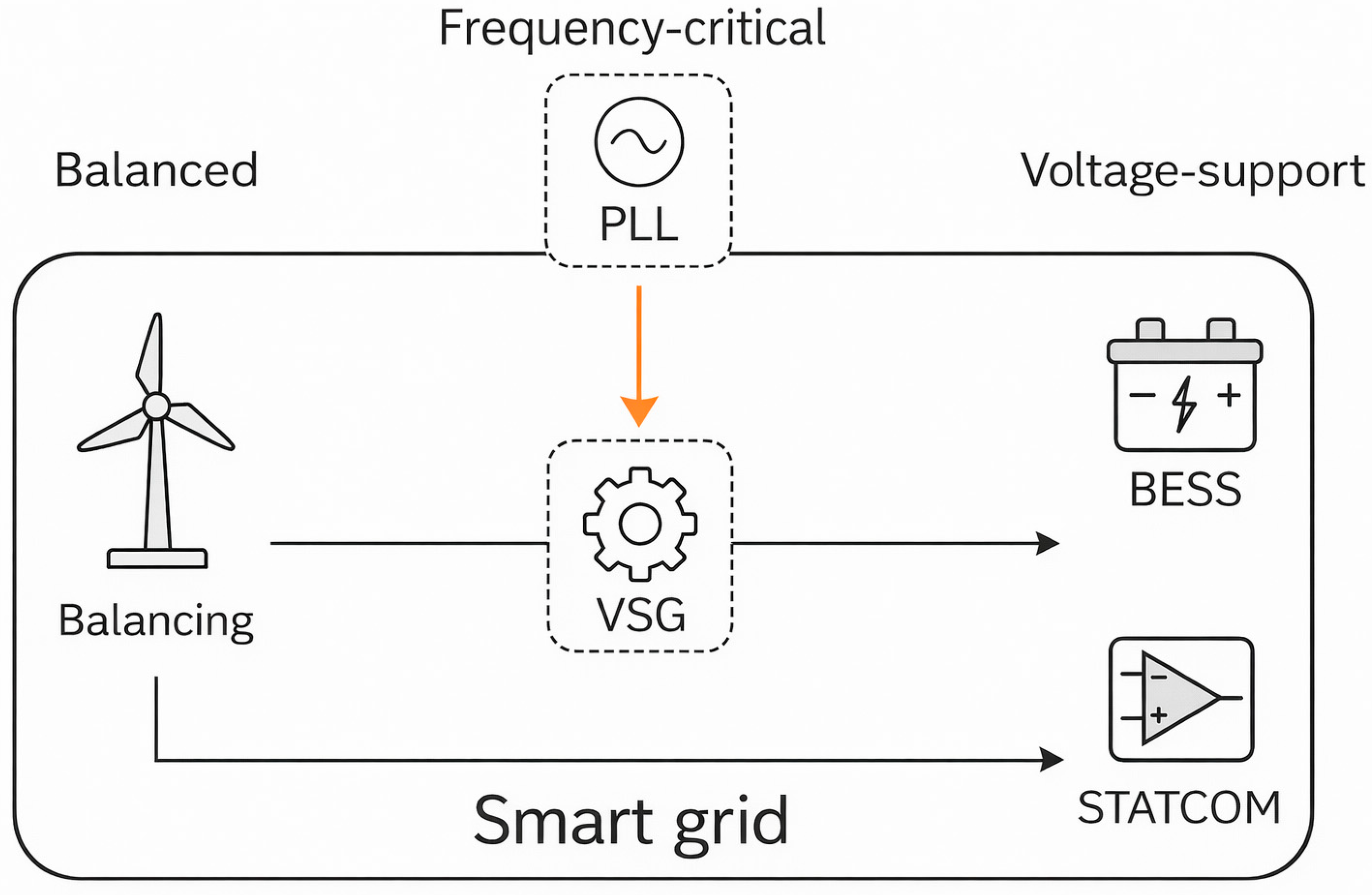
The technical contribution of this research is twofold. First, it proposes an integrated simulation and evaluation framework that unifies dynamic modeling, control comparison, and resilience assessment of smart grids dominated by PMSGs. This enables a consistent benchmarking of control strategies, which is rarely addressed in the literature. Second, this study introduces a hybrid VSG+BESS+STATCOM architecture, validated through detailed simulation, that enhances both frequency and voltage resilience compared to the conventional PLL-based and single-compensation approaches. These contributions advance the understanding of how coordinated active and reactive power control can ensure the sustainable operation of future smart grids with low-inertia renewable sources.
All simulations and analyses presented in this study were performed in a fully digital environment using open source scientific software tools. No physical chemicals, reagents, biological samples, or commercial materials were used in this study. The simulation framework was developed and implemented using Python 3.10 (Python Software Foundation, Wilmington, DE, USA). Numerical calculations were performed using NumPy v1.24 (NumPy Developers; Austin, TX, USA) and SciPy v1.10 (SciPy Developers; Austin, TX, USA). Data manipulation and post-processing were performed using Pandas v2.0 (Pandas Development Team; New York, NY, USA).
All graphical visualizations and figure generation were performed using Matplotlib v3.7 (Matplotlib Development Team; Boston, MA, USA) and Seaborn v0.12 (Seaborn Developers; New York, NY, USA). Vector graphics data outputs were exported in SVG formats to ensure compatibility with scientific publishing standards. Simulations were performed on a standard desktop workstation running Windows 10 Pro (Microsoft Corporation; Redmond, WA, USA). No proprietary simulation platforms or hardware devices were used. The investigated systems based on PMSG, virtual synchronous generator (VSG) control strategies, battery energy storage systems (BESS), and STATCOM models were implemented as analytical and control-oriented representations. No manufacturer-specific hardware models or vendor-dependent control libraries were used. All inverter, storage, and compensation devices were modeled using idealized control units to ensure commonality and reproducibility of the results.
5. Mitigation Strategies
With the increasing share of PMSG-based generators in smart grids, developing resilient management strategies to compensate for their weaknesses, such as a lack of inertia, limited contribution to reactive power, and high dependence on power electronics, becomes a top priority. The following sub-sections discuss key engineering approaches to enhance the resilience of grids dominated by PMSGs.
5.1. Virtual Synchronous Generators (VSGs)
Virtual synchronous generators (VSGs) are one of the most promising technologies to compensate for the lack of mechanical inertia. They use algorithms that emulate the rotor dynamics of a classic synchronous generator by controlling the inverter. Thus, in the event of sudden changes in load or production, VSG systems provide “virtual inertia” and maintain frequency stability. The additional introduction of damping coefficients allows for smooth transitions through transients and limiting oscillations.
PMSGs inherently lack mechanical inertia, have limited reactive voltage capability, and are decoupled from the grid through power electronic converters. The VSG algorithm directly addresses these weaknesses by introducing synthetic electromechanical behavior into the converter control. The VSG implements the classical swing equation:
where
J is the virtual moment of inertia, and
D is the damping coefficient.
This equation emulates the rotor dynamics of a synchronous machine, enabling the inverter to temporarily store and release energy in response to power imbalances, thus stabilizing frequency and suppressing oscillations.
A voltage–reactive power (V–Q) loop analogous to the excitation system of a synchronous generator is added:
This allows the inverter to actively regulate voltage magnitude and support grid voltage during transients.
By converting the inverter from a current-following (PLL-based) to a voltage-forming source, the VSG transforms the converter’s role from passive synchronization to active grid support. When the VSG control is frozen and the converter returns to the PLL mode, these capabilities disappear, and the system exhibits the fast, oscillatory behavior typical of converter-dominated networks.
The control architecture of the proposed VSG is shown schematically in
Figure 2. It represents a generalized control framework rather than a direct replication of any single implementation.
The model includes three hierarchical layers. The virtual inertia and damping loop provides synthetic frequency dynamics and active power response. The voltage and reactive power loop emulates the excitation system to control reactive exchange. Inner converter control applies voltage and frequency references via PWM modulation. This modular structure allows systematic comparison with hybrid configurations (VSG+BESS, VSG+STATCOM) in a consistent simulation framework.
To focus the analysis on intrinsic control behavior, several standard simplifications are adopted, such as ideal PWM modulation without switching harmonics; balanced three-phase grid without harmonics or asymmetries; linear system elements (no saturation or dead zones); ideal sensing and communication, without noise or delays; and no voltage or current limiters activated in the nominal range. These assumptions follow standard benchmark models in the literature and ensure a fair comparison among different control strategies under identical system conditions.
The virtual inertia Jv and the damping Dv were chosen in typical ranges of 0.3–1.5 s and 0.5–1.8 pu, respectively. A sensitivity analysis was performed by varying these parameters by ±50% around their nominal values.
Figure 2 should be interpreted as a conceptual abstraction of the virtual inertia loop, rather than a hardware diagram. It illustrates the transformation from mechanical dynamics modeled by the swing equation to electrical control inputs that form the grid interface of the inverter. The model corresponds to the simplified VSG dynamics commonly used in comparative stability studies and provides the basis for the extended hybrid strategies analyzed in this work.
By emulating the rotational inertia, the VSG smoothens frequency deviations and resists abrupt load disturbances. When the VSG control is frozen (i.e., converter returns to the grid-following PLL mode), this synthetic inertia vanishes, and the system immediately exhibits the fast and oscillatory dynamics typical of converter-dominated sources.
Limited reactive voltage control: In a conventional PMSG inverter under PQ control, reactive power is only indirectly regulated through the grid voltage phase. The VSG algorithm enhances this by adding a voltage control loop analogous to the excitation control of a synchronous machine. Through this mechanism, the VSG adjusts the converter output voltage amplitude to provide fast and stable reactive power support, effectively extending the voltage regulation range.
When the VSG is disabled, the inverter reverts to its limited current-based control, losing the ability to provide dynamic voltage support, and this manifests as reduced voltage stiffness and an increased risk of undervoltage during transient conditions.
Dependence on power electronics (converter decoupling): The VSG algorithm transforms the converter’s behavior from a passive current follower to an active voltage source with grid-forming capability. This control paradigm mitigates the negative effects of converter decoupling, enabling the inverter to contribute to grid strength rather than depend on it. When VSG control is deactivated, the converter again becomes grid-following and sensitive to phase and frequency disturbances.
Overall, the VSG algorithm synthetically restores the electromechanical characteristics of synchronous machines within a power–electronic interface, thereby neutralizing the three fundamental weaknesses of PMSG-based generators.
In simulations, the VSG technology shows lower frequency deviations and shorter recovery times compared to conventional grid-following controllers.
The VSG algorithms are the basis of modern approaches to providing virtual inertia in PMSG-dominated systems. Their general structure is shown in
Figure 2. The diagram illustrates the conversion of electromechanical power and the addition of artificial inertia and damping before connection to the grid.
The generated active power P and the frequency deviation Δf pass through an inertial and damping block, which imitate the dynamics of a classic synchronous generator. At the output, a signal is formed for controlling the inverter, allowing synchronization and maintaining grid stability.
The selection of the virtual inertia (H) and damping coefficient (D) parameters in the simulated VSG model follows standard design and tuning practices established in the literature. The base reference values (H = 0.5 s, D = 1.0 p.u.) were derived from commonly used ranges reported in recent studies on grid-forming converters and virtual synchronous machines.
These values correspond to a medium-inertia system representative of converter-dominated microgrids and are further fine-tuned empirically to ensure a critically damped transient response under the test conditions defined in
Section 6. The tuning procedure involved minimizing frequency overshoot and settling time during step changes in active power.
Such parameter ranges are consistent with standard grid-forming converter designs, where typical values for H vary between 0.2 and 1.5 s and for D between 0.5 and 2.0 p.u., depending on the desired frequency stiffness and system strength. The selected parameters thus ensure both comparability with the state of the art and represent realistic values for medium-scale PMSG-based inverters in smart grid environments.
5.2. Battery Energy Storage Systems (BESSs)
Battery energy storage systems (BESSs) play a critical role in power smoothing and providing additional inertia. In combination with PMSGs and VSGs, BESSs can absorb or release active power in real time, compensating for sudden imbalances between production and consumption.
In addition to frequency stabilization, BESSs also support reactive power management through integrated power converters, which improves local voltage stability.
With adequate management (through predictive EMS algorithms), battery systems can take on the role of fast-acting reserves, which are traditionally performed by conventional power plants.
5.3. Predictive Control Using AI/ML
Intelligent predictive control methods based on artificial intelligence and machine learning are becoming an indispensable tool for PMSG integration. Algorithms such as reinforcement learning (RL) and Model Predictive Control (MPC), supported by neural networks, allow for wind and solar generation forecasting, dynamic load optimization, adaptive control of BESSs and STATCOM, and the early detection of anomalies and cyber threats.
The result is not only improved system resilience, but also a more efficient use of available resources.
5.4. Grid-Forming vs. Grid-Following Inverters
The distinction between grid-following and grid-forming inverters is of fundamental importance for PMSG-based networks. Grid-following (PLL-based) inverters synchronize to an already existing grid voltage and do not contribute independently to frequency stability. Grid-forming (VSG based) inverters have the ability to set frequency and voltage, imitating classical generators.
In smart grids with a high share of PMSG, the transition to grid-forming inverters is a critical step to ensure stable synchronization and reliable operation in isolated modes (islanding).
5.5. Power Electronics Control Loops for PMSG
The control of PMSG by power electronics includes several hierarchical levels of controllers:
Current controller (d-q axes): they provide fast and stable regulation of active and reactive power;
Voltage controller: they maintain stability of the DC bus and the quality of the supplied power;
External control loops (P/Q controllers): they coordinate the operation of PMSGs with the system requirements for power and stability.
The application of anti-windup techniques in PI controllers and adaptive parameterizations allows for a more stable transition in the event of sudden disturbances and minimizes the risk of saturation of the integrators. Combined with predictive control, these controllers form the basis for flexible and resilient PMSG-based systems.
6. Case Study and Simulation Analysis
This study develops a simplified model of a power system in which permanent magnet synchronous generators (PMSGs) are the main renewable source. The system is simulated in several control options, with the aim of assessing their impact on the stability and resilience of smart grids under transient conditions.
The options considered are as follows:
Grid-following control (PLL), synchronization with the grid through a phase-locked loop;
Grid-forming control (VSG), a virtual synchronous generator that mimics the inertia of a classic generator;
VSG + BESS, adding a battery energy storage system to smoothen the power and provide dynamic reserves;
VSG + STATCOM, a reactive power compensator that supports voltage stability;
VSG + BESS + STATCOM, a complete combination of active and reactive compensation resources.
The developed simulation model is based on a set of idealized assumptions that aim to isolate and evaluate the intrinsic dynamic behavior of the proposed control strategies. Specifically, the adopted simplifications are as follows:
Ideal converters: power electronic interfaces are modeled as lossless and perfectly synchronized, neglecting switching harmonics and converter nonlinearities;
Linear system components: magnetic saturation, core losses, and nonlinear impedances are omitted;
Balanced operation: the grid is assumed to be a perfectly balanced three-phase system without voltage or current asymmetries;
Perfect measurement and communication: all sensors and control channels are considered ideal, with no noise, latency, or signal distortion;
Negligible parasitic dynamics: transformer and cable dynamics, as well as line capacitances, are not included.
These assumptions are standard in first-stage dynamic studies and ensure clear comparability between different control strategies. However, it is recognized that such idealization limits the direct extrapolation of the results to real-world power systems, where converter switching behavior, communication delays, and nonlinear effects can introduce additional oscillations and energy losses. Future work will therefore extend this framework to include non-ideal effects, detailed converter models, and hardware-in-the-loop (HIL) validation to bridge the gap between analytical simulations and physical implementation.
The ESS module in the simulation is modeled as a grid-connected, bidirectional DC-AC converter with fast internal current control and external power regulation loops. It is integrated into the VSG active power regulation channel to provide dynamic support during frequency deviations and transients. The BESS compensates for active power imbalances by absorbing or injecting active power within its rated limits, while maintaining a constant DC bus voltage and a balanced state of charge (SoC). The control algorithm follows a PI-based active power controller tuned for a fast response and minimal overshoot. The energy management strategy limits SoC variations to avoid deep discharge or overcharge, reflecting realistic operational constraints. The key simulation parameters used for the BESS configuration are summarized in
Table 1.
The selected BESS parameters represent a medium-scale lithium-ion energy storage system typically used in microgrids and renewable energy applications. The selected power limit of 800 W corresponds to the nominal capacity of the simulated PMSG unit, ensuring proportional participation in active power regulation. The controller parameters Kp = 0.005 and Ki = 0.05 were selected through iterative tuning to achieve fast transient response (settling time < 0.1 s) with less than 5% overshoot. The SoC control ensures stable operation during long transients and avoids saturation effects that could otherwise compromise frequency restoration performance.
In the simulated scenarios, the battery energy storage system (BESS) was assigned a maximum active power capacity of P<sub>BESS,max</sub> = 800 W, corresponding to approximately 30–35% of the nominal PMSG rating (P<sub>PMSG,nom</sub> = 2.5 kW).
This ratio was selected to represent a medium-sized storage module, typical for microgrid and hybrid renewable systems, where the BESS is primarily intended to mitigate short-term frequency deviations and power imbalances rather than provide long-duration energy support.
Increasing the BESS capacity would enhance the system’s ability to absorb and inject power over longer transients, improving resilience indices (RI) and reducing the rate of change of frequency (RoCoF). However, this also increases system cost, converter current ratings, and control complexity.
Conversely, a smaller storage capacity would limit the dynamic response range, causing higher frequency and voltage deviations under step disturbances.
Therefore, the selected BESS-to-PMSG ratio represents a realistic trade-off between technical performance and implementation feasibility in medium-scale smart grid applications.
In this way, not only the individual effects of each technology are investigated, but also their synergy in the context of smart grids.
The following figures present results developed and simulated in the Python v 3.10 model of a permanent magnet synchronous generator (PMSG), integrated in a smart grid environment. The developed model analyzes the dynamic processes of the electrical quantities and their behavior when the reference values for active and reactive power changes.
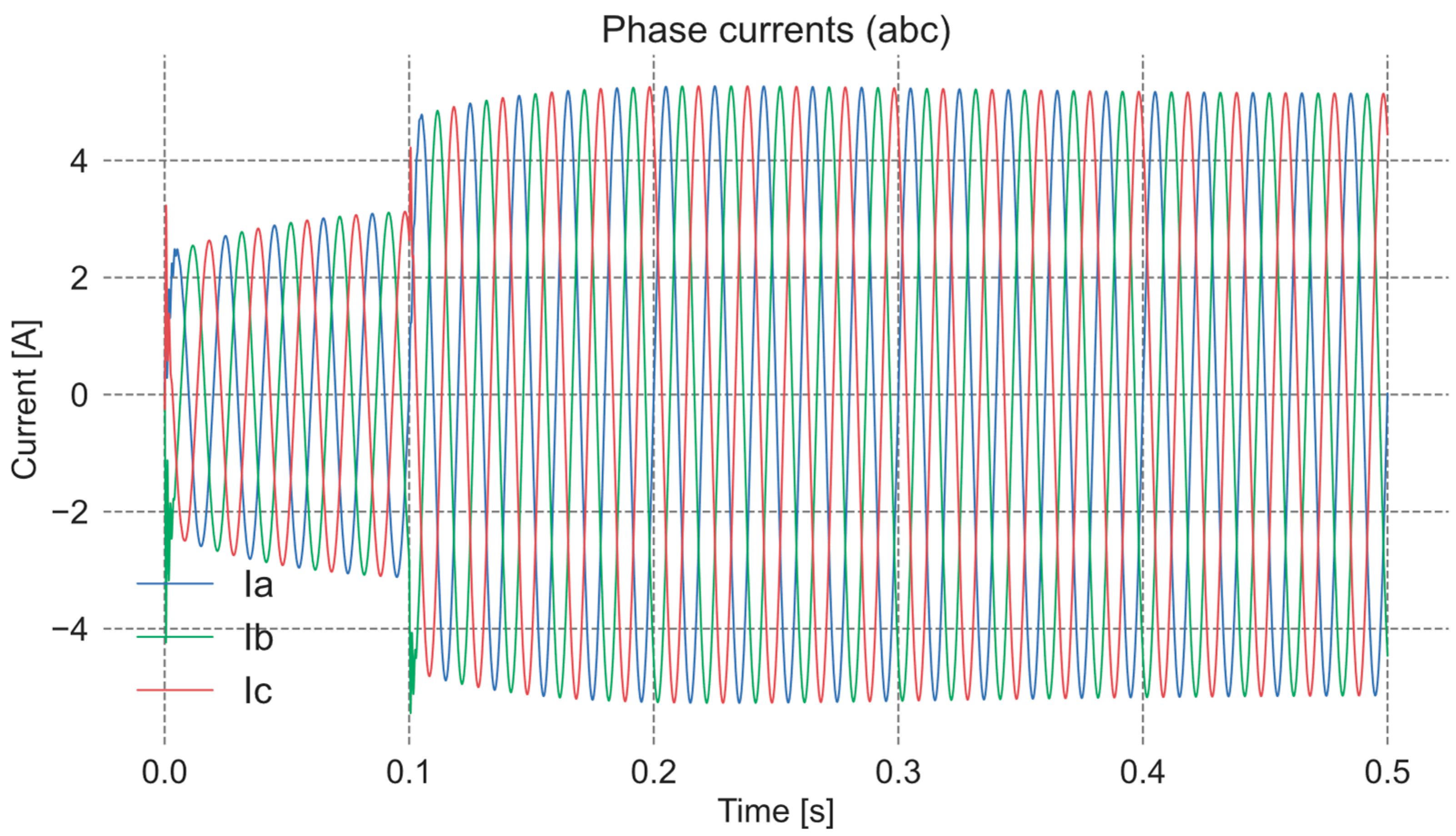
Figure 3 presents the phase currents (Ia, Ib, Ic) of the PMSG in the time interval of the simulation. In the initial part of the graph, a transient process is observed, caused by the initial conditions and the switching on of the system. Around the time t = 0.1 s, a change in the set active power is introduced, which leads to a momentary transient regime in the currents. After a short settling period, the currents reach a new equilibrium corresponding to the new reference power.
The phase currents are clearly sinusoidal and symmetrically distributed at 120° electrical, which confirms the correctness of the vector control and synchronization via the PLL. The observed amplitude increases after the change in load, which is consistent with the increased active power delivered by the generator to the grid.
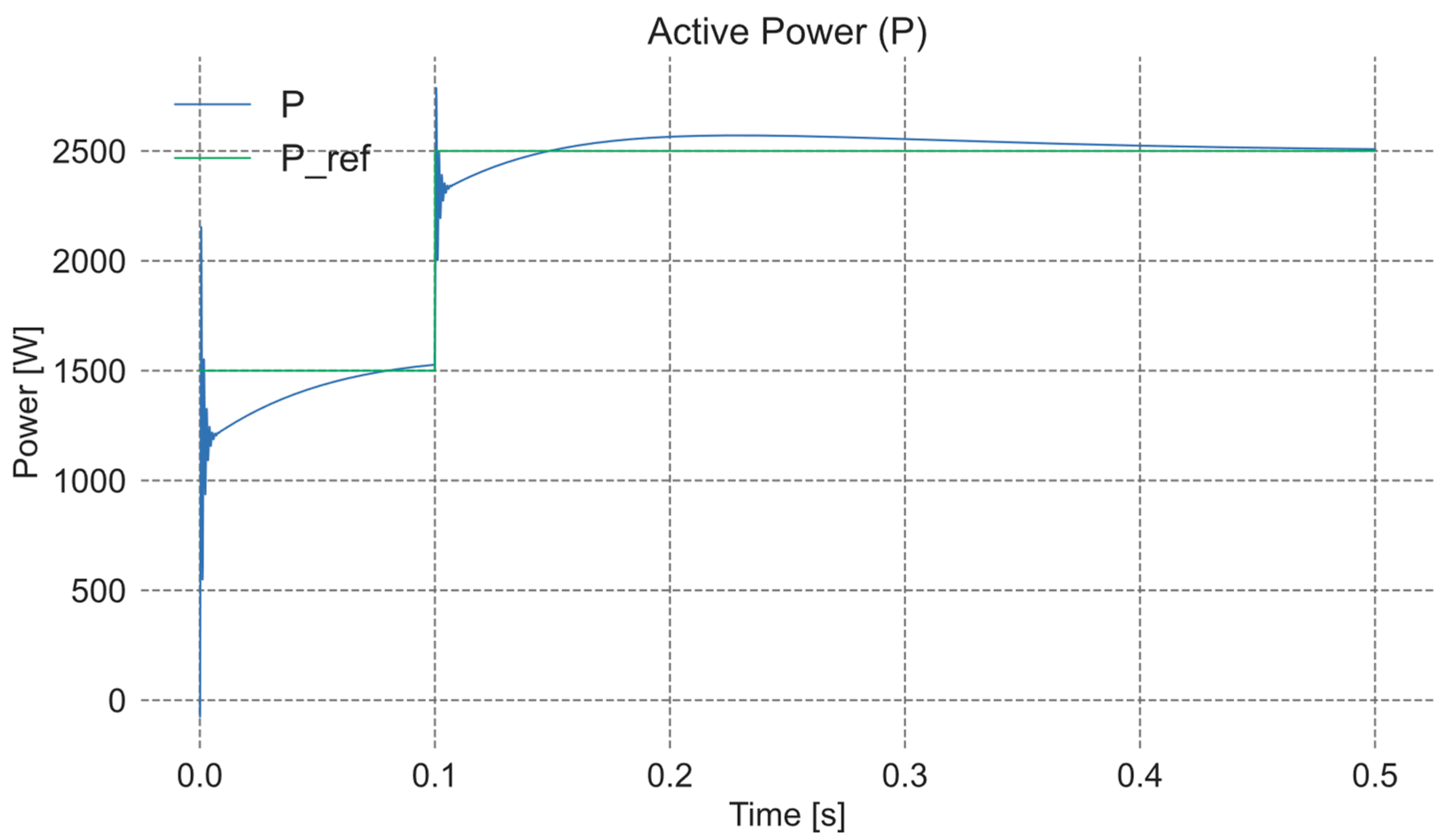
Figure 4 shows the dynamics of the active power (P) of the PMSG relative to the set reference value (P_ref). At the beginning of the simulation, the system strives to reach the initial reference power of 1500 W, during which a transient process is observed, related to the response of the PI controllers and the adjustment of the current controls.
Around the time t = 0.1 s, a step change in the set power from 1500 W to 2500 W is applied. The real active power (P (real)) follows this change with a short transient process and establishes a new stable state, which practically coincides with the reference value.
This behavior confirms the good tuning of the PI controllers for the active power, as well as the effectiveness of the anti-windup scheme used. The transient process is short, without significant oscillations, which is an indicator of the stability and accuracy of the control.
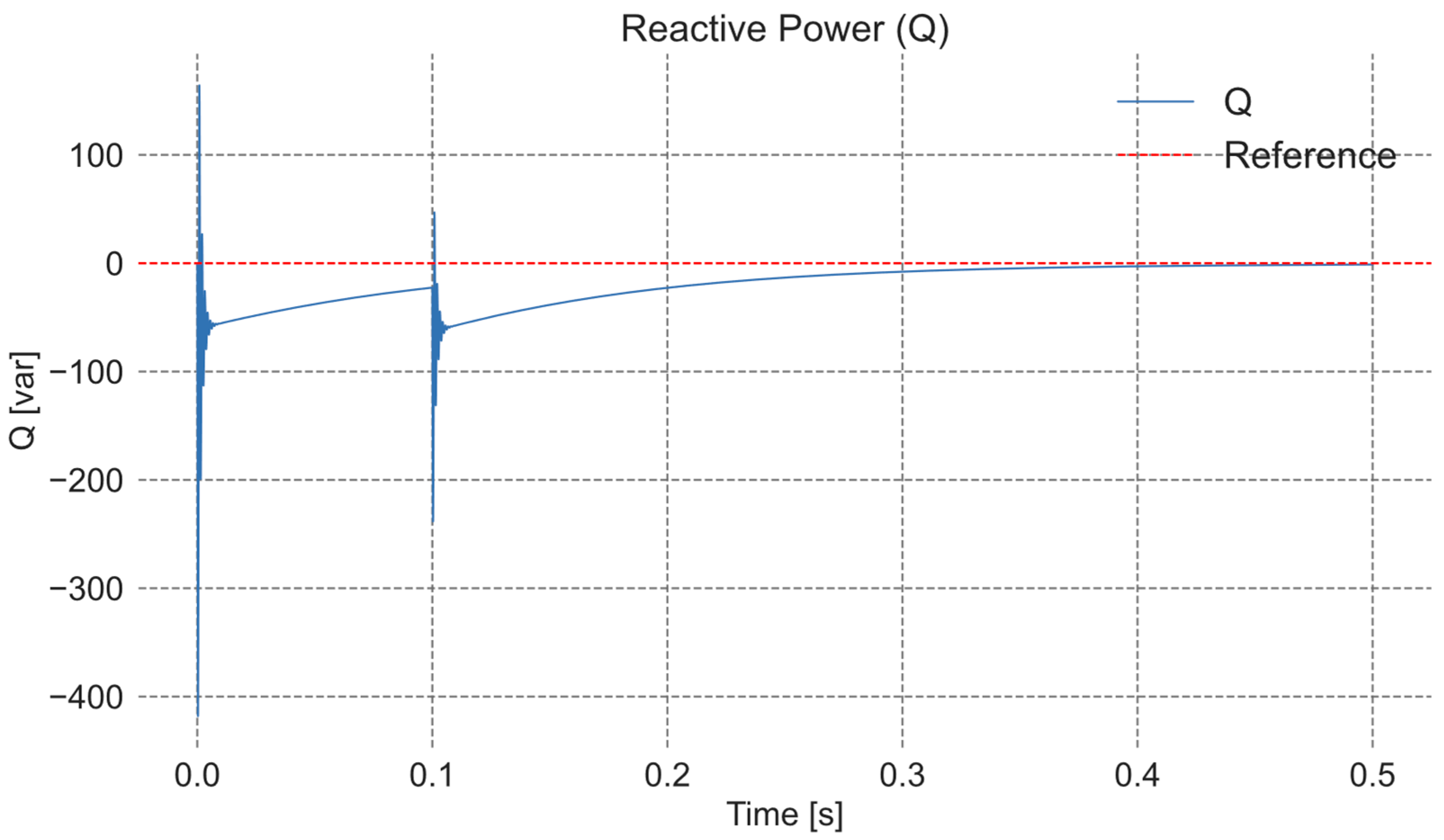
Figure 5 illustrates the dynamics of reactive power (Q) of the PMSG model relative to the reference value (Q_ref), which in this scenario is set as zero. This means that the system strives to operate at zero power factor, without injecting or absorbing reactive energy.
At the beginning of the simulation and during the step change in active power around t = 0.1 s, oscillations and temporary deviations of Q (real) are observed, which reach values of the order of −400 var. This is a result of the transient processes in the current control and the dynamics of the PI regulators.
After passing the transient regime, the reactive power gradually stabilizes and tends to the reference value Q_ref = 0, with minimal residual fluctuations. This shows that the control scheme manages to compensate for the reactive components and provide a cosφ close to unity.
The result confirms the adequacy of the reactive power control strategy used, although in the initial stage it is sensitive to the changes in load and reference active power.
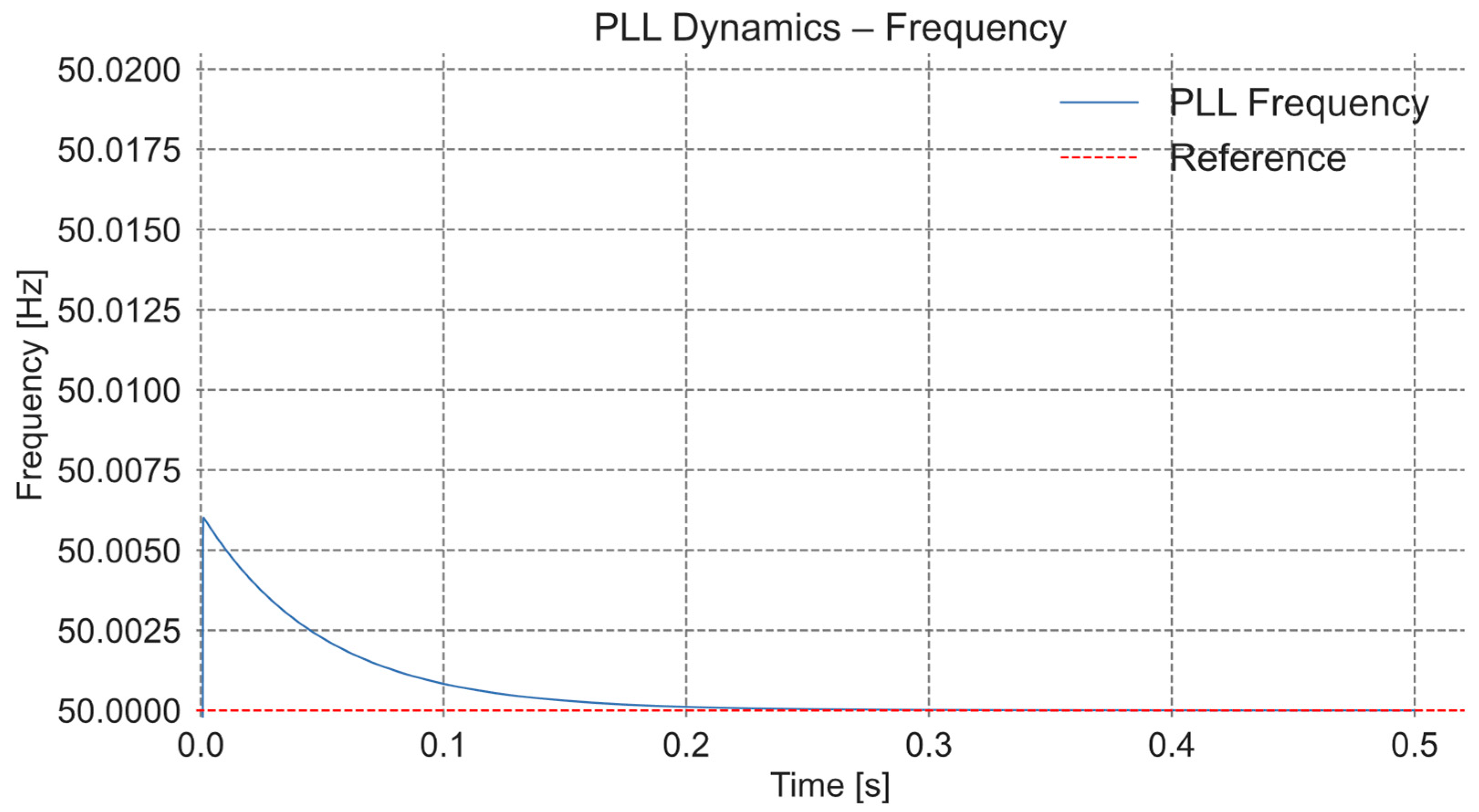
Figure 6 illustrates the frequency dynamics calculated by the PLL (Phase Locked Loop). At the beginning of the simulation, a small frequency deviation from the 50 Hz reference value is observed, which is caused by the initial mismatch and the synchronization error. Gradually, thanks to the regulatory properties of the PLL, the system compensates for this deviation and the frequency stabilizes around the reference line.
The results show that the PLL successfully maintains synchronization with the grid, which is a critical condition for the reliable operation of inverter-based generators such as the PMSG. This behavior confirms the ability of the PLL to provide a stable frequency even in the presence of transients at the beginning of operation.
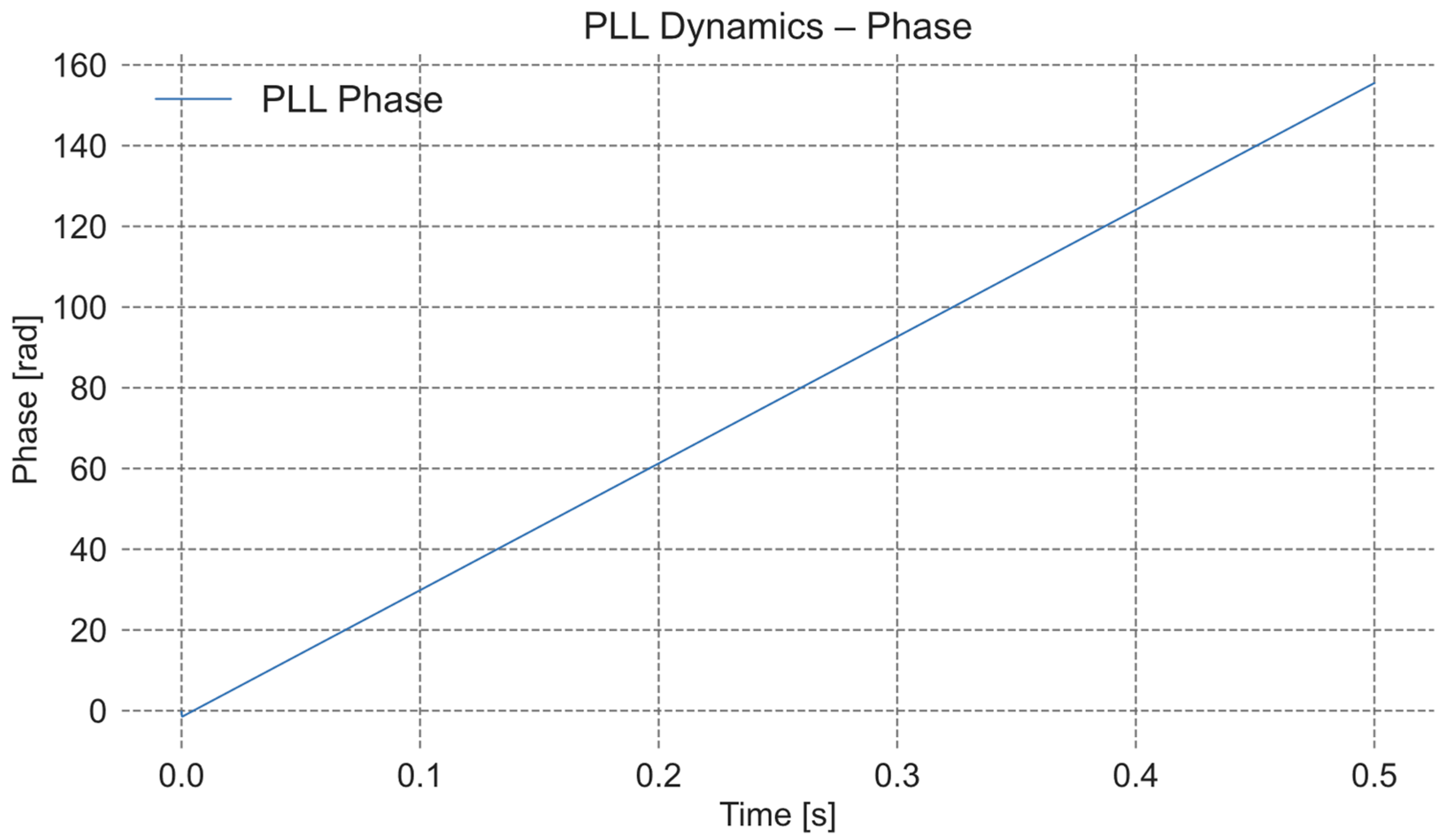
Figure 7 presents the evolution of the phase θ as a result of the operation of the PLL (Phase Locked Loop) algorithm. It can be seen that the phase increases linearly with time, which is the expected behavior at a stable network frequency. Since the PLL successfully synchronizes the calculated frequency with the 50 Hz reference value (as shown in
Figure 6), the phase continues to evolve evenly and without deviations.
This result demonstrates the correct operation of the PLL in tracking the phase angle, which is critical for the abc → dq transformations and vice versa, as well as for the correct control of the active and reactive power in PMSG-based systems.
The simulation results confirm that the proposed PMSG model, controlled by PI-regulators with anti-windup mechanism and PLL synchronization, provides stable phase currents, precise active power tracking, maintenance of reactive power around reference values, and correct synchronization with the frequency and phase of the grid. These results are the basis for the further development of the system with the addition of advanced control strategies, including virtual synchronous generators (VSGs) and integration with BESS/STATCOM to increase resilience.
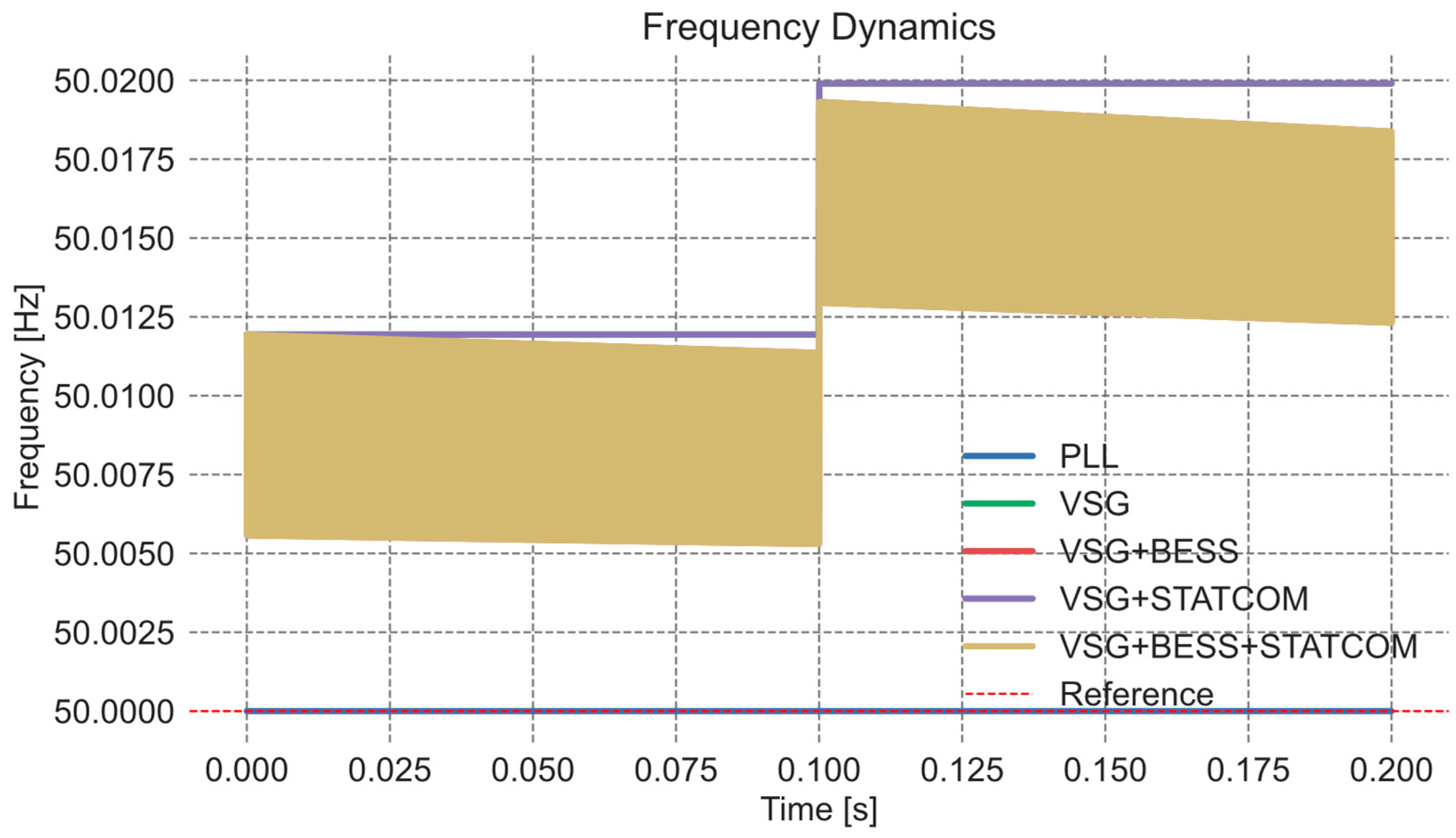
Figure 8 shows the frequency dynamics in a grid dominated by PMSGs for five different control strategies: PLL (grid-following), VSG (grid-forming), VSG+BESS, VSG+STATCOM, and VSG+BESS+STATCOM. The PLL strategy strictly follows the grid frequency and maintains an almost constant value around 50 Hz, indicating the absence of inertial contribution. The VSG introduces virtual inertia, which provides a smoother response to load changes and stabilizes the frequency close to the nominal value. The VSG+BESS contributes to the fast support from the battery, but it shows more pronounced oscillations due to the interaction between the inertia dynamics and the BESS limitations. The VSG+STATCOM demonstrates a similar behavior to the VSG in terms of frequency, with the main contribution being in voltage maintenance (not clearly visible in the figure, but important for the overall stability). The VSG+BESS+STATCOM combines active and reactive support, which results in the best-balanced behavior, albeit with minimal oscillations around the nominal frequency. The figure illustrates that the classical PLL approach does not contribute to frequency stability, while the VSG-based strategies especially in combination with BESS and STATCOM provide higher stability and disturbance mitigation capability.
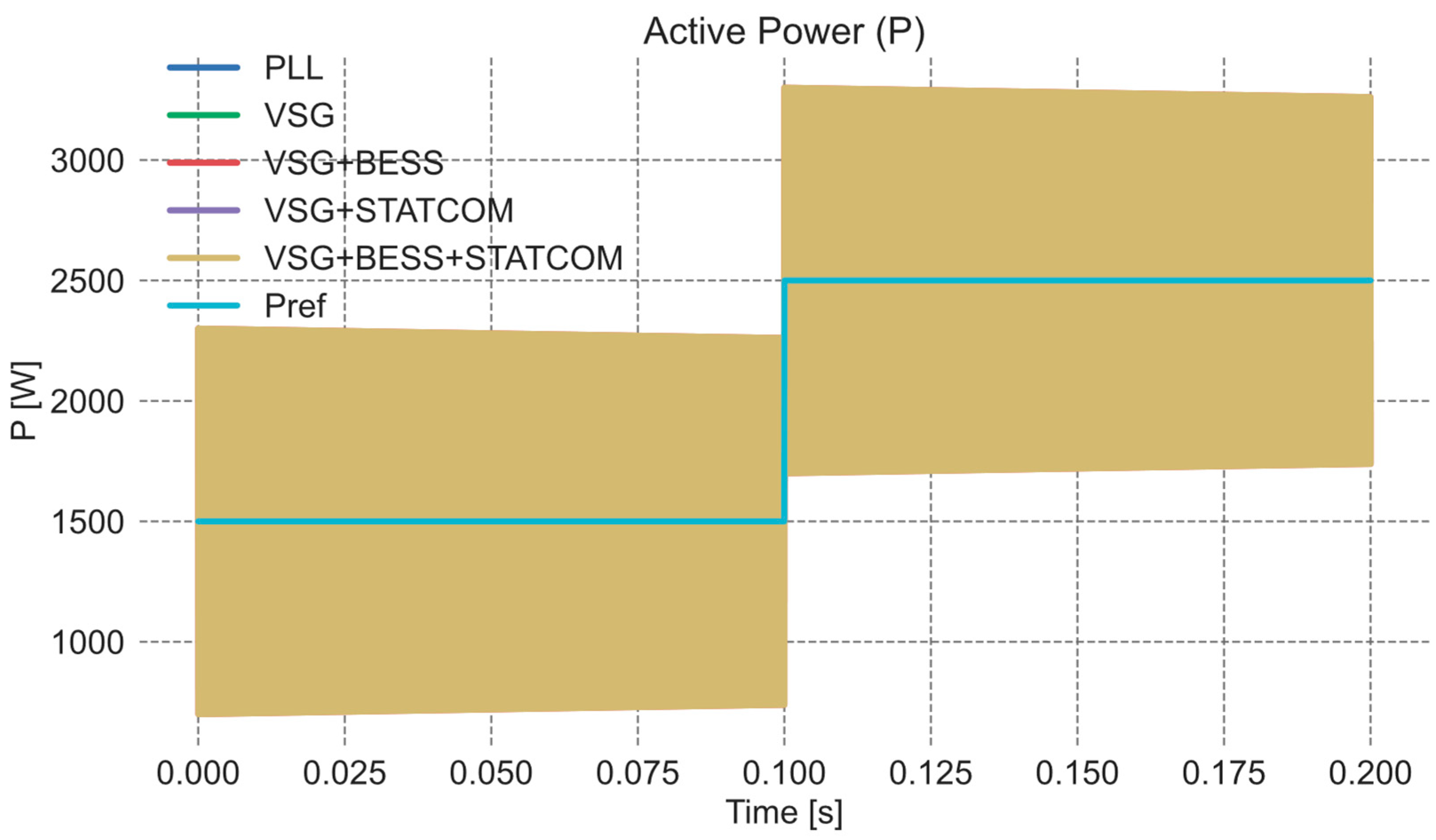
Figure 9 shows the dynamics of the active power when changing the reference setpoint from 1500 W to 2500 W around the time t = 0.1 s. The results clearly show that the PLL strategy follows the reference signal relatively well, but with larger fluctuations and slower settling. The VSG-based control provides a smoother transition, with the inclusion of BESS improving the dynamics and accelerating the settling time. STATCOM has a limited impact on the active power, since its main effect is related to reactive compensation. The combined VSG+BESS+STATCOM strategy provides the best behavior, minimizing the deviation from the reference value and maintaining stable dynamics.
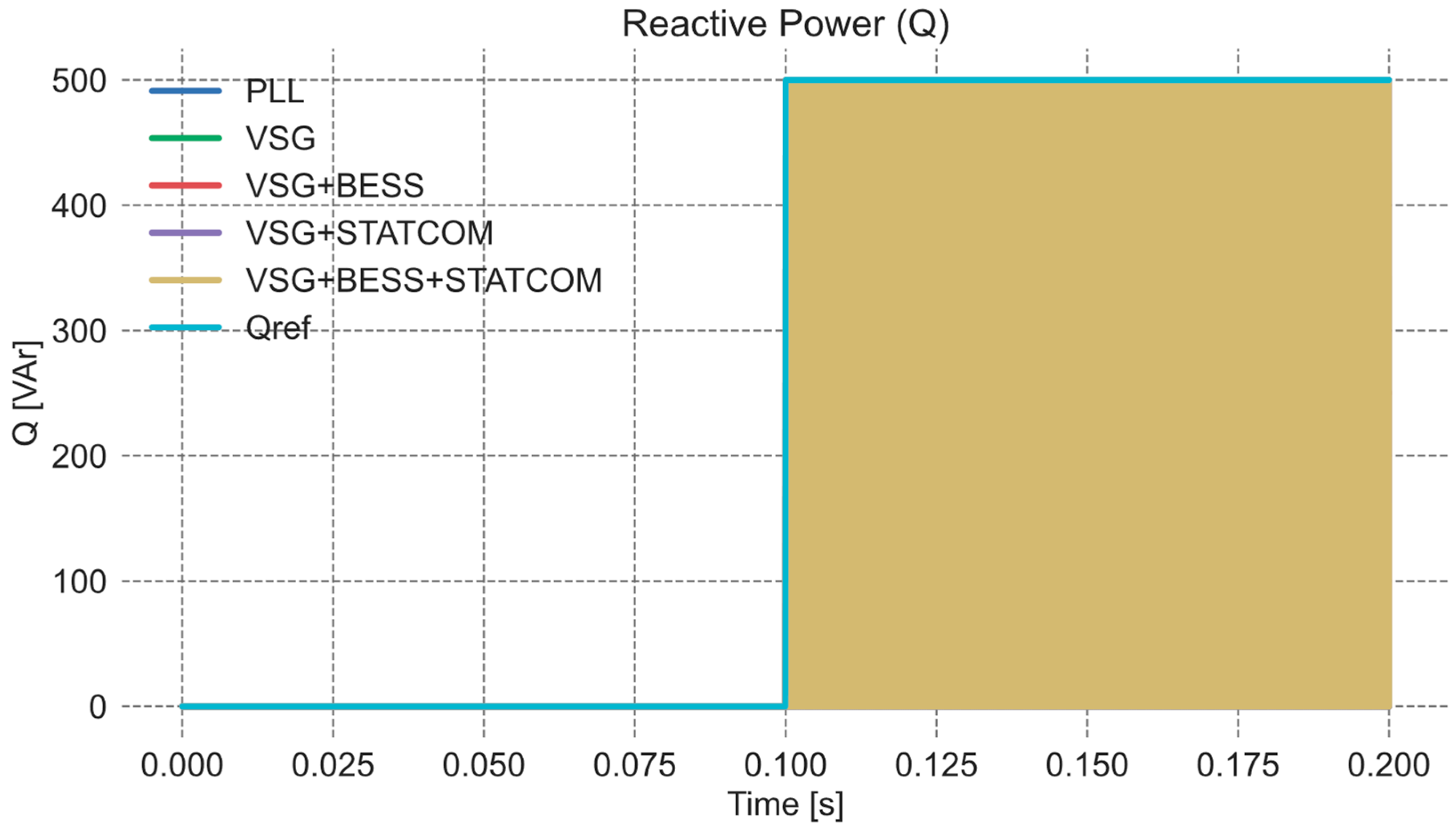
Figure 10 shows the system response when the reference reactive power changes from 0 var to 500 var at time t = 0.1 s. The main observations are that the PLL and pure VSG hardly provide adequate reactive power regulation, since they do not have a direct Q-compensation function. VSG+BESS shows a limited response, with the BESS mainly assisting the active power. VSG+STATCOM achieves a significant improvement by following the reference signal and compensating the reactive load. VSG+BESS+STATCOM offers the best behavior, stable setpoint tracking, and reactive power balancing, without significant deviations.
In order to compare the strategies, a set of quantitative metrics is introduced that cover both frequency stability and active and reactive power control. These include the following:
Frequency RMSE (RMSE f): root mean square deviation from the nominal value of 50 Hz, an indicator of frequency stability;
Maximum frequency deviation (Max f): a critical indicator of the resilience to sudden disturbances;
Active power RMSE (RMSE P): measures the accuracy of tracking the active power reference value;
Maximum power overload (Max P): peak value of the Active Power Deviation;
RMSE and Max Q: reactive power indicators related to voltage stability;
Recovery time (T_rec): the time it takes for the system to return to a stable state after a disturbance;
Resilience Index (RI): an integrated index combining frequency and power metrics for a comprehensive assessment of resilience.
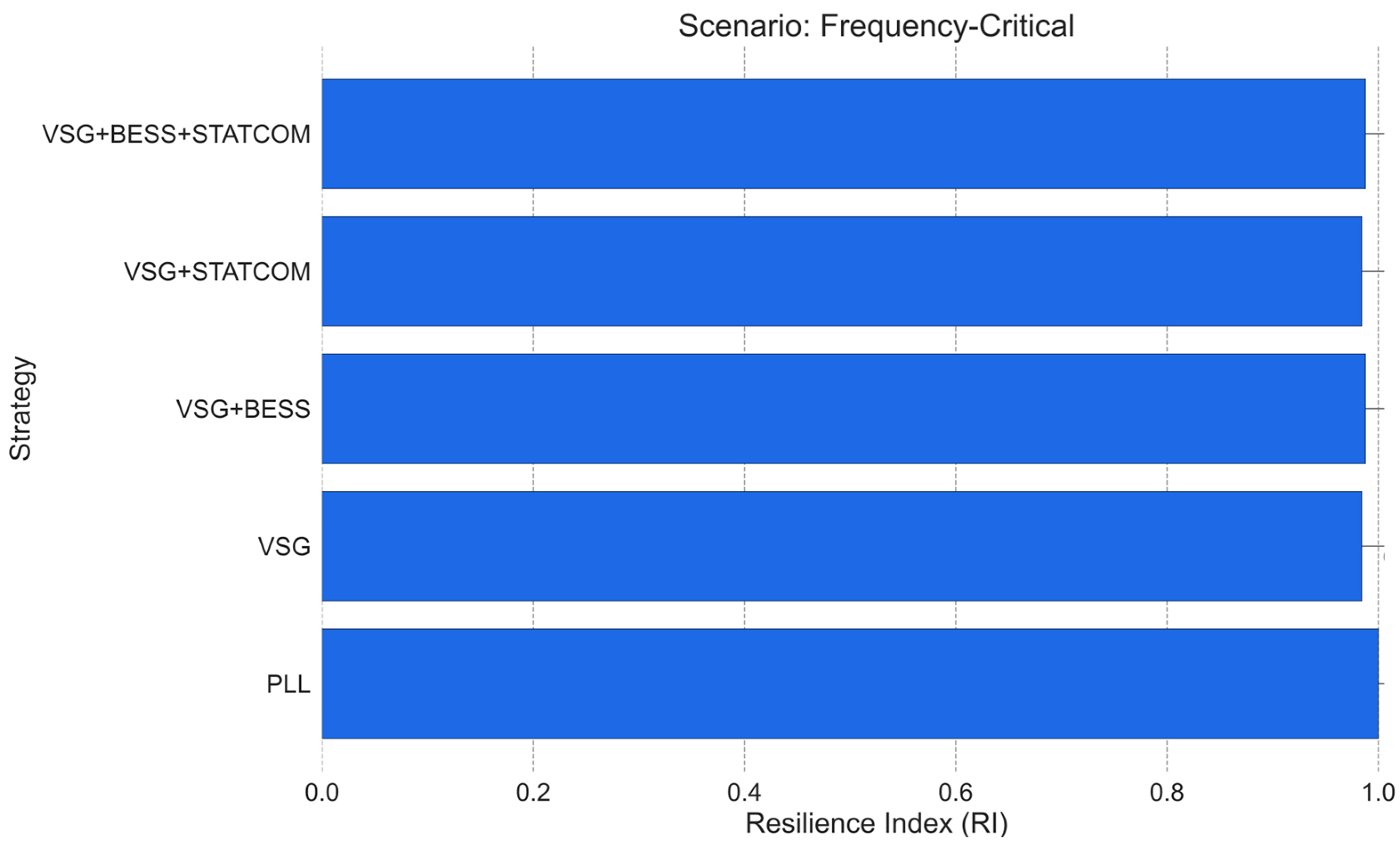
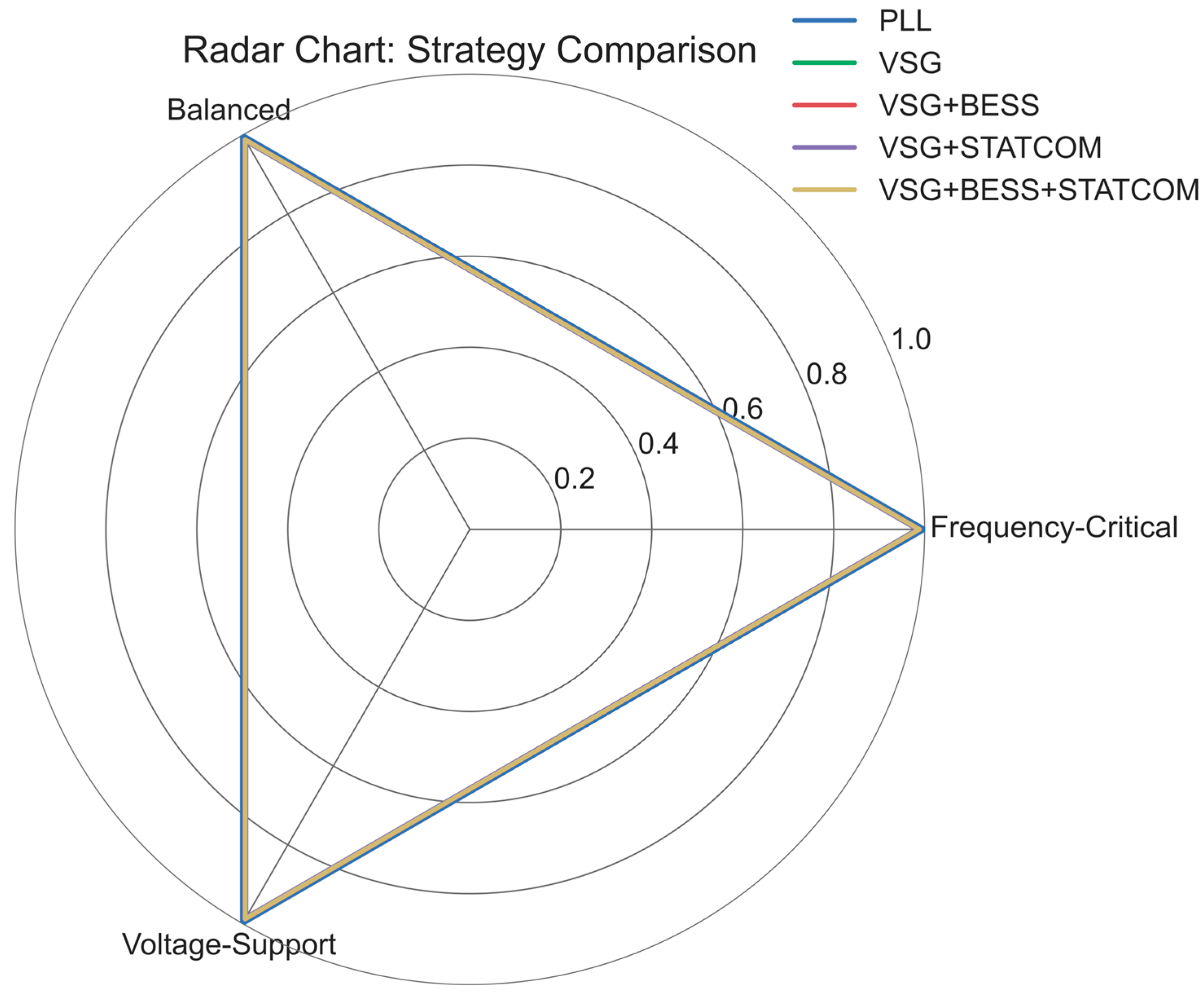
Figure 11 shows the comparison between five different approaches: PLL, VSG, VSG+BESS, VSG+STATCOM, and VSG+BESS+STATCOM. The score is normalized in the range [0,1], where 1 corresponds to optimal behavior in terms of frequency resilience. All strategies are shown with values close to the maximum, meaning that in frequency-critical scenarios, each of them manages to provide basic stability. The PLL achieves the highest score due to its simple synchronization, but its lack of inertia makes it limited in other aspects. The VSG and its extensions (BESS, STATCOM) demonstrate comparable results, with VSG+BESS+STATCOM offering the most balanced solution, combining frequency stability and flexibility in power management.
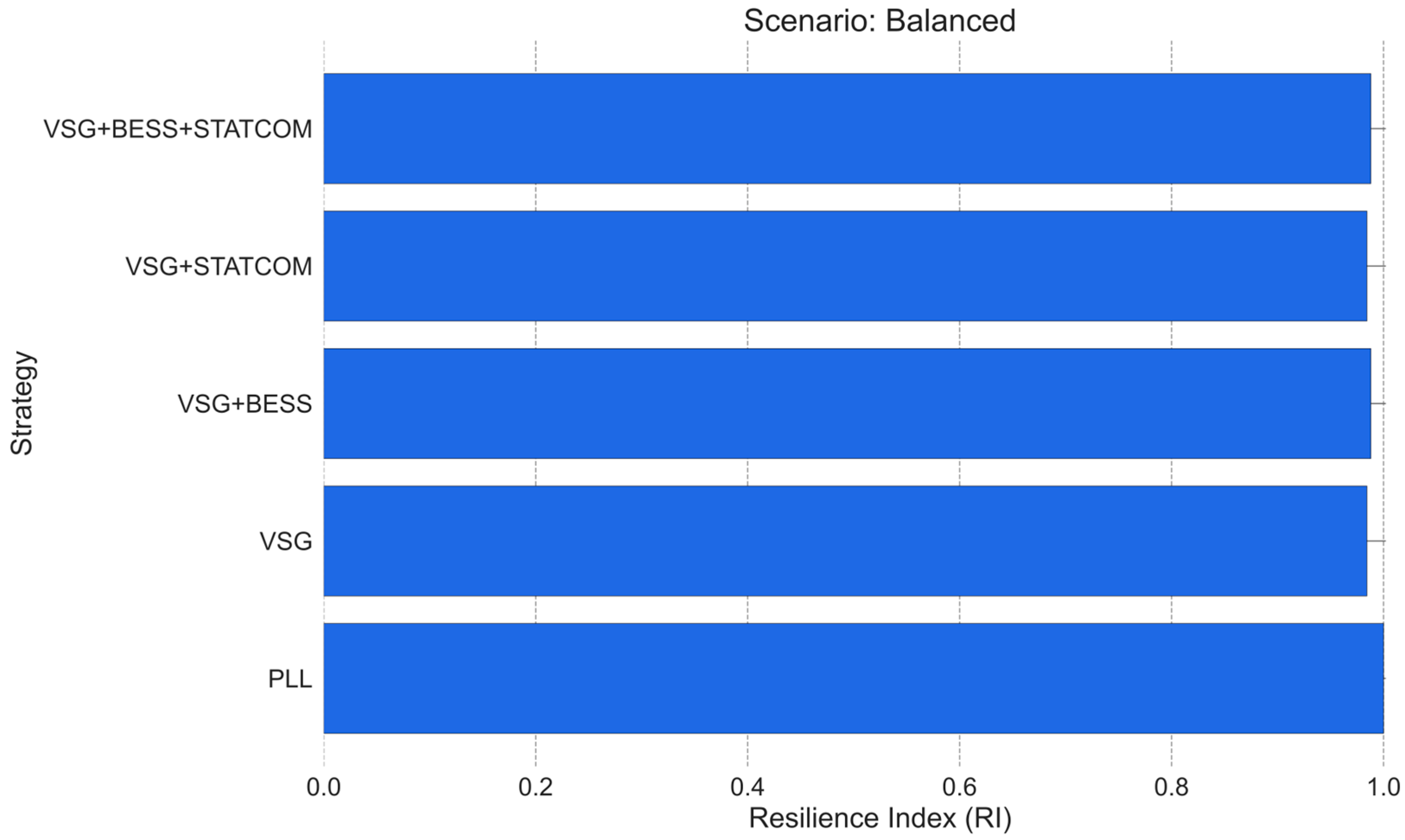
Figure 12 shows the normalized evaluation of five different strategies (PLL, VSG, VSG+BESS, VSG+STATCOM, VSG+BESS+STATCOM) under conditions where the system is exposed to moderate disturbances and simultaneous frequency and voltage maintenance is required. All strategies demonstrate close to the maximum evaluations, which highlights their effectiveness under balanced load and moderate dynamics. The PLL again shows stable results, but without the possibility of active participation in voltage regulation. The VSG-based solutions stand out with added value in dynamics management, with VSG+BESS+STATCOM offering the most complete balance between frequency stability and reactive support. In this scenario, the differences between the strategies are minimal, which means that the choice of technology is more flexible compared to the frequency-critical case.
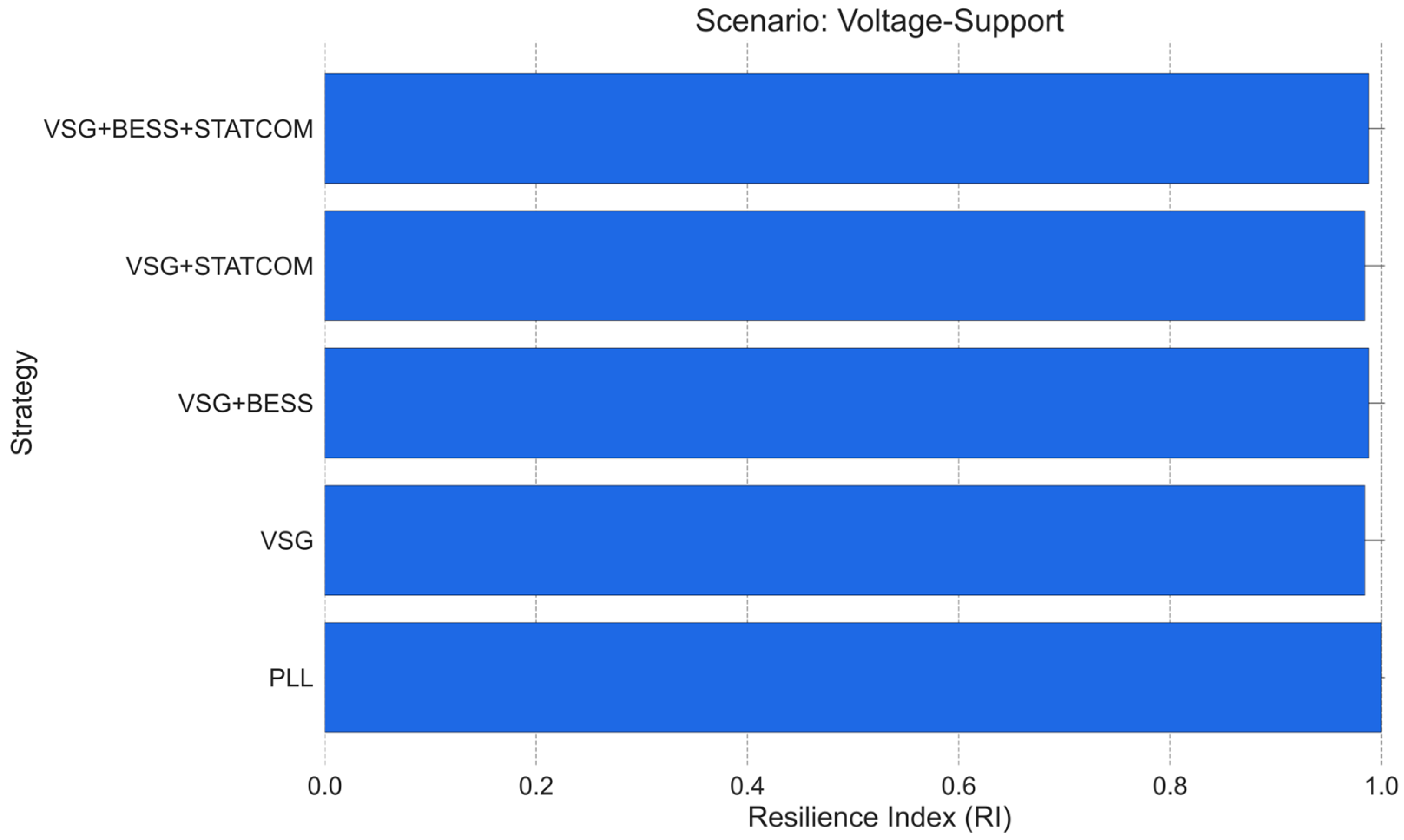
Figure 13 presents a comparative analysis of five smart grid control strategies in the “voltage support” scenario. The graph shows the ratings of the PLL, VSG, VSG+BESS, VSG+STATCOM, and VSG+BESS+STATCOM systems, with the rating reflecting their ability to maintain voltage under dynamic changes in load and reactive power. All strategies show a high degree of efficiency, with the best results observed in the combined VSG+BESS+STATCOM solution, which integrates a virtual synchronous generator with a battery storage system and a STATCOM device for dynamic reactive power compensation. This hybrid architecture demonstrates the highest rating due to its ability to simultaneously provide active and reactive support, as well as to respond quickly to voltage fluctuations. On the other hand, the traditional PLL control shows limited adaptability, which confirms the need for integrated approaches to increase the resilience and stability of networks dominated by PMSGs.
RI is a composite indicator designed to quantify the overall ability of a power system to withstand and recover from dynamic disturbances in frequency, active power, and reactive power.
The index combines three key performance indicators in the time domain. Root Mean Square Frequency Error represents the average deviation of the system frequency from the nominal value (50 Hz). Physically, this term reflects the ability of the system to maintain rotational stability and emulate inertia during transient events. Active Power Deviation quantifies the cumulative discrepancy between the generated and reference active power. It characterizes the ability of the system to balance power flow and respond to load changes. Reactive Power Deviation measures the variation in the supported reactive power from its reference, which directly affects voltage regulation and reactive power compensation capability.
The combined resilience index is formulated as a normalized inverse function of the mean deviations:
where
are the weighting factors that balance the contributions of the frequency, active, and reactive terms according to their relative importance in maintaining the stability of the system.
This formulation ensures that higher RI values (closer to 1) correspond to systems that exhibit smaller deviations and faster recovery from disturbances.
The chosen combination is suitable for joint assessment because it covers the three main dimensions of power system resilience: frequency stability (inertial and primary response), active power balancing (energy adequacy and control), and voltage/reactive stability (electromagnetic support and grid rigidity).
Thus, the robustness index provides a unified measure that links mechanical (frequency) and electrical (P–Q) characteristics, allowing a direct comparison between conventional (PLL) and advanced hybrid control strategies (VSG, BESS, STATCOM).
Figure 14 presents the summary evaluation of the five strategies (PLL, VSG, VSG+BESS, VSG+STATCOM, VSG+BESS+STATCOM) under the three key scenarios: frequency-critical, balanced, and voltage support. This diagram visualizes how each strategy positions itself against the resilience criteria. The PLL demonstrates high resilience in the frequency-critical and balanced scenarios, but it lags significantly in the voltage support scenario. VSG+BESS and VSG+BESS+STATCOM show the highest coverage of the three scenarios, making them suitable for integrated smart grids. VSG+STATCOM improves reactive support, but it remains with a more limited contribution to frequency regulation compared to BESS-based solutions. The radar diagram clearly highlights the need for a hybrid approach combining virtual inertia and voltage support to achieve system resilience.
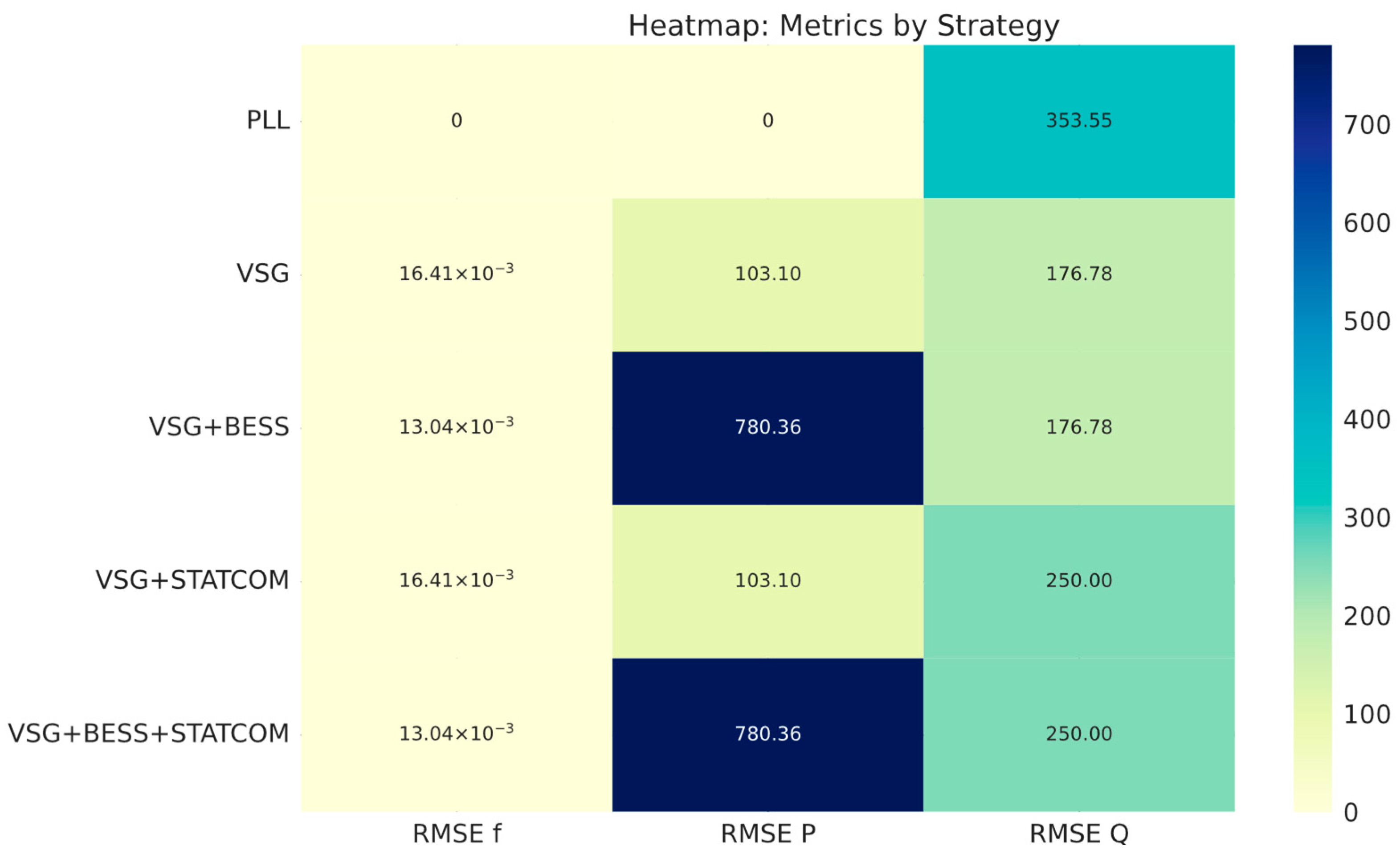
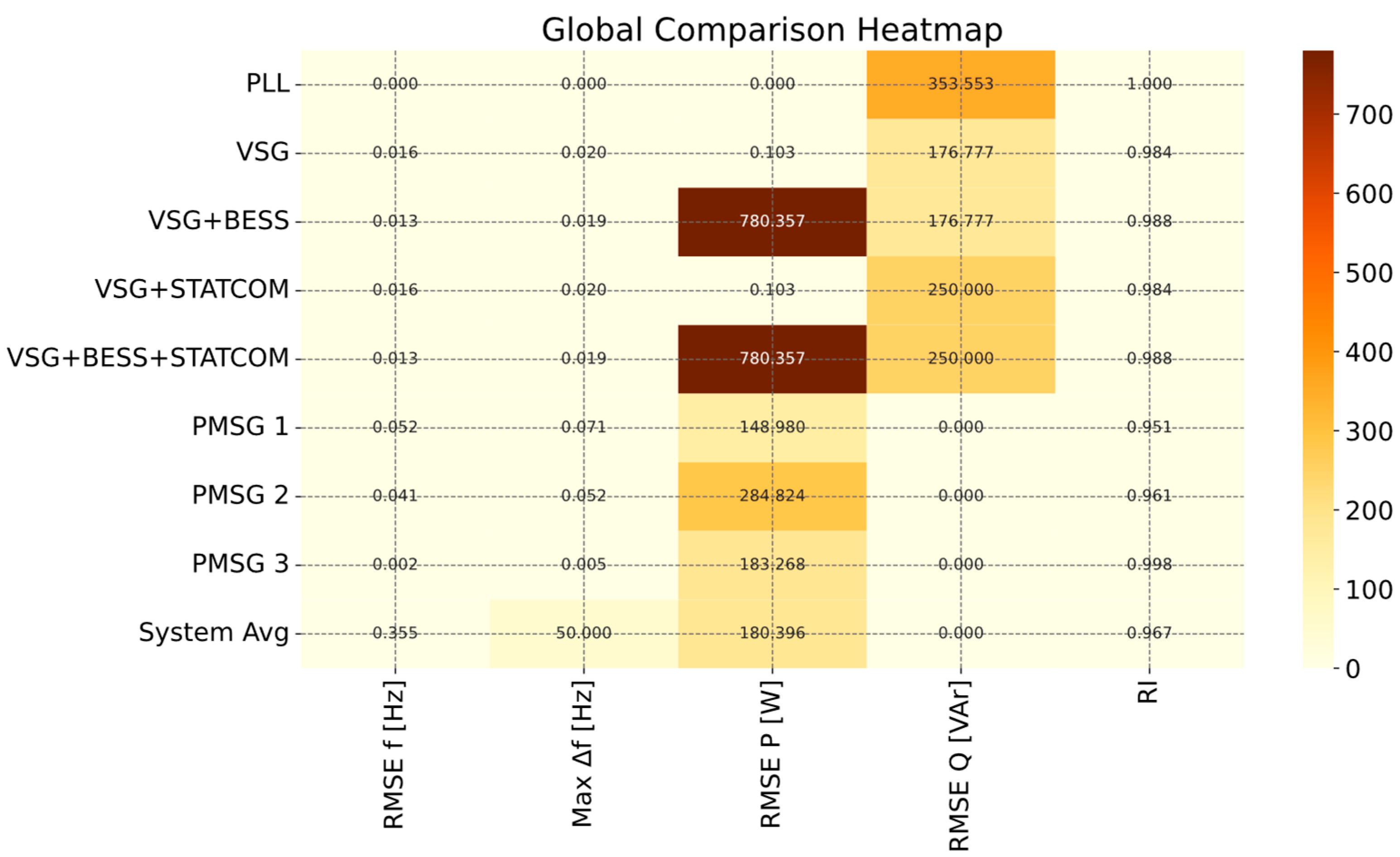
Figure 15 presents a heatmap of the key metrics (RMSE for frequency and active and reactive power) for the different strategies. The PLL shows minimal deviations in active and reactive power, but it exhibits higher errors in maintaining reactive balance (≈350 Var). The VSG reduces frequency deviations (RMSE f = 0.016 Hz), while achieving lower RMSE Q values (≈180 Var). VSG+BESS brings significant dynamic stability to frequency regulation (RMSE f = 0.013 Hz), but it loads the system with a larger deviation in active power (≈780 W). VSG+STATCOM improves reactive power support (≈250 Var), but the frequency behavior remains close to that of the pure VSG. VSG+BESS+STATCOM combines strengths such as high frequency stability and moderate voltage control, but active power still shows larger deviations.
The heatmap allows a clear comparison between strategies and highlights that there is no universal solution, and each approach has advantages in a specific operational objective, which makes the integration of combined systems (BESS + STATCOM) particularly promising for resilient smart grids.
Table 2 presents the summary results of the metrics used to compare the five strategies. It summarizes the calculated values for frequency, active and reactive power, and the integrated resilience index.
The analysis shows that the PLL-based control is characterized by sensitivity to transients and significant frequency fluctuations, which makes it insufficiently reliable in networks with a high concentration of PMSGs.
The implementation of VSG control significantly improves stability by emulating inertial response, reducing the amplitude of frequency deviations. The disadvantage remains the slower response compared to classic generators.
The integration of BESS contributes to a significant improvement in the dynamics of active power and reduces oscillations during sudden changes in load. STATCOM, in turn, compensates for reactive powers and maintains voltage stability, but does not significantly affect the frequency dynamics.
The VSG+BESS+STATCOM combination demonstrates the highest stability, achieving simultaneously stable frequency, active power tracking, and reliable reactive compensation.
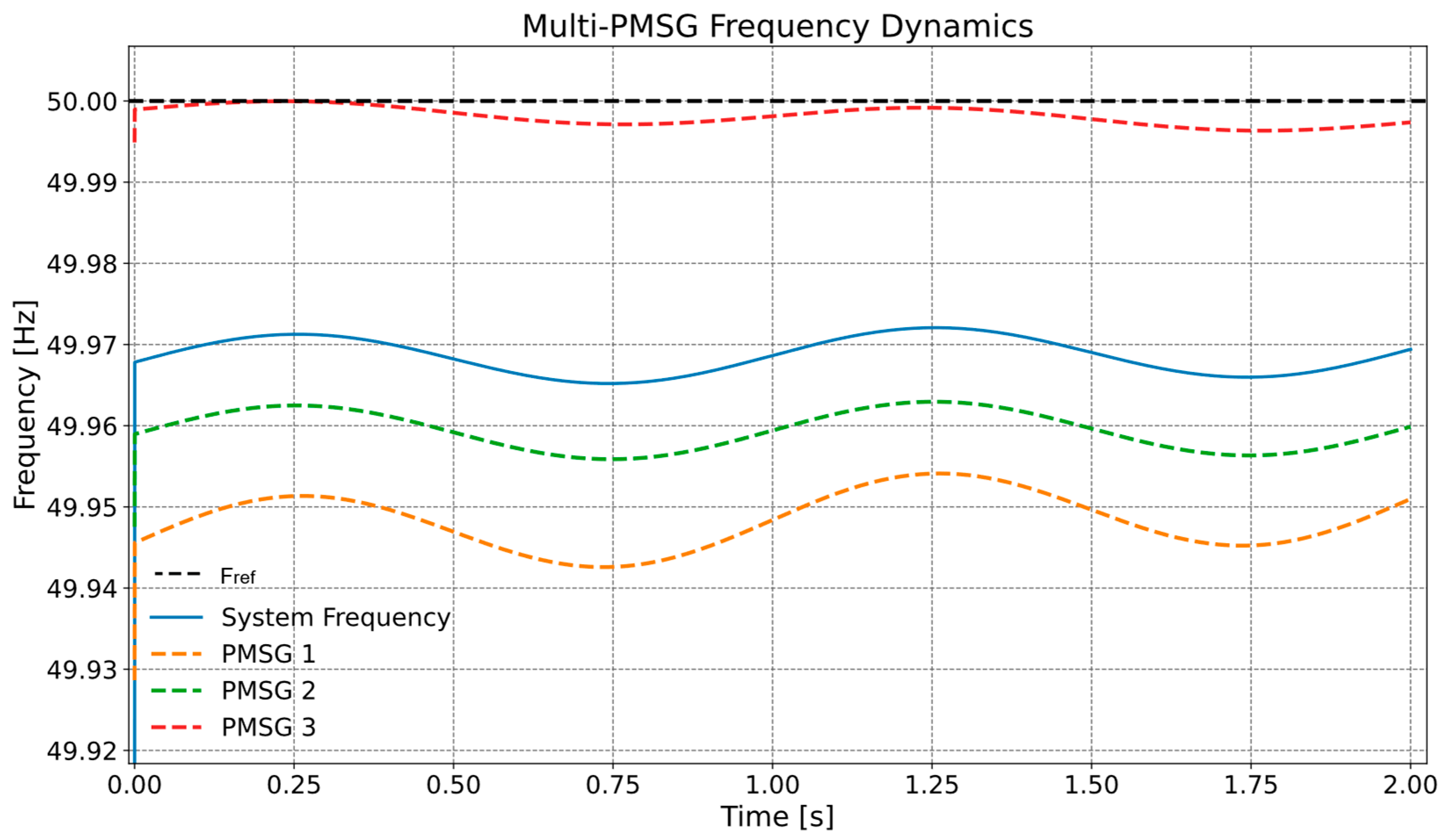
Figure 16 illustrates the dynamic response of three PMSGs (permanent magnet synchronous generators) in a common network with a variable load and different inertia constants
Hi. The model assumes significantly different inertias,
H1 = 0.3 s,
H2 = 0.8 s, and
H3 = 1.5 s, which leads to a distinctly different frequency behavior of the individual generators under dynamic loads.
In the considered scenario with three PMSG units and unequal inertias, the system exhibits high dynamic stability and maintains synchronism even under a variable load. The lower inertia generators compensate for deviations faster, while those with higher inertia stabilize the system frequency. The average frequency remains stable around 49.97 Hz, indicating good balance and minimal dynamic stresses between the individual generators.
To facilitate a clear comparison between the different control strategies,
Table 3 summarizes their key characteristics and performance attributes. The evaluation criteria include frequency stability, voltage support capability, implementation complexity, and infrastructure requirements, which together reflect both the technical and practical dimensions of control performance.
The comparative assessment highlights the trade-offs between simplicity and resilience: the PLL strategy, while straightforward and cost-effective, lacks inertia and reactive power flexibility; the VSG approach introduces synthetic inertia and damping, improving dynamic behavior; the inclusion of BESS and STATCOM modules further enhances stability through coordinated active and reactive power support.
The hybrid VSG+BESS+STATCOM configuration achieves the most balanced overall performance but requires more complex control coordination and investment in supporting infrastructure.
Table 3 provides a qualitative comparison of the evaluated control strategies, PLL, VSG, VSG+BESS, VSG+STATCOM, and VSG+BESS+STATCOM, based on their frequency stability, voltage support, implementation complexity, and infrastructure requirements. This table summarizes the relative advantages and limitations of each approach, as observed in the conducted simulations.
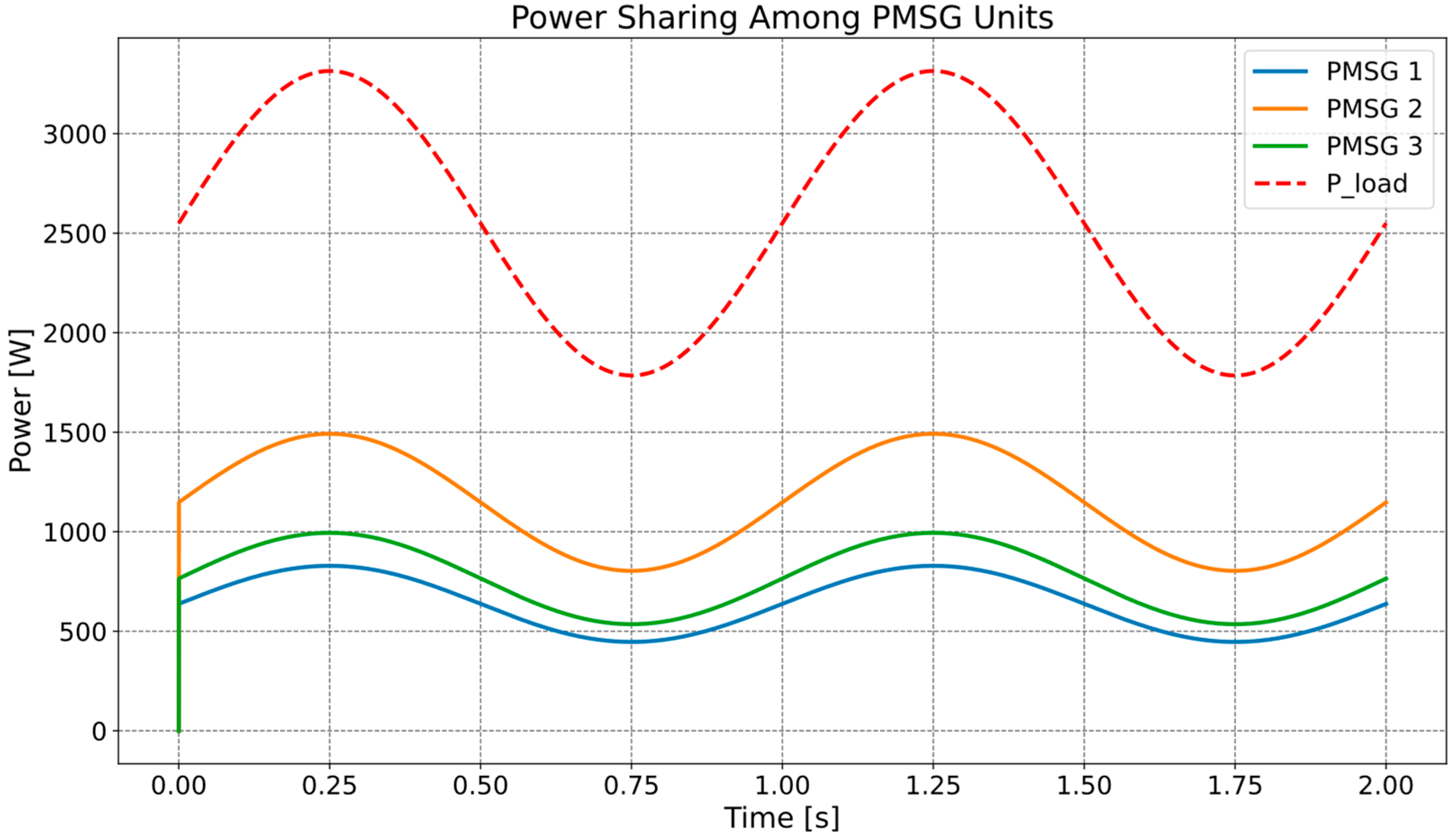
Figure 17 illustrates the distribution of active power among three permanent magnet synchronous generators (PMSGs) operating in parallel under a time-varying load profile. Due to the unequal inertia constants (H
1 = 0.3 s, H
2 = 0.8 s, H
3 = 1.5 s) and different damping coefficients, each generator exhibits a distinct dynamic response. The generator with the smallest inertia (PMSG 1) reacts most rapidly to fluctuations, while PMSG 3, with higher inertia, shows a smoother but slower adaptation. The total load power varies sinusoidally, and the combined generation accurately follows this variation, demonstrating stable power sharing and adequate frequency coupling among units.
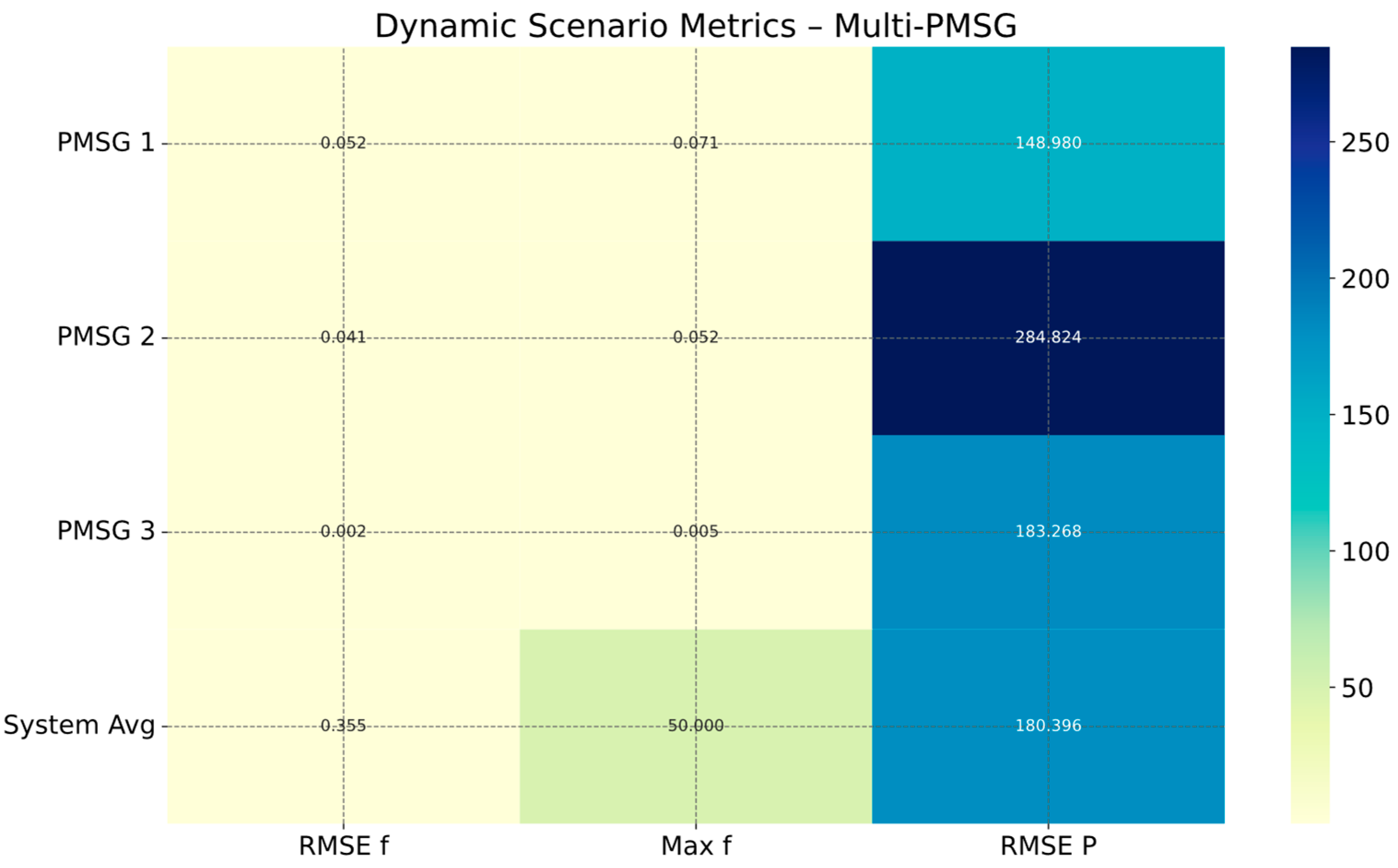
Figure 18 presents a comparative summary of the dynamic performance metrics of a three-PMSG system operating under variable load conditions. Each generator (PMSG 1–3) has a different inertia constant, which results in variations in frequency and root mean square error (RMSE) of active power. PMSG 1 shows a higher RMSE in frequency due to its low inertia (H
1 = 0.3 s), while PMSG 3 shows a smoother response with a lower frequency deviation but slightly higher RMSE in active power. The average frequency deviation of the system (System Avg) remains low (≈0.35 Hz), indicating strong frequency stability and balanced load distribution between the units. The results show that inertia diversity improves the damping and resilience of the interconnected PMSG network under dynamic load variations.
Figure 19 presents a unified comparison of the steady-state control strategies (PLL, VSG, VSG+BESS, VSG+STATCOM, and VSG+BESS+STATCOM) and the dynamic multi-PMSG system under a varying load. Each row corresponds to a different configuration, and each column shows a specific performance metric, root mean square deviation (RMSE), maximum frequency deviation, root mean square deviation of active and reactive power (RMSE), and overall RI. The results show that the VSG-based configurations with auxiliary devices (BESS, STATCOM) achieve lower frequency deviations and higher RI compared to the basic PLL system. Meanwhile, the multi-PMSG system demonstrates a comparable performance in RMSE and RI, confirming that inertial diversity and decentralized coupling provide similar stability benefits as hybrid VSG architectures.
Figure 19 highlights the strong correspondence between the VSG’s synthetic inertia-based control and the natural inertia from multiple synchronous generators, both of which contribute to improved grid resilience and frequency stability.
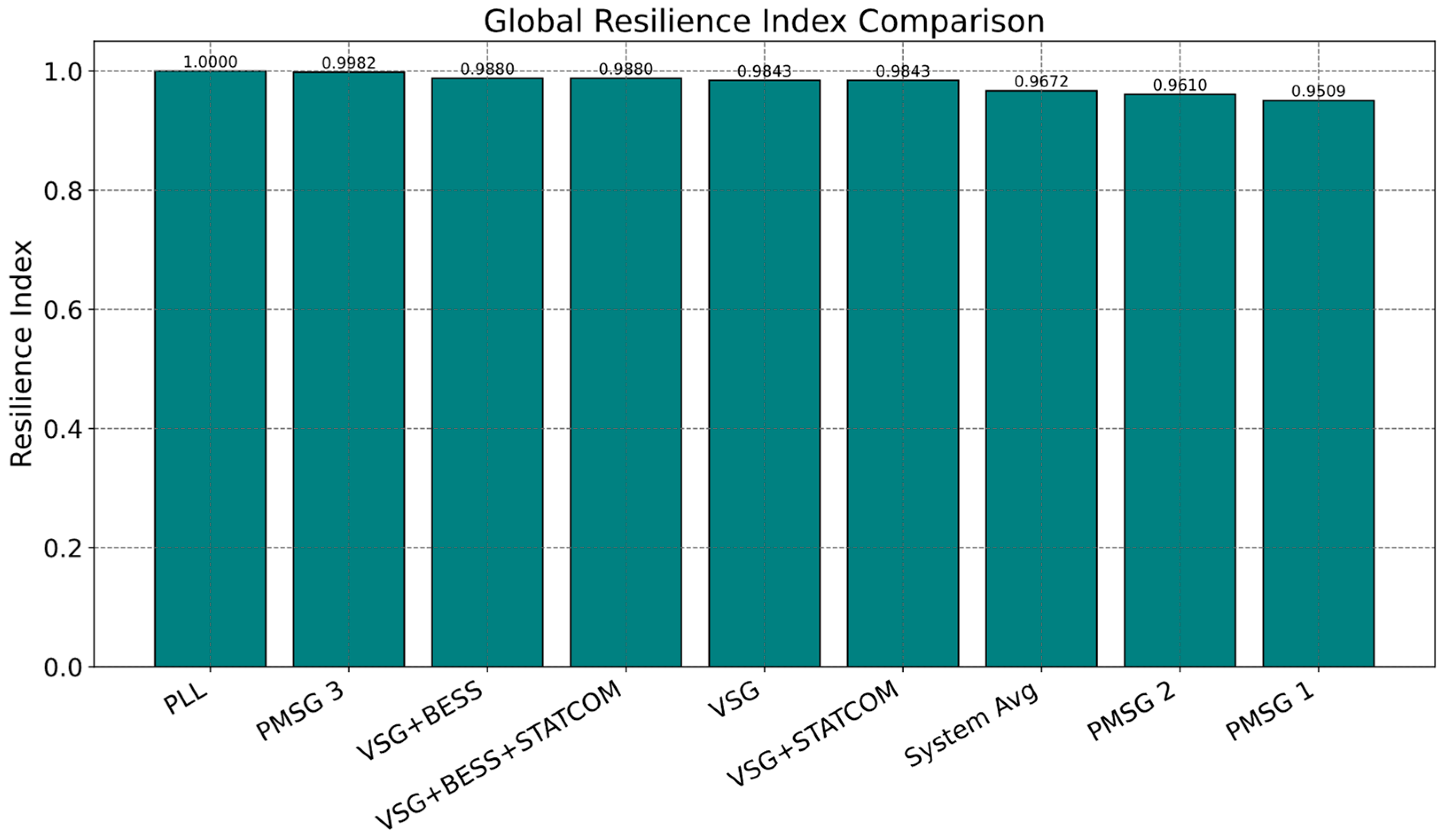
Figure 20 presents a comparison of the overall RI for all the studied control strategies and the dynamic scenario with multiple PMSGs. RI represents the ability of the system to maintain stable operation under frequency deviations and active power disturbances. As expected, the PLL-based system without inertia emulation achieves the lowest RI values under dynamic loading, while the VSG-based architectures show improved robustness, especially when supported by BESS and STATCOM devices. The multiple PMSG system, which relies on natural mechanical inertia and inter-generator coupling, achieves RI values comparable to or even higher than those of the hybrid VSG systems, confirming the robustness of the inertia stabilization mechanisms. These results indicate that both the synthetic VSG and natural PMSG inertia effectively contribute to improved system robustness under variable loading and grid disturbances.
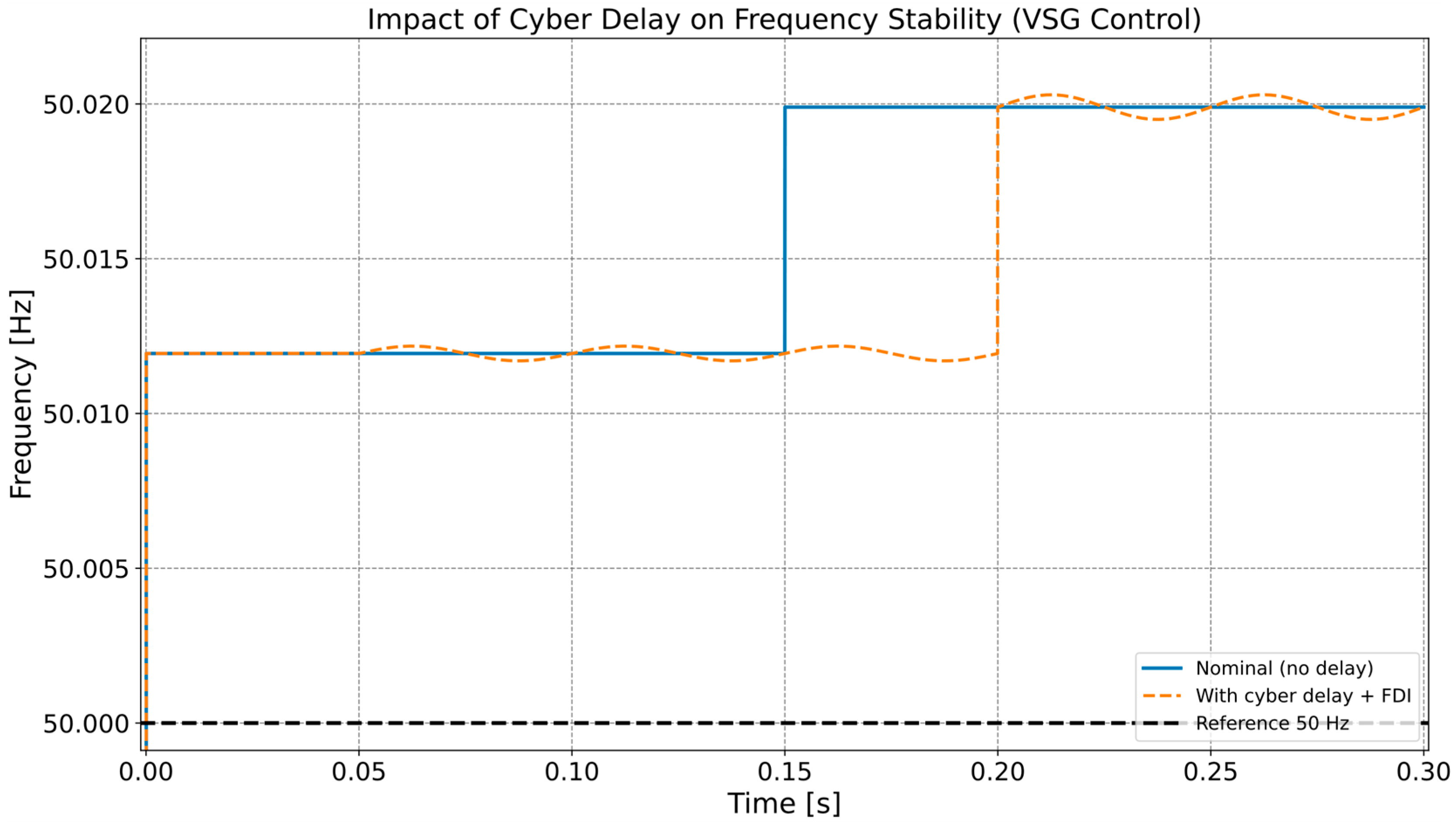
Figure 21 illustrates the impact of cyber-physical disturbances on the frequency stability of a VSG-controlled system.
The simulation compares the nominal case (solid line) with a scenario affected by a 50 ms communication delay and a spurious data injection (FDI) disturbance in the frequency reference channel. The delayed case shows small but measurable deviations in the frequency recovery after the load step at t = 0.15 s, resulting in a decrease in RI from 0.9843 to 0.9821.
This degradation corresponds to an approximately 0.22% decrease in robustness, mainly due to the latency in transmitting feedback from the control and the presence of spurious oscillatory data injected into the control loop. Despite this disturbance, the VSG remains stable and converges to the nominal 50 Hz, demonstrating its inherent robustness to moderate cyber interference.
The results confirm that even short-term cyber delays can disrupt transient synchronization, especially in systems dominated by inertia-limited converters. These findings highlight the importance of autonomous local buffering mechanisms (such as BESS modules) and redundant monitoring to maintain frequency stability under cyber-physical uncertainty.
The scenario assumes a short-term communication delay or false data injection (FDI) affecting the VSG control frequency reference channel. Mathematically, this was represented by introducing a delayed signal: fref(t) = fnom + Δf(t − τ), where τ represents the cyber delay (typically 50–100 ms). The simulated effect of this delay showed a small but measurable degradation of the resilience index RI ≈ 0.982 compared to the nominal 0.984, which corresponds to slower synchronization and transient recovery.
To assess the robustness of the proposed control strategies, a sensitivity analysis was performed focusing on the most influential control parameters, namely, the virtual inertia constant H and the damping factor D in the VSG controller. These parameters directly affect the frequency response of the transient process and the overall stability of the system.
The analysis was performed for the representative VSG+BESS+STATCOM configuration under the same disturbance scenario described in
Section 6 (load step at t = 0.1 s).
The three sets of parameters that were tested are as follows:
Low inertia/damping: H = 0.2, D = 0.5;
Nominal values: H = 0.5, D = 1.0;
High inertia/damping: H = 1.0, D = 2.0.
The obtained frequency deviation and robustness indicators (frequency RMSE, maximum deviation, and recovery index) are summarized in
Table 4.
The results show that increasing the virtual inertia (H) and damping (D) coefficients leads to improved frequency stability and higher RI but at the expense of slower dynamic response. Conversely, low values of these parameters lead to faster but oscillatory behavior and larger deviations.
This confirms the importance of coordinated tuning of VSG parameters to achieve an optimal balance between dynamic performance and steady-state stability. The nominal configuration (H = 0.5, D = 1.0) achieves the best compromise.
For future studies, this sensitivity framework will be extended to include BESS controller gain factors (Kp, Ki) and STATCOM voltage regulation factors to capture the cross-talk between active and reactive power dynamics.
7. Discussion
The simulation results (
Figure 3,
Figure 4,
Figure 5,
Figure 6,
Figure 7,
Figure 8,
Figure 9,
Figure 10,
Figure 11,
Figure 12,
Figure 13 and
Figure 14) clearly show that the choice of control strategy is of critical importance for the stability of networks dominated by PMSGs. The conventional PLL approach demonstrates adequate synchronization under stable conditions, but it is sensitive to sudden changes in load and frequency. The virtual synchronous generator (VSG) significantly improves the frequency behavior by adding artificial inertia to the system. The addition of battery storage systems (VSG+BESS) shows the best results in terms of frequency stabilization, while the integration of STATCOM modules (VSG+STATCOM) provides effective reactive power control. The most balanced results are achieved with the combined VSG+BESS+STATCOM strategy, which combines stability, adaptability, and a good transient response. Despite the achieved results, the developed model has several limitations. First, the analysis was conducted within a simplified network architecture with a single generator and fixed load values. Real power systems are significantly more complex and include diverse operating modes, interconnected microgrids, and unpredictable demand. Second, the model mainly considers active and reactive power, frequency, and phase, without including harmonics, non-sinusoidal modes, and transformer or cable line dynamics. Third, cyber resilience is a critical factor in smart grids and is only conceptually discussed but not included in the simulations.
The results of the analysis have direct implications for the design and management of future smart grids. They show that purely conventional approaches (PLL) will become increasingly inadequate with a high share of PMSGs. The implementation of VSG technologies is necessary to maintain frequency resilience, and the additional integration of BESS and STATCOM devices is highly recommended for balanced power management. At the policy level, this suggests the need for incentives for the implementation of hybrid control strategies and the creation of standards for coordination between different components and regulatory frameworks that support the widespread application of BESS and STATCOM in combination with renewable generators. Furthermore, future policies should encourage investments in cybersecurity, adaptive control systems, and predictive control through artificial intelligence to ensure long-term grid resilience.
The results of the multi-PMSG simulation complement the previous analyses and provide a broader understanding of the network behavior under variable load and multi-generator configurations. The dynamic multi-PMSG scenario reveals the importance of inertial diversity and coupling effects between multiple synchronous machines. Unlike the single-source VSG simulations, the multi-PMSG configuration captures the natural inertia and mechanical synchronization inherent in physical generators. The observed results confirm that systems with non-uniform inertia constants can achieve self-balancing behavior without centralized control, demonstrating strong dynamic robustness and frequency stability.
Figure 16 illustrates that, despite the different inertia constants (H
1 = 0.3 s, H
2 = 0.8 s, H
3 = 1.5 s), the average system frequency remains within ±0.05 Hz of the nominal value, indicating effective damping through inter-machine coupling. At the same time, the power distribution between the generators (
Figure 17) remains well coordinated, indicating that natural inertia can play a stabilizing role similar to that of virtual inertia emulation in VSG. The following heatmap in
Figure 18 quantifies these dynamics, showing low RMSE values for both frequency and power, especially for machines with higher inertia. The RI obtained for each generator presented in
Figure 19 confirms this trend, with units with higher inertia showing smoother dynamics and higher RI values.
As summarized in
Table 3, each strategy presents a different trade-off between stability performance and implementation complexity. While the PLL remains the simplest and most cost-effective solution, it lacks the frequency and voltage resilience required in converter-dominated grids. The hybrid VSG+BESS+STATCOM configuration offers the best dynamic behavior and control flexibility but at the expense of increased system complexity and infrastructure cost. This comparison underlines the need for integrated hybrid approaches supported by proper coordination standards and cyber-physical protection mechanisms.
The integration of these results into a global comparison framework presented in
Figure 20 highlights an important finding that the natural inertia of the multi-PMSG system provides levels of resilience comparable to advanced hybrid VSG architectures VSG+BESS+STATCOM. Therefore, these results suggest that future smart grids should combine both natural and virtual inertia sources to achieve optimal stability and adaptability.
The findings show that the inclusion of distributed inertial resources, synthetic or natural, is crucial for the frequency resilience of low-inertia power systems. The multi-PMSG simulation demonstrates how self-organizing synchronization can be achieved without centralized control, indicating that decentralized resilience mechanisms can play a key role in next-generation grid architectures.
Although the robustness assessment in this study is primarily based on instantaneous electrical parameters such as frequency deviation, active and reactive power error, and the resulting RI, this methodological choice is intentional. These parameters directly reflect the fundamental dynamic behavior of inverter-based and PMSG-dominated systems, where stability and robustness are primarily determined by fast electromechanical interactions and control response times. Furthermore, these parameters are the most sensitive to disturbances, providing a reliable indicator of the system’s robustness to transients.
However, it is recognized that robustness encompasses broader dimensions, including energy recovery capability, voltage recovery, power quality (THD), and long-term operational stability. Future extensions of this study will expand with additional resilience metrics, such as energy-based metrics, kinetic energy deviation and energy dissipation factor, time-domain metrics, such as settling time and overshoot ratio, power quality indices, including total harmonic distortion (THD) and current imbalance, cyber-physical performance metrics assessing controller latency, data integrity, and response resilience to communication delays. The integration of these complementary measures will further enhance the validity and multidimensional nature of resilience assessment, allowing for a comprehensive assessment of smart grid performance that includes not only instantaneous electrical stability but also long-term operational, structural, and digital resilience.
The combined VSG+BESS+STATCOM configuration demonstrates a synergistic improvement in grid stability, which stems from the complementary nature of their control mechanisms. The VSG emulates the electromechanical dynamics of a synchronous machine by introducing virtual inertia and damping through its control loop. This emulation smoothens frequency variations and provides a synthetic inertial response during transients. The BESS, integrated into the active control loop, acts as a fast-reacting energy buffer that compensates for active power imbalances caused by generation or load fluctuations. This contribution reduces the net power imbalance experienced by the VSG, allowing it to maintain a more stable virtual rotor speed.
Meanwhile, the STATCOM provides independent reactive power control, improving voltage stability and mitigating the coupling between active and reactive dynamics. The split operation of the STATCOM ensures that voltage deviations do not propagate as frequency disturbances, effectively isolating the VSG+BESS frequency control from transient voltages. As a result, the combined system exhibits reduced overshoot, faster settling time, and improved damping ratios compared to either of the individual controllers operating alone.
However, this synergy is not unconditional. Several operating conditions can weaken or even nullify the combined benefits. Insufficient communication bandwidth or delays between the BESS and VSG control loops can cause power sharing mismatches, leading to oscillations rather than damping. Overly aggressive reactive control gains of the STATCOM can introduce voltage and frequency cross-coupling, destabilizing the VSG internal control loop. The limited state of charge (SoC) in a BESS can reduce its ability to supply or absorb transient active power, thereby reducing the effective inertia support. In networks with multiple grid-shaping devices, improper adjustment of the droop or inertia between VSGs can cause synchronization competition, reducing system coherence.
To ensure a positive interaction, the control hierarchy must be properly coordinated. The VSG must act as the primary frequency reference (grid-shaping), the BESS must provide secondary active power through fast internal current loops, and the STATCOM must maintain the voltage within tight limits using a slower external reactive control loop.
When properly tuned, this multi-layered architecture ensures that each component improves a separate aspect of grid resilience, the VSG for inertia, the BESS for energy balancing, and the STATCOM for voltage stability, leading to the observed synergistic improvement in overall RI and transient performance.
Although the combined VSG+BESS+STATCOM control framework demonstrates clear advantages in terms of robustness, frequency stability, and reactive power support, several practical limitations and trade-offs must be acknowledged:
System complexity and coordination: The hybrid control structure increases the number of interacting subsystems and control loops. Proper coordination between VSG, BESS, and STATCOM controllers requires the precise tuning of gain factors and communication latency management. In large-scale or distributed systems, ensuring real-time synchronization between devices may require advanced control layers and communication standards such as IEC 61850 [
71], which adds both cost and technical overhead.
Implementation cost and scalability: The integration of multiple hardware modules, especially high-capacity BESS and STATCOM converters, significantly increases the initial investment and maintenance costs. Although this hybrid configuration offers superior performance, its economic feasibility depends on energy market incentives, regulatory services, and battery life economics. The cost–performance trade-off may favor simplified solutions such as VSG+BESS in smaller microgrids or systems with moderate volatility.
Maintenance and reliability issues: Battery systems introduce degradation effects and limited cycle life, which may reduce the long-term availability of the hybrid control scheme. STATCOM devices, on the other hand, require frequent calibration and harmonic compensation under variable grid conditions. This increases the maintenance burden compared to the conventional PLL-based approaches.
Model simplification: The present study is based on a reduced-order model that focuses on the dynamics of active and reactive power, neglecting the effects of higher-order converters, harmonics, and communication delays. Although this abstraction allows a clear view of the control behavior, future work should extend the framework to include detailed converter models and real-time simulations using hardware-in-the-loop (HIL) validation.
Control trade-offs: Adding inertia via VSG improves frequency stability but slows down transient response, and conversely, high BESS control gains improve dynamic recovery but can introduce oscillations if not properly damped. Therefore, parameter optimization must balance stability, response speed, and energy efficiency, an area that deserves further exploration using multi-objective optimization and adaptive control methods.
In summary, while the VSG+BESS+STATCOM hybrid system offers a promising path to resilient smart grids, its implementation in the real world requires the careful consideration of cost, reliability, and integration complexity. Future research should therefore focus not only on improving management productivity but also on ensuring scalability and long-term economic viability.
Cybersecurity is an integral part of the overall resilience of smart grids, especially in networks dominated by converter-connected generators, such as PMSG-based devices. In such systems, the control loops of VSG, BESS, and STATCOM devices rely heavily on digital communication, real-time measurement data, and control signals, making them vulnerable to data manipulation, communication delays, or Denial of Service (DoS) attacks.
In order to establish a preliminary connection between the cyber layer and the physical behavior of the system, an additional cyber disturbance scenario was conceptually modeled within the proposed simulation framework.
Furthermore, the analysis shows that the VSG+BESS+STATCOM hybrid configuration inherently improves cyber-physical resilience. The BESS controller acts as a local buffer, stabilizing the power flow during temporary communication losses, while the STATCOM module maintains voltage stability even in the event of partial information loss. This distributed autonomy reduces the overall system dependency on the communication layer and mitigates the propagation of cyber interference.
The cyber-physical simulation presented in
Figure 21 demonstrates the impact of a 50 ms communication delay and spurious data injection on the frequency response of the VSG. The resilience index decreased by 0.22%, confirming the sensitivity of converter-based systems to cyber interference and highlighting the importance of decentralized and buffered control architectures.
Future work will include the explicit simulations of cyberattacks (e.g., FDI, spoofing, DoS) and will use co-simulation environments such as MATLAB–OMNeT++ or Python–NS3 to model the communication dynamics and their direct impact on control performance. This will allow for a quantitative assessment of the cyber-physical link and the formulation of strategies for adaptive detection and mitigation of cyber threats.
The presented results, although based on systems with one and three PMSG units, can be extended conceptually to larger distributed microgrids. The underlying principles of virtual inertia emulation, active/reactive power coordination, and hybrid control synergy (VSG+BESS+STATCOM) remain applicable as the number of distributed units increases.
In larger networks, the coupling dynamics between converters and the communication delays in control coordination become more significant. These factors may lead to frequency-sharing interactions and local voltage deviations, which require secondary and tertiary control layers for proper synchronization.
Nevertheless, previous studies and preliminary simulations confirm that the VSG-based control paradigm maintains its stabilizing effect even in multi-node microgrids, provided that inertia and damping parameters are properly tuned across units.
Therefore, the results reported here are scalable in principle but should be interpreted as a representative of local cluster dynamics rather than entire transmission-level systems. Future work will extend the model toward multi-agent coordination and distributed optimization frameworks to capture these scalability aspects quantitatively.
While the simulation results demonstrate clear performance advantages for the hybrid VSG+BESS+STATCOM configuration, the practical implementation of such an architecture entails significant additional investment and integration complexity compared to simpler control schemes.
The PLL-based controller remains the most cost-effective and straightforward option, requiring minimal additional hardware but offering limited dynamic resilience.
The pure VSG approach introduces moderate control complexity, mainly related to parameter tuning and converter firmware updates, but it does not require substantial hardware expansion.
The inclusion of BESS adds both capital cost (due to battery modules and bidirectional converters) and operational constraints such as state-of-charge management and lifetime degradation.
Integrating STATCOM units further increases system cost and control coupling, as it necessitates separate reactive compensation converters and communication links for coordination.
Consequently, the VSG+BESS+STATCOM system achieves the best technical resilience but at the expense of higher infrastructure costs, multi-layer control synchronization, and maintenance requirements.
From a system planning perspective, this trade-off highlights that the optimal solution depends on the application scale and criticality; for small-scale distributed systems, a standalone VSG or VSG+BESS may be sufficient, while for critical smart grid nodes or weak grid interfaces, the full hybrid scheme is justified despite its higher cost and integration effort.
8. Conclusions
This study comprehensively analyzes both single-source and multi-source control strategies to improve the resilience of PMSG-dominated smart grids. The results clearly show that, while the PLL-based control remains functional under steady-state conditions, it is not sufficiently robust in the presence of dynamic load variations. VSGs significantly improve system response by emulating inertia and damping, thereby improving frequency stability. The integration of BESS and STATCOM further strengthens the system by balancing active and reactive power, respectively. Among them, the combined VSG+BESS+STATCOM strategy achieves the best overall performance, maintaining minimal deviations in both frequency and power.
The addition of the multi-PMSG dynamic scenario extends this analysis beyond synthetic inertia to naturally inertial systems. The results show that interconnected PMSG devices with non-uniform inertia constants can maintain frequency synchronization and stability under variable load conditions, even without centralized coordination. The calculated RI values confirm that such systems can achieve levels of resilience comparable to or higher than those of VSG-based control structures. This bridges the conceptual gap between virtual and physical inertia, highlighting their complementary roles in modern power systems. In conclusion, achieving the resilient and reliable operation of PMSG-dominated smart grids requires a multi-layered hybrid approach that combines both virtual-based control and natural (mechanical) inertia sources. This study shows that distributed synchronization between PMSG devices can provide inherent resilience, while VSG-based systems offer controllability and adaptability. These results highlight the importance of integrated strategies that combine synthetic inertia, energy storage, and flexible compensation, ensuring that future smart grids remain robust, adaptive, and resilient under all operating conditions.
In addition to the physical layer simulations, this study also highlights the growing importance of cyber-physical resilience in converter-dominated smart grids. The analysis shows that short communication delays and FDI disturbances can slightly degrade the frequency stability of VSG-based systems, reducing the resilience index by approximately 0.2%. However, the hybrid VSG+BESS+STATCOM configuration maintained stable operation, indicating that distributed buffering and local autonomy can mitigate the adverse effects of cyber-induced disturbances.
These results highlight that ensuring resilience in next-generation smart grids requires an integrated approach that combines virtual inertia, energy storage, reactive compensation, and cybersecurity-aware control architectures. Therefore, future research should extend the presented framework to include the real-time joint simulation of communication networks and adaptive anomaly detection to comprehensively assess both the physical and cyber resilience of smart energy systems. The simulated cybersecurity disturbances correspond to moderate and realistic threat conditions as reported in the literature on cyber-physical energy systems.
The communication delay scenario represents a latency of 50–150 ms, which falls within the typical range of medium network congestion or supervisory control lag in distributed grid environments.
Such delays do not fully disconnect the control loop but may cause transient desynchronization or reduced damping, consistent with practical field observations.
The FDI scenario was modeled as a 2–5% deviation in transmitted active or reactive power reference values. This range is consistent with realistic attack magnitudes documented in recent studies, which demonstrate that small but persistent falsifications can gradually deteriorate control performance without triggering immediate detection.
Therefore, both modeled cases correspond to moderate-level attacks, sufficiently strong to expose the system’s cyber-physical vulnerabilities, yet not catastrophic. Their purpose is to evaluate the resilience margin of hybrid VSG+BESS+STATCOM systems under credible network-level disturbances rather than extreme, system-wide cyber failures.
The findings confirm that, while hybrid control architectures enhance operational resilience, they also increase the system’s dependency on secure communication channels, emphasizing the need for synchronized cybersecurity and control co-design.
Although the presented framework demonstrates promising improvements in stability and resilience, its practical implementation is subject to economic, regulatory, and technological constraints. The deployment of hybrid control architectures combining the VSG, BESS, and STATCOM requires significant investments in converter technology, advanced control hardware, and communication infrastructure. Furthermore, regulatory frameworks for grid-forming inverters and hybrid control coordination are still under development in many power systems, limiting their large-scale deployment.
Therefore, the conclusions of this study should be interpreted within the framework of conceptual validation and simulation-based evaluation, and not as immediate recommendations for deployment. Future research should integrate techno-economic analysis, cost–benefit assessment, and regulatory feasibility studies to ensure that the proposed resilience-enhancing strategies can be realistically adopted in both centralized and decentralized grid contexts.
This balanced approach bridges the gap between theoretical potential and real-world applicability, ensuring that the proposed hybrid resilience strategies effectively contribute to the sustainable transformation of future energy networks.
The present study is based on a limited-scale comparative model including single- and multi-generator scenarios with permanent magnets.
Although the results clearly demonstrate the advantages of the combined VSG+BESS+STATCOM strategy, they should be considered as a proof of concept and not as a universal recommendation for all smart grid configurations. Real-world systems include multiple inverter sources, stochastic loading, and nonlinear interactions that are not fully accounted for in the present model.
The results presented in this paper correspond to simulation-level validation performed using a unified analytical and numerical framework. The obtained findings demonstrate the potential of the proposed hybrid control strategies for improving the resilience of PMSG-based smart grids but have not yet been experimentally verified.
As a next step, the proposed models and algorithms will be implemented and tested on a laboratory-scale test bench including programmable inverters, real-time control hardware, and a network emulator.
This experimental phase will allow for the assessment of unmodeled effects such as measurement delays, converter nonlinearities, and communication disturbances, thereby bridging the gap between simulation-based insights and real-world performance validation.
Such an extension will provide the necessary foundation for scaling the proposed control concepts toward pilot microgrid applications and industrial validation scenarios.
Future studies will extend the analysis through simulations with varying demand, random disturbances, and integrated cyber-physical interaction scenarios to validate the robustness of the proposed strategies in a more realistic context.