1. Introduction
1.1. Rationale for the Choice of Research Topic
One of the key development priorities of the European Union is a profound energy transition across all member states. Its ambitious goal is to achieve climate neutrality by 2050 [
1,
2,
3,
4]. This requires a shift to renewable energy sources and the elimination of unlimited emission sources from fossil fuels. In practice, this also means phasing out the use of hard-coal in energy production by 2050 [
5,
6].
Contemporary energy transformation aligns with the concept of energy justice, whose fundamental premise is to ensure universal and equitable access to energy [
7,
8]. Equally important is the fair distribution of costs and benefits arising from this process.
The notion of just energy transition derives from the idea of energy justice and focuses on the process of shifting from a fossil fuel-based economy to a low-carbon economy. It represents the operationalization of certain activities associated with the concept of energy justice. Its primary objective is to protect local communities from the adverse consequences of phasing out fossil fuels [
9,
10]. In practice, it encompasses workforce retraining, economic support for affected regions, and the creation of new employment opportunities.
For Poland, the fifth-largest economy in the European Union, the energy transition is particularly challenging given the dominant use of hard-coal in energy production for many years [
11,
12,
13]. Currently, several hard-coal mines continue to operate in the Upper Silesian Coal Basin. They serve as a source of supply for Polish energy production and provide employment for approximately 85,000 workers. Additionally, the mining-related sector, including service companies, suppliers, and dependent industries, employs around 200,000 people.
1.2. Identification of the Research Gap
The intensifying actions related to the closure of hard-coal mining in the region have serious environmental, social, and economic consequences for local communities [
14,
15].
The environmental impact of mine closure receives relatively significant attention in the literature. This topic fits perfectly into issues related to sustainable development. Moreover, environmental consequences, like economic and technical ones, are directly visible and tangible [
16,
17,
18,
19,
20,
21,
22,
23]. Therefore, they cannot be ignored. Finally, they are relatively easy to identify and describe. They can be studied from the perspective of desk research, laboratory studies, or case studies. They do not require direct and numerous interactions with multiple social stakeholders with different attitudes and behaviors.
Consequently, the social issues related to mine closures appear relatively rarely in discussions and research, even though—as Bainton and Holcombe (2018) [
24] emphasize—they constitute one of the key factors determining the effectiveness of restructuring a given region. The low interest in the consequences of ceasing regional extraction also stems from the strong economization of mining. As Perez-Sindin and Van Assche (2020) [
25] note, the neoliberal approach of contemporary mining companies and governments leads to the marginalization of the local communities’ role. Meanwhile, mine closures that are too rapid and unprepared for can result in underestimation of economic costs and regional pauperization. Similar conclusions, though in reference to a different geographical location, were also reached by Kozłowska-Woszczycka and Pactwa (2024) [
26].
Disregarding the involvement of local communities in the coal mine closure process does not solve transformation problems even in the short term. Residents are fully aware of the consequences accompanying mine closures, many of which directly affect their daily existence [
27]. Mine closure is associated with lower incomes and reduced living standards, loss of social status, diminished professional competencies, increased social pathologies, and migration [
28]. The lack of communication and planning of remedial actions in the pre-closure phase can further intensify the classic effects of ceasing extraction. For this reason, according to Pınarbaşı et al. (2026) [
29], dialog and social participation constitute key and integral elements of effective closure of the extractive industry in a region.
In Poland, the restructuring process of hard-coal mining—an industry of strategic economic importance—has been conducted for many years with varying degrees of success [
29,
30,
31]. Until the first decade of the 21st century, the main problem of coal mines was the lack of economic profitability of extraction. In the following decade, the adverse impact on the natural environment and the need to reduce greenhouse gas emissions also became significant issues [
32,
33,
34]. The situation of mining enterprises was further complicated by the ban on granting state aid to unprofitable hard-coal mines [
35,
36]. As a result, the closure of hard-coal mining in Poland became a necessity.
The economic consequences of mine closures in the region over the last four decades have significantly and severely affected the local community. They were associated with substantial employment reduction, decreased incomes of mining families, and difficulties in adapting to the new conditions and requirements of the local labor market [
37]. Consequently, restructuring was typically accompanied by manifestations of trade union dissatisfaction and numerous social protests.
In the post-closure phase, it was not always possible to successfully transform the local economy, which led to permanent decline of regions and cities. An example in this regard is the Wałbrzych Coal Basin, which continues to struggle with the consequences of mine closures to this day [
38,
39]. In the Upper Silesian Coal Basin, the economic and image crisis has permanently affected post-mining cities such as Zabrze, Piekary Śląskie, and Świętochłowice [
40,
41].
Given these circumstances, particularly the gravity and inevitability of the region’s economic restructuring, it is worth asking how residents perceive energy transition involving the phase-out of coal extraction and mine closures and how they assess the preparedness of cities and the local labor market for changes that are an inevitable consequence of this process. The answer to this question will help diagnose the level of social acceptance for the upcoming changes. It will also enable an assessment of the extent to which residents’ subjectively perceived preparedness of municipal authorities and the local labor market can mitigate their concerns and fears about the effects of the energy transition.
1.3. Conceptualization of Research Assumptions
To answer these questions, which are important for the effectiveness of the energy transition and the phase-out of coal use in Polish energy production, this article presents the results of a diagnostic survey conducted on a representative sample of 1863 residents from 19 cities with county rights located in the Silesian Voivodeship. The analysis of the results employed measures of central tendency and variation to obtain a generalized picture of the perception of the energy transition and the preparedness of local authorities and the labor market for this process.
Additionally, considering the varying intensity of the energy transition’s effects on different groups within the local community, the analyses were detailed and expanded. The research accounted for variations in the perception of the analyzed phenomena depending on respondents’ gender, age, and education. This task was accomplished using non-parametric statistical tests (Mann–Whitney U, Kruskal–Wallis, and Wilcoxon). This approach enables an internal division of social stakeholders in the energy transition, which in turn serves as a starting point for planning detailed information, communication, and remedial actions to mitigate the negative impact of hard-coal mining closure on the local community.
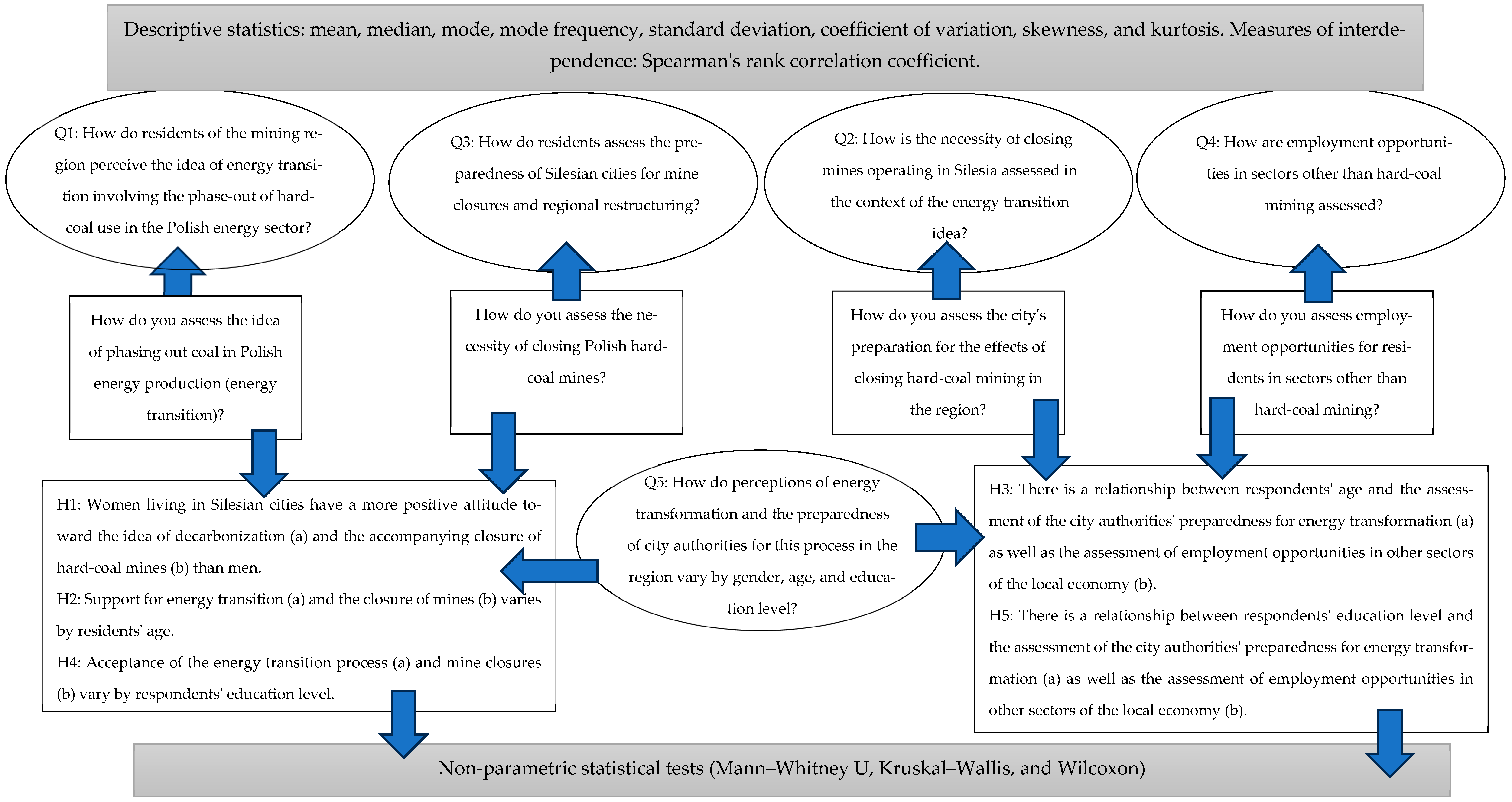
The implementation of the research objectives described above required structuring and operationalization. To this end, the methodological section of the article begins with a literature review serving as an introduction to the analyzed issues. Subsequently, based on previous research and current practical needs of the region, five specific research problems were formulated, and five research hypotheses were posed. The following section presents the research process model along with the tools used to obtain answers to the research questions and verify the research hypotheses.
The section containing research results describes the general perspective on the energy transition and the preparedness of local authorities and the economy for its effects. The analyses were then detailed to examine the relationships between this assessment and respondents’ gender, age, and education.
The obtained results were confronted with previous observations and experiences in the section devoted to scholarly discussion. This part of the article also contains social and practical implications and recommendations related to organizing the mine closure process in the region. The entire discussion concludes with a summary containing the most important research findings, research limitations, and directions for further analysis.
The cognitive contribution of this research to economics and management in resource industries stems from the following achievements:
Focusing the article’s subject matter on the social aspects of extractive industry closure, as opposed to many analyses addressing environmental, technological, or organizational-legal issues;
Conducting research from the perspective of residents in a region directly affected by the consequences of the energy transition;
Ensuring the representativeness of the research sample for the entire region undergoing changes (the Silesian Voivodeship);
Diagnosing the perception of the energy transition itself, broadly associated with moving away from fossil fuel use in energy production, in contrast to its direct regional effects in the form of hard-coal mine closures directly affecting the local community;
Examining the preparations of city authorities and the capabilities of the local labor market through the eyes of residents, illustrating their level of anxiety and concerns related to the closure of hard-coal mining in the region.
2. Theoretical Background
The course and effectiveness of the energy transition depend on many diverse conditions. One of them is undoubtedly the social acceptance of this process and all the costs associated with it. Achieving it in emerging and developing economies is a difficult challenge due to the often infrastructurally and economically limited access to electricity [
42,
43].
Nevertheless, in many societies the idea of energy transition is directly linked and associated with preventing the adverse effects of climate change. As López et al. (2026) [
44] emphasize, this helps to favorably interpret the phase-out of fossil fuels as the prevention of natural disasters. Additionally, according to Arndt (2023) [
45], it also partially mitigates the fear of losing energy security.
The phase-out of fossil fuels is an indispensable element of the energy transition linked to the use of renewable energy sources in their place. This, in turn, implies the necessity of closing mining enterprises extracting traditional energy resources, primarily hard coal and lignite. For countries and regions sustained by mining, this means in practice a series of serious social and economic consequences [
46]. Among them, Syahrir et al. (2020) [
47] mention unemployment, unsustainability of social services, and weakening of economic development. Foran et al. (2024) [
48] also draw attention to psychosocial consequences such as frustration and feelings of betrayal. Moreover, as Lévesque et al. (2020) [
49] note, due to strong attachment to mining traditions and economic benefits associated with mining, the local community exhibits low risk perception related to the extractive industry activities. All the above circumstances mean that uncontrolled mine closures lead to exclusion, injustice, loss of social capital, and distrust among local stakeholders [
50,
51].
Bearing in mind that the energy transition as a general pro-environmental idea may evoke different and broader associations than the closure of hard-coal mines in the region, two research questions were posed during the analysis to separately diagnose the perception of both these processes:
Q1: How do residents of the mining region perceive the idea of energy transition involving the phase-out of hard-coal use in the Polish energy sector?
Q2: How is the necessity of closing mines operating in Silesia assessed in the context of the energy transition idea?
Confronting the answers obtained to these questions will allow assessment of the discrepancies between acceptance of the idea of energy changes and the phase-out of hard-coal mining, which is a local and direct consequence of the energy transition.
Research by Evensen et al. (2018) [
52] shows that the perception and acceptance of energy transition is also influenced by many personal values, including understanding of justice and trust in those managing and supervising the changes. The transparency of this process not only promotes the involvement of the local community but also increases its willingness to bear part of the costs associated with the energy transition [
53]. Therefore, as Zander et al. (2024) [
54] and Cantarero (2020) [
55] note, the energy transition must be a response to the diagnosed and diverse expectations of society.
The above considerations clearly indicate that proper preparation and communication of the energy transition, including the closure of the extractive industry, can mitigate the concerns of the local community, increase its involvement in the changes, and prevent social discontent [
56]. Therefore, as Cole et al. (2026) [
57] and Dhandhania et al. (2025) [
58] emphasize, strengthening local governance is crucial for mitigating political and institutional constraints and ensuring adaptive capacity in regions vulnerable to mine closures. For this reason, during the research, it was decided to examine the level of preparedness of local authorities and the local labor market for the upcoming economic restructuring in the Silesian Voivodeship. This intention was operationalized in the form of two further research questions with the following content:
The consequences of mine closures affect different social groups with varying intensity [
59,
60]. This implies the necessity of employing different forms of communication and remedial actions depending on the scale of potential socio-economic exclusion of these groups. With the above in mind, the research was further detailed, and the fifth research question was formulated:
The above question was operationalized in the form of five research hypotheses. Their justification and content are presented below.
Previous research shows that female members of mining families are particularly vulnerable to the effects of mine closures. An analysis of the long-term consequences of mining closures conducted by Aragón et al. (2018) [
61] indicates that employment opportunities for women after mine closures in the service sector are lower than for men. The wages offered to women are also lower. Furthermore, Lahiri-Dutt (2023) [
62] rightly notes that miners’ spouses are often completely dependent on their husband’s employment. After the closure of the extractive industry, the income situation of their families deteriorates, forcing them to seek employment in a shrinking local labor market. Considering the circumstances described above, the first research hypothesis was related to gender differences and formulated as follows:
H1: Women living in Silesian cities have a more negative attitude toward the idea of decarbonization (a) and the accompanying closure of hard-coal mines (b) than men.
The subsequent research hypotheses referred to age as a predictor of perceptions of changes related to energy transition. Previous research conducted, among others, by Frantál et al. (2025) [
63] indicates that attitudes toward the closure of coal mining depend on the age of residents in mining regions. Nevertheless, the direction and strength of this relationship depend on local conditions.
In the broader context of energy changes, the literature highlights that older individuals, above 55 years of age, demonstrate a more collective attitude toward initiatives supporting energy transition. Younger individuals, on the other hand, are less motivated by civic bonds and attachment to democratic values [
64,
65].
Considering the existing differences and their local context, two further research hypotheses were formulated in the article, referring to the age of respondents, as follows:
H2: Support for energy transition (a) and the closure of mines (b) varies by residents’ age.
H3: There is a relationship between respondents’ age and the assessment of the city authorities’ preparedness for energy transformation (a) as well as the assessment of employment opportunities in other sectors of the local economy (b).
The final factor differentiating respondents’ perceptions that is considered here is the level of formal education, which in the literature is described in the context of the so-called higher education effect. This means that an increasing level of education promotes the effectiveness of energy transition in various aspects. Existing research shows, among other things, that the adoption of clean energy increases with the level of education [
66]. Aguilera et al. (2024) [
67] also note that education can reduce the income effect in the choice of energy sources through the greater importance of self-awareness among people equipped with thorough environmental knowledge. Research by Jiankui and Lun (2024) [
68] and McMaster et al. (2024) [
69] also show that education has a positive impact on engagement in energy transition projects.
In the case of closures, education is also a factor related to adaptation to new economic conditions, as higher levels facilitate finding one’s place in new occupations in the local labor market [
70,
71]. A high level of education is also positively correlated with the level of environmental awareness and concern, which increases acceptance of coal mining closures.
In reference to the above observations and conclusions, the following research hypotheses relating to respondents’ education were formulated for the purposes of the study:
H4: Acceptance of the energy transition process (a) and mine closures (b) vary by respondents’ education level.
H5: There is a relationship between respondents’ education level and the assessment of the city authorities’ preparedness for energy transformation (a) as well as the assessment of employment opportunities in other sectors of the local economy (b).
All the research assumptions described in this section were verified using the research model presented in detail in the following section.
3. Materials and Methods
As previously mentioned, the research employed a diagnostic survey using a questionnaire as the research instrument. The selection of this research method was guided by several considerations. First, the article undertakes an analysis of the social dimension of energy transformation, including the identification of attitudes and opinions within the local community. In such a context, the survey constitutes the most effective research tool, which, in addition to capturing the social perspective, enables the standardization and aggregation of results. Conducting survey research on a representative sample further ensures the generalizability of findings, which is essential for formulating conclusions relevant to local authorities.
Second, the survey questionnaire facilitates the efficient transformation of sentiments, views, and opinions into quantifiable data. This, in turn, provides a basis for making comparisons and identifying differences among distinct groups of respondents.
Third, the survey ensures objectivity of responses. Unlike interviews, the researcher has no direct contact with respondents and cannot influence them. Finally, survey research is characterized by easy replication across both temporal and spatial dimensions.
During the research, a questionnaire containing 4 questions was employed. Two of them related to the perception of energy transition, including the closure of hard-coal mines. The other two concerned the preparedness of local authorities for the consequences of hard-coal mine closures and the opportunities of the local labor market, respectively. Their detailed content is presented below:
How do you assess the idea of phasing out coal in Polish energy production (energy transition)?
How do you assess the necessity of closing Polish hard-coal mines?
How do you assess the city’s preparation for the effects of closing hard-coal mining in the region?
How do you assess employment opportunities for residents in sectors other than hard-coal mining?
Respondents evaluated the above questions on a scale from 0 to 10.
A total of 1863 respondents participated in the study. This constitutes a representative sample obtained with a 95% confidence level and a fraction of 0.5. The respondents represent 19 Silesian cities with county rights. Consequently, all the largest cities in the region were examined. The assumption of sample representativeness was also maintained at the level of individual cities.
For the questions presented above, a scale reliability test was conducted. Its results are presented in
Table 1. The use of an eleven-point scale ensures high measurement precision, enabling respondents to express their opinions more accurately, which consequently leads to the acquisition of richer empirical data. This scale is based on the decimal system, which is widely known and used in everyday practice, thereby enhancing its intuitiveness for respondents. An additional advantage is the reduction in central tendency bias—the value of 5 establishes a clear neutral point, while the symmetrical distribution of five values on each side allows respondents to define their position more precisely.
According to the obtained results, the survey questions are characterized by excellent internal consistency [
72,
73,
74].
The obtained results were used to provide answers to the research questions posed in the previous section and were utilized to verify the research hypotheses formulated therein. The scheme of the research process adopted in this regard is presented in
Figure 1, along with the research tools employed.
Following the presented framework (
Figure 1), each survey question was subjected to separate analysis using basic descriptive statistics measures. The application of central tendency measures (arithmetic mean, mode, and median) enabled the aggregation and comparison of results across individual groups and between questions. Dispersion (standard deviation and coefficient of variation), asymmetry (skewness), and concentration (kurtosis) measures allowed for the assessment of response variation among respondents. This approach provided answers to research questions Q1 through Q4.
Subsequently, each survey question was analyzed in terms of response differentiation based on gender, age, and education level to verify the formulated research hypotheses (H1-H5). This also enabled the fifth, cross-sectional research question Q5 to be answered. The specified research objectives were accomplished using non-parametric statistical tests, employed when the data distribution deviates from normality. The Mann–Whitney U test was utilized to identify differences between genders, while the Kruskal–Wallis test was applied to analyze variation based on age and education. Additionally, the Wilcoxon test was conducted to assess response differentiation for two survey questions relating to the general perception of transformation and the evaluation of this process’s validity at the regional level, respectively.
All calculations were performed using PQStat v.1.8.6 software [
75]. Charts were prepared in an Excel spreadsheet.
4. Results
The results of the research conducted are described in two sections. The first analyzes responses to the questions and diagnoses residents’ views on energy transition and its effects. The second attempts to answer the question about the consistency of energy transition perceptions among different groups of respondents.
4.1. Energy Transition and Preparation of Cities for Regional Restructuring
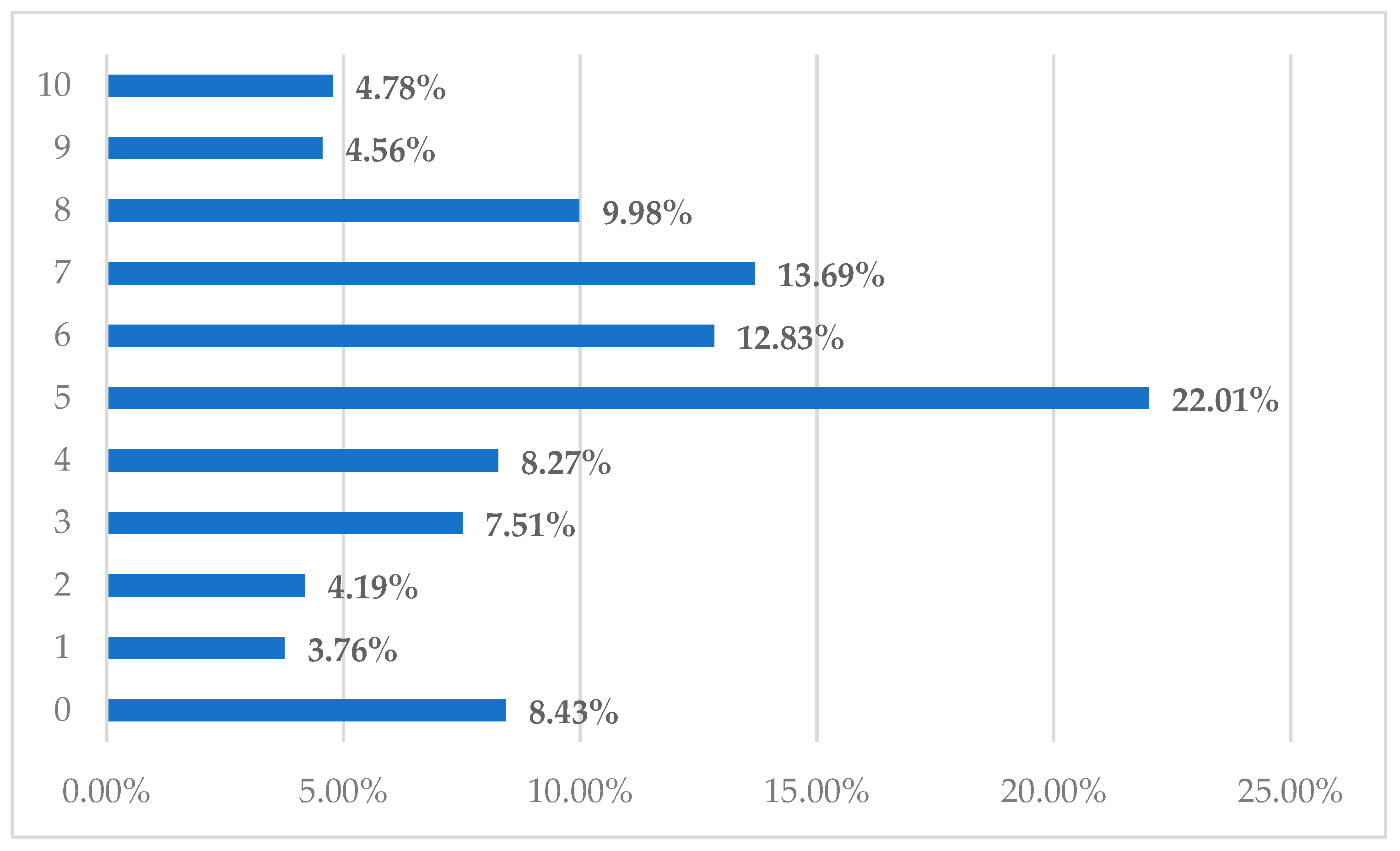
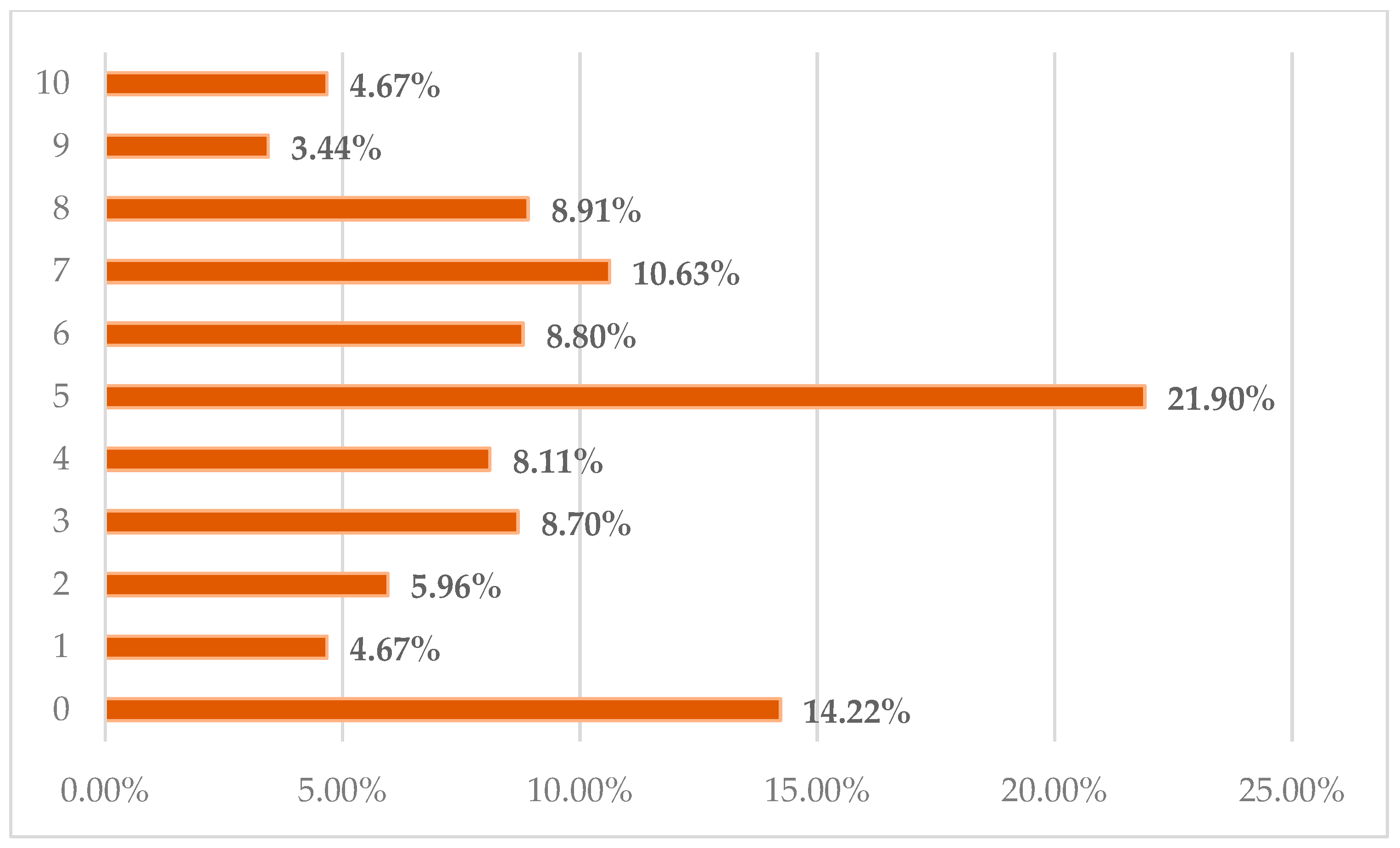
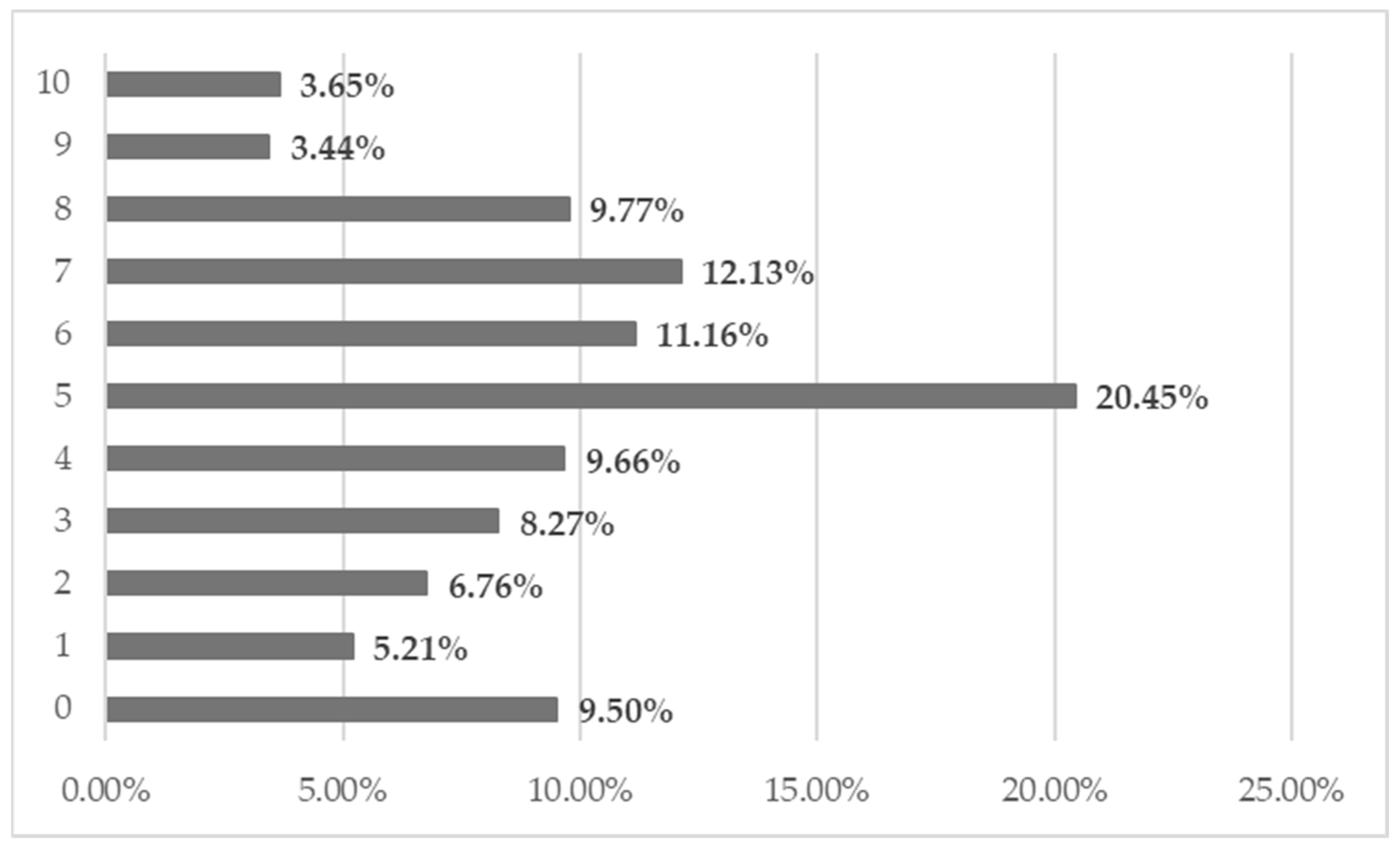
In accordance with the adopted research methodology, two survey questions referred to key actions of the planned energy transition. The first was general in nature and concerned the assessment of the idea of moving away from coal in the Polish energy sector. The second was a more detailed question related to the direct consequences of phasing out coal, namely the closure of mines. The distribution of responses to these questions and descriptive statistics for the obtained data are presented in
Figure 2 and
Figure 3 and in
Table 2.
The presented data shows that the idea of phasing out hard-coal in the Polish energy sector is not assessed enthusiastically. Most respondents rate it as average, good, or very good (5 points or higher). However, one-third hold a negative attitude toward this idea. These results indicate partial acceptance of decarbonization. Residents of the surveyed cities recognize the benefits of moving away from fossil fuels. They also acknowledge Poland’s need to align with broader environmental changes in the European Union.
The data reveals a very high diversity of views. The standard deviation exceeds 2.6 points, representing over 50% of the arithmetic mean. The negative skewness indicates a small but distinct group strongly opposed to decarbonization. This is confirmed by the negative kurtosis. Although this group is not numerous, it may become a source of conflicts and openly demonstrates dissatisfaction.
Despite relatively accepting the energy transition idea, respondents evaluate the closing of Silesian hard-coal mines much more negatively. This discrepancy likely stems from the proximity and severity of consequences for the region and residents directly involved in coal mining. The differences in opinions are statistically significant. This is confirmed by the Wilcoxon test results in
Table 3. The negative Z statistic value and its high absolute magnitude indicate significantly lower support for closing coal mines compared to general support for decarbonization.
Figure 2 shows that the process of closing coal mines faces significantly greater opposition than energy transition. Starting from rating 10, the level of support systematically decreases. There is also a significant increase in responses at level 0, indicating disapproval of the closure of hard-coal mining in the region. It can therefore be concluded that respondents’ general perception of energy transition does not include the necessity of closing hard-coal mines, which seems paradoxical.
Among residents, however, there are ardent supporters of both decarbonization and the closure of mining facilities, accounting for less than 5% of respondents (rating 10). Their opponents at the opposite end of the response distribution (rating 0) are, however, significantly more numerous—over 14%—which indicates strong polarization among minority groups of residents.
The considerable diversity of opinions among all respondents regarding the closure of hard-coal mines is illustrated by the high standard deviation (2.8549) and coefficient of variation (61.97%). Such ambiguity of positions is problematic and may hinder both the understanding and progress of changes related to the industrial restructuring of the region.
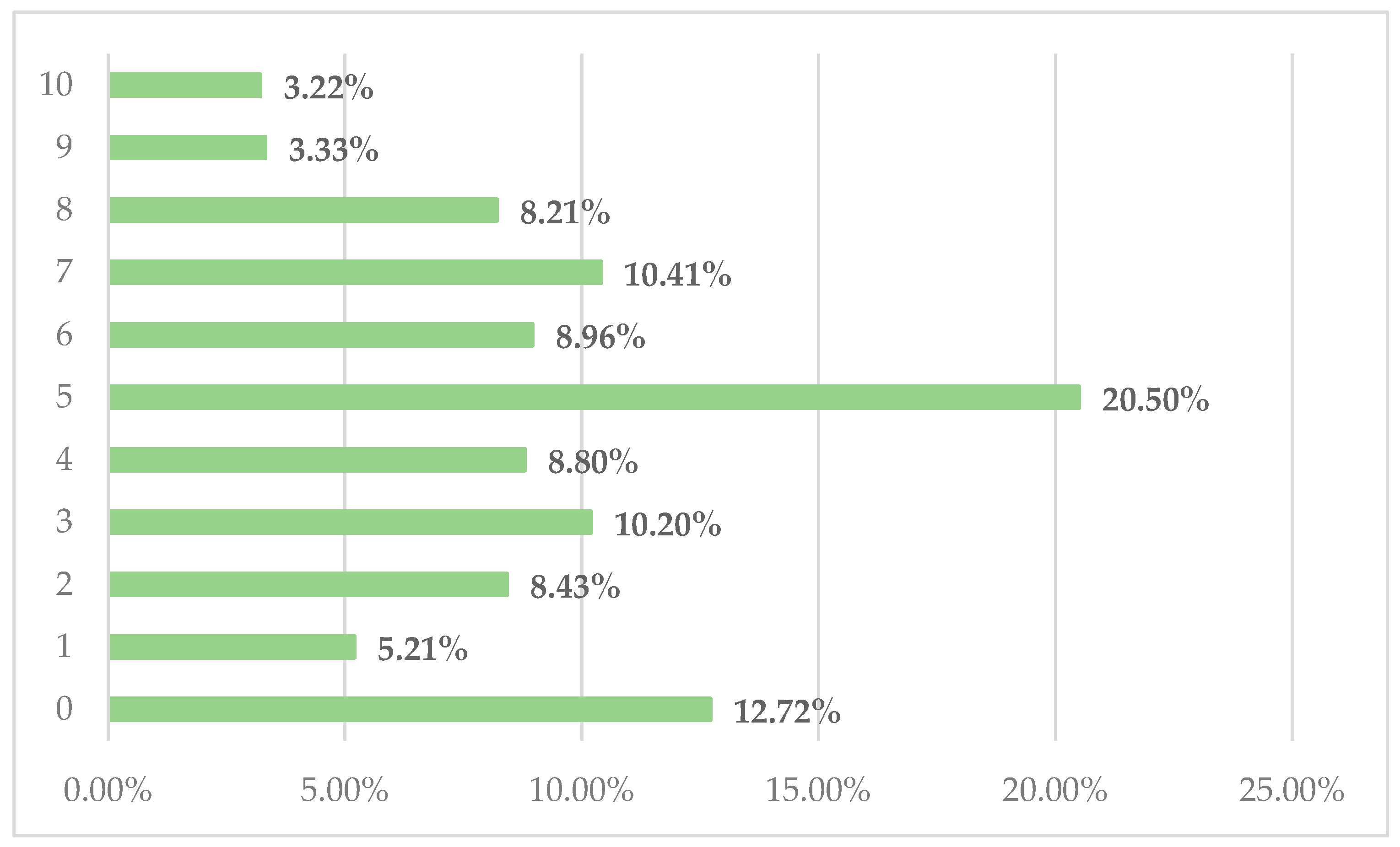
The next two questions concerned respondents’ subjective assessments regarding local authorities’ preparation for energy transition. The first was general in nature, while the second referred to the possibilities of professional retraining for individuals associated with hard-coal mining. The distribution of responses is presented in
Figure 4 and
Figure 5 and descriptive statistics in
Table 4.
Surveyed residents rate both aspects as low. The level of city authorities’ preparation for restructuring receives a mean below 5, with the median and mode at 5. Employment opportunities in sectors other than hard-coal mining show similar results. This reflects residents’ pessimistic perception of both the course and consequences of coal mine closures in the region. It also indicates fear of upcoming changes.
Such attitudes are not conducive to effective restructuring. The research results clearly show reluctance and fear of energy transition. These sentiments are certainly a consequence of observing previous restructuring processes in Silesia. Many of these were unsuccessful. The particularly difficult reforms in the Wałbrzych Coal Basin have left a lasting impact on public attitudes.
The very low assessment of local authorities’ readiness for industrial restructuring in the region simultaneously indicates that residents do not feel that there is institutional support. They also do not experience effective communication and information flow aimed at alleviating their concerns, which constitutes a necessary condition for constructive social dialog and effective mitigation of the consequences of closing key industrial sectors in the region.
An interesting observation is that respondents rate the possibility of finding employment outside mining somewhat higher than local authorities’ preparation for restructuring. This indicates that, in their opinion, the regional economy, business sector, and they themselves are better prepared for the upcoming changes than local authorities.
Residents’ opinions regarding the city’s and economy’s preparedness are quite diverse, as evidenced by the high values of standard deviation and coefficient of variation for both questions. In terms of skewness, both response distributions are close to normal distribution, with greater left-skewness in the case of new employment opportunities. Negative kurtosis in both cases indicates an even distribution of responses without a tendency toward extreme ratings.
In the final part of the analysis, the correlation of individual issues related to the essence of energy transformation and the preparedness of local authorities to implement it was identified. The results of this part of the research are presented in
Table 5.
According to
Table 5, all responses are correlated with each other. Correlation values are moderate or high and statistically significant at
p < 0.01. The most important finding concerns the link between mine closures and energy transition. The correlation between perceptions of these phenomena is moderate. This confirms previously observed discrepancies between assessing the necessity for green transition and accepting hard-coal mine closures in the region.
In the second question group, respondents show greater consensus. They agree on two points: the city authorities’ readiness to undertake energy transition challenges and the local labor market’s capacity to absorb workers leaving the mining sector. However, assessments of both aspects are relatively low and negative. The observed correlation indicates the strong dependence of the local economy on municipal governance quality. This suggests the possibility of adverse feedback loops. Ineffective industrial restructuring in the region may produce mutually reinforcing negative consequences.
4.2. Perceptions of Energy Transformation and City Preparedness Depending on Gender, Age, and Education
In the next stage, the analysis of survey results was narrowed down to identify the relationship between the perception of energy transformation and cities’ preparedness for this process, and respondents’ gender, age, and education. The results of these studies obtained using the Mann–Whitney U test and Kruskal–Wallis test are presented in
Table 6,
Table 7 and
Table 8.
The analysis of data contained in
Table 6 confirms a statistically significant relationship between respondents’ gender and answers to all survey questions (detailed test results are provided in
Appendix A.1). However, Cohen’s d coefficient values indicate a small effect size of these differences. It is characteristic that in each of the examined aspects, women present more positive assessments and a more optimistic attitude than men.
The most pronounced gender differences appear in two areas: assessment of cities’ preparedness for energy transformation and employment possibilities outside hard-coal mining. Women show greater optimism regarding post-transformation prospects. This may result from less occupational dependence on the mining industry. It may also stem from different experiences with the labor market and economic security. The results indicate higher acceptance of energy transformation and mine closures among women than men. This does not confirm the first research hypothesis (H1).
Table 7 presents results for response differentiation by age (detailed post hoc test values are provided in
Appendix A.2,
Appendix A.3,
Appendix A.4 and
Appendix A.5). Statistically significant differences occur only in two areas: attitudes toward mine closures and cities’ preparedness for the consequences. The second research hypothesis can therefore be confirmed only partially. It applies only to the necessity of liquidating hard-coal mining (H2b).
Analysis of Dunn’s post hoc test with Bonferroni–Holm correction reveals specific patterns. The greatest differences in perceiving mine closure necessity occur between people aged 31–40 and respondents over 60. These differences are also clearly marked between the youngest group (21–30 years) and seniors, although not statistically significant. The youngest respondents more clearly accept the necessity of closing mines than older people.
The oldest respondents’ reluctance to liquidate hard-coal mining likely stems from attachment to mining tradition. They were raised in its culture. Since these respondents have reached retirement age, their position cannot result solely from job loss concerns. It cannot be explained by fears of economic deterioration either. Their greater skepticism toward regional decarbonization may stem from energy security concerns. For almost their entire lives, energy security has been based on hard coal.
Age-related differences also appear in assessing cities’ preparedness for mine closure consequences. As before, they concern the 31–40 age group and those over 60. Younger city residents perceive local authorities’ restructuring capabilities much more optimistically than seniors. This may result from their greater conviction about decarbonization necessity. It may also stem from their upbringing with more pro-environmental practices.
However, the youngest groups’ optimism diminishes when assessing employment opportunities outside mining. The evaluation of restructuring activities’ operationalization is similar across all age groups. It remains average regardless of age.
The above findings allow partial confirmation of the third research hypothesis in the part referring to the differentiation in the assessment of local authorities’ preparedness for the consequences of hard-coal mine liquidation due to respondents’ age (H3a). However, the relationships identified in this regard concern selected groups and are not linear.
In the next stage, the relationship between attitudes toward energy transition and local authorities’ preparedness for this process was identified depending on the education level of the respondents. The results of this stage are presented in
Table 8 (detailed post hoc test values are provided in
Appendix A.6,
Appendix A.7,
Appendix A.8 and
Appendix A.9).
The statistical analyses indicate statistically significant differences in response distribution across all survey questions. These differences depend on respondents’ education level. The strongest differentiation appears in two areas: energy sector decarbonization and assessment of local authorities’ preparedness for socio-economic consequences of mining plant liquidation. Significant differences also emerge in perceptions of non-mining sectors’ labor force absorption capacity. The smallest opinion differentiation by education occurs in assessing the legitimacy of closing hard-coal mines.
Post hoc analysis of attitudes toward Poland’s departure from hard-coal reveals key patterns. The most significant differences occur between respondents with primary education and those with basic vocational education. They also occur between people with basic vocational education and higher education graduates (bachelor’s and master’s degrees). Importantly, respondents with lower formal education express more favorable attitudes toward energy transition. This pattern holds for reducing hard-coal use. An analogous tendency appears in assessing hard-coal mine closures. Respondents with primary education present more positive attitudes toward this initiative compared to people with basic vocational education.
These results are quite surprising. They deviate from intuitive research expectations. Hard-coal extraction sector employees are predominantly people with basic vocational or secondary education. Despite their direct connection to the mining industry, these respondents show lower concern about decarbonization and mining plant liquidation. Their concern is lower than that of people with higher education.
The observed relationship suggests important conclusions. Attitudes toward energy transition are not a simple function of direct job loss threat. Additional factors may moderate these attitudes. These include access to information, risk perception methods, social capital, and the adaptive capabilities of different educational groups.
Analogous patterns were observed regarding differences in the assessment of city authorities’ preparedness for the mine closure process and the perception of employment opportunities in non-mining sectors. Respondents with basic vocational and primary education present a significantly more optimistic assessment of both indicated aspects of transformation compared to those holding a bachelor’s or master’s degree.
The observed response pattern may indicate the phenomenon of the so-called educational paradox of optimism in the context of energy transformation. In this case, people with higher education levels, potentially having broader access to information about the complexity of the restructuring process in mining regions, manifest a more critical and pessimistic attitude toward local authorities’ actions and labor market prospects. On the other hand, respondents with lower education may be characterized by greater trust in public institutions or lower awareness of structural barriers accompanying professional retraining processes and the region’s economic diversification.
The above analyses and conclusions derived from them allow confirmation of hypotheses H4 and H5 stating the differentiation in the perception of decarbonization and local preparedness for this process depending on education level. However, the identified relationships are not obvious or linear.
5. Discussion
5.1. Main Findings and Implications
The research shows that acceptance of energy transition in the mining region is slightly above average. Therefore, residents of mining areas do understand and support decarbonization changes. However, their views on closing hard-coal mines in the region are considerably less favorable.
This seemingly paradoxical position reflects a broad understanding of energy transition that extends beyond abandoning fossil fuels. The respondents’ positive attitude towards decarbonization aligns with findings by López et al. (2026) [
44] and Arndt (2023) [
45], which link energy transition with climate threat mitigation and natural disaster prevention.
However, when decarbonization measures become concrete with immediate effects, fears about closing hard-coal mines emerge. This stems from awareness of inevitable consequences described by Laurence (2006) [
46] and Syahrir et al. (2020) [
47]. These concerns are reinforced by the region’s history of previous economic restructuring. Respondents’ attitudes toward mining industry liquidation indicate they feel frustrated and disregarded, corresponding with findings by Foran et al. (2024) [
48]. This likely also reflects attachment to mining tradition and centuries of community life in mining areas, as described by Lévesque et al. (2020) [
49].
The detailed research results do not confirm greater concerns among women about hard-coal mining liquidation, as suggested by Aragón et al. (2018) [
61] and Lahiri-Dutt (2023) [
62]. Although respondents have not experienced the full effects of decarbonization, women are more optimistic about both energy transition and mine closures than men.
The more optimistic perception of regional changes among women may stem from several factors. First, women are significantly less occupationally connected to the hard-coal mining sector, finding employment in other branches of the economy. This provides them with a different perspective, resulting from the lack of direct exposure to the consequences of hard-coal mine closures in Silesia. Moreover, employment in diversified economic sectors translates into greater flexibility in terms of workplace choice.
Second, women exhibit a higher level of concern than men regarding the negative impact of environmental pollution on health, particularly on children’s health. For this reason, the liquidation of a sector characterized by a significantly negative environmental impact may evoke more positive associations among them than among men.
The analyses partially confirm Frantál et al.’s (2025) [
63] observations on the relationship between age and acceptance of energy transformation. Respondents accept energy transition regardless of age; however, they disagree about mine closures. Clear differences emerged between younger groups (18–29 and 31–40 years) and seniors. The oldest group shows the lowest acceptance for closing hard-coal mines, likely due to long-standing habits, traditions, and fears of radical change. This contradicts earlier conclusions indicating seniors as better prepared for energy transition [
64,
65].
A new finding shows a link between age and how residents assess local authorities’ readiness for mine closures. However, this relationship is not linear. Residents aged 31–40 rate local government readiness higher than those over 60. This may stem from younger respondents’ limited experience and older individuals’ negative memories of past economic changes in the region.
Some results contradict earlier research on perceptions of energy transition, mine closures, and the preparedness of local authorities and labor markets. In all survey questions, responses correlated with education level. However, the pattern differs from findings by Wang (2025) [
66], Aguilera et al. (2024) [
67], Jiankui and Lun (2024) [
68], and McMaster et al. (2024) [
69]. Higher-educated respondents show less acceptance of energy transition and mine closures than those with primary or vocational education. University graduates also rate city authorities’ preparation and labor market prospects lower than less-educated respondents.
The educational paradox of optimism identified in this research represents a novel and unexpected observation. It may stem from the heightened awareness and knowledge possessed by more educated respondents. These attributes are generally linked to a more comprehensive understanding of phenomena and the ability to recognize their potential consequences. Consequently, this may generate greater concerns owing to the wider range of identified threats. Therefore, respondents’ attitudes may reflect varying perceptions of the risks inherent in energy transition.
This risk perception also derives from critical literacy. Better-educated people can critically evaluate systems and identify their flaws and limitations. They are also aware of structural barriers related to local administration and the region’s history of mine closures. As a result, they are less trusting and do not uncritically accept local decision-makers’ assurances about a safe and just energy transition.
5.2. Policy Recommendations for Local Authorities
In summary, respondents show average to poor acceptance of energy transition and mine closures—some extremely so. Their assessment of local government and labor market readiness is also unsatisfactory. Both trends suggest challenges for upcoming restructuring.
Regional transformation is not merely a techno-infrastructural process. For this reason, it requires a participatory approach in both the preparatory and implementation phases. This constitutes a key challenge for local and regional authorities. In this context, the following actions should be recommended within the framework of social dialog:
Identification of expectations, needs, and concerns related to energy transition;
Ongoing and transparent communication regarding successive phases of mine closure, their consequences, and remedial measures (through local media, discussion meetings, social media, and the Internet);
Engagement of local communities in the energy transition planning process (through conferences, workshops, and community platforms);
Ensuring continuous communication channels with local communities through the creation of thematic online discussion forums;
Conducting consultations with employees and employers oriented toward identifying mutual needs and expectations (encompassing career counseling, retraining courses, social packages, and psychological support);
Consulting coal mine closure plans with trade unions and other employee representatives (through negotiations, discussions, and joint meetings).
Equally important is the initiation, planning, and communication of long-term measures aimed at revitalizing the region’s socio-economic system. In this regard, the following actions are recommended:
Planning the redevelopment of post-mining areas;
Developing alternative economic sectors (clean energy, transport, logistics, and tourism);
Designing local development initiatives supported by public funds;
Promoting the region to attract new investors;
Developing social infrastructure (sports, entertainment, culture, and cultural heritage preservation).
All above measures should be incorporated into a comprehensive strategic transformation plan made available to local communities and updated in accordance with their expectations. This plan should be flexible in nature, adapting to changing circumstances. The prevailing directive approach of municipal authorities to development planning may prove insufficient in addressing such a sensitive issue as radical economic transformation of the region. Strategic planning should also be accompanied by risk analysis, including the specification of mitigation measures and the possibility of developing alternative scenarios. Regional energy transition represents an undertaking characterized by a high level of risk.
6. Conclusions
The summary of this research has been divided into two sections. The first refers to the main findings and implications. The second contains research limitations and directions for further research.
6.1. Research Summary
The description of the main findings contains synthetic answers to the research questions posed and verification of the formulated hypotheses.
Most residents of the studied Silesian cities accept the phase-out of coal in Polish energy and the necessity of energy transformation. However, approximately one-third of respondents present a negative attitude toward the related changes, formulating extremely critical assessments of this process, which may become a source of social conflicts in the future.
Paradoxically, despite apparent understanding of the essence of moving away from hard-coal, respondents accept the closure of hard-coal mines in Silesia to a significantly lesser extent. The idea of decarbonization is perceived positively but only at a very general level, without clear reference to the specific actions that must accompany it. It can therefore be stated that some of the surveyed residents are neither mentally ready nor prepared for the upcoming restructuring changes in the region.
The surveyed residents negatively assess local authorities’ preparedness for energy transformation and its effects. The possibilities of finding new jobs in non-mining sectors fare only slightly better in their assessment. This demonstrates a pessimistic perception of the course and consequences of hard-coal mining liquidation and also proves the unabated fears of local communities. If these subjective concerns are confirmed, both the level of dissatisfaction with the proposed changes and reforms, as well as the risk of social conflicts, will increase.
Despite a rather negative perception of the necessary energy changes and regional restructuring, women are somewhat less afraid of energy transformation and its effects. They also better assess the level of cities’ preparedness and employment opportunities in sectors other than hard-coal mining. They therefore constitute a group more favorably disposed toward energy transformation and its accompanying processes, which does not confirm the first research hypothesis (H1).
The conducted analyses also show that there are no statistically significant differences in the perception of the need for energy transformation between individual age groups of respondents. However, these differences are revealed in relation to the necessity of closing hard-coal mines. The youngest age groups (21–30 and 31–40 years) are clearly more favorable to this concept than respondents over 60 years of age. The observed difference most likely results from older respondents’ attachment to mining tradition and their perception of hard-coal as a key and secure source of energy in the Polish economy. Its existence partially confirms the hypothesis in the part referring to the perception of the hard-coal mine liquidation process (H2b).
During the conducted analyses, partial confirmation of the third research hypothesis (H3a) was obtained, assuming differentiation in the perception of the degree of cities’ preparedness for the consequences of hard-coal mine liquidation depending on respondents’ age. Statistically significant differences were observed between the 31–40 age cohort and people over 60 years of age. Respondents from the younger age group (31–40 years) are characterized by a significantly more positive assessment of the advancement of local governments’ preparations for the upcoming regional restructuring compared to the oldest group of respondents. This may result from the difficult history of restructuring experiences of the older generation and the greater openness to change of younger respondents.
Respondents’ answers also differ according to education level, which confirms the fourth (H4) and fifth (H5) research hypotheses. Residents with primary and basic vocational education assess decarbonization and the need to liquidate mines more optimistically than other groups. These respondents also better perceive local authorities’ preparedness for energy transformation and the labor market’s readiness to absorb hard-coal mining workers. People with higher education are more skeptical in all the mentioned aspects. The identified differences may result from different levels of access to information, varying risk perception, and differentiated adaptive capacities of individual educational groups.
6.2. Limitations and Directions for Further Research
The present study was conducted in a single region, which deprives it of an international or interregional perspective. This constitutes the main research limitation. However, this region is currently undergoing energy transition, including the process of hard-coal mine closures. Consequently, the conclusions are current and may be useful for other developing economies struggling with the social consequences of energy transitions.
Moreover, within the diagnostic survey conducted, questionnaire-based research and quantitative methods for analyzing the results were employed. This limits the possibilities for cause-and-effect analysis and narrows the cognitive context. Nevertheless, it is worth emphasizing that research on the perception of energy transition and the preparedness of Silesian cities for its consequences from the residents’ perspective has not been conducted on such a scale while maintaining representativeness. Therefore, it constitutes a significant contribution both to the development of social aspects of energy transition and to the practice of change management in regional restructuring.
The use of a diagnostic survey method employing questionnaire techniques constitutes a limitation typical of social research. Research results of this type are susceptible to social desirability bias, meaning that respondents tend to provide socially acceptable answers at the expense of full objectivity and candor. However, it should be noted that the relatively low scores obtained in the study suggest that this limitation did not constitute a significant barrier to the free expression of opinions by respondents. Had the results been even lower, this would indicate a lack of social acceptance for the energy transition, particularly regarding the closure of hard-coal mines.
The objectivity of the study may also have been influenced by respondents’ prior experiences. Previous restructuring efforts in the mining sector were complex processes with serious socio-economic consequences. While this does not predetermine the repetition of such a scenario in the future, past experiences may nonetheless permanently shape attitudes toward transformational changes.
A further limitation is the cross-sectional design of the study, which precludes the determination of causal relationships concerning the identified attitudes and opinions of the respondents. The findings merely illustrate associations and correlations between variables. Clarifying these relationships would require longitudinal research.
Further research can be developed in substantive or subjective dimensions. Analyses of social phenomena accompanying energy transition can be expanded to include interregional or international comparisons. They can also address the actual actions of regional authorities aimed at preparing for the consequences of hard-coal mine closures, as well as the capacity of the local labor market to absorb workers leaving hard-coal mining and mining-related sectors.