Review

Review of Data-Driven Personal Thermal Comfort Modeling and Its Integration into Building Environment Control


School of Electrical and Information Engineering, Jiangsu University, Zhenjiang 212013, China
*
Author to whom correspondence should be addressed.
Energies 2026, 19(3), 621; https://doi.org/10.3390/en19030621
Submission received: 5 December 2025 / Revised: 21 January 2026 / Accepted: 22 January 2026 / Published: 25 January 2026
(This article belongs to the Section G: Energy and Buildings)

Abstract

With the increasingly prominent demand for building energy efficiency and occupant-centric design, accurate and reliable personal thermal comfort models (PTCMs) are playing an important role in various residential and energy applications (e.g., building energy-saving design, indoor environmental regulation, and health and well-being improvement). In recent years, data-driven and artificial intelligence (AI) technologies have attracted considerable attention in the field of personal thermal comfort modeling. This study systematically reviews recent progress in data-driven personal thermal comfort modeling, emphasizing contact-based and non-contact data collection ways, correlation analysis of feature data, modeling methods based on machine learning and deep learning. Considering the high cost and limited scale of collection experiments, as well as noise, ambiguity, and individual differences in subjective feedback, special attention is put on the data-efficient thermal comfort modeling in data scarcity scenarios using a transfer learning (TL) strategy. Characteristics and suitable occasions of four transfer methods (model-based, instance-based, feature-based, and ensemble methods) are summarized to provide a deep perspective for practical applications. Furthermore, integration of PTCM into building environment control is summarized from aspects of the integration framework, modeling method, control strategy, actuator, and control effect. Performance of the integrated systems is analyzed in terms of improving personal thermal comfort and promoting building energy efficiency. Finally, several challenges faced by PTCMs and future directions are discussed.

1. Introduction

People spend approximately 80% to 90% of their time in various indoor environments of buildings [1], such as residences, office buildings, shopping malls, and hospitals, etc. One of the main functions of buildings is to provide a comfortable indoor environment, as it can affect the physical health, emotional state, and productivity of occupants. Thermal comfort, defined as “condition of mind which expresses satisfaction with the thermal environment” [2], has been a hot topic in indoor environment research. Thermal discomfort in the indoor environment may cause irritability, reduced attention, poor working productivity, and even exacerbate the symptoms of some chronic diseases [3,4]. Table 1 summarizes highly cited papers (ranked in the top 1% globally in terms of citation frequency among papers in the same year and ESI subject category) on thermal comfort in recent years, including evaluation of traditional predicted mean vote and predicted percentage dissatisfied (PMV-PPD) models, data-driven predictive control for thermal comfort and energy saving, development trends in intelligent building control, etc.

1.1. Thermal Comfort Models

Thermal comfort is easily influenced by multiple factors (e.g., environmental factors, subjective feelings of occupants, individual adaptation mechanisms), which brings significant challenges to its precise modeling and assessment [10]. The PMV and adaptive models are two typical thermal comfort models. The PMV model, proposed by Fanger [11], was based on laboratory studies and underpinned by heat balance theory between the human body and metabolic heat production, assuming thermal comfort occurs when the body reaches equilibrium with the environment and treating occupant responses as largely passive. The PMV model was established with six parameters: air temperature, relative humidity, air speed, mean radiant temperature, metabolic rate, and clothing insulation. The PMV model employed the 7-point scale of the ASHRAE 55-2004 standard. It is typically used to assess the average thermal sensation of the population in a steady-state thermal environment.
Different from the PMV model that considers thermal comfort as a consequence of the heat balance between the human body and surrounding environment, the adaptive model treats occupants as active participants to maintain thermal preferences by behavioral, physiological, and psychological adaptations [12]. Within this framework, adaptive models typically present a linear relationship between acceptable indoor operative temperature and outdoor temperature, with such relationships derived from field studies. This kind of model takes into account the human inherent ability to adapt to variable environmental conditions in naturally ventilated buildings. For examples, Nicol and Humphreys [13] proposed the EN 15251 adaptive model, suggesting that occupants in real environments do not just passively accept the thermal environment, but actively adapt to external conditions through behavioral adjustments (e.g., opening windows, changing clothes, and adjusting fans), physiological adjustments (such as sweat regulation), and psychological adjustments. Yao et al. [14] introduced the adaptive coefficient to quantify the dynamic influence of factors such as culture, climate, and social background on thermal comfort. Zhou et al. [15] significantly improved the prediction accuracy of the PMV model in low-pressure environments by modifying the metabolic rate, evaporative heat dissipation, and convective heat transfer coefficient at low pressure. PMV and adaptive models have been developed and successfully adopted by international standards to provide the acceptable indoor environment for occupants. However, these models still have the following inherent limitations [16,17]: (1) They both exhibit poor prediction performance when applied to individuals since they are designed to predict the average thermal comfort of populations. (2) They rely on complex input parameters that are difficult to obtain in real time, limiting their practical applications. (3) Due to their fixed frameworks, it is difficult to integrate new variables (e.g., physiological characteristics and behavioral data) or adapt to complex dynamic environments, restricting further model optimization.
Personal thermal comfort model (PTCM) can predict the individual’s thermal comfort response, rather than the average response of populations. The key characteristics of PTCMs lie in the following aspects [16]: (1) Use individuals rather than groups as analytical units. (2) Train the model by combining individual direct feedback with other related data, such as environmental, physiological, and behavioral data. (3) Prioritize easily accessible and cost controllable data. (4) Have the capability to adapt by incorporating new data. Moreover, it has been verified that the PTCM significantly outperforms the traditional PMV and adaptive models in terms of higher prediction accuracy and flexibly constructed input features [18]. Table 2 summarizes three types of thermal comfort models in terms of theoretical basis, advantages, and limits. Based on the above analysis, it is seen that the PTCM can fundamentally change the conventional “one-size-fits-all” thermal comfort management by offering individual-specific and context-relevant comfort prediction for the occupant-centric environment control.
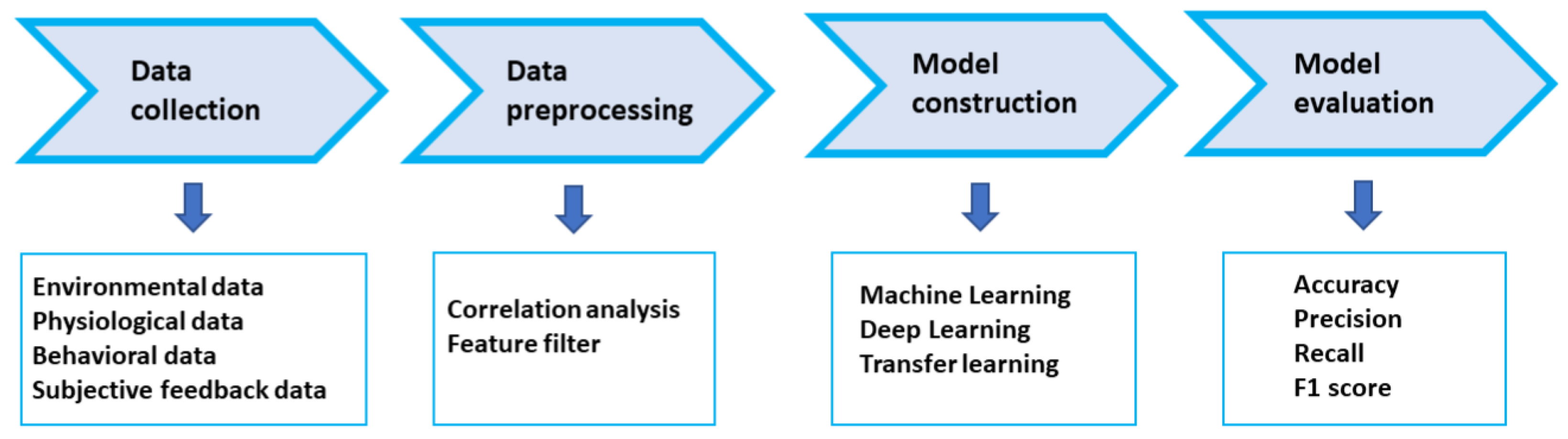
Personal thermal comfort modeling can be defined as the process of predicting or evaluating the individual thermal comfort sensation in a specific thermal environment through relevant data and algorithms. In recent years, with the development of sensing technology and artificial intelligence (AI), advanced data-driven methods have gradually been introduced into the field of personal thermal comfort modeling. These methods adopt machine learning (ML) [19,20,21,22,23,24,25,26,27] or deep learning (DL) [28,29,30,31,32,33,34] algorithms to establish the PTCMs. The framework of personal thermal comfort modeling is shown in Figure 1, which will be further discussed in subsequent Section 2 and Section 3.

1.2. Literature Selection

This study presents a comprehensive review on data-driven thermal comfort modeling. The literatures are searched in the database of Web of Science Core Collection, with the time interval limited to the past five years. The searching keywords are selected as follows: “(thermal comfort model or thermal comfort prediction or thermal comfort assessment or thermal comfort identification) and (personal or individual) not PMV”. Based on the above database, time interval, and keywords, the initial search is conducted. Subsequently, the searched literature is sorted by relevance, and the top 50% are selected. Then, further literature screening is carried out based on the following criteria: (1) detailed description of the acquisition of modeling datasets (such as from thermal comfort experiments or public datasets) and (2) inclusion of one/several data-driven modeling methods. Finally, combined with the previous related work of our research team, a total of 113 pieces of the literature are identified.

1.3. Research Gap Analysis

Over the past five years, several review of the literature have been published on thermal comfort models. Zhao et al. [35] reviewed the evolution of thermal comfort models, explored the adaptability of different models in various scenarios (e.g., sleeping scenario and outdoor scenario) and for different populations, and summarized data-driven models based on machine learning. Martins et al. [36] concluded that current research mainly focused on office environments, using ML methods to build the PTCM. They pointed out three limitations of current research, including strong sample homogeneity, inconsistent evaluation standards, and insufficient validation. Fard et al. [37] comprehensively analyzed the application of ML in thermal comfort research. It was shown that ML models could achieve the 58.5% energy consumption reduction in heating, ventilation, and air conditioning (HVAC) optimization while improving indoor thermal comfort. Future directions, such as developing non-contact sensing technologies and multi-parameter coupling analysis methods, were also provided. Table 3 is presented to understand the research gap between this study and previous reviews. This table is organized based on the main contents of this study as follows: (1) data collection way (contact-based or non-contact); (2) feature correlation analysis; (3) modeling method (including ML and DL); (4) model evaluation indicator; (5) Data-efficient modeling using transfer learning (TL); (6) integration into building environment control. From Table 3, it is known that most previous reviews did not discuss the integration of PTCM into building environment control systems, which aims to investigate whether the PTCM can be applied to real-world scenarios to achieve the desired control performance in improving thermal comfort and enhancing building energy efficiency. Moreover, the high cost and limited scale of collection experiments, as well as ambiguity and individual differences in subjective feedback, usually lead to difficulty in obtaining sufficient high-quality datasets. As an efficient ML paradigm, TL provides an important technical path for solving small sample modeling problems. However, none of these literature reviews addressed the TL-based data-efficient thermal comfort modeling in sample scarcity scenarios. This study systematically reviews the advanced data-driven technologies currently used for personal thermal comfort modeling. Main parts could be summarized as follows: (1) We present insights into thermal comfort data collection, including data type, collection way, and data correlation analysis. (2) We comprehensively review various thermal comfort modeling methods based on ML and DL, as well as commonly used evaluation indicators for thermal comfort models. (3) On the basis of research accumulation of our group, we analyze the data-efficient thermal comfort modeling using the TL strategy and discuss the characteristics of different transfer methods. (4) We summarize the application potential of integrating the PTCM with thermal control to achieve the expected performance in actual building environment control systems. (5) We discuss some challenges and future directions in the field of PTCM.

2. Thermal Comfort Data Collection and Preprocessing

2.1. Data Type

For personal thermal comfort modeling, data collection has a significant influence on model accuracy and generalization performance. According to the collected content, thermal comfort data are usually classified into the following four types: environmental data, physiological data, behavioral data, and subjective feedback data. The first three types serve as input features for the model, while the latter type is typically used as output labels. Environmental data usually include air temperature ( T a i r ), relative humidity (RH), air speed, radiant temperature ( T r ), light intensity, carbon dioxide concentration, etc. These data reflect the objective state of the external environment. Physiological data usually include skin temperature, core body temperature, heart rate (HR), heart rate variability (HRV), electrodermal activity (EDA), sweating rate, etc. These data can intuitively reflect the physiological regulation process and sensation differences of the human body in the external environment.
Behavioral data usually include regulating HVAC setpoints, opening/closing windows, putting on/taking off clothes, wiping sweat, etc. The behavioral data concern strategies that the human body adopts to adapt to the environment through active behaviors. Li et al. [40] introduced six typical thermal adaptation actions (e.g., wiping the forehead, fanning, and crossing arms, etc.) into the personal thermal sensation (TS) prediction. Results showed that the prediction accuracy of seven-point TS could be increased from 82.86% to 86.8%. Liu et al. [41] used cold behaviors (such as wearing a coat) and hot behaviors (such as wiping sweat) as input features to build the thermal preference model. Results demonstrated that the model accuracy reached 0.81, which was superior to the model using environmental variables as input features. When the above behaviors were combined with some environmental data, model accuracy could be improved to 0.85. Due to the fact that behavioral data usually reflect behaviors in specific environments and causal inference of behaviors is difficult, they are not as widely applied in thermal comfort modeling as environmental and physiological data.
Based on the identified literature, during the experimental phase, most studies (approximately 80%) collect both physiological and environmental data as input variables for thermal comfort models, aiming to more comprehensively depict the dynamic interaction mechanism between the human body and environment. For examples, Jiang et al. [42] systematically analyzed the coupling relationship between environmental changes and physiological responses by monitoring T a i r , RH, and multi-area skin temperatures. Aryal and Becerik-Gerber [43] investigated the spatiotemporal characteristics of personal thermal sensation using indoor ambient temperature and local skin temperatures of the forehead, nose, and cheeks. Yu et al. [44] constructed the machine learning-based thermal comfort model by integrating skin temperature, environmental parameters, and individual factors (such as age and gender). Wang et al. [45] utilized skin temperatures of multiple facial regions, together with environmental temperature and humidity as the input variables, and established machine-learning models for elderly thermal sensation prediction. Some studies only collect environmental data for thermal comfort modeling [46,47,48,49,50,51,52,53,54,55,56,57,58]. These studies are simple for experimental implementation. However, due to the lack of physiological data, the established models have certain limitations in depicting personal thermal comfort perception.
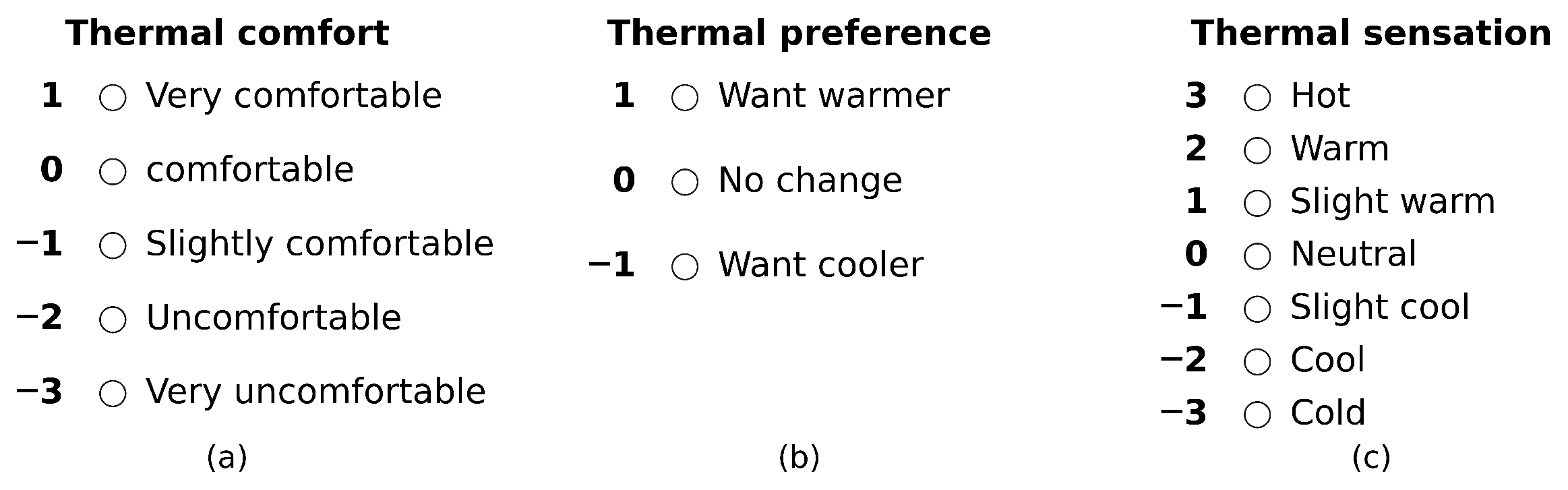
Subjective feedback data, as the output of thermal comfort training models, are typically obtained through questionnaire voting. Although questionnaires may vary in form, the ASHRAE thermal sensation scale is commonly used. The 7-point scale (−3 for “cold”, 0 for “neutral”, and +3 for “hot”) is widely used in both laboratory and field investigations, as in [43,59,60,61,62]. The 5-point scale [63,64] or 3-point scale [65,66] has simplified gradations, reducing the cognitive burden on the subjects. In addition to the thermal sensation scale, other scales, such as the thermal comfort scale [67,68], the thermal preference scale [69], and the thermal acceptability scale [70], are adopted to comprehensively assess the subjective feelings of the human body in a thermal environment. Examples of these scales are shown in Figure 2. Note that subjective voting inevitably introduces inherent noise, ambiguity, and individual differences, which greatly affect the data consistency and stability. To address this issue, the following measures can be adopted: (1) Using physiological signals as objective agents of subjective perception can compensate for and calibrate the delay, inaccuracy, and volatility of purely subjective reports, forming a more consistent multimodal dataset. (2) Apply statistical methods (such as smoothing based on time series) or clustering algorithms to identify abnormal votes that are significantly inconsistent with individual long-term patterns or contemporaneous group trends.

2.2. Collection Way

According to the degree of contact, input data collection for thermal comfort modeling can be classified into two ways: contact-based and non-contact. Contact-based collection usually requires direct contact with subjects to obtain high-precision physiological signals. Thermocouples, attached temperature probes, finger pulse oximeters, etc. [42,43,60,62,71,72,73,74,75,76], can be used for contact-based collection. Although this collection way has high measurement accuracy, the direct contact of equipments with body may affect the subject’s behavior or psychological state, thereby affecting the authenticity of the data. Non-contact collection has received considerable attention in recent years, with advantages of good subject experience and ease of large-scale deployment in real world. Thermal imaging devices, such as FLIR Lepton and FLIR ONE Pro, could measure the temperature of face or body surface in non-contact manners [45,65,66,77]. Web cameras were utilized for non-contact collection of facial expressions [78]. Then, combined with computer vision algorithms, individualized thermal comfort state could be accurately predicted. However, accuracy and stability of non-contact collection are easily influenced by environmental conditions, changes in orientation, and variations in lighting [79]. Consequently, there is a trade-off between these two collection ways in terms of measurement accuracy, subject experience, and deployment flexibility.
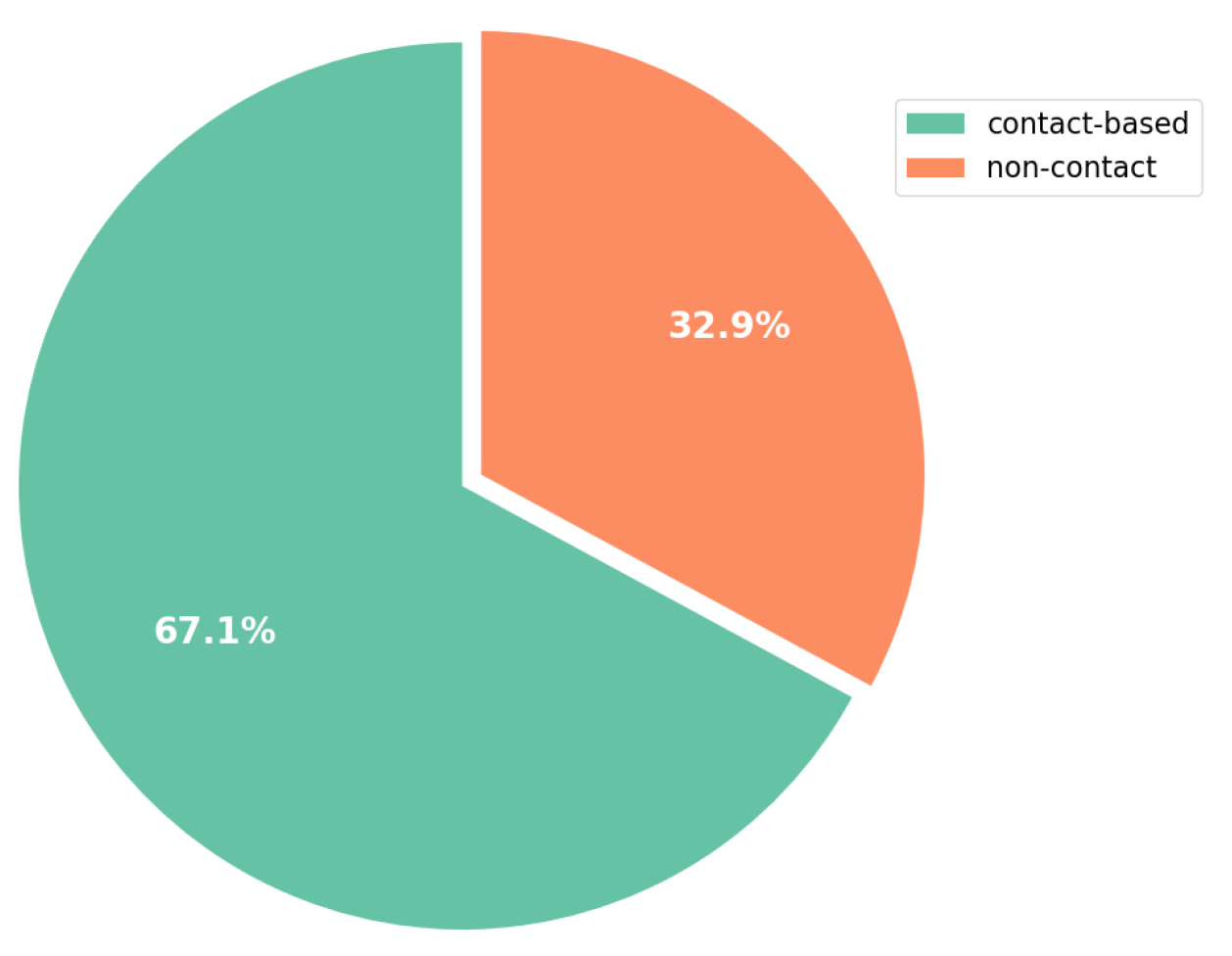
Based on the 113 reviewed papers, the statistics chart of the above two collection ways is shown in Figure 3. It is known that the contact-based collection way accounts for approximately 67.1%, while the non-contact way accounts for 32.9% (excluding the literature that directly uses public datasets). Generally speaking, in the field of thermal comfort data collection, researchers are faced with two main choices: high-precision contact-based collection and easy-to-deploy non-contact collection. Researchers can achieve a flexible balance between collection accuracy and convenience, and choose the most suitable way. In addition to self-conducted experimental collection, some public datasets are also used for thermal comfort modeling, such as the ASHRAE RP-884 Dataset [80,81,82,83] and the ASHRAE Global Thermal Comfort Database [30,84,85,86,87,88,89]. These datasets have large sample sizes, diverse sources, and a wide range of environmental conditions, providing reliable support for model accuracy evaluation and generalization performance validation.

2.3. Data Preprocessing

In data-driven modeling tasks, data preprocessing helps to reveal the intrinsic relationships among data, thereby promoting the improvement of model accuracy. Correlation analysis is widely applied in the field of thermal comfort modeling. For instance, the Pearson correlation coefficient [61,63,75] and Spearman rank correlation coefficient [42,62,71,74] are frequently used to quantitatively assess the potential relationships between variables such as physiological indicators, environmental parameters, and subjective thermal sensation. In [90], based on experimental data from 15 male subjects in East China, the authors employed Pearson and Spearman correlation analysis to investigate the relationships between nine environmental and physiological indicators and thermal sensation voting (TSV). Results revealed that T a i r , skin temperature at the wrist, HR, and HRV were significantly correlated with TSV, with skin temperature at the wrist showing the strongest correlation. Furthermore, the feature selection methods are introduced to identify the variables that have a significant influence on thermal comfort. For example, in [44], the Boruta method was employed to analyze the importance of features for thermal comfort prediction using data with professional and practical settings. The K-nearest neighbor (KNN) method was further adopted to filter the initial features according to their contributions to model accuracy enhancement. Results showed that the local skin temperatures were highly related to thermal comfort for professional settings, while local skin temperature at the hand and age were the most related features for practical settings.

2.4. Comparison and Summary

Based on data types, collection ways, and correlation analysis, Table 4 summarizes some of the representative literature on thermal comfort data collection in recent years. It can be seen that (1) Almost all studies collect environmental data T a i r and RH for thermal comfort modeling. In addition, the collection of physiological data (e.g., skin temperature, HR, and EDA) has increased in recent years, reflecting the emphasis on the relationship between individual differences and subjective feelings. (2) With the development of non-contact equipment (e.g., infrared cameras, video cameras, and smart wristbands), more researchers prefer non-contact data collection for thermal comfort modeling. (3) Pearson and Spearman’s correlation coefficients are commonly used to measure correlation. Moreover, some ML-based feature selection methods can be adopted to reduce redundant inputs and computational costs. Overall, the trend in thermal comfort data collection is characterized by multi-source data fusion, suitable collection ways, and diversified analysis methods, which provide support for the construction of more accurate and personalized thermal comfort models.

3. Model Construction and Evaluation

3.1. Model Input and Output

The inputs of thermal comfort models are typically composed of environmental variables and personal variables. Compared with most adopted T a i r and RH, other environmental variables such as T r , time of day [96], and the operating status of the personal comfort system (PCS) [96,97] are less frequently considered. Personal variables usually reflect an individual’s physiological/behavioral characteristics (e.g., skin temperature, HR, adaptive actions, thermal image [28,29,91]) and personal information (e.g., age, gender, body mass index, and clothing insulation). The reviewed literature indicates that over half of the personal comfort models incorporate at least one personal variable as their input. The outputs of thermal comfort models are usually quantified as thermal comfort-related indicators, including thermal sensation (TS), thermal comfort (TC), thermal preference (TP), etc. For examples, seven-point TS [28,74,97,98,99,100,101], five-point TS [91,102], three-point TS [96,103], five-point TC [64,68], three-point TC [29,67,96], and three-point TP [30,41,67,104,105,106] were used as output variables of PTCMs.

3.2. Data-Driven Modeling Method

The data-driven modeling methods for thermal comfort can be divided into two categories: ML and DL methods. According to the reviewed 113 literature, approximately 64.6% of them adopt the ML method.
(I)
Modeling method using ML
In the reviewed literature, the top three most commonly used models are support vector machine (SVM), random forest (RF), and KNN. For example, in [74], the authors demonstrated that, based on the hand and finger temperature features, the SVM model achieved the RMSE of 0.6921–0.9091 in the prediction of seven-point TS. In [41], indoor/outdoor environmental parameters and individual information were utilized for thermal preference prediction. Results showed that the prediction accuracy of SVM ranged from 0.57 to 0.87. In [41], it was reported that the RF model achieved an accuracy of 0.64–0.88 in the prediction of three-point TP. In [107], it was found that, using facial temperatures as input features, prediction accuracy of RF ranged from 0.726–1.000 (TC) and 0.817–1.000 (TS). In [41], the authors indicated that the KNN model achieved an accuracy of 0.71–0.85 in the prediction of three-point TP. In [102], it was proved that, when using physiological signals such as electroencephalogram (EEG), photoplethysmography (PPG), and skin temperature, accuracy of KNN ranged from 0.62 to 0.74 for prediction of five-point TS.
(II)
Modeling method using DL
Compared with traditional ML, DL has a deep structure of ANNs with the capability of processing very large-scale data [108,109], thus demonstrating stronger flexibility, better generalization, and stronger robustness in modeling complex nonlinear relationships [110,111,112]. In the field of thermal comfort modeling, the convolutional neural networks (CNN) and long short-term memory network (LSTM) are two commonly used DL methods. CNN is composed of convolutional, pooling, and fully connected layers, in which the convolutional layer is used for feature extraction and the pooling layer for data dimensionality reduction. LSTM is mainly composed of a series of repeating cells. Main advantages of the LSTM lie in dividing the information flow into long-term memory and short-term memory and solving the gradient disappearance of the typical recurrent neural network (RNN) through the dynamic adjustment mechanism. More details of CNN and LSTM can be referred to [113,114,115,116].
According to the reviewed literature, many encouraging results have been obtained in the field of thermal comfort modeling with the aid of CNN and LSTM. Based on thermal imaging data, Zakka et al. [28] collected thermal imaging data and TSV data from 10 subjects under different temperature conditions, and developed the CNN-based prediction models for both 3-point and 7-point thermal sensation scales. Validation results showed that the 3-point model achieved the high average accuracy of 99.51%, while the 7-point model also reached the accuracy of 89.90%, both outperforming many existing models that relied on complex feature engineering and multi-sensor fusion. Cho et al. [31] proposed a personalized prediction method based on multi-head LSTM (Mh-LSTM) networks. Experiments were conducted to collect hand skin temperature, environmental temperature and humidity, and TSV data from six subjects. Results demonstrated that the Mh-LSTM model could achieve the root mean square error (RMSE) of 0.2225, which was significantly better than other comparison models such as the feed-forward neural network (FFNN) and single-head LSTM. Chennapragada et al. [104] proposed a time-series DL model based on regularized LSTM (R-LSTM) for predicting personal thermal preference. L1 regularization was combined with an attention mechanism to suppress overfitting while capturing long-term dependencies. Using physiological data (HR, wrist temperature, ankle temperature) and environmental data ( T a i r , RH) from 14 participants collected over 2–4 weeks, 3D training samples were constructed with a 120 min sliding window and evaluated via 5-fold time-series cross-validation. Results verified that the R-LSTM model achieved an average accuracy of 78%, higher than the typical RF model.
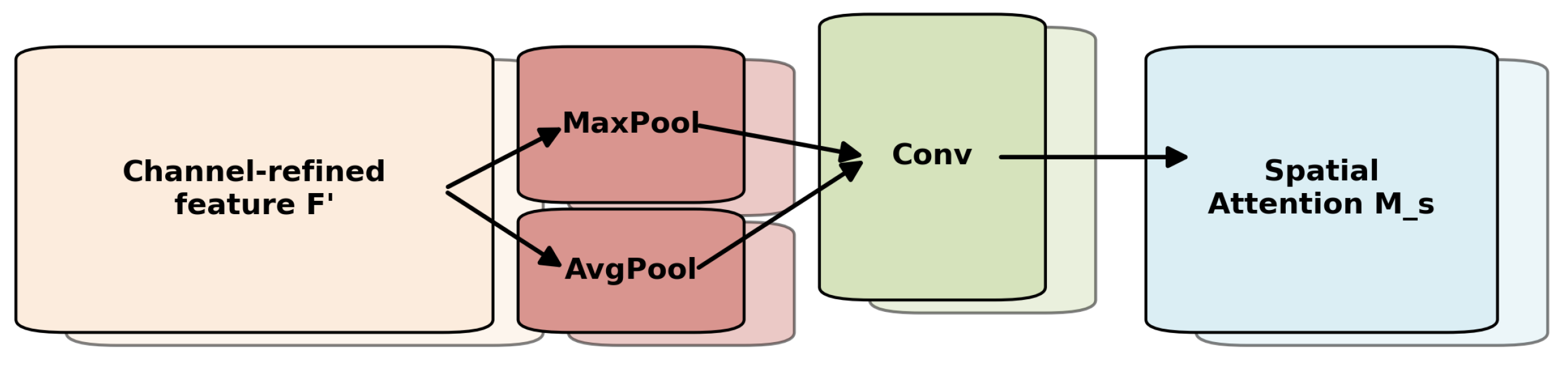
Among DL-based thermal comfort models, the attention mechanism can be applied to enhance the feature representation ability, which has attracted great interest from researchers. A simple diagram of the spatial attention mechanism (SAM) is given in Figure 4. The channel-refined feature F’ is first processed through both average pooling and max pooling operations along the channel dimension to extract complementary spatial information. The two pooled feature maps are then concatenated and passed through a convolution layer to generate the spatial attention map (M_s). The generated M_s enables the model to automatically focus on thermal comfort-sensitive regions such as nose, lips, and eye area, while suppressing interference from background and irrelevant information. Miao et al. [91] combined residual network with 34 layers (ResNet34) with the SAM for personal thermal comfort prediction. Results showed that the SAM based ResNet34 (SAM-ResNet34) achieved the accuracy of 93.75% in prediction of three types of thermal comfort states. Kang et al. [29] constructed the attention-based residual network with 50 layers (Attention-ResNet50) for thermal comfort prediction in different genders, in which the spatial attention module was embedded in the deep network architecture. Results demonstrated that the constructed model could significantly improve the prediction accuracy, with accuracy close to 100% for female subjects. Note that in the above two studies, the residual learning effectively alleviated the vanishing-gradient and performance degradation problems in deep networks through “shortcut connections”.

3.3. Model Evaluation Indicators

The performance of PTCM can be measured by various indicators. Accuracy is one of the most commonly used indicators [28,38,41,91,97,102,104,107]. It represents the proportion of samples correctly predicted by the model to the total samples, as follows:
Accuracy = T P + T N T P + T N + F P + F N
where T P , T N , F P , and F N denote true positive, true negative, false positive, and false negative, respectively. Note that when data categories are imbalanced, especially in cases with extremely skewed data, accuracy is difficult to objectively evaluate the model’s performance.
Precision [28,29,91] and recall are a pair of mutually restrictive evaluation indicators, as follows:
Precision = T P T P + F P
Recall = T P T P + F N
During the model construction process, if too much emphasis is placed on precision, some actual positive samples may not have been identified, thereby reducing recall. Conversely, if a higher recall is pursued, it may increase the false positive rate, resulting in a decrease in precision. Therefore, in practical applications, it is usually necessary to seek a balance between these two. To address this issue, F1 Score [28,30,91,104] is proposed, as follows:
F 1 Score = 2 · Precision · Recall Precision + Recall
The F1 Score can reflect the robustness of the classification model, and is particularly suitable for scenarios with imbalanced category distributions.
In addition to the above commonly used indicators, other indicators, such as the RMSE [31,74] and area under the curve (AUC) [104,117], can be employed to evaluate the model performance. RMSE measures the difference between predicted and actual values, reflecting the overall fitting degree of the model. AUC is often utilized to evaluate the discrimination ability of binary classification models, with a value closer to 1 indicating better discrimination between positive and negative samples. These indicators can provide the multi-angle evaluation criteria for comprehensive performance of thermal comfort models.
Table 5 summarizes some recent studies on data-driven personal thermal comfort models from aspects of modeling method, input and output, evaluation indicator, etc. It is concluded the following from Table 5: (1) In addition to commonly used ML models (e.g., SVM, RF, KNN), other ML models such as linear regression (LR) [72,74,118,119] and ANN [31,107,120] also demonstrate unique advantages in specific prediction scenarios. (2) Advanced DL models (CNN, LSTM, Attention-ResNet, etc.) outperform traditional ML models in complex nonlinear modeling and extraction/processing of high-dimensional features (e.g., thermographic images, multiple physiological and environmental features). (3) Various evaluation indicators are adopted for thermal comfort models. For classification tasks, accuracy, precision, recall, and F1-score are commonly utilized, with the latter being more representative in scenarios of data imbalance. For regression tasks, RMSE is often utilized to measure the model’s fitting ability to real feedback data.
Table 5. Some studies on data-driven personal thermal comfort models.
ReferenceModeling MethodModel InputModel OutputEvaluation Indicator
Machine Learning[74]SVM T f o r e h e a d , T h a n d
T l o w e r a r m , T f i n g e r
Seven-point TSRMSE: 0.6921–0.9091
[41]SVM, KNN, DT, RF T i n , R H i n
T o u t , R H o u t
Gender, Height, Weight
Cold behaviors, Hot behaviors
Three-point TP
Accuracy:
SVM: 0.57–0.87
KNN: 0.71–0.85
DT: 0.69–0.83
RF: 0.64–0.88
[102]KNN, LRG, GNB, RFEEG, PPG
EDA, T s k i n
Five-point TS
Accuracy:
KNN: 0.62–0.74
LRG: 0.68–0.79
GNB: 0.67–0.80
RF: 0.67–0.76
[103]DT, LRG, RF, GB, ANN T r i g h t f o r e h e a d , T c h i n , T l e f t f o r e h e a d
T l e f t c h e e k , T r i g h t c h e e k
Three-point TS
Three-point TP
TP: Accuracy:
DT: 0.698–1.000
LRG: 0.393–1.000
RF: 0.726–1.000
GB: 0.715–1.000
ANN: 0.944–1.000
TS: Accuracy:
DT: 0.805–1.000
LRG: 0.585–1.000
RF: 0.817–1.000
GB: 0.847–1.000
ANN: 0.947–1.000
[97]RF, LRG, SVMPCS status, T a i r
Δ T fh - cheek , Δ T fh - nose
Δ T nose - cheek
Three-point TS
Accuracy:
RF: 0.69
LRG: 0.69
SVM: 0.67
F1-Score:
RF: 0.61–0.77
LRG: 0.57–0.83
SVM: 0.60–0.79
[96]SVM T s k i n , T h a n d , T a i r
RH, T r
Time, PCS status
Three-point TS
Three-point TC
TC:
Accuracy: 0.814–0.849
AUC: 0.80
RMSE: 0.42
TS:
Accuracy: 0.936–0.952
AUC: 0.78
RMSE: 0.34
[121]RF T i n , T o u t , T s e t
H, Month, Δ T set - in , Δ T out - in ,
ACSA, ACOM
Three-point TPAccuracy: 0.753–0.873
Deep Learning[28]CNNThermographic imagesThree-point TSPrecision: 0.9786–0.9991
Recall: 0.9491–0.9995
F1 Score: 0.9640–0.9993
Accuracy: 0.9765–0.9994
[29]Attention-ResNet50Thermographic images, T h e a d ,
T b o d y
T f o o t
Three-point TCPrecision: 0.897–1.000
Recall: 0.833–1.000
Specificity: 0.914–1.000
[91]SAM-ResNet34Thermographic imagesThree-point TSAccuracy: 0.9375
Precision: 0.9416
Recall: 0.9341
F1 Score: 0.9378
[31]Mh-LSTM T k e y b o a r d , H k e y b o a r d
H l e f t h a n d , H w a l l ,
T r i g h t h a n d , H r i g h t h a n d , T l e f t h a n d ,
T w a l l
Seven-point TSRMSE: 0.2225–1.0940
[30]CNN-LSTMRH, T a i r , air speed, C O 2 level,
T b g , PM2.5, T o u t
Three-point TPAccuracy: 0.675–0.698
F1 Score: 0.636–0.658
[104]LSTMRH, T a i r , T w r i s t
T b r e a t h , HR, T a n k l e
Three-point TPAccuracy: 0.68–0.86
F1 Score: 0.66–0.81
AUC: 0.65–0.84
DT: decision tree, LRG: logistic regression, GNB: Gaussian naive Bayes, GB: gradient boosting, ANN: artificial neural network, Mh-LSTM: multi-head long short-term memory network, ΔTfh-cheek: temperature difference between forehead and cheek, ΔTfh-nose: temperature difference between forehead and nose, ΔTnose-cheek: temperature difference between nose and cheek, ACSA: HVAC setting airspeed, ACOM: HVAC operation mode, H: hours of the day, Tbody: core body temperature, Tkeyboard: temperature in front of the keyboard, Hkeyboard: humidity in front of the keyboard, Hwall: humidity in front of the wall, Tleft−hand: left hand temperature, Hleft−hand: left hand humidity, Tright−hand: right hand temperature, Hright−hand: right hand humidity, Tankle: ankle temperature, Tin: indoor temperature, Tout: outdoor temperature, RHin: indoor relative humidity, RHout: outdoor relative humidity, Tright-forehead: right forehead temperature, Tleft-forehead: left forehead temperature, Tset: setpoint temperature of HVAC, ΔTset-in: difference between HVAC setpoint and indoor temperatures, ΔTout-in: difference between outdoor and indoor temperatures.

3.4. Data-Efficient Modeling Using Transfer Learning

In recent years, TL has provided effective solutions for data-driven modeling problems in small sample scenarios [122,123,124,125]. TL can be defined as: given a source domain and a target domain, as well as a learning task, relevant knowledge is extracted from the source task to assist the model in completing the target task. For personal thermal comfort modeling, high cost and limited scale of collection experiments, and noise, ambiguity, and individual differences in subjective feedback may lead to considerable difficulties in obtaining high-quality data. As a result, training data-driven models directly on the target building data often faces issues of insufficient samples and overfitting. Considering that the human body’s perception mechanism of thermal environments has certain commonalities across different buildings, introducing TL into thermal comfort modeling tasks can improve the model’s accuracy and generalization under limited sample scenarios [126].
Some researchers have employed TL strategies to address the decline in modeling accuracy caused by the scarcity of high-quality thermal comfort samples. Table 6 summarizes some of the representative literature on TL-based thermal comfort modeling. Considering the high cost, complexity, and long duration of data collection, most studies in Table 6 directly adopt public datasets as the source domain. For instance, the ASHRAE RP-884 and Scales Project datasets were used in [81,127,128]. The ASHRAE Global Thermal Comfort Database II was used in [30]. In terms of transfer methods, the majority of these studies adopt the model-based transfer learning (MBTL). This transfer method pre-trains thermal comfort models with source domain data, and then fine-tunes parameters of the pre-trained models with a small amount of labeled target domain data to enhance the modeling accuracy of the target task. It should be pointed out that the MBTL method consumes significant computational costs in building the pre-trained models and relies on a certain amount of target domain data for parameter adjustment, which may lead to overfitting in cases of extremely scarce data. From the perspective of modeling methods, hybrid modeling methods incorporating CNN, such as CNN-LSTM and CNN-SVM, are commonly used.
Table 6. The representative literature on TL-based personal thermal comfort modeling.
ReferenceSource DomainModeling MethodTransfer Method
[81]ASHRAE RP-884, Scales ProjectCNN-LSTMMBTL
[30]ASHRAE Global Thermal Comfort Database IICNN-LSTMMBTL, IBTL
[129]Experimental AcquisitionCNN-SVMMBTL
[127]ASHRAE RP-884, Scales ProjectMLPMBTL
[128]ASHRAE RP-884, Scales ProjectCNN-LSTMMBTL
Our research team has also conducted meaningful investigations in TL-based thermal comfort modeling [130,131]. In [130], the instance-based transfer learning (IBTL) method was adopted. The physiological and environmental data were collected as the target domain data from 20 subjects in the winter office environment. The nearest neighbor search (NNS) algorithm was adopted to select samples similar to the target domain data from public datasets. An improved transfer AdaBoost (iTrAdaBoost) algorithm was proposed to dynamically adjust the weights of source domain and target domain samples. Results showed that the developed model based on NNS and iTrAdaBoost algorithms significantly outperformed other models in terms of prediction accuracy when the target domain data were scarce. In [131], various transfer methods for thermal comfort prediction were investigated based on field experiments, including MBTL, IBTL, and feature-based transfer learning (FBTL). On this basis, the above three transfer methods were combined based on a hard-voting approach to establish an ensemble transfer method. Results verified that the FBTL outperformed MBTL and IBTL in terms of prediction accuracy, as it projected the source and target domains into a shared low-dimensional Hilbert space to reduce their distribution differences. Further, the ensemble method was always superior to the other three transfer methods in model accuracy and generalization.
In general, when there is very limited on-site data, the IBTL method shows the most significant improvement in accuracy due to its ability to select similar samples from the source domain to supplement the target domain. As the size of the target domain data increases, prediction efficiency of the MBTL-based model becomes higher. The reason is that by pre-training the model on a certain amount of source domain data, it is possible to extract deep features that characterize the general patterns of human thermal response and then transfer them to the target domain for fine-tuning training, which can effectively overcome the problem of insufficient labels in the target domain. When the data distribution difference between the source and target domains is significant, the FBTL method outperforms commonly used MBTL and IBTL methods. Furthermore, by integrating the above three transfer methods in parallel, more stable and accurate prediction results can be obtained. The cost is an increase in the complexity of the established model.

4. Integration of PTCM into Building Environment Control

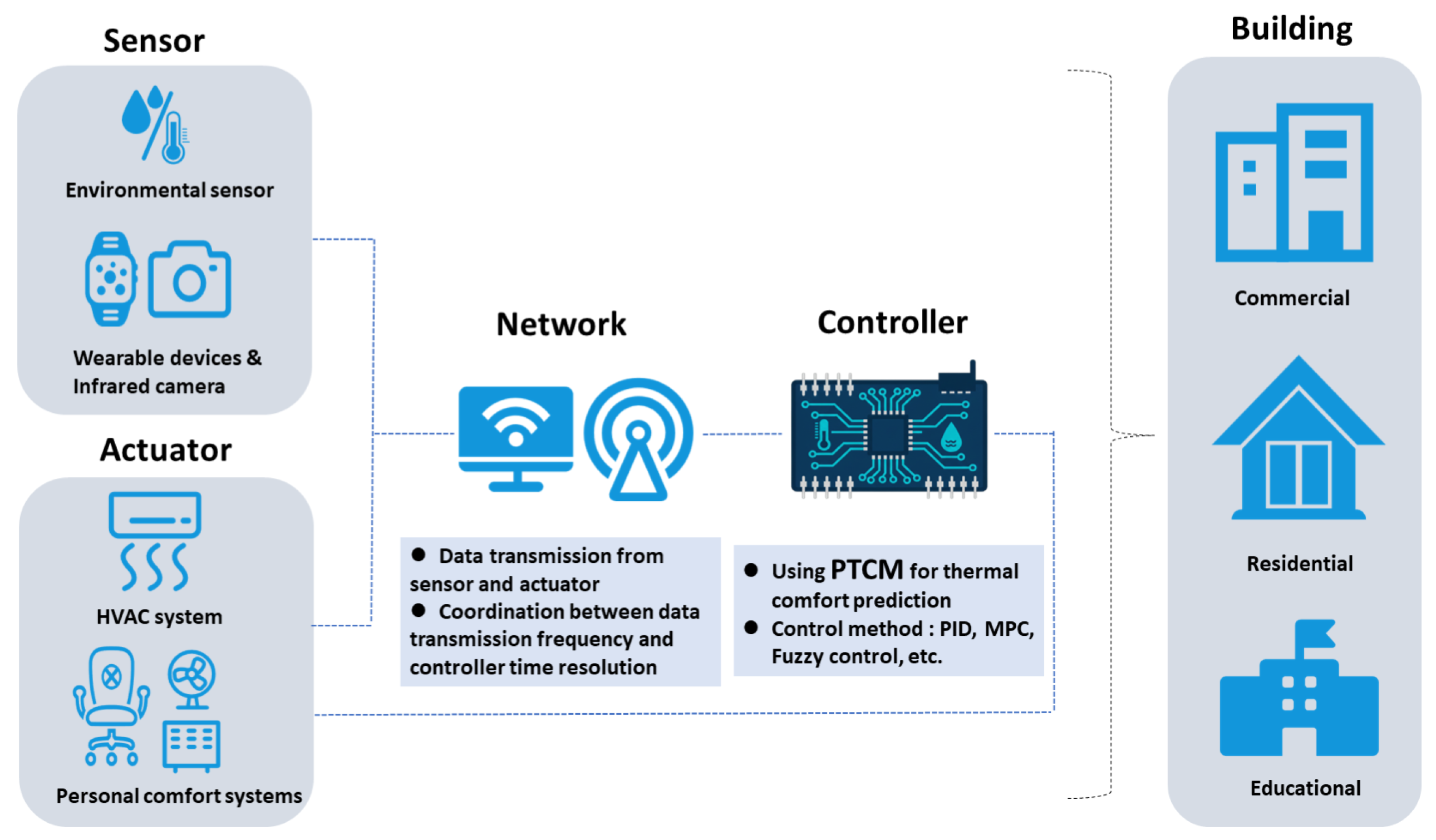
From the key features of PTCMs (see Section 1.1), it is known that integration of PTCMs into building environment control offers an opportunity to achieve occupant-centric building design. Furthermore, by providing information on comfort requirements of individuals, PTCMs can help to realize both thermal comfort improvement and building energy savings [16]. A typical integration framework is shown in Figure 5, in which multi-source sensors, communication network, controller (also called a central server), and actuators are included. Compared with data-driven personal thermal comfort modeling, the research on integrating PTCM into environmental control systems is rather limited. This is mainly because of the following: (1) Such integration relies on numerous hardware technologies, such as sensors used for input signal acquisition to predict personal thermal comfort, communication networks used for data transfer from sensors/devices to the controller, the controller used for data analysis, optimization, and actuation commands, etc. These hardware requirements significantly increase the cost and complexity of integration. (2) A significant “lab-to-field gap” exists between laboratory settings and real-world deployments, while the laboratory-trained PTCM can achieve an R 2 (determination coefficient) as high as 0.95 under strictly controlled conditions, its performance often degrades in practice due to stochastic factors such as unpredictable occupant activities and distributional shifts in outdoor weather [132]. (3) Python has become the main popular tool for implementing PTCMs due to its rich computing libraries and ease of use. Nevertheless, there are communication difficulties between Python-based PTCMs and legacy building automation protocols, e.g., protocol compatibility (Python libraries have limited support for these legacy protocols), real-time performance of communication, and complexity in data processing.
As a result, most current thermal control systems still adopt traditional temperature ranges or physics-informed comfort models (such as PMV and adaptive models). For examples, Yu et al. [133] proposed an HVAC control method based on multi-agent deep reinforcement learning (MADRL), in which ensuring indoor temperature within the prescribed range (19–24 °C) was one of the main objectives of thermal comfort control. Wu et al. [134] established the indoor environment model through computational fluid dynamics (CFD) simulation and designed the HVAC control strategy to maintain the PMV in the working area within the range of ( [ 0.2 , + 0.2 ] ). Li et al. [135] presented a MADRL-based multi-zone HVAC control method that optimized energy consumption while guaranteeing the occupant’s thermal comfort. Simulation results based on TRNSYS showed this method could save about 8.5% energy compared with traditional methods under the constraint PMV [ 0.5 , 0.5 ] . When the constraint was relaxed to PMV [ 1.0 , 1.0 ] , energy savings could reach 15.4%. Xue et al. [136] developed a hybrid strategy for multi-zone HVAC control based on a multi-agent deep deterministic policy gradient algorithm, in which the PMV was utilized for zone comfort assessment. Co-simulation using TRNSYS18.0 and MATLAB2019b demonstrated that the developed strategy could guarantee thermal comfort of zone occupants and reduce the HVAC energy consumption. Er-retby et al. [137] proposed a hybrid control framework for naturally ventilated buildings that combined adaptive thermal comfort standards with probabilistic occupant behavior models. Field test results verified that, by integrating adaptive comfort models with optimized occupancy schedules, energy consumption could be reduced by 0.25 kWh/m2 (location: Benguerir) and 0.37 kWh/m2 (location: Lyon), while indoor comfort hours be increased by 67% and 39%, respectively.
In recent years, due to the development of sensing, networking, and communication technologies, as well as the superiority of data-driven PTCMs, some researchers have attempted to embed PTCMs into building environment control to achieve more accurate and efficient environmental regulation. Table 7 summarizes some recent studies on PTCM-based control systems. It is seen that RF-based thermal comfort models are mostly utilized, while various control methods are adopted, including model predictive control (MPC), fuzzy logic control, cooperative control, discrete feedback control, etc. From the perspective of actuators, HVAC and different types of PCS were mainly employed. To list a few of the studies, in [97], an automatic PCS was developed to regulate the local environment of occupants according to the TS prediction of the RF model. The facial skin temperature, local temperature difference, air temperature and humidity, and the operating status of the PCS were taken as the input features of the RF model. Results indicated that the developed PCS achieved about a 4% improvement in TS prediction accuracy and realized good automatic operation to guarantee the thermal comfort of occupants. In [138], a PTCM was constructed based on Bayesian multinomial logistic regression (MLR). Combined with a low-cost wireless sensor network and MPC strategy, the collaborative optimization of the individual comfort and energy efficiency of the HVAC system was achieved in office buildings. In [139], a cooperative control system with PCS as the core was proposed, enabling communication between thermal state recognition, HVAC, and PCS. Specifically, the author established the RF-based PTCM using facial skin temperature and environmental parameters as input features. Recognition results of the RF model were used to start and stop the desk fans to regulate the local environment around the human body, and the HVAC was controlled according to the operating status of the PCS. Experimental results demonstrated that the proposed system could automatically regulate environments according to the TS prediction, thereby improving the occupants’ thermal comfort. In [140], a personalized thermal comfort monitoring and control system was developed based on the non-contact TS prediction. Thermal sensitive regions were recognized based on facial thermography and the YOLO algorithm. Average temperatures of these regions were extracted for the establishment of the RF-based personal TS model. Considering possible transient detection interruption, the PMV model was also combined with the established RF model in a parallel ensemble way. On the basis of personal TS prediction, a fuzzy controller was designed to regulate the HVAC through infrared signal matching. Field experiments showed the ensemble TS prediction model achieved the high accuracy of 96.07% (5-point scale). Compared with the fixed setpoint controller, the designed controller could bring about a 50% reduction of thermal stabilization time and HVAC energy consumption.
Overall, the current literature on PTCMs’ integration has obtained rather encouraging results. However, some issues still need to be noted: (1) Most of them (4/6 in Table 7) put focus on occupants’ thermal comfort improvement without considering energy savings issues. This may be attributed to difficulties in accurate quantification or measurement of energy savings in some practical situations. (2) Most of them adopted traditional control methods (MPC, fuzzy logic control, and discrete feedback control). Among them, MPC optimizes the operation of HVAC by predicting the future indoor environment and demonstrates higher efficiency in balancing energy consumption and thermal comfort. However, following shortcomings of MPC restrict its practical applications: strong dependence on building thermal dynamics and physical installation variation between buildings. Compared with MPC, advanced digital twin-based framework [141] (which enables the creation of a virtual replica of the building’s physical environment) and model-free methods (such as neural network control and reinforcement learning control) have the potential to achieve better control performance.
Table 7. Studies on PTCM-based building environment control systems.
Reference (Year)Control MethodActuatorThermal Comfort ModelControl Effect Based on Field Experiments
[139] (2022)Cooperative controlHVAC, PCSRFRegulate environments at different spatial scales automatically. Improve thermal comfort.
[97] (2023)On-off controlPCSRFAchieve the TS prediction accuracy of 69%. Ensure the comfort of the personnel.
[138] (2023)MPCHVACMLRIncrease occupant thermal comfort. Achieve 28–35% energy savings vs. static setpoint control.
[142] (2020)Multi-level automationPCSRF, KNNRealize different levels of automation control. Improve occupant satisfaction from 0.643 to 1.143 .
[143] (2023)Discrete feedback controlHVACRFAchieve a high TS prediction accuracy of 0.84. Accomplish automatic HVAC control to ensure indoor thermal comfort.
[140] (2026)Fuzzy logic controlHVACEnsemble model using RF and PMVAchieve the TS prediction accuracy of 96.07% (5-point scale). Reduce both the thermal stabilization time and energy consumption.

5. Discussion

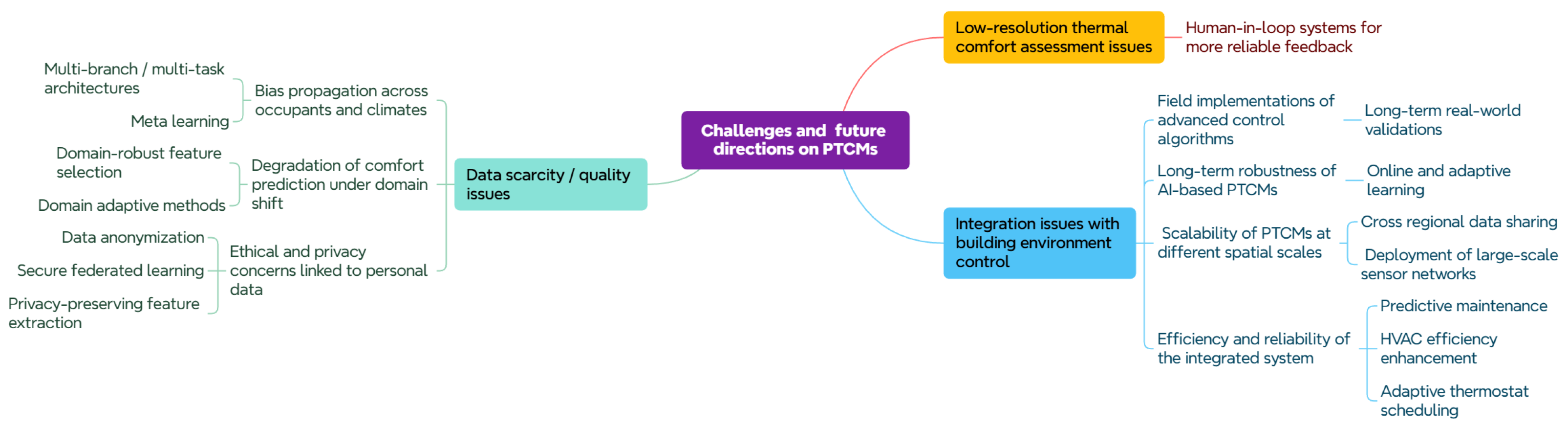
This study systematically reviews the research progress in the field of data-driven personal thermal comfort modeling. Compared with traditional PMV and adaptive models, data-driven models (particularly using DL and TL techniques) demonstrate significant advantages in capturing the individual thermal preference and improving prediction accuracy. This finding not only confirms the great potential of AI technology in handling high-dimensional, non-linear physiological and environmental data, but also lays the foundation for building truly personalized, adaptive indoor environmental control systems. However, pushing PTCM from research to practical applications still faces several challenges worthy of further research. Figure 6 presents a concise roadmap to highlight these challenges and future directions.

5.1. Data Scarcity/Quality Issues

In the field of data-driven thermal comfort modeling, the high cost, limited scale, and low quality of data acquisition (especially personal physiological data) are the core bottlenecks, which directly restrict the accuracy and cross scenario generalization ability of the model. Collecting personal physiological markers usually requires physiological sensors to be used in special experimental scenarios. The entire procedure is expensive and time-consuming. In addition, due to individual differences in thermal sensation, the distribution characteristics of the dataset may vary with different populations and climate regions, resulting in poor generalization of the prediction model.
To overcome this limitation, transfer learning, as an efficient machine learning paradigm, provides an important technical path. Specifically, when local data of the target population is scarce, the performance of the target model can be significantly improved by leveraging large-scale thermal comfort data that already exists in the source domain (such as buildings in other climate zones, public datasets, or simulation platforms). Although transfer learning shows great potential in addressing data scarcity, it has the following several limitations [144,145,146]: (1) Bias propagation across occupants and climates, particularly when the target dataset is rather small. (2) Degradation of comfort prediction under domain shift. (3) Ethical and privacy concerns linked to personal data.
Regarding the aforementioned limitations, further explorations are necessary to improve the performance of transfer learning: (1) Bias-aware transfer learning using multi-branch or multi-task architectures and meta-learning approaches, which can be employed to disentangle occupant- and climate-specific factors and enable rapid personalization with limited target data. (2) Feature selection methods to select model features that are insensitive to domain changes, or domain adaptive methods including feature alignment, model parameter adaptation, and model adversarial training. (3) Data anonymization and de-identification, federated learning with secure aggregation, privacy-preserving feature extraction, and end-to-end encryption with strict access control.

5.2. Low-Resolution Thermal Comfort Assessment Issues

Real-time, personalized thermal comfort regulation relies on continuous and precise individual thermal state perception. Facial temperature or other body skin temperatures can reflect extreme states of “hot” or “cold”. However, it is difficult to accurately distinguish the subtle and most comfortable thermal sensation levels, such as “neutral cool” and “neutral warm”, resulting in insufficient granularity for thermal comfort regulation.
An effective solution is to acknowledge the inherent limitations of non-contact perception and treat humans as “smart sensors” and ultimate judges in a closed loop, compensating for the shortcomings of machines with minimal and most natural interactions. For instance, monitor personal behaviors such as adjusting fans or standing up to open windows, and use them as more reliable signals of thermal discomfort than facial temperature. When the model uncertainty is high or the regulatory effect does not meet expectations, obtain high-quality labels through minimalist interactions (such as smart speakers asking “Do you feel hot now?” or asking users to provide quick feedback with “thumbs up/down” on the phone screen) to fine tune the model online.

5.3. Integration Issues with Building Environment Control

The consensus among PTCM developers is that, eventually, the PTCM should be applied to building environment control. Currently, most PTCM-related literature focuses on the advanced modeling techniques rather than applying the PTCM to actual control scenarios [143]. Some studies have achieved the integration of PTCM with the HVAC system or PCS and demonstrated the potential of integrated systems in improving thermal comfort and energy efficiency. Nevertheless, these studies still remain at the stage of simulation or small-scale experimental validation. From the practical application perspective, quite a few objective difficulties exist in PTCMs’ integration, e.g., cost and complexity of integration, performance gaps between laboratory-based and real-world deployments, and limitations on protocol compatibility (see Section 4). In addition, there are some engineering challenges as follows: (1) field implementations of advanced control algorithms (such as reinforcement learning); (2) long-term robustness of AI-based PTCMs; (3) scalability of PTCMs at different spatial scales (zone, building, and district); and (4) efficiency and reliability of the integrated system.
In response to the above challenges, future research can focus on the following aspects: (1) Extensive verification of advanced control algorithms using long-term validation in real, large-scale building environments. (2) Online learning frameworks and adaptive learning mechanisms for PTCMs. (3) Spatial scalability enhancement of PTCMs, including cross regional data sharing, and deployment from a small number of sensors to large-scale sensor networks. (4) Advanced fault diagnosis and predictive maintenance of the integrated system [147], data-driven HVAC efficiency enhancement, and adaptive thermostat scheduling.

6. Conclusions

This study reviews some of the current literature published in the area of personal thermal comfort modeling using advanced data-driven techniques. Five parts are highlighted as follows: (1) Thermal comfort data collection is discussed, including four data types (environmental data, physiological data, behavioral data, and subjective feedback data), two collection ways (contact-based and non-contact), and data correlation analysis methods. (2) A comprehensive review is conducted on personal thermal comfort modeling using ML/DL and evaluation indicators for PTCMs. It is known that SVM, RF, and KNN are the three most commonly used ML-based models. Compared with these ML-based models, DL-based models (e.g., CNN, LSTM, residual network with SAM) exhibit higher accuracy and stronger robustness in predicting individual thermal comfort. (3) The TL-based thermal comfort modeling in sample scarcity scenarios is investigated. Four transfer methods are analyzed and compared. It is concluded that the FBTL and ensemble methods outperform the MBTL and IBTL methods when the data distribution difference between the target and source domains is significant. (4) From the practical point of view, the PTCM-based building environment control systems are reviewed and discussed. The application potential of integrating the PTCM with thermal control is analyzed in terms of thermal comfort improvement and building energy saving. (5) Some challenges and future directions are proposed from perspectives of data scarcity, low-resolution assessment of thermal comfort, and integration of PTCMs into control systems.

Author Contributions

Conceptualization, W.X. and K.L.; methodology, X.H. and W.X.; formal analysis, X.H. and G.C.; investigation, X.H., W.X., and G.C.; writing—original draft preparation, X.H. and W.X.; writing—review and editing, W.X. and K.L.; supervision, W.X. and K.L.; funding acquisition, W.X. All authors have read and agreed to the published version of the manuscript.

Funding

This research was funded by Key Research and Development Program in Zhenjiang under Grant number SH2023108.

Data Availability Statement

No new data were created or analyzed in this study. Data sharing is not applicable to this article.

Conflicts of Interest

The authors declare no conflicts of interest.

Abbreviations

AdaBoostadaptive boosting
AdaLSTMadaptive boosting long short-term memory
AIartificial intelligence
ANNartificial neural network
ASHRAEAmerican society of heating refrigerating and air-conditioning engineers
AUCarea under the curve
BMIbody mass index
CFDcomputational fluid dynamics
CNNconvolutional neural network
DLdeep learning
DTdecision tree
EDAelectrodermal activity
EEGelectroencephalogram
ESIessential science indicators
FBTLfeature-based transfer learning
FFNNfeed-forward neural network
GBgradient boosting
GNBgaussian naive bayes
HRheart rate
HRVheart rate variability
HVACheating, ventilation, and air conditioning
IBTLinstance-based transfer learning
KNNk-nearest neighbor
LRlinear regression
LRGlogistic regression
LSTMlong short-term memory network
MADRLmulti-agent deep reinforcement learning
MBTLmodel-based transfer learning
Mh-LSTMmulti-head long short-term memory network
MLmachine learning
MLRmultinomial logistic regression
MPCmodel predictive control
MRTmean radiant temperature
NNSnearest neighbor search
PCSpersonal comfort system
PMVpredicted mean vote
PPDpredicted percentage dissatisfied
PPGphotoplethysmography
PTCMpersonal thermal comfort model
RFrandom forest
RHrelative humidity
RMSEroot mean square error
RNNrecurrent neural network
SAMspatial attention mechanism
SVMsupport vector machine
TCthermal comfort
TCVthermal comfort voting
TLtransfer learning
TPthermal preference
TPVthermal preference voting
TSthermal sensation
TSVthermal sensation voting
TUVthermal unacceptability voting

References

  1. Fu, C.; Zheng, Z.; Mak, C.M.; Fang, Z.; Oladokun, M.O.; Zhang, Y.; Tang, T. Thermal comfort study in prefab construction site office in subtropical China. Energy Build. 2020, 217, 109958. [Google Scholar] [CrossRef]
  2. Fanger, P. Thermal environment—Human requirements. Environmentalist 1986, 6, 275–278. [Google Scholar] [CrossRef]
  3. Boumans, R.J.; Phillips, D.L.; Victery, W.; Fontaine, T.D. Developing a model for effects of climate change on human health and health–environment interactions: Heat stress in Austin, Texas. Urban Clim. 2014, 8, 78–99. [Google Scholar] [CrossRef]
  4. Arsenovic, D.; Lehnert, M.; Fiedor, D.; Šimáček, P.; Středová, H.; Středa, T.; Savić, S. Heat-waves and mortality in Czech cities: A case study for the summers of 2015 and 2016. Geogr. Pannonica 2019, 23, 162–172. [Google Scholar] [CrossRef]
  5. Cheung, T.; Schiavon, S.; Parkinson, T.; Li, P.; Brager, G. Analysis of the accuracy on PMV–PPD model using the ASHRAE Global Thermal Comfort Database II. Build. Environ. 2019, 153, 205–217. [Google Scholar] [CrossRef]
  6. Wei, D.; Yang, L.; Bao, Z.; Lu, Y.; Yang, H. Variations in outdoor thermal comfort in an urban park in the hot-summer and cold-winter region of China. Sustain. Cities Soc. 2022, 77, 103535. [Google Scholar] [CrossRef]
  7. Zhuang, D.; Gan, V.J.; Tekler, Z.D.; Chong, A.; Tian, S.; Shi, X. Data-driven predictive control for smart HVAC system in IoT-integrated buildings with time-series forecasting and reinforcement learning. Appl. Energy 2023, 338, 120936. [Google Scholar] [CrossRef]
  8. Čulić, A.; Nižetić, S.; Šolić, P.; Perković, T.; Čongradac, V. Smart monitoring technologies for personal thermal comfort: A review. J. Clean. Prod. 2021, 312, 127685. [Google Scholar] [CrossRef]
  9. Merabet, G.H.; Essaaidi, M.; Haddou, M.B.; Qolomany, B.; Qadir, J.; Anan, M.; Al-Fuqaha, A.; Abid, M.R.; Benhaddou, D. Intelligent building control systems for thermal comfort and energy-efficiency: A systematic review of artificial intelligence-assisted techniques. Renew. Sustain. Energy Rev. 2021, 144, 110969. [Google Scholar] [CrossRef]
  10. Li, D.; Menassa, C.C.; Kamat, V.R. Personalized human comfort in indoor building environments under diverse conditioning modes. Build. Environ. 2017, 126, 304–317. [Google Scholar] [CrossRef]
  11. Fanger, P.O. Thermal Comfort. Analysis and Applications in Environmental Engineering; Danish Technical Press: Copenhagen, Denmark, 1970. [Google Scholar]
  12. Yao, R.; Zhang, S.; Du, C.; Schweiker, M.; Hodder, S.; Olesen, B.W.; Toftum, J.; d’Ambrosio, F.R.; Gebhardt, H.; Zhou, S.; et al. Evolution and performance analysis of adaptive thermal comfort models—A comprehensive literature review. Build. Environ. 2022, 217, 109020. [Google Scholar] [CrossRef]
  13. Nicol, J.F.; Humphreys, M.A. Thermal comfort as part of a self-regulating system. Build. Res. Inf. 1973, 1, 174–179. [Google Scholar] [CrossRef]
  14. Yao, R.; Li, B.; Liu, J. A theoretical adaptive model of thermal comfort–Adaptive Predicted Mean Vote (aPMV). Build. Environ. 2009, 44, 2089–2096. [Google Scholar] [CrossRef]
  15. Zhou, B.; Huang, Y.; Nie, J.; Ding, L.; Sun, C.; Chen, B. Modification and verification of the PMV model to improve thermal comfort prediction at low pressure. J. Therm. Biol. 2023, 117, 103722. [Google Scholar] [CrossRef] [PubMed]
  16. Kim, J.; Schiavon, S.; Brager, G. Personal comfort models—A new paradigm in thermal comfort for occupant-centric environmental control. Build. Environ. 2018, 132, 114–124. [Google Scholar] [CrossRef]
  17. Auffenberg, F.; Stein, S.; Rogers, A. A personalised thermal comfort model using a Bayesian network. In Proceedings of the Twenty-Fourth International Joint Conference on Artificial Intelligence (IJCAI 2015), Buenos Aires, Argentina, 25–31 July 2015. [Google Scholar]
  18. De La Hoz-Torres, M.L.; Aguilar, A.J.; Ruiz, D.P.; Martínez-Aires, M.D. An investigation of indoor thermal environments and thermal comfort in naturally ventilated educational buildings. J. Build. Eng. 2024, 84, 108677. [Google Scholar] [CrossRef]
  19. Shajalal, M.; Bohlouli, M.; Das, H.P.; Boden, A.; Stevens, G. Improved thermal comfort model leveraging conditional tabular GAN focusing on feature selection. IEEE Access 2024, 12, 30039–30053. [Google Scholar] [CrossRef]
  20. Alam, N.; Zaki, S.A.; Ahmad, S.A.; Singh, M.K.; Azizan, A.; Othman, N. Machine learning approach for predicting personal thermal comfort in air conditioning offices in Malaysia. Build. Environ. 2024, 266, 112083. [Google Scholar] [CrossRef]
  21. Bai, Y.; Liu, L.; Liu, K.; Yu, S.; Shen, Y.; Sun, D. Non-intrusive personal thermal comfort modeling: A machine learning approach using infrared face recognition. Build. Environ. 2024, 247, 111033. [Google Scholar] [CrossRef]
  22. Odeyemi, J.; Streblow, R. Thermal Preference Prediction with Machine Learning. In Proceedings of the 10th ACM International Conference on Systems for Energy-Efficient Buildings, Cities, and Transportation, Istanbul, Turkey, 15–16 November 2023; pp. 303–304. [Google Scholar]
  23. Sahoh, B.; Chaithong, P.; Heembu, F.; Yeranee, K.; Punsawad, Y. Physiological Signals-Driven Personal Thermal Comfort System Based on Environmental Intervention. IEEE Access 2023, 11, 142903–142915. [Google Scholar] [CrossRef]
  24. Marchenko, A.; Temeljotov-Salaj, A.; Rizzardi, V.; Oksavik, O. The study of facial muscle movements for non-invasive thermal discomfort detection via bio-sensing technology. Part I: Development of the experimental design and description of the collected data. Appl. Sci. 2020, 10, 7315. [Google Scholar] [CrossRef]
  25. Tartarini, F.; Schiavon, S.; Quintana, M.; Miller, C. Personal comfort models based on a 6-month experiment using environmental parameters and data from wearables. Indoor Air 2022, 32, e13160. [Google Scholar] [CrossRef] [PubMed]
  26. Zheng, Q.; Zhou, X.; Li, X.; Liang, Y.; Cao, B.; He, Y.; Li, P.; Luo, M. Usage behavior and comfort effects of IoT-connected personalized environmental control systems. J. Build. Eng. 2024, 98, 111487. [Google Scholar] [CrossRef]
  27. Yang, C.; Taniguchi, K.; Miyata, S.; Akashi, Y. Integrated Personalized Thermal Comfort Model for Input Variable Reduction. In Proceedings of the 10th ACM International Conference on Systems for Energy-Efficient Buildings, Cities, and Transportation, Istanbul, Turkey, 15–16 November 2023; pp. 271–273. [Google Scholar]
  28. Zakka, V.G.; Lee, M.; Zhang, R.; Huang, L.; Jung, S.; Hong, T. Non-invasive vision-based personal comfort model using thermographic images and deep learning. Autom. Constr. 2024, 168, 105811. [Google Scholar] [CrossRef]
  29. Kang, L.; Huan, G.; Xuejin, Z.; Hua, Z.; Binlin, D.; Ni, L.; Yi, Z.; Ran, T.; Qize, H.; Lin, S. Deep learning and thermographic imaging method for thermal comfort prediction in different genders. Int. J. Therm. Sci. 2024, 197, 108804. [Google Scholar] [CrossRef]
  30. Tekler, Z.D.; Lei, Y.; Chong, A. Data-efficient comfort modeling: Active transfer learning for predicting personal thermal comfort using limited data. Energy Build. 2024, 319, 114507. [Google Scholar] [CrossRef]
  31. Cho, J.; Shin, H.; Ahn, Y.; Ho, J. The Personalized Thermal Comfort Prediction Using an MH-LSTM Neural Network Method. Adv. Civ. Eng. 2024, 2024, 2106137. [Google Scholar] [CrossRef]
  32. Wang, T.; Li, X.; Lu, Y.; Dong, L.; Shi, F.; Lin, Z. An efficient thermal comfort prediction method for indoor airflow environment using a CFD-based deep learning model. Build. Environ. 2025, 267, 112246. [Google Scholar] [CrossRef]
  33. Rida, M.; Abdelfattah, M.; Alahi, A.; Khovalyg, D. Toward contactless human thermal monitoring: A framework for Machine Learning-based human thermo-physiology modeling augmented with computer vision. Build. Environ. 2023, 245, 110850. [Google Scholar] [CrossRef]
  34. Liu, P.; Zhao, T.; Luo, J.; Lei, B.; Frei, M.; Miller, C.; Biljecki, F. Towards human-centric digital twins: Leveraging computer vision and graph models to predict outdoor comfort. Sustain. Cities Soc. 2023, 93, 104480. [Google Scholar] [CrossRef]
  35. Zhao, Q.; Lian, Z.; Lai, D. Thermal comfort models and their developments: A review. Energy Built Environ. 2021, 2, 21–33. [Google Scholar] [CrossRef]
  36. Martins, L.A.; Soebarto, V.; Williamson, T. A systematic review of personal thermal comfort models. Build. Environ. 2022, 207, 108502. [Google Scholar] [CrossRef]
  37. Fard, Z.Q.; Zomorodian, Z.S.; Korsavi, S.S. Application of machine learning in thermal comfort studies: A review of methods, performance and challenges. Energy Build. 2022, 256, 111771. [Google Scholar] [CrossRef]
  38. Feng, Y.; Liu, S.; Wang, J.; Yang, J.; Jao, Y.L.; Wang, N. Data-driven personal thermal comfort prediction: A literature review. Renew. Sustain. Energy Rev. 2022, 161, 112357. [Google Scholar] [CrossRef]
  39. Chen, K.; Xu, Q.; Leow, B.; Ghahramani, A. Personal thermal comfort models based on physiological measurements—A design of experiments based review. Build. Environ. 2023, 228, 109919. [Google Scholar] [CrossRef]
  40. Li, K.; Liu, F.; Luo, Y.; Khoso, M.A. Non-Invasive Multivariate Prediction of Human Thermal Comfort Based on Facial Temperatures and Thermal Adaptive Action Recognition. Energies 2025, 18, 2332. [Google Scholar] [CrossRef]
  41. Liu, Y.; Xu, H.; Zheng, P.; Lin, B.; Wu, H.; Huang, Y.; Li, Z. Thermal preference prediction based on occupants’ adaptive behavior in indoor environments-A study of an air-conditioned multi-occupancy office in China. Build. Environ. 2021, 206, 108355. [Google Scholar] [CrossRef]
  42. Jiang, Y.; Xie, Y.; Liang, H.; Zhang, H.; Goto, T.; Niu, J. Developing a physiological-parameter-based thermal sensation model for warm-biased outdoor settings: The steady-state part. Sustain. Cities Soc. 2025, 118, 106020. [Google Scholar] [CrossRef]
  43. Aryal, A.; Becerik-Gerber, B. Thermal comfort modeling when personalized comfort systems are in use: Comparison of sensing and learning methods. Build. Environ. 2020, 185, 107316. [Google Scholar] [CrossRef]
  44. Yu, C.; Li, B.; Wu, Y.; Chen, B.; Kosonen, R.; Kilpelainen, S.; Liu, H. Performances of machine learning algorithms for individual thermal comfort prediction based on data from professional and practical settings. J. Build. Eng. 2022, 61, 105278. [Google Scholar] [CrossRef]
  45. Wang, J.; Li, Q.; Zhu, G.; Kong, W.; Peng, H.; Wei, M. Recognition and prediction of elderly thermal sensation based on outdoor facial skin temperature. Build. Environ. 2024, 253, 111326. [Google Scholar] [CrossRef]
  46. Wang, B.; Zhao, H.; Han, B.; Jiang, X. An Investigation of Outdoor Thermal Comfort Assessment for Elderly Individuals in a Field Study in Northeastern China. Buildings 2023, 13, 2458. [Google Scholar] [CrossRef]
  47. Carton, Q.; Møller, J.K.; Favero, M.; Calì, D.; Kolarik, J.; Breesch, H. Predicting individual thermal preferences in an office: Assessing the performance of mixed-effects models. Build. Environ. 2024, 261, 111751. [Google Scholar] [CrossRef]
  48. Xi, H.; Wang, B.; Hou, W. Machine learning-based prediction of indoor thermal comfort in traditional Chinese dwellings: A case study of Hankou Lifen. Case Stud. Therm. Eng. 2024, 61, 105048. [Google Scholar] [CrossRef]
  49. Yelisetti, S.; Saini, V.K.; Kumar, R. Data Driven Thermal Comfort Model For Smart Home Energy Management System. In Proceedings of the 2022 IEEE International Conference on Power Electronics, Drives and Energy Systems (PEDES), Jaipur, India, 14–17 December 2022; IEEE: Piscataway, NJ, USA, 2022; pp. 1–6. [Google Scholar]
  50. Rysanek, A.; Nuttall, R.; McCarty, J. Forecasting the impact of climate change on thermal comfort using a weighted ensemble of supervised learning models. Build. Environ. 2021, 190, 107522. [Google Scholar] [CrossRef]
  51. Peng, Y.; Feng, T.; Timmermans, H.J. Heterogeneity in outdoor comfort assessment in urban public spaces. Sci. Total Environ. 2021, 790, 147941. [Google Scholar] [CrossRef] [PubMed]
  52. Fang, Z.; Zheng, Z.; Feng, X.; Shi, D.; Lin, Z.; Gao, Y. Investigation of outdoor thermal comfort prediction models in South China: A case study in Guangzhou. Build. Environ. 2021, 188, 107424. [Google Scholar] [CrossRef]
  53. Lee, S.; Karava, P.; Tzempelikos, A.; Bilionis, I. A smart and less intrusive feedback request algorithm towards human-centered HVAC operation. Build. Environ. 2020, 184, 107190. [Google Scholar] [CrossRef]
  54. Zheng, W.; Feng, R.; Wang, Y.; Shao, T.; Chow, D.; Zhang, L. Fundamental Research on Sustainable Building Design for the Rural Elderly: A Field Study of Various Subjective Responses to Thermal Environments and Comfort Demands during Summer in Xi’an, China. Sustainability 2024, 16, 7778. [Google Scholar] [CrossRef]
  55. Zhou, H.; Yu, W.; Zhao, K.; Shan, H.; Zhou, S.; Zhang, Y.; Wang, H.; Wei, S. Adaptative thermal comfort analysis in the elderly based on Fried frailty classification in residential buildings during summer. Build. Environ. 2024, 252, 111262. [Google Scholar] [CrossRef]
  56. Tekler, Z.D.; Lei, Y.; Peng, Y.; Miller, C.; Chong, A. A hybrid active learning framework for personal thermal comfort models. Build. Environ. 2023, 234, 110148. [Google Scholar] [CrossRef]
  57. Zhou, Z.; Jiao, R.; Dong, L. The influence of perceived control on outdoor thermal comfort: A case study in a hot summer and warm winter climate. Build. Environ. 2023, 245, 110872. [Google Scholar] [CrossRef]
  58. Rugani, R.; Bernagozzi, M.; Picco, M.; Salvadori, G.; Marengo, M.; Zhang, H.; Fantozzi, F. Thermal comfort and energy efficiency evaluation of a novel conductive-radiative Personal Comfort System. Build. Environ. 2023, 244, 110787. [Google Scholar] [CrossRef]
  59. Yang, B.; Li, X.; Liu, Y.; Chen, L.; Guo, R.; Wang, F.; Yan, K. Comparison of models for predicting winter individual thermal comfort based on machine learning algorithms. Build. Environ. 2022, 215, 108970. [Google Scholar] [CrossRef]
  60. Pigliautile, I.; Casaccia, S.; Morresi, N.; Arnesano, M.; Pisello, A.L.; Revel, G.M. Assessing occupants’ personal attributes in relation to human perception of environmental comfort: Measurement procedure and data analysis. Build. Environ. 2020, 177, 106901. [Google Scholar] [CrossRef]
  61. Liu, W.; Tian, X.; Yang, D.; Deng, Y. Evaluation of individual thermal sensation at raised indoor temperatures based on skin temperature. Build. Environ. 2021, 188, 107486. [Google Scholar] [CrossRef]
  62. Chaudhuri, T.; Soh, Y.C.; Li, H.; Xie, L. Machine learning driven personal comfort prediction by wearable sensing of pulse rate and skin temperature. Build. Environ. 2020, 170, 106615. [Google Scholar] [CrossRef]
  63. Zhou, X.; Miao, Z.; Yuan, M.; Li, K.; Guo, H.; Lin, X.; Zeng, Y.; Tu, R.; Zhong, J. Dual-phase prediction model of passenger thermal sensation using facial thermal imaging and environmental factors. Case Stud. Therm. Eng. 2024, 58, 104439. [Google Scholar] [CrossRef]
  64. Kliangkhlao, M.; Haruehansapong, K.; Yeranee, K.; Tipsavak, A.; Sahoh, B. Electrodermal activity and heart rate variability–driven personal thermal comfort prediction and explanation. Build. Environ. 2024, 265, 111921. [Google Scholar] [CrossRef]
  65. Yu, M.; Tang, Z.; Tao, Y.; Ma, L.; Liu, Z.; Dai, L.; Zhou, H.; Liu, M.; Li, Z. Thermal comfort prediction in multi-occupant spaces based on facial temperature and human attributes identification. Build. Environ. 2024, 262, 111772. [Google Scholar] [CrossRef]
  66. Kim, B.Y.; Ham, Y. Personal thermal comfort modeling based on facial expression. J. Build. Eng. 2023, 75, 106956. [Google Scholar] [CrossRef]
  67. Li, D.; Menassa, C.C.; Kamat, V.R.; Byon, E. HEAT-human embodied autonomous thermostat. Build. Environ. 2020, 178, 106879. [Google Scholar] [CrossRef]
  68. Wang, L.; Dalgo, D.A.; Mattise, N.; Zhu, S.; Srebric, J. Physiological responses and data-driven thermal comfort models with personal conditioning devices (PCD). Build. Environ. 2023, 236, 110290. [Google Scholar] [CrossRef]
  69. Xu, M.; Han, Y.; Liu, Q.; Zhao, L. Action-based personalized dynamic thermal demand prediction with video cameras. Build. Environ. 2022, 223, 109457. [Google Scholar] [CrossRef]
  70. Xu, T.; Yao, R.; Du, C.; Li, B. Outdoor thermal perception and heatwave adaptation effects in summer—A case study of a humid subtropical city in China. Urban Clim. 2023, 52, 101724. [Google Scholar] [CrossRef]
  71. Fakir, M.H.; Kim, J.K. Prediction of individual thermal sensation from exhaled breath temperature using a smart face mask. Build. Environ. 2022, 207, 108507. [Google Scholar] [CrossRef]
  72. Wang, Z.; Zhang, Y.; Xia, Y.; Chen, X.; Liu, J. Study on personal comfort heating system and human thermal comfort in extremely low-temperature building environments. Build. Environ. 2024, 259, 111640. [Google Scholar] [CrossRef]
  73. Warthmann, A.; Syndicus, M.; Treeck, C.v. Equivalent contact temperature (ECT) for personal comfort assessment–definition of comfort limits for winter conditions. Ergonomics 2025, 68, 1920–1938. [Google Scholar] [CrossRef]
  74. Qi, Y.; Wang, R.; Zhao, C.; Ding, C.; Du, C.; Zhang, J.; Zhang, X.; Chen, X.; Zhang, M.; Bie, Q.; et al. A personalized regression model for predicting thermal sensation based on local skin temperature in moderate summer conditions. Energy Build. 2023, 301, 113719. [Google Scholar] [CrossRef]
  75. Wong, L.T.; Chan, M.T.; Zhang, D.; Mui, K.W. Impact of thermal comfort on online learning performance. Build. Environ. 2023, 236, 110291. [Google Scholar] [CrossRef]
  76. Quintana, M.; Schiavon, S.; Tartarini, F.; Kim, J.; Miller, C. Cohort comfort models—Using occupant’s similarity to predict personal thermal preference with less data. Build. Environ. 2023, 227, 109685. [Google Scholar] [CrossRef]
  77. Zakka, V.G.; Lee, M. A generalized thermal comfort model using thermographic images and compact convolutional transformers: Towards scalable and adaptive occupant comfort optimization. Build. Environ. 2024, 266, 112118. [Google Scholar] [CrossRef]
  78. Feng, Y.; Wang, J.; Wang, N.; Chen, C. Alert-based wearable sensing system for individualized thermal preference prediction. Build. Environ. 2023, 232, 110047. [Google Scholar] [CrossRef]
  79. Marchenko, A.; Temeljotov-Salaj, A. A systematic literature review of non-invasive indoor thermal discomfort detection. Appl. Sci. 2020, 10, 4085. [Google Scholar] [CrossRef]
  80. Zhang, H.; Lee, S.; Tzempelikos, A. Bayesian meta-learning for personalized thermal comfort modeling. Build. Environ. 2024, 249, 111129. [Google Scholar] [CrossRef]
  81. Jiao, Y.; Tan, Z. Enhancing indoor thermal comfort prediction in tropical regions: A transfer learning strategy in West Bengal. J. Build. Eng. 2024, 98, 111142. [Google Scholar] [CrossRef]
  82. Srivastava, K. Prediction Model for Personal Thermal Comfort for Naturally Ventilated Smart Buildings. In Proceedings of the ICETIT 2019: Emerging Trends in Information Technology; Springer: Berlin/Heidelberg, Germany, 2020; pp. 117–127. [Google Scholar]
  83. Fayyaz, M.; Farhan, A.A.; Javed, A.R. Thermal comfort model for HVAC buildings using machine learning. Arab. J. Sci. Eng. 2022, 47, 2045–2060. [Google Scholar] [CrossRef]
  84. Deng, M.; Fu, B.; Menassa, C.C.; Kamat, V.R. Learning-Based personal models for joint optimization of thermal comfort and energy consumption in flexible workplaces. Energy Build. 2023, 298, 113438. [Google Scholar] [CrossRef]
  85. Bai, Y.; Liu, K.; Wang, Y. Comparative analysis of thermal preference prediction performance in different conditions using ensemble learning models based on ASHRAE Comfort Database II. Build. Environ. 2022, 223, 109462. [Google Scholar] [CrossRef]
  86. Wang, Z.; Zhang, H.; He, Y.; Luo, M.; Li, Z.; Hong, T.; Lin, B. Revisiting individual and group differences in thermal comfort based on ASHRAE database. Energy Build. 2020, 219, 110017. [Google Scholar] [CrossRef]
  87. Wang, Z.; Wang, J.; He, Y.; Liu, Y.; Lin, B.; Hong, T. Dimension analysis of subjective thermal comfort metrics based on ASHRAE Global Thermal Comfort Database using machine learning. J. Build. Eng. 2020, 29, 101120. [Google Scholar] [CrossRef]
  88. Nadarajah, P.D.; Lakmal, H.; Singh, M.K.; Zaki, S.A.; Ooka, R.; Rijal, H.; Mahapatra, S. Identification and application of the best-suited machine learning algorithm based on thermal comfort data characteristic: A data-driven approach. J. Build. Eng. 2024, 95, 110319. [Google Scholar] [CrossRef]
  89. Lan, H.; Hou, H.C.; Gou, Z. A machine learning led investigation to understand individual difference and the human-environment interactive effect on classroom thermal comfort. Build. Environ. 2023, 236, 110259. [Google Scholar] [CrossRef]
  90. Li, K.; Yu, R.; Liu, Y.; Wang, J.; Xue, W. Correlation analysis and modeling of human thermal sensation with multiple physiological markers: An experimental study. Energy Build. 2023, 278, 112643. [Google Scholar] [CrossRef]
  91. Miao, Z.; Tu, R.; Kai, Y.; Huan, G.; Kang, L.; Zhou, X. A novel method based on thermal image to predict the personal thermal comfort in the vehicle. Case Stud. Therm. Eng. 2023, 45, 102952. [Google Scholar] [CrossRef]
  92. Yuan, L.; Qu, R.; Chen, T.; An, N.; Huang, C.; Yao, J. Calibrating thermal sensation vote scales for different short-term thermal histories using ensemble learning. Build. Environ. 2023, 246, 110998. [Google Scholar] [CrossRef]
  93. Maier, J.; Zierke, O.; Hoermann, H.J.; Goerke, P. Effects of personal control for thermal comfort in long-distance trains. Energy Build. 2021, 247, 111125. [Google Scholar] [CrossRef]
  94. Srithongchai, T.; Gadi, M.B. People’s adaptation to thermal conditions inside buildings for religious practice. Build. Environ. 2020, 185, 107115. [Google Scholar] [CrossRef]
  95. Konis, K.; Blessenohl, S.; Kedia, N.; Rahane, V. TrojanSense, a participatory sensing framework for occupant-aware management of thermal comfort in campus buildings. Build. Environ. 2020, 169, 106588. [Google Scholar] [CrossRef]
  96. Katić, K.; Li, R.; Zeiler, W. Machine learning algorithms applied to a prediction of personal overall thermal comfort using skin temperatures and occupants’ heating behavior. Appl. Ergon. 2020, 85, 103078. [Google Scholar] [CrossRef]
  97. Wu, Y.; Cao, B.; Zhu, Y. Development of an automatic personal comfort system (APCS) based on real-time thermal sensation prediction. Build. Environ. 2023, 246, 110958. [Google Scholar] [CrossRef]
  98. Pantavou, K.; Delibasis, K.K.; Nikolopoulos, G.K. Machine learning and features for the prediction of thermal sensation and comfort using data from field surveys in Cyprus. Int. J. Biometeorol. 2022, 66, 1973–1984. [Google Scholar] [CrossRef] [PubMed]
  99. Shu, W.; Fan, Y.; Zhang, X.; Wang, J.; Luo, X. Thermal sensation modeling and experiments for liquid-cooled garments. IEEE Trans. Compon. Packag. Manuf. Technol. 2019, 10, 418–423. [Google Scholar] [CrossRef]
  100. Wang, Z.; Matsuhashi, R.; Onodera, H. Towards wearable thermal comfort assessment framework by analysis of heart rate variability. Build. Environ. 2022, 223, 109504. [Google Scholar] [CrossRef]
  101. Lee, J.; Seo, S.; Han, S.; Koo, C. A simplified machine learning model to forecast individual thermal comfort in older adults’ residential spaces without relying on wearable devices. Sustain. Cities Soc. 2025, 119, 106085. [Google Scholar] [CrossRef]
  102. Cosoli, G.; Mansi, S.A.; Arnesano, M. Combined use of wearable devices and Machine Learning for the measurement of thermal sensation in indoor environments. In Proceedings of the 2022 IEEE International Workshop on Metrology for Living Environment (MetroLivEn); IEEE: Piscataway, NJ, USA, 2022; pp. 1–6. [Google Scholar]
  103. Cen, C.; Cheng, S.; Wong, N.H. Physiological sensing of personal thermal comfort with wearable devices in fan-assisted cooling environments in the tropics. Build. Environ. 2022, 225, 109622. [Google Scholar] [CrossRef]
  104. Chennapragada, A.; Periyakoil, D.; Das, H.P.; Spanos, C.J. Time series-based deep learning model for personal thermal comfort prediction. In Proceedings of the Thirteenth ACM International Conference on Future Energy Systems, Virtual, 28 June–1 July 2022; pp. 552–555. [Google Scholar]
  105. Abdelrahman, M.M.; Chong, A.; Miller, C. Personal thermal comfort models using digital twins: Preference prediction with BIM-extracted spatial–temporal proximity data from Build2Vec. Build. Environ. 2022, 207, 108532. [Google Scholar] [CrossRef]
  106. Shajalal, M.; Bohlouli, M.; Das, H.P.; Boden, A.; Stevens, G. Focus on what matters: Improved feature selection techniques for personal thermal comfort modelling. In Proceedings of the 9th ACM International Conference on Systems for Energy-Efficient Buildings, Cities, and Transportation, Boston, MA, USA, 9–10 November 2022; pp. 496–499. [Google Scholar]
  107. Jia, M.; Choi, J.H.; Liu, H.; Susman, G. Development of facial-skin temperature driven thermal comfort and sensation modeling for a futuristic application. Build. Environ. 2022, 207, 108479. [Google Scholar] [CrossRef]
  108. Zhou, X.; Sun, J.; Tian, Y.; Lu, B.; Hang, Y.; Chen, Q. Hyperspectral technique combined with deep learning algorithm for detection of compound heavy metals in lettuce. Food Chem. 2020, 321, 126503. [Google Scholar] [CrossRef] [PubMed]
  109. Tian, Y.; Sun, J.; Zhou, X.; Yao, K.; Tang, N. Detection of soluble solid content in apples based on hyperspectral technology combined with deep learning algorithm. J. Food Process. Preserv. 2022, 46, e16414. [Google Scholar] [CrossRef]
  110. Li, H.; Sheng, W.; Adade, S.Y.S.S.; Nunekpeku, X.; Chen, Q. Investigation of heat-induced pork batter quality detection and change mechanisms using Raman spectroscopy coupled with deep learning algorithms. Food Chem. 2024, 461, 140798. [Google Scholar] [CrossRef] [PubMed]
  111. Xu, M.; Sun, J.; Cheng, J.; Yao, K.; Wu, X.; Zhou, X. Non-destructive prediction of total soluble solids and titratable acidity in Kyoho grape using hyperspectral imaging and deep learning algorithm. Int. J. Food Sci. Technol. 2023, 58, 9–21. [Google Scholar] [CrossRef]
  112. Pan, Y.; Zhang, Y.; Wang, X.; Gao, X.X.; Hou, Z. Low-cost livestock sorting information management system based on deep learning. Artif. Intell. Agric. 2023, 9, 110–126. [Google Scholar] [CrossRef]
  113. Ouyang, Q.; Fan, Z.; Chang, H.; Shoaib, M.; Chen, Q. Analyzing TVB-N in snakehead by Bayesian-optimized 1D-CNN using molecular vibrational spectroscopic techniques: Near-infrared and Raman spectroscopy. Food Chem. 2025, 464, 141701. [Google Scholar] [CrossRef]
  114. Wang, Y.; Li, T.; Chen, T.; Zhang, X.; Taha, M.F.; Yang, N.; Mao, H.; Shi, Q. Cucumber downy mildew disease prediction using a CNN-LSTM approach. Agriculture 2024, 14, 1155. [Google Scholar] [CrossRef]
  115. Nunekpeku, X.; Zhang, W.; Gao, J.; Adade, S.Y.S.S.; Li, H.; Chen, Q. Gel strength prediction in ultrasonicated chicken mince: Fusing near-infrared and Raman spectroscopy coupled with deep learning LSTM algorithm. Food Control 2025, 168, 110916. [Google Scholar] [CrossRef]
  116. Xue, Y.; Jiang, H. Monitoring of chlorpyrifos residues in corn oil based on Raman spectral deep-learning model. Foods 2023, 12, 2402. [Google Scholar] [CrossRef]
  117. Ju, Y.J.; Lim, J.R.; Jeon, E.S. Prediction of AI-based personal thermal comfort in a car using machine-learning algorithm. Electronics 2022, 11, 340. [Google Scholar] [CrossRef]
  118. Cheng, C.C.; Tsai, H.H.; Chin, D.Y.; Lee, D. Establishment of a thermal comfort model for young adults with physiological parameters in cold and hot stimulation. Sustainability 2023, 15, 2667. [Google Scholar] [CrossRef]
  119. Ono, E.; Mihara, K.; Lam, K.P.; Chong, A. The effects of a mismatch between thermal comfort modeling and HVAC controls from an occupancy perspective. Build. Environ. 2022, 220, 109255. [Google Scholar] [CrossRef]
  120. Haruehansapong, K.; Kliangkhlao, M.; Yeranee, K.; Sahoh, B. Personal thermal comfort prediction using multi-physiological sensors: The design and development of deep neural network models based on individual preferences. Build. Environ. 2023, 245, 110940. [Google Scholar] [CrossRef]
  121. Luo, M.; Jiang, K.; Wang, J.; Feng, W.; Ma, L.; Shi, X.; Zhou, X. Data-driven thermal preference prediction model with embodied air-conditioning sensors and historical usage behaviors. Build. Environ. 2022, 220, 109269. [Google Scholar] [CrossRef]
  122. Liu, X.; Wei, B.; Xue, W.; Li, X.; Li, K. An ensemble transfer learning strategy for short-term electricity load forecasting of data-sparse buildings. Eng. Appl. Artif. Intell. 2025, 161, 112166. [Google Scholar] [CrossRef]
  123. Wei, B.; Li, K.; Zhou, S.; Xue, W.; Tan, G. An instance based multi-source transfer learning strategy for building’s short-term electricity loads prediction under sparse data scenarios. J. Build. Eng. 2024, 85, 108713. [Google Scholar] [CrossRef]
  124. Liu, J.; He, X.; Li, K.; Xue, W. A Review of State-of-the-Art AI and Data-Driven Techniques for Load Forecasting. Energies 2025, 18, 4408. [Google Scholar] [CrossRef]
  125. Yang, F.; Sun, J.; Cheng, J.; Fu, L.; Wang, S.; Xu, M. Detection of starch in minced chicken meat based on hyperspectral imaging technique and transfer learning. J. Food Process Eng. 2023, 46, e14304. [Google Scholar] [CrossRef]
  126. Zhang, X.; Li, P. Transfer learning in the transformer model for thermal comfort prediction: A case of limited data. Energies 2023, 16, 7137. [Google Scholar] [CrossRef]
  127. Gao, N.; Shao, W.; Rahaman, M.S.; Zhai, J.; David, K.; Salim, F.D. Transfer learning for thermal comfort prediction in multiple cities. Build. Environ. 2021, 195, 107725. [Google Scholar] [CrossRef]
  128. Somu, N.; Sriram, A.; Kowli, A.; Ramamritham, K. A hybrid deep transfer learning strategy for thermal comfort prediction in buildings. Build. Environ. 2021, 204, 108133. [Google Scholar] [CrossRef]
  129. Park, H.; Park, D.Y. Prediction of individual thermal comfort based on ensemble transfer learning method using wearable and environmental sensors. Build. Environ. 2022, 207, 108492. [Google Scholar] [CrossRef]
  130. Li, K.; Liu, Y.; Chen, L.; Xue, W. Data efficient indoor thermal comfort prediction using instance based transfer learning method. Energy Build. 2024, 306, 113920. [Google Scholar] [CrossRef]
  131. Li, K.; Chen, L.; Luo, Y.; He, X. An ensemble strategy for transfer learning based human thermal comfort prediction: Field experimental study. Energy Build. 2025, 330, 115344. [Google Scholar] [CrossRef]
  132. Xu, X.; Ghahramani, A. Real-world implementation of personal thermal comfort models in building thermal systems control: A systematic review. Build. Environ. 2025, 290, 114187. [Google Scholar] [CrossRef]
  133. Yu, L.; Sun, Y.; Xu, Z.; Shen, C.; Yue, D.; Jiang, T.; Guan, X. Multi-agent deep reinforcement learning for HVAC control in commercial buildings. IEEE Trans. Smart Grid 2020, 12, 407–419. [Google Scholar] [CrossRef]
  134. Wu, J.; Li, X.; Lin, Y.; Yan, Y.; Tu, J. A PMV-based HVAC control strategy for office rooms subjected to solar radiation. Build. Environ. 2020, 177, 106863. [Google Scholar] [CrossRef]
  135. Li, J.; Zhang, W.; Gao, G.; Wen, Y.; Jin, G.; Christopoulos, G. Toward intelligent multizone thermal control with multiagent deep reinforcement learning. IEEE Internet Things J. 2021, 8, 11150–11162. [Google Scholar] [CrossRef]
  136. Xue, W.; Jia, N.; Zhao, M. Multi-agent deep reinforcement learning based HVAC control for multi-zone buildings considering zone-energy-allocation optimization. Energy Build. 2025, 329, 115241. [Google Scholar] [CrossRef]
  137. Er-retby, H.; Es-sakali, N.; Mghazli, M.O.; El Mankibi, M.; Benzaazoua, M. Occupant behavior impact on energy efficiency and comfort in naturally ventilated buildings across climates using adaptive comfort: Models to metrics. Appl. Therm. Eng. 2025, 284, 129032. [Google Scholar] [CrossRef]
  138. Zhang, H.; Tzempelikos, A.; Liu, X.; Lee, S.; Cappelletti, F.; Gasparella, A. The impact of personal preference-based thermal control on energy use and thermal comfort: Field implementation. Energy Build. 2023, 284, 112848. [Google Scholar] [CrossRef]
  139. Wu, Y.; Jiang, H.; Chen, W.; Fan, J.; Cao, B. Overall and local environmental collaborative control based on personal comfort model and personal comfort system. Appl. Energy 2024, 371, 123707. [Google Scholar] [CrossRef]
  140. Li, K.; Luo, Y.; Shen, Y.; Xue, W. Towards personalized HVAC: A non-contact human thermal sensation monitoring and regulation system. Energy Build. 2026, 350, 116649. [Google Scholar] [CrossRef]
  141. Clausen, A.; Arendt, K.; Johansen, A.; Sangogboye, F.C.; Kjærgaard, M.B.; Veje, C.T.; Jørgensen, B.N. A digital twin framework for improving energy efficiency and occupant comfort in public and commercial buildings. Energy Inform. 2021, 4, 40. [Google Scholar] [CrossRef]
  142. Aryal, A.; Becerik-Gerber, B.; Lucas, G.M.; Roll, S.C. Intelligent agents to improve thermal satisfaction by controlling personal comfort systems under different levels of automation. IEEE Internet Things J. 2020, 8, 7089–7100. [Google Scholar] [CrossRef]
  143. Wu, Y.; Cao, B.; Hu, M.; Lv, G.; Meng, J.; Zhang, H. Development of personal comfort model and its use in the control of air conditioner. Energy Build. 2023, 285, 112900. [Google Scholar] [CrossRef]
  144. Wang, A.; Russakovsky, O. Overwriting pretrained bias with finetuning data. In Proceedings of the IEEE/CVF International Conference on Computer Vision, Paris, France, 1–6 October 2023; IEEE: Piscataway, NJ, USA; pp. 3957–3968.
  145. Yang, C.; Taniguchi, K.; Akashi, Y. Transfer learning with unsupervised domain adaptation for personal thermal comfort prediction. Energy Build. 2025, 332, 115449. [Google Scholar] [CrossRef]
  146. Radanliev, P. Privacy, ethics, transparency, and accountability in AI systems for wearable devices. Front. Digit. Health 2025, 7, 1431246. [Google Scholar] [CrossRef] [PubMed]
  147. Es-Sakali, N.; Cherkaoui, M.; Mghazli, M.O.; Naimi, Z. Review of predictive maintenance algorithms applied to HVAC systems. Energy Rep. 2022, 8, 1003–1012. [Google Scholar] [CrossRef]
Figure 1. Framework of personal thermal comfort modeling.
Energies 19 00621 g001
Figure 2. Examples of scales for subjective feedback data collection: (a) 5-point thermal comfort scale; (b) 3-point thermal preference scale; (c) 7-point thermal sensation scale.
Energies 19 00621 g002
Figure 3. Distribution of thermal comfort data collection ways.
Energies 19 00621 g003
Figure 4. A simple diagram of spatial attention mechanism.
Energies 19 00621 g004
Figure 5. Typical framework of integrating PTCM into building environment control.
Energies 19 00621 g005
Figure 6. Roadmap of challenges and future directions for PTCMs.
Energies 19 00621 g006
Table 1. Highly cited papers on thermal comfort, from database of Web of Science Core Collection.
Reference (Year)JournalMain Contributions
[5] (2019)Building and Environment
  • Assess PMV-PPD accuracy using ASHRAE Global Thermal Comfort Database II.
  • Summarize that PMV can predict thermal sensation correctly only one out of three times, and PPD is unable to predict the dissatisfaction rate.
  • Conclude that PMV-PPD accuracy varies strongly between ventilation, building types and climate.
[6] (2022)Sustainable Cities and Society
  • Evaluate outdoor thermal comfort in an urban park in a hot-summer and cold-winter region of China (Chengdu).
  • Apply machine learning to determine the relationship between thermal sensation vote and meteorological factors.
  • Conclude that the effect of landscape spaces on human thermal comfort varies across the season.
[7] (2023)Applied Energy
  • Present a data-driven predictive control method for smart HVAC operations.
  • Develop and validate 16 LSTM models with bi-directional processing, convolution, and attention mechanisms.
  • Integrate the optimal model with a reinforcement learning agent to analyse sensor metadata and optimise the HVAC system.
  • Improve 17.4% energy efficiency and 16% thermal comfort in IoT-enabled smart building.
[8] (2021)Journal of Cleaner Production
  • Summarize that personal thermal comfort monitoring relies on connected sensors, recording and wearable devices.
  • Obtain that readings from sensing devices are highly sensitive on specific position on human body.
  • Conclude that skin temperature and metabolic rate are direct indicators of personal thermal comfort.
  • Point out that data processing methods request further investigation towards proper categorization.
[9] (2021)Renewable and Sustainable Energy Reviews
  • Provide the first systematic review of thermal comfort with individual interactions into control loop.
  • Present a holistic view of the complexities of delivering thermal comfort in buildings in an energy efficient way.
  • Point out that AI implementation in building industry is still an ongoing endeavor.
  • Discuss research challenges faced by AI-based modeling in buildings due to the lack of data.
Table 2. Comparison between three types of thermal comfort models.
ModelTheoretical BasisAdvantagesLimits
PMVHeat balance theoryStandardized calculation, easy integration, strong generalizabilityPoor adaptability, low accuracy
Adaptive modelBehavioral, physiological, and psychological adaptationsDynamic PMV correction, strong adaptabilityDependence on long-term climate data
PTCMMultiple data driveHigh accuracy, flexible structure, personalized predictionWeak interpretability
Table 3. Summary of the previous literature reviews.
Contents[35]
(2021)
[36]
(2022)
[37]
(2022)
[38]
(2022)
[39]
(2023)
[8]
(2021)
Data collection way××××××
Feature correlation analysis×
Modeling method
Model evaluation indicator×××
Data-efficient modeling using transfer learning××××××
Integration into building environment control××××
Table 4. Studies on data collection for personal thermal comfort modeling.
ReferenceData TypeCollection WayCollected DataCollection DeviceCorrelation Analysis
PhysiologicalEnvironmentalContact-BasedNon-Contact
[59] T a i r , RH, T g , T f o r e h e a d , T a b d o m i n a l , T e l b o w , T h a n d , T t h i g h , T l e g , T f o o t , Age, Sex, Height, Weight, BMI, Skin surface area, Seven-point TSVHOBO U12-012, HQZY-1, DS1921H
[75] T a i r , RH, Air speed, T r , T s k i n , Age, Sex, BMI, Seven-point TSVWBGT-2009, Pt1000, DT-830LN, Kata thermometerPearson
[70] T a i r , RH, Air speed, T g , Seven-point TSV, Four-point TCV, Two-point TUVNOAA
[63] T h e a d , T t o p , T f o o t , T b a c k , T c h e s t , Sex, Five-point TSVFlir Lepton 3.5, ETA1006T, TA622BPearson
[60] T a i r , RH, T f l o o r , T r o o f , T w a l l , T r , Illumination, C O 2 level, EDA, HR, Sex, Age, Birthplace, Seven-point TSVBioHarness 3.0, BITalino
[64] T s k i n , EDA, HRV, T a i r , RH, C P M 2.5 , Air speed, Five-point TCVSS6L, SS57LA, SS2LB
[42] T a i r , RH, Air speed, T s k i n , Sweat rate, T c o r e , Nine-point TSV, Long-wave radiation, Short-wave radiationRM YOUNG 41382, RM YOUNG 81000, Kipp & Zonen CNR-4, elfin VapoMeter SWL5, BodyCap eCelsiusSpearman
[61] T a i r , RH, C O 2 level, Illumination, T b g , T l e f t - b a c k - h a n d , T l e f t - f o r e a r m , T r i g h t - u p p e r - a r m , T l e f t - c h e s t , T l e f t - t h i g h , T r i g h t - c a l f , T t e m p l e , Seven-point TSVHOBO, WBGT, ppbRAE 3000, iButtonPearson
[68] T w r i s t , HRV, T a i r , Seven-point TSV, Five-point TCVDS18B20, DHT22, Arduino Pro Mini 5V, Pulse sensor
[44] T h a n d , T h e a d , Blood pressure, C O 2 level, RH, T a i r , Air speed, T b a c k , T c h e s t , T a r m , T l e g , T t h i g h , HR, Age, Weight, Height, BMI, Body fat Seven-point TSVTMC6-HD, MLX90640, HOBO UX0.006-006M, OMRON U30, Polar A300
[65] T a i r , RH, T n o s e , T r i g h t - c h e e k , T l e f t - c h e e k , T m o u t h , T c h i n , Sex, Three-point TSVHOBO UX100-003, HIKVISION K20
[71] T s k i n , HR, T a i r , RH, T b r e a t h , Sex, Age, Height, Weight, Seven-point TSVMLX90614, DHT-22, NXFT15XH103FA2B130, Ear clipSpearman
[74] T a i r , RH, Air speed T h e a d , T u p p e r - a r m , T l o w e r - a r m , T c h e s t , T b a c k , T h a n d , T l e g , T t h i g h , T f i n g e r , Sex, Age, Height, BMI, Weight, T r , Seven-point TSViButtonSpearman
[29] T a i r , RH, Thermal image, Air speed, Sex, Age, Weight, Height, Five-point TCVFlir Lepton 3.5, T-type thermocouple
[48] T a i r , RH, MRT, Age, Weight, Clo, Air speed, T g , T w a l l , Seven-point TSVTesto 174H, RS-HQ-USB, Testo 425, FOTRIC 226
[91] T a i r , RH, Thermal image, T h v a c , Sex, Age, Height, Weight, Five-point TSVFlir Lepton 3.5
[92] T a i r , RH, MRT, Air speed, T g , Seven-point TSVHobo U30Pearson,
Spearman
[69] Action, T h v a c , T a i r , RH, Air speed, T g , Age, Sex, Seven-point TSV, Three-point TPVHD32.2 WBGT Index, ANA-AN00
[77] Thermographic videos, Clo, Age, Sex, Race, Three-point TSVFLIR ONE Pro
[93] T a i r , Air speed, MRT, Age, Height, Weight, Four-point TCV, Seven-point TSVHOBO UX100-011A, WWFWZY-1, HQZY-1Pearson
[67] T f o r e h e a d , T c h e c k , T n o s e , T m o u t h , T n e c k , Three-point TCVFLIR Lepton
[94] T g , T a i r , T d r y - b u l b , MRT, Air speed, Clo, Seven-point TSV, Three-point TPVTasco Anemometer, Utron Heat Index WBGT Meters
[95] T o u t , T i n , Thermal discrepancy, T m a x - o u t , T m e a n - o u t , Age, Sex, Three-point TPVNOAA
[62] T a i r , Air speed, RH, MRT, T h a n d , Pulse, Metabolic rate, Clo, Seven-point TSVExacon D-S18JK, Pulsioximeter, Velocicalc 9545, LM35Spearman
[66] T a i r , Facial expression, Three-point TSVUX100-003, Web camera
Tg: globe temperature, TCV: thermal comfort voting, TUV: thermal unacceptability voting, TPV: thermal preference voting, MRT: mean radiant temperature, BMI: body mass index, Clo: clothing insulation, Tbg: black globe temperature, Tforehead: forehead temperature, Tabdominal: abdominal temperature, Telbow: elbow temperature, Thand: hand temperature, Tleg: leg temperature, Tthigh: thigh temperature, Tfoot: foot temperature, Tskin: skin temperature, Ttop: temperature at top of the head, Tback: back temperature, Tchest: chest temperature, Tfloor: floor temperature, Troof: roof temperature, Twall: wall temperature, Tcore: core temperature, Tleft-back-hand: left hand back temperature, Tleft-forearm: left forearm temperature, Tright-upper-arm: right upper arm temperature, Tleft-chest: left chest temperature, Tleft-thigh: left thigh temperature, Tright-calf: right calf temperature, Ttemple: temple temperature, Twrist: wrist temperature, Thead: head temperature, Tnose: nose temperature, Tright-cheek: right cheek temperature, Tleft-cheek: left cheek temperature, Tmouth: mouth temperature, Tchin: chin temperature, Tbreath: exhaled breath temperature, Tupper-arm: upper arm temperature, Tlower-arm: lower arm temperature, Tfinger: finger temperature, Thvac: HVAC outlet air temperature, Tcheck: cheek temperature, Tneck: neck temperature, Tdry-bulb: dry-bulb temperature, Tout: outdoor temperature, Tin: indoor temperature, Tmax-out: max daily outdoor temperature, Tmean-out: mean daily outdoor temperature.
Disclaimer/Publisher’s Note: The statements, opinions and data contained in all publications are solely those of the individual author(s) and contributor(s) and not of MDPI and/or the editor(s). MDPI and/or the editor(s) disclaim responsibility for any injury to people or property resulting from any ideas, methods, instructions or products referred to in the content.