1. Introduction
Hydrogen is increasingly used as an energy source in transportation [
1,
2]. It can be produced using various methods, such as water electrolysis, gasification, water thermolysis, and water photolysis [
3]. Currently, one of the most commonly used methods for hydrogen production is water electrolysis [
4]. This process has been known for a long time, and its description is included in numerous works, e.g., refs. [
5,
6]. Much attention has also been devoted to developing effective mathematical models of this process. These are described, among others, in [
7,
8,
9,
10,
11].
Bagarello et al. [
12] provided an overview of the technologies currently being investigated or developed for the storage of hydrogen within aircraft, which would enable the use of hydrogen as a sustainable fuel for aviation. Hydrogen is becoming increasingly popular as a vehicle fuel. Liu et al. [
13] proposed a method for controlling the operation of a fuel cell in a hybrid car that ensures the safety and comfort of driving such a vehicle.
Vedrtnam et al. [
14] focused on a critical evaluation and comparison of various electrolysis technologies. The cited work analyzed the operational characteristics of such technologies and the latest achievements in hydrogen production efficiency. Furthermore, in addition to presenting experimental research achievements, the electrical and thermal properties of PEM and alkaline electrolyzers were analyzed using the finite element method (FEM).
To perform electrolysis using alkaline electrolyzers, a water solution of potassium hydroxide (KOH) is used. This method of mass-scale hydrogen production is used all over the world. It enables production of green hydrogen when the green energy obtained from photovoltaic farms, wind turbines, or biomass is used to power supply such electrolyzers [
15,
16,
17].
Analyzing the latest scientific articles on electrolyzers [
18,
19], one can notice that often the attention is not focused on the electrolyzer itself, but on entire renewable energy systems, in which the electrolyzer is only one component. These studies demonstrate that electrolyzers are an excellent extension of renewable energy systems, making these energy sources more stable and energy-efficient by using hydrogen to store excess energy. Hydrogen-based technologies, such as power-to-gas [
18], involve storing excess energy produced by a renewable energy system in the form of hydrogen produced through electrolysis. These technologies are considered among the most important means of achieving the European Green Deal goals, which are intended to achieve zero greenhouse gas emissions in the near future [
18].
Simulation models are commonly used in the design and analysis of technical systems and circuits [
20]. Such models allow for the analysis of various operating scenarios of such systems without exposing them to damage, even under extreme conditions [
21,
22]. Various electrolyzer models have been described in the literature, and some of them are characterized below.
In [
23,
24,
25], models of alkaline electrolyzers were proposed that take into account the effects of temperature and pressure on system productivity. Liu et al. [
23] focused on assessing the operational efficiency of a 50 kW electrolyzer under various operating conditions. The model described in the cited paper is dedicated to MATLAB and focuses particularly on the polarization curve and the HTO parameter, which determines the quantitative mass ratio of hydrogen to oxygen in the water decomposition process.
Liu et al. [
23] concluded that the conducted experiments and the proposed model can be used to predict the efficiency of industrial hydrogen installations. However, the tests were performed on a single cell, which is part of a 5 MW industrial electrolyzer. These tests were conducted using a 30% KOH aqueous solution. Luo et al. [
24] presented an electrolyzer model based on thermodynamic and electrochemical principles. This model describes the changes in voltage across the electrolyzer cell during electrolysis. The results presented in the cited work confirm the correctness of this model. Niroula et al. [
25] examined the influence of selected factors on electrolyzer efficiency. The factors that have the greatest impact on this efficiency were identified. A mathematical model of the electrolyzer for MATLAB/Simulink was presented.
Huang et al. [
26] presented a concept for connecting the power grid to an alkaline electrolyzer farm powered by green energy from wind farms. This system connection allows for enhanced frequency stability based on optimal control of the electrolyzers. The cited paper investigates how to analyze and experimentally verify the dynamic grid frequency regulation using an alkaline electrolyzer. Results of frequency analysis, transient analysis, and DC analysis of the system are presented.
Guan et al. [
27] described a novel optimization strategy for an alkaline electrolyzer cooperating with a wind turbine on a minute time scale. An effective optimization strategy was proposed, considering the dynamics of the alkaline electrolyzer.
Dozein et al. [
28] described a general, unified dynamic model of an alkaline electrolyzer, power electronics interface, and related control loops. The presented modeling approach was applied to both alkaline and proton exchange membrane technologies. The performance of alkaline and PEM systems was assessed through dynamic simulation of an interconnection, and comparison and interoperability with battery energy storage systems were also discussed.
Pei et al. [
29] addressed the problem of modeling DC microgrids equipped with hybrid electricity storage systems based on batteries and alkaline electrolyzers. The developed models described both the static and dynamic properties of the entire DC microgrid, including the alkaline electrolyzer.
Li et al. [
30] proposed an electrochemical model of an electrolyzer for Simulink. It was used to design a power-to-gas (P2G) and gas-to-power system based on a hydrogen energy storage system. The energy transfer mechanisms and modeling methods for the considered systems were investigated in detail. The considered model includes the following system components: an alkaline electrolyzer, a high-pressure hydrogen tank with a compressor, and a fuel cell stack with a proton exchange membrane. The correctness of the models was verified in a MicroGrid system equipped with a wind energy generation system, a photovoltaic energy generation system, and an auxiliary battery energy storage system.
Xia et al. [
31] proposed a method for energy management in a hydrogen production system cooperating with the power grid. An electro-thermal model of an alkaline electrolyzer was developed, which describes the relationship between the electrolyzer temperature and its maximum power.
Xie et al. [
32] described a model of a system for hydrogen production from wind and solar energy and a simulation of its operational characteristics. The components of the hydrogen production system were characterized and modeled. The performance characteristics of the hydrogen production system were simulated and analyzed under three operating conditions, hydrogen system startup, wind power fluctuations, and partial electrolyzer failure, revealing the hydrogen production system’s ability to respond to fluctuations in wind and solar power.
Iribarren et al. [
9] presented a dynamic model of alkaline electrolyzers operating under pressure. The model was developed using a multimodal approach, integrating electrochemical, thermodynamic, heat transfer, and gas evolution processes to faithfully reproduce the full dynamic behavior of these systems. The model was implemented in MATLAB/Simulink and validated against experimental data from a commercial alkaline electrolyzer with a capacity of 1 Nm
3/h. Validation was performed in real-world scenarios where the electrolyzer operates with power profiles typical of renewable, wind, and photovoltaic sources.
In our previous papers [
33,
34], models of alkaline electrolyzers dedicated to the SPICE program were presented. However, these models were designed for use at low KOH concentrations and were not verified when supplied with a train of rectangular pulses with a high maximum value and a frequency varied over a wide range.
Other studies [
21,
34,
35] have described electrical models of an alkaline electrolyzer dedicated to the PSPICE software (version 8 or higher), taking into account the influence of the concentration of KOH solution and the frequency of the supply current. The DC current–voltage characteristics and the impedance module of the electrolyzer were modeled across a wide range of changes in the value of the supply current, the frequency, and the concentration of the KOH solution. These papers present the form of the developed model and the values of the model parameters. However, the experimental verification of these models does not cover dynamic properties of the electrolyzer.
The aim of this work is to formulate a model of an alkaline electrolyzer that will be used to optimize hydrogen production without the need for repeated measurements. A dedicated model for SPICE was developed. This model takes into account the effect of electrolyte concentration on the electrolyzer static and dynamic electrical characteristics and the influence of concentration, power supply current, and frequency on the flow rate of the produced hydrogen. For a laboratory version of this electrolyzer, the correctness of the formulated model was verified over a wide range of electrolyte concentration, supply current, and square-wave frequency variations. The obtained calculation and measurement results were compared, and the practical utility of the formulated model was demonstrated.
Section 2 presents the developed model.
Section 3 describes the tested electrolyzer and the measurement system used. The measurement and calculation results are presented in
Section 4.
2. Model Form
The proposed electrolyzer model is dedicated to the SPICE program and has a circuit form shown in
Figure 1. The presented model is an improved version of the model described in [
33]. The described version of the electrolyzer model takes into account the influence of electrolyte concentration on the components of this model, and, in particular, on the course of its static characteristics.
The model described in [
33] describes the static and dynamic properties of an alkaline electrolyzer, ignoring the effect of electrolyte concentration on these characteristics. The modeling accuracy was verified only for a single value of this concentration, equal to 0.1%. The version of the electrolyzer model presented in this paper takes into account the effect of solution concentration on the characteristics of this device. Elements have been added to enable the determination of the hydrogen production flow rate, taking into account the electrolyzer power supply conditions and electrolyte concentration. New model components, or those whose descriptions have been modified in comparison to the model described in [
33], are marked in red in
Figure 1.
The letters A and B indicate the electrolyzer electrical terminals. Resistors
Re1,
Re2, and
Rdd and the controlled current source
I1 model the electrolyzer DC characteristics. The current source
I1 is described by the following formula:
where
V1 is the voltage between the terminals of the source
I1,
IS is the model parameter corresponding to the saturation current for the low-current component of the electrolyzer current,
ISR is the model parameter corresponding to the saturation current for the high-current component of the electrolyzer current,
N is the model parameter corresponding to the slope of the current–voltage I(V) characteristic of the electrolyzer in the low-current range,
NR is the model parameter corresponding to the slope of the I(V) characteristic of the electrolyzer in the high-current range,
a1 is the model parameter ensuring the continuity of the function
I1(
V1) at
V1 = 0,
Vt is the thermal potential equal to 25.8 mV at a temperature of 25 °C,
f is the frequency of the voltage supplying the electrolyzer, and
b1 and
b2 are model parameters describing the effect of frequency on the I(V) characteristic of the electrolyzer. The unit of parameters
IS and
ISR is amps. Parameters
N and
NR do not have any units. The unit of parameters
Vt and
b1 is volt, whereas the unit of parameter
b2 is hertz.
Resistors Rdd, Re1, and Re2 determine the slope of the electrolyzer current–voltage characteristic. Inductor L1, connected in series with resistor Rdd, describes the influence of the parasitic inductance of the conductors. Inductor L2 models the inductance of the electrolyzer electrodes. Capacitor C2 is connected in parallel to elements L2 and Re1, modeling the electrolyzer capacitance in the high-frequency range. However, this element is not of significant importance for the research undertaken during operation. Capacitor CD, connected in parallel to current source I1, describes the capacitance of the electrodes and influences the dynamic properties in the low-frequency range.
The controlled current source
Ek models the dependence of the flow rate
k (given in L/min.) of the produced hydrogen on the electrolyte concentration
cp (given in %) and the electrolyzer current
IE (given in amps). As it follows from Faraday’s first law, the mass of the substance undergoing reaction at the electrode is directly proportional to the electric charge flowing through the electrolyte [
36]. As is known, the charge is equal to the current integral over time. Therefore, the hydrogen generation rate depends on the current. Based on the empirical studies, a mathematical description of the flow rate
k of the produced hydrogen on the current and electrolyte concentration was proposed. The dependence
k(
cp,
IE) is described by the following empirical formula:
where
IEavg0 denotes the average value of the current
IE at the reference frequency
f0, and
k0,
k1,
k2,
c0,
f0, and
IE0 are the model parameters. MAX is the function, the value of which is equal to the higher of its arguments. The values of parameter
IE0 are given in amps. The values of parameter
c0 are given in %, whereas values of parameters
f0 are given in hertz. Parameters
k1 and
k2 do not have any units. Values of flow rate
k and the parameter
k0 are given in dm
3/min at a temperature equal to 25 °C and atmospheric pressure equal to 1 atm.
The proposed model was formulated for an arbitrary alkaline electrolyzer; however, the parasitic parameters represented in the model by passive elements were determined in [
34] for the specific alkaline electrolyzer model used in the study. The values of these elements were estimated using a method based on the idea of local estimation, described in [
37]. This method involves measuring the static and dynamic characteristics of the tested element and using the coordinates of selected points located on these characteristics to determine the values of the parameters responsible for the course of these characteristics under specific operating conditions of the electrolyzer.
Values of parameters IS and ISR were obtained using coordinates of points situated on the DC current voltage characteristic of the tested electrolyzer in the range of electrolyzer current, for which the influence of resistors on this characteristic is negligible. Values of parameters N0, N1, NR0, NR1, Rdd0, Rdd1, c1, c2 and c3 were obtained by approximating DC current–voltage characteristics of the tested electrolyzer measured at 3 different values of the concentration cp. The previously obtained values of parameters IS and ISR were used in this approximation. Values of parameters k0, k1, c0, and IE0 were estimated by approximating DC characteristics k(IE) measured at two selected values of the concentration cp. In this approximation, the value of IEavg = IE.
Values of other model parameters were obtained using measured waveforms of electrolyzer voltage VE(t) and current IE(t) obtained at different values of frequency f and concentration cp. Values of parameters b1 and b2 are selected in order to obtain the possible best agreement between measured and computed minimum values of the waveform VE(t) at the steady state. Values of inductance L1 were estimated for the high frequency values in order to accurately estimate the jump in waveform VE(t) after switching off the supply voltage of the electrolyzer. Values of RC components of the proposed model were selected using measured waveforms of IE(t) and VE(t) in order to obtain the most accurate approximation of the slopes of these waveforms at high frequency values.
Table 1 summarizes the values of passive elements included in the electrolyzer model, used during the tests at
f = 1 kHz and
cp = 1%.
To account for the effect of electrolyte concentration c on the current–voltage characteristics of the electrolyzer, analytical relationships were proposed to describe the effect of this concentration on the values of the parameters
N,
NR, and
Rdd. The formulation of these relationships was based on the observations from [
36,
38]. These studies indicated that an increase in electrolyte concentration results in a decrease in its resistance. This indicates a decreasing dependence of the parameters
N,
NR, and
Rdd on the concentration
cp. The decrease in electrolyte resistivity at low values of
cp concentration results from an increase in the number of ions per unit volume of the solution. After exceeding a certain concentration threshold, an increase in electrolyte resistivity is observed due to a decrease in ion mobility associated with an increase in interionic interactions and the degree of dissociation [
36].
The following relationships were proposed to describe the effect of
cp concentration on the
N,
NR, and
Rdd parameters:
where
N0,
N1,
NR0,
NR1,
Rdd0,
Rdd1,
c1,
c2, and
c3 are the model parameters describing the influence of electrolyte concentration
cp on the parameters
N and
NR, and
Rdd describes the DC current–voltage characteristic of the electrolyzer.
Table 2 summarizes the values and units of the model parameters shown in Equations (3)–(5).
Table 3 compares selected features of the proposed electrolyzer model and other models described in the literature. From an analysis of this table, it can be concluded that all the models considered allow for the analysis of the operation of a DC-powered electrolyzer. Most of the literature models were implemented in the MATLAB environment and allow for the determination of the amount of hydrogen produced. The literature models do not take into account the effect of electrolyte concentration or frequency on electrolyzer characteristics. The new model demonstrates the greatest versatility.
3. Tested Electrolyzer and Measurement Set-Up
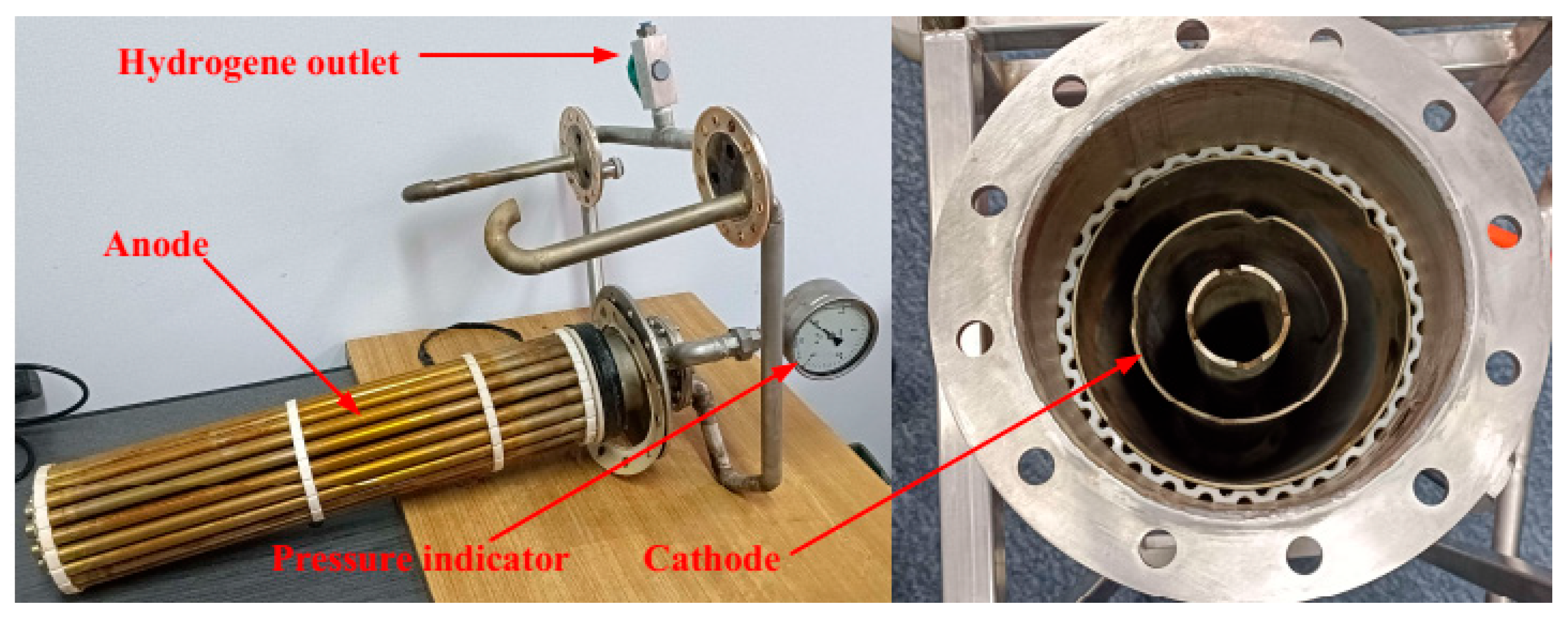
Experimental investigations were carried out for an alkaline electrolyzer, the structure of which is shown in
Figure 2.
The considered electrolyzer has the shape of a cylinder with a diameter of 16 cm and a height of 72 cm. The device consists of two electrodes, which overlap and are separated by Teflon spacers, and the space between them is filled with the electrolyte. The alkaline electrolyzer chamber is equipped with a pressure indicator and an outlet for the generated hydrogen of the appropriate valve. A detailed description of the considered electrolyzer is given in [
39].
To verify the correctness of the proposed model, it was necessary to perform measurements of the relevant characteristics. The measurements were divided into two parts: static and dynamic. During the static measurements, the electrolyzer current–voltage characteristics and hydrogen flow rate were measured at fixed electrolyte concentrations. During the dynamic measurements, the electrolyzer was supplied with a train of rectangular voltage pulses with an adjustable frequency and duty cycle. During these measurements, the steady-state time histories of the electrolyzer voltage and current, as well as the hydrogen flow rate, were recorded.
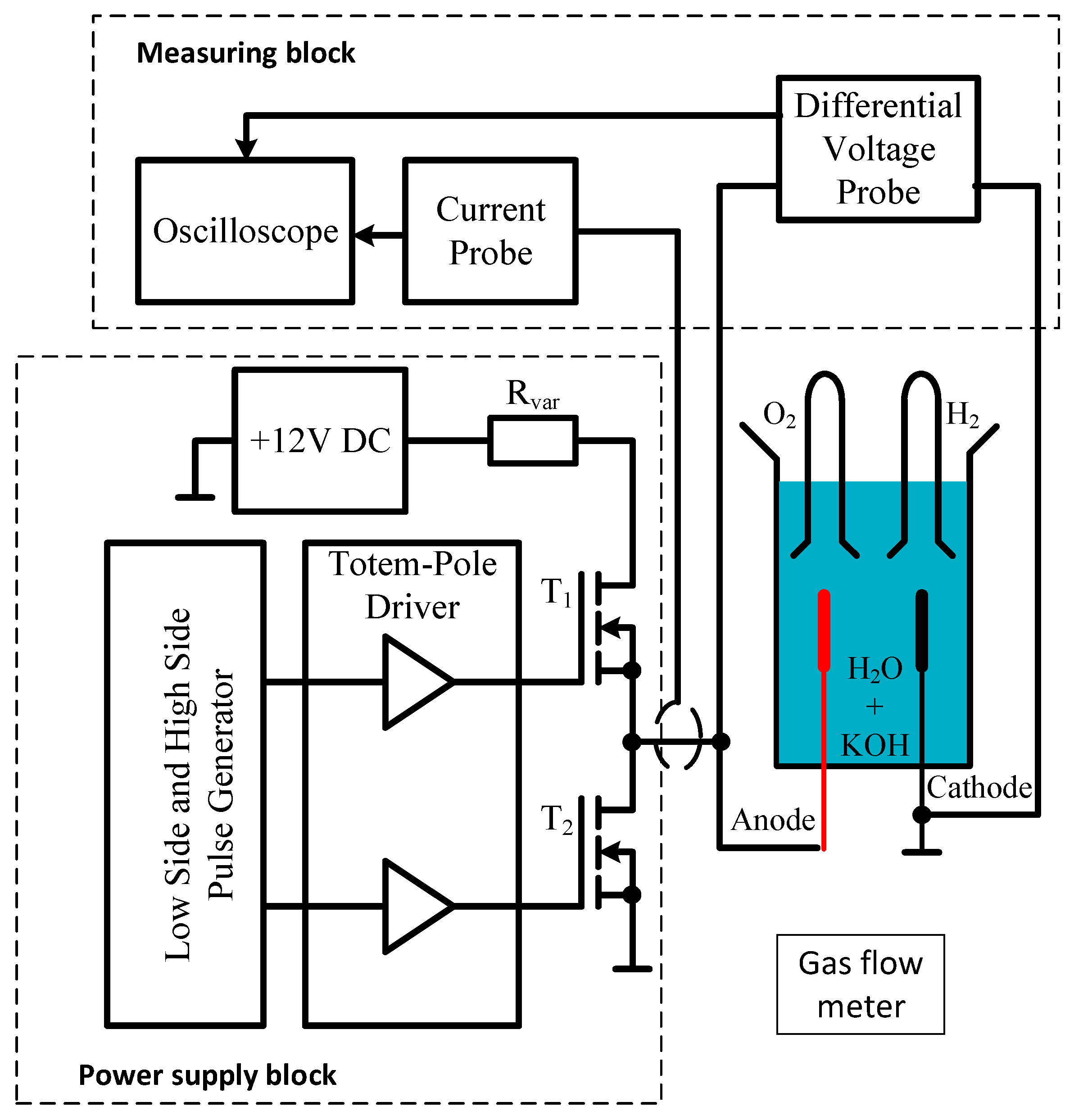
In order to measure dynamic characteristics of the tested alkaline electrolyzer, a measurement set-up was built, the block diagram of which is shown in
Figure 3.
The presented measurement set-up consists of two main blocks: the electrolyzer power supply block and the measuring block. The power supply block is described in detail in [
39]. The device allows for frequency adjustment from 1 Hz to 50 kHz and duty cycle adjustment from 5% to 85%. Designed specifically for this type of research, the device is based on an FPGA and includes a touchscreen control interface. The device’s key element is the power circuit, which converts DC voltage from an external power supply into a square-wave signal. This signal is generated by a switching pair of transistors controlled by the FPGA, which generates two phase-inverted and phase-shifted square-wave signals. The output of this block consists of two MOSFET transistors, T1 and T2, of the IXFN420N10T type [
40], connected in a totem-pole network. Such construction of the output stage of the power supply system makes it possible to generate a rectangular pulse train wtih values of rise and fall times below 0.3 μs. The gates of these transistors are controlled by a driver to increase the current efficiency of the low-side and high-side rectangular pulse generation system. The totem-pole network is powered by a +12V DC voltage source with a current efficiency of 120 A through the power resistor R
var. The output voltage of the power supply block accepts values equal to 12 V at high levels and zero at low levels. The measuring block consists of the RIGOL MSO5104 oscilloscope (RIGOL Technologies Co., Ltd., Suzhou New District, China), to whose inputs the PINTEK PA-677 (Pintek Electronics Co., Ltd., New Taipei City, Taiwan) active current probe and the PINTEK DP-25 (Pintek Electronics Co., Ltd., New Taipei City, Taiwan) differential voltage probe are connected. The probes used allow the recording of waveforms of the supply current and voltage of the tested alkaline electrolyzer, respectively.
In order to measure the DC current–voltage characteristics of the tested electrolyzer, the tested electrolyzer, the DC power supply and the power resistor R
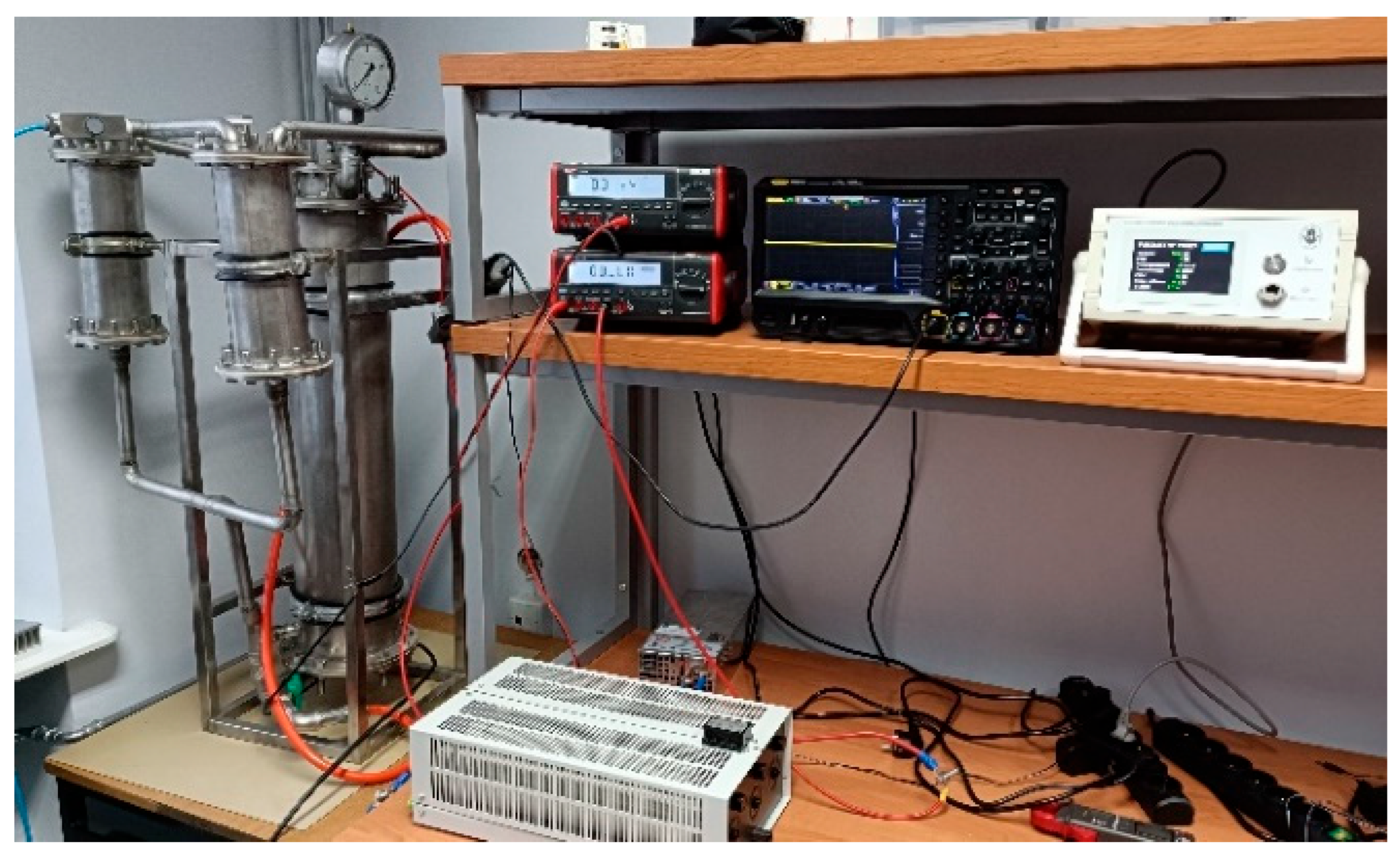
var are connected in series. The supply current is measured using an APPA 30R clamp ammeter (APPA Technology Corporation, Taipei, Taiwan). A SIGLENT SDM3055 voltmeter (Siglent Technologies, Pulau Pinang, Malaysia) was connected in parallel to the electrodes of the tested electrolyzer. A view of the developed measurement set-up is shown in
Figure 4.
The current was regulated by changing the resistance of the resistor over a wide range of values. An ammeter and a voltmeter were used to measure the current flowing through the circuit and the voltage across the electrolyzer. These were identical UNI-T UT804 laboratory multimeters. These devices had an insufficient range to measure current at the upper end of the characteristic, as the multimeter measuring range in current measurement mode is limited to 10 A. Therefore, above this value, it became necessary to use a current probe with a wider measuring range.
Another device, shown in the diagram is Gas flow meter, used for measuring hydrogen flow rate. The AALBORG DPM07S (Aalborg Instruments & Controls, Inc., Orangeburg, SC, USA) device [
41] was used for the measurements. This device was placed in the measuring system on the tube draining hydrogen from the electrolyzer. The readings of this device take several minutes to settle. Therefore, its readings were taken after reaching a steady state.
The range of change in the current values during performed investigations was so small that the self-heating effect was not observed. In all the performed measurements, the temperature of the electrolyzer was below 30 °C.
4. Results of Measurements and Computations
This section presents the results of measurements and calculations of the static and dynamic characteristics of the alkaline electrolyzer under consideration. The tests were performed over a wide range of electrolyte concentration, frequency, and duty cycle changes.
Section 4.1 presents the test results for a DC power supply, and
Section 4.2 presents the results for a frequency-adjustable rectangular pulse supply.
4.1. DC Characteristics
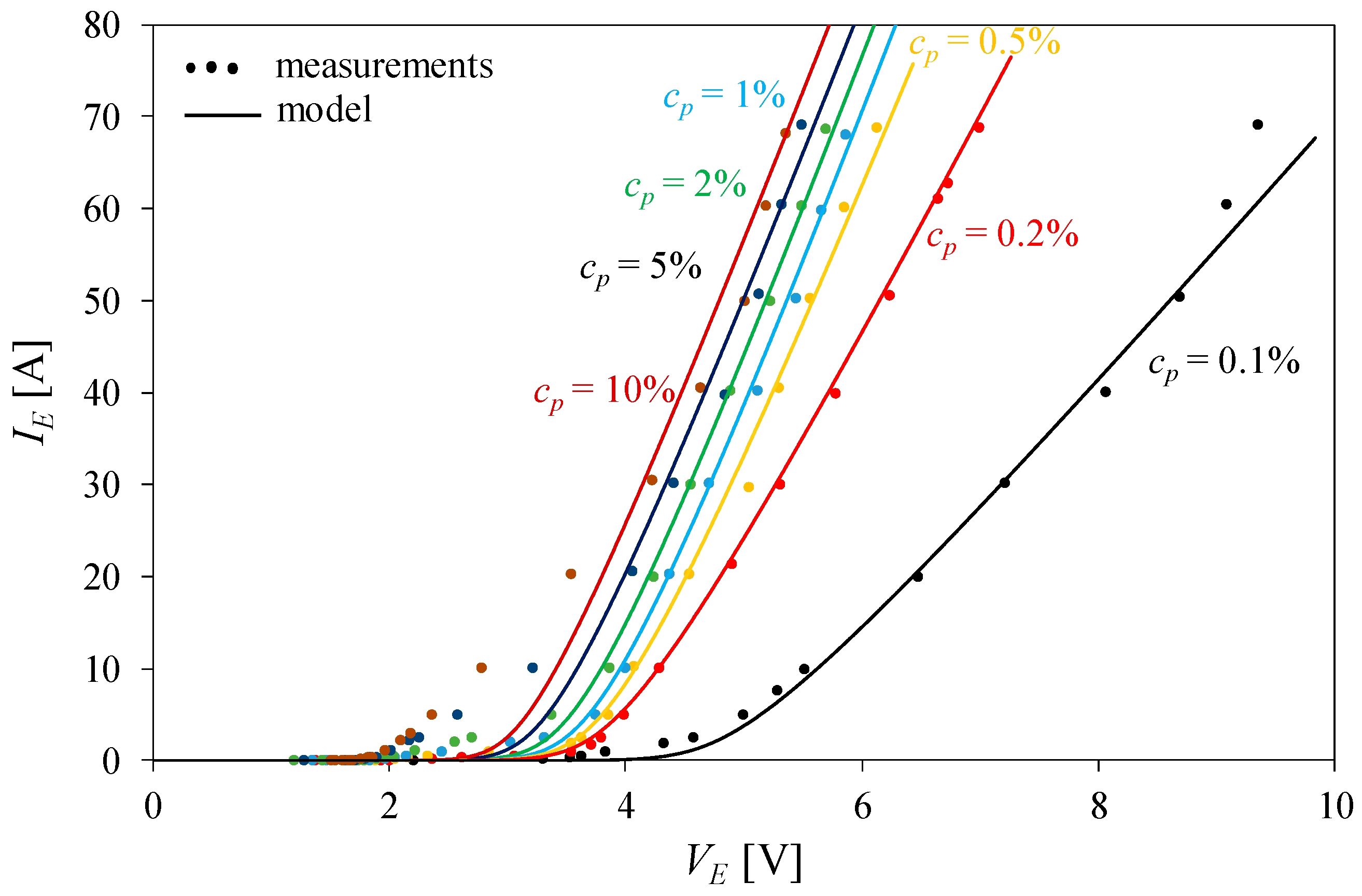
Figure 5 shows the calculated (lines) and measured (points) current–voltage characteristics of the alkaline electrolyzer at different solution concentrations.
As can be seen in
Figure 5, for virtually every electrolyte concentration, the calculation results model the measured characteristics well. The greatest discrepancy can be observed at higher solution concentrations (especially at concentrations of 5% and 10%) in the low-current range. An increase in electrolyte concentration c results in a drop in the electrolyzer voltage at a fixed supply current. As the
cp value increases from 0.1% to 10% at a current of
IE = 80 A, the voltage decreases by as much as two-fold. The greatest effect of concentration on the
IE(
VE) characteristics is visible for low
cp values. The mean square error (MSE) normalized to maximum measured value of the current
IE does not exceed 2.5%. It is the smallest for the lowest value of
cp.
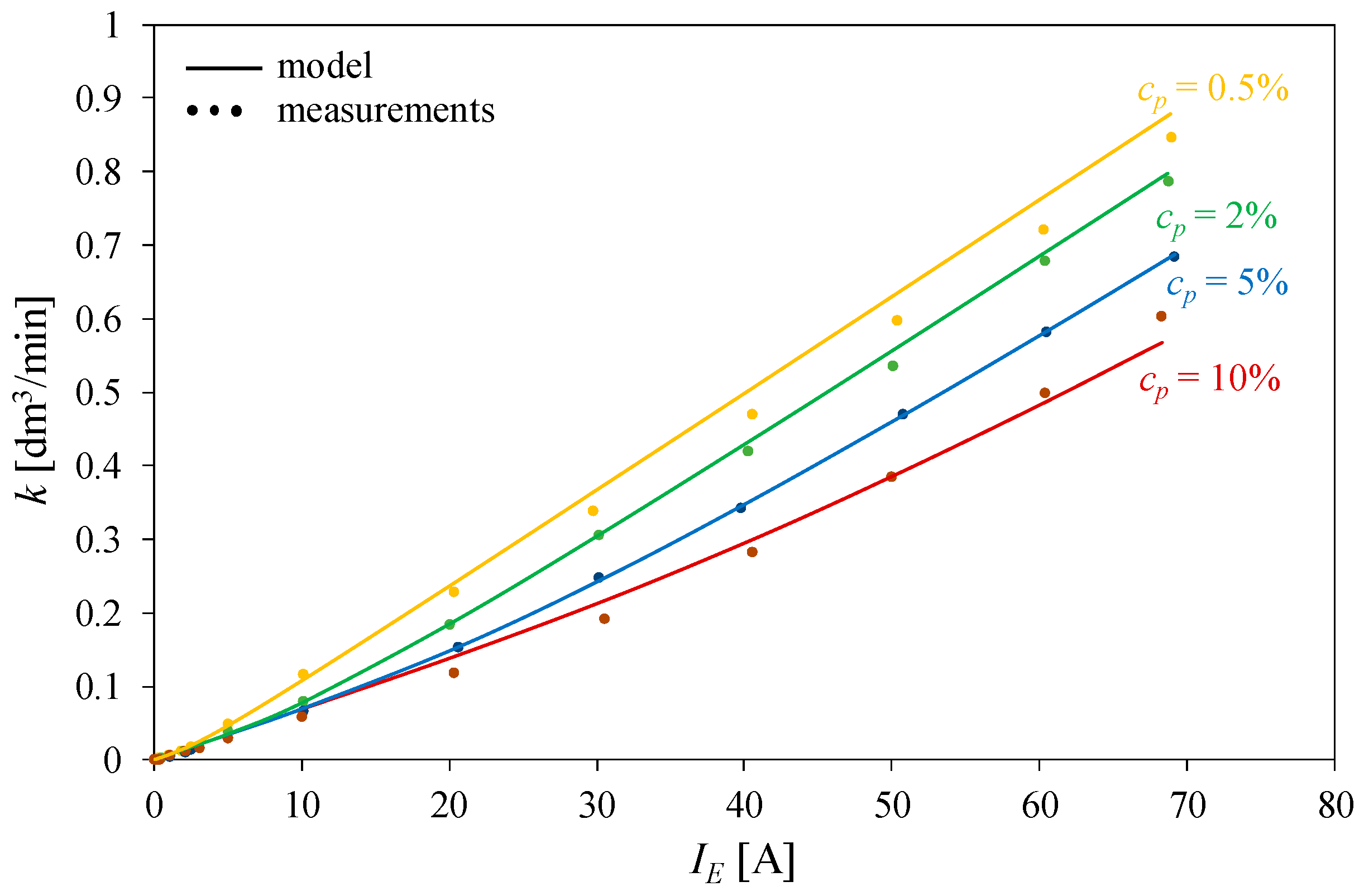
Figure 6 shows the calculated and measured dependence of the hydrogen flow rate
k on the electrolyzer current at selected values of electrolyte concentration
cp.
As can be seen in
Figure 6, the
k(
IE) dependence for a fixed value of
cp has the shape of a half-line. With increasing concentration, the slope of this characteristic decreases. The hydrogen flow rate decreases by almost 40% with an increase in electrolyte concentration from 0.5% to 10%. These changes are most visible for high values of the
IE current. The value of MSE, normalized to a maximum measured value of
k, does not exceed 3%. It is the smallest for
cp = 5% and the biggest—for
cp = 0.5%.
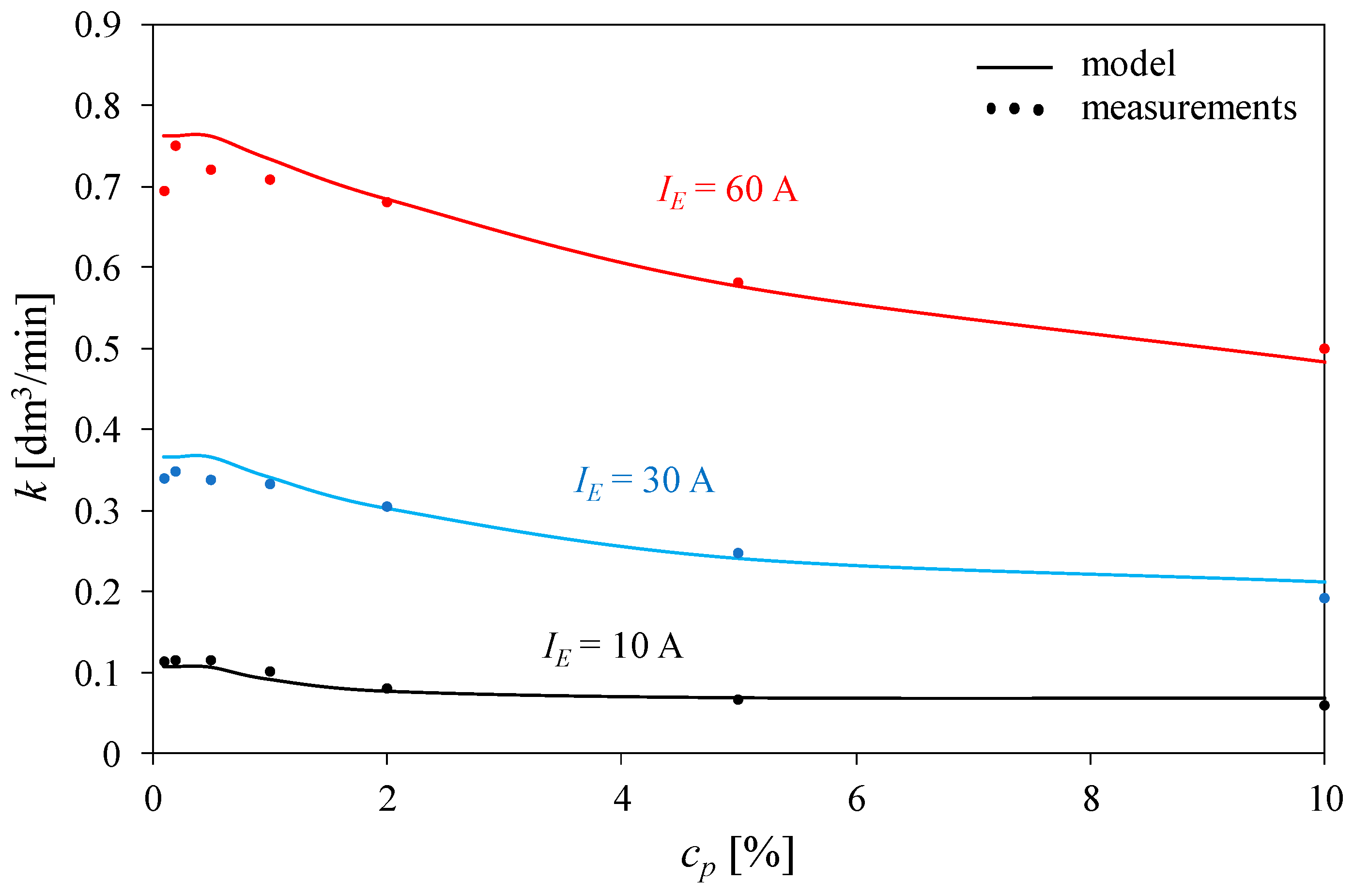
Figure 7 shows the dependence of the hydrogen flow rate on the electrolyte concentration at selected supply current values.
As can be observed, the flow rate is an increasing function of the current IE, while the k(cp) relationship has a maximum at cp in the range of 0.2 to 0.5%. The analytical description of the k(cp, IE) relationship proposed in this paper ensures good agreement between the calculated and measured results. The discrepancies between them do not exceed a few hundredths of a dm3/min. The value of MSE, normalized to maximum measured value of k, does not exceed 2.5%.
4.2. Dynamic Characteristics
This section presents the results of measurements and calculations of the electrolyzer dynamic characteristics. These characteristics were determined for various values of solution concentration cp, supply signal frequency f, and its duty cycle d. During the measurements, the electrolyzer was powered by a voltage source generating a train of rectangular pulses with an adjustable frequency and duty cycle. Measurements were performed for various frequencies, ranging from 50 Hz to 50 kHz, and three duty cycle values of 0.3, 0.5, and 0.7. For each set of power supply conditions, various electrolyte concentrations ranging from 0.1% to 10% were used. Selected results from these studies are presented in the figures included in this section.
In these figures, the measurement results are marked with dashed lines, whereas the calculation results are marked with solid lines. These analyses took into account the non-idealities of the cables connecting the power source with the electrolyzer. The power source was modeled using an ideal voltage source generating a trapezoidal waveform with levels equal to 0 and 12 V and durations of the rising and falling edges equal to 200 ns. The cable connecting the power source with the electrolyzer was modeled as an RL circuit, in which a resistor with a resistance of 200 mΩ was connected in series with an inductor with an inductance of 6 μH, in parallel.
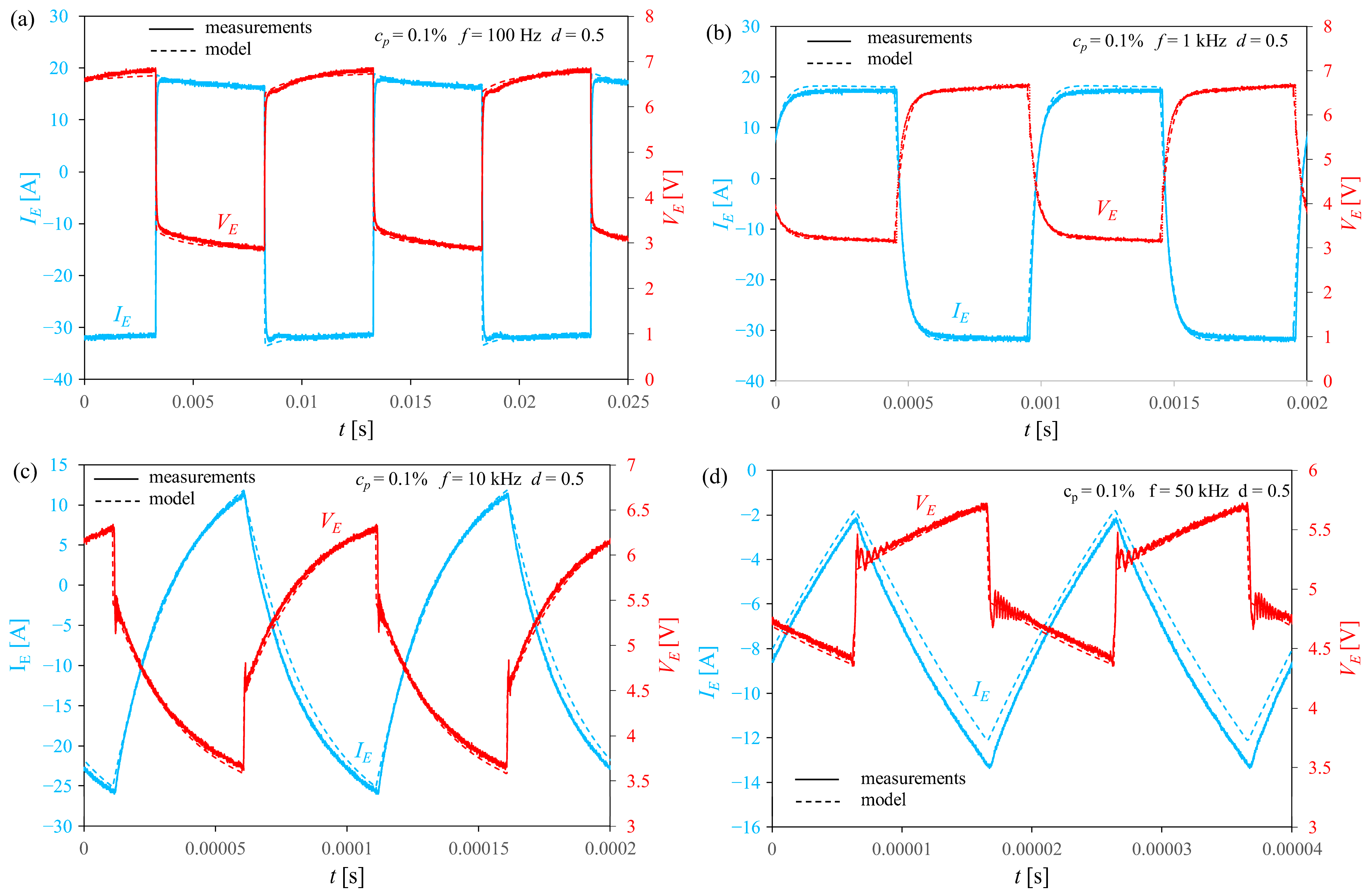
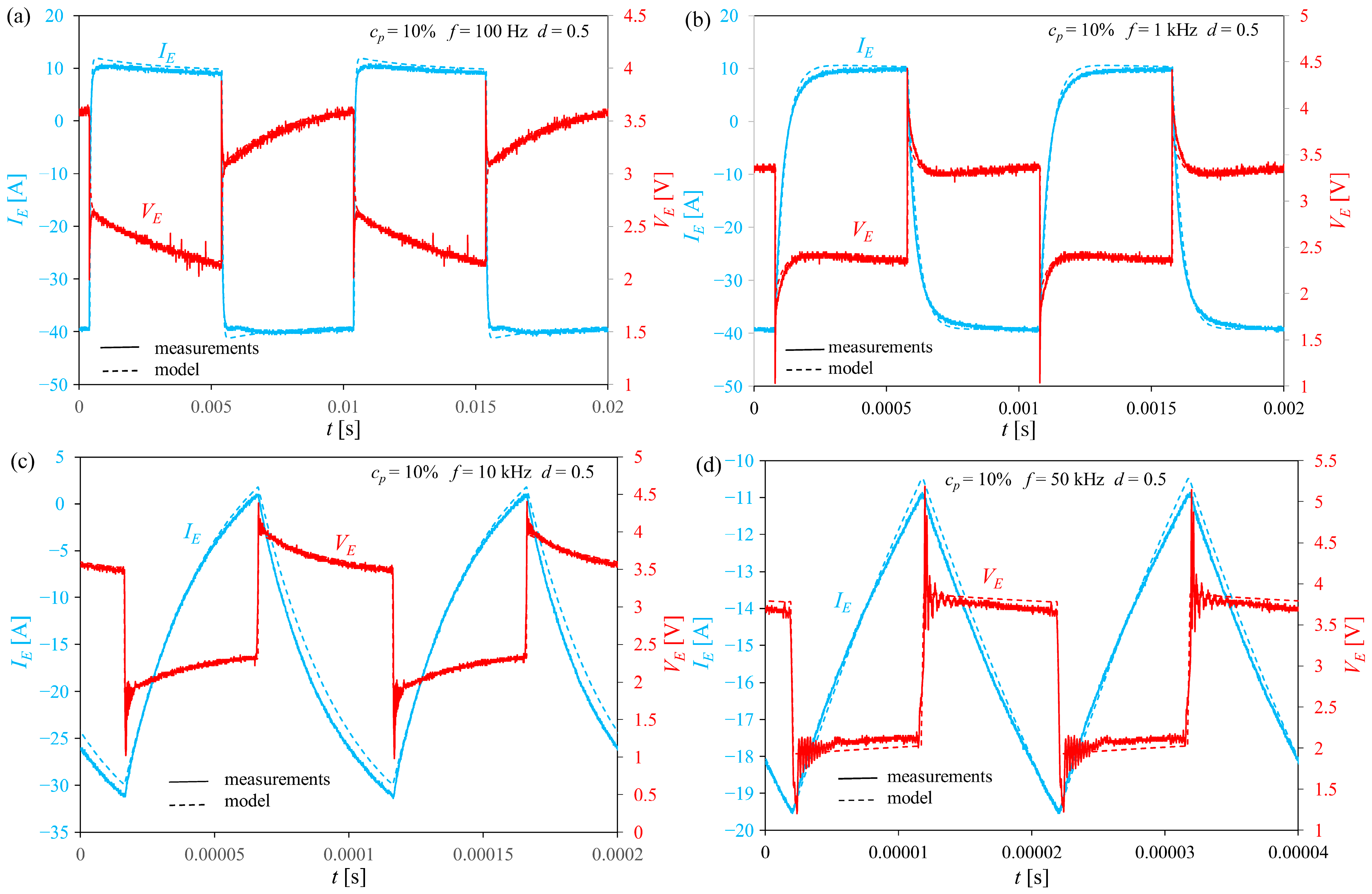
Figure 8 and
Figure 9 illustrate the effect of frequency on the time histories of voltage
VE and current
IE. The histories presented in
Figure 8 refer to an electrolyte concentration of
cp = 0.1%, and those shown in
Figure 9 refer to a concentration of 10%. For both cases, the duty cycle value is
d = 0.5.
As can be observed, a good agreement was obtained between the calculation and measurement results. It is worth noting that at f < 50 kHz, the electrolyzer current assumes positive and negative values. This means that current flows through the electrolyte alternately in both directions. This may cause the produced hydrogen to mix with oxygen. It is also worth noting that after turning off the power supply, the voltage on the electrolyzer does not decrease to zero, but slowly decreases to a value exceeding 3 V. The minimum value of the voltage VE is an increasing function of frequency.
The shapes of the waveforms obtained at frequencies of
f = 100 Hz and
f = 1 kHz are similar. For the higher frequency values, a change in the shape of the presented waveforms is visible. Their courses can be approximated by glued exponential functions. At a frequency of
f = 10 kHz, the delays introduced by the LC elements are so large that a significant drop in the peak-to-peak value of the electrolyzer current is visible in relation to lower frequency values. At a frequency of
f = 50 kHz, the electrolyzer current values have only a negative sign. The differences between computed and measured waveforms of the voltage
VE are much higher when the module of the current decreases in comparison to such differences observed in the opposite case. The modulus of the average current value increases with increasing frequency, and at the same time, the peak-to-peak value of this current decreases. It is also worth noting that in
Figure 8a,b the shapes of the
VE(
t) and
IE(
t)waveforms is significantly different than in
Figure 8c,d. These shapes show that for frequencies of
f ≤ 1 kHz, the capacitive component of the electrolyzer impedance plays the dominant role, while for
f ≥ 10 kHz, the inductive component of this impedance plays the dominant role.
Comparing the graphs in
Figure 8 and
Figure 9, it can be easily observed that the solution concentration did not significantly affect the shape of the observed I
E current waveforms, but the
VE voltage waveforms changed significantly. In particular, it is worth noting the decrease in the minimum
VE voltage value with an increase in electrolyte concentration to approximately 2 V. Overshoots in the
VE voltage are also visible when the sign of the
IE current derivative changes. The maximum values of the electrolyzer current with a higher
cp value are up to 20% higher than with a lower value of this parameter.
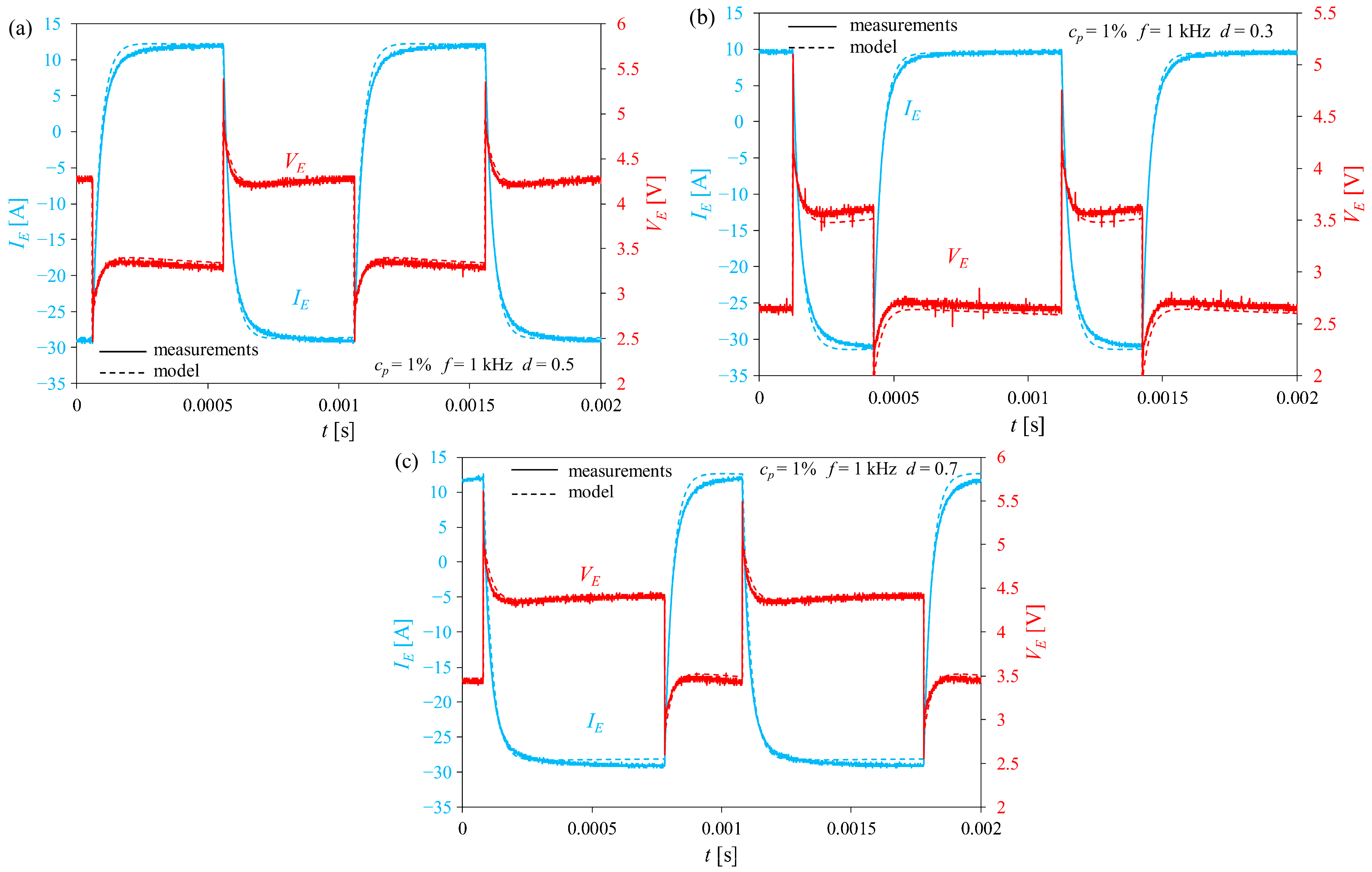
Figure 10 illustrates the effect of the
d coefficient value on the time histories of the voltage
VE and current
IE. The presented test results were obtained for a frequency of
f = 1 kHz and an electrolyte concentration of
cp = 1%.
Figure 10 shows that changing the value of coefficient
d does not affect the shape of the
IE(
t) and
VE(
t) waveforms. It can be seen that increasing the value of
d results in an increase in the peak-to-peak value of the current
IE and the voltage
VE. It is also worth noting that increasing the value of
d causes a decrease in the minimum value of the voltage
VE due to the extension of the time required to discharge the internal capacitance of the electrolyzer.
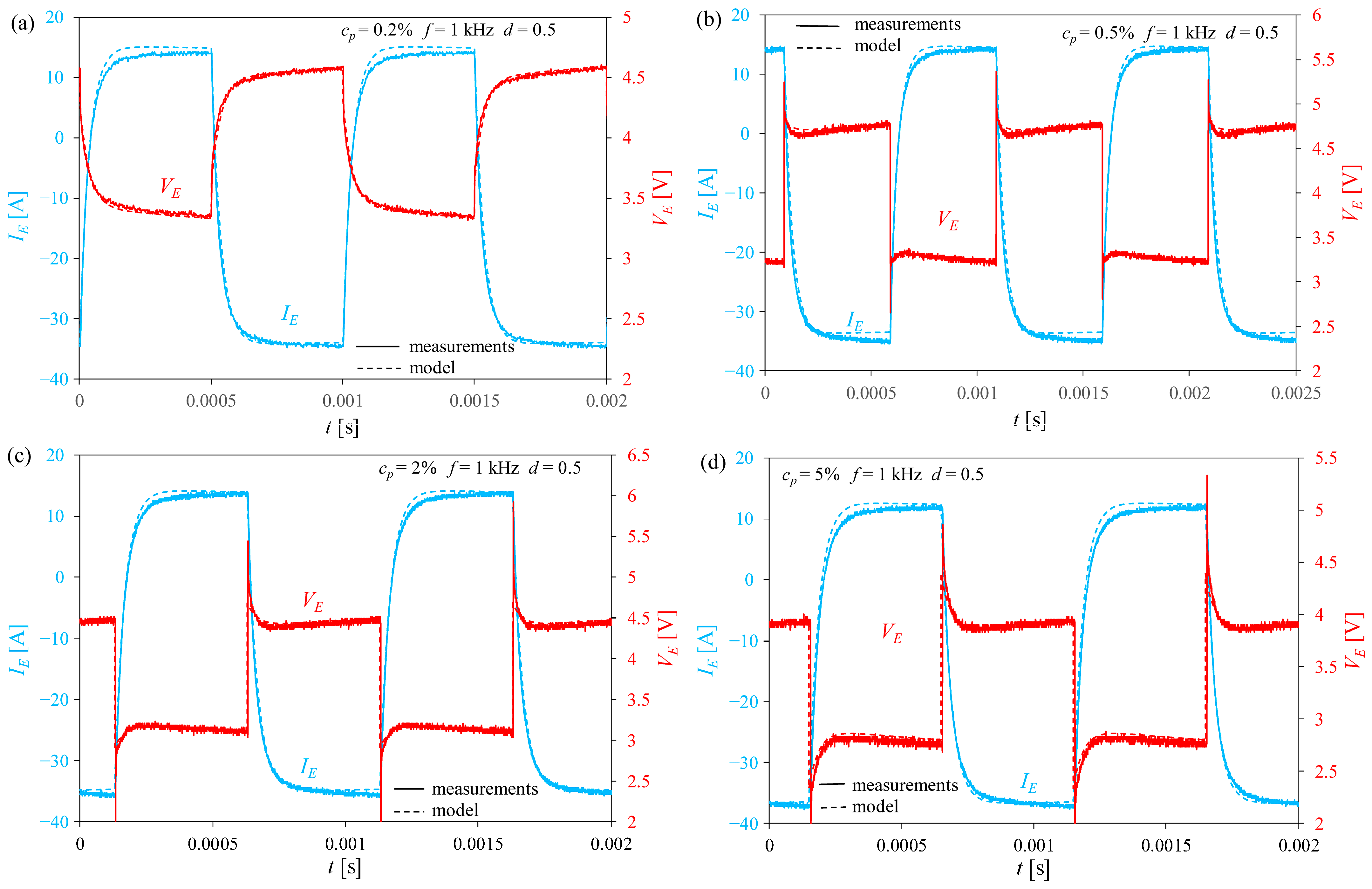
Figure 11 illustrates the effect of electrolyte concentration
cp on the time histories of current
IE and voltage
VE. The tests were carried out at
f = 1 kHz and
d = 0.5.
As can be seen in
Figure 11, an increase in the electrolyte concentration value causes an increase in the peak-to-peak current value. An increase in the overshoot of the
VE voltage during the
IE current slopes is also visible. An increase in the solution concentration also causes a decrease in the minimum and maximum values of the
VE voltage.
Comparing the results presented in
Figure 8,
Figure 9,
Figure 10 and
Figure 11, it can be concluded that the proposed electrolyzer model correctly describes its dynamic properties across a wide range of frequencies, duty cycles, and liquid concentrations. At the same time, it can be stated that the voltage and current waveforms are significantly influenced by the parasitic capacitances and inductances of this device. The value of MSE, normalized to the peak-to-peak value of the presented
VE(
t) and
IE(
t), does not exceed 4%. This error reaches the highest values at the highest considered frequencies and at the lowest values of the duty cycle
d.
Under the influence of changes in the supply voltage and electrolyte concentration parameters, not only the time course of the current
IE and voltage
VE changes, but also the hydrogen production rate.
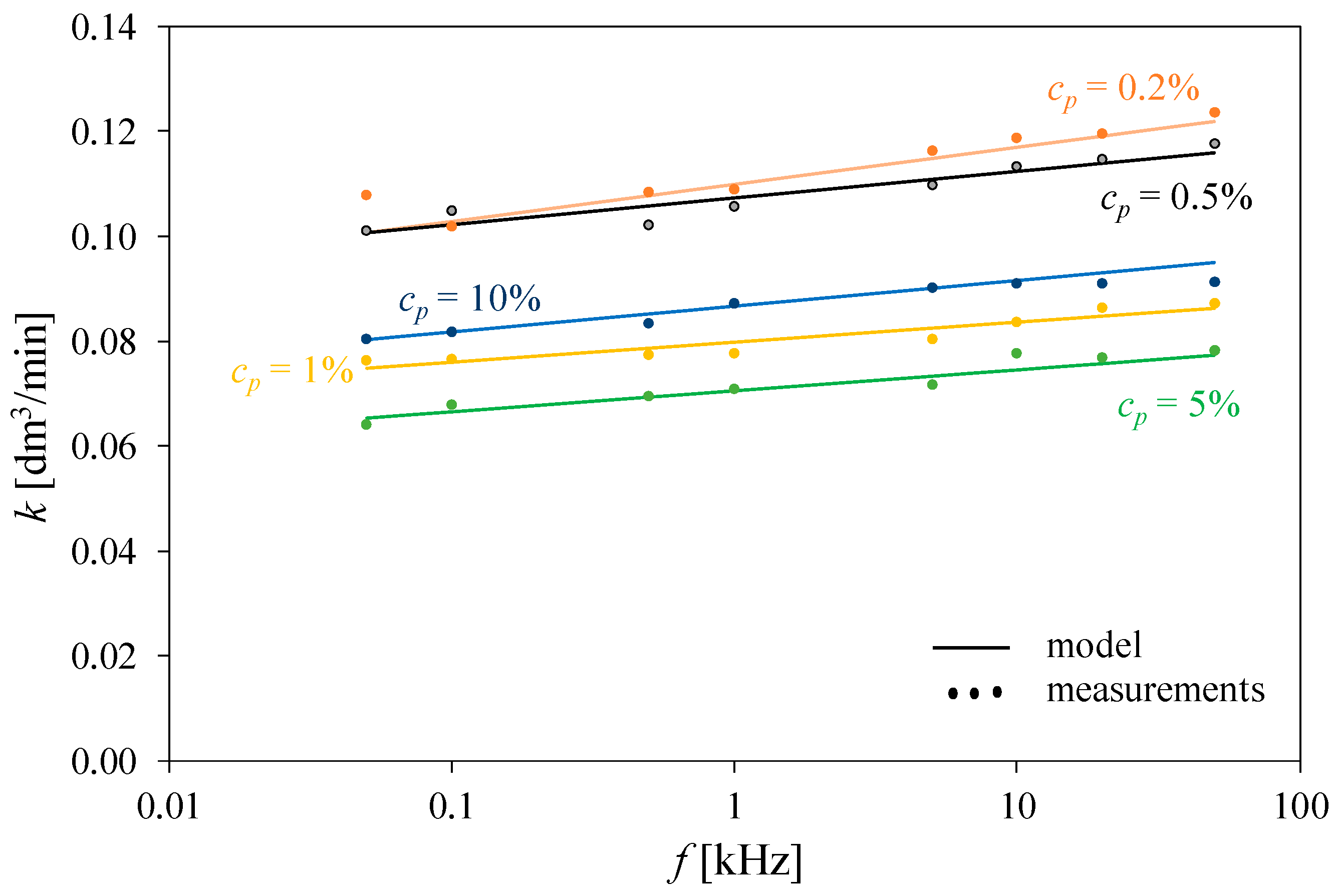
Figure 12 shows the dependence of the hydrogen flow rate on frequency at selected values of
cp concentration. The presented results refer to the steady state and the value of
d = 0.5.
As can be seen in
Figure 12, an increase in the frequency of the electrolyzer supply voltage causes an increase in the flow rate of the generated hydrogen. The obtained
k(
f) graphs are straight lines on a logarithmic–linear scale. The highest
k values were obtained for the lowest of the presented
cp concentration values. An increase in frequency from 50 Hz to 50 kHz results in an increase in the
k value by approximately 10%. The observed increase in
k with increasing
f is related to the slight increase in the average electrolyzer current with increasing frequency. This effect is visible in the
IE(
t) waveforms shown in
Figure 8 and
Figure 9.
The highest k value was obtained at cp = 0.2%. This corresponds to the electrolyte concentration value at which a maximum is observed on the static k(cp) characteristic. Additional measurements carried out for other values of the d coefficient indicate that an increase in the d value causes an increase in the k value.
5. Conclusions
This paper presents the results of experimental and simulation studies of the influence of electrolyzer supply voltage and electrolyte concentration on the static and dynamic characteristics of an alkaline electrolyzer. A new model of such an electrolyzer is proposed and its practical applicability is experimentally demonstrated over a wide range of variations in the frequency and duty cycle of the electrolyzer supply voltage and electrolyte concentration for a selected laboratory electrolyzer. In comparison with other models of alkaline electrolyzers, the proposed model makes it possible to properly describe dynamic properties of an alkaline electrolyzer. Both the waveforms of electrolyzer voltage and current can be accurately computed across a wide range of frequencies of the power supply voltage. Additionally, the influence of this frequency and the electrolyzer current on the flow rate of the produced hydrogen can also be taken into account. The accuracy of the presented model is satisfied. The values of MSE, normalized to maximum measured values of the considered quantities, do not exceed 4% both for DC and dynamic characteristics of the tested electrolyzer.
The presented calculation and measurement results demonstrate that increasing electrolyte concentration results in a decrease in the electrolyzer voltage. This effect is particularly noticeable at low concentrations. An analytical description of the steady-state hydrogen flow rate k is also proposed, along with an analytical relationship describing the influence of the average electrolyzer current, electrolyte concentration, and supply voltage frequency on this rate. It is shown that the value of k is an increasing function of the electrolyzer current, and the slope of the k(IE) relationship depends on the electrolyte concentration cp. The highest k value, at a constant IE current, was obtained for cp in the range of 0.2% to 0.5%.
When the electrolyzer is supplied with a voltage in the form of a series of rectangular pulses, changes in the shape of the IE(t) and VE(t) waveforms are visible with changes in frequency. In the frequency range up to 1 kHz, these waveforms resemble a series of rectangular pulses, and the IE current assumes positive and negative values. In the frequency range exceeding several kilohertz, the current waveform assumes an exponential shape, which is related to the influence of the electrolyzer’s internal capacitances. These capacitances also cause the electrolyzer to maintain a voltage in the range of 2 to 3 V after the supply voltage is turned off.
It is worth noting that, from the point of view of obtaining the highest possible hydrogen flow rate, a high frequency of the power supply voltage and low electrolyte concentration are the most profitable. In such operating conditions of the electrolyzer, the needed maximum value of power supply current is the lowest. An increase in the k value in the high-frequency range requires a reduction in the parasitic inductance of the cables used to supply power to the electrolyzer.
The proposed model accurately describes the measured characteristics of the alkaline electrolyzer and can be used as its digital twin. It can help designers of hydrogen storage systems analyze various operating scenarios and optimize the system’s properties.