


Abstract
This paper analyses the impact of inlet air precooling on the efficiency and electricity consumption of an open-type evaporative cooling tower. An Indirect Evaporative Cooler (IEC) was used to reduce the inlet air temperature, and its influence on system efficiency was experimentally evaluated. Although IEC units and the Maisotsenko cycle are increasingly discussed in the literature, no research to date has considered their effect on evaporative tower efficiency under actual operating conditions. For this purpose, a test stand was constructed comprising an open cooling tower and an IEC unit. The system operated automatically for 2952 h, corresponding to a full cooling season in Poland. Two sets of data collected during cooling tower operation were analysed: without precooling (Stage I) and with precooling using IEC (Stage II). Measurements were recorded every 10 s. Additionally, tests were conducted at elevated thermal loads and peak ambient temperatures. The comparative analysis concluded that air precooling using IEC reduced the cooling tower’s electricity consumption by approximately 15% and increased the SCOP of the cooling tower by 30%. This demonstrates the significant potential of the proposed solution.
1. Introduction
Meeting electricity demand in the 21st century is becoming a challenge due to climate change and a growing population. Especially since, due to the average ambient temperature, each subsequent year is usually warmer than the previous one. The Heating, Ventilation, and Air Conditioning (HVAC) market is constantly evolving to provide customers with a comfortable environment through cooling, heating, and ventilation. In certain developed nations, including Japan, the USA, and Korea, more than 90% of households have individual air conditioning units. The electricity consumption of these devices accounts for approximately 10% of total global electricity consumption [1]. Consumers frequently overlook the most energy-efficient air conditioning units, instead basing their decisions solely on cost. Investing in more efficient HVAC systems could cut future energy demand by 45% by 2050 [1].
Most modern HVAC systems are Vapour-Compression Refrigeration Systems (VCRSs), in which the refrigerant undergoes a phase change and are characterised by significant electricity consumption. They also harm the environment through the refrigerants they use. Leading HVAC manufacturers are now exploring more efficient, environmentally friendly solutions in response to climate change. Among the known refrigerants, environmentally friendly ones, i.e., those with low ozone depletion potential (ODP) and low global warming potential (GWP), include ammonia, NH3, known as R717 (ODP = 0 and GWP = 0); carbon dioxide, CO2, or R744 (ODP = 1, GWP = 0); and propane, C3H8, or R290 (ODP = 3, GWP = 0) [2]. All of them represent the future of modern HVAC systems on an industrial scale. Unfortunately, for devices with lower cooling capacities (below 20 kW), the use of these refrigerants is limited due to their flammability, toxicity, and high operating pressure [3,4,5]. A refrigerant that does not have these disadvantages and is neutral and clean is water, H2O, designated as R718 (ODP < 1, GWP = 0). Water can be used as a primary or secondary refrigerant. Due to its high heat of evaporation (approximately 2200 kJ/kg at 0 °C), it is one of the most effective refrigerants. Water is used as a refrigerant in evaporative devices, such as evaporative air conditioners and cooling towers. Cooling air using evaporative technology enables temperatures below the ambient temperature to be achieved, and since it utilises natural processes, energy consumption can be reduced. The environmental and economic issues discussed above are driving evaporative systems to become increasingly popular.
1.1. Evaporative Cooling Systems
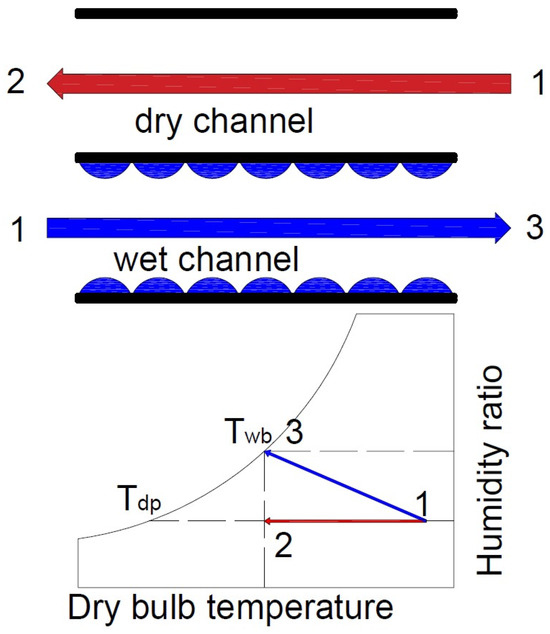
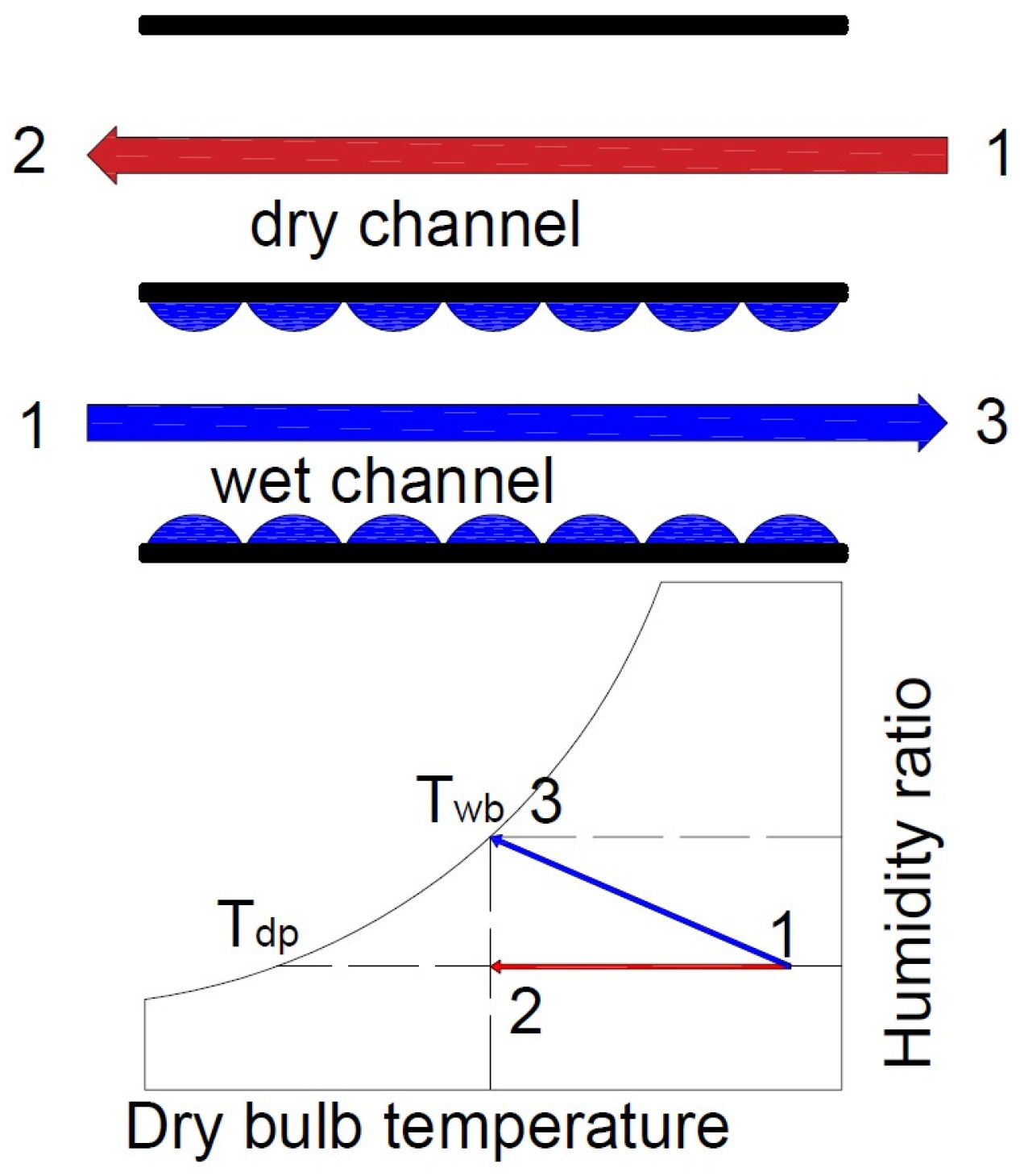
Evaporative systems are categorised into two types: Direct Evaporative Coolers (DECs) and Indirect Evaporative Coolers (IECs). In DEC units, the cooled air comes into direct contact with water in the wet channel. During cooling, the water evaporates directly into the stream of cooled air, lowering its temperature. IEC uses a heat exchanger to cool the air, in which heat is transferred from the cooled air in the dry channel to the air flowing through the wet channel. This prevents moisture from being added to the cooled air. The lowest temperature to which air can be cooled in evaporative devices is the wet-bulb temperature, which depends on the dry-bulb temperature and relative humidity of the air. The cooled air obtained in IEC may have similar parameters to those obtained in VCRS, but unlike them, evaporation systems are innovative and can be considered a cheaper cooling technique. A variation of the IEC system is the Maisotsenko cycle (M-cycle), which allows lower temperatures than the classic ICE. Figure 1 illustrates the heat-exchange process in the IEC and diagrams the thermodynamic processes within the unit.
Figure 1.
Principle of operation of IEC.
The effectiveness of evaporative cooling can be determined based on the wet-bulb efficiency:
where is the inlet temperature, is the outlet temperature, and is the wet-bulb temperature.
In the first concept of the M-cycle, the product is the main stream of cooled air, which is obtained through heat exchange with the so-called auxiliary stream of air flowing through the wet channel. The inlet air is divided into two parts, one of which, i.e., the main stream, flows through the dry channel and is used, for example, to cool rooms. The second part, i.e., the auxiliary air stream, is first pre-cooled during heat exchange with the air flowing through the wet channel, and then flows through the wet channel, further lowering its temperature. Cooling systems using the M-cycle employ cross-flow heat and mass exchangers (HMXs). As in IEC systems, the cooled air (product) is not moisturised. Theoretically, the lowest temperature achieved in the M-cycle is the dew point temperature. The efficiency of the M-cycle can be determined based on the dew point efficiency:
where is the dew point temperature.
The M-cycle concept is continually being developed by its creator and other researchers and scientists, as evidenced by the increasing number of publications on topics such as improving cycle efficiency, the technologies used, and potential applications.
The M cycle is primarily used in cooling systems, but it can also be applied in water desalination and distillation processes [6,7] as well as in power plants, including NOx reduction [8,9]. The presented applications of the M-cycle have been analysed in terms of optimisation for various locations around the world, characterised by both low and high air humidity, e.g., cities in the Arabian Gulf [10], Riyadh in Saudi Arabia [11], Beijing in China [12], Bushehr in Iran [13], northern Italy [14], and Martos in Spain [15]. The research was conducted both numerically [10,11,12,13,14] and experimentally [14,15].
Research conducted on M cycles includes HMXs. In [16], a mathematical model of heat and mass transfer was developed for two selected HMX designs using a modified epsilon-NTU method. The authors of [17] also developed an HMX model in Python 3.10, based on a spatially discretised differential equation solver and a psychrometric chart. In both cases, the models were validated using experimental data. Research on heat exchangers also concerns technology. For example, in [18], a nanoporous membrane covering the surface of a wet channel was tested to improve heat and mass transfer. The study experimentally confirmed the beneficial effect of the coating on the heat exchanger’s efficiency. Another solution studied, as described in [19], involved the use of aluminium fins in the heat exchanger’s dry ducts to increase heat transfer efficiency. This increased the cooling capacity by 18%.
Evaporative cooling systems can operate in various configurations, including those with desiccant wheels, ejectors, or as hybrid systems that incorporate freon devices. The operating conditions and limitations of individual solutions are summarised in [20]. A desiccant air conditioning system uses a moisture-absorbing wheel to dehumidify air drawn from the surroundings. Then, in a typical system, the air is pre-cooled in a rotary heat exchanger, then humidified in a spray chamber, and cooled simultaneously. The air returning from the cooled space flows through the subsequent parts of the system in the opposite direction, but is heated before the desiccant wheel, allowing the desiccant wheel to be regenerated. In [21], indirect cooling using the M cycle was proposed. A numerical analysis of this system was performed, demonstrating its higher temperature efficiency. Research on such systems also concerns moisture-absorbing materials used in the desiccant wheel, as in [22]. Hybrid systems combine IEC and VCRS. Research on such a system, where IEC uses an M-cycle, is presented in [23]. The report shows that the tested system consumes 80% less energy than a conventional air conditioning system. In turn, a numerical simulation of two hybrid systems was conducted in [24], where preliminary cooling was achieved using a conventional IEC and an IEC with an M cycle. In this case, it was also demonstrated that systems of this type enable reduced electricity consumption in locations with a humid climate. In [25], tests were carried out on three air conditioning systems: a refrigeration unit, a refrigeration unit coupled with evaporative cooling, and a refrigeration unit coupled with regenerative evaporative cooling. An analysis of annual electricity consumption showed savings of 17% and 22% for the second and third solutions, respectively, compared to the first. In [26], an analysis of the operation of a two-stage evaporative cooling system consisting of IEC followed by DEC in public buildings in Tehran was presented. It was shown that such a system could replace VCRS while simultaneously reducing electricity consumption; however, it would consume 55% more water than a stand-alone DEC.
1.2. Cooling Towers
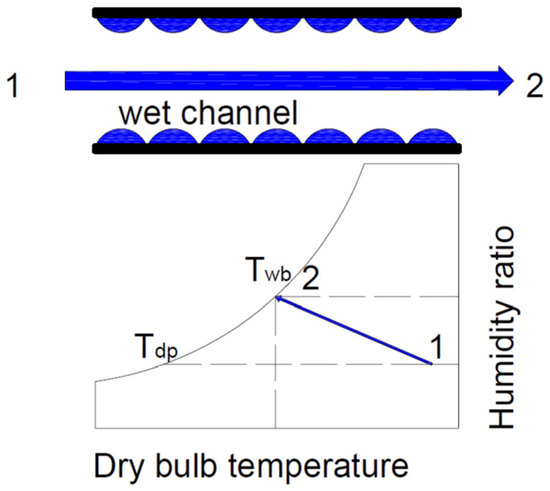
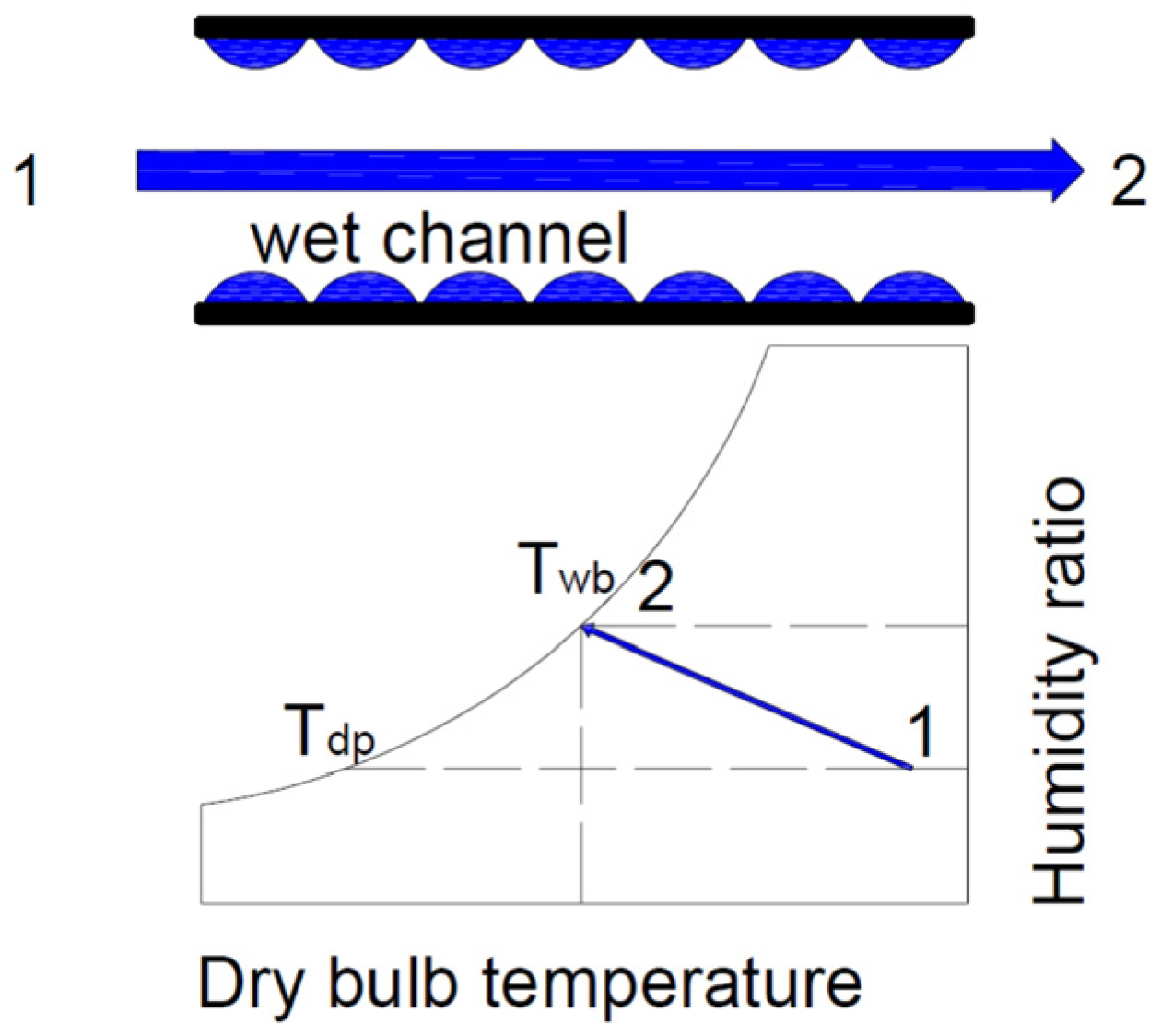
In cooling towers, waste heat is dissipated into the environment through a stream of coolant (usually water), which undergoes partial evaporation, causing the cooling air to reach a temperature close to that of a wet-bulb thermometer. Cooling towers can be divided into two types: natural draft and forced draft (utilising a fan). Another classification, based on the circulation of the cooled medium, is into open and closed evaporative towers. Cooling towers are commonly used across various industries, including chemical and petrochemical plants, refineries, and both conventional and nuclear power stations. The heat transfer principle in the cooling tower and the thermodynamic process occurring within the unit are illustrated in Figure 2.
Figure 2.
Principle of operation of DEC.
Research on cooling towers primarily focuses on increasing wet-bulb efficiency. In [27], the cooling tower capacity was improved by pre-cooling and dehumidifying the inlet air by using a reverse Brayton cycle. The proposed system was thermodynamically modelled and optimised for the operating conditions using a genetic algorithm to obtain the highest power plant output. The M-cycle can be used in cooling towers. A comparison between a traditional cooling tower and an M-cycle cooling tower was conducted in [28]. The comparison was carried out using a one-dimensional heat and mass transfer model based on the NTU method. It was found that using an M-cycle in a cooling tower allows the water temperature to be lowered below the wet-bulb temperature. This result cannot be achieved with a traditional approach. In [29], on the other hand, optimal dry duct lengths were sought for a cooling tower with an M-cycle, where the fill is arranged in parallel counterflow. The calculations were performed using the NTU method and based on experimental data. Determining the optimal duct length increased the efficiency of the wet thermometer.
The IEC and the evaporation tower are considered the most efficient (low electricity consumption) and environmentally friendly (no F-gases and low water consumption). The first device cools the air to the dew point, and the second allows subcooling the process water to the wet-bulb temperature. This paper proposes a solution in which the air is pre-cooled in the IEC and then routed to the cooling tower. A key premise of the research was to demonstrate that using IEC to precool the inlet air improves the cooling tower’s efficiency. To test the proposed solution, an experimental stand was constructed to compare a cooling system consisting of a cooling tower and a cooling tower with pre-cooling of the air in the IEC. The comparison focused on electricity consumption and the Seasonal Coefficient of Performance (SCOP). Based on the literature review, no studies to date have analysed the efficiency of this solution. Examples of research on cooling towers carried out so far have focused on the use of a reverse Brayton cycle to cool and dehumidify the inlet air and, above all, the use of the M-cycle in them. These studies have mainly based on simulation results, whereas this paper is based on a two-year experimental study. In addition, studies on new cooling tower solutions focused on improving wet-bulb temperature efficiency and not the SCOP, as in this paper. An increase in SCOP means lower electricity consumption in relation to the cooling energy produced by the cooling tower. The use of an IEC in combination with a cooling tower would be an advantageous solution not only because of lower operating costs, but also because of the environmental benefits of lower electricity consumption and the use of water as a refrigerant (elimination of fluorinated gases). Increasing the efficiency of cooling towers by adding an IEC could lead to greater interest in and use of evaporative units for process cooling or room air conditioning in hotels, hospitals, and office buildings. With the proposed solution, the user will achieve reduced energy consumption or more stable cooling system operation despite higher ambient temperatures.
2. Description of the Experimental Stand and Research Methodology
The study was carried out in two stages. In Stage I, the system operated in the reference (baseline) configuration, i.e., in which water heated by a heat pump was next cooled in a cooling tower using ambient air intake. In Stage II, the inlet air to the cooling tower was precooled by means of an indirect air-conditioning unit. The experimental site was located in the village of Zwrócona in the Ząbkowice district, situated in the Sudetic Foreland region of Poland. One of the most important factors influencing the selection of an appropriate cooling device is the local climate, as it directly affects the achievable final temperature of the liquid or air after cooling. Cooling equipment is designed to provide maximum cooling capacity under the least favourable ambient conditions. These conditions correspond to the highest dry-bulb and wet-bulb temperatures, both of which depend on air humidity. Using the software from the cooling tower manufacturer MITA Cooling Technologies from Siziano, Italy, based on the Meteonorm climate database [30], a suitable unit can be selected, and its operating costs analysed. This ensures the chosen unit operates optimally and is not oversized.
An analysis of climate data for Ząbkowice Śląskie was conducted to determine the most suitable cooling and heating solutions. The maximum and minimum ambient temperatures are 32.5 °C (occurring on 9 July at 15:00) and −17.4 °C (recorded on 12 January at 23:00), respectively. The average dry-bulb temperature is 8.6 °C. The maximum wet-bulb temperature is 22.7 °C on 21 July at 9:00, corresponding to an ambient temperature of = 26.8 °C and coupled with a relative humidity of = 71.3%, while the minimum wet-bulb temperature is −17.48 °C on 12 January at 23:00, corresponding to = −17.4 °C and = 99.3%. The average wet-bulb temperature is 6.5 °C. The maximum ambient humidity is 100%, occurring for approximately 276 h per year; the minimum was recorded on 29 May at 13:00 and amounted to 29.5%, with = 23.3 °C and = 13.1 °C, and the average ambient humidity is 79.1%. Sorting the wet-bulb temperatures from highest to lowest, it can be seen that the sixteen consecutive highest wet-bulb temperatures correspond to dry-bulb temperatures below 30 °C. The highest wet-bulb temperature recorded for Ząbkowice Śląskie is 22.7 °C. The MITA cooling tower selection software recommends a design wet-bulb temperature of 21 °C for this location. This means that the cooling tower will not achieve the required capacity at wet-bulb temperatures above this value. In the case of Ząbkowice Śląskie, such wet-bulb temperatures only occur for about 35 h a year.
2.1. Stage I
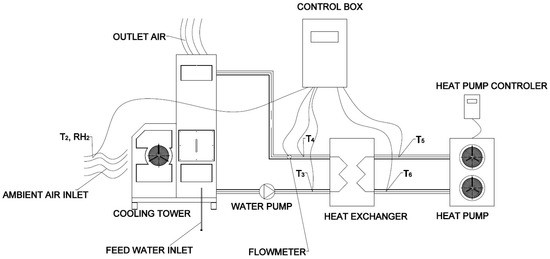
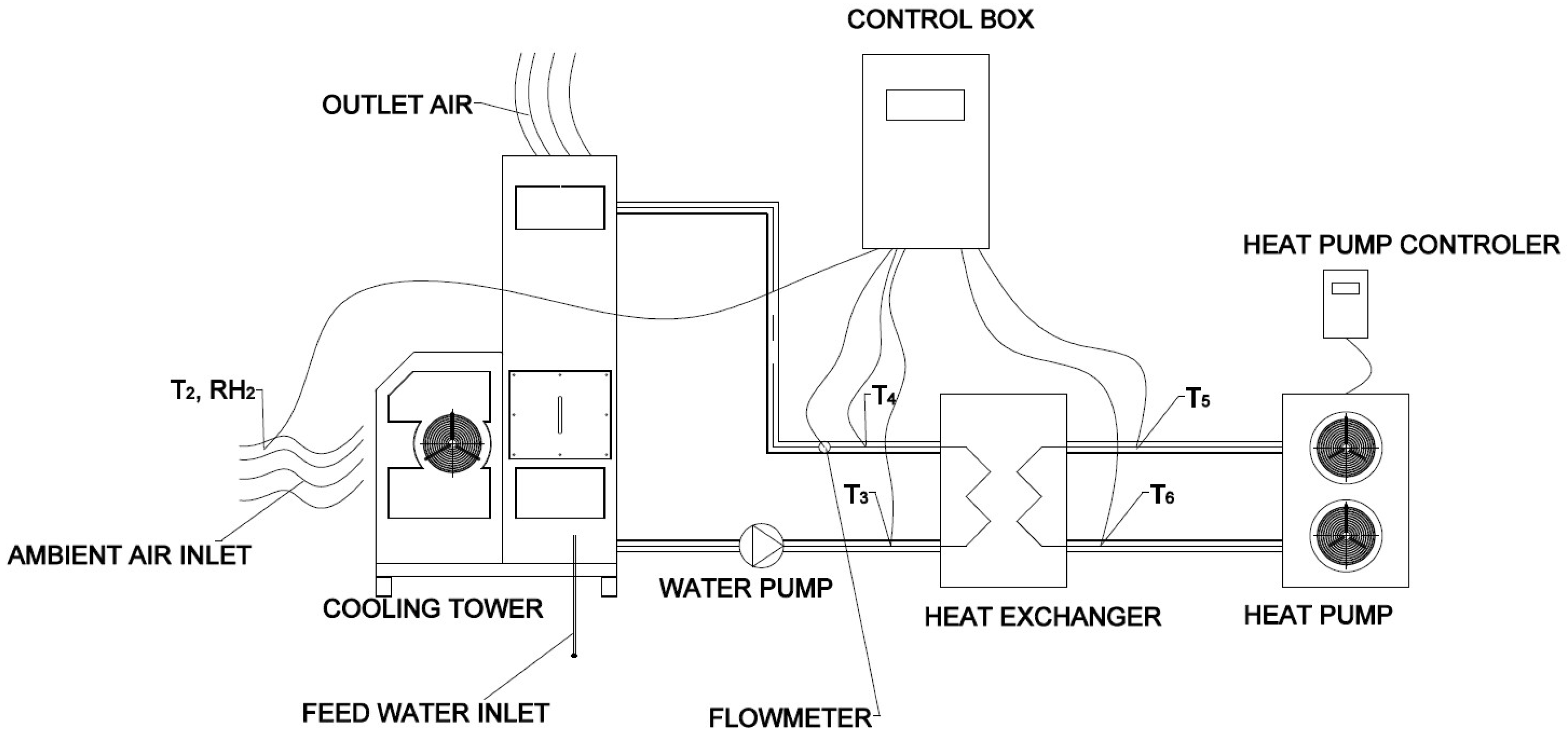
Stage I involved the installation of the cooling device, i.e., an open-circuit cooling tower, and the heating device, represented by an air-source heat pump. The two units were hydraulically separated by a plate heat exchanger. The cooling tower circuit is the secondary circuit, while the heat pump circuit is the primary circuit. The secondary circuit was equipped with a circulation pump and the necessary fittings. The entire system was additionally equipped with an automation unit and measurement sensors. The schematic of the laboratory stand used for the Stage I tests is shown in Figure 3.
Figure 3.
Schematic of the Stage I test stand.
The cooling tower was delivered as a complete solution. The delivery scope included the centrifugal fan, fill pack, spray nozzles, and a float valve for replenishing the circuit with treated water. The tower was not equipped with its own control system, which should include a water temperature sensor at the tower outlet, and the fan speed was modulated based on the setpoint. The fan can be modulated within a frequency range of 25 Hz to 60 Hz. The control system consists of a frequency inverter that adjusts the tower fan’s rotational speed based on the temperature sensor’s setpoint, which measures the temperature T3 of the cooled water (i.e., the temperature of the water entering the heat exchanger). Due to water evaporation and associated losses, makeup water must meet specific quality parameters, and circulating water must be refreshed to ensure its properties, such as pH, conductivity, and hardness, do not exceed permissible limits. Because the water volume in the system is small, the refreshing process is performed manually after preliminary water-quality measurements. These measurements were performed at least once every two weeks and no more frequently than once per week.
The parameter that defines the size of a cooling tower is the hydraulic load, expressed as the ratio of the water flow rate (m3/h) to the fill surface area (m2). The appropriate flow rate and pressure of water in the cooling tower ensure proper distribution of water throughout the filling pack. Correct water dispersion within the filling pack is essential for achieving efficient operation and maintaining the required outlet water temperature. The filling pack is a wet heat exchanger in which heat transfer occurs within counterflow air–water channels. Water is introduced at the top of the exchanger and subsequently flows downward through the channels as droplets under gravity. Ambient air is supplied from the bottom of the exchanger. Evaporation occurs when the water comes into contact with the air stream. The selected cooling tower model is equipped with a single centrifugal fan providing a nominal airflow rate of 2.770 m3/h. The unit also includes a float valve for replenishing evaporated water, a water-distribution system with spray nozzles, and a fill pack. The cooling capacity of the evaporative tower is 17 kW at a temperature difference of = 5 K. The fan power is 0.4 kW. The air inlet is located at the bottom of the unit, where the fan forces air upwards through the entire height of the tower. The manufacturer, MITA Cooling Technologies, indicates that the total pressure drop across the cooling tower is 270 ± 20 Pa at the maximum airflow rate through the device. This value corresponds to the maximum available fan static pressure in the CW3 cooler.
The use of a heat pump was essential because, for the cooling system to operate continuously throughout the study period (from the beginning of May to the end of August), it was necessary to maintain a sufficiently high and constant water temperature at the cooling tower inlet. A monoblock heat pump is an optimal solution, offering high efficiency and a compact design. In the selected air-source heat pump, 1 kilowatt of electrical power can deliver up to 6 kilowatts of thermal output, enabling efficient operation with low electrical energy consumption. The heat pump is equipped with its own control system, which modulates the operation of the refrigeration compressor and the condenser fans. The monoblock air-source heat pump was selected based on the cooling tower’s capacity. The unit’s circulation pump should ensure a heating-fluid (water) flow rate of approximately 3 m3/h, and the heat pump’s heating capacity should be approximately 17 kW at a temperature difference () of 5 K. A Kaysun heat pump, model KHP-MO 12 DTN, was selected. The refrigerant used in the unit is R410A, an HFC-based blend consisting of R32 and R125 in equal (50/50) mass fractions. R410A is non-flammable, has an ozone depletion potential (ODP) of 0, and a global warming potential (GWP) of 2088. This refrigerant is considered environmentally unfriendly, and as of 1 January 2027, the sale of monoblock heat pumps operating with R410A will be prohibited within the European Union.
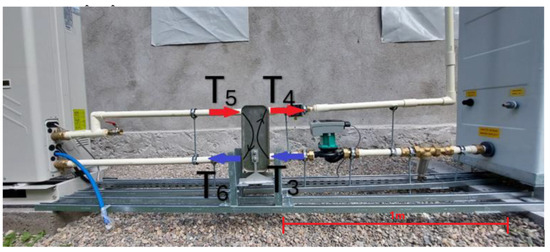
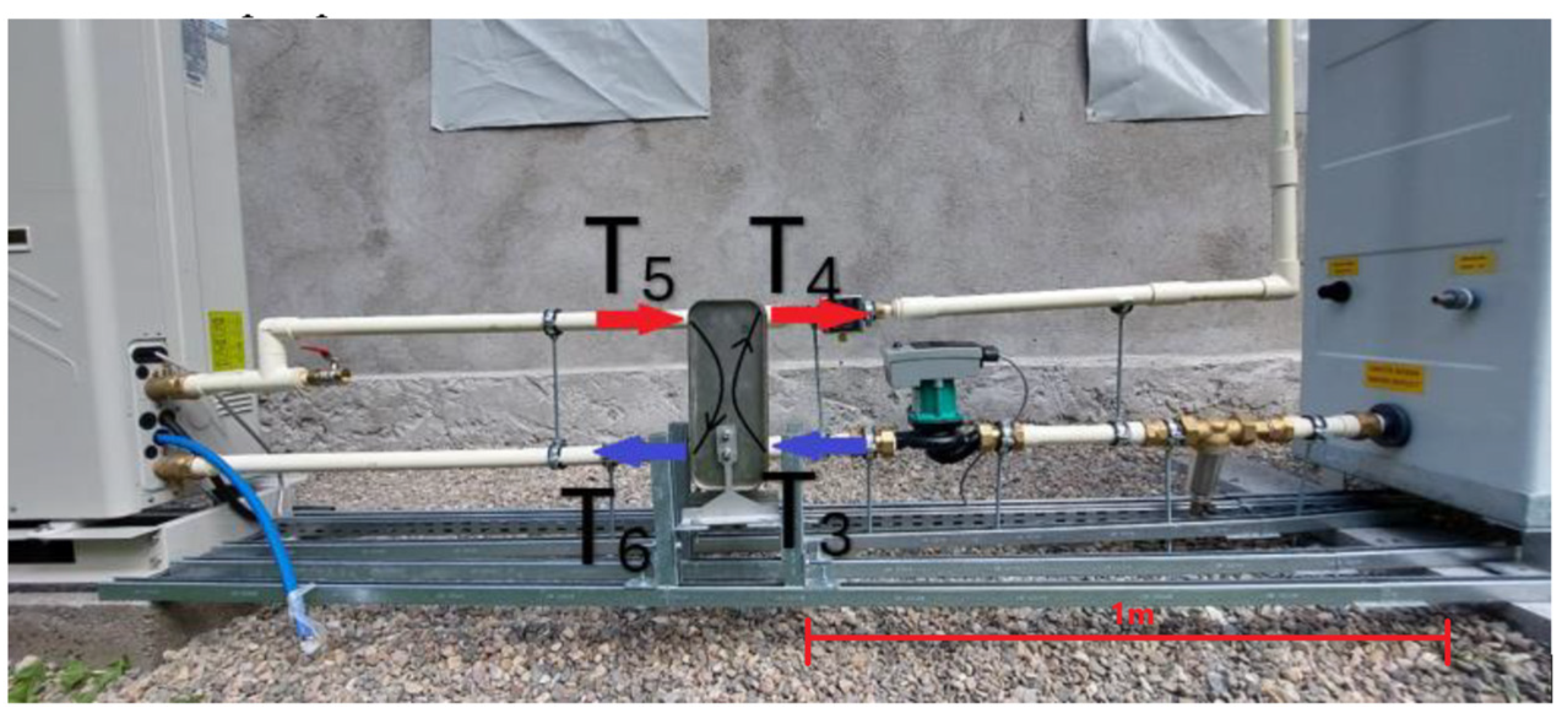
It is recommended to hydraulically separate the open cooling tower circuit from the closed heat-pump circuit. This is necessary because the water in the cooling tower circuit is exposed to contaminants present in the air and in the tower’s surroundings. The heat exchanger was selected based on the water temperatures and flow rates on both the secondary and primary sides of the research station. A plate heat exchanger manufactured by ONDA from Mussolente, Italy, model S 12-26, was chosen. The ONDA plate heat exchanger with installed sensors is shown in Figure 4. The primary function of the circulation pump is to maintain a constant flow rate and pressure of the cooled water passing through the cooling tower and the plate heat exchanger. The Yonos MAXO-Z 25/0.5–7 PN 10 pump manufactured by WILO in Warsaw, Poland, was selected for this purpose.
Figure 4.
View of the plate heat exchanger hydraulically separating the heat pump circuit (left) from the cooling tower circuit (right).
At the core of the control system is a frequency inverter, which regulates the speed of the cooling tower fan motor group based on measurements obtained from the cooling tower outlet water temperature sensor . The primary function of the system is to maintain the outlet temperature of the circulating water leaving the cooling tower at a predefined setpoint. The setpoint can be adjusted manually using a potentiometer that is synchronised with the PLC controller. Cooling towers are selected based on design conditions, which are always defined for the least favourable operating scenario. The maximum thermal load occurs under the most demanding ambient conditions, when the tower fan operates at its maximum rotational speed (60 Hz). For the remainder of the operating time throughout the year, the fan speed is modulated between 20 and 60 Hz. Measurement data from all sensors are recorded at 10 s intervals. The control and data-logging system is equipped with the following: a MIM 1205HG4C3T0 electromagnetic flow meter manufactured by KOBOLD in Settimo Milanese, Italy; PT100 temperature sensors manufactured by Limatherm Sensor in Limanowa, Poland, with a measurement range of −50 to 200 °C; an integrated TH2E thermo-hygrometer manufactured by Papouch in Prague, Czech Republic, enabling relative humidity measurements from 0% to 100%, temperature measurements from −40 to +123.8 °C, and dew-point calculation; and an ME300 frequency inverter adapted for a 0.37 kW fan, as well as an AS218 PLC equipped with a PID controller that is capable of direct data logging to a USB drive, both manufactured by Delta in Taoyuan City, Taiwan. The proper operation of the heat pump is managed by a wall-mounted controller on which the desired outlet water temperature must be set. The circulation pump of the heating circuit, installed inside the unit’s housing, offers three-stage flow regulation. The controller activates the water pump when the measured temperature drops by 2 K relative to the setpoint. It also allows monitoring of the unit’s electrical energy consumption, which is essential for comparing energy use between Stage I and Stage II of the experimental study.
On the laboratory bench, measurements are taken of the water temperature at the inlet () and outlet () of the cooling tower, at the inlet () and outlet () of the heat pump, as well as the air temperature () at the inlet to the cooling tower. In addition, the relative humidity () of the air at the cooling tower inlet and the water flow rate through the tower () and heat pump () are measured, as well as the frequency and current () of the fan motor. The resolutions, measurement accuracies, and descriptions of the sensors used are shown in Table 1.
Table 1.
Measuring instruments and their accuracy.
2.2. Stage II
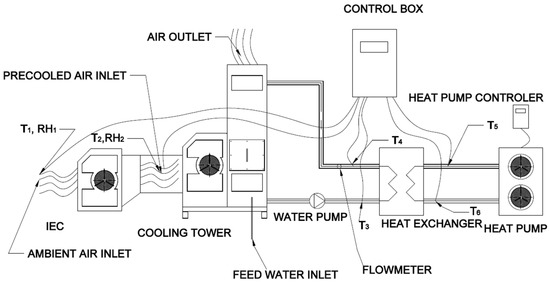
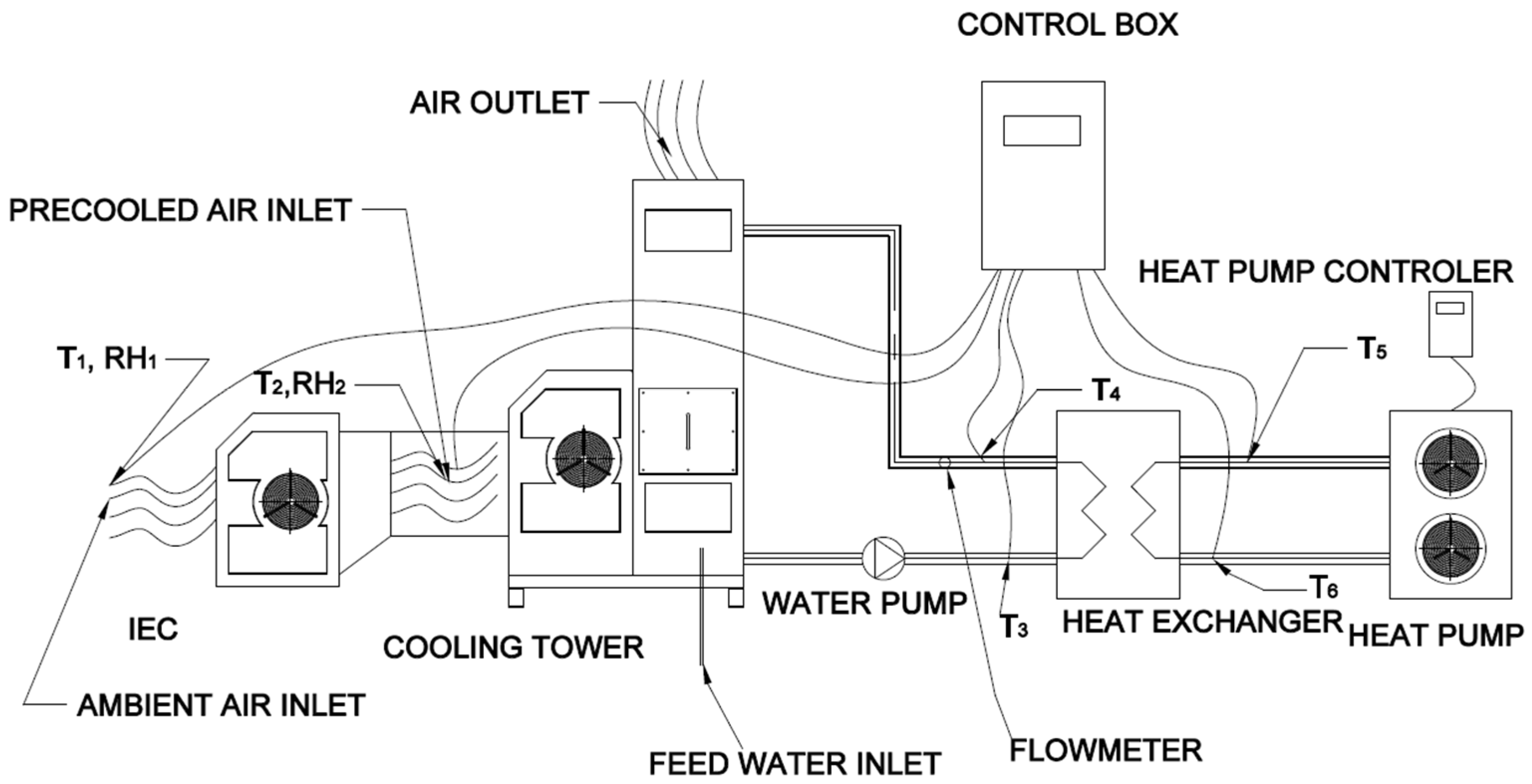
The research station for Stage II of the study was expanded to include a precooling system for the cooling tower inlet air. The optimal solution is the indirect evaporative cooling system CooleradoTM, manufactured by Seeley International form Lonsdale, Australia, which provides a complete configuration and enables the supply-air temperature to be reduced below the wet-bulb temperature. Since this system is initially designed to cool indoor spaces by delivering conditioned air, it is equipped with fans, a water distribution system, and an integrated control unit. The complete schematic of the Stage II setup is shown in Figure 5.
Figure 5.
Scheme of Stage II of the research station.
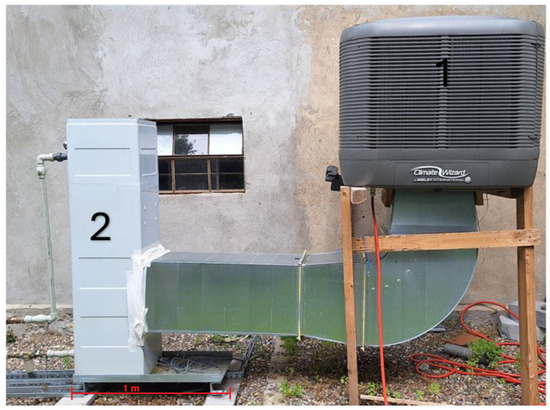
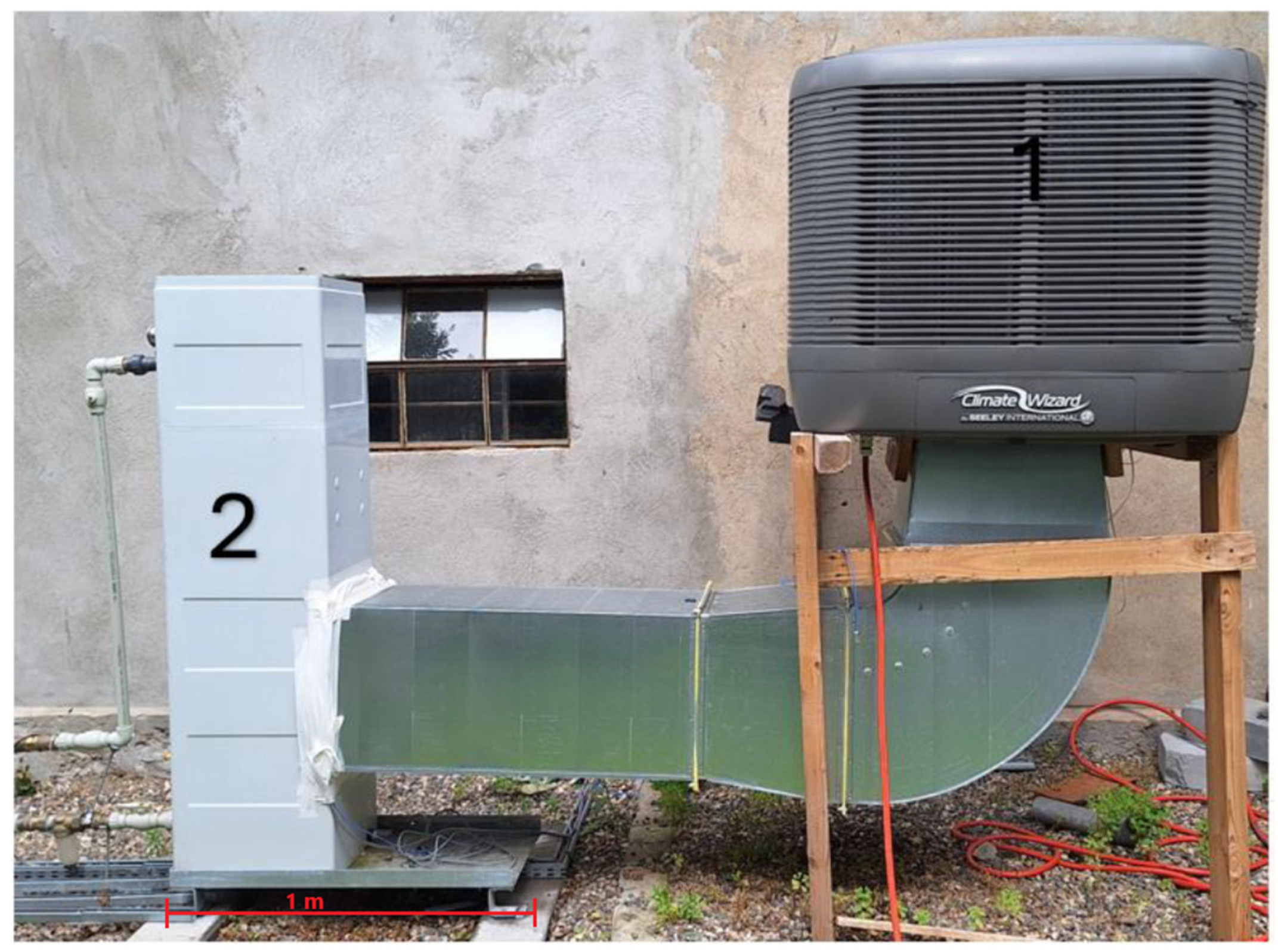
An IEC CW3 model by Seeley International, Lonsdale, Australia, was used. This unit is a complete solution with an indirect regenerative heat exchanger. The maximum available fan static pressure is 270 Pa, which should be sufficient to overcome the highest expected pressure drops in the ventilation ducts and within the cooling tower itself. The unit has a cooling capacity of 17 kW and an electrical input of 1.75 kW. The nominal airflow rate of the fan is 5360 m3/h, and the water consumption is 13 L/min. The IEC connection to the cooling tower is shown in Figure 6.
Figure 6.
Connection of evaporative cooler (1) to a cooling tower (2).
The CW3 IEC is equipped with its own controller, connected to the unit via a communication cable. The cooler operates in automatic cooling mode with a minimum allowable supply air temperature set point of +16 °C.
Measurements in Stage II were extended from those in Stage I to include measurement of temperature () and relative humidity () at the inlet to the evaporative cooler.
2.3. Methodology
To demonstrate the impact of precooling the inlet air on energy consumption and the evaporative tower’s cooling capacity, experimental tests were conducted. These tests involved comparing the operation of a cooling installation equipped solely with a cooling tower to that of an installation in which the tower was supplemented with the IEC, providing precooling of the air entering the tower. The study was divided into two stages. The measured values and calculation results obtained in Stages I and II were compiled into tables and graphs.
The Stage I measurements were carried out from 1 May 2023 to 31 August 2023. In turn, the Stage II measurements were conducted from 1 May 2024 to 31 August 2024. During Stage I research, the system operated for a total of 2952 h, and during Stage II, it operated for 2951 h, with a constant heat load supplied by the heat pump. Measurements were recorded every 10 s throughout the system’s operating period in Stages I and II.
Measurements taken during the operation of the experimental research station in both Stage I and Stage II did not include the data necessary to perform complete analyses. The additional quantities calculated for both research stages were as follows: the cooling capacity of the cooling tower, the thermal capacity of the heat pump, the electrical power of the fan motor in the tower, the ambient air wet-bulb temperature, and the cooling tower’s Coefficient of Performance (COP).
In addition to the primary performance evaluation, supplementary analyses were conducted, including an economic assessment of the proposed system. The economic review accounted for the electricity consumption of the IEC auxiliary fans and the cooling tower fan. These analyses confirmed that the financial performance is strongly influenced by the auxiliary fans’ configuration and their electricity demand; however, they did not have a significant impact on the thermodynamic performance trends or the main conclusions of this study. Therefore, the results of these analyses are not presented in detail, while their execution is explicitly noted here for methodological completeness and transparency.
To calculate the cooling capacity of the cooling tower , an energy balance equation on the cooling water side was used:
where is the mass flow rate of cooling water, is the specific heat capacity of water, is the inlet water temperature, and is the outlet water temperature.
The mass flow rate of the cooled water in the tower is determined on the basis of the measured volumetric flow rate :
where is the density of the cooled water in the cooling tower.
The thermal capacity of the heat pump was also calculated on the basis of an energy balance, defined in this case on the heated-water side of the device:
where is the mass flow rate of water in the heat pump loop, is the specific heat capacity of water, is the inlet water temperature, and is the outlet water temperature.
Similarly to the cooling tower, in the case of the heat pump, the water mass flow rate was determined on the basis of the known volumetric water flow rate :
where is the density of the water heated in the heat pump.
In the case of the heat pump, the volumetric flow rate of the heated water is constant and equal to 2.6 m3/h.
The density in Equations (4) and (6) and the specific heat in Equations (3) and (5) are determined from polynomial functions for the mean water temperature flowing through the cooling tower or heat pump. The water density as a function of temperature is given by the following:
where is the fluid temperature (in °C). The standard deviation of the water density is kg/m3, and the coefficient of determination is ( = 0.999).
The relationship for the specific heat capacity of water as a function of temperature is given by
where is the fluid temperature (in °C). The standard deviation of the specific heat capacity of water is J/(kgK), and the coefficient of determination is = 0.999.
Equations (7) and (8) are valid for the temperature range from 0 to 370 °C.
To determine the active electrical power of the three-phase fan motor of the cooling tower, the following equation was used:
where is the voltage, is the electric current, and is the power factor.
The ambient air wet-bulb temperature was calculated using the formula proposed by Stull [31]:
where is the ambient temperature (in °C), and is the relative humidity of the air (in %).
According to [32], Stull’s formula provides the highest accuracy for the calculated wet-bulb temperature within the range from −1 °C to 0.65 °C, for ambient temperatures between −20 °C and 50 °C, and relative humidity from 5% to 99%.
The measurements performed also made it possible to determine the theoretical SCOP of the cooling tower, expressed by the following equation:
where is the heat flux dissipated by the cooling tower, and is the power consumed by the fan.
Based on the cooling tower capacity calculated for each measuring point (the time step was 10 s), the amounts of heat transferred to the air during each successive 10 s were calculated. Their sum for the entire operating period of the system represents the amount of cooling energy produced by the cooling tower . Similarly, the electricity consumption of the cooling tower fans was determined on the basis of their power and the amount of heat generated by the heat pump on the basis of its capacity . These calculations were performed separately for Stage I and Stage II.
For the performed calculations of indirect measurements, their uncertainties were determined. In accordance with the law of error propagation, the precision limits, assuming a 95% confidence level, are calculated using the following equation [33]:
where P is the precision limit of measurement, and is the bias limit of measurement, which was omitted in these studies.
The method of determining measurement uncertainty is illustrated by the example of a cooling tower’s capacity. The formula for the precision limits for cooling tower capacity is as follows:
where , , and are the measurement uncertainties (type B) determined from the class of measurement sensors, while and are the standard deviations of the approximated densities and specific heat, respectively (type A).
Hence, the measurement uncertainty of the cooling tower capacity is expressed by the following formula:
In summary, the study used both qualitative and quantitative research methods. An overview of the applied research methods is presented in Table 2.
Table 2.
Summary of research methods.
3. Results
This chapter presents the measurement results for Stages I and II. The dataset was supplemented with calculations of the evaporative tower’s cooling capacity (from Equation (3)), the heat pump’s heating capacity (from Equation (5)), the ambient air wet-bulb temperature (from Equation (10)), and the SCOP of the cooling tower (from Equation (11)). In this chapter, ambient temperature is equal to temperature in Stage I and temperature in Stage II. The measurement data also include the dew-point temperature, calculated by the controller based on the dry-bulb temperature and relative humidity. Table 3 summarises the average values of selected measured and computed parameters for Stages I and II. They were calculated as arithmetic means over the entire operational period of the system in Stages I and II.
Table 3.
Average values of the parameters measured and calculated in Stages I and II.
To compare all stages, the total amount of cooling energy produced by the cooling tower , the total thermal energy delivered by the heat pump , and the electrical energy consumed by the cooling tower fan motor were calculated for the respective measurement periods. From these results, the SCOP of the cooling tower was determined for each stage. All corresponding data are presented in Table 4.
Table 4.
A summary of the cooling energy produced and the electrical energy consumed by the cooling tower, the thermal energy delivered by the heat pump , and the SCOP of the cooling tower.
3.1. Test Under Increased Thermal Load—16 August 2024
On 16 August 2024, a test of the cooling system was conducted during the period of the highest ambient temperatures. The purpose of this test was to evaluate how maximum precooling of the inlet air, combined with an increased thermal load, would affect the performance of the evaporative tower. During the test period (10:45–14:45), the ambient temperature ranged from 25 °C to 32 °C, and the relative humidity ranged from 45% to 75%.
The test consisted of turning off the automatic operation of both the CW3 cooler and the MCT 25 cooling tower. Both devices were operated at maximum fan speed and with lowered setpoints for the precooled air temperature () and the water temperature (). The cooling tower inverter frequency was set to 60 Hz, while the cooler’s controller was switched to manual mode with the minimum allowable temperature setpoint of 18 °C and maximum supply air flow. Additionally, the outlet water temperature from the heat pump was increased to 45 °C. Table 5 presents hourly average values of selected measured and calculated parameters obtained during the test. In Table 3, the symbols and represent the temperature and relative humidity of the air measured at the inlet to the IEC, while and represent and measured at the cooling tower air inlet.
Table 5.
Average values of the parameters measured and calculated in Stage II.
3.2. Comparison of Measurements for Selected Days of Stage I and Stage II
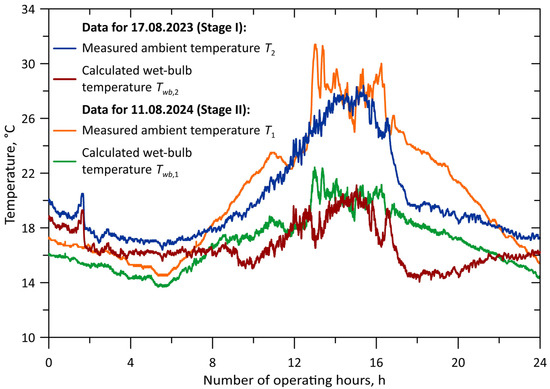
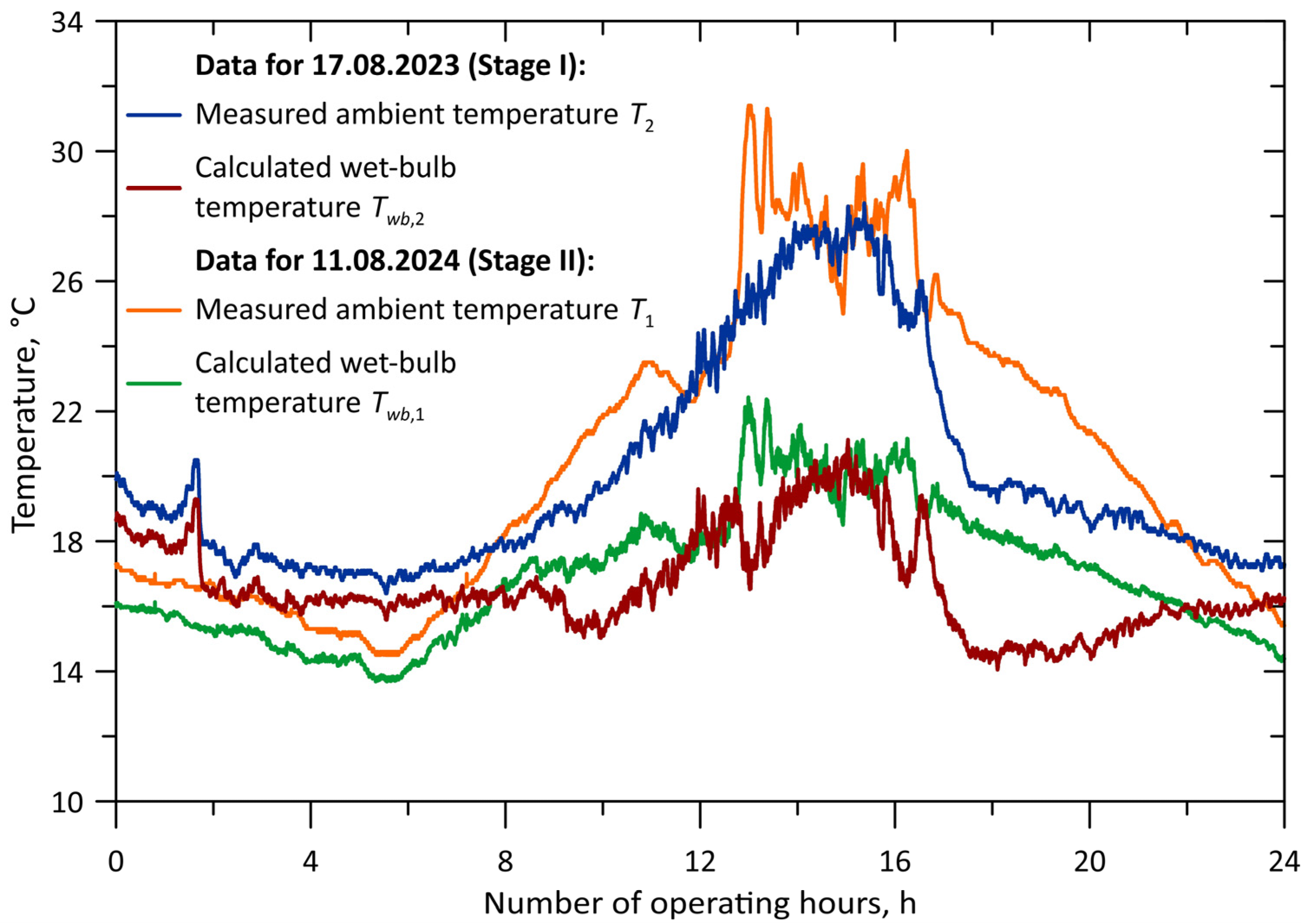
From the available measurement data, two representative days were selected: one from Stage I (17 August 2023) and another from Stage II (11 August 2024). The selection criterion was a similar daily profile of ambient dry-bulb temperature and wet-bulb temperature. Table 6 presents the measured and calculated average values, while Table 7 summarises the amounts of cooling energy produced by the cooling tower, thermal energy produced by the heat pump, the electrical energy consumed by the fans of the cooling tower , and the resulting SCOPCT values. Figure 7 illustrates the daily distribution of the measured dry-bulb temperatures and the calculated wet-bulb temperatures.
Table 6.
Average values of the parameters measured and calculated in Stages I and II.
Table 7.
A summary of the cooling energy produced and the electrical energy consumed by the cooling tower, the thermal energy delivered by the heat pump , and the SCOPCT of the cooling tower.
Figure 7.
Ambient (dry-bulb) and wet-bulb temperatures for 17 August 2023 (Stage I) and for 11 August 2024 (Stage II).
4. Analysis of Results and Discussion
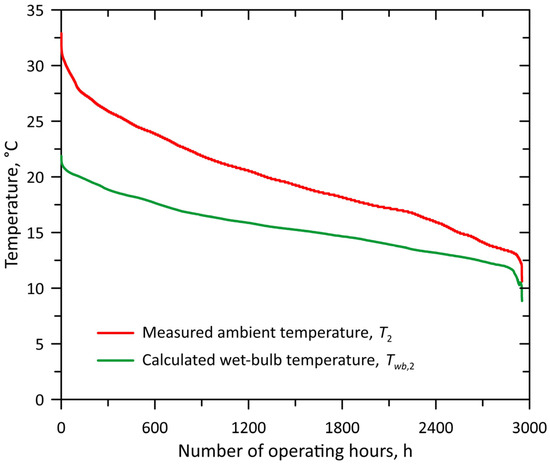
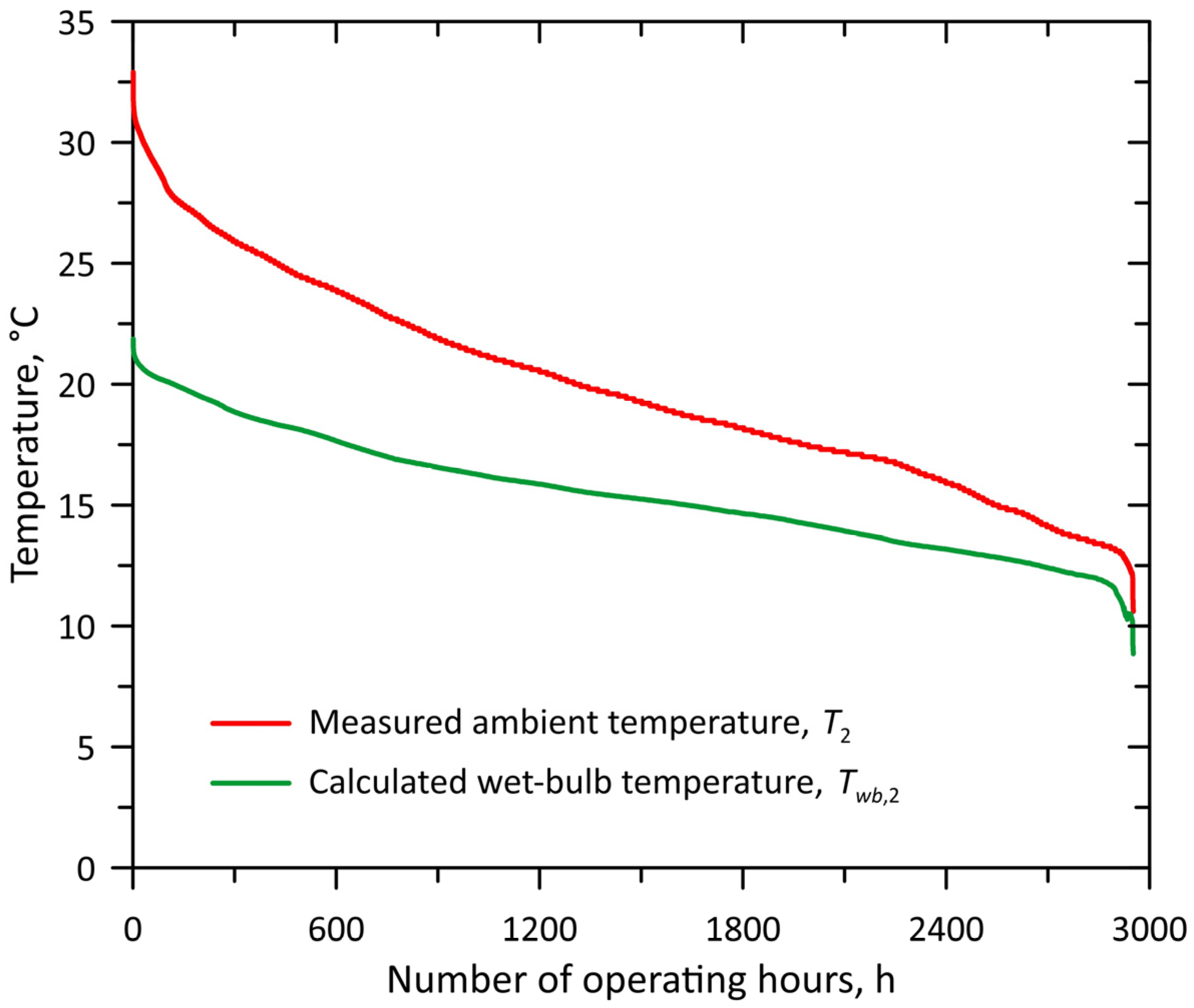
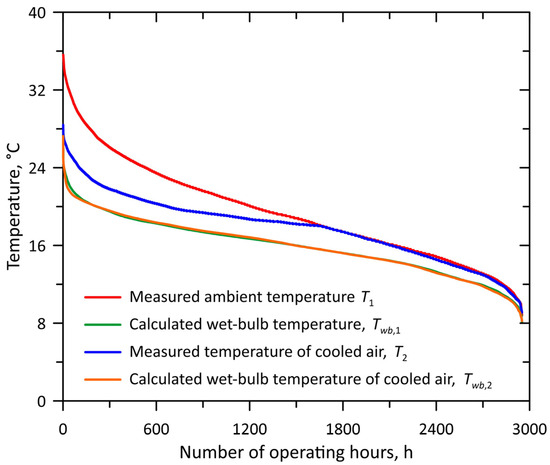
This paper presents the results of experimental investigations (Stages I and II) conducted over two cooling seasons (from early May to the end of August) in 2023 and 2024. The statistical climate data included in the MITA software assume a wider range of dry-bulb temperatures. The minimum and maximum values are 1.5 °C and 32 °C, respectively. However, measurements from Stages I and II showed that during the analysed period, the ambient temperature did not fall below 9 °C. Figure 8 illustrates the temperature distribution for Stage I, while Figure 9 presents the corresponding distribution for Stage II. The maximum dry-bulb temperature recorded in Stage I was 32.9 °C, and in Stage II it reached 35.6 °C. The average dry-bulb temperature in Stage II was 0.9 °C higher than in Stage I.
Figure 8.
Hourly profiles of the ambient temperature () and the wet-bulb temperature () at the inlet of the cooling tower for Stage I.
Figure 9.
Hourly profile of ambient temperature and wet-bulb temperature at the inlet to the IEC and air temperature and wet-bulb temperature after pre-cooling at the inlet to the cooling tower for Stage II.
The wet-bulb temperatures also differed between the two stages. Once again, the statistical data values are lower than the actual measurements. The lowest calculated wet-bulb temperature was 9.1 °C for Stage I and 8.3 °C for Stage II. The average wet-bulb temperature in 2024 was 1.2 °C higher than in 2023.
Higher ambient dry-bulb and wet-bulb temperatures reduce the available driving potential for heat and mass transfer, thereby reducing cooling tower capacity. In Stage II, the higher maximum and average dry-bulb temperatures increased the average wet-bulb temperature, further increasing the outlet water temperature from the cooling water. As a result, operation under such conditions generally leads to reduced cooling capacity, higher outlet temperatures, and increased electricity demand. Consequently, the improved capacity observed in Stage II, despite less favourable ambient conditions, highlights the beneficial impact of the air at the cooling tower inlet on the cooling tower’s operation.
In Figure 9, a decreasing difference between the ambient air temperature and the cooled air temperature can be observed. This effect is associated with the control process of the CW3 cooler. The fan speed in the CW3 unit automatically adjusts to the set temperature, which in this case was 18 °C. The cooler’s water consumption, which supplies the wet channels, is constant and not subject to regulation. Consequently, the closer the ambient temperature is to the set point, the lower the fan speed.
The calculated SCOPCT for Stage I is consistent with MITA’s software’s theoretical assumptions. Although the statistical dataset assumes a broader range of minimum and maximum dry-bulb and wet-bulb temperatures, these values are representative of the actual climatic conditions that may occur at the studied location. The cooling tower using precooled air from the CW3 unit achieved a SCOPCT approximately 30% higher than in Stage I. This improvement demonstrates that the proposed solution enables higher cooling capacity while reducing electricity consumption compared with the stand-alone cooling tower. Moreover, the cooling tower operating in combination with the IEC exhibited significantly higher efficiency, despite experiencing higher peak dry-bulb and wet-bulb temperatures than those recorded during the Stage I measurements.
The test conducted on 16 August 2024 demonstrated that the cooling tower with a precooled inlet air temperature could achieve substantially higher cooling capacity. This effect was observed under high ambient temperatures and increased thermal load from the heat pump. Under these conditions, the cooling tower maintained the outlet water temperature () below 25.5 °C, while the maximum difference between the ambient air temperature and the cooled air temperature reached 9.9 K. The cooling capacity of the evaporative tower increased from its nominal value of 17 kW to approximately 35 kW, and the heat pump’s thermal output likewise increased to a maximum of about 35 kW. This enhancement was a direct result of the increased water-side temperature difference .
The comparison confirms that precooling the inlet air to the cooling tower using an IEC reduces electricity consumption and increases the thermal efficiency of the open-circuit cooling tower. The selected day of Stage II (11 August 2024) was warmer than the corresponding day of Stage I (17 August 2023), with an average dry-bulb temperature higher by 0.5 °C and an average wet-bulb temperature higher by 0.3 °C. Despite these less favourable ambient conditions, the average electricity consumption by the tower fan motor in Stage II was approximately 4% lower than in Stage I. The increased water temperature difference observed in the cooling tower of the Stage II system is a direct result of inlet air precooling, which improves heat and mass transfer by reducing the inlet air’s effective wet-bulb temperature. Consequently, the higher thermal load on the heat pump is enabled by the improved air-side conditions and is not an independent effect.
5. Conclusions
This study demonstrated that precooling of the inlet air to the cooling tower using an IEC significantly improves system capacity under both nominal and extreme operating conditions. Compared to the reference system without precooling, the proposed configuration increased cooling capacity by 14.7% and reduced the cooling tower’s electricity consumption by 135 kWh, while enabling lower outlet water temperatures.
The main scientific achievement of this work is the experimental confirmation that IEC-based inlet air precooling leads to a substantial improvement in the Seasonal Coefficient of Performance of the cooling tower (SCOPCT), which increased by approximately 30% compared to operation without precooling.
The key assumption of the research was that using IEC to precool the inlet air improves the cooling tower’s efficiency, and this thesis was proven.
Unlike previous studies, which predominantly focused on improving wet-bulb efficiency, the present work introduces SCOP as a comprehensive, seasonally representative performance indicator for cooling towers. Based on an extensive literature review, no experimental studies were identified that evaluate the impact of IEC-based inlet air precooling on the SCOP of an open-circuit cooling tower, which highlights the novelty of the present research.
An increase in SCOP directly indicates lower electricity consumption relative to the useful cooling energy generated, providing a more application-oriented assessment of cooling tower performance.
Additional tests conducted at high ambient temperatures and elevated thermal loads confirmed that the integrated cooling tower and IEC system ensures reliable operation even under extreme conditions, which is particularly important for industrial facilities lacking backup cooling capacity or undergoing periodic expansions.
Although including auxiliary IEC fans increases total electricity consumption, the improved operational reliability may outweigh the associated increase in operating costs in many practical applications.
The results further indicate that additional energy savings may be achieved through alternative system configurations, particularly those that integrate only an indirect heat exchanger rather than a complete IEC with auxiliary fans.
Possible alternative configurations include the following:
- Standalone HMX or MicroCore (CW3) modules installed at the cooling tower air inlet;
- A single fan driving the ambient air stream, which is then precooled and finally exhausted from the cooling tower, overcoming total pressure losses in the system.
The proposed solution applies not only to open-circuit cooling towers but also to closed-circuit systems, where even greater efficiency improvements and extended dry-operation (free-cooling) periods can be expected. Furthermore, inlet air precooling can compensate for reduced cooling capacity associated with the transition to environmentally friendly, low-GWP refrigerants, enabling system modernisation without performance degradation.
The study confirms that precooling the inlet air using the IEC significantly enhances the capacity of open-circuit evaporative cooling towers, particularly in climates characterised by a large dry-bulb to wet-bulb temperature difference. The experimental results demonstrate that precooling the inlet air reduces cooling tower electricity consumption by approximately 15%, accompanied by a noticeable increase in cooling capacity and a lower outlet water temperature.
The benefits of precooling the inlet air to the cooling tower are most pronounced in hot, dry, or semi-arid climates, where the high evaporative potential enables effective reduction in air temperature before it enters the cooling tower. In temperate climates, significant electrical energy savings can still be achieved during peak summer conditions. In contrast, in hot, humid climates, the effect is more limited and is primarily suitable for precooling air-inlet applications. Overall, the study’s results indicate that IEC-based inlet air precooling is an effective strategy for reducing electricity consumption and improving operational reliability of open evaporative cooling towers, particularly under high ambient temperatures.
Author Contributions
Conceptualization, B.J.; methodology, B.J.; validation, B.J.; formal analysis, B.J.; investigation, B.J.; resources, B.J. and M.J.; writing—original draft preparation, B.J.; writing—review and editing, M.J.; visualisation, B.J. and M.J.; supervision, M.J. All authors have read and agreed to the published version of the manuscript.
Funding
This research was funded by the Implementation Doctorate programme, contract No. DWD/4/25/2020.
Data Availability Statement
The data presented in this study are available on request from the corresponding author due to the know-how of producers of cooling devices.
Conflicts of Interest
The authors declare no conflicts of interest.
Abbreviations
The following abbreviations are used in this manuscript:
| COP | Coefficient of Performance |
| DEC | Direct Evaporative Cooler |
| GWP | Global Warming Potential |
| HMX | Heat and Mass Exchanger |
| HVAC | Heating, Ventilation, and Air Conditioning |
| IEC | Indirect Evaporative Cooler |
| M-cycle | Maisotsenko Cycle |
| ODP | Ozone Depletion Potential |
| RH | Relative Humidity |
| SCOP | Seasonal Coefficient of Performance |
| VCRS | Vapour-Compression Refrigeration System |
References
- International Energy Agency. The Future of Cooling. Opportunities for Energy-Efficient Air Conditioning, OECD/IEA, 2018. Available online: https://www.iea.org (accessed on 3 December 2025).
- BITZER Kuehlmaschinenbau GmbH. Refrigerant Report 20; A-501-20 EN. Available online: https://www.bitzer.de (accessed on 3 December 2025).
- Yang, Z.; Feng, B.; Ma, H.; Zhang, L.; Duan, C.; Liu, B.; Zhang, Y.; Chen, S.; Yang, Z. Analysis of lower GWP and flammable alternative refrigerants. Int. J. Refrig. 2021, 126, 12–22. [Google Scholar] [CrossRef] [Scilit]
- Artusoa, P.; Marinetti, S.; Minetto, S.; Del Col, D.; Rossetti, A. Modelling the performance of a new cooling unit for refrigerated transport using carbon dioxide as the refrigerant. Int. J. Refrig. 2020, 115, 158–171. [Google Scholar] [CrossRef] [Scilit]
- Longo, G.; Mancin, S.; Righetti, G.; Zilio, C. Hydrocarbon refrigerants HC290 (Propane) and HC1270 (Propylene) low GWP long-term substitutes for HFC404A: A comparative analysis in vaporisation inside a small-diameter horizontal smooth tube. Appl. Therm. Eng. 2017, 124, 707–715. [Google Scholar] [CrossRef] [Scilit]
- Dizaji, H.S.; Mrabet, B.M. Development and experimental sensitivity analysis of a Maisotsenko-cycle water desalination system under diverse climate conditions. Appl. Therm. Eng. 2025, 281, 128730. [Google Scholar] [CrossRef] [Scilit]
- Pandelidis, D.; Cichoń, A.; Pacak, A.; Drąg, P.; Drąg, M.; Worek, W.; Cetin, S. Water desalination through the dewpoint evaporative system. Energy Convers. Manag. 2021, 229, 113757. [Google Scholar] [CrossRef] [Scilit]
- Saghafifar, M.; Gadalla, M. Innovative inlet air cooling technology for gas turbine power plants using integrated solid desiccant and Maisotsenko cooler. Energy 2015, 87, 663–677. [Google Scholar] [CrossRef] [Scilit]
- Saghafifar, M.; Gadalla, M. Analysis of Maisotsenko open gas turbine power cycle with a detailed air saturator model. Appl. Energy 2015, 149, 338–353. [Google Scholar] [CrossRef] [Scilit]
- Baakeem, S.; Orfi, J.; Mohamad, A.; Bawazeer, S. The possibility of using a novel dew point air cooling system (M-Cycle) for A/C application in Arab Gulf Countries. Build. Environ. 2019, 148, 185–197. [Google Scholar] [CrossRef] [Scilit]
- Sohani, A.; Sayyaadi, H.; Mohammadhosseini, N. Comparative study of the conventional types of heat and mass exchangers to achieve the best design of dew point evaporative coolers at diverse climatic conditions. Energy Convers. Manag. 2018, 158, 327–345. [Google Scholar] [CrossRef] [Scilit]
- Badiei, A.; Akhlaghi, Y.G.; Zhao, X.; Li, J.; Yi, F.; Wang, Z. Can whole building energy models outperform numerical models, when forecasting performance of indirect evaporative cooling systems? Energy Convers. Manag. 2020, 213, 112886. [Google Scholar] [CrossRef] [Scilit]
- Delfani, S.; Karami, M. Transient simulation of solar desiccant/M-Cycle cooling systems in three different climatic conditions. J. Build. Eng. 2020, 29, 101–152. [Google Scholar] [CrossRef] [Scilit]
- Zanchini, E.; Naldi, C. Energy saving obtainable by applying a commercially available M-cycle evaporative cooling system to the air conditioning of an office building in North Italy. Energy 2019, 179, 975–988. [Google Scholar] [CrossRef] [Scilit]
- Comino, F.; González, J.C.; Navas-Martos, F.J.; De Adana, M.R. Experimental energy performance assessment of a solar desiccant cooling system in Southern Europe climates. Appl. Therm. Eng. 2020, 165, 114579. [Google Scholar] [CrossRef] [Scilit]
- Pandelidis, D.; Anisimov, S.; Worek, W.M. Performance study of the Maisotsenko Cycle heat exchangers in different air-conditioning applications. Int. J. Heat Mass Transf. 2015, 81, 207–221. [Google Scholar] [CrossRef] [Scilit]
- Pokorný, J.; Madejski, P.; Fišer, J. Sustainable air conditioning with a focus on evaporative cooling and the Maisotsenko cycle. Arch. Thermodyn. 2025, 46, 111–121. [Google Scholar] [CrossRef] [Scilit]
- Lv, J.; Zhou, B.; Zhu, M.; Xi, W.; Hu, E. Experimental Study on the Performance of a Dew-Point Evaporative Cooling System with a Nanoporous Membrane. Energies 2022, 15, 2592. [Google Scholar] [CrossRef] [Scilit]
- Ali, M.; Ahmad, W.; Sheikh, N.A.; Ali, H.; Kousar, R.; Rashid, T. Performance enhancement of a cross flow dew point indirect evaporative cooler with circular finned channel geometry. J. Build. Eng. 2021, 35, 101980. [Google Scholar] [CrossRef] [Scilit]
- Cuce, P.M.; Riffat, S. A state of the art review of evaporative cooling systems for building applications. Renew. Sustain. Energy Rev. 2016, 54, 1240–1249. [Google Scholar] [CrossRef] [Scilit]
- Pandelidis, D.; Anisimov, S.; Worek, W.; Drag, P. Numerical analysis of a desiccant system with cross-flow Maisotsenko cycle heat and mass exchanger. Energy Build. 2016, 123, 136–150. [Google Scholar] [CrossRef] [Scilit]
- Chen, C.; Hsu, C.; Chen, C.; Chen, S. Silica gel polymer composite desiccants for air conditioning systems. Energy Build. 2015, 101, 122–132. [Google Scholar] [CrossRef] [Scilit]
- Kozubal, E.; Slayzak, S. Coolerado 5 Ton RTU Performance: Western Cooling Challenge Results; NREL: Golden, CO, USA, 2010.
- Cui, X.; Chua, K.J.; Islam, M.R.; Ng, K.C. Performance evaluation of an indirect pre-cooling evaporative heat exchanger operating in hot and humid climate. Energy Convers. Manag. 2015, 102, 140–150. [Google Scholar] [CrossRef] [Scilit]
- Khandelwal, A.; Talukdar, P.; Jain, S. Energy savings in a building using regenerative evaporative cooling. Energy Build. 2011, 43, 581–591. [Google Scholar] [CrossRef] [Scilit]
- Heidarinejad, G.; Bozorgmehr, M.; Delfani, S.; Esmaeelian, J. Experimental investigation of two-stage indirect/direct evaporative cooling system in various climatic conditions. Build. Environ. 2009, 44, 2073–2079. [Google Scholar] [CrossRef] [Scilit]
- Karmakar, A.; Salomon, B.C.; Acharya, S.; Kozlov, A.; Chudnovsky, Y. Utilizing Reversed Brayton Cycle for Enhanced Cooling Tower Technology. Heat Transf. Eng. 2025, 46, 928–942. [Google Scholar] [CrossRef] [Scilit]
- Pandelidis, D.; Drag, M.; Drag, P.; Worek, W.; Cetin, S. Comparative analysis between traditional and M-Cycle based cooling tower. Int. J. Heat Mass Transf. 2020, 159, 120–124. [Google Scholar] [CrossRef] [Scilit]
- Fan, X.; Lu, X.; Wang, J.; Li, Z.; Wang, Q.; Dong, Z.; Zhang, R. Performance Evaluation of a Maisotsenko Cycle Cooling Tower with Uneven Length of Dry and Wet Channels in Hot and Humid Conditions. Energies 2021, 14, 8249. [Google Scholar] [CrossRef] [Scilit]
- MITA Cooling Technologies S.r.l.,Via del Benessere, 13, Siziano 27010, Pavia, IT. Available online: https://www.mitacoolingtechnologies.com/ (accessed on 3 December 2025).
- Stull, R. Wet-bulb temperature from relative humidity and air temperature. J. Appl. Meteorol. Climatol. 2011, 50, 2267–2269. [Google Scholar] [CrossRef] [Scilit]
- Lee, C.; Wang, Y. A novel method to derive formulas for computing the wet-bulb temperature from relative humidity and air temperature. Measurement 2018, 128, 271–275. [Google Scholar] [CrossRef] [Scilit]
- Taler, D. Calculation and Experimental Research on Heat Exchangers; Wydawnictwo PK: Cracow, Poland, 2016. (In Polish) [Google Scholar]

Disclaimer/Publisher’s Note: The statements, opinions and data contained in all publications are solely those of the individual author(s) and contributor(s) and not of MDPI and/or the editor(s). MDPI and/or the editor(s) disclaim responsibility for any injury to people or property resulting from any ideas, methods, instructions or products referred to in the content. |
© 2026 by the authors. Licensee MDPI, Basel, Switzerland. This article is an open access article distributed under the terms and conditions of the Creative Commons Attribution (CC BY) license.