1. Introduction
The modern transport sector is at the centre of the global debate on sustainable development. As one of the key branches of the economy, transport is responsible for a significant share of global greenhouse gas (GHG) emissions, primary energy consumption, and the exploitation of natural resources. According to data from the International Energy Agency (IEA), road transport accounts for nearly 17% of global CO
2 emissions, with passenger cars playing a dominant role [
1]. While these emissions are largely associated with the vehicle use phase, recent research increasingly highlights the importance of upstream processes. In particular, the energy demand related to the production of structural materials is gaining significance in the overall environmental balance of passenger cars and therefore constitutes the main focus of this study. Reducing the negative environmental impact of transport is one of the principal objectives of both European Union policies (e.g., the European Green Deal) and global climate agreements (e.g., the Paris Agreement). In this context, systematic methods for assessing energy burdens embedded in vehicle structures are gaining importance, particularly those focused on the energy required for material production and transformation.
Historically, a vehicle environmental assessment during the operational phase was given the greatest emphasis, mainly due to emissions from fuel combustion and energy use [
2,
3]. Life Cycle Assessment (LCA) has been recommended as an appropriate method for capturing non-tailpipe life-cycle impacts, such as fuel production and material manufacturing, which may significantly alter comparative outcomes between vehicle technologies [
4]. With the development of low-emission vehicles, including electric and hybrid cars, the share of the production phase in the total environmental footprint has increased substantially. This trend has been confirmed by recent LCA studies demonstrating the growing contribution of material and battery manufacturing to overall vehicle impacts [
5,
6,
7].
Numerous studies indicate that, for electric vehicles, emissions and energy use associated with production can account for more than 40% of the total environmental impact [
6,
7]. Consequently, the analysis of materials used in vehicle manufacturing becomes crucial, both in terms of their environmental performance and their energy-related characteristics.
Structural materials employed in the automotive industry, such as steel, aluminium, plastics, and composites, differ not only in mass and mechanical properties but also in the amount of energy consumed throughout all stages of their production, the emissions generated during manufacture, and their recycling potential [
8].
Material selection therefore directly affects vehicle mass and, consequently, fuel or energy consumption during use, as well as environmental burdens in the production and end-of-life phases [
9]. For example, aluminium offers significant weight-reduction potential compared with steel, which translates into lower energy consumption during operation phase. However, its primary production is several times more energy-intensive, potentially offsetting these benefits, particularly in regions with carbon-intensive electricity mixes [
10].
On the other hand, composite materials, used increasingly often in the automotive industry, offer a very favourable strength-to-weight ratio, but their recycling is much more difficult, and their production processes are still characterised by high energy consumption [
11]. Moreover, new trends in vehicle design emphasise greater use of recycled materials, which, on the one hand, can help reduce the consumption of primary raw materials, but on the other hand require new supply chain management models and improved separation and processing technologies [
12].
Therefore, analysing the impact of material selection on the energy and environmental balance of a vehicle’s life-cycle has become one of the key research areas in sustainable transport, as confirmed by recent studies emphasising the role of material composition in shifting environmental burdens between production and use phases [
8,
13,
14]. A well-designed LCA can identify which materials and design strategies bring actual benefits, although several authors indicate that conclusions are often highly sensitive to system boundaries and assumptions regarding recycling rates and regional energy mixes [
9,
10]. Identifying these relationships provides a significant contribution to the design of more sustainable vehicle structures and supports the development of environmental regulations and standards for the automotive sector.
In addition to LCA studies focusing on overall environmental impacts, a growing body of research specifically addresses the energy dimension of material production, often referred to as embodied energy. Numerous authors highlight that embodied energy can represent a substantial share of the total life-cycle energy demand of vehicles, particularly as material structures become more diverse and lightweight [
15,
16,
17]. Norgate et al. demonstrated that the production of metals such as aluminium, magnesium, and copper is associated with very high unit energy intensities, sometimes exceeding 200–300 MJ/kg (megajoules of energy per kilogram of material), making material choice a critical determinant of energy burdens in manufacturing [
15]. Similar conclusions were drawn by Ashby, who compared embodied energy levels of common engineering materials and emphasised that lightweight materials do not always lead to lower life-cycle burdens when production energy is accounted for [
8].
Research also shows that temporal changes in material composition significantly affect embodied energy trends. Messagie et al. and Delogu et al. found that the increasing share of lightweight materials in modern vehicles shifts a growing portion of the energy burden toward the production stage, even when operational-phase emissions decrease [
13,
14]. More recent studies analyse the role of secondary (recycled) materials in reducing embodied energy. Reports by the European Aluminium Association and the International Aluminium Institute indicate that recycling aluminium can reduce its energy intensity by 90–95%, which fundamentally reshapes the energy profile of vehicles with a high share of light alloys [
16,
18]. At the same time, Das and Suzuki & Takahashi highlight that advanced composites—despite their structural benefits—introduce very high energy burdens in the production phase, and their recycling remains technologically challenging [
10,
11].
Although these studies provide valuable insights into the embodied energy of individual materials or specific vehicle components, there is limited research offering long-term comparative analyses of entire passenger cars across different production years. In particular, few publications simultaneously combine dismantling data, LCA inventory databases, and material intensity indicators to evaluate how changes in material structure over time influence total embodied energy. This gap justifies the need for a systematic investigation of embodied energy trends in vehicles produced over the last two decades. This study contributes to filling the identified gap by providing a long-term, empirically grounded comparison of embodied energy trends in passenger cars across three decades.
The existing literature provides extensive analyses of vehicle operational emissions; however, significantly less attention has been devoted to the energy burdens associated with the production of structural materials, despite their growing share in the overall environmental footprint of modern vehicles. This gap is particularly evident for comparative studies covering long-term changes in vehicle material composition. Therefore, the main objective of this study is to quantify the embodied energy of key structural material groups used in passenger cars produced in 2000, 2010 and 2020 and to assess how these changes influence total material-related energy burdens. The expected contribution of this research lies in providing empirical evidence on the evolution of material energy intensity and offering methodological insights that support the development of more energy-efficient material strategies within vehicle life-cycle and sustainable mobility research.
This paper aims to conduct an embodied energy assessment of a passenger car considering various material scenarios, focusing on the impact of structural materials on total energy burdens. The study is comparative in nature and is based on both empirical and simulation data, using established LCA tools. Materials analysed include conventional steel, aluminium, composite materials, and plastics. Particular emphasis is placed on assessing the trade-offs between vehicle mass reduction and the energy intensity of the production process. The paper is structured as follows.
Section 2 presents the research methodology, including the applied Life Cycle Assessment framework.
Section 3 provides the results of the analysis, including energy consumption calculations and statistical evaluation. Finally,
Section 4 summarises the main findings.
2. Methodology for Assessing the Embodied Energy of Vehicle Materials
2.1. Methodological Basis and Scope of the Study
A Life Cycle Assessment is one of the most widely applied methodological frameworks for environmental analysis in the automotive sector. In accordance with ISO 14040 and ISO 14044 standards [
19,
20], it provides a structured approach for determining energy inputs and potential environmental impacts throughout the entire life cycle of a product, from raw material extraction through manufacturing and use to end-of-life treatment and waste management [
19].
However, a full LCA typically encompasses a wide range of impact categories (e.g., emissions, toxicity, and resource depletion), many of which fall outside the scope of this study. In this work, the LCA is applied in a more focused manner, primarily as a source of life cycle inventory (LCI) data and as a framework for evaluating embodied energy, defined as the total amount of energy consumed to produce structural materials prior to the vehicle entering the use phase. Consequently, although the study draws on LCA tools and databases, it does not constitute a complete environmental LCA as defined by ISO standards. Instead, it concentrates on a selected component of life cycle assessment relevant to material-related energy burdens.
In the context of passenger vehicles, the material production phase plays an increasingly important role, as it represents a growing share of the total energy balance in new-generation vehicles, particularly electric ones [
4]. Embodied energy includes the cumulative energy consumption associated with raw material extraction, transportation, processing, the production of semi-finished products, and the manufacturing of final components [
8].
In recent years, a shift has been observed in environmental analyses away from the vehicle operation phase, which has traditionally dominated, towards the production phase, where materials constitute the main source of energy burdens [
7]. This shift results both from the development of low-emission vehicles and from increasingly stringent environmental regulations and recycling requirements.
Accordingly, this paper focuses on assessing the energy intensity of structural materials used in passenger cars belonging to the B and C segments, produced in the years 2000, 2010, and 2020. Vehicles representative of typical city and compact models were selected, as these segments constitute a substantial share of the European passenger car market.
The selection of these time periods enables an analysis of the evolution of vehicle material structures, from the dominance of steel in vehicle designs at the turn of the twentieth and twenty-first centuries, through the growing importance of aluminium and plastics in the second decade of the twenty-first century, to contemporary vehicles (including electric ones), in which an increasing share of composites, light alloys, and recycled materials can be observed [
13,
14].
Although a full life cycle assessment would include additional stages such as vehicle use and end-of-life treatment, the present work deliberately concentrates on material-related energy demand. This focused approach enables a clearer identification of temporal trends in embodied energy associated with changes in vehicle material composition and provides a consistent and comparable basis for analysis across different production years.
2.2. Inventory Data Collection and Material Classification
The collection of inventory data constitutes a key stage of any LCA, including studies focusing on vehicle energy intensity. The quality and level of detail of the input data directly determine the reliability of LCA results and, in the case of material-oriented studies, enable the accurate identification of material groups that dominate the total energy balance of a passenger car.
A particular challenge in the automotive sector arises from the high complexity of vehicle structures, as a typical passenger car consists of approximately 20,000–30,000 individual parts [
19]. This complexity necessitates the generalisation and classification of materials into groups that represent similar physical and technological characteristics, as well as comparable levels of embodied energy.
For the purposes of this study, data on the material composition of vehicles were obtained from three principal sources:
Life Cycle Assessment databases (including Ecoinvent v3.8, GaBi 10, and Plastics Europe LCI), providing detailed information on the energy and environmental profiles of materials used in industrial applications;
Scientific literature and industry reports, presenting both historical data and forecasts of material composition trends in passenger vehicles [
6,
7,
8];
Vehicle dismantling studies conducted at certified dismantling stations in Poland and Germany, where vehicles were disassembled into assemblies and subassemblies and subsequently weighed, enabling the determination of the mass shares for individual material groups.
Based on the collected data, four main material groups were distinguished:
Ferrous metals—including low-carbon steel, advanced high-strength steels (AHSS), cast iron, and steel castings;
Light non-ferrous metals—primarily aluminium and its alloys, as well as magnesium, zinc, and copper;
Plastics and elastomers—such as polypropylene (PP), polyamide (PA), ABS, polyurethane (PUR), PVC, and related polymers;
Special and other materials—including glass, carbon fibre-reinforced polymers (CFRP), technical textiles, polymer composites, and operating fluids.
This classification is consistent with the approaches adopted in the recent studies on vehicle material composition and energy intensity analysis [
6,
14]. Over recent decades, a systematic reduction in the share of ferrous metals in vehicle structures has been observed, accompanied by an increasing use of aluminium and polymer-based materials—trends that have significant implications for production-phase energy demand [
15]. It should be noted that vehicle material inventories have become increasingly complex due to the introduction of advanced composite materials and the growing incorporation of recycled content.
For example, in the case of aluminium, the share of secondary material in the European Union already reaches up to 90% in selected sectors [
16], substantially reducing unit embodied energy values. Similar tendencies, although less pronounced, are also observed for steel and certain polymer materials.
Despite these advances, important limitations remain with respect to data availability and consistency. Comprehensive databases are still lacking, particularly for hybrid materials used in electric vehicles, while manufacturer-specific material data are generally confidential and not publicly accessible. In this context, emerging digital solutions, such as material passports for components or product life-cycle monitoring tools based on Internet of Things technologies, are expected to play an increasingly important role in improving data transparency and accuracy in future LCA studies [
17].
These limitations influenced both the inventory data collection process and the development of the synthesis methodology applied in this study. The variability of embodied energy values depending on production technology and geographical location required the use of harmonised value ranges derived from multiple LCA databases and literature sources, rather than relying on single-point values. To address gaps in detailed material inventories, particularly for hybrid and composites materials, empirical mass data obtained from dismantled vehicles were incorporated, thereby increasing the robustness of the input dataset. Furthermore, mixed production scenarios combining primary and secondary material inputs were adopted for steel and aluminium in order to reflect realistic recycling rates observed in the European automotive sector. This approach reduces uncertainty related to regional differences in electricity mixes and production technologies. Although the model does not explicitly include energy inputs related to material transport or manufacturing infrastructure, sensitivity checks were performed to ensure that the observed temporal trends remain robust under plausible variations in these excluded factors. Collectively, these measures help minimise the impact of data limitations on the overall conclusions of the study.
The final inventory dataset represents a synthesis of experimental data obtained from vehicle dismantling facilities, numerical values derived from Life Cycle Assessment databases, and information reported in the scientific literature and industry publications [
6,
7,
8]. These sources were used either as direct numerical inputs for unit energy intensity values or as supporting references to validate the plausibility and consistency of the adopted assumptions. The unit energy intensity values for individual materials (MJ/kg) were adopted on the basis of current LCA databases and selected literature sources providing quantitative embodied energy data [
10,
16], while additional studies were used to verify the consistency and plausibility of the adopted value ranges [
8,
15]. The resulting unit embodied energy values are summarised in
Table 1. The adopted material classification enables the identification of trends in vehicle material structure evolution and allows an assessment of how these changes influence total energy requirements in the production phase.
This summary highlights a wide range of values, from the low energy intensity of secondary steel to the substantially higher values associated with composites and light alloys, underscoring the importance of structural material selection in determining the overall energy burden of vehicle production.
2.3. Computational Model
The assessment of energy demand associated with the production of structural materials in passenger cars was based on a deterministic computational model linking material inventory data with unit embodied energy indicators derived from Life Cycle Assessment studies and databases. This modelling approach is widely applied in material-oriented vehicle assessments, as it enables transparent quantification of production-related energy burdens and facilitates comparative analyses across different vehicle designs and production periods [
13,
14].
The starting point of the model is the vehicle mass balance, which is expressed as
where
denotes the total mass of the vehicle, while
represents the mass of the
i-th material used in the structure.
The total energy input (NE) associated with material production is calculated as the sum of the masses of individual materials multiplied by their specific energy intensities
:
where
—mass of material i [kg];
—specific energy intensity of material i [MJ/kg];
—total energy input related to vehicle production [MJ].
This formulation follows standard embodied energy accounting approaches reported in the literature for metals, polymers, and composite materials used in automotive applications [
8,
10,
15]. The model applies fixed embodied energy coefficients for each material group, adopted from LCA databases and peer-reviewed studies. In this deterministic form, the model enables a clear identification of how changes in vehicle material composition influence total production-related energy demand.
Although stochastic and uncertainty-based modelling approaches are increasingly discussed in contemporary LCA research [
5,
9], a deterministic framework was deliberately selected in this study to ensure consistency and comparability of results across different production years and vehicle samples. This approach is particularly suitable for long-term comparative analyses, where relative differences and temporal trends are of primary interest [
13,
14].
For materials with significant recycling potential, especially steel and aluminium, mixed primary-secondary production scenarios were applied. This reflects realistic recycling rates observed in the European automotive sector and is consistent with recommendations reported in institutional and industry studies [
16,
21,
22,
23]. Previous research has demonstrated that the inclusion of secondary material can substantially reduce embodied energy, especially for aluminium, for which energy savings of up to 90–95% relative to primary production have been reported [
16,
23]. For plastics and composite materials, lower recycling rates were assumed, in line with current technological and industrial constraints [
10,
11].
Due to the structure of the dismantling data, materials were aggregated into four main groups: steel, aluminium, plastics, and other materials. Similar aggregation schemes have been employed in previous studies analysing vehicle material composition and energy intensity [
6,
14,
22]. For components composed of multiple materials, weighted average embodied energy values were calculated based on mass shares, allowing complex vehicle components to be incorporated while maintaining methodological consistency at the vehicle level.
The computational model generates quantitative outputs in the form of total energy input per vehicle, specific energy intensity per kilogram of vehicle mass, and the relative energy contributions of individual material groups. These outputs serve as the input dataset for the statistical analysis presented in
Section 3. The integration of the computational model with statistical evaluation enables verification of whether observed differences in energy intensity across production years are systematic and statistically significant, as recommended in comparative LCA-based transport studies [
5,
13].
3. Results
3.1. Objective and Assumptions
The results of the calculations related to the energy intensity associated with the production of structural materials for passenger cars are presented below, together with an assessment of changes observed over time. Based on the research objectives, the following hypotheses were formulated:
It is hypothesised that total energy inputs increase over time as a result of growing vehicle mass, while a decrease in energy input per kilogram of vehicle mass is expected.
It is hypothesised that the energy inputs associated with aluminium decrease over time, whereas energy inputs related to steel, plastics and other materials increase in subsequent production years.
The analysis compares vehicles produced in 2000, 2010, and 2020, using the computational model described in
Section 2.3. The total energy input for vehicle production was calculated as the sum of the masses of individual materials multiplied by their respective specific energy intensities (MJ/kg). The calculations were based on data for 21 passenger cars belonging to the B and C segments, with seven vehicles analysed for each production year. The analysed vehicles represented different manufacturers (VW, Ford, Toyota, Citroën, Renault, Audi, Mercedes, and Fiat) and were randomly selected at certified dismantling stations to ensure representativeness of typical European B and C segment passenger cars. The adopted sample size ensured a statistical test power of 80%.
To examine the impact of structural materials on energy burdens within the life cycle assessment of a passenger cars, a statistical analysis was performed. This analysis enabled the evaluation of changes in the energy intensity of individual material groups, as well as total energy intensity, both per vehicle and per kilogram of vehicle mass, across successive production years. As the assumption of normal distribution of energy intensity values was satisfied (verified using the Kolmogorov–Smirnov test) and the homogeneity of variances was confirmed (verified using Levene’s test), analysis of variance (ANOVA) was applied to compare mean values across production years. Tukey’s post hoc test was used for multiple comparisons, and statistical significance was assumed at p < 0.05. Statistical analyses were performed using the STATISTICA 10 PL software package.
For the purpose of the analysis, materials were grouped into four main categories: steel, aluminium, plastics, and others (including copper, magnesium, glass, composites, textiles, and fluids). Material mass shares for each production year were derived from dismantling data and supplemented with information from industry reports. A persistent trend was observed, namely a decrease in the share of steel and a corresponding increase in the shares of aluminium and plastics over time [
22,
23,
24]. The adopted values of specific energy intensity (MJ/kg) were based on current LCA databases and industry reports. In particular, steel was characterised by a relatively low unit energy intensity (approximately 25 MJ/kg), plastics exhibited higher average values (approximately 85 MJ/kg), while primary aluminium remained highly energy-intensive (170–220 MJ/kg). In contrast, recycled aluminium was assumed to require approximately 90–95% less energy than primary aluminium.
Consequently, for the year 2020, a significant share of secondary (recycled) aluminium was assumed, and mixed production scenarios for aluminium (combining primary and recycled production) were adopted for the calculations [
10,
23].
Table 2 presents the key input data used in the analysis, including the mass share of each material group, their absolute masses in the analysed vehicles, and the specific energy intensity values adopted for the calculations.
Table 1 presents unit embodied energy values for individual materials (e.g., primary steel, recycled steel, primary aluminium, recycled aluminium, selected polymers, copper, magnesium, glass, and composites). In contrast,
Table 2 groups these materials into four aggregated categories used in the computational model: steel, aluminium, plastics, and others. This aggregation was necessary because empirical dismantling data provide mass shares only for material groups rather than for each individual material listed in
Table 1. As a result, materials such as copper, magnesium, glass, and composites are reported collectively in the “others” category in
Table 2, while aluminium is represented as a weighted mix of primary and secondary production. The difference in the level of detail between the two tables does not indicate inconsistency; it reflects the distinction between database-level material definitions (
Table 1) and the grouped material structure required for vehicle-scale calculations (
Table 2).
Table 3 presents the total and specific (per kilogram of mass) energy requirements for the analysed vehicle model years.
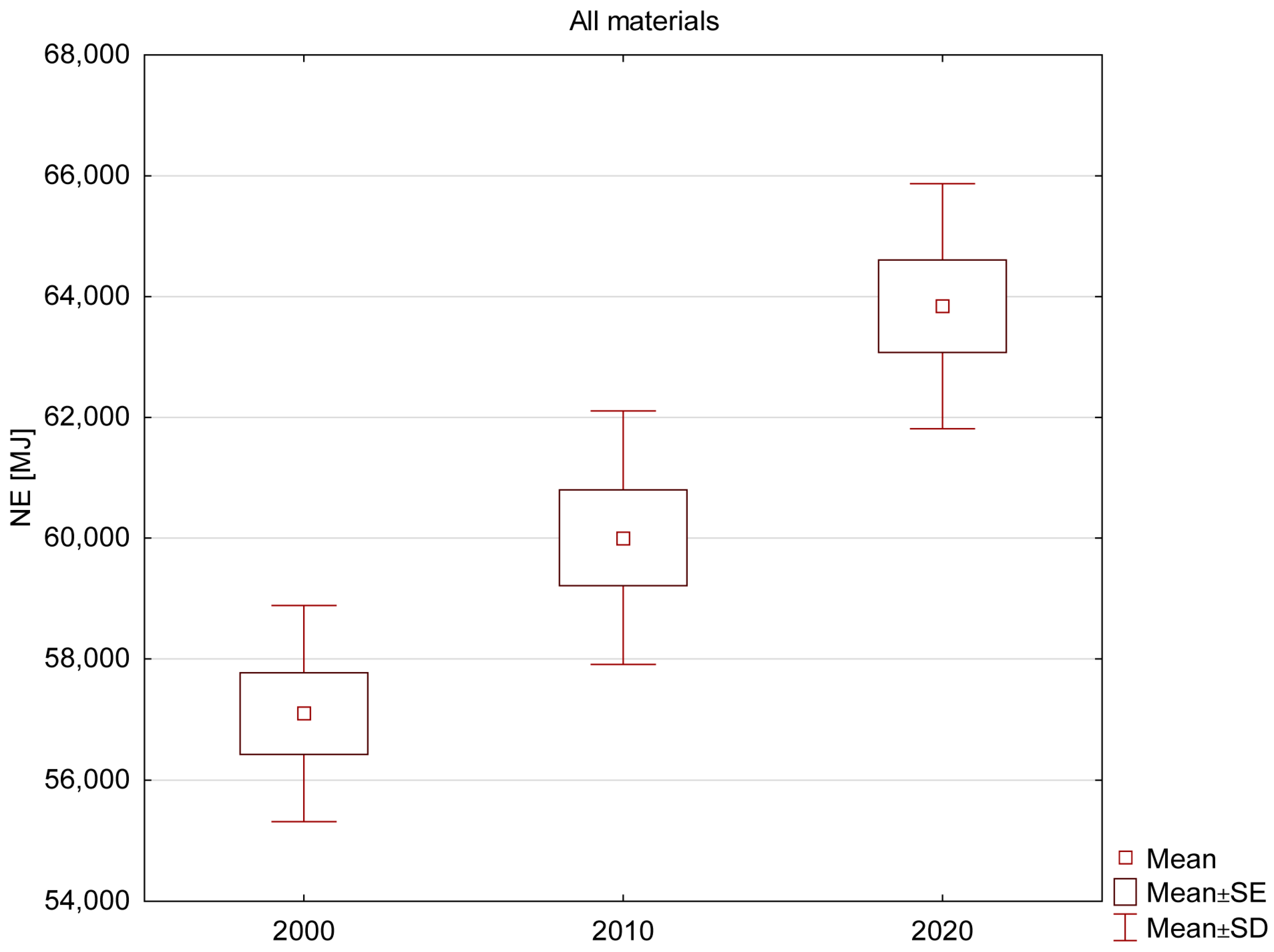
The above values result from the summation of the energy contributions of the four material groups. The total average energy inputs associated with the production of materials used in a vehicle increased over the analysed period, from approximately 57 GJ to 64 GJ per vehicle. This increase is attributable to both the growth in vehicle mass and the rising share of energy-intensive materials (e.g., certain engineering plastics and, depending on the scenario, aluminium).
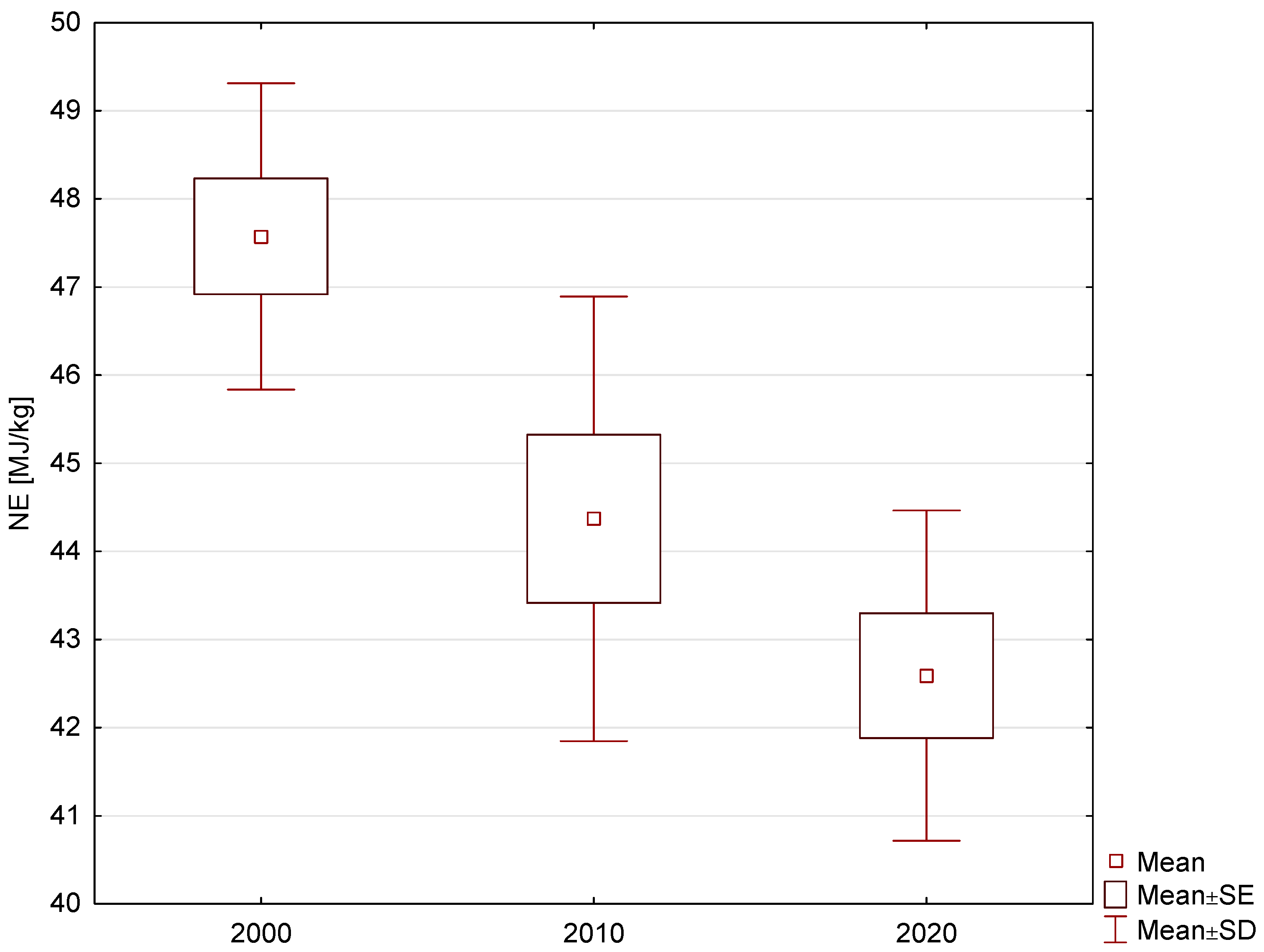
At the same time, the average energy intensity per kilogram of vehicle mass decreased, from approximately 47.6 MJ/kg to 42.6 MJ/kg. This trend reflects the wider use of materials with lower unit energy demand (e.g., recycled aluminium), improvements in material production efficiency, and the increasing share of secondary materials within the supply chain [
10,
23,
24].
3.2. Results
This subsection presents the detailed results of the statistical analysis conducted to verify the formulated hypotheses and to assess changes in the energy intensity of individual material groups over time. The analysis includes comparisons of mean values, variance structures and the statistical significance of observed trends. These results enable the identification of material groups that contribute most strongly to the overall energy burden. The numerical outcomes of the analysis are summarised in
Table 4.
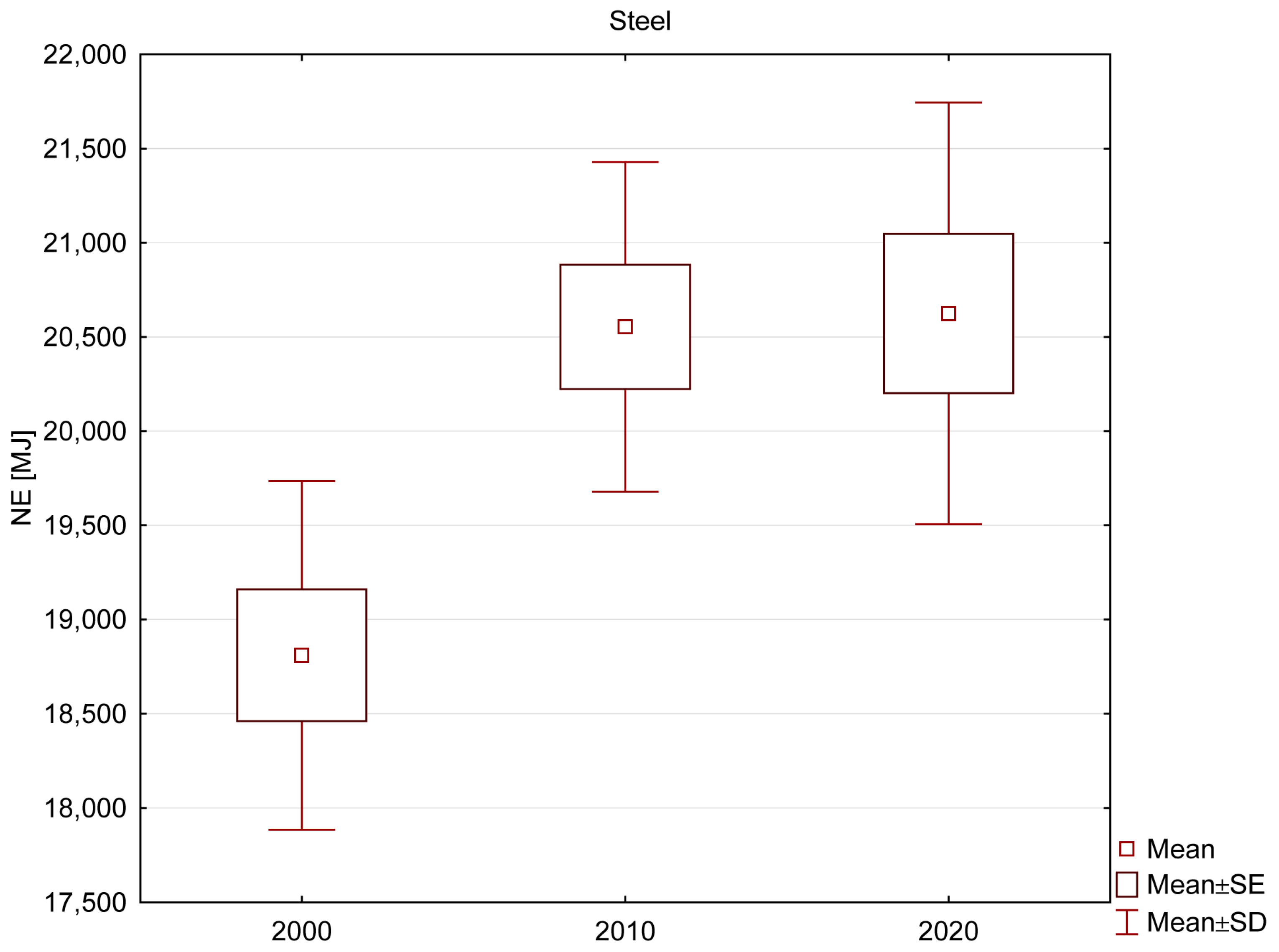
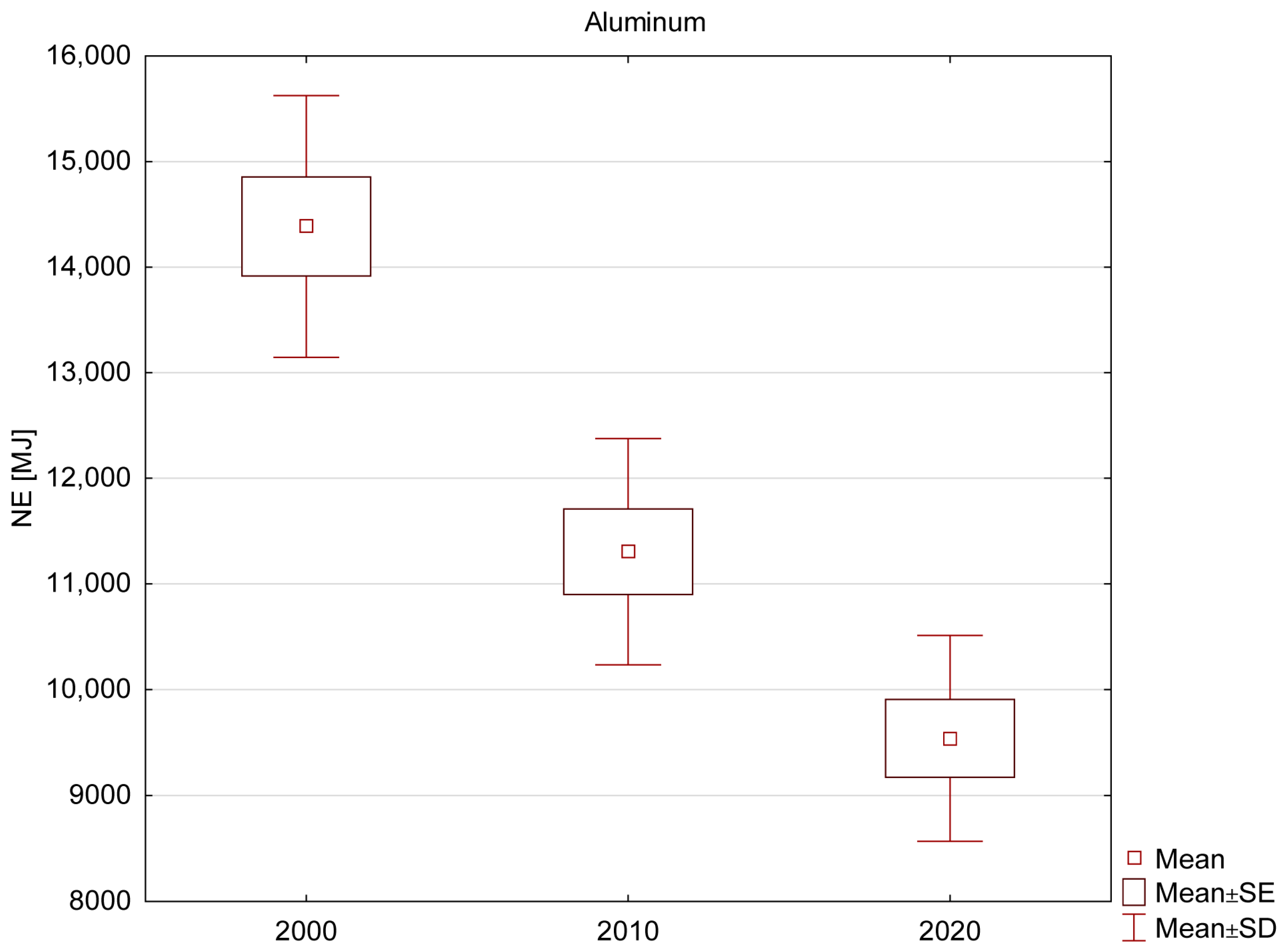
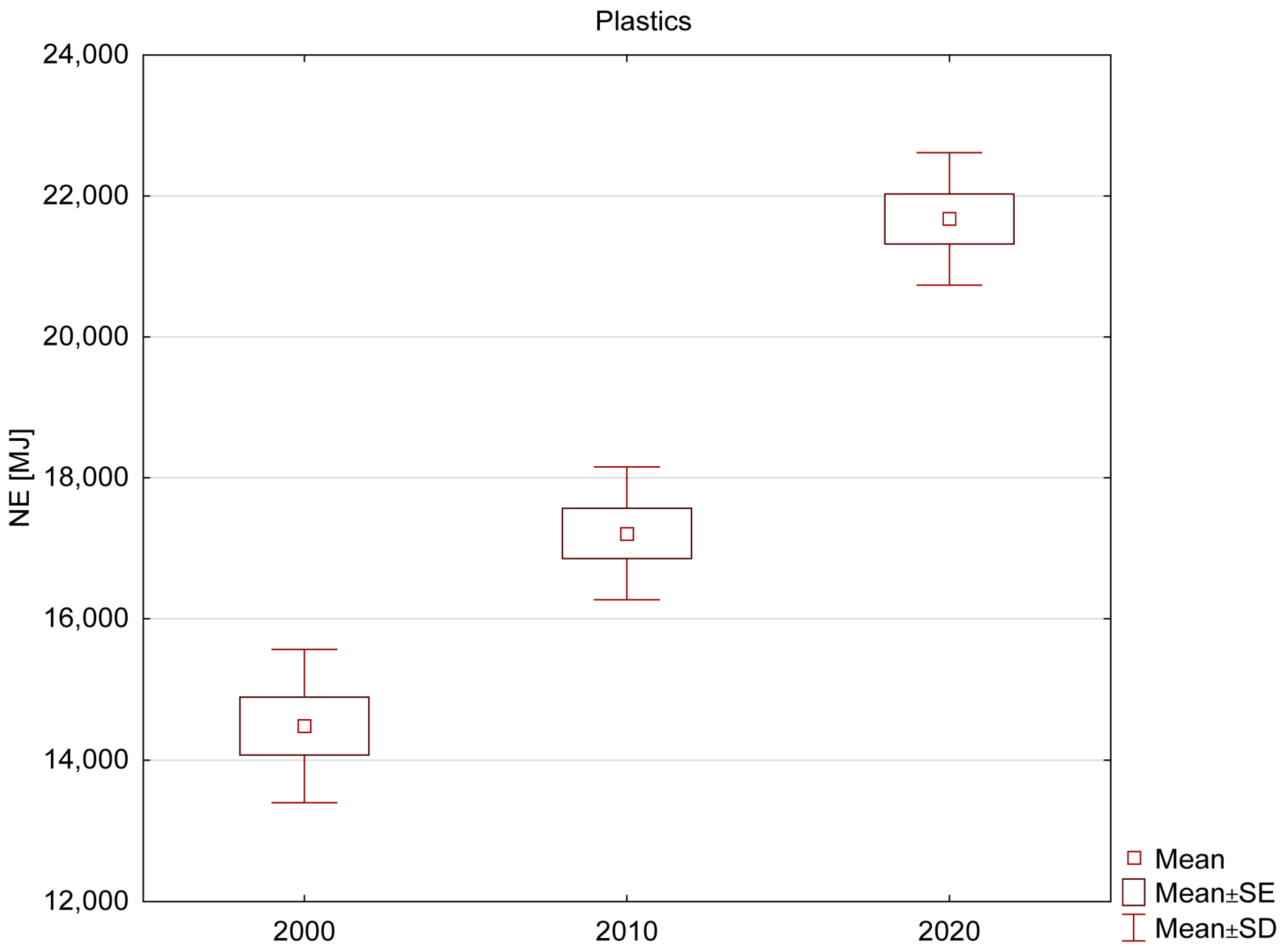
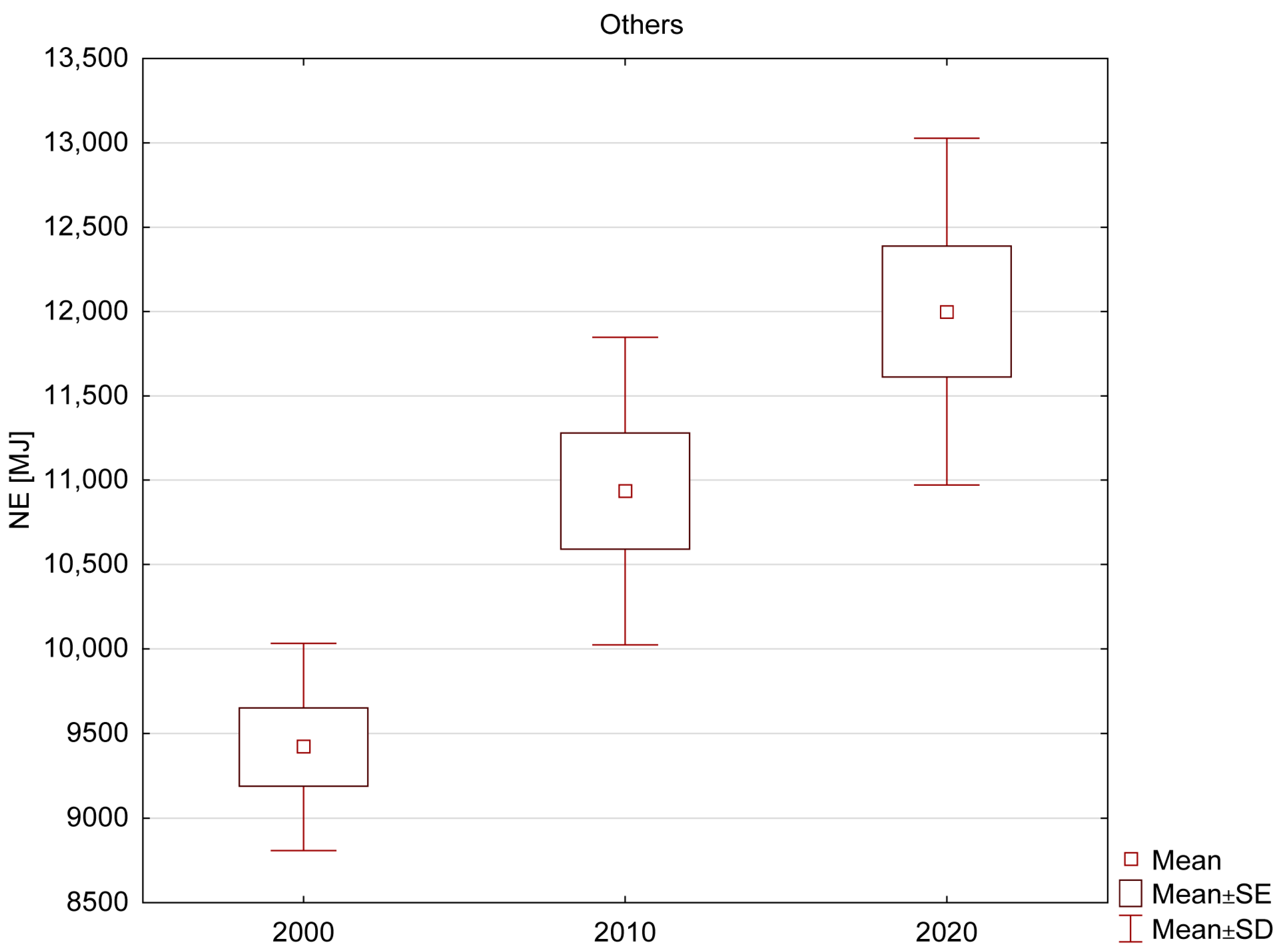
Figure 1,
Figure 2,
Figure 3 and
Figure 4 present the energy intensities for individual material groups for the years 2000–2020.
Figure 5 shows the total energy intensity resulting from the sum of all material groups over the same period, while
Figure 6 illustrates the energy intensity per kilogram of vehicle mass for the total of all materials, also for the years 2000–2020.
The energy intensity of steel exhibited a significant increase between 2000 and the subsequent periods. Mean values were higher in both 2010 and 2020 compared with 2000. Tukey’s post hoc test confirmed statistically significant differences for the 2000–2010 and 2000–2020 comparisons. Overall, an upward trend in the energy intensity of steel was observed over the analysed period.
The data for aluminium indicate a clear decrease in energy consumption over the analysed period. The highest values were recorded in 2000, while the lowest were observed in 2020. This reduction is statistically significant for all pairwise comparison. The dispersion of values around the arithmetic mean remains moderate, indicating a systematic improvement in production efficiency. Overall, the trend demonstrates a decline in aluminium-related energy consumption over time.
In the case of plastics, a significant increase in energy consumption was observed in each successive period. Mean values consistently rose from 2000 to 2020, and Tukey’s post hoc tests confirmed statistically significant differences for all pairwise comparisons. These results suggest that plastics are becoming an increasingly energy-intensive material category.
Energy consumption associated with other materials shows an upward trend over time, particularly pronounced between 2000 and 2020. In 2010, the values were already significantly higher than those recorded in 2000, and by 2020 they had reached their highest level. Tukey’s post hoc tests confirmed statistically significant differences between these periods. The dispersion of values around the arithmetic mean is relatively small, indicating good sample consistency. Overall, an increasing importance of this material group in the vehicle energy balance was observed.
Total energy consumption increased over the analysed period. Mean values were higher in both 2010 and 2020 compared with 2000, and these differences proved to be statistically significant, particularly in comparison with 2020. The dispersion of values within the groups remains relatively stable. The overall trend indicates a systematic increase in the energy demand associated with vehicle production.
The unit energy consumption index decreases over time, with the highest values recorded in 2000 and the lowest in 2020. Tukey’s post hoc test confirmed statistically significant differences for the 2000–2010 and 2000–2020 comparisons. Although the variability of the results is moderate, the trend is clearly defined, indicating an improvement in material efficiency per unit mass despite the increase in total energy consumption.
The main conclusions drawn from the above analyses are as follows:
Steel: Despite the reduction in mass share (i.e., a declining percentage of steel in vehicle structures), steel continues to account for a substantial portion of total energy consumption due to its dominant contribution to overall vehicle mass. Its unit energy intensity is relatively low (approximately 25 MJ/kg), meaning that its total energy contribution increases moderately as vehicle mass increases.
Aluminium: The absolute energy contribution of aluminium is strongly dependent on the share of secondary (recycled) aluminium. The aluminium mass share increased between 2000 and 2020 (from approximately 7% to 12%). However, the substantial reduction in unit energy intensity observed in 2020 (attributable to increased recycling) resulted in a decrease in aluminium-related energy input over time, despite the increase in absolute aluminium mass. This highlights the critical importance of recycled aluminium in the overall energy balance, a conclusion supported by industry reports and JRC/European Aluminium analyses.
Plastics: The share of plastics increased over the analysed period and contributed significantly to the notable rise in total energy consumption between 2010 and 2020. This trend is associated with both higher material mass and the increasing use of technical polymers characterised by higher unit energy intensity. As plastics exhibit substantially higher unit energy intensity than steel, their growing share has a pronounced effect on overall vehicle energy requirements.
Other materials (copper, glass, composites, magnesium): This heterogeneous category includes materials with widely varying unit energy intensities. Some materials, such as carbon fibre-reinforced polymers, exhibit very high unit energy consumption, although their mass share in passenger vehicles in 2020 remains relatively small. As composite materials become more widely adopted, their contribution to production-phase energy demand may increase sharply, particularly in lightweight vehicle design scenarios.
3.3. Discussion
The total energy intensity of materials used in vehicle production increased between 2000 and 2020, primarily due to the growing mass of vehicles and the increasing share of technical polymers. Similar increases in production-phase energy demand have been reported by Delogu et al. [
13] and the JRC [
22], who observed that the rising vehicle mass and the expanding use of polymers lead to a systematic increase in embodied energy. However, the absolute values reported in global studies often exceed those obtained in the present analysis, mainly because of broader system boundaries and the inclusion of manufacturing infrastructure and battery production. At the same time, the energy intensity per kilogram of vehicle mass decreased, owing to improvements in production efficiency and the growing use of secondary materials, particularly aluminium. This finding indicates that material optimisation should consider not only vehicle mass reduction but also the origin of materials, namely whether they are derived from primary or secondary sources.
Recycling of aluminium plays a particularly important role in this process. The increasing share of recycled aluminium in the supply chain leads to a substantial reduction in the specific energy intensity, decreasing from approximately 162 MJ/kg to around 53 MJ/kg. While this finding is consistent with reports published by the European Aluminium Association [
16] and the International Aluminium Institute [
23], studies assuming predominantly primary aluminium production report considerably higher aluminium-related energy burdens. This highlights the sensitivity of embodied energy results to assumptions regarding recycling rates and regional electricity mixes. International studies consistently indicate that aluminium recycling can reduce energy consumption by as much as 90–95% compared with primary production, a finding of critical importance given the projected growth in aluminium use within the automotive industry.
Conversely, the growing share of technical polymers contributes to higher vehicle energy intensity, particularly when polymers high energy demand are used. Consequently, further efforts are required to increase the use of recycled polymer materials and to develop less energy-intensive technologies for polymer production. Similar trends have been identified by Gagliardi et al. [
14] and JRC studies [
22], which indicate that polymers are becoming one of the dominant contributors to production-phase energy demand. In some global assessments, the contribution of plastics exceeds that of aluminium, suggesting that material substitution strategies focused solely on mass reduction may unintentionally lead to higher embodied energy.
When interpreting the results, it should be noted that they depend strongly on the assumed values of specific material energy intensity and on the share of secondary raw materials. Ellingsen et al. [
6] and Hawkins et al. [
7] demonstrated that variations in the electricity intensity of primary aluminium production can result in embodied energy values differing by a factor of up to three, depending on regional energy systems. This observation helps to explain discrepancies between the present results and those reported in global LCA studies. In many cases, these parameters are subject to considerable uncertainty and regional variability, which result from differences in energy sources used in production processes such as aluminium smelting. For this reason, further research should incorporate uncertainty analysis methods, for example, Monte Carlo simulations, to provide more robust estimates of confidence intervals.
It is widely recognised that, for electric and hybrid vehicles, the production of traction batteries represents one of the most energy-intensive and environmentally significant components of the entire vehicle life-cycle. However, battery production was not included in the present analysis, as the study focuses specifically on the embodied energy of structural materials. While the exclusion of batteries limits the comparability of results for electric vehicles, it ensures methodological consistency with the objective of assessing material-related energy burdens. Future research will extend the model to incorporate battery production, which is essential for a comprehensive life-cycle perspective on electric and hybrid vehicle technologies. Consequently, the relative importance of structural materials identified in this study may be underestimated for electric vehicles compared with studies that include battery production, although the observed material-related trends remain valid.
In addition, the analysis did not account for energy inputs associated with material transport, assembly processes, or production infrastructure, all of which may influence the total energy balance of a vehicle. Another limitation arises from the simplified classification of the “other materials” category, which aggregates materials with highly diverse energy characteristics. Future studies would benefit from disaggregating this category, for example, by distinguishing carbon fibre-reinforced polymers, magnesium, and copper, in order to improve the precision and comparability of results.
Material selection can also lead to different environmental outcomes. Lightweight structures based on CFRP composites can reduce vehicle mass and lower energy consumption during the use phase; however, their production is highly energy-intensive and recycling options remain limited. In contrast, designs with a higher share of secondary aluminium may result in greater vehicle mass but offer a substantially more favourable energy balance during the production phase. This represents a classic trade-off between production-phase energy intensity and operational efficiency. Similar trade-offs have been discussed by Das [
10] and Suzuki and Takahashi [
11], who demonstrated that CFRP-based lightweight designs may reduce operational energy use while substantially increasing production-phase energy demand. These findings reinforce the need for life-cycle-based material selection rather than optimisation based on a single criterion.
Overall, the results obtained are consistent with international LCA studies examining vehicle material impacts. Comparable trends have been reported by [
6], including the increasing contribution of plastics and the strong dependence of aluminium-related energy burdens on the share of secondary material. Nevertheless, the magnitude of reported energy intensity values varies significantly across studies due to regional factors, particularly the electricity mix used in primary aluminium production, which can differ by a factor of three between countries. This suggests that the trends identified in the present study, especially the decreasing unit energy intensity of aluminium, may be even more pronounced in regions with highly decarbonized electricity systems, while the opposite effect may occur in coal-dominated regions. Consequently, the results confirm general global patterns while emphasising the critical role of regional variability and recycling technologies as key determinants of material-related energy burdens in automotive LCA.
4. Conclusions
The contemporary road transport sector is undergoing a period of dynamic technological, regulatory, and environmental transformation. Increasing pressure resulting from climate policies, European and global regulations, as well as growing public awareness, means that traditional criteria for vehicle assessments, such as operating costs, performance, and driving comfort, must now be complemented with environmental considerations. In this context, the Life Cycle Assessment is gaining importance, as it enables a comprehensive view of a vehicle as a product generating environmental impacts not only during its use phase but also during production, particularly in the manufacture of structural materials.
The analysis presented in this paper demonstrates that the energy intensity of materials used in passenger car construction constitutes a key component of the vehicle’s total energy burden. The evolution of material structure from designs dominated by steel to the increasing use of aluminium, plastics, and composites, has a significant influence on the energy balance of the production phase. The results indicate that the total energy input associated with materials increased from approximately 57 GJ per vehicle in 2000 to around 64 GJ in 2020. This increase results from both the growing mass of vehicles over the analysed decades and the rising share of materials characterised by higher specific energy intensity, such as technical polymers and composite materials.
At the same time, the analysis revealed a contrasting trend: the energy intensity per unit mass of the vehicle decreased from approximately 47.6 MJ/kg in 2000 to 42.6 MJ/kg in 2020. This reduction can be attributed to improvements in industrial production efficiency and the increasing use of secondary materials, particularly recycled aluminium. Primary aluminium is among the most energy-intensive materials (approximately 170–220 MJ/kg); however, the use of secondary aluminium can reduce these values by as much as 90–95%. During the analysed period, a substantial increase in the share of recycled aluminium was observed, leading to a marked reduction in the specific energy input associated with this material. These findings confirm the crucial role of recycling in the environmental transformation of the automotive sector.
The growing importance of plastics and technical polymers also warrants attention. Although their mass share in vehicles remains lower than that of steel or aluminium, their relatively high specific energy intensity (approximately 70–100 MJ/kg) makes their contribution to the vehicle’s overall vehicle energy balance increasingly significant. It can be expected that in the coming years, polymers and composites will become key materials determining production-phase energy burdens, particularly if recycling and recovery technologies for these materials are not substantially improved.
Steel, despite its decreasing proportion in vehicle structures, continues to play a dominant role due to its high absolute mass and relatively low specific energy intensity. It can therefore be assumed that steel will remain the primary structural material in the foreseeable future, offering a balanced compromise between mechanical properties, cost, and production-related energy demand.
The developed methodology and the results obtained clearly indicate that environmental analyses of vehicles should encompass not only emissions associated with the use phase but also the energy burdens related to material production. The findings of this study may serve as a basis for
Formulating design guidelines for vehicle engineers, for example, in the selection of recycled materials;
Developing environmental policy scenarios for the automotive industry;
Supporting sustainable development strategies for vehicle manufacturers;
Creating forecasts of the future energy balance of road transport.
In summary, the results confirm that the pathway towards low-energy and low-emission automotive development does not rely solely on the advancement of alternative powertrains, such as hybrid or electric systems, but also on the responsible selection of structural materials. Recycling, improvements in production efficiency, the development of new material technologies, and vehicle mass optimisation constitute synergistic elements that together can lead to a tangible reduction in the energy intensity of the automotive sector. The application of the LCA approach enables these interrelations to be captured and provides objective data essential for design, business, and policy decision-making.
Future research should focus not only on further refinement of inventory data for emerging materials (e.g., hybrid composites and nanomaterials) but also on dynamic modelling approaches that account for changes in material energy intensity levels and projected innovations in industrial processes. Only such a holistic approach will allow for an accurate assessment of the environmental consequences of the ongoing transformation of the automotive sector towards next-generation vehicles and contribute to a real reduction in energy intensity while improving overall energy efficiency across the sector.