Article

A Novel Green Hydrogen-Driven and Carbon-Negative Complex for Polygeneration of Methanol and Fischer–Tropsch Hydrocarbons

Dan F. Smith Department of Chemical and Biomolecular Engineering, Lamar University, Beaumont, TX 77710, USA
*
Author to whom correspondence should be addressed.
Energies 2026, 19(13), 3069; https://doi.org/10.3390/en19133069 (registering DOI)
Submission received: 1 June 2026 / Revised: 22 June 2026 / Accepted: 25 June 2026 / Published: 29 June 2026
(This article belongs to the Special Issue Advances in Green Hydrogen Production, Storage, and Applications)

Abstract

Given the critical need for scalable technologies that decouple industrial production from fossil feedstocks, this study introduces a green hydrogen-driven and carbon-negative industrial complex that employs renewable energy to simultaneously produce methanol and Fischer–Tropsch hydrocarbon products via feedstocks of carbon dioxide (CO2) and water. The proposed complex (FARMOW) integrates six major sections: (i) a Fischer–Tropsch synthesis process (FTSP), (ii) an alkaline water electrolysis process (AWEP), (iii) a reverse water–gas shift process (RWGSP), (iv) a methanol synthesis process (MSP), (v) an off-gas combustion process (OGCP), and (vi) a water treatment process (WTP). In this complex, the green hydrogen produced from AWEP is reacted with CO2 from a carbon capture unit and sent to the MSP and FTSP sections, respectively, to generate methanol and Fischer–Tropsch hydrocarbon products. The byproduct (water) from the complex is utilized to generate steam through rigorous process simulation, and the technical efficacy of the complex has been modeled and validated, yielding high-value hydrocarbons, methanol, steam, and oxygen. Furthermore, a comprehensive techno-economic assessment with sensitivity analysis is performed to evaluate the commercial flexibility of the system under varying market conditions.

1. Introduction

How to shift heavy manufacturing and transportation supply chains away from fossil-derived carbon remains one of the greatest challenges in global climate mitigation [1]. Coupling renewable power sources with carbon capture and utilization (CCU) offers a practical pathway for producing carbon-containing fuels and chemicals without relying on conventional fossils such as coal, oil, or natural gas feedstocks. Instead of depending exclusively on direct air capture, which remains energy intensive, concentrated biogenic or industrial CO2 streams can provide more accessible carbon sources for near-term deployment [2]. When combined with green hydrogen (H2) from renewable power sources, these CO2 streams can be converted into multiple chemical products, such as methanol and Fischer–Tropsch (FT) hydrocarbons, which are carbon-negative products and compatible with established manufacturing and distribution infrastructures.
Methanol and FT-derived hydrocarbons are essential because they serve both as end-use energy carriers and as intermediates for the petrochemical industry. Methanol is used in the production of formaldehyde, acetic acid, dimethyl ether, olefins, polymers, and emerging marine fuels, while also emerging as sustainable maritime fuel. Meanwhile, FT products can be refined into synthetic diesel, aviation kerosene, high-grade waxes, lubricants, and specialty hydrocarbons [3,4]. Reflecting this industrial momentum, the global FT reactor market is valued at USD 3.45 billion in 2025 and is forecasted to expand to USD 5.9 billion by 2034, representing a compound annual growth rate of 6.1% [5].
In this context, strategies that utilize external CO2 for the simultaneous production of methanol and FT hydrocarbons via green hydrogen offer a credible near-term route to close the supply deficit. Domestic resource assessments show that point-source CO2 streams from U.S. manufacturing and power generation could theoretically sustain production of up to 85 billion gallons of FT fuels and 319 billion gallons of methanol per year. Integrated facility configurations, spanning alkaline water electrolysis, reverse water–gas shift conversion, methanol synthesis, and FT processing have thus emerged as a compelling research and commercial frontier for scalable, carbon-negative co-production of high-value fuels and chemicals [3].
The reverse water–gas shift process (RWGSP) is a key step in converting CO2 into syngas, a mixture of H2 and CO. Balaji et al. (2024) proposed a novel reactor design for the efficient conversion of CO2 into CO, emphasizing the importance of catalyst selection and reactor configuration to enhance conversion rates and energy efficiency [6]. Repasky and Zeller (2025) further expanded on this by introducing a process that integrates RWGSP with other carbon utilization technologies, demonstrating the potential for large-scale CO2 conversion [7]. Their work underscores the importance of integrating processes and using renewable energy sources to drive the RWGSP reaction, aligning with the goals of sustainable CO2 utilization. Kapetaki et al. (2015) investigated a dual-stage Selexol process integrated into an IGCC system, demonstrating that optimized physical solvent absorption can achieve up to 95% CO2 capture efficiency with manageable energy penalties [8]. Their simulation highlights the importance of process configuration and solvent regeneration strategies in enhancing carbon capture performance while maintaining overall plant efficiency.
Recent advancements in water electrolysis technologies, particularly the alkaline water electrolysis process (AWEP), have been central to the development of green hydrogen production. Commercial-ready hydrogen technologies, such as those by Varyatech, are critical for bridging theoretical electrolysis models with large-scale industrial integration [9]. Abdin et al. (2017) contributed significantly to the understanding of AWEP electrolyzers by modeling and simulating their operational [10]. Reksten et al. (2022) developed a comprehensive capital expenditure (CAPEX) model to forecast the future costs of both electrolyzer technologies, considering plant size and technological advancements [11]. Shiva Kumar and Lim (2022) provided a broader perspective by exploring various electrolyzer technologies, emphasizing the role of electrolysis in achieving carbon neutrality and the importance of optimizing system efficiency for practical applications [12]. The modeling of AWEP electrolyzers was further explored by Daoudi and Bounahmidi (2023), who discussed theoretical and empirical models for optimizing these systems [13]. Meanwhile, Krishnan et al. (2023) offered critical insights into the long-term cost competitiveness of PEM and AWEP electrolyzers, predicting significant cost reductions for PEM systems while recognizing the potential for AWEP electrolyzers to remain cost-effective at larger scales [14]. Safety considerations, a vital aspect of commercial electrolysis, were addressed by Muthiah et al. (2024), who assessed the safety risks associated with AWEP and proposed operational safety guidelines [15]. Further demonstrating the industrial capability of AWEP, Modi et al. (2027) integrated AWEP into a renewable energy-driven and zero-emission complex for nitric acid production [16].
The syngas conversion based on the Fischer–Tropsch synthesis process (FTSP) has undergone significant advancements for producing liquid hydrocarbons from carbon-rich feedstocks. Marion et al. (2006) provided a comprehensive overview of syngas chemistry, emphasizing the role of syngas composition and reaction conditions in determining the efficiency of downstream processes such as FTSP and methanol synthesis [17]. Sato et al. (2013) developed a specialized catalyst for FTSP, improving the selectivity towards desired hydrocarbon products and enhancing the overall efficiency of the process [18]. Selvatico et al. (2016) conducted kinetic modeling and process simulations of low-temperature FTSP, highlighting the importance of reactor design and operating conditions in optimizing fuel production [19]. Fabián-Anguiano et al. (2019) explored the simultaneous separation of CO2 and O2 using a ceramic–carbonate membrane reactor, enabling in situ syngas production with improved efficiency [20]. Marchese et al. (2020) evaluated the energy performance of power-to-liquid applications integrating biogas upgrading, reverse water–gas shift, and FTSP, demonstrating the potential for producing synthetic fuels with a low carbon footprint [21]. Kang et al. (2012) investigated hydrocracking and hydro isomerization of long-chain paraffins (n-hexadecane, n-octacosane, and Fischer–Tropsch wax) over Pt/SiO2–Al2O3 catalysts, demonstrating effective conversion to lighter and branched hydrocarbons [22]. Their study showed that catalyst acidity and metal functionality play crucial roles in balancing cracking and isomerization, significantly influencing product selectivity and fuel quality. Zang et al. (2022) further expanded on this by modeling the synfuel production process, focusing on optimizing the integration of renewable energy sources with FTSP [23]. Modi and Xu (2024) developed a model for green hydrogen-assisted CO2 utilization in hydrocarbon manufacturing, highlighting the importance of integrating renewable hydrogen with FTSP to achieve sustainable fuel production [24]. Recently, Modi et al. (2025) presented an integrated industrial complex that couples renewable hydrogen production with CO2 utilization to achieve near-zero-emission hydrocarbon synthesis [25]. Their system-integrated approach demonstrates the importance of process integration and co-product valorization for sustainable and economically viable fuel production.
A foundational understanding of CO2 hydrogenation to methanol has been established through detailed kinetic and process modeling studies. Vanden Bussche and Froment (1996) developed a steady-state kinetic model for methanol synthesis and the water–gas shift reaction over a commercial Cu/ZnO/Al2O3 catalyst, which remains widely used for reactor design and simulation [26]. Building on such process fundamentals, Milani et al. (2015) applied model-based analyses to evaluate CO2 utilization in industrial methanol plants, demonstrating that improved process integration can enhance conversion efficiency while reducing emissions [27]. More recently, techno-economic assessments by Pratschner et al. (2023) and Sollai et al. (2023) examined power-to-methanol systems using renewable electricity, green hydrogen, and captured CO2, highlighting electricity costs, electrolyzer performance, hydrogen pricing, and CO2 capture strategies as the dominant factors influencing economic viability [28,29]. Complementing these academic efforts, the U.S. Department of Energy project Reimagining the Carbon Ecosystem (DOE Award DE-FE0032397) investigated green methanol production from atmospheric CO2, highlighting the potential of direct air capture-based pathways to enable negative-emissions fuel systems at scale [30]. Moreover, Pak and Hong (2025) evaluated the environmental impacts of gas-to-methanol (GTM) technology using a lifecycle perspective, focusing on emissions, energy use, and sustainability metrics [31]. Their study highlights that integrating cleaner energy sources and optimizing process efficiency can significantly reduce the environmental footprint of methanol synthesis.
Based on the above literature surveys, the proposed industrial complex in this paper is unique and designed to simultaneously produce methanol alongside FT hydrocarbons, utilizing only water, renewable power, and CO2 from external industrial facilities as input streams. Unlike traditional stand-alone layouts, this complex system (FARMOW) synchronizes six core processing subsystems: FTSP, AWEP, RWGSP, the methanol synthesis process (MSP), the off-gas combustion process (OGCP), and the water treatment process (WTP). By integrating all these subsystems, the complex system operates as a highly efficient industrial ecosystem that polygenerates high-demand commodities, including methanol and a spectrum of FT products (naphtha + middle distillates) as well as purified oxygen and steam. The efficacy of the complex system’s performance has been demonstrated using rigorous simulations with Aspen Plus V14. Based on the simulation, a detailed techno-economic assessment with sensitivity analysis has also been conducted to gauge the facility’s financial capability and flexibility. Ultimately, this work delivers a conceptual roadmap for the future of carbon-negative and sustainable chemical manufacturing.

2. Framework of the FARMOW Industrial Complex

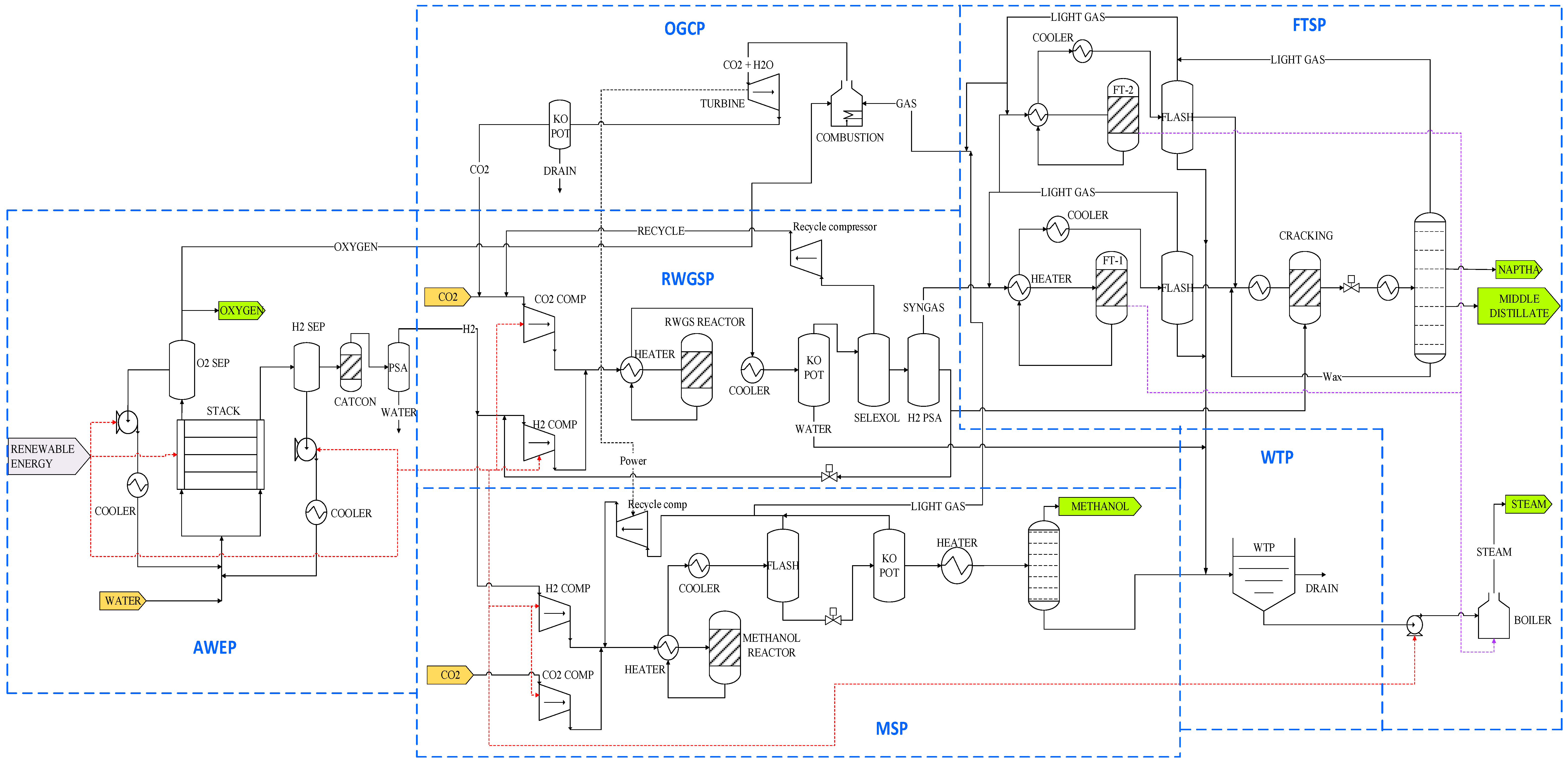
Figure 1 illustrates the overall industrial complex of FARMOW, which comprises six major subsystems: FTSP, AWEP, RWGSP, MSP, OGCP, and WTP. Let us start with the AWEP, which utilizes renewable energy sources and an industrial-scale alkaline electrolyzer to split the feeding water into high-purity hydrogen and oxygen. After STACK, the produced green hydrogen goes through phase separation and purification via a pressure swing adsorption (PSA) unit, and then it is divided to supply both the RWGSP and MSP subsystems. The produced oxygen is primarily exported as a byproduct, while a dedicated portion is routed to the OGCP subsystem. The RWGSP subsystem mixes the external CO2 stream, recycled CO2 streams, and a portion of the hydrogen stream from the AWEP subsystem as a mixed feed stream, with a general H2/CO2 molar ratio of 3:1. This pressurized feed gas is heated and fed into the RWGS reactor operating at 537.8 °C and 31.7 bar, where the endothermic reaction produces the syngas containing water, with a CO2 conversion rate of about 54%. The effluent from the RWGS reactor is then cooled to separate water at KO POT, which is sent to the WTP subsystem for water treatment. From the top of KO POT, unreacted CO2 in the syngas is recovered via physical absorption at the SELEXOL process and recycled with compression as feed. Next, excessive hydrogen is also recycled via the H2PSA unit, and the remaining CO-rich syngas is forwarded to the FTSP subsystem.
The FTSP subsystem converts the syngas into long-chain hydrocarbons, utilizing a two-stage low-temperature FT (LTFT) process. First, after preheating, the syngas enters the primary reactor (FT-1) at 230 °C and 20 bar. This process yields a broad spectrum of products, spanning from light gases to heavy waxes. After that, the product stream is cooled and flashed. Lighter and unreacted gases are sent to the secondary reactor (FT2) to push the cumulative carbon conversion rate over 90%. Heavy hydrocarbon fractions (C20+) from both FLASH separators are directed to hydrocracking with hydrogen from the RWGSP subsystem. Finally, the product mixture of the FTSP subsystem is fractionated into light naphtha, middle distillates suitable for jet or diesel fuel.
In parallel, the MSP subsystem synthesizes methanol from compressed CO2 and green hydrogen over a conventional Cu/ZnO/Al2O3 catalyst. After preheating, the synthesis gas enters the methanol reactor, where CO2 hydrogenation and reverse water gas shift reactions occur simultaneously. The reactor effluent undergoes staged flashing and gas–liquid separation to recover methanol-rich liquids, while unreacted gases are recycled as feed with a controlled purge stream sent to the OGCP subsystem. The final high-purity methanol product is separated by distillation, and water generated within the MSP subsystem is routed to the WTP subsystem.
As an energy recovery hub, the OGCP subsystem collects combustible light off-gases from both FTSP and MSP subsystems, which mixes oxygen supplies from the AWEP subsystem for combustion. The combusted exhaust expands through a gas turbine, generating power to offset the energy demands from methanol compressors. Following expansion and condensation, the remaining CO2 is looped back to the RWGSP subsystem for higher carbon utilization. To enhance the material use efficiency of the entire industrial complex, the WTP subsystem acts as a centralized sink for all water effluents from the RWGSP, FTSP, and MSP subsystems. This subsystem separates dissolved gases and residual hydrocarbons from liquid feeds. The generated clean water is subsequently pressurized and routed to a boiler to generate exportable high-pressure steam. Note that the FARMOW complex has near-zero direct carbon emissions while converting captured CO2 into valuable methanol and FT products. Thus, it is considered a carbon-negative industrial system.


3. Modeling of the FARMOW Industrial Complex

3.1. Modeling of the RWGSP Subsystem

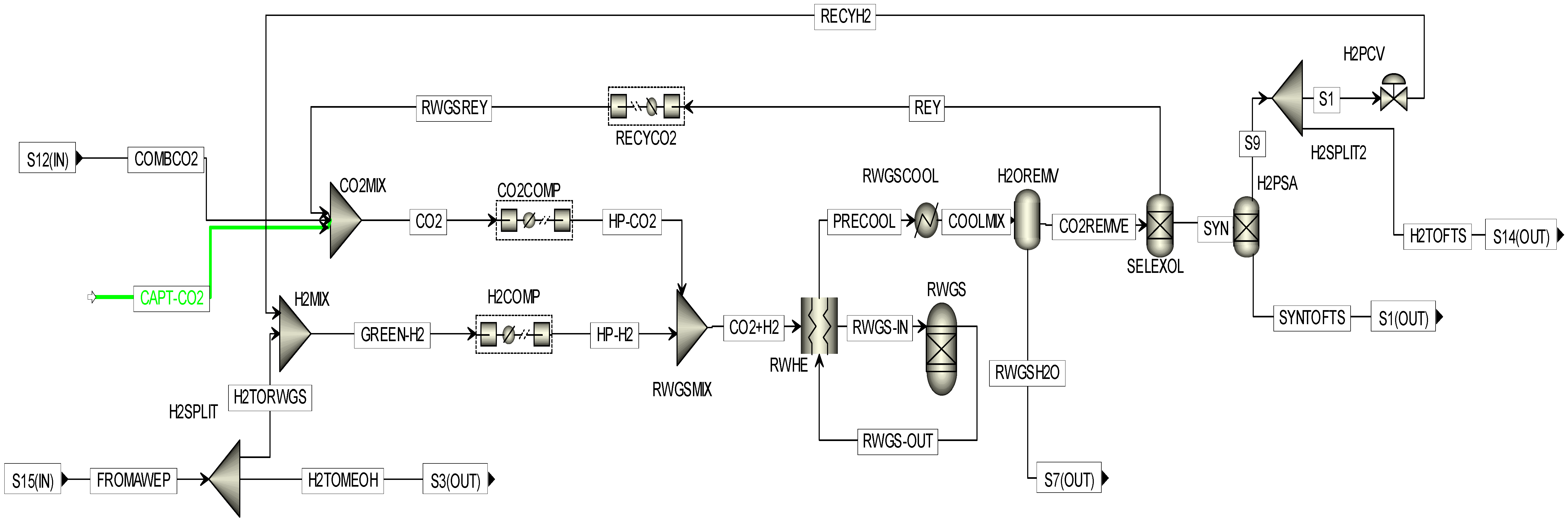
Figure 2 illustrates the process flow diagram for the RWGSP subsystem. The CO2 stream (COMBCO2) from the OGCP subsystem, together with the external CO2 stream (CO2MIX) and the recycled CO2 stream (RWGSREY), is mixed and compressed by CO2COMP to 31.71 bar as the stream of HP-CO2. Meanwhile, the green hydrogen stream (FROMAWEP) supplied from the AWEP subsystem splits into two streams: one directed to RWGSP as H2TORWGS and the other to the MSP unit as H2TOMEOH to support methanol synthesis. The H2TORWGS stream is mixed with a recycled hydrogen stream (RECYH2) and then compressed as the stream of HP-H2. After, both the HP-CO2 and HP-H2 streams are merged at RWGSMIX to maintain an H2/CO2 molar ratio of approximately 3:1. After preheating via RWHE, the mixed stream is directed to the RWGS reactor operating at 537.8 °C and 31.71 bar. Endothermic RWGS reactions can be summarized by Equation (1) below.
CO2 + H2 ⇄ CO + H2O
The conversion rate of CO2 through the RWGS reactor is 54.0%. The reaction effluent passes through the downstream cooling (RWGSCOOL) and separation units (H2OREMV, SELEXOL) to remove water via the RWGSH2O stream and recover unreacted CO2 via the REY stream. The RWGSH2O stream is directed to the WTP subsystem for treatment, while the REY stream is separated via the Selexol physical absorption process [8], which is modeled as a separator of SELEXOL in Figure 2. Next, the excess hydrogen in the produced syngas is split, where the majority of the separated hydrogen stream RECYH2 is recycled back to the subsystem input, and a small portion of hydrogen (H2TOFTS) is sent to support cracking operations in the FTSP subsystem. The generated syngas stream (H2TOFTS), containing rich CO and H2, is then sent to the FTSP subsystem for hydrocarbon production. The operating conditions of the RWGSP subsystem are generally based on the study from Repasky and Zeller (2025) [7]. Major simulation results of the RWGSP subsystem are summarized in Table 1.

3.2. Modeling of the AWEP Subsystem

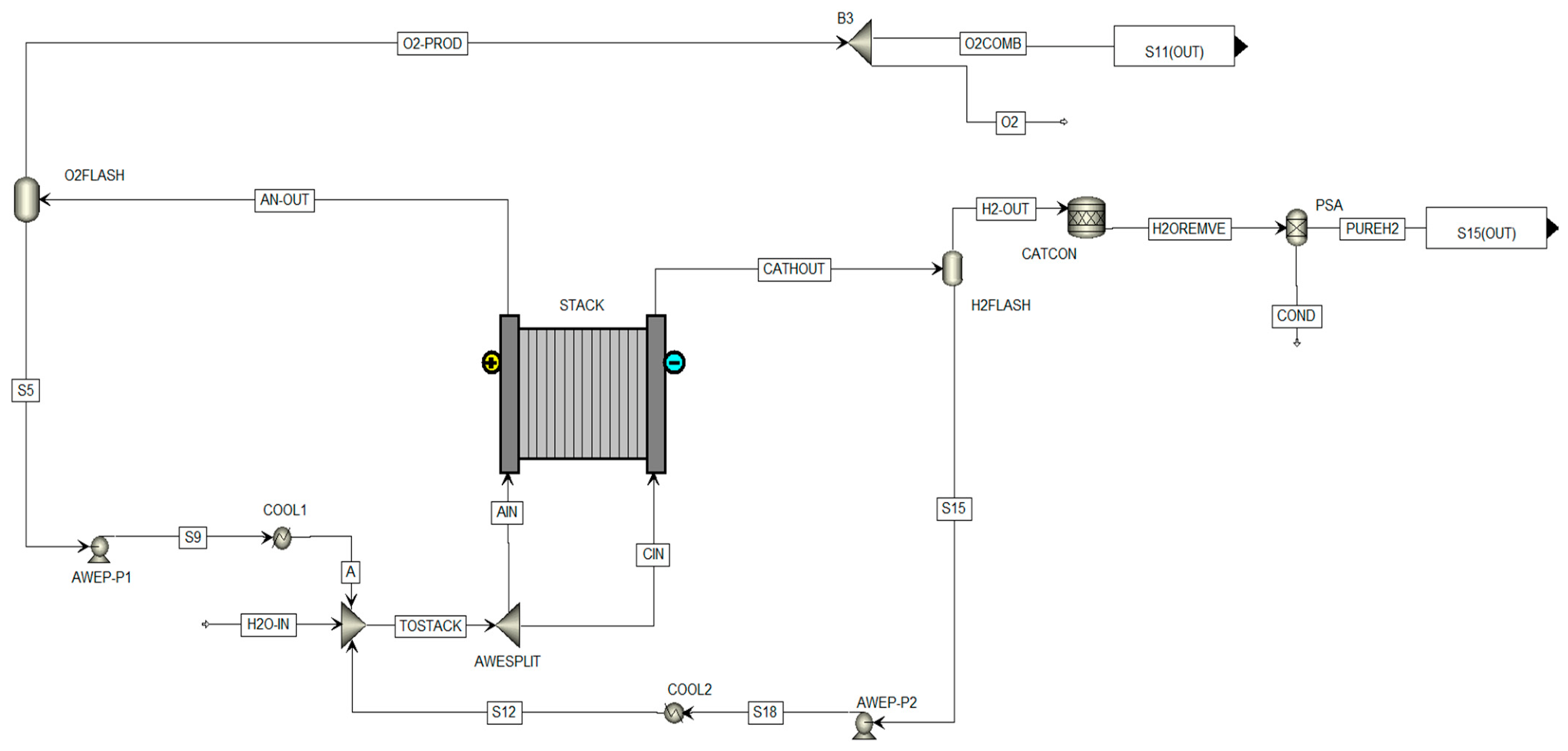
Figure 3 illustrates the process flow diagram of the AWEP subsystem. The main unit of the AWEP subsystem is the alkaline electrolyzer shown as STACK in Figure 3, where water is electrolyzed to produce hydrogen at the cathode and oxygen at the anode, as summarized by the reactions shown in Equations (2)–(4):
Cathode: 4H2O + 4e → 2H2 + 4OH
Anode: 4OH → O2 + 2H2O + 4e
Overall reaction: H2O → H2 + ½ O2
Note that product streams from both electrolyzer nodes will be separated by two flash separators (H2FLASH and O2FLASH) to separate hydrogen and oxygen, respectively, from water. The water component from both flash separators is recycled back into the electrolyzer. Next, a stoichiometric reactor (CATCON) is used to ensure that the contained oxygen component in the hydrogen production stream (H2-OUT) is fully converted to water. After, a component separator block (PSA) is utilized to procure pure hydrogen. The produced pure H2 product will be supplied to the RWGSP and MSP subsystems. The byproduct oxygen is split, where the majority will be directed out of the complex as a product, and some is sent (O2COMB) to the OGCP subsystem to support combustion. The AWEP subsystem is designed with reference to the industrial-scale NEL A3880 electrolyzer [16]. Operating at a temperature of approximately 75 °C and a pressure of 6.76 bar, the alkaline electrolyzer yields a purified hydrogen production rate of 414.09 kg/hr. The total power consumption of the electrolyzer (STACK) block, consisting of eight parallel stacks, is 20,332.47 kW, and the specific energy consumption rate is 49.10 kWh/kgH2. When evaluated against the higher heating value (HHV) of hydrogen (39.4 kWh/kg), the electrolyzer achieves an efficiency of 80.42%. Auxiliary loads required for the AWEP subsystem, namely the electrolyte circulation pumps and cooling utilities, are accounted for in the overall plant utility assessment but represent a minor fraction of the total energy footprint compared to the primary electrolysis stacks. The property package used for this model is ENTRL-RK. Major simulation results of the AWEP subsystem are summarized in Table 2.

3.3. Modeling of the FTSP Subsystem

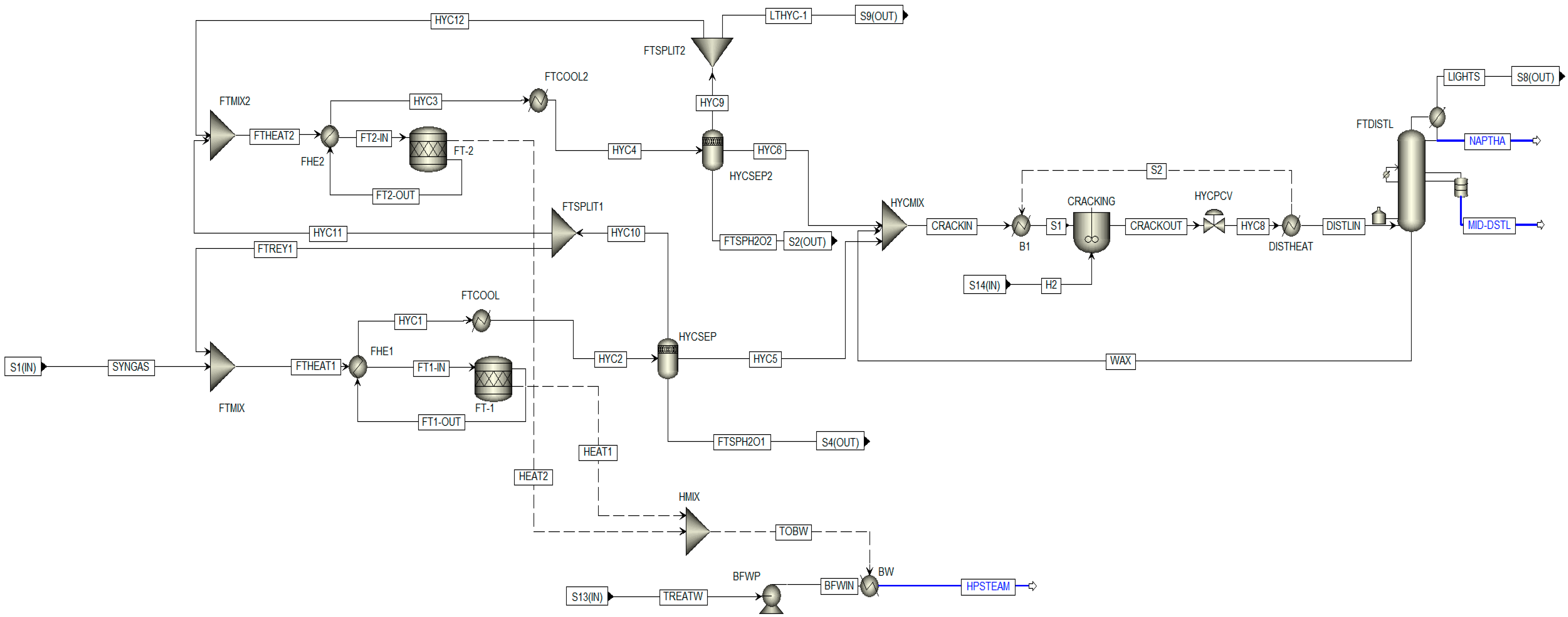
The FTSP subsystem has been modeled as shown in Figure 4. It employs a two-reactor FT process arranged in series, designed to perform a low-temperature FT (LTFT) operation, following the study from Zang et al. [23]. The LTFT typically operates within a temperature range of 200–250 °C and is optimized to produce long-chain hydrocarbons, including waxes, diesel, and naphtha. In this setup, syngas with an H2/CO ratio of approximately 2.1:1, supplied by the RWGSP subsystem, is preheated via the feed heat exchanger (FHE-1) and introduced into the first FT reactor (FT-1). The reactor operates under conditions of 230 °C and 20 bar. The primary reaction mechanism is summarized by Equation (5), where paraffinic hydrocarbons ranging from C1 to C30 are synthesized:
nCO + (2n + 1) H2 → CnH2n+2 + nH2O;    n = 1 to 30
The hydrocarbon product distribution follows the Anderson–Schulz–Flory (ASF) model presented by Zang et al. [23], as shown in Equation (6), with a chain growth probability factor (α) of 0.9. Here, Wn denotes the mass fraction of the hydrocarbon species CnH2n+2 within the overall product distribution, and n = 1 through 30.
log (Wn/n) = nlogα + log [(1 − α)2/α]
After the synthesis in FT-1, the hydrocarbon stream (HYC1) is cooled by the FTCOOL unit and then sent to the flash separator of HYCSEP. The overhead stream (HYC10), primarily composed of light hydrocarbons (C1–C4), CO, CO2, and H2, is preheated and directed to the second FT reactor (FT-2) to promote further syngas conversion to generate heavier hydrocarbons. Further, each FT reactor achieves a single-pass CO conversion of 62.86%. The overall CO conversion across the two reactors is 92.40%, calculated based on the CO flow entering the first reactor (FT1-IN) and the CO exiting the second reactor (FT2-OUT). The hydrocracking operation reduces the molecular weight of the waxes, generating lighter hydrocarbons. In industrial hydro-processing units, approximately 89% of the wax fraction is typically converted at conditions of approximately 290 °C and 23.2 bar [22], depending on catalyst and operating severity. In the present study, hydrocracking is modeled using equilibrium-based reactions, which represent the maximum achievable conversion under hydrogen-rich conditions and therefore result in near-complete conversion of the wax fraction. The cracked stream is depressurized and heated to 240 °C before entering a fractionation unit (FTDISTL), which separates hydrocarbon products into naphtha (C5–C11), middle distillates (C11–C20), and residual wax. The wax fraction from the FTDISTL bottom is recycled for secondary cracking to enhance the yield of naphtha and middle distillate products. The light gas streams (LTHYC-1 and LIGHTS) from the FTSP subsystem are directed to the OGCP subsystem for combustion and to recover heat energy, respectively. Note that water from the WTP subsystem is pressurized to 15 bar and heated via the boiler unit (BW) by using heat recovered from two FT reactors, producing high-pressure steam as a byproduct. Table 3 summarizes the major simulation results of the developed FTSP subsystem.

3.4. Modeling of the MSP Subsystem

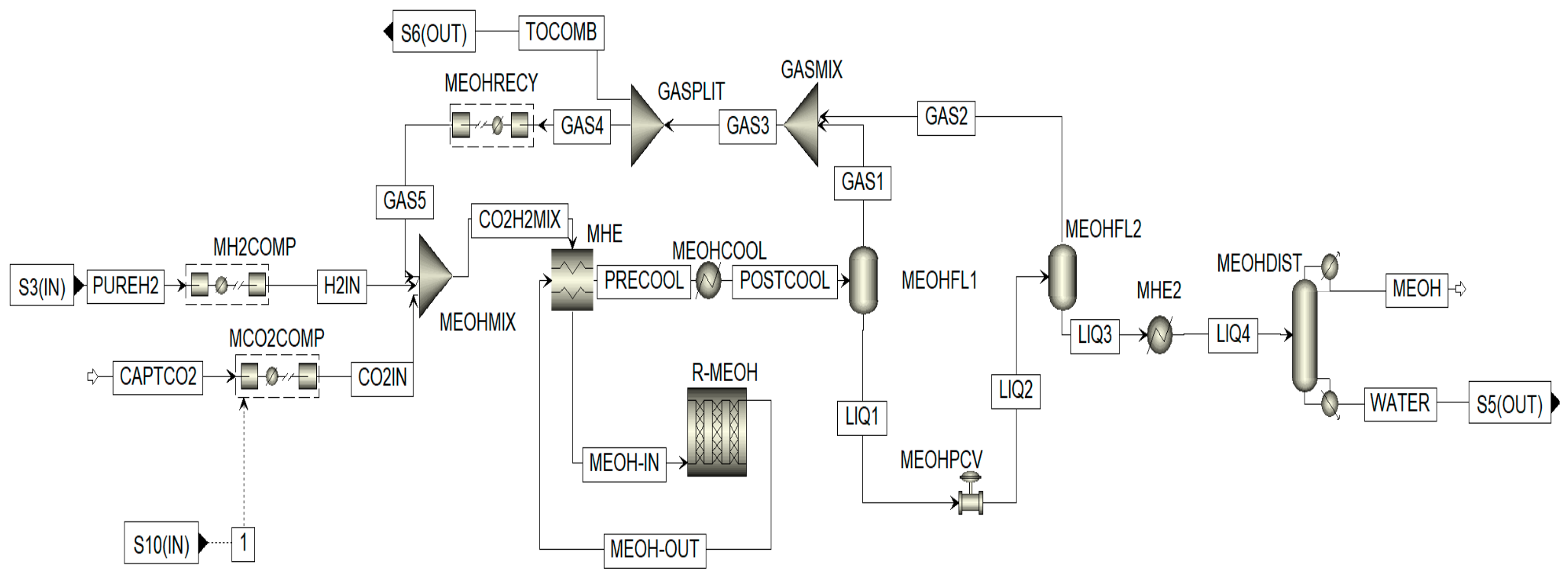
Figure 5 illustrates the process flowsheet of the MSP subsystem. The purified hydrogen (PUREH2) stream and the CO2 feed (CAPTCO2) are compressed with MH2COMP and MCO2COMP, respectively (its compressor power is supplied by the OGCP subsystem). Then, they are merged as the synthesis gas mixture. The reactor feed composition, after mixing fresh and recycled streams, results in an H2/(CO + CO2) ratio of 3.07, which is close to the stoichiometric requirement for methanol synthesis and ensures favorable reaction conditions. After preheating through the exchanger of MHE, the conditioned mixture enters the methanol reactor (R-MEOH), which operates over a Cu/ZnO/Al2O3 catalyst based on an industrially established process for low-temperature methanol synthesis [26]. Two major reversible reactions occur:
CO2 + H2   →  CO + H2O
CO2 + 3H2   →  CH3OH + H2O
After the reaction, the reactor effluent is cooled and routed to the first flash drum (MEOHFL1), separating unreacted gases (GAS1) from a methanol-rich liquid (LIQ1). An off-gas purge stream (TOCOMB) from this recycle loop is sent to the OGCP subsystem. The LIQ1 stream from MEOHFL1 proceeds to a second flashing unit (MEOHFL2). The gas stream (GAS2) from MEOHFL2 is recycled and merged with GAS1 for reprocessing. The liquid stream of LIQ3, with a higher methanol concentration, is cooled and transferred to the methanol distillation column (MEOHDIST), yielding high-purity methanol (MEOH) and a water-rich bottom stream (WATER). The WATER stream is directed to the WTP subsystem for further processing. Table 4 presents the major simulation results for the MSP subsystem.
The recycling ratio is governed by the need to maintain a favorable reactor feed composition and achieve high overall CO2 conversion, as recycling unreacted gases increases the H2/(CO + CO2) ratio and promotes methanol formation. However, increasing the recycling ratio also leads to higher gas circulation, raising energy consumption and equipment size; therefore, moderate recycling ratios (typically 2–6) are preferred in practice [31]. In this study, a recycling ratio of 3.28 is selected as a balanced value, enabling efficient CO2 utilization with an overall conversion of approximately 97%. A small purge (~1%) is implemented to prevent the accumulation of CO and other non-ideal species formed via the RWGS reaction, thereby ensuring the stable operation of the recycle loop.

3.5. Modeling of the OGCP Subsystem

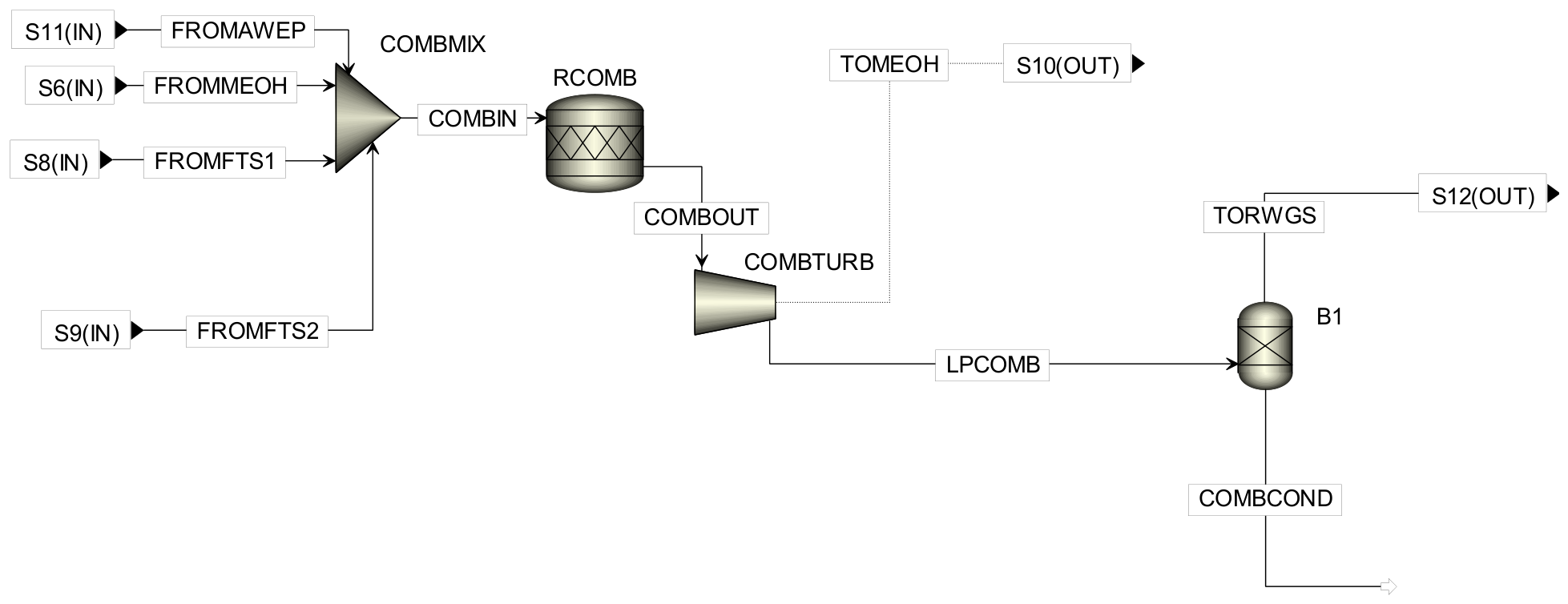
Figure 6 illustrates the process flowsheet of the OGCP subsystem. As shown, the green oxygen (FROMAWEP) supplied from the AWEP subsystem is mixed with the off-gas streams originating from the FTSP (FROMFTS1 and FROMFTS2) and MSP (FROMMEOH) subsystems prior to entering the combustor. These streams are blended in COMBMIX to form a uniform combustion feed, which is then sent to the reactor block (RCOMB). The combustion operates at 350 °C and 20 bar, ensuring complete oxidation of the residual hydrocarbons and carbon-containing species from all the recycled off-gases. Next, the combustion exhaust is expanded through the gas turbine (COMBTURB), generating power to support the energy demand of the MSP subsystem. After the expansion, the low-pressure combustion gas (LPCOMB) enters a separation vessel (B1), where condensates are removed (COMBCOND), and the treated off-gas stream is recycled to the RWGSP subsystem (TORWGS) to enhance overall carbon utilization. Table 5 provides the major simulation results of the OGCP subsystem.

3.6. Modeling of the WTP Subsystem

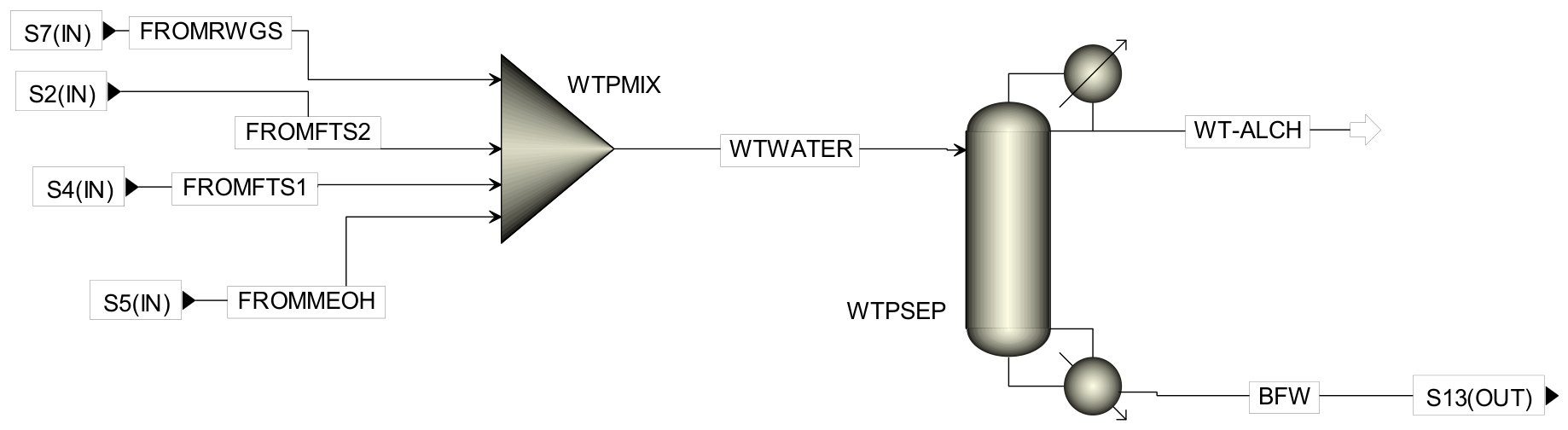
Figure 7 presents the flowsheet of the WTP subsystem. As shown, condensed water streams originating from the RWGSP, FTSP, and MSP subsystems are merged at WTPMIX. These water streams typically contain dissolved gases and light hydrocarbons generated from various separation units. The combined stream is then introduced into the water treatment separator (WTPSEP) for separation. This simplified modeling approach treats the WTP as a thermodynamic separation unit capable of partitioning the feed into a clean water stream and a blowdown stream. Table 6 summarizes the major simulation outputs corresponding to the WTP subsystem.

4. Comprehensive Economic Analysis

4.1. CAPEX, OPEX, and Product Revenue Calculation

The economic evaluation of the FARMOW complex is conducted using Aspen Plus V14, and the corresponding results are summarized in Table 7. The total capital expenditure (CAPEX) is estimated at USD 55.38 M, with the largest portion attributed to purchased equipment (37.67%), highlighting that a substantial investment is required for core processing units. It should be noted that the Aspen Process Economic Analyzer does not contain built-in costing models for alkaline water electrolyzer stacks. Consequently, the cost of the electrolyzer stack within the AWEP subsystem was estimated separately, yielding a purchased equipment cost of USD 8,133,000. This value was derived from the techno-economic analysis conducted by the Electric Power Research Institute (EPRI), which reports a cost range of USD 202/kW to USD 605/kW for alkaline electrolyzer systems. An average value of USD 403.5/kW was adopted in this study to provide a representative estimate [32]. Design, engineering, procurement, and related indirect costs (“Others”) account for 22.68%, reflecting the complexity of project execution and integration. Contingencies contribute 16.61%, providing a buffer against uncertainties and potential cost overruns. Additional significant costs include instrumentation (6.37%) and piping (4.62%), which are essential for process monitoring, control, and material handling. Smaller yet important cost elements include electrical systems (3.10%), G&A overheads (2.29%), contract fees (2.71%), and civil works (1.48%), along with minor allocations for insulation (1.05%), steel (0.69%), equipment setting (0.42%), and paint (0.31%). Collectively, these components ensure the structural integrity, operational efficiency, and reliability of the overall facility.
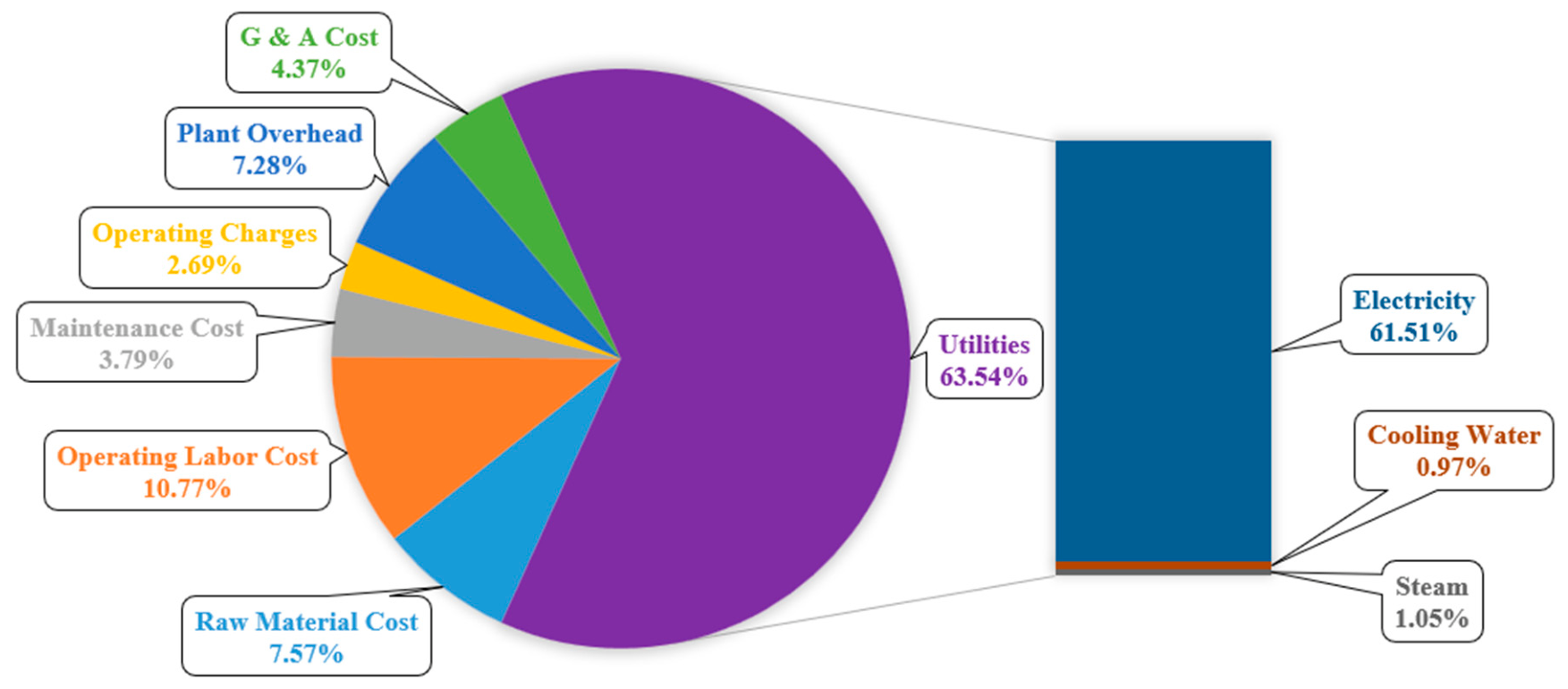
The annual operating expenditure (OPEX) for the FARMOW complex system is about USD 12.63 M, with utility costs constituting the dominant share. As shown in Figure 8, utilities account for approximately 63.54% of the total OPEX, driven primarily by electricity consumption at 61.51%, followed by steam (1.05%) and cooling water (0.97%). Among non-utility costs, operating labor represents 10.77%, while raw material costs contribute 7.57%. Other expenses include plant overhead (7.28%), G&A costs (4.37%), maintenance (3.79%), and operating charges (2.69%). It also gives an overview of the OPEX distribution for the FARMOW complex system. These results highlight the significant influence of energy demand, particularly electricity, on overall operating costs. Thus, energy efficiency and optimization strategies are significant in improving the economic performance of the complex.
The renewable electricity price considered for this study is USD 0.045/kWh. The product prices in the economic analysis are set as oxygen at USD 100/ton, FT fuel at USD 6.2/gal, methanol at USD 0.98/kg, and high-pressure steam at USD 0.035/kg, reflecting market-aligned benchmarks for large-scale industrial applications.
Product revenues are calculated using Equation (9), where 8322 operating hours per year are considered by assuming 5% downtime for maintenance and operational interruptions:
Product revenue = Production rate × 8322 (hr/yr) × Product unit price
The FARMOW complex is projected to generate USD 18.51 M annually from product sales, highlighting its significant profitability potential. Methanol (46.5%) and FT fuel (37.4%) dominate the total product revenue. Oxygen contributes 13.5%, and high-pressure steam adds 2.6%, providing additional value through process integration.

4.2. In-Depth Profitability Analysis

The financial framework and key economic assumptions for evaluating the FARMOW project are summarized in Table 8. The total capital investment (TCI) is estimated at USD 58.15 M, comprising CAPEX of USD 55.38 M and working capital (WC) of USD 2.77 M (5% of CAPEX). The facility is projected to generate annual product sales of USD 18.51 M, with a 5% yearly growth rate, reflecting potential market expansion. The annual operating cost is estimated at USD 12.62 M, increasing at 2.5% per year to account for rising operating expenses. A salvage value of USD 5.82 M (10% of CAPEX) is assumed at the end of the complex system life, while depreciation is calculated using the straight-line method over 30 years, resulting in an annual depreciation of USD 1.65 M. A tax rate of 25% is applied for financial analysis. Furthermore, a 5% downtime of the total annual hours (8760 h) is assumed, resulting in 8322 effective operating hours per year for the financial evaluation.
Under the revised Section 45Q tax credit provisions from the Inflation Reduction Act, capturing and utilizing CO2 for conversion into valuable products, such as fuels, qualify under the category of “other qualified use” [33]. For facilities that begin operation after 1 January 2023, the required minimum CO2 capture threshold has been lowered to 12,500 metric tons per year, making it more accessible for mid-scale systems to benefit from this incentive. In this study, the FARMOW system captures approximately 20,497.99 metric tons of CO2 annually, which exceeds the eligibility requirement. The captured CO2 is subsequently fully utilized and converted into methanol and FT fuels, with no direct venting of the captured CO2 stream to the atmosphere. The base credit is USD 12 per metric ton, but it can increase significantly to USD 60 per metric ton if the project meets prevailing wage and apprenticeship standards during construction and early operation. Based on the estimation of USD 60 per metric ton of CO2 consumption, the FARMOW complex system can generate annual tax credits of USD 1.23 M.
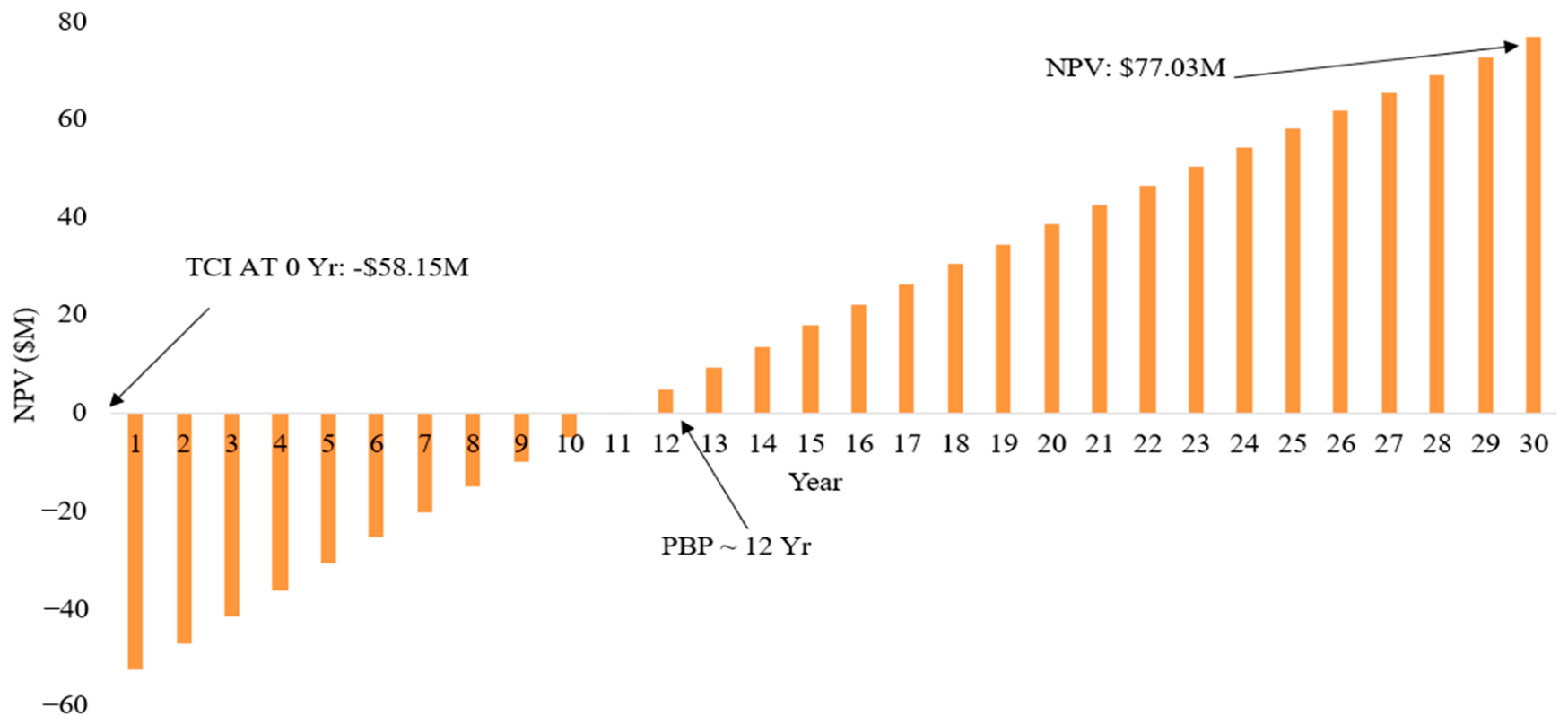
Based on Table 8, the in-depth profitability of the FARMOW complex over a 30-year horizon can be evaluated. In such an evaluation, an annual discount rate (ADR) is assumed as 8%. Figure 9 presents the net present value (NPV) for each year for the FARMOW complex at ADR = 8%. The TCI at year 0 is USD 58.15 M, representing the initial investment required for project implementation. Along with the 30-year project life, the (NPV)1 through (NPV)30 shows a steady upward trend, with the (NPV)30 reaching approximately USD 77.03 M. During the initial years, the NPV remains negative due to the recovery of TCI, but becomes positive around year 12, corresponding to a PBP of about 12 years. After this point, the project generates increasing returns, supported by stable revenue growth and controlled OPEX. Overall, the (NPV)30 and moderate PBP confirm that the FARMOW complex is economically and financially attractive under the assumed ADR and operating conditions. Additionally, the PI is calculated as 2.44, indicating that for every dollar invested, the project yields USD 2.44 in present value terms.
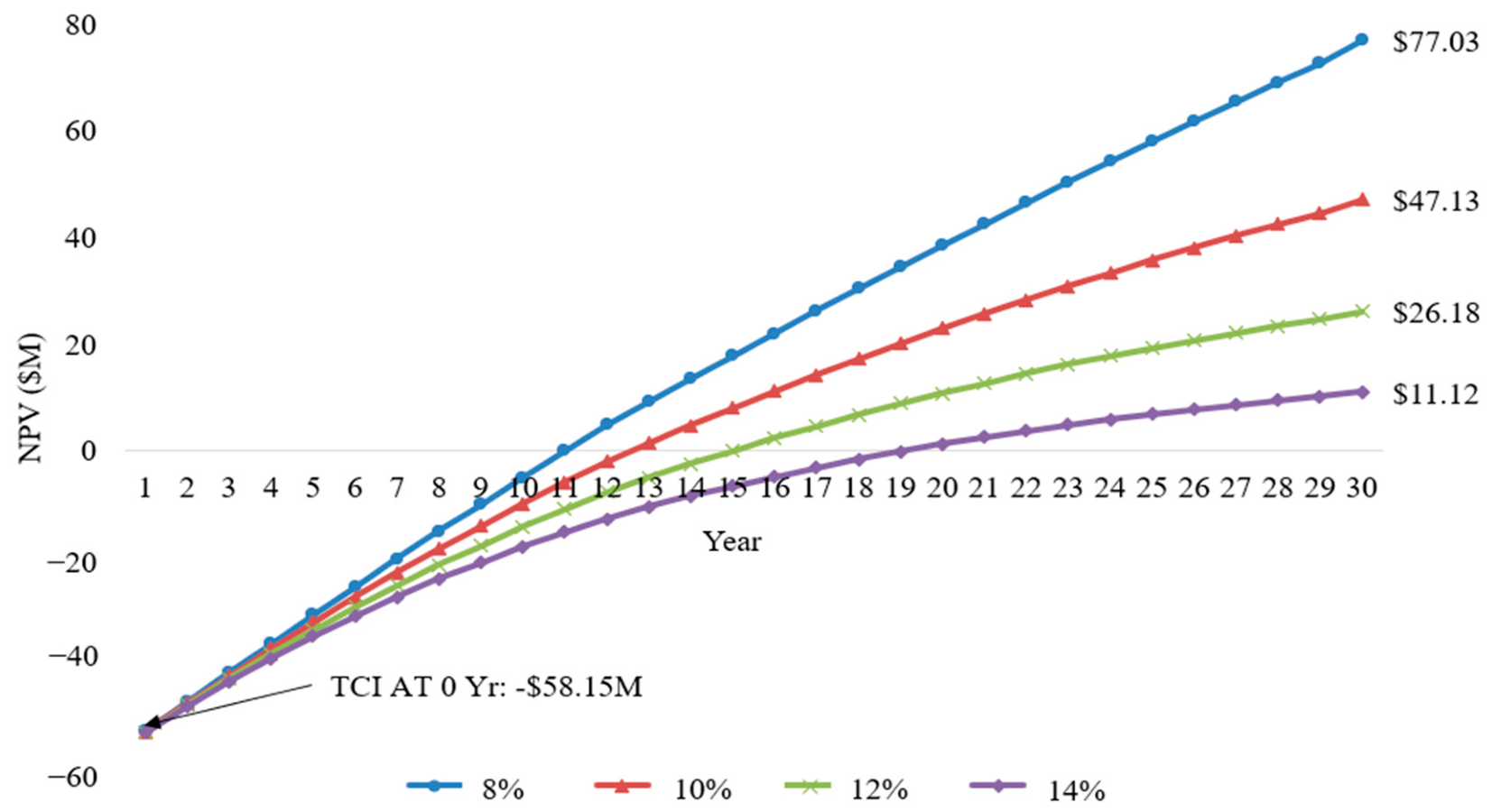
Figure 10 illustrates the variation of NPV with time at different ADRs (8%, 10%, 12%, and 14%) for the FARMOW complex. The TCI at year 0 is −USD 58.15 M for all cases, representing the initial investment. As expected, lower ADRs result in higher NPVs, while higher ADRs reduce the overall profitability due to stronger discounting effects. At an ADR of 8%, the project achieves the highest NPV of approximately USD 77.03 M by year 30, followed by USD 47.13 M at 10%, USD 26.18 M at 12%, and USD 11.12 M at 14%, all indicating positive long-term returns. The payback period (PBP) also varies with ADR. At ADR = 8%, the PBP is approximately 12 years, while it extends slightly to around 13–14 years at ADR = 10%, 15–16 years at ADR = 12%, and nearly 17–18 years at ADR = 14%. This trend highlights that higher discount rates not only reduce NPV but also delay capital recovery.
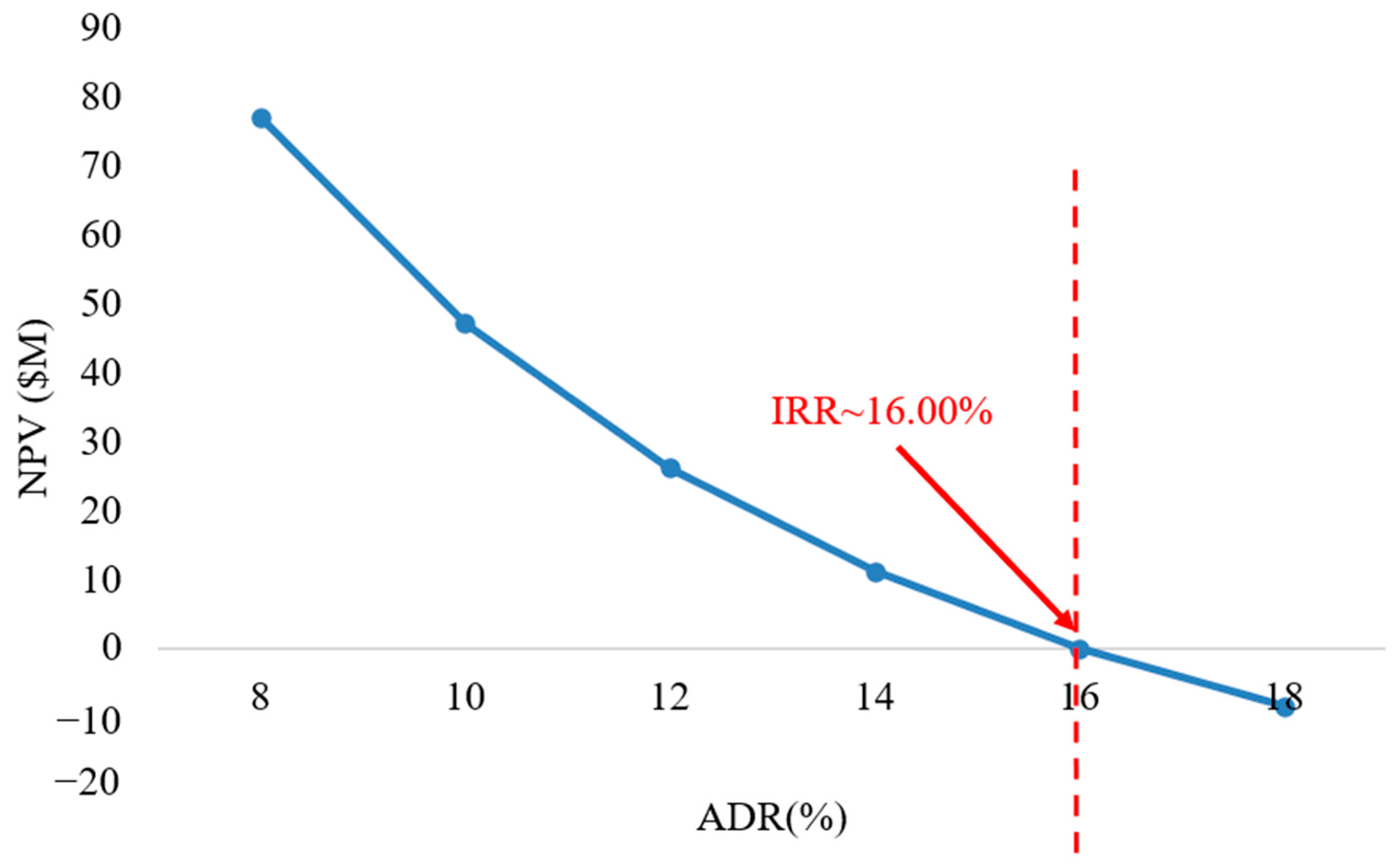
Figure 11 illustrates the quantitative relationship between the 30-year (NPV)30 and the ADR. The plot shows a clear inverse correlation, where the NPV decreases significantly as the ADR increases. At lower discount rates (around 8%), the project yields a high NPV of approximately USD 77.03 million, indicating strong economic viability. However, as the ADR rises to 10% and 12%, the NPV declines to roughly USD 47.13 million and USD 26.18 million, respectively, reflecting reduced profitability due to the greater impact of discounting on future cash flows. This downward trend continues until the NPV approaches zero at an ADR of approximately 16%, which corresponds to an internal rate of return (IRR) of about 16%. Beyond this point, the NPV becomes negative, suggesting that the project would no longer be financially attractive. Overall, the figure highlights the sensitivity of project economics to the discount rate and emphasizes the critical threshold at which the investment breaks even.
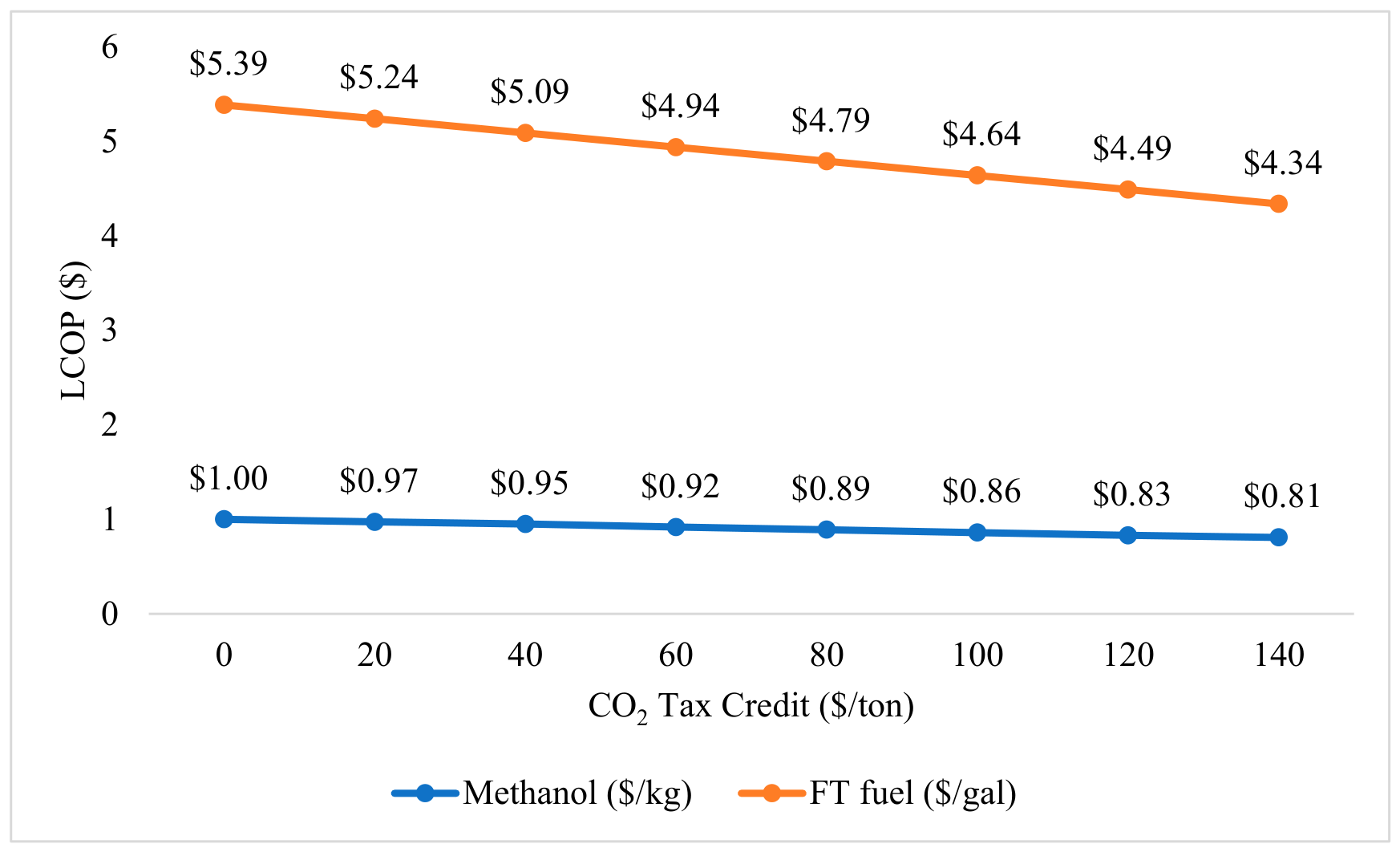
Figure 12 illustrates the impact of CO2 tax credits on the levelized cost of products (LCOP) for methanol and FT (Naphtha and Middle Distillate) fuel. The chart shows a consistent decline in LCOP for both products as the CO2 tax credit increases from USD 0 to USD 140 per ton. Methanol production cost decreases gradually from approximately USD 1.00/kg to USD 0.81/kg, indicating a modest but steady economic benefit. In contrast, FT fuel exhibits a more significant absolute reduction, dropping from about USD 5.39/gal to USD 4.34/gal over the same range. Despite the difference in magnitude, both trends clearly demonstrate that higher CO2 tax credits improve process economics by lowering production costs.
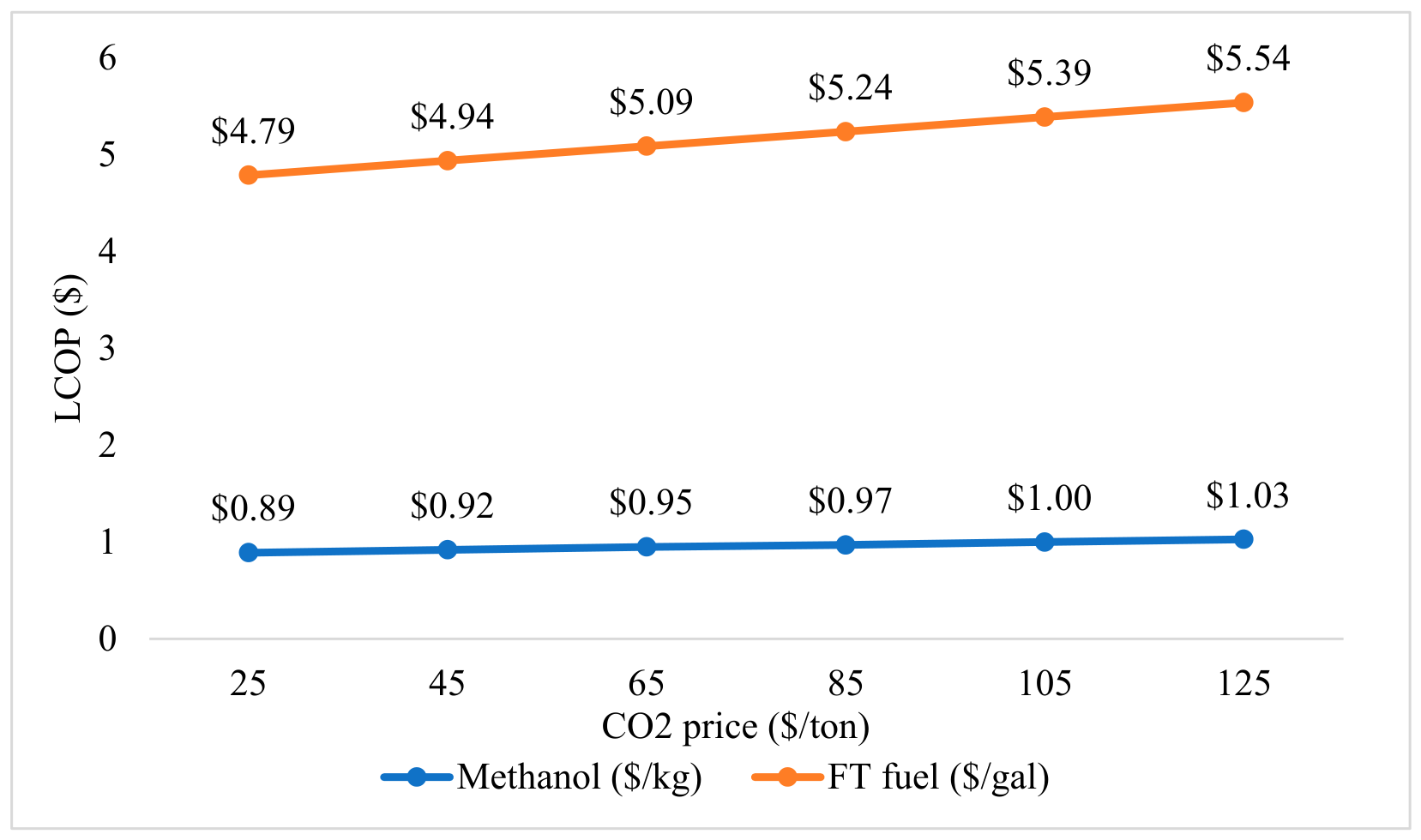
Figure 13 presents the relationship between CO2 prices and the LCOP for methanol and FT fuel. The figure shows a clear increasing trend in LCOP for both products as the CO2 price rises from USD 25 to USD 125 per ton. Methanol cost increases gradually from approximately USD 0.89/kg to USD 1.03/kg, while FT fuel exhibits a more pronounced rise from about USD 4.79/gal to USD 5.54/gal. This upward trend reflects the additional economic burden associated with higher CO2 costs, which directly impacts production expenses. Although both products are affected, FT fuel demonstrates greater sensitivity to CO2 price changes in absolute terms. Overall, the figure highlights the negative impact of increasing CO2 pricing on the process.
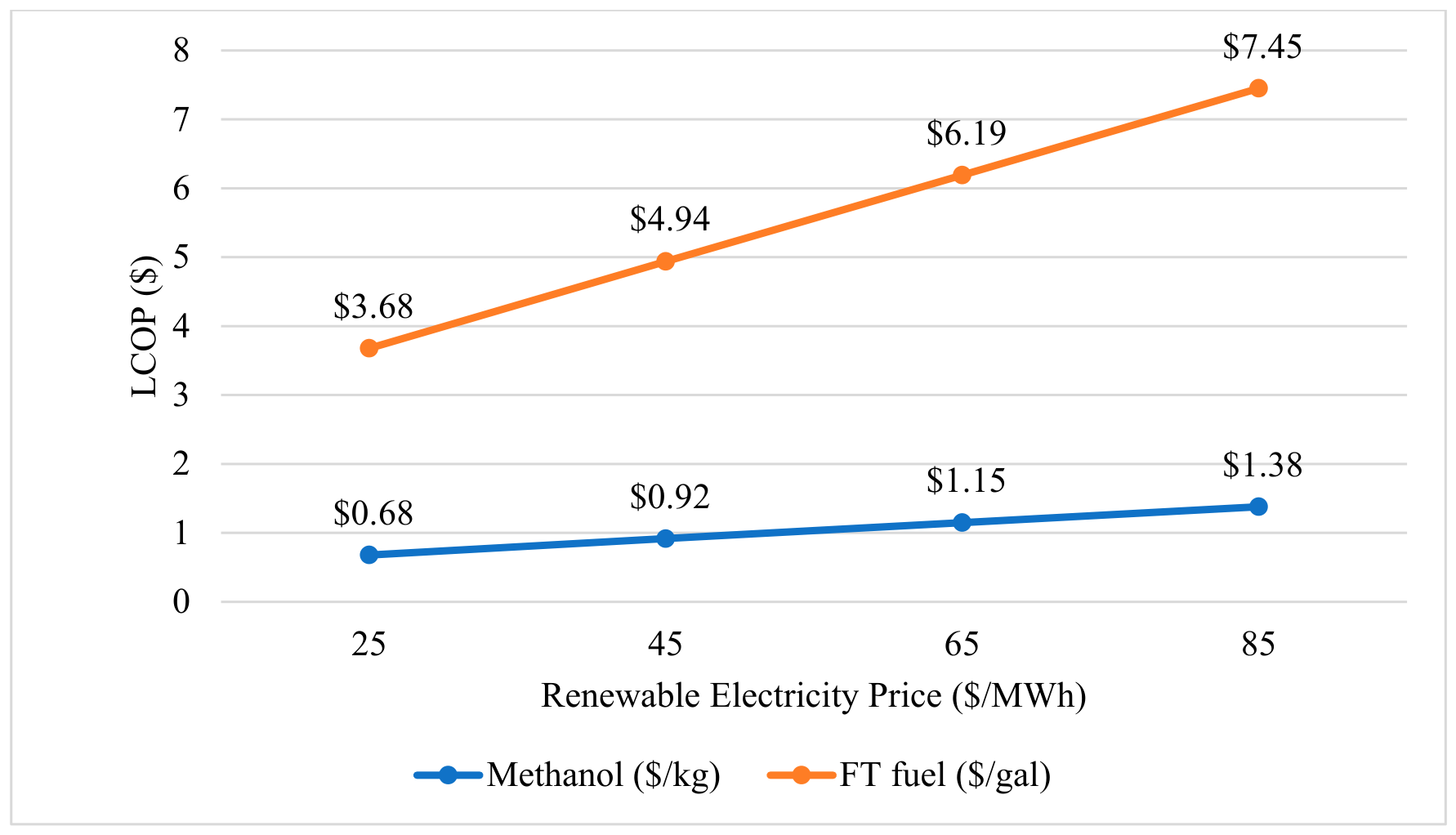
Figure 14 illustrates the influence of the renewable electricity price on the LCOP for methanol and FT fuel. The results show a strong positive correlation between electricity price and product cost, with both methanol and FT fuel becoming significantly more expensive as electricity prices increase from USD 25 to USD 85 per MWh. Methanol LCOP rises from approximately USD 0.68/kg to USD 1.38/kg, while FT fuel shows a sharper increase from about USD 3.68/gal to USD 7.45/gal. This trend highlights the high sensitivity of the process economics to electricity cost, particularly for FT fuel, which experiences a larger absolute cost increase.

5. Conclusions

This paper has developed a novel green hydrogen-driven and carbon-negative complex, FARMOW. The overarching purpose of the FARMOW complex is to create a new polygeneration hub that supplies sustainable transportation fuels (aviation and marine) and essential chemical intermediates to the chemical and maritime industries. It consists of six well-integrated subsystems: FTSP, AWEP, RWGSP, MSP, OGCP, and WTP, which synergistically convert CO2 and water into high-value products, including FT fuel (naphtha + middle distillate), methanol, oxygen, and steam, with systematic integrations of energy, power, and multiple materials. The synergistic operation among these subsystems facilitates the large-scale carbon-negative polygeneration for both industrial and environmental sustainability. The entire FARMOW complex system has been modeled, simulated, and examined by a commercial process simulator. Meanwhile, comprehensive economic and insight sensitivity analyses have also been performed to demonstrate its efficacy. Overall, the developed FARMOW complex presents an economically attractive role model for large-scale carbon-negative green chemical production in the future.

Author Contributions

Conceptualization, V.A.M. and Q.X.; Methodology, V.A.M., A.M.C. and Q.X.; Validation, V.A.M., A.M.C. and Q.X.; Formal analysis, V.A.M. and Q.X.; Investigation, V.A.M., A.M.C. and Q.X.; Resources, Q.X.; Data curation, V.A.M. and A.M.C.; Writing–original draft, V.A.M. and A.M.C.; Writing–review & editing, Q.X.; Visualization, V.A.M.; Supervision, Q.X. All authors have read and agreed to the published version of the manuscript.

Funding

This work was supported in parts by the Texas Hazardous Waste Research Center (THWRC) and the Texas Air Research Center (TARC), both headquartered at Lamar University in Beaumont, Texas.

Data Availability Statement

The original contributions presented in this study are included in the article. Further inquiries can be directed to the corresponding author.

Conflicts of Interest

The authors declare no conflict of interest.

References

  1. Davis, S.J.; Lewis, N.S.; Shaner, M.; Aggarwal, S.; Arent, D.; Azevedo, I.L.; Benson, S.M.; Bradley, T.; Brouwer, J.; Chiang, Y.-M.; et al. Net-zero emissions energy systems. Science 2018, 360, eaas9793. [Google Scholar] [CrossRef]
  2. Sanchez, D.L.; Johnson, N.; McCoy, S.T.; Turner, P.A.; Mach, K.J. Near-Term Deployment of Carbon Capture and Sequestration from Biorefineries in the United States. Proc. Natl. Acad. Sci. USA 2018, 115, 4875–4880. [Google Scholar] [CrossRef] [PubMed]
  3. Dieterich, V.; Buttler, A.; Hanel, A.; Spliethoff, H.; Fendt, S. Power-To-Liquid via Synthesis of Methanol, DME or Fischer–Tropsch-Fuels: A Review. Energy Environ. Sci. 2020, 13, 3207–3252. [Google Scholar] [CrossRef]
  4. Stephan, D.W. Beyond Oil and Gas: The Methanol Economy. Second Updated and Enlarged Edition. By George A. Olah, Alain Goeppert, G. K. Surya Prakash. Energy Technol. 2013, 1, 777. [Google Scholar] [CrossRef]
  5. Intelmarket Research. Fischer Tropsch Reactor Market Growth Analysis, Dynamics, Key Players and Innovations, Outlook and Forecast 2026–2034. Intelmarketresearch.com. Available online: https://www.intelmarketresearch.com/fischer-tropsch-reactor-market-37211 (accessed on 22 May 2026).
  6. Balaji, S.P.; Klokkenburg, M.; Schouwenaar, R.; Enriquez, J.A.Q.; Shell USA, Inc. A Process and Reactor for Converting Carbon Dioxide into Carbon Monoxide. U.S. Patent 20220048776A1, 23 April 2024. Available online: https://patents.google.com/patent/US20220048776A1/zh (accessed on 21 May 2025).
  7. Repasky, J.M.; Zeller, R.L., III; Oxy Low Carbon Ventures, LLC. Process for the Conversion of Carbon Dioxide. U.S. Patent 20220348461A1, 1 April 2025. Available online: https://patents.google.com/patent/US20220348461A1/en?oq=US20220348461 (accessed on 21 May 2025).
  8. Kapetaki, Z.; Brandani, P.; Brandani, S.; Ahn, H. Process Simulation of a Dual-Stage Selexol Process for 95% Carbon Capture Efficiency at an Integrated Gasification Combined Cycle Power Plant. Int. J. Greenh. Gas Control. 2015, 39, 17–26. [Google Scholar] [CrossRef]
  9. Varyatech.com. Hydrogen—Varya. Available online: https://varyatech.com/hydrogen/ (accessed on 9 April 2026).
  10. Abdin, Z.; Webb, C.J.; Gray, E.M. Modelling and Simulation of an Alkaline Electrolyser Cell. Energy 2017, 138, 316–331. [Google Scholar] [CrossRef]
  11. Reksten, A.H.; Thomassen, M.S.; Møller-Holst, S.; Sundseth, K. Projecting the future cost of PEM and alkaline water electrolysers; a CAPEX model including electrolyser plant size and technology development. Int. J. Hydrogen Energy 2022, 47, 38106–38113. [Google Scholar] [CrossRef]
  12. Shiva Kumar, S.; Lim, H. An Overview of Water Electrolysis Technologies for Green Hydrogen Production. Energy Rep. 2022, 8, 13793–13813. [Google Scholar] [CrossRef]
  13. Daoudi, C.; Bounahmidi, T. Overview of Alkaline Water Electrolysis Modeling. Int. J. Hydrogen Energy 2023, 49, 646–667. [Google Scholar] [CrossRef]
  14. Krishnan, S.; Koning, V.; De Groot, M.T.; De Groot, A.; Granados Mendoza, P.; Junginger, M.; Kramer, G.J. Present and Future Cost of Alkaline and PEM Electrolyser Stacks. Int. J. Hydrogen Energy 2023, 48, 32313–32330. [Google Scholar] [CrossRef]
  15. Muthiah, M.; Elnashar, M.; Afzal, W.; Tan, H. Safety Assessment of Hydrogen Production Using Alkaline Water Electrolysis. Int. J. Hydrogen Energy 2024, 84, 803–821. [Google Scholar] [CrossRef]
  16. Modi, V.A.; Chachad, A.M.; Xu, Q. Techno-Economic Analysis of a Renewable Energy-Driven Industrial Complex for Nitric Acid Production with Zero Harmful Emissions. Fuel 2026, 428, 140276. [Google Scholar] [CrossRef]
  17. Marion, M.-C.; Bertoncini, F.; Hugues, F.; Forestiere, A. Synthesis Gas Chemistry. 2006. Available online: https://www.osti.gov/etdeweb/servlets/purl/20840761 (accessed on 20 June 2026).
  18. Sato, K.; Nakashizu, S. Catalyst for Fischer-Tropsch Synthesis and Method for Producing Hydrocarbons. U.S. Patent US8598063B2, 3 December 2013. Available online: https://patents.google.com/patent/US8598063B2/en (accessed on 21 May 2025).
  19. Selvatico, D.; Lanzini, A.; Santarelli, M. Low Temperature Fischer-Tropsch fuels from syngas: Kinetic modeling and process simulation of different plant configurations. Fuel 2016, 186, 544–560. [Google Scholar] [CrossRef]
  20. Fabián-Anguiano, J.A.; Mendoza-Serrato, C.G.; Gómez-Yáñez, C.; Zeifert, B.; Ma, X.; Ortiz-Landeros, J. Simultaneous CO2 and O2 Separation Coupled to Oxy-Dry Reforming of CH4 by Means of a Ceramic-Carbonate Membrane Reactor for in Situ Syngas Production. Chem. Eng. Sci. 2019, 210, 115250. [Google Scholar] [CrossRef]
  21. Marchese, M.; Giglio, E.; Santarelli, M.; Lanzini, A. Energy Performance of Power-To-Liquid Applications Integrating Biogas Upgrading, Reverse Water Gas Shift, Solid Oxide Electrolysis and Fischer-Tropsch Technologies. Energy Convers. Manag. X 2020, 6, 100041. [Google Scholar] [CrossRef]
  22. Kang, J.; Ma, W.; Keogh, R.A.; Shafer, W.D.; Jacobs, G.; Davis, B.H. Hydrocracking and Hydroisomerization of N-Hexadecane, N-Octacosane and Fischer–Tropsch Wax over a Pt/SiO2–Al2O3 Catalyst. Catal. Lett. 2012, 142, 1295–1305. [Google Scholar] [CrossRef]
  23. Zang, G.; Sun, P.; Delgado, H.E.; Cappello, V.; Ng, C.; Elgowainy, A. The Modeling of the Synfuel Production Process; Argonne National Laboratory: Lemont, IL, USA, 2022.
  24. Modi, V.A.; Xu, Q. Modeling and integration of Green-Hydrogen-Assisted carbon dioxide utilization for hydrocarbon manufacturing. Ind. Eng. Chem. Res. 2024, 63, 18043–18052. [Google Scholar] [CrossRef]
  25. Modi, V.A.; Xu, Q.; Wang, S. An Innovative Industrial Complex for Sustainable Hydrocarbon Production with Near-Zero Emissions. Clean Technol. 2025, 7, 93. [Google Scholar] [CrossRef]
  26. Vanden Bussche, K.M.; Froment, G.F. A Steady-State Kinetic Model for Methanol Synthesis and the Water Gas Shift Reaction on a Commercial Cu/ZnO/Al2O3Catalyst. J. Catal. 1996, 161, 1–10. [Google Scholar] [CrossRef]
  27. Milani, D.; Khalilpour, R.; Zahedi, G.; Abbas, A. A Model-Based Analysis of CO2 Utilization in Methanol Synthesis Plant. J. CO2 Util. 2015, 10, 12–22. [Google Scholar] [CrossRef]
  28. Pratschner, S.; Radosits, F.; Ajanovic, A.; Winter, F. Techno-Economic Assessment of a Power-To-Green Methanol Plant. J. CO2 Util. 2023, 75, 102563. [Google Scholar] [CrossRef]
  29. Sollai, S.; Porcu, A.; Tola, V.; Ferrara, F.; Pettinau, A. Renewable Methanol Production from Green Hydrogen and Captured CO2: A Techno-Economic Assessment. J. CO2 Util. 2023, 68, 102345. [Google Scholar] [CrossRef]
  30. Susteon. Reimagining the Carbon Ecosystem Green Methanol Production from Atmospheric CO2 DOE Award: DE-FE0032397. Available online: https://netl.doe.gov/sites/default/files/netl-file/24CM/24CM_CC_8_Peters.pdf (accessed on 21 June 2026).
  31. Pak, K.S.; Hong, Y.S. Potential Environmental Impact Evaluation of the Methanol Synthesis Process by Gas-To-Methanol Technology. ACS Omega 2025, 10, 13228–13235. [Google Scholar] [CrossRef] [PubMed]
  32. Epri.com. Capex Rates|Electrolysis Techno-Economic Analysis. Available online: https://apps.epri.com/lcri-electrolysis-tea/en/capex-rates.html (accessed on 21 June 2026).
  33. Jones, A.; Marples, D. The Section 45Q Tax Credit for Carbon Sequestration. Available online: https://www.congress.gov/crs-product/IF11455 (accessed on 21 June 2026).
Figure 1. Overview of the developed FARMOW industrial complex.
Energies 19 03069 g001
Figure 2. Process flowsheet of the RWGSP subsystem.
Energies 19 03069 g002
Figure 3. Process flowsheet of the AWEP subsystem.
Energies 19 03069 g003
Figure 4. Process flowsheet of the FTSP subsystem.
Energies 19 03069 g004
Figure 5. Process flowsheet of the MSP subsystem.
Energies 19 03069 g005
Figure 6. Process flowsheet of the OGCP subsystem.
Energies 19 03069 g006
Figure 7. Process flowsheet of the WTP subsystem.
Energies 19 03069 g007
Figure 8. OPEX breakdown of the FARMOW complex.
Energies 19 03069 g008
Figure 9. NPV progression of the studied FARMOW project at 8% of ADR.
Energies 19 03069 g009
Figure 10. (NPV)N at different ADRs for the FARMOW complex.
Energies 19 03069 g010
Figure 11. Quantitative relationship between (NPV)30 and ADR.
Energies 19 03069 g011
Figure 12. Effect of CO2 tax credits on LCOP for methanol and FT fuel.
Energies 19 03069 g012
Figure 13. Impact of CO2 prices on LCOP for methanol and FT fuel.
Energies 19 03069 g013
Figure 14. Effect of renewable electricity prices on LCOP for methanol and FT fuel.
Energies 19 03069 g014
Table 1. Major simulation results of the RWGSP subsystem.
StreamTPFlowrateMass Fraction
°CBarkg/hH2O2H2OCO2CO
CAPT-CO235.001.00956.390.000.000.001.000.00
CO243.561.002825.330.000.000.000.980.02
CO2REMVE20.0020.002635.600.120.000.000.520.36
COMBCO287.131.00528.500.000.000.001.000.00
FROMAWEP75.086.76414.091.000.000.000.000.00
GREEN-H250.206.76380.411.000.000.000.000.00
H2TOFTS20.0020.008.061.000.000.000.000.00
H2TOMEOH75.166.76207.051.000.000.000.000.00
H2TORWGS75.166.76207.051.000.000.000.000.00
RECYH220.257.00173.371.000.000.000.000.00
RWGS-IN537.8031.723205.740.120.000.000.860.02
RWGS-OUT537.8031.723205.740.100.000.180.430.30
RWGSH2O20.0020.00570.140.000.001.000.000.00
RWGSREY60.0031.721340.430.000.000.000.960.04
SYN20.0020.001295.170.240.000.000.060.69
SYNTOFTS20.0020.001113.740.120.000.000.070.80
Table 2. Major simulation results of the AWEP subsystem.
StreamTPFlowrateMass Fraction
°CBarkg/hrKOHH2O2H2O
A72.807.00585,895.350.240.000.000.76
AIN72.777.00560,001.550.250.000.000.75
AN-OUT75.086.76589,269.320.240.000.010.76
CATHOUT75.086.761,010,735.090.260.000.000.74
CIN72.777.001,040,002.870.250.000.000.75
H2-OUT75.086.76568.460.000.730.000.27
H2O-IN25.008.003942.430.000.000.001.00
O275.086.762714.970.000.000.970.02
O2-PROD75.086.763373.970.000.000.970.02
O2COMB75.086.76659.000.000.000.970.02
PUREH275.086.76414.090.001.000.000.00
S1575.086.761,010,166.630.260.000.000.74
TOSTACK72.777.001,600,004.420.250.000.000.75
Table 3. Major simulation results of the FTSP subsystem.
StreamTPFlowrateMass Fraction
°CBarkg/hrH2H2OCO2COC1–C4C5–C10C11–C15C16–C20C20+
SYNGAS20.0020.001113.740.120.000.070.800.000.000.000.000.00
FTHEAT123.7420.001527.750.110.000.110.730.030.010.000.000.00
FT1-IN230.0020.001527.750.110.000.110.730.030.010.000.000.00
FT1-OUT230.0020.001527.750.040.300.110.270.070.090.050.030.04
FT2-IN230.0020.00496.880.060.000.260.460.160.050.000.000.00
FT2-OUT230.0020.00496.880.020.190.260.170.180.100.030.020.02
FTHEAT242.7420.00496.880.060.000.260.460.160.050.000.000.00
H220.0020.008.061.000.000.000.000.000.000.000.000.00
HYC1139.9620.001527.750.040.300.110.270.070.090.050.030.04
HYC3133.0720.00496.880.020.190.260.170.180.100.030.020.02
HYC543.0020.00295.670.000.000.010.000.030.350.250.180.19
HYC643.0020.0079.720.000.000.030.000.090.410.190.130.14
HYC943.0020.00324.360.030.000.400.260.260.050.000.000.00
HYC1043.0020.00781.150.070.000.220.530.130.050.000.000.00
HYC1143.0020.00367.140.070.000.220.530.130.050.000.000.00
LIGHTS25.001.0056.650.130.020.070.020.240.520.000.000.00
LTHYC-143.0020.00194.610.030.000.400.260.260.050.000.000.00
CRACKIN43.8420.00376.390.000.000.010.000.040.360.240.170.18
CRACKOUT290.0023.00384.450.020.000.010.000.040.450.400.080.00
DISTLIN240.001.00384.450.020.000.010.000.040.450.400.080.00
MID-DSTL206.671.00184.750.000.000.000.000.000.020.820.150.00
NAPTHA25.001.00142.050.000.000.000.000.010.990.000.000.00
WAX300.061.001.000.000.000.000.000.000.000.001.000.00
TREATW28.621.001692.600.001.000.000.000.000.000.000.000.00
BFWIN53.2715.001692.600.001.000.000.000.000.000.000.000.00
HPSTEAM331.3715.001692.600.001.000.000.000.000.000.000.000.00
Table 4. Major simulation results of the MSP subsystem.
StreamTPFlowrateMass Fraction
°CBarkg/hrH2H2OCO2COMEOH
CAPTCO235.001.001506.720.000.001.000.000.00
CO2H2MIX52.7160.007601.010.130.000.810.050.01
CO2IN55.0060.001506.720.000.001.000.000.00
GAS130.0030.005922.170.130.000.790.070.01
GAS230.001.0024.570.000.010.900.000.09
GAS327.471.005946.740.130.000.790.070.01
GAS427.471.005887.250.130.000.790.070.01
GAS556.0060.005887.250.130.000.790.070.01
H2IN55.0060.00207.051.000.000.000.000.00
LIQ130.0030.001678.840.000.360.020.000.63
LIQ214.891.001678.840.000.360.020.000.63
LIQ330.001.001654.270.000.360.000.000.64
LIQ445.001.001654.270.000.360.000.000.64
MEOH52.201.001055.150.000.000.000.001.00
MEOH-IN250.0060.007601.010.130.000.810.050.01
MEOH-OUT250.0060.007601.010.100.080.620.050.15
POSTCOOL45.0060.007601.010.100.080.620.050.15
PRECOOL103.6260.007601.010.100.080.620.050.15
PUREH275.166.76207.051.000.000.000.000.00
TOCOMB27.471.0059.470.130.000.790.070.01
WATER101.671.00599.120.000.990.000.000.01
Table 5. Major simulation results of the OGCP subsystem.
StreamTPFlowrateMass Fraction
°CBarkg/hrH2O2H2OCO2COC1–C4C5–C10
COMBCOND87.131.00441.230.000.170.830.000.000.000.00
COMBIN51.731.00969.730.020.660.020.130.060.070.04
COMBOUT350.0020.00969.730.000.080.380.540.000.000.00
FROMAWEP75.086.76659.000.000.970.020.000.000.000.00
FROMFTS125.001.0056.650.130.000.020.070.020.240.52
FROMFTS243.0020.00194.610.030.000.000.400.260.260.05
FROMMEOH27.471.0059.470.130.000.000.790.070.000.00
LPCOMB87.131.00969.730.000.080.380.540.000.000.00
TORWGS87.131.00528.500.000.000.001.000.000.000.00
Table 6. Summary of major simulation results of the WTP subsystem.
StreamTPFlowMass Fraction
°CBarkg/hrH2H2OCO2COC1–C10C11–C20C21–C30CH3OH
WT-ALCH28.621.0020.400.0000.8380.0040.0000.000.000.000.158
FROMFTS143.0020.00450.930.0001.0000.0000.0000.000.000.000.000
FROMFTS243.0020.0092.810.0001.0000.0000.0000.000.000.000.000
FROMMEOH101.671.00599.120.0000.9950.0000.0000.000.000.000.005
FROMRWGS20.0020.00570.140.0001.0000.0000.0000.000.000.000.000
BFW28.621.001692.600.0001.0000.0000.0000.000.000.000.000
WTWATER28.621.001713.000.0000.9980.0000.0000.000.000.000.002
Table 7. Economic evaluation of the developed FARMOW complex.
ItemsValue (USD, M)
A. Capital Expenditure (CAPEX)55.38
1. Purchased Equipment20.86
2. Equipment Setting (total construction labor cost)0.23
3. Piping2.56
4. Civil Works0.82
5. Steel0.38
6. Instrumentation3.53
7. Electrical1.72
8. Insulation0.58
9. Paint0.17
10. Others (design, engineering procurement, insurance, etc.)12.56
11. G and A Overheads1.27
12. Contract Fee1.50
13. Contingencies9.20
B. Annual Operating Expense (OPEX)12.63
1. Utility Cost8.02
a. Electricity7.76
b. Steam0.13
c. Cooling Water0.12
2. Raw Material Cost0.96
3. Operating Labor Cost1.36
4. Maintenance Cost0.48
5. Operating Charges0.34
6. Plant Overhead0.92
7. G and A Cost0.55
C. Annual Product Sale18.51
1. Methanol8.61
2. FT Fuel (Naphtha + Middle Distillate)6.92
3. Oxygen2.49
4. High Pressure Steam0.49
Table 8. Financial assumptions and economic parameters for project evaluation.
Economic ParametersValue (USD, M)Notes
CAPEX55.38
WC2.775% of CAPEX
TCI58.15TCI = CAPEX + WC
Annual Product Sales18.515% annual increase every year
Annual Operating Cost12.632.5% annual increase every year
Salvage Value5.8210% of CAPEX
Annual Depreciation1.65Straight-line method over 30 years
Tax25%Assumed
IRA 45Q Tax Credit1.23USD 60 per metric ton considered.
Disclaimer/Publisher’s Note: The statements, opinions and data contained in all publications are solely those of the individual author(s) and contributor(s) and not of MDPI and/or the editor(s). MDPI and/or the editor(s) disclaim responsibility for any injury to people or property resulting from any ideas, methods, instructions or products referred to in the content.