Performance and Emission Optimization of Palm Biodiesel Fuels with Dual Nanoparticle Additives Using Gaussian Process Regression and Multi-Criteria Decision Analysis


Abstract
1. Introduction
- (1)
- A systematic comparative framework involving Al2O3- and MgO-enhanced palm biodiesel fuels was established to elucidate the distinct combustion and emission mechanisms associated with different nanoparticle additives.
- (2)
- A Gaussian Process Regression model was developed for small-sample engine datasets to achieve high prediction accuracy while simultaneously quantifying prediction uncertainty.
- (3)
- An integrated Gaussian Process Regression–Combinative Distance-Based Assessment framework was developed to enable simultaneous prediction, ranking, and optimization of fuel–operating condition combinations.
- (4)
- The proposed framework was experimentally validated, demonstrating its capability to support synergistic optimization of engine performance and emission characteristics.
2. Experimental Materials and Methods
2.1. Biodiesel Production
2.2. Preparation of Fuel Blends
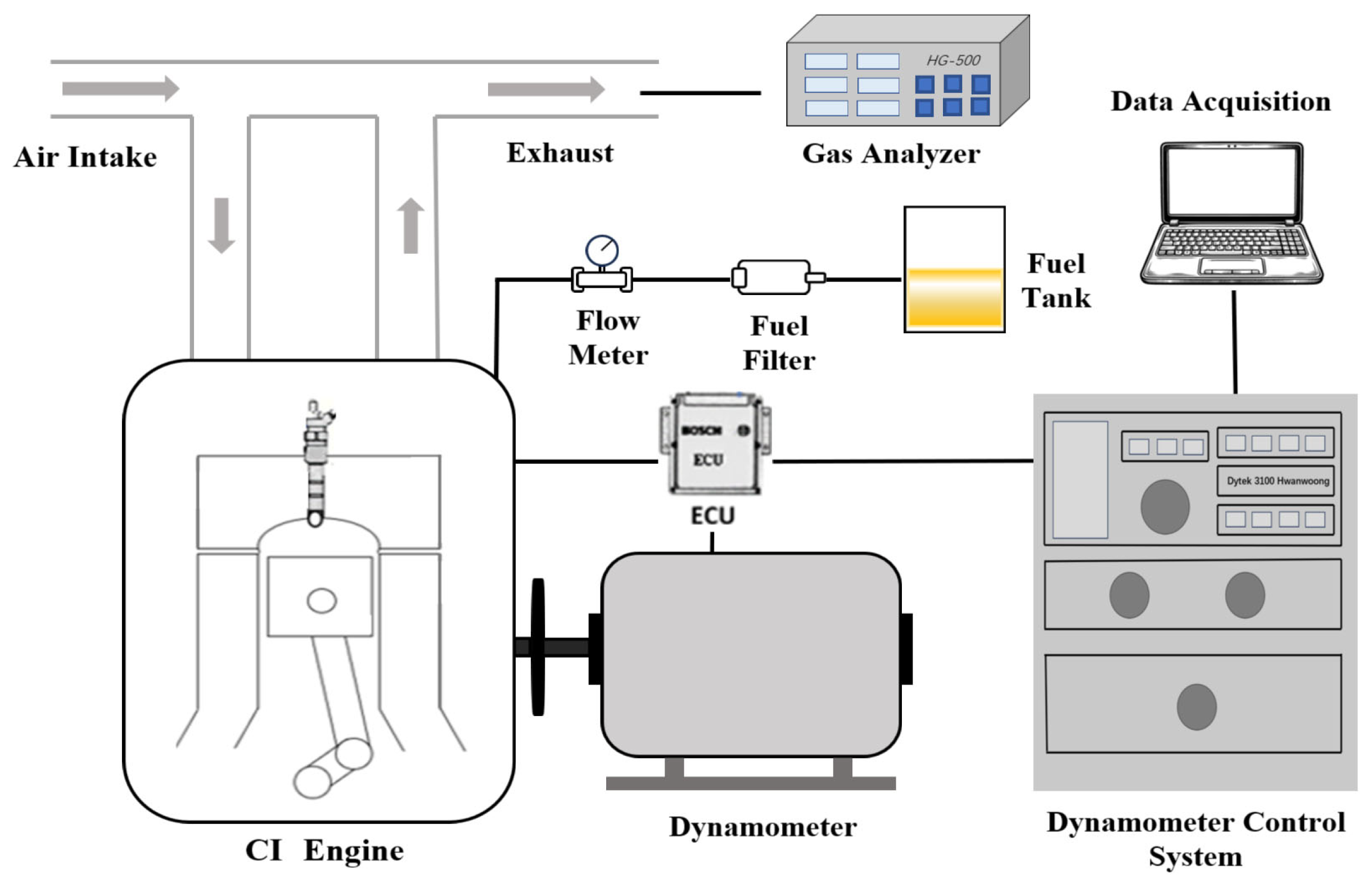
2.3. Experimental Setup
2.4. Gaussian Process Regression
2.5. Combinative Distance-Based Assessment
3. Experimental Results and Model Analysis
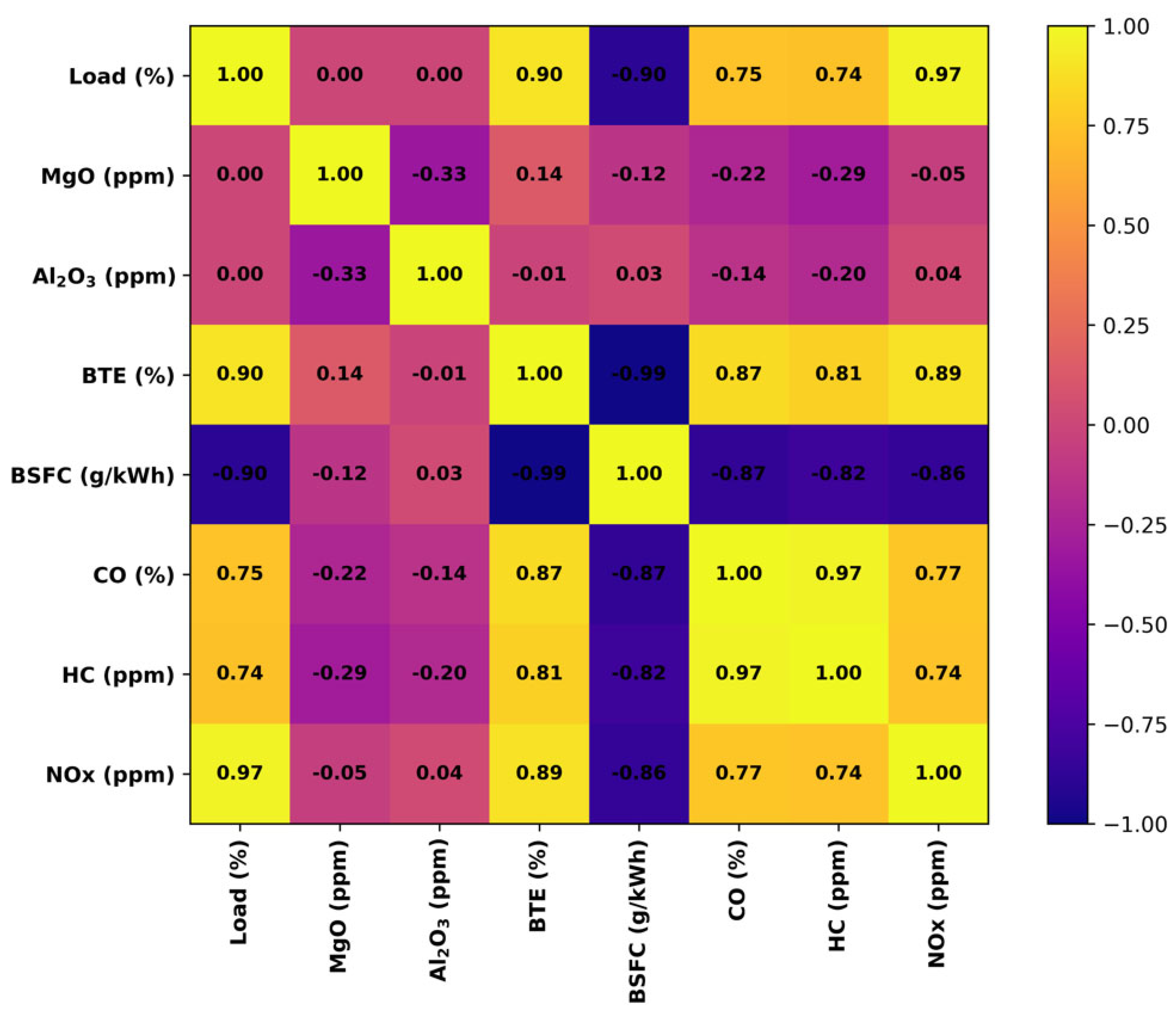
3.1. Correlation Analysis
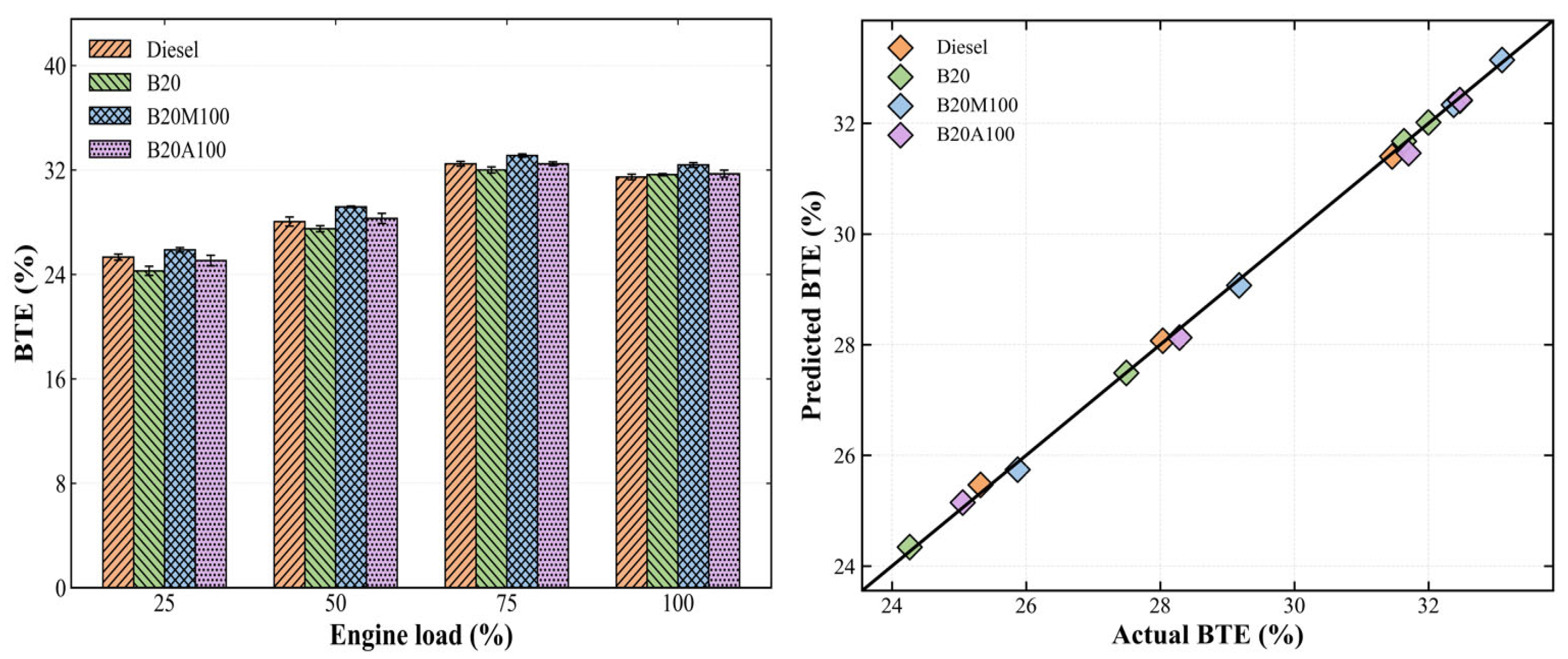
3.2. Brake Thermal Efficiency
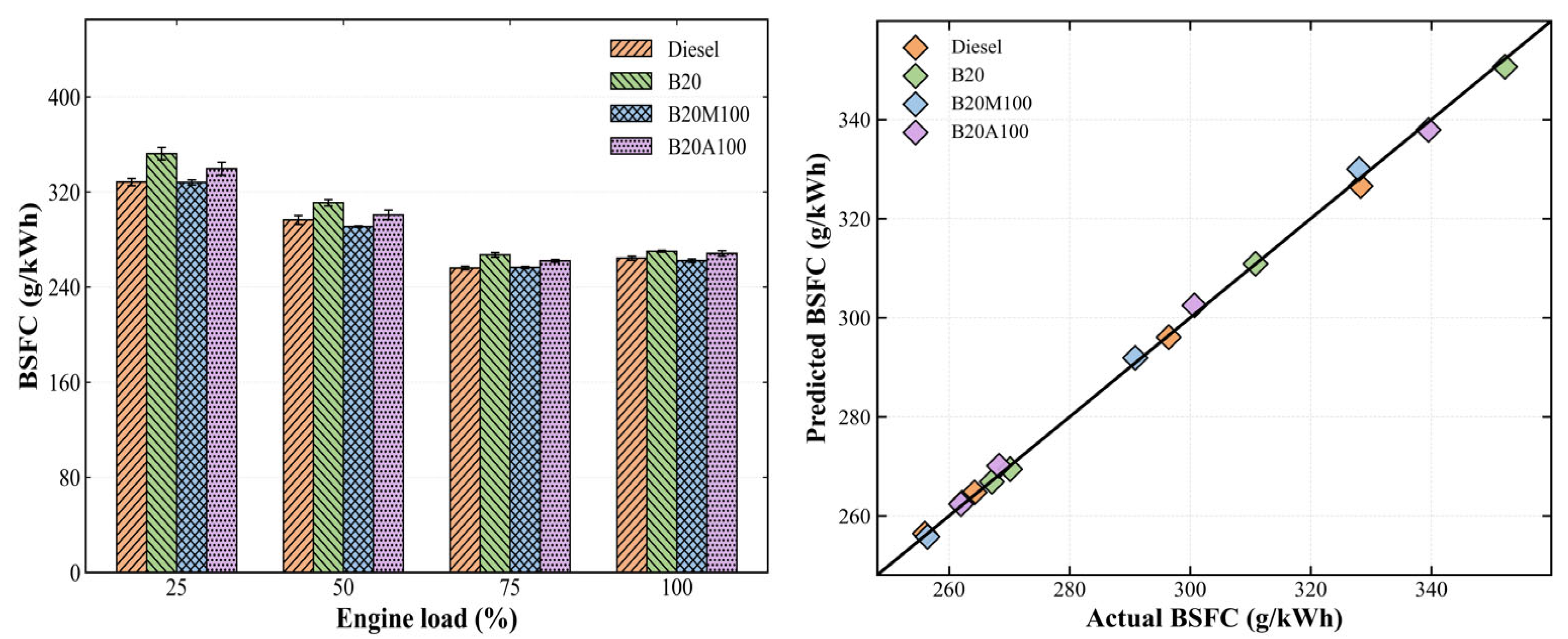
3.3. Brake-Specific Fuel Consumption
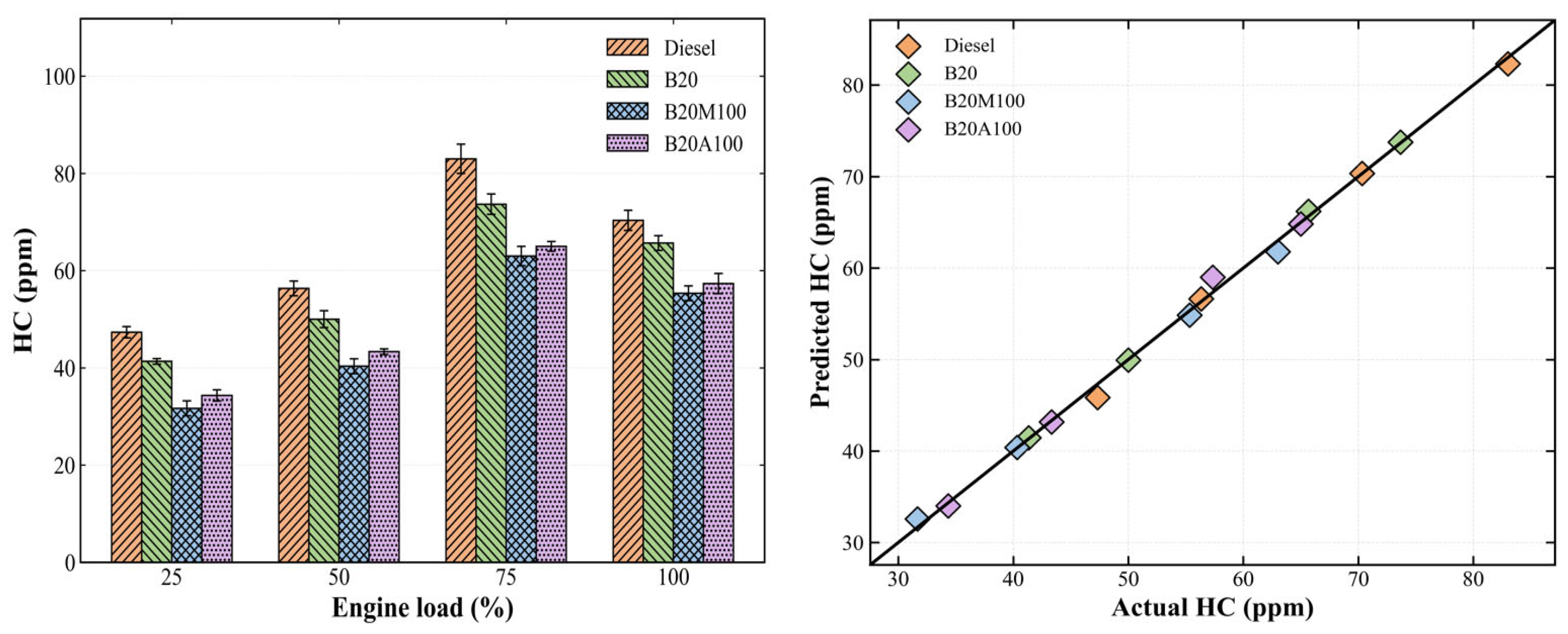
3.4. Hydrocarbons
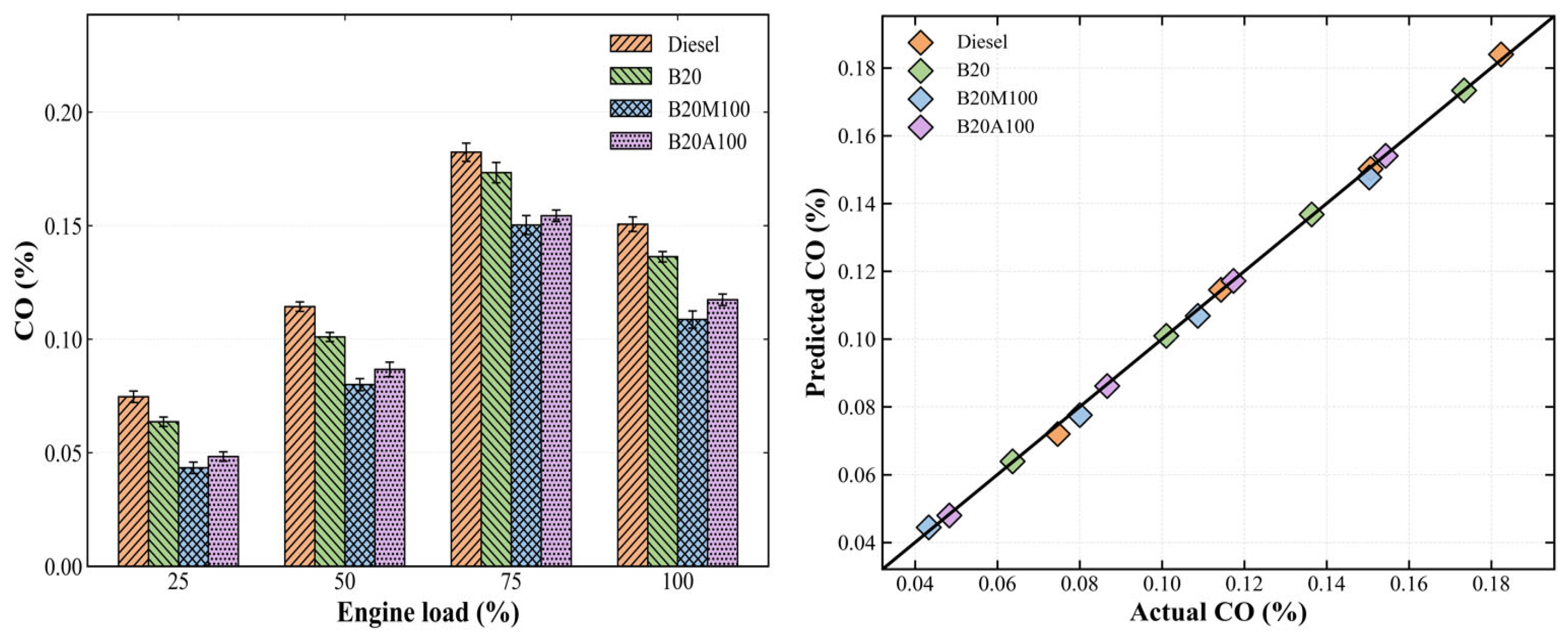
3.5. Carbon Monoxide
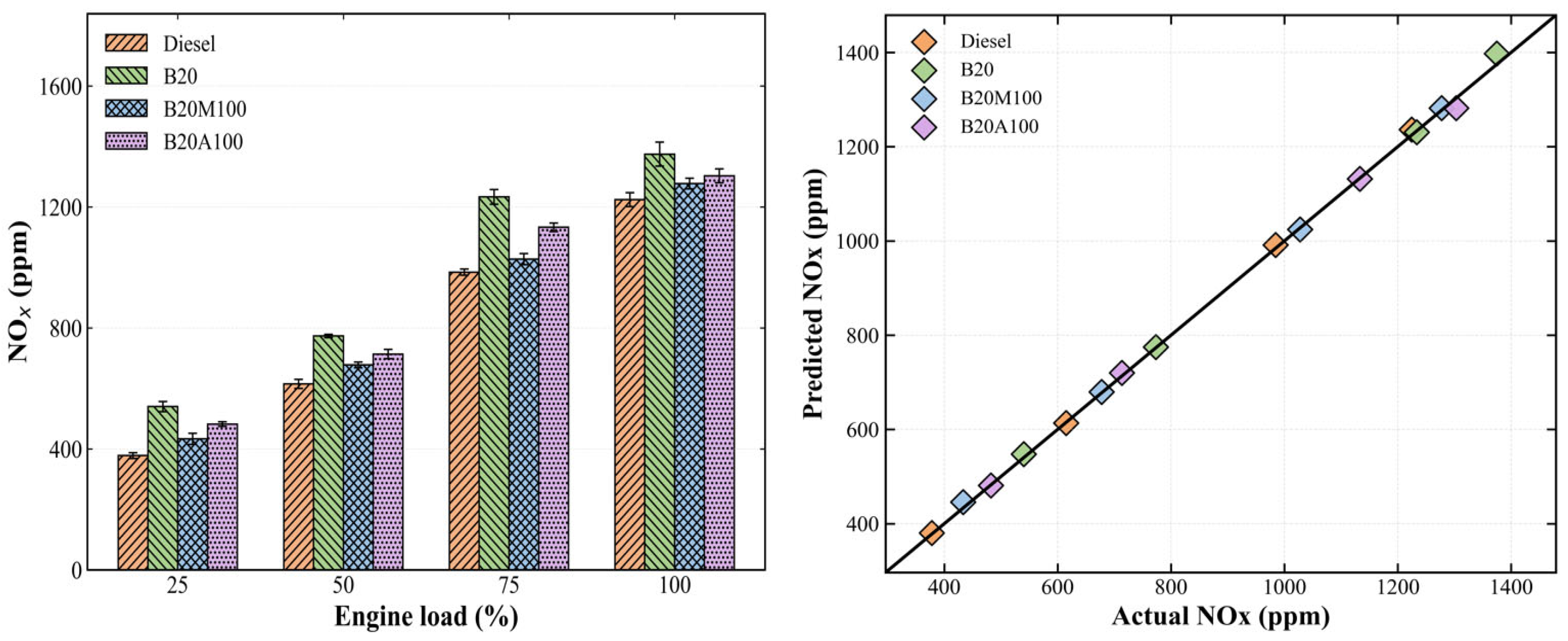
3.6. Nitrogen Oxides
3.7. Evaluation of the GPR Model
3.8. EWM–CODAS Decision Analysis
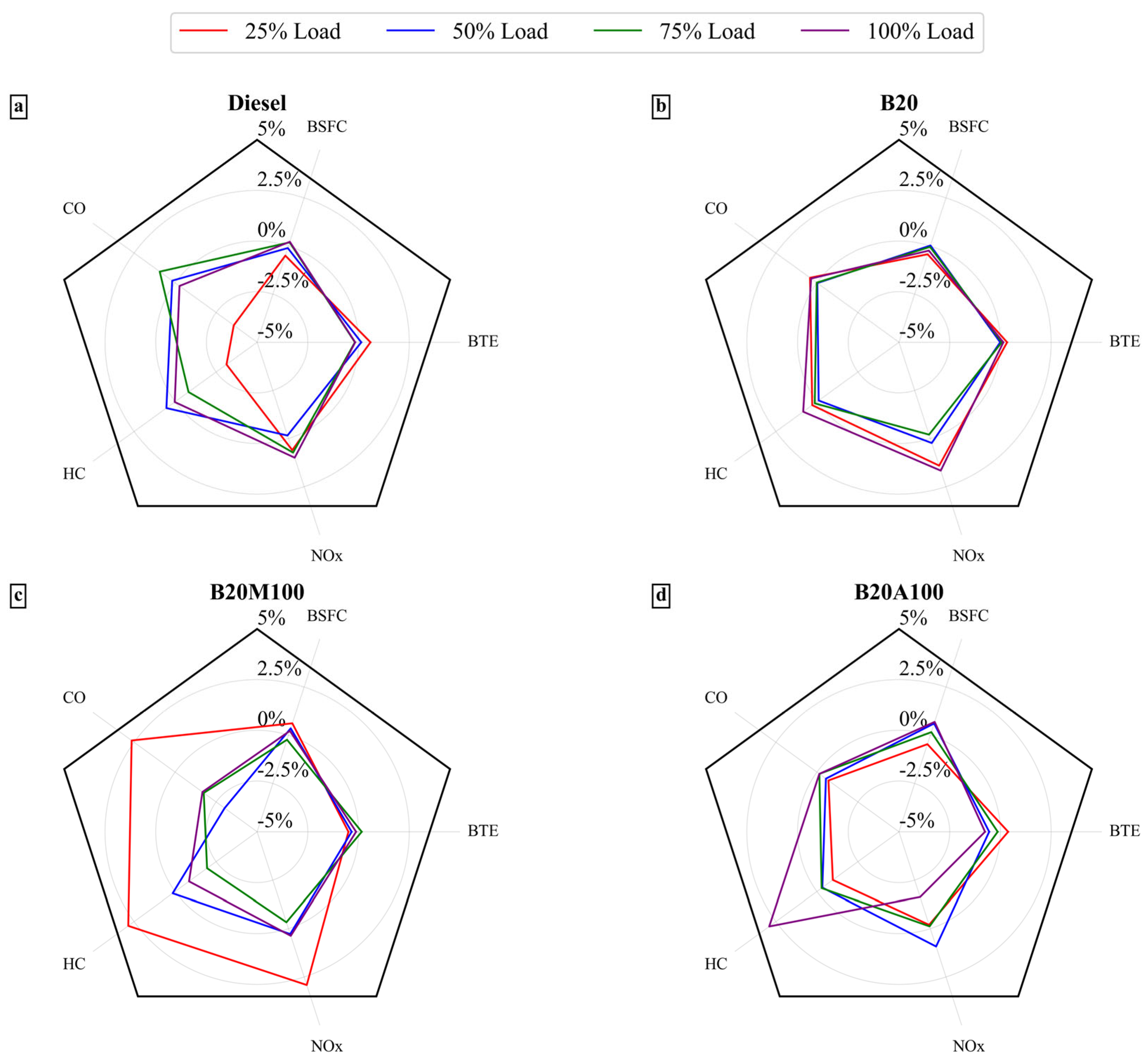
3.9. Integrated Analysis of CODAS Optimization and GPR Prediction
4. Limitations and Future Research Directions
5. Conclusions
- (1)
- Engine load exerted a dominant influence on engine performance and emission characteristics. With increasing engine load, BTE increased significantly, while BSFC gradually decreased. Meanwhile, CO, HC, and NOx emissions generally exhibited increasing trends.
- (2)
- The introduction of nanoparticles effectively improved combustion characteristics. Compared with the B20 fuel, the addition of MgO and Al2O3 nanoparticles resulted in more complete combustion and significantly reduced CO and HC emissions. Among the tested fuels, B20M100 demonstrated superior overall performance under most operating conditions, indicating that MgO possessed greater advantages in promoting combustion reactions.
- (3)
- The developed GPR model accurately predicted engine performance and emission parameters. The test-set R2 values for BTE, BSFC, CO, HC, and NOx reached 0.9880, 0.9865, 0.9872, 0.9761, and 0.9951, respectively, indicating excellent predictive performance.
- (4)
- CODAS analysis based on the GPR prediction results effectively achieved comprehensive multi-response evaluation. B20M100 under the 25% load condition obtained the highest overall assessment score and was identified as the optimal operating condition. Under this condition, the relative errors between the GPR predicted values and the experimental average values were all maintained within 3%, thereby validating the reliability and effectiveness of the proposed approach.
Author Contributions
Funding
Data Availability Statement
Conflicts of Interest
Abbreviations
| CODAS | Combinative Distance Based Assessment |
| GPR | Gaussian Process Regression |
| NaOH | Sodium Hydroxide |
| BTE | Brake Thermal Efficiency |
| BSFC | Brake-Specific Fuel Consumption |
| NOx | Nitrogen Oxide |
| CO | Carbon Monoxide |
| HC | Hydrocarbon |
| CO2 | Carbon Dioxide |
| B20 | 20% Biodiesel + 80% Diesel |
| Al2O3 | Including Aluminum Oxide |
| MgO | Magnesium Oxide |
| PPM | Parts Per Million |
| RMSE | Root Mean Square Error |
| MAE | Mean Absolute Error |
| R2 | Coefficient of Determination |
| EWM | Entropy Weight Method |
References
- Bouighi, H.; Bousbaa, H.; Naima, K.; Ameur, H.; Ahmad, H.; Ozsahin, D.U.; Abdelfattah, W.M. Comparative performance and emission analysis of waste animal fat and palm oil biodiesel in direct injection diesel engines. Sci. Afr. 2026, 32, e03348. [Google Scholar] [CrossRef]
- Wang, J.; Azam, W. Natural resource scarcity, fossil fuel energy consumption, and total greenhouse gas emissions in top emitting countries. Geosci. Front. 2024, 15, 101757. [Google Scholar] [CrossRef]
- Ai, W.; Cho, H.M. NSGA-III-based multi-objective optimization of a diesel–biodiesel engine with isobutanol and ZnO nanoparticles: A comparative evaluation using VIKOR and TOPSIS. Energy 2026, 350, 140273. [Google Scholar] [CrossRef]
- Al-Nussairi, A.K.J.; Ali, A.; Aljaidi, M.; Alzubaidi, Y.T.; Munimathan, A.; Khishe, M. Machine learning-driven performance and emission optimization of cerium oxide nano-enhanced tobacco biodiesel in CI engines. Hybrid Adv. 2026, 12, 100627. [Google Scholar] [CrossRef]
- Kodekal, V.M.; Rajashekhar, C. Development of hybrid DNN-iPOA model for predicting diesel engine performance and emission for biodiesel optimization. Renew. Energy 2026, 261, 125247. [Google Scholar] [CrossRef]
- Şimşek, S.; Güler, K. A green alternative: Engine performance and emission effect analysis of linalool-derived biodiesel with B4C nanoparticles for sustainable fuel solutions. Fuel Process. Technol. 2026, 282, 108401. [Google Scholar] [CrossRef]
- Thiruselvam, K.; Murugapoopathi, S.; Ramachandran, T.; Amesho, K.T. Hydrogen-enriched palm biodiesel as a potential alternative fuel for diesel engines: Investigating performance and emission characteristics and mitigation strategies for air pollutants. Int. J. Hydrogen Energy 2023, 48, 30974–30984. [Google Scholar] [CrossRef]
- Veza, I.; Zainuddin, Z.; Tamaldin, N.; Idris, M.; Irianto, I.; Fattah, I.R. Effect of palm oil biodiesel blends (B10 and B20) on physical and mechanical properties of nitrile rubber elastomer. Results Eng. 2022, 16, 100787. [Google Scholar] [CrossRef]
- Milojević, S.; Stopka, O.; Kontrec, N.; Orynycz, O.; Hlatká, M.; Radojković, M.; Stojanović, B. Analytical characterization of thermal efficiency and emissions from a diesel engine using diesel and biodiesel and its significance for logistics management. Processes 2025, 13, 2124. [Google Scholar] [CrossRef]
- Chow, M.R.; Ooi, J.B.; Chee, K.M.; Pun, C.H.; Tran, M.-V.; Leong, J.C.K.; Lim, S. Effects of ethanol on the evaporation and burning characteristics of palm-oil based biodiesel droplet. J. Energy Inst. 2021, 98, 35–43. [Google Scholar] [CrossRef]
- Ooi, J.B.; Kau, C.C.; Manoharan, D.N.; Wang, X.; Tran, M.-V.; Hung, Y.M. Effects of multi-walled carbon nanotubes on the combustion, performance, and emission characteristics of a single-cylinder diesel engine fueled with palm-oil biodiesel-diesel blend. Energy 2023, 281, 128350. [Google Scholar] [CrossRef]
- Modi, V.; Rampure, P.B.; Babbar, A.; Kumar, R.; Nagaral, M.; Bhowmik, A.; Kumar, R.; Pandey, S.; Hasnain, S.M.; Ali, M.M.; et al. Nanoparticle-enhanced biodiesel blends: A comprehensive review on improving engine performance and emissions. Mater. Sci. Energy Technol. 2024, 7, 257–273. [Google Scholar] [CrossRef]
- Prabakaran, B.; Udhoji, A. Experimental investigation into effects of addition of zinc oxide on performance, combustion and emission characteristics of diesel-biodiesel-ethanol blends in CI engine. Alex. Eng. J. 2016, 55, 3355–3362. [Google Scholar] [CrossRef]
- Dey, S.; Reang, N.M.; Deb, M.; Das, P.K. Experimental investigation on combustion-performance-emission characteristics of nanoparticles added biodiesel blends and tribological behavior of contaminated lubricant in a diesel engine. Energy Convers. Manag. 2021, 244, 114508. [Google Scholar] [CrossRef]
- Kumar, A.M.; Nathan, K.S.; Manickam, S.; Gupta, D.; Vikneswaran, M.; Dhamodaran, G.; Seetharaman, S.; Thiagarajan, S.; Al-Ansari, M.M. Effect of TiO2 nanoparticles and hydrogen on the combustion, performance, and emissions of madhuca biodiesel in a diesel engine. Int. J. Hydrogen Energy 2025, 143, 635–649. [Google Scholar] [CrossRef]
- Ismael, M.A.; Silmyi, I.R.; Mulk, W.U.; El-Adawy, M.; Aziz, A.R.A.; Babiker, M.; Nemitallah, M.A. The role of nanoparticles in combustion improvement: Performance and emission analysis of a DI diesel engine fuelled with water-in-biodiesel emulsions enhanced by mono and hybrid nanoparticles. Appl. Therm. Eng. 2025, 274, 126755. [Google Scholar] [CrossRef]
- Nachippan, N.M.; Balaji, V.; Subbiah, G.; Singh, R.P.; K, K.P.; Smerat, A. Performance and emission analysis of cotton seed biodiesel enhanced with nano-MgO as a sustainable fuel in a compression ignition engine. Results Eng. 2025, 27, 106738. [Google Scholar] [CrossRef]
- Arun, S.; Yatish, K.; Tigari, G.; Prashanth, G.; Lalithamba, H.; Pramoda, K. Bio-based plant-extract facilitated MgO nanocatalyst for the transformation of agriculture waste derived-feedstock into biodiesel and as nano-additive in diesel engine. Renew. Energy 2026, 256, 124218. [Google Scholar] [CrossRef]
- Khidr, M.E.; Megahed, T.F.; Ookawara, S.; Elwardany, A.E. Effects of aluminum and copper oxides nanoparticles as fuel additives on diesel engine operating characteristics. Atmos. Pollut. Res. 2023, 14, 101721. [Google Scholar] [CrossRef]
- Rahman, M.; Kabir, S.; Mustafi, N.N.; Robin, H.M. Effects of CeO2 nanoparticle additive in sesame seed biodiesel-diesel fuel blends on the performance of a diesel engine and emissions. Next Res. 2026, 4, 101201. [Google Scholar] [CrossRef]
- Ghanati, S.G.; Doğan, B.; Yeşilyurt, M.K.; Yaman, H. Performance and emissions analysis of a diesel engine fueled with waste cooking oil biodiesel–diesel blends enhanced by SiO2 and TiO2 nanoparticles: An experimental and numerical study. Fuel 2026, 407, 137259. [Google Scholar] [CrossRef]
- Megiso, T.D.; Ancha, V.R.; Nallamothu, R.B. Effects of graphene oxide nanoparticles on the performance and emissions of marine microalgae-derived biodiesel-diesel blends in a diesel engine. Energy Convers. Manag. X 2025, 28, 101259. [Google Scholar] [CrossRef]
- Abishek, M.; Kachhap, S.; Rajak, U.; Verma, T.N.; Singh, T.S.; Shaik, S.; Cuce, E.; Alwetaishi, M. Alumina and titanium nanoparticles to diesel–Guizotia abyssinica (L.) biodiesel blends on MFVCR engine performance and emissions. Sustain. Energy Technol. Assess. 2024, 61, 103580. [Google Scholar] [CrossRef]
- Sarma, C.J.; Sharma, P.; Bora, B.J.; Bora, D.K.; Senthilkumar, N.; Balakrishnan, D.; Ayesh, A.I. Improving the combustion and emission performance of a diesel engine powered with mahua biodiesel and TiO2 nanoparticles additive. Alex. Eng. J. 2023, 72, 387–398. [Google Scholar] [CrossRef]
- Liao, J.; Liu, Y.; Wang, H.; He, X.; Huang, Y.; Han, Z.; Fang, J.; Chen, P.; Hu, J. AI-assisted transient emission prediction for diesel engines based on a novel hybrid model combined multiple machine learning algorithms and XGBoost. J. Environ. Chem. Eng. 2025, 13, 119649. [Google Scholar] [CrossRef]
- Guido, C.; Napolitano, P.; Di Domenico, D.; Beatrice, C.; Bozza, F. Lubricant formulation effects on ultra-fine particles emissions from gas fuelled engines: Experimental investigation using machine learning in data analysis. J. Energy Inst. 2026, 126, 102504. [Google Scholar] [CrossRef]
- Cui, Z.; Cheng, X.; Wei, J.; Yang, X. Hydrogen-enriched nano-enhanced waste plastic pyrolysis oil blends: Combustion, emission, and machine learning-based optimization in a dual-fuel diesel engine. Biomass-Bioenergy 2026, 211, 109144. [Google Scholar] [CrossRef]
- Aglietti, F.; Piano, A.; Della Santa, F.; Capra, A.; Centini, M.P.; Rimondi, M.; Millo, F. A novel prior-informed machine learning model for diesel engine emission estimation. Fuel 2026, 407, 137435. [Google Scholar] [CrossRef]
- Shateri, A.; Yang, Z.; Xie, J. Utilizing Artificial intelligence to identify an Optimal Machine learning model for predicting fuel consumption in Diesel engines. Energy AI 2024, 16, 100360. [Google Scholar] [CrossRef]
- Arif, R.; Ahmad, M.; Equbal, A.; Equbal, A.; Pachauri, P.; Ahamad, T.; Parvez, M.; Ahmad, S.; Howari, H.; Yadav, B.; et al. Optimizing diesel engine performance with nano-particle-biodiesel blends: A hybrid priority machine learning and multi-criteria decision-making approach. Results Eng. 2025, 28, 107491. [Google Scholar] [CrossRef]
- Seker, S. A novel interval-valued intuitionistic trapezoidal fuzzy combinative distance-based assessment (CODAS) method. Soft Comput. 2020, 24, 2287–2300. [Google Scholar] [CrossRef]
- Simic, V.; Karagoz, S.; Deveci, M.; Aydin, N. Picture fuzzy extension of the CODAS method for multi-criteria vehicle shredding facility location. Expert Syst. Appl. 2021, 175, 114644. [Google Scholar] [CrossRef]
- Pan, M.; Qiu, Y.; Cao, S.; Sang, H.; Zhou, S.; Ye, Y.; Liu, X.; Guan, W. Fuel injection prediction for a heavy-duty diesel engine based on deep self-encoder Gaussian process regression. Fuel 2025, 399, 135566. [Google Scholar] [CrossRef]
- Chaturvedi, S.; Bhatt, N.; Shah, V.; Patel, D.; Jodhani, K.; Singh, S.K. Spatial multi-criteria decision framework for landfill site selection using AHP and CODAS with sensitivity analysis: A case study of Vadodara. J. Clean. Prod. 2026, 548, 147832. [Google Scholar] [CrossRef]
- Yu, Y.; Yang, Y.; Yu, J.; Wu, S.; Zeng, Q.; Ding, H.; Ma, J.; Duan, Q. An improved FMEA approach based on interval-valued spherical fuzzy sets and CODAS method for LNG tank safety analysis. J. Loss Prev. Process. Ind. 2025, 97, 105679. [Google Scholar] [CrossRef]
- Hassan, Q.H.; Ali, N.S.M.; Alalwan, H.A.; Alminshid, A.H.; Mohammed, M.M. The impact of adding nanoparticles to biodiesel fuel prepared from waste sunflower oil on the performance and emission of diesel engines. Circ. Econ. 2025, 4, 100138. [Google Scholar] [CrossRef]
- Demir, U.; Keskin, M.; Özer, S.; Coskun, G. The effect of adding green synthesized and commercial silver nanoparticles to biodiesel on diesel engine performance and emissions. Case Stud. Therm. Eng. 2025, 67, 105797. [Google Scholar] [CrossRef]
- Anupong, W.; On-Uma, R.; Jutamas, K.; Gavurová, B.; Chinnathambi, A.; Alahmadi, T.A.; Sekar, M.; Brindhadevi, K.; Pugazhendhi, A. Utilization of enriched hydrogen blends in the diesel engine with MgO nanoparticles for effective engine performance and emission control. Fuel 2023, 334, 126552. [Google Scholar] [CrossRef]
- Abishek, M.; Kachhap, S. Sustainable synthesis of copper oxide nanoparticles using Spondias mombin and biodiesel production from Guizotia abyssinica: Engine performance, emission characteristics, and machine learning-based optimization. Fuel 2025, 392, 134804. [Google Scholar] [CrossRef]
- Suhaimi, H.; Adam, A.; Mrwan, A.G.; Abdullah, Z.; Othman, M.F.; Kamaruzzaman, M.K.; Hagos, F.Y. Analysis of combustion characteristics, engine performances and emissions of long-chain alcohol-diesel fuel blends. Fuel 2018, 220, 682–691. [Google Scholar] [CrossRef]
- Savaş, A.; Şener, R.; Uslu, S.; Der, O. Experimental study on performance and emission optimization of MgO nanoparticle-enriched 2nd generation biodiesel: A method for employing nanoparticles to improve cleaner diesel combustion. J. Energy Inst. 2025, 120, 102024. [Google Scholar] [CrossRef]
- Mohan, S.; Dinesha, P. Performance and emissions of biodiesel engine with hydrogen peroxide emulsification and cerium oxide (CeO2) nanoparticle additives. Fuel 2022, 319, 123872. [Google Scholar] [CrossRef]
- Pachiannan, T.; He, Z.; Chinnathambi, A.; Alharbi, S.A.; Brindhadevi, K. Spirulina microalgae slurry as the potential substitute for fossil fuels containing MgO nanoparticles as oxygenated additives. Int. J. Hydrogen Energy 2025, 139, 1133–1140. [Google Scholar] [CrossRef]
- Zhang, X.; Yang, R.; Anburajan, P.; Van Le, Q.; Alsehli, M.; Xia, C.; Brindhadevi, K. Assessment of hydrogen and nanoparticles blended biodiesel on the diesel engine performance and emission characteristics. Fuel 2022, 307, 121780. [Google Scholar] [CrossRef]
- Abdallah, A.M.; Abdel-Rahman, A.A.; Elwardany, A.E. Analysis of the impact of different nanoparticle metal oxides as fuel additives in compression ignition engine performance. Energy Rep. 2020, 6, 99–105. [Google Scholar] [CrossRef]



| Fuel Type | Nanoparticle | Main Effects | Ref. |
|---|---|---|---|
| B30 Cottonseed biodiesel | MgO (70 ppm) | Compared with diesel, BTE increased by up to 2.2%, BSFC decreased by up to 6.8%, while CO, HC, NOx, and smoke emissions were reduced (maximum reduction: 28%). | [17] |
| B20 Butea monosperma biodiesel | MgO (150 ppm) | Compared with B20, B20MgO100 increased BTE by 9.12% and reduced BSFC by 7.98%, while B20MgO150 decreased CO, UHC, and NOx emissions by 14.28%, 17.30%, and 5.08%, respectively. | [18] |
| Diesel | Al2O3 (150 ppm) | Compared with diesel, DA150 improved combustion and engine performance, while reducing HC, CO, and NOx emissions by up to 38%, 25%, and 23%, respectively. | [19] |
| B20 Sesame seed biodiesel | CeO2 (50 ppm) | Compared with diesel, CeO2 nanoparticle-enhanced sesame biodiesel increased BTE by up to 3.3% and reduced HC, CO, and NOx emissions by 30.4%, 20.2%, and 31.6%, respectively. | [20] |
| B20 Waste cooking oil biodiesel | SiO2 (100 ppm) | Compared with diesel, SiO2 and TiO2 nanoparticles improved combustion and fuel economy while reducing CO, HC, and PM emissions; however, both additives resulted in increased NOx emissions. | [21] |
| TiO2 (100 ppm) | |||
| B25 Microalgae biodiesel | Graphene oxide (75 ppm) | Compared with diesel, graphene oxide nanoparticle-enhanced B25 microalgal biodiesel improved BTE and reduced CO, HC, NOx, smoke, and particulate matter emissions. | [22] |
| Parameters | Density (kg/m3) at 15 °C | Calorific Value (MJ/kg) | Kinematic Viscosity (mm2/s) at 40 °C |
|---|---|---|---|
| Diesel | 835.62 | 43.32 | 3.06 |
| B20 | 843.56 | 42.13 | 3.41 |
| B20M100 | 843.73 | 42.42 | 3.47 |
| B20A100 | 843.81 | 42.33 | 3.52 |
| Parameters | Description |
|---|---|
| Engine Type | Single cylinder–water cooled–4 stroke |
| Manufacture | Daedong Ltd., Daegu City, Republic of Korea |
| Type | ND10DE |
| Rated Power Output (kW) | 7.4 |
| Injection Pressure (kg cm−2) | 200 |
| Displacement (cc) | 673 |
| Compression Ratio | 21 |
| Bore (mm) | 95 |
| Stroke Length (mm) | 95 |
| BTE | BSFC | CO | HC | NOx | |
|---|---|---|---|---|---|
| R2 | 0.9880 | 0.9865 | 0.9872 | 0.9761 | 0.9951 |
| MAE | 0.2880 | 3.0875 | 0.0034 | 1.5726 | 19.7049 |
| RMSE | 0.3297 | 3.5741 | 0.0040 | 1.7770 | 24.0801 |
| BTE | BSFC | CO | HC | NOx | |
|---|---|---|---|---|---|
| Target weight (%) | 21.616 | 17.215 | 20.102 | 15.985 | 25.082 |
| Fuel | Load | BTE (%) | BSFC (g/kWh) | CO (%) | HC (ppm) | NOx (ppm) | CODAS | Rank |
|---|---|---|---|---|---|---|---|---|
| Diesel | 25 | 25.47 | 326.59 | 0.072 | 45.85 | 380.28 | 1.79176 | 3 |
| 50 | 28.07 | 296.09 | 0.115 | 56.63 | 613.70 | −0.07296 | 7 | |
| 75 | 32.41 | 256.45 | 0.184 | 82.32 | 991.53 | −0.92883 | 13 | |
| 100 | 31.40 | 264.78 | 0.150 | 70.35 | 1236.51 | −1.01928 | 15 | |
| B20 | 25 | 24.34 | 350.67 | 0.064 | 41.45 | 547.60 | 0.91425 | 4 |
| 50 | 27.49 | 310.90 | 0.101 | 49.95 | 775.12 | −0.46610 | 8 | |
| 75 | 32.02 | 266.93 | 0.173 | 73.76 | 1230.83 | −1.05264 | 16 | |
| 100 | 31.68 | 269.47 | 0.137 | 66.22 | 1397.56 | −1.00447 | 14 | |
| B20M100 | 25 | 25.74 | 330.00 | 0.044 | 32.57 | 445.97 | 2.47173 | 1 |
| 50 | 29.07 | 291.91 | 0.078 | 40.39 | 679.55 | 0.44487 | 5 | |
| 75 | 33.15 | 255.80 | 0.148 | 61.77 | 1024.27 | −0.77458 | 10 | |
| 100 | 32.34 | 262.72 | 0.107 | 54.86 | 1282.06 | −0.68247 | 9 | |
| B20A100 | 25 | 25.15 | 337.91 | 0.048 | 34.00 | 481.05 | 2.06818 | 2 |
| 50 | 28.13 | 302.49 | 0.086 | 43.19 | 719.91 | 0.10118 | 6 | |
| 75 | 32.42 | 262.39 | 0.154 | 64.81 | 1131.65 | −0.92303 | 12 | |
| 100 | 31.46 | 270.13 | 0.117 | 59.00 | 1281.79 | −0.86762 | 11 |
| BTE (%) | BSFC (g/kWh) | CO (%) | HC (ppm) | NOx (ppm) | |
|---|---|---|---|---|---|
| Experiment | 25.87 | 327.98 | 0.043 | 31.67 | 433.33 |
| Prediction | 25.74 | 330 | 0.044 | 32.57 | 445.97 |
| Error (%) | ↓ 0.5 | ↑ 0.62 | ↑ 2.649 | ↑ 2.85 | ↑ 2.92 |
Disclaimer/Publisher’s Note: The statements, opinions and data contained in all publications are solely those of the individual author(s) and contributor(s) and not of MDPI and/or the editor(s). MDPI and/or the editor(s) disclaim responsibility for any injury to people or property resulting from any ideas, methods, instructions or products referred to in the content. |
© 2026 by the authors. Licensee MDPI, Basel, Switzerland. This article is an open access article distributed under the terms and conditions of the Creative Commons Attribution (CC BY) license.
Share and Cite
Zheng, F.; Cho, H.M. Performance and Emission Optimization of Palm Biodiesel Fuels with Dual Nanoparticle Additives Using Gaussian Process Regression and Multi-Criteria Decision Analysis. Energies 2026, 19, 3067. https://doi.org/10.3390/en19133067
Zheng F, Cho HM. Performance and Emission Optimization of Palm Biodiesel Fuels with Dual Nanoparticle Additives Using Gaussian Process Regression and Multi-Criteria Decision Analysis. Energies. 2026; 19(13):3067. https://doi.org/10.3390/en19133067
Chicago/Turabian StyleZheng, Fangyuan, and Haeng Muk Cho. 2026. "Performance and Emission Optimization of Palm Biodiesel Fuels with Dual Nanoparticle Additives Using Gaussian Process Regression and Multi-Criteria Decision Analysis" Energies 19, no. 13: 3067. https://doi.org/10.3390/en19133067
APA StyleZheng, F., & Cho, H. M. (2026). Performance and Emission Optimization of Palm Biodiesel Fuels with Dual Nanoparticle Additives Using Gaussian Process Regression and Multi-Criteria Decision Analysis. Energies, 19(13), 3067. https://doi.org/10.3390/en19133067