1. Introduction
At present, the rapid progress of society has resulted in an increasing need for energy. The swift exhaustion of primary energy resources and the considerable release of pollutants pose immediate problems that must be tackled, highlighting the importance of developing and implementing green energy solutions [
1,
2,
3]. Building energy research is increasingly focused on the use of green energy, among which geothermal energy is an important source of energy for buildings [
4,
5]. Geothermal energy is mainly captured through ground source heat pumps, but their expansion is currently restricted because of the high upfront construction expenses and the considerable land area required [
6]. This accelerates the development of energy pile. An energy pile is a type of foundation pile that also functions as a heat exchanger, and the heat exchange pipe is combined with pile foundation to provide it with ability the to bear load and undergo heat exchange at the same time; energy piles can dissipate heat in summer to achieve the purpose of refrigeration, and achieve the opposite in winter [
7,
8,
9]. In-depth investigations into the thermo-mechanical response of energy piles in saline soils are of significant theoretical and practical importance for expanding the engineering application of this technology in salt-affected regions. Particularly in Western China, high-salinity strata often interact with extreme winter temperatures, creating a complex salt–heave and frost–thaw coupling effect. Researching the serviceability of energy piles in such unique environments not only provides a scientific basis for low-carbon heating and pavement de-icing in tunnels and buildings within cold, arid, and saline regions, but also offers essential support for the long-term stability assessment and precision design of energy piles under extreme operating conditions.
Energy piles have been widely utilized in a multitude of developed countries, becoming a key solution for promoting the decarbonization of the construction and heating industries. In order to optimize the size and quantity of energy piles, a design team from Denmark obtained a new set of algorithms by studying the Rosborg problem [
10]. Researchers from the Netherlands have conducted comprehensive studies and made improvements to tackle the movement of energy piles, resulting from repeated thermal loads under different mechanical load scenarios [
11,
12]. De Moel et al.’s research shows that energy piles also show great opportunities for use in Australia [
5]. In the UK, the construction sector has progressively begun implementing energy piles, with several comprehensive assessments being carried out [
13]. In order to avoid the icing problem of roads and bridges in alpine regions and reduce the occurrence of disaster and accidents, Han et al. in the United States also included energy piles in their scope of consideration and conducted an in-depth assessment of the feasibility of their practical application [
14]. China has undertaken comprehensive analyses regarding the application of geothermal energy in industrial development. It has been asserted that geothermal energy will constitute a critical element in policies designed to mitigate carbon emissions, reflecting robust confidence in the progress in and expansion of geothermal energy technologies [
15]. Despite the rapid advancement of energy piles, several major obstacles remain in their widespread installation and operation, significantly affecting their efficacy.
Firstly, the salt present in saline soil impacts the soil’s thermal properties; for instance, the soil’s thermal conductivity, a key factor, undergoes significant changes due to the presence of salt [
16]. Saline soil in China is typically present in arid, semi-arid, and northern coastal areas. This soil type presents major difficulties for farming and also negatively affects construction projects [
17]. In previous studies, the salinity in the soil was often overlooked [
18], which is unacceptable for energy piles, a type of underground heat transfer system that is highly sensitive to thermal conductivity, as it impacts their design and application. Furthermore, the heat exchange capacity of a cluster of energy piles is affected by several factors, such as the distance between the piles [
19], the impact of the heat exchanger loop design on heat transfer within the energy piles [
20], and the velocity of the circulating fluid [
21], among others. Additionally, the thermal interaction between piles in saline soil should also be considered [
22,
23].
With the continuous in-depth research in the field of saline soil and the increasingly urgent need for theoretical innovation and technological breakthroughs in practical applications, some researchers have focused on research directions closely related to the development of this field and carried out corresponding scientific research activities. By using scientific research methods and rigorous experimental design, they try to explore key information and reveal internal laws, laying the foundation for subsequent research and practice. Liu et al. used laboratory models to study the salt transport of saline soils (including silty loam and silty clay) in coastal areas of China, and to understand the mechanism of salt evaporation and groundwater flow transport in soil [
24]. Wang et al. investigated the spatial differences in coastal saline soil salinity within the Yellow River Delta basin, analyzing scales from micro to macro through field soil sampling [
25]. The findings indicated that soil salinity levels were high and differed significantly among various soil layers, with salt concentration rising as depth increased, while the variation became less pronounced. Sani et al. found that applying excessive heat flux to the pile will cause the surrounding soil to dry, thereby reducing the thermal conductivity and the performance of the overall ground source heat pump system [
26]; however, there is a lack of research on salinity in soil. The research carried out by Ju et al. demonstrated that both the salt concentration and the type of salt in the soil have a significant impact on the soil’s heat transfer characteristics [
17], but their experiment did not investigate the heat transfer efficiency of energy piles in saline soil. Overall, these studies are inadequate for investigating heat transfer in pile groups within saline soil. The majority of the articles mentioned above focus on examining how varying salt concentrations affect the heat transfer of energy piles, while overlooking the impact of the pile’s own specifications on heat exchange. Therefore, our study focuses on the diameter and layout of piles, making the findings more relevant to the practical use of energy piles in engineering projects. Simultaneously, we examined the thermal interaction among pile groups and investigated how varying pile spacing affects these phenomena [
27].
Despite the existing research on saline–alkali soils, a dedicated feasibility analysis for energy piles in such regions remains imperative. The primary challenge lies in the high salinity, as corrosive ions necessitate specialized cementitious materials to ensure long-term structural integrity. It should be noted that in engineering practice, pile dimensions are primarily governed by structural load-bearing requirements; the present study focuses exclusively on thermal performance under saline soil conditions. Thermally, the operational temperature fluctuations within saline soils necessitate a detailed understanding of thermophysical responses. While previous studies often integrate anti-corrosion engineering with complex thermal–hydro-mechanical (THM) frameworks to address structural reliability, this study adopts a simplified approach. We focus specifically on the purely thermophysical aspects of energy pile performance. Consequently, applying this technology in saline–alkali environments requires careful consideration of how chemical composition affects thermal properties. Investigations are being conducted to promote the utilization of energy piles in saline soil by analyzing the thermal transfer characteristics of pile clusters under varying conditions. This entails examining the thermal exchange efficiency and evaluating the influence of key thermophysical parameters (e.g., thermal conductivity and specific heat) on system performance. The findings aim to offer insights into the thermal design of energy piles in saline regions, aiding the transition to low-carbon energy utilization in the building industry.
4. Simulation of Heat Transfer in Energy Group Piles of Saline Soils
This section employed a configuration of nine piles organized in a 3 × 3 arrangement to precisely simulate the operational circumstances of the energy-pile group while investigating heat transfer in saline soil. The model consists of the energetic pile group, the surrounding soil, and the connected piping system.
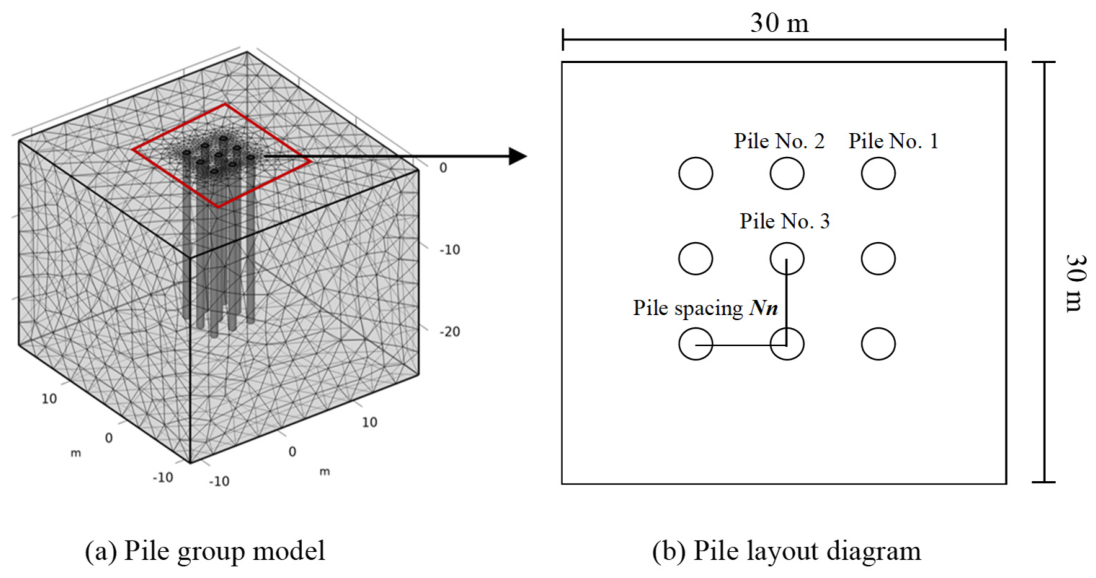
The geometric model employed in the simulation corresponds with the validation model described in
Section 3, as depicted in
Figure 2. The thermal transfer properties of the energy group pile under different salinity levels were examined by simulating the heat transfer dynamics of the saline soil source pile over a 30-day period [
36].
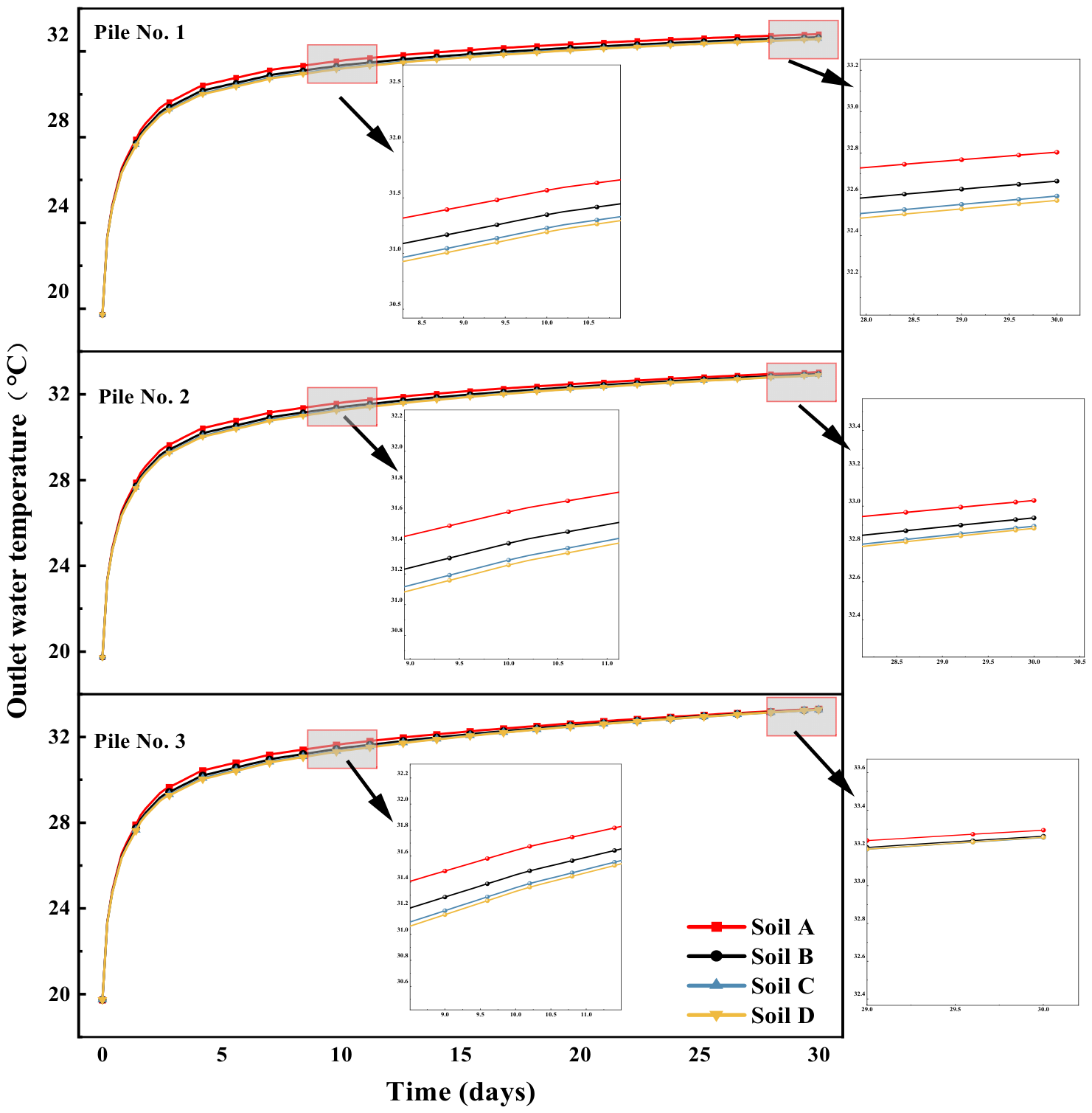
Figure 5 depicts the effluent temperature data for the three piles at varied salinity levels. The temperature variances among the three piles reached their maximum around day 10. After this point, the thermal interference effect within the group of piles enhances heat accumulation, resulting in the effluent temperatures of the three piles becoming consistent across all salinity levels. Taking the heat exchange of the pile No. 3 of the central pile on the 10th day as an example, the temperature difference in the effluent of soil A and soil B, C and D is 0.22 °C, 0.30 °C and 0.32 °C respectively, and on the 30th day, the temperature difference drops to 0.03 °C, 0.04 °C and 0.04 °C, mainly because the central pile received serious thermal interference, so its heat accumulation phenomenon reached its peak, and the heat was close to the limit value, which seriously reduced the heat exchange rate of the energy-group pile.
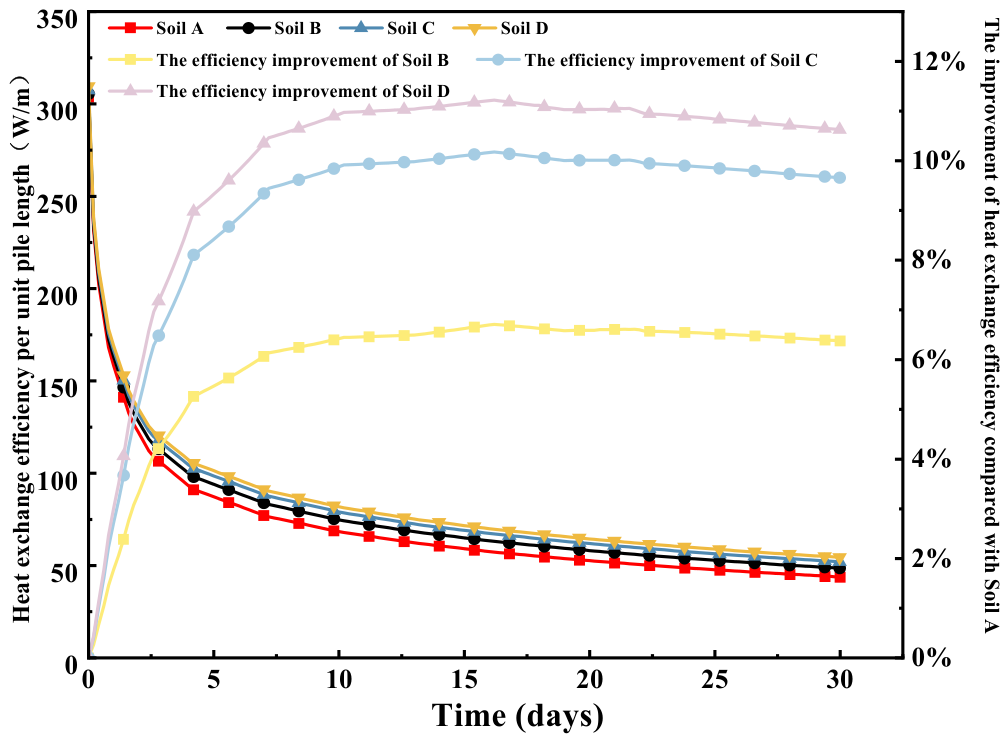
Figure 6,
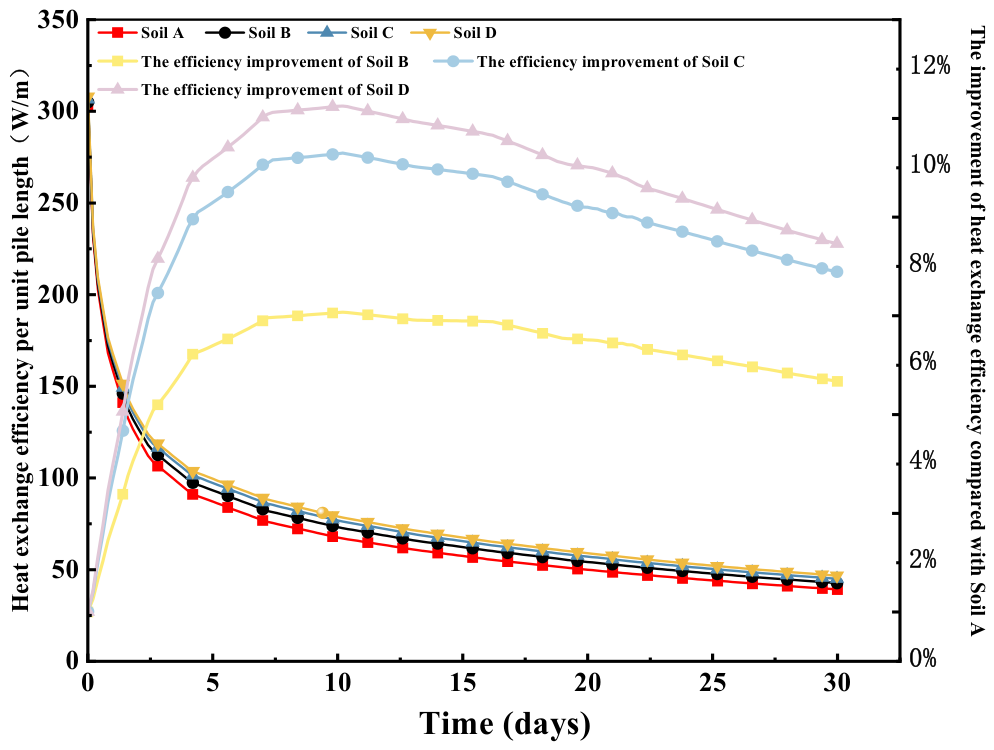
Figure 7 and
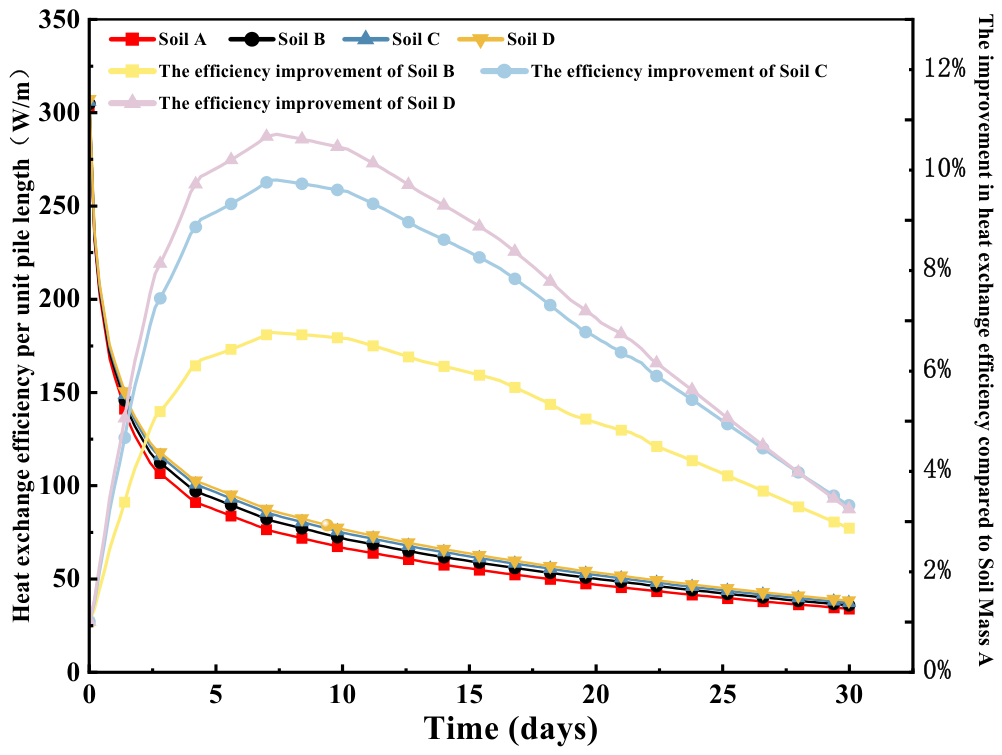
Figure 8 display the heat transfer rate per unit length for the three piles, along with the enhancement in the heat transfer performance of each soil type compared to non-saline soil. The thermal exchange efficiency of saline soil markedly surpasses that of non-saline soil. The heat transfer performance of saline soils B, C, and D from pile No. 1 of the corner pile is markedly superior to that of non-saline soil A, achieving maximum values of 6.71%, 10.18%, and 11.21%, respectively. Continuous heat exchange remains at 6.37%, 9.66%, and 10.63% even after 30 days of substantial elevation. In the same timeframe, the heat exchange efficiency of the salt-impacted soil at pile No. 2 and pile No. 3 was just 4.67%, 6.89%, and 7.46%, and 1.87%, 2.32%, and 2.24%, respectively, when contrasted with non-saline soil. This signifies that the thermal disruption at pile No. 3 in the center is the most pronounced.
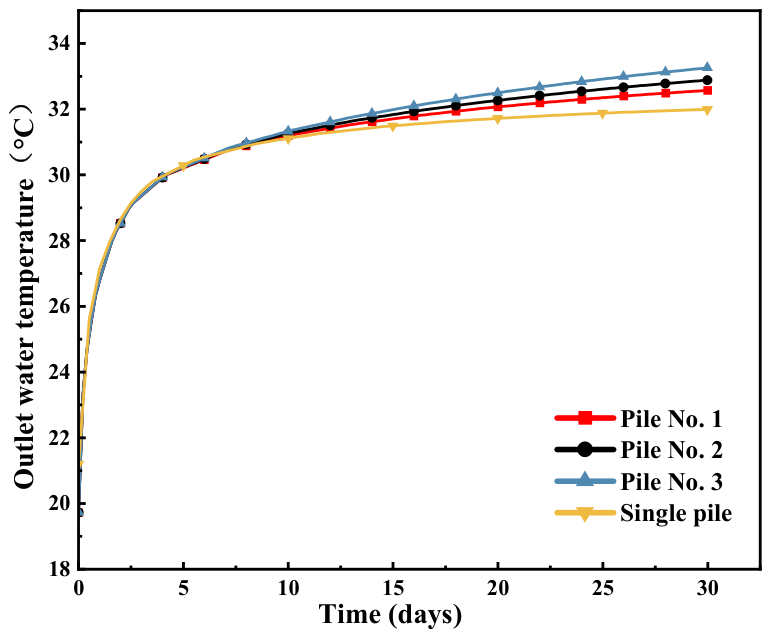
Figure 9 presents a comparison of effluent temperatures between an individual energy pile and a cluster of piles in saline soil D. The data indicates that in the initial 10 days of the model’s operation, the temperature variations among the four piles are negligible, suggesting that thermal interference within the pile group is small during this timeframe. After the 10th day, the water temperature in the pile group escalates more swiftly than in the single pile, owing to the thermal interference effect. Pile No. 3 experiences the highest temperature increase due to its central position within the group, rendering it most susceptible to thermal interference. On the 30th day, the temperature differential between pile No. 3 and the solitary pile is 1.26 °C.
Figure 9 illustrates that within the pile group, corner pile No. 1 exhibits the minimal thermal interference, succeeded by side pile No. 2, whereas center pile No. 3 is the most affected.
5. Parameter Analysis of Heat Transfer Performance of Pile Groups
There is a difference between the heat exchange process of energy group piles and energy monopiles; this is because of the thermal interference effect that exists in the energy-group pile. The purpose of parameter analysis, unlike the energy monopile, is to improve the heat exchange capacity of energy monopiles, and parameter analysis of the energy group pile mainly aims to weaken the thermal interference effect between energy piles. In addition, the heat transfer ability of the energy group pile can be affected by multiple factors in saline soil, and may differ from the situation of a single pile; therefore, the parameter factors that need to be studied in the saline soil of the group pile are different from that of the single pile. The parameter analysis technique used the effluent temperature and the heat transfer rate per unit length of the pile to evaluate the influence of diverse parameters on the heat transfer efficacy of energy group piles. The multi-factor analysis of energy group piles in salty soil, using saline soil C as a case study, essentially encompasses the following characteristics [
37]:
- (1)
The diameter of the pile group;
- (2)
The arrangement of the group piles;
- (3)
The spacing of group piles;
- (4)
The quantity of piles within the group.
5.1. Pile Diameter
The diameter of the pile significantly influences the thermal exchange of the energy pile [
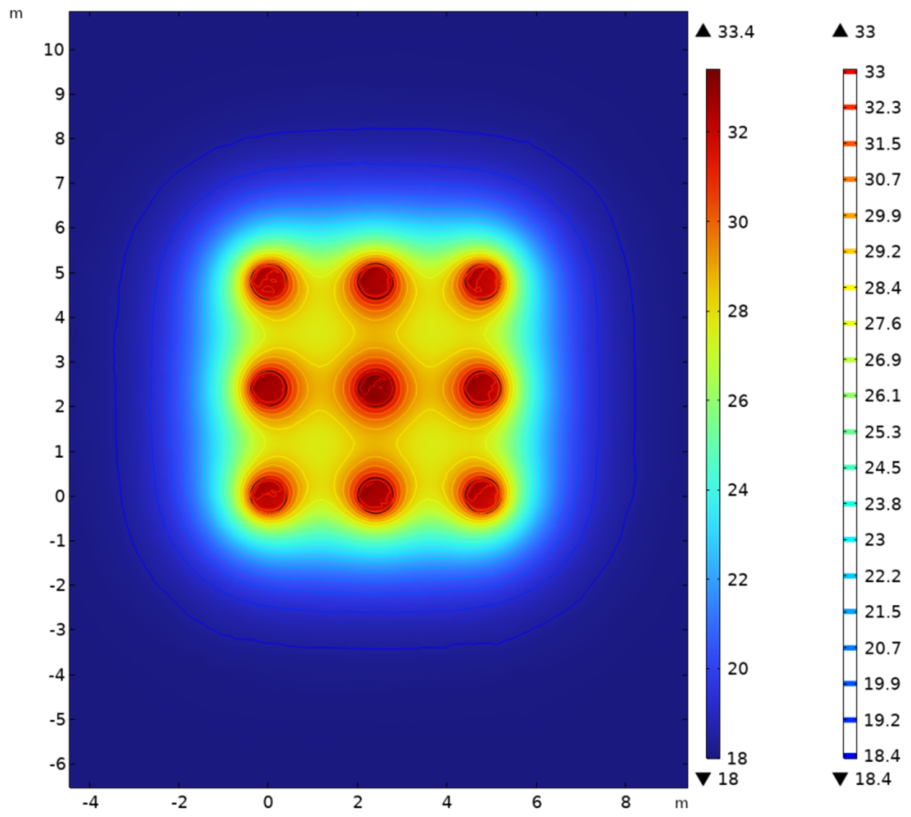
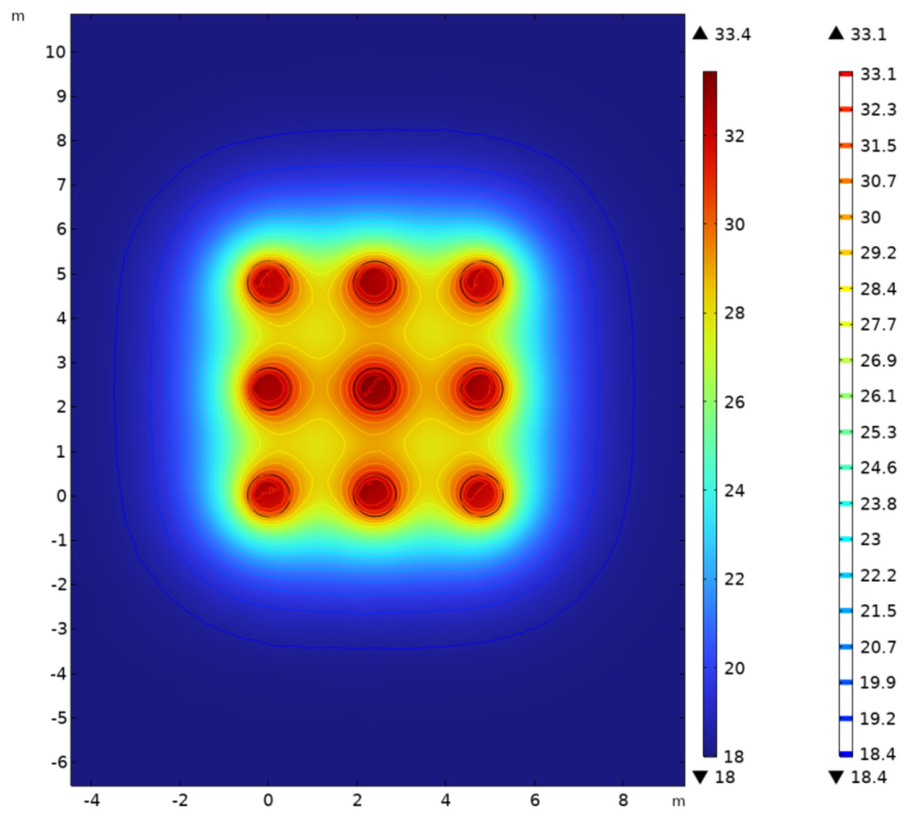
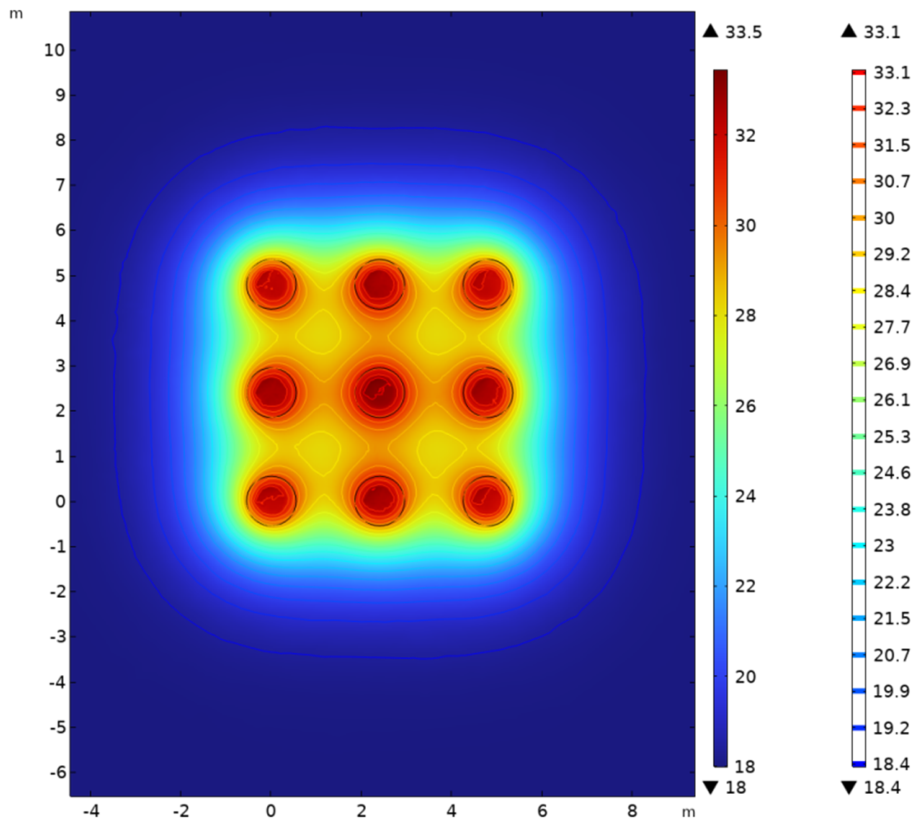
38]. Variations in pile diameter directly alter the heat dissipation area between the energy pile (and the pile group) and the surrounding soil, thereby accelerating or decelerating the rate of heat transfer from the pile to its environment. By maintaining all other parameters through the control variable method, the thermal performance of energy pile groups with four distinct diameters (0.8 m, 0.96 m, 1.1 m, and 1.2 m) in saline soil C was simulated over a continuous 30-day period. The outcomes were subsequently compared based on the outlet temperature, the temperature contour map, and the heat transfer rate per unit length of the pile.
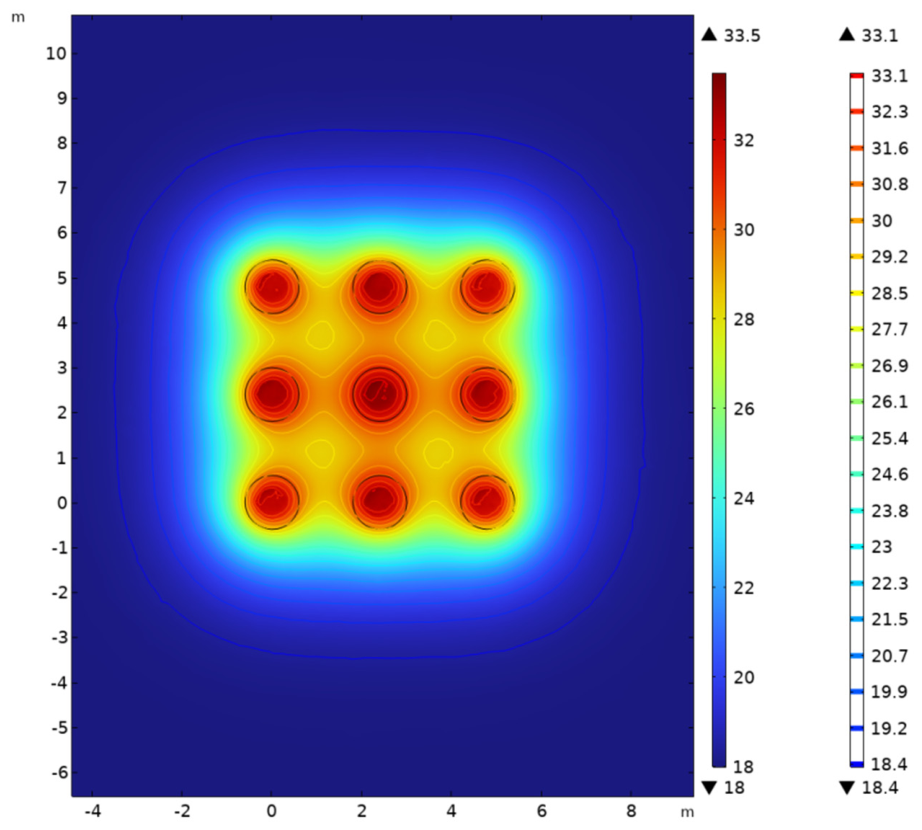
Cross-sections of pile diameters at a depth of 15 m after 30 days of model operation are presented in
Figure 10,
Figure 11,
Figure 12 and
Figure 13. As the pile diameter increases from 0.8 m to 1.2 m, the maximum temperature remains nearly unchanged, whereas the extent of the high-temperature zone (shaded in red) progressively expands. This observation suggests that a larger pile diameter enlarges the heat diffusion area of the pile body, thereby modestly enhancing the heat transfer performance of energy pile groups. The temperature contour maps employ two legends: the left legend denotes the temperature distribution within the pile, and the right legend corresponds to the temperature distribution in the surrounding soil.
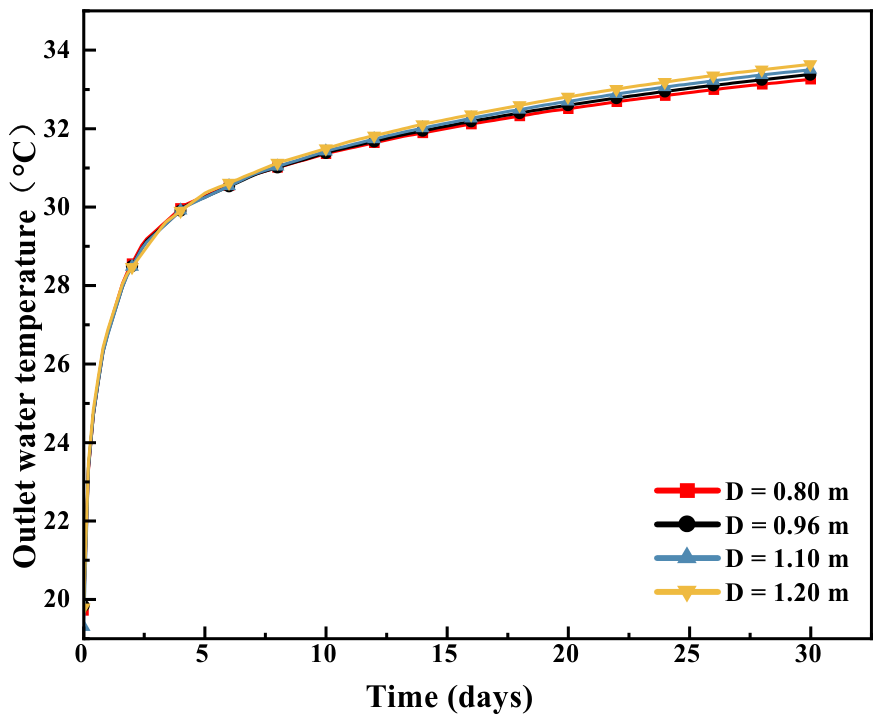
Figure 14 illustrates the temporal variations in output water temperature for various pile diameters, using pile No. 3 as a reference. The findings demonstrate that there is no substantial difference in water temperature across the four diameters. From days 2 to 6, the water temperature of the 1.2 m diameter pile is marginally lower, exhibiting a temperature differential of approximately 0.4 °C in comparison to the 0.8 m diameter pile. However, due to the thermal interference effect, the benefit of a larger heat exchange area from a bigger pile diameter gradually diminishes. By the time the model reaches 30 days, this advantage is effectively neutralized. The difference in outlet temperature between the four pile diameters is almost negligible. In sum, because the thermal interference effect of pile group has an extremely significant influence on pile group heat exchange, the heat exchange advantage brought by pile diameter is almost negligible (pile spacing remains unchanged). When the energy group pile is in continuous operation, pile diameter can be considered last in the pile group design.
5.2. Pile Spacing
The spacing of piles significantly affects the heat transmission efficiency of energy group piles in saline soil. To assess its influence, various pile spacings were established while maintaining other factors constant through the control variable approach. Pile spacings (Nn) were established at 3D, 4D, 5D, and 6D, with D being the diameter of the energy pile. Temperature data of the effluent and heat transfer rates for Pile No. 1, Pile No. 2, and Pile No. 3 were gathered for comparative analysis.
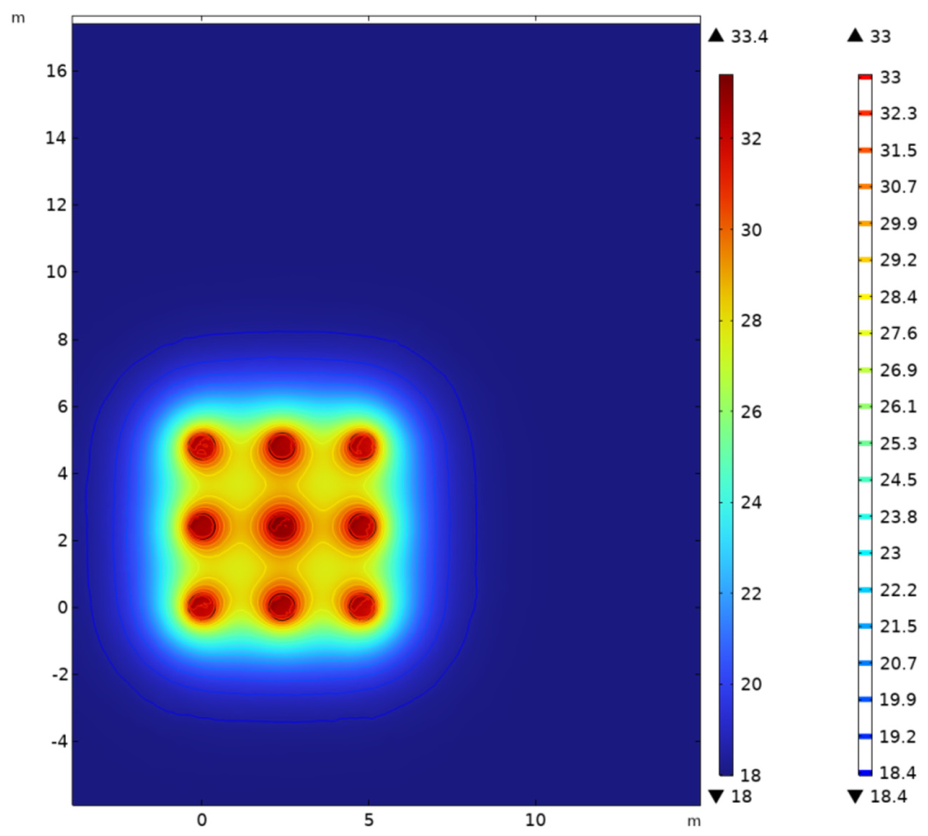
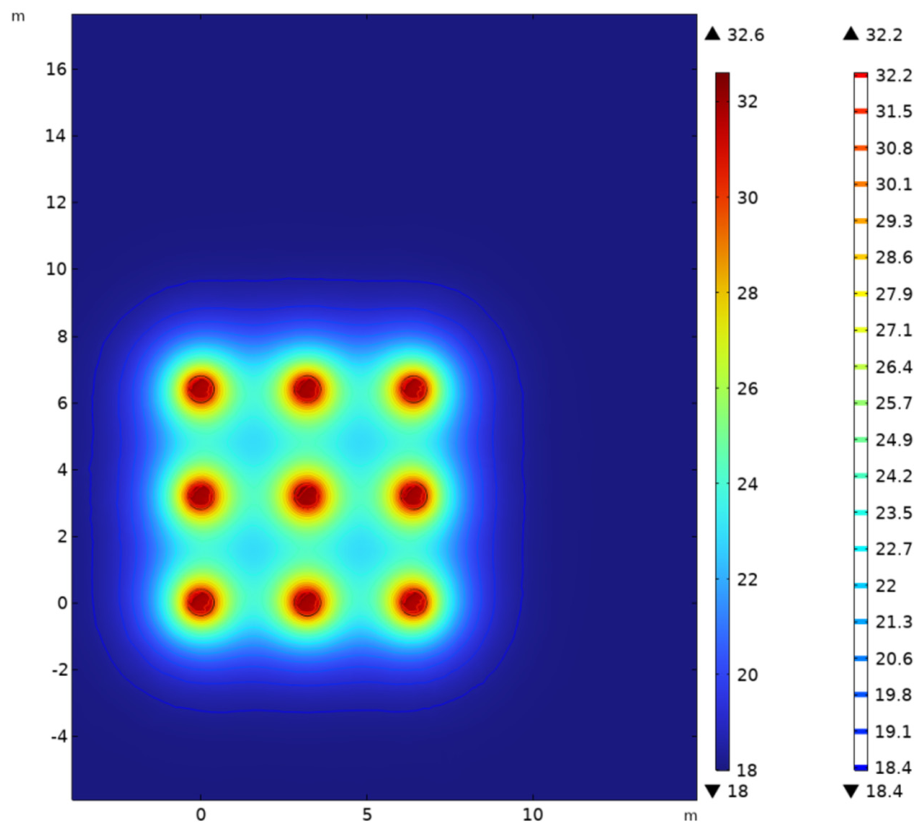
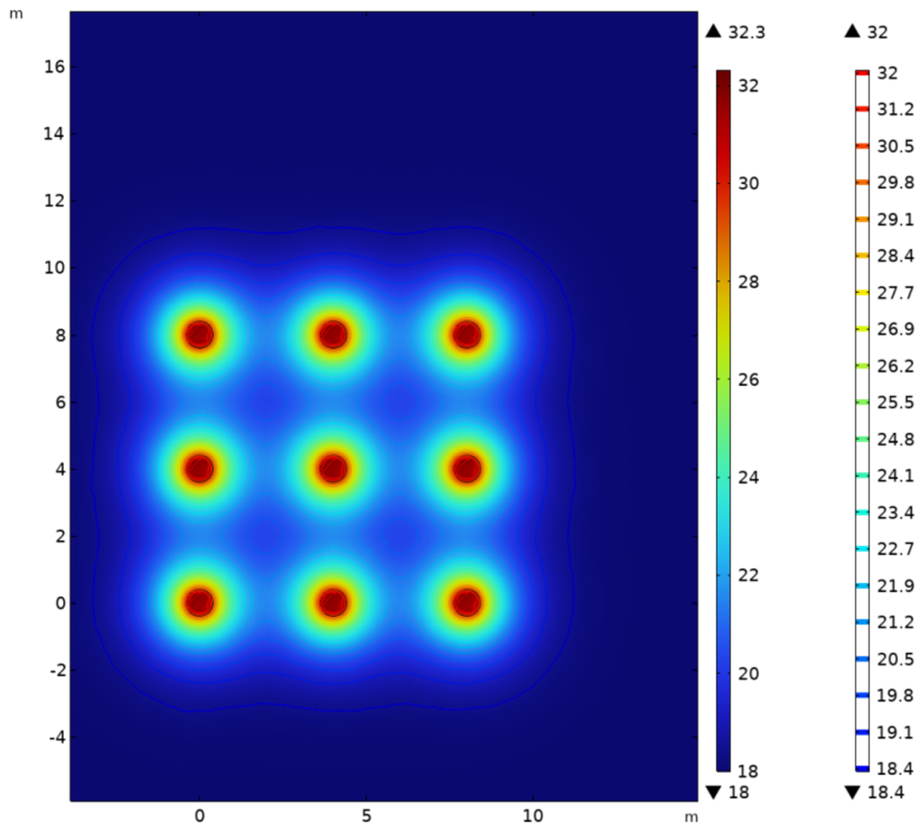
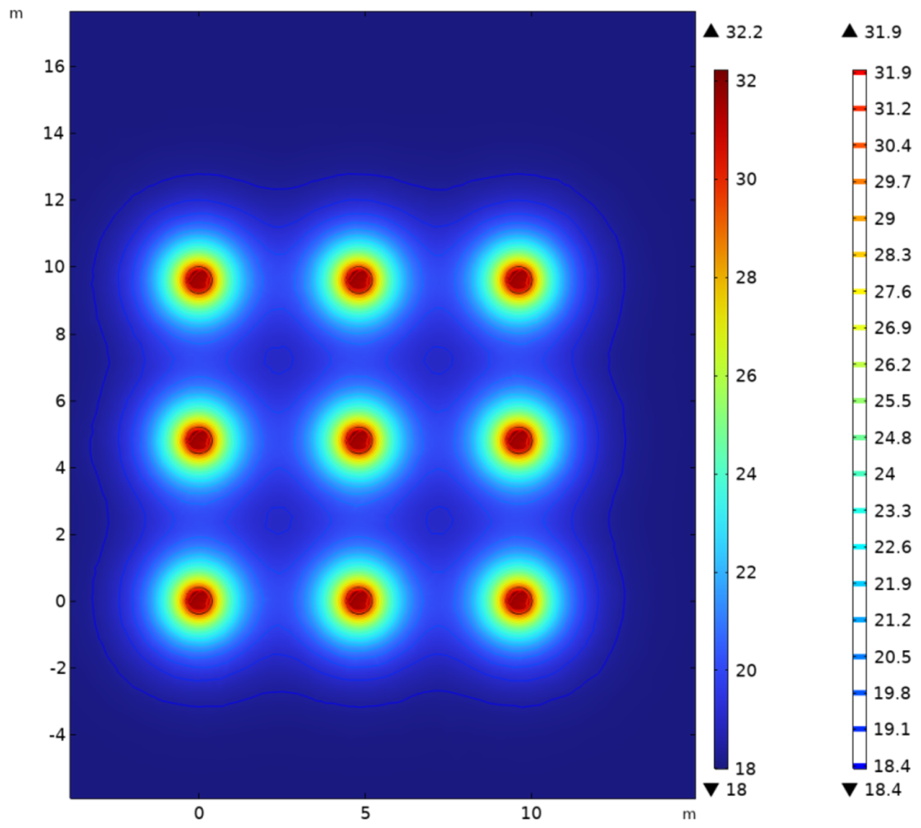
Cross-sections at a depth of 15 m were extracted to examine the temperature-field contour maps for different pile spacings after 30 days of operation, as shown in
Figure 15,
Figure 16,
Figure 17 and
Figure 18. At the smallest spacing, high-temperature contours already cover the entire model after 30 days, and the temperature of the whole pile group is very high. Consequently, thermal interference among the piles is severe, which is unfavorable for sustained heat exchange by the heat-exchange pipes. With a spacing of 4D, some mutual thermal interference among the piles still exists, but it is less pronounced than that observed at 3D. Starting from the 5D spacing in
Figure 17, the temperature between pile bodies remains stable; although the isotherms still merge, the thermal interference indicated by the contours is relatively weak. At a spacing of 6D, no obvious thermal interference is observed, and each individual pile can exchange heat effectively.
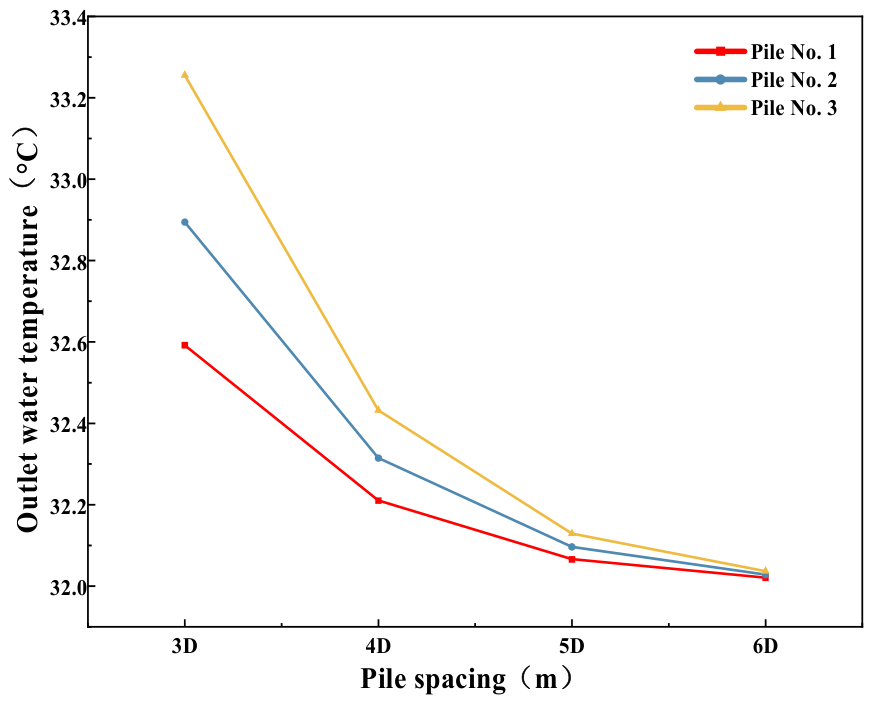
Figure 19 illustrates that the temperature differential of the water among the three piles diminishes after operating the model for 30 days, indicating that the pile group expels more heat into the adjacent soil as the inter-pile separation rises. When the pile spacing is 3D, the temperature differential among the three piles is more pronounced, with the maximum disparity—approximately 0.67 °C—being observed between pile No. 1 and pile No. 3. This signifies a more pronounced thermal interference effect, wherein the heat exchange of pile No. 3 is diminished due to this interference. The expansion of the pile spacing mitigates the effects of thermal interference: the water temperature difference between pile No. 1 and pile No. 3 is greatly reduced to 0.231 °C at 4D spacing, and the gap between pile No. 2 and pile No. 3 is reduced to only about 0.1 °C. When the pile spacing reaches 6D, the water temperature of the three piles remains fairly consistent, at approximately 32.02 °C, indicating that the thermal interference effect within the pile group is nearly negligible. This indicates that, for saline soil type C, the radius of influence (or thermal interference radius) of the energy pile group on soil temperature is around 4D. Augmenting the pile spacing significantly mitigates thermal interference.
Figure 19 illustrates that when the pile spacing is 6D, thermal interference between the energy piles can be ignored. Considering the pile-bearing capacity, the energy piles can be stacked properly.
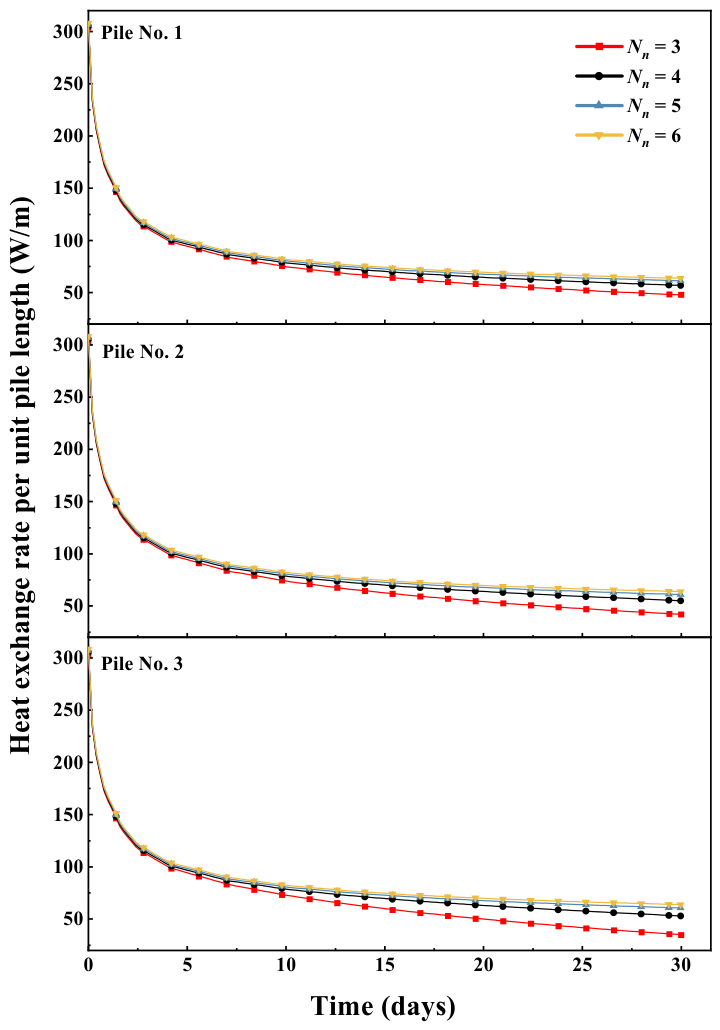
Figure 20 presents a comparison of the heat transfer rate per unit length for piles 1, 2, and 3 across different pile spacings. The heat transmission rate for all three piles is significantly reduced at a spacing of 3D compared to other spacings, especially for pile No. 3. This is due to pile No. 3 being the central pile, where thermal interference is most significant in a three-dimensional spacing. Augmenting the pile spacing mitigates the effects of thermal interference. After operating the model for 30 days, the heat transfer rate for the 3D pile spacing measured 34.65 W/m, whereas the heat transfer rate for the 6D pile spacing was recorded at 58.87 W/m, resulting in an increase of 69.90%, thereby substantially mitigating thermal interference. Pile No. 2 is a lateral pile, exhibiting a lesser thermal disturbance compared to pile No. 3. Consequently, the disparity in the heat exchange rate per unit length between each pile spacing is minimal, while the heat exchange rate at a spacing of 3D is markedly inferior to that of other spacings. The heat transfer rate for the 6D pile spacing is 41.1% more than that of the 3D spacing. Given that pile No. 1 is situated at the corner and encounters limited thermal interference, the enhancement in heat exchange efficiency resulting from increased pile spacing is negligible for this pile. Nonetheless, the 3D spacing continues to experience severe thermal interference due to its proximity, while other pile spacings demonstrate a marked enhancement in heat exchange rates. At a 6D spacing, the heat exchange rate for pile No. 1 rises by 23.75% relative to the 3D spacing.
In conclusion, augmenting the space between piles substantially diminishes thermal interference inside a pile group, with the center pile No. 3 exhibiting the most pronounced enhancement of up to 69.9%. Given that pile No. 3 typically signifies energy piles in actual projects, increasing the pile spacing is an excellent approach to decrease heat exchange interference within the pile group.
5.3. Pile Arrangement
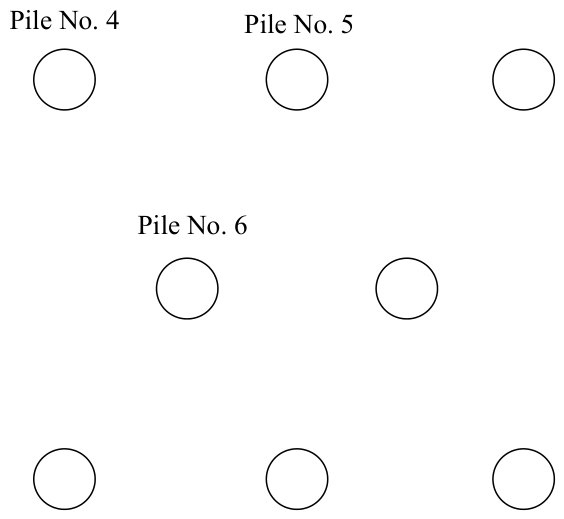
The energy pile group also has different requirements for the arrangement of heat exchange piles in practical application, and the arrangement pattern significantly impacts the heat exchange efficiency of pile groups. In this section, the two layouts of the square arrangement (as shown in
Figure 2) and the plum blossom arrangement (
Figure 21) are simulated for 30 consecutive days (the pile spacing is set to 3D in the plum blossom arrangement) to analyze how different arrangement techniques influence the heat transfer efficiency of piles in a saline soil energy system [
39].
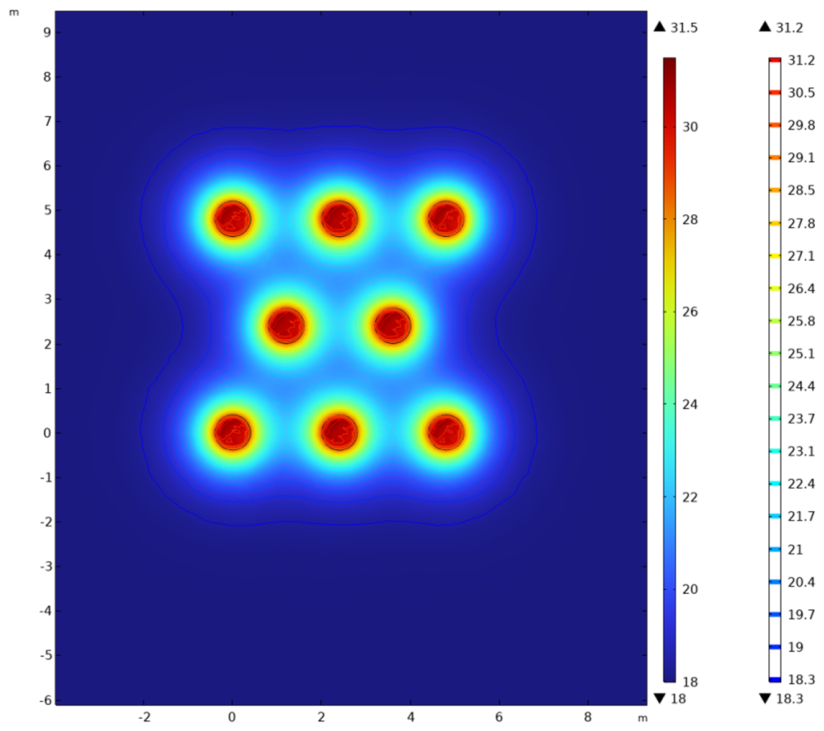
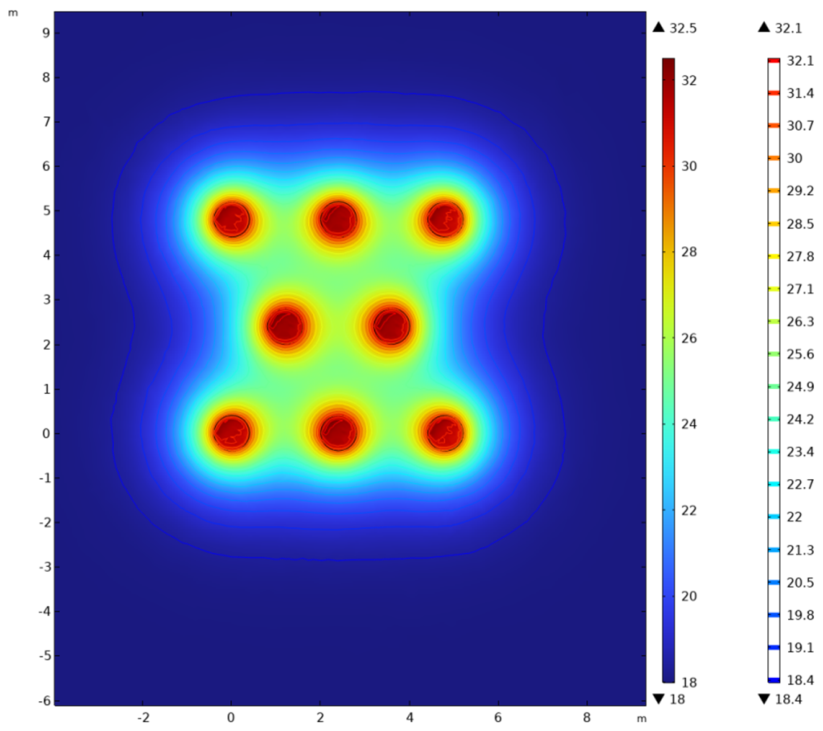
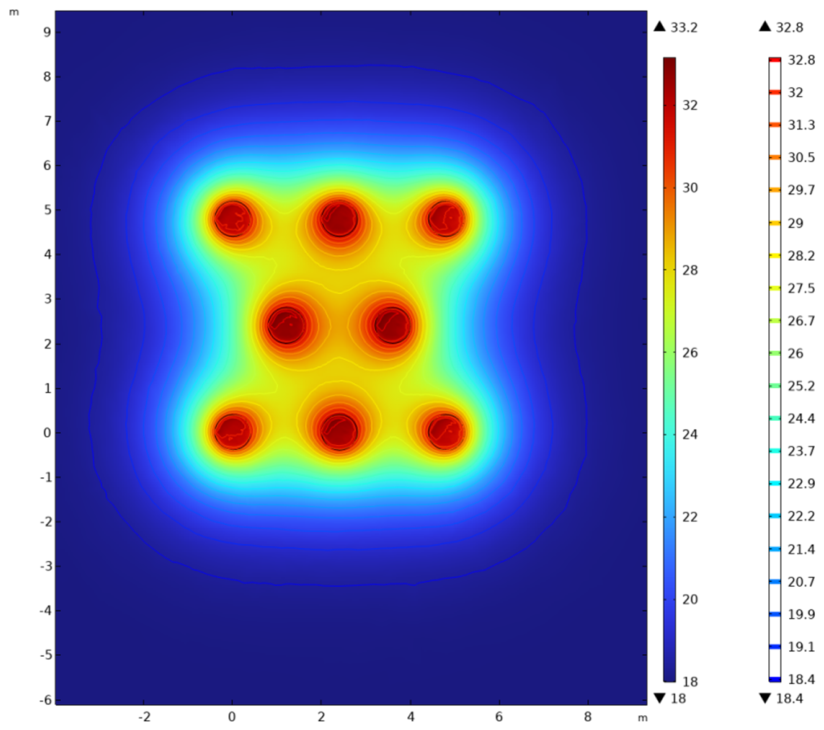
Cross-sections of the energy pile group at a depth of 15 m were extracted, and the temperature-field contour maps on days 10, 20, and 30 are compared in
Figure 22,
Figure 23 and
Figure 24, respectively. On day 10 of operation, the heat exchange still shows many low-temperature regions, and the isotherms between adjacent piles are slightly merged. By day 20, the soil between the piles is largely filled with heat released from the pile bodies, so the temperature is nearly uniform across that zone, with isotherms mainly enclosing the outer periphery. The contour maps on day 30 (
Figure 24) reveal that the thermal fields of neighboring piles are superimposed, especially the two middle piles (e.g., pile No. 6), where the high-temperature zone around the pile body is broader and exhibits a certain directionality (extending toward the adjacent piles).
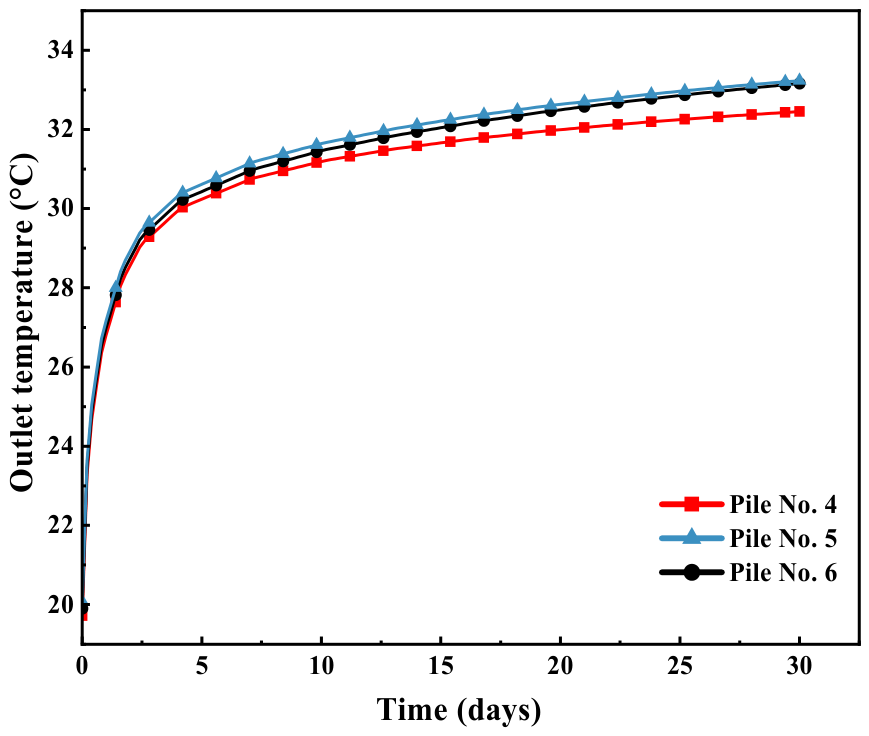
Figure 25 illustrates the effluent temperature curves of piles 4, 5, and 6 from the plum blossom-shaped energy group piles over time, revealing a consistent variation pattern among the three piles. During the initial 10 days of the model’s operation, the water temperatures of the three piles exhibited negligible variation. Following this period, the temperature curves began to diverge, with pile No. 4 experiencing minimal thermal interference from the adjacent piles due to its corner position, resulting in a comparatively gradual temperature change. Pile No. 5 and pile No. 6 are affected by the surrounding piles and the thermal disturbance is more consistent, so the effluent temperature rises faster.
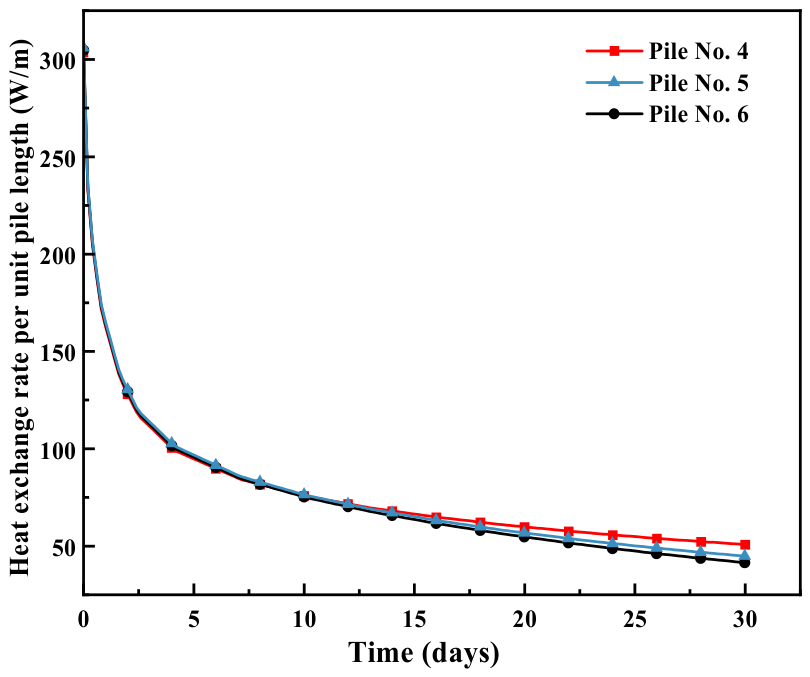
Figure 26 displays the heat transfer rate per unit length for piles 4, 5, and 6 over time. Analogous to the pattern noted in the variations in effluent temperature, the heat transfer rates exhibit minimal disparity over the initial 10 days. Nonetheless, the disparities progressively expand thereafter. Following a 30-day period of heat transmission, pile 4 exhibits a heat transfer rate of 50.66 W/m, but piles 5 and 6 demonstrate rates of 42.26 W/m and 40.12 W/m, respectively. The heat transfer rate of pile 4 exceeds that of piles 5 and 6 by 19.69% and 26.27%, respectively, indicating a notable influence from thermal disturbance.
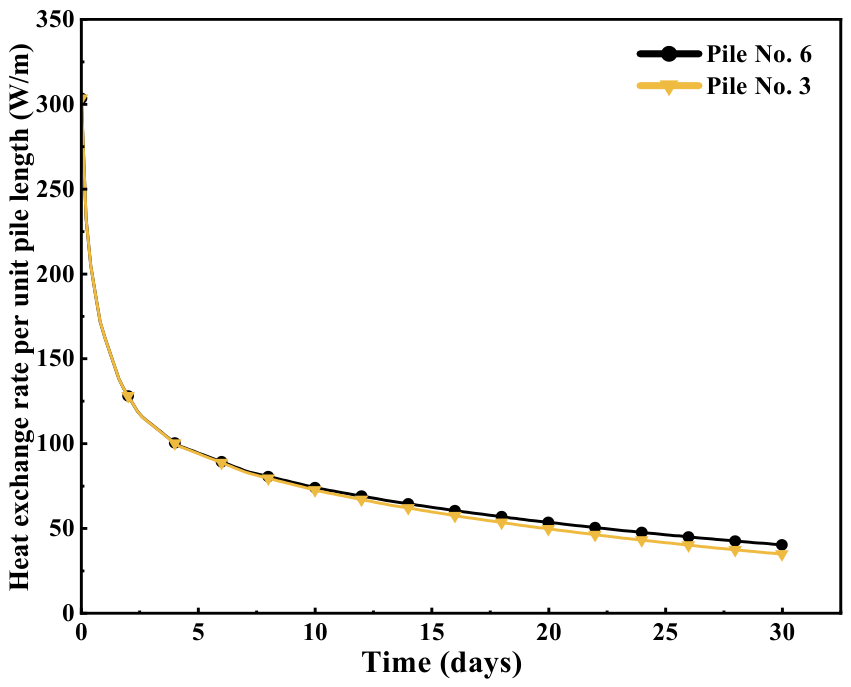
Figure 27 presents a comparison of the heat exchange rates between square pile No. 3 and plum blossom-shaped pile No. 6. Their heat exchange rates are notably comparable over the initial 8 days of the model’s operation. However, after 10 days, the heat exchange rate of square pile No. 3 drops more rapidly than that of plum blossom pile No. 6 as there is more thermal interference. On day 30, the heat exchange rate of pile No. 3 is 34.65 W/m, whereas pile No. 6 reaches 40.12 W/m, indicating a 15.79% increase compared to pile No. 3. The central pile, configured in a floral arrangement, provides enhanced resistance to thermal interference. In the present project, the majority of heat exchange inside the energy group piles transpired at pile No. 3 and pile No. 6. Consequently, when numerous energy piles are present, a plum blossom configuration is advisable.
5.4. Number of Piles
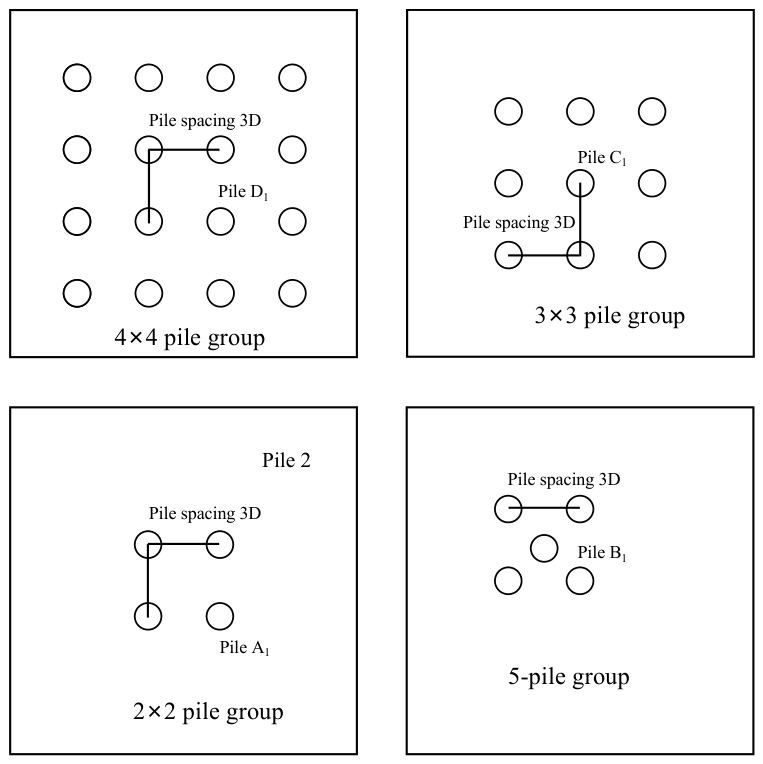
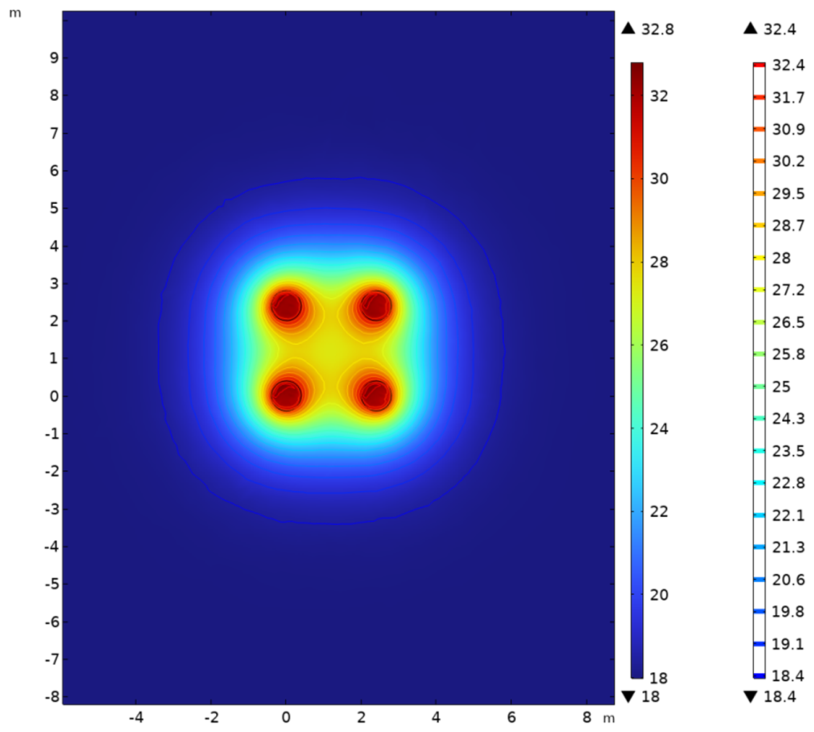
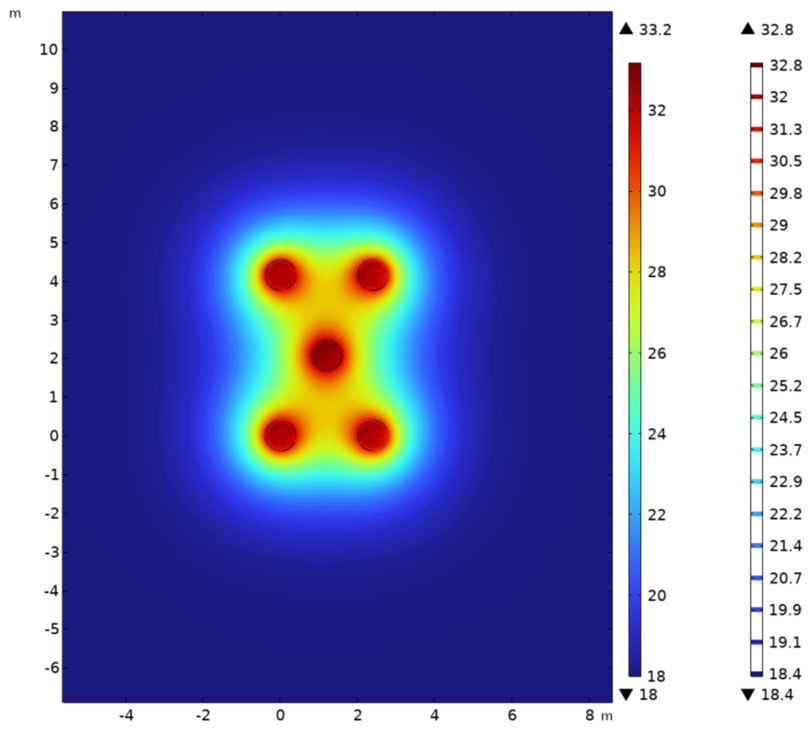
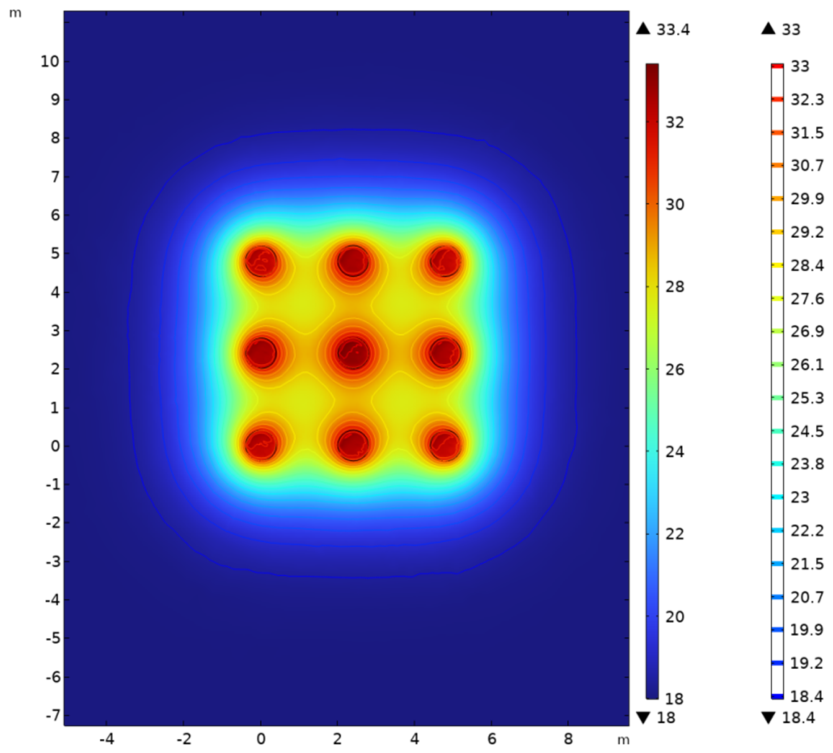
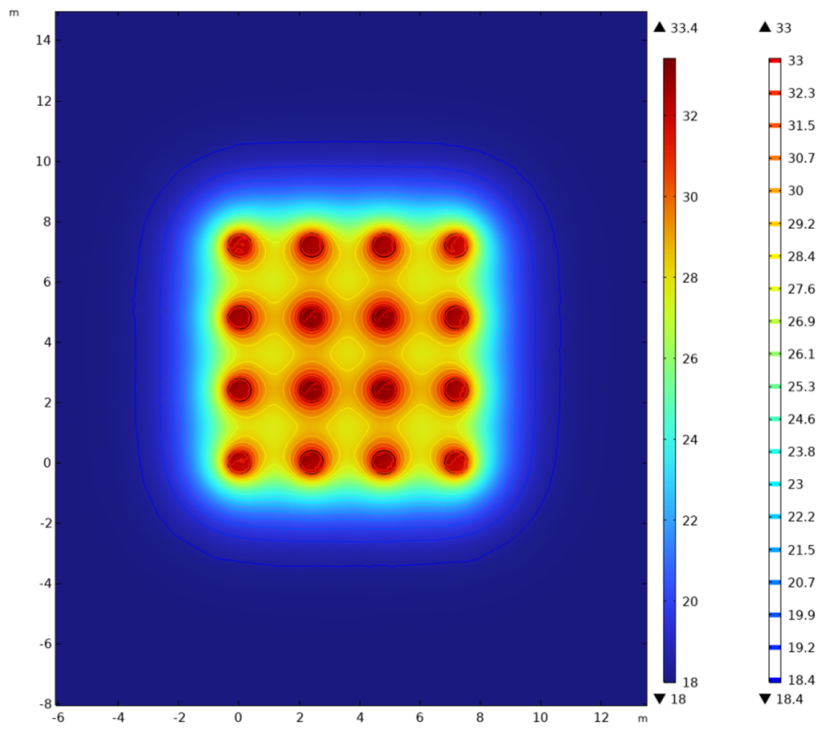
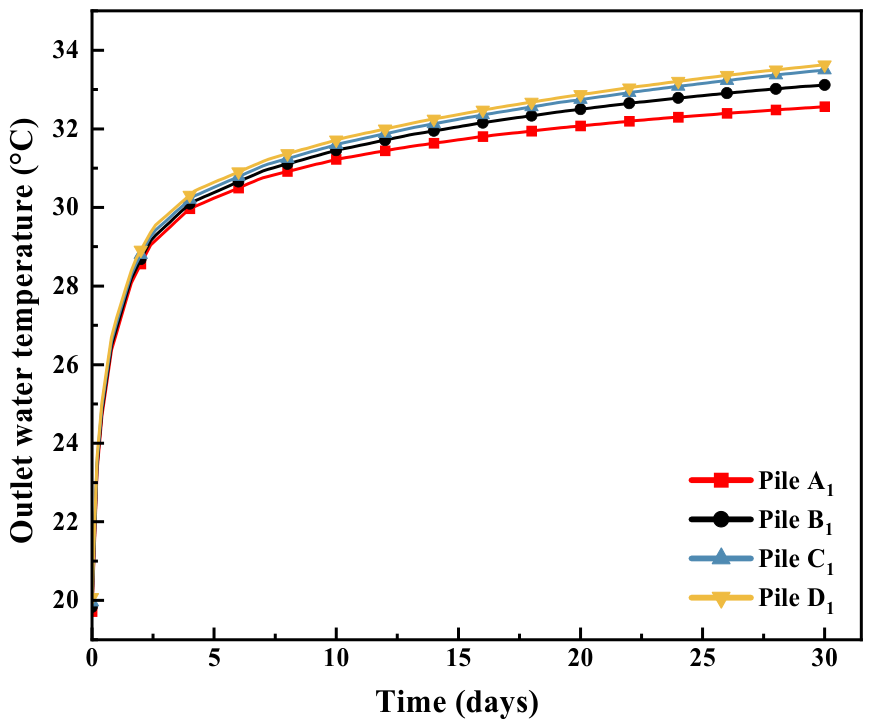
Energy pile heat exchange is designed to assist the superstructure; therefore, the configuration of the pile group must be aligned with the superstructure. The quantity of energy piles substantially influences their thermal exchange efficiency. This section examines four distinct quantities of energy piles in a case study, analyzing the heat transfer performance of the pile group in saline soil type C and utilizing a 3D pile spacing. The examined pile groups consist of a 2 × 2 group, a five-pile group, a 3 × 3 group, and a 4 × 4 group, as depicted in
Figure 28 [
40].
The central piles in the different pile groups were designated piles A1, B1, C1, and D1, respectively. A continuous 30-day heat-exchange simulation was performed on the four models, and a detailed analysis was carried out using the temperature-field contour maps and the outlet water temperature of the central piles.
The temperature-field contour maps are shown in
Figure 29,
Figure 30,
Figure 31 and
Figure 32. As the number of piles in the group increases, the maximum temperature in the pile group also rises. This indicates that a larger number of piles intensifies thermal interference to some extent, and the effect is particularly pronounced in the central piles. The temperature distributions in
Figure 31 and
Figure 32 are similar, with relatively smooth isotherms in both. The 3 × 3 pile group can be regarded as a “micro-element” representation of the 4 × 4 group, which explains why the temperature does not markedly increase. Since most practical engineering projects adopt the energy pile arrangement shown in
Figure 31 and
Figure 32, special attention should be paid to the heat-exchange performance of the central piles in this simulation.
Figure 33 presents the water temperature of the central piles in the varying pile numbers over time, revealing that the water temperature of the A1 pile in the 2 × 2 pile group remains consistently lower than that of the other three piles due to the absence of a central pile in the 2 × 2 configuration, resulting in minimal thermal interference effects. The B1 pile was located in the center of the five-pile group, which was affected by thermal disturbance, and the temperature increased by 0.43 °C compared with the 32.56 °C increase in the A1 pile. However, the number of piles and the arrangement of the 3 × 3 and 4 × 4 piles make the distribution of the two temperature fields similar and the thermal disturbance of the central piles is the same; therefore, the temperature curves of the C1 and D1 piles are very consistent and there is a difference of only 0.02 °C when the simulation runs to 30 days.
The influence of pile quantity on the thermal transfer efficiency of a pile group is contingent upon the arrangement of the piles. Furthermore, augmenting the quantity of adjacent piles can exacerbate the thermal interference on the central piles, therefore diminishing the overall heat transfer efficacy of the pile group.
6. Summary and Conclusions
This paper evaluates and verifies the thermal transfer efficacy of engineered saline soil energy group piles. A heat transfer simulation is performed using a model of different soil salinity levels. The impact of various parameters on the heat transmission efficiency of saline soil energy group piles is examined and assessed.
Throughout a 30-day continuous operation simulation of energy pile groups in saline soil, it was found that the improvement in heat transfer performance due to salinity does not act independently, but is regulated by a spatial competition mechanism of thermal interference within the pile group. Specifically, although high-salinity soil enhances the heat exchange rate, thermal interference gradually weakens this advantage: the central pile suffers from severe heat accumulation, so the salinity-induced enhancement is progressively suppressed; in contrast, the corner pile experiences the least thermal interference, allowing the salinity benefit to remain stable. This indicates that the layout of the pile group determines how effectively salinity contributes to heat transfer.
Further analysis of pile diameter, spacing, and arrangement reveals three key findings: (1) Increasing the pile diameter is effective only in the initial stage (the first 10 days); thereafter, thermal interference becomes dominant, and the heat transfer efficiency of piles with different diameters eventually converges, implying that blindly enlarging the pile diameter does not yield sustained improvement in group performance. (2) When the pile spacing reaches five times the pile diameter (5D), thermal interference is significantly reduced, so 5D can be taken as a critical design spacing. (3) The plum-blossom arrangement increases the heat exchange rate per unit pile length by 15.79%; its mechanism lies in breaking the symmetric thermal field and reducing heat accumulation around the central pile.
Moreover, the comparison between 3 × 3 and 4 × 4 pile groups shows that the outlet water temperature of the central pile changes very little between the two configurations, and the 3 × 3 group behaves as a “microelement” of the 4 × 4 group. This confirms that simply increasing the number of piles, without modifying the arrangement or spacing, does not improve the heat dissipation conditions in the central region, and its effect on the overall heat transfer efficiency of the pile group is negligible.
Based on the above results, the following practical guidance is offered: in saline soil areas, priority should be given to the plum-blossom arrangement with a pile spacing of no less than 5D; if more piles are needed, the outer dimensions of the pile group should be enlarged accordingly or other means should be taken to reduce the heat transfer effect caused by thermal interference.
A limitation of the present study is that only the thermal aspect of energy pile group behavior is considered. In engineering practice, pile dimensions are primarily determined by structural load-bearing requirements, and economic factors such as installation costs and energy savings must also be taken into account. These structural and economic constraints are not included in the current analysis. Therefore, the thermal trends reported here should be interpreted as complementary information rather than direct design recommendations. A comprehensive multi-objective optimization that simultaneously considers structural safety, thermal performance, and life-cycle cost would be a valuable direction for future work.
Given that energy piles involve multidisciplinary integration and represent a highly complex energy application technology, this paper only conducts an exploratory study on specific aspects. Several research questions remain that merit further investigation, such as the heat exchange characteristics of other soil types after salinization and the heat transfer behaviors of heterogeneous soils. Consequently, additional experimental and numerical investigations need to be conducted to obtain a greater understanding of the proposed heat exchange system and to optimize its efficacy.