1. Introduction
Climate change is one of the global challenges of the 21st century, directly linked to greenhouse gas (GHG) emissions caused by anthropogenic activity. Human activities, particularly the burning of fossil fuels and waste disposal, accelerate climate change by increasing GHG concentrations in the atmosphere [
1,
2,
3,
4,
5].
The current consequences of these processes are already being felt throughout the world and have the potential to cause colossal environmental and economic damage. About 70% of anthropogenic GHG emissions and 60% of anthropogenic methane are generated within urban areas [
6,
7].
Rapid population growth and urbanization have a decisive influence on the scale of emissions, affecting mainly the energy sector and waste management [
8,
9,
10].
Modeling future scenarios (based on population and GDP dynamics) shows that global methane emissions from waste will increase by an average of 5.13% per year between 2020 and 2050, reaching a projected volume of around 4000 Gg by the end of this period [
11].
Since the global impacts of climate change and national vulnerabilities of countries vary greatly, each state is forced to seek individual options for preventing damage depending on its economic situation [
1,
12].
The municipal solid waste (MSW) management sector, in particular its disposal at landfills, plays a significant role in the overall GHG balance. Total GHG emissions (CH
4, CO
2, and N
2O) from waste processing and disposal account for approximately 5% of the global volume of emissions into the atmosphere [
13,
14].
Landfills account for up to 90% of all greenhouse gas emissions in the waste management sector [
15,
16,
17,
18]. In the structure of gases emitted during the processing of municipal solid waste, methane is the dominant component and accounts for between 89.34% and 99.36% [
19].
Landfills and solid waste sites are the third-largest source of anthropogenic methane. Anaerobic decomposition of the organic fraction of solid waste produces landfill gas, which contains up to 50–60% methane (CH
4) [
20].
The process of methanogenesis is activated several months after waste disposal and continues for decades, turning landfills into permanent sources of pollution [
21].
Physical, chemical, and biochemical processes occur continuously within the landfill. The migration of methane into the environment poses a serious environmental threat, creating zones of increased climatic and sanitary risk in the absence of gas collection systems [
22].
The problem of greenhouse gas emissions from landfills is particularly pressing in industrial regions, where landfills are often located on disturbed land and in abandoned quarries.
In the Karaganda Region of Kazakhstan, solid waste management facilities operate in a sharply continental climate. These specific hydrothermal conditions create an uneven distribution of moisture within the solid waste mass, creating dried-out aerobic areas. This increases diffuse emissions through the landfill surface [
23]. Furthermore, in the hot and arid regions of Central Kazakhstan, the emission effect can be enhanced due to the high permeability of deep layers and intense evaporation.
Morphological analysis of waste in six cities of Kazakhstan, including Karaganda, recorded a mass fraction of organic matter in the range of 45–65% [
24,
25], while for the country as a whole, this figure may exceed 50% [
26]. High moisture and ash content significantly impact the potential biogas yield.
Studies of atmospheric air in areas affected by such landfills have recorded hazardous concentrations of fine particles, organic compounds, and heavy metals [
27,
28]. Uncontrolled emissions of associated compounds (ammonia, hydrogen sulfide, and VOCs) lead to atmospheric degradation, groundwater and soil contamination, and deterioration of public health [
29,
30].
Methane emission assessment is based on a combination of direct measurements and calculation models that take into account the morphology of solid waste, the climate, and the type of landfill operation. The most widely used methodology is the 2006 IPCC methodology [
31].
In Kazakhstan, calculations are regulated by the national methodology (Order No. 100 of 18 April 2008), adapted to local climatic and sanitary standards [
32]. Similar approaches to adapting models to arid conditions are used in China, Saudi Arabia, and Vietnam [
6,
10,
15,
18,
19].
However, standard IPCC models often underestimate emissions in countries with a high proportion of food waste and shallow burial depths [
6,
11,
19,
33,
34,
35,
36]. The practical application of models is limited by a lack of or excessive generalization of data on the actual composition of MSW, moisture content, degree of compaction, and substrate biogeochemistry [
6,
19,
29,
30]. The situation is complicated by climatic anomalies (droughts or extreme precipitation), which disrupt the stability of the aerobic–anaerobic transition.
Remote monitoring using laser spectroscopy is used worldwide, and studies [
37,
38,
39] have allowed us to identify methane emission sources with an intensity of up to 500 kg/h at landfills in the USA, China, and Europe.
Modern waste management concepts focus on minimizing landfill volumes and the beneficial use of biogas as a secondary energy resource, which reduces greenhouse gas emissions and partially offsets operating costs. Methane from landfills can be effectively utilized for heating and electricity generation [
18,
33,
40,
41].
Alternative technologies demonstrate high efficiency:
The application of the biological reactor principle in landfill management ensures control of biogas emissions and minimizes the greenhouse effect [
42].
Waste composting before their disposal allows for the reduction of GHG emissions by 81.6% compared to standard storage in landfills [
43,
44].
Modification of the structure of MSW by adding special fillers can reduce methane emissions by 71% [
14].
An important factor in reducing emissions is the preliminary sorting of waste at the source, which requires increased environmental awareness among the population, as well as the reclamation of closed landfills (based on the experience of countries such as Germany) [
45]. However, the difficulty of selecting a reclamation often faces soil shortages and the high cost of biological substrates [
46].
Cause-and-effect analysis indicates that at the macro level, emission volumes are correlated with socio-economic factors: per capita GDP growth, urbanization, unemployment rates, and foreign direct investment (FDI) inflows. The implementation of regional sustainable development objectives requires comprehensive interdisciplinary research [
47,
48].
To reduce the environmental impact, particularly from solid waste disposal, it is necessary to translate scientific findings into step-by-step instructions for practical use and calculate all environmental risks throughout the life cycle (from waste generation to disposal). The value of this study lies in assessing the feasibility of using landfill methane as a substitute resource in various climatic conditions. Furthermore, this reduces greenhouse gas emissions while simultaneously conserving natural resources.
The aim of the study is to conduct a comprehensive environmental assessment of the impact of waste disposal on the environment, and to determine the prospects for using methane gas as an energy resource at solid waste landfills in the Karaganda Region.
- (1)
Conduct a scientifically based assessment of the possibilities for reducing emissions of methane and other components of landfill gas at the design and operation stages of new solid waste landfills;
- (2)
Assess the prospects for using landfill gas (including methane) as an alternative fuel at existing waste disposal sites;
- (3)
To determine the climatic and morphological parameters that have the greatest impact on landfill gas emissions and apply them in calculation models using the example of a municipal waste storage facility in the Karaganda Region of Kazakhstan.
2. Materials and Methods
Since the Karaganda Region of the Republic of Kazakhstan is a major center of the mining and mineral-processing industry, abandoned quarries and open pits are often used for waste disposal. The solid waste landfill of the Karaganda Region is being investigated as a potential source of energy due to landfill gas.
The investigated solid waste landfill is located in Kazakhstan in the Karaganda Region. The total area allocated for the entire waste management facility is 38.54 hectares (385,400 square meters), including the waste disposal pit and other production facilities. For example, the area of the sorting site is 30,000 square meters. The storage site is divided into operational phases, taking into account waste acceptance during the first phase, lasting 13–15 years:
Therefore, the waste site itself will gradually occupy 7 and 6 hectares, for a total of 13 hectares.
At the time of the study, the area occupied by waste was 4531 square meters (0.4531 hectares).
The analysis shows that solid waste storage facilities are a serious source of greenhouse gases, with methane being the most significant. Thus, it is necessary to develop and implement strategies and programs to reduce methane emissions from solid waste worldwide. This direction is very relevant for the transition to global sustainable development.
The following scientific methods were used to investigate the possibilities of using landfill gas:
Gas-geochemical studies make it possible to measure the composition and intensity of landfill gas flow, assess its energy potential, and choose the optimal solution for degassing.
Chromatographic–mass spectrometric studies are focused on the identification and quantification of components of air emissions before and after the disposal system. They allow for monitoring emissions, taking into account the actual content and changes in the group and component composition, as well as making recommendations for improving the exhaust gas treatment plant.
Physico-chemical studies make it possible to assess the chemical safety and effectiveness of the new landfill gas treatment technology, as well as to find optimal conditions for its use in terms of environmental and hygienic aspects.
Landfill gas calculations were conducted using software tables, taking into account the climatic characteristics of municipal solid waste landfills and the waste storage period. Gas dispersion calculations were performed using the Era software package (ERA Unified Program for Calculating Atmospheric Pollution, version 3.0 is approved for use in the Republic of Kazakhstan). The methodology [
49] is applied to waste containing 68–80% organic matter on a dry weight basis.
To study the possibility of using methane gas as a fuel and the volume of its emissions, it is necessary to study the climatic conditions of the region. The release of methane gas and other types of landfill gas depends on air temperature, wind direction, humidity, and precipitation. The following are the characteristics of the climatic conditions of the Karaganda Region of Kazakhstan.
According to its climatic characteristics, the Karaganda Region is located in the III climatic region, subregion IIIa. The climate of this region is sharply continental, expressed in sharp changes in weather and large amplitude fluctuations in air temperature both during the day and during the year, with hot, dry summers and cold, snowless winters [
50].
Temperatures range from +43 to −47.8 degrees Celsius. Summers in this region are hot and long. Continentality is reflected in wide fluctuations in meteorological conditions on a daily, monthly, and annual basis. Average monthly and annual temperatures are presented in
Table 1.
Relative air humidity characterizes the degree of air saturation with water vapor. During the year, humidity values vary significantly. The average humidity of the cold period is 75%, and for the warm period it is 44%. Humidity indicators for the Karaganda Region, according to the
Sanitary and Environmental Regulations 2.04-01-2017 “Construction Climatology”, are given in
Table 2.
Winds have a significant impact on the transfer and dispersion of impurities in the atmosphere, especially weak winds, as calm conditions prevent emissions from dispersing and the concentration of impurities near the ground increases sharply. For the studied area, the prevailing winds are north-east (average speed 2.1 m/sec), south-west (average speed 4.2 m/sec) (
Table 3). The winds in the south-west direction have the highest frequency (23%). The wind regime is continental in nature.
The average annual precipitation in the region fluctuates between 65 mm in the cold period and 72 mm in the warm period. Most of it falls as rain, and partly as snow in October–November.
Evaporation: In the arid climate of the territory under consideration, most of the precipitation is lost to evaporation. Total annual evaporation from the soil surface is approximately 300 mm, of which more than half occurs in April–June. This is determined mainly by the spring moisture reserves in the soil and the amount of precipitation.
Meteorological characteristics of the atmosphere of the city territory are given in
Table 4.
In addition to assessing the climatic features of the municipal waste storage area that affect methane gas emissions, it is important to assess the risks associated with the waste storage area. Risk assessments are carried out from the point of view that waste storage facilities are considered natural and technical systems. The risk assessment includes measurements of chemical element concentrations and geographical characteristics. The risk components include the following: probabilities, time of impact, seasonal distribution, and consequences. The most dangerous scenarios are the filtration of landfill contents and atmospheric air pollution. Therefore, it is necessary to pre-prepare the landfill based on the latest technologies. The types of impacts from waste accumulators are presented in
Table 5.
The purpose of risk assessments is to select effective and efficient measures to improve industrial and environmental safety. The possibility of using methane as a resource is being considered as an event that will help reduce emissions from a landfill.
The waste storage facility considered in the article has operated from 2015. The planned end of operation of the waste storage facility is approximately 2040. During the construction of the landfill, the fertile layer was removed, and a pit was dug for laying a clay cushion. The depth of the pit is 3 m. The removed soil was used to fill the landfill fence.
The waste storage area is divided into working maps. The waste storage area has earth embankments along its perimeter. A breakdown of the storage area into stages is carried out, taking into account the terrain.
The storage area is divided into operational stages, taking into account the waste acceptance in the first operational stage for 13–15 years: For the first 15 years, the area allocated is approximately 7 hectares. The waste placement site is deepened from the ground surface by 2.5 m (taking into account the height of compacted clay). Then, the waste will be stored in the second map, with an area of 6 hectares. This map is designed to accept waste for 15 years. The waste placement site is deepened below the ground surface by 2.5 m (taking into account the height of compacted clay).
A brief description of the landfill is provided in
Table 6.
Waste storage is carried out in layers. The compacted layer of municipal solid waste is isolated by a layer of soil (ash can also be used).
Compaction of solid waste placed on the work map in layers up to 0.5 m thick is performed by a bulldozer. Compaction in layers thicker than 0.5 m is not permitted. Compaction is accomplished by 2–4 passes of the bulldozer over the same area. The bulldozer compacting the solid waste must move along the long side of the map. With 2 passes, the compaction rate of the solid waste is 570–670 kg/m3; with 4 passes, the compaction rate is 670–800 kg/m3.
The storage areas are protected from surface water runoff from the land masses located above. A drainage ditch is installed along the boundary of the area to intercept rain and flood waters.
For the climate zone where the landfill is located, the possibility of the formation of a liquid phase of filtrate in MSW is determined. The waste storage surface is designed horizontally, which ensures the distribution of filtrate (if it forms) over the entire area of the storage site base.
Water consumption for external fire extinguishing is 10 L/sec. A prefabricated reinforced-concrete fire-extinguishing tank with a capacity of at least 50 m3 is provided. The border is made of rock (height 3 m) along the perimeter of the entire solid waste landfill.
There are green spaces at a distance of up to 8 m along the perimeter of the landfill. The enterprise also plans to increase green spaces annually.
In accordance with the regulatory and legislative requirements of [
38], it is prohibited to accept the following waste for disposal at landfills:
- (1)
Liquid waste;
- (2)
Dangerous waste that is explosive, corrosive, oxidizable, highly flammable, or flammable;
- (3)
Waste that reacts with water;
- (4)
Waste from medical or veterinary institutions that is infected;
- (5)
Whole used tires and their fragments, except for their use as a stabilizing material during reclamation;
- (6)
Waste containing persistent organic pollutants;
- (7)
Pesticides;
- (8)
Waste that does not meet the acceptance criteria;
- (9)
Waste plastic, plastic, polyethylene, and polyethylene terephthalate packaging;
- (10)
Waste paper and cardboard;
- (11)
Mercury-containing lamps and devices;
- (12)
Broken glass;
- (13)
Scraps of non-ferrous and ferrous metals;
- (14)
Lithium batteries or lead-acid batteries;
- (15)
Electronic and electrical equipment;
- (16)
Waste construction materials;
- (17)
Food waste.
Such waste must necessarily be recycled.
3. Results and Discussion
The solid waste landfill accepts waste from enterprises and the population. Industrial waste is not accepted at the solid waste landfill. There are no sources of domestic water supply, mineral springs, or open water bodies near the landfill.
There is no mixing of waste at the landfill. Each type of waste is stored on a separate map.
The volume of accumulated waste during the study period is 8590 tons. The area occupied by waste is 4531 m2. The estimated service life of the first map of 6.21 hectares is 15 years (subject to the placement of the maximum designed amount of waste). The planned end time of burial on the first map is 2030. Then, burial will be carried out on the next map. Waste burial on the entire area of the landfill (15 hectares) is possible for 33 years (until 2047).
Data on the annual amount of waste received at the landfill for previous years and predictions for the future are presented in
Table 7.
If waste sorting and recycling are not provided, the amount of waste increases. Solid household waste and ash and slag waste from the population and enterprises is delivered to the landfill by specialized organizations.
The technological regulations provide for the compaction of solid waste, which allows for increasing the waste load per unit area of the structures, ensuring economical use of the land plots. After the closure of the landfill, the surface will be reclaimed for subsequent use of the land plot.
All work on storage, compaction, and isolation of solid waste at the landfill is performed mechanically. The main structure of the landfill is the solid waste storage area. There are green spaces at a distance of up to 8 m along the perimeter of the landfill. The enterprise also plans to increase the green spaces annually. To prevent combustion of household waste from exhaust gases, a spark arrester is installed on the bulldozer’s exhaust pipe. The bulldozer is equipped with a fire extinguisher.
Solid municipal waste is accepted in an uncompacted state (i.e., in the same physical state in which the waste is received from the population and organizations). According to Article 304 of the Environmental Code [
51], measuring devices (scales) are installed at the reception points to determine the mass of incoming waste. Solid waste unloaded from the vehicle is stored on the working map. Random storage of solid waste is not allowed on the entire area of the landfill, outside the area allocated for the given day (working map).
The bulldozer moves the solid waste onto the working part, creating layers up to 0.5 m high. Due to 12–20 compacted layers, a rampart is created, with a gentle slope 1 m high above the level of the garbage-truck unloading area.
Compaction of solid waste laid on the working map in layers up to 0.5 m is carried out by a bulldozer. Compaction in layers more than 0.5 m is not allowed. Compaction is carried out by 2–4 passes of the bulldozer in one place. The bulldozer compacting the solid waste must move along the long side of the map. With two passes of the bulldozer, the compaction of solid waste is 570–670 kg/m3, and with four passes, the compaction of solid waste is 670–800 kg/m3.
In summer, municipal solid waste is moistened during fire-hazardous periods. Water consumption is 10 L per 1 m3 of solid waste. Intermediate insulation of the compacted layer of solid municipal waste is carried out with soil. Intermediate insulation in the warm season will be carried out daily, and in the cold season, it will be carried out at intervals of no more than three days. The intermediate insulation layer is 0.25 m. The final insulation of the received compacted waste will be carried out with soil 3.5 m from the lower surface of the landfill.
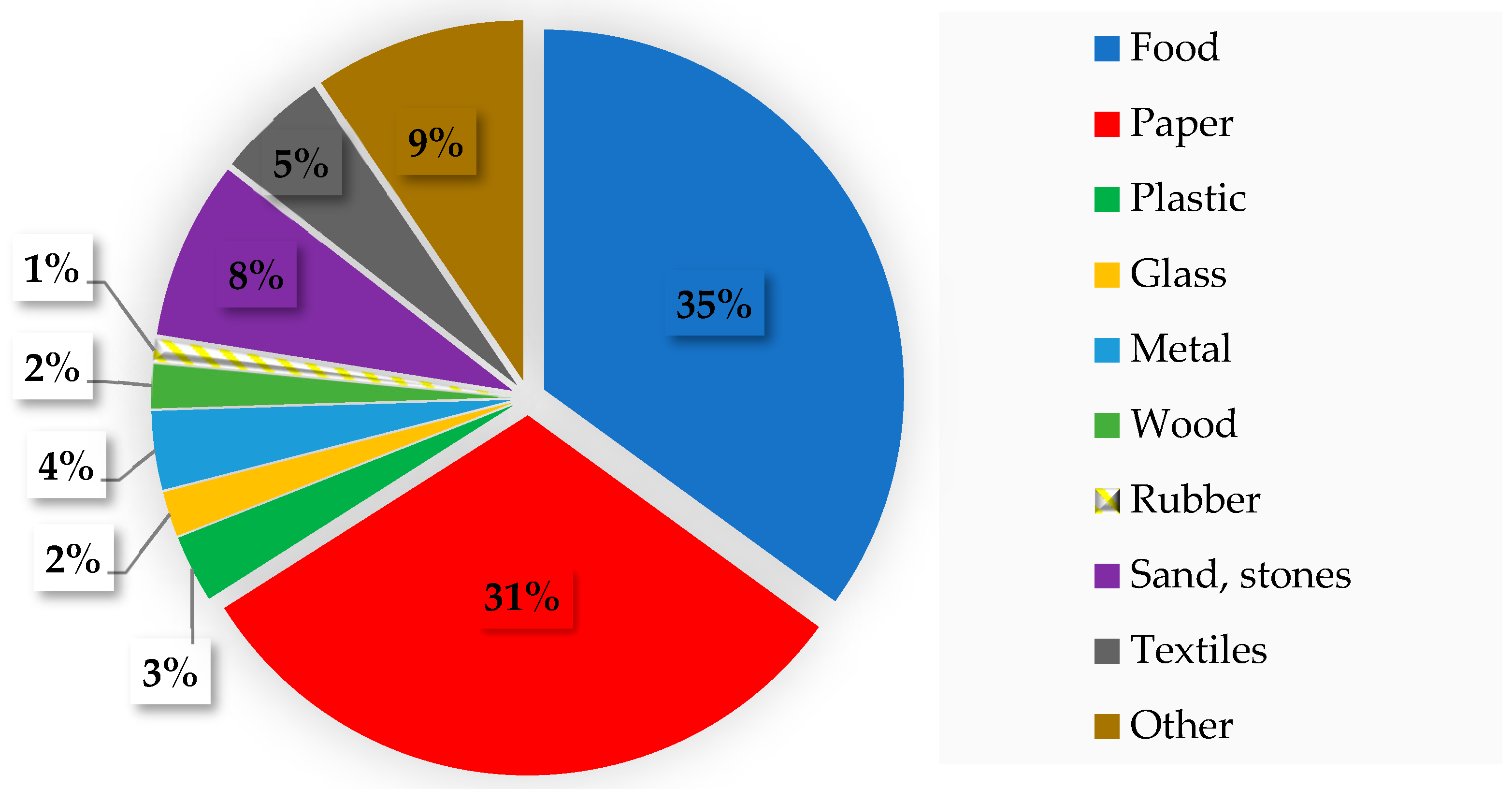
According to the conducted analysis of the morphological composition, municipal solid waste has the following composition (
Figure 1).
The list of pollutants emitted into the atmosphere, hazard class, as well as maximum permissible concentrations (MPCs) in the atmospheric air of populated areas are given in
Table 8.
It should be noted that some substances enter into summation, and this phenomenon is referred to as the ”summation effect”. An important circumstance is that methane does not enter into the “summation effect” (
Table 9). Therefore, it can be considered for further use.
In the thickness of municipal solid waste stored at the landfill, under the influence of microflora, a biothermal anaerobic process of decomposition of the organic components of waste occurs. The end product of this process is biogas, the bulk of which is methane and carbon dioxide. Biogas also contains water vapor, carbon monoxide, nitrogen oxides, ammonia, hydrocarbons, hydrogen sulfide, phenol, and, in small quantities, other impurities that have a harmful effect on human health and the environment.
The calculation of biogas yield is made for conditions of anaerobic decomposition with the constant release of methane. As a rule, the period of waste decomposition and release of biogas occurs approximately two years after waste storage [
52].
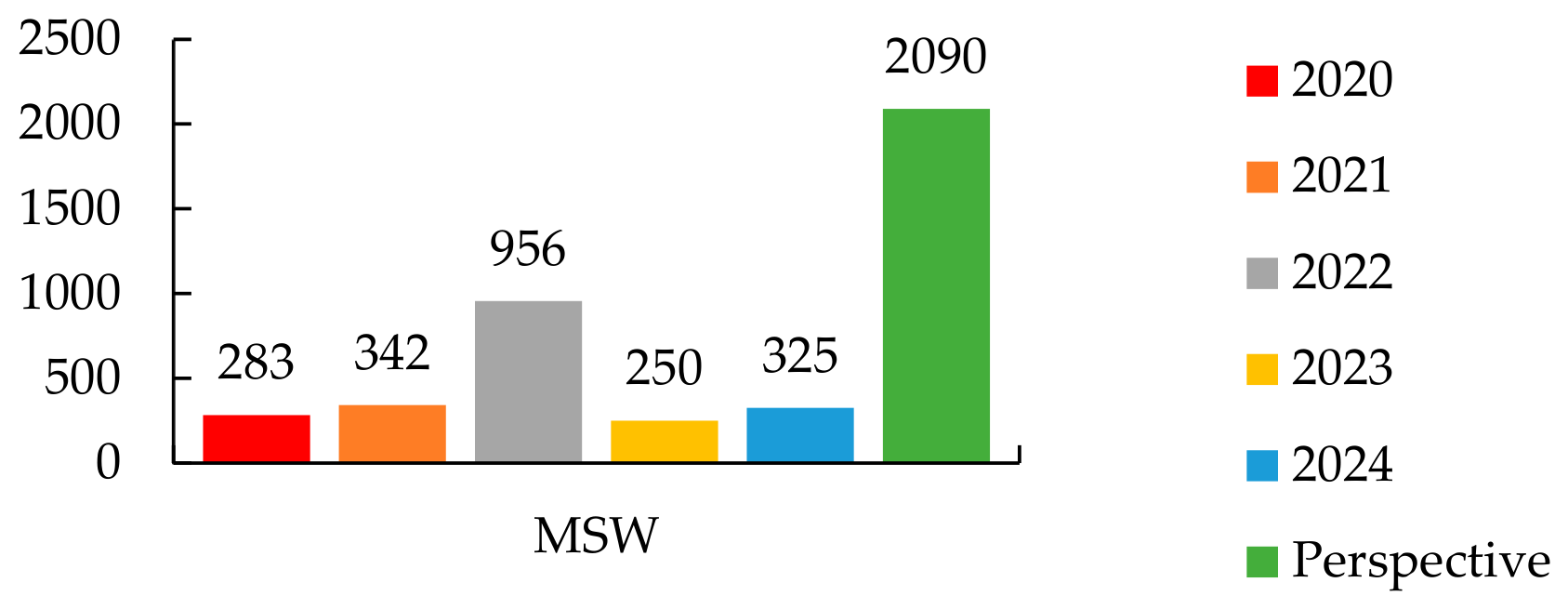
Figure 2 shows the volumes of MSW by year.
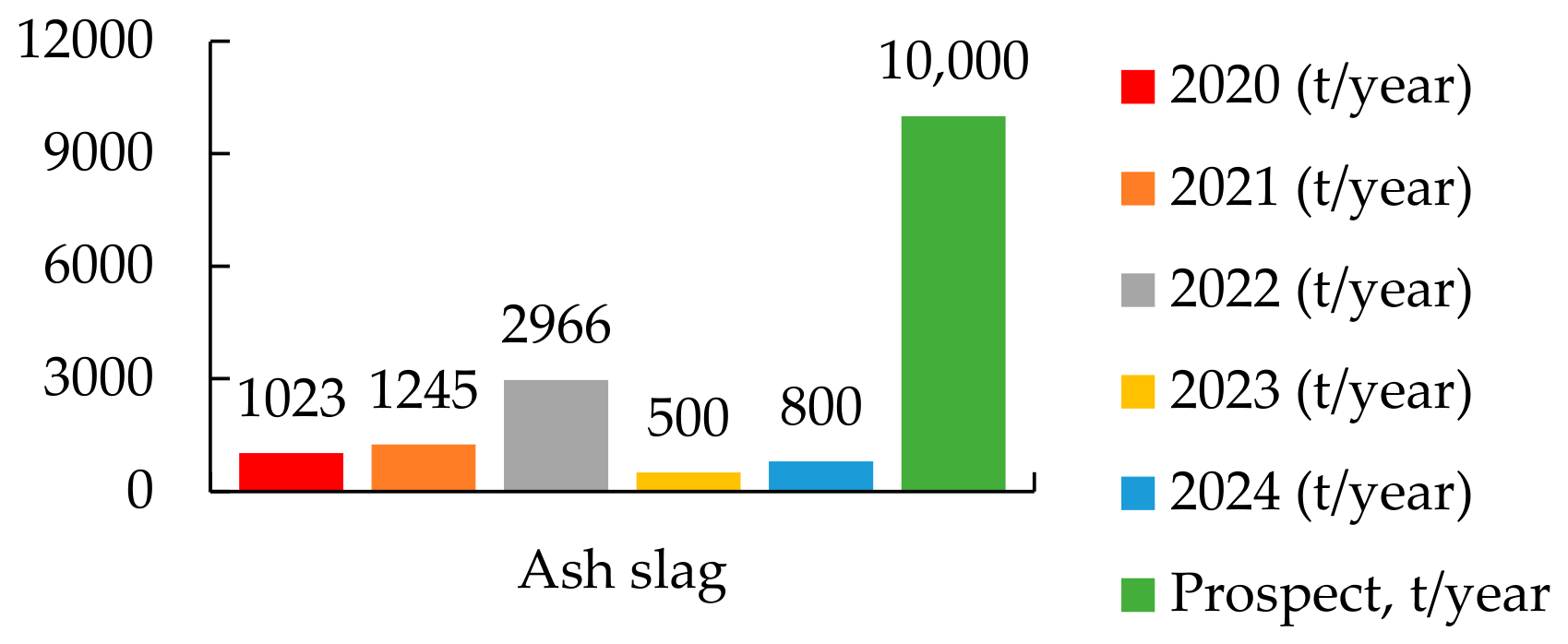
Ash and slag waste that is also brought to the waste storage facility does not decompose and does not emit biogas. Mineral components of waste (ash and slag) do not undergo anaerobic decomposition processes; therefore, they were not considered in modeling biogas production volumes and were excluded from predictive methane-emission calculations. However, ash and slag can be used for waste backfill and for subsequent land restoration. The calculated ash volumes are shown in
Figure 3.
The initial data for calculating biogas emissions are given in
Table 10.
The organic content and the content of fat-like, protein-like, and carbohydrate-like substances in organic waste are determined using a methodology based on long-term monitoring studies and adapted to waste from various regions of Kazakhstan, taking into account geographical characteristics. The specific data of this methodology are most suitable for predicting waste decomposition and methane emissions. The specific yield of biogas during methane fermentation is determined by the formula:
where
QW—specific yield of biogas, kg/kg;
R—content of organic component in waste, %;
G—content of fat-like substances in organic waste, %;
У—content of carbohydrate-like substances in organic waste, %;
B—the content of protein substances in organic waste.
Gross emissions of the i-th component of biogas from a landfill (t/year) are determined by the formula:
where a—the period of warm season in months; b—the period of cold season in months.
When using the calculation method of emissions inventory for designing a new solid waste landfill, in accordance with the
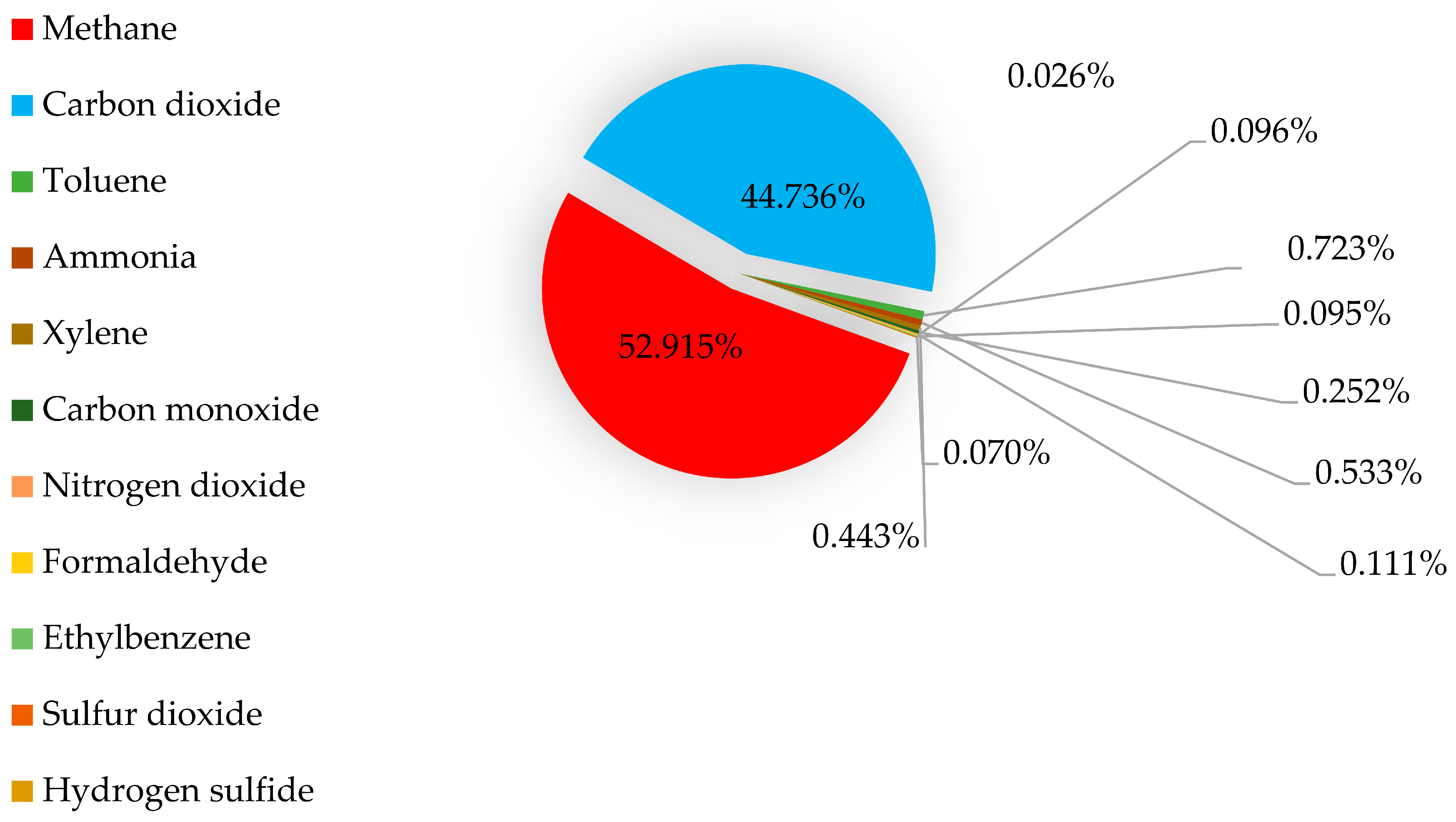
“Methodology for Calculating the Quantitative Characteristics of Pollutant Emissions into the Atmosphere from Solid Municipal and Industrial Waste Landfills”, Appendix 17 to the order of the Minister of Environmental Protection dated 18.04.2008 No. 100, the following is the average statistical composition of biogas (
Table 11,
Figure 4).
The biogas composition shown in
Table 11 is taken from the
“Methodology for Calculating Pollutant Emissions into the Atmosphere from Solid Municipal Waste Landfills” No. 11 to the Order of the Minister of Environmental Protection and Water Resources of the Republic of Kazakhstan No. 221-ө. In the future, it is planned to install methane-emission monitoring sensors at municipal solid waste landfills.
Methane accounts for the largest number of emissions. However, in general, landfill gas generated at landfills can be used as an energy source. In terms of energy potential, 1 m3 of landfill gas corresponds to 0.5 m3 of natural gas. Without pretreatment, it can be used as fuel for boilers and furnaces; that is, it can be supplied directly to an industrial consumer for heat generation or for use in any technological process (firing, steam production, etc.). Also, after additional purification, landfill gas can be used as an automobile fuel. In addition, it can be used to generate electricity using gas turbine and gas piston installations.
As a result of the research, a calculation of biogas released into the atmosphere from the waste storage facility was formed. The main share is methane gas (
Figure 4).
It should be noted that it is advisable to calculate biogas emissions for conditions of a stabilized waste decomposition process with maximum biogas output (fourth phase), taking into account that stabilization of the gas emission process occurs on average two years after waste disposal. To calculate the maximum one-time and gross emissions, we determine the amount of waste delivered to the landfill from the start of work until the moment of calculation:
Year 2021: From 2015 to 2018, minus the last two years (2019 and 2020);
Year 2022: From 2015 to 2019, minus the last two years (2020 and 2021);
Year 2023: From 2015 to 2020, minus the last two years (2021 and 2022);
Year 2024: From 2015 to 2021, minus the last two years (2022 and 2023);
Year 2025: From 2015 to 2022, minus the last two years (2023 and 2024);
Year 2026: From 2015 to 2023, minus the last two years (2024 and 2025);
Year 2027: From 2015 to 2024, minus the last two years (2025 and 2026);
Year 2028: From 2015 to 2025, minus the last two years (2026 and 2027);
Year 2029: From 2015 to 2026, minus the last two years (2027 and 2028);
Year 2030: From 2015 to 2027, minus the last two years (2028 and 2029).
To improve the reliability of landfill gas emission forecasts, an uncertainty analysis was performed using the error propagation method, in accordance with the IPCC Guidelines [
31]. The error in this case will consist of the following parameters:
The baseline modeling uncertainty (Umodel) according to the IPCC Guidelines for arid and semiarid conditions is assumed to be ±30%;
The uncertainty of the chemical analysis of the gas composition is taken to be ±5%.
The total relative uncertainty for each component is determined by the error propagation method:
Thus, for the calculations, the rounding of relative error values will be 0.3041 for all gas components (
Table 12).
An analysis of the results in
Table 12 shows that an increase in all components of landfill gas was observed between 2021 and 2025, indicating a cumulative effect of waste at the landfill. The main component of landfill gas during the analyzed period was methane (52.915%). Gross methane formation increased more than fivefold: from 7.23 ± 2.1786 t/year to 38.4110 ± 11.5771 t/year. The confidence interval of ±30% used in the calculations reflects the specific climate zone of the landfill. The resulting forecast models indicate a high load on the surface layer of the atmosphere.
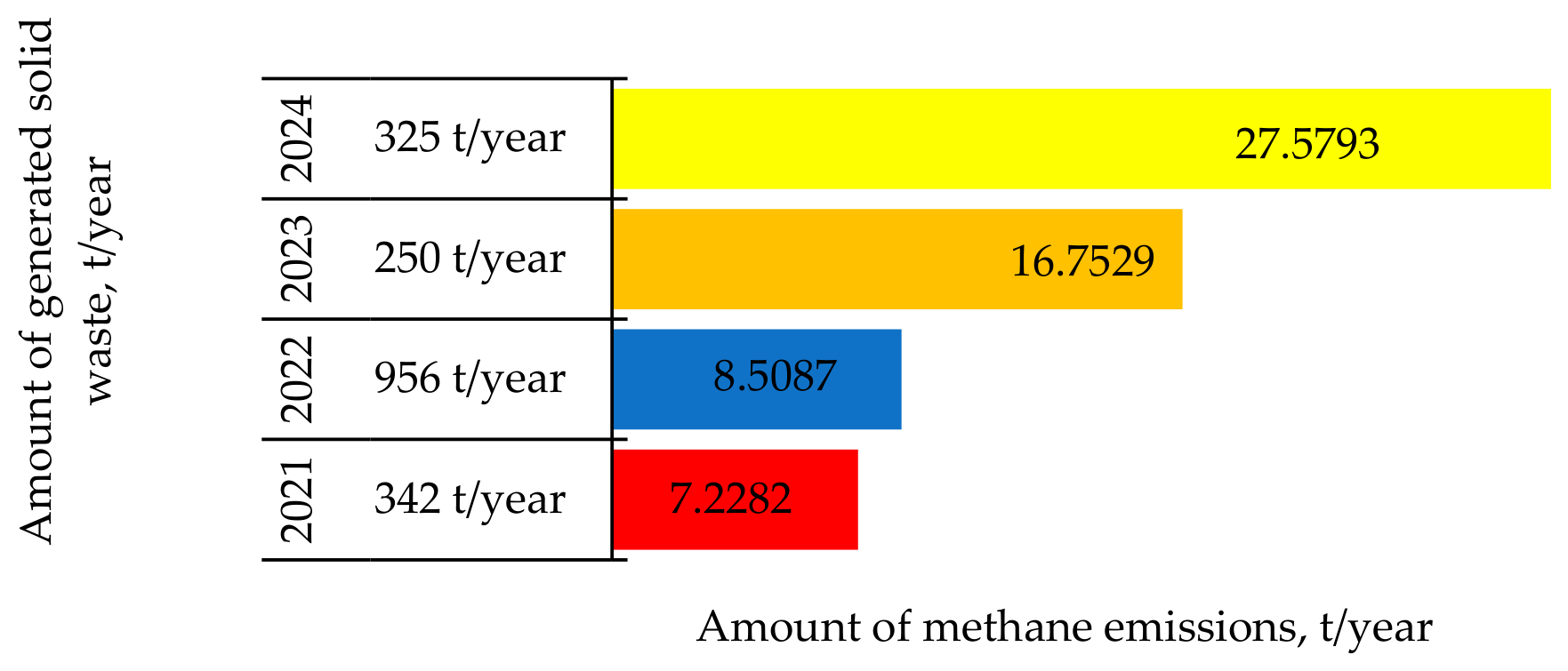
The volume of methane emissions is increasing (
Figure 5). The highest point of its release is predicted to be by 2029–2030 (
Table 13).
It is advisable to calculate biogas emissions for conditions of a stabilized waste decomposition process with maximum biogas output (fourth phase), taking into account that stabilization of the gas emission process occurs on average two years after waste disposal.
One of the most important aspects for determining gas emissions, soil conditions, and groundwater in the area of a waste storage facility is environmental monitoring. Based on the results of the scientific work, the following scheme for monitoring the state of the natural environment around waste storage facilities is recommended (
Table 14).
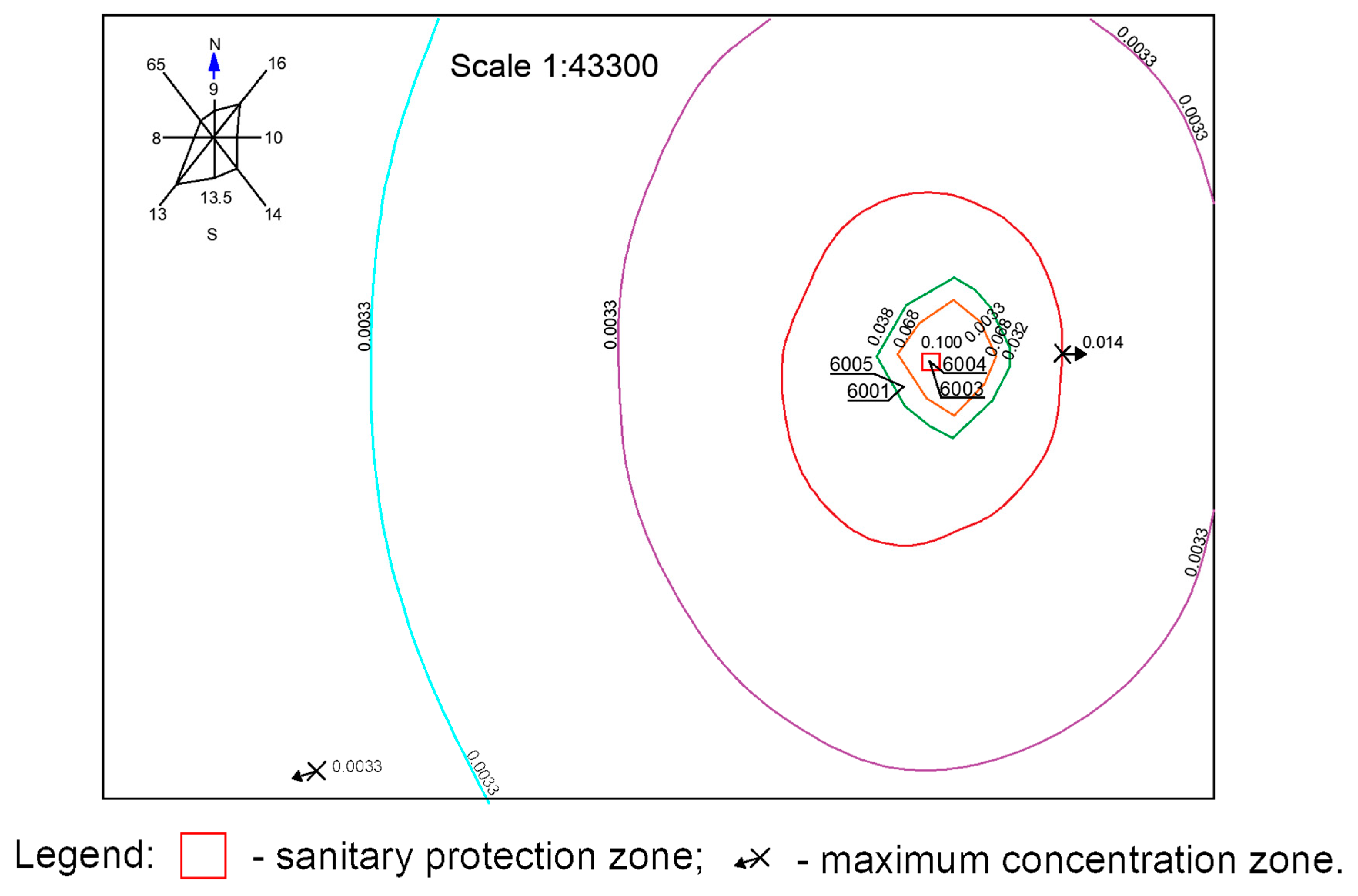
Methane dispersion in the atmospheric air from the waste storage facility is shown in
Figure 6.
Methane dispersion (
Figure 6) was calculated using the “Era” software package. This software package includes the following parameters: temperature, humidity, topography, and wind direction. Dispersion calculations are performed for all potential atmospheric pollutants. Methane, in this case, is an important resource.
Emissions peak in 2030 for the following reasons:
- (1)
In 2030, there will be a maximum volume of accumulated waste [
49];
- (2)
In 2030, the process of decay will occur on the entire volume of accumulated waste [
49];
- (3)
In 2030, there will be a maximum emission of methane and carbon monoxide as greenhouse gases [
49].
The presented material analyzes the energy potential of landfill gas and its impact on the environment through emissions of pollutants. The author emphasizes that biogas is a valuable resource that, after purification or in its original form, can be used to generate electricity, heat, or as a motor fuel. Attention is mainly paid to the dynamics of methane emissions, which account for more than half of the volume of all gases released by the landfill. These calculations cover the period from 2021 to 2030, demonstrating a steady increase in pollution, with a projected peak at the end of the decade. The study relies on mathematical models of waste accumulation to assess environmental risks and prospects for the disposal of technogenic gases. Thus, it is necessary to move from simple waste disposal to its rational use as an energy source.
4. Conclusions
The article presents an analysis and environmental assessment of the activities of a municipal waste storage facility. The article also determines the amount and composition of landfill gas emissions, including methane. According to the calculated studies in the article, there is an increase in landfill gas emissions. The climatic conditions of the region contribute to this. Therefore, gas can be considered as a potential fuel substitute for natural gas. This is especially important for regions where there are already many municipal waste storage facilities. The Karaganda Region is a territory where there are many landfills.
It should be noted that the problem of waste accumulation and methane gas formation is characteristic not only of urbanized areas.
Using the Karaganda Region as an example, it can be noted that due to the presence of large mineral-extraction enterprises, shift camps are being built. Due to the remoteness of mining operations from cities, waste storage facilities are being built near shift camps.
As a result of the scientific research, the following conclusions, recommendations, and preventive measures were made to reduce the volume of waste and emissions from it, using the example of the waste storage facility under consideration.
Due to the presence of quarries in Kazakhstan’s Karaganda Region, where mineral reserves have been depleted and mining operations have been completed, it is possible to use them for waste storage, but not for food waste. They can be used, for example, for waste rock.
For municipal waste landfills, it is important to equip them with devices (including pipes, systems, and gas storage tanks) for utilizing landfill gas.
The research conducted on landfill gas formation at solid waste landfills in the Karaganda Region not only assesses the environmental impact but also identifies clear patterns:
Temporal Patterns: MSW begins to emit landfill gas the moment it reaches the landfill. According to calculations, methane production was 7.23 tons/year in 2021, and 16.75 tons/year two years later, in 2023, meaning the volume has more than doubled. Therefore, devices for landfill gas utilization must be installed during landfill operation.
Energy Patterns: The volume of waste gas generated increases proportionally to the amount of waste brought to the landfill. This relationship allows for calculating the pipe diameter and capacity of a gas piston generator to produce electricity or heat.
Climatic Patterns: Waste decomposition varies depending on the season: in winter, waste freezes, while in summer, water is scarce. Therefore, landfill gas emissions fluctuate (up and down), meaning a calculation error of ±30% reflects these fluctuations. Therefore, equipment must be adapted to these climate changes: in spring, there will be a sharp increase in gas production, while in winter, production will decline. During periods of seasonal temperature fluctuations, the landfill begins to actively emit landfill gas, so it is necessary to install sensors to continuously monitor landfill gas.
As a result of scientific research, the following conclusions were reached, recommendations were given, and preventative measures were developed to reduce the volume of waste and emissions from it, using the example of the waste storage facility in question:
In the first five years (2021–2025), methane volumes increased from 7.2282 ± 2.1786 t/year to 38.4110 ± 11.5771 t/year. It was found that gas stabilizes within two years of waste placement, and degassing should be carried out during the landfill’s operational period and also during the post-operational period [
53].
Considering that during the period 2021–2025, the total volume of landfill gas increased more than 5 times, while methane accounts for more than half (52.915%) of the volume of landfill gas, it can be argued that this object is an energy resource. Overall, 1 m3 of landfill gas is equivalent to 0.5 m3 of natural gas, and the forecast for the volume of methane by 2030 is 81.7–92.6 tons/year, allowing us to conclude that its direct combustion is economically viable, for example, for heating, energy supply of small workers’ settlements.
Waste destruction processes in the Karaganda Region occur cyclically due to climate conditions; therefore, it is necessary to install an automated monitoring system on the solid waste landfill.
Hydrogen sulfide emissions increased more than fivefold between 2021 and 2025; this indicates a high proportion of decaying organic matter and sulfur-containing components in MSW. This poses a risk of endogenous fires.
Thus, the projected increase in methane production by 2030 opens up wide opportunities for its integration into the energy system as an alternative fuel source.



 ,
,