Article

Integrated Geology–Engineering Evaluation and Strategy Optimization for Tight Oil Development in Complex Fault Blocks: A Case Study of the G5 Block, Nanpu Sag

1
PetroChina Jidong Oilfield Company, Tangshan 063000, China
2
College of Safety Science and Engineering, Chongqing University of Science and Technology, Chongqing 401331, China
*
Author to whom correspondence should be addressed.
Energies 2026, 19(11), 2724; https://doi.org/10.3390/en19112724 (registering DOI)
Submission received: 9 May 2026 / Revised: 30 May 2026 / Accepted: 1 June 2026 / Published: 5 June 2026

Abstract

To address core challenges involving severe reservoir heterogeneity, complex fracture systems, and rapid energy depletion encountered in the development of tight oil reservoirs in the G5 block of the Nanpu Sag, this study performs a systematic analysis of geological characteristics and optimizes an integrated geology–engineering development strategy. Through the integration of 3D seismic and well-logging data, the “sandwich-style” superposition architecture of sand bodies in the Es34 sub-member is quantitatively characterized. It reveals that productivity is co-controlled by high-quality main channel sand bodies (permeability: 0.5–1 mD) and high-density fracture zones (linear density: 3.2 fractures·m−1) along structural ridges. Consequently, a comprehensive technical system is established, incorporating trajectory optimization for high-angle wells, differential stimulated reservoir volume (SRV) fracturing based on the Reservoir Quality Index (RQI), and CO2 huff-n-puff for energy supplementation. Field applications demonstrate that optimized well placement increased the drilling encounter rate of high-quality reservoirs from 42% to 78%, while CO2 huff-n-puff technology successfully restored the formation pressure coefficient from 0.65 to 0.82. The implementation of this integrated approach extended the stable production period of typical wells to 18 months, significantly mitigating production decline and increasing the ultimate recovery factor of the block to 14.5%, which provides a favorable recovery level for a complex fault-block tight oil reservoir compared with the generally low primary-recovery performance reported for analogous tight oil systems in rift-basin settings. This study confirms that the coupling zone of fracture systems along structural ridges and high-quality sand bodies represents the optimal target for economic development. The proposed geology–engineering synergy model provides a transferable technical paradigm for the efficient development of similar complex fault-block tight oil reservoirs.

1. Introduction

As conventional hydrocarbon resources progressively deplete, the global energy industry has significantly pivoted toward unconventional resources. Tight oil, as a core component of this portfolio, plays a pivotal role in ensuring global energy security and stabilizing oil price fluctuations [1,2]. Over the past two decades, the shale and tight oil revolution in North American regions—such as the Permian, Bakken, and Eagle Ford basins—has verified the efficacy of massive multi-stage hydraulic fracturing in horizontal wells for unlocking productivity in low-permeability reservoirs [3,4]. However, the extreme physical properties of tight oil reservoirs, characterized by matrix permeabilities generally lower than 0.1 mD and nanoscale pore throats, cause fluid transport mechanisms to deviate significantly from conventional Darcy’s law [5]. Recent microscopic fluid studies indicate that within the confinement of nanopores, phase behavior shifts notably, with slippage effects and Knudsen diffusion establishing themselves as the dominant flow mechanisms [6,7].
To overcome the extremely high seepage resistance of crude oil in the ultra-low permeability matrix of tight oil reservoirs, the construction of a complex fracture network with “stimulated reservoir volume (SRV)” through hydraulic fracturing engineering has become the core technical means for efficient development of such reservoirs [8]. Classical theories proposed by Mayerhofer et al. posit that the extent of the SRV directly dictates the Estimated Ultimate Recovery (EUR) of a single well [9]. Nevertheless, as development matures, conventional volume fracturing faces substantial challenges. On one hand, tight oil wells universally suffer from rapid energy dissipation, with first-year production decline rates exceeding 60% in certain blocks [10,11]. On the other hand, the long-term conductivity of fractures is severely affected by stress sensitivity; proppant crushing and embedment often lead to fracture closure, thereby accelerating productivity loss [12,13]. Addressing these issues, the academic community has recently shifted focus toward integrating Enhanced Oil Recovery (EOR) with carbon emission reduction strategies. Specifically, CO2 huff-n-puff technology has been extensively investigated for its ability to supplement formation energy during the injection cycle and reduce crude oil viscosity via molecular diffusion during the soaking period [14,15,16]. The latest molecular dynamics simulations by Luan et al. (2020) reveal that supercritical CO2 can break through water film barriers and penetrate 3 nm level inorganic nanopores to displace oil adsorbed on silica surfaces—a feat unachievable by traditional water flooding in confined nanoscale spaces [17]. Furthermore, Tan et al. (2022) confirmed that in the complex natural fracture–vug networks of carbonate reservoirs, while CO2-EOR can significantly improve the sweep efficiency of crude oil, it is highly prone to gas channeling (early gas breakthrough), which necessitates the precise optimization and control of injection parameters [18].
Although existing technologies have achieved immense commercial success in North American cratonic basins—where simple geometric fracture placement often suffices—direct replication of these experiences is frequently unfeasible for tight oil reservoirs in complex fault blocks [19]. Unlike the relatively gentle stratigraphy of North America, many rift basins (such as the target area of this study) are characterized by intense faulting systems and abrupt lithological variations. Research by Zoback and Sone points out that complex local in situ stress fields near faults can cause hydraulic fractures to undergo unanticipated torsion or arrest [20,21]. Numerical simulations by Gong et al. (2019) demonstrate that the coupled interaction between bedding planes and natural fractures dominates the propagation path of hydraulic fractures in shale reservoirs, easily inducing deflection, branching and uneven extension of fractures, and resulting in an asymmetrical distribution of the artificial fracture network [22]. Moreover, Aslam et al. (2024) proposed a novel hybrid physics/data-driven reduced-order model for fractured reservoir simulation, which effectively reduces the computational cost of numerical simulation while improving the convergence and prediction accuracy of history matching for complex fractured reservoirs [23].
Currently, the efficient guidance of drilling and completion engineering with accurate geological and geomechanical characterization is a core challenge in unconventional oil and gas development. Wang et al. (2023) established a high-precision 3D geomechanical model for deep shale gas reservoirs in the Luzhou block, Sichuan Basin, which provides a solid geological basis for the optimization of well trajectory design, wellbore stability control and fracturing treatment [24]. Cipolla et al. (2010) demonstrated that integrating microseismic hydraulic fracture monitoring data with fracture propagation simulation and reservoir numerical simulation can effectively improve the accuracy of stimulation optimization and production performance prediction [25]. While Hou et al. (2021) explored multi-well synergistic CO2 huff-n-puff modes for formation energy supplementation in fault-block reservoirs with fragmented structures and imperfect injection–production well patterns [26], they confirmed that the optimized synergistic gas injection mode can effectively suppress gas channeling and improve oil recovery compared with conventional single-well CO2 huff-n-puff. The complex fault-block reservoirs in the Nanpu Sag of the Bohai Bay Basin are characterized by rapid sedimentary facies changes, widely developed faults, and strong reservoir heterogeneity, which bring great challenges to fine reservoir characterization and efficient development. Li (2023) pointed out that the current development of such reservoirs faces problems such as difficult identification of inter-well sand body distribution, unclear remaining oil distribution, and low water flooding efficiency, and systematically proposed a set of key technologies for fine description of complex fault-block reservoirs to support efficient development [27].
In light of this, this study aims to establish an efficient development evaluation and optimization framework tailored for complex fault-block tight oil reservoirs. Based on the deep fusion of 3D seismic and well-logging data, this paper first characterizes reservoir architecture and local productivity-controlling factors. Secondly, incorporating geological and engineering observations, a differential fracturing strategy is evaluated using the Reservoir Quality Index (RQI). Finally, the effectiveness of CO2 huff-n-puff is assessed as an energy-supplementation and oil-displacement method using the available core-displacement experiments and field production response. This study attempts to bridge the practical gap between geological modeling and dynamic engineering regulation under complex fault-block geological conditions.

2. Geological Setting and Reservoir Characterization

2.1. Regional Structural and Stratigraphic Framework

Tectonically, the G5 fault block is situated on the northern margin of the Nanpu Sag in the Bohai Bay Basin, China (GL area). This region is profoundly influenced by the tectonic stress field of the Yanshan Fold Belt, presenting a structural pattern characterized by “steep in the north and gentle in the south.” The G5 block represents a rifted zone with complex geological structures; its southern boundary is controlled by the regional large-scale GL Fault, while its northern section abuts the boundary fault of the Nanpu Sag, forming a relatively closed structural unit with a well-developed fault system.
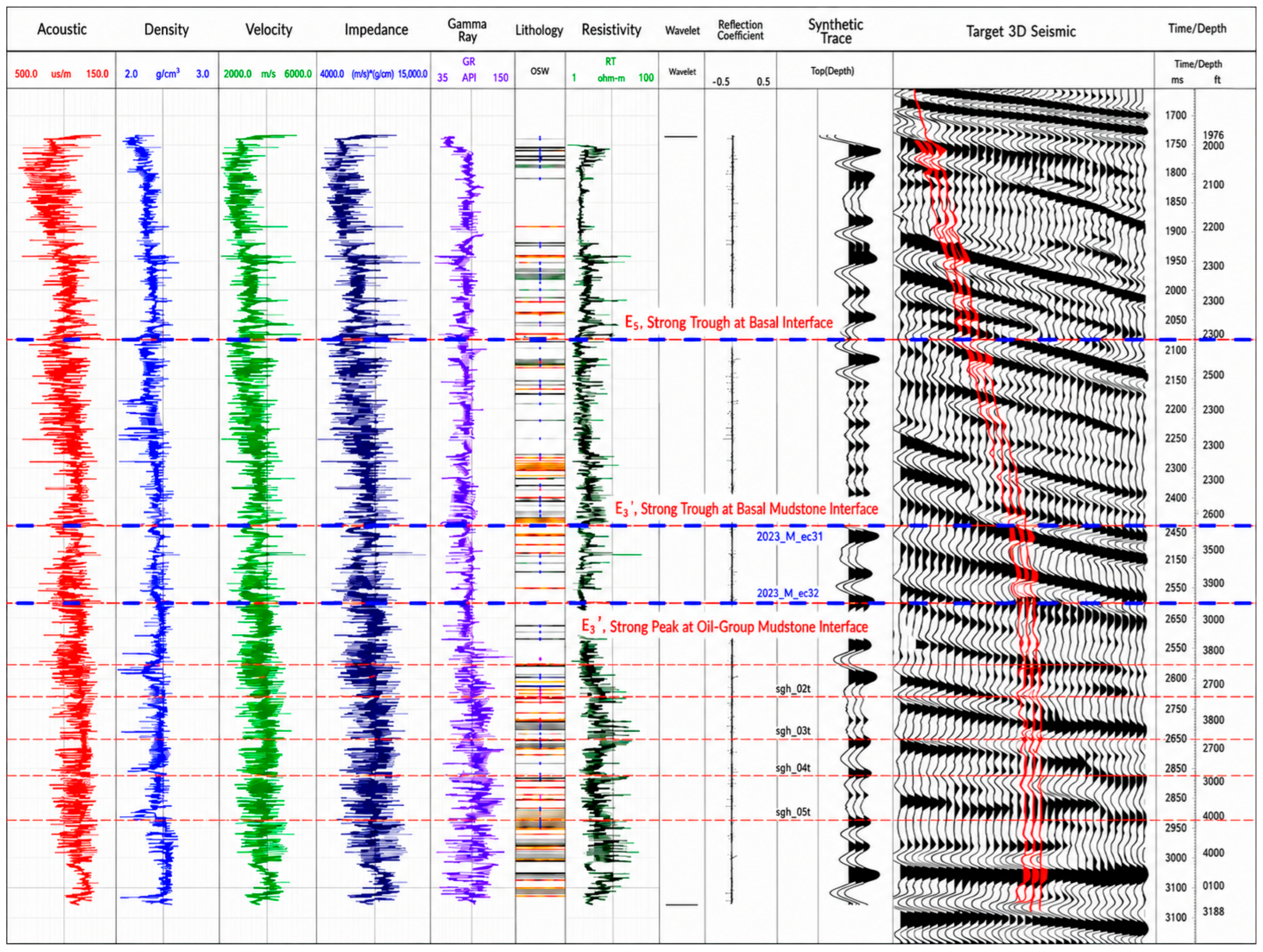
Regarding stratigraphy, the area has developed Paleogene, Neogene, and Quaternary sedimentary sequences from bottom to top. The target interval of this study is the third member of the Paleogene Shahejie Formation (Es3), specifically the Es34 sub-member. Based on core data from drilled wells, well logs, and 3D seismic data with a dominant frequency of 21 Hz, a high-precision isochronous stratigraphic framework is established within the study area. The Es34 sub-member is identified as a key marker bed, exhibiting distinct geophysical response characteristics: well logs display a typical three-level step-like electrical signature, while seismic facies manifest as medium-amplitude, high-frequency, parallel reflections. To demonstrate these geophysical characteristics and the well–seismic response relationship of the target interval, a comprehensive logging and synthetic seismogram profile is presented (see Figure 1), which clearly shows the correspondence between multi-parameter logging curves and seismic reflection features.

2.2. Sedimentary Facies and Sand Body Architecture

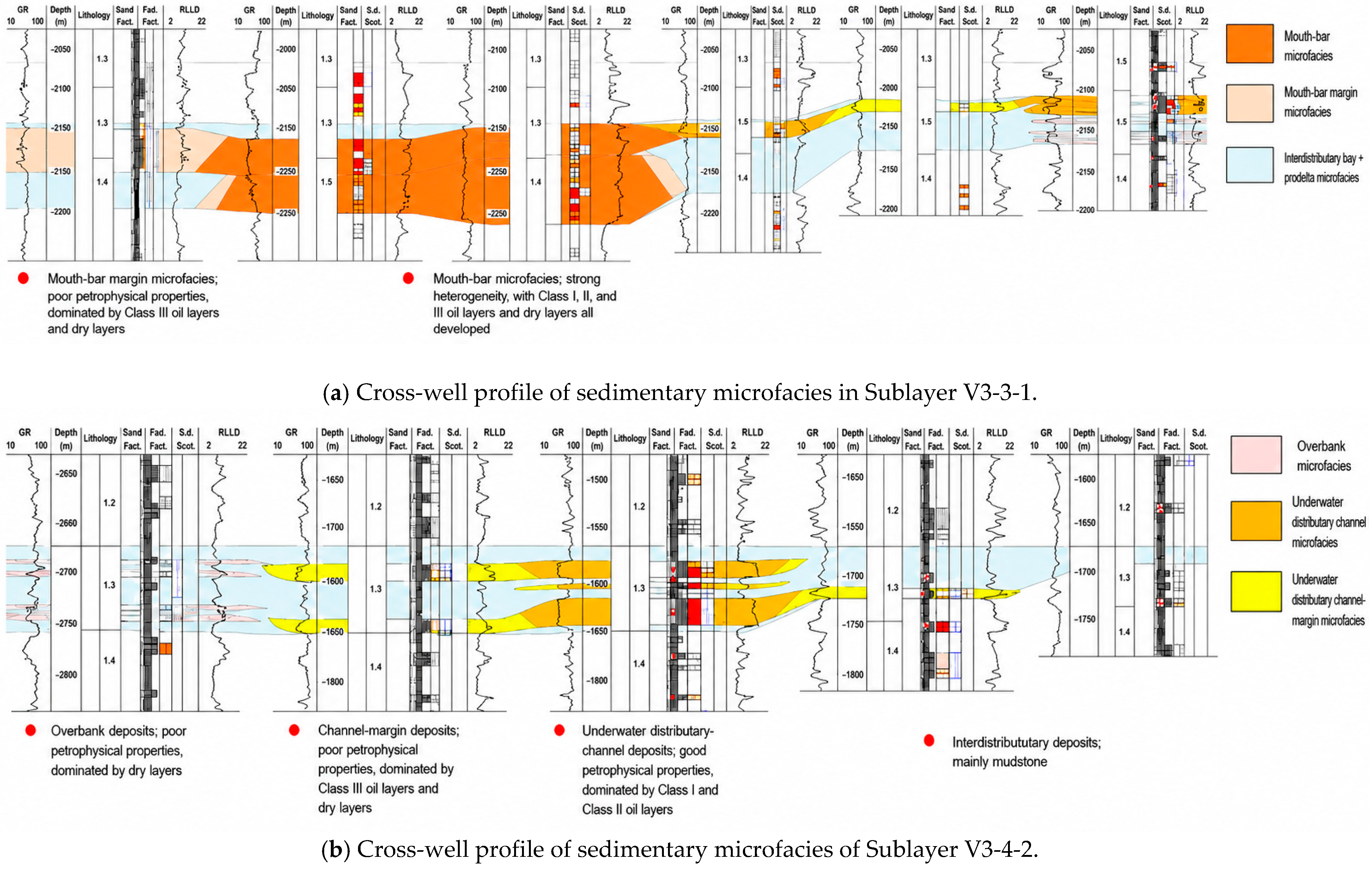
Sedimentary environment analysis indicates that the Es34 sub-member of the G5 fault block primarily developed a fan-delta front depositional system. The distribution of sand bodies is dually controlled by tectonic paleogeomorphology and sediment provenance, exhibiting significant heterogeneity. The main channel sand bodies extend in a NW–SE ribbon-like pattern, possessing relatively good continuity. Vertically, sand bodies frequently alternate with mudstones, forming a typical “sandwich-style” superposition architecture. To characterize the internal architecture and microfacies distribution of the fan-delta front system, detailed well correlation sections and sedimentary microfacies interpretations are presented (see Figure 2). These profiles clearly illustrate the lateral variation and vertical stacking relationships of the mouth bar, distributary channel, and overbank deposits, highlighting the strong heterogeneity and facies-controlled reservoir quality differences.
Statistics from drilled wells indicate that the sand-to-gross ratio in the main channel area exceeds 0.6, with the maximum sand thickness reaching 28 m in areas of multi-stage channel superposition. Notably, fault activity exerts pronounced control on sand body deposition. At the structural ridges, regulated by syn-sedimentary fault activities, sand body thickness increases by 40–60% compared to the flanks. This tectonically controlled thickening phenomenon provides the material basis for the formation of high-quality “sweet spot” zones.

2.3. Reservoir Petrology and Physical Properties

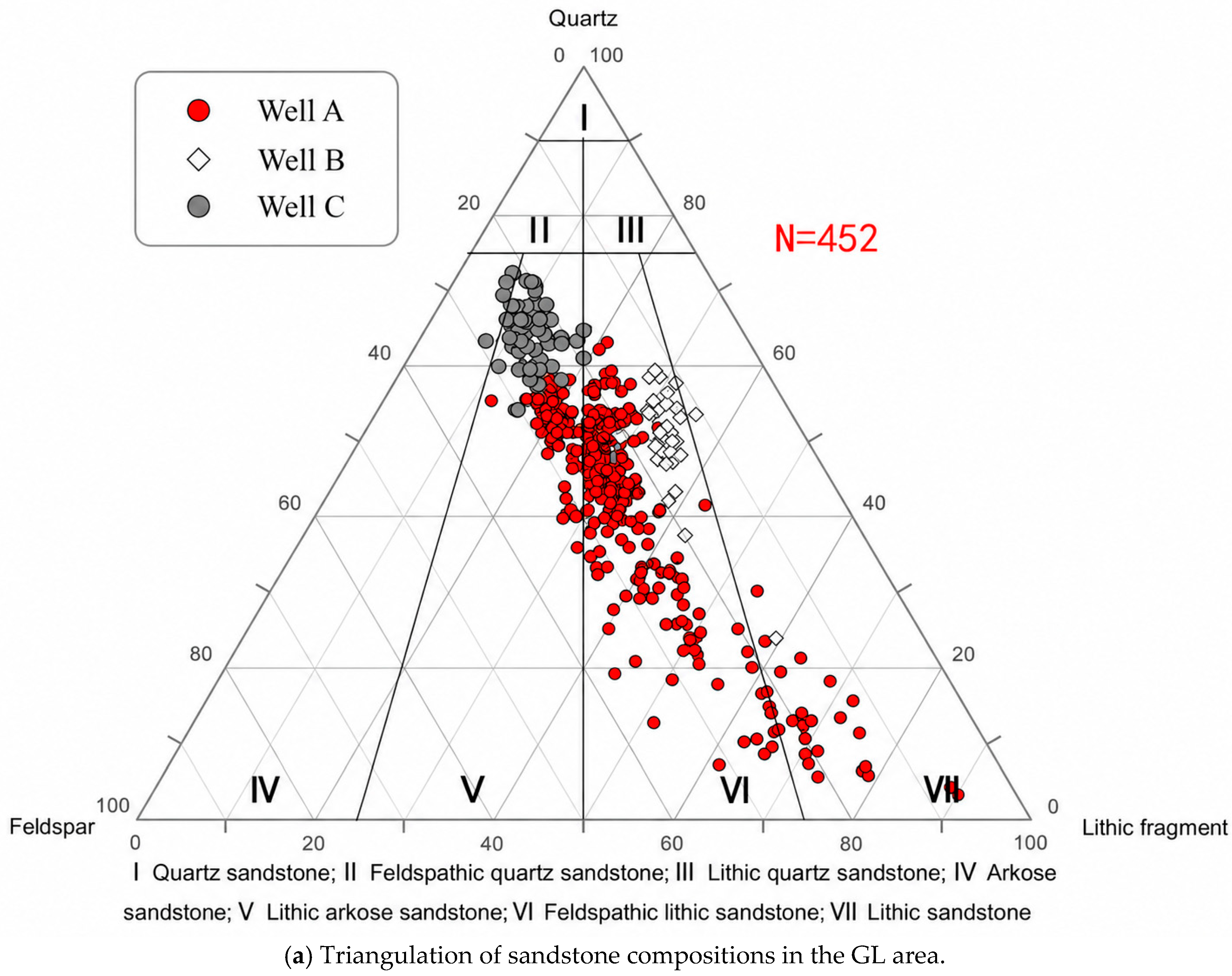
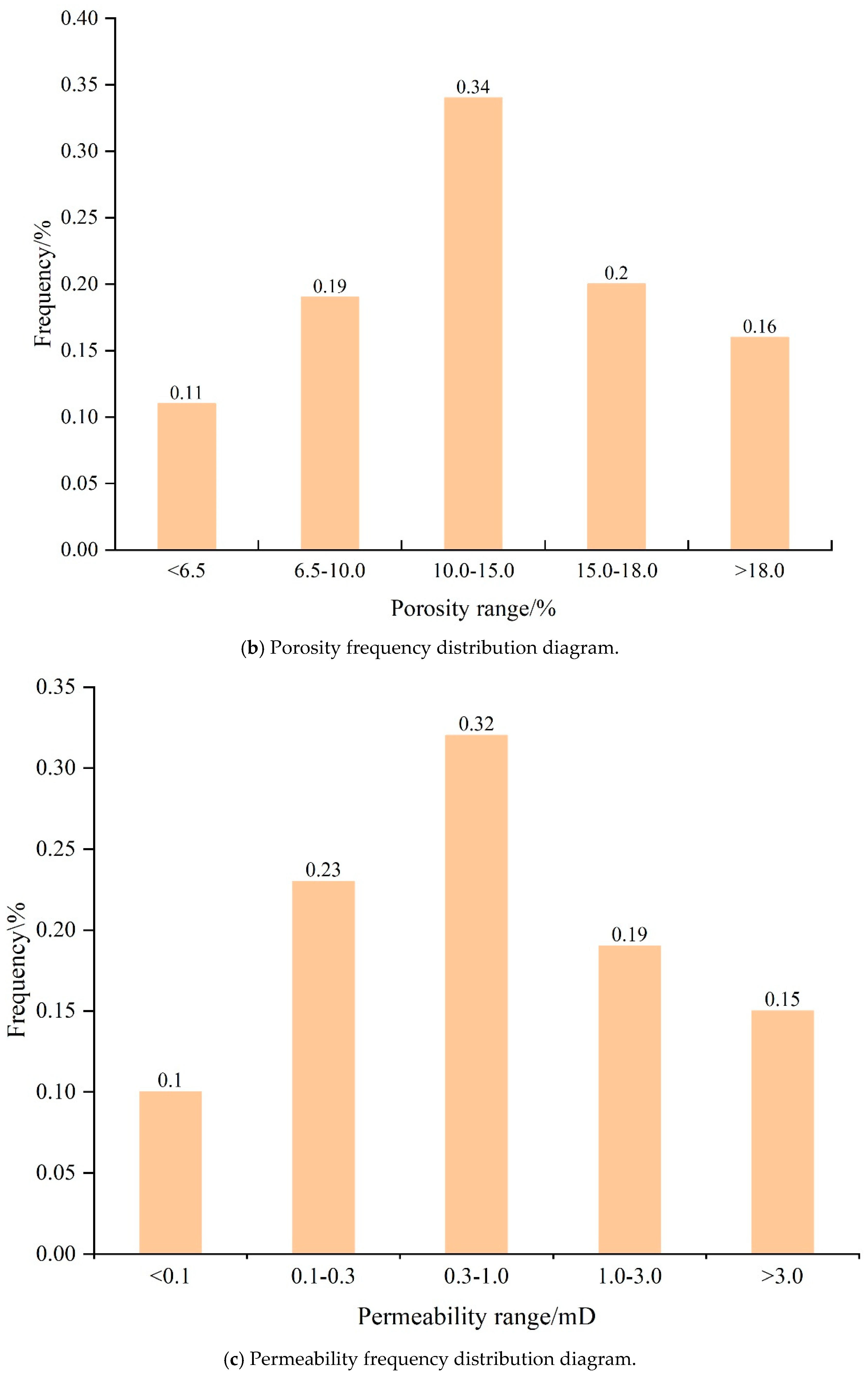
Mineral composition analysis reveals that the reservoir lithology in the G5 block is dominated by feldspathic litharenite and lithic arkose. Clastic grains are primarily composed of quartz (45–55%), feldspar (20–30%), and rock fragments (15–25%). The reservoir has undergone strong diagenetic modification, mainly manifesting as mechanical compaction and cementation. Carbonate cement content averages approximately 8%, which significantly reduces primary pore space, rendering the reservoir tight. Although secondary dissolution pores and structural micro-fractures are locally developed, the overall physical properties are poor. The lithological classification based on quartz–feldspar–lithic fragment composition, together with the statistical distributions of porosity and permeability, further highlights the strong heterogeneity of the reservoir (see Figure 3).
For development evaluation in the G5 fault block, reservoir intervals were divided into three local operational types according to the measured porosity and permeability ranges and their development response within this block (see Table 1). This grouping is not intended as a universal reservoir-quality classification. Type I intervals are relatively better within the G5 dataset, commonly showing porosity greater than 12% and permeability greater than 1 mD, and are mainly distributed in the center of the main channels. Type II intervals show porosity of 8–12% and permeability of 0.5–1 mD, whereas Type III intervals generally have porosity lower than 8% and permeability lower than 0.5 mD. These categories are used only to describe the internal heterogeneity of the G5 block. In addition to porosity and permeability, effective thickness, sand body continuity, structural position, fracture development, crude-oil properties, and stimulation response also influence the practical development quality of each interval.
The crude oil in the GL area tight oil reservoir is characterized by relatively light density and low viscosity. The reported density at 20 °C ranges from 0.8485 to 0.8646 g/cm3, with an average of 0.854 g/cm3, indicating mainly normal oil. The reported viscosity at 50 °C ranges from 4.51 to 11.82 mPa·s, with an average of 8.949 mPa·s. The freezing point ranges from 30 to 39 °C, with an average of 35.67 °C, and the wax content ranges from 17.34% to 22.63%, with an average of 19.43%.

2.4. Source Rock Characterization and Accumulation Mechanism

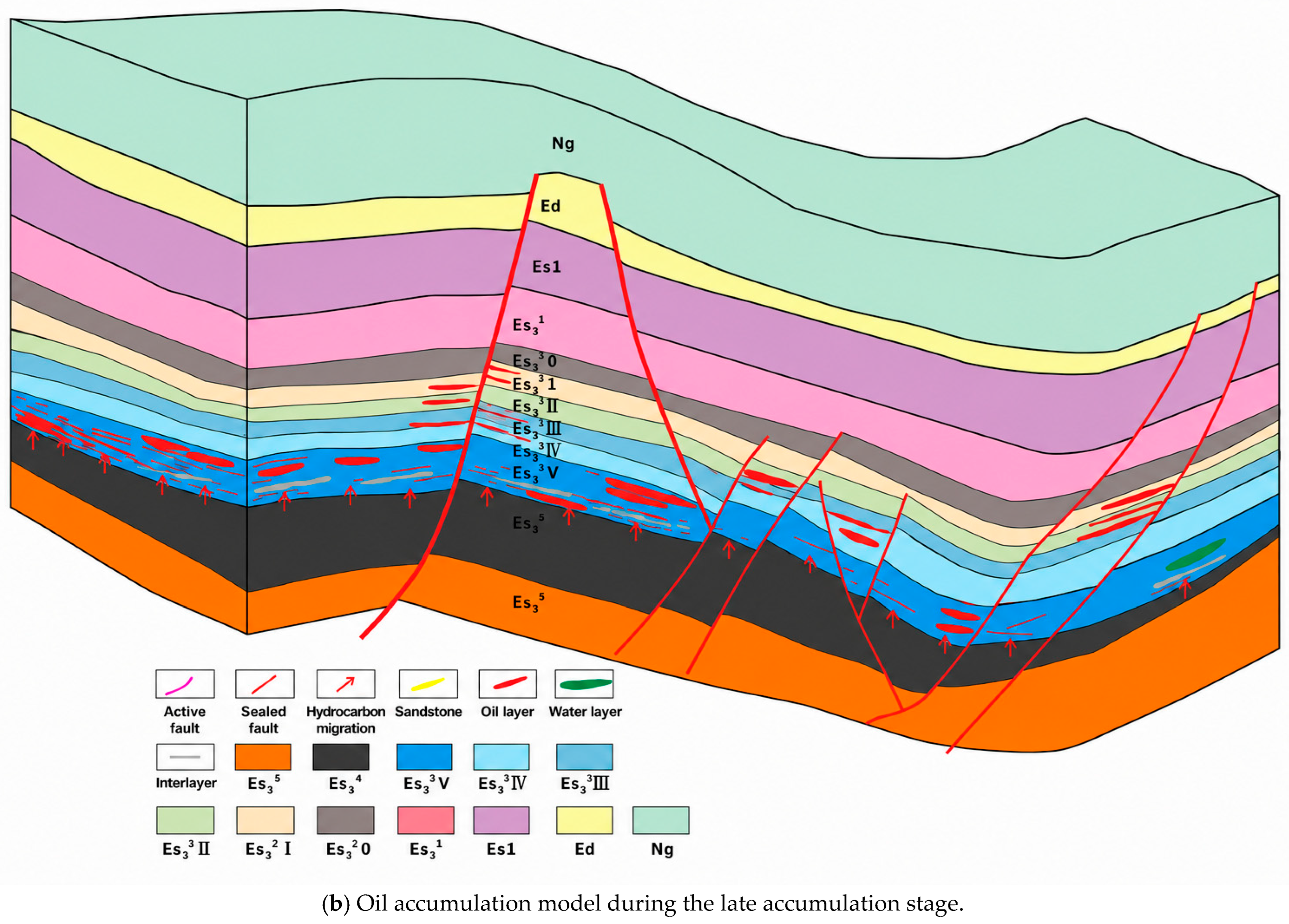
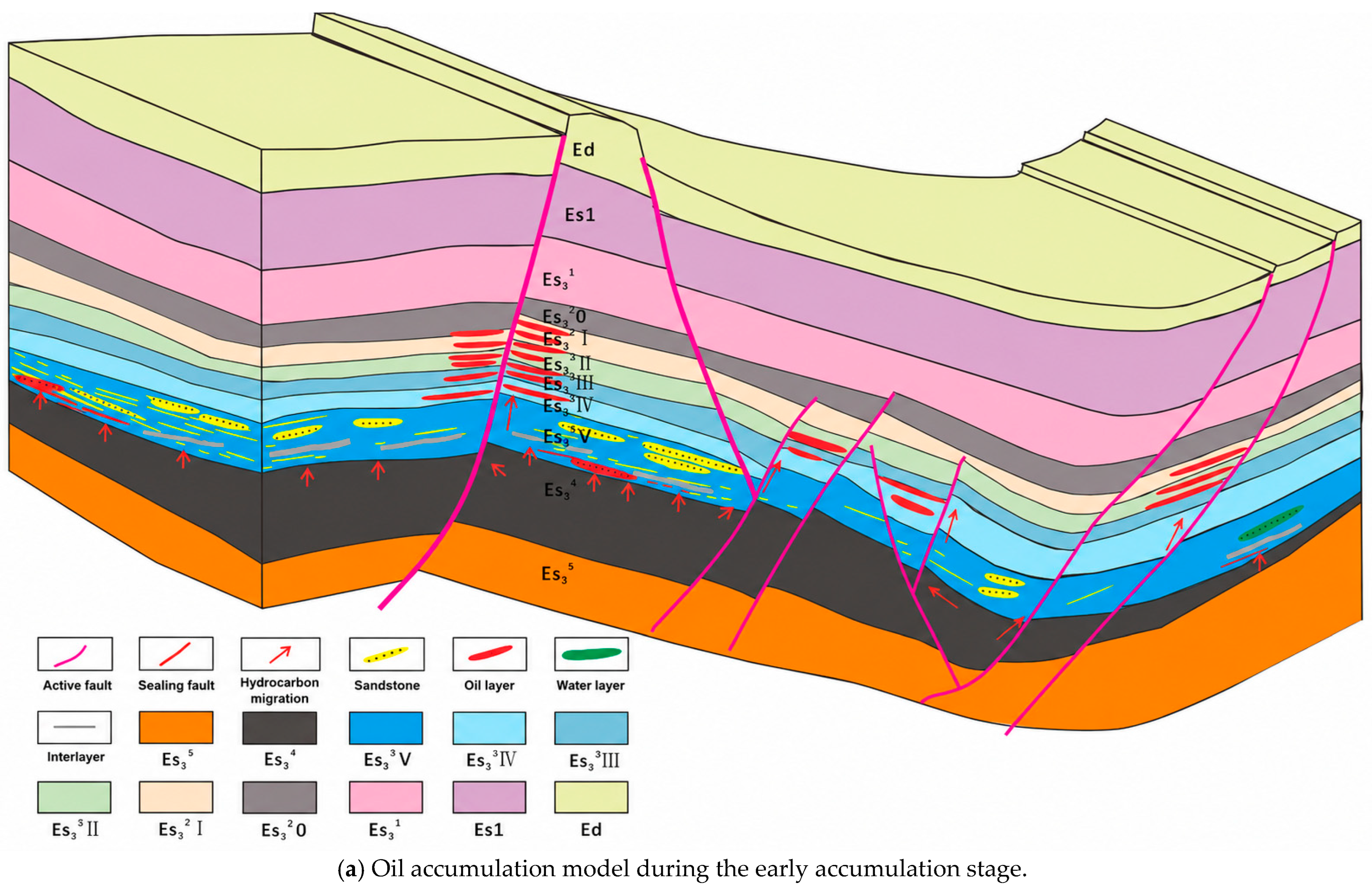
The dark mudstones developed in the Es34 sub-member serve as the primary source rocks in this area. Geochemical analysis indicates generally high Total Organic Carbon (TOC) content, with 68% of samples exhibiting TOC values greater than 2%, classifying them as high-quality source rocks. During the deposition of the late accumulation stage, source rocks reached their peak hydrocarbon expulsion, with expulsion intensity peaking between 65 × 104 and 80 × 104 t/km2. The accumulation of tight oil in the G5 block is characterized by “continuous” aggregation, and its enrichment is controlled by the coupling of multiple geological factors, including hydrocarbon generation, fault activity, and source–reservoir configuration, as illustrated in the conceptual geological model (see Figure 4).
Hydrocarbon Generation Drive: Overpressure generated by hydrocarbon generation in thick, high-quality source rocks provided the primary driving force for initial migration while simultaneously inducing the opening of micro-fractures.
Fault Transport: The long-term development of the fault system effectively regulated migration and accumulation efficiency, connecting deep source rocks with shallow reservoirs.
Source–Reservoir Configuration: Close contact between source rocks and reservoirs (near-source or intra-source) significantly increased the probability of charging. Specifically, the coupling zone of fault systems at structural ridges and thick, high-quality sand bodies is identified as the “sweet spot” area with the highest hydrocarbon enrichment.

3. Evaluation of Development Performance and Controlling Factors

3.1. Review of Development Stages and Performance

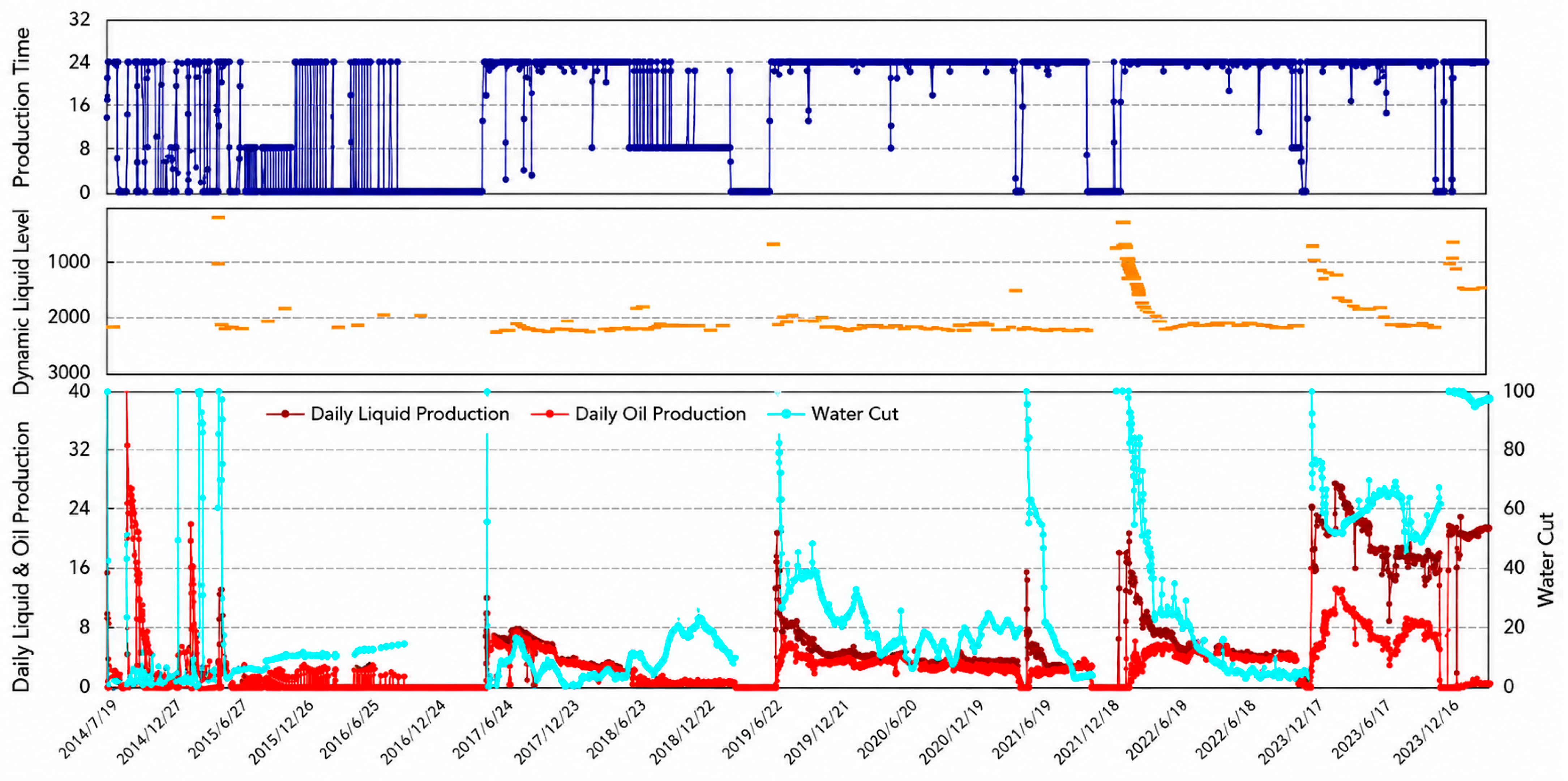
The development history of the G5 fault block can be categorized into three distinct stages: pilot exploration (2015–2018), technological optimization (2019–2021), and field application and technical adjustment (2022–2023). In the early stage, limited by an insufficient understanding of reservoir heterogeneity, a rectangular well pattern with spacing of 500–800 m was primarily deployed. Production data indicates that under this well pattern, the sand body drilling encounter rate was merely 45–60%. Furthermore, rapid energy depletion was observed post-commissioning, with natural decline rates reaching as high as 65%. The dynamic production performance and operational adjustments during different development stages are clearly reflected in the time-series curves of production, liquid level, and water cut (see Figure 5).
With the implementation of high-angle wells and improved fracturing design, the development response improved relative to earlier directional-well development. According to the supplied development evidence, the anonymized high-angle Well F showed better performance than directional wells, with initial productivity approximately 2.3 times that of directional wells. The high-angle design also enabled a larger fracturing scale, with an average fluid intensity of 64.4 m3/m and sand intensity of 3.1 m3/m. These observations indicate that well-type optimization and stimulation-scale adjustment are important for improving the development response of the G5 tight oil reservoir, although a complete block-wide recovery-factor evaluation is not claimed here.

3.2. Geological Controlling Factors of Productivity

3.2.1. Sedimentary Microfacies and Sand Body Superposition

Dynamic production data indicate that single-well productivity in the G5 fault block is influenced by multiple coupled factors, including sand body architecture, effective reservoir thickness, permeability distribution, fracture development, well trajectory, and stimulation intensity. The available field observations indicate that multi-stage channel superposition and relatively greater effective sand thickness provide more favorable geological conditions, but these factors are not treated as independent predictors of production. For example, well G5-*2 in an area of three-stage channel superposition achieved higher initial daily oil production than well G5-*3 in a single-stage sand body area, supporting a local descriptive comparison within the G5 dataset.

3.2.2. Heterogeneity of Physical Properties

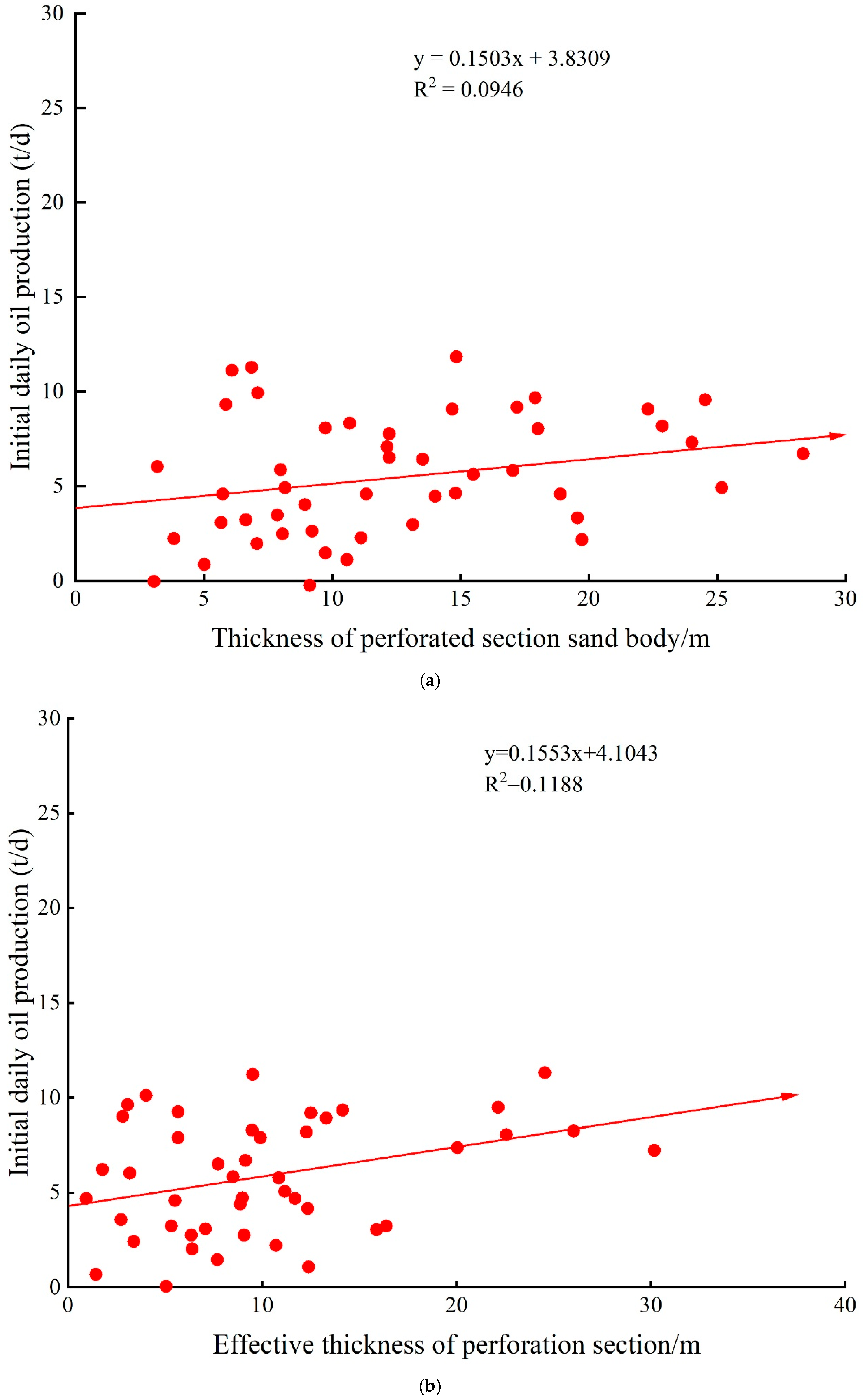
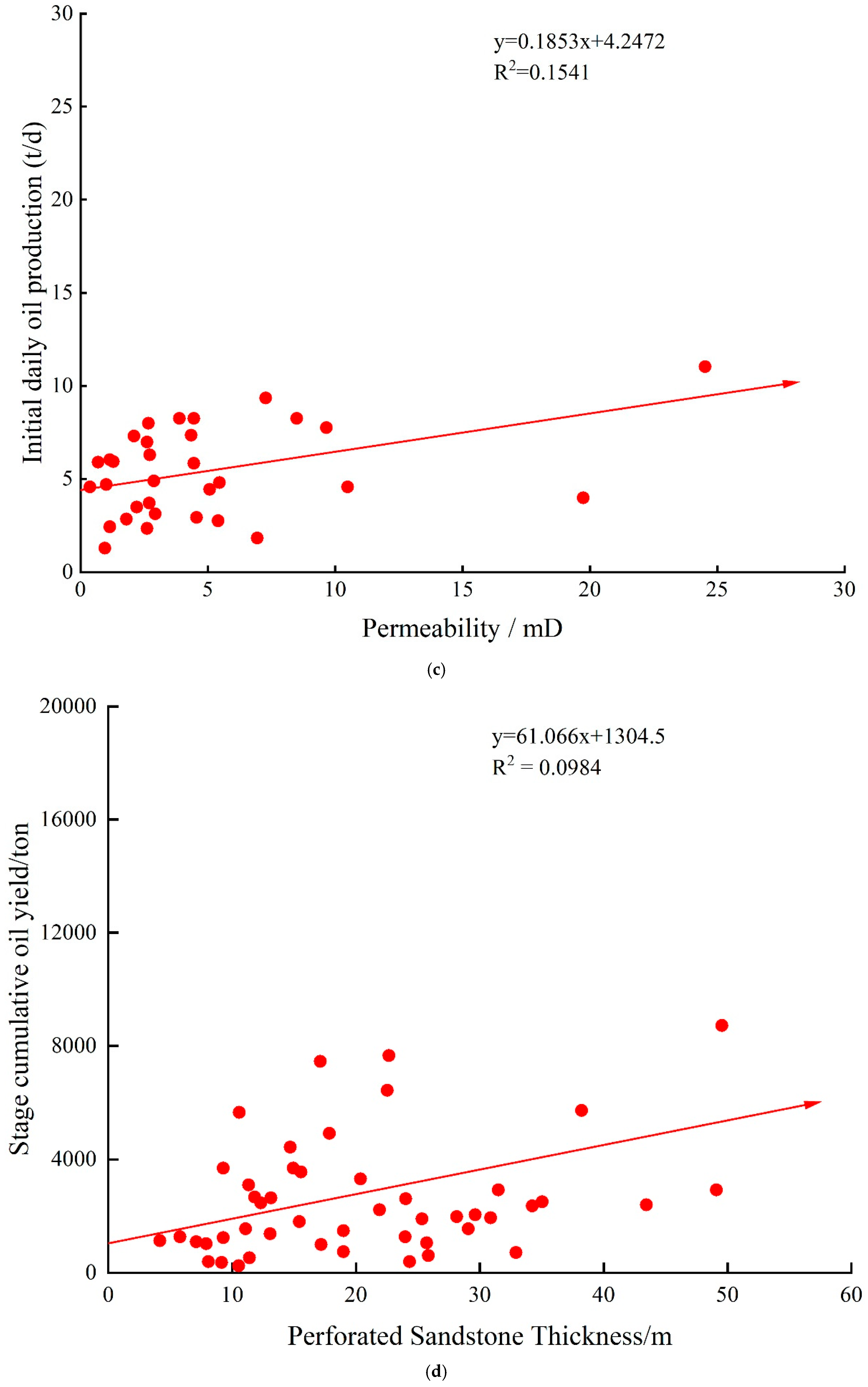
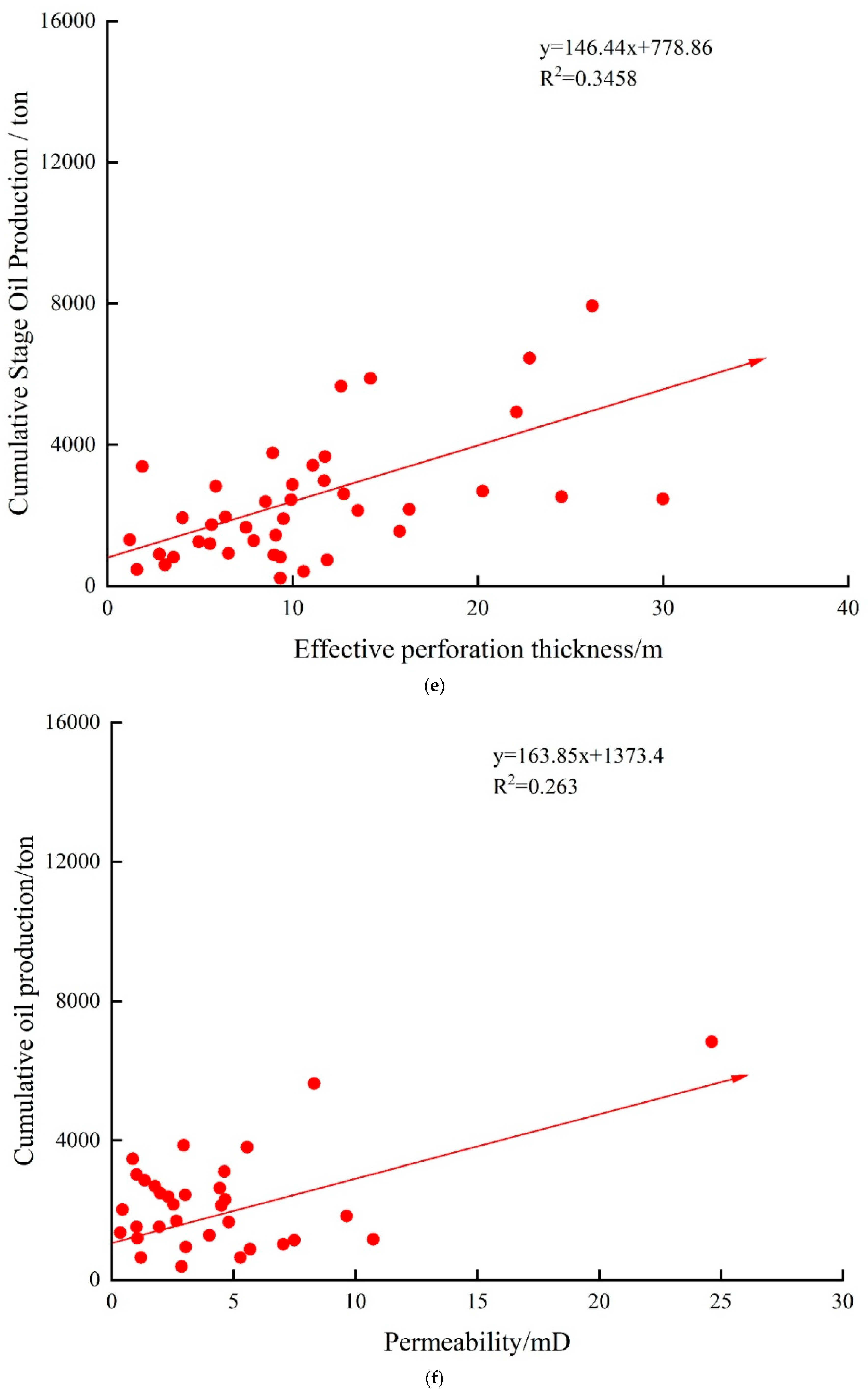
The available core, logging, and production data show that reservoir physical properties contribute unevenly to production response within the G5 block. Permeability intervals of 0.5–1 mD account for a limited part of pore volume but contribute substantially to production, indicating the development importance of relatively better permeable intervals. The relationships among sand body thickness, effective thickness, permeability, and production shown in Figure 6 are treated as local descriptive comparisons rather than predictive regression models. Production is controlled by the combined effects of sedimentary facies, reservoir continuity, structural position, natural fractures, well trajectory, and stimulation design.

3.2.3. Structural Ridge and Fracture System

The fault system exerts distinct control on hydrocarbon accumulation. The average cumulative oil production per well in structural ridge areas (1.2 × 10⁴ t) is significantly higher than in structural lows (0.6 × 10⁴ t). Formation Micro-Imager (FMI) data further confirm that fracture density within 200 m of fault zones reaches 3.2 fractures·m−1, which is four times that of areas far from faults (0.8 fractures·m−1). This natural fracture network effectively enhances matrix flow capacity.

3.3. Engineering Controlling Factors of Productivity

3.3.1. Well Trajectory and Encounter Rate

Well type design directly determines the degree of control over high-quality reservoirs. Statistical data show that high-angle wells (deviation > 45°) deployed along the strike of main channels achieved an average sand body encounter rate of 78%, far surpassing the 42% of conventional directional wells. The typical horizontal well G5-*1 (horizontal section length: 1200 m), through precise trajectory control, achieved a Type I reservoir encounter ratio of 33%, sustaining a stable production period of 18 months.

3.3.2. Fracturing Parameters and Stimulation Intensity

Optimization of volume fracturing parameters has significantly enhanced the stimulated reservoir volume (SRV) and consequently improved well productivity. Pilot test results demonstrate that, compared with conventional fracturing operations, increasing the fracturing fluid injection volume to approximately 2000 m3 and raising the sand ratio to 20% effectively promoted fracture propagation and reservoir stimulation efficiency. Under these optimized conditions, fracture half-length increased from 80–120 m to 150–200 m, while fracture conductivity improved to 80–120 mD·cm. In particular, the application of low-viscosity slickwater and multi-stage temporary plugging technology in well G5-*5 increased fracture-network complexity by nearly 40%, resulting in initial daily oil production approximately twice that of adjacent offset wells.
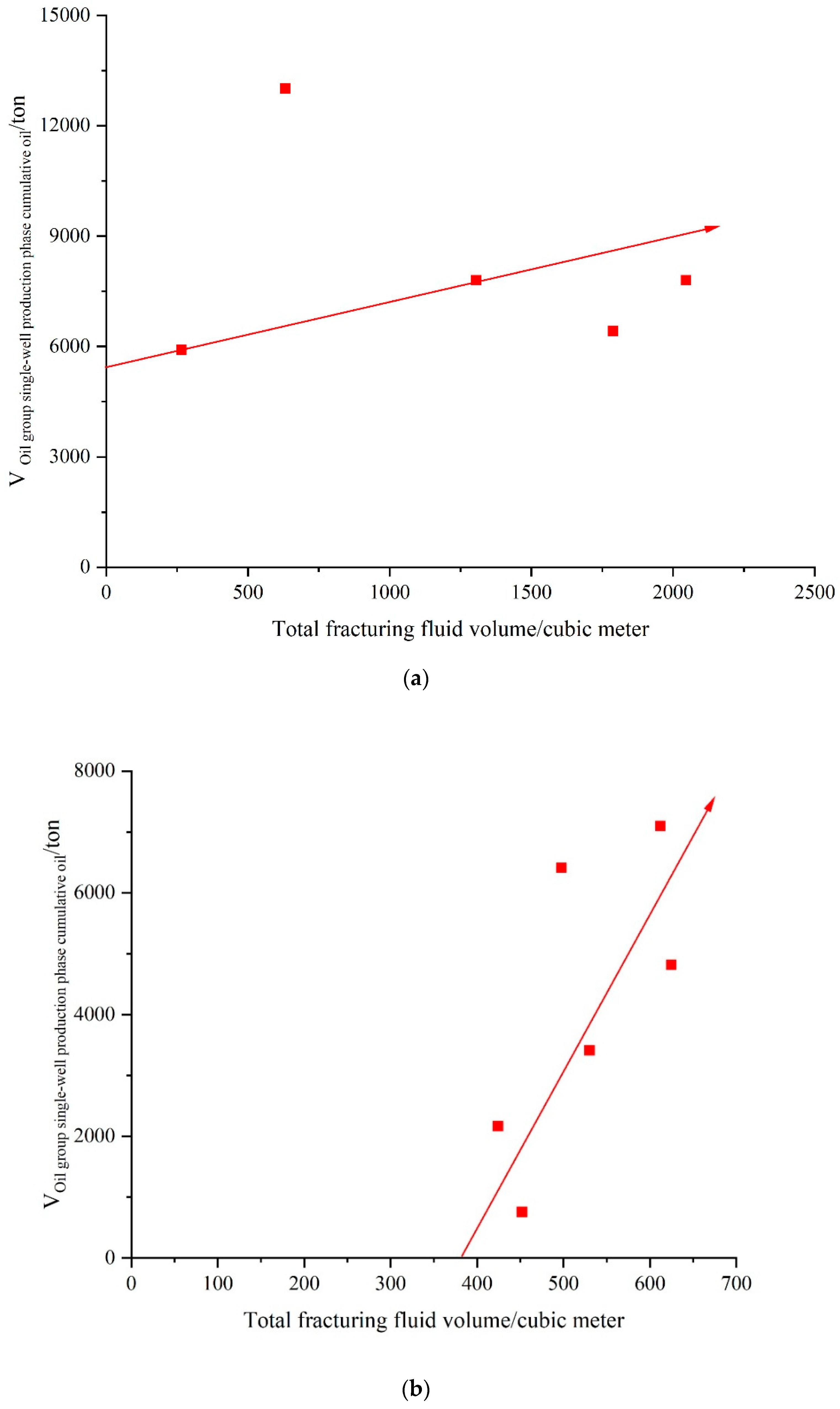
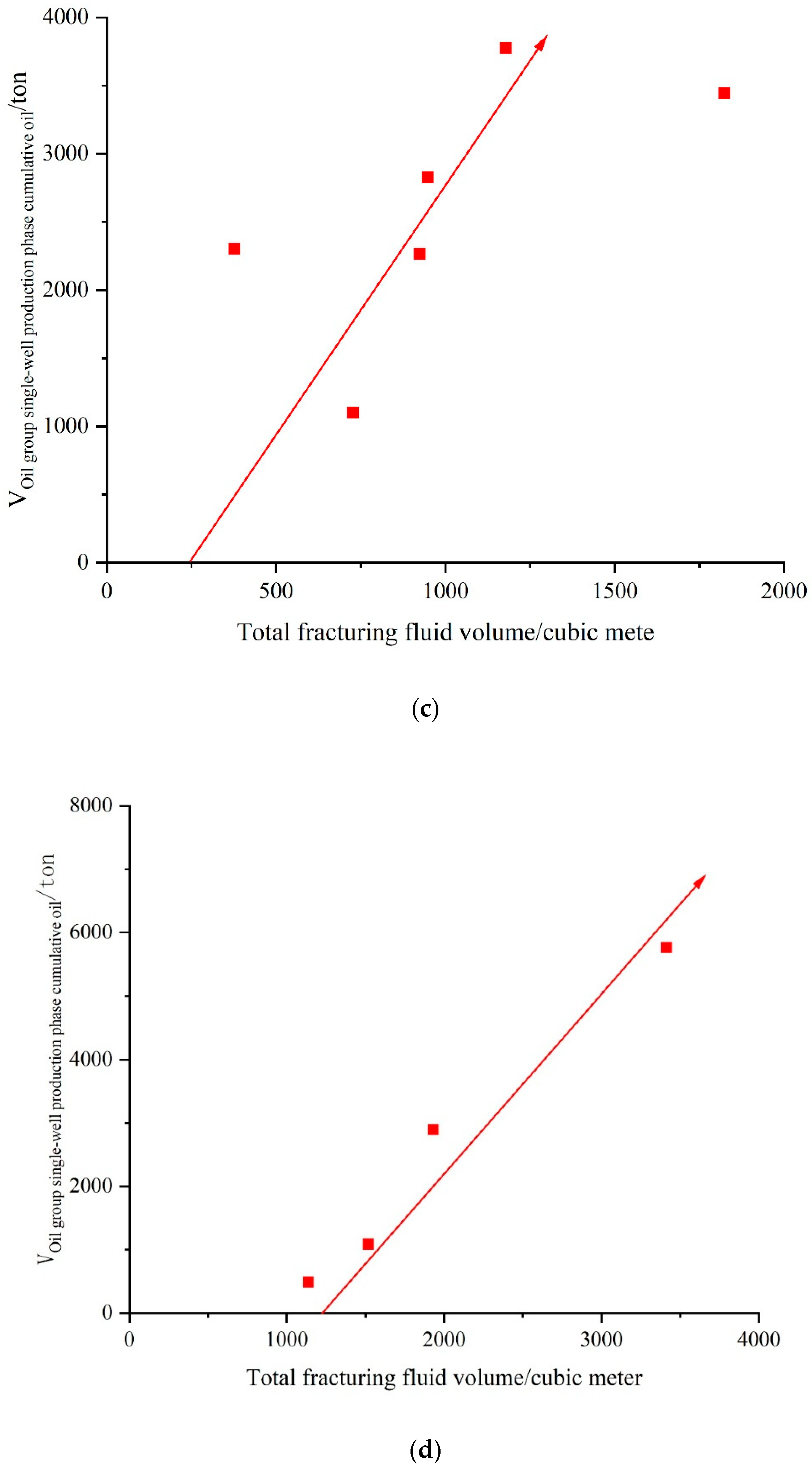
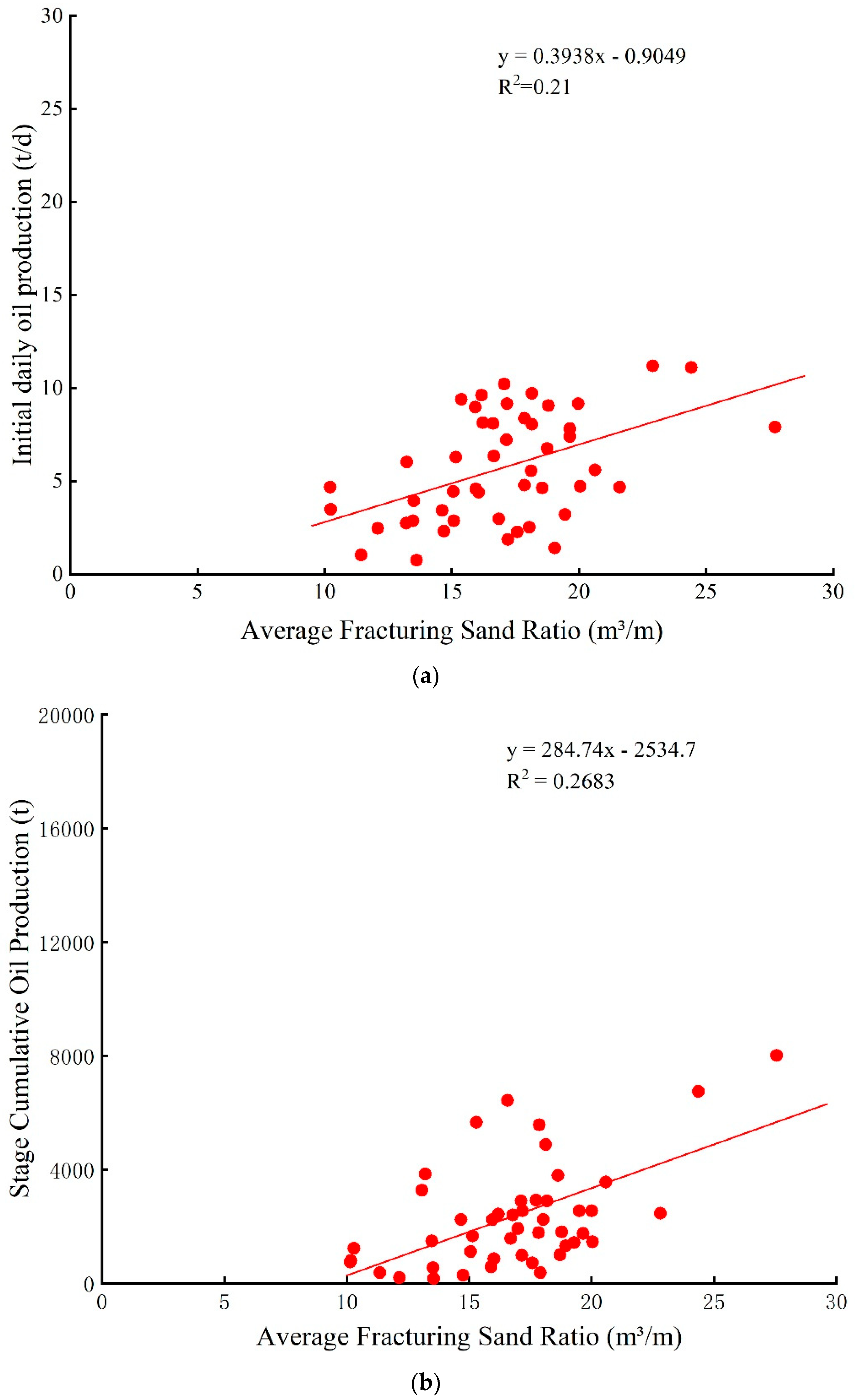
To further describe the field response to volume fracturing parameters, the relationships between fracturing-fluid injection volume, average sand ratio, and staged cumulative oil production are summarized in Figure 7 and Figure 8. Because several section-based plots contain only a small number of wells, these figures are used as field observations rather than statistically robust prediction models. Under comparable local geological conditions, appropriately increasing the stimulation scale tends to improve the production response, but the effect is still jointly controlled by reservoir type, sand body continuity, fracture development, and well placement. These results suggest that increasing SRV through appropriately scaled volume fracturing can improve the development response of tight oil reservoirs in complex fault-block settings.

3.3.3. Energy Supplementation by CO2 Huff-N-Puff

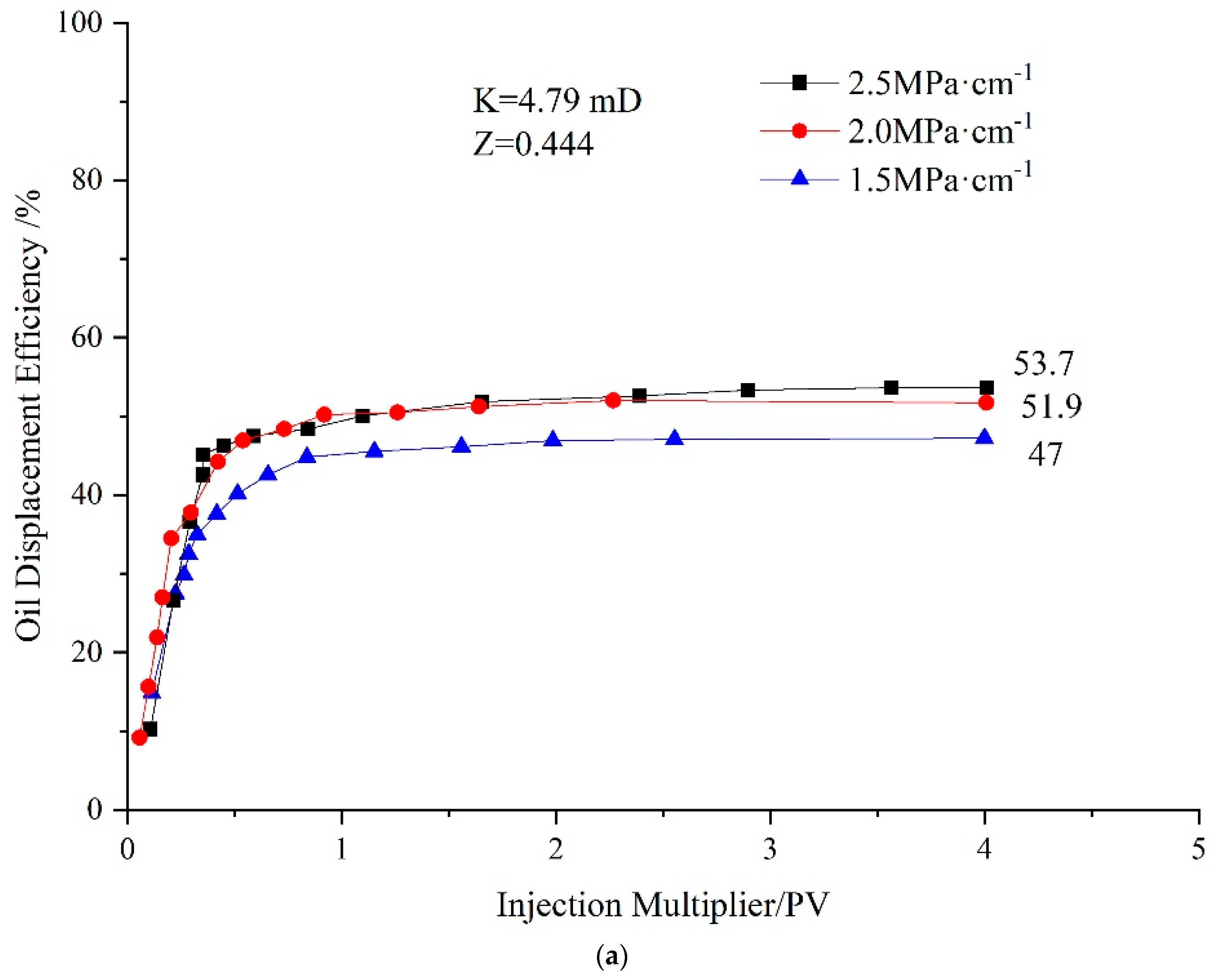
Addressing the rapid decline in formation energy, CO2 huff-n-puff was evaluated as an energy-supplementation and oil-displacement method for the G5 tight oil reservoir. Core experiments from anonymized Well A compared water flooding with CO2 gas displacement under different pressure gradients and showed that CO2 displacement efficiency could reach approximately 60–70% under the tested conditions. Field monitoring of the anonymized Well B further showed that production increased, decline was reduced, and stable production improved after CO2 huff-n-puff treatment of the previously fractured interval. These observations support the engineering role of CO2 in supplementing reservoir energy and improving development response in the studied tight oil reservoir.
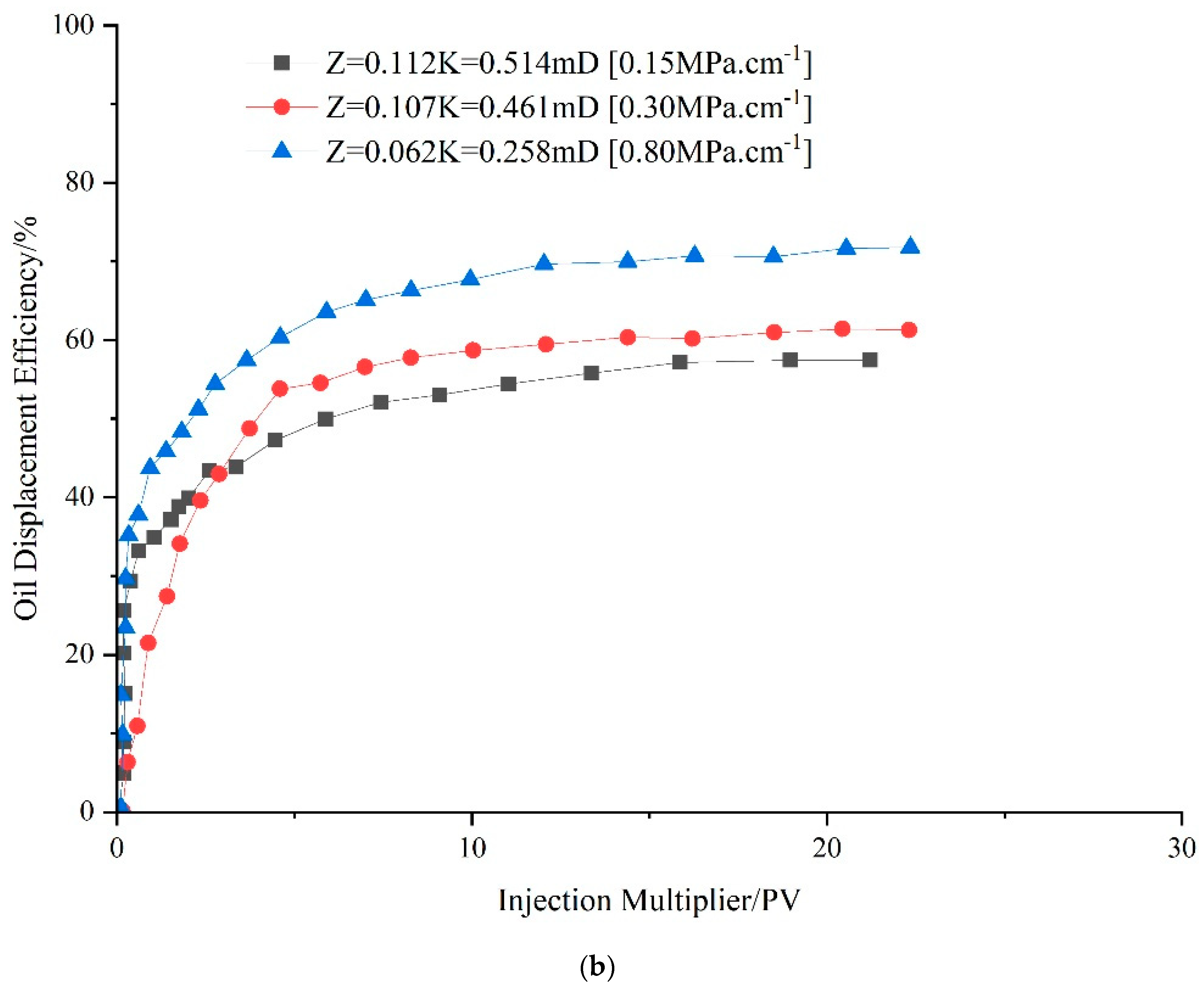
The laboratory comparison between water flooding and CO2 displacement is shown in Figure 9. The test results indicate that CO2 displacement performs more favorably than water flooding under the experimental conditions available for this study. In Figure 9, K denotes the measured permeability of the core sample, whereas Z represents the wettability index used to characterize the oil–water–rock interaction state of the corresponding core. These parameters are listed in the legend to distinguish the experimental core conditions under different CO2 displacement tests and are not used here as independent variables for productivity prediction. It should be noted that the present dataset supports a field-scale production-response evaluation of CO2 huff-n-puff rather than a complete CO2 storage or carbon-balance assessment.

3.4. Evaluation of Geology–Engineering Synergy

Coupled analysis of geological modeling and engineering data reveals that the matching degree between well patterns and sand bodies is a key indicator determining the ultimate recovery factor. Well groups with a matching degree exceeding 80% achieved a recovery factor of 14.5%, whereas those below 50% only reached 6–8%. Additionally, the matching relationship between RQI (Reservoir Quality Index) and fracturing intensity indicates that employing high-intensity fracturing in areas where RQI > 0.5, and complex fracture-network fracturing in areas where RQI < 0.3, yields optimal productivity responses. This demonstrates that improving the technical development response relies on dynamic regulation of engineering parameters based firmly on geological understanding.

4. Optimization Strategies for Efficient Development

4.1. Well Placement and Trajectory Optimization

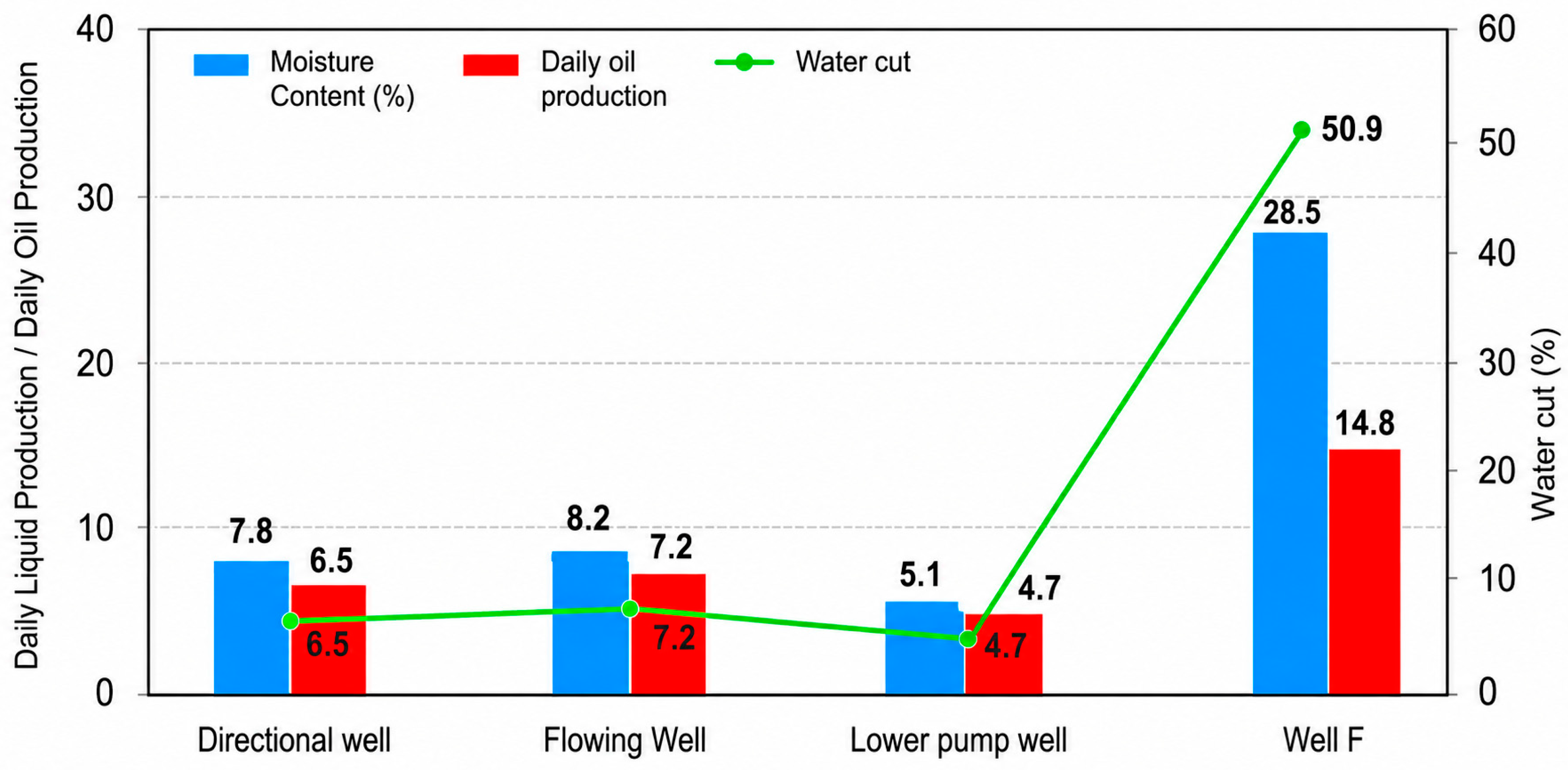
Given the characteristic narrow, ribbon-like, and discontinuous distribution of main channel sand bodies in the G5 fault block, the traditional directional well development model has proven ineffective in establishing sufficient control over the reservoir (encounter rate was merely ~42%). To address this, a deployment strategy utilizing high-angle and horizontal wells based on precise geosteering was proposed and implemented. The effectiveness of different well types in improving reservoir contact and production performance is demonstrated by the comparative analysis of liquid production, oil production, and water cut (see Figure 10).
Guided by 3D seismic sand body prediction results, well trajectories were optimized to deploy along the extension direction of main channel sand bodies. By employing high-angle wells (deviation > 45°) or horizontal wells with long horizontal sections (>1000 m), the sand body encounter rate was significantly elevated to over 78%.
In terms of planar deployment, priority was given to positioning wells in areas controlled by Ed3-period faults at structural ridges, with well spacing optimized to 150–200 m. Here, Ed3 refers to a local stratigraphic interval in the study area, as cross-referenced to the strati-graphic framework in Section 2.1. This strategy of “deploying along ridges and penetrating long sand bodies” effectively enhanced the coupling between the well pattern and high-quality reservoirs, ensuring full mobilization of resources in enriched zones.

4.2. Differential Fracturing Stimulation Based on Rqi

Targeting the challenges of strong reservoir heterogeneity and low matrix permeability (<0.5 mD), a differential volume fracturing decision-making system based on the Reservoir Quality Index (RQI) was established to maximize stimulated reservoir volume (SRV) and enhance conductivity.
High-Quality Zones (RQI > 0.5): A “high-intensity + high-displacement” fracturing mode is adopted. The pumping rate is increased to 12 m3/min, fluid volume per well is set to ≥2000 m3, and sand ratio is raised to over 20%. The objective is to utilize high-energy fluids to create deep-penetrating main fractures within high-quality sand bodies, maximizing connectivity.
Low-Quality Zones (RQI < 0.3): A “small-stage multi-cluster + low-viscosity slickwater + temporary plugging diversion” technique is employed. By using low-viscosity (<5 cp) slickwater to control leak-off, combined with temporary plugging agents at a concentration of 8–12% to induce multi-stage diversion, fractures are forced to propagate complexly within the tight matrix. Field implementation indicates that this strategy increased SRV complexity by approximately 40%, extending fracture half-length from 120 m to 185 m.

4.3. CO2 Huff-N-Puff and Energy Management

To address rapid production decline and insufficient formation-energy support during development, CO2 huff-n-puff was evaluated as an energy-supplementation and oil-displacement method. The mechanism considered in this study is based on the physical interaction between CO2 and crude oil, including viscosity reduction, oil swelling, and improved displacement response. The supplied report supports this evaluation through core-displacement experiments and field production monitoring rather than through a complete pressure-balance or carbon-balance assessment.
In the G5 pilot, the CO2 huff-n-puff treatment used a gas injection volume of 5000 m3 per cycle, a soaking period of 15–20 days, and an injection pressure of 25 MPa. These values are reported here as pilot operational parameters rather than universal optimized parameters. Based on available laboratory displacement observations and field-production monitoring, the anonymized Well A core experiment showed a CO2 displacement efficiency of approximately 60–70%, and the anonymized Well B field response showed increased production and reduced decline after CO2 huff-n-puff. A dedicated numerical-simulation or orthogonal-optimization workflow was not included in the current dataset; therefore, the transferability of these parameters to other blocks requires further sensitivity analysis.

4.4. Integrated Geology–Engineering Mode

To overcome uncertainties in the development of complex fault blocks, a collaborative “geology–engineering” integration workflow was constructed. This mode relies on meter-scale-resolution 3D geological models to fuse static geological understanding with dynamic engineering responses in real time.
During the drilling and completion phase, geological models are utilized for pre-drilling prediction to guide fracturing stage design, ensuring that the coincidence rate between fracturing stages and high-quality sand bodies exceeds 92%—a 37% improvement in stimulation efficiency over traditional geometric staging methods. During the execution phase, combined with microseismic monitoring and real-time treatment pressure data, pumping schedules and temporary plugging timing are dynamically adjusted, achieving fracture height control precision of ±3 m. This closed-loop management mode significantly enhances the pertinence of engineering operations and serves as a technical basis for improving development efficiency in the G5 fault block, subject to further block-specific economic validation.

5. Field Application and Discussion

5.1. Case Study: Performance of Optimized Horizontal Wells

To validate the field adaptability of the “deploying along ridges + high-angle/horizontal wells” strategy, the typical well G5-*1 was selected for detailed analysis. Guided by 3D seismic prediction results, this well was deployed within the development zone of main channel sand bodies, with a designed horizontal section length of 1200 m. Drilling results revealed that the horizontal section encountered high-quality main channel sand bodies for a length of 738 m, with Type I high-quality oil layers accounting for 33%, verifying the accuracy of the geological modeling.
Post-commissioning, the well employed an optimized 20-stage segmented volume fracturing technique. Production data indicated that the initial daily oil production reached a peak, and the stable production period was successfully extended to 18 months, with cumulative oil production exceeding 2.1 × 10⁴ t. Compared to adjacent well groups developed using directional wells, the Estimated Ultimate Recovery (EUR) of well G5-*1 increased by approximately 40%, significantly demonstrating the contribution of trajectory optimization to enhancing single-well productivity.

5.2. Evaluation of Differential Fracturing Effectiveness

Addressing vertical reservoir heterogeneity, a differential fracturing test based on the Reservoir Quality Index (RQI) was conducted on well G5-*8. According to log interpretation results, “high-intensity fracturing” targeting Type I layers and “multi-stage temporary plugging diversion fracturing” targeting Type II/III layers were implemented in different reservoir intervals. Microseismic monitoring demonstrated that the fracture half-length increased from the conventional 120 m to approximately 185 m after stimulation, resulting in a substantial expansion of the stimulated reservoir volume (SRV).
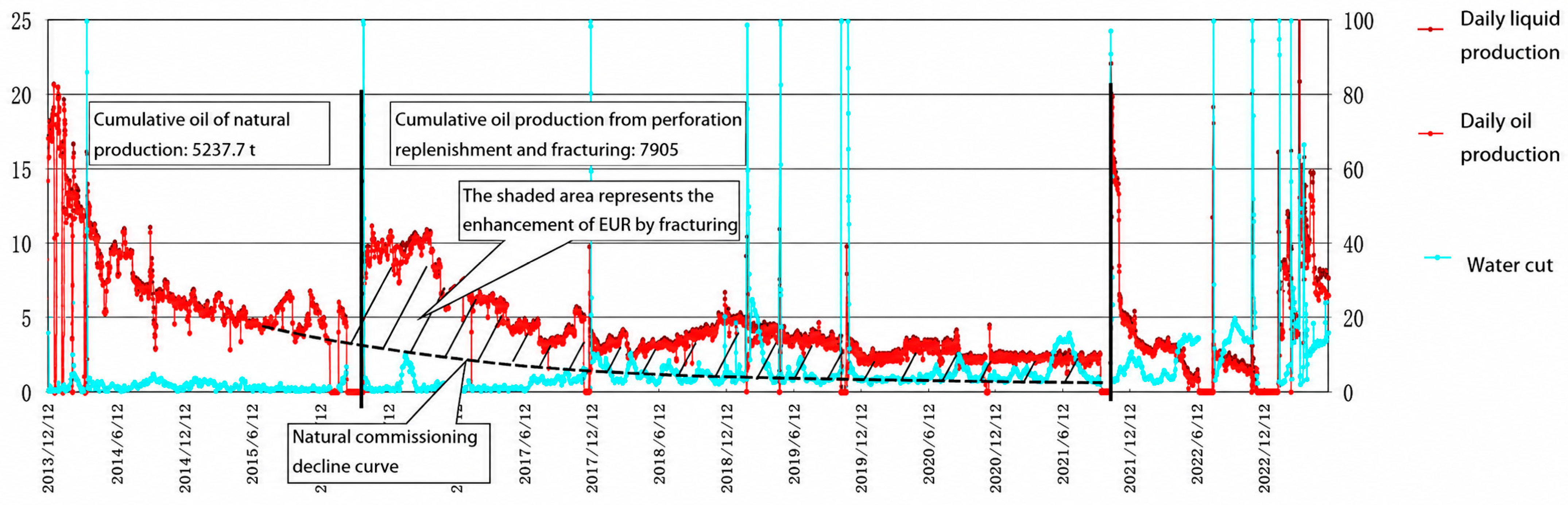
The effectiveness of the differential fracturing treatment was further confirmed by the production performance and decline curve characteristics of well G5-*8 (Figure 11). Following fracturing, the initial daily oil production increased from 7.2 t/d, which is typical of adjacent mature wells, to 14.5 t/d, representing an increase of approximately 100%. After 12 months of production, the cumulative oil production reached 1.25 × 10⁴ t. As illustrated in Figure 11, the post-fracturing production profile exhibits a clear enhancement in cumulative oil recovery together with a relatively stable decline trend. Decline Curve Analysis (DCA) further indicates that the first-year production decline rate remained within a reasonable range, suggesting that the differential fracturing strategy effectively improved reservoir conductivity and enhanced the mobilization of difficult-to-recover reserves.

5.3. Analysis of CO2 for Implementation

As a field case for CO2 huff-n-puff, the response of anonymized Well B was evaluated using production-decline behavior. The supplied report indicates that the early small-interval fracturing response of this well was weak, production improved after perforation supplementation, and a relatively large decline occurred later. After CO2 huff-n-puff was applied to the earlier fractured interval, production increased, the decline degree decreased, and the stable production level improved. Based on the supplied report, CO2 huff-n-puff reduced the decline degree by approximately 30%, indicating that CO2 provided effective energy supplementation and improved the development response to a certain extent.
Laboratory displacement evidence further supports the oil-displacement potential of CO2 in the GL tight oil reservoir. The anonymized Well A core experiment compared CO2 gas displacement with water flooding under different pressure gradients and showed that CO2 displacement efficiency could reach approximately 60–70%.

5.4. Discussion on Applicability and Challenges

Although the integrated technical countermeasures described above have significantly improved development performance in the G5 fault block, certain challenges remain in broader application.
First, techno-economic considerations have been clarified using only the available G5-specific development evidence. In the G5 block, the high-angle well design at an inclination of approximately 60° is estimated to double the drainage area and initial single-well production, fracturing in anonymized Well D increased EUR by approximately 40% relative to natural production, and CO2 huff-n-puff in anonymized Well B reduced the decline degree by approximately 30%. Based on the decline behavior and initial production of anonymized Well E, the combined high-angle well, fine fracturing, and CO2 energy-supplementation strategy is predicted to achieve a 15-year EUR of approximately 1.9 × 10⁴ t. These G5-specific production-response indicators support a technical basis for improved development efficiency in the G5 fault block. However, a complete G5-specific NPV, payback-period, break-even oil price, or cost-sensitivity analysis remains beyond the current dataset, and no field-specific economic conclusion is drawn here.
Second, technological limitations remain. Although CO2 huff-n-puff can supplement formation energy and improve displacement response, its sweep efficiency in strongly heterogeneous reservoirs is constrained by fracture channeling. Rapid gas breakthrough along high-conductivity fractures not only reduces displacement efficiency but may also trigger wellbore issues such as wax deposition.
In this study, CO2 huff-n-puff is evaluated primarily as a reservoir energy-supplementation and oil-displacement method. The current dataset does not include a verified CO2 supply-chain description, produced-gas CO2 recycling or disposal scheme, regulatory carbon-accounting boundary, or net CO2 balance. Therefore, the present results are not presented as a complete CCUS or carbon-reduction assessment. Future work needs to quantify the CO2 source, transportation and injection losses; produced CO2 handling; retained CO2 volume; and the applicable accounting framework.
Finally, geological uncertainty remains. Although the integrated geology–engineering mode has improved prediction accuracy, sweet spot identification under the resolution limits of current seismic data still entails non-uniqueness for complex fault zones or micro-structures, potentially leading to occasional failures in well placement.
Future research should focus on the development of low-cost fracturing materials, improvements in CO2 channeling prevention processes, block-specific techno-economic evaluation, CO2 supply-chain and carbon-balance accounting, and the application of higher-precision geophysical technologies to further evaluate the transferability of the integrated strategy.


6. Conclusions

Based on the fine characterization of geological features, systematic evaluation of development performance, and comprehensive optimization of engineering strategies for the tight oil reservoir in the G5 fault block of the Nanpu Sag, the following conclusions are drawn:
(1)
Elucidation of accumulation and enrichment laws for complex fault-block tight oil: The study quantitatively characterized the unique “sandwich-style” sand body superposition architecture of the Es34 sub-member. It confirmed that the spatial coupling between relatively favorable main channel sand bodies and fracture systems at structural ridges is the decisive factor controlling the distribution of high-yield “sweet spots.”
(2)
Establishment of a tailored well deployment strategy: A development strategy utilizing high-angle and horizontal wells adapted to narrow, ribbon-like sand bodies was established. Compared to traditional rectangular well patterns with directional wells, the optimized trajectory design significantly elevated the drilling encounter rate of high-quality reservoirs from 42% to 78%. This strategy of deploying wells along structural ridges effectively addressed the issue of low control degree in strongly heterogeneous reservoirs, substantially increasing single-well controlled reserves.
(3)
Validation of differential fracturing and CO2 energy-supplementation effectiveness. The field evidence indicates that differential SRV fracturing improved the stimulated reservoir response, while laboratory and field observations support the role of CO2 huff-n-puff in supplementing formation energy and reducing production decline. Specifically, the anonymized Well A core experiment showed CO2 displacement efficiency of approximately 60–70%, and the anonymized Well B field case indicated increased production and reduced decline after CO2 huff-n-puff treatment.
(4)
Confirmation of the engineering value of the “geology–engineering” integration mode: Relying on high-resolution 3D geological modeling and dynamic monitoring feedback, a closed-loop optimization workflow covering well placement to fracturing parameters was realized. This mode significantly enhanced the pertinence and success rate of engineering operations, providing a technical reference for the development of similar complex fault-block tight oil reservoirs, subject to further verification of block-specific economics and CO2-balance conditions.
(5)
Identification of future research directions: Despite the technical improvements achieved in the G5 tight oil reservoir, the current dataset supports production-response evaluation rather than a complete economic or carbon-balance assessment. Further work should integrate verified block-specific cost data, CO2 source-chain information, produced-gas CO2 handling, and carbon accounting to evaluate the broader transferability and sustainability of the proposed strategy.
Author Contributions

Conceptualization, H.L. (Hong Liu); methodology, Z.Y., T.C., Y.S., J.C., R.F., Q.C., H.L. (Hong Liu), H.L. (Hengbao Li) and J.X.; software, Y.J.; formal analysis, Y.S.; investigation, Y.J., J.C., R.F., H.L. (Hengbao Li) and J.X.; resources, Y.S.; writing—original draft preparation, Z.Y.; writing—review and editing, T.C.; supervision, H.L. (Hong Liu); project administration, Q.C.; funding acquisition, H.L. (Hong Liu). All authors have read and agreed to the published version of the manuscript.

Funding

The paper is supported by the National Natural Science Foundation of China (52274033).

Data Availability Statement

The original contributions presented in this study are included in the article. Further inquiries can be directed to the corresponding author.

Conflicts of Interest

Authors Zhongliang Yu, Tongfeng Cao, Yang Sun, Jian Cui, Rong Fan, Yajuan Ju, and Qian Cheng were employed by the PetroChina Jidong Oilfield Company. The remaining authors declare that the research was conducted in the absence of any commercial or financial relationships that could be construed as a potential conflict of interest. The PetroChina Jidong Oilfield Company had no role in the design of the study; in the collection, analyses, or interpretation of data; in the writing of the manuscript; or in the decision to publish the results.
References

  1. IEA. World Energy Outlook 2022; International Energy Agency (IEA): Paris, France, 2022. [Google Scholar]
  2. Jia, C.; Zheng, M.; Zhang, Y. Unconventional hydrocarbon resources in China and the prospect of exploration and development. Pet. Explor. Dev. 2012, 39, 139–146. [Google Scholar] [CrossRef]
  3. Sun, C.; Nie, H.; Dang, W.; Chen, Q.; Zhang, G.; Li, W.; Lu, Z. Shale gas exploration and development in China: Current status, geological challenges, and future directions. Energy Fuels 2021, 35, 6359–6379. [Google Scholar] [CrossRef]
  4. Warpinski, N.R.; Mayerhofer, M.J.; Vincent, M.C.; Cipolla, C.; Lolon, E. Stimulating unconventional reservoirs: Maximizing network growth while optimizing fracture conductivity. J. Can. Pet. Technol. 2009, 48, 39–51. [Google Scholar] [CrossRef]
  5. Nelson, P.H. Pore-throat sizes in sandstones, tight sandstones, and shales. AAPG Bull. 2009, 93, 329–340. [Google Scholar] [CrossRef]
  6. Javadpour, F. Nanopores and apparent permeability of gas flow in mudrocks (shales and siltstone). J. Can. Pet. Technol. 2009, 48, 16–21. [Google Scholar] [CrossRef]
  7. Song, W.; Yao, J.; Li, Y.; Sun, H.; Zhang, L.; Yang, Y.; Zhao, J.; Sui, H. Apparent gas permeability in an organic-rich shale reservoir. Fuel 2016, 181, 973–984. [Google Scholar] [CrossRef]
  8. Su, Y.; Ren, L.; Meng, F.; Xu, C.; Wang, W. Theoretical analysis of the mechanism of fracture network propagation with stimulated reservoir volume (SRV) fracturing in tight oil reservoirs. PLoS ONE 2015, 10, e0125319. [Google Scholar] [CrossRef]
  9. Mayerhofer, M.J.J.; Lolon, E.P.P.; Warpinski, N.R.R.; Cipolla, C.L.; Walser, D.; Rightmire, C.M. What is stimulated reservoir volume? SPE Prod. Oper. 2010, 25, 89–98. [Google Scholar] [CrossRef]
  10. Höök, M.; Davidsson, S.; Johansson, S.; Tang, X. Decline and depletion rates of oil production: A comprehensive investigation. Philos. Trans. R. Soc. A Math. Phys. Eng. Sci. 2014, 372, 20120448. [Google Scholar] [CrossRef]
  11. Xu, G.; Yin, H.; Yuan, H.; Xing, C. Decline curve analysis for multiple-fractured horizontal wells in tight oil reservoirs. Adv. Geo-Energy Res. 2020, 4, 296–304. [Google Scholar] [CrossRef]
  12. Warpinski, N.R.; Teufel, L.W. Influence of geologic discontinuities on hydraulic fracture propagation (includes associated papers 17011 and 17074). J. Pet. Technol. 1987, 39, 209–220. [Google Scholar] [CrossRef]
  13. Khanna, A.; Kotousov, A.; Sobey, J.; Weller, P. Conductivity of narrow fractures filled with a proppant monolayer. J. Pet. Sci. Eng. 2012, 100, 9–13. [Google Scholar] [CrossRef]
  14. Zhang, Y.; Yu, W.; Li, Z.; Sepehrnoori, K. Simulation study of factors affecting CO2 Huff-n-Puff process in tight oil reservoirs. J. Pet. Sci. Eng. 2018, 163, 264–269. [Google Scholar] [CrossRef]
  15. Song, C.; Yang, D. Performance evaluation of CO2 huff-n-puff processes in tight oil formations. In SPE Canada Unconventional Resources Conference; SPE-167217-MS; SPE: Richardson, TX, USA, 2013. [Google Scholar]
  16. Wang, S.; Zhang, M.; Zhang, Y.; Lei, Z.; Feng, Q.; Xu, S.; Zhang, J. Mechanisms of CO2 huff and puff enhanced oil recovery and storage within shale nanopores. Chem. Eng. J. 2025, 506, 160098. [Google Scholar] [CrossRef]
  17. Luan, Y.; Liu, B.; Hao, P.; Zhan, K.; Liu, J. Oil displacement by supercritical CO2 in a water cut dead-end pore: Molecular dynamics simulation. J. Pet. Sci. Eng. 2020, 188, 106899. [Google Scholar] [CrossRef]
  18. Tan, Y.; Li, Q.; Xu, L.; Ghaffar, A.; Zhou, X.; Li, P. A critical review of carbon dioxide enhanced oil recovery in carbonate reservoirs. Fuel 2022, 328, 125256. [Google Scholar] [CrossRef]
  19. Yongsheng, M.A.; Xunyu, C.A.I.; Peirong, Z. China’s shale gas exploration and development: Understanding and practice. Pet. Explor. Dev. 2018, 45, 589–603. [Google Scholar]
  20. Zoback, M.D. Reservoir Geomechanics; Cambridge University Press: Cambridge, UK, 2010. [Google Scholar]
  21. Sone, H.; Zoback, M.D. Mechanical properties of shale-gas reservoir rocks—Part 2: Ductile creep, brittle strength, and their relation to the elastic modulus. Geophysics 2013, 78, D393–D402. [Google Scholar] [CrossRef]
  22. Gong, T.; Xia, B.; Liu, L.; Peng, Z.; Gao, Y. Propagation of hydraulic fracture under the joint impact of bedding planes and natural fractures in shale reservoirs. Energy Sci. Eng. 2019, 7, 2690–2702. [Google Scholar] [CrossRef]
  23. Aslam, B.; Yan, B.; Lie, K.-A.; Krogstad, S.; Møyner, O.; He, X. A novel hybrid physics/data-driven model for fractured reservoir simulation. SPE J. 2024, 29, 7029–7045. [Google Scholar] [CrossRef]
  24. Wang, Y.; Yang, H.; Huang, H.; Fu, L.; Chen, G.; Zhang, H.; Wang, Z.; Guo, K. Geomechanical study of deep shale gas and its application in Luzhou block, Sichuan Basin. China Pet. Explor. 2023, 28, 68–83. [Google Scholar]
  25. Cipolla, C.L.; Williams, M.J.; Weng, X.; Mack, M.; Maxwell, S. Hydraulic fracture monitoring to reservoir simulation: Maximizing value. In Second EAGE Middle East Tight Gas Reservoirs Workshop; cp-244-00015; European Association of Geoscientists & Engineers: Houten, The Netherlands, 2010. [Google Scholar]
  26. Hou, G.; Ma, X.; Zhao, W.; Diwu, P.; Liu, T.; Hou, J. Synergistic Modes and Enhanced Oil Recovery Mechanism of CO2 Synergistic Huff and Puff. Energies 2021, 14, 3454. [Google Scholar] [CrossRef]
  27. Li, G. Key technology of fine description of complex fault block reservoir and its application. Reserv. Eval. Dev. 2023, 13, 152–162. [Google Scholar]
Figure 1. Well–seismic calibration map of typical wells in G5 fault block.
Energies 19 02724 g001
Figure 2. Sedimentary microfacies architecture and well correlation sections of the Es34 sub-member in the G5 fault block.
Energies 19 02724 g002
Figure 3. Ternary diagram of sandstone composition and frequency distribution histogram of permeability and porosity.
Energies 19 02724 g003aEnergies 19 02724 g003b
Figure 4. Conceptual geological model of tight oil accumulation in the G5 block.
Energies 19 02724 g004aEnergies 19 02724 g004b
Figure 5. Time-series dynamic production characteristics of a representative well in the G5 fault block during different development stages.
Energies 19 02724 g005
Figure 6. Local descriptive comparison between reservoir parameters and production response in the G5 fault block. (a) Local descriptive comparison between sand body thickness and initial daily oil production. (b) Local descriptive comparison between effective thickness and initial daily oil production. (c) Local descriptive comparison between permeability and initial daily oil production. (d) Local descriptive comparison between sand body thickness and staged cumulative oil production. (e) Local descriptive comparison between effective thickness and staged cumulative oil production. (f) Local descriptive comparison between permeability and staged cumulative oil production.
Energies 19 02724 g006aEnergies 19 02724 g006bEnergies 19 02724 g006c
Figure 7. Relationships between total fracturing-fluid injection volume and single-well staged cumulative oil production for different reservoir/sand body types in the G5 fault block. (a) Field observation of total fracturing-fluid injection volume and staged cumulative oil production for main-layer wells. (b) Field observation of total fracturing-fluid injection volume and staged cumulative oil production for main-layer plus thin-interbed wells. (c) Field observation of total fracturing-fluid injection volume and staged cumulative oil production for thin-interbed wells with a relatively high sand-to-gross ratio. (d) Field observation of total fracturing-fluid injection volume and staged cumulative oil production for thin-interbed wells with a relatively low sand-to-gross ratio.
Energies 19 02724 g007aEnergies 19 02724 g007b
Figure 8. Local field observations of average fracturing sand ratio with initial daily oil production and staged cumulative oil production in the G5 fault block. (a) Relationship between average sand ratio and initial daily oil production. (b) Relationship between average sand ratio and staged cumulative oil production.
Energies 19 02724 g008
Figure 9. Comparison of oil displacement efficiency under CO2 injection and water flooding at different pressure gradients. (a) Oil displacement efficiency versus injection pore volume (PV) for CO2 flooding under different pressure gradients. (b) Oil displacement efficiency versus injection pore volume (PV) for water flooding under different pressure gradients.
Energies 19 02724 g009aEnergies 19 02724 g009b
Figure 10. Comparison of production from large gradient wells and directional wells in oil group V, anonymized Well F.
Energies 19 02724 g010
Figure 11. Natural decremental approach to analyzing fracturing production improvement in Well G5-*8.
Energies 19 02724 g011
Table 1. Macroscopic description and statistical characteristics of reservoir intervals in the V oil group of the G5 fault block.
RegionPermeability RangeGravelCoarse SandMedium SandFine SandCoarse SandFine SandMudstoneMedian Particle SizeSorting
10−3 μm2%%%%%%%mmCoefficient
Average of the V oil group <11.097.581.3526.8313.5220.724.390.0552.49
1.0~10.04.6718.953.5624.5211.5118.353.860.1042.43
>10.015.4636.436.6213.705.428.722.510.2852.18
Descriptive average3.2013.392.6627.4013.9421.324.570.0792.45
Note: “Average of the V oil group” represents the arithmetic average of the measured reservoir intervals in the V oil group of the G5 fault block and is provided only as a descriptive statistical reference.
Disclaimer/Publisher’s Note: The statements, opinions and data contained in all publications are solely those of the individual author(s) and contributor(s) and not of MDPI and/or the editor(s). MDPI and/or the editor(s) disclaim responsibility for any injury to people or property resulting from any ideas, methods, instructions or products referred to in the content.