Article

Electric Shock Simulation and Risk Assessment in Low-Voltage Distribution Networks Under Unknown Topology: A Two-Stage Approach Based on Smart Meter Data


by
Zhe Li
1,*,
Shoukang Luo
1,
Xiaojia Sun
1,
Yang Li
1,
Yubo Zhang
1,
Chakhung Yeung
2 and
Yuxuan Ding
2
1
Shenzhen Power Supply Bureau, The China Southern Power Grid Company Limited, Shenzhen 518001, China
2
The Hong Kong Polytechnic University Shenzhen Research Institute, Shenzhen 518057, China
*
Author to whom correspondence should be addressed.
Energies 2026, 19(11), 2723; https://doi.org/10.3390/en19112723 (registering DOI)
Submission received: 16 March 2026 / Revised: 22 April 2026 / Accepted: 23 April 2026 / Published: 5 June 2026
(This article belongs to the Section A1: Smart Grids and Microgrids)

Abstract

Low-voltage distribution networks are critical for supplying power to end-users, and electric shock safety is a key concern; however, the frequent incompleteness of topology information in practical operations makes it challenging to accurately assess electric shock risks. This paper proposes a two-stage approach for electric shock simulation and risk assessment in low-voltage distribution networks with completely unknown topology and absent phase-angle measurements, addressing the critical challenge of unavailable, incomplete, or outdated topology information using only conventional smart meter data. It innovatively investigates shock risks under TT, TN-C, and TN-S grounding systems without prior topology knowledge or synchronized phasors. The proposed methodology combines a phase-angle-agnostic data-driven stage and a model-driven stage: the data-driven stage uses an iterative algorithm for topology label matrix estimation and weighted Laplacian matrix reconstruction with hierarchical clustering to identify network structure and line parameters, requiring only active power, reactive power, voltage magnitude, and current magnitude. The model-driven stage adopts modified nodal analysis with the finite-difference time-domain (MNA-FDTD) method to evaluate transient leakage voltage distribution under single-phase-to-ground faults, thereby assessing electric shock risks in line with international safety standards. Key contributions include a practical phase-free topology identification framework, comparative risk analysis of three grounding systems, and an integrated data-model approach for real-world low-observability networks. Simulation results show accurate topology/parameter identification with a relative Frobenius-norm error of only 1.8% even without phase data. TN-S provides the highest safety complying with IEC standards, followed by TN-C and TT under specific conditions, offering a practical solution for utilities lacking detailed topology records.

1. Introduction

Low-voltage distribution networks (LVDNs) serve as the final and most critical link between power grids and end-users, delivering electrical energy to residential, commercial, and industrial consumers worldwide [1,2]. With the rapid development of smart grids and the increasing integration of distributed energy resources (DERs), the safe and reliable operation of LVDNs has become a top priority for utilities and researchers [3]. Among various safety concerns, electric shock risk is particularly prominent, as single-phase-to-ground faults and leakage currents in LVDNs can pose severe threats to human life and property security [4,5].
Accurate electric shock risk assessment is essential for optimizing LVDN design, configuring protective devices, and ensuring operational safety [6,7]. However, a fundamental challenge in practical engineering applications is the frequent incompleteness, obsolescence, or unavailability of LVDN topology information [8,9]. This is primarily due to historical construction omissions, frequent network reconfigurations, and inadequate documentation management [10,11]. Meanwhile, conventional smart meters in low-voltage networks only provide RMS values and active/reactive power, without synchronized phase-angle measurements, which further restricts the application of traditional topology identification methods. Traditional risk assessment methods typically rely on pre-known topology structures and accurate line parameters, which limit their applicability in real-world scenarios where topology information is lacking, leading to inaccurate risk evaluations and potential safety hazards [12,13].
Grounding systems play a decisive role in mitigating electric shock risks in LVDNs, with TT, TN-C, and TN-S being the three most widely adopted configurations globally [14]. Each system differs significantly in fault current paths, touch voltage distribution, and protective device coordination: TN-S systems separate neutral and protective conductors to minimize touch voltages, TN-C systems use a combined protective neutral (PEN) conductor with potential safety risks under unbalanced loads, and TT systems rely on earth electrodes with high fault loop impedance [15,16]. Comparative analysis of electric shock risks across these three grounding systems is crucial for guiding practical grounding system selection and safety improvement, but such analysis is currently constrained by the reliance on known topology information [17,18].
To address the above challenges, researchers have explored data-driven approaches for LVDN topology identification using smart meter measurements [19,20]. These methods can be broadly categorized into three classes: (i) correlation-based methods, such as voltage correlation analysis [21] and hierarchical clustering [22], which exploit statistical dependencies among node measurements; (ii) transform-based methods, including wavelet-transform-based feature extraction [1] that captures multi-resolution time-frequency patterns; and (iii) learning-based methods, such as graph attention networks [23] and Laplacian matrix reconstruction [13], which learn latent topological structures from data. However, these studies typically focus solely on topology identification, lacking integration with subsequent electric shock risk assessment [1]. Conversely, model-driven approaches—primarily nodal analysis and equivalent circuit simulation—are widely used for leakage current and touch voltage simulation [17,18]. Within this category, recent works have assessed fault potential and human-body touch voltage under various line-fault conditions [17,18], but they depend on pre-known topology and parameters, failing under unknown network conditions [8,14]. Some recent efforts have attempted to combine data-driven reconstruction with risk-aware optimization [11]; nevertheless, they do not address detailed electric shock simulation across different grounding systems (TT, TN-C, TN-S). Therefore, systematically integrating data-driven topology identification with model-driven electric shock risk assessment remains an open gap [24]. No existing work has realized a unified framework that uses only standard smart meter magnitude data (without phase angles) to identify topology and perform standard-compliant electric shock risk assessment.
This research aims to bridge the gap between data-driven topology identification and model-driven risk assessment, proposing a two-stage integrated approach for electric shock simulation and risk assessment in LVDNs with unknown topology. The data-driven stage uses smart meter data and weighted Laplacian matrix reconstruction to identify network topology and estimate line parameters. The model-driven stage adopts modified nodal analysis to simulate leakage voltage distribution based on the identified topology and parameters, thereby evaluating electric shock risks. This study also conducts a systematic comparative analysis of shock risks under TT, TN-C, and TN-S grounding systems, providing practical guidance for utility operators.
The core innovations are summarized as follows:
(1)
A phase-angle-unknown iterative algorithm for topology and parameter joint identification using only P/Q/V/I from conventional smart meters, eliminating dependence on phase or synchronized measurements.
(2)
An MNA-FDTD-based transient simulation method tailored for electric shock voltage evolution, suitable for small-scale radial LVDNs and capturing critical fault transient characteristics.
(3)
A standard-aligned safety assessment framework combining touch voltage, fault current, and RCD actuation logic, consistent with IEC 60479-1 and IEC 60990 for practical engineering applications.
The remainder of this paper is structured as follows: Section 2 details the proposed two-stage methodology, including data-driven topology/parameter identification and model-driven risk assessment. Section 3 presents simulation results and validation, followed by a discussion of key findings in Section 4. Finally, Section 5 summarizes the conclusions and outlines future research directions.

2. Methodology

2.1. Stage One: Topology Identification Based on Smart Meter Data

The topology identification of LVDNs under unknown topology conditions is the core of the first stage of the proposed two-stage methodology. This section focuses on extracting the network topology and branch impedances using only the measurements from smart meters, which include active power P, reactive power Q, voltage magnitude V, and current magnitude I. Notably, the voltage phase angles θ i and current phase angles θ V are assumed unknown—a realistic scenario in many practical deployments where smart meters report only magnitudes or where phase angle measurements are unreliable. To address this, we propose an iterative algorithm that simultaneously estimates the topology label matrix (TLM) Z , voltage phase angles, and current phase angles.
The core idea of the topology identification algorithm is to derive the TLM Z using the available smart meter data. The TLM Z is an n × n complex impedance matrix, where n is the number of leaf nodes (end-users with smart meters), and each element Z i j   represents the sum of impedances along the common path from the root node to leaf nodes ii and jj, consistent with the definition in [25].
For each time-series sample k , the complex voltage at leaf node i is V i e j θ V i , and the complex current is I i e j θ I i , where V i and I i are the measured voltage and current magnitudes, respectively, and θ V i and θ I i are unknown phase angles. The relationship between leaf node voltages, currents, and the TLM Z can be expressed as
V i = V 0 j = 1 n Z i j I j
where V 0 is the voltage at the root node. Rearranging for all leaf nodes yields a linear system in terms of Z :
Y = X Z
where Y contains the voltage drops, and X contains the leaf node currents. However, because the phase angles θ v and θ i are unknown, we cannot directly construct the complex vectors. Therefore, we adopt an iterative estimation procedure as follows:
Step 1: Initialization.
Set initial guesses for all voltage phase angles θ V = 0 and current phase angles θ i = θ s the power factor angle. The voltage magnitudes V i and current magnitudes I i are taken directly from smart meter readings. Set iteration counter t = 0.
Step 2: Estimate TLM Z via linear regression.
Using the estimates θ V ( t )   and θ i ( t ) , construct:
Y ( t ) = V 0 V ( t ) e j θ V ( t )
X ( t ) = I i e j θ I i  
With the complex voltages and currents, the impedance vector is evaluated by the standard least-squares solution [26]:
Z ( t ) = X ( t ) X ( t ) 1 X ( t ) Y ( t )
Step 3: Update phase angles using the estimated Z ( t ) .
The predicted voltage magnitude should match the measured magnitude V i , and the predicted phase angle can be used to update θ V i . We use the value of V i at iteration t to evaluate the current value at t + 1:
I ˙ i , ( t + 1 ) = S ˙ i V ˙ i , ( t )
Then, using the voltage equation, we obtain an updated voltage phasor:
V ˙ i , ( t + 1 ) = V ˙ 0 j = 1 n Z i j ( t ) I i j ( t + 1 )
Step 4: Convergence check.
Compute the change in Z and phase angles between iterations: = Z ( t ) Z ( t 1 ) Z ( t 1 ) .
If is smaller than a setting value, stop. Otherwise, set t = t + 1 and return to step 1.
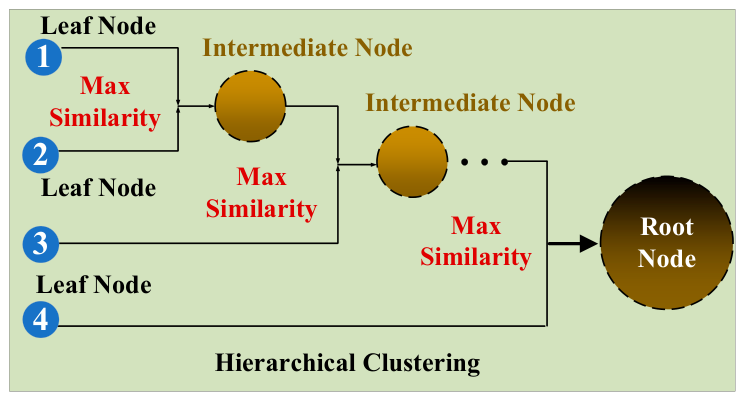
Once the TLM Z is directly obtained via the proposed iteration algorithm, the HC algorithm is employed to reconstruct the network topology., including the edge-to-node Incidence Matrix A and the impedance of each branch. The HC algorithm adopts a bottom-up approach, clustering from leaf nodes upwards to the root node of the grid, with the following basic process:
Initially, each leaf node (end-user with a smart meter) is assigned to an independent separate cluster, so that the initial number of clusters is exactly equal to the number of leaf nodes, n. In the next step, the similarity between every pair of clusters is computed to construct a similarity matrix, S. The similarity metric s i j = 1 k = 1 , k i , j n Z i k Z j k is calculated as the reciprocal of the sum of absolute deviations between impedance entries Z i k   and Z j k   for all nodes, k, excluding i and j. This similarity measure reflects the electrical proximity between nodes: a higher similarity indicates that two nodes share a longer common path from the root and thus should be grouped into the same branch.
In each iteration, the two clusters with the highest similarity value are merged into a single new cluster, which reduces the total number of clusters by one. A new intermediate node is then created to represent this merged cluster, and it replaces the two previous downstream clusters in the topological graph. This cycle of similarity matrix update, cluster merging, and intermediate node generation is repeated iteratively until all leaf nodes are gradually merged into one single root cluster, which recovers the complete radial structure of the low-voltage distribution network. The full hierarchical clustering process is illustrated in the following Figure 1.
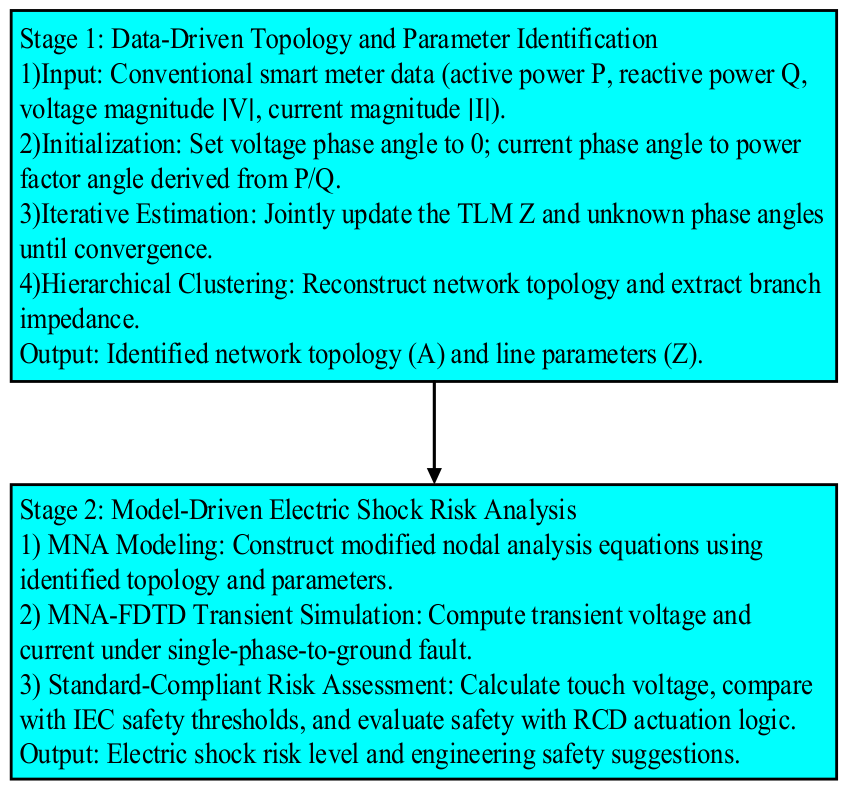
In summary, the topology identification process in Section 2.1 consists of two key steps: (1) Estimating the TLM Z via proposed iteration algorithm, leveraging smart meter measurements including active power, reactive power, voltage magnitude, current magnitude; (2) Reconstructing the network topology (Incidence Matrix A ) and extracting branch impedances using the HC algorithm. This approach effectively addresses the challenge of unknown topology and provides accurate topology and parameter information for the subsequent electric shock risk assessment.

2.2. Stage Two: Electric Shock Simulation Based on the Identified Topology and Parameters

The second stage of the proposed two-stage methodology focuses on simulating electric shock incidents within LVDN. This simulation leverages the network topology A and line parameters Z obtained from the identification stage described in Section 2.1. The Modified Nodal Analysis (MNA) method is employed to construct a detailed mathematical model of the network [27]. The MNA framework enables accurate simulation of leakage fault scenarios, ultimately yielding the voltage distribution across the network under electric shock conditions. The method is particularly well-suited for this task due to its computational efficiency and precision in solving complex nodal voltage equations, especially in radial LVDN structures following topology identification.
The governing MNA equation is expressed as follows:
A Z T Y T A T I Φ = V s I s
In this formulation, matrix A defines the relationship between current sources and nodal voltages. The submatrix Z T represents the impedance network of the grounding system, which includes both the phase line impedance Z and the grounding line impedance Z g . On the other hand, Y T corresponds to the admittance network, typically comprising the grounding resistance at LVDNs. This admittance is composed of a real part and an imaginary part: the imaginary part accounts for capacitive effects and can be derived from the inductance via the relation involving the square of the speed of light; the real part represents the grounding resistance, which is influenced by factors such as the grounding method, the configuration of the grounding grid, and the soil resistivity. Finally, V s and I s denote the voltage sources and current sources present in the network, respectively.
To solve the MNA equation presented in (7), this study employs the Finite-Difference Time-Domain (FDTD) method [18,28,29,30,31]. The FDTD approach is particularly advantageous for transient analysis of power systems, as it discretizes the time-domain governing equations and solves them iteratively, capturing the dynamic behavior of voltages and currents during electric shock events. In the context of the MNA formulation, the FDTD method is applied to discretize the time derivatives inherent in the impedance and admittance elements, especially those involving capacitive and inductive components. By converting the continuous-time MNA equations into discrete time steps, the FDTD method enables the step-by-step computation of nodal voltages Φ and branch currents I across the network.
The MNA Equation (7) is rewritten in the time domain by expressing the impedance and admittance operators Z T and Y T in terms of their resistive, inductive, conductive, and capacitive components. Assuming that Z T represents the series impedance of the lines, it can be decomposed as Z T = R z + L z d d t , where R z and L z are the resistance and inductance matrices, respectively. Similarly, Y T represents the shunt admittance, given by Y T = G y + C y d d t , with G y and C y being the conductance and capacitance matrices. Substituting these into (7) yields the following coupled differential-algebraic equations:
A I ( t ) + R z Φ ( t ) + L z d Φ d t = V s ( t ) G y I ( t ) + C y d I d t A T Φ ( t ) = I s ( t )
where I ( t ) and Φ ( t ) are the time-dependent current and nodal voltage vectors, respectively, while V s ( t ) and I s ( t ) represent the voltage and current sources.
To discretize (8) using the FDTD method, we introduce a uniform time step Δ t and adopt a leapfrog scheme: nodal voltages Φ are defined at integer time steps t n = n Δ t , while branch currents I are defined at half-integer time steps t n + 1 / 2 = ( n + 1 / 2 ) Δ t . This staggered grid allows central difference approximations for the time derivatives, ensuring second-order accuracy. Specifically, the time derivative of Φ at t n + 1 / 2 is approximated by ( Φ n + 1 Φ n ) / Δ t , and the time derivative of I at t n by ( I n + 1 / 2 I n 1 / 2 ) / Δ t . The undifferentiated terms are evaluated at the corresponding time points using averages where necessary.
Applying these approximations to the first equation in (8) at time t n + 1 / 2 gives
A I n + 1 / 2 + R z Φ n + 1 + Φ n 2 + L z Φ n + 1 Φ n Δ t = V s n + 1 / 2
Similarly, discretizing the second equation at time t n yields
G y I n + 1 / 2 + I n 1 / 2 2 + C y I n + 1 / 2 I n 1 / 2 Δ t A T Φ n = I s n
Equations (9) and (10) can be rearranged to obtain explicit update formulas for Φ n + 1 and I n + 1 / 2 . From (7), we solve for Φ n + 1 :
R z 2 L z Δ t Φ n + 1 = A I n + 1 / 2 + V s n + 1 / 2 R z 2 L z Δ t Φ n
From (10), we solve for I n + 1 / 2 :
G y 2 C y Δ t I n + 1 / 2 = A T Φ n + I s n G y 2 C y Δ t I n 1 / 2
These update equations form a fully explicit time-stepping scheme. Starting from initial conditions Φ 0 and I 1 / 2 (or I 1 / 2 obtained via an initial half-step), the nodal voltages and branch currents are computed alternately for each time step. The matrices on the left-hand sides of (11) and (12) are typically sparse and can be inverted efficiently, especially when R z , L z , G y , and C y are diagonal (e.g., for uncoupled lines) [5]. In more general cases, a linear system solver is required at each step, but the overall computational cost remains manageable due to the explicit nature of the scheme.
The FDTD discretization ensures that the transient behavior of the network, including the effects of grounding impedances and capacitive coupling, is accurately captured [32]. The method’s stability is governed by the Courant–Friedrichs–Lewy condition, which imposes an upper bound on the time step Δ t relative to the smallest characteristic time constant of the system [33]. By carefully selecting Δ t , the simulation yields reliable voltage and current profiles under electric shock conditions, providing valuable insights for safety assessment and protection design in low-voltage distribution networks. Although the system operates at 50 Hz steady state, electric shock risk is dominated by the transient voltage rise at the moment of single-phase-to-ground fault, which determines human exposure duration and protective device tripping time. Frequency-domain methods only provide steady-state results and cannot capture this critical process. The MNA-FDTD approach with leapfrog discretization is computationally efficient for small-scale radial LVDNs and enables accurate transient voltage calculation. A flowchart describing the proposed two-stage method is shown in Figure 2.
The computational complexity of the proposed iterative topology identification method is analyzed as follows. Let n denote the number of leaf nodes and T denote the number of iterations until convergence. In each iteration, the least-squares estimation of the Topology Label Matrix Z requires O( n 2 ) operations. The hierarchical clustering step involves pairwise similarity calculation and cluster merging, whose complexity is O( n 2 ). Therefore, the overall complexity of Stage 1 is O(T n 2 ). For typical low-voltage residential networks, as shown in Section 3.1.1, with n 20 , the algorithm converges within fewer than 10 iterations, leading to very low computational cost suitable for real-world applications.

3. Results

3.1. Topology Identification Method Validation

This subsection validates the performance of the two-stage topology identification method described in Section 2.1 using simulated data from a LVDN with 15 leaf nodes. The validation focuses on the accuracy of the estimated TLM and the correctness of the reconstructed network structure under realistic measurement conditions.

3.1.1. Simulation Setup

The test network is a radial LVDN with a single root node (distribution transformer, 230 V phase voltage, zero phase angle) and 15 end-users, each equipped with a smart meter. The network topology follows a tree structure defined by the parent list: nodes 1–5 are directly connected to the root; nodes 6–9 are children of node 1; nodes 10–12 are children of node 2; and nodes 13–15 are children of node 3. The branch impedance for each node (i.e., the impedance of the line connecting the node to its parent) is randomly generated with resistance uniformly distributed in [0.05, 0.20] Ω and reactance in [0.02, 0.10] Ω. The true TLM Z true is then constructed according to the definition: Z i j equals the sum of impedances along the common path from the root to nodes i and j .
Smart meter measurements are simulated for T = 100 time instants. At each instant, the complex load currents at all leaf nodes are generated as independent random variables: current magnitudes follow a normal distribution with a mean of 10 A and standard deviation of 5 A, while phase angles follow a normal distribution with a mean of 30° and standard deviation of 10°. The resulting node voltages are calculated using the network equation V = V 0 1 Z true I . To emulate realistic measurement errors, complex white Gaussian noise is added to both voltages and currents to achieve a signal-to-noise ratio (SNR) of 40 dB. The full workflow runs within 6 s on a standard PC for a 15-node network.

3.1.2. Topology Identification Results

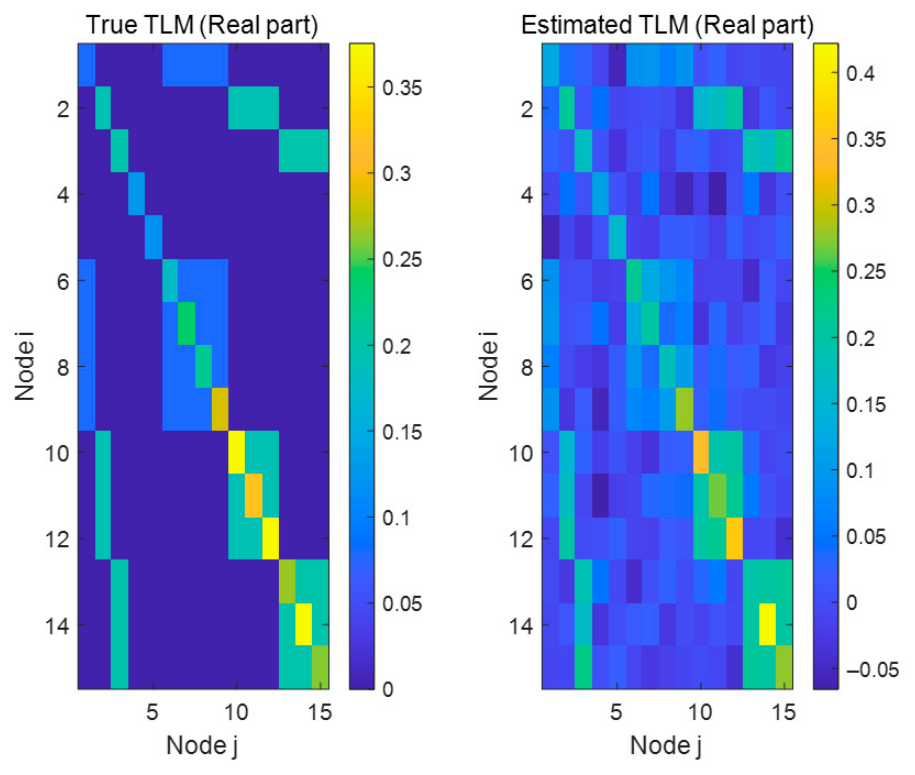
Figure 3 compares the real parts of the true and estimated TLM matrices. The two images are visually almost identical, indicating that the linear regression successfully captures the common-path impedance pattern. The relative Frobenius-norm error is only 1.8%, demonstrating excellent parameter estimation performance. The expression of relative Frobenius-norm error is as follows.
ϵ = Z ^ Z true F Z true F
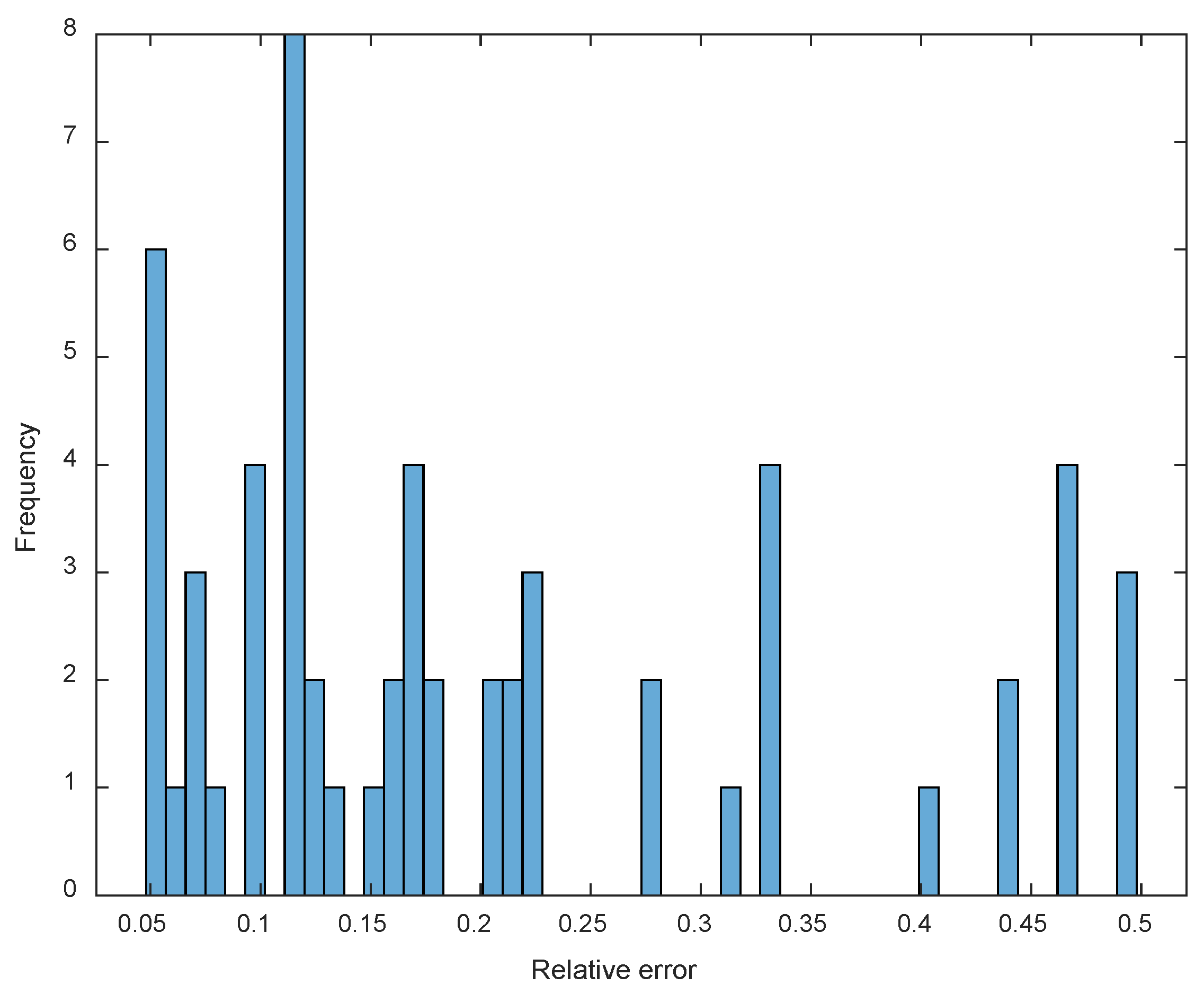
The histogram of relative errors for individual TLM elements in Figure 3 shows that more than 95% of the elements have an error below 5%, with the largest errors occurring for entries corresponding to distant nodes, which have small impedance values; therefore, noise has a proportionally larger impact.
As shown in Figure 4, the hierarchical clustering algorithm correctly identifies the entire tree structure. All 15 leaf nodes are merged in the exact order dictated by the true network: nodes sharing a common parent are grouped together first (e.g., nodes 6–9 under node 1, nodes 10–12 under node 2, nodes 13–15 under node 3), followed by the merging of these subgroups according to their actual connectivity. No mis-groupings occur, confirming that the similarity measure derived from the estimated TLM reliably reflects the electrical distances in the network.
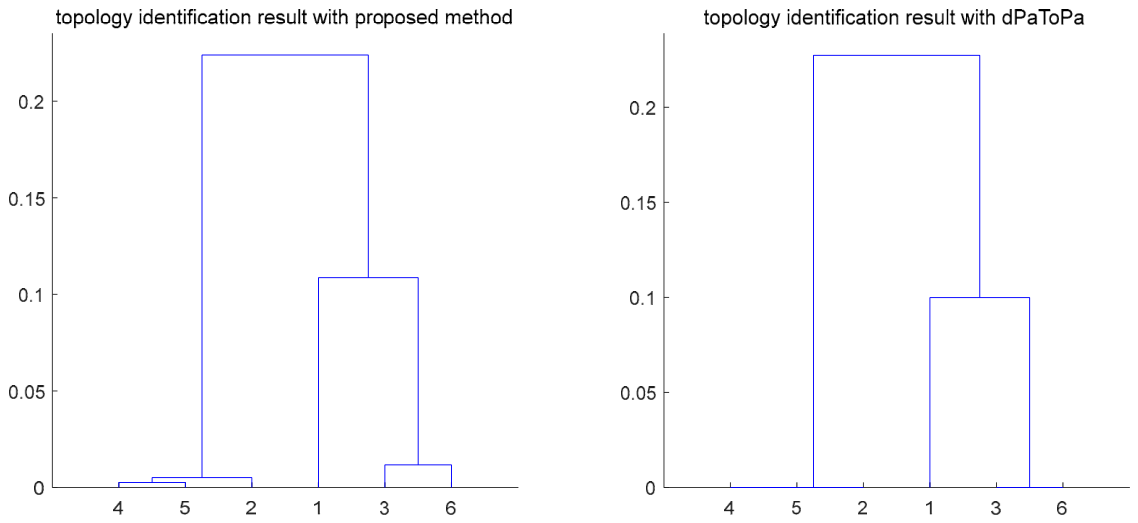
We evaluate the proposed method on a radial low-voltage distribution network with 6 leaf nodes, where branch impedances are set to be 0.01 + j 0.05 Ω . Figure 5 compares the hierarchical clustering trees obtained by our iterative algorithm using only voltage/current magnitudes and power and by the PaToPa framework using full phasor measurements. The cophenet correlation coefficient between our estimated tree and the true impedance distance matrix reaches 0.98, while PaToPa achieves 0.999. Despite the absence of phase angle information, our method accurately recovers the radial topology, demonstrating its effectiveness under realistic LVDN conditions where only magnitude and power data are available.

3.2. Validation of MNA-FDTD Method

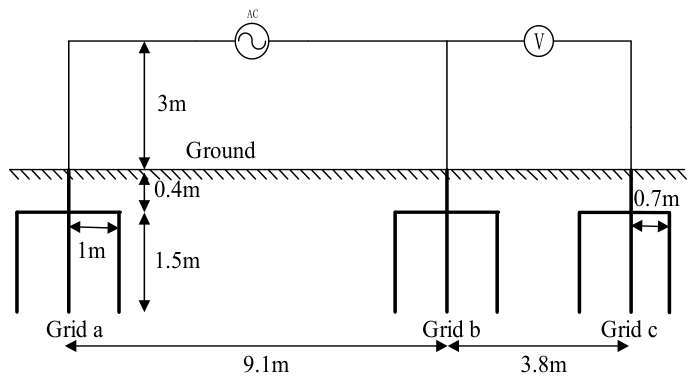
The experimental configuration is shown in Figure 6. The measurements were carried out in the laboratory of the China Southern Power Grid Company. A 50 Hz AC voltage source was applied between two grounding grids, a and b. Both the current flowing into grid b and the transfer voltage between grids b and c were measured using an ammeter and a multimeter, respectively. The distance between grids a and b is 9.1 m, and the distance between grids b and c is 3.8 m. Each grid consists of three vertical electrodes and two horizontal conductors for interconnection. The horizontal conductors are buried at a depth of 0.4 m, each 1 m long. The vertical electrodes are 1.5 m long, and all electrodes have a radius of 8 mm. For grid c, the horizontal electrode on the right side is 0.7 m long.
The AC voltage source was set to magnitudes of 50 V and 100 V in separate tests. The soil conductivity was taken as 0.007 S/m. The comparison between the measured and calculated results is presented in Table 1 and Table 2. The currents at grid b and the transfer voltages between grids b and c obtained from the MNA-FDTD simulation are very close to the measured values. From the calculation, the impedance of grid b is found to be approximately 54 Ω, and the ratio of the transfer voltage to the voltage on the grounding grid is about 15.12%. These results demonstrate that the MNA-FDTD method accurately captures the electromagnetic coupling between grounding grids and can reliably predict transfer voltages in TT systems.

3.3. Risk Assessment Considering Different Types of Grounding Systems

To evaluate the electric shock risk under realistic conditions, a simplified circuit model based on the MNA-FDTD framework described in Section 2.2 was implemented in MATLAB 2024. The simulation focuses on a representative LVDN serving a single building, with parameters derived from typical old residential communities [34,35]. A phase-to-ground fault is applied at the equipment inside the building (node 8), and the fault potential at the equipment enclosure as well as the touch voltage experienced by a person are computed for three common grounding systems: TT, TN-C, and TN-S. Two scenarios are considered for each system: without and with equipotential bonding between the dedicated vertical grounding rod and the building foundation (steel mesh).

3.3.1. Simulation Setup

The equivalent circuit parameters used in the simulation are summarized in Table 3. They are based on the line data from Section 3.1, complemented by typical values for grounding electrodes, building foundation, human body impedance, and concrete floor resistance reported in the literature [34,35]. The fault resistance is assumed to be 1 Ω, and the source voltage is 230 V (RMS) at 50 Hz. For each grounding system, the fault current distribution and the resulting potentials are calculated by solving the linear circuit equations in the frequency domain.

3.3.2. Fault Potential at the Equipment Enclosure

Figure 6 presents the calculated potential of the faulty equipment enclosure (node 8) for the three grounding systems, with and without equipotential bonding. The numerical values are listed in Table 3.
In the TT system, the fault potential reaches 118 V without bonding and 112 V with bonding, far exceeding the IEC 50 V safe threshold. The high grounding resistance limits fault current, making automatic disconnection difficult without additional protection.
For the TN-C system, the potential is 97 V without bonding and reduces to 62 V with bonding. Although still above 50 V, the low-impedance PEN path supports faster RCD operation.
The TN-S system shows the best performance: 68 V without bonding and 41 V with bonding, which is below the IEC 50 V safety threshold and meets basic electric shock protection requirements. The separate PE conductor and multiple grounding points along the neutral keep the voltage drop small. With bonding, the potential falls below the widely accepted safe touch-voltage threshold of 50 V [36,37].

3.3.3. Touch Voltage in an Indoor Electric Shock Scenario

A person standing on the reinforced concrete floor and touching the faulty equipment is modeled by the series connection of the human body impedance (2000 Ω) and the concrete floor resistance (300 Ω), with the return path through the building foundation. The resulting touch voltages are shown in Table 4.
(1)
TT system: touch voltage remains at 89 V even with bonding, exceeding both 50 V and 24 V limits. This indicates TT systems require high-sensitivity RCDs to ensure rapid power disconnection.
(2)
TN-C system: touch voltage drops from 74 V to 48 V after bonding, below 50 V but above 24 V. Additional local equipotential bonding is recommended.
(3)
TN-S system: touch voltage reaches 32 V with bonding, approaching the 24 V wet-location threshold and satisfying IEC safety criteria.
The results confirm that safety assessment must combine touch voltage with protective device operation, as required by industrial standards. RCDs and equipotential bonding are essential for TT and TN-C systems, while TN-S with bonding provides inherently safer performance.

4. Discussion

The two-stage methodology proposed in this paper addresses a fundamental challenge in electric shock safety assessment: the frequent unavailability of accurate topology information in low-voltage distribution networks. By combining data-driven topology identification with model-based simulation, the approach enables quantitative risk evaluation even when conventional network documentation is incomplete or outdated.
The validation results in Section 3.1 demonstrate that the proposed algorithm can reconstruct both network structure and branch impedances with high accuracy using only smart meter measurements. With a relative Frobenius error of only 1.8% in the Topology Label Matrix estimation, the method provides a reliable foundation for subsequent electric shock simulations. This accuracy is essential because fault current paths and voltage distributions during a ground fault are fundamentally determined by network connectivity and line parameters.
The simulations in Section 3.3 further illustrate this point: the computed fault potentials and touch voltages vary significantly across different grounding systems and bonding configurations. For the TT system, the fault potential reaches 118 V without bonding, while TN-S with bonding achieves only 41 V—a reduction of 65%. These differences arise directly from the network topology encoded in the incidence matrix A , confirming that topology identification is not merely a preparatory step but an integral part of the risk assessment process.
For utilities, the two-stage approach offers a practical solution to the common problem of incomplete network records. By leveraging existing smart meter infrastructure, the method requires no additional hardware and minimal manual intervention. The simulation results also provide actionable safety insights: TN-S systems with equipotential bonding achieve touch voltages below 50 V, suggesting that retrofitting existing installations with separate PE conductors and bonding building foundations could significantly enhance safety. TT systems, conversely, may require additional protective measures such as high-sensitivity RCDs.

5. Conclusions

This paper proposes a two-stage data-model fusion approach for electric shock simulation and risk assessment in low-voltage distribution networks with unknown topology and without phase-angle measurements, addressing the critical practical challenges of incomplete network documentation and limited smart meter data. The proposed method integrates a phase-angle-agnostic iterative topology identification algorithm with modified nodal analysis and finite-difference time-domain (MNA-FDTD) transient simulation, enabling accurate and standard-compliant safety evaluation under real utility conditions.
In the first stage, an iterative estimation scheme combined with weighted Laplacian matrix reconstruction and hierarchical clustering is developed to identify network topology and estimate line parameters using only active power, reactive power, voltage magnitude, and current magnitude from conventional smart meters. This approach eliminates dependence on voltage/current phase angles or synchronized phasor measurements, which are typically unavailable in low-voltage distribution networks. Validation on a 15-node radial network shows that the proposed method achieves a relative Frobenius-norm error of only 1.8% in topology label matrix estimation and accurately reconstructs the complete network structure, demonstrating strong robustness under low-observability conditions.
In the second stage, based on the identified topology and parameters, the MNA-FDTD method is applied to simulate transient leakage voltage distribution during single-phase-to-ground faults. The use of time-domain simulation is justified by the need to capture the transient voltage-rise process that dominates electric shock risk, while shunt capacitive effects are properly neglected for short low-voltage lines to maintain model simplicity and physical rationality.
Systematic risk assessment is performed in accordance with IEC 60479-1 and IEC 60990 safety standards, considering touch voltage thresholds, fault current characteristics, and the actuation logic of residual current protective devices (RCDs), rather than relying solely on estimated touch voltages. Simulation results across TT, TN-C, and TN-S grounding systems show that:
(1)
The TN-S system with equipotential bonding provides the highest safety level, with touch voltages below the 50 V IEC threshold for dry locations;
(2)
The TN-C system benefits significantly from equipotential bonding, reducing touch voltages by approximately 35%;
(3)
The TT system exhibits dangerously high touch voltages even with bonding, requiring mandatory high-sensitivity RCDs to meet safety requirements.
The proposed two-stage framework offers a practical, low-cost solution for electric shock risk assessment without relying on pre-existing topology records or additional hardware investments. It is especially suitable for old residential communities and urban distribution networks with incomplete documentation.
Future work will extend the method to non-radial network structures, incorporate field measurements from actual distribution networks, and further integrate protection device coordination into the risk assessment framework to support automated safety decision-making for low-voltage distribution systems.

Author Contributions

Conceptualization, X.S.; methodology, Z.L.; software, Z.L. and C.Y.; validation, Y.L.; formal analysis, S.L.; investigation, X.S.; resources, Y.Z.; data curation, Z.L.; writing—original draft preparation, Z.L.; writing—review and editing, S.L. and Y.D.; visualization, Y.Z.; supervision, X.S.; project administration, Z.L.; funding acquisition, Z.L. All authors have read and agreed to the published version of the manuscript.

Funding

This work was supported by the Science and Technology Project of China Southern Power Grid Co., Ltd. “Research on Data Set Platform and Testing Standard for Low Voltage Electricity Safety Hazard” (090000KC24110001).

Data Availability Statement

The original contributions presented in the study are included in the article, further inquiries can be directed to the corresponding author.

Conflicts of Interest

Authors Zhe Li, Shoukang Luo, Xiaojia Sun, Yang Li, Yubo Zhang were employed by the company Shenzhen Power Supply Bureau, The China Southern Power Grid Company Limited. The authors declare that this study received funding from Science and Technology Project of China Southern Power Grid Co., Ltd. The funder was not involved in the study design, collection, analysis, interpretation of data, the writing of this article or the decision to submit it for publication. The remaining authors declare that the research was conducted in the absence of any commercial or financial relationships that could be construed as a potential conflict of interest.

Abbreviations

The following abbreviations are used in this manuscript:
LVDNsLow-voltage distribution networks
TLMTopology Label Matrix
HCHierarchical Clustering
MNAModified Nodal Analysis
RCDsResidual current operated protective devices

References

  1. García Caro, S.; Fresia, M.; Mora-Merchán, J.M.; Carrasco Muñoz, A.; Personal Vázquez, E.; León de Mora, C. A data-driven topology identification method for low-voltage distribution networks based on the wavelet transform. Electr. Power Syst. Res. 2025, 243, 111517. [Google Scholar] [CrossRef]
  2. Yeung, C.; Ding, Y.; Zhou, Q.; Du, Y.; Chen, H.; Jia, L.; Zhang, S.; Li, Y. Multi-dimensional evaluation and synergistic optimization for double-circuit distribution lines under transient events. Int. J. Electr. Power Energy Syst. 2025, 172, 111153. [Google Scholar] [CrossRef]
  3. Pham, T.N.; Shah, R.; Dao, M.N. Low and medium voltage distribution network planning with distributed energy resources: A survey. Electr. Eng. 2025, 107, 1797–1828. [Google Scholar] [CrossRef]
  4. Fan, D.; Ding, Y.; Du, Y.; Feng, N.; Wang, Q.; Li, Z. Physics-augmented safe reinforcement learning for overload mitigation in distribution networks under weather-sensitive thermal constraints. Appl. Energy 2026, 414, 127752. [Google Scholar] [CrossRef]
  5. Cao, J.; Li, Z.; Ding, Y.; Du, Y.; Wang, J.; Jia, C.; Yeung, C. Observed Induced Overvoltage on the Test Overhead Distribution Line Initiated by Natural Lightning Activities. IEEE Trans. Ind. Appl. 2025, 62, 665–676. [Google Scholar] [CrossRef]
  6. Mahmood, T.A. Unified Grounding Systems for Future Projects to Ensure Public Safety and Improve Performance. Int. J. Innov. Sci. Res. Technol. 2024, 9, 2439–2450. [Google Scholar] [CrossRef]
  7. Yeung, C.; Wang, J.; Du, Y.; Zhou, M.; Cai, L.; Cao, J.; Zhou, Q.; Ding, Y.; Zhao, W.; Chen, M. Assessment of electro-magnetic shielding effectiveness in multi-layer and single-layer shielded cables. Electr. Power Syst. Res. 2025, 243, 111514. [Google Scholar] [CrossRef]
  8. Mitolo, M.A.G. Electrical Safety of Low-Voltage Systems; McGraw-Hill: New York, NY, USA, 2009. [Google Scholar]
  9. Cao, J.; Ding, Y.; Li, Z.; Du, Y.; Wang, J.; Jia, C.; Yeung, C.; Zhang, Y. Analysis of Fault Potential Assessment Under Typical Line Faults in a Real Urban Old Community. IEEE Trans. Ind. Appl. 2025, 61, 5808–5818. [Google Scholar] [CrossRef]
  10. Pappu, S.J.; Bhatt, N.; Pasumarthy, R.; Rajeswaran, A. Identifying Topology of Low Voltage Distribution Networks Based on Smart Meter Data. IEEE Trans. Smart Grid 2018, 9, 5113–5122. [Google Scholar] [CrossRef]
  11. Guo, Y.; Yuan, Y.; Wang, Z. Distribution Grid Modeling Using Smart Meter Data. IEEE Trans. Power Syst. 2022, 37, 1991–2003. [Google Scholar] [CrossRef]
  12. Luan, W.; Peng, J.; Maras, M.; Lo, J.; Harapnuk, B. Smart Meter Data Analytics for Distribution Network Connectivity Verification. IEEE Trans. Smart Grid 2015, 6, 1964–1971. [Google Scholar] [CrossRef]
  13. Yu, J.; Weng, Y.; Rajagopal, R. PaToPa: A data-driven parameter and topology joint estimation framework in distribution grids. IEEE Trans. Power Syst. 2018, 33, 4335–4347. [Google Scholar] [CrossRef]
  14. Deka, D.; Backhaus, S.; Chertkov, M. Structure Learning in Power Distribution Networks. IEEE Trans. Control Netw. Syst. 2018, 5, 1061–1074. [Google Scholar] [CrossRef]
  15. Bolognani, S.; Carli, R.; Cavraro, G.; Todescato, M. On the Need for Communication for Voltage Regulation of Power Distribution Grids. IEEE Trans. Control Netw. Syst. 2019, 6, 1111–1123. [Google Scholar] [CrossRef]
  16. Carminati, M.; Grillo, S.; Piegariet, L.; Ragaini, E.; Tironi, E. Ground fault analysis of low voltage DC micro-grids with active front-end converter. In 3rd Renewable Power Generation Conference (RPG 2014); IET: London, UK, 2014. [Google Scholar]
  17. Cavraro, G.; Kekatos, V. Graph Algorithms for Topology Identification Using Power Grid Measurements. In Proceedings of the 2019 57th Annual Allerton Conference on Communication, Control, and Computing, Monticello, IL, USA, 24–27 September 2019; pp. 647–653. [Google Scholar]
  18. Yeung, C.; Wang, J.; Zhou, M.; Cao, J.; Ding, Y.; Cai, L.; Fan, Y.; Zhou, Q.; Wang, J.; Zhao, W. Transient induced response on cables by lightning electromagnetic pulse with different experimental conditions. Electr. Power Syst. Res. 2025, 238, 111031. [Google Scholar] [CrossRef]
  19. Cao, J.; Li, Z.; Ding, Y.; Du, Y.; Wang, J.; Zhang, Y.; Chen, M.; Cai, L. Assessment of fault potential and touch voltage in the low-voltage distribution line system of the residential community. Electr. Power Syst. Res. 2024, 228, 109960. [Google Scholar] [CrossRef]
  20. Feng, N.; Du, Y.; Ding, Y. A Heuristic-Search-Based Topology Identification and Parameter Estimation Method in Low Voltage Distribution Grids with Low Observability. IEEE Trans. Smart Grid 2024, 15, 5826–5839. [Google Scholar] [CrossRef]
  21. Bolognani, S.; Bof, N.; Michelotti, D.; Muraro, R.; Schenato, L. Identification of power distribution network topology via voltage correlation analysis. In Proceedings of the IEEE 52nd Annual Conference on Decision and Control, Firenze, Italy, 10–13 December 2013; pp. 1659–1664. [Google Scholar]
  22. Liu, D.; Giraldo, J.S.; Palensky, P.; Vergara, P.P. Data-Driven Topology Generation with Physics-Guidance in LV Distribution Networks. In Proceedings of the IEEE PES ISGT Europe, Dubrovnik, Croatia, 14–17 October 2024. [Google Scholar]
  23. Lei, Y.; Yang, F.; Feng, Y.; Hu, W.; Cheng, Y. A topology identification strategy of low-voltage distribution grids based on feature-enhanced graph attention network. Energies 2025, 18, 2821. [Google Scholar] [CrossRef]
  24. Numair, M.; Ahmed, A.A.; Felipe, A.V.; Mohamed, E.F.; Eyad, E. Fault detection and localisation in lv distribution networks using a smart meter data-driven digital twin. Energies 2023, 16, 7850. [Google Scholar] [CrossRef]
  25. Wang, X.; Zhao, Y.; Zhou, Y. A Data-Driven Topology and Parameter Joint Estimation Method in Non-PMU Distribution Networks. IEEE Trans. Power Syst. 2024, 39, 1681–1692. [Google Scholar] [CrossRef]
  26. Jia, D.; Sheng, W.; Song, X.; Meng, X. A system identification method for smart distribution grid. In Proceedings of the 2014 International Conference on Power System Technology (POWERCON), Chengdu, China, 20–22 October 2014; pp. 14–19. [Google Scholar]
  27. Yeung, C.; Ding, Y.; Zhou, Q.; Du, Y.; Zhang, S.; Qi, R.; Jia, L. An Accelerated Multi-Time-Scale Solution of Power Systems Under Multiple Lightning Strokes Events. IEEE Trans. Power Deliv. 2025, 40, 1889–1898. [Google Scholar] [CrossRef]
  28. Murtagh, F.; Contreras, P. Algorithms for hierarchical clustering: An overview. Wiley Interdiscip. Rev. Data Min. Knowl. Discov. 2012, 2, 86–97. [Google Scholar] [CrossRef]
  29. Baba, Y.; Nagaoka, N.; Ametani, A. Modeling of thin wires in a lossy medium for FDTD simulations. IEEE Trans. Electromagn. Compat. 2005, 47, 54–60. [Google Scholar] [CrossRef]
  30. Taniguchi, Y.; Baba, Y.; Nagaoka, N.; Ametani, A. An improved thin wire representation for FDTD computations. IEEE Trans. Antennas Propag. 2008, 56, 3248–3252. [Google Scholar] [CrossRef]
  31. Yeung, C.; Lyu, J.; Du, Y.; Zhou, Q.; Wang, M.; Jia, L.; Chen, X.; Qi, R.; Xiao, X.; Li, Y. Methodology for fast impedance calculation for twisted power cables at high-frequency via a multi-level PEEC method. IEEE Trans. Ind. Appl. 2026, 62, 304–313. [Google Scholar] [CrossRef]
  32. Baba, Y. Numerical electromagnetic analysis using the FDTD method. In Numerical Analysis of Power System Transients and Dynamics; Ametani, A., Ed.; IET Power and Energy Series 78; Institution of Engineering and Technology: Stevenage, UK, 2015; pp. 221–264. [Google Scholar]
  33. Yee, K.S. Numerical solution of initial boundary value problems involving Maxwell’s equations in isotropic media. IEEE Trans. Antennas Propag. 1966, 14, 302–307. [Google Scholar]
  34. Chinen, K.; Kinjo, I.; Zamami, A.; Irei, K.; Nagayama, K. New equivalent-electrical circuit model and a practical measurement method for human body impedance. Biomed. Mater. Eng. 2015, 26, S779–S786. [Google Scholar] [CrossRef]
  35. Zhou, X.; Wang, X.; Yao, Y.; Feng, Z.; Hu, Z.; Fu, J. 1-ohm Impedance Criterion for Diagnosis of Single-Phase Ground Fault of Transmission Line. IEEE Access 2025, 13, 12345–12355. [Google Scholar] [CrossRef]
  36. IEC 60990:2016; Methods of Measurement of Touch Current and Protective Conductor Current. International Electrotechnical Commission, IEC: Geneva, Switzerland, 2016.
  37. IEC TS 60479-1:2005; Effects of current on human beings and livestock—Part 1: General aspects. International Electrotechnical Commission, IEC: Geneva, Switzerland, 2005.
Figure 1. Illustration of Hierarchical Clustering.
Energies 19 02723 g001
Figure 2. Flowchart of the proposed two-stage method.
Energies 19 02723 g002
Figure 3. Comparison between true and estimated TLM matrices.
Energies 19 02723 g003
Figure 4. Histogram of relative errors for individual TLM elements.
Energies 19 02723 g004
Figure 5. Comparison between proposed method and PaToPa method.
Energies 19 02723 g005
Figure 6. Configuration of the typical low voltage distribution grid.
Energies 19 02723 g006
Table 1. Results with the 50 V voltage source.
CalculatedMeasuredError
Current0.92 A0.95 A3.2%
Voltage3.78 V3.52 V7.4%
Table 2. Results with the 100 V voltage source.
CalculatedMeasuredError
Current1.84 A1.80 A2.2%
Voltage7.56 V7.25 V4.3%
Table 3. Equipment potential at the fault location (phase-to-ground fault at node 8).
ComponentValueDescription
Phase line impedance0.1 + j0.05 ΩObtained through topology identification method using smart meter data.
PE line impedance Z PE 0.05 + j 0.025   Ω Protective conductor inside building
Neutral line impedance Z N 0.05 + j 0.025   Ω Neutral conductor (for TN-C and TN-S)
Source grounding resistance R source 2   Ω Substation grounding grid
Vertical rod resistance R rod 30   Ω Dedicated grounding electrode at building entrance
Foundation mesh resistance R mesh 2   Ω Building steel foundation (buried horizontal mesh)
Human body impedance R human 2000   Ω Hand-to-foot path, IEC 60990 [36]
Concrete floor resistance R concrete 300   Ω Measured value from [35]
Fault resistance R f 1   Ω Phase-to-ground fault resistance
Table 4. Equipment potential at the fault location (phase-to-ground fault at node 8).
ComponentValueDescription
SystemWithout bonding (V)With bonding (V)
TT118112
TN-C9762
TN-S6841
Disclaimer/Publisher’s Note: The statements, opinions and data contained in all publications are solely those of the individual author(s) and contributor(s) and not of MDPI and/or the editor(s). MDPI and/or the editor(s) disclaim responsibility for any injury to people or property resulting from any ideas, methods, instructions or products referred to in the content.