1. Introduction
Against the backdrop of the continuous deepening of global energy transformation, lithium-ion batteries, leveraging their core advantages such as outstanding energy density, excellent cycling performance, low self-discharge rate, and environmental friendliness, have fundamentally reshaped the application landscape of traditional energy storage devices [
1,
2,
3,
4,
5]. They have not only become the core power source for consumer electronics, new energy vehicles, rail transit, and other fields but have also demonstrated irreplaceable application value in emerging areas such as large-scale energy storage power stations, smart grids, and aerospace, thereby laying a solid energy storage foundation for the realization of global carbon neutrality and carbon peak strategic goals [
6,
7,
8,
9,
10,
11,
12,
13,
14]. With the rapid development of the new energy industry, the performance requirements for lithium-ion batteries continue to escalate, making high energy density, high safety and stability, long cycle life, and excellent rate capability the core research and development directions for next-generation lithium-ion batteries [
15,
16,
17]. As an indispensable key component within lithium-ion batteries, the separator undertakes the dual functions of isolating the positive and negative active materials, blocking electron conduction, and providing channels for lithium-ion migration. Its microstructure, physicochemical properties, and interfacial characteristics directly affect critical indicators such as ion transport efficiency, charge/discharge rate, cycling stability, and thermal safety performance of lithium-ion batteries [
18,
19,
20,
21]. Acting as the core bridge connecting the positive and negative electrodes and the electrolyte system, the performance of the separator is highly correlated with the overall quality, service life, and safety reliability of lithium-ion batteries [
22,
23].
For the current commercial separator, polyolefin separators have consistently held a dominant position due to their mature technology and well-established manufacturing processes [
24,
25,
26]. Among these, monolayer polypropylene (PP) separators, polyethylene (PE) separators, and PP/PE/PP multilayer composite separators are the most widely commercialized categories [
24]. Leveraging their structural characteristics and cost advantages, such polyolefin separators have met the basic application requirements of traditional lithium-ion batteries and have driven the large-scale development of the lithium-ion battery industry over the past several decades [
25,
26]. However, as lithium-ion batteries undergo iterative upgrades toward higher energy density and power density, the inherent material limitations of conventional polyolefin separators have become increasingly prominent, posing a critical bottleneck restricting the development of high-performance, high-safety lithium-ion batteries [
24,
25,
26]. Actually, polyolefin materials are thermoplastic polymers with relatively low melting points (PE melts at approximately 135 °C, and PP at approximately 165 °C) [
27]. Under extreme conditions such as high-temperature abuse, overcharging, and short circuits, polyolefin separators are highly prone to thermal shrinkage and melt collapse, directly causing contact between the positive and negative electrodes and triggering internal short circuits [
27,
28,
29]. This can further induce thermal runaway, leading to serious safety accidents including fire and explosion, thus failing to meet the application requirements of high-safety power and energy storage batteries [
28,
29,
30,
31]. And polyolefin molecular chains are non-polar with very low surface energy, resulting in poor affinity with polar carbonate-based electrolytes. The inadequate electrolyte wettability and liquid retention capacity significantly increase the transport resistance of lithium ions within the separator pores [
32,
33]. This not only limits the improvement of battery rate capability but also leads to a sharp decline in charge/discharge efficiency and a significant increase in interfacial impedance under low-temperature operating conditions [
32,
33,
34]. Furthermore, the microporous structure of conventional polyolefin separators is typically produced by physical stretching, resulting in uneven pore size distribution, high pore tortuosity, and susceptibility to pore closure, deformation, and collapse during long-term charge/discharge cycling. These issues further exacerbate the hindrance of lithium-ion transport, causing rapid capacity degradation and a substantial reduction in cycle life [
35,
36,
37,
38].
To compensate for the performance shortcomings of polyolefin separators, surface modification approaches are commonly employed in the industry for optimization [
39]. Common methods include inorganic ceramic particle coating, organic polymer coating modification, and composite multilayer structural design. Although such modification methods have improved the thermal stability, electrolyte wettability, and mechanical strength of the separators to a certain extent, they have not fundamentally altered the material properties of the polyolefin matrix [
40]. Consequently, they cannot completely resolve the core issues of poor thermal stability and weak interfacial affinity, making it difficult to meet the development demands of next-generation high-energy-density, high-safety lithium-ion batteries. Therefore, the development of novel high-performance matrix materials, combined with efficient and feasible preparation processes, to create new separators that possess excellent thermal stability, good electrolyte wettability, and a controllable microporous structure has become indispensable and a key breakthrough direction for next-generation high-performance lithium-ion batteries.
Polyimide (PI), as a high-performance aromatic heterocyclic polymer material, exhibits exceptional thermal stability, mechanical strength, chemical inertness, and aging resistance due to the stable imide ring structure in its molecular chains. Its glass transition temperature can exceed 300 °C, allowing it to maintain good structural integrity and mechanical properties even under high-temperature environments. This fundamentally addresses the thermal shrinkage defect of polyolefin separators, making PI an ideal material for preparing high-performance lithium battery separators. Professor Miao prepared PI nanofiber nonwoven membranes using electrospinning to improve thermal stability and electrolyte wettability [
41]. Lin and coworkers introduced carboxyl groups into the PI molecular structure to enhance electrolyte wettability and Li
+ transport capability [
42]. Likewise, Zhang group fabricated PI membranes by combining a soluble precursor with a non-solvent induced phase separation process [
43]. However, pure polyimide separators suffer from issues such as poor film formability, difficulty in precisely controlling porosity, insufficient surface lyophilicity, and the need for improved ion transport efficiency. Direct application of pure PI separators in the field of lithium battery separators makes it difficult to achieve the desired electrochemical performance. To address this challenge, this study proposes the preparation of a PI-NaCl composite lithium battery separator using a coating process. Abandoning complex preparation methods such as electrospinning, this approach adopts the coating technique as the core, which features a simple process and scalability for mass production. NaCl is introduced as a pore-forming agent into the polyimide slurry system, and an integrated process of coating film formation, thermal imidization, and water washing for salt removal is employed to fabricate a PI-NaCl composite separator with controllable structure and excellent performance. During this preparation process, NaCl particles serve as a green and efficient pore-forming template, which can be completely removed during the water washing step. This constructs a uniformly connected three-dimensional pore network within the polyimide coating, enabling precise regulation of the separator’s porosity and pore size distribution, and significantly enhancing the electrolyte permeability and retention capacity. Meanwhile, the polar sites remaining from the NaCl pore-forming process effectively improve the surface polarity of the polyimide coating, enhance its interfacial compatibility with polar electrolytes, reduce lithium ion transport impedance, and optimize the electrochemical kinetic processes of the battery.
Therefore, in this work, the microstructure, physical properties, and electrochemical performance of the PI-NaCl separator were systematically investigated, and its high safety, electrochemical performance, and potential for large-scale application as a novel lithium battery separator were verified. The thermal stability of the commercial separator and the PI-NaCl separator was systematically compared at 150 °C and 180 °C. It was found that the commercial separator underwent severe melting and shrinkage, while the PI-NaCl separator exhibited almost no structural change. In terms of interfacial performance, the synergistic effect of the porous structure and polar surface significantly enhanced electrolyte wettability and liquid retention capacity, reduced interfacial impedance, and ensured fast and stable lithium-ion transport. Based on the excellent thermal stability of the full cell using the PI-NaCl separator, the open-circuit voltage remained at 3.2 V at 150 °C, demonstrating outstanding high-temperature resistance, effectively suppressing thermal shrinkage of the separator and reducing the risk of short circuits. The PI-based lithium battery separator prepared using the template agent provides new technical support and research ideas for the technological upgrading and industrial application of high-performance lithium-ion batteries.
3. Results and Discussion
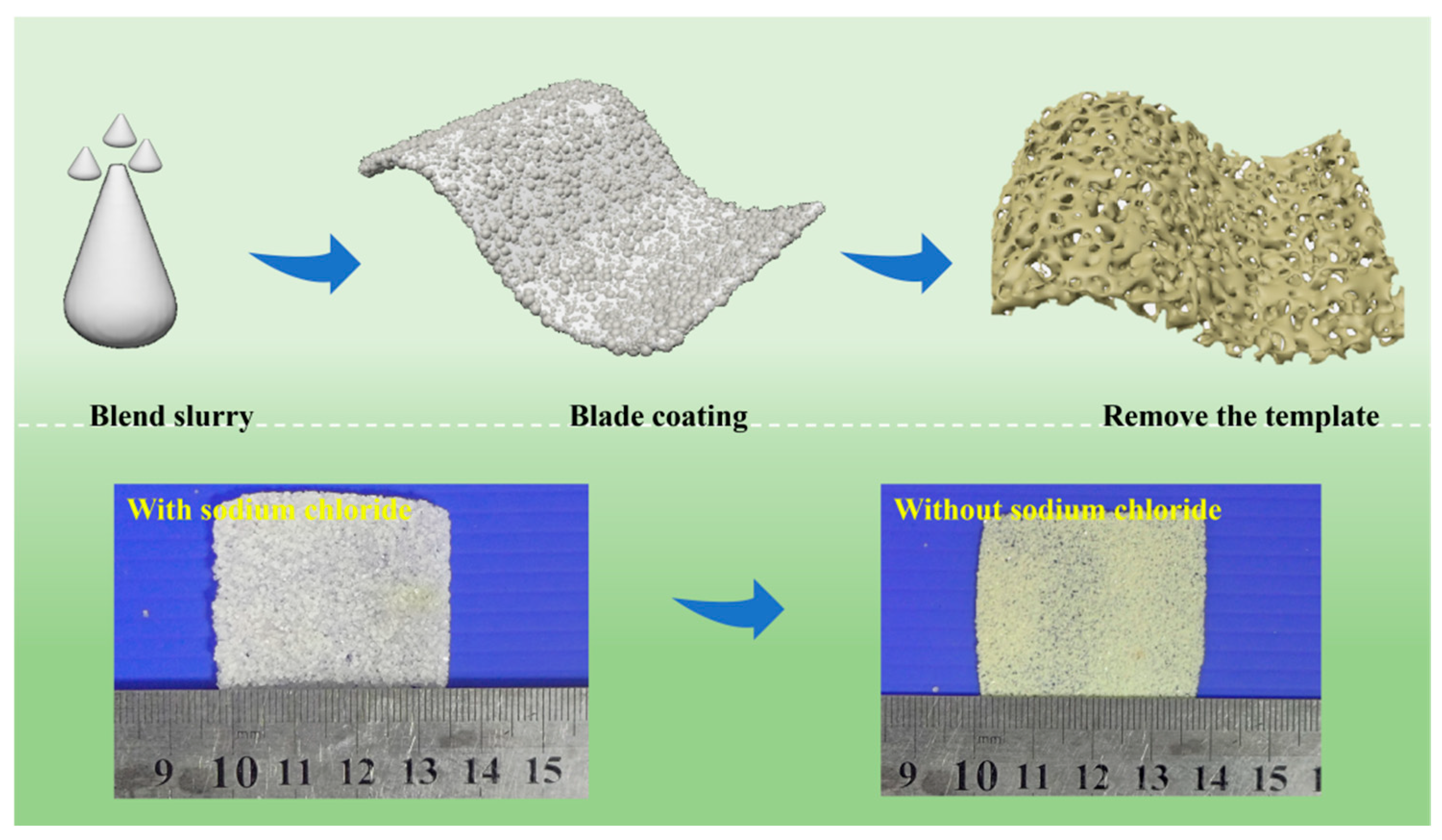
Figure 1 schematically illustrates the preparation process of the functional separator. Polyamic acid was first prepared by polyreaction. Then, NaCl particles with different sizes were dispersed on the polyamic acid matrix. Subsequently, after imidization, polyamic acid was converted into polyimide, and the color changed from light to pale yellow. Leveraging the high solubility of sodium chloride in water and the water insolubility of polyimide, the NaCl template was removed readily, thereby obtaining a porous polyimide membrane.
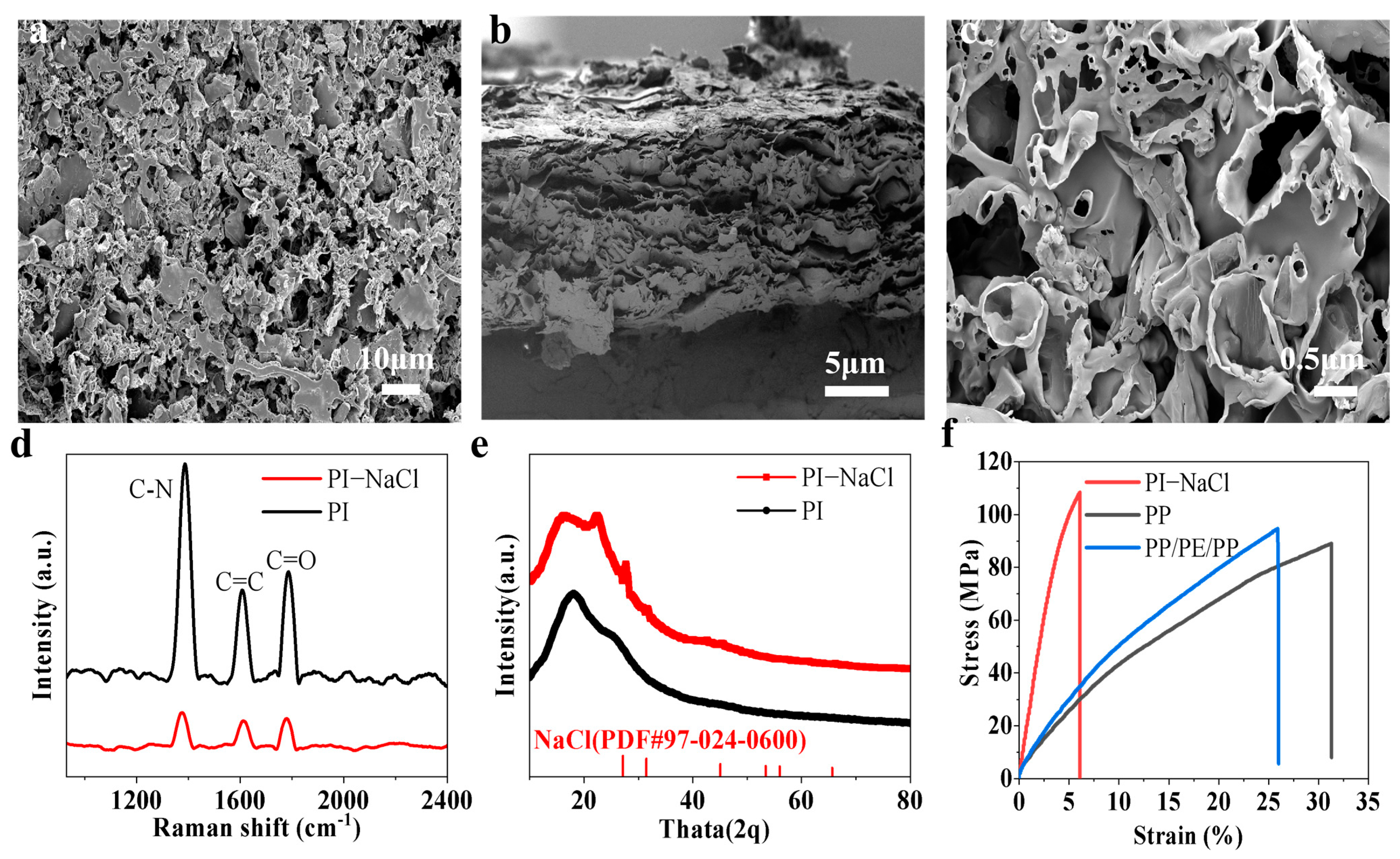
The microstructure of the PI-NaCl separator was characterized in detail by scanning electron microscopy (SEM). As shown in
Figure 2a, the PI-NaCl separator exhibits an extremely rich and interconnected three-dimensional porous network structure. At higher magnification (
Figure 2c), the pores are clearly observed to be irregular and open, with distinct and densely distributed pore walls. This sponge-like macro/mesoporous structure greatly increases the specific surface area of the separator, facilitating efficient wetting by the liquid electrolyte and providing excellent liquid retention capacity. From the cross-sectional morphology (
Figure 2b), it can be seen that the interior presents a typical hierarchical porous architecture, with pores penetrating the entire thickness direction. This interconnected three-dimensional pore network not only provides ample space for electrolyte accommodation but also offers continuous, low-impedance transport channels for rapid lithium ion (Li
+) shuttling between the positive and negative electrodes, thereby laying a structural foundation for enhancing the ionic conductivity of the battery. Raman spectroscopy and X-ray diffraction (XRD) were employed to characterize the surface chemical structure and molecular crystalline phase of the separator.
Figure 2d shows a comparison of the Raman spectra of the PI-NaCl separator and the pure PI separator. Both curves exhibit characteristic peaks of the polyimide chain at approximately 1380 cm
−1, 1600 cm
−1, and 1780 cm
−1, corresponding to imide ring deformation, aromatic ring skeleton vibration, and carbonyl (C=O) symmetric stretching, respectively. The peak positions are completely consistent between the two, and no new impurity peaks appear, indicating that the introduction of NaCl and the pore-forming process did not disrupt the main chemical chain of the PI molecules or form new chemical bonds. However, the peak intensity of PI-NaCl is significantly weaker than that of pure PI, which is generally attributed to enhanced surface light scattering and reduced local density due to its abundant porous structure. The XRD patterns in
Figure 2e further confirm the phase characteristics of the separators. Both PI-NaCl and pure PI exhibit broad diffuse scattering peaks, which are typical characteristics of an amorphous (non-crystalline) polymer structure. No sharp crystalline peaks of NaCl are detected in the patterns, indicating that the pore-forming agent was completely removed during the preparation process. Furthermore, the highly amorphous polymer backbone facilitates local segmental motion of polymer chains within the amorphous regions, promoting electrolyte permeation and ionic conduction.
Figure 2f compares the room-temperature tensile stress–strain curves of the PI-NaCl separator with those of a commercial polypropylene (PP) monolayer separator and a commercial PP/PE/PP trilayer composite separator. The test results show that the commercial PP and PP/PE/PP separators exhibit good flexibility (elongation at break of approximately 31% and 26%, respectively), but their tensile strengths are relatively low (peak stress below 100 MPa). In contrast, the PI-NaCl separator exhibits excellent rigidity and tensile strength. The initial slope of its stress–strain curve is much higher than that of the commercial polyolefin separators, and the maximum tensile strength exceeds 108 MPa. The Young’s modulus of PI-NaCl was calculated to be 1.8 GPa, while that of PP/PE/PP is approximately 0.7 GPa and pure PP is about 0.5 GPa. Although its elongation at break is reduced, this ultra-high mechanical strength endows the separator with outstanding physical rigidity. In actual battery cycling, this high-strength polyimide backbone can effectively resist the stress caused by electrode volume expansion and form a robust physical barrier, fundamentally inhibiting the physical penetration of sharp lithium dendrites through the separator, thereby significantly improving the safety of lithium batteries.
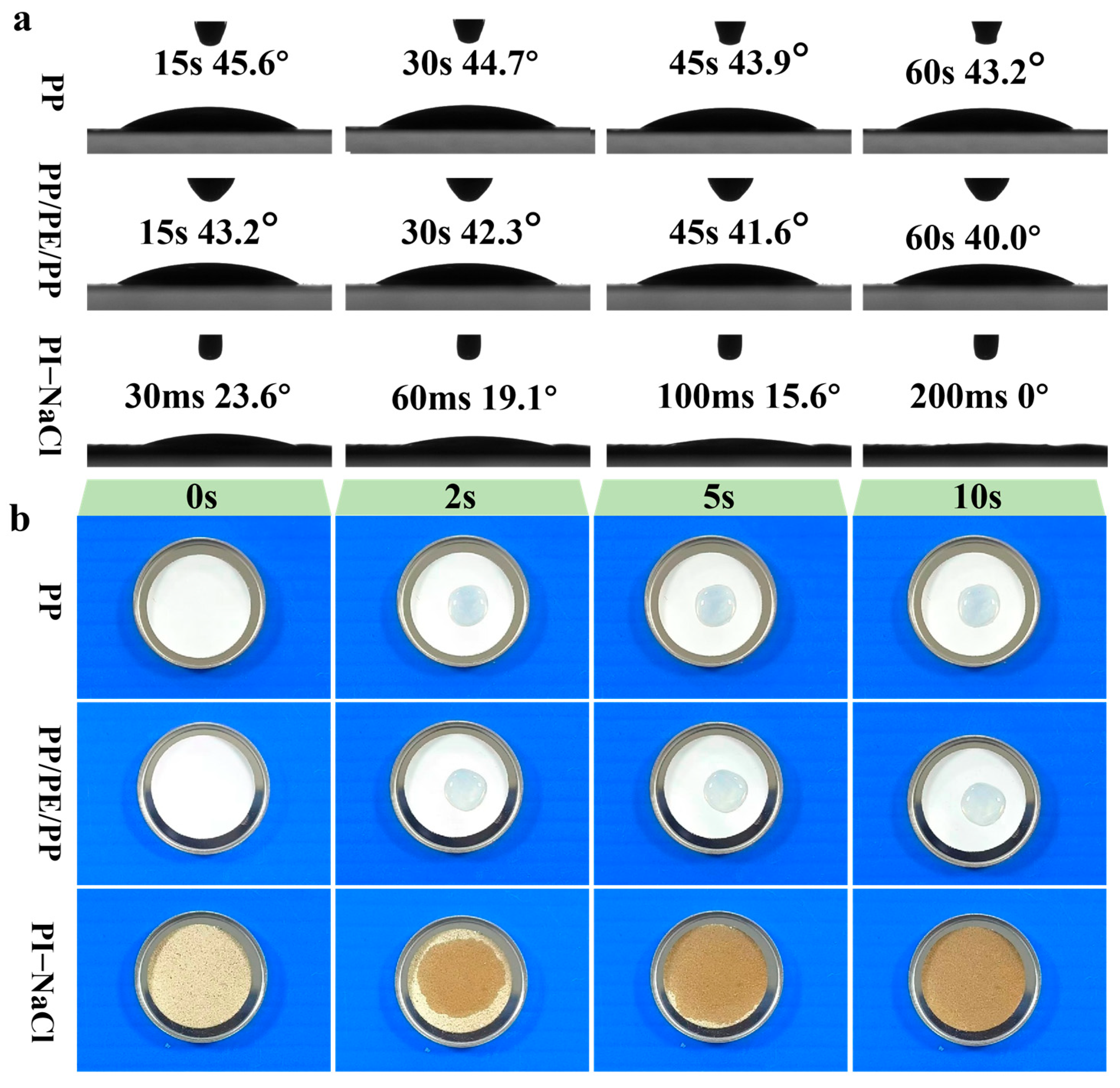
By capturing the dynamic contact angle changes in electrolyte droplets on the separator surface, the wetting kinetics of the material can be accurately reflected. As shown in
Figure 3a, conventional commercial polyolefin separators exhibit an extremely sluggish wetting process. After the droplet contacts the separator surface, its contact angle only slowly decreases from its initial state to 43.2° (PP) and 40.0° (PP/PE/PP) over a period of up to 60 s, with the droplet never fully penetrating into the separator interior. This is mainly attributed to the inherently non-polar nature of polyolefin materials, which have low surface energy and lack molecular affinity with polar carbonate-based electrolytes (such as those containing EC/DMC/DEC). In stark contrast, the PI-NaCl separator demonstrates exceptionally superior ultrafast lyophilicity. Its measurement time scale spans from the “second (s)” level to the “millisecond (ms)” level. The droplet undergoes dramatic spreading immediately upon contacting the PI-NaCl surface. At 30 ms, the contact angle has already sharply decreased to 23.6°, and within just 200 ms (i.e., 0.2 s), the contact angle directly drops to 0°, achieving complete electrolyte absorption and rapid wetting. To further verify the macroscopic electrolyte absorption capacity of the separator, the droplet penetration state during battery electrolyte filling was simulated (
Figure 3b). Within the observation window of 0 to 10 s, electrolyte droplets deposited on the surfaces of commercial PP and PP/PE/PP separators consistently maintained a spherical cap shape without significant lateral spreading, demonstrating that the liquid surface tensi on is difficult to overcome without external force. In contrast, when an electrolyte droplet falls onto the PI-NaCl separator surface, it rapidly penetrates into the separator interior and spreads out extensively in all directions within just 2 s. From 5 to 10 s, the electrolyte has completely permeated and covered the entire visible area of the separator (intuitively manifested as a clear and uniform darkening of the separator due to electrolyte absorption). The PI-NaCl composite separator exhibits an overwhelming advantage in electrolyte wettability compared to commercial polyolefin separators. This excellent lyophilic performance is not only attributable to the strong capillary effect generated by the highly developed three-dimensionally interconnected porous network revealed in previous characterizations but also stems from the strong dipole–dipole interactions between the abundant polar groups (such as imide rings and carbonyl groups) in the polyimide (PI) molecular backbone and the polar solvent molecules of the electrolyte. In practical battery applications, this instantaneous and complete wetting characteristic can significantly shorten the formation and aging time during battery manufacturing, greatly improve the electrolyte retention of the separator, and effectively reduce the charge transfer resistance at the electrode/separator interface, thereby providing critical interfacial assurance for ensuring uniform ionic flux under high-rate charge/discharge and achieving long cycle life.
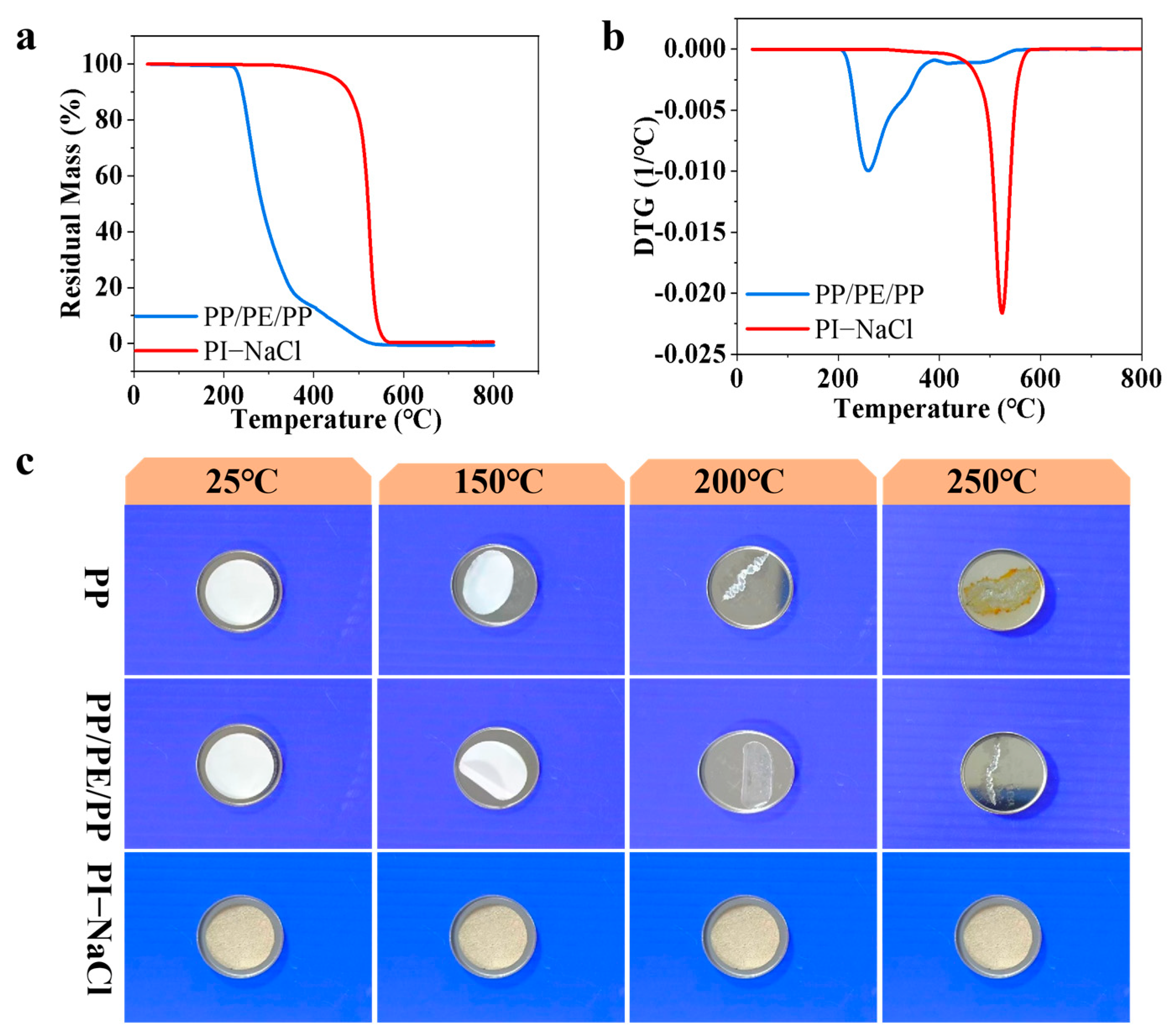
While pursuing high-energy-density lithium-ion batteries, battery safety, particularly the ability to resist thermal runaway, has become an extremely core evaluation indicator. As the physical barrier isolating the positive and negative electrodes, the thermal stability and dimensional integrity of the separator under high-temperature environments directly determine whether an internal short circuit will occur in the battery. So, the heat resistance of the PI-NaCl separator was systematically evaluated through thermogravimetric analysis and gradient (TGA/DTG) and macroscopic thermal shrinkage experiments. TGA and DTG tests were employed to assess the intrinsic thermal degradation kinetics of the materials. The TGA curves shown in
Figure 4a indicate that the commercial trilayer PP/PE/PP composite separator exhibits poor heat resistance, beginning significant mass loss when the temperature reaches approximately 200 °C. Its DTG curve (
Figure 4b) shows that thermal degradation starts at approximately 180 °C, with a peak at approximately 260 °C, followed by complete decomposition before 500 °C. This low decomposition temperature is an inherent drawback of the aliphatic chain structure of polyolefin materials. In stark contrast, the PI-NaCl separator exhibits exceptionally superior intrinsic thermal stability. Within a wide temperature range up to approximately 450 °C, its mass retention remains almost 100%, without any significant decomposition or volatile release. Combined with the DTG curve (
Figure 4b), it can be clearly observed that the PI-NaCl separator only begins to undergo thermal weight loss after 500 °C, with its single and sharp maximum decomposition rate peak appearing at approximately 530 °C. This exceptionally excellent high-temperature tolerance is fundamentally attributed to the highly conjugated aromatic rings and robust imide ring structures in the main chain of the polyimide (PI) macromolecule, which endow the material with high chemical bond dissociation energy. To further simulate the morphological evolution of the separator under extreme heat generation conditions in batteries, heat treatment tests at different temperature gradients for 0.5 h were conducted on the separators. As shown in the macroscopic optical photographs in
Figure 4c, at room temperature (25 °C), all separators maintained a flat circular appearance. However, when the ambient temperature increased to 150 °C, both the commercial monolayer PP and trilayer PP/PE/PP separators exhibited significant edge curling and thermal shrinkage deformation. When the temperature was further raised to 200 °C or even 250 °C, the polyolefin separators underwent extremely severe shrinkage, melting, and transparency, completely losing their original structural integrity and mechanical support function. During the extreme high-temperature heating process spanning from room temperature to 250 °C, the PI-NaCl separator exhibited a nearly perfect “zero-shrinkage” characteristic. Even when baked under the harsh thermal abuse condition of 250 °C, the composite separator still perfectly maintained its initial macroscopic dimensions and geometric shape, without any observable curling, wrinkling, or melting signs. The PI-NaCl composite separator not only possesses intrinsic thermal degradation resistance exceeding 500 °C at the molecular level but also exhibits excellent anti-thermal-shrinkage dimensional stability at the macroscopic physical level.
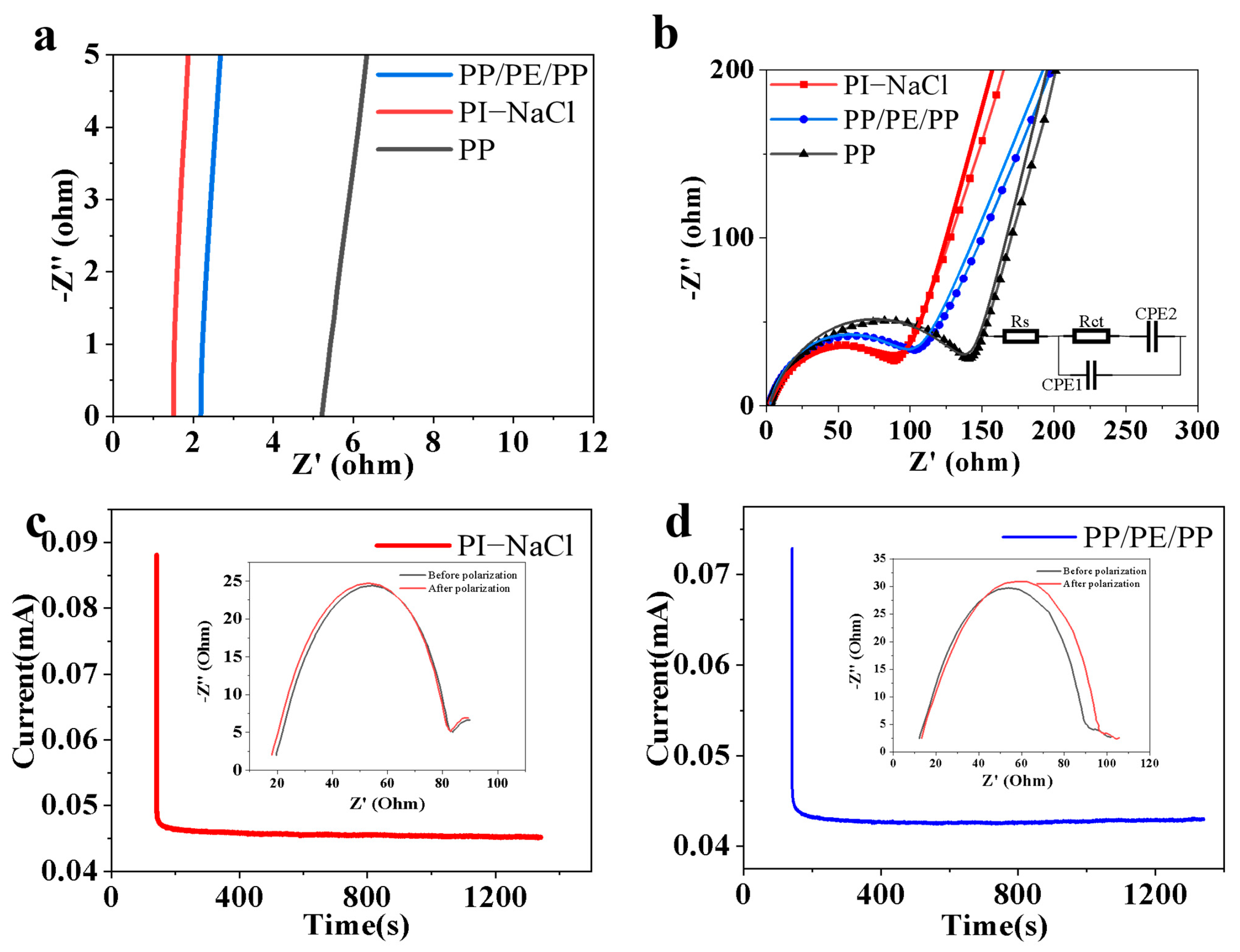
Based on AC impedance spectroscopy testing and quantitative calculations using stainless steel symmetric cells, the bulk ion transport capabilities of different separators in the same electrolyte system were compared, as shown in
Figure 5a. The calculation results indicate that the target modified separator (PI-NaCl) exhibits exceptionally superior ion conductivity, with a room-temperature ionic conductivity as high as 1.31 mS cm
−1, which is 5.6 times that of the commercial monolayer PP separator (0.23 mS cm
−1) and 1.8 times that of the commercial PP/PE/PP trilayer composite separator (0.72 mS cm
−1). The NaCl pore-forming modification process successfully constructed a highly interconnected and well-developed three-dimensional porous network within the separator. Compared with commercial polyolefin separators, which are prepared by mechanical stretching and have low porosity and tortuous pores, this porous framework significantly reduces ion transport tortuosity and provides a larger electrolyte accommodation space (high electrolyte retention). The PI-NaCl separator effectively overcomes the physical bottleneck of limited ion transport inherent to conventional polyolefin separators, and its excellent ionic conductivity will fundamentally reduce the ohmic internal resistance of the battery, laying a solid kinetic foundation for achieving high-rate charge/discharge and excellent electrochemical cycling performance. To verify the electrochemical compatibility and kinetic performance of the separators in actual full-cell systems, AC impedance spectroscopy (EIS) tests were conducted on LiFePO
4|C. As shown in
Figure 5b, the commercial monolayer PP separator exhibits the largest interfacial impedance (approximately 145 Ω), followed by the trilayer composite PP/PE/PP separator (approximately 110 Ω). In contrast, the full cell employing the PI-NaCl composite separator exhibits the most excellent interfacial reaction kinetics, with its charge transfer resistance significantly reduced to the lowest level (approximately 90 Ω). As shown in
Figure 5c,d, under DC voltage perturbation, the current of the PI-NaCl-based cell (0.045 mA) is higher than that of the commercial separator (0.043 mA). Combined with the impedance measurements, the apparent lithium-ion transference number of the PI-NaCl separator (0.36) is also superior to that of the commercial PP/PE/PP separator (0.34). This is closely related to the highly developed three-dimensional porous interconnected network and excellent electrolyte wettability within the PI-NaCl separator. It should be noted that the Nyquist arcs of the PI-NaCl-based battery before and after polarization almost perfectly overlap. This demonstrates that the PI-NaCl separator, by virtue of its excellent polar surface affinity and uniform pore distribution, can effectively homogenize the ion flux distribution on the lithium metal surface, resist the interfacial stress and electrode polarization induced by long-term DC polarization, and shows application potential for long-term battery cycling and high-rate performance.
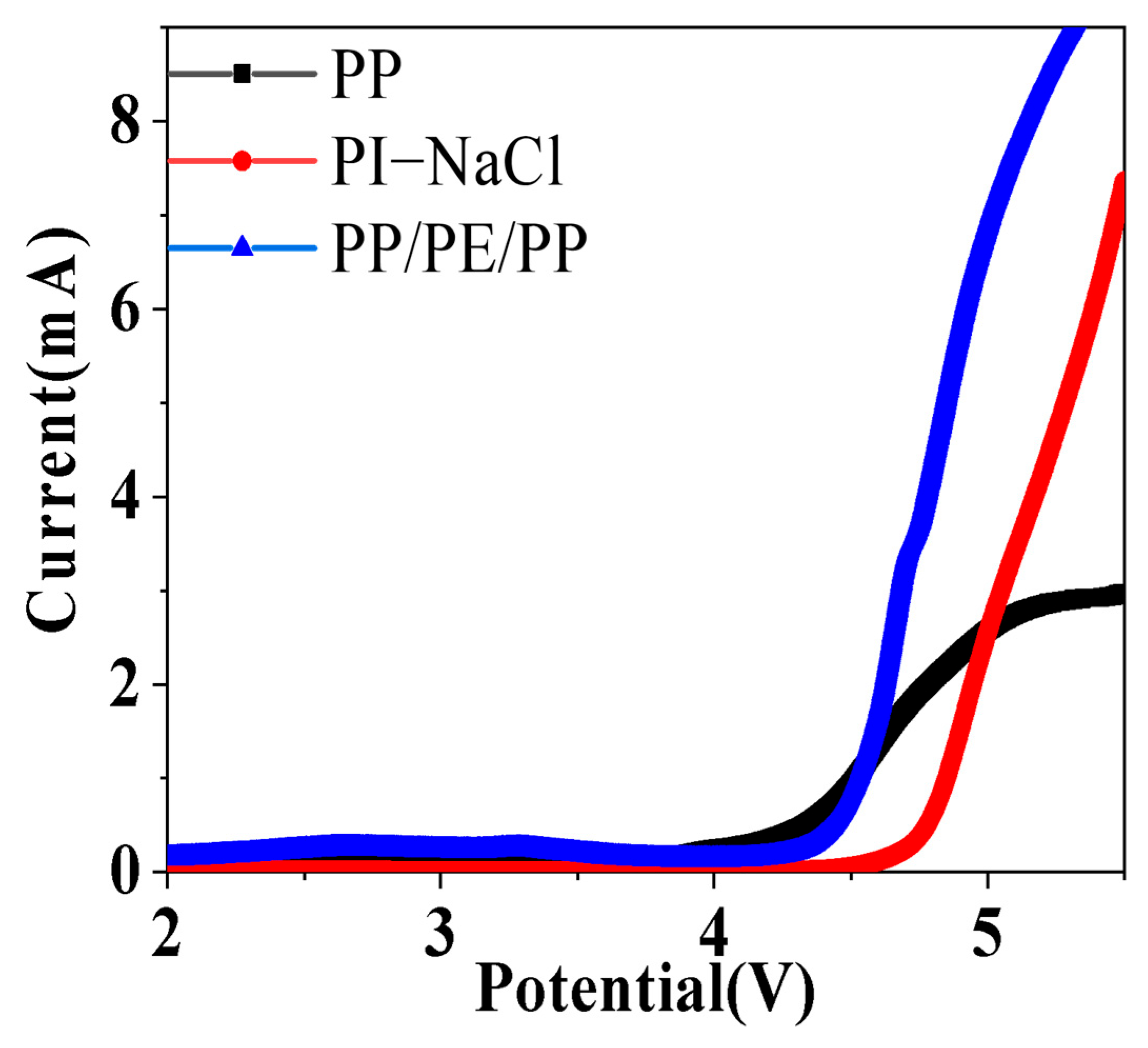
To evaluate the chemical stability of the separators in battery systems, linear sweep voltammetry (LSV) was employed to test the electrochemical stability of different separator systems. As shown in
Figure 6, with a gradual increase in the scanning potential, the three separators exhibited significantly different antioxidant behaviors. For the commercial monolayer polypropylene (PP) separator, the response current began to show an obvious upward trend when the potential reached approximately 4.0 V, indicating the onset of oxidative decomposition reactions in the system. For the commercial PP/PE/PP trilayer composite separator, the onset oxidation potential was slightly higher, with a sharp current increase observed at approximately 4.3 V. In contrast, the PI-NaCl separator exhibited exceptionally excellent high-voltage stability. Within a wide potential range up to approximately 4.7 V, the system employing the PI-NaCl separator consistently maintained an extremely low baseline current (close to 0 mA) without significant side reactions. A noticeable oxidation current did not begin to appear until the test potential exceeded 4.7 V. Compared with conventional commercial polyolefin separators (PP and PP/PE/PP), the PI-NaCl separator significantly broadens the electrochemical stability window of the system by approximately 0.4 V to 0.7 V. This significantly enhanced anodic stability is mainly attributed to the excellent intrinsic molecular structure of the polyimide (PI) matrix. The wide electrochemical stability window enables the PI-NaCl separator to effectively resist oxidative degradation at high potentials and makes it highly compatible with high-voltage, high-energy-density battery systems.
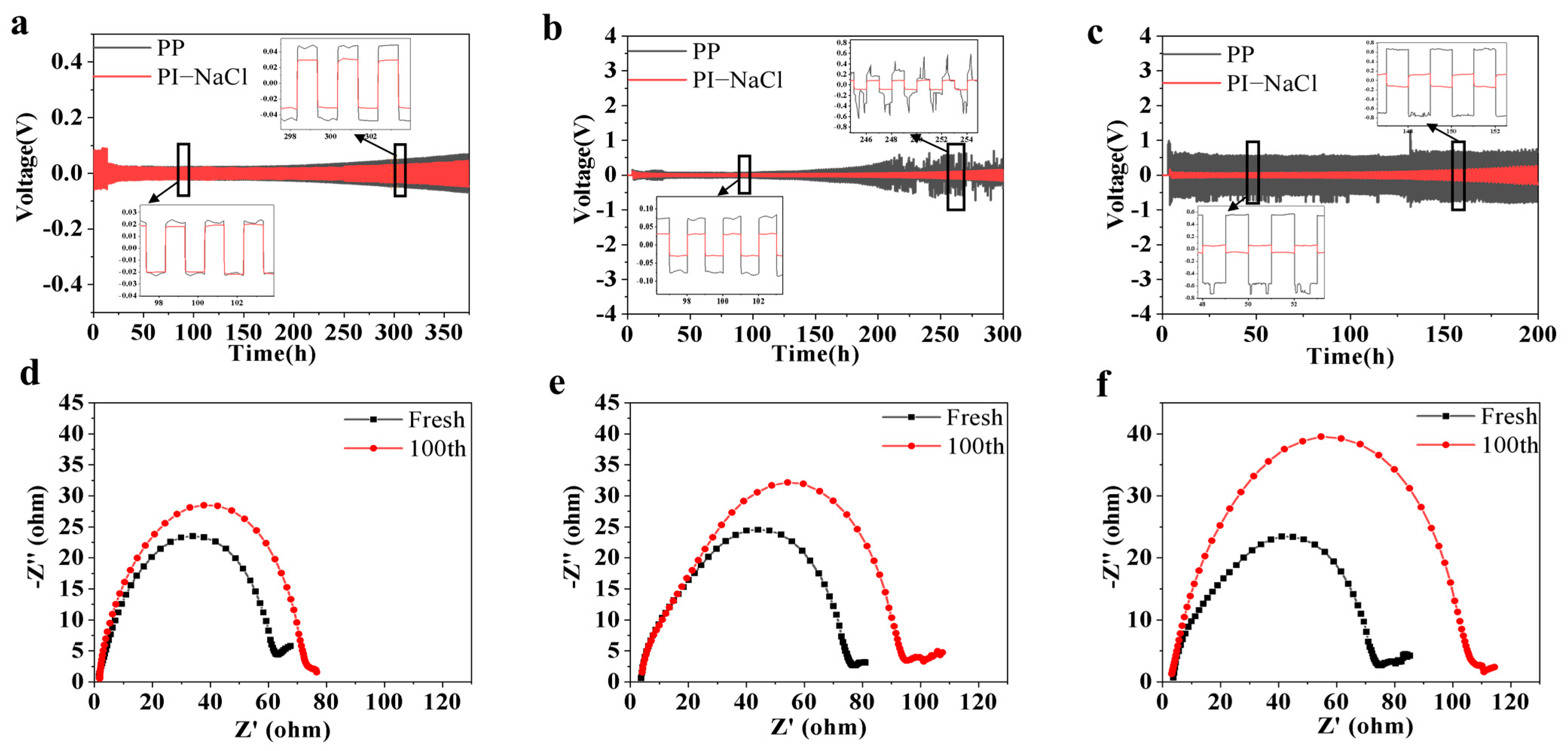
To deeply investigate the regulatory effect of the separator on the lithium metal anode deposition/stripping behavior and interfacial stability, galvanostatic cycling and AC impedance tests were conducted on lithium symmetric cells. At a current density of 0.25 mA cm
−2 (
Figure 7a), the battery with the commercial PP separator exhibited large polarization in the initial cycles and showed voltage fluctuations in the later stage. When the current density was increased to 0.5 mA cm
−2 (
Figure 7b), the PP separator system exhibited severe voltage oscillations after approximately 200 h, which is typically attributed to uneven lithium deposition leading to dendrite growth, thereby causing micro-short circuits or accumulation of dead lithium. Even at a high current density of 1 mA cm
−2 (
Figure 7c), the PP separator exhibited extremely large overpotential and was highly unstable. In contrast, the battery employing the PI-NaCl separator exhibited an extremely stable voltage plateau and significantly reduced overpotential under all test conditions. Particularly at 0.5 mA cm
−2, it cycled stably for 300 h without any signs of short circuit. This result strongly demonstrates that the PI-NaCl separator can effectively homogenize the lithium-ion flux, induce uniform lithium deposition, and thereby strongly suppress the nucleation and growth of lithium dendrites at both physical and chemical levels. To reveal the evolution of interfacial dynamics during cycling, electrochemical impedance spectroscopy (EIS) tests were performed on different separator systems before cycling and after 100 cycles at 0.5 mA cm
−2. According to the Nyquist curve analysis, the interfacial impedance of batteries with the commercial PP (
Figure 7f) and PP/PE/PP (
Figure 7e) separators increased significantly by 34 Ω and 21 Ω, respectively. This indicates that as dendrites continuously grow and pierce the solid electrolyte interphase (SEI) film, fresh lithium is constantly exposed and undergoes side reactions with the electrolyte, leading to continuous thickening of the SEI film. In contrast, the PI-NaCl separator system (
Figure 7d) exhibited an extremely small impedance increase in only 11.5 Ω after 100 cycles. (The cross-sectional SEM images of PI-NaCl separator before cycling and after 100 cycles are shown in
Figure S2). This minimal impedance evolution confirms that the PI-NaCl separator not only effectively promotes lithium deposition/stripping but also assists in constructing a thin and highly stable SEI film on the lithium metal anode surface. This stable interfacial structure significantly reduces the continuous consumption of the electrolyte, lowers the energy barrier for interfacial charge transfer, and endows the lithium metal battery with excellent long-term cycling interfacial stability and electrochemical kinetic performance.
To further evaluate the electrochemical performance and stability of the separators in practical full-cell systems, LiFePO
4 (LFP)||C full cells were assembled, and their discharge behavior under different current densities was compared in detail.
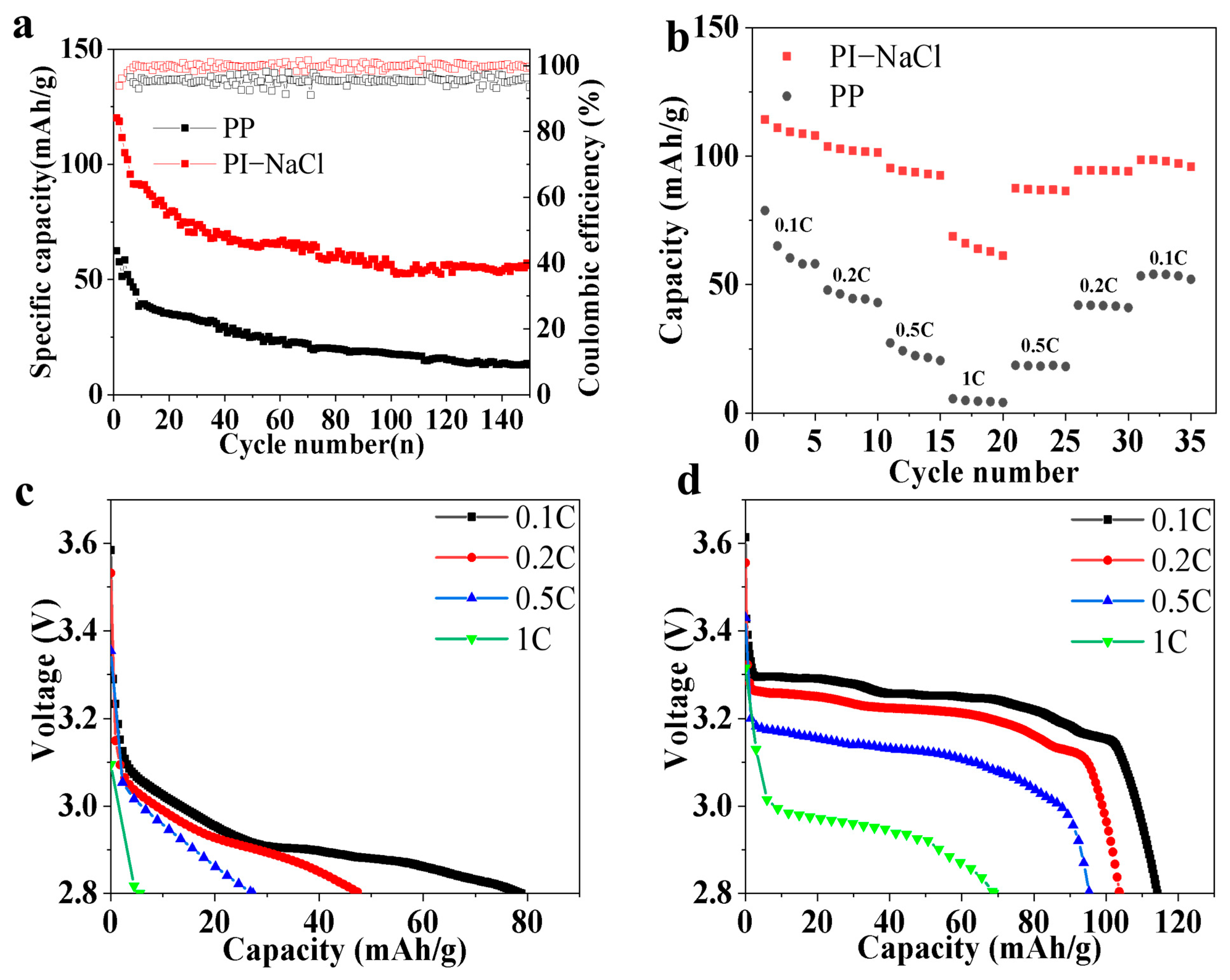
Figure 8a shows the long-term cycling curves of the two separators at 0.1C. It can be seen that the PI-NaCl-based cell exhibits excellent capacity retention and high Coulombic efficiency over 150 cycles.
Figure 8b–d show the specific discharge capacity-voltage curves of full cells with the commercial PP separator and the PI-NaCl separator at different rates from 0.1C to 1C. The results indicate that at 0.1C, the specific discharge capacity of the PI-NaCl-based cell reaches approximately 115 mAh/g, while that of the commercial PP-based cell is significantly lower (approximately 80 mAh/g), and its discharge curve exhibits severe sloping with an indistinct voltage plateau. This phenomenon suggests that the conventional PP separator, due to its poor electrolyte wettability or limited ionic conductivity, leads to extremely large initial interfacial impedance and severe voltage polarization inside the battery. As the discharge rate gradually increases (from 0.2 C to 1 C), the discharge platforms of both systems exhibit varying degrees of decline due to intensified ohmic polarization and concentration polarization. However, the PI-NaCl separator system exhibits excellent tolerance to high rates. As shown in
Figure 8d, even at a high rate of 1 C, the PI-NaCl-based cell still retains a relatively complete discharge platform characteristic and maintains an effective discharge capacity of approximately 70 mAh/g. In contrast, for the PP separator system, when the rate increases to 1C, the large internal polarization causes the voltage to instantly reach the cutoff voltage (2.8 V), and its discharge capacity decays precipitously. (The charge–discharge specific capacity-voltage profiles at 0.1 C–1 C are shown in
Figure S3). Precisely because the PI-NaCl separator can significantly reduce charge/discharge polarization at high rates, ensuring efficient and uniform lithium-ion transport between the positive and negative electrodes, it exhibits excellent capacity recovery capability during continuous rate step tests. Compared with the conventional PP separator, the PI-NaCl composite separator, by virtue of its optimized pore structure and excellent electrolyte affinity, significantly improves the lithium-ion transport kinetics inside the full cell, greatly reduces electrochemical polarization, and promotes excellent electrochemical stability and cycle life of the LFP full cell under high-rate conditions.
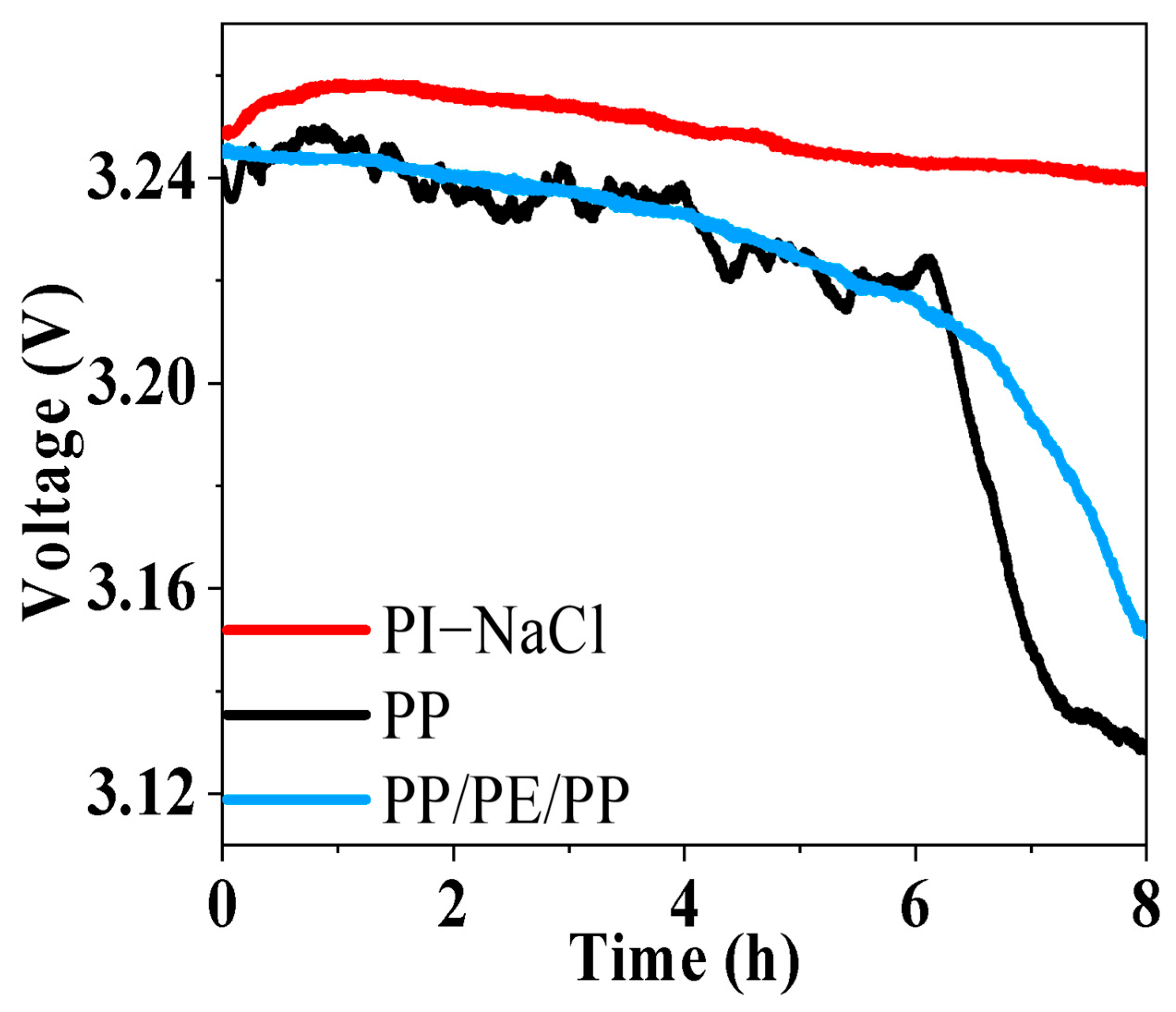
To evaluate the high-temperature tolerance of the separator under practical full-cell operating conditions and its ability to suppress thermally induced internal short circuits, assembled full cells were charged to approximately 3.2 V and then placed in a high-temperature environment of 80 °C for a continuous 8 h rest period, during which their voltage evolution over time was monitored in situ in real time. As shown in
Figure 9, the two separator systems exhibited distinctly different voltage retention capabilities under high-temperature stress. For the full cell with the commercial polypropylene (PP) separator, during the high-temperature rest stage, the voltage curve not only exhibited continuous fluctuations and instability but also, after approximately 6 h of continuous heating, underwent a severe “cliff-like” sudden voltage drop, rapidly falling below 3.1 V. This phenomenon is attributed to the poor thermal stability of the conventional polyolefin PP separator: under prolonged high-temperature exposure at 80 °C, the PP separator underwent severe thermal dimensional shrinkage or local melting deformation, causing the separator to lose its physical isolation function, leading to contact between the positive and negative electrodes and inducing micro-short circuits and severe self-discharge in the battery. The full cell based on the PI-NaCl separator exhibited excellent high-temperature thermal stability. Throughout the entire 8 h rigorous high-temperature aging test at 80 °C, its voltage curve remained consistently around 3.2 V, without any observable signs of significant voltage decay, sudden drop, or fluctuation. This is mainly attributed to the excellent intrinsic heat resistance and structural rigidity of polyimide. Thus, this outstanding high-temperature structural stability of PI-NaCl ensures reliable isolation between the positive and negative electrodes, fundamentally blocks the risk of thermally induced internal short circuits, and significantly enhances the safety performance and operational reliability of the full cell under extreme thermal environments.