Review

Hydrogen Production from Coalbed Methane Using Catalytic and Non-Catalytic Conversion Pathways

1
School of Mining and Geosciences, Nazarbayev University, Astana 010000, Kazakhstan
2
Department of Energy and Petroleum Engineering, University of Wyoming, Laramie, WY 82071, USA
3
Geology Department, Faculty of Science, Mansoura University, Mansoura 35516, Egypt
4
State Key Laboratory of Oil and Gas Reservoir Geology and Exploitation, College of Energy, Chengdu University of Technology, Chengdu 610059, China
5
Department of Petroleum Engineering, King Fahd University of Petroleum & Minerals, Dhahran 31261, Saudi Arabia
*
Author to whom correspondence should be addressed.
Energies 2026, 19(11), 2607; https://doi.org/10.3390/en19112607
Submission received: 8 April 2026 / Revised: 4 May 2026 / Accepted: 20 May 2026 / Published: 28 May 2026

Abstract

The vision for global net-zero carbon emissions by 2050 has intensified the demand for sustainable and low-carbon energy resources. Within this context, recent discoveries of substantial methane (CH4) reserves, coupled with the rapidly growing interest in hydrogen (H2) as a clean energy carrier, have underscored the strategic importance of developing efficient and economically viable technologies for methane conversion. This current review investigates hydrogen production specifically from coalbed methane (CBM), a methane-rich unconventional gas resource embedded in coal seams. Both catalytic and non-catalytic pathways for hydrogen generation are reviewed, including steam methane reforming (SMR), partial oxidation (POX), autothermal reforming (ATR), direct methane decomposition (DMD), and plasma-assisted pyrolysis. Catalytic processes such as SMR remain the most mature and cost-effective, though they emit significant CO2 unless integrated with carbon capture and storage (CCS) technologies. Non-catalytic routes, including thermal and plasma-based decomposition, offer CO2-free hydrogen generation while producing solid carbon byproducts with potential commercial value. Hybrid coal–CBM systems are also discussed as integrated approaches for improving energy efficiency and resource utilization. The techno-economic assessment compares hydrogen yield, production cost, and environmental impact across methods, emphasizing the advantages of CBM as a high-purity methane source. Case studies, particularly from China, highlight the practical potential of CBM in supporting hydrogen infrastructure. The paper concludes that catalytic routes such as SMR are the most commercially mature and cost-effective but remain CO2-intensive unless coupled with carbon capture and storage. Non-catalytic approaches, including direct methane decomposition and plasma pyrolysis, enable CO2-free hydrogen generation while yielding solid carbon byproducts of potential commercial value, though they are less developed. Hybrid coal–CBM systems offer a balanced pathway to improve efficiency, resource utilization, and sustainability in future hydrogen production strategies.

1. Introduction

The growing population and industrialization are increasing the energy demand, which is already at an unprecedented level. Coal bed methane (CBM) presents a promising resource for the global net-zero vision, meeting energy demand [1,2]. Coalbed methane (CBM) is an unconventional natural gas predominantly composed of methane (CH4), which is absorbed onto the internal surfaces of coal matrices [3]. CBM is typically extracted by reducing reservoir pressure through dewatering, which lowers hydrostatic pressure and induces methane desorption from the coal matrix into the cleat system. This desorbed gas then flows toward production wells. This extraction process is not only important for energy recovery but also plays a critical role in mine safety, as the accumulation of methane in underground coal mines poses significant explosion hazards [1,2,3]. The development of CBM resources presents a dual advantage in the context of sustainable energy strategies. First, it contributes to mitigating greenhouse gas emissions by capturing methane that would otherwise be released into the atmosphere during conventional coal mining operations. Second, the recovered methane can be harnessed as a valuable source of clean energy, providing an alternative to conventional fossil fuels and supporting the diversification of the energy mix [4,5]. Furthermore, CBM extraction can be coupled with CO2 sequestration, enhancing methane recovery while storing a major greenhouse gas for the long term [4]. Given the increasing global focus on hydrogen as a clean source of energy, CBM can be a viable feedstock for hydrogen production, offering both economic and environmental advantages [6,7]. Several methods are used in practice that can convert CBM to hydrogen. Steam methane reforming (SMR) is a widely used process where methane reacts with steam at high temperatures to produce hydrogen and carbon monoxide. Carbon monoxide is then converted to CO2 via the water-gas shift reaction, further increasing hydrogen yield [6,8]. Alternatively, methane pyrolysis, which decomposes methane into hydrogen and solid carbon in the absence of oxygen, is gaining attention as a CO2-free method [9,10].
The environmental impact of hydrogen production from CBM is largely contingent upon the specific conversion technology employed and the extent to which carbon capture and storage (CCS) is integrated into the process. Conventional SMR, when operated without CCS, is associated with substantial CO2 emissions, thereby diminishing its sustainability and climate compatibility. In contrast, methane pyrolysis offers a theoretically carbon-free pathway, as it decomposes methane into hydrogen and solid carbon without direct CO2 release. However, the environmental viability of this approach is critically dependent on the effective utilization or long-term storage of solid carbon by-product. Consequently, the choice of technology and the deployment of CCS are decisive factors in determining the overall carbon footprint and sustainability of CBM-derived hydrogen within the broader framework of low-carbon energy transitions [11]. CBM extraction itself can have environmental consequences, including water production and potential impacts on groundwater resources [12]. Techno-economic analyses are crucial for evaluating the feasibility of different hydrogen production pathways from CBM, considering factors such as capital costs, operating expenses, and the price of natural gas or CBM [13]. Integrating CCS with CBM-to-hydrogen production can substantially reduce greenhouse gas emissions. CO2 captured during SMR is injected into coal seams to enhance methane recovery, a process known as enhanced coalbed methane recovery (ECBM) [4,13,14]. This approach not only sequesters CO2 but also improves the economic viability of CBM deposits. The techno-economic feasibility of CCS in hydrogen production from biomass gasification has also been explored [15].
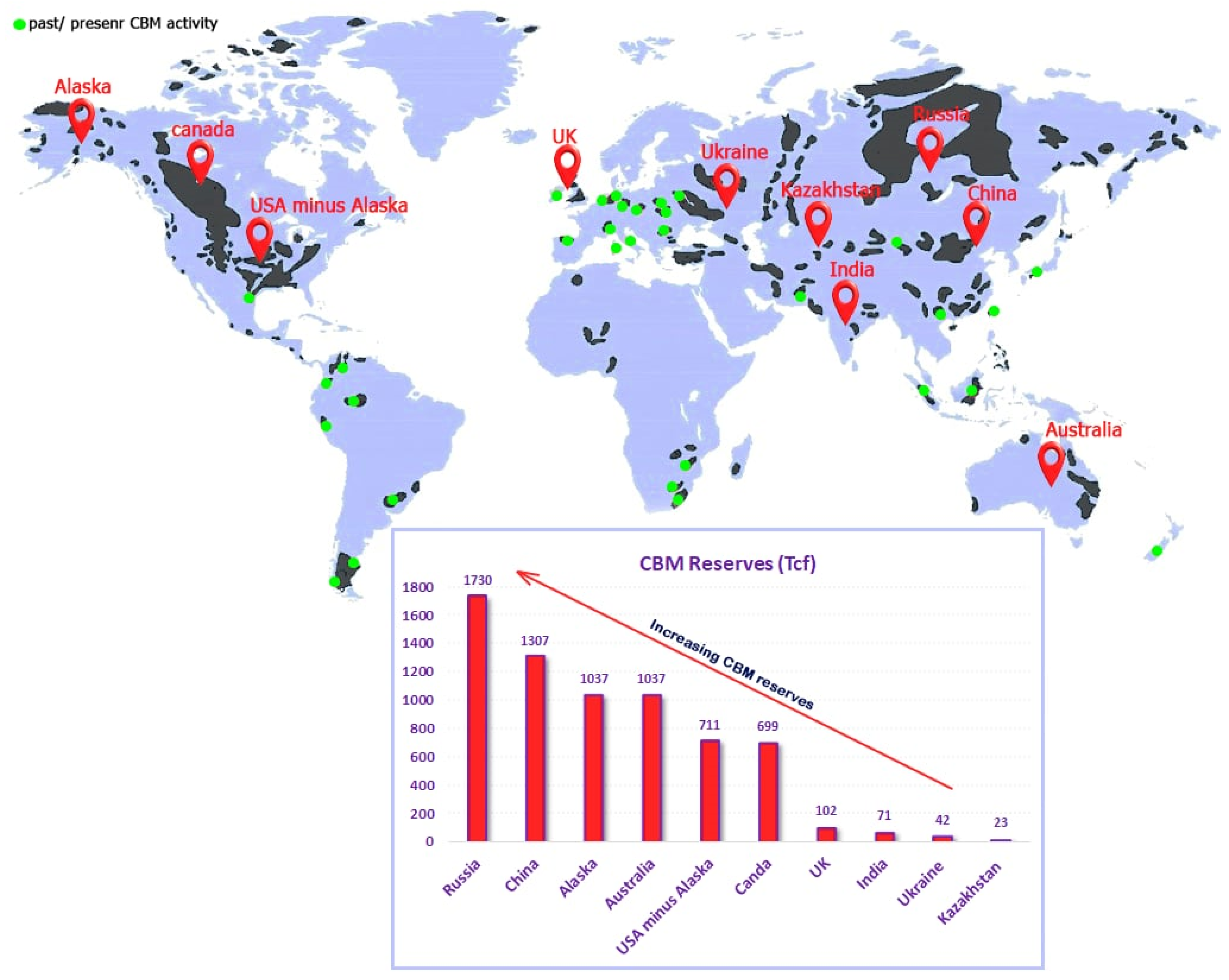
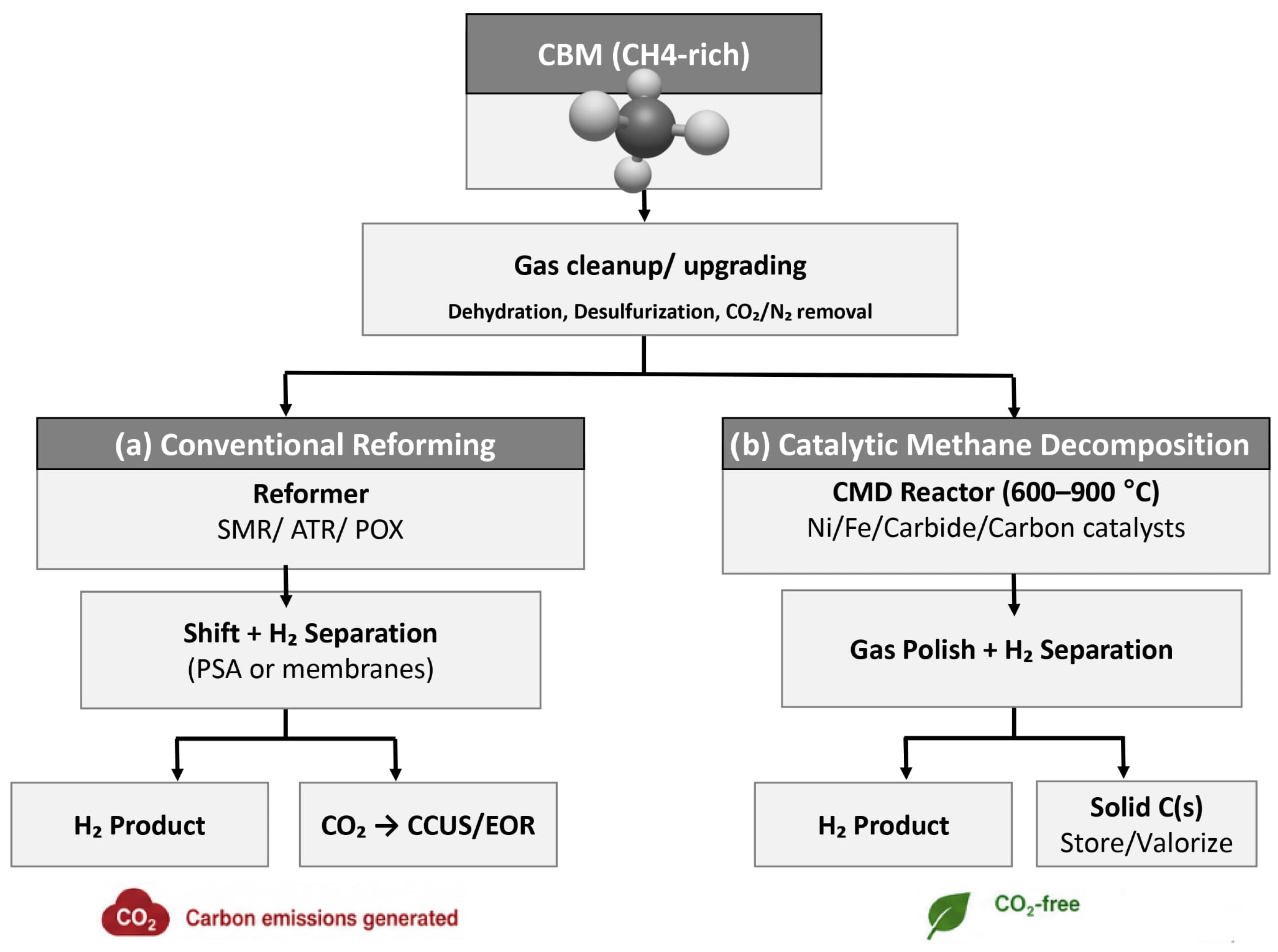
Recent studies have demonstrated that CBM can serve as a viable feedstock for hydrogen production through pathways that can be designed and managed to minimize environmental impacts [16]. This includes exploring novel catalysts for partial oxidation (POX), direct methane decomposition (DMD), SMR, and autothermal reforming (ATR), optimizing methane pyrolysis processes, and developing advanced separation techniques to enhance hydrogen purification. Microbial coal gasification (MCG), which uses microorganisms to convert coal into methane, is also being investigated as a potential route for CBM production. Additionally, electrochemical hydrogen pumps offer promising energy-efficient solutions for producing pure, compressed hydrogen from gas mixtures [17,18,19]. A synthesis of recent literature offers a consolidated overview of hydrogen production pathways, with particular attention to the technological approaches, underlying reaction mechanisms, and the key factors influencing efficiency and environmental performance. Within this framework, the role of coalbed methane (CBM) as a prospective feedstock has been increasingly emphasized, reflecting its potential to contribute meaningfully to clean hydrogen generation, as outlined in Table 1. The widespread distribution of CBM reserves worldwide, as shown in Figure 1, further enhances its strategic importance, as their effective and sustainable exploitation could not only support hydrogen production at scale but also diversify and stabilize the global energy mix, thereby reinforcing long-term energy security and facilitating the transition toward low-carbon energy systems.
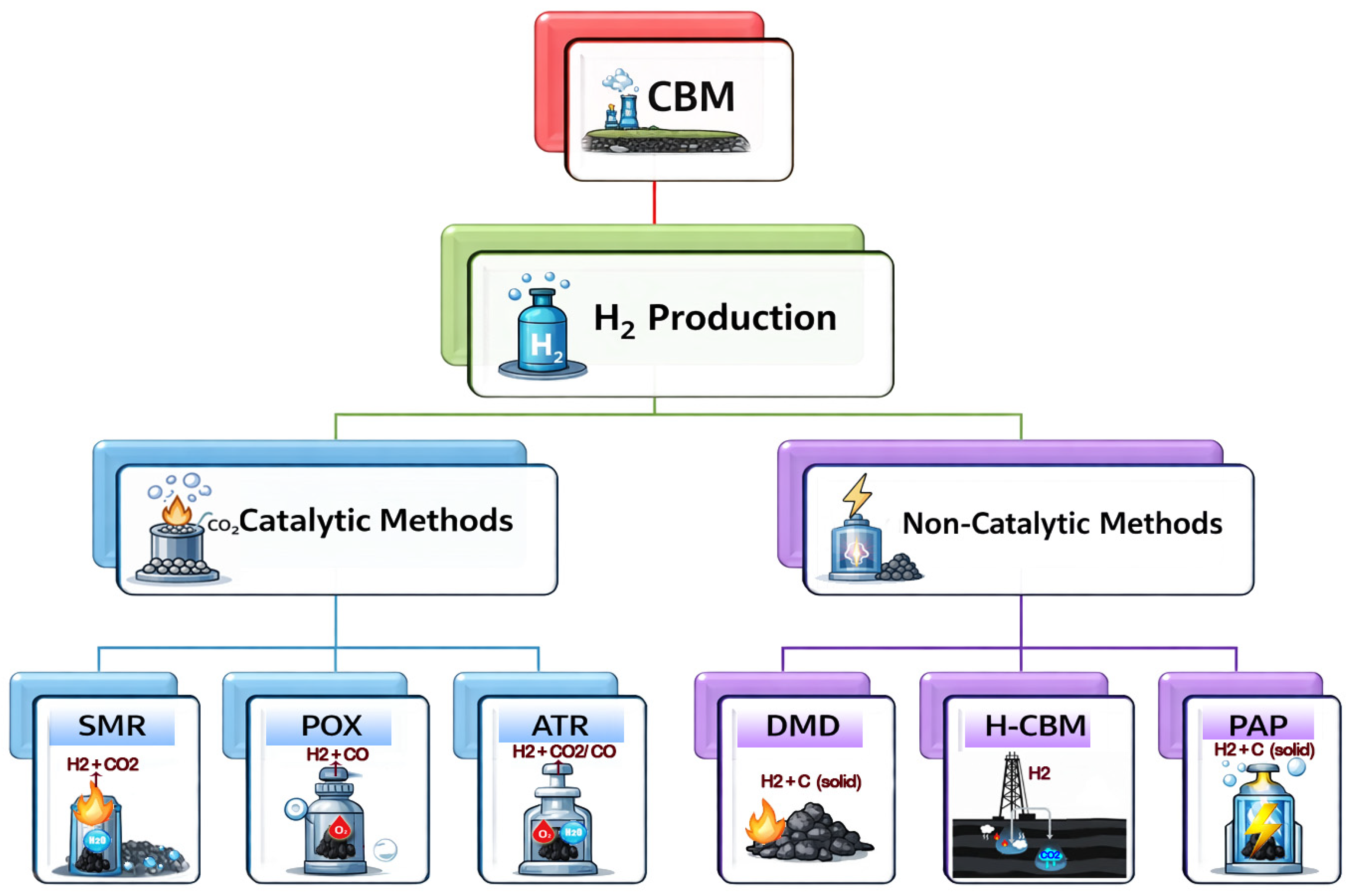
The environmental and economic viability of CBM-to-hydrogen projects depends on the technologies used, the implementation of CCS, and supportive government policies [24,25,26]. Continued research and development are essential to optimize these processes and unlock the full potential of CBM as a sustainable hydrogen source [20,21,22,23]. Exploring hydrogen production from CBM through both catalytic and non-catalytic pathways offers a novel and promising route toward cleaner energy systems, as shown in Figure 2. This dual-approach framework not only maximizes resource utilization but also enables flexibility in process selection based on environmental and economic goals [16,17,18,19,20,21,22,23].

2. Properties of CBM and Controls on H2 Production

CBM is dominantly methane (CH4) adsorbed within the microporous carbon matrix of coal seams and stored along natural fracture systems (cleats). Typical CBM compositions comprise 80–98% CH4, with CO2 and N2 each commonly 1–10%, and trace (<1%) H2S and C2–C3 hydrocarbons; compositional variability reflects coal rank, burial depth, basin-specific geochemistry, and the thermal/biogenic maturity of the source [5], as shown in Table 2. Physically, CBM reservoirs exhibit low porosity and ultra-low permeability, necessitating dewatering and often stimulation (e.g., hydraulic fracturing) to establish commercial deliverability, as presented in Table 2. Gas storage and release are governed by adsorption–desorption thermodynamics well described by Langmuir isotherms, with capacity and kinetics controlled by pressure drawdown, temperature (adsorption is exothermic; lower T increases sorption), moisture content (pore blocking reduces capacity), maceral composition and micropore volume (which generally increase with coal rank), and cleat aperture/mineralization and effective stress (sorption-induced matrix shrinkage during desorption can enhance permeability, whereas stress increases can reduce it). Competitive adsorption is important: CO2 > CH4 ≫ N2 in affinity, so elevated CO2 can suppress CH4 desorption, whereas CO2-ECBM can displace CH4 while storing CO2. These petrophysical and geochemical attributes directly shape gas deliverability, gas quality, and the pretreatment burden for hydrogen production.
Unlike conventional natural gas, CBM is not stored primarily as free gas in high-permeability reservoirs but is mainly adsorbed onto the internal surfaces of the coal matrix and released through pressure reduction during dewatering [5,21,22,23,24]. This makes CBM production strongly dependent on desorption behavior, reservoir pressure drawdown, coal permeability, cleat connectivity, and stress-sensitive flow. In addition, CBM composition can be more variable than pipeline-quality natural gas, with different levels of CO2, N2, H2S, water vapor, and coal-derived particulates depending on coal rank, basin history, and production conditions [5,36]. These differences directly affect gas deliverability, pretreatment requirements, catalyst protection, and hydrogen yield. Therefore, CBM should not be treated simply as conventional natural gas; it requires feedstock-specific evaluation before being used in hydrogen production systems.
CBM is a methane-rich unconventional gas and can be used similarly to natural gas as a hydrogen feedstock; however, its production scale is generally smaller and more regionally limited [31,32,33,34,35,36]. In the United States, CBM accounted for only about 2% of total dry natural gas production in 2022, indicating that conventional, shale, and tight gas dominate the market supply. In addition, CBM production usually requires groundwater removal to reduce reservoir pressure and release methane from coal seams, which adds produced-water management and operating costs. Therefore, CBM-derived hydrogen is most attractive in regions where CBM resources, gas-gathering infrastructure, and water-management systems already exist [37].
Prior to hydrogen production, CBM typically requires pretreatment to remove impurities that can affect catalyst stability, process efficiency, and hydrogen yield. Even small amounts of H2S must be reduced to sub-ppm levels through desulfurization methods such as amine treatment, physical solvents, or ZnO guard beds to prevent Ni-based catalyst poisoning in SMR/ATR systems and to minimize corrosion [30,34]. CO2 can be removed using amine absorption, physical solvents, membranes, or pressure swing adsorption, while N2 rejection may require PSA or cryogenic separation depending on its concentration. Water vapor must also be removed through dehydration systems such as glycol units or molecular sieves, and particulate matter such as coal dust should be removed by filtration before catalytic conversion. Trace C2+ hydrocarbons may promote coke formation in high-temperature catalytic systems if not properly managed through operating severity and steam-to-carbon ratio control. Therefore, while CBM’s high methane content and calorific value make it attractive as a hydrogen feedstock, its impurity profile determines the required pretreatment strategy and directly influences catalyst lifetime, process stability, and overall hydrogen yield [29,38,39].
CBM-derived hydrogen is economically closer to natural-gas-based hydrogen than water-electrolysis-based hydrogen because CBM is mainly methane. However, its final cost depends on field productivity, dewatering, impurity removal, compression, plant scale, and carbon management. Therefore, CBM-to-hydrogen can be attractive where CBM infrastructure already exists, but its competitiveness should be evaluated case by case against conventional natural gas reforming and water electrolysis. Produced hydrogen from CBM can be stored using different methods depending on project scale, demand pattern, and local infrastructure. For short-term or small-scale applications, compressed hydrogen tanks or liquid hydrogen storage may be used. For large-scale and seasonal storage, underground options such as salt caverns, depleted gas reservoirs, and saline aquifers are more suitable. Therefore, CBM-to-hydrogen projects should consider hydrogen storage and distribution from the early design stage, rather than focusing only on hydrogen production.

3. Field-Scale Hydrogen Generation from CBM

Field-scale studies of hydrogen production from CBM remain limited, but some countries, such as China and India, have explored a few pilot projects [40,41]. The primary technologies under consideration include catalytic reforming, thermal cracking, and, to a lesser extent, plasma conversion. Catalytic methane decomposition is a promising reaction for H2 production, coupled with the synthesis of valuable carbon nanomaterials. While specific large-scale projects with detailed hydrogen yield data are scarce in the literature, the general approach involves extracting CBM and then processing it to produce hydrogen. In the broader hydrogen industry, SMR remains the most mature and widely deployed technology, accounting for nearly half (~48%) of global hydrogen output [42,43]. While SMR is conventionally applied to natural gas, its extension to CBM resources represents a logical step given the compositional similarity. However, the potential integration of catalytic decomposition and advanced plasma technologies with CBM utilization may offer novel opportunities for coupling hydrogen production with the generation of carbon-based materials, thereby enhancing the economic viability and sustainability of CBM-to-hydrogen pathways.
China presents a compelling example of how coal and CBM resources can be integrated to support large-scale hydrogen production for fuel cell transportation. With limited conventional oil reserves but abundant coal and CBM, China has explored hydrogen as a clean alternative for its growing transportation needs. A key initiative began in 1998, when the State Science and Technology Commission (SSTC) invited international proposals to develop a fuel cell bus demonstration project in Beijing, aiming to catalyze commercial FC bus deployment. A conceptual experiment illustrated that hydrogen produced from coal plus CBM could support a hypothetical fleet of 350 million hydrogen-powered fuel cell vehicles, each driven 15,000 km annually. This model projected a fuel efficiency of 2.35 L per 100 km and required only 13% of China’s 1990 coal usage and one-quarter of its estimated CBM reserves to sustain the fleet for 100 years. Additionally, life cycle CO2 emissions would account for just 6% of China’s 1990 levels, and local pollutant emissions would be nearly zero. These findings underscore the significant potential of CBM as a strategic feedstock in China’s long-term hydrogen economy and transport decarbonization plans [44].

4. Catalytic Hydrogen Production from CBM

The most common method to produce hydrogen from CBM is through catalytic processes, especially steam methane reforming (SMR) [45], as shown in Figure 3. Recent studies aimed at improving the catalysts used in SMR, mainly nickel-based ones, by adding small amounts of other materials like cerium or lanthanum [42,43,45]. These additions help the catalysts last longer and reduce carbon deposition, which inhibits the reaction. Another method, partial oxidation (POX), uses oxygen to partially oxidize methane and produces hydrogen more quickly and with less heat needed. New materials like perovskite membranes help supply pure oxygen, making POX more efficient. Autothermal reforming (ATR) combines SMR and POX to balance heat in the system, improving energy use. Researchers are also developing new catalyst designs, such as tiny nickel particles coated with protective layers or single-atom catalysts, to make the process more stable and resistant to problems like Sulphur poisoning. These improvements aim to make hydrogen production cleaner and more cost-effective.

4.1. Steam Methane Reforming (SMR)

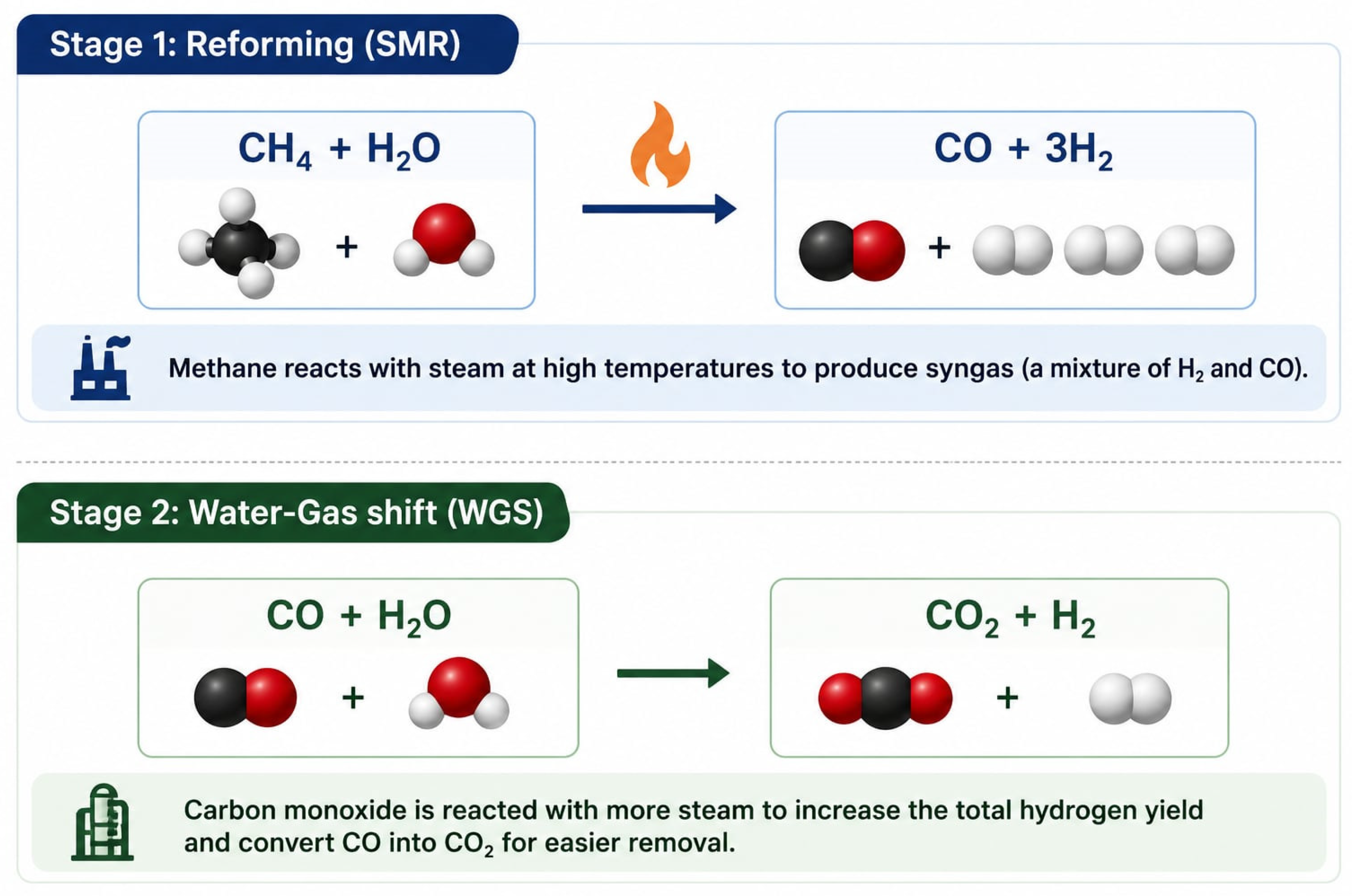
SMR involves the reaction of methane (CH4) with steam (H2O) at high temperatures (700–1000 °C) over a nickel-based catalyst [46,47]. This endothermic reaction produces hydrogen (H2) and carbon monoxide (CO). The carbon monoxide then undergoes a water-gas shift reaction with steam to form additional hydrogen and carbon dioxide (CO2), as shown in Figure 4. Carbon monoxide (CO) generated during CBM reforming is not necessarily a waste product; rather, it is a key component of syngas [45,46,47]. Depending on the reforming route and operating conditions, syngas may contain approximately 10–30% CO [47]. In hydrogen-oriented processes, CO is commonly converted to CO2 through the water–gas shift reaction to increase H2 yield. However, in synthesis-oriented systems, CO can also be utilized as a valuable feedstock for downstream processes such as Fischer–Tropsch synthesis or methanol production. SMR is widely used worldwide due to its high efficiency and mature technology, supplying hydrogen for applications in oil refining, ammonia synthesis, and chemical industries [45,47]. Despite its advantages, SMR requires substantial heat input and emits CO2, motivating ongoing research to improve catalyst stability, reduce carbon deposition, and integrate carbon capture technologies to make hydrogen production cleaner and more sustainable [48,49,50]. SMR generates an emission factor of approximately 293 KgCO2/MWhH2 as compared to methane decomposition of around 40 kgCO2/MWhH2 [51]. The excess CO2 produced in SMR can be captured and utilized for sequestration [51].

4.2. Partial Oxidation (POX)

The partial oxidation process is an established pathway for hydrogen production from methane, including CBM, by reacting CH4 with a limited amount of oxygen at high temperatures (typically 1200–1500 °C) and pressures (20–90 bar). O2 refers to molecular oxygen used as the oxidizing agent in partial oxidation. The simplified POX reaction can be written as CH4 + 0.5O2 → CO + 2H2. In addition, without a catalyst, POX can be produced at temperatures above 1000 °C [51,52]. Unlike SMR, POX does not require external heat, making the process faster and allowing for smaller reactor sizes. POX can be performed with or without a catalyst; catalytic POX uses metals like nickel or noble metals on supports to improve hydrogen yield and selectivity. Recent innovations include the use of perovskite-type materials such as LaFeO3 (Lanthanum Ferrite), which can supply oxygen from their crystal lattice (lattice oxygen), enabling safer operation and high selectivity for hydrogen and carbon monoxide, while also reducing the risk of deep oxidation to CO2. Perovskite membranes can achieve in situ oxygen separation with up to 99% purity, further enhancing process efficiency and safety. POX is widely used for large-scale hydrogen and syngas production, with ongoing research focused on improving catalyst stability, minimizing carbon deposition, and integrating advanced oxygen carriers for cleaner and more sustainable hydrogen generation.
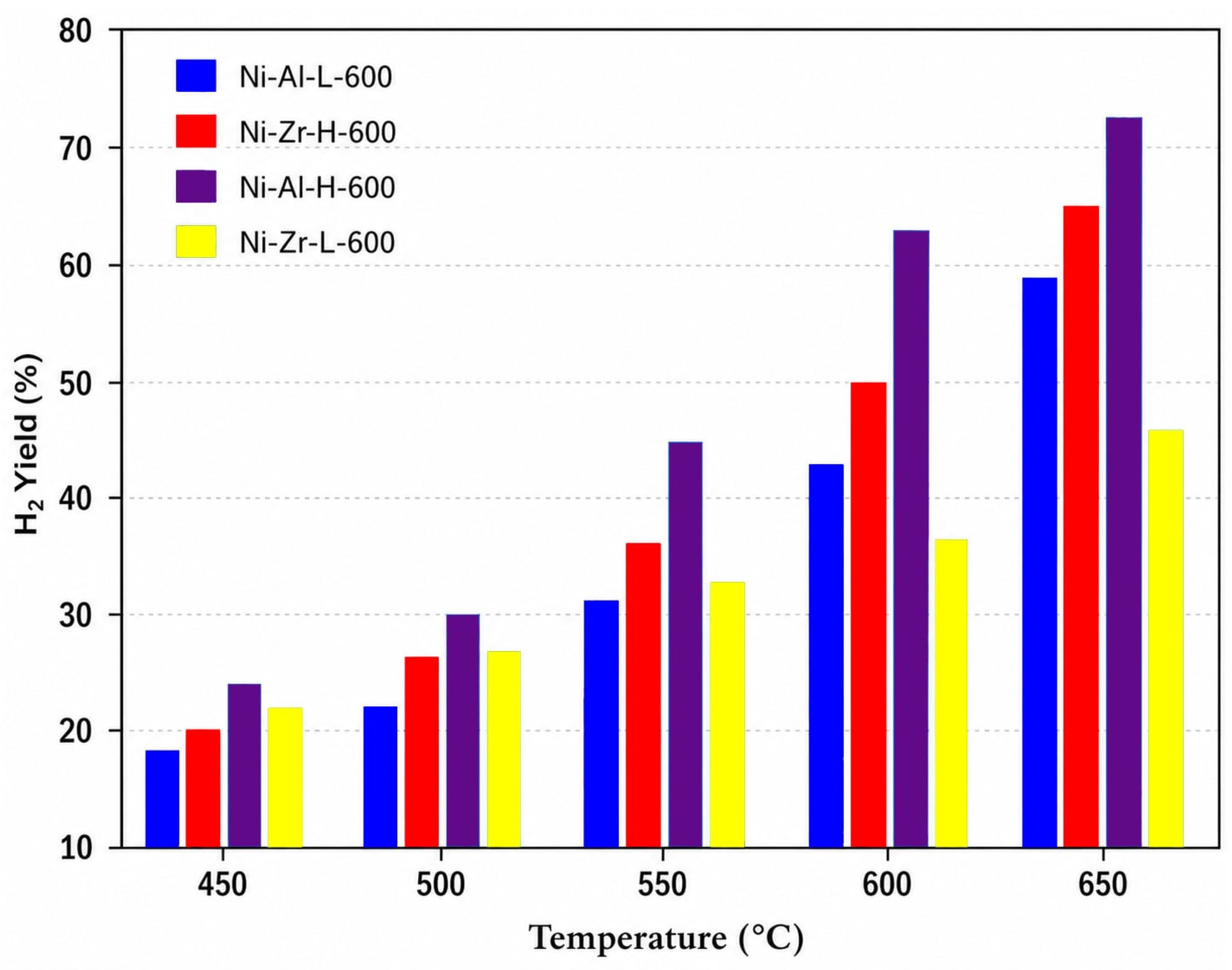
In POX, hydrogen yield increases monotonically with temperature for all catalysts, consistent with the endothermic nature of methane decomposition/reforming pathways. Across the entire range (450–650 °C), performance follows a consistent order: Ni-Al-H-600 > Ni-Zr-H-600 > Ni-Al-L-600 > Ni-Zr-L-600 [2], as shown in Figure 5. At 650 °C, the respective H2 yields are ~73%, ~63%, ~59%, and ~45%, indicating a ~28 percentage-point spread between the best and worst performers. A strong nexus exists between catalyst properties and performance in partial oxidation (POX) of methane [2]. Among the formulations evaluated, Ni-Al-H-600 consistently delivers the highest H2 yield, markedly outperforming both Ni-Al-L-600 and the Ni–Zr-based catalysts. This superiority is most plausibly attributed to the higher accessible surface area and finer Ni dispersion achieved on alumina in the H-series, which increases the density of active Ni0 sites and improves contact efficiency under POX’s short-contact-time, heat-intensive conditions. In contrast, the Zr-supported variants, while often valued for redox (oxygen-vacancy) chemistry, appear to provide fewer accessible metallic sites and are more susceptible to site blockage at the tested temperatures. Taken together, these observations reinforce the central role of support-mediated surface area and dispersion in optimizing POX catalysts for hydrogen production.

4.3. Autothermal Reforming (ATR)

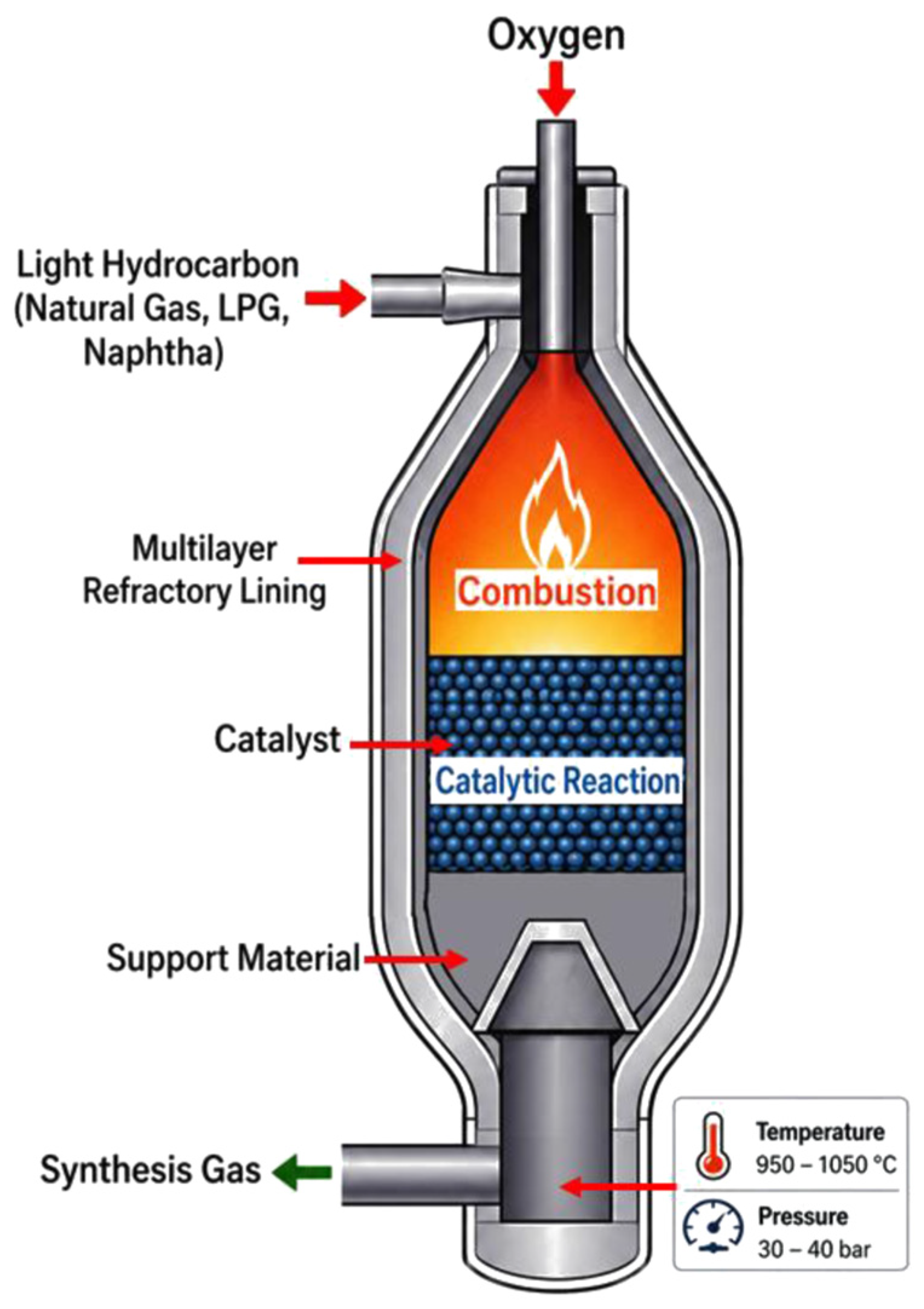
Autothermal reforming (ATR) produces synthesis gas (H2 + CO) from methane-rich feeds by coupling two reactions in a single vessel: (i) exothermic partial oxidation of CH4 with oxygen [42]. In practice, ATR employs a short catalytic burner/oxidation zone followed by a Ni-based reforming bed (occasionally noble-metal catalysts for severe conditions). Typical operating windows are 850–1100 °C and 20–40 bar; the product H2/CO ratio is tuned by the O2/CH4 and steam-to-carbon (S/C) set points (ATR generally uses lower S/C than conventional SMR because the oxidation heat provides the endotherm). Compared with SMR, ATR offers a more compact reactor, simpler heat management, faster thermal response, and greater tolerance to variable feeds—attributes that are advantageous when coalbed methane (CBM) is the feedstock. The process involves an autothermal reformer configured for light hydrocarbon feeds (e.g., LPG or naphtha) co-fed with oxygen (and typically steam). As presented in Figure 6, the upper mixing/oxidation zone, a short-contact partial oxidation of the hydrocarbon occurs as follows:
C n H 2 n + 2   +   ( n + 1 ) 2 O 2     nCO   +   ( n + 1 )   H 2
The released heat during the previous reaction establishes a high adiabatic temperature. This exotherm is transferred convectively and radiatively to the downstream catalytic reforming bed (usually Ni/Al2O3), where endothermic steam-reforming and residual cracking reactions proceed [42]:
CnH2n+2 + nH2O → nCO + (2n + 1) H2
The integration of these exothermic (POX) and endothermic (steam-reforming) steps within a single vessel enables near-adiabatic, autothermal operation, eliminating the need for an external fired furnace. The resulting syngas composition—in particular, the H2/CO ratio—is tunable by adjusting the O2-to-carbon and steam-to-carbon (S/C) set points, together with pressure and residence time, to meet downstream requirements (e.g., H2 production after shift/PSA, or synthesis routes) [42].
The balance between these ATR reactions makes the process thermally self-sustained. The flexibility of ATR allows for adjustments in the air-to-fuel and steam-to-fuel ratios to optimize hydrogen production and minimize carbon formation. The methane (CH4), water (H2O), and oxygen (O2) reactants undergo different chemical reactions, including POX, SRM, and WGSR, to produce hydrogen (H2) gas. Thermodynamic analyses have been performed to optimize operating ATR conditions such as oxygen-to-methane ratio, steam-to-methane ratio, inlet temperature, and system pressure to maximize hydrogen yield and minimize coke formation.
Autothermal reforming (ATR) continues to attract interest as a compact, heat-self-sufficient route to H2/CO synthesis gas, and current research focuses as much on reactor intensification as on catalyst durability. Microchannel architecture shortens characteristic heat- and mass-transfer lengths, enabling tight thermal coupling between the exothermic partial-oxidation front and the downstream endothermic reforming zone; this reduces hot spots, allows higher space velocities, and improves overall duty utilization. Demonstrations for methane reforming show stable autothermal operation with markedly enhanced heat flux compared with conventional tubular reactors [53]. Membrane-coupled ATR is another intensification pathway: integrating Pd-alloy H2-selective membranes withdraws product hydrogen in situ, shifting equilibria toward deeper conversion at lower temperatures while directly delivering high-purity H2 streams (≈99.99%), albeit with cost and long-term membrane stability still being central challenges [49]. Sorption-enhanced variants (SE-ATR/SE-SMR) capture CO2 inside the reactor—typically with CaO or hydrotalcite-derived sorbents—thereby boosting H2 yield at moderate temperatures; detailed modeling and recent experiments highlight gains at small scale but also the importance of heat management during cyclic carbonation–calcination [48].
On the catalyst side, Ni on oxide support remains the workhorse for ATR because it balances activity, cost, and availability, but performance is limited by sintering of Ni nanoparticles and coke deposition, especially under oxygen-lean or sulfur-bearing feeds. Strategies to mitigate these modes include stronger metal–support interactions (e.g., Ni–Al2O3, Ni–CeO2), promoters that supply lattice oxygen or moderate CH4 cracking, and core–shell designs that confine Ni within porous shells to resist sintering and delay carbon encapsulation. Recent reviews document these approaches and their effectiveness across reforming chemistries [48,49,53].

5. Non-Catalytic Hydrogen Production from CBM

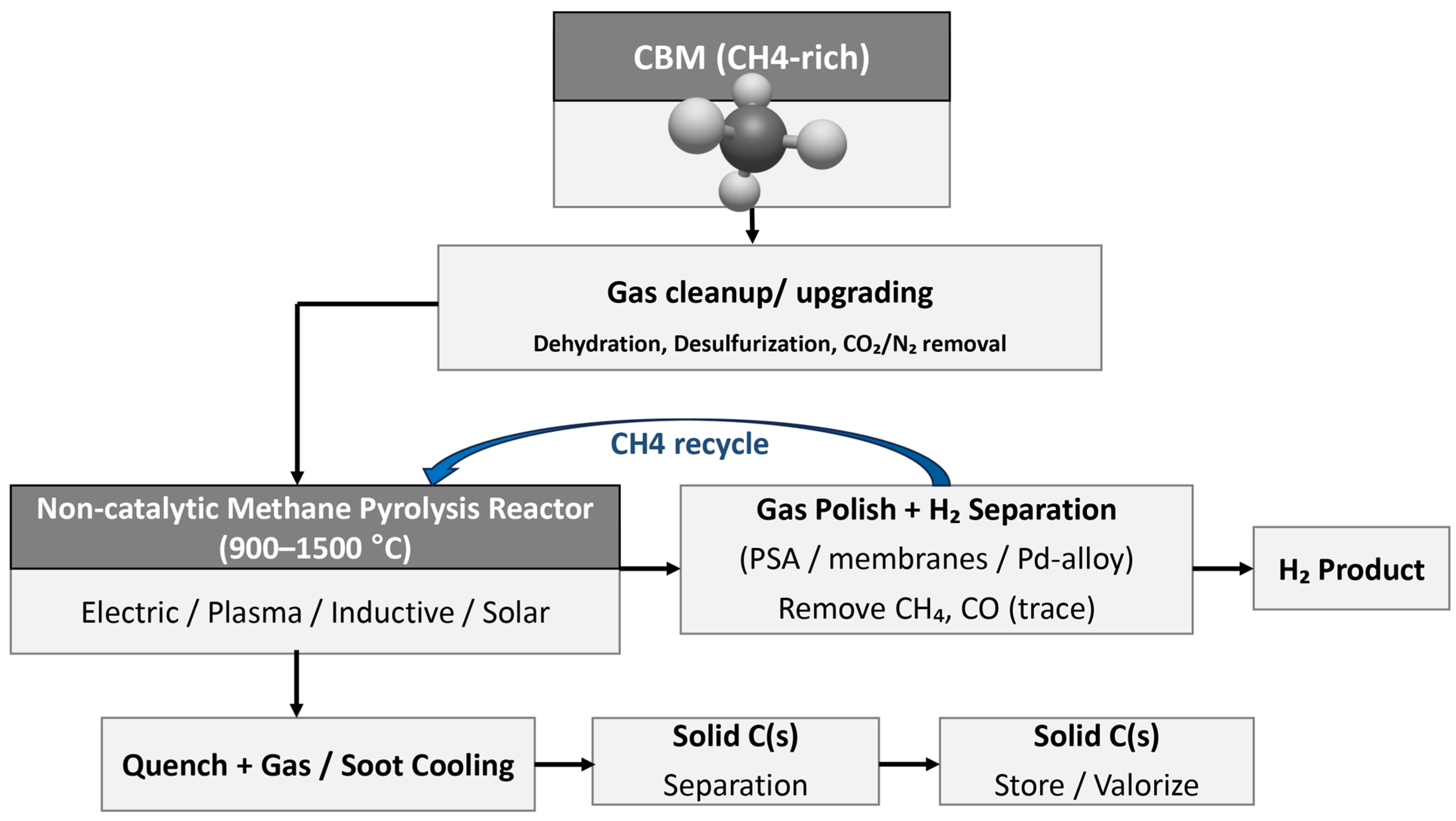
In the non-catalytic route, hydrogen is produced by direct thermal decomposition of methane, without a solid catalyst. The process comprises endothermic transformation of methane, and high reaction temperatures are necessary to cleave C–H bonds and to achieve kinetically meaningful rates [11,50]. In the absence of catalytic sites, practical operation typically requires T ≳ 1000 °C, supplied by resistive/electrical heating or plasma-based technologies (e.g., thermal arc, microwave, RF), which deliver extremely high local energy densities and near-instantaneous heating of the gas phase [11]. Rapid quenching of the product stream is often employed to suppress secondary gas-phase chemistry (e.g., hydrocarbon growth) and to “freeze in” the target H2-rich composition, as presented in Figure 7.

5.1. Direct Methane Decomposition (DMD)

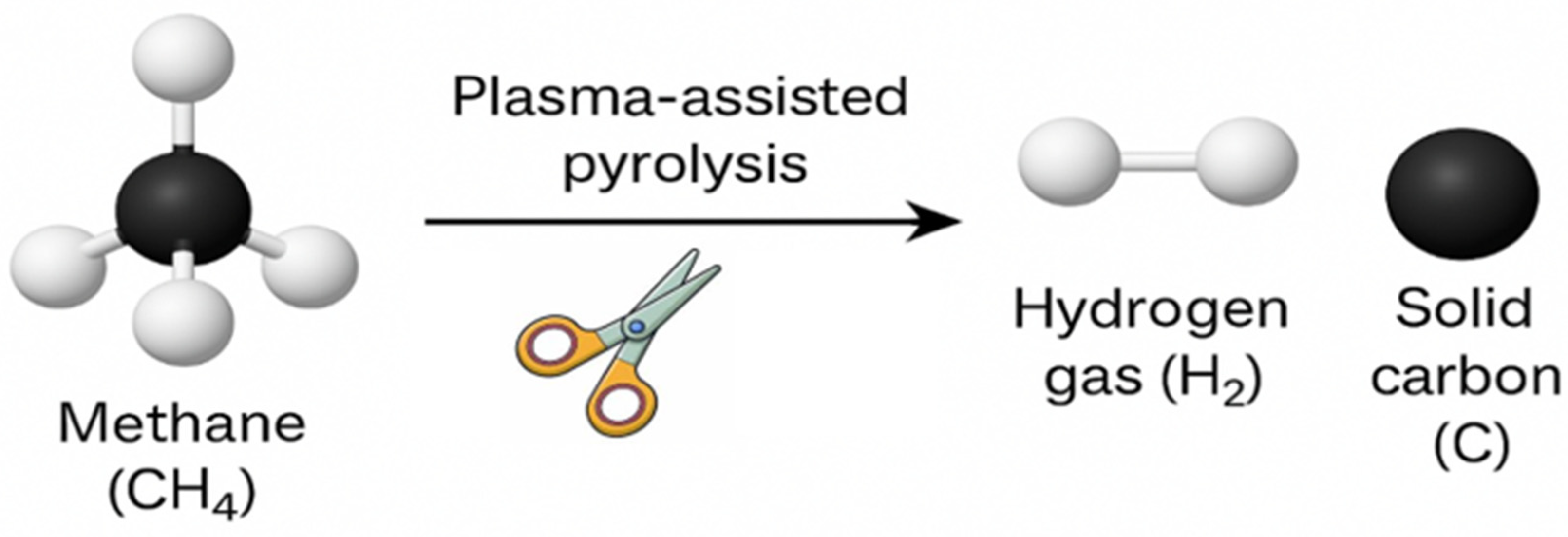
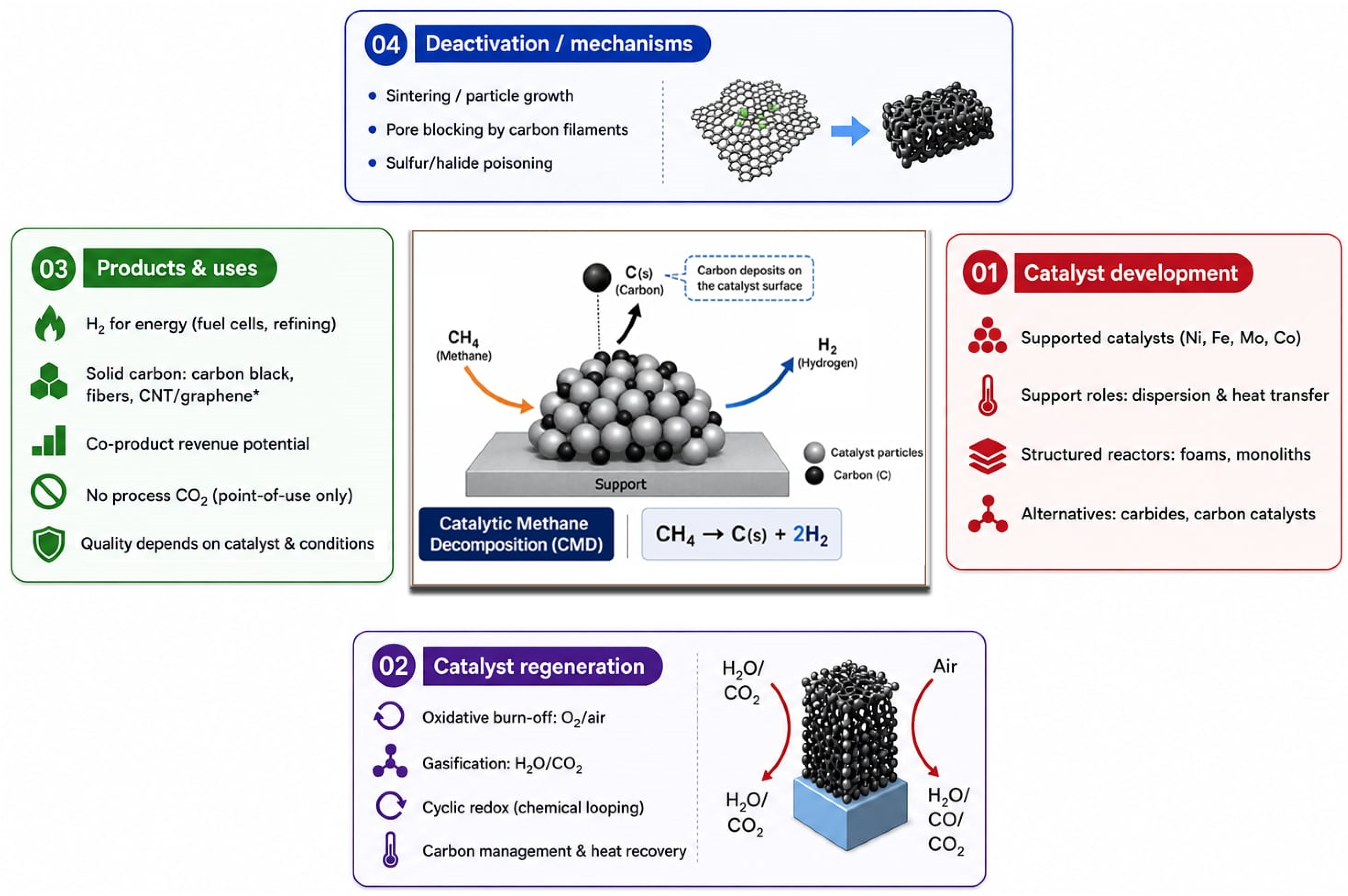
DMD, also known as methane pyrolysis, is a process where methane is directly broken into hydrogen and solid carbon [54,55], as presented in Figure 8. Methane decomposition can occur through two main pathways: non-catalytic thermal methane decomposition and catalytic methane decomposition (CMD) [54,55,56,57]. Non-catalytic thermal decomposition relies mainly on high temperature to break the C–H bonds in methane and generally requires severe operating conditions, commonly above 1000 °C depending on reactor design and residence time, In contrast, CMD uses catalyst materials, such as Ni-, Fe-, Co-, Mo-, carbide-, or carbon-based catalysts, to lower the reaction temperature and improve methane conversion [56,57]. Therefore, these two routes should be distinguished because their operating conditions, reaction mechanisms, catalyst requirements, carbon formation behavior, and scale-up challenges are different. This section focuses mainly on catalytic methane decomposition because catalyst activity, deactivation, and solid carbon management are central to the practical development of CBM-derived hydrogen production industries.
Although CMD has been investigated for more than a century, scale-up remains elusive because activity, durability, carbon handling, and economics are tightly coupled under harsh operating windows (~700–1000 °C) [58,59]. Deactivation is dominated by carbon overgrowth and encapsulation that block access/egress at active sites; it is exacerbated by poisoning from trace S/Cl or heavy hydrocarbons, sintering and particle detachment at temperature, and formation/restructuring of metal carbides that can convert initially active phases to less active or brittle states. Supports may donate lattice or surface oxygen, creating parasitic CO/CO2 that undermines the inherent low-CO2 promise of CMD and contaminates product H2. The persistent tension is that materials and conditions that accelerate C–H bond scission also accelerate carbon accumulation and structural evolution, so high activity rarely coincides with long lifetimes. Metal catalysts (Ni, Fe, Co, Mo and related carbides) typically show strong initial conversion but are vulnerable to sintering, carbide cycling, sulfur intolerance, and encapsulating coke unless formulations and reactor conditions bias filamentous carbon that self-transports away from particles; carbon-based catalysts (activated carbons, CNT/graphene, doped carbons) attribute activity to defected edges, strained sp2 motifs, and heteroatom dopants, yet the specific active ensembles remain debated, are difficult to control synthetically at scale, and the newly formed carbon during reaction can participate in autocatalysis, blurring “catalyst” and “product”. Treating solid carbon as a saleable product rather than waste is pivotal: morphology, graphitization, ash/metal residues, particle size, and surface chemistry must be engineered to meet specifications for carbon black, conductive additives, or structural fillers, which in turn argues for catalysts, operating windows, and reactor hydrodynamics that deliberately generate detachable, separable carbon while preserving catalyst integrity [58].

5.2. Plasma-Assisted Pyrolysis

Plasma-assisted pyrolysis is an emerging technology for hydrogen production from methane, including CBM, offering a potentially cleaner alternative to traditional methods like SMR [55,56]. This process utilizes plasma to initiate and sustain the pyrolysis of methane, breaking it down into hydrogen and solid carbon. The plasma, typically generated by electrical discharge, creates a highly reactive environment with energetic electrons, ions, and radicals. These species collide with methane molecules, initiating a chain of reactions that result in the formation of hydrogen and solid carbon [11,46], as shown in Figure 9.
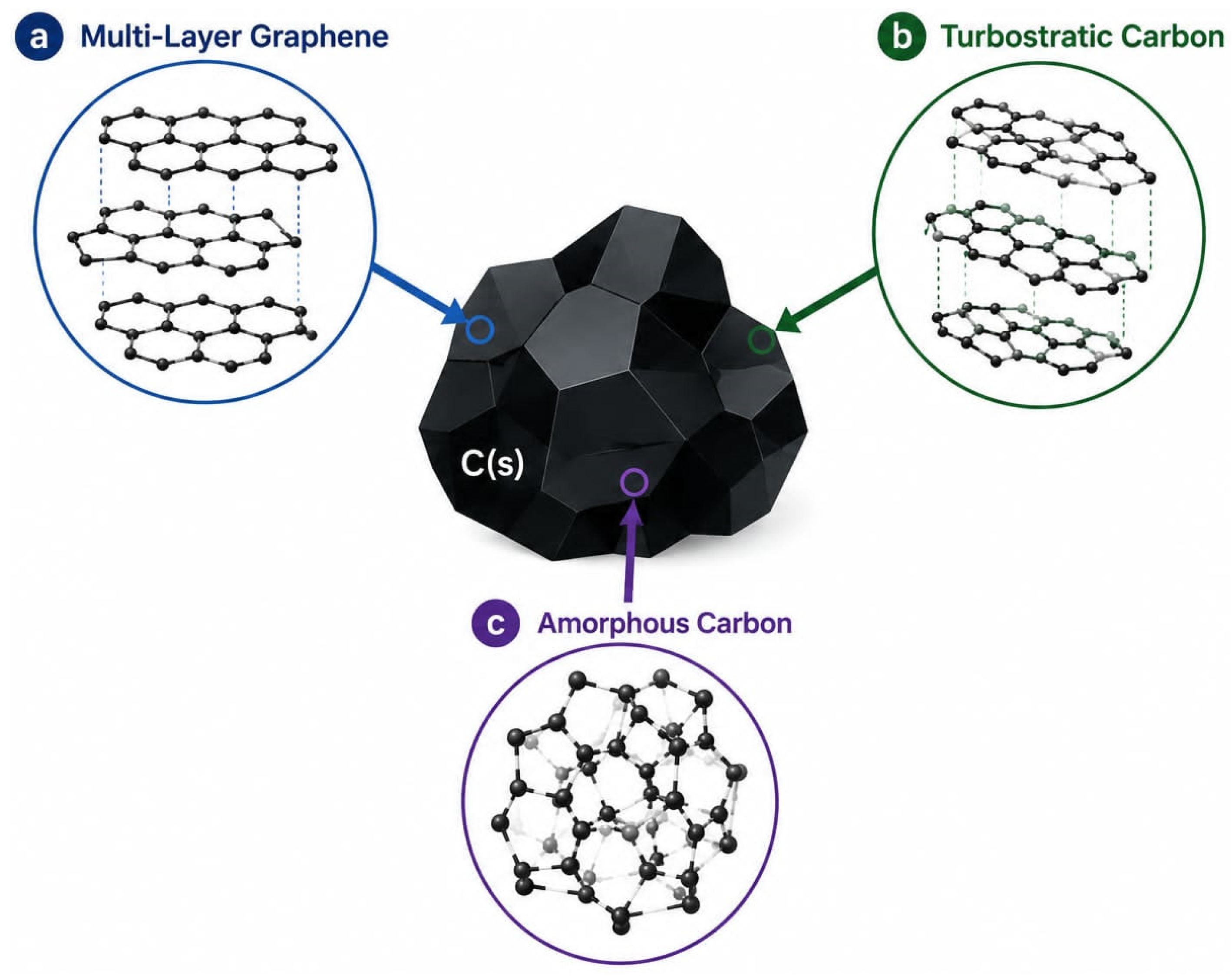
In plasma-assisted methane pyrolysis, the co-produced carbon can be a value stream rather than a waste if its properties are deliberately engineered. In practice, morphology (amorphous/turbostratic carbon, carbon nanotubes, graphene-like sheets), as shown in Figure 10, graphitization, defect density, ash/metal content, particle size distribution, and surface chemistry are governed by the plasma regime (microwave, radio frequency “RF”, dielectric-barrier, thermal/arc), absorbed power density, electron energy distribution, pressure, residence time, quench rate, carrier gases (Ar, He, H2), and wall temperatures [57,58]. Non-equilibrium plasmas enable electron-impact dissociation and vibrational excitation pathways that decouple chemistry from bulk gas temperature, lowering the apparent energy barrier for C–H scission and making the specific energy demand potentially competitive with conventional routes while eliminating direct process CO2. In addition, the same environment can nucleate high-value carbons (e.g., CNTs/graphene) when supersaturation, temperature gradients, and nucleation sites are tuned, though uncontrolled conditions readily yield soot that passivates surfaces.
Realizing these advantages at scale requires addressing several coupled challenges: (i) product control and handling—continuous disengagement of carbon from the discharge zone and from hot walls to avoid fouling and maintain stable coupling (e.g., spouted/moving-bed inserts, cyclones/filters, in situ scraping), along with online control of carbon grade via Raman/SSA/ash metrics; (ii) gas-phase purity—traces of C2H2/C2H4/CO formed in hot plasmas can contaminate H2, necessitating polishing (PSA/membranes) if fuel-cell-grade hydrogen is targeted; (iii) electromagnetic/thermal scale-up—uniform power deposition and residence-time control across larger reactors, mitigation of arcing hot spots and electrode erosion (for arcs), stable impedance matching (for microwave/RF), and efficient heat recovery from hot effluents; (iv) materials and operability—plasma-proof linings and optics resistant to carbon deposition, strategies to manage feed impurities (e.g., H2S, higher hydrocarbons) that alter plasma chemistry; and (v) systems economics and life-cycle performance—overall efficiency depends on the electricity mix supplying the plasma and on the monetization of the solid carbon stream, so techno-economics are dominated by methane price, electricity cost and carbon intensity, H2 polishing duty, reactor availability, and the achievable selling price/specification of the carbon product. In short, plasma pyrolysis can combine low point-source emissions with coproduction of advanced carbons and competitive energy use relative to steam reforming or electrolysis, but its commercial viability hinges on the precise control of carbon formation and removal, robust reactor–plasma coupling at industrial throughputs, and integration with purification and product-handling steps that preserve both hydrogen quality and carbon value [59,60].

5.3. Hybrid Coal–CBM Systems

A hybrid coal–CBM system integrates coal gasification with CBM extraction to enhance both methane recovery and hydrogen production [61,62]. This system uses coal as a primary resource, using coal gasification to produce syngas, a mixture of hydrogen and carbon monoxide, which can then be further processed to increase hydrogen yield [60,63]. Simultaneously, methane extracted from coal beds—either before, during, or after gasification—can be utilized as a fuel source in the gasification process or reformed to produce additional hydrogen. The integration of these processes offers several benefits, including improved resource utilization, reduced greenhouse gas emissions (especially when coupled with carbon capture technologies), and enhanced energy production from coal resources [5,64]. Moreover, such hybrid systems can be designed to optimize energy output and minimize environmental impact by utilizing waste heat and byproducts from one process to fuel another, thereby increasing overall efficiency and sustainability [65].
One configuration involves using hydrogen from nuclear/renewable energy with coal to produce fuels and chemicals, mitigating CO2 emissions from traditional coal-based processes [66]. Another approach combines sub-critical water gasification of sewage sludge and lignite coal to produce syngas, which is then separated into hydrogen and used for power generation. Furthermore, advancements in techniques like microwave and liquid nitrogen freeze–thaw cycles can modify coal’s microstructural properties, enhancing methane recovery. Ultimately, a hybrid coal–CBM system aims to maximize energy output while minimizing environmental impact, making it a compelling approach for sustainable energy production [67,68].

6. Future Work and Perspectives

Future work on producing hydrogen from coalbed methane (CBM) should focus on optimizing the process through feed pre-conditioning via drying, desulfurization, and removal of CO2/N2 which should be co-designed with the conversion step so that contaminants that poison catalysts or destabilize plasmas are intercepted at lowest cost. Where reforming is used, captured CO2 must be coupled to nearby sinks (saline formations, depleted gas fields) or utilization sites; where pyrolysis is used, solids handling and carbon offtake must be designed into the field layout from day one, not added later.
For catalytic routes, the research priority is stability-first catalysis under realistic CBM impurity loads. Nickel-, iron-, or molybdenum-based systems for catalytic methane decomposition (CMD) should be engineered to favor filamentous carbon that self-removes from active particles, delaying encapsulation; this implies precise control over particle size, promoter chemistry, and metal–support interactions, as well as reactors (moving/fluidized beds, spouted beds, monoliths) that physically convey carbon away from the catalyst. Operando spectroscopy and atomistic modeling are needed to resolve which motifs actually split C–H bonds in carbon-based catalysts and how transient carbide phases participate. Because regeneration is inevitable, cycles should be designed to recover heat, capture/valorize CO/CO2 from burn-off or gasification, and minimize sintering—e.g., low-temperature chemical looping, pulsed oxidation, or membrane-assisted H2 removal to keep surfaces below encapsulation thresholds. Coupling catalytic units to renewable electricity for electric heating and to H2-selective membranes/PSA for polishing will be essential where fuel-cell-grade hydrogen is targeted.
For non-catalytic routes, plasma, microwave, inductive, and solar-thermal pyrolysis merit parallel development because they decouple chemistry from bulk gas temperature and avoid metal-poisoning constraints. The scientific focus should be on stable electromagnetic coupling at scale, uniform power deposition in large reactors, and continuous carbon disengagement to prevent fouling of the discharge zone. Thermal cracking in radiant or solar receivers can complement plasma systems if fast quenching is used to control carbon morphology. In all non-catalytic cases, product control is central: operating windows must be tuned to target saleable carbon grades (carbon black, CNTs, graphene-like sheets) rather than undifferentiated soot, with on-line quality monitoring (Raman, BET/SSA, ash) and separation trains (cyclones, filters, screw or rotary collectors) sized to plant throughput.
Carbon management is a make-or-break lever for CBM-to-H2 economics. A credible roadmap treats solid carbon as a co-product with defined specifications, packaging, and markets, or as a sequestration pathway with verifiable permanence and crediting. Reactor selection and catalyst choice should therefore be made with the intended carbon grade and logistics in mind—e.g., CNT-leaning regimes in moving beds for materials markets versus turbostratic carbon designed for geologic storage or asphalt composites. Where reforming is chosen, CCUS infrastructure must be guaranteed; where pyrolysis is chosen, carbon offtake or storage must be guaranteed. Without these downstream anchors, even technically elegant plants will struggle to finance.
System integration beyond the plant boundary is equally important. CBM fields can host modular, skid-mounted pyrolysis trains powered by colocated wind/solar with batteries or curtailed grid electricity, converting stranded methane to H2 and solid carbon with minimal transportation of gaseous fuels. Hydrogen distribution should be flexible: near-field use by industry, conversion to ammonia or liquid organic hydrogen carriers (LOHCs) for export, and alignment with local underground hydrogen storage (UHS) in salt caverns or suitable formations for balancing intermittent renewables. If UHS in coal-bearing strata is considered, research must de-risk geochemical and microbiological consumption of H2, caprock integrity, cushion-gas strategies, and cycling effects on permeability.
Across catalytic and non-catalytic options, AI and digital twins will accelerate progress by fusing reservoir, plant, and market signals. At the field scale, machine-learning models can rank wells for feed quality, forecast methane deliverability, and detect fugitive emissions. In the reactor, reinforcement learning and model-predictive control can hold plasmas on-set, maintain target carbon morphology, and adapt regeneration cycles to slow deactivation while minimizing CO/CO2 formation. At the enterprise level, AI can couple techno-economic analysis (TEA) and life-cycle assessment (LCA) to real-time prices for methane, electricity, carbon credits, and carbon products, guiding dispatch decisions and sitting.
Finally, a practical deployment pathway emerges: near term, demonstrate 1–10 t-H2/day pilots that integrate CBM pre-treatment with either CMD in moving beds or plasma pyrolysis with continuous carbon removal, including full H2 polishing and carbon offtake agreements; medium term, cluster multiple modules into 50–200 t-H2/day hubs tied to CCUS or carbon product customers, with UHS for buffering and renewable co-supply; long term, standardize modules and regulatory frameworks (MRV for methane and carbon, product standards for carbon grades, safety codes for H2 and ammonia) so CBM-to-H2 becomes financeable at utility scale. Under this roadmap, catalytic and non-catalytic routes are not competitors but tools in a portfolio: the right choice will be site-specific, dictated by feed purity, renewable and CO2 infrastructure, carbon markets, and tolerance for operational complexity.

7. Conclusions

Hydrogen production from Coalbed Methane (CBM) represents a strategic and innovative approach to addressing the global demand for cleaner and more sustainable energy sources. This paper has explored both catalytic methods—such as Steam Methane Reforming (SMR), Partial Oxidation (POX), and Autothermal Reforming (ATR) and non-catalytic pathways, including Direct Methane Decomposition (DMD), Plasma-Assisted Pyrolysis (PAP), and hybrid coal–CBM systems. Each method offers unique advantages in terms of hydrogen yield, energy efficiency, and environmental impact. While catalytic routes are technologically mature and widely used, non-catalytic methods show great potential for CO2-free hydrogen generation, especially when coupled with value-added carbon products like graphene and carbon nanotubes. Economic comparisons suggest that SMR remains the most cost-effective in the short term, but long-term sustainability will favour methods powered by renewable energy or those capable of integrating effective carbon capture and utilization (CCUS) technologies. Field studies, particularly in regions like China and India, highlight the feasibility of deploying CBM-based hydrogen systems on a large scale, especially in conjunction with fuel cell technology for transportation. Looking ahead, the integration of advanced catalyst materials, AI-driven process optimization, and supportive policy frameworks will be critical to scaling up CBM-to-hydrogen pathways. This research contributes to the growing body of knowledge supporting the transition to a low-carbon hydrogen economy, positioning CBM not just as a transitional fuel but as a long-term contributor to sustainable energy infrastructure.

Author Contributions

Q.K., M.L. and M.A.A. participated in writing the original manuscript. M.U.S., L.W. and S.A. collected the review materials and drafted the figures. A.Y. participated in manuscript revision and figure improvement. All authors have read and agreed to the published version of the manuscript.

Funding

This work was supported by Ministry of Science and Higher Education of the Republic of Kazakhstan, grant No. AP26104405 as well as Nazarbayev University Faculty Development Competitive Research Grant Program No. 040225FD4717.

Data Availability Statement

Data will be available on request.

Acknowledgments

The authors acknowledge the use of some artificial intelligence tools such as ChatGPT 5.5 by OpenAI and Gemini (Nano Banana Pro) for drafting some parts of the figures.

Conflicts of Interest

The authors declare no conflicts of interest.

References

  1. Goraya, N.S.; Rajpoot, N.; Marriyappan Sivagnanam, B. Coal Bed Methane Enhancement Techniques: A Review. ChemistrySelect 2019, 4, 3585–3601. [Google Scholar] [CrossRef]
  2. Mastalerz, M. Coal Bed Methane: Reserves, Production and Future Outlook. In Future Energy: Improved, Sustainable and Clean Options for Our Planet; Elsevier: Amsterdam, The Netherlands, 2014; pp. 145–158. [Google Scholar] [CrossRef]
  3. Li, J.S.; Li, Z.X.; Zu, B.H. Coalbed Methane (CBM) Project Enrichment Area and Economic Evaluation. Adv. Mater. Res. 2013, 772, 776–780. [Google Scholar] [CrossRef]
  4. Prabu, V.; Mallick, N. Coalbed methane with CO2 sequestration: An emerging clean coal technology in India. Renew. Sustain. Energy Rev. 2015, 50, 229–244. [Google Scholar] [CrossRef]
  5. Mallick, N.; Prabu, V. Energy analysis on Coalbed Methane (CBM) coupled power systems. J. CO2 Util. 2017, 19, 16–27. [Google Scholar] [CrossRef]
  6. Prato-Garcia, D.; Robayo-Avendaño, A.; Vasquez-Medrano, R. Hydrogen from natural gas and biogas: Building bridges for a sustainable transition to a green economy. Gas Sci. Eng. 2023, 111, 204918. [Google Scholar] [CrossRef]
  7. Monteiro, E.; Brito, P.S.D. Hydrogen supply chain: Current status and prospects. Energy Storage 2023, 5, 466. [Google Scholar] [CrossRef]
  8. Alamiery, A. Advancements in materials for hydrogen production: A review of cutting-edge technologies. ChemPhysMater 2024, 3, 64–73. [Google Scholar] [CrossRef]
  9. Patlolla, S.R.; Katsu, K.; Sharafian, A.; Wei, K.; Herrera, O.E.; Mérida, W. A review of methane pyrolysis technologies for hydrogen production. Renew. Sustain. Energy Rev. 2023, 181, 113323. [Google Scholar] [CrossRef]
  10. Leila, M.; Hazlett, R.; George, P.M.; Moretti, I.; Kabashev, Z.; Fustic, M. Concomitant generation of hydrogen during carbon dioxide storage in ultramafic massifs-state of the art with implications to decarbonization strategies. Carbon Capture Sci. Technol. 2025, 16, 100481. [Google Scholar] [CrossRef]
  11. Lott, P.; Mokashi, M.B.; Müller, H.; Heitlinger, D.J.; Lichtenberg, S.; Shirsath, A.B.; Janzer, C.; Tischer, S.; Maier, L.; Deutschmann, O. Hydrogen Production and Carbon Capture by Gas-Phase Methane Pyrolysis: A Feasibility Study. ChemSusChem 2023, 16, e202300300. [Google Scholar] [CrossRef]
  12. Salmachi, A.; Karacan, C.Ö. Cross-formational flow of water into coalbed methane reservoirs: Controls on relative permeability curve shape and production profile. Environ. Earth Sci. 2017, 76, 200. [Google Scholar] [CrossRef] [PubMed]
  13. Kim, S.; Ko, D.; Mun, J.; Kim, T.H.; Kim, J. Techno-economic evaluation of gas separation processes for long-term operation of CO2 injected enhanced coalbed methane (ECBM). Korean J. Chem. Eng. 2018, 35, 941–955. [Google Scholar] [CrossRef]
  14. Hatzignatiou, D.G.; Ehlig-Economides, C. Coupled Enhanced Natural Gas Recovery and Blue Hydrogen (EGRBH) Generation. In Proceedings-SPE Annual Technical Conference and Exhibition; SPE: Richardson, TX, USA, 2022. [Google Scholar]
  15. Wu, N.; Lan, K.; Yao, Y. An integrated techno-economic and environmental assessment for carbon capture in hydrogen production by biomass gasification. Resour. Conserv. Recycl. 2023, 188, 106693. [Google Scholar] [CrossRef]
  16. Burchart, D.; Gazda-Grzywacz, M.; Grzywacz, P.; Burmistrz, P.; Zarębska, K. Life Cycle Assessment of Hydrogen Production from Coal Gasification as an Alternative Transport Fuel. Energies 2023, 16, 383. [Google Scholar] [CrossRef]
  17. Melnicki, M.R.; Bianchi, L.; De Philippis, R.; Melis, A. Hydrogen production during stationary phase in purple photosynthetic bacteria. Int. J. Hydrogen Energy 2008, 33, 6525–6534. [Google Scholar] [CrossRef]
  18. Hermesmann, M.; Müller, T.E. Green, Turquoise, Blue, or Grey? Environmentally friendly Hydrogen Production in Transforming Energy Systems. Prog. Energy Combust. Sci. 2022, 90, 100996. [Google Scholar] [CrossRef]
  19. Zainal, B.S.; Ker, P.J.; Mohamed, H.; Ong, H.C.; Fattah, I.; Rahman, S.A.; Nghiem, L.D.; Mahlia, T.M.I. Recent advancement and assessment of green hydrogen production technologies. Renew. Sustain. Energy Rev. 2024, 189, 113941. [Google Scholar] [CrossRef]
  20. Chu, C.C.; Suhainin, M.D.; Pg Haji Omar Ali, D.N.H.A.; Lim, J.Y.; Swee, P.S.; Raymundo, J.Y.; Tan, R.X.H.; Yap, M.K.; Khoo, H.F.; Suhaimi, H.; et al. A Techno-Economic Assessment of Steam Methane Reforming and Alkaline Water Electrolysis for Hydrogen Production. Hydrogen 2025, 6, 23. [Google Scholar] [CrossRef]
  21. Jalil, A.; Yu, Z. Impact of Substrates, Volatile Fatty Acids, and Microbial Communities on Biohydrogen Production: A Systematic Review and Meta-Analysis. Sustainability 2024, 16, 10755. [Google Scholar] [CrossRef]
  22. Zhou, C.; Li, J.; Meng, X.; Chen, Q.; Yan, Z.; Li, J.; Gao, X.; Ueda, S.; Wang, S.; Ai, L.; et al. Research progress of hydrogen production and CO2 fixation in molten slag cooling process. Carbon Neutralization 2024, 3, 441–460. [Google Scholar] [CrossRef]
  23. Haque, N.; Azad, A.K. Comparative Study of Hydrogen Production from Organic Fraction of Municipal Solid Waste and Its Challenges: A Review. Energies 2023, 16, 7853. [Google Scholar] [CrossRef]
  24. Teke, G.M.; Anye Cho, B.; Bosman, C.E.; Mapholi, Z.; Zhang, D.; Pott, R.W.M. Towards industrial biological hydrogen production: A review. World J. Microbiol. Biotechnol. 2023, 40, 37. [Google Scholar] [CrossRef] [PubMed]
  25. Ishaq, H.; Dincer, I.; Crawford, C. A review on hydrogen production and utilization: Challenges and opportunities. Int. J. Hydrogen Energy 2022, 47, 26238–26264. [Google Scholar] [CrossRef]
  26. Li, Z.; Zhang, W.; Zhang, R.; Sun, H. Development of renewable energy multi-energy complementary hydrogen energy system (A Case Study in China): A review. Energy Explor. Exploit. 2020, 38, 2099–2127. [Google Scholar] [CrossRef]
  27. Chozhavendhan, S.; Rajamehala, M.; Karthigadevi, G.; Praveenkumar, R.; Bharathiraja, B. A review on feedstock, pretreatment methods, influencing factors, production and purification processes of bio-hydrogen production. Case Stud. Chem. Environ. Eng. 2020, 2, 100038. [Google Scholar] [CrossRef]
  28. Al-Jubori, A.; Johnston, S.; Boyer, C.; Lambert, S.W.; Bustos, O.; Pashin, J.; Wray, A. Coalbed methane: Clean energy for the world. Oilfield Rev. 2009, 21, 4–13. [Google Scholar]
  29. Li, Y.; Wang, Z.; Tang, S.; Elsworth, D. Re-evaluating adsorbed and free methane content in coal and its ad- and desorption processes analysis. Chem. Eng. J. 2022, 428, 131946. [Google Scholar] [CrossRef]
  30. Laubach, S.E.; Marrett, R.A.; Olson, J.E.; Scott, A.R. Characteristics and origins of coal cleat: A review. Int. J. Coal Geol. 1998, 35, 175–207. [Google Scholar] [CrossRef]
  31. Liu, S.; Harpalani, S. Permeability prediction of coalbed methane reservoirs during primary depletion. Int. J. Coal Geol. 2013, 113, 1–10. [Google Scholar] [CrossRef]
  32. Wang, P.; Ju, Y.; Ren, C.; Li, G.; Xiao, L.; Wang, W.; Gao, J.; Chen, R. Effect of pore structure on methane adsorption characteristics in tectonically deformed coals. Front. Earth Sci. 2025, 13, 1609857. [Google Scholar] [CrossRef]
  33. Yan, X.; Zhang, S.; Tang, S.; Li, Z.; Zhang, Q.; Wang, J.; Deng, Z. Quantitative optimization of drainage strategy of coalbed methane well based on the dynamic behavior of coal reservoir permeability. Sci. Rep. 2020, 10, 20306. [Google Scholar] [CrossRef] [PubMed]
  34. Xu, A.; Han, S.; Wei, Y.; Zhou, P.; Zhang, J.; Guo, Z. Methane Adsorption During Pore Evolution and Its Microscale Impact on Coalbed Methane Recovery: A Case Study of Middle- and High-Rank Coals in the Western Guizhou. ACS Omega 2025, 10, 14439–14451. [Google Scholar] [CrossRef]
  35. Talapatra, A.; Karim, M.M. The influence of moisture content on coal deformation and coal permeability during coalbed methane (CBM) production in wet reservoirs. J. Pet. Explor. Prod. Technol. 2020, 10, 1907–1920. [Google Scholar] [CrossRef]
  36. Sun, Y.; Zheng, L.; Liu, H.; Chen, Z.L.; Hu, J.; Sun, W.; Tian, Y.; Lan, H.; Zhang, Y.; Wang, J. Research on permeability evolution law and gas outburst mechanism of coal near concealed fault. Energy 2025, 318, 134950. [Google Scholar] [CrossRef]
  37. Leng, K.; Guan, B.; Liu, W.; Jiang, C.; Cong, S.; Xin, Y. Research progress of coalbed methane extraction. Energy Rep. 2024, 12, 5728–5746. [Google Scholar] [CrossRef]
  38. Moore, T.A. Coalbed methane: A review. Int. J. Coal Geol. 2012, 101, 36–81. [Google Scholar] [CrossRef]
  39. Zhang, B.; Li, W.; Wang, G.; Jiao, X. Analysis of Coalbed Methane Production Characteristics and Influencing Factors of No. 15 Coal Seam in the Shouyang Block. Processes 2023, 11, 3269. [Google Scholar] [CrossRef]
  40. Meng, X.; Gu, A.; Wu, X.; Zhou, L.; Zhou, J.; Liu, B.; Mao, Z. Status quo of China hydrogen strategy in the field of transportation and international comparisons. Int. J. Hydrogen Energy 2021, 46, 28887–28899. [Google Scholar] [CrossRef]
  41. Praveenkumar, S.; Agyekum, E.B.; Ampah, J.D.; Afrane, S.; Velkin, V.I.; Mehmood, U.; Awosusi, A.A. Techno-economic optimization of PV system for hydrogen production and electric vehicle charging stations under five different climatic conditions in India. Int. J. Hydrogen Energy 2022, 47, 38087–38105. [Google Scholar] [CrossRef]
  42. Ammendola, P.; Chirone, R.; Ruoppolo, G.; Russo, G. Zero Emissions Hydrogen Production by Fluidized Bed Catalytic Decomposition of Methane. In Proceedings of the 20th International Conference on Fluidized Bed Combustion; Springer: Berlin/Heidelberg, Germany, 2009; pp. 1035–1040. [Google Scholar] [CrossRef]
  43. Fan, Z.; Weng, W.; Zhou, J.; Gu, D.; Xiao, W. Catalytic decomposition of methane to produce hydrogen: A review. J. Energy Chem. 2021, 58, 415–430. [Google Scholar] [CrossRef]
  44. Hantoko, D.; Khan, W.U.; Osman, A.I.; Nasr, M.; Rashwan, A.K.; Gambo, Y.; Al Shoaibi, A.; Chandrasekar, S.; Hossain, M.M. Carbon–neutral hydrogen production by catalytic methane decomposition: A review. Environ. Chem. Lett. 2024, 22, 1623–1663. [Google Scholar] [CrossRef]
  45. U.S. Department of Energy. Hydrogen Production: Natural Gas Reforming; Office of Energy Efficiency & Renewable Energy: Washington, DC, USA, 2025.
  46. Marquardt, T.; Bode, A.; Kabelac, S. Hydrogen production by methane decomposition: Analysis of thermodynamic carbon properties and process evaluation. Energy Convers. Manag. 2020, 221, 113125. [Google Scholar] [CrossRef]
  47. Matus, V.; Ismagilov, I.Z.; Mikhaylova, E.S.; Ismagilov, Z.R. Hydrogen Production from Coal Industry Methane. Eurasian Chem.-Technol. J. 2022, 24, 69–91. [Google Scholar] [CrossRef]
  48. Halabi, M.; De Croon, M.; Schaaf, J.; Cobden, P.; Schouten, J. Reactor modeling of sorption-enhanced autothermal reforming of methane. Part II: Effect of operational parameters. Chem. Eng. J. 2011, 168, 883–888. [Google Scholar] [CrossRef]
  49. Habib, M.; Haque, M.; Harale, A.; Paglieri, S.; Alrashed, F.; Al-Sayoud, A.; Nemitallah, M.A.; Hossain, S.; Abuelyamen, A.; Mokheimer, E.M.; et al. Palladium-alloy membrane reactors for fuel reforming and hydrogen production: Hydrogen Production Modeling. Case Stud. Therm. Eng. 2023, 49, 103359. [Google Scholar] [CrossRef]
  50. Fang, W.; Li, X.Y. Optimization of power dispatching based on correlation analysis for wind farm group. In Environment, Energy and Applied Technology-Proceedings of the 2014 3rd International Conference on Frontier of Energy and Environment Engineering (ICEEE 2014); CRC Press: Boca Raton, FL, USA, 2015; pp. 11–15. [Google Scholar]
  51. Fakeeha, A.; Ibrahim, A.A.; Aljuraywi, H.; Alqahtani, Y.; Alkhodair, A.; Alswaidan, S.; Abasaeed, A.E.; Kasim, S.O.; Mahmud, S.; Al-Fatesh, A.S. Hydrogen Production by Partial Oxidation Reforming of Methane over Ni Catalysts Supported on High and Low Surface Area Alumina and Zirconia. Processes 2020, 8, 499. [Google Scholar] [CrossRef]
  52. EIGA. Overview of Hydrogen Production Methods. DOC 251/24. European Industrial Gases Association AISBL. 2024. Available online: https://www.eiga.eu/uploads/documents/DOC251.pdf (accessed on 7 April 2026).
  53. Chen, J.; Han, J.; Xu, D. Efficient operation of autothermal microchannel reactors for the production of hydrogen by steam methane reforming. Int. J. Hydrogen Energy 2019, 44, 11546–11563. [Google Scholar] [CrossRef]
  54. Abbas, H.F.; Daud, W.M.A. Hydrogen production by methane decomposition: A review. Int. J. Hydrogen Energy 2010, 35, 1160–1190. [Google Scholar] [CrossRef]
  55. Ingale, G.U.; Kwon, H.M.; Jeong, S.; Park, D.; Kim, W.; Bang, B.; Lim, Y.-I.; Kim, S.W.; Kang, Y.-B.; Mun, J.; et al. Assessment of Greenhouse Gas Emissions from Hydrogen Production Processes: Turquoise Hydrogen vs. Steam Methane Reforming. Energies 2022, 15, 8679. [Google Scholar] [CrossRef]
  56. Mei, I.L.S.; Lock, S.S.M.; Abdullah, B. Application of microscopy technology in thermo-catalytic methane decomposition to hydrogen. AIP Conf. Proc. 2015, 1669, 020066. [Google Scholar] [CrossRef]
  57. Ghanbari, M.; Binazadeh, M.; Zafarnak, S.; Taghvaei, H.; Rahimpour, M.R. Hydrogen production via catalytic pulsed plasma conversion of methane: Effect of Ni–K2O/Al2O3 loading, applied voltage, and argon flow rate. Int. J. Hydrogen Energy 2020, 45, 13899–13910. [Google Scholar] [CrossRef]
  58. Geng, F.; Haribal, V.P.; Hicks, J.C. Non-thermal plasma-assisted steam methane reforming for electrically-driven hydrogen production. Appl. Catal. A Gen. 2022, 647, 118903. [Google Scholar] [CrossRef]
  59. Wu, A.; Li, X.; Yan, J.; Yang, J.; Du, C.; Zhu, F.; Qian, J. Co-generation of hydrogen and carbon aerosol from coalbed methane surrogate using rotating gliding arc plasma. Appl. Energy 2017, 195, 67–79. [Google Scholar] [CrossRef]
  60. Miao, Y.; Gao, Y.; Chen, Y. Application of plasma-catalysis synergistic utilization for methane decomposition into hydrogen. In Proceedings of the IEEE International Conference on Plasma Science, Beijing, China, 16–20 June 2024. [Google Scholar] [CrossRef]
  61. Ali, Z.; Song, H.; Trieu Nguyen, U.N.; Shim, H.C.; Lee, S.M.; Majeed, M.; Lee, D.H. Hydrogen and Solid Carbon Production via Methane Pyrolysis in a Rotating Gliding Arc Plasma Reactor. ChemSusChem 2025, 18, e202401602. [Google Scholar] [CrossRef]
  62. Yuan, X.; Sun, J.; Ma, Y.; Wang, Y.; Liu, B.; Cai, Y.; Yong, X.; Tu, X. A kinetic study of nonthermal plasma pyrolysis of methane: Insights into hydrogen and carbon material production. Chem. Eng. J. 2024, 499, 156396. [Google Scholar] [CrossRef]
  63. Dadsetan, M.; Khan, M.F.; Salakhi, M.; Bobicki, E.R.; Thomson, M.J. CO2-free hydrogen production via microwave-driven methane pyrolysis. Int. J. Hydrogen Energy 2023, 48, 14565–14576. [Google Scholar] [CrossRef]
  64. Ma, T.; Guo, Z.; Lin, M.; Wang, Q. Recent trends on nanofluid heat transfer machine learning research applied to renewable energy. Renew. Sustain. Energy Rev. 2021, 138, 110494. [Google Scholar] [CrossRef]
  65. Gnanapragasam, N.V.; Reddy, B.V.; Rosen, M.A. Hydrogen production from coal gasification for effective downstream CO2 capture. Int. J. Hydrogen Energy 2010, 35, 4933–4943. [Google Scholar] [CrossRef]
  66. Lou, Z.; Wang, K.; Kang, M.; Zhao, W.; Wei, G.; Yue, J.; Yao, H. Plugging methods for underground gas extraction boreholes in coal seams: A review of processes, challenges and strategies. Gas Sci. Eng. 2024, 122, 205225. [Google Scholar] [CrossRef]
  67. Nkuna, S.G.; Olwal, T.O.; Chowdhury, S.D.; Ndambuki, J.M. A review of wastewater sludge-to-energy generation focused on thermochemical technologies: An improved technological, economical and socio-environmental aspect. Clean. Waste Syst. 2024, 7, 100130. [Google Scholar] [CrossRef]
  68. Li, H.; Wu, X.; Liu, M. Modification of Microstructural and Fluid Migration of Bituminous Coal by Microwave–LN2 Freeze–Thaw Cycles: Implication for Efficient Recovery of Coalbed Methane. Nat. Resour. Res. 2024, 33, 2173–2191. [Google Scholar] [CrossRef]
Figure 1. Global Distribution of Major CBM Reserves and Active Exploration Regions modified after [28].
Energies 19 02607 g001
Figure 2. A flow chart summarizes the different hydrogen production pathways from CBM.
Energies 19 02607 g002
Figure 3. An illustrative workflow summarizing the catalytic production of hydrogen from CBM.
Energies 19 02607 g003
Figure 4. Schematic illustration of hydrogen production from methane via steam methane reforming (SMR) followed by the water–gas shift (WGS) reaction.
Energies 19 02607 g004
Figure 5. Effect of Temperature on H2 Yield in the POX Process Using Different Nickel–Aluminum Catalysts modified after [50].
Energies 19 02607 g005
Figure 6. A systematic illustration for hydrogen generation from CBM through the autothermal reforming process.
Energies 19 02607 g006
Figure 7. An illustrative workflow summarizing the non-catalytic production of hydrogen from CBM.
Energies 19 02607 g007
Figure 8. Schematic overview of the direct methane decomposition process for hydrogen production from CBM modified after [44].
Energies 19 02607 g008
Figure 9. A systematic illustration for hydrogen generation from methane via plasma-assisted pyrolysis.
Energies 19 02607 g009
Figure 10. The different morphologies and structures of carbon byproducts during hydrogen generation via plasma-assisted pyrolysis.
Energies 19 02607 g010
Table 1. Summary of key review studies (2020–2025) on hydrogen production.
Main Topic Covered
YearHydrogen Production MethodHydrogen Production MechanismInfluencing FactorExperimental StudyGeochemical and/or Microbial InteractionsCBM ProductionReference
2025 Current review paper
2025 [20]
2024 [21,22]
2023 [23,24]
2022 [25]
2020 [26,27]
Table 2. Summary of key petrophysical properties and storage conditions of CBM reservoirs.
Property and
Storage Condition
DetailsReference
Composition97% CH4; minor CO2, N2[5]
Storage ModeAdsorbed in the micropores of the coal matrix[29]
Gas ContentVaries by rank, pressure, and adsorption; measured in m3/ton or ft3/ton[30]
PermeabilityLow, stress-sensitive; critical for flow[31]
PorosityMicro- to macropores govern storage and flow pathways[32]
Reservoir PressureControls desorption; reduced via dewatering[33]
Coal RankHigher rank → greater surface area and CH4 adsorption[34]
MoistureReduces adsorption and permeability; dewatering improves yield[35]
TectonicsFaults/fractures affect permeability and gas migration[36]
Disclaimer/Publisher’s Note: The statements, opinions and data contained in all publications are solely those of the individual author(s) and contributor(s) and not of MDPI and/or the editor(s). MDPI and/or the editor(s) disclaim responsibility for any injury to people or property resulting from any ideas, methods, instructions or products referred to in the content.