1. Introduction
Driven by the global energy transition and China’s strategic goals of carbon peaking and carbon neutrality, renewable energy represented by wind power is accelerating its transformation from a supplementary energy source to a major component of the energy system [
1,
2,
3]. With the large-scale development of high-quality wind resources in the “Three-North” region of China, the focus of wind power development has gradually shifted toward the complex-terrain areas of central, southern, and eastern China. These regions are generally close to load centers and therefore have favorable conditions for local power consumption. However, they are dominated by mountainous and hilly landscapes, where wind flow is strongly affected by terrain undulation, surface roughness variation, and local airflow disturbances, resulting in pronounced spatial heterogeneity and flow complexity [
4]. Studies by Liu H., Fu J., and others have shown that achieving efficient wind resource utilization, safe turbine operation, and overall economic optimization under complex-terrain conditions has become a critical issue in current wind power engineering [
5].
Existing studies on the performance of mountainous wind farms have mainly focused on planning and design procedures, wind resource assessment, turbine selection, wind turbine layout, and comprehensive benefit evaluation. In the planning and design of wind farms in complex terrain, Zhao D. et al. reported that complex topography can significantly affect turbine operation [
6]. Jian T. et al. pointed out that terrain-induced flow and wake interactions lead to more complicated inflow conditions, with increased turbulence intensity and steeper wind speed gradients [
7]. In addition, project construction becomes more challenging in mountainous areas because limited road accessibility increases the difficulty of transporting and installing large turbine components. These regions are also often environmentally sensitive, requiring wind farm development to balance engineering construction with ecological protection and soil and water conservation. Alfredsson P.H. further emphasized that complex terrain increases the difficulty of overall wind farm optimization, as the non-uniform spatial distribution of wind resources and more complicated wake interactions reduce the applicability of traditional layout optimization methods based on empirical formulas [
8]. Therefore, how to achieve efficient wind resource utilization, safe turbine operation, and overall economic optimization in complex terrain remains an important challenge in wind power engineering.
In terms of wind resource assessment, Alrashidi M., Shaltout M.L., and others have emphasized that wind resource assessment is the foundation of wind farm planning and design, and its accuracy directly affects energy yield prediction and investment decisions [
9,
10]. In complex terrain, terrain shielding and slope variation can alter wind direction patterns and turbulence intensity, making conventional assessment methods based on the assumption of a horizontally homogeneous wind field insufficient to accurately capture actual wind characteristics, thereby increasing evaluation uncertainty [
11,
12]. Traditional wind resource assessment mainly relies on long-term observations from meteorological masts, from which key parameters such as wind speed frequency distribution, wind rose, and wind power density are derived through statistical analysis [
13,
14]. However, due to the limited number of met masts, such observations often fail to fully represent the spatial variability of wind resources in mountainous and hilly areas [
15,
16]. To improve assessment accuracy, various numerical simulation approaches have been introduced. In recent years, computational fluid dynamics (CFD) has been increasingly applied in wind resource assessment. By solving the Reynolds-averaged Navier–Stokes (RANS) equations or applying large eddy simulation (LES), CFD can describe atmospheric flow structures over complex terrain in greater detail and thus improve wind field simulation accuracy [
17,
18]. Meanwhile, reanalysis datasets and mesoscale meteorological models have also been widely used. For example, ERA5, with a horizontal resolution of 31 km, 137 vertical levels, hourly temporal resolution, and 100 m wind speed output, has become one of the mainstream background meteorological datasets for wind resource assessment [
17,
19], showing clear improvements over ERA-Interim in spatial fidelity, extreme-event representation, and long-term consistency [
20]. Nevertheless, global reanalysis data still have inherent limitations in complex terrain. ERA5 often underestimates near-surface wind speeds in mountainous areas and is less capable of representing local circulation effects [
21]. To address these limitations, regional reanalysis products, such as COSMO-REA6 and HARMONIE, as well as dynamically downscaled datasets such as the Global Wind Atlas (GWA), have been developed. GWA dynamically downscales ERA5 to 1 km using the WRF model and further corrects terrain and roughness effects through CFD-based microscale modeling, producing a global wind climate dataset with a spatial resolution of 250 m [
22,
23]. This provides a useful basis for preliminary resource estimation in remote mountainous regions, although its uncertainty still needs to be quantified through site measurements. Overall, wind resource assessment is developing toward multi-source data fusion, multi-scale numerical simulation, and intelligent prediction.
Regarding turbine selection and wind farm layout, turbine model selection and micrositing are key stages in wind farm design, with the objective of maximizing energy production under specific wind resource conditions [
24]. Traditional turbine selection methods usually match turbine power curves with site wind speed distributions and identify the optimal turbine model based on annual energy production. However, under complex-terrain conditions, where wind speed distribution and turbulence intensity vary considerably [
25], turbine selection should also account for structural loads, operational reliability, and operation and maintenance costs [
26]. Existing studies have mainly focused on matching rated capacity with local wind conditions and comparing alternatives using single indicators such as unit investment cost or equivalent full-load hours. Du Panpan investigated turbine selection for plateau wind farms and proposed principles for adapting turbine models to plateau environments [
12,
27]. El Fadli et al. applied a multi-objective optimization approach to wind turbine selection in renewable energy investment and established a systematic decision-making framework [
28]. For integrated renewable energy projects, some studies have introduced the cost of hydrogen energy storage and multi-market revenue into an optimized levelized cost of energy (OLCOE) model and analyzed project profitability using a wind farm in northwestern China as a case study [
24,
29]. Li et al. conducted a systematic study on offshore wind turbine selection using multi-criteria decision-making techniques, but refined LCOE-based modeling for onshore wind farms in complex terrain remains relatively limited [
30].
In addition, complex terrain can significantly affect wind turbine operation. Duan G. and other researchers reported that terrain-induced flow distortion and wake interaction make the inflow conditions of wind turbines more complicated, leading to higher turbulence intensity and steeper wind speed gradients [
31,
32]. Such complex inflow conditions not only influence turbine power output characteristics, but may also increase structural loads, thereby affecting operational stability and service life. Furthermore, wake effects among turbines are an important factor influencing wind farm power generation efficiency. Wakes reduce the inflow wind speed of downstream turbines while increasing turbulence intensity, which in turn decreases power output and aggravates structural loading.
In terms of the comprehensive benefit evaluation of wind power projects, Xu Kang et al. investigated the influence of land use on the environmental benefits of wind farms and found that, due to greater vegetation and soil carbon losses, land-use-related carbon emissions accounted for 37.9% of life-cycle emissions in forest wind farms, compared with 4.3% and 1.2% for grassland and desert wind farms, respectively [
33]. A research team from China University of Petroleum (Beijing) systematically evaluated the environmental burden of wind power systems from a life-cycle perspective and reported that, for a typical onshore wind farm in China, each kilowatt-hour of electricity generated could reduce non-renewable energy consumption by 9.2 MJ and carbon dioxide emissions by 782.8 g. However, existing studies on the environmental benefits of wind power projects have mainly focused on physical emission reductions, while relatively few have converted such environmental benefits into economic value within the framework of the carbon trading market, thus limiting the comprehensive assessment of project value.
Overall, although substantial progress has been made in wind resource assessment and turbine selection, several gaps remain. At the wind-resource-assessment level, no systematic and efficient short-term data fusion and infilling method has yet been established for newly installed meteorological masts with extremely low data completeness and highly heterogeneous data quality among multiple masts [
21,
34]. At the turbine-selection level, conventional criteria are usually limited to a single dimension, such as investment cost or energy production, and lack a comprehensive economic evaluation model spanning the full project life cycle. At the benefit-evaluation level, most existing studies still quantify the positive environmental effects of wind power only in terms of physical emission reduction, with limited consideration of their monetization through carbon-market mechanisms. Specifically, the first gap is addressed in this study through the proposed stepwise multi-source data fusion strategy, the second through the LCOE-based comparative evaluation framework, and the third through the quantification of emission-reduction benefits and carbon-trading value. To address these issues, this study takes a 150 MW mountainous wind power project in Guangxi, China, as an engineering case and develops an integrated framework of “stepwise data fusion–key parameter refinement–life-cycle techno-economic optimization” to address the practical challenges of inaccurate early-stage resource assessment and one-dimensional turbine selection in complex-terrain wind farm development. In this study, the term “optimization” refers to a comparative techno-economic screening and selection of candidate turbine schemes under engineering and market constraints, rather than a formal mathematical optimization of a continuous design space.
2. Materials and Methods
This study was conducted as an engineering case study of a 150 MW wind farm project located in complex terrain in Guangxi, China. The aim was to develop an integrated decision-support framework for wind farm planning under data-constrained conditions. To address the technical challenges of inaccurate resource assessment, blind equipment selection, and coarse benefit prediction in the development of mountainous wind farms, this study establishes an integrated framework consisting of refined wind resource assessment, LCOE-based turbine optimization, and emission reduction benefit quantification. The methodology is described from five aspects: wind resource assessment, energy production calculation, turbine selection, economic evaluation, and emission reduction quantification.
2.1. Method for Refined Wind Resource Assessment
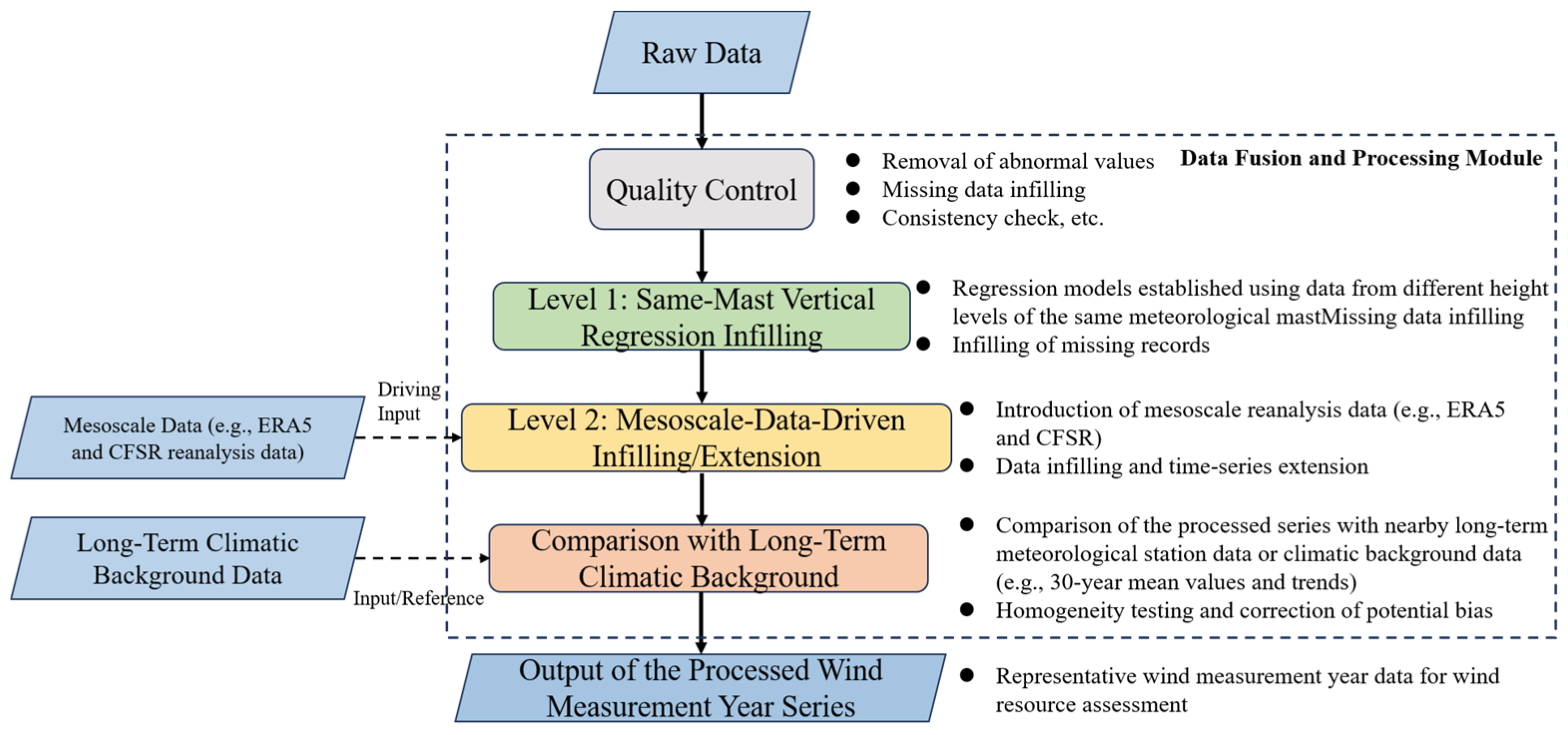
Considering the highly polarized data quality of the six meteorological masts at the wind farm, with data completeness exceeding 85% for the existing masts but only about 25% for the newly installed masts, a two-stage fusion strategy combining same-mast correlation-based infilling and mesoscale data supplementation was developed in this study. First, according to the Technical Specification for Wind Energy Resource Measurement and Assessment for Wind Farms (NB/T 31147-2018), the original 10 min time-series data were subjected to four-dimensional checks, including completeness, plausibility, trend consistency, and correlation consistency, and Invalid records caused by sensor malfunction, physically unreasonable fluctuations, constant-value locking, or obvious outliers were removed.
After quality control, the remaining missing data were reconstructed through a stepwise fusion procedure. In the first stage, same-mast correlation-based infilling was performed using wind speed data from other measurement heights of the same mast. In the second stage, for long gaps that could not be reliably reconstructed in this way, mesoscale reanalysis data were introduced to supplement and extend the time series. The processed wind measurement series was then compared with the long-term climatic background to assess its representativeness and identify potential bias.
In wind resource assessment, the statistical distribution of wind speed is commonly described using the Weibull probability distribution function [
35]. The Weibull distribution is the most widely used probabilistic model in wind speed statistical analysis and can effectively characterize the statistical features of measured wind speed data. Its probability density function is given in Equation (1):
The variables in the Weibull distribution are defined as follows:
v is the wind speed,
k is the dimensionless shape parameter, and
c is the scale parameter (m/s). The shape parameter
k reflects the concentration of the wind speed distribution and typically ranges from 1.5 to 3; a larger
k value indicates a more concentrated wind speed distribution. The scale parameter
c is positively correlated with the mean wind speed. For a specific site, the Weibull parameters can be fitted from measured wind data using the following method [
36]:
① Maximum likelihood estimation (MLE):
The Weibull parameters are estimated by maximizing the likelihood function. For the Weibull distribution, the corresponding log-likelihood function is given in Equation (2):
The estimates of k and c can be obtained by numerically solving the corresponding system of equations through an iterative procedure. The maximum likelihood estimation method is currently the most recommended approach because of its asymptotic efficiency and consistency.
② Method of moments: The parameter estimates are obtained from the relationships between the sample mean
v, the sample variance s
2, and the theoretical moments of the Weibull distribution. The
r-th moment of the Weibull distribution is given by:
③ Least squares method: The parameters are estimated through linear regression. This method is intuitive and easy to implement, but it is relatively sensitive to the tail behavior of the data.
The Weibull distribution function can be linearized as:
2.2. Calculation of Key Wind Parameters
In complex terrain, meteorological masts are installed at different elevations and measurement heights and therefore experience different wind speed profiles and wind loading conditions. This vertical stratification of wind speed is a key reason why mast-specific wind shear analysis is required for hub-height extrapolation, structural safety assessment, and energy production estimation.
In addition to the wind speed distribution, wind resource assessment should also consider key parameters such as the wind rose, wind shear exponent, and turbulence intensity [
37]. The wind shear exponent,
α, describes the variation in wind speed with height and is commonly expressed using the power-law model:
This parameter is essential for extrapolating wind speed to the hub height, and its value is influenced by factors such as surface roughness and atmospheric stability. Turbulence intensity is defined as the ratio of the standard deviation of wind speed to the mean wind speed, and it directly affects the fatigue loads and power generation efficiency of wind turbines.
Wind power density is a key indicator for evaluating wind energy potential [
36]. It can be expressed as:
In the above equation, is the air density (kg/m3). Compared with the mean wind speed, wind power density can better reflect the actual value of wind energy resources because it incorporates the combined effects of the wind speed frequency distribution and air density.
For wind profile characterization, in addition to the power-law model, the logarithmic wind profile model is theoretically more rigorous and can be expressed as:
In the above equation, z0 denotes the surface roughness length. The logarithmic wind profile is applicable under neutral atmospheric stratification and is theoretically based on mixing-length theory. Under non-neutral atmospheric conditions, such as strong convective or strong inversion conditions, a stability correction function should be introduced.
The 50-year return-period maximum wind speed was estimated using two comparative methods. The first was a measurement-based statistical method using the Type I extreme-value distribution, in which the maximum wind speed observed by the meteorological mast was regarded as an annual extreme sample and fitted with the Gumbel distribution, or alternatively estimated using the simplified engineering formula V50-max = Vmeasured/0.8. The second was a climatological empirical ratio method based on the commonly used international empirical relationship V50-max = 5Vave, where V50-max is the 50-year return-period maximum wind speed and Vave is the annual mean wind speed. For safety and conservatism, the larger of the two estimated values was adopted as the design basis.
Validation of the Data Fusion Procedure
Because the newly installed masts had limited data completeness, the validation of the fusion procedure was primarily based on high-completeness historical masts and consistency checks against the long-term climatic background.
2.3. Refined Energy Production Calculation Method
During the turbine selection process, suitable turbine models should be identified according to the wind speed distribution characteristics of the site to maximize energy production. Using professional wind farm design software, the customized Weibull wind speed frequency distribution at each turbine position was convolved with the power curve of each candidate turbine model under local air density conditions, and the theoretical annual energy production without wake effects was obtained by integration.
The energy production of a wind turbine can be expressed as:
The variables are defined as follows: T is the duration of the statistical period, P(v) is the turbine power curve function, f(v) is the probability density function of wind speed, and vin and vout are the cut-in and cut-out wind speeds, respectively.
Commonly used wake models include the Jensen model, the Park model, and CFD-based wake models. By reasonably arranging turbine spacing, wake effects can be mitigated while improving land-use efficiency.
The classical Jensen model assumes a linearly expanding wake region, and the wind speed deficit can be expressed as [
38]:
In the above equation, vx denotes the wind speed at the downstream distance x, v0 denotes the free-stream wind speed, CT is the thrust coefficient, D is the rotor diameter, and kw is the wake decay constant.
Apart from wake losses, net energy production is also influenced by multiple derating factors. In complex terrain, these losses may be amplified by longer collector lines, elevation differences, and additional transmission-supporting infrastructure. In this study, such effects were incorporated through the derating factors for auxiliary power consumption and line losses and were further reflected in the dynamic project investment and the LCOE-based life-cycle economic evaluation. In this study, a comprehensive derating approach was employed, in which the individual derating factors were multiplied to determine the overall derating coefficient. The theoretical annual energy production was corrected using nine categories of derating factors to obtain a reliable estimate of grid-connected electricity generation. The values adopted for each derating factor are presented in
Table 1, and the overall derating coefficient was set to 0.75.
2.4. Life-Cycle Turbine Selection Method Based on LCOE
The levelized cost of energy (LCOE) was adopted in this study as the core evaluation metric for turbine selection. As an internationally recognized indicator, LCOE represents the average cost of generating one unit of electricity over the entire project life cycle and is widely used to assess the economic competitiveness of energy projects.
Based on the technical boundary (IEC Class III A and above), engineering boundary (rotor diameter not exceeding 200 m), and market boundary (commercially mature turbine models), a candidate set of six mainstream turbine models with rated capacities ranging from 6.0 to 6.25 MW was established for comparison. The key parameters of these turbine models are summarized in
Table 2.
For each candidate turbine model, a life-cycle cost model was established [
39]:
The parameters in the above equation were specified according to the feasibility study report and relevant industry standards, as follows:
(1) CAPEXi (initial capital expenditure): For the WTG5 scheme, the initial capital expenditure was CNY 1003.4117 million, while the costs of the other turbine schemes were estimated proportionally according to their relative static investment levels.
(2) OPEXi,t (operating expenditure in year t): This term includes fixed operation and maintenance (O&M) costs, overhaul reserves, and insurance costs. The fixed O&M cost rate was determined with reference to the Code for Budget Estimation and Fee Standards for Wind Farm Engineering Investment Design (NB/T 31011-2019) and statistical values from similar mountainous wind power projects and was taken as 1.8% of the dynamic project investment per year. Overhaul reserves were accrued in Years 10 and 15, with each provision set at 1.0% of the dynamic project investment. The property insurance rate was taken as 0.25% per year.
(3) Decomi (decommissioning cost): This term includes the costs of equipment dismantling, site clearance, and ecological restoration at the end of the service life (T = 25 years). Referring to the recognition principle of abandonment costs in Accounting Standard for Business Enterprises No. 13—Contingencies and estimated values reported in environmental impact assessment documents for wind power projects of similar scale, the decommissioning cost was reserved at 5% of the dynamic project investment.
(4) r (discount rate): The weighted average cost of capital (WACC) was adopted as the discount rate. Based on the market quoted loan prime rate (LPR, 4.3%) for loans with maturities over five years in the third quarter of 2022, combined with the average asset–liability ratio of the wind power industry (70%) and the cost of equity capital (with an expected return of 8%), the WACC was set at 6.0%.
The basic formula for calculating LCOE is given as follows:
where AEP
i,t denotes the grid-connected electricity generation in year
t During the operating period of the turbine, performance degradation was taken into account, and the annual degradation rate
δ was uniformly set at 0.2% per year. The main economic parameters used in the LCOE model were determined from the project feasibility study report, national engineering cost standards, and industry statistics for similar mountainous wind farm projects. These parameter settings were adopted to ensure engineering realism and comparability among the candidate turbine schemes.
2.5. CFD-Based High-Resolution Wind Resource Mapping
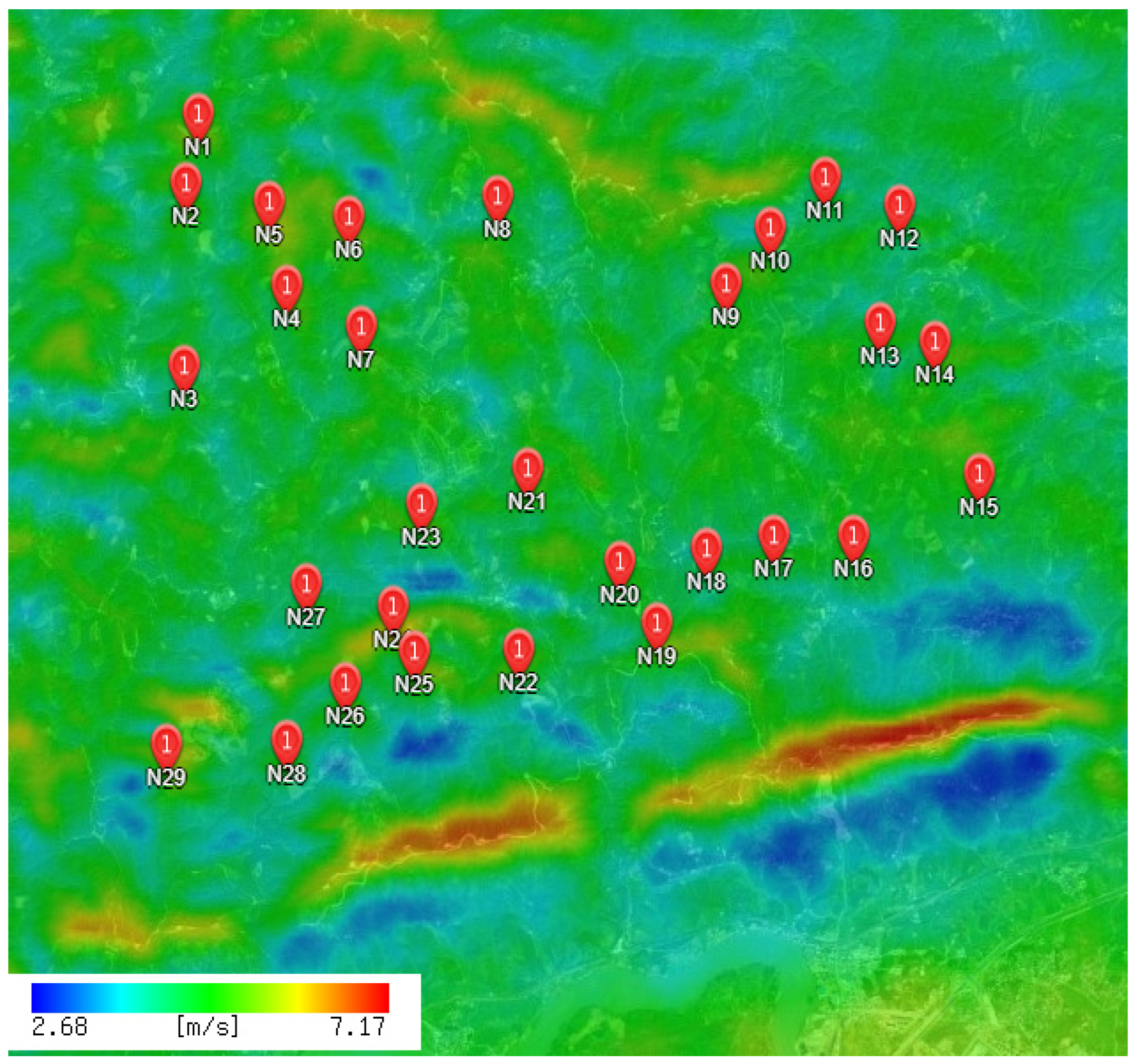
High-resolution wind resource mapping was carried out using Meteodyn WT (version 6.9, Meteodyn SAS, Saint-Herblain, France), a CFD-based wind resource assessment software package. Based on the observational data from six meteorological masts, the 1:2000 digital terrain map, and site surface roughness information, steady-state simulations were performed to obtain the spatial distributions of wind speed and wind power density at a height of 110 m over the wind farm site.
2.6. Method for Quantifying Energy-Saving and Emission-Reduction Benefits
The environmental benefits of the project were quantified using the coal-fired power substitution method. The annual grid-connected electricity generation was converted into avoided standard coal consumption and avoided emissions of CO2, SO2, NOx, and particulates using official national electricity statistics and provincial grid emission factors. Carbon trading benefits were further estimated based on the average price of the national carbon market.
3. Results
3.1. Technical Analysis of Wind Resource Assessment
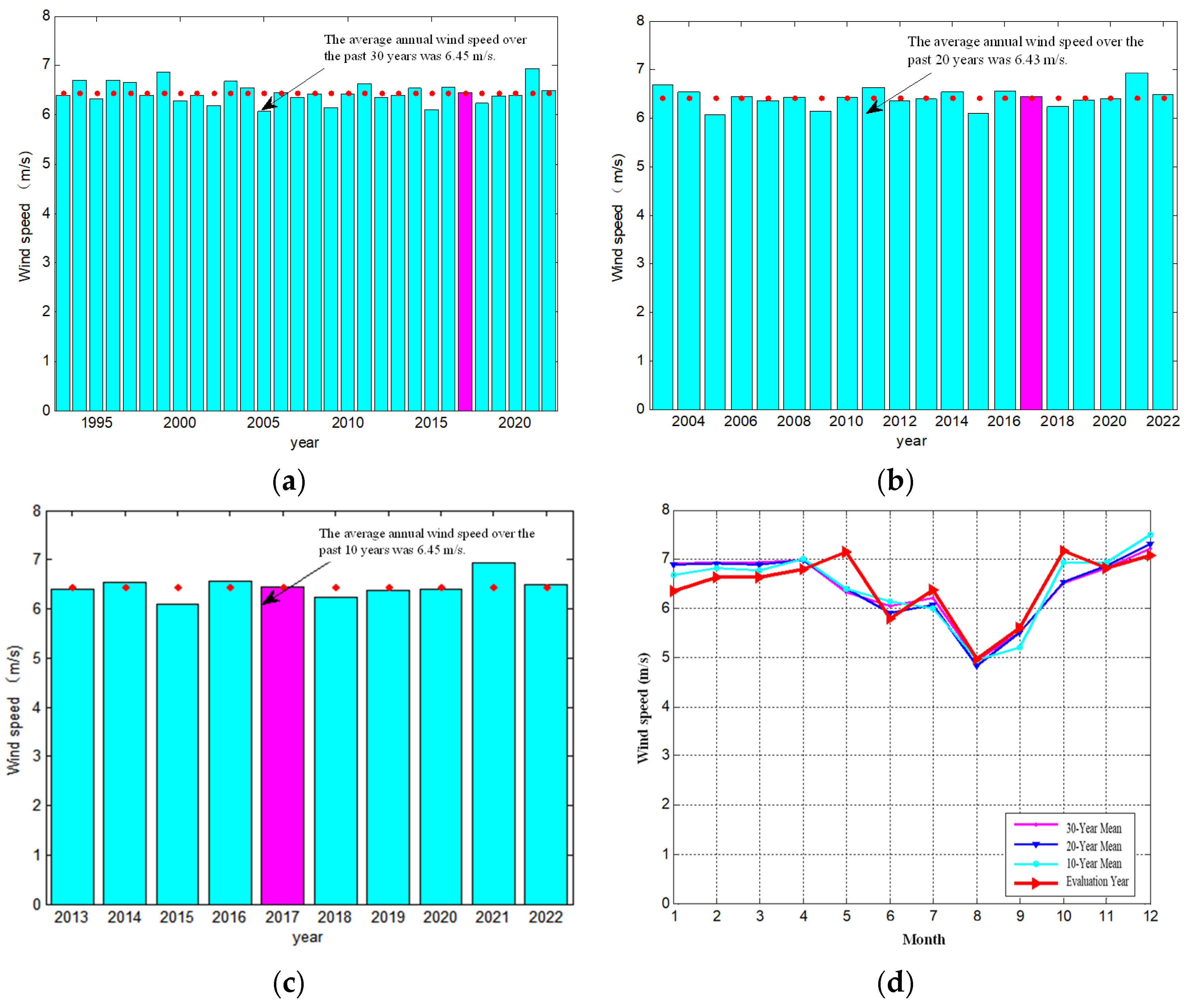
A statistical analysis of the long-term measured data from 3TIER is shown in
Figure 1. The average wind speed in the study area was 6.45 m/s over the past 30 years, 6.43 m/s over the past 20 years, and 6.45 m/s over the past 10 years. In terms of interannual variation, the regional climatic background has remained generally stable over the past 30 years, with no obvious long-term trend in annual mean wind speed. In terms of monthly variation, wind speeds were relatively higher from January to May and from October to December, whereas they were relatively lower from June to September, showing typical seasonal characteristics of the monsoon climate.
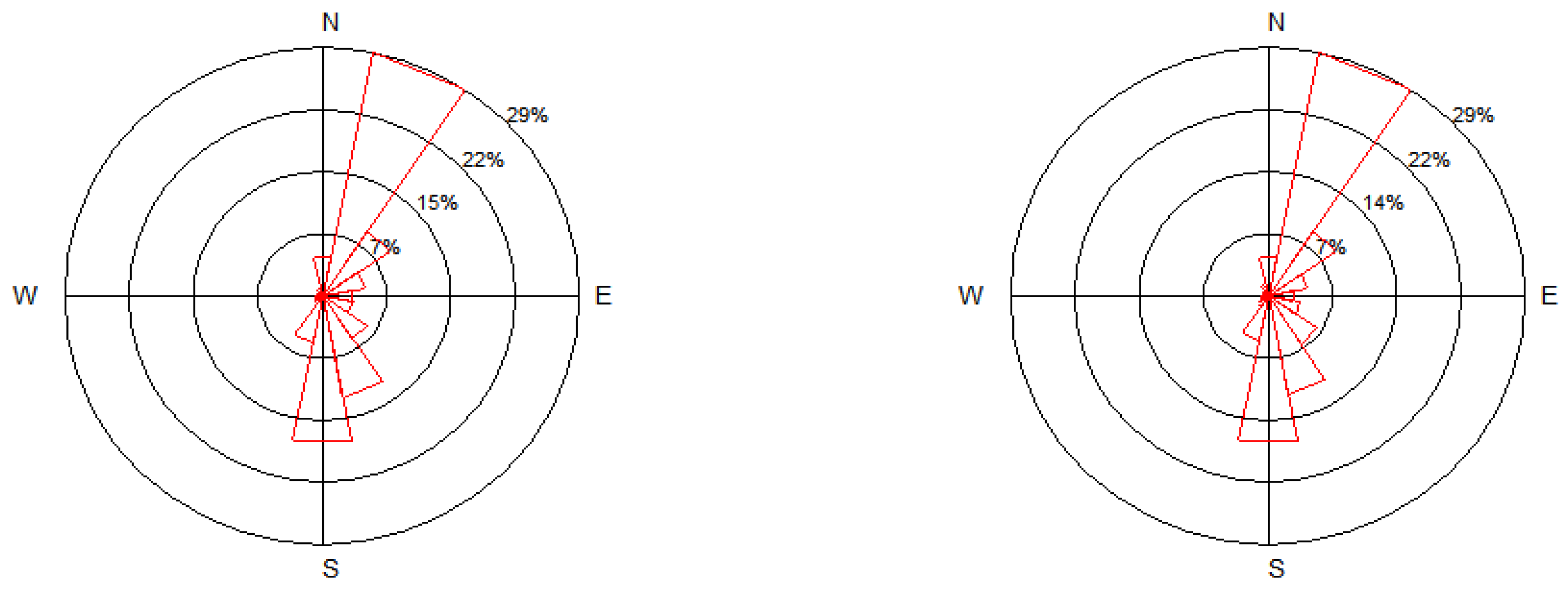
Wind direction statistics, as shown in
Table 3 and
Figure 2, indicate that the long-term prevailing wind direction at the site is NNE (29.0%), followed by S (17.4%). This wind direction pattern is generally consistent with the prevailing wind directions measured by the meteorological masts, indicating that the 3TIER data can represent the wind conditions of the study area reasonably well.
To accurately assess the wind energy resources at the site, six meteorological masts were installed for wind observation. These masts are distributed at different locations and elevations across the site, forming a preliminary observation network. Among them, Masts 1382, 1383, and 3302 provide historical observation data from 2013 to 2017, with relatively high data completeness (>85%) and good climatic representativeness. In contrast, Masts 9294, 9335, and 9318 are newly installed masts established in 2022, for which the effective data completeness is only about 25%, and the observation period is shorter than a complete annual cycle. This poses a major challenge to conventional wind resource assessment methods that rely on at least one full year of measured data. If short-term data are used directly, interannual variability cannot be adequately captured, resulting in considerable uncertainty in the assessment results.
3.2. Stepwise Multi-Source Data Fusion Method
To address the above data-related challenges, this study designed and implemented a stepwise data processing and quality control procedure are shown in
Figure 3.
3.2.1. Same-Mast Correlation-Based Infilling
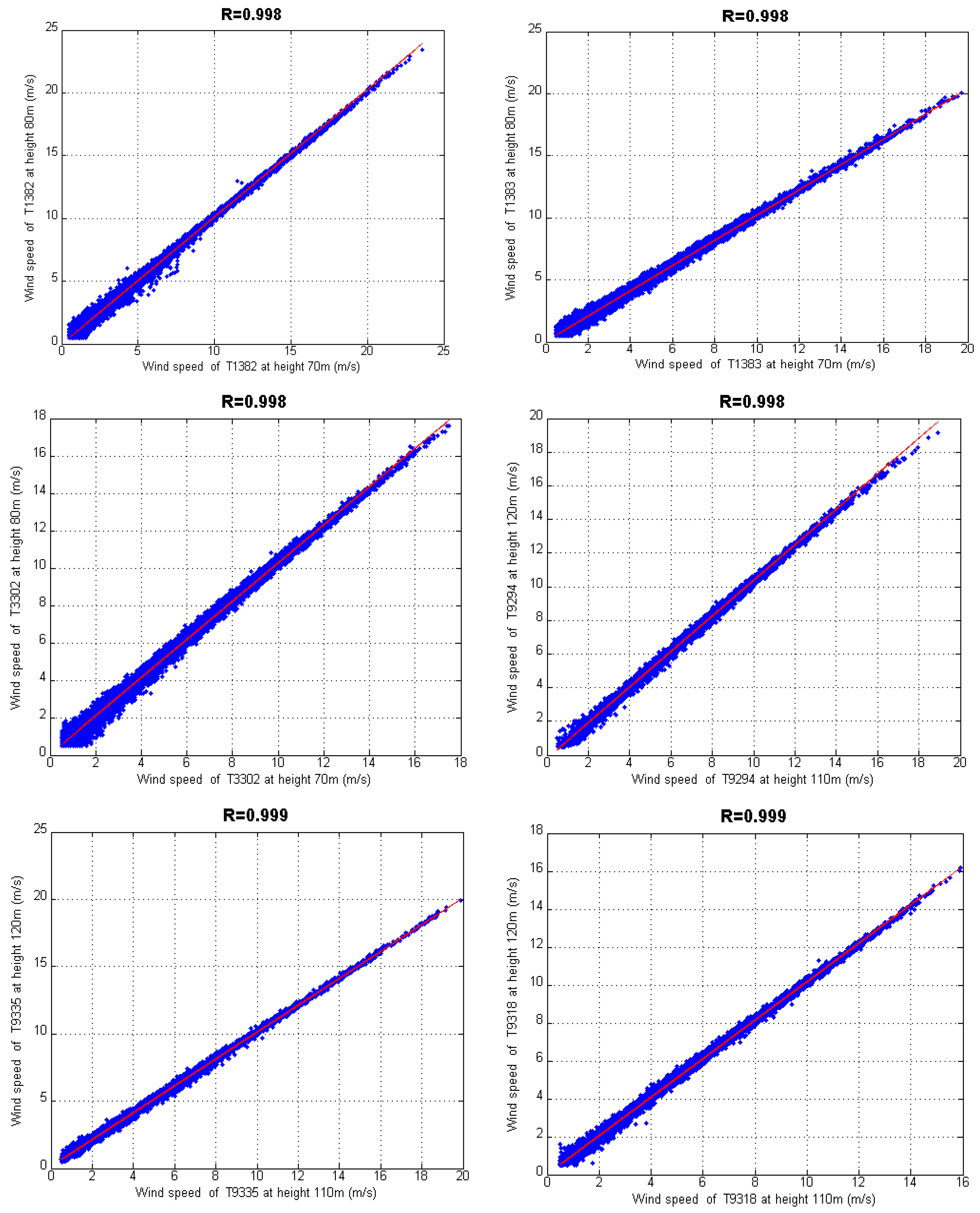
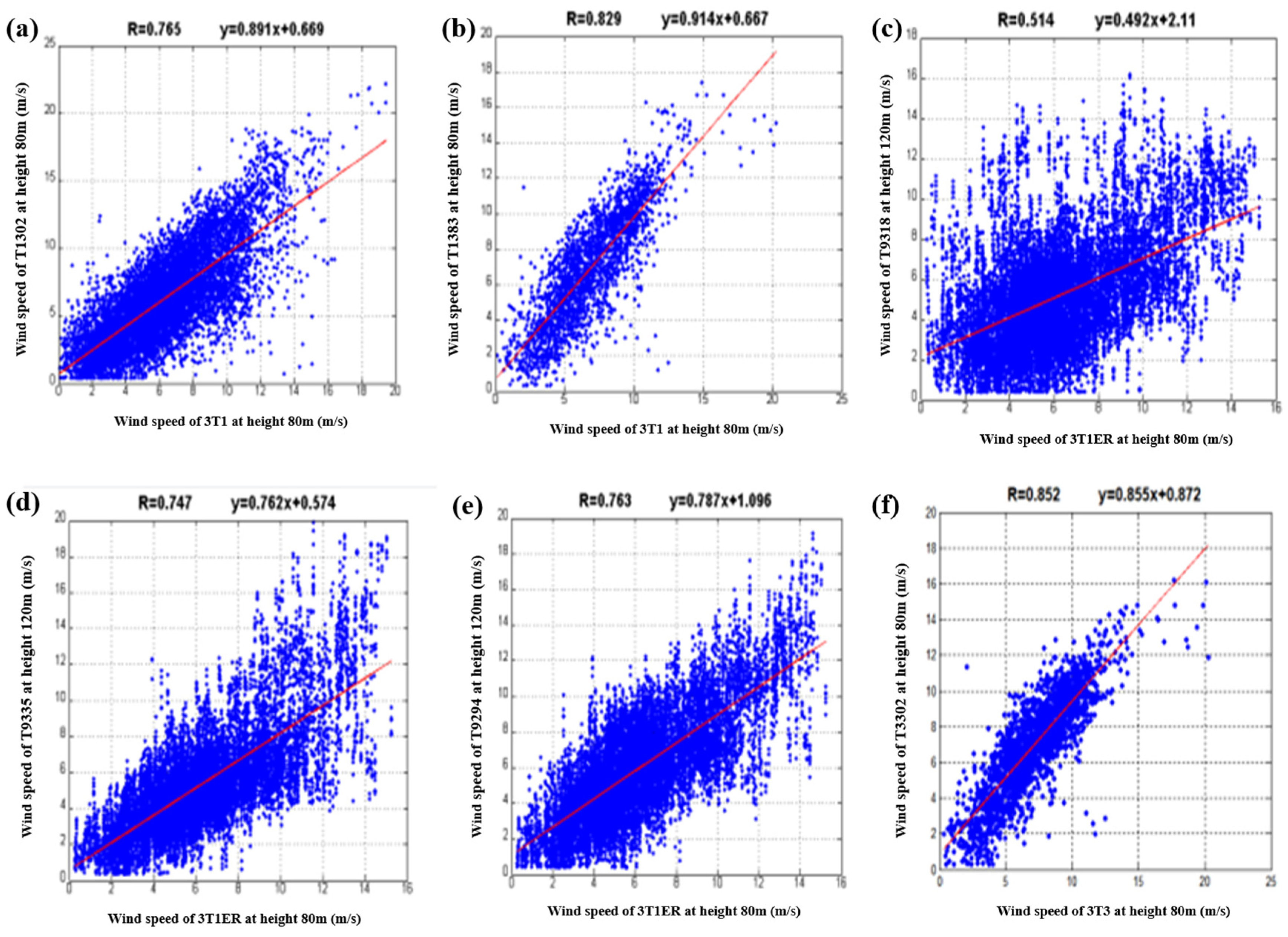
When missing or unreasonable data occurred at a certain height level of a meteorological mast, the wind data from other height levels of the same mast were used for infilling through correlation relationships, provided that valid data were available at those levels. The wind speed correlation coefficients between different height levels of each meteorological mast are listed in
Table 4, and the correlation plots for selected height levels are shown in
Figure 4.
3.2.2. Mesoscale-Data-Driven Supplementary Extrapolation
For long-term data gaps remaining after same-mast infilling, particularly the no-data periods of newly installed meteorological masts, the 3TIER mesoscale reanalysis dataset was introduced as the background wind field. This dataset is derived from a numerical weather prediction model and provides gridded historical wind field data with a spatial resolution of about 3 km and a temporal resolution of 1 h. The correlations between the top-level wind speed measured at each mast and the corresponding 3TIER wind speed are shown in
Figure 5. By evaluating the temporal correlation between the top-level wind speed measured at each mast and the mesoscale wind speed at the corresponding grid point (e.g., a correlation coefficient of about 0.75 for Mast 1382), a linear transformation model was established to anchor the short-term observations to the long-term climatic series.
To evaluate the representativeness of the wind measurement year used in this study, the mean wind speed during the evaluation year at Mast 1382 (6.28 m/s) was compared with the 20-year climatic mean wind speed from the 3TIER dataset 6.43 m/s. The relative deviation was −2.3%, indicating that the measurement year can be classified as a low-wind year. Owing to the relatively low data completeness of several meteorological masts and the only moderate correlation between the measured wind data and the 3TIER dataset, additional data correction could introduce considerable uncertainty. Therefore, no further correction was applied to the measured wind data in this study.
3.3. Refined Calculation and Uncertainty Quantification of Key Wind Engineering Parameters
Based on the processed and standardized dataset, this study further performed refined calculations of the key wind engineering parameters that directly affect wind turbine structural safety and performance assessment.
3.3.1. Analysis of the Spatial Heterogeneity of the Wind Shear Exponent
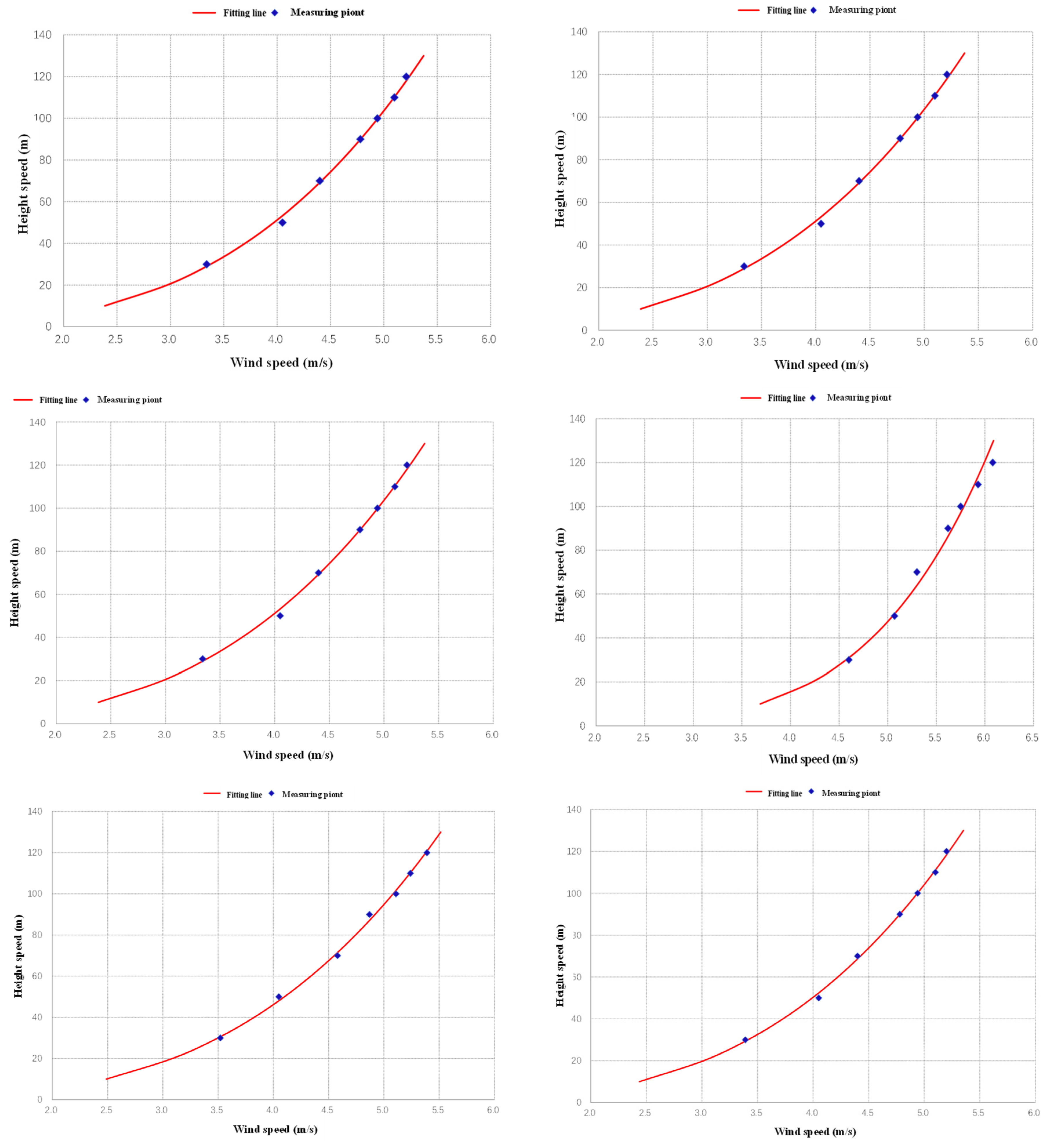
The wind shear exponent α describes the variation in wind speed with height and is a key parameter for extrapolating wind speed to hub height. The results show that the spatial distribution of the wind shear exponent varies significantly across the site, ranging from 0.058 (Mast 1382) to 0.348 (Mast 9318). The calculation formula is given in Equation (12) [
39]:
In the above equation, α is the wind shear exponent; z and z0 are the wind measurement heights above ground level (m); and v and v0 are the wind speeds at heights z and z0, respectively (m/s).
In this study, the analysis of the wind shear exponent was conducted using data measured at heights above 10 m. The calculated wind shear exponents for the six meteorological masts surrounding the site, together with the fitted vertical wind speed profiles of the masts, are presented in
Figure 6.
3.3.2. Sectoral Analysis of Turbulence Intensity and Estimation of Extreme Wind Speed
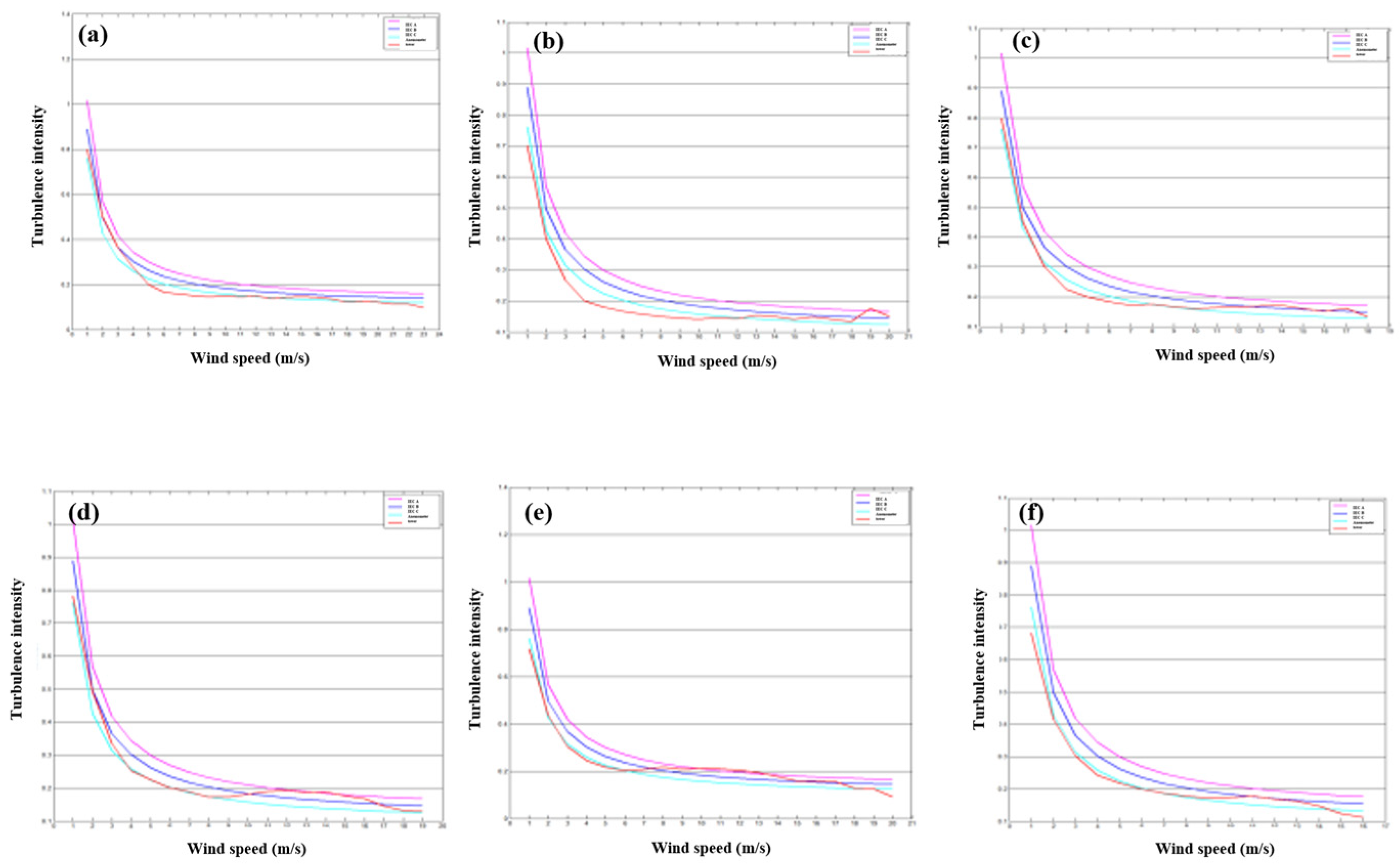
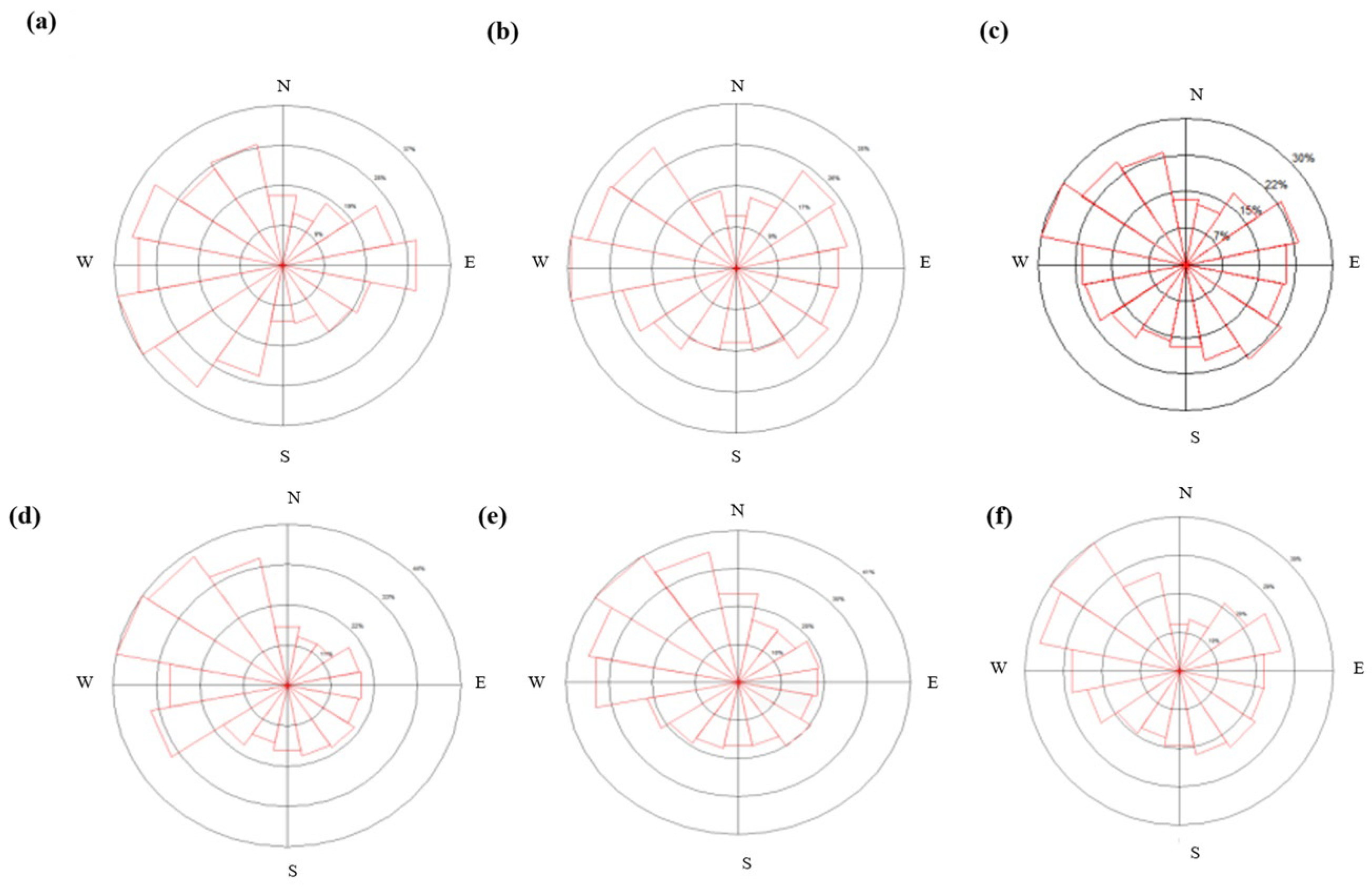
Turbulence intensity (TI) directly affects the fatigue loads of wind turbines. The representative turbulence intensity distributions at the top height of each meteorological mast for different wind speed intervals are shown in
Figure 7, while the directional turbulence intensity distributions at the top height of the meteorological masts are shown in
Figure 8.
According to IEC 61400-1, this study not only calculated the average turbulence intensity (TI) over the full wind speed range but also determined the TI values for different directional sectors. The results show that although the overall average TI of the site at a wind speed of 15 m/s (approximately 0.12–0.14) satisfies the requirement for IEC Class III wind conditions (TI < 0.16), the TI values in some locations within the prevailing NNE–NE sector are considerably higher. For example, the TI value at Mast 9335 in the NNE direction reaches 0.1697, which is already close to the upper limit of IEC Class II wind conditions. Fatigue load calculations for wind turbine structures strictly depend on the Normal Turbulence Model (NTM) specified in the IEC standard, for which the representative TI at hub height is a key input parameter. If only the site-wide average TI is used in load simulations, the fatigue damage experienced by turbines located in the prevailing upwind sectors may be seriously underestimated. Therefore, this study emphasizes that sector-wise turbulence intensity data should be adopted in turbine design and load assessment.
Extreme wind speed is the basis for the structural safety design of wind turbines. Following the primary engineering principle of conservatism and safety, this study adopted the internationally used empirical equation V50-max = 5 × Vave, where V50-max is the 50-year return-period maximum wind speed and Vave is the annual mean wind speed. The calculated V50 at a height of 110 m for the site was 31.4 m/s. According to the IEC standard, this value exceeds the upper limit of Class IV wind conditions (30 m/s) but remains clearly below the upper limit of Class III wind conditions (37.5 m/s). Combined with the results of the turbulence intensity analysis, it was therefore concluded that the selected wind turbines for this project should satisfy IEC Class III A or above, and their certified survival wind speed (Vsurv) must cover 31.4 m/s with the required safety margin. This conclusion establishes a clear and non-negotiable technical threshold for turbine procurement.
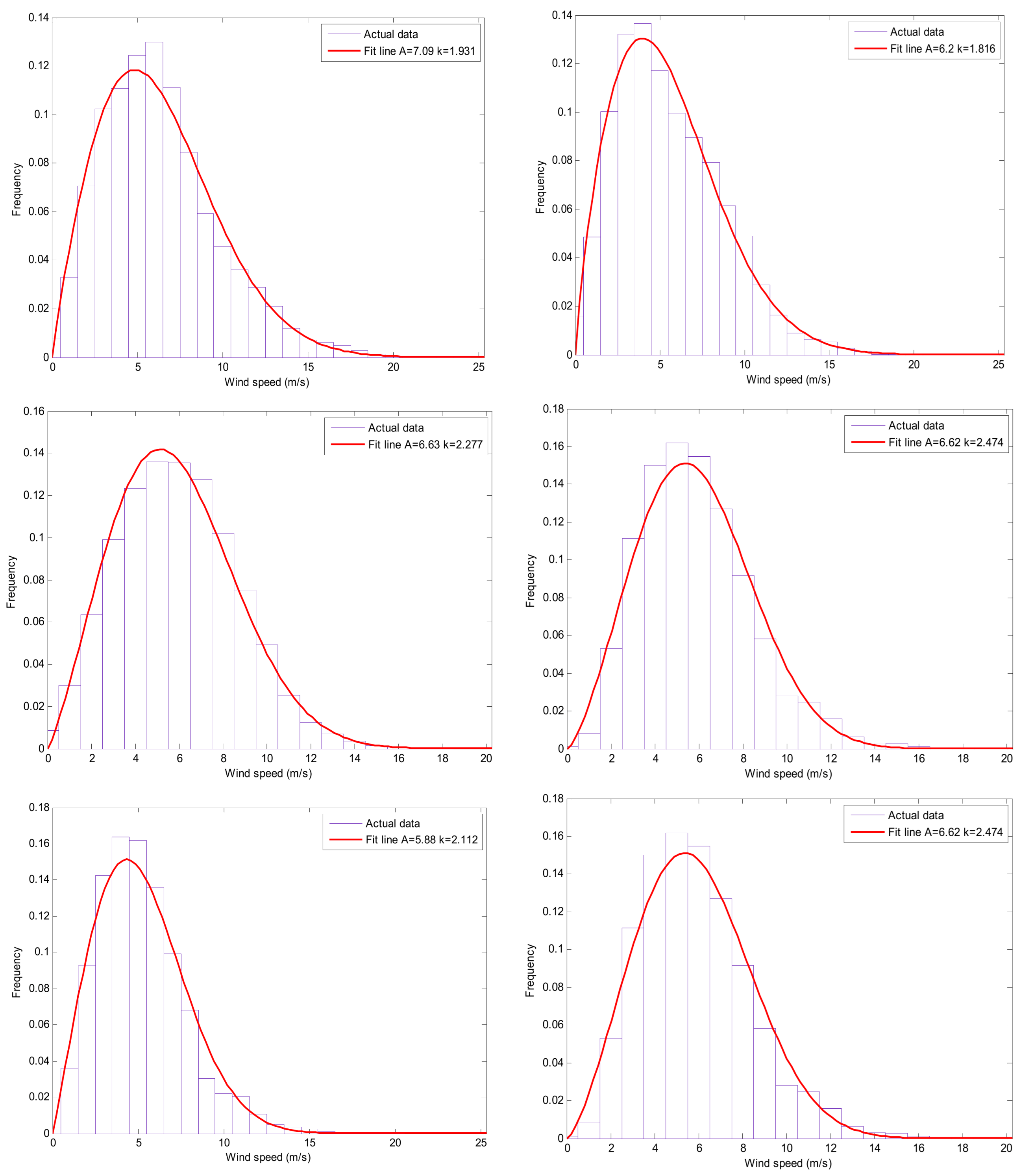
Based on the measured wind data for the evaluation year, which covered an actual full-year cycle, the Weibull distribution parameters A and k at the top measurement level of each meteorological mast were obtained. The fitted Weibull distributions for the meteorological masts are shown in
Figure 9.
3.4. High-Resolution Spatialization of Wind Resources Based on CFD
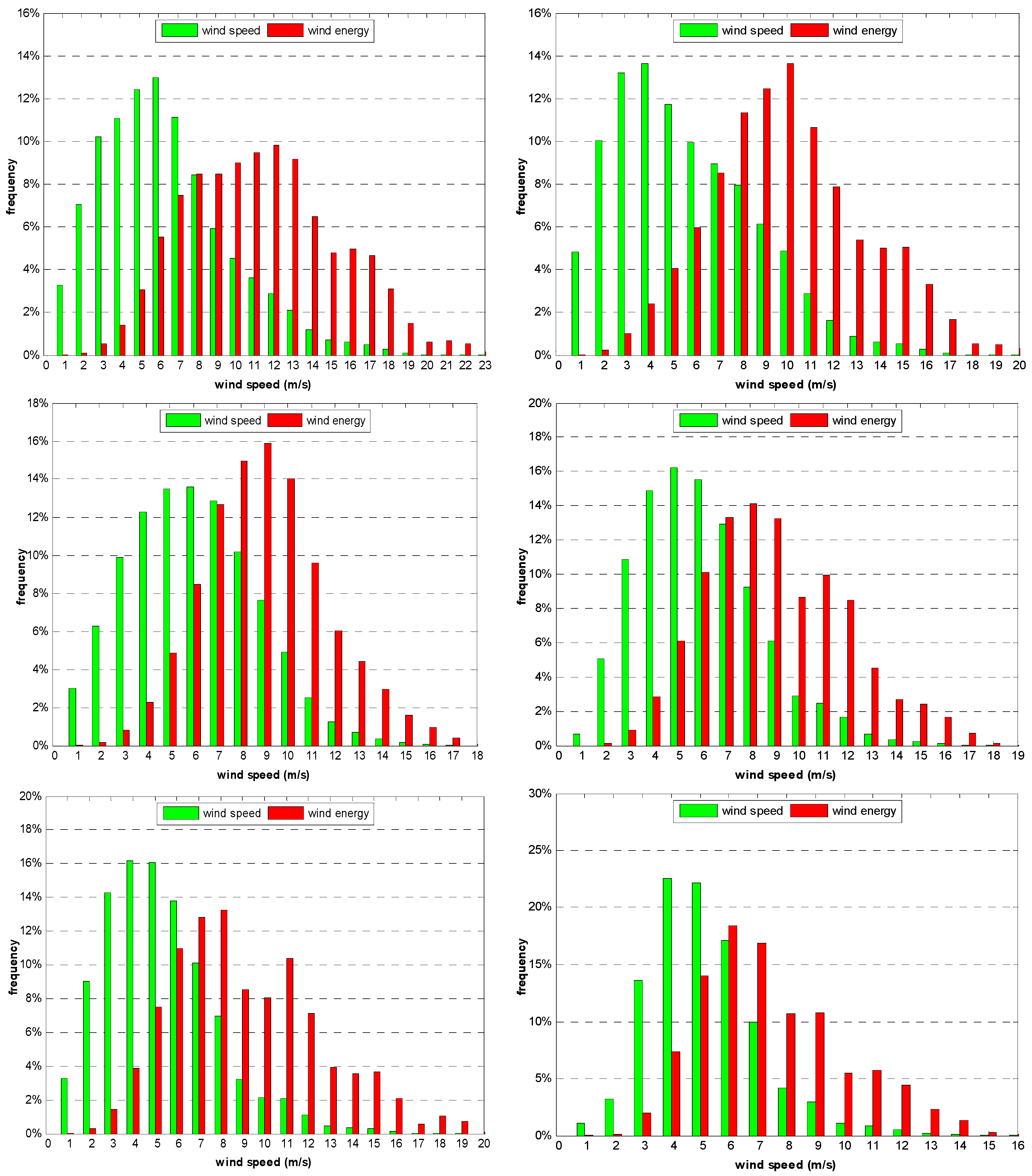
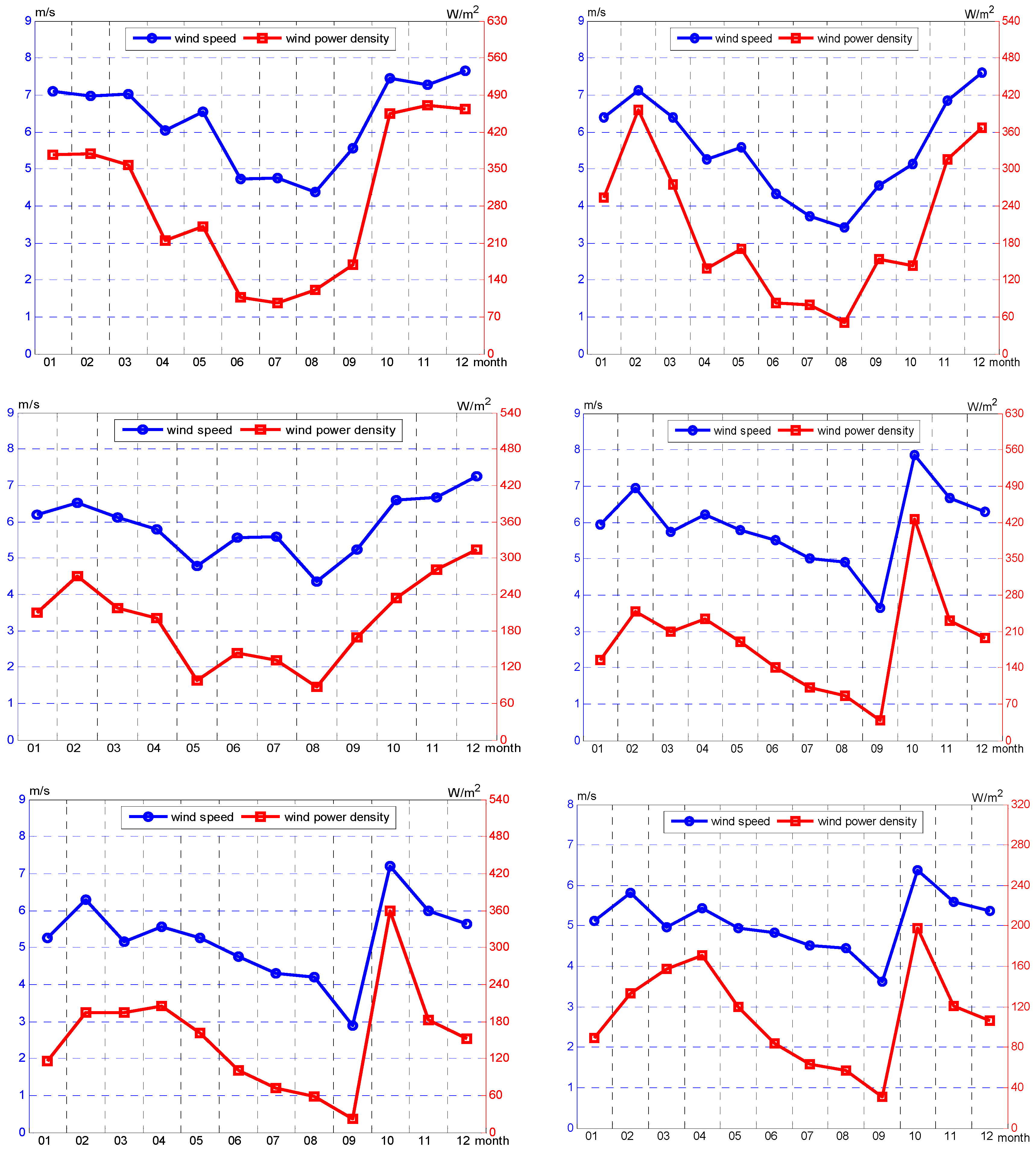
Based on the analysis and processing of wind measurement data from the six meteorological masts located within and around the wind farm site, the wind measurement data for the evaluation year were obtained for each mast. Statistical analyses were then performed on the evaluation-year wind data after infilling and correction for each meteorological mast, as presented in
Figure 10,
Figure 11 and
Figure 12. A new table,
Table S1, was added to summarize the main financial assumptions used in the LCOE model.
Based on the wind resource assessment results, CFD simulations were conducted to obtain the steady-state distributions of wind speed and wind power density at a height of 110 m over the site, thereby generating a high-resolution wind resource map. Based on this map, approximately 40 potential turbine locations located on ridges and hilltops were preliminarily screened.
3.5. Refined Energy Production Calculation Model
As shown in
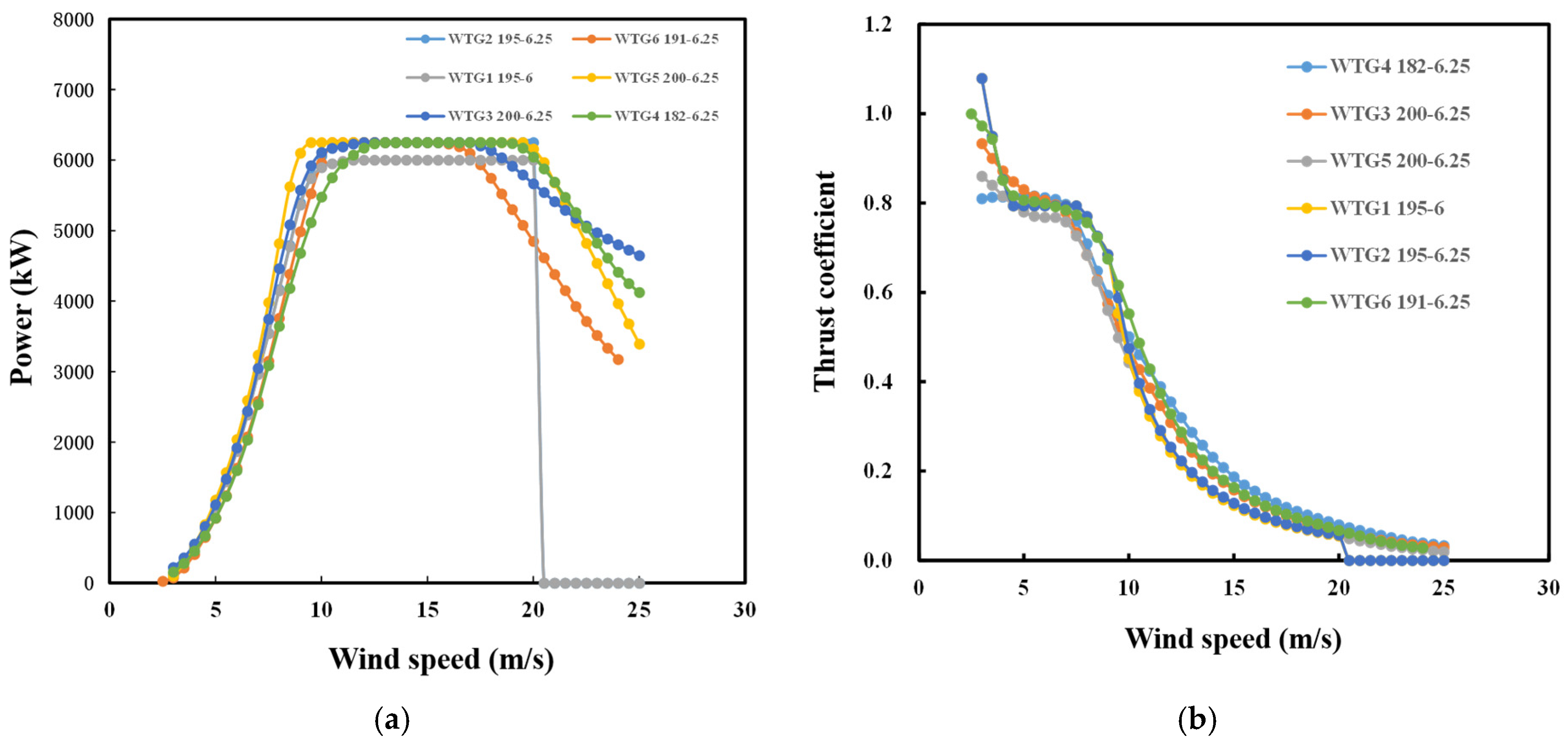
Figure 13, the energy production of this project was calculated using the professional wind farm micrositing and energy assessment software Meteodyn WT. The software first used the observational data from the six meteorological masts, the 1:2000 high-resolution digital terrain map, and the surface roughness data of the site. Based on its internal flow model, the customized wind speed frequency distribution at each turbine location within the planned wind farm area (24 locations in total) was simulated and expressed using Weibull distribution parameters. The standard power curves and thrust coefficient curves of the candidate turbine models were corrected using the representative average air density of the site (
ρ ≈ 1.153 kg/m). This value was taken as the average air density for the evaluation dataset used in the present study.
As shown in
Table 5, the basic data of the six candidate turbine models were incorporated into the LCOE model to calculate and rank the LCOE values of the alternative schemes. The results indicate that the WTG5-200-6.25 model has the lowest LCOE (0.321 CNY/kWh) and thus shows the best economic performance among the six candidate models. Although its specific static investment (6770 CNY/kW) is not the lowest, it achieves the highest annual grid-connected electricity generation across the entire wind farm (269.915 GWh), thereby diluting the unit electricity cost over the full life cycle. By contrast, although the WTG4-182-6.25 model has the lowest specific static investment (6680 CNY/kW), its smaller rotor diameter (182 m) leads to a significant reduction in annual energy production, resulting in a relatively high LCOE of 0.388 CNY/kWh. This comparison clearly shows that, under the parity pricing era, simply minimizing upfront investment is no longer sufficient to maximize project benefits, whereas comprehensive optimization guided by LCOE is the key to turbine selection.
3.6. Quantification of Energy-Saving and Emission-Reduction Benefits
As a clean energy project, the environmental benefits of a wind farm are an important component of its overall feasibility. In this study, the coal-fired power substitution method was adopted, assuming that the same amount of electricity would otherwise be supplied by conventional coal-fired power plants, thereby resulting in corresponding fossil fuel consumption and pollutant emissions. The assessment parameters were determined from the 2021 National Electric Power Industry Statistics and the Provincial Power Grid Carbon Emission Factors, including a standard coal consumption of 307 g/kWh, a CO2 emission factor of 0.768 kg/kWh, an SO2 emission factor of 2.61 g/kWh, a NOx emission factor of 2.27 g/kWh, and a particulate emission factor of 14.0 g/kWh.
Using the annual grid-connected electricity generation, the annual energy-saving and emission-reduction benefits of the project were calculated, as presented in
Table 6. The project is expected to save 82.9 thousand tons of standard coal per year and reduce emissions by 207.2 thousand tons of CO
2, 704 tons of SO
2, 613 tons of NO
x, and 3779 tons of particulates annually. Over a 25-year operating life, the cumulative savings are estimated at 2.07 million tons of standard coal and 5.18 million tons of CO
2 emission reductions.
Based on a recent average carbon market price of CNY 60/t in China’s national carbon market, the project could yield an average annual carbon trading revenue of about CNY 12.43 million, with a cumulative revenue of approximately CNY 311 million over 25 years. When the external environmental cost savings associated with additional pollutant reductions are taken into account, the overall social benefits of the project become even more significant.
4. Conclusions
This study established an integrated three-stage framework of refined wind resource assessment → LCOE-based turbine optimization → quantification of emission-reduction benefits, achieving end-to-end optimization from wind resources to economic value. The proposed method not only provides a scientific basis for decision-making in wind power projects but also offers a transferable methodological reference for feasibility studies of similar wind farms in complex terrain under data-constrained conditions.
(1) In terms of wind resource assessment, the proposed two-stage fusion strategy of same-mast correlation-based infilling and mesoscale-data-driven supplementation effectively addressed the technical challenge arising from the highly polarized data quality of the six meteorological masts. The long-term average wind speed in the study area remained stable at around 6.45 m/s over the past 30 years, and the prevailing wind direction was concentrated in the NNE sector, with a frequency of 29.0%. The analysis of key wind engineering parameters revealed pronounced spatial heterogeneity of the wind shear exponent, ranging from 0.058 to 0.348. In addition, the sector-wise turbulence intensity at some locations in the NNE direction reached 0.1697, exceeding the site-wide average criterion for IEC Class III wind conditions. Based on a conservative safety principle, the 50-year return-period maximum wind speed was determined to be 31.4 m/s, indicating that the selected turbines must satisfy IEC Class III A or above.
(2) In terms of turbine selection optimization, the life-cycle comparison model based on the levelized cost of energy (LCOE) demonstrated that WTG5-200-6.25 (rated power 6.25 MW, rotor diameter 200 m, and hub height 115 m) was the optimal option, with an LCOE of 0.321 CNY/kWh, an annual grid-connected electricity generation of 269.915 GWh, and 1799 equivalent full-load hours. Comparative analysis showed that although this model did not have the lowest specific investment (6770 CNY/kW), it achieved the minimum unit electricity cost over the full life cycle owing to its highest annual energy production. This finding confirms the importance of an LCOE-oriented turbine selection strategy in the era of grid parity.
(3) In terms of energy-saving and emission-reduction benefits, the wind farm can save 82.9 thousand tons of standard coal annually and reduce emissions by 207.2 thousand tons of CO2, 704 tons of SO2, 613 tons of NOx, and 3779 tons of particulates per year. Over a 25-year operating period, the cumulative reductions are estimated at 5.18 million tons of CO2 and 2.07 million tons of standard coal. Based on an average carbon market price of CNY 60/t in China’s national carbon market, carbon trading alone could generate an average annual revenue of CNY 12.43 million, corresponding to a cumulative revenue of about CNY 311 million over 25 years, indicating substantial environmental external benefits.