Recent Advances in Biopolymer-Based Membranes for Proton Exchange Membrane Fuel Cells


Abstract
1. Introduction
2. Biopolymers
2.1. Chitosan
2.1.1. Chemical Modifications of Chitosan
- Sulfonation
- Phosphorylation
- Cross-linking
2.1.2. Addition of Inorganic Fillers
- Heteropoly acids
- Hygroscopic oxides
- Metal–organic frameworks
- Carbon nanotubes
2.2. Cellulose
2.2.1. Micro/Nanocrystalline Cellulose
2.2.2. Cellulose Nanofibres
2.2.3. Bacterial Cellulose
2.2.4. Cellulose Acetate
2.3. Gellan Gum
2.4. Sodium Alginate
2.5. Starch
2.6. Keratin
2.7. Collagen
2.8. Summary of Biopolymer Membrane Properties
3. Conclusions
Author Contributions
Funding
Data Availability Statement
Acknowledgments
Conflicts of Interest
Abbreviations
| (C6H10O5)n | Cellulose |
| AMPS | 2-acrylamido-2-methyl-1-propanesulfonic acid |
| AT | Attapulgite |
| ATMP | Aminotris(methylenephosphonic acid) |
| BC | Bacterial cellulose |
| CA | Cellulose acetate |
| CNC | Nanocrystalline cellulose |
| CNF | Cellulose nanofibres |
| CNT | Carbon nanotube |
| CO2 | Carbon dioxide |
| CS | Chitosan |
| DMFC | Direct methanol fuel cell |
| DS | Degree of substitution |
| EIS | Electrochemical impedance spectroscopy |
| GA | Glutaraldehyde |
| GO | Graphene oxide |
| HNT | Halloysite nanotube |
| HPA | Heteropoly acid |
| IEC | Ion exchange capacity |
| IEMFC | Ion exchange membrane fuel cell |
| IL | Ionic liquid |
| Im | Imidazole |
| KOH | Potassium hydroxide |
| M | Molar concentration, (mol/L) |
| MCC | Microcrystalline cellulose |
| MEA | Membrane–electrode assembly |
| MOF | Metal–organic framework |
| MWCNT | Multi-walled carbon nanotube |
| NH2 | Amino group |
| NH4SCN | Ammonium thiocyanate |
| OH | Hydroxyl group |
| OPA | Ortho-phosphoric acid |
| Pani | Polyaniline |
| PCS | Phosphorylated chitosan |
| PEG | Poly(ethylene glycol) |
| PEM | Proton exchange membrane |
| PEMFC | Proton exchange membrane fuel cell |
| PEO | Polyethylene oxide |
| PGO | Phosphorylated graphene oxide |
| Ph-CA | Phosphorylated cellulose acetate |
| PMA | Phosphomolybdic acid |
| PO3H2 | Phosphoric acid group |
| PTA | Phosphotungstic acid |
| PVA | Polyvinyl alcohol |
| PVDF | Poly (vinylidene fluoride) |
| RDP | Resorcinol bis(diphenyl phosphate) |
| RH | Relative humidity |
| RT | Room temperature |
| SA | Sodium alginate |
| sChW | Sulfonated chitin nanofibre |
| s-CS | Sulfonated chitosan |
| SEM | Scanning electron microscope |
| s-GO | Sulfonated graphene oxide |
| SHS | Sodium hydrogen sulphate |
| SiO2 | Silicon oxide (silica) |
| SiWA | Silicotungstic acid |
| SO3H | Sulfonic acid group |
| SPEEK | Sulfonated poly (ether ether ketone) |
| SVBS | Sodium 4-vinylbenzenesulfonate |
| SWCNT | Single-walled carbon nanotubes |
| TiO2 | Titanium dioxide |
| ZrO2 | Zirconium dioxide |
References
- Stephens, E.; Ross, I.L.; Mussgnug, J.H.; Wagner, L.D.; Borowitzka, M.A.; Posten, C.; Kruse, O.; Hankamer, B. Future prospects of microalgal biofuel production systems. Trends Plant Sci. 2010, 15, 554–564. [Google Scholar] [CrossRef]
- Kumar, A.; Singh, P.; Raizada, P.; Hussain, C.M. Impact of COVID-19 on greenhouse gases emissions: A critical review. Sci. Total. Environ. 2022, 806, 150349. [Google Scholar] [CrossRef]
- Bhukya, M.N.; Kumar, M.; Kant, A.; Punit. Renewable Energy: Potential, Status, Targets and Challenges in Rajasthan. J. Phys. Conf. Ser. 2021, 1854, 12004. [Google Scholar] [CrossRef]
- Li, X.; Ye, T.; Meng, X.; He, D.; Li, L.; Song, K.; Jiang, J.; Sun, C. Advances in the Application of Sulfonated Poly(Ether Ether Ketone) (SPEEK) and Its Organic Composite Membranes for Proton Exchange Membrane Fuel Cells (PEMFCs). Polymers 2024, 16, 2840. [Google Scholar] [CrossRef]
- Sadhasivam, T.; Kim, H.-T.; Jung, S.; Roh, S.-H.; Park, J.-H.; Jung, H.-Y. Dimensional effects of nanostructured Mg/MgH2 for hydrogen storage applications: A review. Renew. Sustain. Energy Rev. 2017, 72, 523–534. [Google Scholar] [CrossRef]
- Gagliardi, G.G.; Ibrahim, A.; Borello, D.; El-Kharouf, A. Composite Polymers Development and Application for Polymer Electrolyte Membrane Technologies—A Review. Molecules 2020, 25, 1712. [Google Scholar] [CrossRef]
- Cullen, D.A.; Neyerlin, K.C.; Ahluwalia, R.K.; Mukundan, R.; More, K.L.; Borup, R.L.; Weber, A.Z.; Myers, D.J.; Kusoglu, A. New roads and challenges for fuel cells in heavy-duty transportation. Nat. Energy 2021, 6, 462–474. [Google Scholar] [CrossRef]
- Baroutaji, A.; Arjunan, A.; Robinson, J.; Wilberforce, T.; Abdelkareem, M.A.; Olabi, A.G. PEMFC Poly-Generation Systems: Developments, Merits, and Challenges. Sustainability 2021, 13, 11696. [Google Scholar] [CrossRef]
- Meng, X.; Mei, J.; Tang, X.; Jiang, J.; Sun, C.; Song, K. The Degradation Prediction of Proton Exchange Membrane Fuel Cell Performance Based on a Transformer Model. Energies 2024, 17, 3050. [Google Scholar] [CrossRef]
- Mahato, N.; Jang, H.; Dhyani, A.; Cho, S. Recent Progress in Conducting Polymers for Hydrogen Storage and Fuel Cell Applications. Polymers 2020, 12, 2480. [Google Scholar] [CrossRef] [PubMed]
- Lufrano, E.; Simari, C.; Di Vona, M.L.; Nicotera, I.; Narducci, R. How the Morphology of Nafion-Based Membranes Affects Proton Transport. Polymers 2021, 13, 359. [Google Scholar] [CrossRef]
- Meng, G.; Li, X.; Liu, M.; Grigoriev, S.A.; Tolj, I.; Shen, J.; Yue, C.; Sun, C. Investigations of Dongyue Series Perfluorosulfonic Acid Membranes for Applications in Proton Exchange Membrane Fuel Cells (PEMFCs). Batteries 2025, 11, 277. [Google Scholar] [CrossRef]
- Auras, R.; Harte, B.; Selke, S. An Overview of Polylactides as Packaging Materials. Macromol. Biosci. 2004, 4, 835–864. [Google Scholar] [CrossRef] [PubMed]
- Wang, S.; Lu, A.; Zhang, L. Recent advances in regenerated cellulose materials. Prog. Polym. Sci. 2016, 53, 169–206. [Google Scholar] [CrossRef]
- Shaari, N.; Kamarudin, S. Chitosan and alginate types of bio-membrane in fuel cell application: An overview. J. Power Sources 2015, 289, 71–80. [Google Scholar] [CrossRef]
- Samaniego, A.J.; Espiritu, R. Prospects on utilization of biopolymer materials for ion exchange membranes in fuel cells. Green Chem. Lett. Rev. 2022, 15, 253–275. [Google Scholar] [CrossRef]
- Chibac-Scutaru, A.L.; Coseri, S. Advances in the use of cellulose-based proton exchange membranes in fuel cell technology: A review. Int. J. Biol. Macromol. 2023, 247, 125810. [Google Scholar] [CrossRef]
- Doobi, F.A.; Mir, F.Q. Exploring the development of natural biopolymer (chitosan)-based proton exchange membranes for fuel cells: A review. Results Surf. Interfaces 2024, 15, 100218. [Google Scholar] [CrossRef]
- Abouricha, S.; Aziam, H.; Noukrati, H.; Sel, O.; Saadoune, I.; Lahcini, M.; Ben Youcef, H. Biopolymers-Based Proton Exchange Membranes For Fuel Cell Applications: A Comprehensive Review. ChemElectroChem 2024, 11, e202300648. [Google Scholar] [CrossRef]
- Barbir, F. PEM Fuel Cells: Theory and Practice, 2nd ed.; Academic Press: Amsterdam, The Netherlands, 2013. [Google Scholar]
- Song, Y.; Guo, Z.; Yin, J.; Liu, M.; Tolj, I.; Grigoriev, S.A.; Ge, M.; Sun, C. Investigations of the Sulfonated Poly(ether ether ketone) Membranes with Various Degrees of Sulfonation by Considering Durability for the Proton Exchange Membrane Fuel Cell (PEMFC) Applications. Polymers 2025, 17, 2181. [Google Scholar] [CrossRef] [PubMed]
- Kusoglu, A.; Weber, A.Z. New Insights into Perfluorinated Sulfonic-Acid Ionomers. Chem. Rev. 2017, 117, 987–1104. [Google Scholar] [CrossRef] [PubMed]
- Lim, D.-W.; Sadakiyo, M.; Kitagawa, H. Proton transfer in hydrogen-bonded degenerate systems of water and ammonia in metal–organic frameworks. Chem. Sci. 2019, 10, 16–33. [Google Scholar] [CrossRef]
- Li, Z.; Yao, Y.; Wang, D.; Hasan, M.; Suwansoontorn, A.; Li, H.; Du, G.; Liu, Z.; Nagao, Y. Simple and universal synthesis of sulfonated porous organic polymers with high proton conductivity. Mater. Chem. Front. 2020, 4, 2339–2345. [Google Scholar] [CrossRef]
- Zhu, L.-Y.; Li, Y.-C.; Liu, J.; He, J.; Wang, L.-Y.; Lei, J.-D. Recent developments in high-performance Nafion membranes for hydrogen fuel cells applications. Pet. Sci. 2022, 19, 1371–1381. [Google Scholar] [CrossRef]
- Amir Qureshi, M. An Overview on Wounds Their Issues and Natural Remedies for Wound Healing. Biochem. Physiol. Open Access 2015, 4, 1000165. [Google Scholar] [CrossRef]
- Schaffer, J.V.; Lupatini, K.N.; Machado, B.; Silva, E.S.; Ferracin, R.J.; Alves, H.J. Parameters effect on proton conductivity to obtain chitosan membranes for use as electrolytes in PEMFC. Int. J. Energy Res. 2018, 42, 1381–1385. [Google Scholar] [CrossRef]
- Liu, H.; Gong, C.; Wang, J.; Liu, X.; Liu, H.; Cheng, F.; Wang, G.; Zheng, G.; Qin, C.; Wen, S. Chitosan/silica coated carbon nanotubes composite proton exchange membranes for fuel cell applications. Carbohydr. Polym. 2016, 136, 1379–1385. [Google Scholar] [CrossRef]
- Chakrabarty, T.; Kumar, M.; Shahi, V.K. Chitosan Based Membranes for Separation, Pervaporation and Fuel Cell Applications: Recent Developments. In Biopolymers; Elnashar, M., Ed.; IntechOpen: Rijeka, Croatia, 2010; Chapter 10. [Google Scholar] [CrossRef][Green Version]
- Dimassi, S.; Tabary, N.; Chai, F.; Blanchemain, N.; Martel, B. Sulfonated and sulfated chitosan derivatives for biomedical applications: A review. Carbohydr. Polym. 2018, 202, 382–396. [Google Scholar] [CrossRef]
- Tan, W.; Zhang, J.; Zhao, X.; Dong, F.; Li, Q.; Guo, Z. Synthesis and antioxidant action of chitosan derivatives with amino-containing groups via azide-alkyne click reaction and N-methylation. Carbohydr. Polym. 2018, 199, 583–592. [Google Scholar] [CrossRef]
- Kalaiselvimary, J.; Prabhu, M.R. Influence of sulfonated GO/sulfonated biopolymer as polymer electrolyte membrane for fuel cell application. J. Mater. Sci. Mater. Electron. 2018, 29, 5525–5535. [Google Scholar] [CrossRef]
- Nasirinezhad, M.; Ghaffarian, S.R.; Tohidian, M. Eco-friendly polyelectrolyte nanocomposite membranes based on chitosan and sulfonated chitin nanowhiskers for fuel cell applications. Iran. Polym. J. 2021, 30, 355–367. [Google Scholar] [CrossRef]
- Wu, H.; Hou, W.; Wang, J.; Xiao, L.; Jiang, Z. Preparation and properties of hybrid direct methanol fuel cell membranes by embedding organophosphorylated titania submicrospheres into a chitosan polymer matrix. J. Power Sources 2010, 195, 4104–4113. [Google Scholar] [CrossRef]
- Zeng, J.; He, B.; Lamb, K.; De Marco, R.; Shen, P.K.; Jiang, S.P. Phosphoric acid functionalized pre-sintered meso-silica for high temperature proton exchange membrane fuel cells. Chem. Commun. 2013, 49, 4655–4657. [Google Scholar] [CrossRef] [PubMed]
- Itoh, T.; Hirai, K.; Tamura, M.; Uno, T.; Kubo, M.; Aihara, Y. Anhydrous proton-conducting electrolyte membranes based on hyperbranched polymer with phosphonic acid groups for high-temperature fuel cells. J. Power Sources 2008, 178, 627–633. [Google Scholar] [CrossRef]
- Jung, G.-B.; Tseng, C.-C.; Yeh, C.-C.; Lin, C.-Y. Membrane electrode assemblies doped with H3PO4 for high temperature proton exchange membrane fuel cells. Int. J. Hydrogen Energy 2012, 37, 13645–13651. [Google Scholar] [CrossRef]
- Nores-Pondal, F.J.; Buera, M.P.; Corti, H.R. Thermal properties of phosphoric acid-doped polybenzimidazole membranes in water and methanol–water mixtures. J. Power Sources 2010, 195, 6389–6397. [Google Scholar] [CrossRef]
- Ahmed, S.; Cai, Y.; Ali, M.; Khannal, S.; Ahmad, Z.; Lu, Y.; Wang, S.; Xu, S. One-step phosphorylation of graphene oxide for the fabrication of nanocomposite membranes with enhanced proton conductivity for fuel cell applications. J. Mater. Sci. Mater. Electron. 2019, 30, 13056–13066. [Google Scholar] [CrossRef]
- Ahmed, S.; Tao, Z.; Zhang, H.; Ahmed, N.; Gulzar, H.; Wang, J. Tuning the Performance of Nanofiller Reinforced Phosphorylated Chitosan-Based Proton Exchange Membrane. J. Electrochem. Soc. 2023, 170, 024501. [Google Scholar] [CrossRef]
- Pokprasert, A.; Chirachanchai, S. Proton conductivity and dimensional stability of proton exchange membrane: A dilemma solved by chitosan aerogel framework. Electrochim. Acta 2023, 441, 141764. [Google Scholar] [CrossRef]
- Handika, G.; Ghozali, A.I.; Saga, B.H. Synthesis and Characterization of Electrolyte Membrane Based Biopolymer Chitosan and Fly Ash Combinations for Fuel Cell Application. In Seminar Nasional Kimia-National Seminar on Chemistry (SNK 2018); Atlantis Press: Dordrecht, The Netherlands, 2018; pp. 95–98. [Google Scholar]
- Vijayakumar, V.; Khastgir, D. Hybrid composite membranes of chitosan/sulfonated polyaniline/silica as polymer electrolyte membrane for fuel cells. Carbohydr. Polym. 2018, 179, 152–163. [Google Scholar] [CrossRef] [PubMed]
- Cui, F.; Wang, W.-Y.; Shan, B.; Liu, C.; Xie, C.; Zhu, L.; Chen, X.; Li, N. Enhanced Performance of the Chitosan Proton Exchange Membrane via Anatase Titania Anchored GO and Sodium Ligninsulfonate Constructing Proton Transport Channels. Energy Fuels 2020, 34, 3867–3876. [Google Scholar] [CrossRef]
- Cavallaro, G.; Micciulla, S.; Chiappisi, L.; Lazzara, G. Chitosan-based smart hybrid materials: A physico-chemical perspective. J. Mater. Chem. B 2021, 9, 594–611. [Google Scholar] [CrossRef] [PubMed]
- Nimir, W.; Al-Othman, A.; Tawalbeh, M.; Al Makky, A.; Ali, A.; Karimi-Maleh, H.; Karimi, F.; Karaman, C. Approaches towards the development of heteropolyacid-based high temperature membranes for PEM fuel cells. Int. J. Hydrogen Energy 2023, 48, 6638–6656. [Google Scholar] [CrossRef]
- Spasov, D.D.; Mensharapov, R.M.; Sinyakov, M.V.; Grineva, D.E.; Ivanova, N.A.; Li, X.; Sun, C.; Kulikov, L.A.; Makeeva, D.A.; Grigoriev, S.A. Polybenzimidazole Membranes Modified with Porous Aromatic Frameworks: Synthesis, Structure, Mechanical and Transport Properties. Nanoenergy Adv. 2026, 6, 3. [Google Scholar] [CrossRef]
- Tsen, W.-C. Composite Proton Exchange Membranes Based on Chitosan and Phosphotungstic Acid Immobilized One-Dimensional Attapulgite for Direct Methanol Fuel Cells. Nanomaterials 2020, 10, 1641. [Google Scholar] [CrossRef]
- Zaffora, A.; Di Franco, F.; Gradino, E.; Santamaria, M. Methanol and proton transport through chitosan-phosphotungstic acid membranes for direct methanol fuel cell. Int. J. Energy Res. 2020, 44, 11550–11563. [Google Scholar] [CrossRef]
- Di Franco, F.; Zaffora, A.; Burgio, G.; Santamaria, M. Performance of H2-fed fuel cell with chitosan/silicotungstic acid membrane as proton conductor. J. Appl. Electrochem. 2020, 50, 333–341. [Google Scholar] [CrossRef]
- Mahmodi, G.; Zarrintaj, P.; Taghizadeh, A.; Taghizadeh, M.; Manouchehri, S.; Dangwal, S.; Ronte, A.; Ganjali, M.R.; Ramsey, J.D.; Kim, S.-J.; et al. From microporous to mesoporous mineral frameworks: An alliance between zeolite and chitosan. Carbohydr. Res. 2020, 489, 107930. [Google Scholar] [CrossRef]
- Wu, H.; Zheng, B.; Zheng, X.; Wang, J.; Yuan, W.; Jiang, Z. Surface-modified Y zeolite-filled chitosan membrane for direct methanol fuel cell. J. Power Sources 2007, 173, 842–852. [Google Scholar] [CrossRef]
- Shang, J.; Zhong, S.; Zhao, Y.; Wang, B.; Gao, Y.; Xiang, W.; Cui, X. Preparation of chitosan-modified core–shell SiO2-acidic polymer multiple crosslinked membranes. J. Appl. Polym. Sci. 2020, 137, 48494. [Google Scholar] [CrossRef]
- Gómez, E.E.R.; Hernández, J.H.M.; Astaiza, J.E.D. Development of a Chitosan/PVA/TiO2 Nanocomposite for Application as a Solid Polymeric Electrolyte in Fuel Cells. Polymers 2020, 12, 1691. [Google Scholar] [CrossRef]
- Li, X.; Gao, J. Recent advances of metal–organic frameworks-based proton exchange membranes in fuel cell applications. Susmat 2022, 2, 504–534. [Google Scholar] [CrossRef]
- Wang, J.; Gong, C.; Wen, S.; Liu, H.; Qin, C.; Xiong, C.; Dong, L. Proton exchange membrane based on chitosan and solvent-free carbon nanotube fluids for fuel cells applications. Carbohydr. Polym. 2018, 186, 200–207. [Google Scholar] [CrossRef] [PubMed]
- Zhao, S.; Yang, Y.; Zhong, F.; Niu, W.; Liu, Y.; Zheng, G.; Liu, H.; Wang, J.; Xiao, Z. Fabrication of composite polymer electrolyte membrane using acidic metal-organic frameworks-functionalized halloysite nanotubes modified chitosan. Polymer 2021, 226, 123800. [Google Scholar] [CrossRef]
- Nurazzi, N.M.; Sabaruddin, F.A.; Harussani, M.M.; Kamarudin, S.H.; Rayung, M.; Asyraf, M.R.M.; Aisyah, H.A.; Norrrahim, M.N.F.; Ilyas, R.A.; Abdullah, N.; et al. Mechanical Performance and Applications of CNTs Reinforced Polymer Composites—A Review. Nanomaterials 2021, 11, 2186. [Google Scholar] [CrossRef]
- Ahmed, S.; Ali, M.; Cai, Y.; Lu, Y.; Ahmad, Z.; Khannal, S.; Xu, S. Novel sulfonated multi-walled carbon nanotubes filled chitosan composite membrane for fuel-cell applications. J. Appl. Polym. Sci. 2019, 136, 47603. [Google Scholar] [CrossRef]
- Murmu, R.; Roy, D.; Jena, S.; Sutar, H. Development of chitosan-based hybrid membrane modified with ionic-liquid and carbon nanotubes for direct methanol fuel cell operating at moderate temperature. Polym. Bull. 2023, 80, 3949–3980. [Google Scholar] [CrossRef]
- Trache, D.; Tarchoun, A.F.; Derradji, M.; Hamidon, T.S.; Masruchin, N.; Brosse, N.; Hussin, M.H. Nanocellulose: From Fundamentals to Advanced Applications. Front. Chem. 2020, 8, 392. [Google Scholar] [CrossRef]
- He, X.; Lu, W.; Sun, C.; Khalesi, H.; Mata, A.; Andaleeb, R.; Fang, Y. Cellulose and cellulose derivatives: Different colloidal states and food-related applications. Carbohydr. Polym. 2021, 255, 117334. [Google Scholar] [CrossRef]
- Ni, C.; Wei, Y.; Hu, Q.; Li, X.; Liu, B.; Zhao, Q.; Zhang, M.; Li, Y.; Hu, W. Nanocystalline cellulose reinforced sulfonated fluorenyl-containing polyaryletherketones for proton exchange membranes. Solid State Ion. 2016, 297, 29–35. [Google Scholar] [CrossRef]
- Hosseinpour, M.; Sahoo, M.; Perez-Page, M.; Baylis, S.R.; Patel, F.; Holmes, S.M. Improving the performance of direct methanol fuel cells by implementing multilayer membranes blended with cellulose nanocrystals. Int. J. Hydrogen Energy 2019, 44, 30409–30419. [Google Scholar] [CrossRef]
- Pambudi, A.B.; Priyangga, A.; Hartanto, D.; Atmaja, L. Fabrication and characterization of modified microcrystalline cellulose membrane as proton exchange membrane for direct methanol fuel cell. Mater. Today Proc. 2020, 46, 1855–1859. [Google Scholar] [CrossRef]
- Muhmed, S.; Jaafar, J.; Daud, S.; Hanifah, M.F.R.; Purwanto, M.; Othman, M.; Rahman, M.; Ismail, A. Improvement in properties of nanocrystalline cellulose/poly (vinylidene fluoride) nanocomposite membrane for direct methanol fuel cell application. J. Environ. Chem. Eng. 2021, 9, 105577. [Google Scholar] [CrossRef]
- Ben Moussa, M.A.; Ahmed, Z.; Charradi, K.; Ben Fraj, B.; Boufi, S.; Koschella, A.; Heinze, T.; Keshk, S.M.A.S.; Ben Assaker, I. Performance of high sulfonated poly(ether ether ketone) improved with microcrystalline cellulose and 2,3-dialdehyde cellulose for proton exchange membranes. Mater. Renew. Sustain. Energy 2024, 13, 319–331. [Google Scholar] [CrossRef]
- Raut, A.; Fang, H.; Lin, Y.-C.; Rahman, F.; Fu, S.; Yin, Y.; Fang, Y.; Sprouster, D.; Isseroff, R.; Sharma, S.K.; et al. Designing a micro-cellulose membrane for hydrogen fuel cells. RSC Sustain. 2025, 3, 3025–3035. [Google Scholar] [CrossRef]
- Thomas, S.; Pottathara, Y.B. Nanocellulose Based Composites for Electronics; Elsevier Inc.: Amsterdam, The Netherlands, 2020. [Google Scholar] [CrossRef]
- Hsieh, Y.-L. Cellulose Nanofibers: Electrospinning and Nanocellulose Self-Assemblies. 2018. Available online: https://escholarship.org/uc/item/4rq8b8t1 (accessed on 13 May 2026).
- Bayer, T.; Cunning, B.V.; Šmíd, B.; Selyanchyn, R.; Fujikawa, S.; Sasaki, K.; Lyth, S.M. Spray deposition of sulfonated cellulose nanofibers as electrolyte membranes in fuel cells. Cellulose 2021, 28, 1355–1367. [Google Scholar] [CrossRef]
- Li, S.; Cai, G.; Wu, S.; Raut, A.; Borges, W.; Sharma, P.R.; Sharma, S.K.; Hsiao, B.S.; Rafailovich, M. Sustainable Plant-Based Biopolymer Membranes for PEM Fuel Cells. Int. J. Mol. Sci. 2022, 23, 15245. [Google Scholar] [CrossRef] [PubMed]
- Zhong, C. Industrial-Scale Production and Applications of Bacterial Cellulose. Front. Bioeng. Biotechnol. 2020, 8, 605374. [Google Scholar] [CrossRef]
- Gregory, D.A.; Tripathi, L.; Fricker, A.T.; Asare, E.; Orlando, I.; Raghavendran, V.; Roy, I. Bacterial cellulose: A smart biomaterial with diverse applications. Mater. Sci. Eng. R Rep. 2021, 145, 100623. [Google Scholar] [CrossRef]
- Yang, X.; Huang, L.; Deng, Q.; Dong, W. A Sustainable and Eco-Friendly Membrane for PEM Fuel Cells Using Bacterial Cellulose. Polymers 2024, 16, 3017. [Google Scholar] [CrossRef]
- Fei, P.; Liao, L.; Cheng, B.; Song, J. Quantitative analysis of cellulose acetate with a high degree of substitution by FTIR and its application. Anal. Methods 2017, 9, 6194–6201. [Google Scholar] [CrossRef]
- Beek, P.; Koelemeijer, K.; Zuilichem, D.J.; Reinders, M.P.; Meffert, H.F.T. Encyclopedia of food sciences and nutrition. In Transport Logistics of Food; Academic Press: San Diego, CA, USA, 2003; pp. 5835–5851. [Google Scholar]
- Khalifa, R.E.; Omer, A.M.; Elmageed, M.H.A.; Eldin, M.S.M. Titanium Dioxide/Phosphorous-Functionalized Cellulose Acetate Nanocomposite Membranes for DMFC Applications: Enhancing Properties and Performance. ACS Omega 2021, 6, 17194–17202. [Google Scholar] [CrossRef] [PubMed]
- Madih, K.; El-Shazly, A.; Elkady, M.; Aziz, A.N.; Youssef, M.E.; Khalifa, R.E. A facile synthesis of cellulose acetate reinforced graphene oxide nanosheets as proton exchange membranes for fuel cell applications. J. Saudi Chem. Soc. 2022, 26, 101435. [Google Scholar] [CrossRef]
- Khalaf, M.; Saeed, A.M.; Ali, A.I.; Kamoun, E.A.; Fahmy, A. Polyelectrolyte membranes based on phosphorylated-PVA/cellulose acetate for direct methanol fuel cell applications: Synthesis, instrumental characterization, and performance testing. Sci. Rep. 2023, 13, 13011. [Google Scholar] [CrossRef] [PubMed]
- Ramaiah, S.; Kumar, T.M.P.; Ravi, V. Studies on Biopolymers for Ophthalmic Drug Delivery. J. Macromol. Sci. Part A 2007, 44, 229–234. [Google Scholar] [CrossRef]
- Shah, J.; Jani, D.; Parikh, J. Gellan Gum and Its Applications—A Review. Pharm. Rev. 2007. [Google Scholar]
- Naachiyar, R.M.; Ragam, M.; Selvasekarapandian, S.; Krishna, M.V.; Buvaneshwari, P. Development of biopolymer electrolyte membrane using Gellan gum biopolymer incorporated with NH4SCN for electro-chemical application. Ionics 2021, 27, 3415–3429. [Google Scholar] [CrossRef]
- Eswaramma, S.; Rao, K.K. Synthesis of dual responsive carbohydrate polymer based IPN microbeads for controlled release of anti-HIV drug. Carbohydr. Polym. 2017, 156, 125–134. [Google Scholar] [CrossRef] [PubMed]
- Jabeen, S.; Chat, O.A.; Maswal, M.; Ashraf, U.; Rather, G.M.; Dar, A.A. Hydrogels of sodium alginate in cationic surfactants: Surfactant dependent modulation of encapsulation/release toward Ibuprofen. Carbohydr. Polym. 2015, 133, 144–153. [Google Scholar] [CrossRef]
- Shaari, N.; Kamarudin, S.K.; Zakaria, Z. Potential of sodium alginate/titanium oxide biomembrane nanocomposite in DMFC application. Int. J. Energy Res. 2019, 43, 8057–8069. [Google Scholar] [CrossRef]
- Vijitha, R.; Nagaraja, K.; Hanafiah, M.M.; Rao, K.M.; Venkateswarlu, K.; Lakkaboyana, S.K.; Rao, K.S.V.K. Fabrication of Eco-Friendly Polyelectrolyte Membranes Based on Sulfonate Grafted Sodium Alginate for Drug Delivery, Toxic Metal Ion Removal and Fuel Cell Applications. Polymers 2021, 13, 3293. [Google Scholar] [CrossRef] [PubMed]
- Yusoff, Y.N.; Shaari, N.; A Mohamed, M.; Loh, K.S.; Kamarudin, S.K. Enhanced proton conductivity and mechanical stability of crosslinked sodium alginate as a biopolymer electrolyte membrane in fuel cell application. IOP Conf. Ser. Earth Environ. Sci. 2024, 1372, 012104. [Google Scholar] [CrossRef]
- Bhuniya, S.; Demina, T.S.; Akopova, T.A. Advances in Applications of Polysaccharides and Polysaccharide-Based Materials. Int. J. Mol. Sci. 2024, 25, 6482. [Google Scholar] [CrossRef]
- Ding, J.; Yang, Y.; Poisson, J.; He, Y.; Zhang, H.; Zhang, Y.; Bao, Y.; Chen, S.; Chen, Y.M.; Zhang, K. Recent Advances in Biopolymer-Based Hydrogel Electrolytes for Flexible Supercapacitors. ACS Energy Lett. 2024, 9, 1803–1825. [Google Scholar] [CrossRef] [PubMed]
- Chauhan, J.K.; Kumar, M.; Yadav, M.; Tiwari, T.; Srivastava, N. Effect of NaClO4 concentration on electrolytic behaviour of corn starch film for supercapacitor application. Ionics 2017, 23, 2943–2949. [Google Scholar] [CrossRef]
- Al-Othman, A.; Tawalbeh, M.; Ka’Ki, A.; Mohamad, S.; Hassan, M.F.; Almomani, F. Strach/Chitosan Membranes for PEM Fuel Cells Applications. In Proceedings of the 2023 Advances in Science and Engineering Technology International Conferences, Dubai, United Arab Emirates, 20–23 February 2023. [Google Scholar] [CrossRef]
- Hassan, M.F.; Johar, M.I.; Zahari, M.Z.M.; Sheng, C.K. Utilizing sodium salt complexed with biopolymer as ionic-conducting electrolyte membrane: A study of morphology, structure and ionic conductivity. Bull. Mater. Sci. 2025, 48, 59. [Google Scholar] [CrossRef]
- Feroz, S.; Muhammad, N.; Ratnayake, J.; Dias, G. Keratin-Based materials for biomedical applications. Bioact. Mater. 2020, 5, 496–509. [Google Scholar] [CrossRef]
- Hill, P.; Brantley, H.; Van Dyke, M. Some properties of keratin biomaterials: Kerateines. Biomaterials 2010, 31, 585–593. [Google Scholar] [CrossRef]
- Wang, B.; Yang, W.; McKittrick, J.; Meyers, M.A. Keratin: Structure, mechanical properties, occurrence in biological organisms, and efforts at bioinspiration. Prog. Mater. Sci. 2016, 76, 229–318. [Google Scholar] [CrossRef]
- Sinha, P.; Yadav, A.; Tyagi, A.; Paik, P.; Yokoi, H.; Naskar, A.K.; Kuila, T.; Kar, K.K. Keratin-derived functional carbon with superior charge storage and transport for high-performance supercapacitors. Carbon 2020, 168, 419–438. [Google Scholar] [CrossRef]
- Soon, W.L.; Peydayesh, M.; de Wild, T.; Donat, F.; Saran, R.; Müller, C.R.; Gubler, L.; Mezzenga, R.; Miserez, A. Renewable Energy from Livestock Waste Valorization: Amyloid-Based Feather Keratin Fuel Cells. ACS Appl. Mater. Interfaces 2023, 15, 47049–47057. [Google Scholar] [CrossRef] [PubMed]
- Gustian, I.; Simalango, A.; Triawan, D.A.; Putranto, A.M.H.; Asdim. Synthesis and characterization of proton-conducting membranes based on bacterial cellulose and human nail keratin. e-Polymers 2023, 23, 20230040. [Google Scholar] [CrossRef]
- Lo, S.; Fauzi, M.B. Current Update of Collagen Nanomaterials—Fabrication, Characterisation and Its Applications: A Review. Pharmaceutics 2021, 13, 316. [Google Scholar] [CrossRef]
- Bazrafshan, Z.; Stylios, G.K. Spinnability of collagen as a biomimetic material: A review. Int. J. Biol. Macromol. 2019, 129, 693–705. [Google Scholar] [CrossRef]
- Lei, J.; Zhou, J.; Li, J.; Wen, J.; Su, L.; Duan, T.; Zhu, W. Novel collagen waste derived Mn-doped nitrogen-containing carbon for supercapacitors. Electrochimica Acta 2018, 285, 292–300. [Google Scholar] [CrossRef]
- Mekonnen, B.T.; Meiyazhagan, A.; Ragothaman, M.; Kalirajan, C.; Palanisamy, T. Bi-functional iron embedded carbon nanostructures from collagen waste for photocatalysis and Li-ion battery applications: A waste to wealth approach. J. Clean. Prod. 2019, 210, 190–199. [Google Scholar] [CrossRef]
- Matsui, H.; Matsuo, Y. Proton Conduction via Water Bridges Hydrated in the Collagen Film. J. Funct. Biomater. 2020, 11, 61. [Google Scholar] [CrossRef]
- Orieshyna, A.; Puetzer, J.L.; Amdursky, N. Proton Transport Across Collagen Fibrils and Scaffolds: The Role of Hydroxyproline. Biomacromolecules 2023, 24, 4653–4662. [Google Scholar] [CrossRef]
- Furuseki, T.; Teranishi, S.; Matsuo, Y. Study on Anhydrous Proton Conduction in Imidazole–Collagen Composite. J. Compos. Sci. 2022, 6, 360. [Google Scholar] [CrossRef]
- Ali, A.A.; Al-Othman, A.; Tawalbeh, M.; Almomani, F. Collagen Based Biomaterials as Membranes for PEM Fuel Cells Applications. In Proceedings of the Advances in Science and Engineering Technology International Conferences, ASET, Dubai, United Arab Emirates, 26–29 February 2024. [Google Scholar] [CrossRef]
- Foqara, M.; Nandi, R.; Amdursky, N. Casein proteins as building blocks for making ion-conductive bioplastics. J. Mater. Chem. A 2022, 10, 14529–14539. [Google Scholar] [CrossRef]
- Yang, Z.; Sarkar, A.K.; Amdursky, N. Glycoproteins as a Platform for Making Proton-Conductive Free-Standing Biopolymers. Biomacromolecules 2023, 24, 1111–1120. [Google Scholar] [CrossRef] [PubMed]
- Mondal, S.; Agam, Y.; Nandi, R.; Amdursky, N. Exploring long-range proton conduction, the conduction mechanism and inner hydration state of protein biopolymers. Chem. Sci. 2020, 11, 3547–3556. [Google Scholar] [CrossRef] [PubMed]
- Agam, Y.; Nandi, R.; Bulava, T.; Amdursky, N. The role of the protein–water interface in dictating proton conduction across protein-based biopolymers. Mater. Adv. 2021, 2, 1739–1746. [Google Scholar] [CrossRef]
- Mondal, S.; Agam, Y.; Amdursky, N. Proton Conductivity: Enhanced Proton Conductivity across Protein Biopolymers Mediated by Doped Carbon Nanoparticles (Small 50/2020). Small 2020, 16, 2070272. [Google Scholar] [CrossRef]
- Nandi, R.; Agam, Y.; Amdursky, N. A Protein-Based Free-Standing Proton-Conducting Transparent Elastomer for Large-Scale Sensing Applications. Adv. Mater. 2021, 33, e2101208. [Google Scholar] [CrossRef] [PubMed]



| Membrane Name | Proton Conductivity [mS/cm] | Experimental Conditions | Ref. |
|---|---|---|---|
| s-CS/PEO/s-GO (6 wt%) | 111.11 | 80 °C, 100% RH | [32] |
| 48.3 | 30 °C, 100% RH | ||
| CH5 | 19.4 | 65 °C, 100% RH | [33] |
| 12.1 | RT, 100% RH | ||
| CS/PGO (2.0) | 36 | / | [39] |
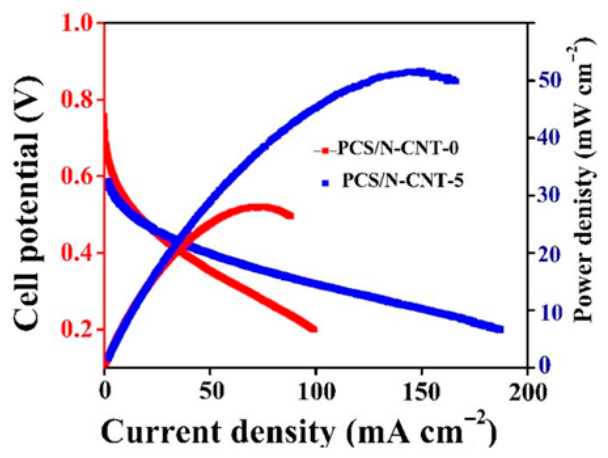
| PCS/N-CNT-5 | 45 | 80 °C, 100% RH | [40] |
| Chitosan/Fly Ash 10 wt% | 6.863 | / | [42] |
| CS-PAni/SiO2-3 | 8.39 | 80 °C, 100% RH | [43] |
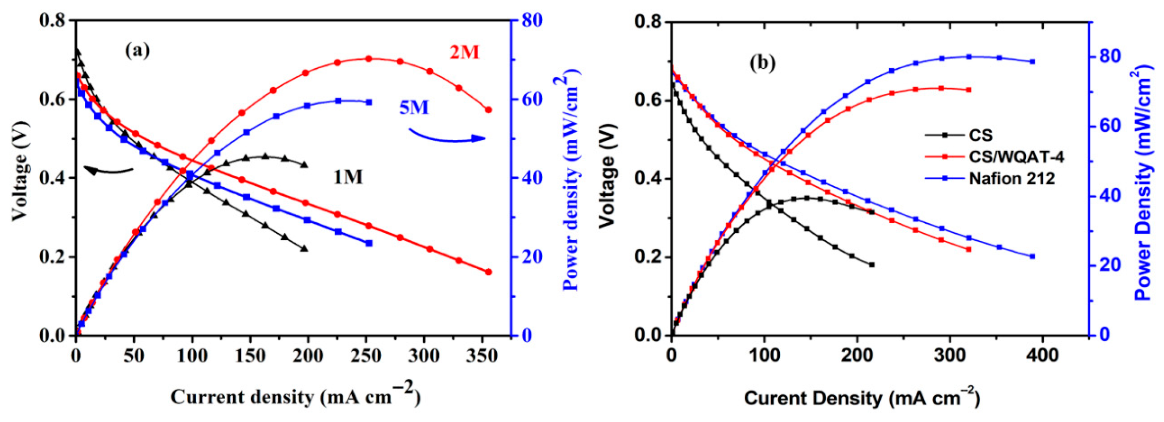
| CS-WQAT-4 | 35.3 | 80 °C, 100% RH | [48] |
| CS-HPA-PTA | 12 | 70 °C, 100% RH | [49] |
| CS-STA | 4.88 | 25 °C, 100% RH | [50] |
| M-10 | 12.4 | 25 °C, 100% RH | [53] |
| CS/SO3H-UiO-66@HNTs-10 | 46.2 | 80 °C, 100% RH | [57] |
| 14.9 | 20 °C, 100% RH | ||
| CS/PS@CNT-5 | 26 | RT, 100% RH | [59] |
| CS/PD@CNT-5 | 25 | RT, 100% RH | [59] |
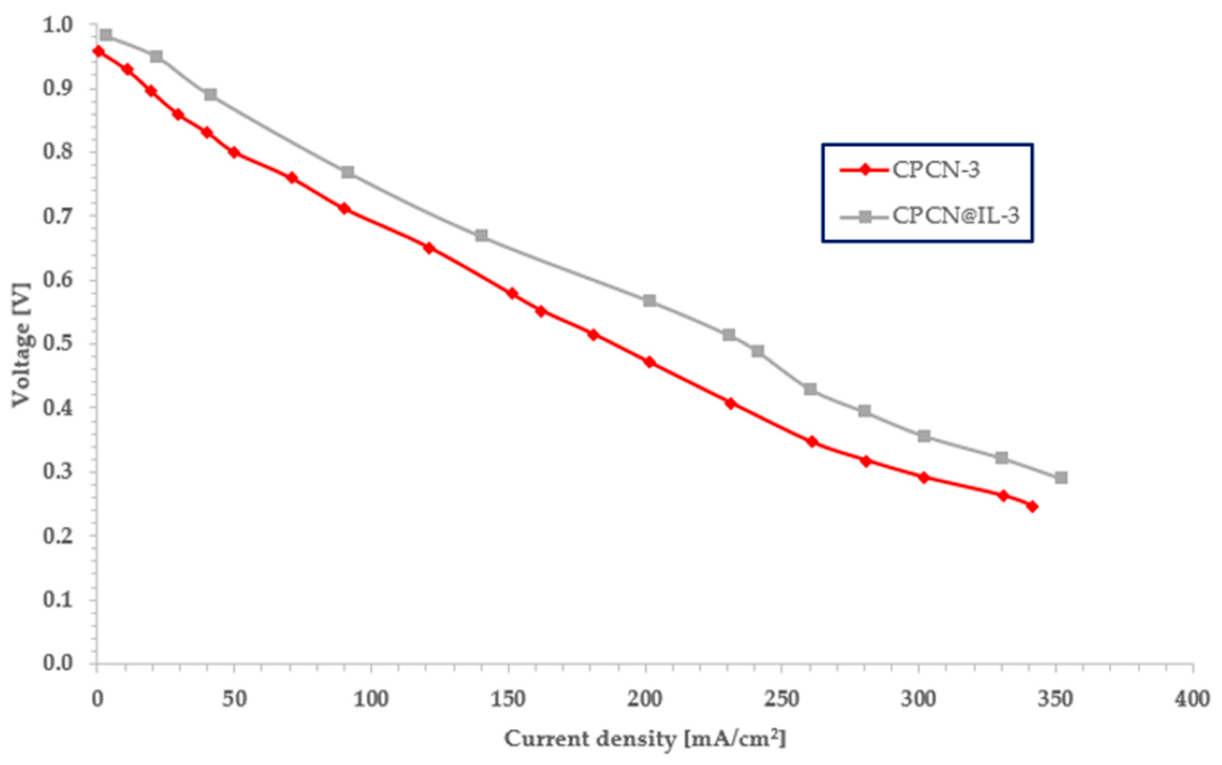
| CPCN@IL-3 | 2.152 | 70 °C, 100% RH | [60] |
| 1.394 | 30 °C, 100% RH | ||
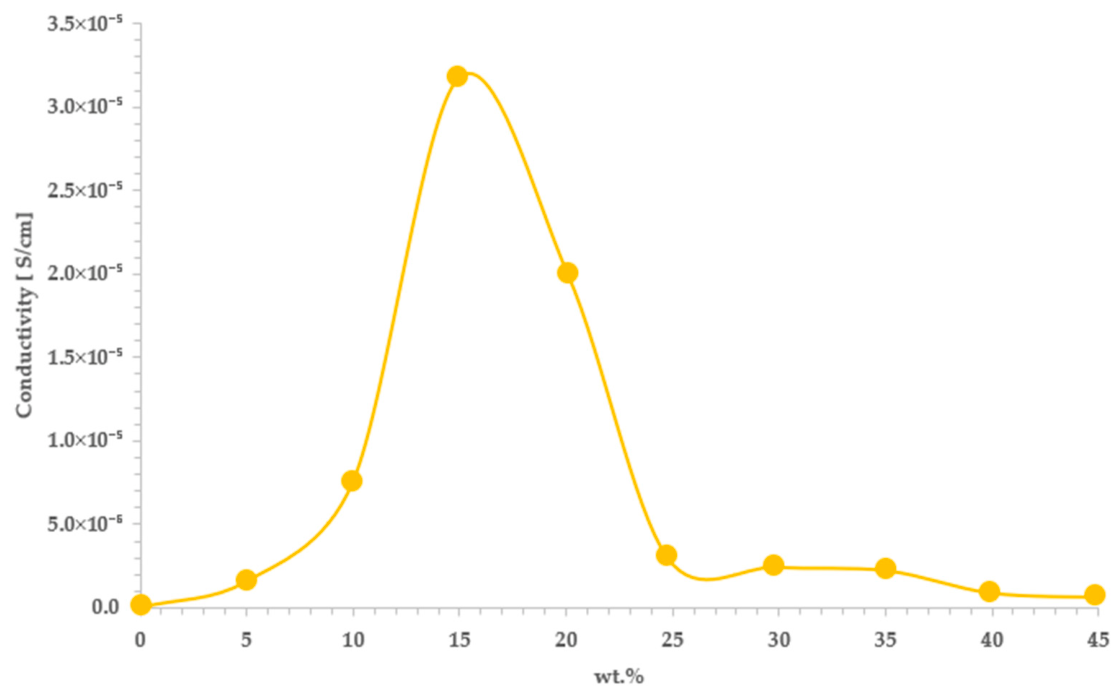
| ML-CNC-2 | 62.71 | 70 °C, 100% RH | [64] |
| Cell-Im | 0.214 | RT | [65] |
| CNC-3/PVDF | 0.0757 | 25 °C, 100% RH | [66] |
| SPEEK-MCC-3 | 186 | 110 °C, 100% RH | [67] |
| SPEEK-DAC-3 | 152 | 110 °C, 100% RH | [67] |
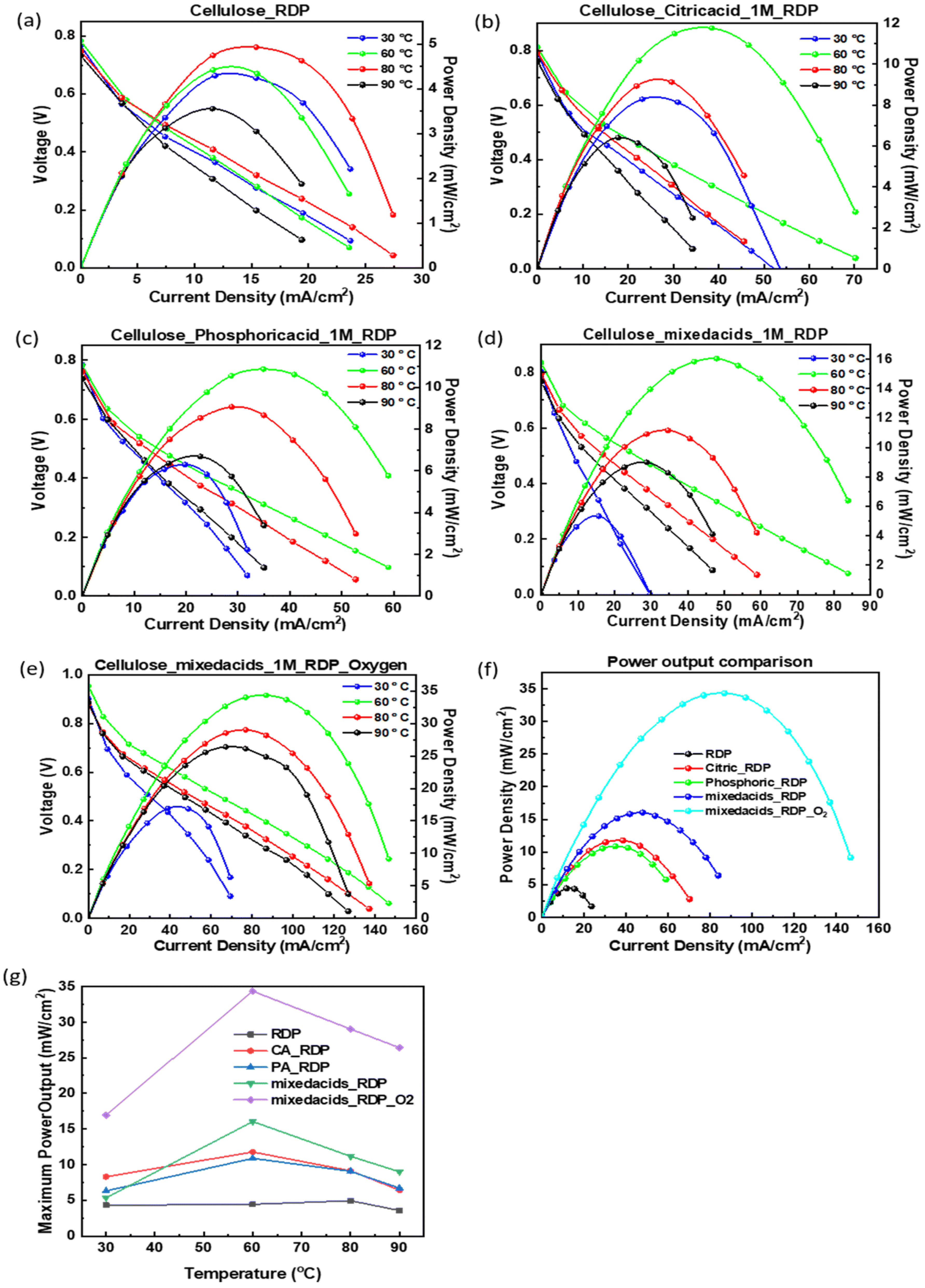
| Cellulose_mixedacids_1M_RDP | 11 | 90 °C, 100% RH | [68] |
| 4 | 30 °C, 100% RH | ||
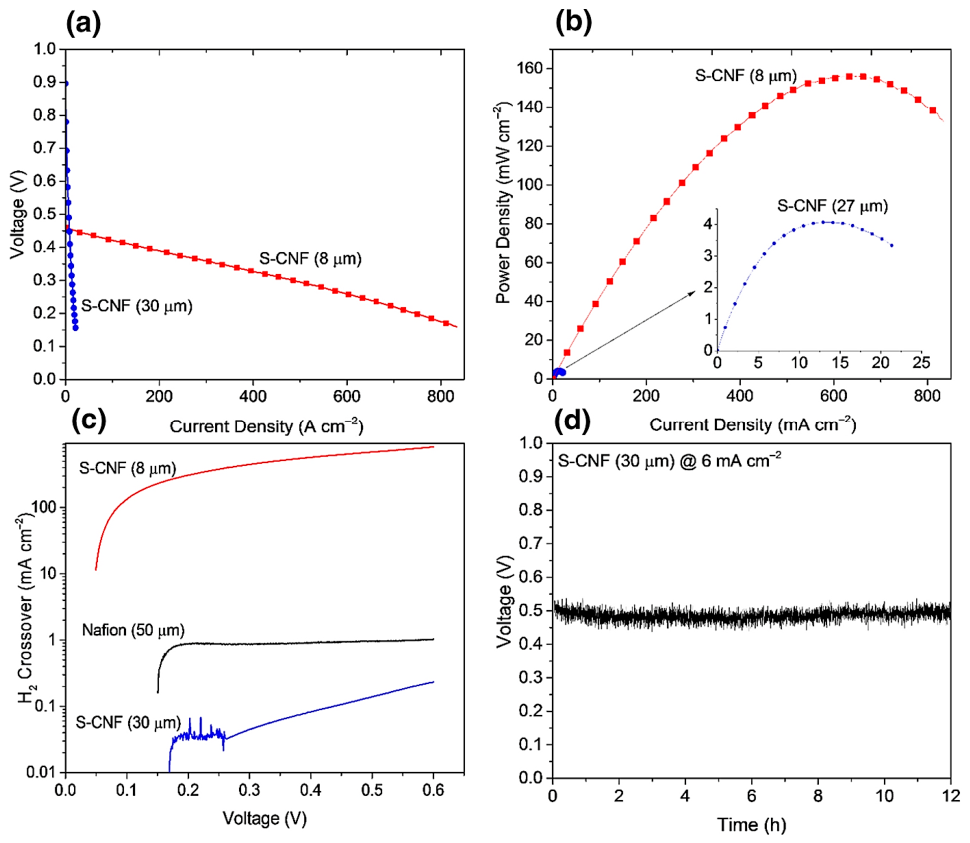
| S-CNF | 2 | 120 °C, 100% RH | [71] |
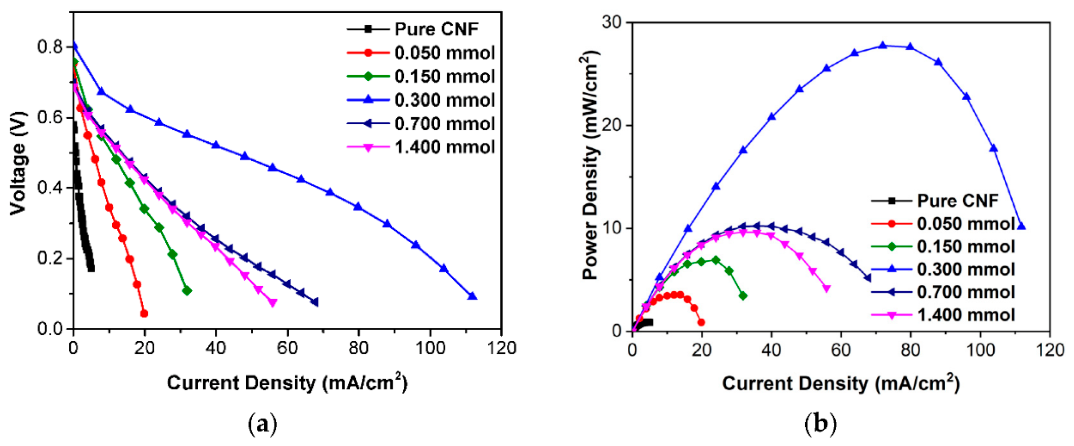
| CNF-3 | 9.4 | 80 °C, 100% RH | [72] |
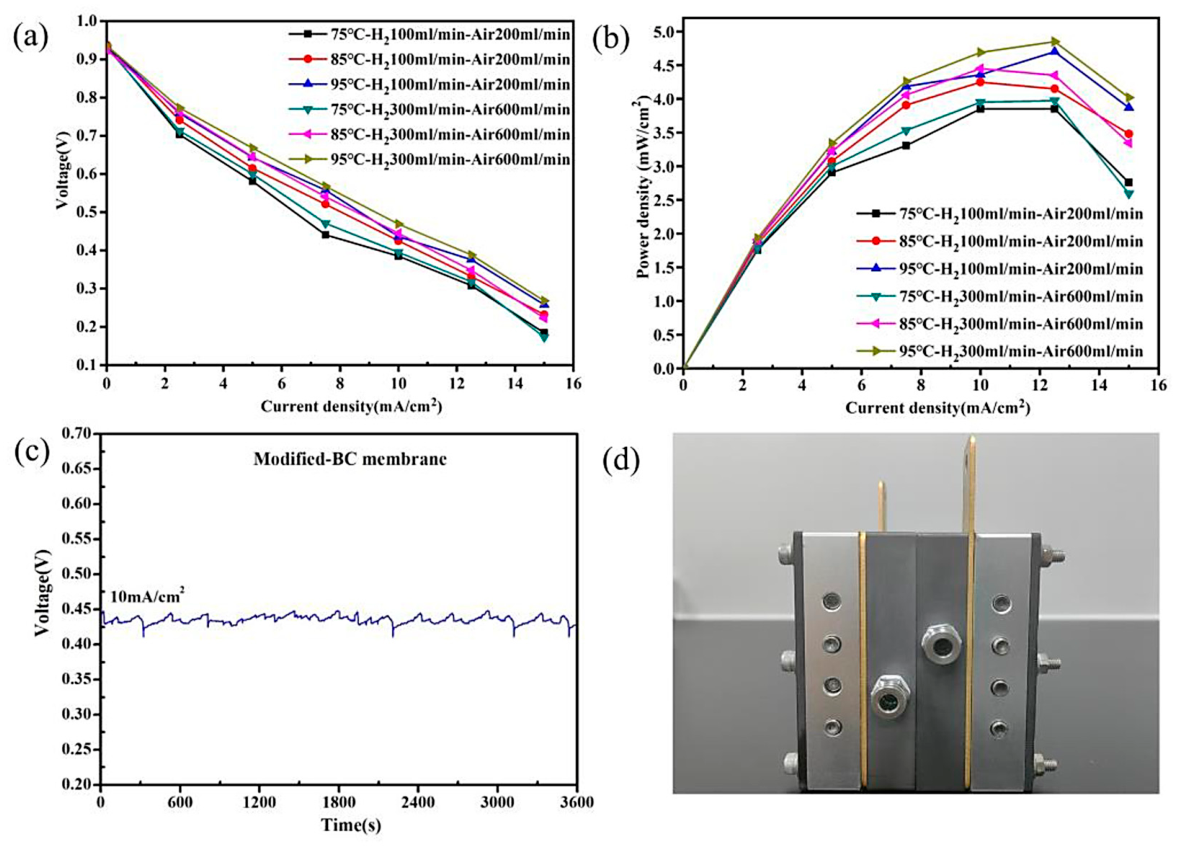
| Modified-BC | 62.2 | 95 °C, 100% RH | [75] |
| CA-GO-0.8 | 15.5 | RT, 80–85% RH | [79] |
| MK 14 | 50 | 70 °C, 100% RH | [80] |
| 35 | 25 °C, 100% RH | ||
| 1 g Gellan gum + 1 M wt% NH4SCN | 14.1 | / | [83] |
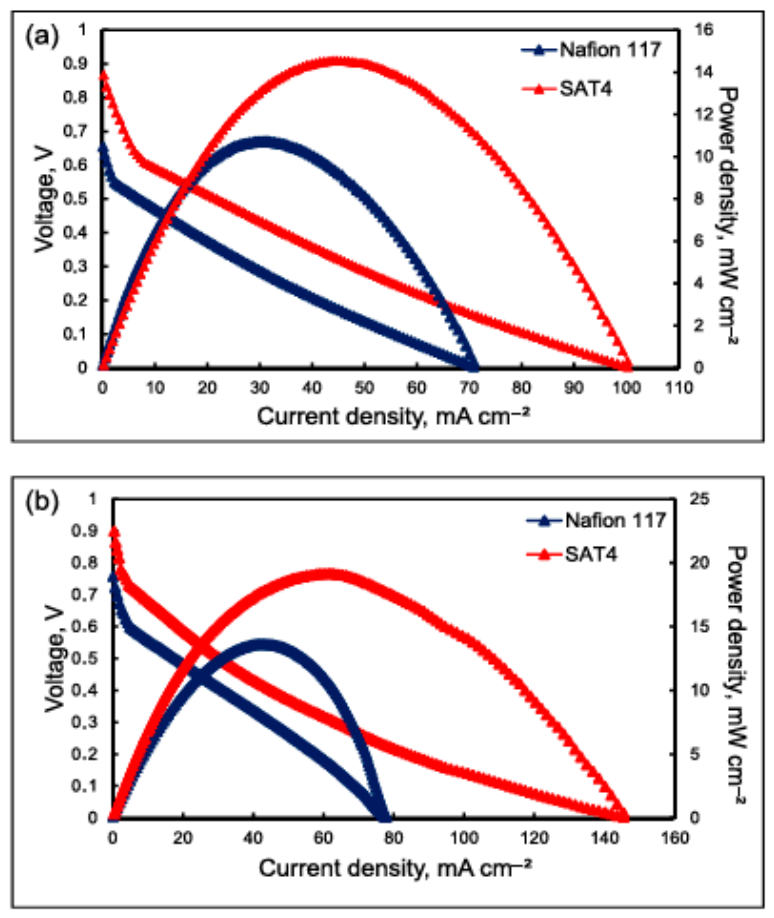
| SAT4 | 70 | 30 °C, 100% RH | [86] |
| 16.8 | 70 °C, 100% RH | ||
| PSAAM-PMA | 59.23 | 30 °C, 100% RH | [87] |
| PSASB-PMA | 45.66 | 30 °C, 100% RH | [87] |
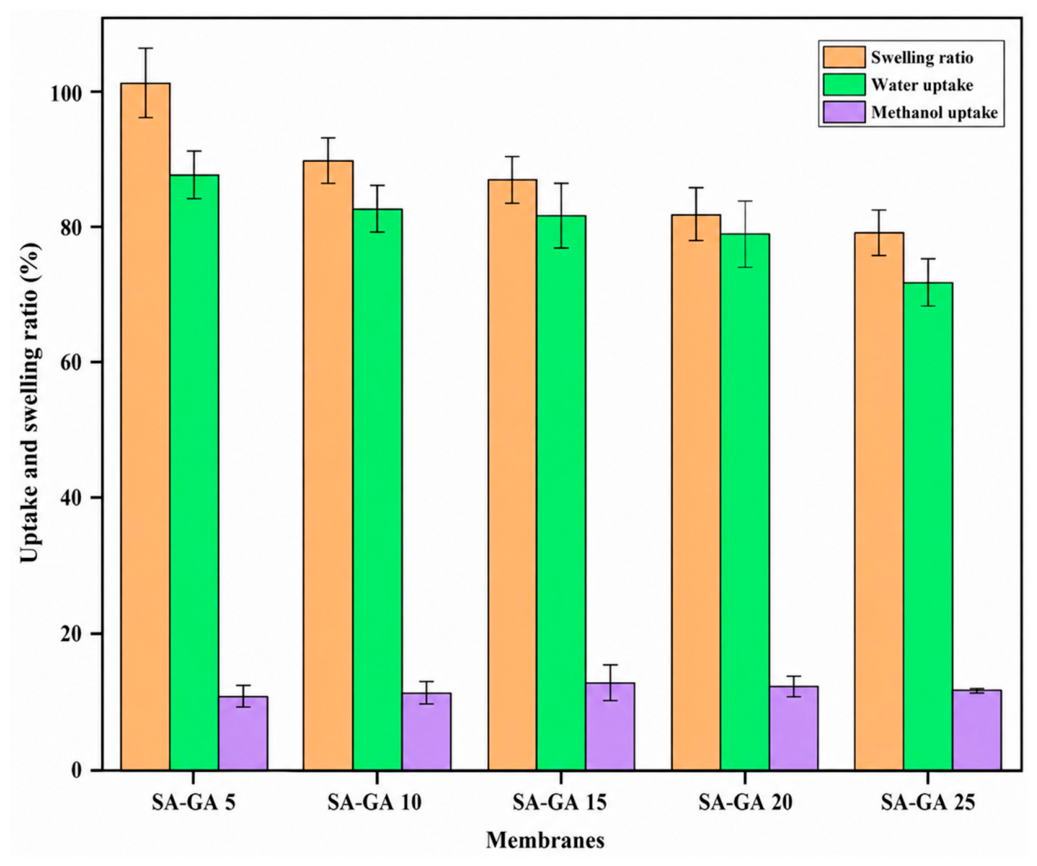
| SA-15 | 8.28 | RT, 100% RH | [88] |
| Starch/Chitosan 38 wt% | 2.8 | / | [92] |
| Starch/SHS 15 wt% | 0.0317 | / | [93] |
| Keratin-M | 6.3 | / | [98] |
| Composite 4:1 | 0.04572 | 25 °C, 100% RH | [99] |
| Imidazole–Collagen (n = 2.0) | 1 | 200 °C | [106] |
| 0.1 g collagen:0.1 g chitosan + 0.2 g IL + 0.5 g PEG | 1.173 | / | [107] |
| Casein | 0.4 | RT | [108] |
| Mucin-COOH | 2.1 | RT | [109] |
| BSA mats | 0.5-1 | RT | [110,111] |
| BSA mats/CDs | 3.5 | RT | [112] |
| BSA films | 5.3 | 25 °C, 75% RH | [113] |
| Membrane Name | Methanol Permeability [cm2/s] | Selectivity Parameter [Ss/cm3] | Experimental Conditions | Ref. |
|---|---|---|---|---|
| CH5 | 9.3 × 10⁻¹ | 2.1 × 10⁴ | 65 °C, 100% RH 2M CH3OH | [33] |
| 4.5 × 10⁻⁷ | 2.7 × 10⁴ | RT, 100% RH 2M CH3OH | ||
| Chitosan/Fly Ash 10 wt% | 6.3 × 10⁻⁶ | 1.1 × 10³ | / 1M CH3OH | [42] |
| M-10 | 5 × 10⁻⁸ | 2.47 × 10⁵ | 25 °C, 100% RH 2M CH3OH | [53] |
| CS/SO3H-UiO-66@HNTs-10 | 5 × 10⁻⁷ | 2.92 × 10⁴ | 20 °C, 100% RH 2M CH3OH | [57] |
| 3.2 × 10⁻⁶ | 1.18 × 10⁴ | 70 °C, 100% RH 2M CH3OH | ||
| CPCN@IL-3 | 7.26 × 10⁻⁸ | 1.92 × 10⁴ | RT, 100% RH 2M CH3OH | [60] |
| ML-CNC-2 | 4.5 × 10⁻⁶ | 1.4 × 10⁴ | 70 °C, 100% RH 2M CH3OH | [64] |
| Cell-Im | 4.42 × 10⁻⁷ | 4.838 × 10² | 70 °C, 100% RH 2M CH3OH | [65] |
| CNC-3/PVDF | 2.69 × 10⁻⁹ | 28.141 × 10³ | 25 °C, 100% RH 1M CH3OH | [66] |
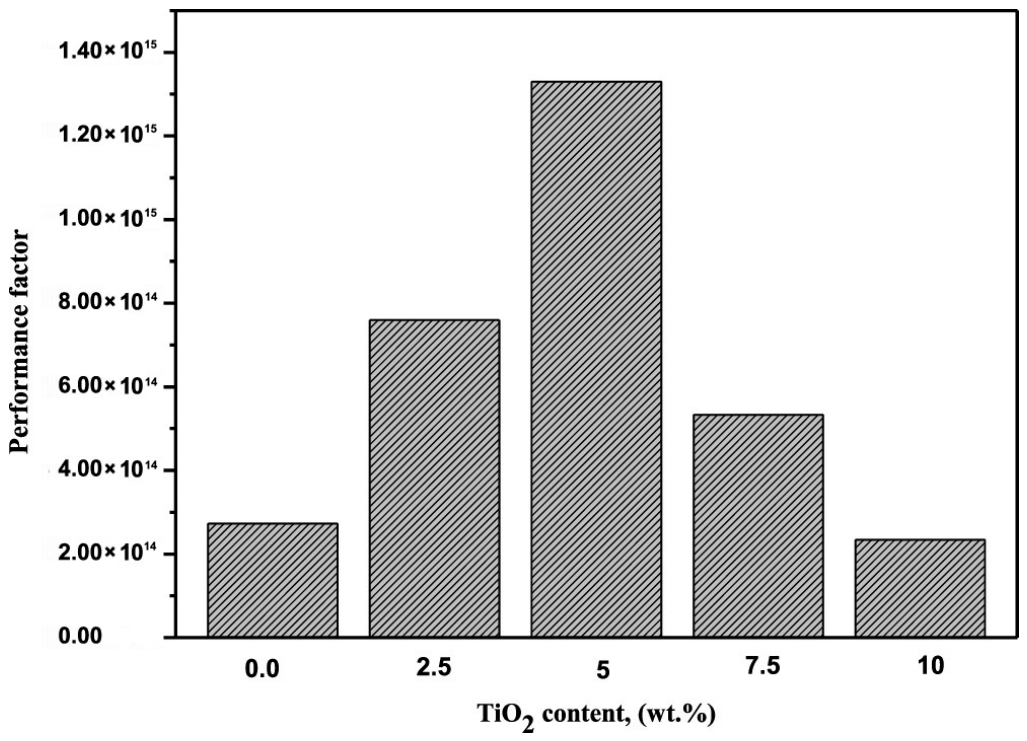
| TiO2/Ph-CA-5 | 0.98 × 10⁻¹⁶ | / | 25 °C, 100% RH 2M CH3OH | [78] |
| Ph-PVA/CA | 1.08 × 10⁻¹⁰ | / | 25 °C, 100% RH 2M CH3OH | [80] |
| SAT4 | 0.195 × 10⁻⁶ | 8.615 × 10⁴ | 30 °C, 100% RH 2M CH3OH | [86] |
| PSAAM-PMA | 1.36 × 10⁻⁶ | / | 30 °C, 100% RH | [87] |
| PSASB-PMA | 1.61 × 10⁻⁶ | / | 30 °C, 100% RH | [87] |
| Polymer Type | Fuels | Addition or Filler | Max. Power Density [mW/cm2] | Operating Conditions | Ref. |
|---|---|---|---|---|---|
| Chitosan | H2/O2 | 5 wt% of functionalised multi-walled carbon nanotubes (N-MWCNTs) | 49.75 | 50 °C, 100% RH | [40] |
| Chitosan | 2M CH3OH/O2 | 3 wt% of sulfonated polyaniline (PAni) and silicon dioxide (SiO2) | 56.27 | 80 °C, 100% RH | [43] |
| Chitosan | 2M CH3OH/O2 | 4 wt% of phosphotungstic acid (PTA) immobilised on one-dimensional attapulgite (AT) | 70.26 | 70 °C, 100% RH | [48] |
| Chitosan | 2M CH3OH/O2 | / | 40.08 | 70 °C, 100% RH | [48] |
| Nafion 212 | 2M CH3OH/O2 | / | 79.87 | 70 °C, 100% RH | [48] |
| Chitosan | 1M CH3OH/O2 | Cross-linked for 30 s with HPA and then functionalised in a PTA/water solution for 24 h | 60 | 70 °C 100% RH | [49] |
| Chitosan | H2/O2 | Cross-linked for 30 s with STA and then functionalised in STA/water solution for 24 h | 370 | 25 °C, 100% RH | [50] |
| Chitosan | 2M CH3OH/O2 | 10 wt% of SO3H-UiO-66 deposited on the surface of halloysite nanotubules (HNTs) | 84.5 | 70 °C, 100% RH | [57] |
| Chitosan | 2M CH3OH/O2 | / | 50.2 | 70 °C, 100% RH | [57] |
| Nafion 115 | 2M CH3OH/O2 | / | 92.4 | 70 °C, 100% RH | [57] |
| Chitosan | 2M CH3OH/O2 | 1.5 wt% of MWCNTs and 0.05 mL of IL were added to the mixture of CS and PVA in the ratio of 10:90 | 82 | 70 °C, 100% RH | [60] |
| Nafion and cellulose | 1M CH3OH/air | Multilayer membrane NR211/CNC/NR212/ NR212 | 75.53 | 70 °C, 100% RH | [64] |
| Cellulose and PVDF | 1M CH3OH/O2 | The ratio of CNC and PVDF was 1:1, while the concentration of sulphuric acid during hydrolysis was 50% | 8.65 | 25 °C, 100% RH | [66] |
| Nafion 117 | 1M CH3OH/air | / | 19 | 25 °C, 100% RH | [66] |
| Cellulose | H2/O2 | Mixture of citric and phosphoric acid and coating with RDP in the ratio Cellulose/RDP 2:1 | 34.3 | 60 °C, 100% RH | [68] |
| H2/air | 16.1 | ||||
| Cellulose | H2/air | Sulfonated cellulose nanofibres (30 µm) | 4.1 | 80 °C, 95% RH | [71] |
| Sulfonated cellulose nanofibres (8 µm) | 156 | ||||
| Cellulose | H2/O2 | Cellulose nanofibres cross-linked with 0.300 mL of 1 M citric acid | 27.7 | 80 °C, 100% RH | [72] |
| Cellulose | H2/air | Bacterial cellulose modified with APTES | 4.85 | 95 °C, 100% RH | [75] |
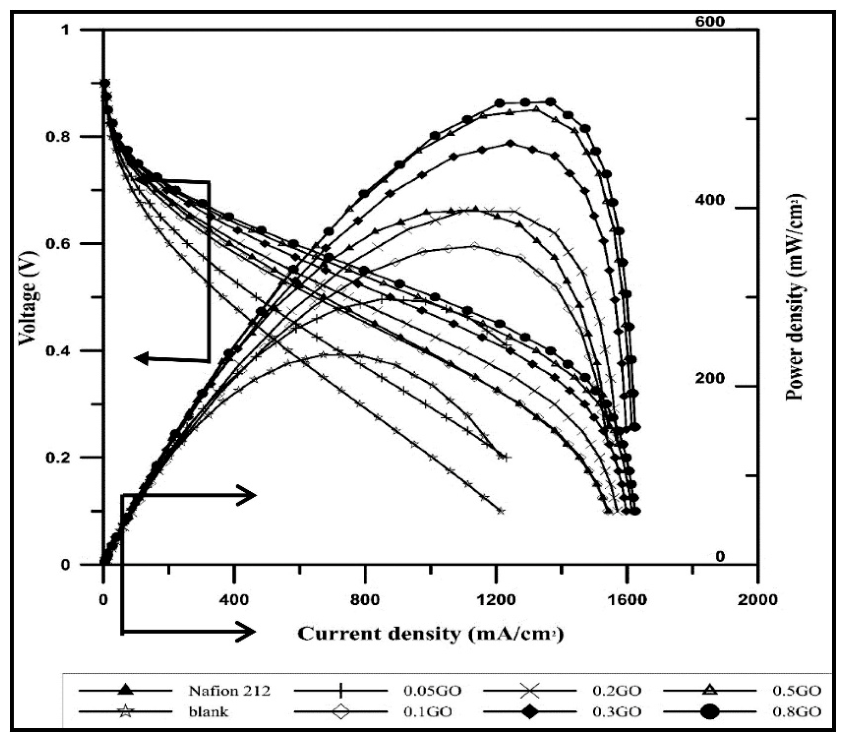
| Cellulose | H2/air | Cellulose acetate with 0.8 wt% of graphene oxide | 519 | 60 °C, 100% RH | [79] |
| Nafion 212 | H2/air | / | 401 | 60 °C, 100% RH | [79] |
| Sodium alginate | 4M CH3OH/air | 20 wt% of TiO2 and cross-linked with glutaraldehyde and glycerol | 14.53 | 30 °C, 100% RH | [86] |
| 19.13 | 60 °C, 100% RH | ||||
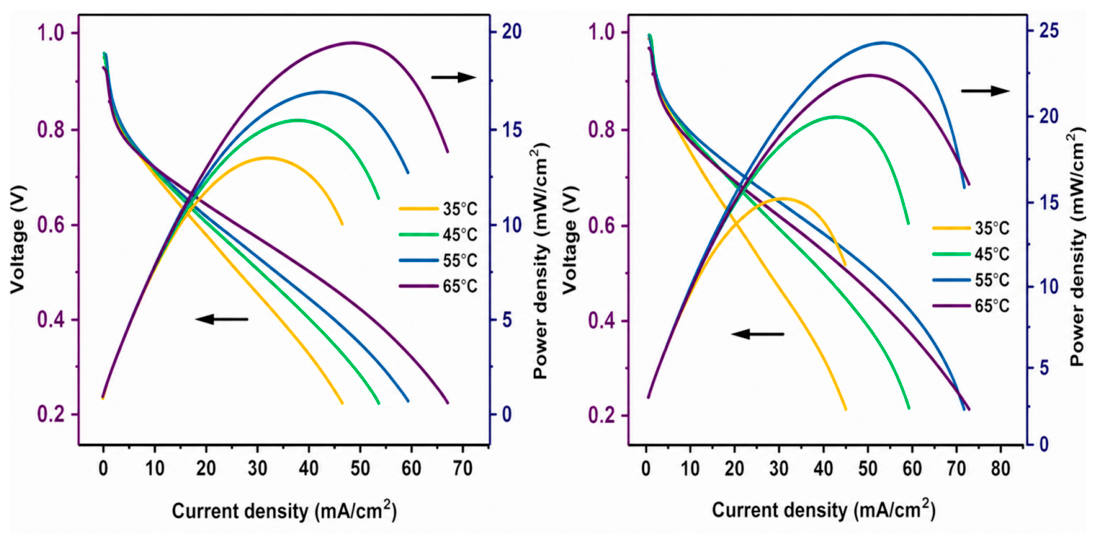
| Keratin | H2/O2 | Mixed keratin amyloid fibres with glyoxylic acid, then heating treatment and immersion of the membranes in peracetic acid | 25 | 55 °C, 100% RH | [98] |
| H2/air | 20 | 65 °C, 100% RH |
Disclaimer/Publisher’s Note: The statements, opinions and data contained in all publications are solely those of the individual author(s) and contributor(s) and not of MDPI and/or the editor(s). MDPI and/or the editor(s) disclaim responsibility for any injury to people or property resulting from any ideas, methods, instructions or products referred to in the content. |
© 2026 by the authors. Licensee MDPI, Basel, Switzerland. This article is an open access article distributed under the terms and conditions of the Creative Commons Attribution (CC BY) license.
Share and Cite
Ševo, B.; Bašić, A.; Amdursky, N.; Penga, Ž. Recent Advances in Biopolymer-Based Membranes for Proton Exchange Membrane Fuel Cells. Energies 2026, 19, 2426. https://doi.org/10.3390/en19102426
Ševo B, Bašić A, Amdursky N, Penga Ž. Recent Advances in Biopolymer-Based Membranes for Proton Exchange Membrane Fuel Cells. Energies. 2026; 19(10):2426. https://doi.org/10.3390/en19102426
Chicago/Turabian StyleŠevo, Bruno, Anita Bašić, Nadav Amdursky, and Željko Penga. 2026. "Recent Advances in Biopolymer-Based Membranes for Proton Exchange Membrane Fuel Cells" Energies 19, no. 10: 2426. https://doi.org/10.3390/en19102426
APA StyleŠevo, B., Bašić, A., Amdursky, N., & Penga, Ž. (2026). Recent Advances in Biopolymer-Based Membranes for Proton Exchange Membrane Fuel Cells. Energies, 19(10), 2426. https://doi.org/10.3390/en19102426