Article

Experimental Evaluation of a Solar Ejector Cooling Cycle Prototype †

by
Konstantinos Braimakis
1,
Tryfon C. Roumpedakis
2,*,
Spyros Kalyvas
1,
Gabriel Palamidis
2,
Antonios Charalampidis
2,
Efstratios Varvagiannis
2 and
Sotirios Karellas
2
1
Laboratory of Refrigeration Air Conditioning & Solar Energy, National Technical University of Athens, 15780 Zografou, Greece
2
Laboratory of Thermal Processes, National Technical University of Athens, 15780 Zografou, Greece
*
Author to whom correspondence should be addressed.
This paper is an extended version of our paper published in ECOS2024 International Conference, Rhodes, Greece, 30 June–5 July 2024; pp. 1375–1386.
Energies 2026, 19(1), 7; https://doi.org/10.3390/en19010007
Submission received: 18 November 2025 / Revised: 12 December 2025 / Accepted: 16 December 2025 / Published: 19 December 2025
(This article belongs to the Special Issue Advanced Heating and Cooling Technologies for Sustainable Buildings)

Abstract

Ejector-based cooling systems have gathered scientific interest as a low-cost alternative for solar-assisted cooling applications, especially in regions with solar abundance. This work presents the experimental investigation of a solar ejector cooling prototype system. The system, developed at the National Technical University of Athens, includes a custom-made ejector and is powered by a 48 m2 flat plate solar collector field, assisted by an auxiliary natural gas boiler. Experimental testing under varying operating conditions was conducted to assess the system’s performance, focusing on the influence of evaporation and condensation temperatures. The maximum coefficient of performance (COP) was measured at approximately 0.160–0.165, corresponding to an entrainment ratio of 0.19 at an evaporation temperature of 9 °C and condensation temperatures of 26–27 °C. Ejector performance substantially declined with increased condensation temperatures. However, the influence of the evaporator pressure on system performance was less significant. These findings demonstrate the feasibility of ejector-based solar cooling as a sustainable solution for reducing electricity use in cooling applications, highlighting the critical influence of operating parameters in the system’s performance optimization.

1. Introduction

Space cooling in buildings is responsible for a considerable share of their primary energy consumption. Meanwhile, based on an assessment by IEA [1], space cooling demand for buildings is expected to rise by 40% globally by 2030. Therefore, the decarbonization of space cooling is a crucial step towards the energy transition.
Considering the above, there is growing interest in the utilization of renewable energy sources (RES) to produce cooling. Among alternative renewable sources, solar energy is one of the most promising for utilization in space cooling applications, owing to the concurrence of solar irradiance with higher cooling loads during the summer.
Solar cooling can be realized in two main ways: (i) solar electric cooling using photovoltaic modules to drive a conventional electric chiller and (ii) solar thermal cooling systems, using solar thermal collectors to generate heat for driving thermally activated chillers [2]. Among thermally activated cooling technologies, absorption cooling is the most mature, with applications mostly focusing on waste heat utilization or integration of absorption chillers into combined heat and power (CHP) systems [3]. While solar absorption cooling has been tested in real-scale applications, it has not been fully commercialized due to the high capital cost [4,5]. An additional challenge of absorption chillers is the fact that they are typically bulky, as they involve a large number of components; thus, their installation and integration into buildings can be challenging.
An emerging technology is solar ejector cooling (SEC), which has been considered as a promising solar cooling alternative thanks to its simplicity, absence of moving parts, low cost of the ejector, and limited maintenance costs [6]. On the other hand, ejector cooling cycles (ECC) have a limited thermal coefficient of performance (COP), requiring substantially larger solar collector areas compared to absorption chillers. Moreover, their performance is inconsistent, as it is very strongly affected by the heat source and ambient temperatures.
Several studies on ejector cooling focus especially on modeling and design of the ejector itself, since it greatly affects the overall system’s performance [7,8]. For instance, Saeid et al. [9] developed a computational fluid dynamics (CFD) model to analyze various ejector designs for an ammonia ejector cooling system, calculating a maximum entrainment ratio of 0.72 at an evaporator temperature of 15 °C. Besagni and Cristiani [10] conducted CFD simulations to optimize the design of a variable geometry ejector for an ejector cooling cycle operating with propane, showcasing the influence of spindle position on the ejector’s performance.
In parallel to ejector design optimization, several studies have focused on the investigation of SEC systems using environmentally friendly working fluids, following the Kigali amendment [11] and the F-gases regulation [12]. Perez et al. [13] integrated a solar ejector refrigerator as a precooling system into an air handling unit to enhance the system’s operation at higher ambient temperatures in warm climates. The authors evaluated several working fluids and reported a maximum seasonal COP of 0.37 for ammonia, while the maximum average cooling capacity was achieved by R600. Sajjadi et al. [14] studied the performance of an SEC system for a residential application, evaluating its performance with a number of working fluids. The maximum second law efficiency of the system was 24% when R1234ze(Z) was used.
Other studies have analyzed the overall performance of SEC systems, including the solar collectors and thermal storage tank, mainly by simulation [15,16]. In a previous study by the authors [17], the part-load performance of an SEC system was evaluated techno-economically for four different cities. The system, operating with R1234ze(E), was found to have a limited solar cooling conversion efficiency of less than 5%, resulting in poor economic performance and showcasing that current SEC systems require lower condensation temperatures to be competitive against solar cooling systems based on photovoltaics (PVs) coupled with electrical chillers. Devarajan et al. [18] compared the performance of an SEC prototype under two different types of solar thermal collectors, namely a Scheffler concentrating collector and a flat plate collector. The SEC, operating with R-134a, achieved thermal COPs around 0.2 for the flat plate collectors; on the contrary, when the non-concentrating collector was implemented, the generator temperature was increased by at least 20 K, and hence the thermal COP was increased by up to 0.45. Falsafioon et al. [19] developed an SEC demonstrator operating with R134a that was driven by parabolic trough collectors with a nominal cooling capacity of 15 kW. A maximum thermal COP of 0.27 was reported, corresponding to an EER (kWc/kWe) of 2.8 at driving temperatures of 120 °C.
The present work focuses on the performance evaluation of an SEC prototype developed and tested at the National Technical University of Athens during the spring period. The system incorporates a 48 m2 flat plate solar collector array as its primary energy source, complemented by a natural gas boiler providing additional heat when needed. Experimental tests were carried out under different operating conditions to examine how variations in evaporation and condensation temperatures affect the overall system performance, namely the ejector entrainment ratio and thermal COP. The main novel contribution of the study is the complete testing of the SEC system, including the solar thermal collectors and their storage tank.

2. Materials and Methods

2.1. System Description

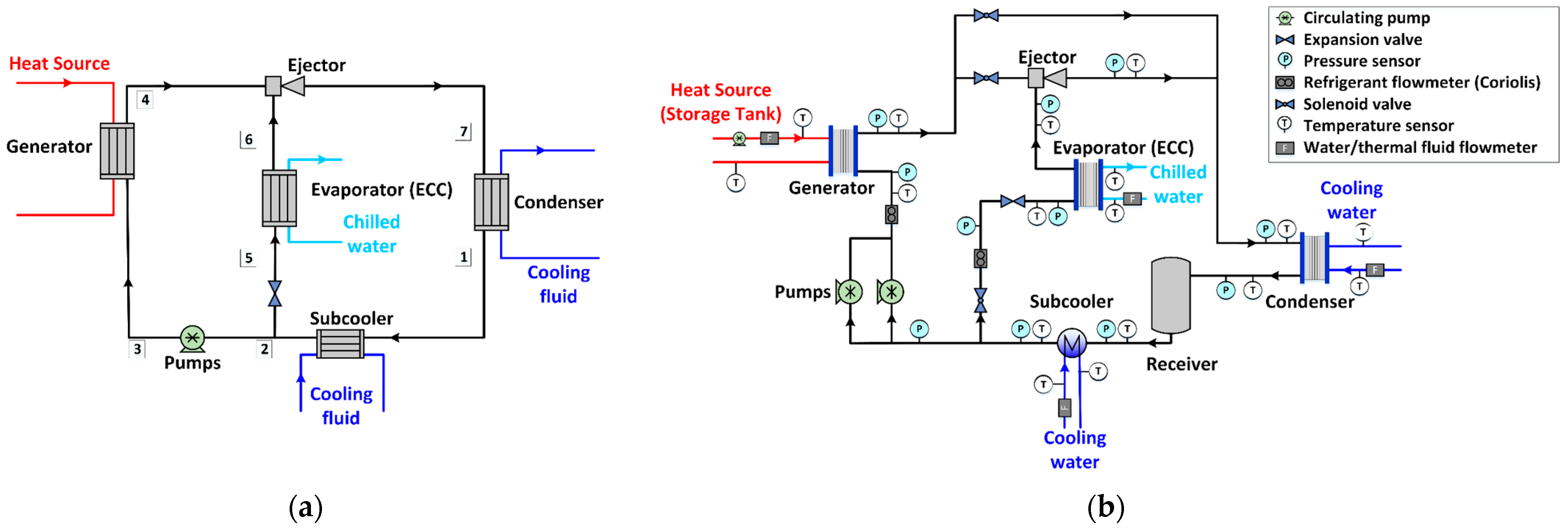
The ECC, as shown in Figure 1a, shares similarities with the traditional Vapor Compression Cycle (VCC), but replaces mechanical compression with a dynamic compression process that occurs inside the ejector device. In this system, the liquid refrigerant leaving the condenser is divided into two separate streams: a high-pressure primary stream and a low-pressure secondary stream. The primary stream is first pressurized by a pump (between points 2 and 3), and then heated in a generator heat exchanger by an external heat source, converting it into high-pressure vapor, either saturated or superheated (3-4). At the same time, the secondary stream is expanded in a valve (2-5), reducing its pressure and temperature, and directed to the evaporator, where it absorbs heat and undergoes phase change to vapor (5-6). These two streams enter the ejector via distinct ports. Inside the ejector, the primary stream is accelerated through a converging-diverging nozzle to supersonic speeds, enabling it to entrain the secondary vapor flow from the evaporator. The resulting mixture exits the ejector at a moderate pressure level (point 7), and then flows into the condenser where it is cooled and condensed, releasing heat in the process (7-1). Under typical operating conditions, both the primary and secondary flows experience choked flow inside the ejector. Although a subcooler is not an essential component of the system, subcooling (1-2) is often implemented in compact, micro-scale systems to mitigate the risk of pump cavitation.
Figure 1b depicts the Piping and Instrumentation Diagram (P&ID) of the experimental SEC prototype. While the design closely follows the conceptual arrangement shown in Figure 1a, it features an additional bypass line utilized during system startup. This section allows the refrigerant, which is leaving the generator, to bypass the ejector until its pressure and temperature are sufficiently high for proper operation. It is noted that the bypass line does not in any way affect the operation of the SEC, since it is completely shut off and isolated after system startup. Additionally, the setup employs two pumps arranged in a parallel configuration to allow greater flexibility for experiments conducted under varying operational conditions.
The SEC operates with R134a as its working fluid. It is noted that R134a was selected as the working fluid for the ejector cooling system primarily due to its non-flammability, availability, and low cost, which made it the most practical choice for the experimental campaign. Although alternative refrigerants such as R600a or R1234ze indeed offer lower GWP values and are promising for ejector refrigeration systems, their use in a laboratory setup requires extensive safety measures due to their flammability or handling constraints. Implementing these safety modifications was beyond the scope and resources of the present experimental work. Additionally, R134a shares very similar thermophysical properties with the low-GWP HFO refrigerant R1234yf. As a result, the experimental results obtained with R134a can be transferred to R1234yf with good accuracy. This allows the findings of this study to remain relevant for environmentally friendlier refrigerants, while still ensuring safe and practical operation during the experiments.
The nominal heat input of the cycle is 30 kW. Under nominal operating conditions, the system delivers a cooling capacity of 4.8 kW, while the condenser rejects approximately 34.5 kW of heat to the environment, which corresponds to an overall thermal COP of 0.161.
Under nominal conditions, which were determined using the standard 1-D ejector modeling approach by Huang et al. [20], the primary flow enters the ejector at 19.8 bar and 72 °C, which corresponds to a 5 K level of superheating. The secondary flow, on the other hand, is throttled to a pressure of 3.9 bar and a temperature of 10 °C, with 2 K superheating before entering the evaporator; thus, the evaporation temperature is 8 °C. The refrigerant exits the ejector at an intermediate condition and is then condensed at 8.9 bar and 35 °C. According to design calculations, the mass flow rate of the primary flow is 0.159 kg/s, while the secondary flow mass flow rate is 0.030 kg/s, resulting in an ejector entrainment ratio of 0.190. A list of the ejector’s cycle key components is presented in Table 1. On this table, the manufacturers of the equipment components are also listed. All components were procured from suppliers in Athens, Greece.
Figure 1. (a) Simplified layout of a typical ejector cooling cycle, (b) ejector cooling cycle test-rig [21].
Energies 19 00007 g001
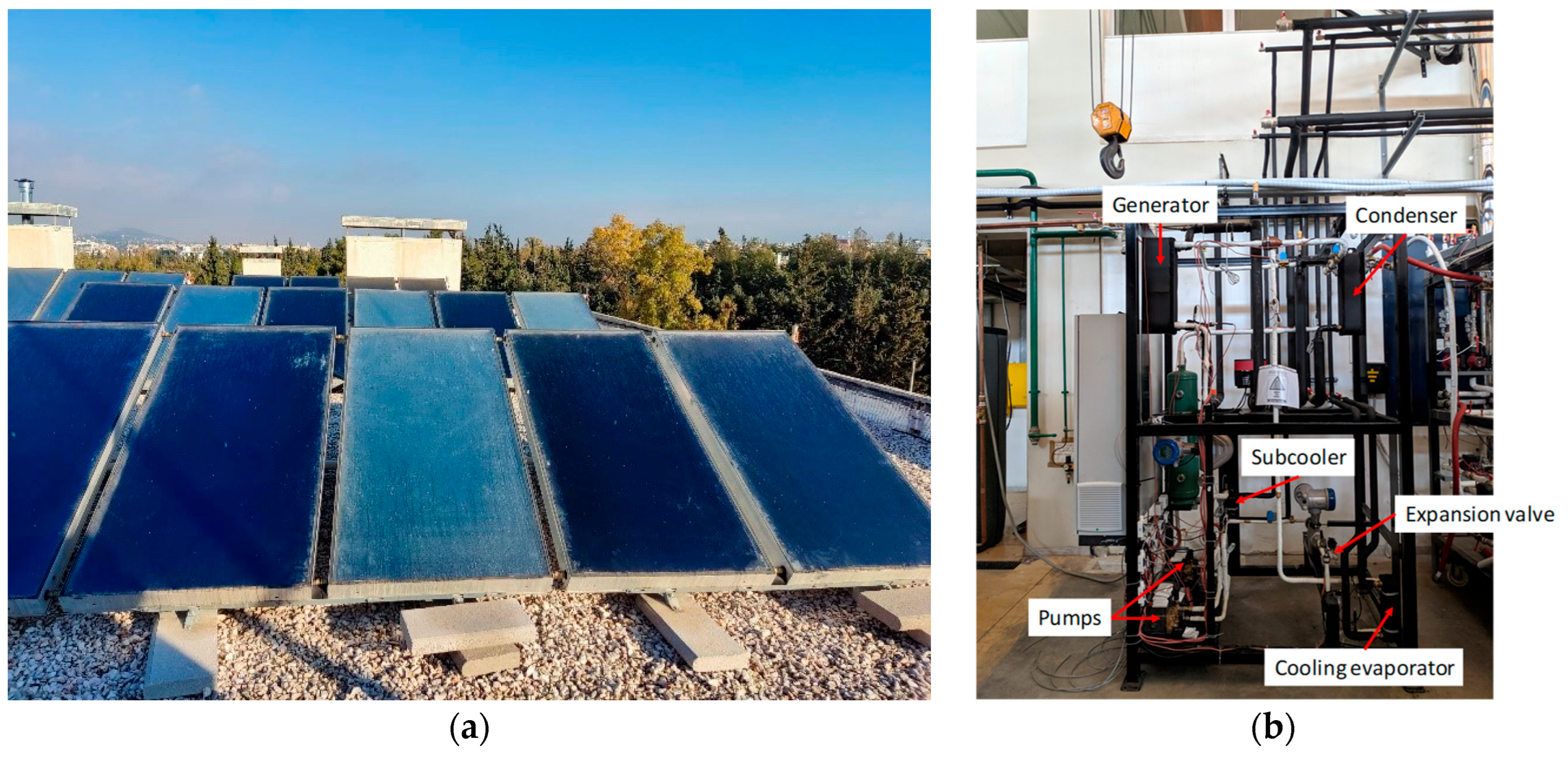
The solar collectors of the system, depicted in Figure 2a, are located on the rooftop of the “O” Building at the School of Mechanical Engineering, NTUA. The solar field consists of 24 flat plate collectors of 2 m2 each, which are arranged in five parallel arrays, amounting to a total collecting area of 48 m2. The optical efficiency of the used flat plate collectors, according to their Solar Keymark rating, was 77.6%, with a first-order loss coefficient of 4.0079 W/m2K [22]. The heat transfer fluid (HTF) used in the solar circuit is VT-51 df, a water–propylene glycol blend. Upon entering the solar field, the HTF is routed to all five collector arrays, where it absorbs solar energy before returning to the storage tank. Within the storage tank, which has a volume of 1 m3, the heated HTF circulates through an internal spiral heat exchanger, transferring its heat to the stored water.
The flow of HTF in the solar loop is controlled by a variable-speed pump using a PID controller. This system dynamically adjusts the pump speed to maintain a consistent temperature difference between the HTF returning from the solar field and the water at the bottom of the storage tank. The tank is hydraulically connected to the generator of the ECC system via a dedicated hot water pump, which operates at constant speed.
Figure 2b presents the complete ejector cooling prototype along with its control cabinet. On the same figure, some of the key components of the ECC are labeled.

2.2. Ejector Design

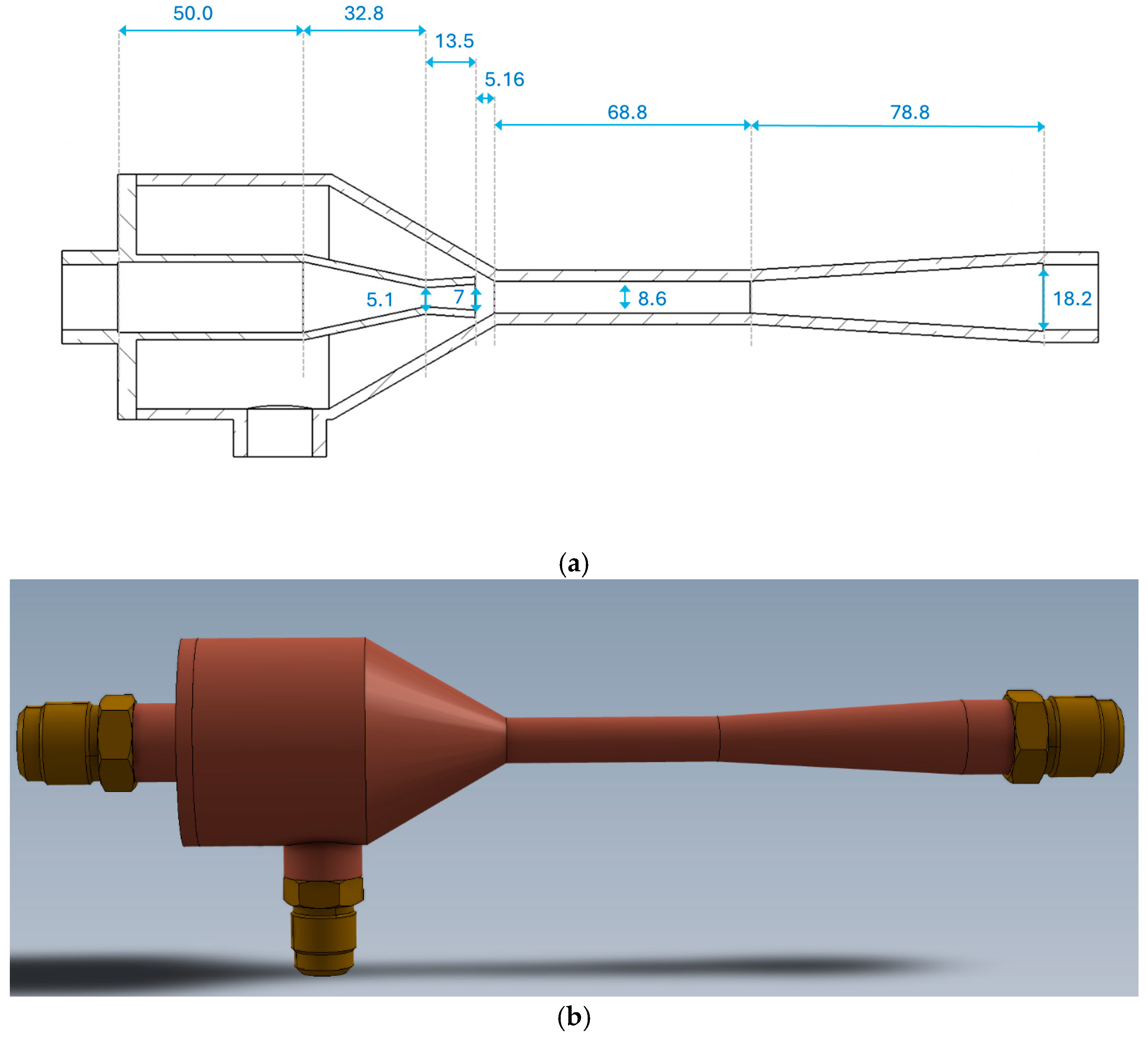
The ejector is the core component of the SEC system; therefore, a dedicated sizing simulation was conducted to estimate its key geometrical characteristics. As shown in Figure 3a, the ejector is composed of three main parts: a converging-diverging nozzle (CDN), a constant-area section (CAS), and a diffuser. In the CDN, the primary flow undergoes subsonic acceleration to the minimum cross-section, which has a diameter dt, followed by supersonic acceleration toward the exit point, with diameter d1. In the CAS, with a diameter dCAS, mixing between the primary and secondary flows occurs, along with a shock that causes its abrupt compression. Finally, in the diffuser, the mixed flow after the shock is further compressed. The diameter of the diffuser at the ejector outlet is dd.
The preliminary design using the 1-D model involved analytical calculations of two parameters: the throat diameter (dt) and constant-area section diameter (dCAS). For the additional geometrical parameters, which include various angles and lengths, an extensive literature review was conducted, referencing both design manuals and experimental studies to estimate values using empirical correlations [23,24,25,26,27,28,29]. According to the literature review, design guidelines regarding the ratios of ejectors used in ejector cooling cycles have been derived, which are summarized in Table 2.
After evaluation of various ejector designs, the final dimensions of the ejector are presented in Table 3 and in Figure 3a, including various diameters, lengths, and angles for each section. Figure 3b presents the 3D CAD design of the prototype ejector used in the experimental prototype.

2.3. Measuring Equipment

The instrumentation and sensors employed in the experimental prototype can be grouped into three main categories: temperature sensors, pressure transducers, and mass flow meters. An overview of different measuring equipment components is provided in Table 4. On the table, the manuacturers of the components are also listed. Furthermore, it is noted that all components were procured from suppliers located in Athens, Greece with the exception of the solar fluid volume flow meter, as stated in Table 4.
Temperature monitoring was performed using Pt100 Resistance Temperature Detectors (RTDs). In total, 19 Pt100 were installed throughout the system, in addition to one dedicated temperature sensor used for the control of the electronic expansion valve. Pressure transducers played a dual role: recording the system’s pressure conditions and providing safety protection by monitoring potential over-pressurization, particularly at the pump’s discharge. To meet the system’s requirements, 12 EMERSON PT5-30M pressure transducers with 1/4” flare threads were installed. These transducers could function at pressures up to 30 bar, making them suitable for the operating range of the cooling cycle.
Accurate measurement of mass flow was essential for the proper operation and energy analysis of the experimental setup. For this purpose, two Coriolis mass flow meters were installed: one positioned immediately downstream of the pumps and the other just upstream of the cooling evaporator. Monitoring the mass flow at these two locations is vital for determining key performance metrics, such as pump power input, cooling capacity, and the ejector entrainment ratio. In particular, the flow meter that is placed downstream of the pumps is used for measuring the mass flow rate of the high-pressure primary flow stream, while the flow meter that is placed upstream of the cooling evaporator is used for measuring the mass flow rate of the low-pressure, secondary flow. Based on the system’s needs, two specific models of Coriolis flow meters from KROHNE were selected, namely KROHNE OPTIMASS 6000-S10 and KROHNE OPTIMASS 6000-S08.

2.4. Experimental Methodology

The primary objective of the experimental procedure is to determine the entrainment ratio and thermal COP of the system under a range of operational conditions. This is achieved by quantifying both the cooling effect and the heat input under each condition.
The frequency of the refrigerant pumps is regulated via inverter control between 20–50 Hz, allowing fine adjustment. Simultaneously, the laboratory’s hydraulic system manages both the temperature and flow rate of the water supplied to key components, including the subcooler, condenser, and evaporator. The independent variables for the respective heat exchangers as controlled during the tests, along with their respective ranges, are outlined in Table 5.
Thermal energy is introduced into the system via hot water supplied to the generator. The temperature of the hot water is governed by the thermal balance within the tank and is not directly controlled during testing. The flow rate of hot water to the generator is fixed at the maximum capacity permitted by the circulating pump.
To ensure consistent operating conditions, the degree of superheat at the evaporator outlet was maintained at 5 K. This is achieved through automatic modulation of the electronic expansion valve (EEV), governed by its integrated control system.

2.5. Performance Indicators

Ejector performance is commonly evaluated using the entrainment ratio ( ω ), defined as the ratio of the mass flow rate of the secondary flow (low-pressure entrained vapor) to that of the primary flow (high-pressure superheated vapor):
ω = m ˙ s m ˙ p ,
In this equation, m ˙ s and   m ˙ p is the mass flow rate of the secondary and primary flow, which are directly measured from the Coriolis flow meters. Given the accuracy of the Coriolis flowmeters, listed in Table 4, the average relative error for the entrainment ratio is estimated at 0.7% at nominal conditions, which corresponds to an absolute error of 0.0013.
Since ECCs are powered by thermal energy rather than electricity, their performance is typically assessed using the thermal coefficient of performance (COPth), which is the cooling output at the evaporator ( Q ˙ e v a p ) divided by the heat input at the generator ( Q ˙ g ):
C O P t h = Q ˙ e v a p Q ˙ g = m ˙ w , e v a p h w , e v a p , o h w , e v a p , i m ˙ p h g , i h g , o ,
In this equation, m ˙ w , e v a p is the mass flow rate of the chilled water at the evaporator, which is measured from the flow meter of the hydraulic circuit of the lab. Furthermore, the water enthalpies at the evaporator inlet ( h w , e v a p , i ) and outlet ( h w , e v a p , i ) as well as the working fluid enthalpies at the generator inlet ( h g , i ) and outlet ( h g , o ) are computed based on the respective measured pressures and temperatures from the sensors of the prototype using Coolprop software version 6.1.0 [30].
It is noted that the thermal COP is related to the entrainment ratio according to the following equation:
C O P t h = Q ˙ e v a p Q ˙ g = m ˙ s h e v a p , o h e v a p , i m ˙ p h g , i h g , o = ω h e v a p , o h e v a p , i h g , i h g , o ,
The electrical COP ( C O P e ) of thermally activated cooling systems can also be used for their assessment, especially for comparing their performance against conventional vapor compression cooling systems. The C O P e is defined as the ratio of the produced cooling divided by the pump motor electricity consumption ( P e , p u m p ), according to the following equation:
C O P e = Q ˙ e v a p P e , p u m p ,
In the investigated prototype, the electrical consumption of the ejector system feed pumps has not been measured during experimental testing. Therefore, to account for the power consumption of the pumps, the fluid power of the feed pumps ( P p u m p ) is instead considered for the calculation of the C O P e . It is noted that the actual electrical COP is anticipated to be lower due to the electromechanical losses of the pump motor. The fluid power of the feed pumps is computed based on the mass flow rate and enthalpy difference in the working fluid at the pump inlet and outlet, based on experimental measurements, according to the following equation:
C O P e = Q ˙ e v a p P p u m p = m ˙ w , e v a p h w , e v a p , o h w , e v a p , i m ˙ p h p u m p , i h p u m p , o
The enthalpies of the working fluid at the pump inlet ( h p u m p , i ) and outlet ( h p u m p , o ) are computed from the measured pressures and temperatures using Coolprop. Notably, based on the experimental measurements of the prototype, the isentropic efficiency of the feed pump generally ranges from 30% to 80%, exhibiting substantial fluctuations. Regardless, the C O P e is consistently very high (>100), indicating that the power consumption of the feed pump is insignificant compared to the cooling output of the system. It is noted that the electricity consumption of the solar system circulating pump was not taken into account, since its nominal power is very low, being on par with the power consumption of the refrigerant feed pump.
In addition to analyzing the ejector cycle performance, a key aspect of the SEC system study involves evaluating the efficiency of the overall solar field, with a particular focus on the solar collectors manufactured by COSMOSOLAR company in Athens, Greece. According to established theory, the efficiency of the solar field ( η s o l ) can be approximated by the ratio of the thermal energy transferred to the heat transfer fluid (HTF) ( Q ˙ u ) to the total solar radiation incident on the collector surface ( Q ˙ s o l ). This relationship is expressed as follows:
η s o l = Q ˙ u Q ˙ s o l = m ˙ H T F c p , H T F T H T F , o T H T F , i I A c o l ,
In this equation, m ˙ H T F and c p , H T F are the mass flow rate and specific heat capacity of the HTF, while T H T F , o and T H T F , i are its temperatures at the solar field outlet and inlet, respectively. Furthermore, I is the solar radiation intensity and A c o l is the total area of the solar field. The solar efficiency is critical for understanding how effectively the solar field converts incident solar energy into usable thermal energy, which directly impacts the generator input and, consequently, the overall system performance. Similarly to the previous error propagation calculations, the intermediate estimation of the useful heat from the collectors via the pressure, mass flow rate, and temperature of the solar HTF, along with the uncertainty of the Class 2 pyranometer, results in an average relative error of 5.5% or an absolute error of 0.018.

3. Results

3.1. Solar System

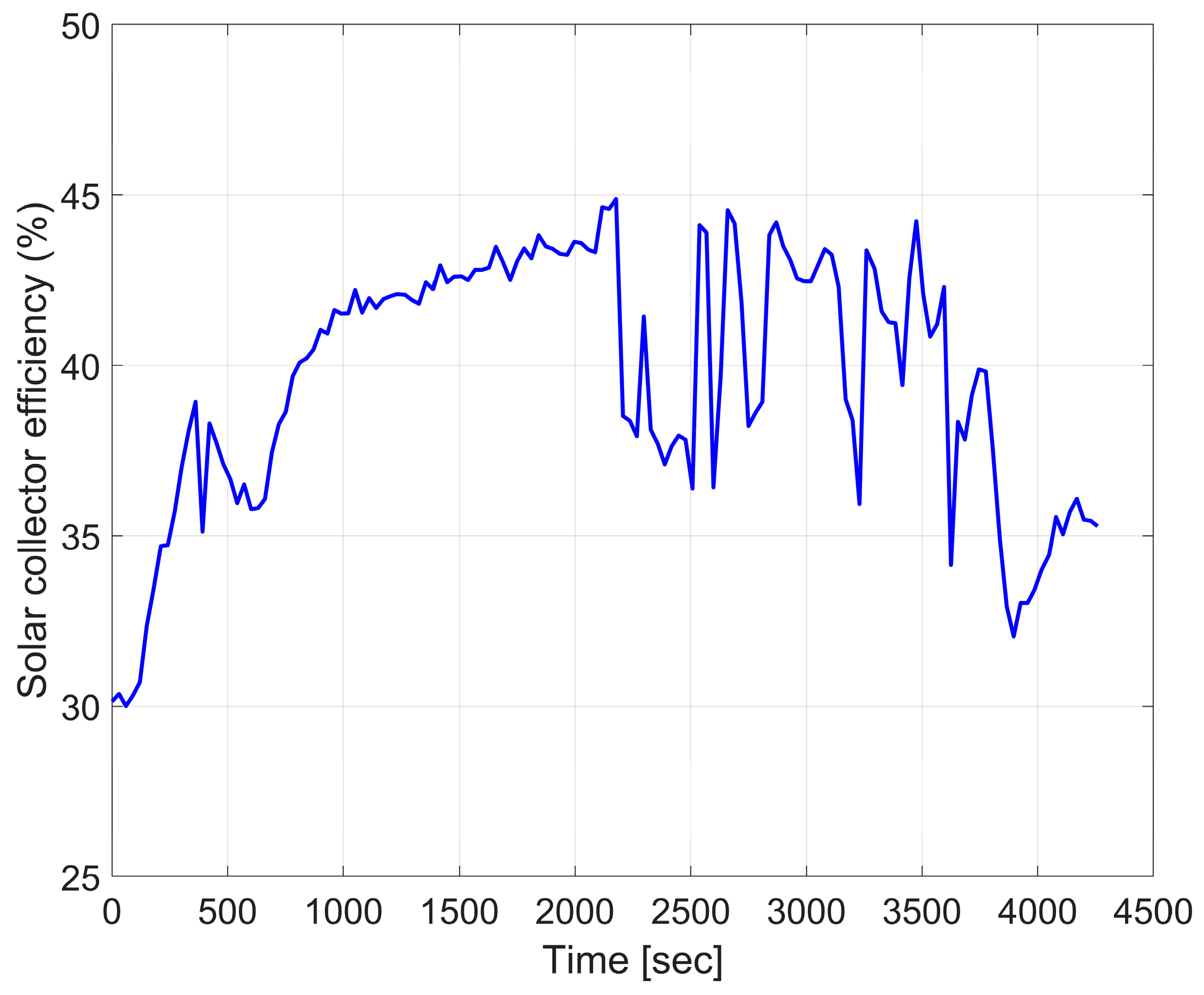
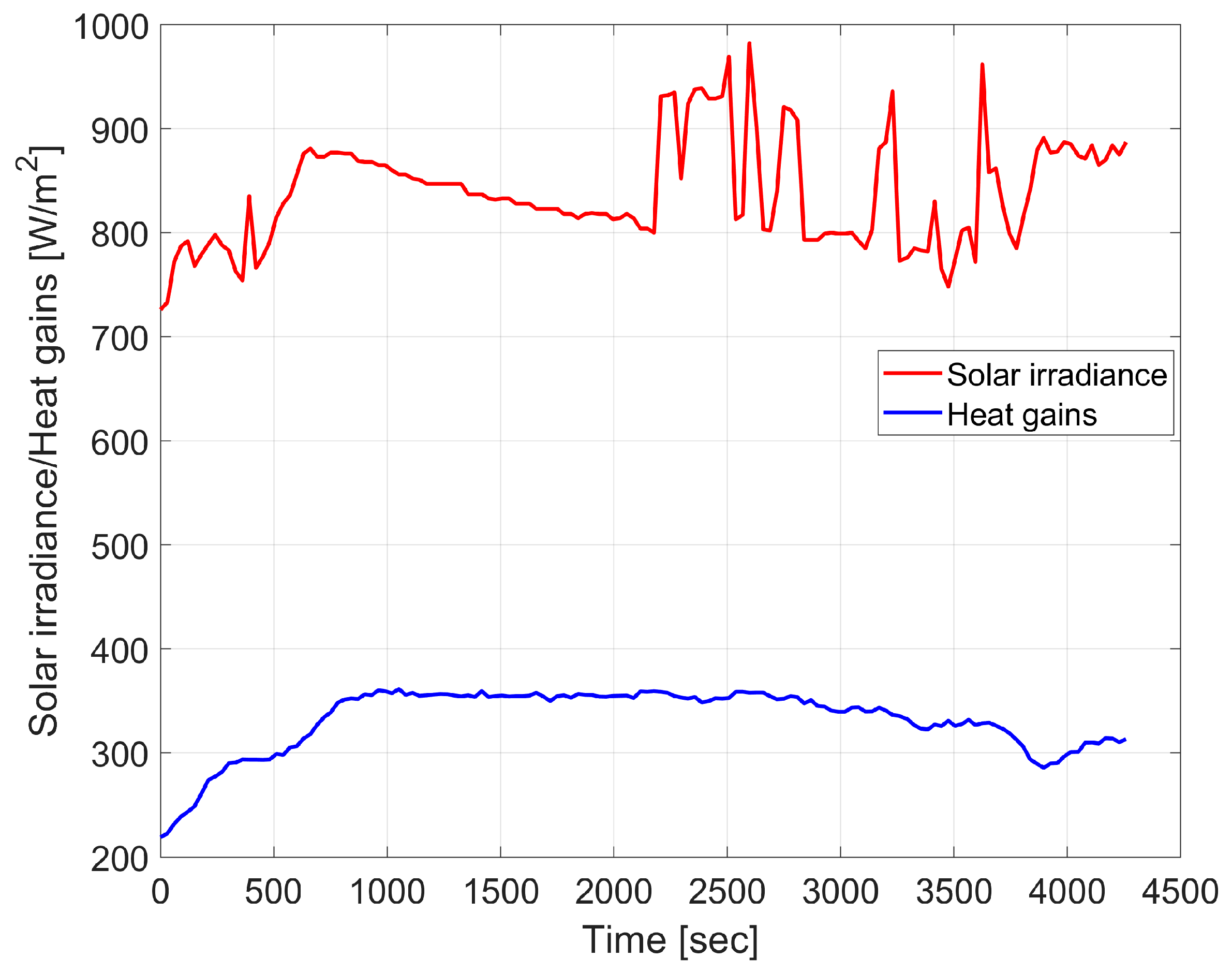
Figure 4 presents the solar collector efficiency evolution over time. Specifically, the solar field exhibits relatively low efficiency values, which range between 30% and 45%. The observed performance was rather low compared to the optical efficiency of the used flat plate collectors. This is attributed primarily to unavoidable thermal losses in the hydraulic circuit connecting the rooftop solar field with the thermal storage tank, which are substantial because of the large piping distance. Additional losses were generated by the high return temperature of the HTF, which drastically reduces the collectors’ efficiency. The evolution of the measured solar irradiance and useful heat of the solar field during the experiment is illustrated in Figure 5.
The measured solar irradiance values were consistent with the average figures for late March, approximately 790–830 W/m2 at noon, validating the reliability of the experimental setup. Notably, while the solar irradiance exhibited fluctuations due to partial cloud cover and ambient temperature variations, which are typical in early spring, the useful heat delivered by the solar collectors remained stable throughout the experiment. This demonstrates that the system’s insulation and configuration were effective in flattening transient external variations, thereby ensuring stable thermal output for the downstream subsystem.

3.2. Ejector Cooling Cycle (ECC)

The goal of the experimental campaign was to evaluate the ejector entrainment ratio and the thermal COP of the ECC as a function of the condenser temperature for different evaporator temperatures/pressures.
Throughout the whole testing campaign, the refrigerant pumps operated at a constant speed; thus, the mass flow rate of the primary flow was kept constant, equal to about 0.128–0.130 kg/s. Meanwhile, the pressure of the primary flow was also relatively stable, fluctuating between 15 and 15.5 bar, while its superheating ranged from 2.5 to 14 K. Therefore, under these conditions, the generator heat duty, which is the thermal input to the ECC, was relatively stable, varying between 28 and 31 kWth.
Moreover, during the experimental campaign, the evaporation temperature ranged between 3 °C and 20 °C, corresponding to saturation pressures (secondary flow pressures) from 3.3 bar to 5.7 bar. Finally, the condensation temperature ranged from a minimum of 24 °C to about 33.5 °C, corresponding to condensation pressures (ejector backpressures) ranging from 6.5 bar to 8.5 bar, respectively.
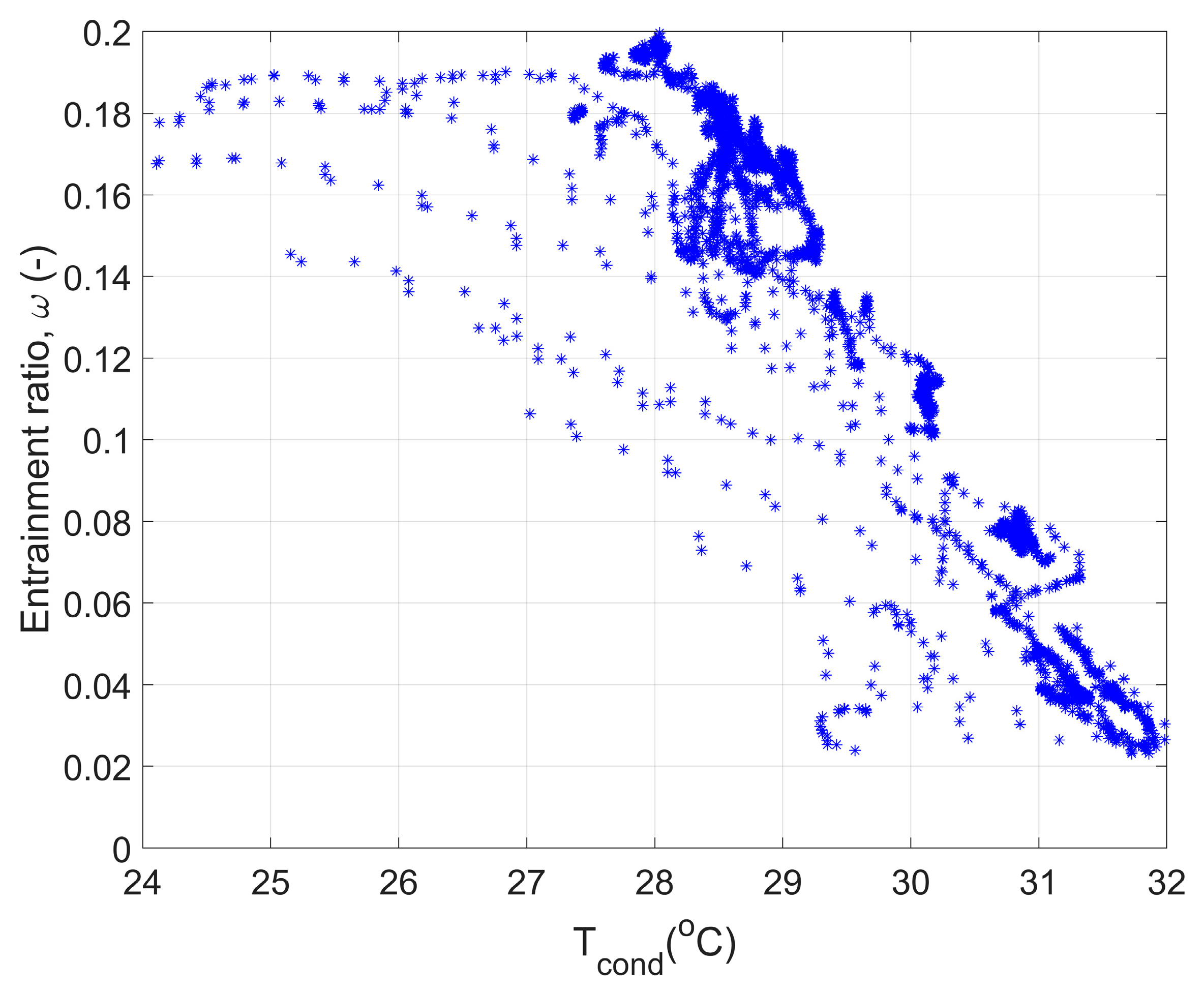
Figure 6 displays the ejector entrainment ratio for evaporation temperatures of 15 °C (4.9 bar). Densely shaded blue regions represent conditions that frequently occurred during testing, being associated with stable and steady-state operating points. In contrast, sparsely populated regions correspond to rare conditions, mostly corresponding to transitional operating points.
It can be observed that under these conditions, the maximum entrainment ratio was about 0.19 and was obtained for condensation temperatures up to 28–29 °C. The entrainment ratio showed relatively little variation for increasing condensation temperatures up to 26–28 °C, ranging between roughly 0.13 and 0.19. However, as the condensation temperature increased beyond this temperature range, the entrainment ratio was substantially decreased almost linearly. This behavior is consistent with the experimentally demonstrated performance of ejector devices in the literature. As the condensation temperature exceeded the critical ejector backpressure (which is determined from the ejector geometry along with the primary and secondary flow pressures), the secondary flow is no longer choked, and its mass flow rate is reduced, resulting in reduced entrainment ratios, considering that the mass flow rate of the primary flow is almost constant.
Overall, as can be seen in Figure 6, in several cases, different entrainment ratios were observed for operating conditions involving similar evaporation and condensation temperatures. This can be attributed to two main factors: First, the differences arise from variations in the primary flow temperatures at the ejector inlet. Second, the recorded variation in entrainment ratios can be attributed to transient effects, occurring while the expansion valve opening was being adjusted by the controller to achieve the setpoint of 5 K superheating, during which the system had not yet reached full steady-state operation. This is also verified by the fact that the points associated with different entrainment ratios but similar evaporation and condensation temperatures are scattered in sparsely populated regions of the diagram of Figure 6.
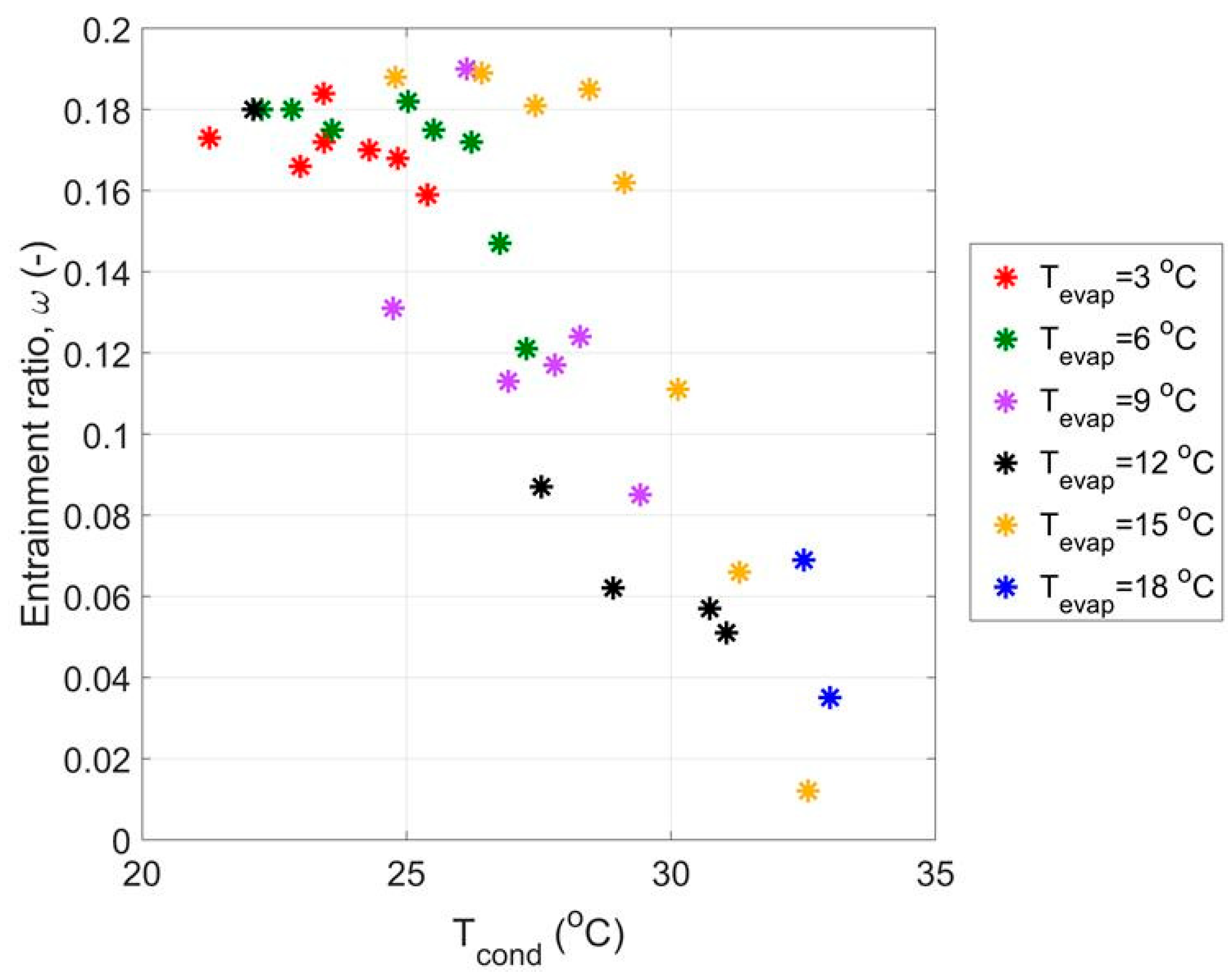
In Figure 7, the aggregated ejector entrainment ratios corresponding to different evaporation temperatures are showcased.
Generally, it can be observed that for very low evaporation temperatures (such as 3 °C and 6 °C), the operation of the ejector is feasible only for lower condensation temperatures below 25 °C, since the ejector critical backpressure is positively related to the secondary flow pressure. Accordingly, as the evaporation temperature increases, the ejector can operate at even higher condensation temperatures, since the critical backpressure is increased. For example, if the evaporation temperature is increased to 15–18 °C, the ejector can operate at condensation temperatures up to 32–34 °C. Furthermore, the maximum entrainment ratio that is obtained for low condensation pressures is similar for all evaporation temperatures, ranging between 0.16 and 0.19.
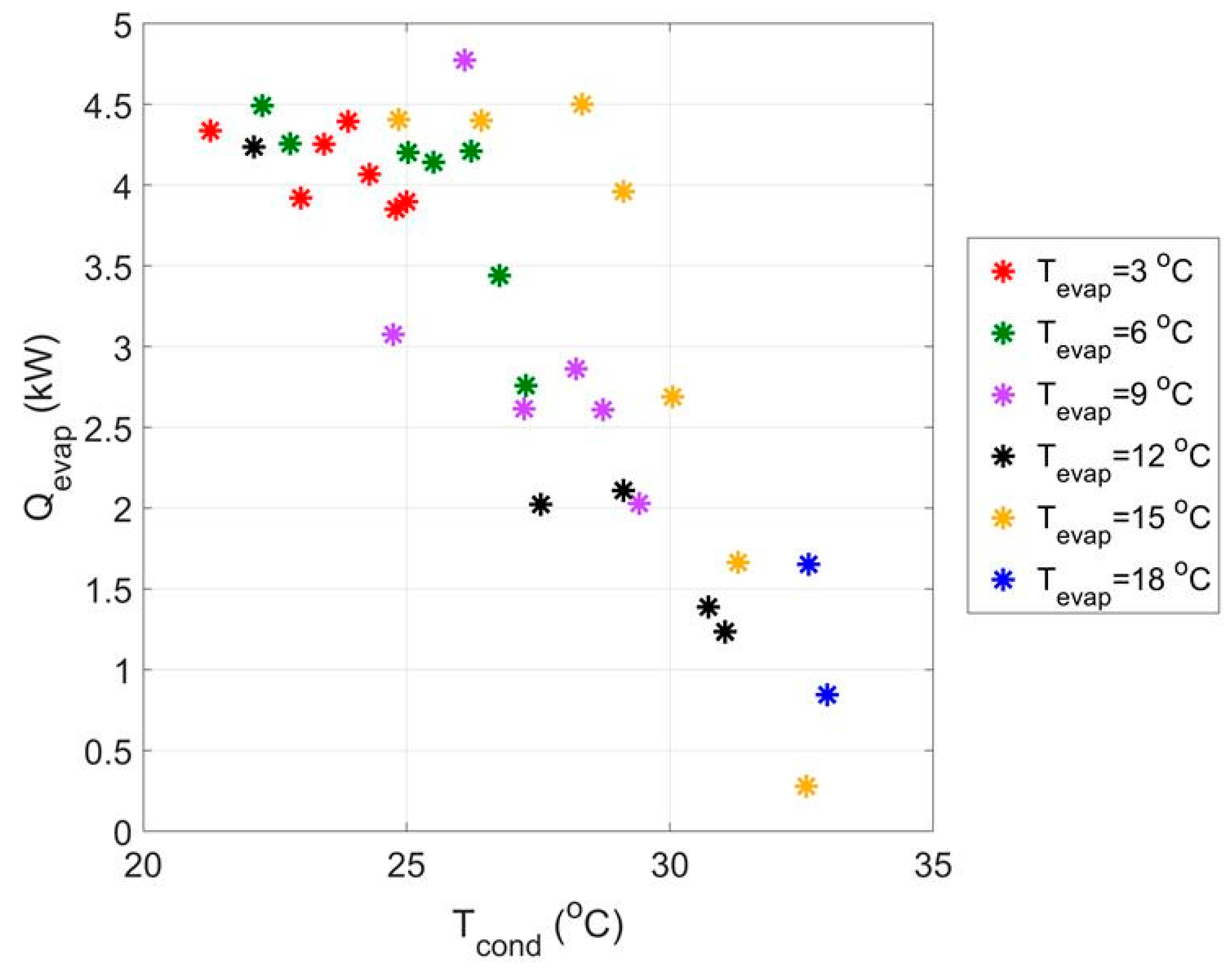
The aggregated cooling production of the ECC as a function of the condensation temperature for different evaporation temperatures is shown in Figure 8.
Generally, the cooling output reflects the entrainment ratio. This is an anticipated result, since the cooling output is practically proportional to the entrainment ratio, as is demonstrated in Equation (3). In particular, the enthalpy difference in the working fluid in the evaporator inlet and outlet ( h e v a p , o h e v a p , i ) showed little variability for the different investigated evaporation temperatures, while the enthalpy difference in the working fluid at the generator inlet and outlet ( h g , i h g , o ) was also approximately constant during the experimental testing. Overall, the cooling output of the ECC ranged between 4 and 5 kW for condensation temperatures below 25–26 °C, close to the nominal value of 4.8 kW. For condensation temperatures exceeding 25–26 °C, for which the condensation pressure exceeds the ejector backpressure, the cooling output linearly drops to 1 kW.
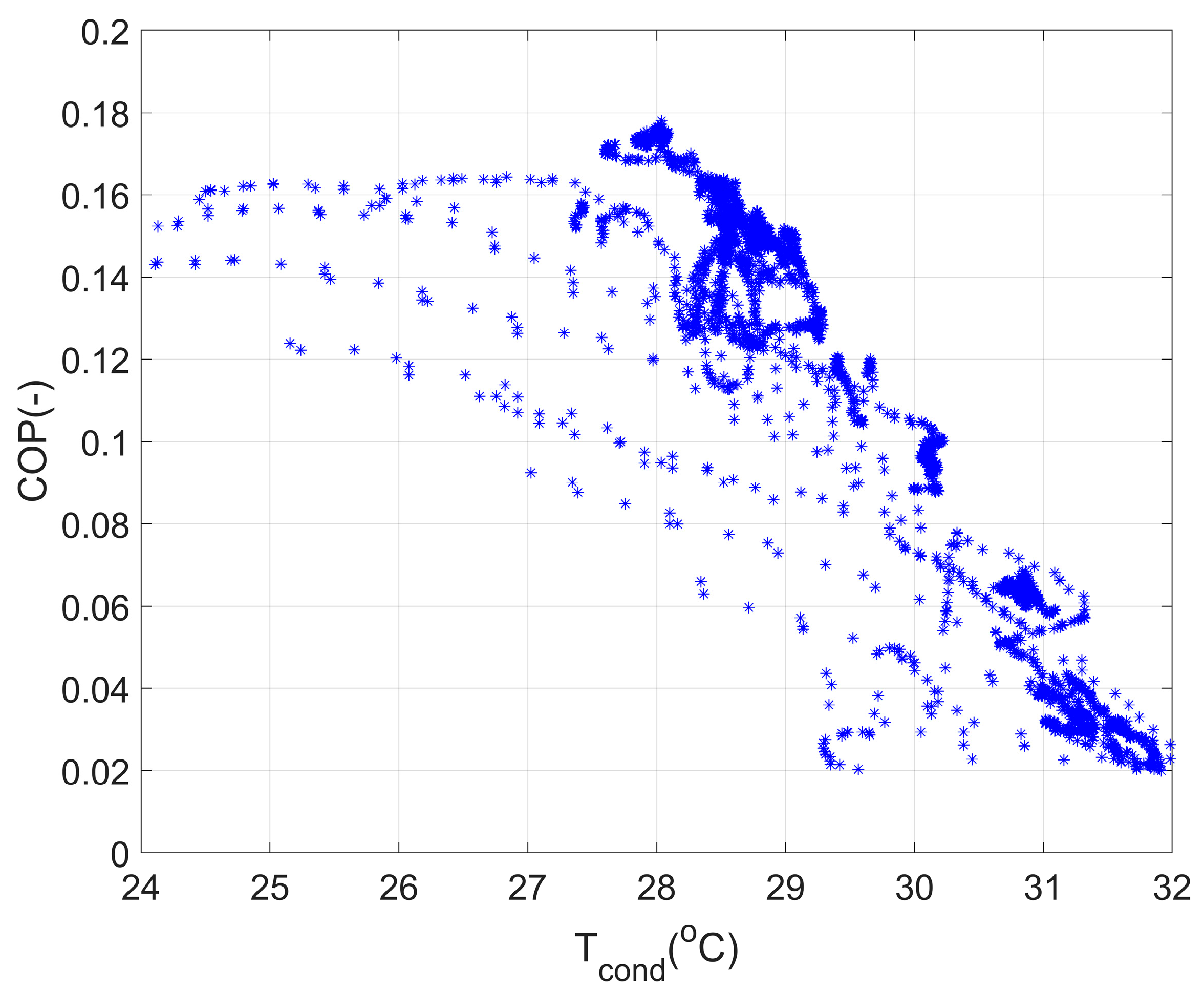
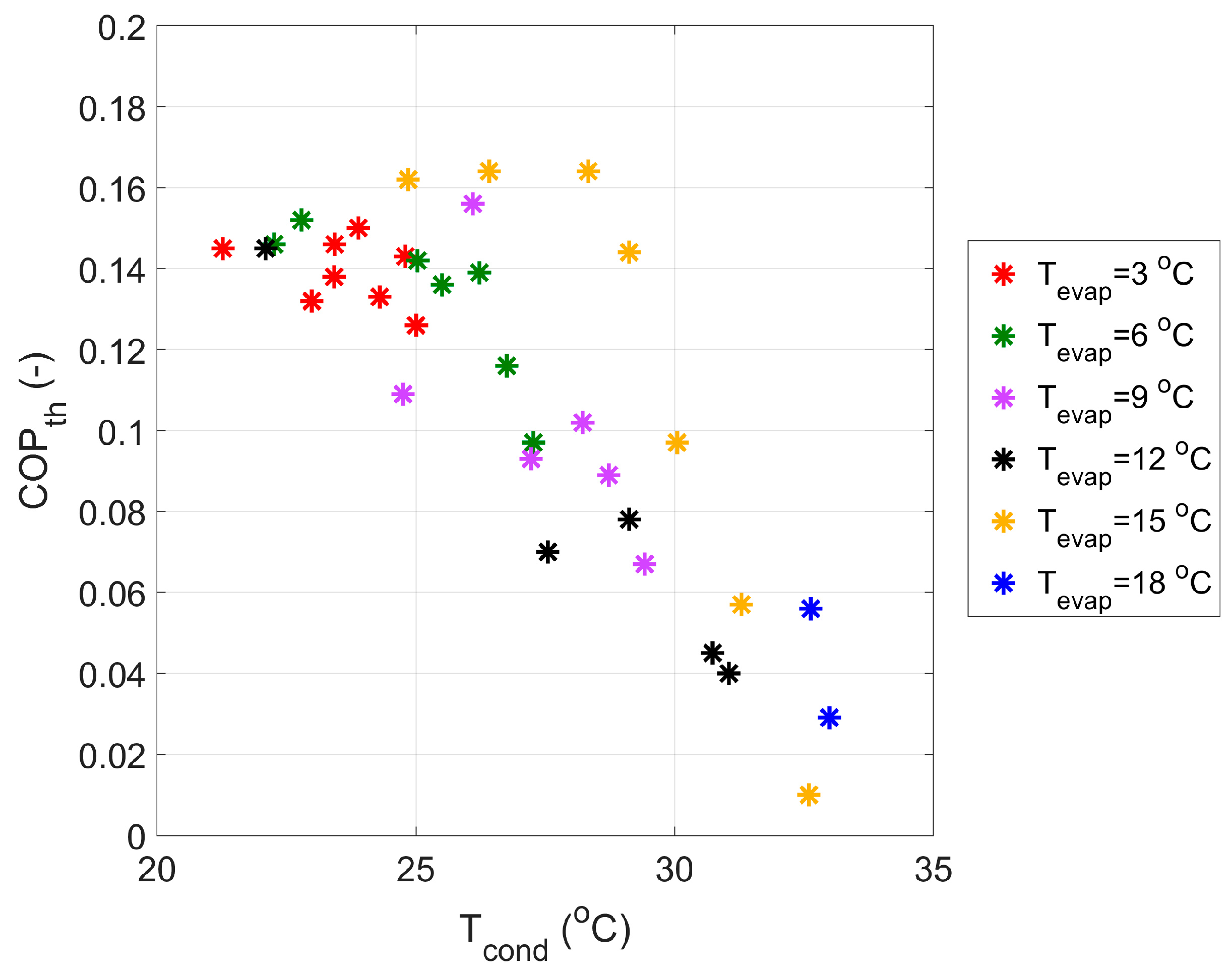
In Figure 9, the variation in the thermal COP as a function of the condenser temperature for an evaporator temperature of 15 °C is shown, while the aggregated thermal COP as a function of the condensation temperature for different evaporator temperatures is shown in Figure 10. The thermal COP mostly mirrors the variation in the entrainment ratio and cooling output, highlighting the consistent correlation between these parameters.
More specifically, the thermal COP is relatively unaffected by the condensation temperature for condensation temperatures up to 26–28 °C, while it exhibits a steep decline for higher condensation temperatures. Generally, the thermal COP varies between 0.12 and 0.16 for lower condensation temperatures when the evaporation temperature is 15 °C. As with the entrainment ratio, the difference in COP values, which are obtained at similar evaporation and condensation temperatures, is attributed to different primary flow temperatures at the ejector inlet and transient effects associated with the expansion valve operation.
Moreover, based on the results shown in Figure 10, generally similar COP values between 0.12 and 0.15 are obtained for different evaporation temperatures for lower condensation temperatures below 26–27 °C. For condensation temperatures between 25 and 30 °C, the COP declines, ranging from 0.06 to about 0.10, while ejector operation is feasible only for higher evaporation temperatures above 9 °C. Finally, for condensation temperatures above 30 °C, the COP drops below 0.05, while the ECC operates for evaporation temperatures above 12 °C.

4. Discussion

4.1. Solar Field Performance Insights

Two main conclusions can be derived from the solar field behavior. As shown in Figure 4, there is a progressive decline in solar efficiency. This is mainly because the system operation leads to a gradual increase in the return temperature from the storage tank, eventually causing a respective increase in average solar collector temperature, thus directly enhancing the heat losses and deteriorating the solar thermal efficiency.

4.2. Analysis of Entrainment Ratio

The variation in the entrainment ratio as a function of the condensation temperature is aligned with theory and experimental experience of ejector devices. For constant primary and secondary flow states, as the condensation temperature increases, the entrainment ratio initially remains constant. However, after the condensation temperature increases to a point at which the condenser pressure (ejector backpressure) exceeds the ejector critical backpressure, which depends on the ejector geometry and primary/secondary flow states, the entrainment ratio collapses and the ejector malfunctions, since the secondary flow is not choked. The ejector critical backpressure is increased as the secondary flow pressure (and hence the evaporator temperature) is increased. According to the experimental data shown in Figure 6, for an evaporator temperature of 15 °C (secondary flow pressure of 4.9 bar), the ejector critical backpressure is roughly equal to the saturation pressure corresponding to a condensation temperature of 29 °C, namely 7.48 bar.
  • At 3 °C (evaporation temperature), ω was approximately constant at 0.17–0.18 for condenser temperatures from 21 to 25.5 °C.
  • At 6 °C (evaporation temperature), ω recorded a local maximum at 0.182 around 25 °C condenser temperatures, and then declined to 0.11 at 27.5 °C.
  • At 9 °C (evaporation temperature), a maximum value of 0.190 occurred for a condenser temperature of 26.2 °C, followed by a steady drop to 29.5 °C.
  • At 12 °C (evaporation temperature), a peak value of 0.17 was reached at 22.1 °C, and then decreased to 31 °C.
  • At 15 °C (evaporation temperature), ω decreased continuously from 0.19 to 0.01 across the range 24.8–32.5 °C.
  • At 18 °C (evaporation temperature), ω decreased from 0.069 to 0.035 across the range 32.5–33 °C.

4.3. Analysis of COP

Since the COP depends directly on the entrainment ratio multiplied by the relative enthalpy differences, their consistent trends across all the tests validate the reliability of the experimental outcomes. Figure 9 and Figure 10 illustrate the thermal COP’s variation with condenser temperature for a range of evaporator temperatures. The following trends were extracted from the experimental data:
  • At an evaporator temperature of 3 °C, the thermal COP remained relatively stable between 21 °C and 25 °C condensation temperatures, averaging approximately 0.14.
  • For 6 °C, a sharp downward trend was evident between 0.13 and 0.09 as the condenser temperature increased from 25.5 °C to 27.5 °C.
  • At 9 °C, the maximum COP was 0.155 at a condenser temperature of 26.2 °C, followed by a decline up to 29.5 °C.
  • For 12 °C, a peak COP of 0.15 occurred at 22 °C, decreasing toward 31 °C.
  • For 15 °C, the COP decreased from 0.16 to 0.145 between 28.5–29 °C, and dropped significantly to 0.065–0.03 as the condenser temperature rose to 31.5 °C.
  • At 18 °C, a COP of 0.056 was achieved at 32.5 °C condenser temperature. At lower evaporating temperatures, the measured COP values were even higher, which was mainly attributed to unstable conditions of the generator and, therefore, were excluded from Figure 10.
Overall, an increase in condenser temperature resulted in a decrease in the thermal COP for a fixed evaporator temperature. Conversely, for a fixed condenser temperature, increasing the evaporator temperature led to higher COP values. However, when both temperatures increased simultaneously, COP declined. This decline was largely due to a system limitation: the pump was designed to raise the working fluid pressure in the high-pressure evaporator up to 18 bar, but the actual operation never exceeded 16 bar. As a result, insufficient primary flow pressure deteriorated the entrainment and mixing of the secondary stream in the ejector nozzle, reducing the overall efficiency, especially under higher evaporator and condenser temperatures.
The highest COP value of 0.160–0.165 was observed at an evaporator temperature of 9 °C and a condenser temperature of 26–27 °C. In general, the closer the condenser and evaporator temperatures, the more favorable the cooling conditions. However, this configuration is less realistic in practice due to thermodynamic limitations (e.g., convergence of T-s curves of the working fluid). Practically, higher evaporator temperatures combined with low condenser temperatures would require cooler ambient conditions than those typically encountered in real applications.

5. Conclusions

Based on the results and the discussion presented above, the key conclusions of the study can be summarized below.
The solar field exhibited lower efficiency than typical commercial collectors due to thermal losses despite insulation. The COP decreased with higher condenser temperatures and increased with higher evaporator temperatures, reaching a maximum of 0.160–0.165 at 9 °C evaporation and 26–27 °C condensation, while the entrainment ratio followed similar trends, performing best under moderate temperatures. Limitations of the pump in reaching the design pressure (18 bar) reduced primary flow at high temperatures, affecting the overall system performance. A strong correlation between COP and entrainment ratio validates the measurements and highlights the importance of optimizing ejector flow dynamics.

Author Contributions

Conceptualization, K.B., T.C.R., and S.K. (Sotirios Karellas); methodology, K.B., T.C.R., and S.K. (Spyros Kalyvas); software, K.B., S.K. (Spyros Kalyvas), G.P., A.C., and E.V.; validation, K.B., T.C.R., S.K. (Spyros Kalyvas), G.P., A.C., and E.V.; formal analysis, K.B. and T.C.R.; investigation, K.B., S.K. (Spyros Kalyvas), and G.P., resources, S.K. (Sotirios Karellas); data curation, S.K. (Spyros Kalyvas) and T.C.R.; writing—original draft preparation, K.B. and T.C.R.; writing—review and editing, K.B. and T.C.R.; visualization, S.K. (Spyros Kalyvas) and T.C.R.; supervision, S.K. (Sotirios Karellas); project administration, S.K. (Sotirios Karellas); funding acquisition, K.B. and S.K. (Sotirios Karellas). All authors have read and agreed to the published version of the manuscript.

Funding

This research received no external funding.

Data Availability Statement

The datasets presented in this article are not readily available because the data are part of an ongoing study. Requests to access the datasets should be directed to mpraim@central.ntua.gr.

Conflicts of Interest

The authors declare no conflicts of interest.

Abbreviations

The following abbreviations are used in this manuscript:
Variables
Aarea, (m2)
COPcoefficient of performance, (-)
ddiameter, (m)
hspecific enthalpy, (J/kg)
Isolar radiation intensity, (W/m2)
Llength, (m)
m ˙ mass flow rate, (kg/s)
Ppressure, (bar)
Q ˙ heat duty, (W)
Ttemperature, (K)
Greek symbols
Δ difference, (-)
ηefficiency, (-)
θangle, (deg)
ρdensity, (kg/m3)
ω entrainment ratio (-)
Subscript
1converging–diverging nozzle outlet
c ejector’s nozzle outlet
colsolar collectors
CASconstant area section
CDNconverging–diverging nozzle
condcondenser
ddiffuser
evapevaporator
ggenerator, converging–diverging nozzle inlet
HTFheat transfer fluid
h w hot water
iinlet
ooutlet
pprimary flow
pumppump
ssecondary flow
solsolar
SCejector suction chamber
uuseful (heat)
tconverging–diverging nozzle throat
ththermal
Abbreviations
CASconstant area section
CDNconverging-diverging nozzle
CFDcomputational fluid dynamics
CHPcombined heat and power
ECCejector cooling cycle
EEVelectronic expansion valve
HTFheat transfer fluid
NXPnozzle exit position
PVphotovoltaics
SECsolar ejector cooling
VCCvapor compression cycle

References

  1. IEA. Tracking Clean Energy Progress 2023; IEA: Paris, France, 2023. [Google Scholar]
  2. Ali, F.H.; Al-Amir, Q.R.; Hamzah, H.K.; Alahmer, A. Unveiling the Potential of Solar Cooling Technologies for Sustainable Energy and Environmental Solutions. Energy Convers. Manag. 2024, 321, 119034. [Google Scholar] [CrossRef]
  3. Schifflechner, C.; Kuhnert, L.; Irrgang, L.; Dawo, F.; Kaufmann, F.; Wieland, C.; Spliethoff, H. Geothermal Trigeneration Systems with Organic Rankine Cycles: Evaluation of Different Plant Configurations Considering Part Load Behaviour. Renew. Energy 2023, 207, 218–233. [Google Scholar] [CrossRef]
  4. Tsekouras, P.; Drosou, V.; Tzivanidis, C.; Antonopoulos, K.A. Experimental Results of a Solar Absorption Cooling Plant in Greece. Int. J. Sustain. Energy 2016, 35, 309–322. [Google Scholar] [CrossRef]
  5. Drosou, V.; Kosmopoulos, P.; Papadopoulos, A. Solar Cooling System Using Concentrating Collectors for Office Buildings: A Case Study for Greece. Renew. Energy 2016, 97, 697–708. [Google Scholar] [CrossRef]
  6. Braimakis, K. Solar Ejector Cooling Systems: A Review. Renew. Energy 2021, 164, 566–602. [Google Scholar] [CrossRef]
  7. Unterluggauer, J.; Buruzs, A.; Schieder, M.; Sulzgruber, V.; Lauermann, M.; Reichl, C. Design of Ejectors for High-Temperature Heat Pumps Using Numerical Simulations. Processes 2025, 13, 285. [Google Scholar] [CrossRef]
  8. Xiao, J.; Wu, Q.; Chen, L.; Ke, W.; Wu, C.; Yang, X.; Yu, L.; Jiang, H. Assessment of Different CFD Modeling and Solving Approaches for a Supersonic Steam Ejector Simulation. Atmosphere 2022, 13, 144. [Google Scholar] [CrossRef]
  9. Saeid, O.; Hashem, G.; Etaig, S.; Belgasim, B.; Sagade, A. Performance Assessment of Ammonia Base Solar Ejector Cooling System Emphasizing Ejector Geometries: A Detailed CFD Analysis. Energy 2024, 301, 131770. [Google Scholar] [CrossRef]
  10. Besagni, G.; Cristiani, N. Multi-Scale Evaluation of an R290 Variable Geometry Ejector. Appl. Therm. Eng. 2021, 188, 116612. [Google Scholar] [CrossRef]
  11. Ripley, K. Kigali Amendment Implementation and Preparations for Multilateral Fund Replenishment. Environ. Policy Law 2018, 47, 154–158. [Google Scholar] [CrossRef]
  12. Yadav, S.K.; Murari Pandey, K.; Gupta, R. Recent Advances on Principles of Working of Ejectors: A Review. Mater. Today Proc. 2021, 45, 6298–6305. [Google Scholar] [CrossRef]
  13. Peris Pérez, B.; Ávila Gutiérrez, M.; Expósito Carrillo, J.A.; Salmerón Lissén, J.M. Performance of Solar-Driven Ejector Refrigeration System (SERS) as Pre-Cooling System for Air Handling Units in Warm Climates. Energy 2022, 238, 121647. [Google Scholar] [CrossRef]
  14. Zeinab Sajjadi, S.; Farhanieh, B.; Afshin, H. A High Performance Solar-Assisted Ejector Expansion Refrigeration Cycle for Residential Air Conditioning. Appl. Therm. Eng. 2024, 254, 123872. [Google Scholar] [CrossRef]
  15. Almahmoud, H.A.; Al-Sulaiman, F.A.; Ibrahim, N.I.; Ben Mansour, R.; Alkhulaifi, Y.M. Energetic Performance Analysis of a Solar-Driven Hybrid Ejector Cooling and Humidification-Dehumidification Desalination System. Energy 2021, 230, 120849. [Google Scholar] [CrossRef]
  16. Khennich, M.; Galanis, N.; Sorin, M.; Orfi, J.; Sarrafi, A.; Dupuis, S. Thermodynamic Analysis of a Solar Powered Ejector Cooling System. Int. J. Thermofluids 2024, 24, 100960. [Google Scholar] [CrossRef]
  17. Braimakis, K.; Kitsopoulou, A.; Roumpedakis, T.C.; Stavrakakis, G.M.; Tzivanidis, C. Part-Load Based Optimization of Solar Ejector Cooling Cycle. Renew. Energy 2025, 243, 122582. [Google Scholar] [CrossRef]
  18. Devarajan, Y.; Nagappan, B.; Subbiah, G.; Kariappan, E. Experimental Investigation on Solar-Powered Ejector Refrigeration System Integrated with Different Concentrators. Environ. Sci. Pollut. Res. 2021, 28, 16298–16307. [Google Scholar] [CrossRef]
  19. Falsafioon, M.; Poirier, M.; Simard, P. Demonstration of a Solar-Driven Ejector Chiller Assisting the Air Conditioning System of a Building. J. Energy Eng. 2023, 149, 04023016. [Google Scholar] [CrossRef]
  20. Huang, B.J.; Chang, J.M.; Wang, C.P.; Petrenko, V.A. A 1-D Analysis of Ejector Performance. Int. J. Refrig. 1999, 22, 354–364. [Google Scholar] [CrossRef]
  21. Braimakis, K.; Kalyvas, S.; Palamidis, G.; Roumpedakis, T.C.; Charalampidis, A.; Varvagiannis, E.; Karellas, S. Development and Experimental Assessment of a Solar Cooling System Based on Ejector Cooling Cycle. In Proceedings of the ECOS2024 International Conference, Rhodes, Greece, 30 June–5 July 2024. [Google Scholar]
  22. © 2015 Solar All Cosmosolar—Certificates. Available online: https://cosmosolar.com/en/certificates/ (accessed on 10 December 2025).
  23. Sanaye, S.; Farvizi, A.; Refahi, A.; Rafieinejad, M.V. A Novel Application of Optimization and Computational Fluid Dynamics Methods for Designing Combined Ejector-Compressor Refrigeration Cycle. Int. J. Refrig. 2019, 108, 174–189. [Google Scholar] [CrossRef]
  24. ESDU International Ltd. Ejectors and Jet Pumps, Design for Steam Driven Flow; Np, E.I. 86030; ESDU International Ltd.: London, UK, 1986. [Google Scholar]
  25. Yan, J.; Lin, C.; Cai, W.; Chen, H.; Wang, H. Experimental Study on Key Geometric Parameters of an R134A Ejector Cooling System. Int. J. Refrig. 2016, 67, 102–108. [Google Scholar] [CrossRef]
  26. Shestopalov, K.O.; Huang, B.J.; Petrenko, V.O.; Volovyk, O.S. Investigation of an Experimental Ejector Refrigeration Machine Operating with Refrigerant R245fa at Design and Off-Design Working Conditions. Part 2. Theoretical and Experimental Results. Int. J. Refrig. 2015, 55, 212–223. [Google Scholar] [CrossRef]
  27. Selvaraju, A.; Mani, A. Experimental Investigation on R134a Vapour Ejector Refrigeration System. Int. J. Refrig. 2006, 29, 1160–1166. [Google Scholar] [CrossRef]
  28. García del Valle, J.; Saíz Jabardo, J.M.; Castro Ruiz, F.; San José Alonso, J.F. An Experimental Investigation of a R-134a Ejector Refrigeration System. Int. J. Refrig. 2014, 46, 105–113. [Google Scholar] [CrossRef]
  29. Wang, H.; Cai, W.; Wang, Y.; Yan, J.; Wang, L. Experimental Study of the Behavior of a Hybrid Ejector-Based Air-Conditioning System with R134a. Energy Convers. Manag. 2016, 112, 31–40. [Google Scholar] [CrossRef]
  30. Bell, I.H.; Wronski, J.; Quoilin, S.; Lemort, V. Pure and Pseudo-Pure Fluid Thermophysical Property Evaluation and the Open-Source Thermophysical Property Library CoolProp. Ind. Eng. Chem. Res. 2014, 53, 2498–2508. [Google Scholar] [CrossRef]
Figure 2. (a) Overview of the solar collector field. (b) The ejector cycle of the NTUA’s SEC setup [21].
Energies 19 00007 g002
Figure 3. (a) Drawing of the prototype ejector with key dimensions. (b) Overview of the final ejector 3D design.
Energies 19 00007 g003
Figure 4. Efficiency of the solar field over the experimental procedure.
Energies 19 00007 g004
Figure 5. Solar irradiance and thermal energy gains over the experimental procedure.
Energies 19 00007 g005
Figure 6. Experimental entrainment ratio ω as a function of the condensation temperature for evaporator temperature of 15 °C and pressure of 4.9 bar.
Energies 19 00007 g006
Figure 7. Aggregated plot of entrainment ratio ω as a function of the condensation temperature for different evaporator temperatures.
Energies 19 00007 g007
Figure 8. Aggregated plot of measured cooling capacity as a function of the condensation temperature for different evaporator temperatures.
Energies 19 00007 g008
Figure 9. Experimental thermal COP values as a function of the condensation temperature for evaporator temperature of 15 °C and pressure of 4.9 bar.
Energies 19 00007 g009
Figure 10. Aggregated plot of COP as a function of the condensation temperature for different evaporator temperatures.
Energies 19 00007 g010
Table 1. Main specifications of the ejector cycle [21].
ComponentsDescription
Pumps2 × HPE-M 04.08 piston pumps (Annovi Reverberi)
Pump motor inverters2 × Sinamics V20 (Siemens)
GeneratorACH-70X-40M-F plate heat exchanger (Alfa Laval)
Cooling evaporatorACH18-18H-F plate heat exchanger (Alfa Laval)
SubcoolerACH16-14H-F plate heat exchanger (Alfa Laval)
CondenserCB60-60H-F plate heat exchanger (Alfa Laval)
Expansion valve and controllerETS6 electronic expansion valve (Danfoss) with EKE 1A superheat controller (Danfoss)
Table 2. General ejector design guidelines [23,24,25,26,27,28,29].
Ejector Design
Parameter
DefinitionValue/Range
dg CDN inlet diameterdetermined by pipe
diameter of primary flow
ddejector diffuser outlet diameterdetermined by pipe
diameter at ejector outlet
d1/dtratio of CDN outlet diameter and throat diameter 1.04–1.72
LCAS/dCASratio of CAS length and CAS diameter4–12
θCDN,iCDN converging section half angle24–30°
θCDN,oCDN diverging section half angle6–14°
θddiffuser half angle6–30°
θSCsuction chamber half angle2–30°
NXPnozzle exit position0.5–1 dCAS
Table 3. Key geometrical specifications of the ejector [21].
CDN Section
DimensionValueDimensionValue
dg19.0dt5.1
de15.8d17
θCDNi12LCDNi32.8
θSC7.5NXP5.16
CA Section
DimensionValueDimensionValue
dCAS8.6θd3.5
dd18.2LCAS68.8
Table 4. Main specifications of the used measuring equipment.
Measured ValueSensor ModelSpecificationValue
Refrigerant Pressure EMERSON PT5-30M Range0.0–30 [barg]
Accuracy2% Full Scale
Water/Solar fluid PressureBelimo 22WP-514Range0.0–3.4 [barg]
Accuracy2% Full Scale
Refrigerant/Water/Solar fluid temperatureGrigoropoulos Automations
Pt100, Class A
Range−50–150 [°C]
Accuracy0.15 [K]
Refrigerant mass flow rateKROHNE OPTIMASS 6000-S10Range0–1200 [kg/h]
Accuracy0.5% measured value
Refrigerant mass flow rateKROHNE OPTIMASS 6000-S08Range0–600 [kg/h]
Accuracy0.5% measured value
Water volume flow rateBelimo FM040R-SZRange0.0–3 [L/s]
Accuracy6% measured value
Solar fluid volume flow rateTechnische Alternative
TA FTS5-85DL (Angermünde, Germany)
Range0.0–85.0 [L/min]
Accuracy2% measured value
PyranometerLSI-Lastem DPA855Range0–1500 [W/m2]
Table 5. Experimental control parameters [21].
Property (Unit)Measuring Range
Evaporator water mass flow rate (L/min)0–0.20
Evaporator water temperature inlet (°C)13.0–18.0
Condenser water mass flow rate (L/min)0.0–1.75
Condenser water temperature range (°C)15.0–27.0
Subcooler water mass flow rate (L/min)0–0.20
Subcooler water temperature (°C)12.5 ± 0.5
Disclaimer/Publisher’s Note: The statements, opinions and data contained in all publications are solely those of the individual author(s) and contributor(s) and not of MDPI and/or the editor(s). MDPI and/or the editor(s) disclaim responsibility for any injury to people or property resulting from any ideas, methods, instructions or products referred to in the content.